EDB Eurasian Integration Yearbook 2011
Vinokurov, Evgeny
Euirasian Development Bank
2011
Online at
https://mpra.ub.uni-muenchen.de/49178/
I N T E G R A T I O N
Eurasian Integration Yearbook 2011. – Almaty, 2011. – p. 352 ISBN 978–601–7151–21–8
Annual publication of the Eurasian Development Bank
Edited by Evgeny Vinokurov
The Eurasian Development Bank is an international financial institution established to promote economic growth and integration processes in Eurasia. The Bank was founded by the intergovernmental agreement signed in January 2006 by the Russian Federation and the Republic of Kazakhstan. In 2009–2010 Armenia, Tajikistan, Belarus became full members of the Bank. Electric power, water and energy, transportation infrastructure and high-tech and innovative industries are the key areas for Bank’s financing activity.
As part of its mission the Bank carries out extensive research and analysis of contemporary development issues and trends in the region, with particular focus on Eurasian integration. The Bank also hosts regular conferences and round tables addressing various aspects of integration. In 2008, the Bank launched an annual EDB Eurasian Integration Yearbook (in English) and quarterly Journal of Eurasian Economic Integration (in Russian). Both publications are available online at: www.eabr.org. The Bank’s Strategy and Research Department publishes detailed Industry and Country Analytical Reports and plans to undertake a number of research projects. The EDB System of Indicators of Eurasian Integration has become the first project in the pipeline in 2009. In June 2011 the Eurasian Development Bank launched the Centre for Integration Studies. This new analitical structure will focus on the applied research, in particular on the issues of regional economic integration.
ISBN 978–601–7151–21–8 УДК 339.7
ББК 65.012.3 © Eurasian Development Bank, 2011
Address:
220, Dostyk ave., Almaty, 050051, Republic of Kazakhstan, Telephone: +7 (727) 244 40 44, Fax: +7 (727) 244 65 70, 291 42 63 E-mail: [email protected]
http://www.eabr.org
Coordinator:
Gulnaz Imamniyazova, EDB
Design, layout, and printing:
RUAN Publishing Company
Edited by Evgeny Vinokurov, EDB
Advisory Council: Sailau Baizakov,
Insitute for Economic Research, Astana Michael Emerson,
Centre for European Policy Studies, Brussels Valery Geets,
Institute for Economic Forecasting, Kyiv Ruslan Grinberg,
Insitute of Economy RAS, Moscow Ivan Korolev,
Institute for World Economy and International Relations RAS, Moscow Luk Van Langenhove,
United Nations University, Bruges Johannes Linn,
Brookings Institute, Washington Liu Huaqin,
Chinese Academy of International Trade and Economic Cooperation, Beijing Katlijn Malfliet,
Catholic University of Leuven Ivan Samson,
University of Grenoble II Leonid Vardomskiy,
Institute of Economy RAS, Moscow Vladimir Yasinskiy,
Contents
List of Figures and Tables 6
Notes on the Contributors 10
List of Abbreviations 13
Greetings
Igor Finogenov, EDB Chairman 16
Sergey Glazyev, EurAsEC Deputy Secretary General 17
Vladimir Yasinskiy, EDB Managing Director for Strategy
and Research Department 18
1. Chronology of Two Decades of Post-Soviet
Disintegration and Integration: 1991-2010 19
Global Crisis and Post-Soviet Regional Integration
2. Trends in Investment Cooperation between CIS Countries
and the Global Economic Crisis 33
AleksAndr libmAn, mikhAil Golovnin
3. Foreign Trade in CIS Countries During the Economic Crisis 55
mikhAil Golovnin, dAryA UshkAlovA
4. Regional Effects of Global Economic Crisis in CIS: Migrants’
Remittances Channel 75
mikhAil Golovnin, AleksAndrA yAkUshevA
5. Spaghetti, Noodles, and Lapsha in Eurasia: Results of
Gravity Regression for Eurasian Supercontinent 88
elvirA kUrmAnAlievA, evGeny vinokUrov
Institutions of Regional Integration
6. Developing Institutional Structure of Eurasian Economic
Community 106
nikolAi kAveshnikov
7. On Possibility of Artificial Currency Devaluation Within
the Customs Union 124
8. The Stock Markets of Russia and Kazakhstan: Prospects for
Integration, edb reportno.10 136
nAtAliA mAqsimchook, pArtAd
Eurasian Integration – Historical and Social Aspects
9. Waves of Eurasian Exchange 187
evGeny vinokUrov
10. Educational Migration from Kazakhstan to Russia as an Aspect of Strategic Cooperation within
the Customs Union 198
botAGoz rAkishevA, dmitry poletAev
Economic Cooperation in Industries and Sectors
11. Integration Processes in CIS Telecommunications Sector 220
AiGUl AbsAmetovA
12. Russian and Kazakhstani Nuclear Energy: Trends
in Economic Cooperation 232
AiGUl AbsAmetovA
2010: Data and Events
13. Chronicle of Eurasian Regional Integration 2010 246
nAtAliA mAqsimchook
14. Main Macroeconomic Indicators of CIS Region 313
elvirA kUrmAnAlievA, GAUkhAr ormAntAyevA
15. International and Regional Development banks in Northern
and Central Eurasia: Overview of Activities in 2010 321
ellA bAybikovA
Information for Authors 342
List of Figures and Tables
Figures
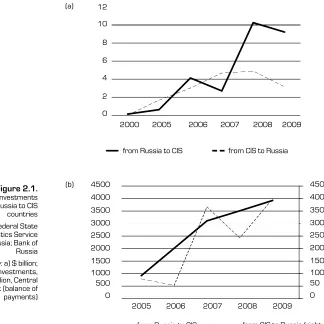
Figure 2.1. Inflow of investments from Russia to CIS countries 38
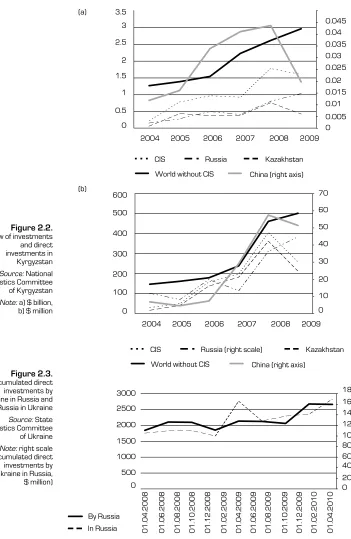
Figure 2.2. Inflow of investments and direct investments
in Kyrgyzstan 40
Figure 2.3. Accumulated direct investments by Ukraine in Russia
and by Russia in Ukraine 40
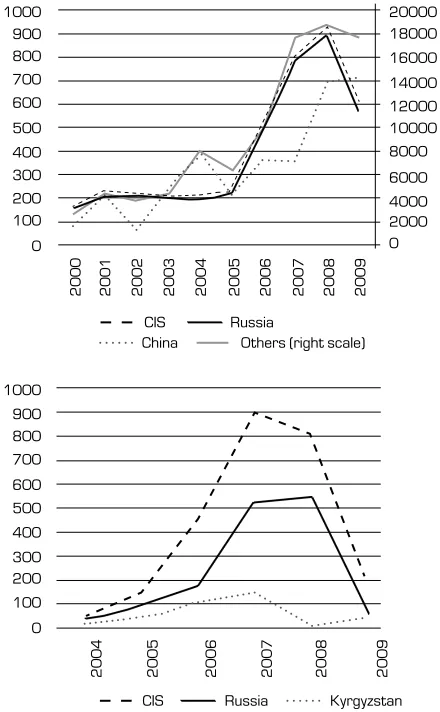
Figure 2.4. Investment inflow and outflow in/from Kazakhstan 41
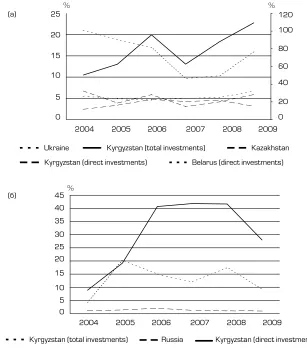
Figure 2.5. The share of Russian (a) and Kazakh (b) investments in total investments in CIS countries 42
Figure 3.1. Contribution of the decline in exports to CIS and
remote markets to the total decline in CIS exports 64
Figure 3.2. Contribution of the decline in imports from CIS and remote markets to the total decline in CIS
imports 66
Figure 3.3. Contribution of the decline in intraregional turnover
to the total decline in CIS turnover 67
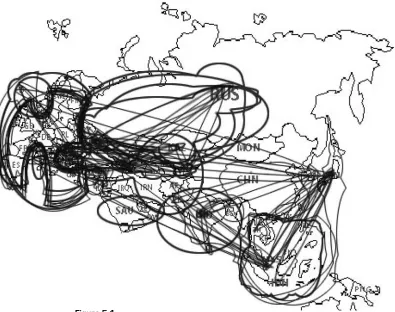
Figure 5.1. Eurasian Spaghetti-Noodle-Lapsha 91
Figure 5.2. Dynamics of Eurasian Trade Openness 93
Figure 5.3. Intraregional Trade in Eurasia: 2008 94
Figure 5.4. Structure of intraregional trade of Eurasia: 2009 95
Figure 5.5. Evolution of regional dummies 96
Figure 5.6. Realization of Trade Potentials: actual trade /
potential trade 97
Figure 7.1. Macroeconomic convergence 126
Figure 7.2. Monetary convergence 126
Figure 7.3. REER (2001=100) 127
Figure 7.4. RER (2001=100) 128
Figure 7.5. Changes in central bank currency reserves and
monetary mass M2 129
Figure 8.1. Stock market indices in Russia and Kazakhstan 143
Figure 8.2. Categories of Kazakhstani respondents 157
Figure 8.3. Specialisation of Kazakhstani respondents 157
Figure 8.4. The most common professional activities 158
Figure 8.5. Subsidiaries in Russia 159
Figure 8.6. Kazakhstani respondents holding Russian
securities 159
Figure 8.7. Kazakhstani respondents holding securities issued
in other jurisdictions 160
Figure 8.8. Priority sectors for Kazakhstani professional
market players 160
Figure 8.9. Interest in introducing securities to Russia 162
Figure 8.10. Specialisations of Russian respondents 163
Figure 8.11. Russian respondents holding Kazakhstani securities 164
Figure 8.12. APF asset structure in Kazakhstan 166
Figure 10.1. The structure of the study 202
Figure 10.2. Selection criteria for country of study 204
Figure 10.3. Kazakh school graduates’ main reasons for choosing
a particular country of study 205
Figure 11.1. Development of information and telecommunications
technology in CIS (1998-2008) 221
Figure 11.2. Service area of Russian mobile operators 225
Figure 12.1. Electricity generation by source (1973 and 2007) 233
Figure 12.2. Construction and operation costs of NPP 234
Figure 12.3. Structure of NPP fuel costs 234
Figure 12.4. Key uranium market players 235
Figure 12.5. Kazatomprom’s prospective nuclear fuel cycle 238
Figure 12.6. The current status of the Russian uranium industry 239
Figure 14.1. World GDP growth 314
Figure 14.2. CIS economic recovery 314
Figure 14.3. Commodity price dynamics: 2000-2010 315
Figure 14.4. Geographical structure of trade turnover in CIS
Figure 14.5. Global inflation 317
Figure 14.6. CIS inflation 317
Figure 14.7. State budget balance 318
Figure 14.8. Savings and investments in the CIS: weighted
average 319
Figure 14.9. Non-performing loans 319
Figure 14.10. Growth of monetary aggregate (M2) 320
Tables
Table 3.1. Real GDP dynamics 56
Table 3.2. Industrial production dynamics 57
Table 3.3. Appreciation/devaluation of CIS currencies against
the US dollar 59
Table 3.4. Ratio of absolute decline in intraregional export in
2009 compared to 2008 to nominal 2009 GDP 68
Table 3.5. Ratio of absolute decline in intraregional imports
in 2009 compared to 2008 to nominal 2009 GDP 69
Table 3.6. Ratio of absolute decline in intraregional commodity revenue in 2009 compared to 2008 to nominal
2009 GDP 70
Table 3.7. Intraregional exports and imports as a proportion
of total exports in CIS countries in 2008-2010 71
Table 4.1. Per capita GDP in CIS countries in 2000–2007 75
Table 4.2. Rate of growth (decline) in remittances 82
Table 4.3. Remittances from Russia made through the main
payment systems 84
Table 4.4. Ratio of remittances received to GDP 85
Table 7.1. Ratios of correlation between exports and real
bilateral exchange rates in the Customs Union 133
Table 8.1. Accumulated mutual investments by Russia and
EurAsEC countries 145
Table 8.2. Portfolio investments 147
Table 8.4. Stock market regulation in Russia and
Kazakhstan 149-150
Table 8.5. Number of organisations by professional activities
on the Kazakhstani securities market 159
Table 8.6. Problems of interaction with Russian financial
institutions 161
Table 8.7. Possible forms of cooperation 162-163
Table 8.8. Problems of interaction with Kazakhstani financial
institutions 165
Table 9.1. World population 1200–1800 189
Table 9.2. World population and economy (1–2003 AD) 190-192
Table 9.3. Four Eurasian exchanges 193
Table 11.1. Investments in CIS telecommunications market 222
Table 11.2. State telecom assets to be sold 223
Table 11.3. Russian operator’s presence in oversees
markets 226-227
Table 12.1. Fuel assembly cost structure 238
Table 15.1. ADB projects in 2010 in the region by sector 327
Table 15.2. IFC projects in 2010 in the region by sector 329
Table 15.3. EBRD projects in 2010 in the region 331-332
Table 15.4. IDB projects in 2010 in the region by sector 332
Table 15.5. EDB projects by sector in 2010 334
Annexes
Annex 5.1. Trading structure of regional groups in Eurasia 101
Notes on the Contributors
Aigul Absametova – Candidate of Economic Sciences, MS in Management, University of Edinburgh, UK. Analyst at the EDB Strategy and Research Department, Economic Analysis Unit. Work experience includes consulting, banking, international development institutions and educational sectors and businesses. E-mail: [email protected].
Ella Baybikova – MBA, Nottingham University Business School; as a Head of Strategic Planning Unit (Eurasian Development Bank) is responsible for the formulation of EDB’s strategy. She has extensive experience in various areas of banking. She has a particular interest in the financial development institutions activities in the region of Europe and Central Asia. E-mail: [email protected].
Mikhail Golovnin – Candidate of Economic Sciences (2003). Deputy Head of the Centre on Globalisation and Integration of the Institute of Economics of the Russian Academy of Sciences. Graduate of Economics, Lomonosov State University, Moscow (2000). Author of over 60 research publications, including papers published by the leading economic magazines. One of the authors and editor of the collective monograph Interaction of CIS Financial Systems. Winner of the President of the Russian Federation’s bursary competition for young Russian scientists, candidates of science and their research supervisors (2006-2007), winner of the Russian Academy of Sciences Best Economist award in 2004-2005 and 2008. His specialist interests include currency and financial integration, monetary and credit policy, and financial globalisation. E-mail: [email protected].
development, EU energy policy and EU-Russia relations. Selected articles are available at: http://www.mgimo.ru/users/document1521.phtml. E-mail: [email protected].
Elvira Kurmanalieva – Ph.D. in international economics from National Graduate Institute for Policy Studies, Japan and M.A. in public policy from Saitama University, Japan. Currently holds a position of Head of the Country Research Unit of the EDB Strategy and Research Department. Prior to joining EDB worked at the Asian Development Bank Institute, National Bank of the Kyrgyz Republic, Research Institute of Economy, Trade and Industry of Japan. Taught macroeconomic policy, international economics and microeconomics at American University of Central Asia, and International Christian University. Author and co-author of a number of works on international trade and investments in China and Southeast and Central Asia. E-mail: [email protected].
Aleksandr Libman – Doctor of Economic Sciences (2010), Ph.D. (University of Mannheim, 2010), Assistant Professor of the Frankfurt School of Finance & Management, Senior Researcher at the Institute of Economics of the Russian Academy of Sciences, Associate of the Centre of Russian Studies of the East China University. Main scientific interests: empirical political economics, political economics of regional integration and federalism. Winner of the Knut-Wicksell Prize of the European Public Choice Society (EPCS, 2010). Main publications in European Journal of Comparative Economics, Europe-Asia Studies and leading Russian and Chinese scientific magazines. Author and co-author of five monographs. E-mail: [email protected].
Natalia Maqsimchook – MSc Business Studies; Senior Analyst at Economic Analysis Unit of the EDB Strategy and Research Department. More than ten years of experience in the UN system organisations. She has contributed to various publications on the issues of good governance, regional development, and external aid coordination. E-mail: [email protected].
Gauhar Ormantayeva – M.A. in International and Development Economics, University of San Francisco, USA. Currently holds a position of Analyst in the Country Research Unit of the EDB Strategy and Research Department. Prior to joining Eurasian Development Bank, Gauhar worked in Portfolio and Risk Management Group at State Street Corporation in London, UK. E-mail: [email protected].
Dmitry Poletaev – Ph.D. in economics, leading researcher at the Institute of Economic Forecasting of the Russian Academy of Sciences. E-mail: [email protected].
Darya Ushkalova – Candidate of Economic Sciences (2008), researcher at the Centre for Russian Economy Globalisation Issues, Institute of Economics of the Russian Academy of Sciences. Graduated from the Lomonosov Moscow State University (Foreign Socioeconomic Geography, 2004). Author of about 30 papers and monographs including Regionalisation Processes in the Post-Soviet Space: the Challenges of Russian-Belarusian Integration (2010). Her scientific interests embrace economic integration in the post-Soviet space, regional economic integration theories, issues of foreign trade and foreign policy in the CIS and political and economic cooperation between Russia and Belarus. E-mail: [email protected]
Evgeny Vinokurov – Ph.D., Director of the Centre for Integration Studies at the Eurasian Development Bank, author of four individual and three collective monographs, including A Theory of Enclaves (2007), Kaliningrad: Enclaves and Economic Integration (2007), The CIS, the EU, and Russia: The Challenges of Integration (2007, with Katlijn Malfliet and Lien Verpoest), and the EDB Eurasian Integration Yearbook. Chief Editor of the Journal of Eurasian Integration, published by the EDB since 2008. His current research focus is economic integration in Eurasia. Selected articles and reports are available at: www.eabr.org/eng/publications/ and www.vinokurov.info. E-mail: [email protected].
List of Abbreviations
ACDE – Association of Central Depositories of Eurasia ACF – EurAsEC Anti-Crisis Fund
ADB – Asian Development Bank ADR – American Depository Receipt APF – accumulative pension fund ARMZ – Atomredmetzoloto
ASEAN – Association of South East Asian Nations
ASEAN+3 – the ASEAN member countries plus China, Japan and the Republic of Korea
ASEI – Asian Solar Energy Initiative BTA – Bank TuranAlem
CA-4 – the four Central Asian states: Kazakhstan, Kyrgyzstan, Uzbekistan and Tajikistan
CAEC – Central Asian Economic Community CAN – The Andean Community
CAREC – Central Asia Economic Cooperation Program CEFTA – Central European Free Trade Agreement CES – Common Economic Space
CIS – Commonwealth of Independent States
CIS IASE – International Association of Stock Exchanges of the CIS CMEA – Council for Mutual Economic Assistance
COMESA – Common Market for Eastern and Southern Africa
COREPER – the Committee of Permanent Representatives in the European Union
CPI – consumer price index
CRRF – Collective rapid reaction force
CST(O) – Collective Security Treaty (Organisation) CU – Customs Union
CUC – Customs Union Commission DFIs – Development Finance Institutions EAPC – The Euro-Atlantic Partnership Council
EBRD – European Bank for Reconstruction and Development EC – European Community
ECA – Europe and Central Asia
EDB – Eurasian Development Bank EEC – European Economic Community EIB – European Investment Bank ETS – Eurasian Trade System EU – European Union
EurAsEC – Eurasian Economic Community
EurAsEC-3 – the three largest EurAsEC countries: Russia, Kazakhstan and Belarus
EurAsEC-5 – the five members of EurAsEC: Russia, Kazakhstan, Kyrgyzstan, Belarus and Tajikistan
FATF – Financial Action Task Force FDI – foreign direct investment
FFMS – Federal Financial Markets Service
FSA – Agency for Regulation and Supervision of the Financial Markets and Financial Organisations
FSTS – Ukrainian First Stock Trading System FSU – former Soviet Union states
GDP – gross domestic product GDR – Global Depository Receipt GTS – gas transportation system
GU(U)AM – Georgia, Ukraine, Azerbaijan and Moldova HPP – hydropower plant
IAEA – International Atomic Energy Agency
IBRD – International Bank for Reconstruction and Development IDA – International Development Association
IDBs – international development banks IFC – International Finance Corporation IFI – International Financial Institution IMF – International Monetary Fund
IOSCO – International Organisation of Securities Commissions IPA – Interparliamentary Assembly
IsDB – Islamic Development Bank
ITU – International Telecommunications Union KASE – Kazakhstan Stock Exchange
KDR – Kazakh depository receipt KTZh – Kazakhstan Temir Zholy
LAFTA – Latin American Free Trade Association MERCOSUR – Southern Cone Common Market MFN – most favored nation
MIGA – Multilateral Investment Guarantee Agency
MONEYVAL – Committee of Experts on the Evaluation of Anti-Money Laundering Measures and the Financing of Terrorism
MPI – manufacturers’ price index
NAFTA – North American Free Trade Agreement NPP – nuclear power plant
OECD – Organisation for Economic Cooperation and Development OSCE – Organisation for Security and Cooperation in Europe
PARTAD – Professional Association of Registrars, Transfer Agents and Depositories of Russia
RDR – Russian depository receipt REER – real effective exchange rates RER – real bilateral exchange rates RF – Russian Federation
RFCA – Regional Financial Centre of Almaty RTA – Regional trade agreements
RTS – Russian Trading System
SAARC – South Asian Association of Regional Cooperation SADC – South African Development Community
SCO – Shanghai Cooperation Organisation
SCO RATS – Shanghai Cooperation Organisation Regional Antiterrorism Structure
SDR – special drawing rights
SIEI – EDB’s System of Indicators of Eurasian Integration TNCs – transnational companies
UAC – United Aircraft Corporation UES – Unified Energy System UN – United Nations
UNECE – United Nations Economic Commission for Europe
UNFCCC – United Nations Framework Convention on Climate Change USRB – Union State of Russia and Belarus
WB – World Bank
WBG – World Bank Group
Dear readers,
Over the last year we have made huge strides forward in the process of integration in our region thanks to several major achievements. The Customs Union came into being, the Customs Union countries signed documents establishing the Common Economic Space and talks regarding Kazakhstan and Russia becoming WTO members entered a decisive phase.
The launch of the Customs Union will stimulate economic activity of our member states. Increased trade and investment cooperation in and the expansion of cross-border projects will fuel demand for financial resources. To satisfy this growing demand, financial markets and the banking sector must become more efficient and exploit fully the benefits of financial integration.
The Eurasian Development Bank is five years old this year and is considered to be a truly successful post-Soviet integration project. Its investment and credit portfolio exceeds $2.5 billion, and we have set ourselves the target of $4 billion in the next three years. The Bank is enhancing its cooperation with major financial institutions and the international and national development institutions in its member states in order to promote the exchange of information and interaction on financial markets.
The Bank has invested considerably in the research on the issues of regional economic integration, and in particular the future of financial integration. To this end, the Bank has carried out a major study of integration in the capital markets of Russia and Kazakhstan. Regional financial integration is highly complex, involving the integration of banking capital, banks’ penetration into neighbouring markets; the merging of trading floors; and the efficient servicing of cross-border trade and investment flows. Whilst projects and processes initiated at national level are extremely important, the needs and initiatives of enterprise are central to the Bank’s existence.
This edition of the EDB Eurasian Integration Yearbook, which the bank has published annually since 2008, is a compilation of authoritative papers and in-depth studies examining the most important aspects and issues of integration. The Bank is committed to studying commercial, economic, monetary and financial integration and to further this aspect of its work established in 2011 the EDB Centre for Integration Studies. This Centre will allow the Bank to continue its extremely valuable contribution to the analysis and support of regional integration.
iGor FinoGenov
Dear readers,
Fostering integration within EurAsEC is integral to the economic development policies of its member states. The launch of a regional Customs Union in the post-Soviet space is a remarkable achievement which will bring real benefits for the economies involved. The Customs Union will dramatically reduce costs, boost production and increase the competitiveness of each national economy. After a long period of faltering progress towards integration, the efficient establishment of the Customs Union is testament to the member economies’ determination to achieve greater stability and efficiency and to forge ahead with this innovative development initiative.
The creation of the Customs Union between Belarus, Kazakhstan and Russia, the EurAsEC Anti-Crisis Fund and the Common Economic Space are proof of the relevance and potential of regional economic integration. The Customs Union is already bearing fruit according to data showing rapid growth in revenues from commodities traded between Belarus, Kazakhstan and Russia. Its main strategic benefits will come from economies of scale and improvements in global competitiveness in the medium to long term. The Customs Union is open to other countries whose governments choose to join. In April 2011 an official application was received from the government of Kyrgyzstan. If we demonstrate that the Customs Union and the Common Economic Space are truly efficient, they will evolve into the centres of economic integration for the entire post-Soviet space.
The Eurasian Development Bank is one of the most important engines of economic integration. With the inception of the EDB Centre for Integration Studies this year, it will play an even greater role in promoting cross-border projects and trade and investment flows. The Customs Union Commission welcomes this initiative and wishes the new centre every success.
serGey GlAzyev
depUty GenerAl secretAryoF eUrAsec
execUtive secretAryoFthe cUstoms Union commission
Dear readers,
It is with great pleasure that we present the 2011 issue of the Eurasian Development Bank’s Eurasian Integration Yearbook.
In 2010-2011, the Bank’s economic analysts have focused on the functioning of the Customs Union, the creation of the Single Economic Space and other key issues affecting regional financial integration. Over the last year we have completed detailed studies of economic cooperation between CIS and EurAsEC member states in hydroelectric energy, nuclear energy, telecommunications, agribusiness, the space industry and stock markets. All these documents are freely available on the Bank’s website. The Bank also commissioned the economic forecasting institutes of the Russian Academy of Sciences and the Academy of Sciences of Ukraine to conduct a joint study, which, for the first time, quantitatively assessed the macroeconomic effects of Ukraine’s participation in the Customs Union. In common with other analyses of the Customs Union, this study concludes that the fostering of cooperation and real economic integration between member states will generate tangible benefits for individual economies and the organisation as a whole.
For the Bank, the year was marked by several important events. The Council of the EurAsEC Anti-Crisis Fund, which is managed by the Bank, considered preliminary applications from Belarus and Armenia and approved a loan for Tajikistan. In 2010, the Bank opened a representative office in Minsk. Belarus’ membership of the Bank provides opportunities for cooperative projects that are vital for the country, and gives Belarusian companies access to the Bank’s long-term investment resources.
Our analysts have also been extremely successful in 2010-2011. Last year, the EDB Technical Assistance Fund granted bursaries to more than ten research and publishing projects focusing on regional integration. These bursary competitions for researchers from CIS countries will be held annually. In 2011, we set up the EDB Centre for Integration Studies and we look forward to seeing the results of its work.
I hope that the information and analysis contained in our Yearbook will provide answers to any question regarding the latest developments in post-Soviet integration.
vlAdimir yAsinsky
Our chronology of two decades from 1991 to 2010 embraces events which we believe have been of importance for the course of post-Soviet integration (and disintegration) in a decisive way. We look at the economic, political, institutional and military aspects, with an emphasis on the economic processes.
1991: disintegration of the Soviet Union and emergence of
the Commonwealth of Independent States
A Chronology of Two Decades
of Post-Soviet Disintegration
and Integration: 11-2010
December 1991
The Agreement Establishing the Commonwealth of Independent States (CIS) of December 8, 1991.
December 1991
Memorandum of December 21, 1991 to the Agreement Establishing the Commonwealth of Independent States is signed on December 8, 1991 in Minsk by Belarus, Russia and Ukraine.
December 1991
The Almaty Declaration of December 21, 1991.
1991 Creation of a plan to unify the gas infrastructure of Russia, Ukraine and Belarus. The state gas concern Gazprom strives to retain control over its most important assets in the former Soviet Union, primarily the gas transport systems in border republics. These attempts fail, and Gazprom becomes a purely Russian company.
December 1991
Agreement to maintain unified command of the strategic nuclear forces and mass-destruction weapons of the former Soviet Union. For conventional weapons, CIS countries agree to the principle of national armies being subordinate to the CIS Supreme Command.
1991 The Karabakh conflict starts (1991-1994).
1992: post-Soviet cooperation mitigates the consequences
of disintegration in the face of a severe economic crisis
February 1992
Trade and Economic Cooperation Agreement of February 14, 1992.
February 1992
May 1992 Agreement on measures to facilitate settlement between businesses in CIS countries of May 15, 1992.
July 1992 Agreement on the status of the CIS Economic Court. October
1992
Agreement On the Common Monetary and Credit Policy of States Retaining the Rouble as Lawful Currency of October 9, 1992.
1992 CIS Industry Councils, including transport and electric power, address the urgent task of preserving common industry systems inherited from the Soviet Union.
February 1992
On February 14, 1992 in Minsk, the heads of CIS countries adopt a declaration of non-use of force, a declaration of adherence to the principles of cooperation (maintaining unified command of armed forces for two years) and the Agreement on the Status of Strategic Forces.
March 1992
The Dnestr conflict between Moldova and the unrecognised Dnestr Moldavian Republic. On July 4, 1992 Russian troops under General Lebed enter the conflict to protect civilians and stop bloodshed. On July 7, 1992 representatives of Russian President arrive in the Dnestr region, and on July 21, Moscow and Chisinau sign the Agreement On the Principles of Peaceful Settlement of the Armed Conflict in the Dnestr Region of the Republic of Moldova. A peacekeeping force is deployed in the region to ensure compliance with the terms of the agreement and maintain order. After July 1992 the Dnestr conflict enters a non-violent phase. No agreement on the region’s status had so far been reached, and relations between the rival parties remain strained.
March 1992
On March 20, 1992 in Kyiv, agreements on the CIS’ collective peacekeeping force, the principles of the formation of the CIS’ unified armed forces and the status of CIS border troops and a declaration of non-use of force are all signed.
April 1992 The Ukrainian authorities adopt a number of enactments on the subordination of the Black Sea navy to Ukraine. Russia responds with a decree establishing Russian jurisdiction over the navy “with subordination thereof to the Commander-in-Chief of the Unified Armed Forces of the CIS”.
May 1992 From December 1991 to May 1992, in order to minimise the international consequences of disintegration of the Soviet Union, the political concept of Russia as successor of the Soviet Union is developed and introduced internationally. This concept clearly defines Russia’s status in four legal matters: nuclear weapons, membership of the UN Security Council, overseas property, and the Soviet Union’s foreign debt.
May 1992 A Collective Security Treaty is signed on May 15, 1992 in Tashkent. Moldova, Turkmenistan and Ukraine refuse to join.
July 1992 A peacekeeping force is deployed in the zone of the Georgian-South Ossetian conflict (1991-1992) to control the ceasefire, the withdrawal of troops and maintain order.
August
1992 On August 3, 1992 the Presidents of Russia and Ukraine agree to adjourn the Black Sea navy settlement until the end of 1995. The navy is withdrawn from the CIS Unified Armed Forces and is subordinated directly to the heads of both states.
1992 Civil war begins in Tajikistan (ends in 1997). October
1992
A peacekeeping force is sent to Tajikistan.
1993: inconclusive initiatives inspired by the EU experience
January 1993
January 1993
The Agreement Establishing the Interstate Bank of January 22, 1993 and Charter of the Bank. The protocol of the terms of the Bank’s operation in CIS countries of October 18, 1996 is agreed.
February 1993
Gazprom threatens to suspend gas supplies to Ukraine because of arrears. Gas frictions become integral to Russian-Ukrainian politics.
July-August 1993
The rouble zone collapses. From July 26, to August 7, 1993, Russia implements confiscatory monetary reform to withdraw the notes of the State Bank of the Soviet Union from circulation. Another purpose of this reform is to separate the monetary systems of Russia and other CIS countries that are using the rouble as legal currency. In 1992-1993 the former union republics introduce national currencies. The exceptions are Tajikistan (the Russian rouble remains in circulation there until 1995), the unrecognised Dnestr Moldavian Republic (the Dnestr rouble is introduced in 1994) and partly recognised Abkhazia and South Ossetia (the Russian rouble continues to be in circulation).
September 1993
Nine CIS countries sign the Agreement Establishing the Economic Union on September 24, 1993; Turkmenistan and Georgia join later. Ukraine declares it would cooperate with the parties of the Economic Union as an associate member in certain areas corresponding to its national interests.
September 1993
Inspired by the EU experience, on September 24, 1993 CIS countries sign the Agreement Establishing the Eurasian Interstate Coal and Metal Association in order to promote mutually beneficial and equal cooperation in the metal and coal industries, efficient high-tech production, product marketing, employment and welfare. The agreement falls short of its goals, and is formally terminated on September 19, 2003.
May 1993 Russian military bases in CIS countries: Tajikistan
The 201st military base in Dushanbe, Kulyab and Kurgan-Tyube is formed on
the basis of the 201st motor rifle division which had been stationed in Tajikistan
since the autumn of 1945. In 1980-1989 the division saw action in Afghanistan. In the early 1990s, with the outbreak of the Tajik civil war, it fell under Russian jurisdiction as a part of the collective peacekeeping force. The division remains in Tajikistan pursuant to the agreement on friendship, cooperation and mutual aid signed in May 1993. A special agreement on the status and terms of the Russian military presence in Tajikistan is signed in April 1999. On October 16, 2004 the two countries sign an intergovernmental agreement on the personnel and organisational structure of the base.
June 1993 Break-up of the Unified Armed Forces. The post of Commander-in-Chief of the CIS Armed Forces was abolished and the Unified Headquarters was set up to coordinate military cooperation.
June 1993 During a meeting on June 17, 1993, the Presidents of Russia and Ukraine agree to accelerate the division of the Black Sea navy on a parity basis. However, the Moscow Agreement to this end is never ratified.
1994: emergence of the Eurasian Union idea
March 1994
Gazprom discontinues gas supplies to Ukraine and demands the country settle up forthwith by ceding interest in Ukrainian gas pipelines and industrial facilities to Russia.
April 1994 The presidents of Azerbaijan, Armenia, Belarus, Georgia, Kazakhstan, Kyrgyzstan, Moldova, Russia, Tajikistan, Uzbekistan and Ukraine sign an agreement establishing a free trade zone on April 15, 1994.
The free trade regime applies to Russia’s trade with all CIS countries pursuant to corresponding bilateral agreements signed in 1992-1993. Some other CIS members also enter into bilateral free trade agreements.
October 1994
On October 21, 1994 the Agreement Establishing the Payment Union of the CIS is signed by all member states (Ukraine signs it with certain provisos). The Agreement becomes binding for Armenia, Belarus, Kazakhstan, Kyrgyzstan, Moldova, Russia and Uzbekistan.
October 1994
The Agreement Establishing the Interstate Economic Committee of the Economic Union of October 21, 1994. This Committee is a permanent coordinating and executive body of the Economic Union and essentially the first supranational body of the CIS.
November 1994
On November 7, 1994 Gazprom halves its gas supplies to Moldova, and on November 11, the supplies are discontinued. On November 12, Gazprom and Moldovagaz agree to found the joint venture Gazsnabtranzit to which Moldova hands over its export pipelines as repayment of $40 million of its debt.
April 1994 On April 15, 1994 in Moscow, the Presidents of Russia and Ukraine sign an agreement on phased settlement of the dispute over the Black Sea navy. The agreement provides, inter alia, that Ukraine receives 18.3% of the ships, and that the Russian and Ukrainian navies are stationed separately.
June 1994 Peacekeepers are deployed in the zone of the Georgian-Abkhazian conflict (1992-1993) with the purpose of localising the war, supervising troop withdrawal, disarmament and guarding military assets.
December 1994
On December 10, 1994 Russia and Kazakhstan sign a 20-year lease agreement for the Baikonur launching site. In 2004 the lease is extended until 2050.
1994 Partnership for Peace programmes. All CIS members except Tajikistan (which joins in 2002) participate to a greater or lesser degree.
1995: Russia seals its military presence in CIS countries
January 1995
On January 20, 1995 Belarus and Russia enter into the Agreement Establishing the Customs Union. Kazakhstan and Kyrgyzstan join in mid-1996 and Tajikistan in 1998.
May 1995 The Agreement Establishing the Interstate Currency Committee of May 26, 1995. Ukraine secures the proviso that the agreement would become binding on it only after the introduction of their national currency, and Turkmenistan refuses to join.
January 1995
On January 6, an agreement on Russian radiolocation bases in Belarus is signed. These bases are not classed as military installations. Belarus charges Russia no rent for the use of these assets. The agreement is valid for 25 years.
February 1995
March 1995
Russian military bases in CIS countries: Armenia
On March 16, 1995, a 25-year agreement on a Russian military base at Gyumri is signed. No rent is charged, and Armenia undertakes to provide all necessary utilities. The mission of Russian troops in Armenia is to cover the southern flank of the Russian Federation and defend Armenia as party to the Collective Security Treaty.
May 1995 The mandate of peacekeeping forces in Tajikistan and Abkhazia is extended. Azerbaijan, Moldova, Turkmenistan, Uzbekistan and Ukraine refuse to join a common border defence agreement.
June 1995 Russia and Ukraine sign a new document under which they would receive 81.7% and 18.3% of the ships, respectively. However, the dispute is not yet permanently settled.
July 1995 Russian military installations in CIS countries: Moldova
On July 1, 1995 a Russian task force is organised in the Dnestr region on the basis of the disbanded 14th Army.
September 1995
Russian military installations in CIS countries: Georgia
The 12th military installation at Batumi together with three Russian divisions
stationed in Georgia receives the status of a Russian military installation in accordance with the Collective Security Treaty of May 15, 1992. On September 15, 1995 in Tbilisi, Russia and Georgia sign an agreement to extend Russian military presence in Georgia for another 25 years. Installations at Vaziani and Gudaut are to be withdrawn by July 2000. In accordance with the Russian-Georgian agreement of March 2006, withdrawal of the 12th installation is to
be finalised no later than October 1, 2008. The 62nd military installation at
Akhalkalaki is maintained in Georgia on the same grounds as the 12th installation;
withdrawal of equipment from this installation starts in May 2006.
1996: multidirectional foreign policy
1996 Russia signs bilateral agreements on measures to promote mutual convertibility and stabilisation of national currencies with Belarus, Kazakhstan, Turkmenistan, Uzbekistan and Kyrgyzstan.
October 1996
Authorised representatives of CIS governments and central banks sign a protocol on the terms of the operation of the Interstate Bank which provides that interested central banks from CIS countries may enter into bilateral agreements with the Interstate Bank on the procedure for and rules of settlement and loan repayment.
January 1996
The Concept of Prevention and Settlement of Conflicts of January 19, 1996. The mandate of a peacekeeping force in Tajikistan is extended.
1997: emergence of the union state of Russia and Belarus
and GU(U)AM – two organisations with polar opposite goals.
Both lacked success
March 1997
The Concept of Economic Integration Development of the CIS of March 28, 1997.
1997 Emergence of GU(U)AM – an organisation encompassing Azerbaijan, Georgia, Moldova and Ukraine (Uzbekistan is a member in 1999-2005). The goals of GU(U)AM are to promote multilateral cooperation between member states in democratisation, economic development and integration with European countries.
October 1997
The Agreement on Common Non-Tariff Regulation in the Customs Union of October 22, 1997.
October 1997
Azerbaijan, Georgia, Moldova and Ukraine found a new grouping to promote cooperation in trade, economic development, transport and regional security. Uzbekistan joins in April 1999. In 2002 a free trade zone is declared. These initiatives proved inconclusive.
May 1997 The Euro-Atlantic Partnership Council (EAPC) is founded and all CIS countries become members. At this time CIS countries cooperate with NATO within the EAPC and Partnership for Peace frameworks. In addition, virtually all CIS countries have bilateral agreements and programmes of cooperation with NATO.
May 1997 An agreement on the terms of division of the Black Sea navy of May 28, 1997 puts an end to the dispute between Russia and Ukraine. This document defines the status of the Russian Black Sea navy and the terms of its presence in Ukraine, and the rules of division and mutual settlement. The Russian navy will be stationed in Ukraine until 2017.
1997 The NATO-Ukraine Special Partnership Charter.
1998: foundation of CAEC and development of the
Russian-Kazakh relations – the prospective locomotive of
post-Soviet integration
1998 Tajikistan joins the 1994 Agreement on Establishment of the Common Economic Space of Kazakhstan, Kyrgyzstan and Uzbekistan, and the grouping is renamed into Central Asian Economic Community (CAEC).
1998 The CIS countries adopt a number of documents on pensions, visa-free travel, migration, and equal rights of entrance to educational institutions.
July 1998, October 1998
Cornerstone events in Russian-Kazakh relations. In July 1998 the parties sign the Declaration of Eternal Friendship and Alliance towards the 21st century
(neither Russia nor Kazakhstan have this type of agreement with any other country) and Agreement on Delimitation of the Northern Part of the Caspian for Exercising Sovereign Subsoil Use Rights. In addition, the parties sign a protocol on the settlement of the Baikonur financial matters. In October 1998 the Agreement and Programme of Deepening Economic Cooperation between Russia and Kazakhstan in 1998-2007 and a package of cooperation documents are signed.
1999: the first inconclusive attempt at creating the
Customs Union and the Common Economic Space
February 1999
April 1999 The Protocol of Intent and Amendments to the Agreement Establishing the Free Trade Zone of April 2, 1999 – a framework document which is to be adapted to the laws of each member state. It is signed by the presidents of Azerbaijan, Armenia, Belarus, Georgia, Kazakhstan, Kyrgyzstan, Moldova, Russia, Tajikistan, Uzbekistan and Ukraine. The Protocol introduces a multilateral visa-free regime in the CIS instead of the former bilateral regime, and lifts all customs duties and similar taxes and fees and import and export quotas in mutual trade between the free trade zone.
April 1999 Azerbaijan, Georgia and Uzbekistan elect not to prolong the Collective Security Treaty of May 15, 1992.
2000: dissatisfaction with the scale of cooperation leads to
the creation of the Eurasian Economic Community
February 2000
The Agreement on the Common Customs Tariff of February 17, 2000.
February 2000
On February 25, 2000 Gazprom again suspends gas supplies to Moldova on account of having received only one-third of the $15 million payable by the country since the beginning of the year. On February 26, supplies are resumed because the debt was settled.
October 2000
The 1995 Customs Union transforms into the Eurasian Economic Community. The presidents of Belarus, Kazakhstan, Kyrgyzstan, Russia and Tajikistan signed the EurAsEC Agreement on October 10, 2000 in Astana. EurAsEC addresses a wide range of issues, placing an emphasis on economic cooperation and integration (with the ultimate goal of forming a common economic space and common market mechanisms) and coordination of the members’ approaches to integration into the global economy and trade. The priority areas for EurAsEC are transport, energy, agribusiness and labour migration.
December 2000
Full-scale parallel operation of the Russian, CIS and Baltic grids is restored for the first time since the break-up of the Soviet Union. By the end of 2000 the grids of 14 former Soviet republics operate in a parallel regime – even more than in the Soviet period.
January 2000
The decision to set up a unified anti-terrorist centre of CIS countries is adopted on January 25, 2000. Peacekeeping forces withdraw from Tajikistan.
2001: SCO
2001 Kazakhstan, China, Kyrgyzstan, Russia, Tajikistan and Uzbekistan found the Shanghai Cooperation Organisation based on the Shanghai Five.
2001 Georgia hosts the first large-scale Cooperative Partner military exercises with the participation of NATO troops.
2002: Collective Security Treaty
January 2002
Russian military bases in CIS countries: Azerbaijan
2002 The Agreement Establishing the Collective Security Treaty Organisation (Armenia, Belarus, Kazakhstan, Kyrgyzstan, Russia and Tajikistan).
2002 The Central Asian Cooperation Organisation was founded in 2002. The new organisation succeeds the Central Asian Economic Union founded in 1998, taking on its tasks to promote regional cooperation and stability in Central Asia. The organisation exists until 2005.
2003: the second attempt at creating the Common
Economic Space – Ukraine joins
September 2003
The Council of the Heads of CIS Countries resolves to finalise the formation of the free trade zone and enhance economic cooperation.
September 2003
On September 19, 2003 the presidents of Ukraine, Russia, Belarus and Kazakhstan sign the Common Economic Space Declaration, Concept and Agreement. 2003 RAO UES of Russia purchases power assets in Georgia from AES of the United
States: AES Telasi (a power distribution company that operates low and medium voltage grids covering Tbilisi and adjacent areas), AES Mtkvari (the owner of unit 9 at the Tbilisi State District Power Plant) and Khramesi (a Hydropower plant comprising Khramesi-1 and Khramesi-2).
September 2003
On September 18, 2003, the Collective Security Treaty Organisation (CSTO) is founded based on the Collective Security Treaty of May 15, 1992.
September 2003
Russian military installations in CIS countries: Kyrgyzstan
In the summer of 2002 Russia starts to show keen interest in stationing its task air force at Kant soon after the US and its allies in the anti-terrorist coalition had set up an air base at Manas airport near Bishkek. An intergovernmental agreement on the status and terms of the Russian air force’s presence in Kyrgyzstan is signed on September 22, 2003, and the 999th Russian air base is officially opened the next
day. The agreement came into effect on August 11, 2005.
2004: the Common Economic Space initiative is suspended
February 2004
On February 18, 2004 Russia discontinues all gas supplies to Belarus, following Minsk’s refusal to sign the agreement to establish a joint venture between Gazprom and Beltransgaz until the gas price for 2004 is agreed. Minsk offers $40 per 1,000 m3 of gas and Moscow insists on $50. On February 19, the gas
blockade which lasted for 18 hours and 47 minutes is lifted. Belarus begins to buy gas at $46.68 and Gazprom does not receive any interest in Belarusian gas pipelines.
2004 The Georgian-South Ossetian conflict.
Since 2004 CSTO’s joint military exercises of the Rubezh series.
2005: an upsurge in economic cooperation at a company and
industry (energy, metal, banking, etc.) level in 2005-07
February 2005
March-December 2005
Prices for Russian gas skyrocket.
March: the price increase for Belarus is announced, but on April 4, Vladimir Putin promises to keep the price at the current level, and on December 19, the parties finally agree that in 2006 Belarus will receive 21 billion m3 of gas at $46.68 per
1,000 m3 (i.e. the price does not change).
September: the gas price for Georgia for 2006 increases from $62.5 to $110. For 2007, Gazprom raises the price even further, to $235.
November: the forthcoming price increase to $110 for Armenia is announced (the 2005 contract provides for supply of 1.7 billion m3 at $54). The Armenian
government sounds a note of doubt that the country can afford to pay that much. Russia offers Armenia an interest-free loan as compensation for the higher gas price. As an alternative, Russia is prepared to receive title to a generating unit at the Razdanskaya Thermal Power Plant and all Armenian gas pipelines. November: a price increase to $160 for Moldova for 2006 is announced. In 2005 Gazprom supplied gas to the country at $80. For 2007, a price of $170 is agreed.
November: Gazprom and Azerbaijan agree that gas supply and transit will be paid for at market prices. In 2006 Azerbaijan receives gas from Gazrpom at $110 (compared to $60 in 2005). Gazrpom intends to raise the 2007 price to $235.
2005 The Ukrainian leadership demands revision of the navy agreement. Ukraine also claims various hydrographic facilities. The Russian lease of the naval base in Sevastopol is partially paid for by gas.
2006: major joint projects, an upsurge in mutual
investments and the inception of the
Eurasian Development Bank
January 2006
On January 1, 2006 Gazprom suspends supplies to Ukraine. Only gas for transit to European buyers is loaded into the pipeline. According to Gazprom, on January 1-3, Ukraine took 223.5 million m3 of Russian gas. On January 4, Ukrainian
delegation arrived in Moscow and signed an agreement on gas supplies to Ukraine at $230 for five years. Thus Ukraine will receive gas at $95, as Rosukrenergo mixes expensive Russian gas with cheap gas from Central Asia.
March 2006
On March 27, Rospotrebnadzor bans the sale of wine and related components from Georgia and Moldova. On April 26, 2006 the Federal Customs Service is ordered to block import of the Georgian mineral water Borjomi and Nabeglavi for not complying with Russian quality requirements.
Since the summer of 2007 over 40 Moldavian wineries have had their products recertified and are permitted to resume sale in Russia. In April 2010 Rospotrebnadzor again rejects a 47,000-litre wine shipment on account of “not complying with the safety requirements”.
June 2006 On January 12, 2006 the Presidents of Russia and Kazakhstan sign the Agreement Establishing the Eurasian Development Bank with a charter capital of $1.5 billion. The Agreement is ratified in June. The Bank is headquartered in Almaty. Armenia and Tajikistan become members in 2009 and Belarus in June 2010.
December 2006
A new gas conflict between Russia and Belarus ends in an uneasy compromise, and Gazprom and Beltransgaz agree the terms of gas supplies and transit for 2007-2011. The price for 2007 is $100 per 1,000 m3. A price formula for the
2006 The Georgian-Abkhazian conflict
2007: negotiations over EurAsEC’s Customs Union
begin; rapid economic growth triggers a boom in mutual
investments in key industries
May 2007 Russia, Kyrgyzstan, Kazakhstan, Belarus, Tajikistan and Armenia sign an agreement establishing a common energy market.
May-August 2007
New gas conflict with Belarus.
A joint venture is founded to transport Russian gas through Belarusian territory. Gazprom and the State Property Committee of Belarus sign an agreement under which Gazprom acquires 50% of shares in Beltransgaz for $2.5 billion.
September 2007
Tajikistan terminates the contract for the completion of the Rogun Hydropower Plant with Rusal of Russia. The company is accused of playing into the hands of Uzbekistan as it refused to build a dam to a height of 325 m, which would have enabled Tajikistan to control the region’s water resources. Russia later expresses the wish to resume the project but the terms offered by Dushanbe are deemed unacceptable.
October 2007
The Concept of Future Development of the CIS and Plan of Action to this end.
October 2007
The Agreement on the Customs Union Commission of October 6, 2007.
October 2007
The Agreement Establishing a Common Customs Territory and the Customs Union of October 6, 2007.
October 2007
An agreement on peacekeeping activities is signed by the heads of CSTO states on October 6, 2007 and comes into effect on January 15, 2009.
2008: Russian-Georgian war; Georgia’s withdrawal from the
CIS and Uzbekistan’s virtual withdrawal from EurAsEC
January 2008
Agreement on unified tariff and customs regulation of January 25, 2008.
May 2008 Another post-Soviet state, Ukraine, officially joins the WTO on May 19, 2008. Kyrgyzstan did so in 1998 and Georgia joins in 2000.
August 2008
On August 14, 2008 the parliament of Georgia voids documents on the country’s membership of the CIS.
October 2008
On October 20, 2008 Uzbekistan suspends its membership of EurAsEC.
November 2008
The Strategy of Economic Development of the CIS until 2020.
December 2008
The Agreement on the procedure of calculating and paying customs duties by Customs Union members of December 12, 2008.
May 2008 On May 20, 2008 Ukrainian President Yuschenko issues a decree entrusting the government to draft a law on terminating the Russian-Ukrainian navy stationing agreements in 2017.
2008 Russia and Georgia wage a war in South Ossetia and Abkhazia.
2009: global economic crisis prompts closer economic
cooperation between the post-Soviet countries
January 2009
Russian-Ukrainian disagreements over gas supplies lead to a gas crisis in the beginning of 2009. The absence of a formal agreement between Russia and Ukraine and the unauthorised intake of gas transported through the Ukrainian territory to European consumers prompt Russia to discontinue all gas supplies on January 7, 2009.
Russia resumes supplies to Ukraine and gas transit to Europe on January 20, 2009.
January 2009
On January 1, 2009 Uzbekistan discontinues transit of electricity from Turkmenistan to Tajikistan.
February
2009 The Customs Union Commission, a supranational body of Belarus, Kazakhstan and Russia within the EurAsEC framework, holds its first session. February
2009, June 2009
On February 4, 2009 the Interstate Council of EurAsEC resolves to establish the EurAsEC’s Anti-Crisis Fund of $8.5 billion and the High Technology Centre – an organisation in charge of implementing research and technical programmes and innovative projects. A package of documents on the Anti-Crisis Fund is signed on June 9.
March 2009
Russia submits a draft multilateral agreement on a free trade zone to CIS experts. About 110 agreements on mutual trade between different CIS countries are now in effect.
June 2009 A “milk war” between Russia and Belarus bursts out on June 6, 2009. Rospotrebnadzor bans milk import from Belarus on account of the producers’ failure to renew their permits in accordance with new Russian technical regulations applying to milk and milk products. On June 18, 2009, during a new round of talks, the parties agree that Belarusian producers will gradually renew their export documents.
June 2009, August 2009
On June 10, 2009 Georgian President Saakashvili declares Georgia’s withdrawal from the CIS. On June 12, 2009 the Georgian parliament unanimously adopt two resolutions on the CIS Interparliamentary Assembly. The formal procedure of Georgia’s withdrawal is finalised on August 18, 2009, and non-all-CIS agreements and resolutions of CIS bodies cease to be binding on the country. However, Georgia remains party to a number of important multilateral economic agreements regulating trade, transport and intellectual property protection in the CIS.
July 2009 The fourth and last generating unit with a capacity of 670 MW is launched at the Russian-Tajik Sangtuda Hydropower Plant.
October
2009 Russia, Belarus and Kazakhstan agree all constitutional documents of the Customs Union, including the final version of the Customs Code. The states negotiate procedures relating to the external Kazakh and Russian-Belarusian borders, which are scheduled to start functioning on July 1, 2010 and July 1, 2011 respectively. A common customs tariff is agreed and submitted for approval.
November 2009
On the closure of a EurAsEC Interstate Council session, the presidents of the countries in attendance sign a package of documents on the inception of the Customs Union on January 1, 2010.
December 2009
On December 1, 2009 Uzbekistan withdraws from the Unified Energy System of Central Asia.
December
2009 December 14, 2009 Turkmen President Berdymukhamedov, Kazakh President Nazarbayev, Uzbek President Karimov and Chinese president Hu Jintao open the Turkmenistan-China gas pipeline, putting an end to Gazprom’s monopoly on Turkmen gas.
December 2009
Russia offers Belarus duty-free supplies of oil for internal consumption (6 million tons a year). All other oil supplies are subject to export duties. Since 2010 the reduction factor ceases to apply to oil and oil products supplied to Belarus (in 2009 it was 0.356). The Belarusian party insists on preserving this factor but Moscow refuses.
December 2009
The presidents of Russia, Belarus and Kazakhstan announce that the Common Economic Space will be formed by January 1, 2012.
February-June 2009
On February 19, the Kyrgyz parliament repudiates the agreement with the US on the Manas air base, and on March 6, repudiates agreements with the 11 states of the anti-terrorist coalition whose military personnel are stationed at Manas. It had been agreed that in the event of unilateral termination by either party the other party must be given 180 days to complete all procedures required for the closure of the military installation. The coalition’s military personnel are to leave Kyrgyzstan not later than August 20, 2009.
However, on June 22, Kyrgyzstan and the US sign an agreement on a US transit centre at Manas to support anti-terrorist activities in Afghanistan.
February 2009
On February 4, 2009 the presidents of CSTO states adopt the resolution to form the Collective Rapid Response Forces, and sign package of corresponding documents on June 14, 2009.
June 2009 Armenia, Kazakhstan, Kyrgyzstan, Russia and Tajikistan sign the Collective Rapid Response Forces Agreement on June 14, 2009, at a CSTO summit. Belarus refuses to attend the summit on account of “economic discrimination” by Russia. Russia acts as chair in place of Belarus. The technical chairmanship of CSTO is to continue until a final decision on chairmanship is made.
July 2009 On July 2, 2009 the Foreign Ministry of Ukraine calls on Russia to return navigation and hydrographic facilities used by the Russian Black Sea navy. Earlier, Ukrainian courts adopted resolutions that these facilities must be handed over to Ukraine, but the Russian navy command refused to obey them.
2009 Scheduled CSTO military exercises West 2009 and Interaction 2009 in Belarus and Kazakhstan (team-building war-games by the CRRF).
2010: inception of the Customs Union and preparation
of constitutional documents of the Common Economic Space
of Belarus, Kazakhstan and Russia
January 2010
The common customs tariff of the Customs Union becomes effective.
January 2010
Starting early 2010 Russia and Belarus discuss the volume of duty-free oil supplies to Belarus. On March 17, the parties agree that, after the inception of the single customs space in 2012, all customs duties will be lifted. Until that time Russia is to supply 6.3 million tons of oil for internal consumption by Belarus. However, on March 25, Belarus files a claim with the CIS Economic Court demanding that Russia cancel the customs duties imposed since January. February
2010
February 2010
Gazprom receives 50% of shares in Beltransgaz on February 25, 2010; changes follow on March 2, 2010.
April 2010 On April 2, 2010 the Antimonopoly Committee of Ukraine permits the Moscow Interbank Currency Exchange (MICEX) to acquire more than 50% of shares in the First Stock Trading System. As a result, MICEX will have over 50% of votes in the supreme managing body of this Ukrainian stock exchange.
April 2010 On April 21, 2010 gas supply agreements are signed by Gazprom and Naftogaz of Ukraine. In 2010 Ukraine is to receive 36.5 billion m3 of gas at a discount of
$100 – however, not more than 30% of the gas price. The discount applies to 30 billion m3 in 2010 and 40 billion m3 in each subsequent year.
May 2010 On May 28, 2010 the Prime Minister of Belarus fails to attend tripartite talks in St. Petersburg, and Russia and Kazakhstan made a number of agreements on the Customs Union bilaterally. The parties sign documents introducing the Customs Code from July 1, 2010 and some amendments to the Customs Code. Belarus signs these documents a few days later.
June 2010 On June 11, 2010 the leaders of SCO states sign the regulation On Procedure for Admitting New Members to the SCO. In view of the organisation’s requirements, the most likely candidates for membership are India, Pakistan and Mongolia, which already have the observer status.
June 2010 On June 18, 2010 the EurAsEC Anti-Crisis Fund Council satisfies the first application for aid. The St. Petersburg meeting of the finance ministers of the member states (Belarus, Kazakhstan, Kyrgyzstan, Russia, Tajikistan and Armenia) resolves to provide Tajikistan with a loan of $70 million at a fixed interest rate of 1% per annum for 20 years.
June 2010 The gas conflict between Russia and Belarus.
July 2010 The Customs Code becomes effective (for Russia and Kazakhstan on July 1, 2010 and for Belarus on July 6).
December 2010
On December 9, the heads of the three states sign a package of documents on the Common Economic Space, which is to be launched on January 1, 2011.
March 2010
On March 4, 2010 the lease of Baikonur is extended until 2050.
April 2010 On April 21, 2010 the presidents of Russia and Ukraine hold talks and sign an agreement to extend the term of presence of the Russian Black Sea navy in Crimea for 25 more years after 2017. The agreement is ratified by the national parliaments on April 27. On April 21, a supplementary agreement to the gas supply agreement of January 19, 2009 is signed in Kharkov; it provides for a 30% discount on gas supplies to Ukraine in exchange for the extension of the Russian navy presence in Sevastopol until 2042 (the initial agreement expires in 2017). The rent increases pro rata the discount.
Declaration of independence by the former Soviet
Union republics
Republic Declaration of sovereignty Declaration of independence De jure independence
Estonia November 16, 1988 August 20, 1991 September 6, 1991
Latvia July 28, 1989 August 21, 1991 September 6, 1991
Lithuania April 18, 1989 March 11, 1990 September 6, 1991
Georgia May 26, 1990 April 9, 1991 December 26, 1991
Russia June 12, 1990 — December 26, 1991
Moldova June 23, 1990 August 27, 1991 December 26, 1991
Ukraine July 16, 1990 August 24, 1991 December 26, 1991
Belarus July 27, 1990 August 25, 1991 December 26, 1991
Turkmenistan August 22, 1990 October 27, 1991 December 26, 1991
Armenia August 24, 1990 September 23, 1991 December 26, 1991
Tajikistan August 24, 1990 September 9, 1991 December 26, 1991 Kyrgyzstan December 15, 1990 August 31, 1991 December 26, 1991
Kazakhstan October 25, 1990 December 16, 1991 December 26, 1991
Uzbekistan June 20, 1990 August 31, 1991 December 26, 1991
Trends in Investment
Cooperation between CIS
Countries and the Global
Economic Crisis*
2
AleksAndr
libmAn,
mikhAil Golovnin
* This paper is a part of the Regional Integration Studies Programme of the EDB Technical Assistance Fund in Regional Effects of the Global Economic Crisis in the CIS.
Crisis impact on CIS economies
The Commonwealth of Independent States (CIS) remained the most rapidly growing region in the global economy throughout the 2000s. In 2003-2007, it was second only to Asian emerging markets in terms of annual economic growth rates. On the other hand, the region suffered worst from the fallout of the global economic and financial crisis: in 2009 real gross domestic product (GDP) in post-Soviet countries dropped by 6.6%, compared to 3.7% in Central and Eastern Europe, 1.8% in the western hemisphere, and continuing economic growth in some developing countries (IMF, 2010).
The economic dynamics varied greatly across the CIS. The worst GDP drop was recorded in Ukraine and Armenia (by 15.1% and 14.2% respectively); these countries were followed by Russia and Moldova (7.9% and 6.5% respectively) in 2009. The Belarusian and Kazakh economies were nearly stagnant. At the same time, Azerbaijan, Turkmenistan and Uzbekistan demonstrated economic growth at over 4%.
However, this general GDP performance was the product of complex interaction between very different components. The crisis has the most serious negative influence in investment demand. Investments in fixed assets in 2009 declined in six of the ten region’s countries for which data is available. The largest decline in investments was observed in Ukraine (41% of the previous year’s level), Armenia (37%) and Moldova (35%). In Azerbaijan and Tajikistan, investments dropped by 18% and in Russia by 16% (according to the CIS Interstate Statistics Committee).