ScholarWorks @ Georgia State University
ScholarWorks @ Georgia State University
Philosophy Theses Department of Philosophy
Spring 4-13-2011
Normative Judgments, 'Deep Self' Judgments, and Intentional
Normative Judgments, 'Deep Self' Judgments, and Intentional
Action
Action
Jason S. Shepard
Georgia State University
Follow this and additional works at: https://scholarworks.gsu.edu/philosophy_theses
Part of the Philosophy Commons
Recommended Citation Recommended Citation
Shepard, Jason S., "Normative Judgments, 'Deep Self' Judgments, and Intentional Action." Thesis, Georgia State University, 2011.
https://scholarworks.gsu.edu/philosophy_theses/86
by
JASON S. SHEPARD
Under the Direction of Eddy Nahmias
ABSTRACT
Sripada and Konrath (forthcoming) use Structural Equation Modeling techniques to provide
empirical evidence for the claim that implicit and automatic inferences about people’s
dispositions, and not normative judgments, are the driving cause behind the pattern of folk
judgments of intentional action in Knobe’s (2003a) chairman case. However, I will argue that
their evidence is not as strong as they claim due to the potential of methodological and statistical
problems with the way they tested their model. After correcting for these problems, I show that
even after accounting for the role of dispositional inferences, normative judgments are still
playing a significant role in folk judgments of intentional action.
by
JASON S. SHEPARD
A Thesis Submitted in Partial Fulfillment of the Requirements for the Degree of
Master of Arts
In the College of Arts and Sciences
Georgia State University
by
JASON S. SHEPARD
Committee Chair: Eddy Nahmias
Committee: George Graham
Chris Henrich
Electronic Version Approved:
Office of Graduate Studies
College of Arts and Sciences
Georgia State University
TABLE OF CONTENTS
LIST OF TABLES v
LIST OF FIGURES vi
1 INTRODUCTION 1
2 THE SIDE-EFFECT EFFECT: EVIDENCE FOR BIDIRECTIONALISM 9
3 THE DEEP SELF MODEL 11
4 THE PROBLEM OF MODELING IMPLICIT INTERACTION TERMS 22
4.2 Methods 29
4.3 Results and Discussion* 29
5 THE PROBLEM OF USING MANIPULATION CHECKS AS MEDIATORS* 34
5.2 Methods 38
5.3 Results and Discussion* 38
6 THE DEEP SELF MODEL IS STILL BIDIRECTIONAL 40
6.2 Methods 46
6.3 Results and Discussion* 46
7 THE CASE OF THE CARING CHAIRMAN 50
7.2 Methods 56
7.3 Results and Discussion* 56
LIST OF TABLES
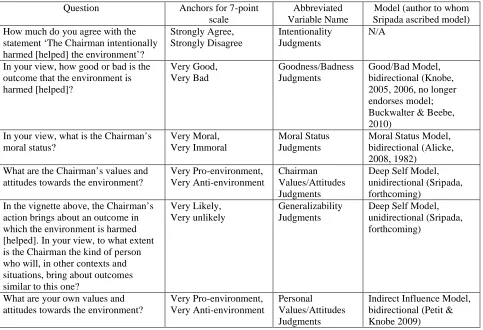
Table 1. Questions from Sripada and Konrath’s (forthcoming) study on intentional action. 13
Table 2. Summary of fit indices for the replications of Sripida and Konrath’s base model 33 using the recoded chairman values/attitudes judgments to reflect an implicit interaction
term and the analogous model using an explicit interaction term.
Table 3. Means for intentionality judgments and chairman values/attitudes judgments 47
LIST OF FIGURES
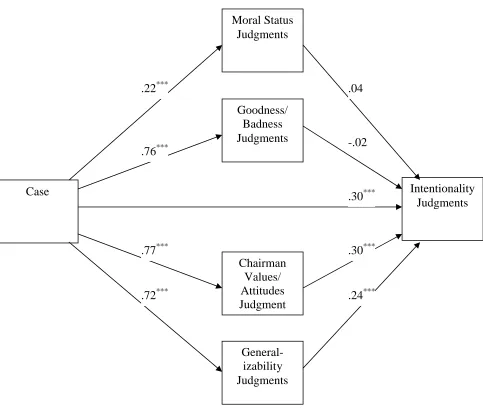
Figure 1. Sripada and Konrath’s (forthcoming) base model. 17
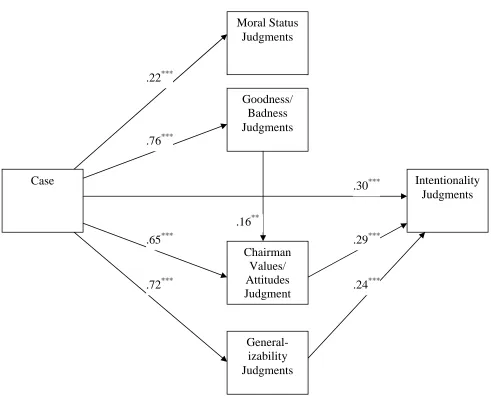
Figure 2. Sripada and Konrath’s (forthcoming) final model. 19
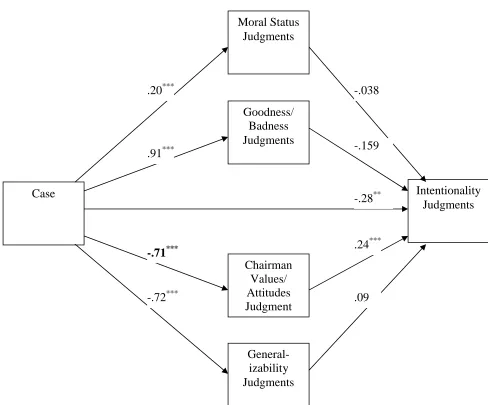
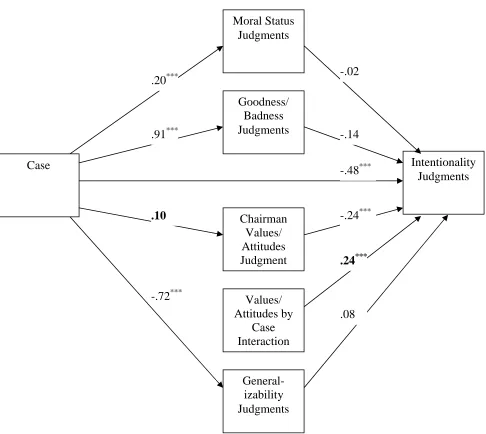
Figure 3. Replication of Sripida and Konrath’s base model using the recoded chairman 31 values/attitudes judgments to reflect an implicit interaction term.
Figure 4. Replication of Sripida and Konrath’s base model using an explicit interaction 32 term.
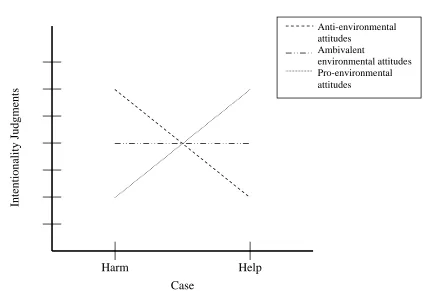
Figure 5. The Deep Self Model predicted simple slopes of intentionality judgments 44 regressed on case at different levels of chairman values/attitudes judgments controlling
for all the other variables in the model.
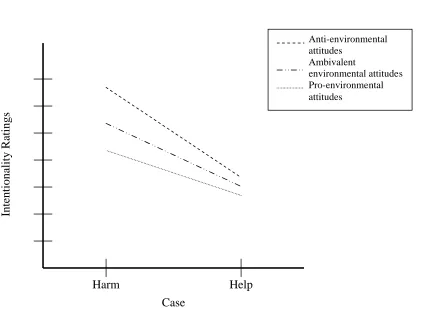
Figure 6. The observed simple slopes of intentionality judgments regressed on case at 51 different levels of chairman values/attitudes judgments controlling for all the other
variables in the model.
Figure 7. The observed simple slopes of intentionality judgments regressed on case at 61 different levels of chairman values/attitudes judgments controlling for all the other
1. INTRODUCTION
Two children, Elijah and Sacha, are playing on a playground when Elijah runs into
Sacha, knocking her down and causing minor injury. The caregivers rush over to tend to Sacha.
After assessing the degree of the injury, the caregivers find themselves faced with the task of
trying to determine the wrongness of Elijah’s act, and also trying to determine what sort of
punishment (if any) would be appropriate. There are many facts about Elijah, Sacha, and the
situation that the caregivers may consider when trying to assess the wrongness of Sacha’s action
and what kind of punishment (if any) would be appropriate. One of these considerations—
perhaps one that would figure prominently in these assessments—would be whether or not Elijah
intentionally knocked down Sacha. If Elijah was deemed to have intentionally knocked down
Sacha, the act may be considered more wrong (and it may deemed that a harsher punishment is
appropriate) than if the act was deemed to have been unintentional.
What this simple story illustrates is that judgments of intentional action—that is
judgments related to answering questions like “Did person yintentionally do x?”—are important
for making normative judgments. Here I mean to use the term ‘normative judgments’ fairly
broadly to include judgments about wrongness, responsibility, and punishment, along with
valuation judgments like judgments concerning goodness or badness. In the context of various
theories that I will be discussing later, I take it that judgments of norm violations—that is
judgments concerning when people act in a way that is contrary to the way we expect people
should act—are of primary importance. However, given the dialect to which this thesis belongs,
the primary concern is the role of normative judgments (like the ones listed above); the primary
This inference from judgments of intentional action to normative judgments like
wrongness of act or appropriateness of punishment seems to be a natural and appropriate order of
inference. However, what about the reverse interest—that is, from normative judgments like
wrongness of act or appropriately of punishment to judgments of intentional action? For
example, what if the caregivers first made a judgment based on a valuation of the badness of
Sacha’s injury, then used these judgments to inform their judgments of intentional action. Say, if
Sacha broke her arm, then the caregivers would conclude that Elijah intentionally knocked down
Sacha, but if Sacha only received a scratch, then the caregivers would conclude that Elijah did
not intentionally knock down Sacha. This sort of inference should seem really peculiar, and if we
witnessed the caregivers reasoning in this way, we would be liable to say that the caregivers’
reasoning was in gross error.
However, a growing number of philosophers and psychologists have recently put forth
views that argue that we often do make inferences from normative judgments to judgments of
intentional action (Alicke, 2008; Knobe, 2003a, 2006, 2010; Mele, 2006; Nadelhoffer, 2004a,
2006; Nado, 2008; Uttich & Lombrozo 2010; Wright & Bengson, 2007).
Before continuing, it will be helpful to introduce some terminology and some
distinctions. I will use the term unidirectional accountto refer to those accounts that assume that
there is a unidirectional relationship between intentional action judgments and normative
judgments. This unidirectional assumption comes in two forms: descriptive unidirectionality and
normative unidirectionality. Descriptive unidirectionality holds that, under normal conditions,
people do in fact use intentional action judgments as inputs into normative judgments but do not
use normative judgments as inputs into intentional action judgments. Normative unidirectionality
judgments. If, in some given case normative judgments did influence intentional action
judgments, then this influence would be an error. These two components can come apart, as one
can easily hold normative unidirectionalism while admitting that descriptive unidirectionalism is
often violated.
I will use the term bidirectional account to refer to those accounts that assume there is a
bidirectional relationship between intentional action judgments and normative judgments—that
is, to refer to those accounts that hold that normative judgments can, and often do, act as inputs
into intentional action judgments. For most proponents of bidirectionality, this bidirectionality
claim is primarily a descriptive claim that can be seen as a rejection of the descriptive component
of unidirectionalism, at least across certain cases (Alicke, 2008; Mele, 2006; Nadelhoffer, 2004a,
2006; Nado, 2008; Wright and Bengson, 2007). Most of these researchers tend to be either
agnostic about normative unidirectionalism or accept normative unidirectionalism, explicitly
stating that descriptive bidirectionalism occurs due to some kind of bias or error. However,
Joshua Knobe has extensively argued that the bidirectional relationship between normative
judgments and many folk psychological judgments are reflective of underlying competencies,
not caused by bias or error (Knobe, 2006; Knobe 2010). This claim by Knobe can be seen as a
rejection of the normative component of unidirectionalism.
These unidirectional and bidirectional accounts are about the relationships between
normative judgments and judgments of intentional action. These accounts attempt to answer the
question: When people make judgments of intentional action, are they using (should they be
using) normative judgments as inputs into their judgment of intentional action? This question is a
very different from the question: When people make judgments concerning whether or not
using (should they be using) normative judgments as inputs into their judgments of agenthood.
The sorts of unidirectionalists and bidirectionalists account being discussed in this thesis are
concerned with the former question not the latter. In other words, neither the unidirectional nor
the bidirectional accounts discussed in this thesis make any claims concerning whether or not
there are (or should be) normative constraints on agenthood (or on judgments concerning
agenthood).
The debate between unidirectionalists and bidirectionalists has potential implications for
several debates within philosophy, the law, and other domains. For example, many philosophical
accounts of intentional action explicitly view conservatismas being a virtue of theorizing about
the philosophically relevant concept ‘intentional action’. Conservatism is the view that folk
belief and folk concept application is an important constraint on philosophical theorizing (Doris,
Knobe, Woolfolk, 2007). For example, Al Mele states, “[A] philosophical analysis of intentional
action that is wholly unconstrained by that concept [the folk concept] runs the risk of having
nothing more than a philosophical fiction as its subject matter” (Mele, 2001, p. 27). If it can be
convincingly shown that normative judgments pervasively influence judgments of intentional
action, this would lead proponents of conservatism to a potentially uneasy choice: (a) Admit that
a philosophically appropriate account of intentional action must account for the influence of
normative judgments on intentional action, (b) convincingly argue that the folk are pervasively
and systematically confused in these situations and provide some kind of error theory that would
allow the conservative to remain conservative while rejecting the folk’s application of intentional
conservatism when it comes to the influence of normative judgments on judgments of intentional
action.1
Another philosophically relevant debate for which these views are potentially important
concerns the debate over the fundamental nature of folk psychology and the pervasiveness of
moral cognition. By folk psychology, I simply mean the pre-theoretical system of inferences that
we make about the mental states, behavior, causes, etc. of others and their actions. Many in
philosophy and psychology have proffered the view that folk psychology is fundamentally a
system employed for explanation and prediction (Churchland, 1989; Gopnik & Melzoff, 1997,
Gordon, 1986; Goldman, 1989).2However, on the basis that normative judgments pervasively influence judgments of intentional action and other folk psychological judgments, Joshua Knobe
(Knobe, 2006; Knobe, 2010) has argued that the evidence should lead one to a completely
different conclusion: At its base, folk psychology has a fundamentally normative component that
is completely independent of any role for explanation and prediction.3
Additionally, as is evident with the story of Elijah and Sacha and perhaps even more
prominently displayed in legal examples, central to our everyday and legal understanding of
responsibility and punishment include issues involving judgments of intentional action. Just as
Elijah would have been considered more fully responsible if he intentionally knocked down
1
Even revisionists, who are willing to flaunt certain supposed constraints of folk usage of a concept, should find the patterns of folk application of a concept relevant, as I take it that it is important for the revisionists (and philosophy in general) to understand just how revisionary and in what regards their accounts are revisionary.
2
Though generally recognized as competing theories about folk psychology, theory theorists, simulation theorists, and eliminativists as represented by Churchland share the commonality of viewing folk psychology as being fundamentally a system employed for explanation and prediction.
3
Sacha, judgments concerning one’s degree of responsibility for acts ranging from violating the
dress code of a party to harming the environment, from walking in on someone using the
restroom to the destruction of property, and so forth generally depend, at least in part, on
judgments concerning whether the act was committed intentionally. However, if judgments of
intentional action are being influenced by normative judgments, then this bidirectional
relationship between judgments of intentional action and normative judgments calls into question
whether judgments of intentional action can function as the sorts of judgments that can,
independently and impartially, guide judgments of responsibility (or wrongness of act or etc.)
A related philosophically relevant issue—one with practical implications for law—has to
do with issues this debate raises for the potential of jury impartiality (Nadelhoffer, 2006).
Potential criminal acts are, in part, differentiated by mens reaconditions even in cases where the
outcome is the same. Mens rea is Latin for guilty mind and refers to the mental states an offender
had in relation to the act. Mens reaconditions can refer to whether an offender committed an act
knowingly, willingly, purposefully, intentionally, with forethought, with malice, etc. For
example, consider a case in which a jury is faced with determining the appropriate conviction for
someone who has taken the life of another. Assuming that the taking of the life did not occur in
the commission of another felony, the choice of conviction may come down to a choice between
murder or manslaughter. To put the weight of this decision in practical terms, a conviction of
murder is typically accompanied by a punishment ranging from 20 years to life in prison. A
conviction of manslaughter is typically accompanied by a punishment of up to five years in
prison. In this case, one way in which murder may be distinguished from manslaughter is
whether the defendant took the life intentionallyas in the case of murder (Model Penal Code, §
manslaughter (Model Penal Code, § 24.05). Thus, getting the conviction correct comes down to a
determination of whether or not the defendant intentionally took the life or whether the taking of
the life was merely reckless. However, if normative judgments sometimes influence our
judgments of intentional action, the ability of jurors to impartially determine whether or not the
defendant acted intentionally is extremely suspect, as it seems that we may be predisposed to
judge norm violations, like the taking of another’s life, as being brought about intentionally. In
other words, due to the influence of normative judgments, a jury would be more likely to convict
the defendant of murder than manslaughter all other things being equal.
All of these philosophically relevant problems would disappear4if it could be shown that, in fact, normative judgments do notinfluence folk judgments of intentional action. One recent
and prominent account that attempts to show that normative judgments are not influencing folk
judgments of intentional action—and thus, if correct, would make the above-mentioned
problems disappear—is Chandra Sripada’s Deep Self Model of Intentionality and Responsibility
(hereafter, ‘Deep Self Model’) (Sripada, 2010; Sripada & Konrath, forthcoming). In brief,
Sripada claims that normative judgments do not play a role in the production of judgments of
intentional action (above and beyond the influence of the relevant, non-normative judgments);
rather what he calls ‘deep self concordance’ judgments are of primary importance for the
production of judgments of intentional action (‘deep self concordance’ will be explained in
greater detail in Section 3).
4
In this thesis, I will argue that Sripada’s model falls short of being able to convincingly
demonstrate that normative judgments are not influencing folk judgments of intentional action,
and as a consequence, the above-mentioned philosophical problems remain real problems. Along
the way, I will offer a more plausible version of a deep-self model—one that is explicitly
bidirectional.
The thesis is organized as follows: In the next section, I briefly present some evidence for
the claim that normative judgments do in fact influence judgments of intentional action. In
Section 3, I offer a somewhat detailed account of the Deep Self Model. In Sections 4 and 5, I
outline two methodological issues with Sripada’s attempt to empirically test his model (Sripada
and Konrath, forthcoming). The dialectical role of these sections will be two-fold: First, the
problems shed doubts on Sripada’s empirical findings and his interpretation of his findings,
hence raising doubts concerning the empirical support for his theoretical model. Second, the
problems raised are meant to motivate an empirical re-analysis of his model using corrected
methodology. In Section 6, I offer a sketch of a plausible bidirectional deep-self model, and then
demonstrate that once the methodological issues raised in Sections 4 and 5 are corrected, the
evidence favors the view that, at least in some cases, normative judgments are influencing
judgments of intentional action above and beyond the influence of deep-self judgments. In other
words, the evidence favors the predictions made by a bidirectional deep-self model over
Sripada’s Deep Self Model. In Section 7, I present the results of a new experiment that was
designed to test additional predictions of the kind of bidirectional deep-self model that I outline
in Section 6. In Section 8, I conclude with a brief discussion concerning how the results reported
in this paper may shed light on the status of the above-mentioned philosophically relevant
2. THE SIDE-EFFECT EFFECT: EVIDENCE FOR BIDIRECTIONALISM
A major part of the bidirectionalists’ argument against the descriptive component of
unidirectionalism relies on a growing body of experimental evidence that appears to support a
bidirectional account.
Take for example, the now classic study on intentional action by Joshua Knobe (2003a).
In this study, Knobe randomly presented participants with one of two vignettes. Both vignettes
involved a decision made by the chairman of the board of a company. The only thing that
differed about the vignettes was the moral valence of a foreseen side effect of the chairman’s
decision. In this case, it was whether the environment was harmed or helped as a result of the
chairman’s decision to implement a new policy. The harm vignette read as follows:
The vice-president of a company went to the chairman of the board and said, ‘We
are thinking of starting a new program. It will help us increase profits, but it will
also harm the environment.’
The chairman of the board answered, ‘I don’t care at all about harming the
environment. I just want to make as much profit as I can. Let’s start the new
program.
They started the new program. Sure enough, the environment was harmed.
The help vignette read exactly as the harm vignette, except all instances of ‘harm’
language were replaced with ‘help’ language.
After participants were presented with the vignette, they were asked if the chairman
percent of the participants judged that the chairman intentionally harmed the environment,
whereas in the help condition, only 23 percent judged that the chairman intentionally helped the
environment. This asymmetrical pattern of attribution based on changes in the moral valence of a
side effect has become known as the side-effect effect.
These results have been replicated using a diverse array of vignettes (see for example,
Knobe 2003b, Mallon 2008, Nadelhoffer 2004b), in a diverse array of populations, including
with Hindi speakers when the vignettes are translated into Hindi (Knobe & Burra 2006), with
four-year old children (Leslie et al. 2006), and with subjects who suffer from deficits in
emotional processing due to lesions in the ventromedial prefrontal cortex (Young et al. 2006).
Similar asymmetrical patterns of attribution have also been found for the attributions of
knowledge (Beebe & Buckwalter, 2010), valuing (Knobe & Roedder, 2009), decided, advocated,
and in favor of (Pettit and Knobe, 2009), causation (Hitchcock & Knobe, 2009), and act
individuation (Ulatowski, ms).
These above-cited examples of the replications and generalizations of the side-effect
effect (and side-effect effect-like effects) are but a small fraction of the entire body of literature
covering the persistence and pervasiveness of the side-effect effect, not to mention sources of
evidence outside of side-effect effect studies that suggest that normative judgments can, and
often do, influence judgments of intentional action. This growing body of evidence requires
explanation. The consensus view is that descriptive bidirectionalism is the best explanation. If
these researchers are right, then the philosophically relevant issues raised in the introduction of
this thesis remain very real problems with which philosophers (and others) will have to contend.
However, in spite of this growing consensus, some researchers have attempted to maintain a
offers a descriptive unidirectional model that he calls the Deep Self Concordance Model of
Intentionality and Responsibility (‘Deep Self Model’). In the following section, I will turn to
giving a detailed exposition of Sripada’s Deep Self Model.
3 THE DEEP SELF MODEL
In rejection of a bidirectional account of the side-effect effect, in particular, and
judgments of intentional action, more generally, Sripada offers the Deep Self Model. The Deep
Self Model consists of two main theses: First, normative judgments are not influencing
judgments of intentional action. Second, rather, “deep self concordance” judgments are primarily
responsible for our judgments of intentional action. Deep-self judgmentsare attributions about an
agent’s stable attitudes, values, and behavioral dispositions (Sripada, 2010; Sripada & Konrath,
forthcoming). This notion of a ‘deep self’ is borrowed form Hume and can be contrasted with
one’s acting self. Additionally, these deep-self judgments are similar to what some psychologists
call dispositional attributions and are meant to be trait-like attributions. Deep-self concordance
occurs when the psychological attitudes of the agent’s deep self concords, or matches up with, an
act. So, deep-self concordance judgments are judgments, generally made by a third party, that an
agent’s deep self concords with some act.
Sripada’s Deep Self Model proposes that when someone believes that an agent’s actions
are in concordance with the agent’s deep self (i.e., when the action concords with the agent’s
underlying values and attitudes), she will be more likely to say that the agent intentionally
committed the act in question. According to the model, when trying to figure out whether an
agent’s deep self is in concordance with an action, people consider non-normative facts about the
situation and are not making judgments based on normative considerations.
In the case of Knobe’s chairman vignettes, in both the harm and the help scenarios, the
environment. According to Sripada, the statement of indifference toward the environmental
outcome may be taken to express general contempt or hostility toward the environment. Thus, in
both conditions, participants attribute anti-environmental attitudes toward the chairman.
However, only in the harm condition does the chairman bring about an outcome that is in
concordance with the attribution of anti-environmental attitudes. Thus, according to the model, it
should be more likely that the participants will say that the chairman intentionally harmed the
environment in the harm condition than the participants would be willing to say the chairman
intentionally helped the environment in the help condition. Sripada’s model would also predict
that if participants attributed pro-environmental attitudes to the chairman, then intentionality
attributions would be more likely in cases where the chairman helped the environment.
To test the Deep Self Model, Sripada and Konrath (forthcoming) randomly assigned 240
participants to the harm or the help condition of Knobe’s chairman vignette. Following the
vignette, participants were presented with six questions: one question concerning whether the
chairman intentionally harmed [helped] the environment, two questions that were meant to
measure key candidate explanatory variables for two different bidirectional accounts, two
questions that were meant to measure candidate explanatory variables for Sripada’s Deep Self
Model, and a question about the participants’ own values concerning the environment. See Table
1 for a summary of the questions asked and the model that each question was meant to represent.
Sripada and Konrath analyzed their data using a Structural Equation Modeling (SEM)
method known as structural path analysis. SEM is a statistical technique that allows for the
simultaneous measurement of multiple and complex linear relationships among observed or
latent variables. Before continuing, it will be helpful to review some basic SEM terminology.
Table 1. Questions from Sripada and Konrath’s (forthcoming) study on intentional action.
Question Anchors for 7-point scale
Abbreviated Variable Name
Model (author to whom Sripada ascribed model) How much do you agree with the
statement ‘The Chairman intentionally harmed [helped] the environment’?
Strongly Agree, Strongly Disagree
Intentionality Judgments
N/A
In your view, how good or bad is the outcome that the environment is harmed [helped]? Very Good, Very Bad Goodness/Badness Judgments Good/Bad Model, bidirectional (Knobe, 2005, 2006, no longer endorses model; Buckwalter & Beebe, 2010)
In your view, what is the Chairman’s moral status?
Very Moral, Very Immoral
Moral Status Judgments
Moral Status Model, bidirectional (Alicke, 2008, 1982)
What are the Chairman’s values and attitudes towards the environment?
Very Pro-environment, Very Anti-environment
Chairman Values/Attitudes Judgments
Deep Self Model, unidirectional (Sripada, forthcoming)
In the vignette above, the Chairman’s action brings about an outcome in which the environment is harmed [helped]. In your view, to what extent is the Chairman the kind of person who will, in other contexts and situations, bring about outcomes similar to this one?
Very Likely, Very unlikely
Generalizability Judgments
Deep Self Model, unidirectional (Sripada, forthcoming)
What are your own values and attitudes towards the environment?
Very Pro-environment, Very Anti-environment
Personal Values/Attitudes Judgments
is a pictorial representation of the structural model. A structural modelis the set of equations that
represent the relationships among the variables in the model. So, a path diagram is a pictorial
representation of the relationships among the variables in the model. Each structural path in a
path diagram is meant to represent a causal relationship between two variables. Associated with
each structural path is a path coefficient. The path coefficientrepresents the magnitude of the
relationship between the two variables a structural path connects, controlling for the relationships
of the other variables in the model. If certain assumptions are met, namely that the structural
model has not mis-specified the causal relationships among the variables, the path coefficients
can be interpreted as representing the strength of the causal relationship an independent variable
has on a dependent variable, controlling for the effects of all the other variables in the model.
The interpretations of these causal relationships are also expressed in the vocabulary of the path
coefficient representing the uniquecausal contribution (or effect) of an independent variable on a
dependent variable or in the vocabulary of the path coefficient representing the causal
contribution (or effect) of an independent variable on a dependent variable, above and beyond
the causal contribution (or effects) of all other variables on in the model. These path coefficients
can be represented in standardizedor unstandardizedterms. If the path coefficient is a
standardized path coefficient, then the path coefficient can be interpreted as the expected change
in the dependent variable per standard deviation unit change in the independent variable,
controlling for all the other variables in the model. If the path coefficient is an unstandardized
path coefficient, then the path coefficient can be interpreted as the expected change in the
dependent variable per unit change (using the original units in which the variables were
measured) in the independent variable, controlling for all the other variables in the model.
regression. In one sense, structural path analysis just is a set of regression formulas. So, if you
are familiar with regression and if it helps you to think about structural path analysis in terms of
regression analyses, it is perfectly acceptable to interpret the path coefficients just as you would
interpret regression coefficients. However, SEM does have some advantages over basic
regression analyses. First, SEM allows the modeling of relationships among latent variables.
Latent variablesare variables that are not directly observed, but are variables that underlie the
production of directly observable variables. Latent variables are not being utilized in any of the
analyses reported or conducted in this paper, so a more in-depth explanation or understanding of
the nature of latent variables is not needed. Second, SEM allows for the modeling of more
complex relationships than what standard regression allows. Third, SEM provides a method to
evaluate the ‘fit’ of a structural model against the data. Every structural model implies a specific
covariance matrix. A covariance matrix is simply an unstandardized correlational matrix, and
thus represents the relationships of associations among all the variables in the model. To test the
fit of a structural model, the structural model’s implied covariance matrix is compared to the
covariance matrix of the actual data set. There are a number of different fit indices. Fit indices
are indices of how well the structural model’s implied covariance matrix fits the covariance
matrix of the actual data set. Or, in other words, the fit indices are indices of whether or not, or
the extent to which, the structural model’s implied covariance matrix varies from the covariance
matrix of the actual data set. The most widely reported fit index is the 2
statistic. A significant
2
statistic implies that the structural model’s implied covariance matrix varies from the
covariance of the actual data set with statistical significance. However, there remain various
debates in the literature concerning the use of the 2
statistic as an absolute arbitrator between
evidence of good fit, either as a supplement to the evidence provided by a 2
statistic or
sometimes in lieu of a 2
statistic.
With this technical apparatus under our command, we are now in a position to be able to
understand and interpret Sripada and Konrath’s models. Figure 1 is a path diagram of the first
model they tested. As predicted by Sripada and Konrath’s Deep Self Model, the analysis showed
that the two normative variables had no effect on intentionality judgments above and beyond the
effects of the deep-self variables and the experimental manipulation. This can be seen by looking
at the path coefficients associated with the structural paths from moral status judgments to
intentionality judgments and from goodness/badness judgments to intentionality judgments.
Neither of these path coefficients represents a statistically significant relationship. Thus, there is
no evidence that the strength of these relationships differs from zero, when controlling for all the
other variables in the model. In other words, there is no evidence of an effect of moral status
judgments on intentionality judgments above and beyond the effect of the other variables in the
model nor is there evidence of an effect of goodness/badness judgments on intentionality
judgments above and beyond the effect of the other variables in the model. Additionally, the
analysis showed that the deep-self variables and the experimental manipulation had significant
effects on intentionality judgments above and beyond the effects of all the other variables in the
model.
The final model Sripada and Konrath tested was their hypothesized Deep Self Model (the
base model minus the paths between the normative variables and intentionality judgments) plus
the addition of a single empirically driven modification (an added path between
goodness/badness judgments and chairman values/attitudes judgments). Based on all reported fit
Case
Moral Status Judgments
Goodness/ Badness Judgments
Chairman Values/ Attitudes Judgment
General-izability Judgments
Intentionality Judgments .22***
.76***
.77***
.72***
.04
-.02
.30***
.30***
[image:25.612.82.565.76.488.2].24***
Figure 1. Sripada and Konrath’s (forthcoming) base model.
hypothesis of the Deep Self Concordance Model—that is, for the hypothesis that deep-self
judgments are a major driving force behind the pattern of intentional action judgments and for
the hypothesis that normative judgments do not have an impact on intentional action judgments
above and beyond the impact of deep-self judgments. See Figure 2 for the path diagram of their
final model.
Sripada and Konrath followed this study with a second study that examined what people
think drives the asymmetric intentionality responses in the chairman case. This second study was
motivated by the fact that although Sripada and Konrath “provided strong evidence that deep
self-related factors explain a majority of the asymmetric judgment effect in the chairman case,
while normative factors account for a small minority of the asymmetry[,] … based on the
experience of [Sripada] in presenting the Deep Self Model to audiences in papers and talks, in
terms of intuitive appeal, the order of priority is fully reversed – most people find normative
factor models highly intuitive (and indeed some think it is simply obviousthat these models are
correct), while they find the Deep Self Model far less intuitive” (Sripada & Konrath,
forthcoming, draft p. 15).
Of the participants who were a part of Sripada and Konrath’s second study, 76% gave
open-ended responses that implicated normative variables as the probable cause of the
asymmetry while 7% gave open-ended responses that implicated deep-self variables as the
probable cause of the asymmetry. The remainder gave responses that were classified as not
falling into either category. In light of these results, Sripada and Konrath concluded that their
participants, along with audience members at their talks, were experiencing a tracking problem
when trying to explain the reasons why the asymmetry arises. To justify this tracking problem
Case
Moral Status Judgments
General-izability Judgments
[image:27.612.65.556.101.497.2]Intentionality Judgments
Figure 2. Sripada and Konrath’s (forthcoming) final model.
Note: All path coefficients are expressed in standardized units. * p< .005, ** p <.01, *** p < .001. Overall model fit, 2(6) = 12.00, p= .06; NFI = .985; NNFI = .981; CFI = .992; RMSEA = .065.
Goodness/ Badness Judgments
Chairman Values/ Attitudes Judgment .22***
.76***
.65***
.72***
.30***
.29***
article “Telling more than we can know: Verbal reports on mental processes.” Nisbett and
Wilson’s review of hundreds of studies provided extensive evidence that even though people are
generally able to accurately state outcomes of judgment processes, they have very little ability to
introspectively identify the intervening judgments and inferences that played a role in producing
judgment outputs. Mis-implications of certain judgments tend to occur when (1) the critical
features that drive the judgment are low in salience and the influences of these features on
judgment processes are not easily accessible to conscious awareness, and (2) there is some other
feature of the situation that is high in salience and that is more readily accessible to awareness.
When these two conditions are met, people have a greater tendency to implicate the feature that
is high in salience even if this highly salient feature plays no role in the actual judgment
outcome, while ignoring the low-salient feature.
Sripada and Konrath see the chairman case as clearly meeting these features. First, the
manipulation of the moral valance of the scenario is highly salient. Second, the attributions of
dispositions, such as the attribution of underlying values and attitudes and behavioral
dispositions, are often spontaneous, implicit, and automatic (see Uleman, et al., 2008, for a
recent review of the spontaneous trait inferences literature). To help avoid the tracking problem
when theorizing and when testing theories concerning complex judgment processes such as those
that may appear in the side-effect effect, Sripada and Konrath recommend that more of the field
move toward the more sophisticated statistical tools of Structural Equation Modeling, since SEM
is particularly well suited for separating out unique influences of multiple variables on some
given (set of) dependent variable(s).
Going forward, I will argue that, even though it may appear that Sripada and Konrath
pattern of intentionality judgments in Knobe’s chairman case, while normative judgments play
no (or at most an irrelevantly small) role in the asymmetric pattern of intentionality judgments in
Knobe’s chairman case, Sripida and Konrath’s experimental evidence simply does not justify the
conclusion that normative judgments are playing no role in the production of intentionality
judgments in Knobe’s chairman case. Rather, I will argue that a more plausible version of a
deep-self model is one that is explicitly bidirectional. That is, I will argue that a more plausible
deep-self model is one that admits that both deep-self judgments and normative judgments play
an important role in the production of judgments of intentional action.
In the next two sections, I outline two methodological issues with Sripada’s attempt to
empirically test his model (Sripada and Konrath, forthcoming). The first issue, taken up in
Section 4, involves the problem of implicitly modeling interaction terms. The second issue, taken
up in Section 5, involves the problem of using manipulation checks as mediators. The dialectical
role of these sections will be two-fold: First, the problems shed doubts on Sripada’s empirical
findings and his interpretation of his findings, hence raising doubts concerning the empirical
support for his theoretical model. Second, the problems raised are meant to motivate an empirical
re-analysis of his model using corrected methodology. In Section 6, I offer a sketch of a plausible
bidirectional deep-self model, and then demonstrate that once the methodological issues raised in
Sections 4 and 5 are corrected, the evidence favors the view that, at least in some cases,
normative judgments are influencing judgments of intentional action above and beyond the
influence of deep-self judgments. In other words, the evidence favors the predictions made by a
bidirectional deep-self model over Sripada’s Deep Self Model. In Section 7, I present the results
of a new experiment that was designed to test additional predictions of the kind of bidirectional
concerning how the results reported in this paper may shed light on the status of the
above-mentioned philosophically relevant debates about people’s judgments of intentional action.
4 THE PROBLEM OF MODELING IMPLICIT INTERACTION TERMS
*** TECHICAL DISCUSSION WARNING: This section involves either a fairly
technical discussion of methodological and statistical issues or the reporting of various statistical
results. While it is not necessary to understand all the technical methodological and statistical
points, understanding these points can help the reader have a greater appreciation and
understanding for what is going. Additionally, in order to keep the results as transparent as
possible, I am not relegating the reporting of the more technical aspect of the statistics to
footnotes and appendices. Those without expertise in statistical interpretation should not be
off-put or overwhelmed by the reporting of these statistics. Rather, one without expertise in
statistical interpretation can gloss over the more technical aspects of the reporting and simply
focus on the English interpretations of the statistics. Subsequent section that contain technical
discussions of methodological or statistical points will be marked by an asterisk. ***
The problem highlighted in this section might be summarized in a very general form as
follows: The way Sripada and Konrath use the chairman’s values/attitudes judgments variable in
their model does not appear to be the best way to conceptualize the variable given their
theoretical model. Their conceptualization and use of the chairman’s values/attitudes judgments
variable causes a mismatch between their theoretical model and their statistical model. In the last
subsection of this section, I demonstrate that when using a conceptualization of the chairman’s
values/attitudes judgments variable that better matches the theoretical model, my replication of
Sripada and Konrath’s model no longer fits the data as well. This in turn provides some evidence
Before continuing, it will be helpful to get a little bit of terminology out of the way
regarding path coefficients and fit indices, both of which were briefly defined above (pp. 12-13),
and mediator variables and moderator variables. A mediator variableis a causal intermediary
variable through which the effect of an independent variable on a dependent variable can be
accounted for or explained. Mediationis said to occur to the extent that the mediator variable can
account for or explain the effect of the independent variable on the dependent variable. Partial
mediationoccurs when the mediator partially accounts for or explains the effect of an
independent variable on a dependent variable. Full mediation occurs when the mediator fully
accounts for or explains the effect of an independent variable on a dependent variable.
A moderator variable is a variable that affects the direction or strength of the relationship
between an independent variable and a dependent variable. Moderation effectsare also known as
interaction effects. When demonstrating moderation in a regression, SEM, or other similar
frameworks, the standard methodology requires one to create an interaction term, which, in the
case of linear moderation effects, is created by multiplying the moderator variable and the
independent variable together and then using this product as the newly formed interaction term.
Moderation and mediation are two very distinct types of effects. In spite of their conceptual
distinctness, moderation and mediation are often confused in much of the social science
literature. Confusing moderators and mediators can lead to serious problems with one’s
theoretical model, statistical model, or interpretation of the models (depending at which point the
conceptual confusion occurred). (See Baron & Kenny, 1986 for a detailed discussion of the
moderator-mediator distinction, along with a discussion of standard methodology for testing
moderation and mediation; see Shrout & Bolger, 2002 for a detailed discussion of mediation and
With this terminology out of the way, let’s consider the relevance of these issues to the
current discussion. The primary claim of this section is that Sripada and Konrath recoded the
chairman values/attitudes judgments to implicitly reflect an effect of moderation, instead of
explicitly modeling a moderation effect. Because of this decision to use a recoded variable, the
chairman values/attitudes judgments, which theoretically is meant to be a moderator variable,
ends up being treated as a mediator variable in the statistical model. Furthermore, this recoding
of the chairman values/attitudes judgments leads to several interpretative and statistical
difficulties. However, even ignoring the specific interpretative and statistical inaccuracies that I
point out below, Sripada and Konrath’s decision to use a variable that implicitly reflects a
moderation effect remains problematic, if for no other reason than this recoding caused a
variable that is theoretically a moderator to be treated as a mediator in their statistical model.
Given Sripada and Konrath’s explanation of the application of the Deep Self Model to the
chairman case, the path coefficient that represents the relationship between case and chairman
values/attitudes judgments appears not to support part of this explanation.
Applying the Deep Self Model to the chairman case, the model first predicts that
in both the harm and help condition, people ascribe to the chairman core
underlying anti-environment values and attitudes. This is because the chairman
says ‘I don’t care at all about harming [helping] the environment’, which is taken
to express contempt or hostility toward the environment. (Sripada and Konrath,
Here, Sripada and Konrath predict that there should be little-to-no effect of case on
chairman values/attitudes judgments, yet in their statistical model, the path coefficient associated
with the relationship between case and chairman values/attitudes judgments is representative of a
large effect. However, this seemingly contradictory result may not be due to a failure of
prediction; rather it may be due to the fact that Sripada and Konrath recoded the chairman
values/attitudes judgments variable to implicitly reflect a moderation effect (instead of explicitly
modeling a moderation effect). Here is there explanation of their decision:
The predictions of the Deep Self Model require that the chairman values/attitudes
judgments variable be ‘reverse coded’ in one of the two conditions. Reverse
coding means that the variable is flipped around its midpoint. Thus on a 7 point
scale, a 1 is scored as a 7, a two as a 6, and so on. Reverse coding of this variable
is required for one of the two conditions because the Deep Self Model predicts
correlations of opposite directions in the two conditions. That is, according to the
Deep Self Model, in the harm condition, rating the chairman as more
anti-environment predicts greater agreement with the statement that the chairman
intentionality harmed the environment. But in the help condition, rating the
chairman as more anti-environment predicts lesser agreement with the statement
that the chairman intentionality helped the environment. (note 8)
Here, Sripada and Konrath’s application of the Deep Self Model to the chairman case
predicts that case moderates the effect of chairman values/attitudes judgments on intentionality
effect of chairman values/attitudes judgments on intentionality judgments depends on level of
case (case having two levels: harm, help). This moderation claim is statistically equivalent to the
claim that chairman values/attitudes judgments moderate the effect of case on intentionality
judgments.5If we expressed the moderation effect in this way, we would want to say that the direction (or strength) of the effect of case on intentionality judgments depends on level of
chairman values/attitudes judgments (chairman values/attitudes judgments having continuum of
levels ranging from 1 to 7). To put this a little more concretely, under the predictions of Sripada
and Konrath’s model, we would say that when people attribute anti-environmental values and
attitudes to the chairman, they should be more likely to attribute intentionality to the chairman
when the chairman harms the environment than when he helps the environment. On Sripada’s
account, this expectation would be because anti-environmental attitudes and harming the
environment concord. On the other hand, when people attribute pro-environmental values and
attitudes to the chairman, they should be more likely to attribute intentionality to the chairman
when the chairman helps the environment. Again, on Sripada’s account, this expectation would
be because pro-environmental attitudes and helping the environment concord.6Instead of including an explicit interaction term in their model, Sripada and Konrath recoded the chairman
5
This fact of equivalence is important for the purposes of this paper, as in Sections 6 & 7, I will choose to conceptualize the moderation effect as chairman values/attitudes judgments
moderating the effect of case on intentionality judgments. Given that these claims are equivalent, nothing substantial rides on the choice of the ways to express the relationship. However, given what I show in Sections 6 & 7, the interpretation becomes a bit easier if the moderation is
expressed in this manner. However, the exact same effect – and problems for Sripada’s account – could be shown if I chose to express the moderation effect as case moderating the effect of chairman values/attitudes judgments on intentionality judgments.
6
Additionally, this moderation effect strictly implies that when people attribute ambivalent environmental values and attitudes to the chairman, there should be no difference in
values/attitudes judgments to reflect the predicted moderation effect. The choice not to use an
explicit interaction term leads to both interpretive and statistical inaccuracies.
On the interpretative side, one of the problems this recoding creates is the production of a
model that is incapable of straightforwardly capturing the hypothesized relationship between
case and chairman values/attitudes judgments. Sripada and Konrath’s statistical model makes it
appear as if there is a strong relationship between case and chairman values/attitudes judgments;
however, their explanation of the application of their theoretical model to the chairman case
predicts that there should be little to no effect of case on chairman values/attitudes judgments,
since the chairman ‘does not care at all’ about the effects on the environment in either case. That
is, their model predicts that people should respond that he has negative attitudes towards the
environment in both cases. By using a recoded chairman values/attitudes judgments variable,
there is no straightforward way to interpret the path coefficients such that one can discern the
relationship between case and chairman values/attitudes judgments.
Another interpretative difficulty appears in Sripada and Konrath’s final model in which
they model a path between goodness/badness judgments and the recoded chairman
values/attitudes judgments. It is not even clear what this structural path would represent.
Statistically, this method of modeling the paths is not the same as modeling a path between
goodness/badness judgments and an explicit interaction term. Furthermore, theoretically, this
method of modeling the paths is not the same as modeling a relationship between
goodness/badness judgments and a non-recoded chairman values/attitudes judgments. Finally,
just to reiterate, the most significant problem with Sripada and Konrath’s use of the recoded
when the variable is described as a moderator in their theoretical model. This confusion can lead
to numerous conceptual and interpretive flaws (Baron and Kenny, 1986).
On the statistical side, the model with the implicitly recoded values/attitudes judgments
variable is not statistically equivalent to a model that includes an explicit interaction term. This
means the model fit will probably differ between the two models.
To test the hypothesis that the model fit between the two models differs, I will be using
new data that I collected as part of a larger study that seeks to explore various relationships
among normative judgments and folk psychological judgments. Specifically, I will run two sets
of structural path analyses. The first analysis will be a replication of Sripada and Konrath’s
model as they ran it (i.e., with a recoded chairman values/attitudes judgment variable that
implicitly reflects the moderation effect). The second analysis will be a replication of Sripada
and Konrath’s model using an explicit interaction term. I predict that a model using an explicit
interaction term will better capture the predictions of Sripada and Konrath’s explanation of their
application of the Deep Self Model to the chairman case. That is, I predict that the path
coefficient for the structural path that represents the effect of case on chairman values/attitudes
judgments will not be statistically significant or will only be representative of a very small effect
size, and I predict that the path coefficient representing the moderation effect will be significant.
Furthermore, I predict that the model that uses the explicit interaction term will perform worse
on all fit indices when compared to the model that uses the recoded chairman values/attitudes
judgments. If these predictions are right, this would leave Sripada with the choice of choosing
between (a) a model that more accurately captures specific predictions about certain paths but
performs worse on fit indexes or (b) a potentially problematic model that cannot
fit indexes. In other words, if these predictions are right, they would show that when an
improved-theory-matching methodology is used, Sripada’s model is not as well supported (via
worse performing fit indices).
4.2 Methods
Participants (n= 699) were students at Georgia State University enrolled in a critical
thinking course. For their participation, participants were offered extra credit at the instructor’s
discretion. All participants were randomly assigned to one of four vignette conditions, including
the two vignette conditions used by Sripida and Konrath, as well as two other conditions to be
discussed in Section 6. Following the presentation of the vignette, participants were presented
with a series of questions, a subset of which were the same questions Sripida and Konrath used
in their study. See Table 1 for the questions used in Sripada and Konrath’s original study. In
order to eliminate potential order effects and carry-over effects, a Williams design (Williams,
1949), which is Latin Square randomization balanced for first-order carry-over effects, was
employed. Participants who did not finish the survey or who missed a simple comprehension
check had their data dropped from analysis, resulting in n= 551. Only data from the two
conditions used in Sripida and Konrath’s study were used in the current analysis, resulting n=
299. All surveys were conducted online using standard survey software.
4.3 Results and Discussion*
Two structural path analyses were run. In the first analysis, Sripada and Konrath’s base
model was run as they ran it. That is, the chairman values/attitudes judgments were recoded to
implicitly reflect the interaction. In the second analysis, a model analogous to Sripada and
Konrath’s base model was ran using a non-recoded chairman values/attitudes judgments variable
interaction term was created by multiplying together the dummy-coded case variable by the
chairman values/attitudes judgments. See Figure 3 for the path diagram of the model that used
the recoded chairman values/attitudes judgment variable. See Figure 4 for the path diagram of
the model that used the explicit interaction term.
The statistical model with the explicit interaction term better matches the predictions of
Sripada and Konrath’s explanation of the application of the Deep Self Model to the chairman
case. As predicted by Sripada and Konrath, there were no differences in chairman
values/attitudes judgments between the harm and help conditions. Furthermore, as predicted by
the Deep Self Model, there is a significant interaction between case and chairman
values/attitudes judgments. However, the model with the explicit interaction term performed
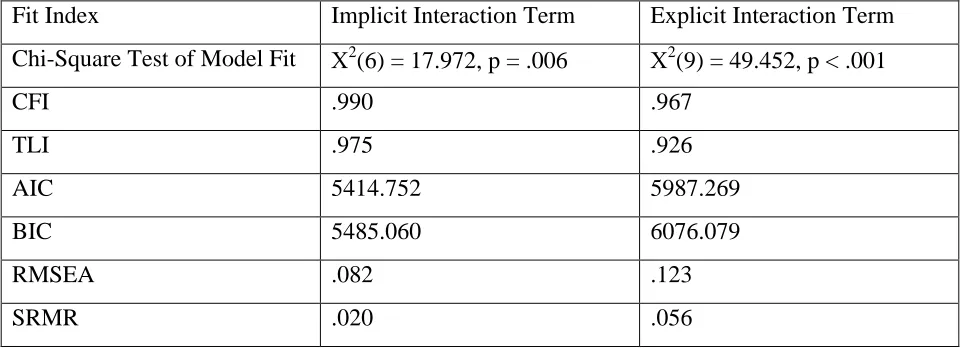
worse on all the available fit indices.7In other words, once an improved-theory-matching methodology is used, Sripida and Konrath’s model no longer fits the data as well. See Table 2
for a summary of fit indices for both models.
However, this result simply sheds doubt concerning overall model fit. While a model
failure can be seen as a challenge to the collection of hypotheses embedded within the model, it
does not necessarily provide strong evidence against any specific hypothesis embedded in the
model. Keep in mind that the Deep Self Model has two primary hypothesis: (1) deep-self
variables are of primary importance in the production of judgments of intentional action, and (2)
normative variables do not have an effect on judgments of intentional action above and beyond
the effects of the deep-self variables. The second of these two hypotheses is the one that directly
challenges the descriptive bidirectional account, and it accounts for Sripida’s model being
appropriately considered a unidirectional account. In the next section of this thesis, I outline a
7
Case
Moral Status Judgments
Goodness/ Badness Judgments
Chairman Values/ Attitudes Judgment
General-izability Judgments
Intentionality Judgments .20***
.91***
-.71***
-.72***
-.038
-.159
-.28**
.24***
[image:39.612.88.576.86.491.2].09
Figure 3. Replication of Sripida and Konrath’s base model using the recoded chairman values/attitudes judgments to reflect an implicit interaction term.
Case Moral Status Judgments Goodness/ Badness Judgments Chairman Values/ Attitudes Judgment General-izability Judgments Intentionality Judgments .20*** .91*** .10 -.02 -.14 -.48*** -.24*** .24*** Values/ Attitudes by Case Interaction -.72*** .08
Table 2. Summary of fit indices for the replications of Sripida and Konrath’s base model using the recoded chairman values/attitudes judgments to reflect an implicit interaction term and the analogous model using an explicit interaction term.
Fit Index Implicit Interaction Term Explicit Interaction Term
Chi-Square Test of Model Fit 2(6) = 17.972, p = .006 2(9) = 49.452, p < .001
CFI .990 .967
TLI .975 .926
AIC 5414.752 5987.269
BIC 5485.060 6076.079
RMSEA .082 .123
SRMR .020 .056
second methodological issue with the way Sripada and Konrath empirically tested their
theoretical model—the problem of using manipulation checks as mediators. This second
methodological issue speaks directly to the strength of the evidence that Sripada and Konrath’s
model provides for the hypothesis that normative judgments are not influencing judgments of
intentional action.
5 THE PROBLEM OF USING MANIPULATION CHECKS AS MEDIATORS*
The primary claim of this section is that the observed variable goodness/badness
judgments conceptually is a manipulation check. Here I use the term ‘manipulation check’ to
refer to any observed variable that acts as a measure of some conceptual variable whose variation
is (thought to be) a constitutive part of the experimental manipulation. In other words, it is a
measurement of what the experimental manipulation is thought to be manipulating. This use of
manipulation check is also referred to as an ‘independent variable check’ (Sigall and Mills,
1998). Because the observed variable goodness/badness judgments is a manipulation check, the
causal information provided by the goodness/badness judgments variable and the causal
information provided by the manipulation of case are, in large part, redundant. Given this
redundancy, it should not be expected that there should be a unique effect of goodness/badness
judgments on intentionality judgments, above and beyond the effects of all the other variables in
the model whenever the manipulation of case is included as one of the variables in the model.
However, this failure of expectations to find a unique effect has little to nothing to do with the
role of the deep-self variables; rather it has much more to do with the fact that the causal
information provided by the observed variable goodness/badness judgments and the causal
occurs because the variation of goodness/badness judgments is a constitutive part of the
manipulation of case.
For our current purposes, it may be helpful to review the general form of Sripada and
Konrath’s base model. In the base model, there is a dichotomous experimental manipulation. The
experimental manipulation involves giving participants a vignette in which the only thing that
changes is the moral valence of a foreseen side effect of an agent’s action—that is, the
manipulation of whether the environment was harmed or helped as the result of the chairman’s
decision to implement a profit-generating policy. In the base model there are also four variables
that are construed as mediator variables.8The experimental manipulation along with the four potential mediator variables all act as potential predictors of intentionality judgments. One of the
potential mediator variables is goodness/badness judgments. The goodness/badness judgment
variable is a rating of the participants’ judgments about the moral valence of the side effect. It
asks whether the harming [helping] of the environment is good or bad. With this in mind, the
goodness/badness judgments conceptually just is a manipulation check. After all, the
experimental manipulation was designed to manipulate the perceived moral valence of the side
effect, and the goodness/badness judgments is meant to be a measurement of whether
participants perceived the moral valence to have been manipulated. The other three potential
mediator variables are ratings about various perceptions about the agent—the values and
attitudes of the agents, the behavioral dispositions of the agent, and the moral status of the agent.
8
As pointed out in Section 4, Sripida and Konrath’s recoded chairman values/attitudes
In Sripida and Konrath’s base model, the path coefficient associated with the structural
path goodness/badness judgments to intentionality judgments does not statistically differ from
zero. This result leads Sripida and Konrath (forthcoming) to conclude, “This pattern is consistent
with the hypothesis that goodness/badness judgments … are causally influenced by case, but
goodness/badness judgments … are not themselves causes of intentionality judgments”
(emphasis original).
However, this conclusion is not warranted. The reason goes back to the fact that,
conceptually, the goodness/badness judgments variable just is a manipulation check. When using
a proximal mediator—a manipulation check is the prototypical example of the most proximal of
proximal mediators9—it is common to receive results that lead to a large path coefficient for the path that represents the relationship between the independent variable, in this case the
experimental manipulation of case, and the proximal mediator, in this case goodness/badness
judgments. Further, using a proximal mediator generally leads to a very small or null coefficient
for the path that represents the relationship between the proximal mediator and the outcome
variable. This leads to very small power to detect genuine indirect effects (Hoyle and Kenny,
1999). This decreased power is generally caused by inflated standard errors due to high
multi-collinearity. These statistical results are common for proximal mediators in both experimental
and non-experimental research; however, the problem of using a manipulation check as a
mediator goes beyond these commonly noted problems associated with using proximal mediator.
9
Recall that the path coefficients represent the uniqueeffect of an independent variable on
a dependent variable, above and beyond the effects of all other variables in the model. In Sripada
and Konrath’s base model, the path coefficient that is associated with the structural path
goodness/badness judgments to intentionality judgments represents the unique effect of
goodness/badness judgments on intentionality judgments, above and beyond the effects of all the
other variables in the model. Given the results of Sripada and Konrath’s model, it may be
accurate to say that there is no unique effect of goodness/badness judgments on intentionality
judgments above and beyond the effect of the experimental manipulation and the effects of the
other potential mediators. However, considering that the measurement of goodness/badness
judgments conceptually just is a manipulation check, there should not be an expectation of a
unique effect of goodness/badness judgments on intentionality judgments above and beyond the
effects of all the other variables in the model whenever all the other variables include the
experimental manipulation. This failure of expectations occurs because the causal information
conveyed by the goodness/badness judgments variable and the causal information conveyed by
the manipulation of case are, in large part, redundant. This redundancy occurs because the
variation of goodness/badness judgments is a constitutive part of the experimental manipulation.
That is, the experimental manipulation is a manipulation of goodness/badness judgments.
If my claims above are correct, then several empirical results should follow. First, if the
experimental manipulation is acting as a successful manipulation of goodness/badness judgments
(and if the observed variable goodness/badness judgments is an accurate measurement of this
manipulation), then we should expect to find a strong positive correlation between the
manipulation of case and goodness/badness judgments. Second, if the goodness/badness