ORIGINAL RESEARCH ARTICLE
WORKING TOWARDS IMPLEMENTATION OF RESULTS-BASED MANAGEMENT IN
DEVELOPING COUNTRIES WITH SPECIFIC REFERENCE TO THE PUBLIC SECTOR
*,1
Mandla Alfred Twala and
2Oliver Chimusoro
1Gauteng Department of Infrastructure Development: 74 Old Absa Building, Cnr Albertina Sisulu and Fraser Street,
Marshalltown, Johannesburg, Gauteng, South Africa
2Department of Industrial Engineering, PRASA Engineering Research Chair, University of Stellenbosch, Faculty of
Engineering, Stellenbosch, South Africa
ARTICLE INFO ABSTRACT
Results-Based Management (RBM) is a system that should be incorporated into the culture of the department and its programme of projects including its operational systems, values and decision-making procedures. The employee’s skills and capacity should focus on achieving outcomes and impact rather than activities and inputs. In general, a result is something that arises as a consequence. The key principle in this article is to understand the three levels of the results chain, namely: outputs, outcomes and impacts. In essence, RBM is a shift from focusing on the inputs and activities to focusing on the outputs, outcomes and impact as a need for sustainable benefits. This requires a results chain to plan a clear logical process and manage the implementation. Theory of change refers to reasons why the planned projects’ outputs are likely to lead to the intended outcomes and how outcomes are assessed to be linked to with longer-terms impacts. The important element of building a theory of change is therefore to identify and analyse the contextual assumptions and related risk issues, which results in a framework and its casual linkages from inputs to impacts.
*Corresponding author:
Copyright © 2017,Mandla Alfred Twala and Oliver Chimusoro. This is an open access article distributed under the Creative Commons Attribution License, which permits unrestricted use, distribution, and reproduction in any medium, provided the original work is properly cited.
INTRODUCTION
The focus of this article is to review basic principles and key elements utilised towards the implementation of Results-Based Management (RBM) in the public sector. Traditionally, the
implementation of monitoring and evaluation (M and E)
systems was designed to address compliance matters in the public and private sectors, such as ‘was the work completed as specified?’Conventional monitoring focuses on assessing how well a project, programme and or policy is being executed and was a responsibility of a particular unit of the implementing department. However, this approach does not provide policy makers, managers and stakeholders with an understanding regarding the success or failure of the project, programmeand or policy. Results-based M and E systems are designed to address the ‘so what’ question and provide feedback on the actual outcomes and goals of government actions. A results-based system helps to answer the following questions
What are the goals of the department?
Are they being achieved?
How can achievement be proven?
In this article, it is critical to define the two interrelated basic concepts used here, namely monitoring and evaluation. Monitoring can be defined as a continuous function that uses systematic collection of data on specific indicators to provide management and the main stakeholders of an ongoing development intervention with evidence of the extent of progress and achievement of objectives, including progress in the use of allocated funds (OECD 2002).Evaluation refers to the process of determining the worth or significance of an activity, policy or programme, or of a planned, on-going or completed intervention as systematically and objectively as possible (OECD 2002). Theory of Change is a specific approach for planning, participation and evaluation that is used in philanthropy (not for earnings) and the government sector to support social change.
ISSN: 2230-9926
International Journal of Development Research
Vol. 07, Issue, 11, pp.17326-17332, November,2017
Article History:
Received 05th August 2017
Received in revised form 19th September, 2017
Accepted 18th October, 2017
Published online 30th November, 2017
Key Words:
Inputs, Activities, Outputs, Outcomes, Impact, Accountability, Results-Based Management, Monitoring and Evaluation.
Citation: Mandla Alfred Twala and Oliver Chimusoro. 2017. “Working towards implementation of results-based management in developing countries
with specific reference to the public sector”, International Journal of Development Research, 7, (11), 17326-17332.
Theory of Change defines long-term goals and maps progressive markers to identify necessary fundamentals. It further explains the process of change by outlining fundamental linkages in initiatives, as in shorter-term, intermediate and longer-term outcomes. Theory of Change innovation mainly focuses on the distinction between desired and actual outcomes and requires stakeholders to model their desired outcomes before they decide on forms of intervention to achieve those outcomes. The common mistake is to believe that Theory of Change is simply an approach for planning and evaluation, when it is in fact a form of critical theory which ensures transparent distribution of power forces at work, depending on intended use. A theory of change can begin at any stage and be developed retrospectively by reading programmes, documents, engaging with stakeholders and analysing data. This is often done during evaluation by reflecting on what has worked or not in order to understand the past and plan for the future (Spreckley, 2009).
Government Policies And Programmes Within the South African Context
In 2010, South Africa established the National Department of Performance Monitoring and Evaluation and the National Planning Commission to oversee the implementation of government policies, projects and programmes. Amongst other things, the National Department has developed numerous tools to enhance the function of monitoring and evaluation(M and
E) across the country, including the Government-Wide
Monitoring and Evaluation System (GWM and ES), the
National Evaluation Policy (NEP), Management Performance Assessment Tool (MPAT) and the delivery agreements for the 14 outcomes. In addition, the Office of the Presidency has developed the performance contracts of executive political heads (Ministers, Premiers and MECs) to account at the Presidential Office. Kusek and Rist (2004) point out that governments are being challenged as never before by the demands of the global economy, new information and technology, and calls for greater participation and democracy. Systems of government the world over are grappling with internal and external demands and pressures for improvements and reforms in public management. These demands come from a variety of sources including multilateral development institutions, donor governments, parliaments, the private sector, NGOs, civil society and the media. The following outlines the government’s key strategic policies and programmes.
Government-Wide Monitoring and Evaluation (GWM and
E)
The purpose of the framework is to contribute to improved governance and enhance the effectiveness of public sector departments and institutions in South Africa. The framework was written to support improvement in the collection and
collation, analysis, dissemination and application of
information on the progress and impact of programmes in order to ensure transparency and accountability, and to promote service delivery improvement and compliance with statutory and other requirements as well as a learning culture in the public sector. The Policy Framework for the Government-Wide Monitoring and Evaluation System (GWM
and ES) that was approved by Cabinet in 2005 describes three
‘data terrains’ which underpin the M and E system, namely:
programme performance information, social, economic and
demographic statistics, and evaluation. While the Presidency is
the custodian of the GWM and ES as a whole, National
Treasury has published the Framework for Programme Performance Information, and Statistics South Africa has published the South African Statistics Quality Framework to provide policy frameworks for the first two terrains. This National Evaluation Policy Framework completes the set of
policies which comprise the GWM and ES (Policy Framework
for the Government-Wide Monitoring and Evaluation Systems, 2007).
Delivery Agreements for the 14 outcomes
The President signs performance agreements with all Cabinet Ministers. In these performance agreements, Ministers establish an Implementation Forum for each of the outcomes. In each Implementation Forum, Ministers and all other parties responsible for delivering on an outcome develop a Delivery Agreement. All departments, agencies and spheres of government involved in the direct delivery process required to achieve an output should be party to the agreement. The Delivery Agreement refines and provides more detail on the outputs, targets, indicators and key activities for each outcome,
identifies required inputs and clarifies roles and
responsibilities. It spells out who will do what, by when and with what resources. Delivery Agreements further unpack each outcome and output and the requirements to reach the targets. Aspects described in detail include the legislative and regulatory regime, the institutional environment and decision-making processes and rights, the resources needed and re-allocation of resources where appropriate.
National Evaluation Policy
This policy framework provides the basis for a minimum system of evaluation across government. Its main purpose is to promote quality evaluations, which can be used for learning to improve the effectiveness and impact of government, by reflecting on what is working and what is not working and revising interventions accordingly. It seeks to ensure that credible and objective evidence from evaluation is used in planning, budgeting, departmental improvement, policy review and on-going programme and project management to improve performance. It provides a common language for evaluation in the public service. This framework defines evaluation as:
The systematic collection and objective analysis of evidence on public policies, programmes, projects, functions and departments to assess issues such as relevance, performance (effectiveness and efficiency), value for money, impact and sustainability and recommend ways forward (National Evaluation Policy Framework, 2011).
Management Performance Assessment Tool
Figure 1. Ideal generic structure
South Africa has considered Results-Based Management (RBM) as a vehicle to plan, implement, monitor and report on activities it has undertaken in support of development results. These results are articulated as outcome and outputs. Indicators are then used to measure progress in achieving these outcomes and related outputs. The objective of RBM is to provide a coherent framework for strategic planning and management based on learning and accountability. The main
focus of the RBM and E system is measuring outcomes, which
are measured through the development of outcome indicators. Given that achieving outcomes depends, in part, on factors beyond the direct control of government, outcomes and their measurement, in our approach, are clearly distinguished from outputs and their measurement. Thus, outputs are about what the province and each department in it actually delivers, while outcomes are about what they wish to achieve through these outputs. Indicators measuring outputs are therefore clearly differentiated from indicators that measure outcomes. Government aims to provide a platform for setting up RBM
and E systems for public sector M and E in the province.
The RBM and E system should ensure that it provides data and information that is necessary to measure government’s achievements against a core set of indicators contained within it. Such information enables evidence-based decision-making in line with the provincial government’s policies, strategies, programmes and projects. According to Kusek and Rist (2004), it is imperative to distinguish between goals and outcomes. Goals are generally long term, such as the Millennium Development Goals (MDGs) that were reviewed earlier. From goals, we move to outcomes, which, in the MDG example, are of intermediate time frame, as in five to ten years. From the outcomes, we derive targets that are generally shortrange in the MDG context, about one to three years. As demands for greater accountability and tangible results have increased, there is a need to enhance RBM and Eof policies, programmes and projects in the public and private sector. M
and E is a powerful public management tool that can be used
to improve the way in which both the public and private sector achieve results. Furthermore, the system can be used to help policymakers and decision-makers to track progress and demonstrate the impact of a given project, programme and or policy. RBM and Ediffers from traditional implementation-focused M and E in that it moves beyond an emphasis on inputs and outputs to greater emphasis on outcomes and
impacts. In order for the departments to realise the RBM, it is crucial to build M and Ecapa city within the department to address levels 1 to 3. The ideal generic structure below depicts the importance of M and E.
DISCUSSION
Origins of Results-Based Management: Results-Based Management (RBM) is a management strategy that uses feedback circles to achieve strategic goals. Society and relevant stakeholders who contribute directly or indirectly to the result then map out their business processes, products and services, showing how they contributed to the outcome. This outcome may be a physical output, a change, an impact or a contribution to a higher-level goal. Information (evidence) of the actual results is used for accountability, reporting and for feedback into the design, resourcing and delivery of projects and operational activities.
RBM provides the management framework and tools for strategic planning, risk management, performance monitoring and evaluation. Its primary purpose is to improve efficiency and effectiveness through departmental learning; and secondly, to fulfil accountability obligations through performance reporting. Key to its success is the involvement of stakeholders in the management lifecycle in defining realistic expected results, assessing risk, monitoring progress, reporting on performance and integrating lessons learned into management decisions.
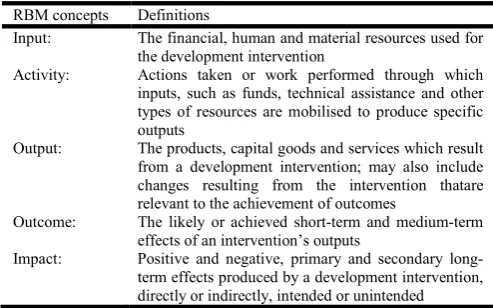
Table 1 below illustrateskey RBM concepts as defined by the OECD
RBM concepts Definitions
Input: The financial, human and material resources used for the development intervention
Activity: Actions taken or work performed through which inputs, such as funds, technical assistance and other types of resources are mobilised to produce specific outputs
Output: The products, capital goods and services which result from a development intervention; may also include changes resulting from the intervention thatare relevant to the achievement of outcomes
Outcome: The likely or achieved short-term and medium-term effects of an intervention’s outputs
Impact: Positive and negative, primary and secondary long-term effects produced by a development intervention, directly or indirectly, intended or unintended
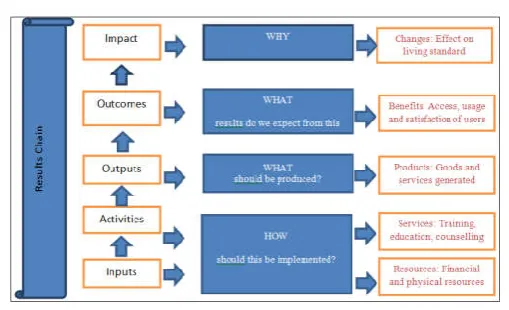
[image:3.595.309.556.433.587.2]Figure 2. The results chain
Figure 2 reveals the main monitoring questions that are linked to the objectives in the results chain. The above RBM terms are defined in relationship to one another based on an accepted causal sequence and temporal dimension. These RBM terms cannot be used interchangeably, or out of sequence, thereby providing stability in terminology that was otherwise lacking in other management approaches. Successful implementation of RBM is dependent on the department's ability to create a management culture that is focussed on results, and requires more than the adoption of new administrative and operational systems. An emphasis on outcomes requires first and foremost a results-oriented management culture that will support and encourage the use of the new management approaches. The public sector has traditionally had an administrative culture that emphasises the management and measurement of inputs, activities and outputs, whereas a results-oriented culture is focussed on managing for the achievement of outcomes.
This means that departments should establish a set of desired values and behaviours, and then take actions to foster these while avoiding those which are undesirable, for example low-balling targets, inflating results, etc. The greater the difference between the existing culture and that of a results-oriented culture, the more effort it will require. For instance, it would requirea well-planned and funded change management programme to transform the many public sector departments with a hierarchical, control and compliance management culture into learning departments which use performance information for management decision-making. The former requires public managers to be familiar with and apply the appropriate laws, regulations and procedures, while the latter requires managers to diagnose problems, design solutions and develop adaptive implementation approaches.
Implementation Of Key Principles For Rbm In The Public Sector
The principles of RBM also require careful consideration of its key elements when implementing it in the public sector of developing countries. To implement RBM effectively in an organisation, the following key principles play a central role:
Performance data management and reporting: Ortiz
et al. (2004) believe that the management and
processing of performance results and its
comprehensible presentation to decision-makers and staff members are crucial. Objective and timely feedback is one of the most powerful driving forces to
motivate performance and to change people’s behaviour (Saldanha 2002).
Transparency: Transparency is necessary to ensure
the advantages of RBM (Meier 2003; Canadian International Development Agency 2000). It implies the clear identification of expected results so that these results can be measured. Meier (2003) believes that the RBM approach is substantially weakened in an environment that lacks transparency.
Mutual partnership: The Canadian International
Development Agency (2000) believes that RBM and
participatory development approaches are
complementary. Moreover, Meier (2003) states that RBM should be based on mutually beneficial partnership relationships that are built on trust among all the role players. Mutually defined and agreed upon results may enhance role players’ sense of ownership and their consequent commitment to performance appraisal, continuous performance monitoring and management for results (Amjad 2008). Moreover, the participation of staff members may promote the quality and sustainability of a programme and its effectiveness. It is also a main aspect of
accountability in implementing a particular
programme.
Necessity of incentives: The effective implementation
of RBM depends on the strengths of incentives and should therefore be attractive for the leadership to pursue intentionally (Amjad 2008).
Accountability: Shared performance expectations that could lead to shared decision-making and, ultimately, shared accountability are present when strong partnerships exist between role players (Amjad 2008; Meier 2003).
Organisational learning: The rationale for highly
effective organisations to implement an RBM approach, as it improves organisational learning by providing performance information to
decision-makers through performance evaluation and
monitoring. This offers the necessary opportunities at individual, group and system level to adapt the organisation continuously to satisfy its role players (Amjad 2008; International Labour Organisation 2011). In essence, it means that RBM should be refined in view of what an organisation has learnt from its experiences (Bester 2012).
Taking the above into account, designing management information systems that support RBM should preferably not be driven by consultants from developed countries or information management specialists, as they tend to employ a level of sophistication that results in a complex information system which requires skills beyond the capacity of developing countries (Economic Commission of Africa 2003). This means that such systems will only function properly when donors continue to finance and support them.
Execution Approach On Results-Based Management
Results-Based Management in Malaysia
RBM is a contemporary management approach which helps enable successful economies. It focuses on the appropriate and timely achievement of relevant goals and objectives through strategic planning, systematic implementation and resource usage, performance monitoring, measurement and reporting, as well as systematic use of performance information to improve policy decision-making and programme performance at all levels. It emphasises the importance of achieving results through systematic goals and objectives and clearly states how results should be attained. The RBM approach has been used in many countries as a strategic performance planning tool – it was first introduced in Malaysia in 1990 and is now being adopted in several countries including India (Kerala), the Philippines, Namibia, Mauritius, Bhutan, Nepal, Bangladesh, Pakistan, Botswana, Vietnam and South Africa. The early years of RBM stem from the Management by Objectives (MBO) approach and the Program Performance Budgeting System (PPBS) developed in the 1960s, which were early attempts to focus on results and objective achievement. However, these systems lacked detailed processes for implementation. In the 1970s, the Logical Framework (LF) approach was introduced in an effort to better track the process. LF was used extensively in many countries and organisations in the 1980s–90s in various forms as a management and planning tool. LF later evolved into the rudimentary versions of RBM, which has been successfully used by several countries to drive more focused planning and implementation of public sector programmes (www.mfdr.org
/sourcebook/2ndEdition/4-2MalaysiaRBM). The RBM system
based on the performance framework and developed in the late 1990s was first introduced in the Malaysian public sector in 1990 under the Modified Budgeting System (MBS). However, the original performance framework did not integrate the operating and development budgets nor the personnel performance system, and created only limited linkages between budget performance, resource usage and policy implementation. These gaps were identified as fundamental missing links in this version of the RBM system.
Results-Based Management in Uganda
Over the past decades, Uganda has undergone comprehensive economic reform and has achieved macroeconomic stability. Hauge (2001) asserts that the recognition of service delivery effectiveness as an imperative of national development management is strong evidence of commitment to results by the Ugandan government. Hauge (Ibid: 17) further notes that the country developed a Poverty Eradication Action Plan (PEAP) and, because of its commitment to results, Uganda became the first country to be declared eligible and to benefit from the Highly-Indebted Poor Country (HIPC) initiative. The country has introduced new measures to make the budget process more open and transparent to internal and external stakeholders, and is also modernising its fiscal systems and decentralising planning, resource management and service delivery to localities. However, Hauge (Ibid: 16) argues that the country is still experiencing several coordination and harmonisation difficulties with respect to M and E and PEAP. Kusek and Rist (2004) conclude that many of the earliest adopters of RBM systems were predisposed to do so because they had democratic political systems, strong empirical traditions, civil servants trained in the social sciences and efficient administrative systems and institutions.
The two World Bank specialists commented that building effective M and E systems is primarily a political activity with some associated technical dimensions. It is therefore apparent that political will is one of the pre-requisites for successful public sector interventions.
Conclusion
The South African government embarked on an initiative to build the RBM and E system to set the direction for improving M and E processes and methods within three spheres of government, ultimately improving the measuring of results on a continuous basis. Based on these definitions, we can conclude that inputs are needed to undertake activities in order to produce outputs, which in turn generate short- and medium-term outcomes leading to long-medium-term impacts. Champions of RBM view results-based focus, systematic measurement, assessment and accountability as tools for achieving more efficient and effective resource utilisation by the public sector. In an ideal world, RBM can most effectively be introduced when it is part of a larger public sector transformation programme, initiated by the government for several possible reasons. In such a situation, RBM is usually one of many transformation initiatives in a transformation programme that addresses the role of government and the public sector in a multi-faceted approach.
REFERENCES
Amjad, S. 2008. Results-based Management Implementation for Outcomes: An Agenda for Action in Developing Countries. Paper presented at the National Health Policy
Unit, Islamabad. [Online] Available: http://
copmfdrafrica.ning.com/forum/topics
/resultbased-management-1 (June 9, 2014)
Bester, A. 2012. RBM in the United Nations Development System: Progress and Challenges. A Report prepared for the United Nations Department of Economic and Social Affairs, for the Quadrennial Comprehensive Policy Review. Final Report. New York: United Nations. [Online] Available: http://www.un.org/esa/coordination/ pdf/rbm_ report_10_july.pdf (June 5, 2014)
Canadian International Development Agency. 2000.
Introduction to RBM. Quebec: CIDA
Department of Performance Monitoring and Evaluation:
National Evaluation Policy Framework, 2011, Pretoria Hauge A. 2001. Strengthening Capacity for Monitoring and
Evaluation in Uganda. A Results-Based Perspective. World Bank. Washington DC
Ile I.U., Eresia-Eke C and Allen-Ile. 2012. Monitoring and Evaluation of Policies, Programmes and Projects. Van Schaik Publishers. Pretoria Implementing Results-Based Management: Lessons from the literature. A research paper prepared by RBMG for the Office of the Auditor General of Canada (OAG 2000)
Kusek J.Z and Risk R.C. 2004. A handbook for Development Practitioners: Ten Steps to a Results-Based Monitoring and Evaluation System, The World Bank, Washington DC Mayne, J. 2007b. Challenges and Lessons in Implementing
Results-Based Management.Evaluation. 13(1): 87-109
OECD-DAC Joint Venture on Management for Development Results, “Management for Development Results, Principle in Action: Source Book on Emerging Good Practices”, 2006
Ortiz, F.E., Kuyama, S., Munch, W. and Tang, G. 2004. Implementation of Results-based Management in the United Nations Organisations. Geneva: United Nations Ray C.R, Marie-Helene B. and Frederic M. 2011. Influencing
Change: Building Evaluation Capacity to Strengthen Governance. The World Bank, Washington DC
Results-Based Management Group Ottawa, Canada, RBMG @ istar.ca, Wednesday, October 15, 2003
Spreckley F. 2009. Results-Based Monitoring and Evaluation: Toolkit, 2nd Edition. Local Livelihoods. St Oswalds ban. UK
The Presidency: Policy framework for the Government-Wide Monitoring and Evaluation Systems, 2007, Shereno Printers, Pretoria
The Presidency: Discussion Document – Performance Monitoring and Evaluation: Principles and Approach, approved by Cabinet for release in October 2014, Pretoria Thomas K. 2007. Integrated Results-based Management – the
Malaysian Experience, in The Sourcebook on Emerging
Good Practice in Managing for Development Results. (2nd Edition). Washington, DC: Sage
Thomas, K. 2005. Integrated Results-Based Management – Country Experiences from Asia and Africa. Paper presented at the Lee Kuan Yew School of Public Policy, University of Singapore. September. [Online] Available:
https://www.google.co.za/Integrated Results-Based
Management-Country Experiences from Asia and Africa. (June 9, 2014)
United Nations Development Group. Results-Based
Management (RBM). Undg.org. United Nations: Archived from the original on 21 August 2016. Retrieved 24 March 2017
United Nations Development Group. Results-Based
Management Handbook. United Nations. Retrieved 24 March 2017
WEBSITES
www.gov.za/issues/outcomes-approach
www.mfdr.org/sourcebook/2ndEdition/4-2MalaysiaRBM www.thepresidency.gov.za
www.worldbank.org/oed/ecd www.locallivelihoods.com