Ikram, A. and Anjum, A. and Hill, R. and Antonopoulos, N. and Liu, L.
and Sotiriadis, Stelios Approaching the Internet of things (IoT): a modelling,
analysis and abstraction framework.
Concurrency and Computation:
Practice and Experience 27 (8), pp. 1966-1984. ISSN 1532-0626.
Downloaded from:
Usage Guidelines:
Please refer to usage guidelines at or alternatively
CONCURRENCYANDCOMPUTATION:PRACTICEANDEXPERIENCE
ConcurrencyComputat.:Pract.Exper.(2013)
"This is the peer reviewed version of the following article: Ikram, A., Anjum, A., Hill, R., Antonopoulos, N., Liu, L., and Sotiriadis, S. (2015), Approaching the Internet of things (IoT): a modelling, analysis and abstraction framework. Concurrency Computat.: Pract. Exper., 27, 1966–1984. doi: 10.1002/cpe.3131, which has been published in final form at http://onlinelibrary.wiley.com/doi/10.1002/cpe.3131/abstract . This article may be used for non-commercial purposes in accordance with Wiley Terms and Conditions for Self-Archiving."
SPECIAL
ISSUE
PAPER
Approaching
the
Internet
of
things
(IoT):
a
modelling,
analysis
and
abstraction
framework
Ahsan
Ikram
1,
Ashiq
Anjum
2,*
,†,
Richard
Hill
2,
Nick
Antonopoulos
2,
Lu
Liu
2and
Stelios
Sotiriadis
21BristolInstituteofTechnology,UWE,Bristol,UK
2SchoolofComputingandMathematics,UniversityofDerby,Derby,UK
SUMMARY
The evolution of communication protocols, sensory hardware, mobile and pervasive devices, alongside social and cyber-physical networks,has made the Internet ofthings (IoT) aninteresting concept with inherent complexities as it is realised. Such complexities range from addressing mechanisms to information management andfrom communicationprotocols to presentationandinteractionwithin the IoT. Although existing Internet and communication models can be extended to provide thebasis for realisingIoT,theymaynotbesufficientlycapabletohandlethenewparadigmsthatIoTintroduces,such associalcommunities,smartspaces,privacyandpersonalisationofdevices andinformation,modelling and reasoning.Withinteractionmodelsin IoTmoving fromthe orthodox serviceconsumptionmodel, towardsaninteractiveconversationalmodel,nature-inspiredcomputationalmodelsappeartobecandidate representations.Specifically,thisresearchconteststhatthereactive andinteractivenatureofIoTmakes chemicalreaction-inspiredapproachesparticularlywellsuitedtosuchrequirements.Thispaperpresentsa chemical reaction-inspired computational model using the concepts of graphs and reflection, which attemptstoaddressthecomplexitiesassociatedwiththevisualisation,modelling,interaction,analysisand abstractionofinformationintheIoT.
KEYWORDS: Internetofthings;distributedsystems;chemicalcomputing;formalmodelling
1. INTRODUCTION
The Internet of things (IoT) [1] is defined as uniquely addressable objects and their virtual
representations, in an Internet-like structure. One of the major enablers of IoT is the plethora of
informationthatwillbe
generated by all the ‘things’ in IoT, and consequently, a major outcome of IoT will be
enrichedawareness, interaction and communication of an individual entity (or a community)
with its
surroundings,both virtualandphysical. The IoT umbrellaredefinesboundariesbetweenhumansand
devices, virtualand physical; the interactions need not be limited tohumans accessing services or
devices;theycanbemuchmoreenrichedandinteractive[2,3].Thisenrichmentofinteraction,inturn,
demands more detailed and comprehensive understanding of the context of a situation, event
or
interaction. Italso demandspresentation of that contextandthe awareness basedon thatcontext to
theactors participating in the interaction. This takes computing interaction between entities
from
‘consumption of services’ to the next level, that being ‘interactive dialogue’. Moreover, with
the
successofvirtualsocialnetworks,socialinteractionandcommunitieshavebecomeanecessary
of any next generation computational framework. All these aspects of evolution of interaction, from man-using-machine to two networked entities having a dialogue, together with the existence of social groups and communities amongst these dialogues, make the communication and interaction model of IoT much closer to the nature-inspired communication and interaction models [3] that
‘stigmergy’used in [2]. Similarly, as pervasive and ubiquitous devices merge the boundaries between
real and virtual spaces, and claim equivalence to humans, nature-based computation models offer answers to the reasoning and modelling complexities of IoT. The concepts of habitats, groups, communities, languages, proximity, discovery and exploration now become even more relevant.
As highlighted in [4], a lot of research is in progress to develop architectures, frameworks, data models and communication protocols that can eventually realise the IoT concept, and there is active research in progress that investigates nature-inspired models for the realisation of IoT [5]. In this paper, we highlight the key challenges associated with realising IoT and present an end-to-end framework based
on a combination of nature-inspired chemical computing and reflective middleware, to address the
aforementioned challenges.
2. INTERNET OF THINGS: KEY CHALLENGES AND REQUIREMENTS
In this section, we highlight the core challenges and requirements that any IoT framework should be able to offer.
2.1. Abstraction and communication
In the IoT, entities with different capabilities and preferences, in terms of communication protocols, data models, battery life and so on, will be connected under the same network. Two devices may provide equivalent information yet utilising two completely different data models and/or units. Therefore, an abstraction layer is required to hide these complexities from the layers that enable interaction. These
interaction models are moving on from service-based consumption (where a service was specifically
written and designed for a specific identified purpose, network and/or device) towards an ‘everything
everywhere’model, and this requires a framework that separates the complexities of the information
from the interaction model.
2.2. Adaptation and scalability
In a proposed IoT infrastructure, new entities will join the network every moment, where this increases the richness of the overall knowledge of the network. This requires a framework that is able to adapt to
new members of the family via flexible interfaces,‘plug and play’architectures and/or standardised
access methods. The framework and its data model should also be scalable to handle the growing nature of the information it handles.
2.3. Interaction and visualisation
Interaction and visualisation are the newest features that an IoT will enable. The users in IoT are no longer consumers, rather they are motivated to get involved and interact with the immense information and applications that an IoT offers, and they want to consume services they have designed and orchestrated. For example, users do not want their phones to be aware of their location anymore, but they do want to
design how their phone will utilise their current location. These user-centric and user-defined
interactions, along with the need to constantly access information, requires a visualisation layer atop the
information layer, that not only provides access but also serves as a blackboard, or a ‘playground’
where queries can be explored.
2.4. Modelling and analysis
As the detail of the available context increases, so do the processes to analyse and store it. The decisions, actions and reactions in the proposed IoT environment will be dynamic, real time and frequent. Therefore,
In this paper, we propose that a nature-inspired chemical computational model is well suited to all of the basic requirements of modelling and visualising context as information, and it also offers intuitive and natural visualisation and reasoning models. We propose that IoT is a large-scale extension of pervasive connectivity and context awareness, and therefore, the chemical computational model can be utilised to address IoT challenges.
3. A CHEMICAL METAPHOR
Chemical computing is a nature-inspired computing model that proposes computation on the concepts of chemical reactions, elements, bonds and solutions. Most of the existing chemical computing models are
derived fromγ(gamma) programming language [6]. Chemical computing separates information from
the logic and supports scalability as new information and logic can be added to the system dynamically. The separation and other chemical characteristics of spontaneity and dynamic interaction enable
multiple states of existence and more support for the management offinite but large and concurrent
interaction computation.
Dittrichet al. [7] presented a comprehensive collection of chemistry-inspired computing approaches.
Chemistry-inspired models have previously been used in workflow enactment research [8–10]. The
chemical model has also been used to enable dynamic service composition [11]. J. P. Banatreet al. [12]
suggested a chemical model for programming and modelling of self-organising systems. Tschudin and Yamamoto [13] applied a chemical execution model, Fraglets, to the implementation of communication
protocols. Lin et al. [14] analysed modelling of parallel computation using the gamma chemical
computation model [6]. Predominantly, the chemical metaphor has been adopted in research to address non-determinism, scalability and adaptability. Although modelling a context-aware response is
analogous to enacting a workflow or composing a service, we explore a unified chemical model that
enables modelling of both context and services. This makes it a novel approach because other approaches place an emphasis upon the composition of either context or services but not both.
4. CHEMISTRY FOR CONTEXT AWARENESS (C2A)
In this section, we briefly describe C2A and revisit some of its core concepts.
Context element (CE): CE is the basic unit of interaction. Each CE has a set of properties and interfaces that it uses to bond with other CEs.
Context periodic table (CPT): CPT is an organisation of CEs on a nature-based classification that
puts each CE in one or more of six categories. The use of word‘periodic’is symbolic only in CPT.
Compound: Two or more CEs can combine to form higher order structures called compounds. Bond: Two or more CE can come together and form a compound using various types of bonds that
are part of C2A.
Smart space (Ss): An Ss is a closed existence of various CEs and compounds; in terms of chem-istry, an Ss is analogous to a solution. There are two types of Sss an entity or user can be part of: social smart space (SSs) and personal smart space (PSs). In the scope of this paper, an Ss can be seen as a model of connected things.
In the following section, we propose an end-to-end architectural framework based on the building
blocks of C2A that enables its realisation.
5. SYSTEM ARCHITECTURE TO SUPPORT REFLECTION
Reflection is a concept by which an entity can reason and review its state and then adapt its behaviour
accordingly at runtime. Therefore, reflective models suit environments with finite but large set of
possible interactions, such as the IoT, by providing support for adaptation, awareness and
reorganisation [1]. Structure and behaviour are considered two dimensions of reflection. Structural
reflectionis theconcept whereaprogramme canmake changes,typicallyintermsof programming
languagedata structure,methods andstate.Behaviouralreflection isameansby which aninvoked
method canbe modified and tends tobe more prevalent inmiddleware and applicationsemantics.
Logically,areflective computingmodelisdistributed intobase andmetalevels. Inthe contextofa
reflectivemiddleware,thebaseleveldealswiththerepresentationandinteractionofapplicationsand
services with users. The meta level contains components and structures that enable reflection of
behaviouronbehalfofthebaselevelrequirements.
LiciaCapra [15] proposed a reflectivemiddleware, CARISMA, tosupport proactive and reactive
modesofpervasiveinteraction.OtherreflectivemiddlewareresearchincludesPURPLE[16],ReMMoC
[17],MobiPADS[18],Hydra[19],CAPIM[20]andCOSAR[21].Hydraisacontext-basedadaptive
and reflective middleware approach that aims at integrating and optimising various wireless access
technologiesavailabletoapplicationsinamobiledeviceandwirelessenvironment.Whereasthescope
oftheprojectislimitedtowirelessaccesstechnologiesandapre-definedpolicy-based adaptation,the
conceptofusinganadaptivemiddlewareissignificantlyrelatedtothiswork.CAPIMandCOSARare
twomorecontext-basedinitiatives,whereCAPIMprovidesanend-to-endframeworkformanagement
of context and informationand COSAR isaimed at complex activity recognition based on context;
bothprojectshowevermakeuseofontologiesformanagingandreasoninginformation.Ontologiesare
seenasoneofthecoreconceptsthatcanbeusedtomanageinformationwhetheritiscontextorIoT;
however, ontologiesfocusonreliabilityand completeness ofinformationand requirestructured data,
whichmaynotbetheprimarygoalinadynamicandrapidlychangingenvironmentsuchasIoTwhere
quicknessofresponse,partialreasoningandincompletedatamaybeofteninvolved.
TuplespaceswereproposedasanimplementationoftheLindacomputingmodel[14].Conceptually,a
tuplespacecanbedescribedasacentralisedsetofinformation,withconcurrentandsynchronisedaccess
toadistributedsystem.Byprovidingasharedspace,tuplesenableasystemtobeasynchronous,dynamic,
shared and robust [22, 23]. Pervasive environments are characterised by users connected to an
intermediate network component (suchas gateways, routers, access pointsand base stations). Tuple
spaces enhance scalability, synchronisation and dynamic interaction amongst pervasive users and
devices.Itisproposedinthisarticlethattheidentificationofcontext-basedcommunitiesinapervasive
environmentcanbeaddressedbyenablingtuplespacemodelsattheaccessgateway.Tuples(whichare
context-basedSssinthisresearch)aregathered at thesespacesand analysed.Moreover,tuple spaces
are organised hierarchically such that the gateway spaces are child nodes of a central space. This
hierarchical arrangement allows hierarchical abstraction, organisation and clustering of information
containedintuples(context)[14].
Wethusproposethatahybridarchitecture,whichsupportstuplespacebehaviouramongstdifferent
entities, will enable the bringing together of Sss from different users for a collective-shared
representation and analysis. Moreover, adding support for reflective behaviour and interfaces for
interaction, with the chemical model, will support the realisation of dynamic and spontaneous
adaptationbaseduponchemicalreactions.Italsofacilitatesuserparticipationintheprocessofenabling
awarenessbyprovidinganintuitivemetainterface.
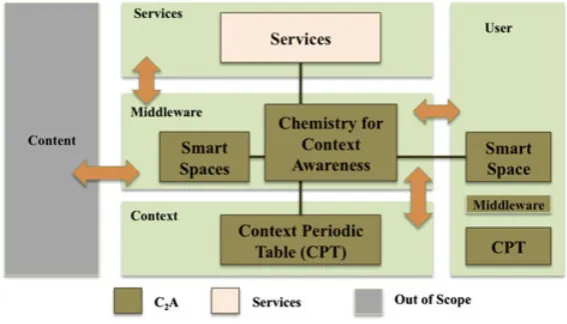
Figure1showstheabstractoverviewoftheproposedframework.Theoverallarchitectureworkson the
basisoftheC2Ainteractionmodel,suchthat,CEandSsareunitsofinteraction,contextbonds,reactions
(R)andtworeflectivemiddlewarecomponentsareenablersofinteractionandsolutionsarecontainersof
interactions.
5.1. Architecturelayers
Figure2showsthearchitecturallayerswhereeachlayerencompassesafunctionalaspect.Ss interaction
manager(SSIM)isthecorecomponentandisdistributedinuserandmiddlewareplanes.SSIMinthe
middlewarelayeristhecentraltuplespacecomponentofthearchitecturethatisresponsibleforgathering
allSss;SSIMintheuserplaneisalightweightreflectivecomponentthatmanagescontextandreactions
forasingleuser.Thefollowingsubsectionsdefinethefunctionalityandcompositionofeachlayer
Figure 1. Architecture overview.
Colour
online,
B&W
in
Figure2.Architecturaloverviewbasedonfunctionallayers.
5.1.1. Contextacquisitionplane. Rawcontextisgatheredatthislayer.Ifthecontextreceivedisinthe
formof aCE,itispassedontothe Sscachethatanalyses itbeforepassingitfurther.Ifthecontext
receivedisinrawform, thatis,inanyformotherthanaCE,itispassedontotheCPT/CEwrapper
componentthatgeneratesaformalCE/CPTrepresentationfortherawcontext,asshowninFigure3.In
Figure3,thedatastructureistheentitythatholdstheschematostoreinformation abouttheCE;‘handler’
istheinterfaceusedtoaccesstheCE.‘Handler’isasystemlevelplatformspecificservice,forexample,a
Javathread.
5.1.2. Transportplane. Atransportplaneinapervasiveenvironmentistheplanethatmanagesuser
registrationwiththenetworkviaanaccessgateway.Anaccessgatewayisassociatedwithaphysical
location and is therefore of vital importance in this architecture because spatial modelling and
managementof the middlewareis performedatthis layer. The component ‘Sscache’ maintainsan
image of the PSs of entities and services registered with this gateway. This component enables
realisationofphysicalproximity-basedSSss.
5.1.3. User plane. The planedealswiththeentitiesintheenvironment,whichcanbeusers,sensors,
devicesoracombinationofanyoftheaforementionedlist.Initscomposition,auserplaneconsistsof
twocorecomponentsandthreeoptionalcomponents.PSsandspacemanagerarethecorecomponents,
and services, tasks and context are optional. An entity may or may nothost servicesand tasks and
Colour
online,
B&W
in
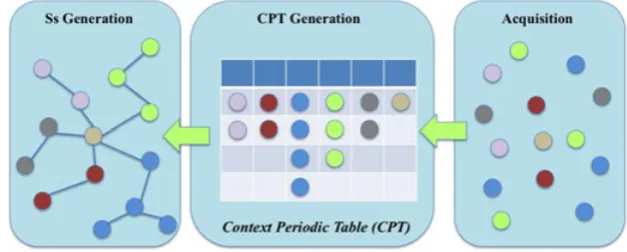
provide context. SSIM is the component that enables reflection and user participation. PSs is the basic unit of interaction in the proposed framework. Ss generation is the main responsibility of the user plane. Figure 4 gives an overview of the process.
In the first phase, context is gathered from the users, devices and environment. The gathered
context is raw and cannot be distinguished in terms of their roles in the Ss modelling. However, each context is gathered through a context handler, which is registered with the SSIM. CPT
creates an entry for the CE on the basis of its type, category and reliability. Every user in the
environment providing or consuming context owns an instance of the CPT. The following section explains the working and structure of an SSIM.
5.1.3.1.Smartspaceinteractionmanager.TheSSIMisthereflectivecomponentofthearchitecturethatis
responsibleformanagingadaptationforPSs.Figure5showsthestructureandcompositionof SSIM
withintheuserplane.TheSSIMisareflectivecomponentandhencebythetraditionaldefinitionof
reflectionhasabaselevelandametalevel.Themetainterfaceisdistributedintwolevels,metaandmeta’,
wheremeta’islogicallythe‘base’formeta.Themetalevelhandlescontextmanagement,CPT,
user-definedtasksandproactiveservicecompositionmodules.Themeta’levelcontainstheSs.Thebaselevel
handlesapplications,Ssbrowserandtheuser-definedtaskcreationenvironment.
Metalevelalsocontainsthe‘systemservices’block.Theseareasetofservicesrequiredfortheworking
ofthereflectiveinterfaces.DiscoveryserviceisresponsibleforthediscoveryofSssinphysicalorvirtual
proximity. Monitoring service is a service that is responsible for allocating a monitoring process to
compounds and solutions where necessary. For example, in Figure 5, a highlighted version of an
applicationandacontainercanbeidentified.Itmeansthattheapplicationhascreatedacontainer,which
canbe uniquelyidentified againstthat application.Containers are equivalenttothe concept of‘named
solutions’discussed inprevious chapter. A container canhave multiple solutions, andit serves as the
membrane,wrappingthesolutionswithin.Theapplicationalwayscommunicateswiththemetainterface
viaitscontainer.Theapplicationcancreatereactions,usingbondsandCEsfromtheCPTandpassthem
[image:7.595.226.369.67.174.2]ontothe‘container’as‘solutions’,the‘container’
Figure 3. Context acquisition process.
Colour
online,
B&W
in
[image:7.595.138.452.570.696.2]Figure 4. Context generation phases.
Colour
online,
B&W
in
Figure5.Userplanemiddlewareencapsulatedinsmartspaceinteractionmanager.
storesthereactions,andthe‘monitoringservice’providesitwith amonitorthreadthatmonitorsthe
reactionsandCPT.
AnychangeinCPTthatenablesareactionforexecutiontriggersaproactiveupdateprocesstowardsthe
application,andanyaccessfromapplicationtothemiddlewareservicesandresourcesisalsomonitored,
forexample,iftheapplicationhasfloated,areactioninthecontainerthatspecifiesnottouse3Ginthe
presenceofWifi,viaanabstractionbondthenifthereactionisexecutablethecontainerexecutesthe
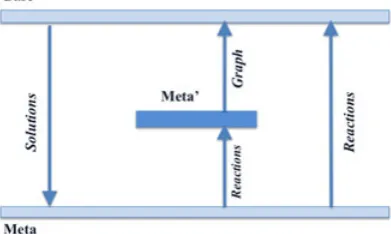
reaction,andasaresultenablesWifi tobemorereliableifavailable.Figure6presentsasummaryof the
reflectionprocessthatenablesreactionsandgeneratesSsgraphsintermsofbaseandmetalevels.
The next component within the SSIM is an Ss meta’ interface. Ss meta’ interface is a base
abstractionoftheCPT metainterfaceandoffers agraph-basedPSs.Therefore,it canbe considered
abase leveltothemetainterface andasametainterfacetotheoriginalbase layer. Theabstraction
adds detail to the system and highlights multiple possibilities of reflection in terms of chemical
reactionsandgraph-basedcompositions.Ssmetainterfaceisresponsiblefortwomaininteractionmodes:
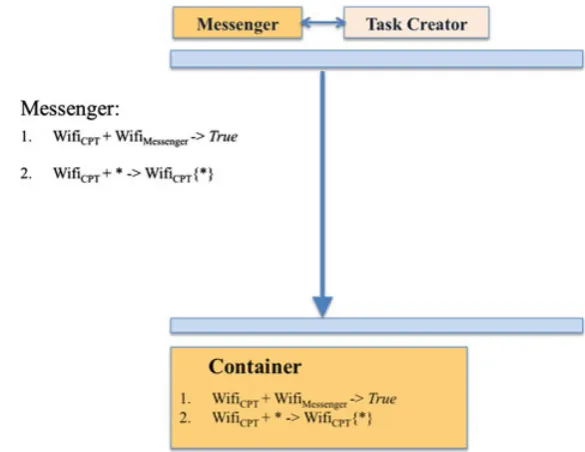
communitydetectionandvisualexplorationoftheSs.Figure7presentsanoverviewofthe reflective
processintermsofdatastructureexchangedviathemetainterfaces.
Base level sends in context compounds, solutions or reactions to the meta interface. The meta
interfacestoresthisinputagainstacontainerwithanassociationtoanapplicationortheSs.
Colour
online,
B&W
in
[image:8.595.143.455.64.302.2]Figure 6. Space manager reflection process.
Colour
online,
B&W
in
A user plane encompasses three forms of adaptation via the SSIM. Firstly, system level services can
organise and adapt to changes in the CPT (for example, if Wifi has higher reliability than 3G and is
currently not connected, a system can revert to Wifionce a network becomes available). Secondly,
applications can subscribe to context events by sending CE and compounds to the ‘container’ and
once the elements become available, middleware can perform a reaction. Lastly, the‘Ss’meta level
can trigger proactive reactions without any subscription. The reactions and subscriptions are sent
using the C2A notation as discussed earlier.
Any representation mechanism can be used to communicate solutions and reactions amongst base
and meta levels, as long as the scheme meets the structure defined in C2A model. However, in this
work, the developed prototype uses XML and GraphML. Both are used as representation languages to communicate CEs, CPT and Ss graphs.
To conclude, an example of the reflective process is given to show how the reflective component
would work in a given scenario.
Consider a chat application titled‘Messenger’; the user of this application decides that he/she only
wants to use this application over Wifi network, in case both Wifiand 3G are present. However, the
developers of the application have offered no such option in the application settings. The user uses the
‘Task Creator’interface to create a ‘container’ for the‘Messenger’application. Next, the user uses a
visual representation of the CPT within the ‘Task Creator’ interface to create a Boolean reaction
between the CPT Wifi-CE and a named variable Wifi-CE with the status variable set to ‘true’ and
‘reliability’set to 1 (maximum). The user then creates an abstraction bond between the named Wifi-CE
and any other CE of CPT’s‘How’column such that Wifi-CE abstracts all other interface elements. This
way, whenever the application attempts to communicate, the middleware checks for the solutions in its
‘container’ and only allows the application access to communication if the reactions are in the
executable state.
5.1.4. Smart space interaction manager. The middleware collectively is a combination of reflective and
tuple space models. The SSIM component in the‘Middleware Plane’is a tuple space-based component. It
serves as a central repository for collection of all individual Ss graphs. Middleware plane consists of two main components: the SSIM, which is primarily responsible for enabling community Sss, and central
storage. Storage is seen as a ‘black box’in this work, and it is assumed to be capable of storing Ss
graphs for all users associated with it. The SSIM consists offive sub-components.‘Space discovery’
[image:9.595.145.438.64.290.2](SD) is thefirst in action and notifies the middleware of the existence of a personal or community SS.
Figure 7. Example: Application using chemical model via reflection.
Colour
online,
B&W
in
INTERNETOFTHINGS,DISTRIBUTEDSYSTEMS,CHEMICALCOMPUTING,FORMALMODELLING 9
InthecaseofPSs,SDservesasaproxyandonlyredirectsthenotificationtostorage.IncaseofaSSs,it
getstheinformationfromSscacheforproximitytriggeredSSsorfromServicePlaneforservicetriggered
SSsorfromStorageforinferredSSsonthebasisofanycontextualdimension.
Next,theSDpassesonrelevantSSIDstothe‘spacemodeller’(SM).SMprunesirrelevantcontextual
informationofftheSSsandformatsitinaC2Agraph.TheresultinggraphrepresentstheactiveSSs,anda
snapshotofthegraphatagiveninstanceisthe‘Situation’oftheSSs,whereasituationhasatleastoneCE
inatleastoneandatmaximumsixcolumnsoftheperiodictable.Incaseofanincomplete‘Situation’, SM
alsofulfilsanymissingorincompletedimensionof‘Situation’totheSSs.Forexample,iftheSSsdoesnot
haveacommongoalorservicethenSMcommunicateswiththeServicePlanetofindasuitableservicefor
theSSs.‘Spacescripter’thentakesoverfromSMandtranslatestheSSsmodeltoanXMLscriptand
validates the SSs. ‘Space scripter’ then sets up necessary resources for the execution of the SSs
situation. SE then passes theexecution idtothespace monitor (SM),which monitorstheindividual
entitiesoftheSSsoverthecourseofitslifecycle.IfSSschanges,SMnotifiestheSMforapotential
needofremodelling.
5.1.5. Serviceplane. Theserviceplanecontainsdirectoryandthetypesofservices.Intermsoflocation,
servicedirectoriesaremaintainedataccessgateways,andacentralrepositoryismaintainedatservice
plane. The central repository contains all the informationabout the sub-directoriesat gateways. The
purpose ofplacingaservicecache ataccess gatewaysisbased onthefactthatlocationservesas the
mainenablerforcontext-awareservicesandoftenserviceswillbeassociatedwithalocationtherefore
havingalocalcachecanincreaseefficiencyandlookupcosts.
Intermsofservicetypes,servicesareclassifiedintothreecategories,atomicservices,2+servicesand
servicetemplates.Atomicservicesareservicesthatareconsideredasasinglecomponentnotcapableof
further disintegration. 2+ are services that are a product of chaining two or more atomic services.
Templateservicesareservicethatarecompleteintermsoftheirfunctionallogicandaremadeliveby
inducingtriggerorexecutiondatatothem(forexample,atreasurehuntpervasivegamingtemplatethat
needsuserdataandtreasuredatatocreateandexecuteagameforagroupofusers).Templatescanbe
atomicor2+.Aservicecompositionengineinthisphaseisacomponentthatattemptsacompositionof
servicestomatchtheneedsofapotentialsituationidentifiedbyaSs,incasethesearchwithinexisting
servicesreturnsempty.
Asdiscussedintheprevioussection,theoutputfrom‘spacediscovery’servesastheinputto‘space
modeller’,whichhastheresponsibilitytocompleteaSsrepresentation,especiallyintermsofthegoalof
theSs.Thegoalcanbeaservicediscoveryorservicecompositionforthegivenspace.Figure8 showsthe
processesinvolvedinorchestratingaserviceforaSs,onceaSsgraph(personalorsocial)exists,itserves
asaninputtothe‘servicediscovery’mechanism,servicediscoveryinitselfisafour-stepprocess,itfirst
usestheSssignaturetofindasuitablematchamongstexistingservices,failingthatitattemptstochain
existingservices,ifthatdoesnotworkeither,itrequests‘spacemodeller’toremodeltheSssignature,if
thatfailsinmatchmaking,itisassumedthatthereisnovalidserviceavailablefortheSs.
Thiscompletesthediscussionrelatedtothereflectivemiddlewareforchemistryforcontextawareness.
ThispaperproposesthatC2AcanbeusedtomodelandanalyseIoTandthereflectivemiddlewareisthe
frameworktorealiseit.Inthefollowingsection,wepresentperformance-relatedresultsofthereflective
middleware.
6. IMPLEMENTATIONANDRESULTS
Inthissection,wediscussaprototypeimplementation,S3,andresultsrelatedtotheperformanceof the
chemical reflective middleware. S3 is a Java-based analysis and simulation tool for C2A based on
JUNG[24]graphlibrary.S3isasimulationtoolthatperformssimulation-basedexperimentsfortwotypes
ofexperiments,proactiveandreactive.A‘contextsource’intheseexperimentsisasourceofinformation
belonging to acategory of context table, for example, aGPS CE belongs to the ‘where’ category, a
calendarCEbelongstoboth‘when’and‘where’categorieswithinput/outputvariations,anaudio/video
Figure8.Serviceselectionprocess(PSs-personalsmartspace,SSs-socialsmartspace).
sources,occurrencesanddistributionsaregenerated,andtheirinteractionandbehaviourisobservedusing
metricssuchasnumberofreactionsoccurred,distributionofreactiontypes,stagesofasituationevolution,
triggersandservicesreachedandmore.Inproactiveexperiments,alimitednumberofcontextsourcesare
definedalongwiththechangesintheirvaluesandstatesasafunctionoftime.Thecontextsourcesare
designedsoastoreachapre-definedsituationfollowingvariousstagesalongastoryline.Thestorylineis
createdbydragginganddroppingCEsonthestorylinecanvas(Figure9)anddefiningitsstatesatvarious
timesduringthestory,theexperimentsarethenruntoobserveifthecontextualassertionsarereached.In
termsofS3,acontextsourceisaJavathreadwithpre-modelledorrandomchangesinitsstate(available/
unavailable)andvalues(inputs/outputs)asafunctionoftimeand/orotherreactionsintheexperiment.All
CEs(Javathread)areplacedinacontainer(aJavaexecutionandschedulingservice),andtheirinteractions
areobserved.Inthispaper,wepresentperformance-relatedmetricsandstoryline-basedapplication
scenarios(serviceorchestration,socialnetworkidentification)orientatedresultsatlength.
Inthefirsttest,uniformlydistributedincreasingnumberofCEswereprovidedtoS3(simulationtool)
and,thetimeforthecreationofCPTwasobserved.Itisworthmentioningherethatalthoughcontext
sourcesusedfortheexperimentsweresimulated,thecreationprocessofcreatingCPTandSswasreal.
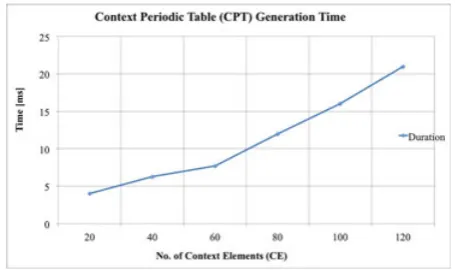
Figure10showstheoutcome;itwasfoundthatthetimeconsumptionuniformlyincreasedwithincreasing
CEs.However,forthelargestsetofCEs(120)timeconsumptionwaslessthanhalfasecond.Also,120isa
largesetofCEs,andthemaximumexpectedrangeofCEs,consideringthehigh-endmobiledeviceswith
maximumsensorsonboard,is10–20CEs.
Using the same experimental setup and data in the next experiment, CPTs from previous
experimentswasused togeneratePSs (Figure11).Itwasobservedthattheincrease intimefor PSs
generationwithincreasingCPTsizewasexponential ascomparedwithalineartrendfoundinCPT
generation. It was understandable as the process for PSs generation involves sorting and nested
iterationsthataffectthegenerationtime.
Different approachescould beinvestigatedtoformSs graphsthatmayimprove the exponential time
consumption, but it is not considered part of this research, and using the current algorithm, it can be
concludedthattheprocesswilltakemorethan1sforapproximately130CEsandhencemaybecomenot
usableoracceptabletothepervasivescenarios.Havingsaidthat,usersanddevicesdonothavetogenerate
Sseverytime theyadd/remove/updatecontextbutonlyforthefirsttime, andfromthenonwards forall
changes, only the necessary parts of the table and graph are updated. Therefore, in the following
experiment,seeFigure12,PSsgraphsfrompreviousexperimentswere
Colour
online,
B&W
in
Figure10.Periodictablegenerationforincreasingcontextelements.
updatedsuchthatinthefirstrun,oneCE(sameforallPSs)wasaddedtotheCPT;inthesecondrun,
twoCEswereadded,andinthelastrun,fourCEswereadded.
As it can be seen from Figure 12, there was a visible ripple effect on the time consumption;
however, it was linear. So far, it is observed that the C2A model performs well in context of
temporal efficiency, and most of the changes in consumption are linear, which is consistent with
growinginputtoanycomputationalmodel.
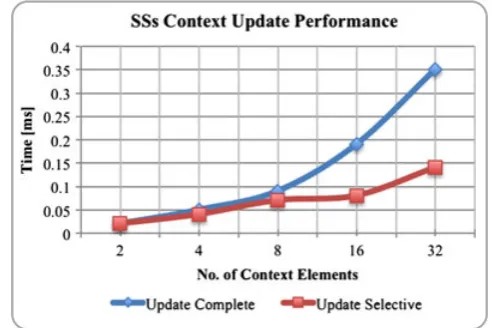
Inthefollowingexperiment,SSsupdateperformanceisconsideredfor32PSs.Theconfigurationis
such that, for example, for the 32 PSs-based SSs, n random CEs were updated (status changed,
interfacechangedorvaluechanged).
Figure13illustratestheresultsofthisexperiment.Inthefirstphase,foreveryupdatedCE,allofthe SSs
nodesandedgeswerereviewed;thisresultedinalinearincreasingtime;however,inthesecondrunofthe
sameexperiment,propagatingrippleeffectstrategyisusedtoupdateaCEandthenupdateallitsedgesas
longasthecomparisonresultsinanychange.Thisresultedinamuchlowergradientlineartime
consumptiongraph.
Colour
online,
B&W
in
[image:12.595.78.502.69.350.2]Figure 9. Screenshot of S3 simulator.
Colour
online,
B&W
in
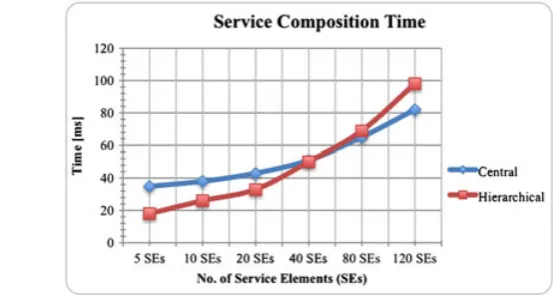
Figure14presentstheresultsforservicecompositiontimeconsumptionforthesameservicerequest
parameters but increasing number of potential services to search from. It was observed that the
[image:13.595.180.414.68.227.2]resulting time was dependent on whether hierarchical structure found a match in the best-case
Figure 12. Smart space update performance.
Colour
online,
B&W
in
[image:13.595.176.419.270.410.2]Figure 11. Smart space generation for increasing context elements.
Colour
online,
B&W
in
Figure 13. Social smart space update performance.
Colour
online,
B&W
in
[image:13.595.172.419.459.623.2]scenario (first level) or worst-case scenario (nthlevel). Therefore the values in the graph show the mean
for a set offive best-case andfive worst-case runs.
We now move to qualitative experiments, and in the following experiments, we test the visualisation and modelling aspects of the chemical model using scenarios/storylines. One scenario each for
proactive and reactive situations is defined with varying complexity; an example of which is shown
in Table I.
The scenarios, mentioned in Table I, are used as unit tests for controlled testing and provide early inroads to the testing phase. Once the controlled testing is complete, the same battery of tests could be run for random number of users, context and services. The following section introduces a smart
check-in scenario, which will be used to test if a pre-defined scenario and input result in an expected Ss or if
not to what extent it fulfils the requirements of the scenario in terms of modelling context and Ss.
Smartcheck-inscenario
Introduction: Ausertitled‘User-F’entersahoteltitled‘Hotel’tobookaroom.User-Fhas
pre-definedhotelpreferencesCEstoredinhisPSs,andUser-F’sPSsinteractswithHotel’sPSstocreate
anSSsthatenablesspontaneousandpersonalisedorchestrationofroombookingservice.
Setup: User-Fcreateshispersonalpreferencesinhissocialprofileintermsof‘location’ofthe
ho-telandfeaturesoftheroomintermsof,forexample,‘view’,‘floor’,‘minibar’and‘colours’.
Objective: Enableinteractionofuser-definedpreferencesandhotelroombookingservice
auton-omouslyandspontaneouslytoselectapersonalisedlistofroomsfortheuser.
Figure15shows visual snapshotsof thePSs ofbothuserandhotel, which arecreatedusing the
simulator. User PSs hasfive CEs, and Hotel PSs has four CEs, where, the ‘Room Preferences’CE
and‘Booking’CE are of vital importance in this scenario. A user creates this CE using the canvas
component of the simulator and adds it to the CPT. There are many ways of creating ‘Room
Preferences’ CE; in this case,‘Room Preferences’CE takes as input location, and if the location is
the same as that of ‘Hotel’ (assumed to be known), then it turns its status to ‘On’ and outputs
[image:14.595.144.421.66.216.2]‘Preferences’(in this case, a comma-separated string containing key-value pairs but can be anything
Figure 14. Service composition time consumption.
Colour
online,
B&W
in
[image:14.595.96.506.636.704.2]Table I. Storyline-based case study scenarios.
Reactive-personal Proactive-social
Scenario 1: smart check-in scenario Scenario 2: airport arrival scenario
A user’s PSs interacts with the PSs of a hotel to select room for his
pre-stored preferences
PSs of two users with different language preferences interacts with airport’s PSs tofind a taxi service
PSs, personal smart space.
Figure15.(a)PersonalsmartspaceofUsertitled‘F’ (b)Personalsmartspaceofhoteltitled ‘Hotel’.
depending on the implementation).For the ‘Hotel’ space, ‘Booking’ CE isresponsible for making
hotelbookingsandtakesasinput‘Preferences’.BookingCEoutputsadisplayablelist.BoththePSs
oneverychangeinCEupdateathreadinthesimulator,whichinturnupdatesthecentralrepository.
The location of User-F is then manually updated to that of the ‘Hotel’, in this case, dummy
coordinates‘(1.234,2.345)’.Atthis point,the twoPSs become eligiblefor reactionandgeneration
ofSSs.
Figure16showstheSSsgraphof‘User-F’and‘Hotel’.IntheprocessofgeneratingSSs,twomajor
proximitybonds are formed, highlightedin Figure16. Firstly, the ‘Room Preferences’CE of user
spaceandthe‘Booking’CE ofthehotelspacereactonthebasisof thesame interfacesandforma
‘proximity-interface’bond.Secondly,‘Booking’CEreacts withthe‘Screen’CEusingthe interface
bonds,andthe tworeactions enableselectionofapersonalised listofrooms beingdisplayedtothe
User-F.Thebondbetween the‘Address’CEof ‘Hotel’and‘RoomPreferences’ofUser-F isworth
noticing as it enables the first reaction of noticing that both the ‘WHERE’ inputs to the CE are
same;hence,thereactionispossible.
Furthermore,apartfromexplicitreactionshighlightedintheSSs,therecanbeimplicitreactionsthat
canbederivedfromtheSSs graph,forexample,as boththePSs haveanactive Wifi-CE,whenthe
Colour
online,
B&W
in
[image:15.595.84.468.62.237.2]Figure 16. Scenario 1– ‘User-F’and‘hotel’social smart space.
Colour
online,
B&W
in
[image:15.595.127.468.494.698.2]‘Booking’CE outputs the list of rooms to User-F, its PSs is responsible forfinding an access medium
to receive the content, for which, it checks its‘How/Sensor’elements searches for a CE that can send
and receive a‘connection’.
Airport arrival scenario
Introduction: Two users titled ‘User-F’ and‘User-G’ arrive at an airport titled‘Airport’. Both
users have language preferences defined in their PSs as‘French’and‘German’. Airport has two
SEs ‘Translation-Service’ and‘Weather-Service’.‘Translation-Service’ depends on language and
content to work and ‘Weather-Service’ needs location for execution. Both the services output
displayable content. Moreover, another user titled‘User-Pickup’is at airport to pick‘User-G’and
has a corresponding user-defined activity in his PSs.
Setup: When the tuple space detects a community of these four PSs, it enables the SSs and
formulates possible contextual reactions in the SSs.‘Weather-Service’signature is (Input: location,
Output: content).‘Translation-Service’signature is (Input: Language, Content Output: Content).
Objective: In this scenario, the experimental objective is to observe whether users are able to
access personalised translation services. Moreover, is it possible for the ‘Weather-Service’ to
spontaneously and autonomously deliver personalised weather content? Lastly, can the SSs help
‘User-G’and‘User-Pickup’to discover and communicate spontaneously?
Figure17presentsasnapshotofthePSssinvolvedinthescenario.TheCPTsofthefourparticipants are
[image:16.595.125.467.349.698.2]kepttotheminimumnecessaryCEstorestrictthesizeoftheSSsintermsofnodesandedges.All
Figure 17. Snapshots of personal smart spaces of User-F, User-G, Pickup and Airport.
Colour
online,
B&W
in
fourPSsaremainlyconsistingof‘association’bondswithexceptionofAirportPSswhose‘
Weather-Service’ SE has an interface bond with the ‘Translation-Service’ as the ‘Weather-Service’ outputs
‘content’, which is also a possible input to the ‘Translation-Service’. The bonds formed here are
onlyonthe primitivebasisof interface typematching; semantics ofmatching procedure isnotpart
ofthecurrentresearchandisassumedsufficient.
Figure18showsthesnapshotoftheSSswhenthetuplespacedetectsalocation-basedcommunityand
formsaSSs.TheprocessidentifiesanypossiblebondformationbetweentheCEsofnewlyformed
community,andasitcanbeseen,avarietyof‘proximity’bondsareaddedtotheSSs.Proximitybonds
canbeofanytypesuchas‘interface’or‘abstraction’;however,theyarelabelledasproximityasthey
areenabledbecauseoftheproximityofPSss.
Asanearlyobservation,itcanbeseenthatforfourentitiesandacollectionof13CEs,theresulting
SSs has become much more complex, and the edges have become difficult to trace. This issue is
discussed atlength in the usability section,presented later. Forthe sake of this experiment,
bond-basedfilteringisappliedtotheSSs,andthecriteriaforfilteringaretakenas‘proximity’bonds.Figure19
presentsthefilteredvisualisationoftheSSs.
TherearevariousinterestingreactionstobediscussedinFigure19.Atthebottomofthesnapshot,a
proximitybondbetween‘User-G’and‘pickup’activityisformed;theoutcomeofthepickupactivityis
a‘Boolean’value;therefore,assoonastheSSsformsaproximitybondbetween‘pickup’and‘
User-G’,‘User-pickup’canusetheSSsvisualcomponentviathe‘association’bondstoaccessthe‘GPS’CE
of‘User-G’tochecktheexactlocation.
Next, it can be noticed that both ‘Translation’ and ‘Weather’ servicehave createda
proximity-interface bond with any display that they could find in the SSs as they both output displayable
content. However, in the given scenario, they both contain ‘weather’ data in three different
languages depending on the path taken in the graph. In context of autonomous reactions, this
presentsaconflict, as thedisplay hastodecidewhich content todisplay.In C2A,such conflicts in
autonomous mode are handled by the priority of the CEs. Forexample, inFigure 17 and Airport
[image:17.595.140.452.426.694.2]PSs, it can be seen that ‘Translation’ is given higher priority than ‘Weather’ as it is closer tothe
Figure 18. Social smart space of the‘Airport scenario’.
Colour
online,
B&W
in
root profile element. Therefore, the orchestration path involving ‘Translation’ service is given the
priority, which means that User-G’s device will display the weather in German and User-F’s display
will display the weather in French as the social community exists in parallel enabling a rendezvous point for User-G and User-Pickup.
This experiment has contributed towards analysing creation and existence of personal and SSss in parallel. However, it also highlights the exponentially increasing visualisation complexity of
the visualisation aspect. Moreover, it also highlights conflict handling via the reliability metric
of the CPT.
As there is not considerable related work that addresses context awareness using chemical computation. The evaluation phase in this research aimed at answering three main questions. (i) Does the chemical model yield any useful results? (ii) Is the chemical model capable of handling dynamic, growing and large-scale context and information sources, such as IoT? And (iii) can the chemical model be formally
verified? These questions were discussed, and the results were encouraging as the storyline-based
assertive scenarios suggested reactively modelling and proactively orchestrating dynamic and continuously evolving situations such as context awareness, and IoT could be handled. The results in
this paper aimed at answering question 2. Most of the experiments resulted in a non-linear efficiency,
which suggests that growing number of information sources will make the reasoning and modelling
efficiency challenging for huge sets of data. At the same time using the atomic nature of chemical
reactions, pluggable reaction types and the possibility of enabling parallel reactions independent of each other, distributed and concurrent algorithms can be investigated to form multi-tier containers to spread out reactions for Sss as large as IoTs.
The results show that the reflective model is capable of realising chemical style interactions amongst
entities that can be users, devices or information. The results also show that the reflective middleware is
sufficiently efficient to keep the reactions and analysis close to being real time, both in generation and
[image:18.595.141.454.67.371.2]update scenarios.
Figure 19. Social smart space of the‘Airport scenario’filtered by proximity bonds.
Colour
online,
B&W
in
7. CONCLUSIONS AND FUTURE DIRECTIONS
On the basis of the results discussed in this paper, it can be summarised that nature-inspired chemical models hold the potential to model interaction, visualisation and analysis in next generation pervasive
networks and IoTs. Furthermore, reflective middleware models can efficiently realise the chemical
computation model. Together, they hold great potential in addressing challenges associated with future computing and communication systems, although research into this branch of nature-inspired computing models is somewhat restricted at present. To address this shortcoming, we have proposed a
chemical computing model for context-based pervasive environments and evaluated it for efficiency
and scalability. At the same time, this paper also highlights the fact that there are not many higher-level languages and middleware tools for chemical computing. We simulated and realised the chemical
computing model using reflection principles, where reflection-enabled reactions and adaptation, and
tuple space enables solutions and containers. It was observed that the linear timelines can be inefficient
and time consuming in complex scenarios, suggesting that an alternative can be to explore peer-to-peer architectures to realise the collection, generation and propagation of SSss.
REFERENCES
1. Ashton K. That‘Internet of things’Thing.RFID Journal22 July, 2009.
2. Privat G. Extending the Internet of things.Digiworld Economic Journal2012;87:101–119.
3. Aggarwal CC, Ashish N, Sheth A. The Internet of things : a survey from the data-centric. Managing and Mining
Sensor Data, (IBM TJ WRC) Aggarwal CC (ed.). Springer: US, 2013; 383–428.
4. Gershenfeld N, Krikorian R, Cohen D. The Internet of things.Scientific American2011;291(4):76–81.
5. Zakriti A. Service entities model for the Internet of things.International Conference on Multimedia Computing and
Systems (ICMCS), 2011; 1–5.
6. Banâtre JP, Fradet P, Radenac Y. Principles of chemical programming.Electronic Notes in Theoretical Computer
Science2005;124(1):133–147.
7. Dittrich P, Ziegler J, Banzhaf W. Artificial chemistries–a review.Artificial life2001;7(3):225–75.
8. Nemeth Z, Perez C, Priol T. Workflow enactment based on a chemical metaphor.Third IEEE International Conference
on Software Engineering and Formal Methods (SEFMʼ05), 2005; 127–136.
9. Németh Z, Pérez C, Priol T. Distributed workflow coordination: molecules and reactions. Workshop on Nature
Inspired Distributed Computing. Proceedings of 20th IEEE International Parallel & Distributed Processing Symposium, 2006.
10. Wang C, Pazat JL. Using chemical metaphor to express workflow and service orchestration. 2010; 1504–1511.
11. Di Napoli C, Giordano M, Németh Z, Tonellotto N. Using chemical reactions to model service composition.
Proceeding of the second international workshop on Self-organizing architectures, ACM: New York, New York,
USA, 2010; 43–50.
12. Banâtre JP, Fradet P, Radenac Y. Programming self-organizing systems with the higher-order chemical language.
International Journal of Unconventional Computing2007;3:161.
13. Tschudin C, Yamamoto L. A metabolic approach to protocol resilience.Proceedings of the 1st IFIP Workshop on
Autonomic Communication (WAC’04), Berlin, Germany, 2004.
14. Lin H, Kemp J, Molina W. Parallel computing in chemical reaction metaphor with tuple space.Journal of Computer
Science and Security2010;4:149–159.
15. Capra L. Reflective Mobile Middleware for Context-Aware Applications. University College London, 2003.
16. Kuo Z, Wuyanni W. PURPLE: a reflective middleware for pervasive computing.Third International Conference on
Information Technology and Applications (ICITA’05), 2005; 64–69.
17. Grace P, Blair GS, Samuel S. ReMMoC : a reflective middleware to support mobile client interoperability.International
Symposium of Distributed Objects and Applications, 2003; 1–18.
18. Chan ATS, Chuang SN. MobiPADS: a reflective middleware for context-aware mobile computing.IEEE Transactions
on Software Engineering2003;29(12):1072–1085.
19. Ramachandra K, Ali HH. Hydra: a new approach for integrating various wireless environments.Computers and
Communications, 2005. ISCC 2005. Proceedings. 10th IEEE Symposium on, 27–30 June 2005; 961–968. DOI: 10.1109/ISCC.2005.81
20. Dobre C. CAPIM: a platform for context-aware computing.2011 International Conference on P2P, Parallel, Grid,
Cloud and Internet Computing (3PGCIC), 26–28 October 2011; 266–272.
21. Riboni D, Bettini C. COSAR: hybrid reasoning for context-aware activity recognition.Personal Ubiquitous Computing
2011;15(3):271–289.
22. Gaddah A, Kunz T. A survey of middleware paradigms for mobile computing.Technical Report SCE-03-16, Carleton
University Systems and Computing Engineering, 2003.
23. Hong J, Suh E, Kim S. Context-aware systems: a literature review and classification.Expert Systems with Applications
24.Javauniversalnetwork/graphframework(JUNG).http://jung.sourceforge.net/
25.KonF,CostaF,BlairG,CampbellRH.ThecaseforREFLECTIVEmiddleware.CommunicationsoftheACM2002;
45(6):33–38.
26.QilinL,WeiZ,MintianZ.Researchonreflectivemiddlewaresystem.2009InternationalForumonInformation
TechnologyandApplications,May2009;3–6.
27.CapraL,BlairGS,MascoloC,EmmerichW,GraceP.Exploitingreflectioninmobilecomputingmiddleware.ACM
SIGMOBILEMobileComputingandCommunicationsReview2002;6(4):34–44.
28.MokhtarSB,McNamaraL,CapraL.Amiddleware serviceforpervasivesocialnetworking.Proceedingsofthe
InternationalWorkshoponMiddlewareforPervasiveMobileandEmbeddedComputing,2009;1–6.
29.RobinsonR,HenricksenK,IndulskaJ.XCML:aruntimerepresentationforthecontextmodellinglanguage.Fifth
AnnualIEEEInternationalConferenceonPervasiveComputingandCommunicationsWorkshops,2007.PerCom Workshops’07,2007;20–26.