
Literature Review
2.1 Introduction
Early in Chap. 1, we introduced and discussed various terms and concepts regarding customer relationship management, its components and the differences between CRM systems and strategies. We also explained the significance of complaints and their importance in any organization. Primarily, customer com-plaints have the potential to undermine the reputation of an organization. Com-plaints can even impact on communications, interactions and decision-making processes. In this chapter, we review the current literature on customer relationship management including its definitions, concepts and the solutions provided by CRM systems and strategies. We also examine the underlying components of these systems including customer satisfaction, customer acquisition, customer loyalty, perceived value and interactivity. Furthermore, we investigate the origins of existing problems, what has already been discovered about the existing problems and the various approaches that have attempted to address previous issues. Then, we undertake a critical review and analysis of the literature in order to evaluate, compare, and analyse the various opinions.
In the next section, we discuss various definitions based on the literature review and provide all of the definitions that have previously been formulated by other researchers. Also, we illustrate ways of administering to customers using customer relationship management, the components of CRM, strategies and methods from the past literature reviews which have been discussed. The various definitions of CRM and its main variables are presented inSect. 2.2. In Sect. 2.3, we discuss various types of CRM. InSect. 2.4, we examine existing CRM approaches and the relevant current literature. InSect. 2.4.1, we describe the importance of CRM and the various approaches to it. In Sect. 2.4.2, we debate the impact of CRM on perceived value and its interrelations. In Sect. 2.4.3, we discuss the relationship between CRM and interactivity, the methods of strengthening interactivity, and how these two elements can forge an appropriate bond with each other. The customer-loyalty-focused approach and its importance with respect to customer satisfaction is discussed inSect. 2.4.4.Section 2.4.5 examines the importance of
A. R. Faed,An Intelligent Customer Complaint Management System with Application to the Transport and Logistics Industry, Springer Theses, DOI: 10.1007/978-3-319-00324-5_2, ÓSpringer International Publishing Switzerland 2013
customer acquisition and its relationship to CRM and other factors such as loyalty and customer satisfaction. InSect. 2.4.6, we concentrate on customer complaints and current approaches related to this issue. In Sect. 2.4.7, customer satisfaction and various methodologies from extant literature are discussed. In Sect. 2.5, we examine the current methods and tools to measure and evaluate CRM and major factors such as customer satisfaction and loyalty.Section 2.6presents the existing CRM system together with a discussion of their pros and cons. In2.7, we critically discuss and evaluate existing literature. In Sect. 2.8, we touch upon open source CRM and cloud and we discuss their importance as a concept. InSect. 2.9, we provide a summary of the literature and the chapter concludes withSect. 2.10.
2.2 Concepts and Definitions of CRM
CRM has been defined in numerous ways and with many descriptions. It can be defined as the art of acquiring customers and having a long-lasting relationship with them. Companies must take the initiative to actualize and implement CRM. Also, CRM is a combination of people, processes, and technology in order to understand and obtain customers for the company. It focuses on customer retention and builds up the relationship. To benefit fully from the implementation of CRM, companies must have efficient CRM programs to secure the loyalty of the cus-tomers [1]. Furthermore, proper relationships with customers need to be conducted by sophisticated management [2]. In order to compete with business rivals and keep pace with the competition in today’s market, businesses need to have more than just a professionally designed Website; they need to engage and involve users with an encyclopaedic system and strategies to support their companies [3].
CRM applications are able to provide an effective connection from front office to back office and touch points with the customers. An organization’s touch points include the Internet, E-mail, call centres, face-to-face marketing, fax, pagers and kiosks. CRM can be employed to consolidate these touch points for the benefit of the organization. Using CRM, companies can maximise their interactions with cus-tomers and obtain a 360-degree vision of cuscus-tomers [1]. Since the whole study can be accomplished within the context of CRM, it is mandatory to be aware of some important definitions and improvements in this area. In the next section, we highlight and discuss various definitions of customer relationship management from the current literature.
2.2.1 Strategic-Based Definition for Customer Relationship
Management
Mendoza et al. define CRM as a process, human factor and technology that produces the best relationship with customers to intensify value, satisfaction and customer loyalty [4]. Also, Ueno [5] consider CRM as an advanced level of marketing strategy
to intensify acquisition and retention of customers and creates long-term value and a long-term relationship with customers. Additionally, Özgener, Iraz and Hoots [6,7], define CRM as a business strategy and a picture of customer requirements to increase profitability and intellectually manage sales, marketing and service procedures. Payne and Frow [8] see CRM as an entity that is a strategic approach that unites marketing activities and information technology to create long-lasting rela-tionship with clients, using human factors, technology and operations. Anderson [9] defines CRM as one of the most robust weapons managers employ to guarantee that customers will remain attached and loyal to the company. Moreover, CRM is defined by Özgener, Iraz and Robinson Jr et al. [6,10] as a core business strategy and a key driver that creates competition among organizations to provide better goods and services to the customers.
Based on Faed et al. [11], CRM is a strategy used to increase customer retention, customer intimacy and build customer equity. Also, Robinson Jr et al. and Chaudhry [12,13] maintain that ways of creating and maintaining relation-ships with customers must be assigned based on customers’ value. Furthermore, Lawson Body and Limayem [14] define that CRM is a set of strategies that create an interactive relationship with customers and enable an understanding of their requirements and expectations in order to provide personalised and customized services and products. Limayem [15] also defines CRM as a customer-focused strategy that provides customer satisfaction and a management strategy which utilises a technology to create a long-term relationship with customers. Addi-tionally, Frow et al. [2] claim that customer management is central to customer relationship management and relationship marketing, as customer management provides tactics for dealing with the issues, makes the environment more inter-active, and facilitates transactions.
2.2.2 Process-Based Definition in CRM
Customer relationship management is a set of business processes for the purpose of retaining customers and maintaining their loyalty to the company [16–18]. Also, CRM is a systematic management of relationships across all parts of the business, focusing on customers, providing long-term value for them, and increasing cus-tomer interaction. It also includes communication channels and offers of different services, thereby producing customer retention and loyalty [13, 19, 20]. It is a concerted effort to acquire customers and gratify their requirements [6,17]. Fur-thermore, it is a process-driven strategy that ensures customer retention and face-to-face marketing followed by clarifying customers’ preferences [21].
At the same time, it is an inclusive business process which is customer-centric and helps organizations to operate flawlessly and enhance customer interactions [10]. It is also an interactive procedure that creates a balance between a company’s success and customer satisfaction to generate profit for them [6]. Other researchers maintain that CRM is a process which identifies current and potential customers,
and builds long-term relationships and short-term transactions with them [2,22]. It is a process of building and managing the mutual relationship between company and the customer to maximize customer relationship and fulfilment [22]. This process customizes services, increases customer focus and individual pricing [23]. While CRM is a comprehensive business process which utilizes information to support business activities, it conceptualizes customer definition and provides a whole view of the customer in order to generate customer intelligence in all stages of a business [20].
On the other hand, CRM can be considered as a process that correlates and systematizes activities which are significant so as to entrench credible, long-last-ing, worthwhile experiences for all parties in a business [12]. Moreover, by using CRM approaches and their components, companies can reduce operating costs, have an appropriate interaction with their customers and make the best decisions which in turn are followed by customer support [24,25]. Finally, it can create a customer-focused data warehouse and express an organization’s clear-cut vision [11,26].
2.2.3 Customer Complaint in CRM
A complaint can be defined as an expression of disagreement between the cus-tomer and the company. Solutions must be seen as being fair and impartial, and this is the main criterion when customers select or remain with a company [27]. A complaint mostly results from some disruption to expected services [28]. Com-plaints represent a comprehensive set of behavioral and non-behavioral responses (non-standard behaviors) made by customers who are engaged in the communi-cation of contradictory understandings, and begins with dissatisfaction with a situation [29]. Additionally, customers may choose various means to express their complaints: verbally, in writing, or face-to-face [30]. Customer complaints reflect real-life situations which must be dealt with by companies using appropriate strategies in order to ultimately satisfy the customers. From the customer’s per-spective, a complaint should be dealt with promptly and thoroughly by a company, and it should be sufficient to motivate a company to take appropriate action and reach a solution that is satisfactory to the customer [28]. Taken seriously, com-plaints have the ability to improve the quality of products manufactured by a company and the level of service provided.
According to Stauss [31], a complaint is a verbal or written articulation of discontent that sends a warning to a company or service provider about its behaviors, service or product(s). It is usually created quite deliberately. Customers usually complain if they are confident that there is a chance of compensation and this would be one of the benefits of lodging a complaint.
When a company deals appropriately with a complaint, this will enhance its reputation as customers tend to be favorably disposed towards those companies that listen to them. Complaints have the potential to increase customer loyalty, and
promote communication between the company and its customers [32]. Decreasing the incidence of customer complaints often creates customer satisfaction and customer retention. Nevertheless, customers may exhibit different behaviors when expressing complaints. They express their dissatisfactions in different ways which could be positive or negative [30].
Complaint is a significant issue that companies need to deal with in order to increase the level of satisfaction, output generation and profit making [33]. Also, it has been always used as a facilitator between individuals and companies [34]. Each complaint provides an improvement opportunity for a company [35]. The advent of updated complaints could be a starting point for analysis and improvement. From the learning perspective, it can often be a great source of learning, allowing a company to create a favorable situation [36]. Appreciating and giving some credit to complaints as part of a business process promotes a company’s long-term relationships with its customers. Complaints must be dealt with in a way that will ensure that the same or similar complaints do not re-occur. Based on [35], 1–5 % of all complaints are assigned to the headquarters or the management team of the companies. Forty-five percent of all complaints are designated to agents, branches or frontline delegates. Fifty percent of customers who encounter various issues do not make complaints due to feelings of help-lessness [35]. The level of complaints varies case by case and when an issue escalates, it becomes more costly. It is shown that those customers whose com-plaints are dealt with to their satisfaction are 30 % more loyal than those cus-tomers who usually do not complain about the issues at all [35].
2.2.4 Complaint Management
Based on Stauss [31], a company needs to have the following factors to be fully capable of openly receiving customer complaints:
People in positions of authority should always be approachable and engage in appropriate customer-centric interactivity. If a customer makes a complaint face-to-face, s/he should be treated in a polite and friendly manner. The one who receives the complaint must have empathy and understand the customer’s situa-tion. Also, the receiver must expect and be ready to deal with a variety of customer attitudes and approaches. The receiver of the complaint must take initiatives and be helpful and reliable in order to project trustworthiness to the customer. It is vital that action be taken promptly and appropriately so that the next customer can be dealt with. Finally, the outcomes generated by the system must be fair and legitimate so that customer does not experience discrimination.
According to Stauss [31], there are three types of complaint resolution: 1. Financial solutions: return the money to the complainant; reduce the price of
2. Tangible solutions: change the product; offer a gift to the customer; propose an alternative, or simply repair the product or re-offer the service.
3. Intangible solutions: offer an apology to the customer, listen to the customer and give convincing reasons for the unsatisfactory situation.
2.2.5 Complaint and Derivations in CRM
Figure2.1, [37] shows the relationship between complaint and derived concepts— dissatisfaction, defection and retention. Complaints may lead to defection, meaning that a customer no longer wants to have dealings with the company [38]. Some complaints will lead only to dissatisfaction; in this case, the company can remedy those problems in order to retain the customer [28,36]. The company can strengthen its customer retention because it has responded appropriately. In addition, expectation may have some relationship with extra retention [28,36].
Defection is a complaint reaction that has been described as departure or leaving attitude (customers start leaving the company) and is often a common reaction following a complaint. A customer may choose to defect to a competitor rather than lodge a complaint. Similarly, customers who express their dissatis-faction by complaining may still choose to leave regardless of the outcome [36]. By defecting, customers signal their desire to no longer use a particular company’s product or service, thereby never again buying from or using the same company. Defection is an effective manifestation of a customer’s dissatisfaction. Moreover, defection is a customer’s decision to completely stop purchasing and supporting a company’s services and products. This may occur because of several issues over time and creates a gradual destruction of bonds [30].
Many studies emphasise the benefits of customer retention. Authors in [39] indicate that a 1 % improvement in the customer retention proportion ameliorates and enhances a firm’s value by 5 %. Similarly, [38] show that a 5 % increase in customer retention increases a firm’s profits in a range of 25–85 %. Companies need to identify previously profitable but currently inactive customers and initiate appropriate activities to reactivate those customers. The focus on retention is established upon the constant and constructive hypotheses that there subsists a durable and robust affiliation between customer retention and profitability:
Complaint
Dissatisfactio
Retention Defection Fig. 2.1 Complaint and
long-term customers buy more and are less costly to serve, whereas replacing existing customers with ‘new’ ones is demonstrably a more expensive and risky strategy, since it is feasible to assume that switched customers are more likely to continue their dissatisfied behavior in the near future [40].
Dissatisfaction among the customers has been described as the lack of verifica-tion in some service anticipaverifica-tion that has been caused by service breakdown [36]. As shown in Fig.2.1, the handling of complaints may assist a company to better retain its customers. If the company improves its ability to satisfy its customers and prevent all sorts of defections, it will be able to retain its own customers, as retention is the positive feedback of the complaint. A company should learn from its mistakes. The complaints process is an iterative one, and with each complaint, a company has the opportunity to increase its knowledge about its customers [37].
2.2.6 Definitions of Perceived Value in CRM
One of the antecedents of customer relationship management in the work setting is the new atmosphere produced by even a subtle change in an organization. It gen-erates new experiences for the employees as well as for the customers, and prompts the latter to demand newer experiences [41]. Perceived value is shaped according to the authentic (objective) price and the consumer’s reference price. Perceived value and satisfaction are two inter-related elements, but have separate constructs and both are dependent on the consumption model. People have different feelings when buying a product or a service. Customers have pre- purchase and post-purchase feelings. Satisfaction is a post-purchase feeling and perceived value might be either pre- or post-purchase [42]. Perceived value is also defined as social value, emotional value, hedonic value, spiritual value and esteem value [43]. To date, perceived value has been of great interest to many researchers since it may lead to customer satis-faction, customer attitudinal intention and corporate image [44].
Perceived value from the customers’ perspective implies the benefits customers acquire which shape their experience based on the planning that has been accomplished [45]. Furthermore, perceived value is created when a customer selects a particular service, is gratified by and acknowledges the service provided by a company and repeatedly seeks the service. In this way, an individual starts evaluating the benefits derived from utilization of the service in terms of incurred costs [46]. Perceived value has a direct link with customer behaviour and is central to the service evaluation. Also, it has a close relationship with satisfaction. The term ‘customer value’ is interchangeable with ‘perceived value’ [47].
2.2.7 Definitions of Interactivity in CRM
‘Interactivity’ is defined as the ability of individuals and companies to commu-nicate personally and straightforwardly with each other irrespective of distance.
The effective interaction and communication of human beings have been always problematic among individuals and organizations. Also, managing inter-active and communicative relationships is becoming an issue for organizations regardless of place and region. Effective communication and interpersonal expertise has a significant impact on customer relationships. To date, little research has been done to assess the interaction of companies with their stakeholders. According to [48], managers must have transparency when passing information to customers and in their other interactions. They must also understand the require-ments and preferences of a customer [48].
Apart from investigating the source of issues and turning them into new information, customer service personnel must have the ability to learn and remember all the answers and feedbacks. Furthermore, interactivity has been described as a dialogue between the customer and the company. Although pre-viously there has been restricted interactivity, today it is not the same thing and it is totally integrated and interactive [45].
2.2.8 Definitions of Satisfaction in CRM
Customer satisfaction is a key factor in the success of any company and is pro-duced when customers’ needs have been met and they have derived profit or value from their experience. Also, customer satisfaction brings about new experiences to the customers whose needs have been fulfilled and satisfied.
According to Becker et al., customer satisfaction implies an extended rela-tionship through activities such as selling, increasing revenue of the customers, and generating customer maintenance [38].
Mithas et al. mention that customer satisfaction is a factor that directly or indi-rectly impacts on a company and society. Companies must perform well, adhere to social contracts and show mutual understanding. Customer satisfaction may have an impact either positive or negative on customer feedback. More satisfaction creates security and decreases loss of clients [49]. Blocker et al. state that customer satis-faction creates positive word of mouth advertising, attracts more customers to the company, and retains existing customers. Moreover, customer satisfaction creates loyalty as a direct effect [50]. Similar to this thesis, Caruana has used ‘service quality’ as an interchangeable term for ‘customer satisfaction’ [51].
Satisfaction or service quality has been described as an outcome of customers’ expectations based on their comparison and perceptions about goods and services and also how the final result transfers to the customers and to what extent it makes them happier [51]. Using customer satisfaction, the company can create new relationship circles using its customers and its partners. Furthermore, this char-acteristic will make the company more reliable [52]. Customer satisfaction is defined by Wang and Yang as an important element in creating profitability and building bond and value for customers and it has been greatly utilized by most of the organizations to bring back customers and to promote widespread positive
word of mouth [53]. As defined by Coates et al., customer satisfaction is derived from delighting a customer and providing positive surprise which exceeds cus-tomers’ expectations [54]. Furthermore, Avlonitis and Panagopoulos maintain that customer satisfaction is considered as an information technology surrogate and refers to the way that the company can meet the requirements of the customer and make them happy [41,55].
2.2.9 Definitions of Loyalty in CRM
‘Loyalty’ is defined in terms of repeated buying behaviour [56]. Today, the con-cept of customer loyalty is all-inclusive and it is an important research topic for researchers and companies and one that needs to be studied more in order to achieve maximum effectiveness. Loyalty is considered as a credit in cutting-edge markets of today. Customer loyalty is recognized as the probability of purchase, probability of product repurchase, purchase frequency, repeat purchase behavior and buying order [57, 58]. Based on [43], customer loyalty is a major latent variable, connected to the probability of returning a customer to the system. Then the customer will generate referrals and word of mouth.
At the centre of loyalty programs is the principle of bolstering, whereby it is supposed that behaviours which are rewarded will be repeated [59]. It costs a company more to attract and absorb a new customer than it does to implement a retention strategy. Also, it is said that client acquisition cost is 20–40 % more than finding a new client in the physical marketplace, as mentioned in the study of the Internet clothing market. This produced higher losses in the very first stages of the relationship, but after the 24th to 30th month, the Internet clients probably need to spend twice as much as they used to do in the first six months [60]. A gratified customer has a tendency to be more loyal to a brand or store over time than a customer whose buying occurs due to other causes such as time limitations and information about possible loss or savings [56]. Likewise, loyalty is the outcome of the wise and legitimate relationship that a company establishes with the cus-tomer [61].
The main goal of this loyalty is to increase customers’ support and their level of faithfulness to the brands and the company and encourage the customers to repeat their purchasing rates [58,62]. Using an extensive and broad loyalty program, the company will be able to measure, enhance, control and manage customer profit-ability [63]. The main aim of customer loyalty programs is to increase customers’ loyalty to the firm by attempting to increase repeat purchase rates or total pur-chases [62]. The benefits of customer loyalty to a provider of either services or products include: lower customer price sensitivity, reduced expenditure on attracting new customers; and improved organizational profitability [64]. Loyalty has been measured by the probability of product repurchase [58]. Brand loyalty is the preferential, attitudinal and behavioural response to one or more brands in a product group expressed over a period of time by a series of customers [58].
The notion of enhancing the relationship of a company with its clients goes back many years ago and was examined in earlier days in terms of distribution marketing. Now, it is seen as a bond builder. Nowadays, some organizations regard loyalty as a defensive marketing method and strategy [65]. Defensive marketing strategies concentrate on empowering relationships of the company with its clients for the long term and probably create new connections and businesses with potential clients [66]. However, it focuses on the current and potential customers and it is believed that it should happen in the early stages of the sale [65].
2.2.10 Definitions of Customer Acquisition in CRM
Customer acquisition is a sensitive aspect of business and is one of the outcomes of the customer relationship. Thomas [67] states that customer acquisition is a dependent procedure and in the majority of times impacts on customer retention. It is one of the critical factors in customer relationship and customer acquisition that usually occurs if the system provides for interactivity and if customers are satisfied [67]. Also, based on the M. Lewis framework, there is always uncertainty and doubt in customer acquisition [68]. Becker defines customer acquisition as a first objective of CRM for acquiring new customers and maintains that new customers deserve the same attention as the company gives to potential customers. Based on [38], it is also considered as customer initiation. Customer acquisition has a major impact on CRM and creates effective customer relationships. Also, it may impact on the retention of customers and customer behaviour [69].
2.3 Types of CRM
In order to maintain its viability and success in the market, a company needs to be better than its competitors, focus on its customers, and create value for them. Customer relationship management is an integrated process and business strategy which selects and manages customers to optimise value in the long run. Compa-nies use CRM to identify, attract, satisfy and maintain a close bond with customers and their partners. In terms of typology, CRM is categorised into three groups: analytical, operational or transactional, and collaborative or interactive.
2.3.1 Analytical CRM and its Significance
Analytical CRMs are effective applications which analyse customer data that has been generated by operational tools for the purpose of business performance
management. Data gathered by operational CRMs are analysed to classify cus-tomers or to identify cross-selling and up-selling potential.
Data collection and analysis are a continuing and iterative process. Ideally, business decisions are refined over time based on feedback from earlier analysis and decisions.
Analytical CRM is a stepwise procedure. Suppose that we have a data source. Using analytical CRM, detailed and also historical data can be generated using operational integration. Using analytical CRM, we obtain all necessary informa-tion regarding marketing activities and marketing potentials. We are also able to select a particular market to target which is one of the most important steps in marketing activities and customer relationship processes [15].
In a nutshell, an analytical CRM can reduce customer angst by identifying customers who want to abandon the company and the ties of loyalty. Also, ana-lytical CRM can classify customers and enhance sales by customizing its selling approaches. It controls cost and revenue and improves supply chain management. An analytical CRM investigates the weaknesses throughout the whole system and subsequently turns these into strengths and opportunities.
2.3.2 Operational or Transactional CRM and its Significance
The implementation of operational CRM best practices takes into consideration personnel roles and workplaces. Operational CRM has customer-facing applica-tions that consolidate the front, back and mobile offices, including sales-force automation, enterprise marketing automation, and customer service and support.
Also, operational CRM entails supporting the so-called ‘‘front office’’ business processes which include customer contact (sales, marketing and service). Opera-tional CRM aims at contacting the customers using different touch points such as call centres, web access, e-mail, direct sales and fax. In addition, customers and refined business actions have a direct effect on customer touch points [15]. Operational CRM provides higher customer gratification as the quality of the contacts has been enhanced. It is also a cost-effective approach in customer relationship management due to the consolidation of procedures and process support. It also has stronger consolidation of interaction and communication with customers, using the company’s internal procedures. According to [70], the majority of CRM systems have operational functions such as contact management, call centre applications and service support. Approximately 40 % of the CRM systems propose analytical CRM such as knowledge management and about 20 % deal with collaborative CRM. However, about 45 % of the CRM systems offer e-CRM solutions, and Oracle, SAP and other systems provide personalised and customized self-service to the customers to gain trust via the Internet or intranet. Operational CRM simply delivers customized, personalised and efficient mar-keting, sales, and service through multichannel collaboration. Furthermore, using operational CRM, sales people and service engineers can access the complete
history of all customer interactions with their company, regardless of the touch point. Additionally, it enables a 360-degree view of the customer during the interaction.
2.3.3 Collaborative or Interactive CRM and its Significance
Collaborative services are those that facilitate interactions between customers and businesses (e.g. personalised publishing, e-mail, communities, conferencing, and web-enabled customer interaction centres). Collaborative CRM is used to establish the lifetime value of customers beyond the transaction by creating a partnering relationship. It facilitates interactions with customers through all channels and supports the co-ordination of employee teams and channels. Channels include personal contact, letter, fax, phone, web and email. It is a solution that brings people, processes and data together so companies can better serve and retain their customers. The data and all sorts of information might be structured, unstructured, conversational, and/or transactional in nature [15].
Collaborative CRM enables efficient productive customer interactions across all communication channels. It also enables the Internet participations to reduce customer service costs. It integrates call centers enabling multi-channel personal customer interaction. Collaborative CRM has the ability to integrate a view of the customer while interaction is taking place at the transaction level. It also shows the caller’s personal information to the agent before he picks up the call. Collaborative CRM traces a particular customer’s past transaction history. One of the very important positive points of all collaborative CRMs is that customers can simply seek assistance from Online FAQs, sales representatives by phone and virtual sales representatives.
2.3.4 Problems with Above CRM Solutions
Much research has been conducted in the area of customer relationship manage-ment, customer satisfaction and loyalty. As our focus is on customer complaints, we examine the works in this particular field. It is necessary to state that the research undertaken for this thesis opens up a new horizon for those researchers who want to explore solutions and recommendations to address the issue of cus-tomer complaints using cuscus-tomer relationship management processes. To date, no research has attempted to address the issue of complaints in our particular area of interest, that is, transport and logistics. Our case is unique and to the best of our knowledge is the first research to be attempted in this field. Also, we attempt to examine as many complaints as possible in the context of customer relationship management and its components such as customer satisfaction, loyalty, perceived value, interactivity and customer acquisition. We will also investigate the case
where a huge organization has failed in its responsibility to satisfy its customers, although the latter, who are drivers and clients, try to maintain their loyalty. In this chapter, we identify in detail the main problems of CRM systems.
2.4 Existing CRM Approaches
In the previous section, we discussed various methods used to analyse the cus-tomer relationship and its components. In this section, we discuss different approaches of CRM proposed by previous researchers and since all these approaches are largely from their perspectives of business and marketing, we classify all the existing approaches into five groups for the purpose of analysis. These are: perceived value, interactivity, customer satisfaction, loyalty and cus-tomer acquisition. We will then consolidate and evaluate these approaches.
2.4.1 Customer Relationships-Focused CRM Approach
Azvine and Nauck [71] propose an intelligent customer relationship management analytics model to solve customers’ business problems. Customers are interviewed to determine their issues and to provide customer satisfaction and achieve the performance of the system. To assess, they introduce a business procedure to optimise the decision-making process. They create a system called Intelligent Universal Service Management System (iUSMS) to manipulate the data. Also, it has the ability to learn and obtain the latest knowledge. When a customer calls to report an issue, an operator will simply find that customer’s profile and its details. Meanwhile, the system checks the failure using an automatic evaluation. Someone will be sent to fix the problem and the system will retain the information about the incident. The advantage of a customer focus measure is that it is a tool for creating customized automatic report in order to recognize issues, contacts, and to generate statistics. This system allows the user to customize further information and as the system gives a great deal of freedom to the customers, it engenders trust. Hence, the authors propose a system to be used by customers whereby they are granted permission to use the system to resolve their problem; whereas, the other existing systems do not allow customers to customize their information.
1. The authors consider the optimization and trustworthiness of the system when customers use it. However, the system fails to address the time spent on each customer as companies today have thousands of issues and it is unclear how the system would be able to handle all of these.
2. How many operators must be recruited by the company to solve customer problems? The authors do not show any risk factors of the project and security
problems of the system, a significant issue given that most customers nowadays want to ensure their account security.
3. They do not provide any prediction regarding customers’ post-behavior in the event that they are faced with issues in future.
Richards and Jones [23] propose a conceptual model in which they provide customer relationship management’s value drivers followed by generating equity for value, brand and relationship which will ultimately lead to customer equity. The rationale for this model is that they believe there is no outcome in terms of benefit to the company. Prior to that, they defined significant CRM core benefits based on various academic papers. Using their proposed model, they want to ascertain whether the management of CRM activities will positively impact on business performance. Furthermore, they adopt customer equity as a measurement tool.
CRM proposed by [23] bridges the gap between distribution pathways. In this way, the information will be used effectively and customers can directly com-municate with those in authority within the company. Also, the process of pricing will be improved.
1. The authors clearly discuss the topic, and its importance and definition. However, they neglect to determine the expectations of the customers, and the risk factors cannot be assessed using this model.
2. The authors do not offer an approach to determine the outcome using the conceptual model. While they propose an important hypothesis, they must create a method to produce and evaluate the results. They should have proposed some methodical approach to analyse the data in order to reach a numeric conclusion, rather than adhering to the empirical data. Furthermore, the authors fail to introduce real-time data for analysis.
3. From those proposals and the CRM’s core benefits described, the authors do not mention the relationships of those core benefits and ways of improving them. Moreover, the authors omit to discuss the relationship between these factors and their impact on the decision-making process.
Öztaysßi [72] proposes a method which greatly enhances the benefits obtained from clients. The authors compare the performance of customer relationship management processes of companies which use multiple criteria decision-making processes. The authors examined the Turkish e-commerce market using an ana-lytical network process and they considered three companies. Company one deals with trade, company two with health and cosmetics products, and company three is a facilitator between other companies. Analysis clarified that company two has the highest standards in CRM performances followed by company one and company three respectively. Finally, the sensitivity analysis showed that ranking is sensitive to shifts in inter-relations and in weights. However, their proposed method has the following drawbacks.
1. They do not propose any means for ensuring the validity and reliability of a given raw data that they need to analyse.
2. They do not propose any method for pictorially illustrating the relationships between major factors.
3. While the analytical network process is an appropriate tool for analysis and decision-making, the authors could have used other methods to determine the significance of each factor involved in the process.
4. When evaluating customer relationship management, the authors do not con-sider the financial effects of each factor on customer relationship management. 5. They do not consider the effect of customer complaints on customer
relation-ship management.
In further work, Torkzadeh et al. [73] mention the major obstacles to the success of CRM in pharmaceutical companies and propose a customer relationship framework. First, they set up a focus group and initiated discussion in order to generate the problems. Then they conducted a survey and divided the data evenly into two sets. To discuss the main issues and using the first set of data, they used exploratory factor analysis. To verify the factors, and with the second set of data, the authors applied structural equation modelling. The outcomes of the analysis were 7 variables and 21 observed variables that may limit the success of CRM. The issues are as follows:
1. Operating procedure
2. Responsibility and ownership
3. Quality of information created using customer contact 4. Ineffective consolidation of accounting function 5. Difficulty queuing a changing procedure 6. Replacement procedure
7. Time spent in the queue
Based on the current study, these 7 factors may generate attitudinal and behavioral tendencies and in the final stage, the CRM may be successful. Based on this study, successful CRM is comprised of sorting complaints, retaining cus-tomers and growth of the customer base.
1. The authors do not specifically discuss customer complaint sorting as a success factor of CRM, and there is no analysis or estimation regarding this issue. 2. Also, while the authors discuss customer retention as a result of CRM success
factors, they fail to provide a methodology for this.
3. The authors do discuss the observed variables and sensitivity of those factors in terms of CRM success.
4. They analyse the data and obtain the result using various tools for CRM suc-cess. However, they do not provide a complete methodology by which the future success of the system can be predicted.
5. They fail to address how the system will integrate the feedback.
6. They do not explain how customer growth can be ascertained using the approaches in this study; hence, it remains an unclarified aspect of the study.
7. They also fail to provide a means for interaction or effective communication with customers to ensure CRM success.
8. If one wants a successful CRM model, it is necessary to take into account customer satisfaction and evaluate this using current data.
Dimitriadis [74] proffers a consolidated model for designing, evaluating and implementing a CRM system. The author mentions the dearth of research in the area of CRM in service industries. The author defines the subject and components of CRM and then introduces a framework. The author shows that people, strategy, organization and technology are the stepping stones and backbone of CRM; however, all of the main variables may be linked and send their feedbacks to a channel to be integrated. The results derived from this study indicate that there is a great gap between customer expectations and the formulation of a CRM strategy. The second gap is the alignment of management, technology and organization according to CRM strategies which have been neglected. This study has the fol-lowing shortcomings:
1. The author proposes a methodology to address those factors that cause cus-tomer dissatisfaction, but this chapter provides only a descriptive analysis and does not include a mathematical analysis.
2. The author does not determine how to estimate and analyse customer expectations.
3. There is no mention of how customer perception will be assessed and fed back to customer expectations and to the appropriate channels.
4. The author omits to discuss how the system can generate feedback which should be a function of every CRM system.
5. The author does not classify the factors and their importance in terms of cus-tomer expectations and perceptions.
Frow et al. [2] identify the major types of vague aspects or negative side attitudes of service providers and offer consolidated methods to overcome the negative side effects. They [2] believe that it is crucial for companies to manage customers appropriately and have a productive relationship with them. It is said that customer relationship management must collaborate tightly with relationship marketing in order to become more effective. The authors argue that poor company behavior can destroy a customer relationship. Also, a poor management system may allow injustice and corruption which might be related to the lack of knowledge. Moreover, deceitful and misleading service providers may categorically misuse customers. What is more, customer complaint is another negative side of the CRM, as the CRM systems in general cannot address customer complaints. The researchers use two data sets and analyse them qualitatively. Their analysis shows that the negative side effects of CRM can create the following negative behaviors.
The first set of data creates information corruption, customer confusion, lack of honesty among customers, and misuse of customer privacy to the company’s benefit. Also, the second set of data shows that customer bias in the buying
behavior of potential customers is one of the outcomes. Also, customers may be subjected to certain techniques that make it difficult for them to shift to another provider. Furthermore, customers may be neglected at times despite having a good relationship with the company. Companies also might impose unjust monetary penalties on customers in order to increase revenue. The existing study has the following shortcomings:
1. The authors do mention how they are going to estimate CRM consequences, and they also discuss the various dark sides of CRM; however, they do not mention how these factors are going to be analysed.
2. The authors do not discuss how the negative aspects of customer behavior can be determined as they do not have any numerical data for this.
3. Although the authors present a diagram to show the outcomes, they do not generate a broad conceptual framework to depict the relationships.
4. They do not propose any methodology to ascertain the presence and validity of each factor, although all of the factors seem to be explicitly significant in CRM systems and strategies.
5. They also discuss the existence of customer complaints in CRM systems as barriers, but they fail to provide any remedy for this issue.
6. The authors fail to discuss customer satisfaction and how a CRM system can address and improve this.
7. They omit to consider prediction and post-service behavior of customers when challenged with such problems.
King and Burgess [19] propose a novel method by developing a conceptual framework for CRM and changing that simulation model. The authors clearly discuss the successes and failures of CRM systems. They mention that customers complain about the failure of over 50 % of CRM projects and express their lack of trust in the systems. Hence, they created a model as CRM outcomes (operational and development) and divided this into two segments. In the next stage, they discussed the tangible and intangible benefits of CRM. They used a CLD mapping technique for simulation. Results show the difference between the work quality of an experienced CRM user and that of a new CRM user, indicating that for an experienced user, the diagram has an increasing trend. Finally, departmental support given to the users shows a similar increasing trend.
1. The authors use a simulation technique to validate their model; however, this study lacks valid data.
2. The authors do not have a methodology for validation of the main variables. 3. They fail to discuss how they need to address the issues related to cost and
quality although these two factors can be considered as the main features of CRM systems.
4. They proposed tangible and intangible benefits for CRM, but they do not mention how to evaluate either of them. For example, they do not mention customer satisfaction evaluation and do not provide any methodical approach to determine it.
Phan and Vogel [75] propose a model for consumer buying arrangements and credit behavior. They initiated their survey ten years ago and have been collecting data ever since. The authors sought to examine the effects of unfair pricing on customer relationships followed by the effect on customer relationships of changing costs or restrictions. They proposed several hypotheses and used online analytical processing (OLAP) for data analysis. They ascertained that unfair pricing will lead to a poor relationship. Also, an appropriate business intelligence system and CRM system will enhance the level of satisfaction and the relationship. Increasing costs do not annoy customers as the customers are paying with their credit cards and in this study the company adapts the products and services based on each customer. The weaknesses of this study are:
1. The authors propose no method by which they estimate future satisfaction and relationships, as the nature of this study is dynamic.
2. They fail to discuss how they are going to address success, as the final outcome of the conceptual framework is success.
3. They do not create any methodology to evaluate each of the factors throughout the model and how each of the factors must be determined.
4. They do not create any prediction for customer satisfaction and for future success.
2.4.2 Customer Perceived Value-Focused CRM Approach
Customer perceived value is an outstanding factor that sometimes can be con-sidered as a substitute for customer satisfaction and customer experience [76]. However, there are differences such as cognitive construct in perceived value and influential construct in satisfaction. Also, perceived value is strategy-centered whereas satisfaction is tactic-centered.
Yang et al. [77] suggest that changes in cost is an issue that may impact on customers’ perceived value, satisfaction and loyalty. To support this claim, the authors conducted an online survey focusing on perceived value and satisfaction as a means of obtaining loyalty. Then, they employ a two-step method whereby they use EFA (exploratory factor analysis) and in the second step, CFA (confirmatory factor analysis). According to this study, perceived value is related to both satis-faction and loyalty; however, satissatis-faction has a bond with loyalty. Meanwhile, moderating factors can be considered only when the satisfaction level is just above average. However:
1. The authors fail to provide a prediction method for future analysis.
2. In their proposed method, the authors do not mention how customer loyalty is going to be measured.
3. There are also other moderating effects available that need to addressed, such as lock-in, managerial issues and time management.
4. Also, there are variables that directly or indirectly affect each of the variables such as customer acquisition, and while the authors estimate loyalty, it would be a good idea to evaluate it as well.
Roig et al. [78] propose a method by which perceived value can be analysed in the banking sector by introducing a GLOVAL scale which measures perceived value in either the purchasing procedure or a customer’s experience after the purchase. They conducted a survey for the purpose of data collection followed by CFA and structural equation modelling to validate the proposed scale of perceived value. Based on the analysis of this study, perceived value has various dimensions such as ‘‘service’s operational value, operational value of establishment, person-nel’s operational value, price’s operational value, social and emotional values’’. The disadvantages of their proposed method are as follows:
1. This study must be conducted using other sets of data to revalidate the relationships.
2. The authors do not propose any approach and methodology by which the process is optimised.
3. Also, no method is proposed for future prediction, although it is important to regularly estimate the perceived value of the customers in every work setting. Chang and Wang [79] propose an approach by which the moderating impacts of perceived value are determined. In this study, the authors examine the effect on loyalty of the quality of services, perceived value and satisfaction. They performed studies to validate the self-regulating processes, and evaluated the moderating effects of customer perceived value on satisfaction and loyalty. Their survey questionnaire was based on e-service quality, perceived value, satisfaction and loyalty followed by introducing hypotheses using a conceptual framework. Moreover, structural equation modelling (AMOS 5.0) techniques and linear hierarchical regression models were used to test the causal model.
As depicted by Fig.2.2, the authors prove that e-service quality influences customer satisfaction, followed by leveraging of customer loyalty. Also, perceived value has a relationship with satisfaction. Finally, those customers who have higher perceived value may experience better satisfaction and provide loyalty. 1. The authors consider the mediating impact of customers with higher perceived
value on satisfaction and loyalty; however, they do not mention how they formulate the relationship.
2. The authors do not define perceived value although one of the key factors in this study is perceived value.
3. They do not propose any approach to predict future customer loyalty although customer loyalty and customer satisfaction both have various consequences to be considered.
4. They do not optimise the result by using other tools and approaches. They can optimise results by reducing costs, or providing better services for the customers.
Lai et al. [80] propose and test the relationships between service quality, per-ceived value, satisfaction, and loyalty in a survey conducted to collect data from customers of a mobile company. Also, in addition to distributing a pilot question-naire to randomly-selected clients, several managers were interviewed. They vali-date and analyse the conceptual framework using structural equation modelling. It indicated that service quality is positively associated with perceived value and image perceptions. Furthermore, perceived value and image may leverage customer sat-isfaction. Also, based on this study, perceived value and image are positively associated with loyalty. The disadvantages of their proposed method are as follows: 1. The authors do not provide a methodology by which they evaluate and
for-mulate customer satisfaction and loyalty.
2. They do not mention how loyalty can impact on the service quality. Also, they do not create any prediction method to make recommendations for improvement.
3. Although they use software to establish the hypotheses, they fail to use it to evaluate potential improvement for customers.
4. This study does not define perceived value or how it can be mathematically evaluated.
Ryo et al. [81] discuss the relationship between image, perceived value, behavioral intention and satisfaction. The authors define the main concepts and then develop their hypotheses. They use a focus group, and a questionnaire was administered to evaluate the variables. The research has two sections the first of which deals with semantic items and second measures responses using a 7-point Likert scale. The main variables and the relationship between them pertain to restaurant services. To analyse the data, the authors employed regression analysis to test and validate the relationships.
As depicted by Fig.2.3, image is related to perceived value and satisfaction. Furthermore, perceived value is directly associated with satisfaction. Likewise, restaurant image, perceived value, and satisfaction significantly influence cus-tomers’ intentions. Figure2.7 shows that customer satisfaction can perform as a mediator among the rest of the variables. This study has the following drawbacks: 1. Since they have the data, and given the nature of the research (restaurant industry), the authors should have performed optimization analysis, but failed to do so.
2. They cannot deal with customer complaints and get to know their views so that customers’ perspectives can be taken into account. The authors do not mention how they predict future customer perceptions or ways by which to maintain customer satisfaction.
3. The authors fail to discuss the varieties of customers they may encounter. Also, they do not take the opportunity to categorise them into various groups and perform the evaluation regarding each of the variables.
According to Chang and Wu [82], a reliable CRM strategy helps the company to obtain revenue, increase customer’s perceived value and acquire more cus-tomers through its own customer acquisition procedure. In this study, the authors consider two facets. Firstly, customer need is defined as customer perceived value and secondly, CRM is defined as a process of absorbing new customers, providing an interactive relation with them and maintaining them as part of a loyalty pro-gram. This study defines the concepts and presents the relations pictorially. Also, this study investigates various dimensions of perceived value in wireless tech-nology which are ‘‘business value, customer perceived value and social value’’ and here in the Internet-based services, customers must choose the amount to be paid for the service. They proposed a value-based model for e-CRM services. They found four levels of customer perceived value: actualized value using self-problem solving, social and emotional value, using value generation in a network,
added value using e-services, and operational value, using fundamental values. This chapter has following shortcomings:
1. The authors do not introduce any methodology to ascertain the relationship between perceived value and the CRM process.
2. While they discuss emotional values and self-actualization based on Maslow’s theory, they need to go beyond that and conduct an analysis based on the sensitivity of the issue.
3. The authors do not offer a methodology to prove the interrelationship between need and customer acquisition.
4. They do not provide a means of examining the impact of motivation as a mediator on the process of customer acquisition.
Minoumi and Valle [83] maintain that, in order to ensure complete customer satisfaction and loyalty, companies must focus on improving customer percep-tions. The authors talk about the benefits of loyalty programs and group them into practical benefits, hedonic and symbolic values. They use quantitative studies, including members of loyalty programs. They conduct two surveys to ensure that the benefits achieved are correct. They use exploratory factor analysis in the first study and utilize a 7-point Likert scale for measurement. They use EFA to illus-trate the correlation among dimensions. Also, they use confirmatory factor analysis for the second study and use AMOS for evaluation of dimensions which are savings, exploration, entertainment, understanding, and social values. This study establishes that five dimensions have a positive relationship with perceived value and relationship investment, and with these in the work setting, a company may have an appropriate quality of relationship. The disadvantages associated with their proposed approach are as follows:
1. They provide no means by which the given researcher can estimate a loyalty program on the basis of the conceptual framework.
2. They provide no methodical approach by which customer perceived value can be analysed using a mathematical method.
3. They did not take the opportunity to include customer satisfaction in the conceptual framework although the questionnaire contains a question regarding satisfaction.
4. The authors fail to mention how relationship quality is going to be controlled and predicted. This needs to be accomplished in order to examine customer behavior.
2.4.3 Customer Interactivity-Focused CRM Approach
To the best of our knowledge, there has been inadequate research into customer satisfaction in relation to CRM systems.
Blocker et al. [84] presents the essence of proactive customer centralization and tests the related hypotheses. The authors conceptualize active customer central-ization as it needs advanced levels of interactivity.
As seen in Fig.2.4, the authors assess the impact of the proactive customer centralization on generating value using a new method to investigate the ‘‘proactive customer orientation?value?satisfaction?loyalty chain’’, uti-lizing data from five different countries and applying confirmatory factor analysis. Results suggest that, connected with companies’ other abilities, active customer centralization is the most persistent motivation of value. Also, results show the interaction of responsive customer centralization for value creation. There are moderating factors which are influential such as ‘‘levels of customer value change, a global relationship scope, and a transnational relationship structure’’. Overall, findings significantly advance the understanding of the proactive dimension within the market orientation and provide marketers with insights into customer processes [84]. However:
1. The authors omit to include interactivity as a separate layer of the conceptual framework. Also, interactivity must be evaluated separately.
2. They do not provide any means by which loyalty can be assessed. Also, there is no approach for predicting future behavior of customers regarding loyalty. 3. They prove that satisfaction has a direct relationship with loyalty but they fail to
formulate this relationship rather than just proving the hypotheses.
Florenthal et al. [85] propose a substitution for interactivity and create four interactivity modes: human, medium, message and product. Then the authors propose a model to integrate all modes. Next, the authors streamline this for various disciplines such as marketing, interaction, psychology, communication and computer science. The model shows the preference of the customer perception for four interactivity modes. Finally, the author concludes that personal and positional
characteristics may shape the preferred interaction. Also, when customers observe competition in a market, they prefer to switch to this new market and start their interaction with this market.
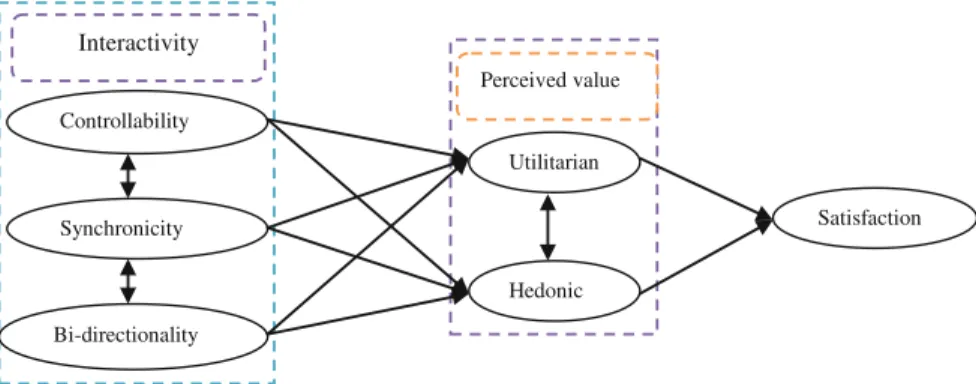
Yoo et al. [86] examine the bond between interactivity, perceived value and hedonic values. They conducted a survey comprising five sections and a total of 451 respondents were used for data collection. They define eight hypotheses. In order to analyse the data, they employ structural equation modelling using Amos 6.0 to assess the model.
Figure2.5 shows how interactivity factors result in perceived value and the acquired perceived value ends in satisfaction. The results illustrate that synchro-nicity has a big impact on perceived value. Furthermore, bi-directionality has an impact on hedonic values. This study has the following shortcomings:
1. The authors analyse the hypothesis using a descriptive and qualitative method, whereas, they could have conducted this research with higher precision using quantitative data.
2. The authors do not propose any particular methodology by which they can evaluate customer satisfaction.
3. Also, while they define perceived value and analyse this qualitatively, they fail to address it using quantitative analysis.
4. The authors do not provide a means of estimating the impact of interactivity and its mode on perceived value and customer satisfaction.
5. They do not create any prediction for future customer behavior using the current system.
Bonner [87] examines monitoring mechanisms utilized in new product devel-opment (NPD) and their impact on customer interactivity. The author proposes five hypotheses and tests these using a questionnaire derived from various industries. The measurement scale was a 5-point Likert scale. After obtaining the reliability and validity of the measures, statistical regression analysis was con-ducted to examine the hypotheses. The author concludes that output control and
Controllability Synchronicity Bi-directionality Hedonic Utilitarian Interactivity Perceived value Satisfaction
team rewards have a positive relationship with customer interaction and process control has a negative impact on it (Fig.2.6). This study has the following drawbacks:
1. The author does not formulate customer interactivity using a mathematical method.
2. While output control may increase the degree of customer interactivity, the author fails to propose a methodology to ascertain the consequences of interactivity.
3. The author does not mention the future prediction of customer loyalty.
Kirk [88] investigated the relationship between interactivity and customer satisfaction. The author stated various hypotheses and conducted a survey. The author also considers age and perceived usefulness as moderators. A 5-point Likert scale is the measurement tool. Then, using descriptive statistics, the author tested the hypotheses.
The analysis illustrates that customers are in favor of the things that they accustomed to, such as a book in preference to an e-book. Also, the age of the customer is significant when interaction takes place.
Lee [89], mentioned that perceiving interactivity in a company creates trust and transaction willingness by customers. Data were gathered from 20 interviews and the measurement tool was 7-point Likert scale. For the analysis, the author used a correlation matrix and Chi square difference test. Based on Fig.2.7, interactivity is positively associated with satisfaction and adoption intention; however, satisfac-tion has a positive relasatisfac-tion only with adopsatisfac-tion intensatisfac-tion.
The author ascertains that components of interactivity such as user control, responsiveness, personalisation, connectedness and contextual offer can increase the level of trust in customers and this alone makes them satisfied. Satisfied customers normally have a better interaction with companies. Both of the studies above have these drawbacks:
Fig. 2.6 Conceptual framework [87]
1. Neither creates an innovative solution to evaluate and measure customer satisfaction.
2. The authors offer no optimization process and they cannot evaluate the sensi-tivity of their model.
3. None of the studies can offer an effective decision-making process based on their frameworks.
Ballantine [90] presents the facets of on-line shopping which are interactivity and information and their impact on satisfaction of customers. The author pro-posed two hypotheses which were tested using an Internet-based experiment. Respondents were presented with an on-line store using simulation techniques. The measurement tool was a 7-point Likert scale and respondents were required to state whether they agreed or disagreed with the statements. The data having been collected, the author performed analysis of variance (ANOVA). The results illustrate that interactivity and amount of information have a direct and positive bond with customer satisfaction. The proposed approach has the following disadvantages:
1. Although the author uses an on-line simulated store, a physical store could have produced better outcomes.
2. More data should have been collected in order to effectively verify the hypotheses. In addition, the author did not present a clear definition of interactivity.
3. The author does not provide a robust methodology for measuring interactivity. Also, other tools apart from analysis of variance could have been used to validate the hypotheses.
Liu et al. [91], propose a method for interactivity and discuss the structure and various facets of interactivity. They also turn the definition into theory and practice. Furthermore, they compare various online marketing tools based on interactivity and then establish the dimensions of interactivity including active manipulation, synchronicity and two-way communication. Their results illustrated that interactivity can be measured and cannot be manipulated. Also, the outcomes of the interactivity must be under the control of an authority in the company in order not to be confused with other researchers’ results or for the results to be re-used. Based on this study, interactivity dimensions become an interaction process and this alone will produce interaction outcomes which comprise learning, self-efficacy and satisfaction. Below, we state the drawbacks of this study:
1. Although the authors provide a definition of interactivity, convert the definition to a theory and use a model to show the relations, they neglect to apply it to customer relationships, as interactivity can be used as a forceful technique in CRM.
2. Their conceptual framework which is intended to distinguish and clarify rela-tionships is in fact vague.
3. They propose a conceptual framework to ascertain self-efficacy, learning and satisfaction; however, they do not formulate the relationships or discuss the hypotheses in detail.
Roh et al. [92] propose a priority factor framework for the success of CRM. They discuss the intrinsic CRM success which comprises effectiveness and cus-tomer satisfaction, and extrinsic CRM success which is profitability. They first conducted in-depth interviews and questionnaire with CRM managers to check the validity. Using a structural equation analysis (AMOS), the authors investigated the CRM system success framework. Based on their analysis, system support and efficiency both result in customer satisfaction; however, system support and quality are not linked with profitability. According to this study, it is unlikely that efficiency converts to profitability, but customer satisfaction can bring about profitability.
1. Due to the exploratory nature of this study, it would have been better if the authors had created an iterative process within the conceptual framework. 2. The authors do not evaluate customer satisfaction and do not discuss customer
post-behaviors.
3. While they analyse customer relationship and its components, the authors must include other significant intrinsic and extrinsic factors too; however, it appears that they did not want to use all of the factors in the analysis.
4. There are some rejected hypotheses based on conceptual framework; however, the authors fail to address them and provide recommendations and solutions. 5. The authors must discuss the consequences of customer satisfaction and as one
2.4.4 Customers Loyalty-Focused CRM Approach
Min et al. [93] propose a methodology to control company employee turnover and enhance truck driver satisfaction and loyalty. Likewise, this study emphasises the shortage of drivers and its influence on competitiveness. The authors propose different employment incentives and retention strategies to retain drivers and control driver turnover (customer defection). The companies understand that to monitor the costs, they must stabilize drivers. For purposes of analysis, the authors selected a sample of trucking firms and conducted a survey. Then, the authors selected the most valid questionnaires and used SPSS to evaluate the data. Also, for measurement purposes, they use a 7-point Likert scale. In the very initial stage of analysis, it emerged that one of the reasons that drivers choose to work with a particular company is the facilities and the equipment that the company provides. Other than that, drivers do not like to have operational difficulties, repeated failure, health and safety problems. For job security, drivers hope to have a well-known recruiter. In this study, to better identify important factors, the researchers use exploratory factor analysis and principal component analysis. Using Chi square, they illustrate that some incentives are correlated with others. Using Varimax rotation with Kaiser Normalization, they discovered new factors such as non-driving activities, career enhancement and financial incentives. Also, word of mouth is one of the factors that attracts new clients and creates referral to new members.
According to this study, the factors that discourage individuals from driving and which contribute to lack of satisfaction are: rules and regulations, rigid labor market, drug testing, and lack of driving schools. According to another analysis using Chi square and factor analysis, the authors establish that there are three factors that create obstacles for drivers. These are infrastructure issues and include: working space, parking, hard work, and inadequate facilities for drivers.
Simultaneously, cost would be another issue for drivers according to this study, as 25.8 % of respondents believe that increasing salaries and repayments may exacerbate driver shortage. Furthermore, 70.7 % of the respondents believe that lack of drivers negatively influence their profit. Also, about 84.6 % of the respondents believe that lack of qualified drivers is one of the obstacles and issues preventing companies from initiating loyalty programs [93].
Results confirm that drivers are poorly managed. Drivers maintain that the best motivation for them to remain loyal is financial support and rewards. Furthermore, the behavior of employers directly affects drivers’ attitude and positively relates to retaining drivers. Moreover, age, education, family status and owner-operator status should also have an impact on the retention process; however, evidence shows that young (21- to 25-year-old) and experienced drivers (45+) are willing to stay with the same company (become conservative). The authors conclude that employment and retention strategies should be based upon the profiles of indi-viduals [93]. The current study lacks the following:
![Figure 2.1, [37] shows the relationship between complaint and derived concepts—](https://thumb-us.123doks.com/thumbv2/123dok_us/9526078.2436181/6.659.344.579.731.887/figure-shows-relationship-complaint-derived-concepts.webp)
![Fig. 2.2 Relationship between variables [79]](https://thumb-us.123doks.com/thumbv2/123dok_us/9526078.2436181/20.659.118.541.93.317/fig-relationship-between-variables.webp)
![Fig. 2.4 Relationship between hypotheses [1]](https://thumb-us.123doks.com/thumbv2/123dok_us/9526078.2436181/23.659.86.575.629.861/fig-relationship-between-hypotheses.webp)
![Fig. 2.6 Conceptual framework [87]](https://thumb-us.123doks.com/thumbv2/123dok_us/9526078.2436181/25.659.253.581.280.523/fig-conceptual-framework.webp)
![Fig. 2.7 Theoretical model [88]](https://thumb-us.123doks.com/thumbv2/123dok_us/9526078.2436181/26.659.121.538.88.365/fig-theoretical-model.webp)
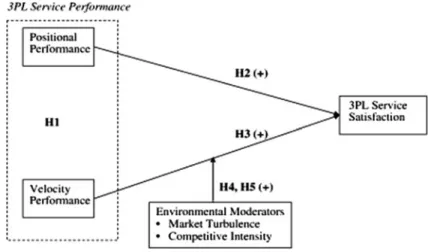
![Fig. 2.10 Relationships between main variables [119]](https://thumb-us.123doks.com/thumbv2/123dok_us/9526078.2436181/46.659.252.581.583.875/fig-relationships-between-main-variables.webp)
