Production and Analysis of Oil from Caster Seed: Case Study
Abdurohman Mengesha Yessuf
1Nebiyu Chali Yadeta
2Ballekallu Chinna Eranna
31,2,3
Arbaminch University, College of Natural Science, Arbaminch, Ethiopia, East Africa
Abstract— Castor oil is a promising commodity that has a variety of applications in the coming years, particularly as a renewable energy source. Essential to the production and marketing of castor oil is the scientific investigation of the processing parameters needed to improve oil yield. The condition of the seed has a high contribution to the performance of the oil extraction process. Castor oil, produced from castor seeds, has been considered to be an important commercial value. Primarily for the manufacturing of soaps, lubricants, coatings and medicinal uses among others. Extraction and characterization of castor oil from seeds. The seeds were prepared for use by removing the endocarp, sun-drying for seven days and finally milled to flour. A soxhlet extraction was used for the extraction of castor oil, using hexane as solvent. The oil was recovered by simple distillation of the solvent. The residual oil obtained was investigated for physiochemical parameters and fatty acid composition. The physical parameters were: moisture content, specific gravity, refractive index, fire point, flash point, smoke point, viscosity, pH. For chemical parameters, were: free fatty acid (oleic acid), acid value, saponification value and iodine value. Also, the result of the analysis confirms the oil to be of good quality and can found application in food industry as food additives as well as industrial purposes such as cosmetics, soaps, paint and energy generation.
Keywords: Castor Seed, Castor Crude Oil, Soxhelator, Simple Distillation
I. INTRODUCTION
Castor plant (Ricinuscommunis), from which castor beans and oil are native to the Ethiopian region of east Africa is now grown in tropical and warm temperature regions throughout the world (Salunke and Desai, ). It grows naturally over a wide range of geographical regions and may be activating under a variety of physical and climatic regions. The Vegetable fats or vegetable oils have an essential function in the industrial economy of a developing country, as the seed oil provides a more uses in human daily life, in order to complete and make the life easier. The seed oils are one of the vegetable oil family members. Vegetable oils or vegetable fats are the lipid materials that been derived from the natural plants which physically oil are in liquid state in the room temperature whereas the fat exists in solid state in the room temperature (Ndiayeet. Al). The vegetable oil is composed of triglycerides which lack glycerine in its structure. Several feedstocks from vegetable source such as soybean, rape seed, canola, palm, corn, Japtropha and castor seeds have been studied as an alternative to oil candidate. Among these sources, castor seeds are a potentially promising feedstock among vegetable oils, castor oil is distinguished by its high content (over 85%) 2 of ricinoleic acid. There is no other vegetable oil contains so high proportion of fatty hydroxyl acids and castor oil is the most stable viscosity of any other vegetable oils [22,11].
There are variety processes or the combination of the processes to obtain the oils from the castor seeds. The hydrate presses, continuous screw presses and also solvent extraction are the common methods to obtain the oils from the castor seeds. However, the most satisfactory approach to get the oil is hot pressing the castor seeds by using a hydraulic press and then followed by solvent extraction. It is grown in Costa Rica, Ecuador, Thailand, Philippines, Paraguay, Romania, Sudan, Mexico, Pakistan, Ethiopia and Tanzania. The world-wide production stood at 1, 227, 669 tonnes in 2000 (FAO). However, India is the world’s largest producer of castor seeds and oils that meets most of global demand for castor oil [7].
Due to the importance of the vegetable oils in the industrial, pharmaceutical, food industries and also medical, there is an urgent need to produce more oil from the natural plants. In view of this, castor oil is a promising vegetable oil because it has several advantages; it is renewable, environmental friendly and produce easily in the rural areas, where there is an acute need for modern forms of energy. The primary use of the castor oils is as the basic ingredient in the production of nylon 11, sebacic acid, plasticisers and engine jet lubricant. Castor oil’s high lubricity which reduces the friction is superior to other vegetable oils and petroleum-based lubricants. It is really clings to metal, especially hot metal, and the castor oils is used in production nylon 6-10, heavy duty automotive greases, coating and inks, surfactants, polyurethanes, soaps, polishes, synthetic resins, fibers, paints, varnishes, dyes, leather treatments, hydraulic fluids and also sealants. Specification for pharmaceutical use can be found in the European Pharmacopeia. The industrial type maybe divided into three types of quality. ‘First’ quality is the oil that obtains from only one pressed castor oil and extracted without solvent. This kind of oil normally produced in Europe, is virtually colorless and has very low acidity. ‘Second’ and ‘third’ quality of castor oil is commercial names, meaning that the oil has been extracted using solvent the colour of the oil is light yellow.
II. CASTOR OIL AND ITS PROPERTIES
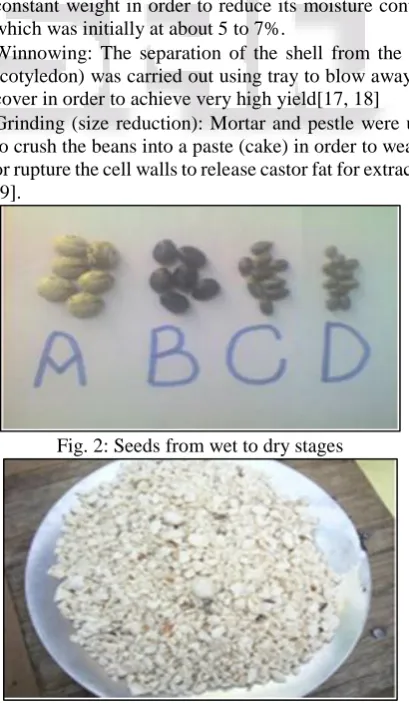
Castor beans are cultivated for their seeds (Fig. 1), yielding a viscous, pale yellow nonvolatile and nondrying castor oil.
The physical properties of castor oil have been studied (Table 1). Comparative analysis showed that the values of viscosity, density, thermal conductivity, and pour point for castor oil were higher than the values of a standard lubricant (SAE 40 engine oil) [15, 13].
PHYSICAL PROPERTIES
Viscosity (centistokes) 889.3
Density (g/mL) 0.959
thermal conductivity (W/m°C) 4.727
Specific heat (kJ/kg/K) 0.089
Flash point (°C) 145
pour point (°C) 2.7
Melting point (°C) -2 to -5
[image:1.595.347.509.658.755.2]Refractive index 1.480
The unique structure of castor oil offers interesting properties, making it appropriate for various industrial applications. Castor oil is known to consist of up to 90% ricinoleic, 4% linoleic, 3% oleic, 1% stearic, and less than 1% linolenic fatty acids. Castor oil is valuable due to the high content of ricinoleic acid (RA), which is used in a variety of applications in the chemical industry [21,8].
A. Application of Caster Seed:
Fuel and biodiesel, Polymer materials, Soaps, Waxes and Greases, Lubricants, hydraulic, and brake fluid, Fertilizers, Coatings, Pharmacological and medicinal use
III. EXPERIMENTAL PART
A. Sample Site
The sample will collect from Arba Minch city of sikela market and the experiment will conduct in chemistry laboratory of Arba Minch University College of Natural Sciences.
B. Materials Used for the Experiments
1) Equipment
Oven: To dry the sample
Soxhlet extractor: To extract the oil from the seed using the solvent.
Viscometer: To measure the viscosity of the oil. Round bottom flask: To carry the solvent.
Filter paper: To separate the precipitate and the solvent. Desiccators: To cool the sample.
Beaker: To hold the solvent.
Conical flask: To done the characterization. Stirrer: To stirrer the solution.
Stopper: To record the time.
Measuring cylinder: To measure the solvent. Holder: To hold the sample.
Bath: To hold the sample.
Refractometer: To measure the refractive index. pH electrode: To measure the PH of the solution.
2) Chemicals
Hexane (C6H14): Used for the solvent.
Diethyl ether (C2H5)2O: Used for the determination of acid value character.
Ethanol (C2H5OH): Used for the determination of acid value and saponification value character.
Phenolphthalein: To indicates the colour change. NaOH: Used for the titrate against for acid value
determination.
Ethanolic potassium hydroxide:- Used for the determination of saponfiction value
Starch indicator: To indicates the colour change.
HCl: Used for the titrate for saponification value determination.
[image:2.595.321.534.65.243.2]IV. METHODOLOGY
Fig. 1: Process flow sheet for the production oil from caster seed.
A. Sample Preparation
Castor seed sample will be buy from Arba Minch city. 1 kg of each sample will use for the sample preparation. The castor seed undergo various steps during the course of its preparation for extraction. The unit operations involved are: Clearing: The castor beans had some foreign materials
and dirt which was separated by hand picking.
Drying: The cleaned beans were sun dried in the open, until the casing splits and sheds the seeds. The beans were further dried in the oven at 60°C for 7hrs to a constant weight in order to reduce its moisture content, which was initially at about 5 to 7%.
Winnowing: The separation of the shell from the nibs (cotyledon) was carried out using tray to blow away the cover in order to achieve very high yield[17, 18] Grinding (size reduction): Mortar and pestle were used
[image:2.595.82.539.320.751.2]to crush the beans into a paste (cake) in order to weaken or rupture the cell walls to release castor fat for extraction [9].
Fig. 2: Seeds from wet to dry stages
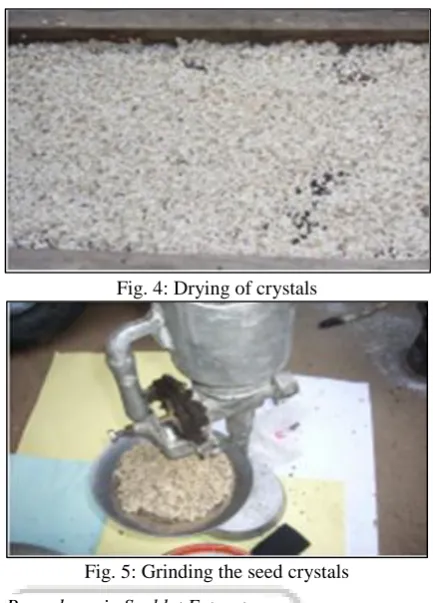
[image:2.595.328.533.398.750.2]Fig. 4: Drying of crystals
Fig. 5: Grinding the seed crystals
B. Procedures in Soxhlet Extractor
Around 300ml of normal Hexane was poured into round bottom flask and 10g of the sample was placed in the thimble and inserted in the centre of the extractor. The Soxhlet was heated at 60oC.When the solvent was boiling; the vapour rises through the vertical tube into the condenser at the top. The liquid condensate drips into the filter paper thimble in the centre, which contains the solid sample to be extracted. The extract seeps through the pores of the thimble and fills the siphon tube, where it flows back down into the round bottom flask. This was allowed to continue for 30 minutes. Then removed from the tube, dried in the oven, cooled in the desiccators and weighed again to determine the amount of oil extracted. Further extraction was carried out at 30 minutes
[image:3.595.326.529.147.339.2]interval until the sample weight at further extraction and previous weight becomes equal. The experiment was repeated by placing 5g of the sample into the thimble again. The weight of oil extracted was determined for each 30 minutes interval. At the end of the extraction, the resulting mixture (miscella) containing the oil was heated to recover solvent from the oil.
Fig. 6: Extraction of oil using soxhlet equipment
V. RESULT AND DISCUSSION
A. Extraction of castor oil from castor seed result
1) Determination of Moisture Contents in castor seed
In the month of December 2018, 2Kg of the castor seed was collected from Nation Nationality Peoples of Ethiopia Arba Minch Zone. After that by taking 100, 150, 200, 250 and 300 grams of castor seed, the moisture content of the sample was obtained (Table-2) using equation, after drying the seed in the oven at 1300C for the varying of the hour.
Moisture % = (𝑊1−𝑊2) 𝑊2 × 100
Where: W1 = Original weight of the sample before drying W2 = Weight of the sample after drying.
The moisture content of the castor seed of sample with 100, 150,200, 250 and 300gms was 6.967, 6.41, 6.411, 6.40996 and 6.4088%, respectively. Thus, the average moisture content of the three samples will be 6.52%.
2) Determination of the Percentage of Castor Oil Extracted
In this experiment 2Kg of castor seed were first decorticated using pestle and mortar making 1.6kg of the flaked pure beans
ready for extraction. The yield can be calculated using equation
Percentage of yield =[W1−W2]
W1 ∗ 100
Where: W1=Sample weight before extraction and
Particle Size(mm)
Extraction Time (hr.)
Amount of Solvent (ml)
Sample Weight (gm)
Cake Weight after drying (gm)
2.50 4 500 50 16.5
Percentage of oil yield= [𝟓𝟎−𝟏𝟔.𝟓]
𝟓𝟎 ∗ 100
Percentage of oil yield = 67
B. Determination of Physical properties of the castor oil
1) Specific Gravity
To characterize the oil values Specific gravity is one of the important parameter. Determine the specific gravity by using the formulae.
. Specific gravity of oil =[W2−W0]
[W1−W0] Where W0= Mass of empty bottle
W1= Mass of water with bottle W2= Mass of castor oil with bottle
2) Experimental Data
Mass of density bottle(W0) = 40.47g Mass of density bottle and water(W1) = 67.74g Mass of density bottle and oil(W2)= 68.34g Specific gravity = 0.959
C. Determination of viscosity of castor oil
By taking 35mL of oil and using a viscometer we can get 645mPas of viscosity at 20.40C.
1) Determination of pH Value
Before measuring pH value, standardized pH electrode by using buffer solution, after that value of pH 5.11was recorded immersing the electrode into 2.0mL of the castor oil. 2) Determination of colour of castor oil
Sample of castor oil colour was light yellow.
3) Determination of Chemical properties of the castor oil
4) Determination of saponification value
Saponification value is calculated through titration using equation 3.4. First the blank level changed from pink to colourless at 36mL titration volume. The colour at which the saponification test changed from pink colour to colourless was 2 mL of titration volume. Titration results for saponification test given below. Using the equation described The expression for saponification value (S.V.) is given by: Saponification Value (S.V) = 56.1× N(V0−V1
M
Where: V0 = the volume of the solution used for blank test. VI = the volume of the solution used for determination. N = Actual normality of the HCl used.
M = Mass of the sample.
5) Experimental Data
Volume of HCl Solution Used for Blank Solution(ml)
Volume of HCl solution Used for Determination(ml
)
Actual Concentration
of HCl(N)
Mass of Sample (g)
Saponification value (mg/g)
26 2 0.1 1 134
D. Determination of castor oil acid value
Acid value can be calculated using equation 3.5 as follows. For testing acid value, mixture was kept until it changed to pink after 0.36mL of titration volume added.
Acid value (AV) = 56.11× V×C M
Where: V =Volume potassium hydroxide; C= of potassium hydroxide concentration,
56.11 =Molecular weight of potassium hydroxide and m = sample weight
Volume of Potassium Hydroxide(ml)
Normality of Potassium
Hydroxide(N) Mass of sample(g)
Acid value(mg/g)
0.36 0.1 1 2.01
VI. CONCLUSIONS
Castor oil is a promising commodity that has a variety of applications in the coming years, particularly as a renewable energy source. Essential to the production and marketing of castor oil is the scientific investigation of the processing parameters needed to improve oil yield. The condition of the seed has a high contribution to the performance of the oil extraction process.
Traditional method of extracting castor oil is tedious, labor and time consuming and inefficient. The percentage of oil recovery is about 67%.
The castor oil produced in this research work was analyzed for specific gravity, viscosity at 40 and 100oC, acid value, saponification value, PH value, moisture content and
134.64mg/g, 5.11, 23.4%, and light yellow. Most of the values obtained comply with the standard specified by ASTM (195), almost all reading are coinciding with the standard values.
A. Recommendations
By the end of this study, it can be recommended that: More attentions and studies are recommended regarding
caster plant, as it is considered as wild weed in many places in Ethiopia.
More researches are recommended regarding the physicochemical characteristics of castor oil from different methods.
The oil was extracted using soxhlet extraction method; this solvent extraction method was difficult, better choose another type of method like hydraulic pressing and mechanical.
VII. REFERENCES
[1] Marter A. D., (1981)“Castor Markets Utilization and Prospects, Tropical Product Institute, vol. 152, p. 55-78.
[2] Weise E. A.,(1983) “Oil seed crops, Tropical Agriculture Series, vol.143, p. 31-53.
[3] Salunke D. K., Desai B. B., (1941) “Post-harvest Biotechnology of Oil Seeds, CRC Press, vol. 234, p. 161- 170.
[4] Dole K. K., Keskar V. R.,(1950) “Dehydration of castor oil, CurrSci, vol. 19(8), p. 242- 243.
[5] Nkpa, N. N., Arowolo T. A., Akpan H. J.,(1989) “Quality of Nigerian palm oil after Bleachingwit local treated clays, JAOCS, Journal of the American Oil Chemists' Society, vol. 66(2), p. 218-222.
[6] Carr R. A.,(1976) “Refining and degumming system for edible fats and oils, JAOCS, vol. 55, pp. 766-770. [7] Janson H., (1967) “Castor oil production and processing,
United Nations, vol. 57(7), p. 4- 13.
[8] Lew Kowitseh J. I.,(1909) “Chemical Technology and Analysis of oils,Fats and waxes,vol.23(6),pp.232-238. [9] Abayeh, O. J., Aina, E. A.,&Okuoghae. (1998), “Oil
Content and Oil Quality
[10] Characteristics of Some Nigerian Oil Seeds,journal of Pureand Applied Sciences,vol. 1(1), pp.17-23.
[11] E.Makanju, A. (2011),” Production Characterization and Evaluation of Castor Oil Biodiesel as Alternative Fuel for Diesel Engines, Journal of EmergingTrends in Engineering and Applied Sciences,vol. 2(3), pp. 525-530.
[12] Ali, R.M., Elfeky, S.S., & Abbas, H. (2008),” Response of salt stressed RicinuscommnunisL. to exogenous application of glycerol and/or aspartic acid, Journal of Biological Science,vol.8(1),pp.171–175.
[13] Derringer, G., &Suich, R. (1980), “Simultaneous optimization of several response variables, Journal of Quality Technology, vol. 12 (4), pp. 214-219.
[14] Evangelista, R. (2009), Oil extraction from lesquerellaseeds by dry extrusion and expelling. Industrial Crops and Products, vol. 29(1), pp. 189-1961. [15] Fontal, L.M.E. (2007), “Extracting oil from coffee,
IngenieríaeInvestigación, vol.27(1), pp.25-31. [16] Goswami, D., Sen, R. Kumar, J.B., & De S. (2009),
“Maximization of bioconversion of castor oil into ricinoleic acid by response surface methodology, .Bioresource Technology, vol. 100(18),pp.4067-4073.