An Experimental Investigation of Machining Parameters for EDM using
Electrode Shape Configuration of AISI P20 Tool Steel
Nikhil Rajan
1Abhijeetsinh Makwana
2Dr. Purushottam S. Dange
1
PG Scholar
2Assistant Professor
1,2
Department of Mechanical Engineering
1
SVBIT, GTU Ahmedabad, Gujarat, India
2Shree Swaminarayan Institute of Technology, GTU
Ahmedabad, Gujarat, India
Abstract— The objective of this research is to study theinfluence of Process parameters and electrode shape configuration on the Machining characteristics of die sinking EDM. The present work aims to study the effect of different electrode shapes (Circular, rectangular and triangular) With constant cross sectional area of 280 mm2 on material removal rate (MRR), surface roughness (SR) and Electrode wear rate (EWR) for AISI P20 tool steel workpiece material and pure copper As electrode material. The optimization of the parameters of the EDM machining will be carried out by using the taguchi’s method for design of experiments (DOE). The objective of the analysis is to identify the Optimum electrode shapes in terms of higher MRR, minimum EWR and excellent surface finish. The different parameters considered while carrying out the experiments on the Die-Sinking EDM will be the current applied, pulse on time and pulse off time required etc. Key words: EDM, Electrode Shapes, DOE, Parameter Analysis
I. INTRODUCTION
Electro Discharge Machining (EDM) is an electro-thermal non-traditional machining Process, where electrical energy is used to generate electrical spark and material removal mainly occurs due to thermal energy of the spark. EDM is mainly used to machine difficult-tomachine materials and high strength temperature resistant alloys. EDM can be used to machine difficult geometries in small batches or even on job-shop basis. Work material to be machined b y EDM has to be electrically conductive.In this process the metal is removing from the work piece due to erosion case by rapidly recurring spark discharge taking place between the tool and work piece. Show the mechanical set up and electrical set up and electrical circuit for electro discharge machining. In EDM, as has been discussed earlier, material removal mainly occurs due to thermal evaporation and melting. As thermal processing is required to be carried out in absence of oxygen so that the process can be controlled and oxidation avoided.
II. LITERATURE REVIEW
In this paper few selected research paper related to Die-sinker EDM and the studies carried out in these papers are mainly concerned with the different electrode shape configuration and EDM input parameters such as current, voltage, pulse on time, duty cycle, etc.
M. S. Sohani et al. [1] studied Investigations into the effect of tool shapes with size factor consideration in sink electrical discharge machining (EDM) process. He
shapes such as triangular, square, rectangular, and circular with size factor consideration along with other process parameters like discharge current, pulse on-time, pulse off-time, and tool area. Also The RSMbased mathematical models of material removal rate (MRR) and tool wear rate (TWR) have been developed using the data obtained through central composite design. He finally concluded that the best tool shape for higher MRR and lower TWR is circular, followed by Triangular, rectangular, and square cross sections. From the parametric analysis, it is also observed that the interaction effect of discharge current and pulse on-time is highly significant on MRR and TWR, whereas the main factors such as pulse off-time and tool area are statistically significant on MRR and TWR.
Rajmohan T et al. [2] conducted Optimization of Machining Parameters in Electrical Discharge Machining (EDM) of 304 Stainless Steel using copper as a tool material. Input and output parameters were Pulse on Time, Pulse off Time, Voltage, Current and Material Removal Rate. Using taguchi‟s L9 OA and also using ANOVA technique. They finally concluded that the current and pulse off time are the most significant machining parameter for MRR in EDM of 304 Stainless Steel.
T. Muthuramalingam et al. [3] has studied the Application of Taguchi-grey multi responses optimization on process parameters in electro erosion. This multi response optimization of the electrical discharge machining process has been conducted with AISI 202 stainless steel with different tool electrodes such as copper, brass and tungsten carbide. Gap voltage, discharge current and duty factor have been used as electrical excitation parameters with different process levels. Taguchi L27 orthogonal table has been assigned for conducting experiments with the consideration of interactions among the input electrical process parameters. Material removal rate, electrode wear rate and surface roughness have been selected as output parameters. From the experimental results, it has been found that the electrical conductivity of the tool electrode has the most influencing nature on the machining characteristics in EDM process.
T. M. Chenthil Jegan et al. [4] has studied Determination of Electro Discharge Machining Parameters in AISI 202 Stainless Steel Using Grey Relational Analysis. Input and output parameters were Discharge Current, Pulse on Time, Pulse off Time and Material Removal Rate, Surface Roughness. The result shows that Discharge Current was the main parameter affecting the MRR. Hence by properly adjusting the control factors, work efficiency and product quality can be increased.
application of the conventional EDM process to manufacture micro cavities with the objective to obtain how the process parameters could effects on the result. As a result the dimensions and shape of the microcavities were analyzed. Finally the results provide recommendations of operating conditions for better micro-cavities manufacturing in stainless steel 316L.
III. MATERIALS AND METHODS
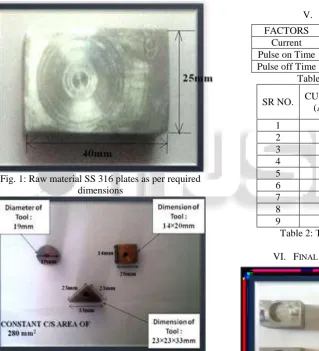
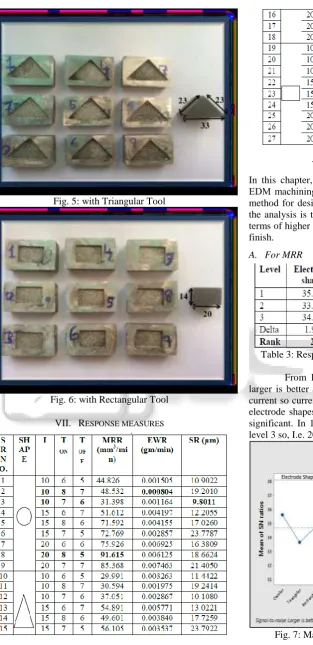
[image:2.595.313.546.66.240.2]The pure copper with 99.96 % is used as a tool material because of its higher MRR and less TWR and yields a better surface finish. The pure copper tools with constant cross sectional area of 280mm2 and different shapes like triangular, rectangular, and circular are used to erode a AISI P20 workpiece. The tool material is a pure electrolytic copper (99.9% Cu).
[image:2.595.66.386.255.607.2]Fig. 1: Raw material SS 316 plates as per required dimensions
Fig. 2: Raw material pure copper (electrode shapes) as per required dimensions
IV. EXPERIMENT DETAILS
In the present investigation, the experiments were performed in an “S25 Sparkonix” EDM machine. The impulse flushing of kerosene (dielectric fluid) was employed throughout the experimental investigations. The schematic diagram of the
Fig. 3: Experimental Setup (S25 Sparkonix EDM)
V. DESIGN OF EXPERIMENTS
FACTORS LEVEL 1 LEVEL 2 LEVEL 3
Current 10 15 20
Pulse on Time 6 8 7
Pulse off Time 5 7 6
Table 1: Factors & Their Levels
SR NO. CURRENT
(Amp.)
PULSE ON TIME (μs)
PULSE OFF TIME(μs)
1 10 6 5
2 10 8 7
3 10 7 6
4 15 6 7
5 15 8 6
6 15 7 5
7 20 6 6
8 20 8 5
9 20 7 7
Table 2: Taguchi’s L9 Orthogonal Array
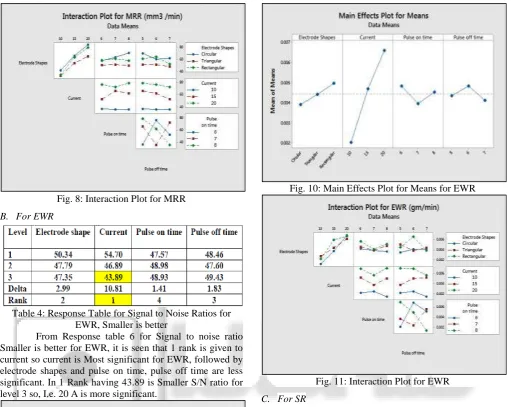
[image:2.595.211.543.258.714.2] [image:2.595.307.560.509.710.2]Fig. 5: with Triangular Tool
Fig. 6: with Rectangular Tool
VII. RESPONSE MEASURES
VIII. RESULT & DISCUSSION
In this chapter, the optimization of the parameters of the EDM machining will be carried out by using the taguchi‟s method for design of experiments (DOE). The objective of the analysis is to identify the Optimum electrode shapes in terms of higher MRR, minimum EWR and excellent surface finish.
[image:3.595.303.543.314.431.2]A. For MRR
Table 3: Response Table for Signal to Noise Ratios for MRR, Larger is better
From Response table 5 for Signal to noise ratio larger is better for MRR, it is seen that 1 rank is given to current so current is most significant for MRR, followed by electrode shapes and pulse on time, pulse off time are less significant. In 1 Rank having 37.56 is larger S/N ratio for level 3 so, I.e. 20 A is more significant.
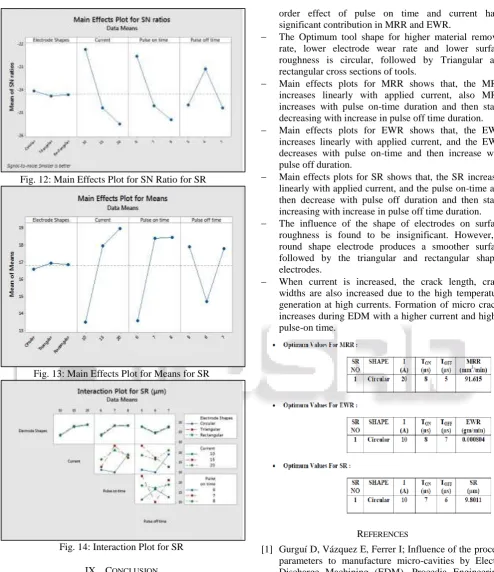
[image:3.595.309.551.505.688.2]Fig. 8: Interaction Plot for MRR
B. For EWR
Table 4: Response Table for Signal to Noise Ratios for EWR, Smaller is better
From Response table 6 for Signal to noise ratio Smaller is better for EWR, it is seen that 1 rank is given to current so current is Most significant for EWR, followed by electrode shapes and pulse on time, pulse off time are less significant. In 1 Rank having 43.89 is Smaller S/N ratio for level 3 so, I.e. 20 A is more significant.
[image:4.595.45.557.65.472.2]Fig. 9: Main Effects Plot for SN Ratio for EWR
Fig. 10: Main Effects Plot for Means for EWR
Fig. 11: Interaction Plot for EWR
C. For SR
Table 5 Response Table for Signal to Noise Ratios for SR, Smaller is better
[image:4.595.46.292.467.641.2]Fig. 12: Main Effects Plot for SN Ratio for SR
[image:5.595.44.304.61.598.2]Fig. 13: Main Effects Plot for Means for SR
Fig. 14: Interaction Plot for SR
IX. CONCLUSION
In this research the influence of electrode shape, discharge current, pulse on time and pulse off time on MRR, EWR and SR are investigated. Electrodes of Three different shapes of constant crosssectional area of 280mm2 are used for Experiment. The MRR, EWR and surface roughness are measured and analyzed.
The Following conclusions can be made from this experimental research.
order effect of pulse on time and current have significant contribution in MRR and EWR.
The Optimum tool shape for higher material removal rate, lower electrode wear rate and lower surface roughness is circular, followed by Triangular and rectangular cross sections of tools.
Main effects plots for MRR shows that, the MRR increases linearly with applied current, also MRR increases with pulse on-time duration and then starts decreasing with increase in pulse off time duration. Main effects plots for EWR shows that, the EWR
increases linearly with applied current, and the EWR decreases with pulse on-time and then increase with pulse off duration.
Main effects plots for SR shows that, the SR increases linearly with applied current, and the pulse on-time and then decrease with pulse off duration and then starts increasing with increase in pulse off time duration. The influence of the shape of electrodes on surface
roughness is found to be insignificant. However, a round shape electrode produces a smoother surface followed by the triangular and rectangular shaped electrodes.
When current is increased, the crack length, crack widths are also increased due to the high temperature generation at high currents. Formation of micro cracks increases during EDM with a higher current and higher pulse-on time.
REFERENCES
[1] Gurguí D, Vázquez E, Ferrer I; Influence of the process parameters to manufacture micro-cavities by Electro Discharge Machining (EDM). Procedia Engineering, 2013; 63:499-505.
[2] Muthuramalingam T, Mohan B; Application of Taguchi-grey multi responses optimization on process parameters in electro erosion. Measurement, 2014; 58:495-502.
[4] Mhatre MS, Sapkal SU, Pawade RS; Electro discharge machining characteristics of Ti-6Al-4V alloy: A grey relational optimization. Procedia Materials Science, 2014; 5.
[5] Torres A, Puertas I, Luis CJ; Modelling of surface finish, electrode wear and material removal rate in electrical discharge machining of hard-to-machine alloys. Precision Engineering, 2015;40:33-45.
[6] Shabgard M, Oliaei SNB, Seyedzavvar M, Najadebrahimi A; Experimental investigation and 3D finite element prediction of the white layer thickness, heat affected zone, and surface roughness in EDM process. Journal of mechanical science and technology, 2011; 25(12):3173-3183.
[7] Das MK, Kumar K, Barman TK, Sahoo P; Optimization of surface roughness and MRR in EDM using WPCA. Procedia Engineering,2013; 64:446-455.
[8] Chen DC, Jhang JJ, Guo MW; Application of Taguchi design method to optimize the electrical discharge machining. Journal of Achievements in Materials and Manufacturing Engineering, 2013;57(2):76-82.
[9] Rajmohan T, Prabhu R, Rao GS, Palanikumar K; Optimization of Machining Parameters in Electrical Discharge Machining (EDM) of 304 Stainless Steel. Procedia Engineering,2012; 38:1030-1036.