Scope, Limitations and Future Directions
Smale, Melinda and Lipper, Leslie and Koundouri, Phoebe
2006
Online at
https://mpra.ub.uni-muenchen.de/38439/
Scope, Limitations and Future Directions
Melinda Smale, Leslie Lipper, and Phoebe Koundouri*
* This final section in this chapter is based on the contributions of authors during a
workshop sponsored by IPGRI, IFPRI, and FAO: Györgyi Bela, Ekin Birol, Sam Benin,
Romina Cavatassi, Evan Dennis, Salvatore Di Falco, Svetlana Edmeades, Pablo
Eyzaguirre, Devendra Gauchan, Berhanu Gebremedhin, Toby Hodgkin, Jarilkasin
Ilyasov, Latha Nagarajan, M. Eric Van Dusen, Edilegnaw Wale, Paul Winters, and
Patricia Zambrano.
SCOPE OF CURRENT RESEARCH
Dimensions of crop biodiversity
Concepts, theoretical principles and econometric approaches are interrelated throughout the chapters of this book, but generalizations are not so straightforward. One reason why that is although the range of empirical contexts represented is broad, the crops and
countries studied were selected purposively. The selection of contexts reflects the joint decisions of the national and international scientists involved, as well as the research
policy environment of the country. In other words, empirical research has been conducted in countries where at least some national stakeholders have recognized on-farm
conservation of crop biodiversity as a policy issue.
Another feature that complicates generalization is that the studies themselves consist of in-depth research that is both location- and crop-specific. Although the
explanatory variables have been measured with survey instruments that are adapted to each farming system and crop context.
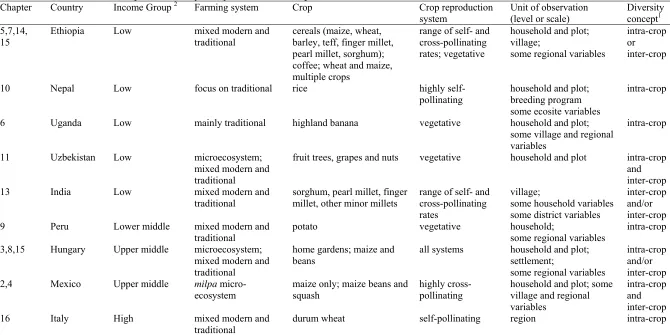
Table 1 assembles the “dimensions of crop biodiversity” encompassed by the
studies in this book: country, national income, farming system, crop, level or scale of observation, and diversity concept measured. Countries are classified by group according
to gross national productincome per capita, as listed by the 2004 World Bank 2004 Ddevelopment I indicators. Five are low income (Ethiopia, Uganda, Nepal, India, and Uzbekistan); one is lower middle income (Peru); three two are upper middle-income
(PeruMexico and Hungary Uzbekistan); and two areone is high income (Hungary and Italy). Two countries are classified as economies in transition from state-controlled to
market-based, and Hungary is an accession state to the European Union. The regions studied in Italy are classified as “backward,” or relatively poor and underdeveloped within the European Union. Geographical area represented include the North America
(Mexico) and South America (Peru); Central Asia (Uzbekistan) and South Asia (Nepal and India); East Africa (Uganda) and the Horn of Africa (Ethiopia); and Eastern and
Southern Europe (Hungary and Italy).
Most farming systems include both modern varieties and traditional varieties, or “landraces” as the term is used in this book (see Chapter 1 for definitions), though in
most instances they are dominated by traditional varieties. Some, such as the milpa system of Mexico or home gardens in Uzbekistan and Hungary, can be considered
infrastructure, services, and production environment vary by ecosite, village, settlement, or region.
Studies have been undertaken in locations where the current state of scientific
knowledge considers that crop biodiversity of global economic value remains in the fields of farmers. All survey sites are located in known centres of origin and/or diversity,
though not always for the crops investigated: maize, rice, durum wheat, sorghum and millet, potato, highland banana, coffee, fruits and nuts. Hungary is a centre of origin for rye, but the Institute of Agrobotany found few landraces remaining on farms in previous
collection missions. Hungary represents one of the more interesting cases from the standpoint of valuing crop biodiversity and economic change. A relatively rich nation
undergoing fundamental structural changes in the economy, Hungary is situated within a conducive policy framework (the European Union) that explicitly recognizes the multiple functions of agricultural landscapes and their economic value.
Crop reproduction systems range from highly cross-pollinating (maize and pearl millet), to highly self-pollinating (rice and wheat), including plants that are vegetatively
reproduced in several ways. Potato tubers can serve as planting material or food. The planting material of a banana is a shoot from the parent plant and the fruit, though it contains seed that is not used for propagation. Fruit trees are primarily reproduced
through clonal propagation, with some crops of propagated through grafting scion wood onto rootstock. Propagation techniques vary across crops, apples entirely propagated by
grafting, grapes are rarely grafted, and walnuts are often grown from seedlings. Bananas
In most chapters, the fundamental unit of observation and analysis is the household farm. The notion of the household farm includes the social unit of the household and its members, the physical unit represented by the land it cultivates or
owns, and the crop varieties as recognized by those who make crop production decisions. The economic unit includes those family members who reside elsewhere but remit cash
income or transfers, as well as the non-farm activities of those who reside on the farm. In several analyses based on the household farm, variables measured at higher levels of aggregation have been introduced as explanatory factors that condition the decisions
made by individual households but that households cannot individually influence. In three of the studies, dependent variables are themselves measured at the village or
regional level and the village or region is the unit of observation and analysis. In a number of chapters, seed supply variables measured at the level of the village, breeding program or rural development program have been included as determinants of crop
biodiversity on farms.
The diversity indices applied throughout the book are spatial indices adapted from
the ecological literature. The definitions and relevance of these indices for social science analysis of crop biodiversity on farms are discussed in Chapter 1. Taxonomies for
classifying crop varieties have been linked to or overlain with those of crop breeders
where feasible, emphasizing differentiation within the typologies of modern and traditional.
Determinants of crop biodiversity
products, seed or labour (de Janvry et al. , 1991; Singh et al., 1986). When the conditions for maximization are met, reduced form equations for the optimal choices of farmers can be expressed in terms of vectors of independent variables that consist of the
characteristics of individual households, their farms, and the markets in which they trade commodities or labour. Diversity metrics or indices can be constructed over observed,
optimal choices, retaining the underlying structure of the reduced form equation. The crop biodiversity observed on a farm is expressed as the outcome, or consequence of a choice rather than a choice in and of itself (Chapter 4). In the lexicon of impure public
goods presented in Chapter 1, the outcome represents a public good externality associated with a private choice of seed types and crops.
The vectors of independent variables or characteristics can be interpreted in terms of any one of several vocabularies used to describe rural development processes. For example, household characteristics can be understood as a combination of social and
demographic descriptors, or as indicators of human and financial capital. Farm
characteristics are physical, environmental, or agro-ecological features of the production
unit. Except for the case of southern Italy, the farm technologies in this book are non-mechanized, constituted by human labour, implements, and in some cases, animal traction, and land. Slopes, elevation, moisture conditions, soil quality and plot
fragmentation are fixed land quality and farm physical descriptors. Market-related characteristics include distances to different types of markets that proxy for fixed
those most amenable to public investments and interventions designed to promote development or sustainable management of crop biodiversity.
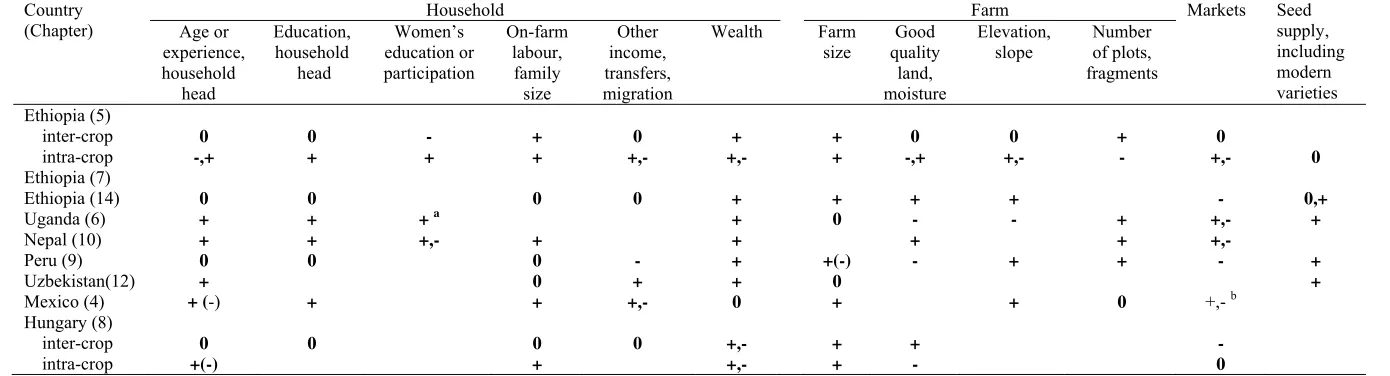
A summary of the statistical findings from econometric estimation of reduced
form equations from chapter case studies is shown in Table 2.
Human capital
Across lower and middle-income countries, the formal education of farm
decision-makers contributes positively to sustaining crop biodiversity, and in particular, there is evidence that in some locations and crops, women’s education and participation in crop
production is associated with a greater number of varieties grown. Women’s education and participation in farm production supports intra-crop diversity in the Ethiopia cereals case, in the Nepalese case for several indicators of the rice diversity indices, and in the
Ugandan case when women are decision-makers in banana production—that is, in countries where women’s levels of educational attainment are on average less than completion of primary school. Education is associated with access to seed-related
information, not only for modern varieties, but also for landraces.
In all cases but one, where age matters at all, households with higher levels of
intra-crop biodiversity have older decision-makers. That case is for maize in Ethiopia, a newer crop for which modern varieties have been recently introduced. In all cases except Uganda, there is a positive correlation between the age of the household head and his or
her farming experience. In the Ugandan study, when experience is adjusted for age, the effect of experience continues to be positive. In higher-income locations such as Mexico
generations of farmers, such as in higher income countries with declining farm populations, traditional knowledge about crop genetic resources indeed could be lost; where they are being replaced, as in lower income countries that still retain large farm
populations, public investments may need to be undertaken to ensure the continuity of local knowledge.
The quantity and quality of family labour, and family participation in crop production, often bear strong, positive associations with crop biodiversity levels on farms. In challenging production environments with ox-drawn or labour intensive
technology, like the highlands of northern Ethiopia, greater involvement of men tends to be associated with crop diversification. The magnitude of this farm labour effects is
strong for crop variety diversity in the milpa system of Mexico, the rice systems of Nepal, and home gardens in Hungary. In these labour-intensive farming systems,
diversification requires even heavier investments of labour. Combined with the education
and experience findings, it is evident that cultivating diverse crops and varieties requires higher quality labour, or some specialization in labour—a point underscored in the
chapter about the milpa system, and one that has repeatedly emerged in the project findings from Nepal.
Off-farm income and migration
Rising opportunity costs for farm family members in countries undergoing rapid
economic change may therefore lead to less diversity within cropping systems, other factors held constant. Income from regional employment, permanent migration, and
Puebla, Mexico, offsetting the positive impacts achieved through cash earned in temporary migration. On the other hand, off-farm employment of family members supports the diversity of fruit and nuts trees in the backyard gardens of Samarquand,
Uzbekistan. In northern Ethiopian highlands, the relationship of transfers, gifts and remittances to the richness and evenness of varieties grown differs by crop. In Hungary,
no relationship was apparent. Overall, results are mixed.
Assets
The message concerning wealth is, on the other hand, uniform. In almost all case studies
conducted in lower income countries, the relationship between crop biodiversity levels observed on farms and assets, denominated in terms of livestock, land or consumer durables, is strong and positive. Wealthier households are those that maintain a greater
number of crops and varieties, more evenly distributed. As overall national income rises, the effects of asset ownership become more ambiguous. Like that concerning human capital, this finding reminds us that in poorer communities, possessing more generally
has other ramifications—such as access to seeds and related information, as well as more resources to cultivate a range of crops and varieties with different soil, moisture, and
Farm physical conditions
Though farm size doubles as an indicator of wealth, in these studies where spatial diversity indices are used to measure crop biodiversity on farms, the extent of land area
on the farm is factor that controls for scale. The literature suggests that the probability of encountering an additional species or sub-species rises with the geographical scale of
analysis. The consistency of this effect is evident across all income levels and crops. The Peruvian example provides an additional piece of information—as land areas farmed rise, the positive effect of an additional unit of area diminishes. There is only so much
diversification that a farm household demands or is capable of managing.
Physical and agro-ecological determinants are also crucial to crop and variety
diversification on individual farms, consistent with scientific literature about plant population genetics and biogeography. Conflicting signs in Table 2 reflect different farming systems and empirical proxies, though in all cases, the block of physical features
shapes the crop biodiversity observed on farms. Where measured, higher numbers of plots and fragments bore an almost universally positive relationship to inter- and
intra-crop diversity. Similarly, more diversity was generally found at higher elevations with more variable slopes and land quality. The Mexico and Peru cases, which build on the earlier work where some of these hypotheses were initially tested (Brush et al., 1992;
Bellon and Taylor, 1993), confirm earlier findings. In the case of cereal crops in the Ethiopian highlands, slope, erosion, fertility and irrigation were independent of the
This second finding is consistent with the notion that having access to “more” (more fertile land) lends itself to diversification in an environment where production
diversification remains an important strategy for managing risk. In Uganda, the higher
elevation, higher rainfall areas are those that specialize in production of particular banana types for the commercial market; in Peru, fertile black soils also implied specialization in
fewer potato varieties.
These results have two fundamental implications for sustainable levels of crop biodiversity on farms and economic change, and these are related to the propositions
advanced in Chapter 1. First, as long as there are harsh production environments where markets function imperfectly, there will be rural households that depend very much on
the diversity of the materials they grow for the goods they consume; they will not be able to substitute farm production with goods purchased on the market, and a range of crops and varieties will be necessary to ensure the family food supply through home-produced
goods. As a consequence, these locations will also be those where supporting sustainable management of diversity will cost least in terms of public investments or effective
subsidies.
Product and seed markets
Yet, this does not necessarily mean that those who maintain crop biodiversity need be “left out” of the process of economic development. With respect to the development of
markets, the case studies presented in this volume extend those of previous literature, but raise more questions than they answer.
Meng ( 1997) found that cultivation of wheat landraces was positively associated with relative isolation of households from markets in Turkey. In Andean potato agriculture (Brush et al., 1992), proximity to markets was positively associated with the adoption of
modern varieties, although adoption did not necessarily decrease the numbers of potato types grown. Van Dusen ( 2000) found that farmers who were more distant from markets
grew a higher number of maize, beans and squash varieties. In southeast Guajanuato, Mexico, the better the market infrastructure in a region the greater was the area households allocated to any single maize landrace (Smale et al., 2001).
Market isolation almost always has the expected positive effect on crop biodiversity in the case studies of this book. Nonetheless, the relationship of market
development and commercialisation to crop biodiversity appears more complex when specific aspects of markets, other than sheer isolation from physical infrastructure or road density, are disengaged. Market participation as a product seller enhances the range of
endemic banana varieties grown in Uganda, while participating as a product buyer has the opposite effect. In the hillsides of Ethiopia, different types of markets or road access
seem to influence the richness (numbers) of varieties grown in opposing ways.
Cooperative marketing supports durum wheat diversity in an economically marginalized area of southern Italy.
Seed supply through markets sometimes enhances and sometimes detracts from crop biodiversity. Greater numbers of distinct varieties available in a village are
for the total diversity of fruit varieties in home gardens of Samarquand, Uzbekistan. In Nepal, local grain markets clearly provide incentives to grow landraces with aromatic quality, but not those with coarse grains. Seed volumes traded through local weekly
markets contribute to greater diversity in minor millet landraces grown in villages of southern India; larger quantities of seed traded through dealers, regardless of its identity,
contribute to a wider range of pearl millet varieties grown. Unexpectedly, seed supply interventions through disaster relief and extension programs, including the introduction of modern varieties, do not appear to diminish the richness or evenness of potatoes in
Peru or crop diversity in Eastern Ethiopia.
Villages, settlements and regions
Within the same region of a country, determinants of inter-crop and intra-crop diversity
are highly location-specific, as demonstrated by the Ethiopia, Peru, India, Nepal and Hungary case studies. Regional fixed effects are typically pronounced, and data support both separate levels in the intercept terms and separate marginal effects of explanatory
variables. In the India study (Chapter 13) and one of the chapters about cereal crops in Ethiopia (Chapter 12), the unit of observation and the unit of analysis was the village.
That is, both dependent and explanatory variables were tabulated at the village level. In Amhara as well as the more environmentally degraded region of Tigray, villages with households that are better off in terms of human and financial capital have
higher levels of inter- and intra-crop diversity. The influence of fixed transactions costs differs by region, depending also on whether they involve distance from the village to a
extensive eroded land tend to grow more cereal crops that are more evenly distributed across the cultivated landscape.
Literacy levels in the farming community and overall access to oxen and credit
affect intra-crop diversity positively across cereal crops, in some instances with a large magnitude. Agro-ecological features and market infrastructure bear both positive and
negative coefficients, according to crop. Location of a village in the region of Tigray augments both the number of barley and finger millet varieties per village by more than one, decreasing the number of maize varieties by nearly one, and the richness of sorghum
varieties by over one. The introduction of modern varieties of maize has added to intra-crop diversity in villages of Tigray. Maize is a relatively new intra-crop in Ethiopia and less of
it is grown in that region. The introduction of varieties of bread wheat has no appreciable effect one way or another.
Among communities (panchayats, containing multiple villages) in southern India,
district fixed factors alone explain most of the variation in levels of millet inter-crop diversity. Seed system factors measured have no influence on diversity among millet
crops, as would be expected. The density of roads in the community lessens the
dominance of the most widely grown variety of pearl millet by providing a wider range of improved varieties, but the opposite is the case for sorghum, and by a very large
magnitude. The greater the proportion of village women involved in farming the greater is the diversity of sorghum and pearl millet varieties. In contrast with the findings in
imply more richness in pearl millet and sorghum varieties and less dominance by any single variety.
Seed system parameters, introduced here and in the Eastern Ethiopia case study,
significantly affect the level of variety diversity in almost all regressions. In communities of southern India, the seed replacement ratio was tabulated as the number of times seed
for the same variety was replaced since initially grown, averaged across all varieties grown by farmers in the survey season. The seed replacement ratio is often used as an indicator of seed demand or uptake by the commercial seed industry. Higher seed
replacement ratios in a community suggest higher equilibrium levels of farmer demand for seed given seed system supply. The average seed replacement ratio in a village is
positively correlated with the spatial richness and relative abundance of varieties of major and minor millets in villages of Andhra Pradesh and Karnataka. Since the seed
replacement ratio is also an indicator of temporal diversity, this suggests a positive
relationship between historical demand and supply of seed and current spatial diversity in these crops. Greater seed volumes traded through local weekly markets enhance the
diversity of minor millet varieties, and those traded by dealers are significant for pearl millet diversity, a crop that is highly cross-pollinating and for which hybrids have been developed.
The one regional study in the book (South Italy) is an analysis based on the partial productivity analytical framework rather than the household farm model. In this
POLICY IMPLICATIONS
Private and social value
Two chapters in this book apply stated preference approaches to examine the private
value farmers themselves associate with the non-market benefits of crop biological diversity. Small-scale, traditional farmers in environmentally sensitive areas of Hungary
(Chapter 3) place positive values on several components of agrobiodiversity, including the richness of crops and varieties, the genetic diversity contributed by local landraces, and integrated livestock and crop production. Yet, the predictions of economic theory are
confirmed, even among regions within this relatively rich nation. Farmers in the less productive, most remote regions of this high-income country value agrobiodiversity the
most. As the settlements in which farmers reside develop and the physical infrastructure of their markets becomes denser, they will rely less on their home-produced goods for food and the value they ascribe to agrobiodiversity on their farms will diminishes.
Marginal results are of no use for describing corners and jumps ─ that is, zero solutions or discrete changes of relatively large magnitude. For instance, it is likely that
despite the structural changes that may occur with Hungary’s accession to the European Union, some remote regions will continue to be disfavoured agro-ecologically and economically. As a part of Hungary’s development strategy and the EU’s policy of
multi-functional agriculture, other social benefits may be accomplished by policies that would support more sustainable agriculture in the sites already targeted for biodiversity
conservation and land-extensive, (labour-intensive) agriculture.
these values vary among households, but also they are jointly determined with the decision-making process. The key question is, instead, how farmers respond to exogenous change in choosing among competing crops, varieties, and economic
activities. In the context of his chapter, that change is the North American Free Trade Agreement NAFTA). The evidence that non-market benefits of maize production
continue to be great is that the supply response to NAFTA has not been what was expected—remarkably, maize supply has remained above the 1990 level even in the rainfed areas where maize landraces dominate and semi-subsistence farmers have not
benefited from subsidies. He finds that responses to both maize price and income changes depend clearly on the type of grower and household characteristics—supporting the
viewpoint that marginal values are endogenously determined. Maize landrace diversity in Mexico is of global value; clearly they are also of private value to the farmers who grow them, even in this upper middle-income country.
The crux of least cost conservation, as the concept was explained in Chapter 1, is to identify the factors that increase the likelihood that farmers will find privately valuable
what is also publicly valuable. In the case of crop genetic resources, the non-market, public good benefits are embodied in the seed, for which the costs and benefits can more easily be measured on markets if markets are performing adequately. Nor are all
landraces equally valuable. Gauchan et al. (Chapter 10) use three proxies for the social value of rice landraces based on stated preferences of rice breeders and geneticists who
location in the hillsides ecosite of Nepal. Within that location, however, it is the better-off households with more labour, more assets, more land, and more rice area who are most likely to grow socially valuable landraces.
The controlled, highly articulated and differentiated markets for which they produce, combined with a challenging production environment and an historical
endowment of local wheat diversity, contribute to positive productivity through intra-crop diversification at the regional level in Italy. Farmers earn additional revenues, the region gains a revenue share, and Italy gains a national revenue share in the European
Union through this effect. In this industrialized economy, there is no trade-ff between revenues and diversification, or revenues and intra-crop diversity of durum wheat.
Crop biodiversity on farms and economic change
Many of the case study findings suggest that factors associated with economic
development may not, in the short-term, detract from intra-crop and in particular inter-crop diversity on farms. Education of men and women almost uniformly has a positive
effect. In some marginal environments, the introduction of modern varieties broadens the range of materials grown rather than replacing it. Investments in different types of market
infrastructure may have offsetting effects. Asset accumulation enhances rather than detracts from crop biodiversity in most of these studies.
On the other hand, those farmers currently maintaining crop biodiversity are
generally older, and it is evident that diversification in any form is most often associated with relatively labour-intense production. The negative impact of long-term, international
There will often be better ways to relieve poverty than through either the introduction of crop varieties or their diversification. Supporting crop genetic diversity conservation in is not, in general, a way out of poverty—unless it is linked to an income-earning activity.
Growing a stable foodcrop is not like to be highly remunerative in a subsistence-oriented farming system, unless—as in the case of durum wheat in southern Italy, highly
differentiated, commercial markets can be developed. Yet, there are social costs associated with the creation of this infrastructure and strong consumer demand is one prerequisite for their success.
Conservation objectives
Trade-offs were hypothesized between conservation objectives, but in fact few were found. The three diversity indices applied in most chapters of this book express different
diversity concepts, or conservation goals: richness of crops or varieties, evenness or proportional abundance, and relative abundance or dominance (Chapter 1). Benin et al. (Chapter 5) found no apparent trade-offs between policies that would enhance one type of
diversity (richness) versus another (evenness) as the household level in the northern Ethiopian highlands; nor did Gebremedhin et al. (Chapter 11) at the village level—either
for inter- or intra-crop diversity of cereals. No offsetting effects are found for richness or equitability of highland banana varieties or use groups at the farm level in Uganda (Chapter 6), or for potato diversity in Peru (Chapter 9). Check Lipper et al. chapter….
Gauchan et al. (Chapter 10) explore other trade-offs associated with an array of conservation objectives. With richness, evenness, and dominance indices, which are
the varieties. A second type of trade-off involves differences in landraces targeted for conservation, according to the criteria established by rice geneticists (rarity,
heterogeneity, adaptability). The findings reveal few trade-offs in either case, though
some interventions may more effectively support the cultivation of rare landraces. Moreover, factors affecting variation in richness and evenness of rice varieties grown on
farms are sometimes distinct from those that influence the prospects that farmers grow specific landraces of social value.
Trade-offs in policy impact across crops is pronounced. Programs designed to
encourage infra-specific diversity in one cereal crop might have the opposite effect on another crop (Chapters 5 and 11), while those supporting one component of
agrobiodiversity might reduce the chances that another is sustained (Chapter 3).
Conservation and equity
Statistical profiles of households most likely to sustain crop biodiversity suggest social equity consequences that may be associated with launching conservation programmes. In
Hungary, targeting the households most likely to maintain crop biodiversity at least cost is equivalent to targeting the poor, or relatively disadvantaged rural populations. Though
most farmers on the hillsides of Nepal may be ranked as poor by global standards, targeting the households relatively more likely to maintain valuable landraces in those locations is by no means equivalent to targeting the poor. It is the better-off households
with more labour, more assets, more land, and more rice area who grow socially valuable landraces. In this nation with very low per capita income, sustaining diversity does not
Women’s education and participation, where measured, appear to relate positively to intra-crop, or variety diversity. This finding is consistent with hypotheses from the literature, relating in some case to the gender division of labour (managing seed stocks
along with food stocks), and in others to the importance of the crop in family subsistence and women’s responsibility in food preparation and consumption.
RESEARCH ADVANCES AND LIMITATIONS
Published research that applies economics methods to investigate the value farmers themselves place on agrobiodiversity is sparse (see Annex: Bibliography). Most
published research involves economic theory, detailed ethnobotanical or anthropological case studies. The chapters in this volume, and the original field studies from which they were drawn, contribute both in breadth and depth to that literature. Authors have
consistently sought to ground their research in both theoretical principles and farmers’ circumstances. Approaches and tools from several fields of economics have been combined in an attempt to gain fuller scientific comprehension and greater policy
relevance. Fields include agricultural economics, environmental economics, and institutional economics, although the three analytical approaches have not yet been
integrated analytically. Each author has met challenges in addressing this topic. The authors’ assessments of progress and limitations are summarized next.
Revealed preferences analysis based on the household model
that enable the testing of nested and multiple hypotheses as well as flexible formulations of similar hypotheses. The household model of on farm diversity achieves both. The reduced form estimation permits both joint tests of hypotheses related to the separability
of production and consumption decisions and individual tests of hypotheses concerning specific policy variables, such as public education and transactions costs. In addition, the
dependent variable can be formulated in terms of any proposed diversity metric that best captures the concepts the researcher seeks to investigate. For instance, to investigate policy trade-offs in terms of conservation goals, the effects of the same explanatory
variables were tested on different diversity metrics.
Here, diversity metrics have been adapted from indices of spatial diversity
employed in the ecological and crop science literature. Units summarized by each scalar metric are counts or shares of crop varieties, as farmers, taxonomists, or plant breeders understand them. More sophisticated indices, in terms of either mathematics of genetics,
can also be constructed using molecular data (see Chapter 1 and Meng et al., 1998 for an overview). In general, however, the more sophisticated the index the more it is removed
from the choices farmers make and costly to obtain in a large cross-sectional data set. Such indices communicate more to geneticists employed in plant breeding programs or gene banks, or to conservationists involved in preserving wildlife species. Instead, crop
varieties are more fundamentally the expression of farmer interactions with domesticated plants.
The statistical and economic underpinning of the approach means that the
levels and their sensitivity to changes in explanatory factors can be predicted; farmers most likely to maintain diversity can be profiled.
In this way, in socially valuable centres of crop diversity where public benefits are
known to be relatively high, policy or intervention packages can be conceptualised in terms of a least cost concept. That is, program designers could use the information to
identify the farmers most likely to maintain diversity because they value it most. Among these farmers, costs of public intervention would be least. If these locations are found in centres of crop diversity where scientific knowledge confirms that public benefits are
likely also to be among the highest, conservation will achieve the highest total net benefits. This notion parallels that of Krutilla (1967).
The model of the agricultural household is a suitable theoretical context in which to study crop biodiversity and economic change, because it makes no assumptions about profit maximization and market function. At the same time, it contributes little
empirically without the contributions of past empirical and theoretical work on modelling the adoption of modern varieties. The approaches presented in the chapters of Part III are
generally built from both, though in many empirical settings, more emphasis could and perhaps should be made on the role of modern varieties within systems.
The analysis of the role of modern varieties, as well as the analysis of specific
rural development interventions, was inhibited by econometric challenges related to simultaneity in censored variable systems, and multiple layers of selection or
Another methodological limitation of the household model of on farm diversity relates to reduced form as compared to structural estimation, though this has been a matter of debate in applied agricultural economics for some time. The comparative
statics of the reduced form are ambiguous for the non-separable case. In the specific applications of this book, the dependent variables do not directly measure optimal
choices but are metrics over optimal choices. Meanwhile, though dynamics are treated to some extent through the sample designs and variable measurement, these are static models.
A practical limitation of the approach used so far is that the nature of the market failure remains a mystery. As authors began to disentangle specific components of
markets in their chapters, the fundamental hypothesis that market isolation drives on farm conservation appeared less and less informative. Understanding the role of seed systems, and particularly supply interventions, is critical for those involved in efforts to raise
productivity without sacrificing crop biodiversity.
While the information provided through detailed case studies of this type is
enlightening when program interventions are already envisaged, as in the cases of Hungary and Nepal, these studies are costly to implement and burdensome for
respondents. Repeatedly, authors found a high degree of location-specificity in findings,
which suggests that they are few economies of scale to be achieved in conducting this type of research.
be essential to have prior knowledge about whether the conservation goal is to sustain crop biodiversity levels for the average household, among targeted households, are at the level of a larger social and biological unit. Crop biological diversity levels might be
adequately maintained at the village level by only a few farmers, or at the regional level, by only a few villages. Diversity metrics, conceptual approaches, and variable
measurement must be appropriately adapted to the level of observation and analysis. Analysis at the household level does not provide sufficient information about diversity in larger biological units, even when explanatory economic variables measured in larger
units can be introduced into the equation. Moreover, variation across communities may be more important for program design than variation within any single community. As
the scale or program intervention becomes more removed from the individual farmer, diversity metrics more removed from the choices of individual farmers will probably also be more appropriate where feasible to implement. In other words, molecular analyses
might be suitable if sampling could be designed cost-effectively.
Stated preferences analysis
Contingent valuation has been applied extensively to value rare and endangered animal
species, habitats, and landscapes, and has been especially pertinent to assessment of conservation policy. One reason why it has not been widely employed to value
agricultural biodiversity is that, even if provided with details, respondents would likely
find it challenging to value unfamiliar species or complex processes such as ecosystem functions and traditional management processes for crop and livestock types in centres of
Two recent advances in environmental valuation were applied in this book to valuing crop biodiversity, the choice experiment and a contingent behaviour approach. Published literature also contains very few cases of the application of these approaches to
valuing the biological diversity of domesticated crops or livestock (see Annex: Bibliography). The first provides a monetary measure of the value people assign to a
change in the provision of a non-market good. The second estimates the impact of a hypothetical change in order to predict the effect of a policy change (e.g. tax, increase in prices, possible market creation). A stated dichotomous characterisation was also
implemented in Nepal, in some ways similar to a Delphi experiment. This approach generates a proxy for the social (public, global) values of landraces, and can be applied
with a range of stakeholders.
Suggestion: A good place to say what a choice experiment is? At least in a footnote?
Please see paragraphs below:
The choice experiment method (CEM) is similar to contingent valuation, in that it can be used to estimate economic values for virtually any environmental good, and can be used to estimate non-use as well as use values. Like CVM, CE is a survey-based
method, which is based on Lancaster’s characteristics theory of value (1966). This theory states that any good can be described as a bundle of characteristics and the levels these
attribute levels will essentially result in a different “good” being produced, and it is on the value of such changes in attributes that choice modelling focuses.
CEM can tell us four things about values of environmental goods which may be of use in a policy context: 1)Which attributes are significant determinants of the values
people place on environmental goods; 2) The implied ranking of these attributes amongst the relevant population(s); 3) The value of changing more than one of the attributes at once; and 4) As an extension of this, the total economic value of an environmental asset.
A choice experiment (CE) is a highly ‘structured method of data generation’
(Hanley et al. 1998), relying on carefully designed tasks or “experiments” to reveal the factors that influence choice. Experimental design theory is used to construct profiles of the environmental good in terms of its attributes and levels of these attributes. Profiles
are assembled in choice sets, which are presented to respondent, who are then asked to state their preferences in each choice set.
As a result of its choice format, the choice experiment method has several distinct advantages compared to contingent valuation. Respondents may be more comfortable
with decisions among choice sets than with direct questions concerning willingness-to-pay (WTP) or willingness-to-accept compensation (WTA). Choice sets are like menus,
prices of the goods are defined implicitly within the choice sets. Other types of bias known as “yea-saying bias” and “insensitivity to scope” are also eliminated. In 1997, Smith suggested that it was too early to make a fair comparison between the two
methods. What you have learnt from Ekin is correct but also read below for a more general statement.
If we divide approaches to valuing environmental goods in three categories: stated-preference approach (including choice-experiment, contingent behavior,
contingent pricing), contingent valuation approach and revealed preferences approach,
then a summary of their relative evaluation as it appears in the literature is as follows. The flexibility of stated preference and its compatibility with contingent valuation and
revealed-preference methods of valuation suggest that it will become a popular method of eliciting environmental preferences. Recent advances in stated preference method include incorporating uncertainty in the choice models, including dynamic elements (state
dependence and serial correlation), incorporating non-choice alternatives, and a variety of experimental design and model validation issues, which are not as well addressed in
contingent valuation and revealed preferences approaches.
Stated-preference models seem to be well suited to addressing questions that have troubled economists for some time. Stated-preference techniques are likely to be useful
for benefit transfer exercises as well. If an activity can be broken down into its attribute components, and if models can be appropriately ‘segmented’ to account for different
Stated-preference models have a long history in the marketing and transport literature. They are generally well accepted as methods for eliciting consumer responses to multi-attribute stimuli. These techniques will undoubtedly become more widely used
in the valuation of environmental amenities and in the economics literature in general. The contingent behavior is a method very similar to contingent valuation. Its
strengths and weakness compared to revealed preference valuation methods are similar to those in contingent valuation, but contingent behavior provides more ‘nuanced’
information than contingent valuation. (Melinda, if you need more information on this
let me know).
These approaches, like those based on the household farm model of on farm
diversity, share the essential drawback that they require intensive, primary data collection. In the case of the choice experiment, the apparent simplicity of the survey instruments relative to household surveys disguises the complexity involved in data
manipulation. Moreover, as in any household survey, the design of the survey instrument, as well as respondent comprehension of the concepts, is of utmost
importance. As in the case of household surveys, measurement error in operational variables may be great, including bias. Ideally, instrument design should in both cases be preceded by informal surveys and some participant observation. The instrument itself
should be pre-tested. Any hypothetical approach has the weakness that it seeks to measure the consequences of an event that has not transpired. This weakness can be
minimized by proper design and interview practice.
sought because their assumptions are less restrictive. Structural restrictions in our models in turn affect policy prescriptions. Recognizing the consequences of assumptions, and which most critically affect the conclusions, is essential before proposing
recommendations. Theoretical models should also be consistent with the statistical models advanced.
Institutional analysis
Though “institutions” have been treated as exogenous variables in a number or ways throughout the book, applications of institutional analysis per se have been few. Yet, the
opportunities for contributions from this field are substantial: in alternative approaches to valuation, in comprehending access the farmers have to crop genetic resources, and in
enabling stakeholders in local, national, and international policy to formulate their own solutions. Contemporary institutionalism views the exercise of valuation as a social process of forming preferences, so that research methods should be applied in order to
understand and make room for alternative types of valuation. Institutions, ranging from local norms of access and exchange to seed markets, national breeding programs, and
international proprietary regimes for plant genetic resources, are the purveyors (conduits) of the public goods embodied in seed. Institutional analysis is also a means for linking the decisions of individual farm households to crop biodiversity observed at more aggregated
levels of analysis, such as the identification of seed supply channels and actors. Stakeholder analysis aims at identifying key actors or stakeholders of a system or a
The textual analysis presented by Bela et al. (Chapter 15) illustrates the dissonance of vocabularies and views that even well-informed stakeholders often hold. Such analyses may also contribute to the process of articulating strategies to resolve conflicts. Policies
act on institutions by changing rules. By understanding institutions better, more effective policies for on farm conservation can be developed.
FUTURE RESEARCH DIRECTIONS
At the household level, perhaps the most promising research direction in terms of
methodology would involve merging of stated and revealed preference approaches. Since
both choice experiment and farm household data analysis are based on random utility theory and the data are from the same farm families, they will be combined to get a richer
data set and to take advantage of the relative strengths of different types of data. Both stated and revealed preference methods have advantages and drawbacks. Stated preference methods are criticised because of their hypothetical nature and the fact that
actual behaviour is not observed; revealed preference methods suffer from collinearity among attributes and other modelling shortcomings. Combining the two is expected to
increase the statistical efficiency of results and lend greater validity. There are also good arguments for embarking on institutional analysis as a precursor to analyses of stated and revealed preferences, and for comparing qualitative and quantitative findings.
In addition, the roles of production and consumption risk are relevant to stated preference formulation. In general, additional applications of stated preference methods
long as prices are endogenous)—both in terms of model structure and measures of cropping system resilience rather than crop biodiversity levels. Multi-output technologies, and interactions with other components of agrobiodiversity, such as
livestock, probably underlay some of the results reported here, despite the fact that they were not explicitly treated.
Still at the household level, future research directions in terms of topics include the effects of crop biodiversity on other aspects of household welfare, such as nutritional values, and intra-household modelling of gender-related differences in valuation and
management of crop genetic resources. Economic models of intra-household decision-making have not been applied yet in this body of empirical research.
Gender-disaggregated data permitted the testing of hypotheses in several chapters of this book. In the Mexican milpa system, the gender division of labour is strong; in the Hungarian home garden system, where families are small, both husbands and wives tended to be heavily
involved. Gender roles were not studied in the case studies of this book because authors did not have the expertise to accomplish the analysis rigorously.
Though the practical interest of farmers underlies our perspective in this book, chapters have emphasized choices of crops and crop varieties rather than livestock. Research on the value of livestock genetic resources and their diversity has recently been
emerged (Drucker et al., 2001), with some congruence in applied methods and tools. In many chapters of this book, livestock assets are used as indicators of wealth or the
none of the chapters are livestock numbers or races modelled as choices, separately or simultaneously the choice of crops or varieties.
In this volume, authors are unanimous in the conclusion that, in parallel with
continued advances in valuation methodologies, future research should seek to link household modelling higher levels and scales of observation and analysis. There are
compelling arguments that stakeholder analysis should precede formal modelling given the policy sensitivity and communications challenges encountered in proposing and implementing local conservation initiatives. The paradigm of institutional environmental
economics offers a constructive way to begin bridging scales or levels of observation and analysis.
One entry point for examination of crop biodiversity at larger geographical scales is the local seed system, though to do so with economic analysis will also require
advances in terms of conceptual and theoretical frameworks. Some tentative definitions
Table 1. Dimensions of crop biodiversity analysed in book chapters
Chapter Country Income Group 2 Farming system Crop Crop reproduction system
Unit of observation (level or scale)
Diversity concept1 5,7,14,
15
Ethiopia Low mixed modern and traditional
cereals (maize, wheat, barley, teff, finger millet, pearl millet, sorghum); coffee; wheat and maize, multiple crops
range of self- and cross-pollinating rates; vegetative
household and plot; village;
some regional variables
intra-crop or inter-crop
10 Nepal Low focus on traditional rice highly self-pollinating
household and plot; breeding program some ecosite variables
intra-crop
6 Uganda Low mainly traditional highland banana vegetative household and plot; some village and regional variables
intra-crop
11 Uzbekistan Low microecosystem; mixed modern and traditional
fruit trees, grapes and nuts vegetative household and plot intra-crop and inter-crop 13 India Low mixed modern and
traditional
sorghum, pearl millet, finger millet, other minor millets
range of self- and cross-pollinating rates
village;
some household variables some district variables
inter-crop and/or inter-crop 9 Peru Lower middle mixed modern and
traditional
potato vegetative household;
some regional variables
intra-crop
3,8,15 Hungary Upper middle microecosystem; mixed modern and traditional
home gardens; maize and beans
all systems household and plot; settlement;
some regional variables
intra-crop and/or inter-crop 2,4 Mexico Upper middle milpa
micro-ecosystem
maize only; maize beans and squash
highly cross-pollinating
household and plot; some village and regional variables
intra-crop and inter-crop 16 Italy High mixed modern and
traditional
durum wheat self-pollinating region intra-crop
1
All chapters base the classification of varieties on farmer and/or breeder taxonomies. Diversity indices are spatial (for definitions see Chapter 1).
2
Table 2. Determinants of crop biological diversity on household farms, by case study
Country (Chapter)
Household Farm Markets Seed
supply, including modern varieties Age or experience, household head Education, household head Women’s education or participation On-farm labour, family size Other income, transfers, migration
Wealth Farm size Good quality land, moisture Elevation, slope Number of plots, fragments
Ethiopia (5)
inter-crop 0 0 - + 0 + + 0 0 + 0
intra-crop -,+ + + + +,- +,- + -,+ +,- - +,- 0
Ethiopia (7)
Ethiopia (14) 0 0 0 0 + + + + - 0,+
Uganda (6) + + + a + 0 - - + +,- +
Nepal (10) + + +,- + + + + +,-
Peru (9) 0 0 0 - + +(-) - + + - +
Uzbekistan(12) + 0 + + 0 +
Mexico (4) + (-) + + +,- 0 + + 0 +,- b
Hungary (8)
inter-crop 0 0 0 0 +,- + + -
intra-crop +(-) + +,- + - 0
Note: + indicates statistically significant, positive direction of effect on coefficient of variable in econometric regression; - indicates negative effefc; +,- means both directions of effects observed for different equations; (-) shows that second order effect is decreasing; 0 indicates no effect; blank indicates that the factor was not measured or was not relevant to the study.
a
Effect if banana production decision-maker is a women
b
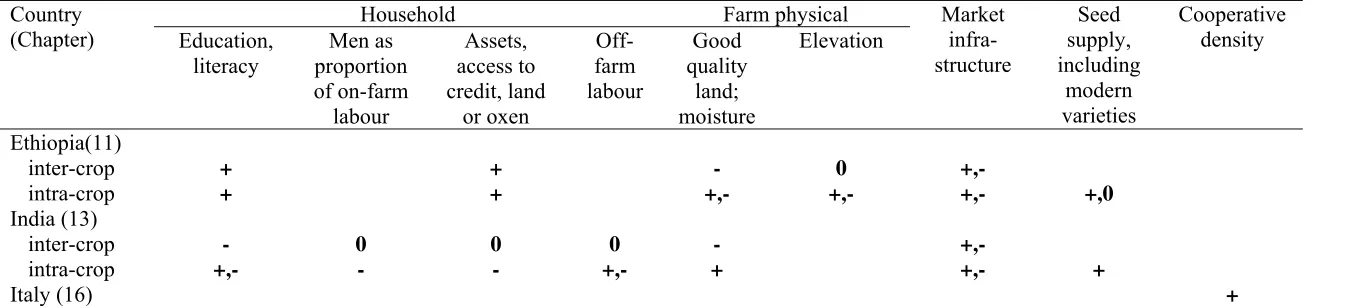
Table 3. Determinants of crop biological diversity in villages, settlements or regions, by case study
Country (Chapter)
Household Farm physical Market infra-structure Seed supply, including modern varieties Cooperative density Education, literacy Men as proportion of on-farm labour Assets, access to credit, land or oxen Off-farm labour Good quality land; moisture Elevation Ethiopia(11)
inter-crop + + - 0 +,-
intra-crop + + +,- +,- +,- +,0
India (13)
inter-crop - 0 0 0 - +,-
intra-crop +,- - - +,- + +,- +
Italy (16) +
REFERENCES
Bellon, M.R., and Taylor, J.E. (1993) 'Folk' soil taxonomy and the partial adoption of new seed varieties. Economic Development and Cultural Change 4, 763-786.
Birol, E. (2004) Valuing agricultural biodiversity on home gardens in Hungary: An application of stated and revealed preference methods, PhD Thesis, University
College London, University of London, UK.
Brush, S.B.,Taylor, J.E. and Bellon, M.R. (1992) Technology adoption and biological diversity in Andean potato agriculture. Journal of Development Economics 2,
365-387.
de Janvry, A., Fafchamps, M. and Sadoulet, E. (1991) Peasant Household Behaviour
With Missing Markets - Some Paradoxes Explained. Economic Journal 409, 1400-1417.
Drucker, A.G., Gómez, V. and Anderson, S. (2001) The economic valuation of farm
animal genetic resources: a survey of available methods. Ecological Economics 1, 1-18.
Krutilla, J.V. (1967) Conservation Reconsidered. The American Economic Review 4, 777-786.
Meng, E.C.H. (1997) Land allocation decisions and in situ conservation of crop genetic
resources: The case of wheat landraces in Turkey. Ph.D. dissertation, University of California at Davis, California, USA.
Meng, E.C.H., Smale, M., Bellon, M.R., and Grimanelli, D. (1998) Definition and measurements of crop diversity for economic analysis. In: Smale, M. (ed.)
Wheat, Maize, and Rice. Kluwer Academic Publishers, Boston, USA, pp. 19-31.
Singh I., Squire L., and Strauss J. (1986) A Survey of Agricultural Household models: Recent Findings and Policy Implications. The World Bank Economic Review No.
T I-1.
Smale, M., Bellon, M.R., and Aguirre Gómez, J.A. (2001) Maize diversity, variety
attributes, and farmers' choices in Southeastern Guanajuato, Mexico. Economic Development and Cultural Change 1, 201-225.
Smith, K.V. (1997) Pricing what is priceless: a status report on non-market valuation of
environmental resources. In: Folmer, H. and Tietenberg, T. (ed.) The
International Yearbook of Environmental and Resource Economics 1997/1998: A
Survey of Current Issues. Elgar.Cheltenham, U.K.
Van Dusen, E. (2000) In situ conservation of Crop Genetic Resources in the Mexican Milpa System. PhD Thesis, University of California at Davis, California, USA.