Munich Personal RePEc Archive
Inflation as a function of labor force
change rate: cointegration test for the
USA
Kitov, Ivan and Kitov, Oleg and Dolinskaya, Svetlana
IDG RAS
January 2007
Online at
https://mpra.ub.uni-muenchen.de/2734/
Inflation as a function of labor force change rate: cointegration test for the
USA
I.O. Kitov1, O.I. Kitov2, S.A. Dolinskaya1
Introduction
Inflation forecasting plays an important role in modern monetary policy in developed
countries. There is a trade-off between theoretical and practical aspects of the forecasting –.
Any practical application has to be based on a sound theoretical background, and every
theory must concentrate empirical facts and everyday practice in a few quantitative relations.
In reality, monetary authorities more often use expert judgments instead of theoretical
models. These judgements are often based on some concepts empirically proved to be wrong
such as the conventional Phillips curve, “expectation augmented” Phillips curve or NAURU
approach. As a matter of fact, there is no unique and comprehensive model in mainstream
economics and econometrics, which is able to explain observations and predict inflation in
developed countries.
A study of inflation as an economic variable driven solely by labor force change has
been carried out by Kitov (2006a-c, 2007) for the USA, Japan, France, and Austria. This
study has confirmed the existence of a linear relationship between inflation, unemployment
and labor force. In the USA, the inflation-labor force relationship is characterized by a
two-year time lag. Regression analysis (Kitov, 2006b) has shown a high level of correlation
(R2>0.9) between the variables and the lowermost, among available forecasting models, out-of-sample root-mean square forecasting error (RMSFE) at a two-year horizon, which
corresponds to the observed lag. An important advantage of the model consists in its perfect
parsimony - single predictor is used to fit observations in several countries during the last 25
to 45 years. Moreover, autoregressive properties, extensively used in many economic and
econometric models of inflation, are not necessary because the relation between labor force
change and inflation is strict. It does not allow any deviation between observed and predicted
inflation when both variables are measured precisely.
As a consequence, the existence of a strict link between inflation and labor force
1
Institute for the Dynamics of the Geospheres, Russian Academy of Sciences
2
change denies the concept of rational expectation thoroughly adopted in economics, i.e.
future values of inflation are known to the extent some past values of labor force level are
known. At the same time, the strict relation allows for a partial inflation control through labor
force control and provides clear foundations for a sound economic policy.
Both variables are non-stationary, however, implying a possibility for the regression
results to be spurious ones despite the existence of a theoretical background (Kitov, 2006b,
2007) based on the fact that personal income distribution in the USA does not change with
time when normalized to the total population and GDP. Therefore, econometric tests are
necessary whether the relationship between inflation and labor force is a cointegrating one.
The cointegration between inflation and labor force change would mean that the results of the
previous regression analysis hold from the econometric point of view. For the USA,
cointegration analysis is essentially a bivariate one. This significantly simplifies the
implementation of relevant analysis and statistical inferences. However, in the case of
modeling inflation using labor force change rate, a straightforward application of
econometric methods potentially leads to wrong conclusions.
The rest of the paper is organized in four sections and one appendix. Section 1 briefly
introduces the model and presents some results obtained for the USA in the previous study.
Section 2 is devoted to the estimation of the order of integration in measured inflation and
labor force change rate. Unit root tests are carried out for original series and their first
differences. GDP deflator represents inflation in the study.
In Section 3, the existence of a cointegrating relation between the measured and
predicted inflation is tested. The latter is represented by four time series reflecting
improvements in the accuracy of prediction associated with suppression of random noise in
the labor force readings. The presence of a unit root in the difference (residual) between the
measured and predicted inflation implies the absence of cointegration between the variables
and a strong bias in the results of the previous regression analysis. The residuals obtained
from regressions of the measured inflation on the predicted ones are also tested for the unit
root presence. This approach is in line with that proposed by Engle and Granger (1987).
The maximum likelihood estimation procedure developed by Johansen (1988) is used
to test for the number of cointegrating relations in a vector-autoregressive representation
smoothness – from the original predictor to its three-year moving average. VAR and
vector-error-correction models (VECM) are estimated for the forecasting purposes.
Section 4 discusses the principal results and their potential importance for economic
theory and practical application, and concludes. Appendix introduces a pre-determined
variable (from linear to a quasi-stochastic one) trend, which is of a crucial importance for
cointegration study of time series related to population estimates such as labor force level.
1. The static model
There is a unique link between inflation and labor force change rate in the USA as obtained
for the last 45 years (Kitov, 2006c). In econometric sense, it is a long-run equilibrium
relation or static model which uses only original values of the involved parameters not their
first differences. It is advisable to use the rate of labor force growth (not increment) as a
predictor in order to match the dimension of inflation – [t-1]. An implicit assumption of the model is that inflation does not depend directly on parameters associated with real economic
activity. Moreover, inflation does not depend on its own previous and/or future values
because it is completely controlled by a force of different nature – by the dynamics of the
portion of population participating in labor force.
As defined by Kitov (2006a), inflation is a linear and potentially lagged function of
labor force change rate:
(t)=A1dLF(t-t1)/LF(t-t1)+A2 (1)
where (t) is the inflation at time t, LF(t) is the labor force level at time t, t1 is the time lag
between the inflation and labor force, A1and A2 are country-specific coefficients, which have
to be determined empirically. The coefficients may vary through time for a given country as
different units of measurements (or definitions) of the studied variables are used, but for true
values of inflation and labor force they are constant.
Linear relationship (1) defines inflation separately from unemployment. This
representation is an adequate one for the purpose of the paper. However, inflation and
unemployment are two indivisible features of a unique process (Kitov, 2007). The process is
channels. The first channel is the increase in employment and corresponding change in
personal income distribution (PID). All persons obtaining new paid jobs or their equivalents
presumably change their incomes to some higher levels. There is an ultimate empirical fact,
however, that the US PID practically does not change with time in relative terms, i.e. when
normalized to the total population and total income (Kitov, 2005a,b). The increasing number
of people at higher income levels leads to a certain disturbance in the PID. This
over-concentration (or over-pressure in physical terms) of population in some income intervals
above its neutral value must be compensated by such an extension in corresponding income
scale, which returns the PID to its original density. Related stretching of the income scale is
called inflation (Kitov, 2006a). The mechanism responsible for the income scale stretching,
obviously, has some relaxation time, which effectively separates in time the source of
inflation, i.e. the labor force change, and the reaction, i.e. the inflation itself.
The second channel is inherently related to those persons in the labor force who tried
but failed to obtain new paid jobs. These people do not leave the labor force joining
unemployment. Supposedly, they do not change the PID because they do not change their
incomes. Therefore, the net labor force change equals the unemployment change plus the
employment change, the latter process expressed in economies as the lagged inflation.
Kitov (2006c) proposed to estimate coefficients in (1) not by a linear regression of
inflation on labor force change rate. Such a regression balances measurement errors, i.e. the
deviations from a true relationship, through the entire period of observations (between 1960
and 2004) and has two important drawbacks: estimates of linear regression coefficients are
usually biased due to errors in the predictor and the influence of larger fluctuations is
overestimated. The latter might be of a higher importance in our case, considering the
practice of revisions carried out by the US Bureau of Labor Statistics (BLS) and the Census
Bureau (CB).
An alternative to regression arises from the fact that the labor force level is actually
measured in monthly surveys not the change rate. Absolute uncertainty associated with
annual measurements of the labor force level is constant or improving with time. Therefore,
relative uncertainty associated with the net change in the labor force level during a given
period is inversely proportional to the net change. When the net change in labor force level is
improvement in the accuracy of the estimates of cumulative values. Considering
measurement errors, a simple summation of annual estimates is always less accurate than a
direct measurement of corresponding levels. (In the case of labor force, however, the
revisions conducted by the BLS effectively cancel corresponding measurement errors out
through time and provide practically the same accuracy of cumulative change for both the
summation and the net level change techniques.) Therefore, the best-fit coefficients in (1)
have to provide the same cumulative values for the measured and predicted inflation at the
end of period, the latter having a decreasing uncertainty with time. This procedure should
result in somewhat more accurate estimates, which are also different from those obtained by
a standard linear regression. The estimated long-run relationship between inflation and labor
force for the USA is as follows (Kitov, 2006c):
π(t)=4.0*dLF(t-2)/LF(t-2)-0.03075 (2)
The left-hand side of the equation is called below the measured inflation, πm(t) , and the
right-hand side – the predicted one, πp(t). A statistical assessment of the linear relationship
carried out for the USA indicates that RMSFE of inflation forecasts at a two-year horizon for
the period between 1965 and 2002 is only 0.8%. This value is superior to that obtained with
any other inflation model, including the random walk approach, by almost a factor of 2. The
entire period was also split into two segments before and after 1983. The forecasting
superiority is retained with RMSFE of 1.0% for the first (1965-1983) and 0.5% for the
second (1984-2002) sub-period.
There is one aspect not analyzed in the previous papers - both variables are
non-stationary. Hence, validity of the regression results is under doubt (Granger & Newbold,
1967). When regressed, two I(1) processes may show unreasonably high correlation or
goodness-of-fit and severely biased estimates of corresponding regression coefficients. This
might happen to the studied relationship despite the sound theoretical foundation linking such
macroeconomic variables as real GDP growth and inflation to population parameters only
(Kitov, 2005ab, 2006ad). These links are treated as “mechanical” ones; i.e. any change in
defining population parameters is always fully transmitted into a strictly proportional change
There are several predicted inflation time series obtained by Kitov (2006c) for GDP
deflator and CPI measurements using corrected labor force readings. Corresponding
corrections in labor force level include redistribution of step-like revisions to population
controls carried out by the US CB and the BLS. These corrections smooth original labor
force series (SA) and effectively removes the largest spikes from its first difference.
Probably, the only exception is the years between 1990 and 1993, when an unprecedented
number of revisions to population estimates and labor force survey methodology were carried
out. The standard procedure of redistribution failed to iron the spikes out. So, the corrected
labor force time series still contains an artificial spike near 1990. (The revision carried out by
the BLS in July 2006 effectively resolved the problem of 1993, however.)
The set of the predicted time series also includes the one based on half-year shifted
labor force measurements. This time series is better synchronized with inflation
measurements because it averages monthly readings from July to June of the next year with
December being in the middle of the period. The shifted series gives a larger R2 than the original one presented by the BLS (Kitov, 2006c).
2. The unit root tests
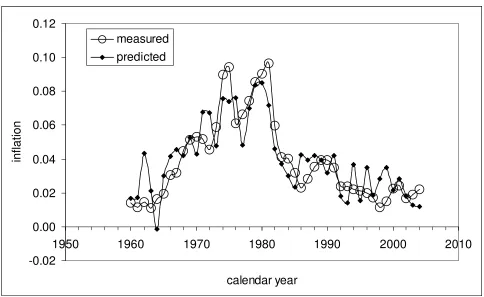
It is clear from the behavior of the measured and predicted (in fact, labor force change rate)
inflation curves displayed in Figure 1 that both time series are potentially characterized by
the presence of unit roots because they demonstrate some clear non-stationary features.
Moreover, the cumulative measured and predicted inflation curves are definitely
non-stationary with a strong (stochastic or deterministic) trend component. In such a situation, a
spurious regression is probable as modern econometric research shows. Therefore, some
specific tests have to be carried out in order to prove validity of the results obtained in Kitov
(2006b,c). In particular, one has to prove that the measured and predicted time series are
integrated of order one, I(1), and are cointegrated, i.e. the residuals of their regression or
VAR representation create a stationary, I(0), series which meets a number of specific
requirements (Hendry&Juselius, 2001).
From statistical point of view, the principal problem of the econometric analysis
related to the relationship between inflation and labor force change consists in the balance
statistical tests work relatively well with time series of several hundred readings. When the
size of a sample is small, statistical inferences based on asymptotic distributions provided
with econometric packages may be biased. The replacement of asymptotic distributions by
those obtained specifically for small samples reduces the power of the tests. Increasing the
number of readings via sampling rate one observes decreasing accuracy. When measurement
uncertainty is high no useful signal (i.e. long-term relationship) can be retrieved from the
noise. There is no general solution of the problem and one always has to compare the
outcome of statistical tests with the bulk of external information - theoretical and empirical.
As a first step in the analysis, we have to prove that the measured and predicted
inflation are I(1) processes. There is a number of standard unit root tests provided with many
econometric packages – the Dickey-Fuller, the Augmented DF (ADF), the modified DF t-test
using a generalized least-squares regression (DF-GLS), Phillips-Perron and others. From this
set, we use only the ADF and DF-GLS because the DF has a skewed distribution with a long
left tail complicating discrimination the null of a unit root, and the PP test works better
asymptotically, i.e. is not reliable at short time series. Standard programs of Stata9 statistical
package are used in the current study.
There are several time series modeled in (Kitov, 2006c), which may be potentially
tested for the unit root presence: the measured inflation (GDP deflator and CPI inflation) for
the period between 1960 and 2004 (45 readings); numerous time series predicted from the
labor force change rate (dLF/LF) – original, shifted by half a year, and those smoothed by
moving average of various width. All the predicted time series are also present in two
intervals: from 1958 to 2002 and from 1960 to 2004. The latter series are the versions of the
former ones but shifted by two years ahead in order to synchronize the predicted inflation
readings with corresponding measured values because of the two-year lag. The original
predicted series retain the actual lead ahead of the measured values important for causality
tests. Because the original and the two-year shifted time series differ by four values (each of
the series contain two readings different from its counterpart) one may potentially expect a
slightly different result of the unit root tests. From all available time series, measured and
predicted, only those associated with the annual readings of GDP deflator are studied here.
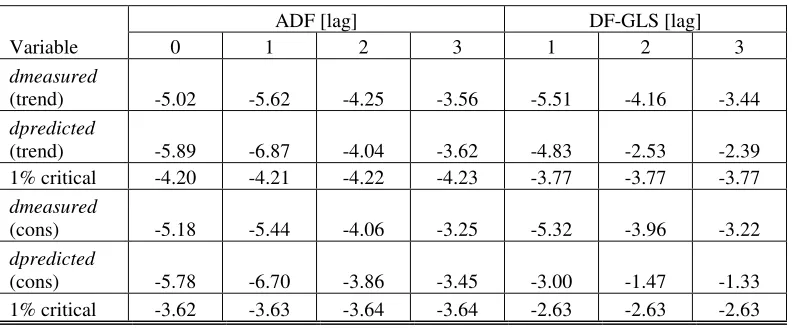
Table 1 lists results of the ADF and DF-GLS tests for a unit root in the measured
predicted time series which are shifted by two years ahead. The series measured represents
the GDP deflator time series between 1960 and 2004, the series predicted and shifted are
synchronized (shifted by two years ahead) with the measured one, and the original (not
shifted) predicted series are titled as predicted2 and shifted2. The last raw in the Table lists
1% critical values for corresponding tests. For the DF-GLS test, only values for lags 1 and 4
are presented because results for lags 2 and 3 are very close to those for lag 4.
One can derive an overall conclusion from Table 1 that no one series is a stationary
one because the null of the unit root presence can not be rejected. It is worth noting that the
predicted series shifted by two years, such as the predicted and predicted2, actually give
different but close results. It does not affect the general conclusion of non-stationarity,
however.
The series displayed in Table 1 are non-stationary. But it does not mean that these
series are I(1) and some additional efforts are necessary to prove the assumption. For an I(1)
process, the first difference has to be a I(0) process. Therefore, the same tests are repeated on
the first differences of the two principal time series – dmeasured and dpredicted, which are
displayed in Figure 2. Corresponding test results are presented in Table 2.
A standard unit root test usually contains many specifications related to various
features potentially present in time series. The tests listed in Table 2 use two different
assumptions on the presence of constant and trend in the first differences. First, we allow for
a deterministic linear trend in the processes and test for a single unit root in an AR(p)
representation, where p=0,1,2,3 for the ADF test and p=1,2,3 for the DF-GLS test. All the
tests for the dmeasured, except those with lag 3, imply the rejection of the null of the unit
root presence at the 1% level. For the dpredicted, only tests with lags 0 and 1 reject the null.
The presence of a constant term is a more reasonable hypothesis for the first
differences of such processes as inflation and labor force change. When a constant
specification is used in the ADF unit root tests, results are more favorable for the rejection of
the null for both dmeasured and dpredicted. For the DF-GLS, the null is rejected for all lags
in the dmeasured and only for lag 1 in the dpredicted. Because of the mixed results for the
dpredicted, more information is necessary for rejection or acceptance of the null.
Here we have to draw a bold separation line between the procedures for estimation of
information on prices. There are some short-term corrections related to the inflation
measurements which incorporate late information and new methodology. There is no
correction extended far in the past, however, which is dependent on new inflation readings.
Thus, one can consider subsequent readings of inflation as relatively independent in view of
the measuring procedures.
This is not the case with the labor force measurements, however. The labor force
level is estimated in monthly surveys using some limited population samples. Simultaneous
estimates of age-gender-race distribution, then converted into population controls, are used
for mapping the limited sample results onto the entire population. Such a construction of the
labor force estimates has two drawbacks – the sample changes are slow in order to study the
dynamics of the inter-sample evolution, and the population controls are determined both
from the monthly-quarterly-yearly population estimates and decennial censuses.
The sample stability implies the presence of a link between subsequent labor force
estimates. Corrections to the population controls are of even larger influence on labor force
readings, however. After every decennial census, the BLS conducts severe (sometimes
several per cent) revisions of the population age structure, which are extended long in the
past. These revisions effectively include synchronized changes in the population controls
over the entire period. Figure 3 demonstrates a remarkable effect of such revisions on the
change in the number of people in a one-year-wide population cohort – the difference
between 15-year-olds and 14-year-olds a year before. This age is of importance for the labor
force measurements because statistics starts at 15 years of age. Therefore their influx is one
of the defining components of the labor force increase along with net migration and total
deaths. The difference between the numbers is everything but of a natural shape. Considering
the disturbances introduced into the labor force time series by the BLS one should not be
surprised that the DF-GLS tests does not reject the null for the first difference of the
predicted inflation, which is based on the labor force change rate. Some statistical properties
of population time series important for the cointegration analysis are discussed in Appendix.
The dmeasured time series is characterized by a very low average (0.00019±0.011)
compared to the "min" and "max" values of -0.036 and +0.031. Slope and intercept of the
regression on time are -0.00012±0.00012 and 0.24±0.24, respectively, i.e. the null of zero
and intercept and the assumption of constant specification is applicable to the previous tests.
The overall conclusion is that the dmeasured serieshas no unit root and the dpredicted series
would not have a unit root if not the artificial distortion induced by the labor force
measurement procedure. Therefore, the original series measured and predicted are integrated
of order one.
3. The cointegration tests
The assumption that inflation and labor force change in the USA are two cointegrated
non-stationary time series is equivalent to the assumption that the difference between the
measured and predicted inflation, ε(t)=πm(t)−πp(t), is a stationary or I(0) process. It is natural
to start with a unit root test in the difference. If ε(t) is a non-stationary variable having a unit
root, the null of the existence of a cointegrating relation can be rejected. Such a test is
associated with the Engle-Granger's approach, which requires πm(t)to be regressed on πp(t)
as the first step, however. Since the predicted variable is obtained by a procedure similar to a
linear regression and provides the best fit for cumulative values, we skip the regression and
start with an analysis of the difference.
The hypothesis of a unit root is tested by the same procedures as before – the ADF
and DF-GLS. If the null of a unit root is rejected, the hypothesis of no-cointegration is also
rejected. In this case, the equilibrium relationship between the measured and predicted
inflation is valid and a vector error-corrected model can be estimated using the results of the
first stage.
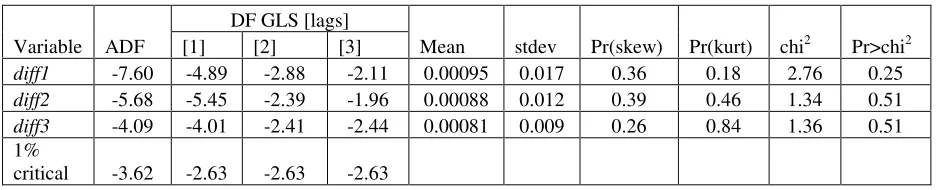
Table 3 presents some results of the unit root tests. There are three differences tested:
diff1=(πm(t)- πp(t)), diff2=(πm(t)-MA(2)), and diff3=(πm(t)-MA(3)). The ADF and DF-GLS
results indicate the absence of a unit root in the diff1 residual series, except may be for lag 3
in the DF-GLS tests. The diff1 series of the largest importance because it is based on the
inflation predicted from the original labor force series. As discussed in Section 2 and
Appendix, the labor force measurements are potentially biased by a strong autocorrelation
introduced by the revisions to the population controls. One can expect the enhancement of
the autocorrelation in the differences (Chiarella&Gao, 2002). Moreover, this autocorrelation
has to be more prominent in the smoothed series, where random noise in measurements is
series diff2 and diff3 illustrate these effects – the DF-GLS tests produce the results which are
higher than corresponding 1% critical values also listed in the Table. So, smoothing leads to
deterioration in the test results compared to those for the original series.
It is worth noting that the moving average time series provide a better description of
the observed inflation as represented by standard deviation in the residual series. The best fit
is obtained for the MA(3) series with standard deviation twice as low as that provided by the
original predicted series: from 0.017 for diff1 to 0.009 in diff3. The price paid for the better
description is higher values in the unit root tests. Therefore, one can obtain a wrong statistical
inference by over-suppressing of the stochastic component in real data, as shown in
Appendix. Concluding the discussion, we reject the null of the unit root presence in the three
difference series.
The next step is to use the Engle-Granger's approach and to study statistical properties
of the residuals obtained from linear regressions of the measured inflation on various
versions of the predicted inflation. Table 4 summarizes principal results of the regression
analysis – coefficients with their standard deviations, R2, RMS(F)E (F stays for forecasting because of the two year lag), and t for the null of zero coefficients. The dependent variable is
always the measured series and predictor varies from the predicted to MA(3). Results of
specification tests on heteroskedasticity, omitted variables, ARCH effects, and serial
correlation, also listed in Table 4, indicate that the residuals of the regressions, except those
related to MA(3), meet the requirements defining I(0) process and have properties of a
white-noise realization necessary for a VAR representation of the measured and predicted inflation.
Therefore, one cannot reject the null that the dependent variable and the predictors are
cointegrated. The reasons for the failure of the specification test for MA(3) have been already
discussed.
The Johansen's (1988) approach is based on the maximum likelihood estimation
procedure and tests for the number of cointegrating relations in the vector-autoregressive
representation. The above analysis has shown that the VAR representation is an adequate one
due to the properties of the regression residuals. The Johansen's approach allows
simultaneous testing the existence of cointegrating relations and determining their number
(rank). For two variables, only single cointegrating relation is possible. When cointegration
both variables have to be stationary. Thus, when the Johansen test results in rank 1, a
cointegrating relation does exist.
Table 5 lists trace statistics, eigenvalues, LL and other information obtained from the
cointegration rank tests for a number of predictors and trend specifications. The maximum
number of lags included in the underlying VAR model is 4 in all tests. No null of
cointegration rank 1 can be rejected. So, there is a cointegrating relation between the
measured and predicted inflation.
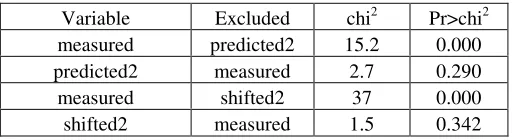
Because of the two-year lag behind the labor force change and the existence of the
cointegrating relation or long-run equilibrium relationship (2), a test on causality direction is
a trivial one. In this test, the variables predicted and shifted are replaced with their original
version predicted2 and shifted2, which leads the measured variable by two years. Results of
the causality tests are presented in Table 6, which demonstrates that the predictors are weakly
exogenous variables.
Now we are sure that the measured and predicted inflation series are cointegrated and
the principal results of the previous research hold. Therefore, the estimates of the
goodness-of-fit and RMSFE are accurate. The estimates were obtained in a simplified regression
procedure, which does not use autoregressive properties of noise. A standard moving average
smoothing provides a substantial suppression of the noise, as the increase in R2 from 0.7 for the annual readings to 0.9 for MA(3) demonstrates (Kitov, 2006c).
A VAR representation may potentially provide a further improvement due to
additional noise suppression. In practice, AR is a version of a weighted moving average,
which optimizes noise suppression throughout the whole series. In the VAR model, we use
the shifted2 series as an exogenous predictor and the maximum lag 4 instead of the
pre-estimated one maximum lag 3. The level of correlation between the measured and predicted
series does not allow any past values of inflation to influence the present ones and, hence, the
past values of labor force change. The equilibrium relationship is a strict one and converges
to a unique curve when measurement errors are eliminated. At any time, inflation does not
contain information important for labor force change. So, the labor force change rate is an
exogenous variable. One cannot deny the influence of current inflation on current labor force
The distribution of the VAR error term is close to the normal distribution with
skewness=-0.05 and kurtosis=3.99, the former being of much higher importance for the
Jarque-Bera normality test and validity of statistical inference. The VAR stability is
guaranteed by the eigenvalues of the companion matrix lower than 0.54. There is practically
no autocorrelation at lags from 1 to 4 as follows from the LM statistics. Therefore the VAR
model accurately describes the data and satisfies principal assumptions on the residuals.
A VECM representation uses additional information to that provided by the VAR
models due to separation of noise and equilibrium relationship. So, it potentially provides an
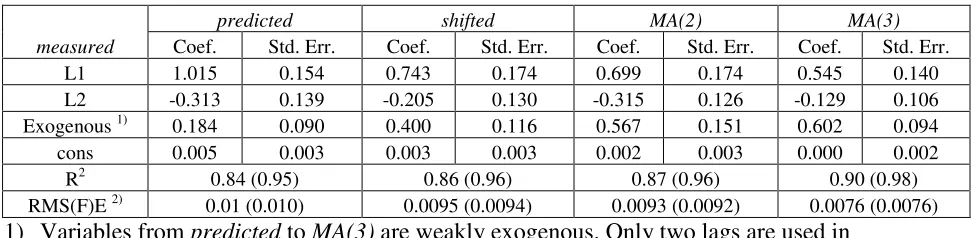
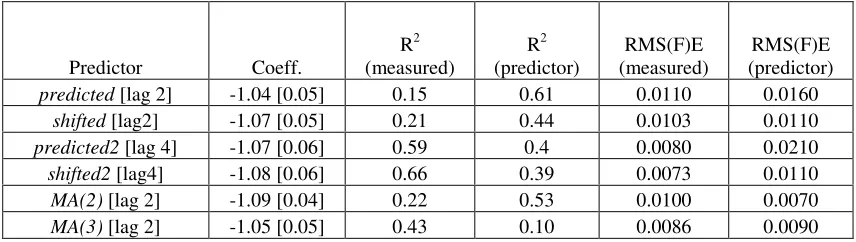
improvement on the VAR models. Tables 7 and 8 list some results of the VAR and VECM
for a number of predictors. There is only a marginal improvement in RMSFE on that
obtained by the linear regressions. The smallest RMSFE is 0.0076 in the VAR representation
(MA(3) as a predictor) and 0.0073 in the VECM representation (shifted2 as a predictor). The
best RMSFE from the linear regressions for the period between 1965 and 2002 is 0.008.
One can conclude that these powerful statistical methods fail to improve on the
simple predictions. A significant decrease in the forecasting uncertainty is possible only
through a major increase in the accuracy of inflation and labor force measurements. This
conclusion is in line with a standard research cycle in hard sciences.
4. Conclusion
The core result of the analysis consists in formal statistical confirmation of the existence of a
unique linear and lagged (two years for the USA) relationship between inflation and labor
force change. Hence, the two I(1) variables are cointegrated in statistical sense; i.e. their
residual time series is proved to be a stationary one with white noise characteristics - no unit
root, normal underlying distribution, no omitted variables, no autocorrelation, no
heteroskedasticity. The absence of such cointegration test was a weak point in the previous
papers. It exposed the results of modeling and theoretical consideration to criticism.
Observed inflation is always a combination of two components – a pre-determined
variable trend (demonstrating stochastic features), which one-to-one repeats the behavior of
some true labor force change, and a noise component related to measurement errors in both
In terms of physics, there is a process "mechanically" linking true inflation to true
labor force change. Observed deviations from the relationship describing the mechanical link
are measurement errors. The long-run equilibrium relationship implies the absence of any
structural breaks necessary for the explanation of the changes in the US inflation observed
during the last 50 years. Such structural breaks are a common feature of a majority of models
developed in the econometric framework, where inflation is considered as a stochastic
process.
The noise component demonstrates some artificial features related to the procedures
used by the US BLS for the labor force estimation. As in hard sciences, improvements in the
measurement procedures, both for inflation and labor force, can potentially provide any
desired accuracy of inflation forecast at a two-year horizon and even further if to improve the
accuracy of labor force projections. It is worth noting that there is no error-correction
mechanism associated with the deviations of true inflation values from the true predicted
ones, but there exist error-correction mechanisms, which compensate random and systematic
errors through time. For the labor force series, this mechanism is obviously associated with
multiple revisions, which reshape the error pattern, in amplitude and timing, at very long
time horizons.
The long-run relationship between inflation and labor force change rate is explained
by the reaction of personal income distribution on the disturbance induced by those persons
who enter employment and change their incomes correspondingly. This consideration is a
part of the new economic concept, which relates macroeconomic variables to quantitative
Appendix. Variable deterministic trend
In hard sciences, situations where a non-stationary time series practically repeats the
behavior of another series with some time lag are common. Finding of such a resemblance is
a first step of a variety of research programs. The next natural step is to reduce the level of
noise associated with measurement errors. For a scientist, this step is necessary for obtaining
a higher confidence in the existence of a strict link between two variables or in the absence of
such a link. So, improving measurement accuracy results in the acceptance of a true
relationship or in the rejections of a false one.
In econometrics, however, the presence of such a pre-determined variable trend often
leads to deterioration of the performance of standard statistical procedures associated with
non-stationary processes. The danger to wrongly reject the presence of a true link in standard
econometric procedures is associated with a general rejection of the existence of real
deterministic trends in economic time series except the simple ones as connected to
economic growth. Such simple trends are easily removed by detrending procedures.
Otherwise, there exist only stochastic trends in econometrics, which represent the central
problem in analysis of non-stationary time series. In some cases, this assumption leads to a
biased result. For example, when correlation between two series in strong and random
measurement errors are significantly suppressed, even small systematic errors induced by
estimation procedures become defining for rejection of cointegration, i.e. for rejection of the
true link between the variables.
There are several key assumptions, which lay in the basement of the cointegration
concept. One of them is associated with the properties of residuals necessary for two or more
non-stationary processes to be cointegrated. The existence of a cointegrating relation means
that the residual of some linear combination of non-stationary variables is stationary. This
residual time series has to be an independent and identically distributed with zero mean and
constant variance, IID(0, 2), where IID is not necessary the normal distribution. Such residuals guarantee unbiased estimates of relevant coefficients.
The mainstream research of cointegration phenomenon allows for some deterministic
trend in non-stationary variables which is very often considered as a linear or quadratic one.
The inclusion of such trend terms sometimes helps to distinguish between purely stochastic
studies of more complicated cases with nonlinear deterministic trends. But most of them
consider analytic functions. Here we extend the notion of deterministic trend to the level of
deterministic variable (potentially stochastic) process, i.e. to such a process, which has
stochastic statistical properties but is fully pre-determined. In physics, this notion is similar to
decomposition of a measured time series into true and noise components.
The importance of deterministic variable trend for econometrics can be illustrated by
a simple but principal example associated with the discussion in Section 2 of growth in the
number of 15-year–olds in the USA, N15(t). The evolution of this number is definitely
described by a stochastic time series, supposedly, by I(2) process. In the framework of
econometrics, this implies that the expected value of the change in N15 is zero (if to exclude
a small deterministic trend):
N15(t)-N15(t-1)=dN15(t)=ε(t) (A1)
where ε(t) some stochastic ID(0,σ2) process. (Actual dN15 average value between 1960 and 2004 is 29900 and standard deviation is 193000. If to exclude the years between 1960 and
1962, the mean=14500 and stdev=115000.) Thus, dN15(t) must have very low level of
autocorrelation for the small time series under consideration. Asymptotically, autocorrelation
at any lag must be zero – E[(ε(t)*ε(t-s)]=0 for any s 0. In fact, autocorrelation associated
with the actual series of dN15(t) between 1960 and 2004 is below 0.25 at lags from 1 to 15.
Therefore, the annual increment in the N15(t) can hardly be predicted from its previous
values. This is a standard situation in econometrics, which deals mainly with economic and
financial variables. A general convention dictates that there is no way to exactly predict the
forthcoming change in stock prices or CPI inflation. Only statistical estimates are available.
This is not the case with the dN15(t), however.
First, one has to learn some statistical properties of the N15. Figure A1 shows the
annual N15 readings, the first difference, dN15, and also the second differential d2N15.
(There are also N0 and N14 and their differentials shown in the Figure.) Due to strong
variations in the number of 15-year-olds in the earlier 1960s we limit the N15 series to the
The ADF test rejects the null of a unit root in the d2N15 time series and accepts the
null for N15 (for lag 0 and larger) and dN15 (for lag 1 and larger). The DF-GLS tests for the
same series assume the acceptance of the null in the d2N15, however (see Table A1). Thus,
the problem of a unit root in the d2N15 is a controversial one and needs more attention to the
population estimation process. For our purposes, we reject non-stationary in the d2N15.
Regardless of the unit root presence in the N15 and its stochastic properties, one can
accurately predict its value at a one (and more) year horizon using the change in the number
of 14-year-olds one year ago, dN14(t-1)=N14(t-1)-N14(t-2), as a proxy to the
dN15(t)=dN14(t-1)+ω(t), where ω(t) is associated with the differences in death and
migration rate between 14-year-olds and 15-year-olds in the given year. Another way to
obtain an accurate estimate of the N15(t) is to update N14(t-1) by the inflation-deflation
method used by the Census Bureau in the population estimates. Actually, the N15(t) contains
the same population cohort, by the year of birth, as the N14(t-1) plus net migration, m(t), and
less total deaths, ρ(t), in the population of the given age. Therefore, one can rewrite
relationship (A1) in the following forms:
N15(t)=N15(t-1)+dN14(t-1)+ω(t) (A2)
N15(t)=N14(t-1)+ρ(t)+m(t) (A3)
Relative importance of ω(t) can be estimated from the difference between dN15(t) and
dN14(t-1) normalized to the dN14(t-1), as presented in Figure A2. The shape of the curve is
not a surprise because of multiple revisions made by the USA Census Bureau. The years
between decennial censuses are characterized by low values (<0.1) of the ratio
(dN15(t)-dN14(t-1))/dN14(t-1) indicating that the fraction of the dN15(t) not explained by the
dN14(t-1) is very small. Therefore, the net effect of ω(t) is below 10% for those 7 to 8 years when
the disturbance induced by population revisions after decennial censuses is low.
The years around the censuses demonstrate a highly volatile behavior of the ratio.
Such a behavior has a clear explanation – new counts obtained in decennial censuses have to
be accommodated into new population estimates. As a rule, old (so-called postcensal)
population estimates show age structures different from those obtained in the censuses for the
year of age populations. Unfortunately for our approach, the breaks are made simultaneously
in all age groups. As a result, the number of 14-year-olds one year ago is not corrected in the
same way as the number of 15-year olds in the given year and their difference demonstrates a
spike. One can eliminate such spikes by introducing an appropriate correction into the
N14(t-1), which can be effectively the same as the correction in the N15(t).
When the spikes near the census years are removed, the difference N15(t)-N14(t-1)
(and hence, the difference dN15(t)-dN14(t-1)) still looks biased as Figure A3 demonstrates.
There are three intervals with constant differences: from 1981 to 1990, from 1991 to 2000,
and after 2000, and one interval with a positive linear trend - between 1963 and 1980. Such a
behavior apparently results from the methodology used by the Census Bureau to balance the
total population growth over the whole age structure. It is difficult to believe, however, that
the difference evolves in such a deterministic way. On the other hand, this deterministic
behavior can be eliminated from the difference by subtracting the mean values in the periods
of constant difference and by compensating the trend between 1963 and 1980. Figure A3
displays the corrected difference which now fluctuates around the zero line and has no trend.
The mean value of the corrected difference N15(t)-N14(t-1) for the period between 1963 and
2004 is zero and standard deviation is only 2200 or 1.5% of that of that in dN15.
Thus, we found that a number of reasonable corrections can provide an almost precise
estimate of the difference between the N14(t-1) and N15(t). The two terms in (A3) associated
with deaths and migration are decomposed in a deterministic and stochastic component, the
former being effectively attached to the deterministic trend term N14(t-1). Theoretically, one
can consider this combination as a pre-determined variable trend - it demonstrates stochastic
properties but is completely known in the given year t. In practice, one can use the current
trend in the difference N15(t)-N14(t-1) (Figure A3) and current estimates of the N14(t) for a
prediction of the N15(t+1),t=2007,…,2010.
The same statement is valid for the first differences of the N15(t) and N14(t-1), where
the latter is the pre-determined variable trend of the former. A very conservative amplitude
estimate of the residual stochastic component of the difference u(t)=dN15(t)-dN14(t-1)
would be 0.05dN14(t-1), i.e. u(t)=o(dN14(t)) for our purposes (see Figure A4). Such a small
high level of correlation between the variables. A linear regression gives R2=0.98, the slope of 0.996±0.003 and intercept 18±471.
The number of 15-year-olds is of a special importance in economics. This number
represents a principal component of the annual increase in labor force along with effects of
participation rate, net migration and deaths. Therefore, one can expect the labor force level
demonstrating the existence of a nonzero deterministic variable trend. In addition to the
pre-determined, according to (A2) or (A3), influence of the N15(t), the labor force participation
rate is characterized by a high degree of predictability, at least during the last 45 years.
Figure A5 shows a period of practically linear growth between the 1960s and the
mid-1990s induced by the active growth in the women’s participation rate. In fact, a linear trend
shown in the Figure explains more than 97% of the variability in participation rate during the
period. The last five years are characterized by a slight downward trend in the participation
rate. The USA BLS, the CBO and a number of other agencies and institutions provide a wide
range of projections at various time horizons associated with the participation rate and labor
force itself.
It is time to recall that the dN15(t) and dN14(t-1) series are I(1). For many economic
and financial non-stationary time series, a regression of two I(1) processes may be spurious,
i.e. to give severely biased estimates of regression coefficients and R2. In our case, there is no doubt that the variables are practically identical and the estimates of the linear regression
coefficients and goodness-of-fit are consistent. This implies that the variables have to be
cointegrated, i.e. the difference between them has to be a I(0) process.
The estimation of cointegration rank in the framework of the Johansen's VAR
methodology shows, however, that there is no cointegrating relation between the variables.
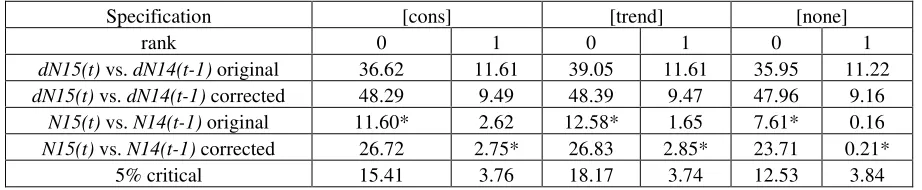
Table 2A lists results of the cointegrating rank tests for the original and corrected series
dN15(t) and dN14(t-1). The tests reject the existence of any cointegration, i.e. cointegration
rank 1, in both cases. This outcome, while surprising, obviously belongs to the type I
spurious regression (Chiarella&Gao, 2002), i.e. rejection of a true relation. Such wrong
rejection is driven by the artificial statistical properties of the difference between the
variables induced by the Census Bureau revisions – original and those left after the
cointegrated, but the corrected series are integrated. It implies that two I(2) processes, as
follows from the unit root tests of their first differences, have a I(0) difference.
Such situations deserve a special consideration in the framework of econometrics.
Before starting any statistical study one has to be absolutely sure that the residual or errors
are of significant amplitude. In some cases, residuals characterized by high autocorrelation
and other possible statistically “wrong” properties should not prevent acceptance of strong
correlation between economic variables. This is especially important for the variables
associated with population surveys, where means are used in order to enhance these "wrong"
statistical properties. Labor force estimates are not an exclusion from the list.
As a synthetic example of such a behavior, several time series are constructed
mimicing principal features of the population and labor force estimates. A reference time
series is described by the following function: r(t)=0.3sin(0.1t), where t=1,…,45. Sinus
function provides a degree of non-stationarity, when tested for the unit root presence, and has
a period roughly corresponding to that of actual population time series: ~30 years. A
piece-wise systematic error term of various amplitude but the same time structure is added to the
reference function. Time dependence of the error term is described by constants of 10-year
length with changing sign: e(A,t)=A*(-1)int(0.1*t+1), where A is coefficient varied from 0.005 to
0.1 in the study, int(.) is the integer part of the value in the brackets. The 10-year intervals
correspond to decennial censuses.
So, we test for cointegration between the following time series: r(t) and r(t)+e(A,t) as
a functions of A. First, the reference series is regressed on the disturbed series. As expected,
goodness-of-fit is excellent: R2 from 0.999 for A=0.005 to 0.784 for A=0.1. There is no doubt that the regression is not a spurious one in physical terms – the curves practically coincide.
There is an obvious problem with statistical tests. One can expect that the residuals of the
regression demonstrate strong, and independent on A, autocorrelation prohibiting the
existence of a cointegrating relation between the studied functions, before A is large enough
to avoid co-linearity threshold predefined in every statistical package. In fact, the
Durbin-Watson test gives an almost constant value around 0.36 and LM tests for autoregressive
conditional heteroskedasticity consistently rejects the null of no ARCH effects.Obviously,
statistical tests give excellent results regardless the goodness-of-fit because the regression
residuals now have properties of white noise.
This consideration is a trivial one from the point of view of econometrics and would
not deserve any further efforts to be wasted. In reality, one often is not aware of specific
properties of actual time series and still has to rely on statistical tests. Actual measurement
noise very probably contains an artificial component, such as the periods of a constant
difference observed in the population estimates, and a random component. Supposedly,
relative amplitude of the latter is decreasing due to improving procedures. The random
component can be also suppressed by smoothing. Therefore, the artificial component
becomes defining for statistical estimates at some point. This definitely happens, when
moving average is applied to smooth the labor force estimates. Goodness-of-fit increases,
RMSE decreases, the predicted curve converges to the measured one, and … statistical tests
References
Chiarella, C., & Gao, S. (2002). Type I spurious regression in econometrics. Working Paper No 114, School of Finance and Economics, University of Technology Sydney Granger, C., & Newbold, P. (1967). Spurious regression in econometrics. Journal of
Econometrics, 2, 111-120
Engle, R., & Granger, C. (1987). Cointegration and error correction: representation, estimation, and testing. Journal of Econometrics, 55, 251-276
Hendry, D., & Juselius, K. (2001). Explaining Cointegration Analysis: Part II. Energy Journal, 22, 75-120
Johansen, S. (1988). Statistical analysis of cointegrating vectors. Journal of Economic Dynamics and Control, 12, 231-254
Kitov, I. (2005a). A model for microeconomic and macroeconomic development. Working Paper 05, ECINEQ, Society for the Study of Economic Inequality
Kitov, I. (2005b). Modeling the overall personal income distribution in the USA from 1994 to 2002. Working Paper 07, ECINEQ, Society for the Study of Economic Inequality Kitov, I. (2006a). Inflation, Unemployment, Labor Force Change in the USA. Working Paper
28, ECINEQ, Society for the Study of Economic Inequality.
Kitov, I. (2006b). The Japanese economy. Available at SSRN: http://ssrn.com/abstract=886663 Kitov, I. (2006c). Exact prediction of inflation in the USA. Available at SSRN:
http://ssrn.com/abstract=916060
Kitov, I. (2006d). GDP growth rate and population. Working Paper 42, ECINEQ, Society for the Study of Economic Inequality.
Tables
Table 1. Unit root tests of the measured (GDP deflator) and predicted inflation in the USA
DF GLS [lags] Variable
ADF
[lag 0] [1] [4]
measured -1.57 -1.93 -1.46
predicted -3.53 -1.95 -1.22
shifted -1.95 -2.10 -1.48
predicted2 -3.46 -2.14 -1.55
shifted2 -1.73 -2.19 -1.52
MA(2) -1.50 -2.18 -1.32
MA(3) -1.40 -1.65 -1.45
Table 2. Unit root test of the first differences of the measured and predicted inflation
ADF [lag] DF-GLS [lag]
Variable 0 1 2 3 1 2 3
dmeasured
(trend) -5.02 -5.62 -4.25 -3.56 -5.51 -4.16 -3.44 dpredicted
(trend) -5.89 -6.87 -4.04 -3.62 -4.83 -2.53 -2.39 1% critical -4.20 -4.21 -4.22 -4.23 -3.77 -3.77 -3.77 dmeasured
(cons) -5.18 -5.44 -4.06 -3.25 -5.32 -3.96 -3.22 dpredicted
Table 3. Unit root test of the differences between the measured and predicted inflation
DF GLS [lags]
Variable ADF [1] [2] [3] Mean stdev Pr(skew) Pr(kurt) chi2 Pr>chi2
diff1 -7.60 -4.89 -2.88 -2.11 0.00095 0.017 0.36 0.18 2.76 0.25
diff2 -5.68 -5.45 -2.39 -1.96 0.00088 0.012 0.39 0.46 1.34 0.51
diff3 -4.09 -4.01 -2.41 -2.44 0.00081 0.009 0.26 0.84 1.36 0.51
1%
Table 4. Results of tests for heteroskedasticity, omitted variables, ARCH effects, and serial correlation as applied to the residuals of linear regressions of variable measured on four predictors.
Predictor
Hettest 1) Pr>chi2
Ramsey 2) test Pr>F
LM for ARCH 3)
Pr>chi2
Breusch-Godfrey LM 4) Pr>chi2
DW 5)
d-stat R2 RMS(F)E
Cons [cons] Pr>|t|
Predicted 0.21 0.0046 0.80 0.13 1.61 0.62 0.015
0.012 [0.004]
0.004
Shifted 0.25 0.0029 0.97 0.18 1.58
0.79
(0.94) 0.012
0.005 [0.003]
0.15
MA(2) 0.13 0.043 0.37 0.12 1.55
0.83
(0.95) 0.010
0.0014 [0.003] 0.66
MA(3) 0.29 0.0065 0.88 0.008 1.16
0.86
(0.96) 0.0095
0.0008 [0.003] 0.78 1) H0 - constant variance; 2) H0 - no omitted variables; 3) H0 - no ARCH effect; 4) H0 - no
Table 5. Cointegrating rank of a VECM
predictor
trend
specification rank parms LL eigenvalue
trace statistics
5% critical
value
predicted constant 0 14 242.5 . 25.77 15.41
predicted constant 1 17 254.0 0.427 2.9037* 3.76
shifted constant 0 14 265.3 . 21.08 15.41
shifted constant 1 17 274.6 0.365 2.4773* 3.76
predicted rconstant 0 12 242.5 . 25.81 19.96
predicted rconstant 1 16 253.9 0.428 2.9282* 9.42
shifted rconstant 0 12 265.2 . 21.19 19.96
shifted rconstant 1 16 274.6 0.366 2.4830* 9.42
predicted none 0 12 242.5 . 22.68 12.53
predicted none 1 15 253.6 0.419 0.4437* 3.84
shifted none 0 12 265.2 . 18.29 12.53
Table 6. Granger causality test
Variable Excluded chi2 Pr>chi2 measured predicted2 15.2 0.000 predicted2 measured 2.7 0.290
measured shifted2 37 0.000
Table 7. VAR results for the measured GDP deflator.
predicted shifted MA(2) MA(3)
measured Coef. Std. Err. Coef. Std. Err. Coef. Std. Err. Coef. Std. Err.
L1 1.015 0.154 0.743 0.174 0.699 0.174 0.545 0.140
L2 -0.313 0.139 -0.205 0.130 -0.315 0.126 -0.129 0.106
Exogenous 1) 0.184 0.090 0.400 0.116 0.567 0.151 0.602 0.094
cons 0.005 0.003 0.003 0.003 0.002 0.003 0.000 0.002
R2 0.84 (0.95) 0.86 (0.96) 0.87 (0.96) 0.90 (0.98)
RMS(F)E 2) 0.01 (0.010) 0.0095 (0.0094) 0.0093 (0.0092) 0.0076 (0.0076) 1) Variables from predicted to MA(3) are weakly exogenous. Only two lags are used in
every case.
Table 8. VECM results for the measured GDP deflator
Predictor Coeff.
R2 (measured)
R2 (predictor)
RMS(F)E (measured)
RMS(F)E (predictor)
predicted [lag 2] -1.04 [0.05] 0.15 0.61 0.0110 0.0160
shifted [lag2] -1.07 [0.05] 0.21 0.44 0.0103 0.0110
predicted2 [lag 4] -1.07 [0.06] 0.59 0.4 0.0080 0.0210
shifted2 [lag4] -1.08 [0.06] 0.66 0.39 0.0073 0.0110
MA(2) [lag 2] -1.09 [0.04] 0.22 0.53 0.0100 0.0070
Table A1. Results of the ADF and DF-GLS tests for N15, dN15, and d2N15
Predictor ADF [lag] (constant) DF-GLS [lag] (with trend)
0 1 2 3 4 1 2 3 4
N15 -1.27 -1.67 -1.38 -1.73 -1.93 -1.68
dN15 -5.18 -3.15 -2.73 -2.89 -2.47 -2.54 -2.14
d2N15 -16.16 -7.06 -5.62 -4.37 -4.32 -2.04 -1.98 -2.03 -1.93
Table 2A. Results of cointegration rank test.
Specification [cons] [trend] [none]
rank 0 1 0 1 0 1
dN15(t) vs. dN14(t-1) original 36.62 11.61 39.05 11.61 35.95 11.22
dN15(t) vs. dN14(t-1) corrected 48.29 9.49 48.39 9.47 47.96 9.16
N15(t) vs. N14(t-1) original 11.60* 2.62 12.58* 1.65 7.61* 0.16
N15(t) vs. N14(t-1) corrected 26.72 2.75* 26.83 2.85* 23.71 0.21*
Figures
Figure 1. The measured and predicted time series between 1960 and 2004. The labor force estimates are obtained at the BLS web-site in July 2006. Therefore the strong spike near 1993 discussed in (Kitov, 2006c) has disappeared.
-0.02 0.00 0.02 0.04 0.06 0.08 0.10 0.12
1950 1960 1970 1980 1990 2000 2010
calendar year
in
fl
a
ti
o
n
Figure 2. The series dmeasured and dpredicted obtained as the first differences of the
measured and predicted in Figure 1.
-0.05 -0.04 -0.03 -0.02 -0.01 0.00 0.01 0.02 0.03 0.04
1950 1960 1970 1980 1990 2000 2010
calendar year
in
fl
a
ti
o
n
Figure 3. The difference between N15(t) and N14(t-1) in the USA for the period between 1960 and 2004
-1.0E+05 -5.0E+04 0.0E+00 5.0E+04 1.0E+05 1.5E+05
1960 1970 1980 1990 2000 2010
calendar year
#
a)
0.0E+00 1.0E+06 2.0E+06 3.0E+06 4.0E+06 5.0E+06
1880 1900 1920 1940 1960 1980 2000 2020
calendar year
#
0 14 15
b)
-1.0E+06 0.0E+00 1.0E+06 2.0E+06
1950 1960 1970 1980 1990 2000 2010
calendar year
#
c)
-5.0E+05 0.0E+00 5.0E+05
1965 1975 1985 1995 2005
calendar year
#
[image:38.612.91.522.94.438.2]d2N0 d2N15
Figure A1.
a) The number of 15-, 14-, and 0-year-olds as a function of time between 1900 and 2004. Notice a large step in the earlier 1960s in the 15- and 14-year-olds corresponding to the burst in birth rate after the WWII.
b) The first differences of the time series presented in panel a). The step near 1960 is transformed into a spike, which is associated with natural causes. The spikes near the years of decennial censuses are of artificial character.
-1.0E+00 -5.0E-01 0.0E+00 5.0E-01 1.0E+00
1960 1970 1980 1990 2000 2010
calendar year
#
[image:39.612.95.520.86.377.2](dN15-dN14)/dN14
y = 0.3899x - 773.17
-60000 -40000 -20000 0 20000 40000 60000 80000
1950 1960 1970 1980 1990 2000 2010
calendar year
#
corrected
[image:40.612.93.519.75.360.2]original
Figure A3. The original (open circles) and corrected (solid diamonds) difference between
1.0E+00 1.0E+01 1.0E+02 1.0E+03 1.0E+04 1.0E+05 1.0E+06
1950 1960 1970 1980 1990 2000 2010 2020
calendar year
#
dN14(t-1)
dN15(t)-dN14(t-1) av(dn14)
[image:41.612.93.518.78.360.2]av(dN14-dN15)
y = 0.2814x - 493.95 R2 = 0.9743
55 60 65 70
1950 1960 1970 1980 1990 2000 2010
calendar year
p
a
rt
ici
p
a
ti
o
n
r
a
te
,
%
[image:42.612.94.519.75.361.2]