Citation:
Sun, WX and Kuokkanen, H (2017) Strategic Levers of Corporate Social Responsibility: A Supply-Demand Mapping Analysis. In: British Academy of Management Annual Conference, 05 September 2017 - 07 September 2017, University of Warwick.
Link to Leeds Beckett Repository record: http://eprints.leedsbeckett.ac.uk/4095/
Document Version:
Conference or Workshop Item
Creative Commons: Attribution 4.0
The aim of the Leeds Beckett Repository is to provide open access to our research, as required by funder policies and permitted by publishers and copyright law.
The Leeds Beckett repository holds a wide range of publications, each of which has been checked for copyright and the relevant embargo period has been applied by the Research Services team.
We operate on a standard take-down policy. If you are the author or publisher of an output and you would like it removed from the repository, please contact us and we will investigate on a case-by-case basis.
BAM
2017
This paper is from the BAM2017Conference Proceedings
About BAM
The British Academy of Management (BAM) is the leading authority on the academic field of management in the UK, supporting and representing the community of scholars and engaging with
international peers.
1
Strategic Levers of Corporate Social Responsibility:
A Supply-Demand Mapping Analysis
William Sun and Henri Kuokkanen
Leeds Beckett University
Paper Presented at the British Academy of Management Annual Conference,
5th - 7th September 2017, University of Warwick, UK
Contact: Dr. William Sun
Centre for Governance, Leadership and Global Responsibility
Leeds Beckett University
The Rose Bowl
Portland Crescent
Leeds LS1 3HB
2
Strategic Levers of Corporate Social Responsibility:
A Supply-Demand Mapping Analysis
Abstract
Research on the correlation between corporate social responsibility and corporate financial
performance has been inconclusive and often contradictory. Thus, the question of whether
consumers really care about CSR becomes crucial (Öberseder, Schlegelmilch and Gruber,
2011). Theory suggests that financial gains would materialise should the attributes of CSR
supplied match consumer demand. But CSR demand is likely to be latent and thus hard to
define. In a quest to match CSR demand and supply, this study synthesizes
consumer-oriented CSR research in one framework that focuses on how consumer demand for CSR can
be defined based on consumer behavior analysis and how CSR supply as strategic levers of
responsibility could match the demand. The study further explores current adoption of these
levers by analysing the present supply of responsibility as reported by large companies. A
comparison of CSR themes in corporate reports with the model highlights the requirement for
further research to define and measure optimal use of the proposed levers. This study
proposes an approach to bridge the gap in academic theory between the promise of
responsibility as a scarce and valuable resource and the reality of an unclear link between
corporate social and financial performances.
Keywords:
Consumer Behaviour, Corporate Social Responsibility, Strategic Management, Supply and
3
Strategic Levers of Corporate Social Responsibility:
A Supply-Demand Mapping Analysis
Introduction
Research in the past two decades have remained unsure about whether consumers are willing
to choose or pay extra for products and services with CSR attributes (e.g., Castaldo, Perrini,
Misani & Tencati, 2009; Parsa, Lord, Putrevu & Kreeger, 2015; Sen, et al., 2006). While
Öberseder, Schlegelmilch & Gruber (2011) douted if consumers really care about CSR, some
others argued that consumers who value CSR atributes are willing to pay more for the
products that incorproate them (e.g. McWilliams and Siegel, 2001). But consumers may not
responde to CSR supply simply because their demands for CSR could be latent (Devinney,
Auger, Eckhardt & Birtchnell, 2006). According to Kotler (1973: 44), “a state of latent
demand exists when a substantial number of people share a strong need for something which
does not exist in the form of an actual product.” Kotler suggested that managing the
conversion from latent demand to actual demand requires recognising the true need and then
proceeding to develop the right product to meet that need. This implies that a right fit
between supply and demand is a prerequisite for consumer purchase of CSR-attributed
products.
Consumers not responding to CSR supply could also be due to the matter of “corporate
social cynicism” (Kuokkanen & Sun, 2016). Kanter and Mirvis differentiated cynicism from
scepticism in that “skeptics doubt the substance of communications; cynics not only doubt
what is said but the motives for saying it” (1989: 301). While it is possible to alleviate the
mostly short-term effects of scepticism through well-designed communication of solid
evidence, a cynical attitude may endure and contribute to an undesirable bias toward
responsibility and lead to a blanket rejection of all CSR efforts. This explains why consumers
do not act based on their stated intentions (e.g., Devinney et al., 2006; Kuokkanen & Sun,
2016; Skarmeas & Leonidou, 2013). Underlying consumers’ cynicism is their mistrust in
companies, often prompted by negative company behaviour (Chylinski & Chu, 2010).
Research has demonstrated that a few brands that cynics truly trust can gain loyalty among
them (Helm, 2004).
Latent demand and social cynicism have been little explored in the existing CSR research,
4
(e.g., Anderson & Frankle, 1980; Aupperle, Carroll & Hatfield, 1985; Freedman & Jaggi,
1982; McWilliams & Siegel, 2001) suggested that firms should only supply what are
demanded by consumers and other stakeholders to maximise profits. But the theory did not
pay attention to consumer latent demand and did not answer what should be right strategies
of CSR supply if consumer needs are hidden, implicit and dynamic. Current research still
leaves a big gap in thoroughly understanding consumer demand.
McWilliams and Siegel (2001) introduced a supply and demand framework and postulated
that the demand for a product with CSR attributes is determined by several factors, such as
product price, advertising, consumers’ disposable income, and their tastes and preferences.
However, the reality is that even if a product meets all the criteria in McWilliams and
Siegel’s framework, consumers may not prefer to buy it or pay extra. Consumer social
cynicism may undermine or distort true demand for CSR products. Research with a focus
purely on product attributes can do little to facilitate a better understanding of the balance of
CSR supply and demand. Corporate CSR actions and interactions with consumers that can
build resonance and mutual understandings would be fundamental for moderating and
eradicating consumer cynicism.
McWilliams and Siegel (2001) realised that their research was limited because many of
their hypotheses were not tested or difficult to test in practice. While consumers are supposed
by most of the existing research to be passive, responsive, and static, the other sides of their
characteristics as being active, proactive, and dynamic are often neglected. This results in the
situation that when firms supply products and services with CSR attributes, they may
presuppose what a consumer might demand by checking the demand criteria through a
box-ticking exercise. The true demand and actual supply are then unfit and unbalanced.
This paper extends the existing research on the CSR supply and demand framework by
accommodating the factors of latent demand for CSR and cynicism and trust/mistrust into the
dynamic CSR supply-demand equilibrium based on consumer behaviour and psychological
analysis. Earlier findings on the impact of responsibility on consumer behaviour are
synthesised and further developed into a conceptual model, which integrates the previously
separate and fragmented aspects into a holistic framework of supply and demand balance.
The framework further classifies the factors to those that a company can control, dubbed as
the strategic levers of CSR, and those on the consumer level. The argument is that the optimal
level or effectiveness of balancing CSR supply and demand could be achieved by not just
what McWilliams and Siegel (2001) suggested a pure cost-benefit calculation, but by the
5
and trust what firms supply. Furthermore, consumers’ willingness to pay for products with
CSR attributes is far beyond product attributes themselves. It also depends on how firms act
and interact with consumers effectively.
The paper further contributes to the field by conducting an empirical study on whether and
to what extent the current corporate supply of CSR could genuinely meet consumer demand.
Through an exploratory content analysis of corporate CSR reports, the study contrasts current
supply of CSR with the supply-demand fit model. With a supply-demand mapping analysis,
significant gaps are identified not just between the actual supply and demand, but also
between the actual supply and the proposed strategic levers of CSR supply. To reduce the
gaps, the article explores strategies regarding how CSR supply and demand could be
appropriately matched based on the empirical study. This creates a basis for any
further/future research to define and measure an optimal level of CSR supply and demand.
Theoretical Development of the Model
Determinants of Ethical Value in Consumer Purchase
For a company to enjoy the benefits of strategic CSR, it must offer the type of ethical value
its customers appreciate. McWilliams and Siegel (2001) expressed this in economic terms of
demand and supply for responsibility; should these two match, a competitive advantage could
be created. A company can control the supply of its responsible initiatives and for a
successful outcome it must adjust them to meet customer expectations. This calls for special
attention on two areas: how consumers decide over ethical consumption, and which tools a
company can employ to customise its CSR offering. The first aspect aims at understanding
demand, and the second at tailoring supply to meet that demand.
Brown & Dacin (1997) proposed that instead of a direct impact on choices, CSR creates
associations that indirectly influence consumers. Consumer preferences for ethical values
should be the drivers for strategic CSR, and in order to achieve this consumer preferences
must be discerned on a detailed level. Smith (2008) presented eight contingent factors that
may affect ethical purchase preferences. Supply-side factors include extent, fit and
communication of CSR actions; the three are all choices for a company to make when
engaging in strategic responsibility. On the demand side Smith focused on five aspects that
included consumer concern for a topic, the perceived effectiveness of CSR actions, price and
quality considerations, potential for self-enhancement and consumers’ willingness to engage.
6
and supply of responsibility. Yet for a company to engage successfully in strategic CSR
[image:8.595.72.519.382.535.2]further detail is required.
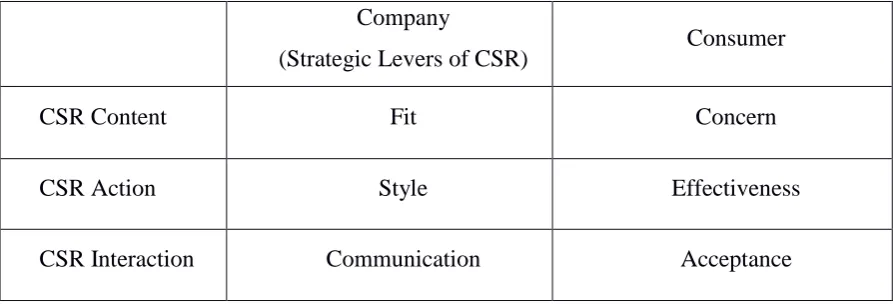
Table 1 depicts our model of key factors that influence ethical purchase decisions. It
presents three categories of relevant CSR influences that are each divided between the
relevant factors in supply and demand (company and consumer). The purpose of the model is
to condense various factors found relevant to responsible or ethical consumer choices into a
single model that provides a framework to analyse how current supply of CSR matches with
demand. It further allows to evaluate the required actions companies should take to achieve
the benefits of strategic CSR. These actions are defined as the strategic levers of CSR, or
factors that companies can adjust in their CSR offering to create a positive influence on
consumer choices.
Table 1: Ethical Consumerism: Contingent Influences on Ethical Purchase Decisions
Company
(Strategic Levers of CSR) Consumer
CSR Content Fit Concern
CSR Action Style Effectiveness
CSR Interaction Communication Acceptance
CSR Content
The first category in the model focuses on what is offered as responsibility. Part of
consumption value is based on satisfaction with product attributes (Woodruff, 1997) and thus
the content of responsibility is crucial in consumer choice. Examples of practical
responsibility that consumers value abound. These include local CSR initiatives (Russell &
Russell, 2010), attention on core employees, customers and the natural environment
(Öberseder, Schlegelmilch & Murphy, 2013), focus on human rights, safe and proper
working conditions and a ban on the use of child labour (Auger, Devinney & Louviere,
7
and animal rights and fair labour practices (Auger et al., 2008). Leonidou, Katsikeas and
Morgan (2012) highlighted the impact of environmental actions on CSR performance, much
in line with Chen (2015). These examples vary largely, and the crucial question for a
company is the type of CSR content that creates the most powerful impact. We therefore
divide CSR content between its fit with the company and consumer concern over the topic as
the defining factors of success.
Bhattacharya et al. (2009) synthesized the importance of fit in cause-related (CSR based)
marketing; initiatives that do not align with the business of a company may be perceived as
insincere by consumers and create negative perceptions of the provider. The concept of fit
has plenty of appeal, although low fit cause-related marketing may also benefit a company
(Nan & Heo, 2007). Some studies even find fit irrelevant to consumer choice (Hoek &
Gendall, 2008; Lafferty 2009). A comprehensive synthesis of findings related to fit was
created by Peloza and Shang (2011); while some disagreement over the importance of fit
exists, customers generally prefer better fit between a business and its responsible actions.
Thus fit, defined as the alignment of CSR activity with the business supplying it, is proposed
the first factor that influences ethical consumer choices. As a supply-side factor, it creates the
first strategic lever of CSR a responsible company can employ to adjust its offering.
The impact of ethical actions is based on consumer concern about the topic. The role of
ethics and ethical business behaviour has been highlighted as a criterion for consumer choices
and thus the existence of general ethical concern seems evident (Diallo & Lambey-Checchin,
2015; Karaosmanoglu, Altinigne & Isiksal, 2016; Smith, 2008). Following Peloza and Shang
(2010), concern roots in orientation toward others (the stakeholders targeted by the action),
and it may be triggered by extrinsic or intrinsic reasons; hence, consumer value can be
created in multiple ways. Cognitive dissonance may decrease concern for particular CSR
content reducing demand for unfitting responsibility.
CSR Action
The second category of CSR factors focuses on how company responsibility is conducted. In
Woodruff’s (1997) model product value is linked with consequences of its use and with
responsibility the consequences result from company approach to CSR initiatives. We divide
this category again in two factors to separate supply of action from its demand. A company
may adopt different styles for its initiatives, and consumers decide whether to accept them
based on the perceptions the initiatives create. Thus, the style of CSR initiatives becomes the
8
CSR engagement starts with the selection of content to work with. After this, each
initiative may be launched in multiple styles. A proactive approach has been proposed a key
criterion for successful strategic CSR and even a requirement for CSR to be considered
strategic (Husted & Allen, 2007). Yet the latter claim may not apply to all industries and
businesses (Claver-Cortés, Molina-Azorín, Pereira-Moliner, López-Gamero, 2007), and
successful responsibility may emerge in multiple styles. This model adopts the range
synthesized by Wartick and Cochran (1985) to four categories of CSR style: proactive,
reactive, inactive (accommodative) and counteractive (defensive). A company may follow
one or several of these styles, and consumer behavior reflects these choices. The style a
company adopts for its responsible actions impacts how consumers perceive their
effectiveness and only actions perceived to have an impact will meet customer demand.
The importance of CSR style roots in attribution theory first developed by Fritz Heider
(Kelley, 1973). As noted by Kelley, “causal attribution identifies the causes of certain effects
and forms the basis for decisions about how to act in order to bring about the continuance or
discontinuance of those effects” (p. 127). During the early days, the theory focused on
general human psychology and how attributions of actions lead to behaviours, but Folkes
(1984) connected attribution theory with consumer behaviour. Weiner (2000) established
consumer attribution as a basis for evaluating how different styles of CSR activities impact
choices. Yoon, Gürhan-Canli and Schwarz (2006) observed that proactive initiatives reflect
positive motives for actions and this, in line with attribution theory, signals sincerity and it is
preferred by consumers. Groza et al. (2011), Becker-Olsen, Cudmore and Hill (2006) and
Ricks (2005) reached similar conclusions: Proactive CSR increases consumer purchase
intentions. In the same vein, Marin, Rubio and de Maya (2012) maintained that large
companies enjoy more benefits from strategic CSR, and that proactive approach moderates
the link between CSR and strategic competitiveness. In the SME sector, Torugsa, O’Donohue
and Hecker (2013) discovered a connection between proactive CSR and financial
performance. The two latter studies did not specify whether consumer attributions contributed
to creating such links, but they suggested that the decision over CSR style matters as it
signals the effectiveness of the actions.
CSR Interaction
The third category of the influence framework focuses on the role of interaction as a creator
of value in product choices (Holbrook, 1999). Responsibility and ethical choices as bases for
9
customer to accept responsibility supplied. Such acceptance will transform demand for CSR
into a purchase decision and potential willingness to pay more for responsible products
(Smith, 2008).
Zucker (1985) defined trust as “a set of expectations shared by all those involved in an
exchange” (p. 2). In an exchange between a company and a consumer that involves a CSR
message trust is essential, and trust has been established a key mediator between CSR and
product choice or long-term loyalty toward a company (Diallo & Lambey-Checchin, 2015;
Martinez & Rodríguez del Bosque, 2013; Pivato, Misani & Tencati, 2008). While trust is
hard to create or measure, arrangements aimed to substitute it are commonplace
(Granowetter, 1985; Zucker; 1985). Connors, Anderson, MacDonald and Thomson (2015)
observed that presenting more concrete information about responsibility had a positive
impact on consumer response toward a company, and that this link was mediated by the
perceived credibility of the message. Thus, the methods of communication companies
employ become the third strategic lever of CSR at their disposal.
Interaction between companies and consumers is achieved if consumers accept the CSR
communicated. For this to happen consumers must trust the message. Lack of consumer trust
toward a CSR message breeds scepticism, which reduces the business benefits of
responsibility (Groza et al., 2011; Pomering & Dolnicar, 2008; Skarmeas & Leonidou, 2013).
Greenwashing is the most notable example of CSR scepticism, and rightly it is emphasized as
a key threat to credible responsibility (Crittenden, Crittenden, Ferrell, Ferrell & Pinney, 2010;
Laufer, 2003). However, scepticism must be separated from cynicism: according to Kanter
and Mirvis (1989, p. 301) “sceptics doubt the substance of communications; cynics not only doubt what is said but the motives for saying it”. CSR scepticism is a cognitive response to
claims of responsibility while cynicism is part of personality; furthermore, scepticism is
short-term while cynicism may persist over a long period (Anson, Mann & Sherman, 1986).
In the worst case, lack of trust could develop into consumer cynicism (Becker et al., 2007),
which in turn could lead to long-term unfavourable consumer choices (Kuokkanen & Sun,
2016). This risk of long-term negative consequences highlights the importance of creating
trust in CSR from company perspective. When CSR is brought to a purchase situation,
credible evidence is required to substitute trust and to avoid negative consumer reactions.
Consumers must also find value in the responsibility offered to accept it and pay extra for
it. Willingness to pay more for certain ethical products exists among consumers. However,
for this to convert to ethical choices consumers must recognise the ethical value offered.
10
reasons with extrinsic or intrinsic motivations (Peloza & Shang, 2010). Thus, communication
should address these aspects of value creation to become effective. The origins of value
matter for the way a company communicates about responsibility, as understanding the
potential customer becomes crucial in planning successful communication that leads to
customer acceptance of CSR.
We propose that with the right choice of CSR actions it is possible to combine profit
with social goals. Thus motivation (instrumental vs. normative) and genuineness behind CSR
actions are not directly considered in the model, differing from some earlier studies (Becker
Olsen et al, 2007; Chernev & Blair, 2015; Sen et al., 2006). Instead, consumer attributions on
the style of CSR actions are assumed to reflect the perceived motivation for and genuineness
of responsibility. The feeling of gratitude toward a responsible company has also been
proposed to create a link between CSR and favourable consumer behaviour (Palmatier, Jarvis
& Bechoff, 2009; Romani, Grappi & Bagozzi, 2012). While this is likely to happen, basing a
strategic CSR approach on gratitude would undermine the role of the company and suggest
that demand for CSR lies merely in customers responding to giving back without any
reference to how this is done. The findings pointing to different values for various CSR
actions suggests the opposite, and thus the model focuses on how a company can achieve a
competitive advantage through responsibility by tailoring its supply to meet demand.
Methodology
Most big corporations report their CSR activities annually, which could be a separate
stand-along report or mixed in the formal corporate annual report disclosed to shareholders and
stakeholders. For this research, these reports were deemed to best represent the supply of
responsibility that consumers have on offer. A limitation of this approach was that the CSR
communicated as part of marketing or advertising is usually more limited and thus consumers
may not be aware of all the initiatives reported. Yet the reports are the most comprehensive
representation of practical responsibility attributes companies supply and they provide
insights into current use of the strategic levers presented in Figure 1. The methodology we
chose was an exploratory content analysis of responsibility reports, with the aim of
recognizing common themes of CSR actions among large, multinational corporations with
acknowledged responsibility reputations.
11
Responsibility rankings and company size were used as criteria for sample selection. Forbes
magazine list of 2000 biggest companies (Forbes, 2013) formed the basis for selection.
However, as most companies publish CSR information – for example, the largest 50
companies all do – the next step was to separate representative best practise supply of CSR
from more standard alternatives. Rankings of CSR performance offered an avenue for this,
but as multiple CSR rankings exist, cross-referencing the rankings was deemed necessary to
ensure objectivity.
Reputation Institute’s CSR RepTrak 100 index from 2013 that covers 100 companies in 15
largest markets (representing 75% of world GDP) with interviews of 100,000 respondents
was consulted as a basis for company selection (Reputation Institute, 2013). To emphasize a
customer view of responsibility, Brandlogic 2012 Sustainability Leadership Report
(Brandlogic, 2013) provided a suitable cross-reference. The report measures CSR
performance of 1200 major corporations and compares their responsible actions with
customer perceptions of company performance. Brandlogic Index Gap demonstrates this
comparison in one figure: a positive gap suggests that a company did not earn enough credit
for its responsibility initiatives among consumers (Brandlogic, 2013). Companies
demonstrating a high level of responsibility were defined in the report as “companies with
above average real and perceived performance [that] need to keep raising their game to stay
ahead of peers and reap the available financial and reputational gains from their
performance” (p. 7), and they were designated as global CSR leaders. The Sustainability
Leaders report of RobecoSam (2014) seemed unfit to act as selection criterion as it is
voluntary for companies to participate; 3000 companies were invited in the study but no
information was provided on rejections. However, RobecoSam ratings for the companies,
where applicable, were noted and several of the sample companies were also designated as
industry leaders by RobecoSam.
The sample was chosen as a combination of the CSR RepTrak 100 and Brandlogic reports,
and companies had to feature on both to get selected. They also had to appear on the Forbes
2000 list. The selection process reduced the risk of analysing CSR reports that would be
misleading or not present mainstream best-practise CSR. Furthermore, the Brandlogic report
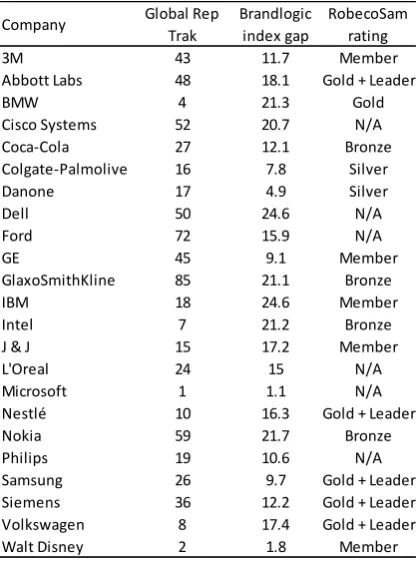
emphasized a consumer approach to CSR. This cross-referencing led to selecting 23
companies presented in Table 2. The most recent CSR reports of the companies were
downloaded during January 2015.The sample represented a wide range of industries from
12
some part of each company was directly involved with consumers. The RobecoSam ratings
[image:14.595.201.410.175.458.2]for the companies selected are also presented as additional information in Table 2.
Table 2: Sample for CSR report analysis with company responsibility rankings
Report analysis
The terminology for responsibility the companies employed in their reports ranged from CSR
to sustainability, corporate citizenship and shared value, but nearly all of them were
organized based on the triple bottom line –model by Elkington (1997). Almost all companies
followed the Global Reporting Initiative (GRI) guidelines that are built around Elkington’s
division in three: economic, social and environmental responsibility (Global Reporting
Initiative [GRI], 2013). While these guidelines are voluntary, they appear a de facto standard
in CSR reporting. A few companies advocated the more recent term “people, planet and
profit”, but this division also stems from the same model. Thus, organizing the content
according to such themes would have added little value. Neither was the purpose to organise
the reports based on the synthesis of influences on consumer purchase decisions presented in
Figure 1; the eventual goal of the study was to contrast suggested CSR factors valuable to
consumers against the responsibility offered by companies. After discovering the themes, the
Company Global Rep Trak
Brandlogic index gap
13
next step was to compare them with the model and to conduct the content analysis according
to the synthesis would have rendered the second phase irrelevant.
CSR actions were first identified from the reports, and information on type of actions,
stakeholders targeted and evidence provided was recorded. These data were transformed into
themes relevant from a consumer perspective. The attitudes and perceptions indicated in the
synthesis, gratitude and scepticism /cynicism, were employed as the lens through which a
consumer would view the supply of CSR before a purchase decision. A feeling of gratitude
would create favourable perceptions of the company offering responsibility while cynicism
would lead to doubt about the genuineness of the effort. These two extremes were considered
to form a continuum and the analysis evaluated the reported actions within the boundaries of
this “consumer lens”. Based on this approach, five themes were identified: 1) measurable
environmental actions, 2) employee focus as CSR, 3) company product/service offering as
CSR, 4) extra CSR activities, and 5) compliance with rules and regulations. Theme 4 was
further split into two sub-themes: context specific CSR (4a) and continuous and systematic
actions (4b), while theme 5 was divided between internal (5a) and external (5b) compliance.
As the emphasis was on consumers as the focal stakeholder in deciding whether strategic
CSR is successful, economic responsibility directed at owners and commonly highlighted in
such reports was excluded from the analysis. The consumer lens approach also created a
limitation in the confirmability of the findings; without a strictly defined analysis pattern for
recognising the themes after the initial classification, different themes might be discovered
should another researcher launch the analysis. However, as this phase of the study was
exploratory in nature and not aimed at testing hypotheses, this was not considered to devalue
the findings.
Findings
The average report was 147 pages long; while insignificant as a measure of responsibility,
this suggests that the reports were directed at market analysts, NGO’s and other professional
readers. Around a quarter of the companies provided a short summary report which could
target consumers, though there was no evidence to support this. A minority of the companies
supplied a CSR link on their main webpage serving visitors an easy access to responsibility
information; largely the information was placed under “corporate information” or “investor information”. CSR reporting, while almost universal among large corporations, still did not
14
variety of initiatives compiled under the proposition of responsibility. A few companies did
not provide separate CSR reports; instead, they highlighted a message of CSR embedded in
their cultures through integrated annual financial and responsibility reports. Extracted themes
are found as the follows.
Theme 1: Measurable Environmental Actions. The most common theme in the reports was environmental actions and measures related to them; such propositions featured prominently
in every sample report. The most common measure was reduction in water or energy use, and
these were followed by decreased waste creation and greenhouse gas emissions. Trimmed use
of packaging materials was also frequently mentioned when applicable to the business of the
company. GRI reporting principles offer a likely explanation for the popularity of these
measures; under GRI such items are required (GRI, 2013). The measurements ranged from a
historical reduction in a variable to targets set for the future, with actual values compared
against these. A consumer lens highlights two approaches to such measures: A grateful
consumer would approach these actions as beneficial to the natural environment while
valuing the factual evidence presented. A cynic, however, would doubt whether responsibility
was the driver behind the initiatives.
Theme 2: Employee Focus as CSR. The employee section of the reports commonly presented employee benefits and measures of employee population as responsibility. These
included items such as safety at workplace, particularly in factory environments, and
employee healthcare and training. Employee training was frequently presented as a CSR
action, and part of this was training directly related to enhancing the productivity of the
employee. Whether such activity would be perceived by consumers as responsibility, or
merely a standard management practise to increase workforce efficiency is controversial. Yet
such actions differ from the first theme as the perceived benefit to targeted stakeholder may
vary largely depending on the context of the action.
Theme 3: Product or Service Offering as CSR. Most of the companies featured development of their products or services into environmentally friendlier or healthier
direction as responsibility. The extent of this varied by the industry; companies with polluting
products (environmentally friendly cars), in the food service industry (low fat or sodium
products) or in the medical industry (more efficient drugs) were particularly active in this.
Another segment within this theme were companies that promoted the use of their product or
service to improve customer quality of life, and presented such benefits as responsibility
toward the customer. As the focus of responsibility under this theme is the consumer himself,
15
be up to each customer to decide whether improvements in user experience qualify as CSR,
and the risk of unfavourable views is evident.
Theme 4: Extra CSR Actions. Theme 4 consist of responsible actions that go beyond normal company operations. This theme is further split into two sub-themes based on the
context the initiatives link with and their duration.
Theme 4a: Context specific actions. This theme encompasses the widest range of actions, all united by either their temporary or locally originated nature. A typical temporary action
would be disaster relief; while a company may provide funds or workforce consistently for
disasters that emerge, the actions cannot be scheduled in advance. Other examples of this
category would include one-off, local actions initiated by management in a single country.
Such initiatives may develop into company-wide programs with specific targets later. Local
sponsoring of a community, or donations to a regional NGO without a company-wide policy
represent such actions, as they tend to focus on philanthropic spending.
Theme 4b: Continuous and systematic actions. Continuous and systematic actions represent the cornerstone of CSR, and based on the reports they seem to enjoy firm
commitment from the sampled companies. A typical example is a company-sponsored
employee volunteering program, during which employees help local authorities or
organisations to solve problems or improve processes on employer time. Such programs
could reach periods of up to six months and include remote locations. Investment in
university education, local start-up business support and collaboration with large
non-governmental organisations are other examples of this theme.
These two sub-themes are intertwined as both represent responsibility areas companies
pursue outside their normal business, and thus gratitude is likely to play an important role in
consumer evaluations. Yet the context-specificity of theme 4a may raise doubts among
cynics: If such activities are perceived sporadic, they may come across as opportunistic rather
than truly responsible.
Theme 5: Compliance with Rules and Regulations. The final theme collected a variety of topics commonly discussed in the reports that associate with compliance. It is divided into
two sub-themes based on whether the nature of compliance is internal or external to the
company. In other words, we separate compliance based on whether the company reports as
CSR its own compliance or its expectation for external parties to comply.
Theme 5a: Internal compliance. In addition to national laws, unofficial public guidelines that companies are encouraged to follow exist in many countries. However, this is not the
16
expectations based on worldwide policies designed to meet expectations in markets with the
tightest regulation. Gender diversity, particularly on the board of directors and upper
management, was frequently highlighted in the reports. Similarly, demographic diversity
within a company and a restriction of marketing activities directed at children were common
topics under this theme.
Theme 5b: External compliance. The role of supplier compliance was also emphasized as a focal CSR area, and most companies stressed their requirements to suppliers before they
can join the value chain. In this domain, third party evaluations were a common form of
evidence presented to support claims of supply chain responsibility. In industries that
subcontract manufacturing in low-cost countries this theme was particularly important.
While the two sub-themes clearly connect, there is a significant difference between
internal and external compliance. Viewed through the consumer lens compliance differs
significantly from the other themes. By definition, compliance refers to existing rules and
regulations, and particularly a cynic would question why such items are reported in a CSR
report. However, the frequency with which such items feature on the reports justifies a theme
dedicated to them, and complying with laws forms the second level of Carroll’s CSR
pyramid. External compliance, on the other hand, aims at improving business practices
elsewhere and offers support to claim responsibility. Yet a cynic might doubt whether the
expectations presented are properly monitored and suppliers held accountable in a robust
manner.
Discussion
Table 3 compares the analysis themes against the contingent influences on ethical purchase
decisions from Table 1. The three influence areas are each split between company and
consumer factors to emphasize the importance of supply and demand in ethical consumption.
Company resources should be directed toward those CSR attributes that consumers value
(McWilliams & Siegel, 2010) in order to achieve a competitive advantage. We rank how well
each theme matches with the six factors using a three-point scale of strong match (++), partial
match (+) and weak match (-) to evaluate the use of company resources in CSR. The supply
side of each factor (fit, style and communication) will be of particular interest as these form
the strategic levers a company can operate to direct its current supply of responsibility to
17
The first theme of environmental actions, particularly related to saving energy and water,
is relevant in almost any line of business and thus fits companies well, although heavy
industry is particularly suited for such actions. Similarly, a large part of consumers is
concerned about the natural environment, justifying the content of the first theme. Yet
environmental actions tend to be reactive in nature and often responding to concerns of
climate change and increased pollution. Due to mixed consumer attributions of reactive
initiatives the effectiveness of such actions is only partial and potential consumer cynicism
over the underlying motives (responsibility vs. cost efficiency) may reduce this impact
further. In terms of communication these initiatives provide measured facts of improvement
in efficiency that can be verified and they act as valid substitutes for trust. However, while
consumers are concerned about the environment, their willingness to pay extra is very
limited: efficiency is a cost-cutting measure that increases profits on its own, and “greening”
Table 3: Comparison of Strategic Levers of CSR and CSR Report Themes
Fit Concern Style Effectiveness Communication Acceptance
Theme 1: Measurable
environmental actions ++ ++ + + ++
-Theme 2: Employee focus
as CSR - + ++ - ++
-Theme 3: Product or
service offering as CSR - ++ ++ - + +
Theme 4: Extra CSR activities
4a: Context specific
CSR + ++ + + ++ ++
4b: Continuos and
systematic CSR ++ ++ ++ ++ ++ ++
Theme 5: Compliance with rules and regulations
5a: Internal compliance ++ - - - ++
-5b: External (supplier)
compliance ++ ++ + + + +
18
is nearly mandatory in contemporary business. Thus, acceptance of this theme as true CSR
that creates ethical value to consumers remains limited.
The second theme, employee focus as responsibility is controversial in terms of its fit;
activities such as workplace safety or employee training are relevant to any company, but
their fit with the concept of responsibility is weak. The demand for such activities matches
consumer concerns partially; employees are an important stakeholder and most consumers
belong to this group themselves. Furthermore, incidents such as employee deaths at
electronics manufacturer Foxconn (Dou, 2016) highlight the importance of this theme. On the
other hand, offering benefits and opportunities to employees to motivate them does not
qualify as responsibility. Initiatives resulting from high-publicity incidents are by definition
reactive, and may even be attributed as counteractive, or an attempt to cover up a problem. In
terms of interaction these items generally lend themselves to numerical evidence related to
spending on training, healthcare and other benefits aimed at substituting trust. Yet consumer
acceptance to support such issues, often perceived to belong to normal business conduct, can
be low and the sources of ethical value are not clear. This is a particular issue in the case of
counteracting poor working conditions.
Theme 3, product or service offering portrayed as responsibility provides weak fit with
CSR. This theme includes companies portraying safe, healthy or high-quality products as
responsibility. Consumer concern over their purchases is naturally strong and when the
product itself is offered as a CSR action it is hard to separate “product concern” from “CSR
concern”. Product development is often proactive, and there are cases where the product is
developed in a responsible direction justifying proactive attributions among customers; such
examples include environmentally friendly cleaning products or low emission vehicles.
However, in most cases product or service development does not increase ethical value.
Communication, particularly in terms of advertising, is plentiful with both evidence and
emotion –based communication commonplace. Generally, consumers are willing to pay more
for better products, but related to this factor ethical value is hard to distinguish from normal
consumption value.
The theme of extra CSR activities is divided between context specific (4a) and continuous
and systematic CSR (4b). While the fit of 4a varies largely depending on the context that
prompted the CSR initiative, 4b actions usually fit the companies well. Consumer concern for
both areas is high and due to strong fit the actions are positively received. Theme 4b is
generally proactive in nature, and companies spend considerable resources to conduct such
19
situation or sometimes counteract criticism of irresponsibility. Consumers connect the
proactive initiatives with positive attributions and thus they have a stronger influence on
purchase decisions. For both sub-themes the use of case studies, storytelling and external
endorsements about project results are common and substitute trust in a credible manner.
Both also possess ethical value that potentially increases consumer willingness to pay for
products of companies involved in these initiatives.
The final theme of compliance is divided in two sub-themes to distinguish between
internal and external compliance. Both types of compliance fit with the basic attributes of
CSR as legal responsibility has been a long-standing element in the domain. However,
consumer concern with internal compliance is clearly lower, as this is often considered a
basic requirement to operate. Supplier compliance, on the other hand, is generally of high
concern to consumers, particularly after tragic events such as the Rana Plaza factory collapse
in Bangladesh in 2012, or the recent allegations related to palm oil supplier business practices
(ref 2016). To expect responsibility in the supply chain is well in line with the values of
ethical purchase. While internal compliance can be perceived inactive in style, external
compliance is often proactive as such responsibility is not expected by law. Yet some
instances of supplier responsibility could also fall under the counteractive style, raising
cynical concerns. Consumer attributions will follow these evaluations, making external
compliance clearly more efficient. Finally, in terms of interaction internal compliance lends
itself particularly well to facts and figures to be employed in communication, while external
compliance relies on expert evaluations and reports of third party inspectors to supplier sites.
External compliance creates acceptance among consumers as ethical value in extending
responsibility beyond the company itself is evident, while straightforward obedience of laws
does not significantly increase customer willingness to pay for products.
Implications: How to Achieve Strategic CSR
The analysis exposes several weaknesses in CSR reporting as many of the themes recognised
do not fully match with the factors that influence consumer choices. Furthermore, there are
imbalances between supply and demand that weaken strategic CSR. An ideal theme would
represent strong match with all the influential factors both in company and consumer aspects.
Yet only one of the themes in Table 3, continuous and systematic CSR, fulfils this criterion.
The following discussion will focus on recognising the imbalances of the themes compared
20
strong match with concern, effectiveness and acceptance) a company can operate its strategic
levers (fit, style and communication) to make the most out of the theme. Should the demand
for a theme be only partial or weak, the theme itself requires changes to match with customer
expectations. To illustrate the recommendations, we employ anecdotal CSR examples from
niche companies that build their business model around ethical values or are recognised as
CSR leaders by influential authors in the field (such as Carroll,2008 and Visser,2011).
The first evident pattern is the imbalance between supply and demand within the three
categories that influence consumer decisions (Table 2). Theme 3, product or service as CSR
does not fit the criteria of responsibility well even when demand for such factor – ethical
products - exists. Yet in most cases the supply factor fits criteria of responsibility well but
does not meet respective demand. Themes 2 and 3 meet the criterion of proactive style, but
their ethical effectiveness is hampered by the potential for cynicism. As a theme, internal
compliance (theme 5a) appears to match the supply factors of responsibility well but not gain
concern nor acceptance from consumers; fulfilling regulatory criteria is considered as a basic
requirement for companies to operate, not part of ethical business conduct. Based on these
observations we recommend that the role of employee focus in CSR reporting should be
revisited to highlight employees in vulnerable positions. The role of compliance should be
extended beyond normal rules and regulations. With this change the weight of the theme
would likely decrease, resulting in a more balanced CSR portfolio in reporting.
The second observation emphasizes areas that lack supply-demand balance.
Environmental actions normally fit the operations of companies and gain concern from
consumers. Increasingly they become more proactive and are perceived as real effort,
reducing the risk of cynicism caused by greenwashing scandals. However, while facts and
figures on the topic are clearly communicated they fail to meet the intended goals of
increasing consumer willingness to pay for products. Environmental actions, particularly the
most common ones related to resource use reduction, are often perceived by consumers as
purely cost-cutting measures and thus do not associate with ethical value. To address this
issue companies should shift focus on environmental actions that do not just contribute to
cost savings and highlight long-term sustainability of their initiatives. The concept of circular
economy could, for example, offer an avenue for environmentally focused responsibility that
does not immediately lower operating expenses.
Social issues and consumers as a stakeholder are explicitly missing from the themes
identified. Implicitly they are noted, as many of the extra CSR activities are aimed at social
21
related to their operations or the communities in which they operate. Similarly, consumers are
missing: While theme 3 clearly aims to address this group, its fit with responsibility is low as
discussed earlier. A key difference lies in the definition of ethical business behaviour; a
company offering safe or healthy products is merely meeting general market demands.
However, for fit with responsibility companies should offer customers a chance to
demonstrate ethical behaviour through purchase. This could happen through a product that
contributes to environmental or social sustainability. Examples include companies that
encourage their customers to reduce consumption and purchases of new products such as
Patagonia (outdoors apparel) or Fairphone (responsible mobile phones) or whose products
directly contribute to environmental sustainability, such as 7th Generation (environmentally friendly soaps and detergents).
Of the existing CSR reporting themes 4a, 4b and 5b seem to offer the most potential. The
themes match the factors that influence consumer decisions at least partly, and demand
appears strong particularly for themes 4a and 4b. More attention is still required on the
effectiveness and acceptance of external compliance; the theme must be transformed to match
demand, as it is not evident that a mere expectation of supplier compliance qualifies as ethical
value. Similarly, to become truly efficient, context specific CSR requires a framework in
which it is systematically offered to avoid consumer attributions of opportunistic charity-type
activity. Based on the results we recommend inclusion of social issues as a holistic theme
within extra CSR activities. As an example, Ben & Jerry’s, known for both its ice-cream and
CSR, follows such a strategy. Furthermore, supplier compliance should be elevated from a
level of expecting suppliers to meet standards to a cooperation with the suppliers in meeting
the standards, an approach adopted by Fairphone with supplier employee conditions and
avoidance of rare-earth minerals from conflict areas (Fairphone, 2016).
Conclusion
The appeal of strategic CSR, the opportunity to improve financial performance by engaging
in responsible activities, is evident and well documented in the RBV domain. To achieve this
goal companies must use their resources to supply responsibility that meets consumer
demand. This paper synthesizes and classifies the factors critical for strategic success of CSR
into a model divided in three characteristics of consumer decision making, further splitting
each characteristic in supply and demand factors. It contributes to the field by combining the
22
framework and highlights the tools at the disposal of a company aspiring to achieve such an
impact. These tools are dubbed the strategic levers of CSR, and their current employment is
analysed based on company CSR reporting.
Based on the results we offer recommendations on how companies can better employ their
resources to achieve strategic CSR both in terms of their CSR supply and adaptation of that
supply using the strategic levers at their disposal. Before a company can focus on CSR that
creates strategic value, it needs to recognise where this value lies. An attempt to emphasize
all CSR attributes under company control equals to missing the opportunity for strategic
CSR. The next step in research must be to evaluate the relative importance of the proposed
strategic levers, and to specify the most effective ways of operating them. Earlier research has
largely studied the various connections between responsibility and consumer purchase
decisions one link at a time. This framework is intended as a basis for research to provide a
holistic view of the impact of CSR on consumer choices and hence consumer demand for
CSR.
The mixed results on the CSP-CFP link suggest that the demand is also latent in nature, a
characteristic that has resulted in supply focused CSR. This framework is intended to provide
a model to investigate the latent nature of the demand. Recognising consumer demand for
CSR is critical to operate the levers correctly. Studying the factors presented in the
framework simultaneously will allow establishing the levers that have significant impact on
consumer choices. This approach completes earlier research that studies significant
influences usually one factor at a time, and it also emphasizes the role of consumer attitudes
and perceptions. Yet the strategic levers still represent a high-level division of responsibility
and further research is needed into which actions associated with the levers should be taken
in a given industry. Finally, the results of employing the levers must be evaluated to
understand the relative strength of each lever and to define their expected potential. This will
help to specify how companies can operate the levers optimally to gain a strategic advantage
through CSR, and address the gap in academic theory between the promise of responsibility
as a scarce resource and the reality of an unclear link between corporate social and financial
performances.
References
23
Ajzen, I. (2011). The theory of planned behaviour: Reactions and reflections. Psychology & Health, 26(9), 1113–1127. http://doi.org/10.1080/08870446.2011.613995
Ajzen, I. (1991). The theory of planned behavior. Orgnizational Behavior and Human Decision Processes, 50, 179–211. http://doi.org/10.1016/0749-5978(91)90020-T Ajzen, I., & Fishbein, M. (1977). Attitude-behavior relations: A theoretical analysis and
review of empirical research. Psychological Bulletin, 84(5), 888–918. http://doi.org/10.1037/0033-2909.84.5.888
Ajzen, I., & Fishbein, M. (2005). The Influence of Attitudes on Behaviour. In D. Albarracín,
B. T. Johnson, & M. P. Zanna (Eds.), The handbook of attitudes (pp. 173–221). Mahwah, NJ: Lawrence Erlbaum Associates. http://doi.org/10.1080/00224545.1956.9921907
Anson, R. H., Dale Mann, J., & Sherman, D. (1986). Niederhoffer’s cynicism scale:
reliability and beyond. Journal of Criminal Justice, 14(4), 295–305. http://doi.org/10.1016/0047-2352(86)90123-6
Arnot, C., Boxall, P. C., & Cash, S. B. (2006). Do ethical consumers care about price? A
revealed preference analysis of Fair Trade coffee purchases. Canadian Journal of Agricultural Economics/Revue Canadienne d’Agroeconomie, 54(4), 555–565. http://doi.org/10.1111/j.1744-7976.2006.00066.x
Ashforth, B. E., & Mael, F. (1989). Social Identity Theory and the Organization. Academy of Management Review, 14(1), 20–39. http://doi.org/10.2307/258189
Auger, P., Burke, P., Devinney, T., & Louviere, J. (2003). What will consumers pay for
social product features? Journal of Business Ethics, 42, 281–304. http://doi.org/10.1023/A:1022212816261
Auger, P., Devinney, T. M., Louviere, J. J., & Burke, P. F. (2008). Do social product features
have value to consumers? International Journal of Research in Marketing, 25(3), 183– 191. http://doi.org/10.1016/j.ijresmar.2008.03.005
Auger, P., Devinney, T. M., Louviere, J. J., & Burke, P. F. (2010). The importance of social
product attributes in consumer purchasing decisions: A multi-country comparative study.
International Business Review, 19(2), 140–159. http://doi.org/10.1016/j.ibusrev.2009.10.002
Barnett, M. L. (2007). Stakeholder influence capacity and the variability of financial returns
to corporate social responsibility. Academy of Management Review, 32(3), 794–816. http://doi.org/10.5465/AMR.2007.25275520
24
Barone, M. J., Norman, A. T., & Miyazaki, A. D. (2007). Consumer response to retailer use
of cause-related marketing: Is more fit better? Journal of Retailing, 83(4), 437–445. http://doi.org/10.1016/j.jretai.2007.03.006
Becker-Olsen, K. L., Cudmore, B. A., & Hill, R. P. (2006). The impact of perceived
corporate social responsibility on consumer behavior. Journal of Business Research,
59(1), 46–53. http://doi.org/10.1016/j.jbusres.2005.01.001
Bhattacharya, C. B., & Sen, S. (2003). Consumer-company identification: A framework for
understanding consumers’ relationships with companies. Journal of Marketing, 67(2), 76– 88. http://doi.org/10.1509/jmkg.67.2.76.18609
Bird, R., D. Hall, A., Momentè, F., & Reggiani, F. (2007). What corporate social
responsibility activities are valued by the market? Journal of Business Ethics, 76(2), 189– 206. http://doi.org/10.1007/s10551-006-9268-1
Boulstridge, E., & Carrigan, M. (2000). Do consumers really care about corporate
responsibility? Highlighting the attitude—behaviour gap. Journal of Communication Management, 4(4), 355–368. http://doi.org/10.1108/eb023532
Branco, M. C., & Rodrigues, L. L. (2006). Corporate social responsibility and resource-based
perspectives. Journal of Business Ethics, 69(2), 111–132. http://doi.org/10.1007/s10551-006-9071-z
Brandlogic, & CRD Analytics. (2012). Sustainability Leadership Report. Retrieved March
10, 2014, from http://www.sustainabilityleadershipreport.com
Brown, T., & Dacin, P. A. (1997). The company and the product: corporate associations and
consumer product responses. The Journal of Marketing, 61(January), 68–84.
Burke, L., & Logsdon, J. M. (1996). How corporate social responsibility pays off. Long Range Planning, 29(4), 495–502. http://doi.org/10.1016/0024-6301(96)00041-6 Carroll, A. B. (1991). The pyramid of corporate social responsibility: Toward the moral
management of organizational stakeholders. Business Horizons, 34(3), 39–48. http://doi.org/10.1016/0007-6813(91)90005-G
Carroll, A. B. (1979). A three-dimensional conceptual model of corporate performance. The Academy of Management Review, 4(4), 497. http://doi.org/10.2307/257850
Carroll, A. B., & Shabana, K. M. (2010). The business case for corporate social
25
Castaldo, S., Perrini, F., Misani, N., & Tencati, A. (2009). The missing link between
corporate social responsibility and consumer trust: the case of Fair Trade products.
Journal of Business Ethics, 84(1), 1–15. http://doi.org/10.1007/s10551-008-9669-4 Chang, C.-H. (2015). Proactive and reactive corporate social responsibility: antecedent and
consequence. Management Decision, 53(2), 451–468. http://doi.org/10.1108/MD-02-2014-0060
Chen, R. J. C. (2015). From sustainability to customer loyalty: A case of full service hotels’
guests. Journal of Retailing and Consumer Services, 22, 261–265. http://doi.org/10.1016/j.jretconser.2014.08.007
Chernev, A., & Blair, S. (2015). Doing well by doing good: The benevolent halo of corporate
social responsibility. Journal of Consumer Research, 41(6), 1412–1425. http://doi.org/10.1086/680089
Choi, S., & Ng, A. (2011). Environmental and economic dimensions of sustainability and
price effects on consumer responses. Journal of Business Ethics, 104(2), 269–282. http://doi.org/10.1007/s10551-011-0908-8
Claver-Cortés, E., Molina-Azorín, J. F., Pereira-Moliner, J., & López-Gamero, M. D. (2007).
Environmental strategies and their impact on hotel performance. Journal of Sustainable Tourism, 15(6), 663–679. http://doi.org/10.2167/jost640.0
Connors, S., Anderson-MacDonald, S., & Thomson, M. (2015). Overcoming the “window
dressing” effect: Mitigating the negative effects of inherent skepticism towards corporate
social responsibility. Journal of Business Ethics. http://doi.org/10.1007/s10551-015-2858-z
Creyer, E. H., & Ross, W. T. (1997). The influence of firm behavior on purchase intention : do consumers really care about business ethics ? Journal of Consumer Marketing, 14(6), 421–432. http://doi.org/10.1108/07363769710185999
Crittenden, V. L., Crittenden, W. F., Ferrell, L. K., Ferrell, O. C., & Pinney, C. C. (2010).
Market-oriented sustainability: A conceptual framework and propositions. Journal of the Academy of Marketing Science, 39(1), 71–85. http://doi.org/10.1007/s11747-010-0217-2 Currás-Pérez, R., Bigné-Alcañiz, E., & Alvarado-Herrera, A. (2009). The role of
self-definitional principles in consumer identification with a socially responsible company.
Journal of Business Ethics, 89(4), 547–564. http://doi.org/10.1007/s10551-008-0016-6 De Pelsmacker, P., Driesen, L., & Rayp, G. (2005). Do consumers care about ethics?
26
Devinney, T. M., Auger, P., Eckhardt, G., & Birtchnell, T. (2006). The Other CSR:
Consumer Social Responsibility. Stanford Social Innovation Review, 61(2), 1–13. http://doi.org/10.2139/ssrn.901863
Diallo, M. F., & Lambey-Checchin, C. (2015). Consumers’ perceptions of retail business
ethics and loyalty to the retailer: The moderating role of social discount practices. Journal of Business Ethics. http://doi.org/10.1007/s10551-015-2663-8
Drucker, P. (1994). The new meaning of corporate social responsibility. California Management Review, XXVI(2), 53–64.
Du, S., Bhattacharya, C. B., & Sen, S. (2007). Reaping relational rewards from corporate
social responsibility: The role of competitive positioning. International Journal of Research in Marketing, 24(3), 224–241. http://doi.org/10.1016/j.ijresmar.2007.01.001 Dutton, J. E., Dukerich, J. M., & Harquail, C. V. (1994). Organizational Images and Member
Identification. Administrative Science Quarterly, 39(2), 239–263. http://doi.org/10.2307/2393235
Elkington, J. (1997). Cannibals with Forks: the Triple Bottom Line of 21st Century Business. Oxford: Capstone.
Ellen, P. S., Webb, D. J., & Mohr, L. A. (2006). Building corporate associations: consumer
attributions for corporate socially responsible programs. Journal of the Academy of Marketing Science, 34(2), 147–157. http://doi.org/10.1177/0092070305284976 Fairtrade Labelling Organizations International. (2011). History of Fairtrade. Retrieved
February 15, 2014, from http://www.fairtrade.net/about-fairtrade/history-of-fairtrade.html
Festinger, L., & Carlsmith, J. M. (1959). Cognitive consequences of forced compliance.
Journal of Abnormal Psychology, 58(2), 203–210. http://doi.org/10.1037/h0041593 Finch, D. (2008). Performance through relationships: A case for the integration of strategic
stakeholder management and community investment. Journal of Sponsorship, 1(4), 338– 349.
Folkes, V. S. (1984). Consumer Reactions to Product Failure: An Attributional Approach.
Journal of Consumer Research, 10(4), 398. http://doi.org/10.1086/208978
Folkes, V. (1988). Recent attribution research in consumer behavior: A review and new
directions. Journal of Consumer Research, 14(March), 548–566. http://doi.org/10.1086/209135
Forbes. (2013). The World’s Biggest Public Companies List. Retrieved January 15, 2014,
27
Freeman, R. E. (1984). Strategic Management: A Stakeholder Approach. Marshfield, MA: Pitman Publishing Inc.
Freestone, O. M., & McGoldrick, P. J. (2007). Motivations of the ethical consumer. Journal of Business Ethics, 79(4), 445–467. http://doi.org/10.1007/s10551-007-9409-1
Garay, L., & Font, X. (2012). Doing good to do well? Corporate social responsibility reasons,
practices and impacts in small and medium accommodation enterprises. International Journal of Hospitality Management, 31(2), 329–337.
http://doi.org/10.1016/j.ijhm.2011.04.013
Gilbert, D. T., & Jones, E. E. (1986). Perceiver-induced constraint: Interpretations of
self-generated reality. Journal of Personality and Social Psychology, 50(2), 269–280. http://doi.org/10.1037/0022-3514.50.2.269
Global Reporting Initiative. (2013). G4 Sustainability Reporting Guidelines. Retrieved
January 25, 2014, from https://www.globalreporting.org/standards/g4/Pages/default.aspx
Godfrey, P. C. (2005). The relationship between corporate philanthropy and shareholder
wealth: A risk management perspective. Academy of Management Review, 30(4), 777– 798. http://doi.org/10.5465/AMR.2005.18378878
Golob, U., Lah, M., & Jančič, Z. (2008). Value orientations and consumer expectations of
Corporate Social Responsibility. Journal of Marketing Communications, 14(2), 83–96. http://doi.org/10.1080/13527260701856525
Granovetter, M. (1985). Economic action and social structure: The problem of
embeddedness. American Journal of Sociology, 91(3), 481–510.
Groza, M. D., Pronschinske, M. R., & Walker, M. (2011). Perceived organizational motives
and consumer responses to proactive and reactive CSR. Journal of Business Ethics,
102(4), 639–652. http://doi.org/10.1007/s10551-011-0834-9
Hart, S. L. (1995). A natural Resource-Based View of the firm. Academy of Management Review, 20(4), 986–1014. http://doi.org/10.5465/AMR.1995.9512280033
Hensher, D. A., Rose, J. M., & Greene, W. H. (2005). Applied Choice Analysis: a Primer. Cambridge University Press.
Hoek, J., & Gendall, P. (2008). An analysis of consumers’ responses to cause related
marketing. Journal of Nonprofit & Public Sector Marketing, 20(2), 283–297. http://doi.org/10.1080/10495140802224977
Hogg, M. A., Terry, D. J., & White, K. M. (1995). A Tale of Two Theories: A Critical
Comparison of Identity Theory with Social Identity Theory. Social Psychology Quarterly,
28
Hur, W.-M., Kim, H., & Woo, J. (2014). How CSR leads to corporate brand equity:
Mediating mechanisms of corporate brand credibility and reputation. Journal of Business Ethics, 125(1), 75–86. http://doi.org/10.1007/s10551-013-1910-0
Husted, B. W., & Allen, D. B. (2007). Strategic corporate social responsibility and value
creation among large firms. Long Range Planning, 40(6), 594–610. http://doi.org/10.1016/j.lrp.2007.07.001
Husted, B. W., & de Jesus Salazar, J. (2006). Taking Friedman seriously: Maximizing profits
and social performance. Journal of Management Studies, 43(1), 75–91. http://doi.org/10.1111/j.1467-6486.2006.00583.x
Janssen, M., & Hamm, U. (2012). Product labelling in the market for organic food: Consumer
preferences and willingness-to-pay for different organic certification logos. Food Quality and Preference, 25(1), 9–22. http://doi.org/10.1016/j.foodqual.2011.12.004
Jones, E. E., & Davis, K. E. (1965). From acts to dispositions: The attributional process in
person perception. Advances in Experimental Social Psychology. http://doi.org/10.1017/CBO9781107415324.004
Jones, E., Harris, A., & University, D. (1967). The attribution attitudes. Journal of Experimental Social Psychology, 3, 1–24.
Jones, E. E. (1979). The rocky road from acts to dispositions. American Psychologist, 34(2), 107–117. http://doi.org/10.1037/0003-066X.34.2.107
Kanter, D. L., & Mirvis, P. H. (1989). The Cynical Americans. San Francisco: Jossey-Bass. Kelley, H. H. (1973). The process of causal attribution. American Psychologist, 28(2), 107–
128. http://doi.org/10.1037/h0034225
Kim, E. E. K., Kang, J., & Mattila, A. S. (2012). The impact of prevention versus promotion
hope on CSR activities. International Journal of Hospitality Management, 31(1), 43–51. http://doi.org/10.1016/j.ijhm.2011.05.004
Kim, Y. (2015). Consumer responses to the food industry’s proactive and passive
environmental CSR, factoring in price as CSR tradeoff. Journal of Business Ethics, (Alliance 2011). http://doi.org/10.1007/s10551-015-2671-8
Klein, J., & Dawar, N. (2004). Corporate social responsibility and consumers’ attributions
and brand evaluations in a product-harm crisis. International Journal of Research in Marketing, 21(3), 203–217. http://doi.org/10.1016/j.ijresmar.2003.12.003
Koschate-Fischer, N., Stefan, I. V, & Hoyer, W. D. (2012). Willingness to pay for