Are children who commit violent acts against other children born evil? An evaluation through case
studies
Original Citation
Hill, Jo (2011) Are children who commit violent acts against other children born evil? An
evaluation through case studies. Other thesis, University of Huddersfield.
This version is available at http://eprints.hud.ac.uk/id/eprint/11643/
The University Repository is a digital collection of the research output of the
University, available on Open Access. Copyright and Moral Rights for the items
on this site are retained by the individual author and/or other copyright owners.
Users may access full items free of charge; copies of full text items generally
can be reproduced, displayed or performed and given to third parties in any
format or medium for personal research or study, educational or notforprofit
purposes without prior permission or charge, provided:
•
The authors, title and full bibliographic details is credited in any copy;
•
A hyperlink and/or URL is included for the original metadata page; and
•
The content is not changed in any way.
For more information, including our policy and submission procedure, please
contact the Repository Team at: [email protected].
Major Study
DHF 2940
Are children who commit violent acts
against other children born evil?
An evaluation through case studies
The cases of Mary Bell, Jon Venables, Robert
Thompson and the ‘Edlington’ brothers
‘Children have both been abused and been abusing and
murdering and hurting other children for a very long time’
(Dr. Eileen Vizard)
1 | P a g e
Acknowledgements
I would like to take this opportunity to thank all those who have participated in this study. Particular thanks go to Laurence Guinness, Jim Reid, Helen Masson and Blake Morrison for
allowing me to attribute their responses and to Jeanette Dyson and Tracy Almond for being my ‘critical friends’. Thanks must also go to my supervisor, Ceri Daniels, for her unstinting
support.
Finally thanks go to my family for their patience, understanding and changed habits. This major study complies with the British Educational Research Association’s ethical guidelines
May 2011
Supervisor: Ceri Daniels
2 | P a g e
Abstract
Mary Bell, Jon Venables, Robert Thompson and the ‘Edlington’ boys all committed serious violent acts against other children. The ‘why’ of these incidents was not explored in the court cases, yet child development research indicates that experiences significantly influence children’s behavioural tendencies.
A small-scale review of empirical case studies was used to help undertake a considered assessment of whether root causal factors may have been present in their backgrounds. Through an exploration of their backgrounds and family situations the possible risk factors of abuse and neglect during infancy; poor parental attachment during infancy; negative
socialisation during infancy and genetic influences were selected. These themes were checked against the responses of interested parties. The responses were gained through open-ended questionnaires and telephone interviews and confirmed these risk factors, with neglect and abuse seeming to be the correlation which was most attributed to the
development of violent tendencies.
3 | P a g e
Contents
Abstract... 2
Contents ... 3
Chapter 1: Introduction ... 5
Chapter 2: The Cases ... 7
2.1 Mary Bell ... 7
2.2 The Bulger Case ... 8
i. Jon Venables ... 9
ii. Robert Thompson ... 10
2.3 The ‘Edlington’ Brothers ... 11
2.4 Conclusion ... 12
Chapter 3: Literature Review ... 13
3.1 Introduction ... 13
3.2 Context ... 13
3.3 Conclusion ... 20
Chapter 4: Methodology ... 21
4.1 Introduction ... 21
4.2 Considerations and Decisions ... 21
4.3 Carrying out the Research ... 26
4 | P a g e
4.5 Conclusion of Methodology ... 27
Chapter 5: Analysis of Findings and Discussion ... 28
5.1 Process of Presenting Findings ... 28
5.1.1 Key Findings: General Overview ... 29
5.2 Analysis and Discussion of Key Findings ... 30
5.2.1 Impact of Parenting and Care during Infancy ... 31
5.2.2 Influence of Genetics ... 40
5.3 Conclusion of Analysis ... 41
Chapter 6: Conclusion ... 42
6.1 Aims ... 42
6.2 Summary of Findings and Conclusions ... 42
6.3 Recommendations ... 43
6.4 Dissemination ... 44
Bibliography ... 45
Appendix One: Letter ... 52
Appendix Two: Questionnaire ... 53
Appendix Three: Interviews ... 55
Jim Reid ... 55
5 | P a g e
Chapter 1: Introduction
This paper tells the stories of Mary Bell, Robert Thompson, Jon Venables and the ‘Edlington’
brothers: five, 10 and 11 year-olds who all caused death or serious injury to other children
(BBC, 1968; Morrison, 1994; Vallely, 2010). Each case was branded as unique, and the
media talked of not allowing it to happen again (Muncie, 2009). Yet these cases are far from
unique (Davis, 2004; Paul, 2006; Green, 2008).
The focus here is on some of the potential causes in the background lives of Mary, Robert,
Jon and the ‘Edlington’ boys: causes often ignored in the court cases. As Morrison (1997)
berates, the ‘why’ is not explored. This is not to excuse their actions, nor to suggest their
parents are entirely to blame (most inadequate parents had inadequate parenting, Sereny,
1995), but to use the cases to explore the potential link between childhood trauma and a
child who may turn out to be harmfully violent, destructive, dangerous or ‘evil’. There is
currently important, fascinating and relatively new research into areas of child development,
the issues which can affect it and how links are created between development and
behaviour, including violence (eg. Gerhardt, 2004; Brotherson, 2005; Perry and Szalavitz
2006; Inside the Human Body, 2011). These areas of research could provide further
explanations of the behaviour of the aforementioned children.
It is hoped that additional, more comprehensive studies into this area will follow and that
ultimately, enhanced understanding can inform future policy and legislation, possibly even
resulting in decreased levels of both violent behaviour and abuse. This seems crucial
because new policies often continue to concentrate on punitive measures rather than early
prevention, such as ‘Breaking the Cycle’ (Ministry of Justice, 2010), despite its promising
name. Moreover, an increased awareness could arguably be used to increase the potential
6 | P a g e
surface issues will be addressed and the child or young person will merely learn to control or
hide inappropriate behaviour (Perry & Szalavitz, 2006).
Rather than studying broad issues, empirical case studies were considered to be the most
appropriate method of exploring the depths of the relevant relationships and situations,
because case studies ‘can cope with the complexity and subtlety of real life situations’ (Denscombe, 2010, p.55). The individual cases were selected for their significance, being
some of the most infamous and contemporary cases in which children have committed
violent acts against other children.
The aims of this study are:
• To investigate, understand and undertake a critical assessment of literature and
existing research which has focussed on the backgrounds of children who have
committed serious violent acts against other children.
• To seek to explain whether or not there appears to be potential causal factors in the
backgrounds of children who commit serious violent acts against other children and,
if so, what some of those factors may be.
• To determine the view of some interested parties in the cases selected about how
they perceive the actions of children involved and possible explanations for it
This paper begins by presenting the cases of Mary Bell, Robert Thompson and Jon
Venables, and the ‘Edlington’ brothers. Using the cases as context, it continues by
presenting a considered evaluation of existing research and literature; presents a discussion
of the data collections methods which were considered and used; discusses and analyses
7 | P a g e
Chapter 2: The Cases
2.1 Mary Bell
Martin Brown, aged 4, was killed on 25th May 1968. Brian Howe, aged 3, was killed on 31st July 1968. On 5th December 1968 Mary Bell and Norma Bell (unrelated) were charged with strangling the two boys. Norma was acquitted, Mary, aged 11, was found guilty of manslaughter and sentenced to detention for an indeterminate period. She served 11½ years in custody (Sereny, 1995; 1999).
Betty Bell’s first words in response to Mary were, ‘Take the thing away from me’ (Sereny, 1999, p.330). Betty subsequently gave her away twice (her extended family brought her
back); attempted to drop her from a third floor window, which somehow her uncle managed
to prevent and she reportedly gave Mary three separate overdoses. Mary was too young to
remember most of these incidents (Sereny, 1995 &1999). During her early childhood, Mary
was severely neglected and her parents were often absent (Children of Crime, 1998b;
Sereny, 1999). Betty’s presence meant chronic physical, emotional and sexual abuse for
Mary (Ford, 1998; Sereny, 1999). Brian Roycroft, the Director of Newcastle Social Services
at the time of Mary’s crime, commented on the lack of emotional attachment in the
mother-daughter relationship (Children of Crime, 1998b).
Betty began earning money as a prostitute (Children of Crime, 1998b) and when Mary was
about four years old, the clients would sexually abuse her, sometimes even picking her up
by the throat until she lost consciousness. She remembers waking up to her mother or the
client saying she would be all right but Betty’s amiability after the abuse did not last long
(Sereny, 1999). Mary has difficulty with her memories surrounding these incidents (as she
does with other memories that she finds overly-emotional), but she thinks that this continued
8 | P a g e
Extreme violence was the general background for Mary’s life. She recounts a particularly
brutal beating with a dog chain to which the police were called but no action was taken then
or at any other time (Sereny, 1999). She also witnessed Betty’s violence against her father,
Billy and her younger brother. Both Brian Roycroft and Harvey Burrows (Deputy Chief
Superintendent during Mary’s case), also stated that she would have witnessed her mother’s
sado-masochism and seen daily violence between adults and between adults and children
(Children of Crime, 1998b; Ford, 1998).
Although Billy was never violent, he was a known drunk and petty criminal. Mary also
fantasised about being a criminal (Sereny, 1999) and shared these daydreams with her
friend Norma. It is possible that they bolstered each other’s confidence to be more and more
daring (Children of Crime, 1998b; Sereny, 1998); Norma was present for at least one of the
killings, although she was seen as having been easily led by Mary, who was described as
cold and callous (Children of Crime, 1998b). Norma was acquitted of any wrongdoing (BBC,
1968; Sereny, 1995).
2.2 The Bulger Case
9 | P a g e
i. Jon Venables
Jon was the second of three children. His elder brother, then three years old, was an
unhappy and frustrated baby who, according to his mother, Susan, never stopped crying and
was very hard for her to cope with. Furthermore, Jon was still only one year old when his
younger sister was born. Susan said that both Jon and his sister were happy babies, though
his sister was also later diagnosed with learning difficulties (Sereny, 1995).
By the time Jon was three, his parents had divorced and it seems likely that he witnessed
much marital strife during his formative years (Thomas, 1993). The subsequent years were
chaotic for the children (Jackson, 1995), lasting until James Bulger’s murder seven years
later. Neil and Susan’s relationship seemed disordered and the joint custody arrangements
meant that Jon was shunted from one house to the other, creating an unsettled home life.
His childhood has been described as unhappy (Thomas, 1993; Jackson, 1995).
Jon’s eldest sibling, then aged nine, became prone to throwing violent tantrums, as detailed
in his medical records (Morrison, 1997). Jon was a victim of these and would also
presumably have witnessed them. Within a year, Jon was also displaying strange and
difficult behaviour.
Susan also had a tendency to physically hit the children, especially if they would not go to
sleep at night and Jon often had sleeping problems (Davis, 2004). She would hit them at
other times, however, as she describes: ‘I was hitting Jon … he was crying and both of us, Neil too, were yelling at him. He was on the floor and I still beat on him’ (Sereny, 1995, p.314). She clearly found it difficult to cope and there were two incidents, which were
10 | P a g e
Despite obvious familial difficulties there was no intervention from any support services
(Morrison, 1997).
ii. Robert Thompson
When Robert Thompson was born, he already had four brothers aged eight, six, four and
three; less than two years later another brother was born. Many mothers would find that
difficult (Morrison, 1997) and Ann Thompson admitted that, ‘she had never been able to manage her life or give to her children what they needed’ (Sereny, 1994, p.2).
Both parents also drank heavily, even in the best years (Sereny, 1994; Davis, 2004) and
domestic violence was prevalent in the family. Ann, a victim of her husband’s violence, took
it out on her children and each child was said to have tortured the next sibling down the line.
As one of the youngest brothers in age, Robert would have been both victim of and witness
to the abuse (Davis, 2004; Paul, 2006). Abuse was known about in the family from before
Robert’s birth and throughout his life; the eldest was placed on the child protection register at
the age of four, due to having a cigarette burn and a black eye (Morrison, 1994).
When Robert was six his father left and the eldest brother took over as head of the family; he
used a pole to beat anyone who misbehaved (Morrison, 1997).For the next 18 months the
family situation deteriorated even further; Ann began to drink heavily and the boys began to
get into more and more trouble (Sereny, 1994). Robert’s immediate senior [sibling] was
questioned about child molestation, though it failed to be proven (Morrison, 1997; Davis,
2004).
In the early 1990s, three of Robert’s elder brothers went into care at different times. One of
these was voluntary (Davis, 2004). His mother and the third and fourth eldest brothers have
11 | P a g e
During the trial Robert was described as being cold, unfeeling and seeming to lack remorse
(Sereny, 1995).
2.3 The ‘Edlington’ Brothers
On 28th March 2009 the two ‘Edlington’ brothers, aged 10 and 11, assaulted an 11-year-old boy. They were interrupted by a member of the public. The police interview for that attack was scheduled for a Saturday in April; the boys did not attend that interview. Instead, they were carrying out a further brutal attack on another two boys, aged 9 and 11. On 22nd January 2010, the boys were sentenced to indefinite
detention for all three assaults, with a minimum of 5 years to be served (Hughes, 2010; Walker & Wainwright, 2010).
The two brothers came from a family of seven boys with only ten years separating the eldest
from the youngest (Walker, 2010). Their mother was depressive and drug-dependant; their
father was a heavy drinker (Walker, 2010); and an older brother was in prison (Hughes,
2010).
Domestic violence was also known about in the family from before the brothers’ births
(Hughes, 2010; DSCB, 2010) and the boys would have known ‘sustained exposure to violence’ (DSCB, 2010, p.5). The first thing they remember from their childhood is sitting in the garden so that they could not hear their mother being beaten by their father. They quickly
learnt that if they tried to intervene their mother would be beaten harder or they would
receive a beating themselves (Hughes, 2010; Walker, 2010). They would also have
witnessed the many sibling fights that their father instigated (Vallely, 2010) and were forced
12 | P a g e
The boys themselves were also targets for their father’s violence and were beaten with golf
clubs as a method of discipline or hit with ‘hard punches, really hard punches’ (Hughes,
2010, p1) after which their mother calmed them down with cannabis (Hughes, 2010; Vallely,
2010).
The Serious Case Review stated that, ‘It was a family where on several occasions the children presented with injuries and evidence of their emotional and physical neglect’ (DSCB, 2010, p.5). Despite professionals working with the family it seems insufficient
consideration was given to the children’s needs and the causes of their behaviour. Valuable
interventions were not sought for them (DSCB, 2010).
By the latter part of 2008, the family’s problems, and particularly those of these two brothers,
had become excessive and deep-rooted. It was noted that the boys showed little regard for
their own, or other people’s, well-being (DSCB, 2010) and came across as cold and lacking
in remorse (Walker & Wainwright, 2010).
When the brothers were finally removed from the family home to foster carers, in March
2009, it was only at their mother’s request as she could no longer manage them (Walker,
2010).
2.4 Conclusion
This section has presented a description of the cases, which was central to the generation of
overall insight into the study (Patton, 2002). In the Literature Review which follows, the
information discussed and presented is that which appears relevant to these aforementioned
13 | P a g e
Chapter 3: Literature Review
3.1 Introduction
Dr Eileen Vizard stated, ‘children have both been abused and been abusing and murdering and hurting other children for a very long time’ (Children of Crime, 1998a). Media interest surrounding the cases of Mary Bell, Jon Venables and Robert Thompson, and the ‘Edlington’
brothers however, implies that such incidents are unique and, furthermore, are an indication
of today’s corrupt and failing society (Muncie, 2009); with documented evidence that children
throughout the centuries have been involved in violent crime (Children of Crime, 1998a), this
latter view is clearly a fallacy.
This chapter, therefore, focuses on the backgrounds of these children, in the context of
existing research and literature, with the aim of seeking to gain some understanding of
possible reasons why they, and others, have committed serious violent acts against other
children.
3.2 Context
Throughout history, links have been made between parenting and juvenile delinquency. An
early indication of this is illustrated by the introduction of a Committee for Investigating the Alarming Increase in Juvenile Crime in the Metropolis, which was set up by Parliament for London in 1816. The Committee suggested that poor parenting was principally culpable for
juvenile delinquency (Muncie, 2009). Although such beliefs have undergone many
modifications and updates, the general principle regarding poor parenting does seem to
have endured; poor parenting could be suggested to be synonymous with child maltreatment
14 | P a g e
It has been proven that if a child suffers abuse or neglect at the hands of their caregivers,
particularly as an infant, it can cause them to experience extremely elevated stress levels
(Gerhardt, 2004; Horwath, 2007). Such adversity during childhood has been linked to
increased anti-social behaviour and violence (Hildyard & Wolfe, 2002; Becroft, 2009;
Deater-Deckard et al, 2010; Allen, 2011). Such phenomena are not exclusive to Britain; similar evidence has been found in New Zealand (Becroft, 2009) and in British Columbia, an area of
Canada where the youth crime rates are the second lowest in the country:
Children who have been neglected or abused are at least 25 per cent more likely to display a variety of problem behaviours during adolescence. This includes serious violent behaviours, … low academic achievement and mental health problems. Not surprisingly, being abused or neglected also nearly doubles a child’s chance of having a youth justice record (OPHO, 2009, p.4).
Additionally, Boswell (1996b) found that the incidence of childhood trauma was ninety-one
per cent amongst Section 53 offenders (10 to 17-year-olds who have committed violent or
serious crimes). Surprisingly perhaps, Rothbart et al (2000) found that it is the happy, smiley babies, who tend to cry infrequently, who are the most likely ones to react to poor parenting
by developing aggressive characteristics. Gerhardt (2004) offers an alternative viewpoint:
she suggests that if children are neglected and frequently left to cry in early infancy, rather
than receiving affection and having their needs met, they will soon learn not to cry; a
conclusion could then reasonably be made that the incidence of infrequent criers reacting
with aggression, is due to earlier neglect.
Various studies (Chugani et al, 2001; Brotherson, 2005; Becroft, 2009) have shown that neglect and abuse can have a significant impact on brain structure, which can have vital
implications. The brain is formed, in terms of its cells, three weeks after conception (Inside
the Human Body, 2011) and by the time of birth the brain’s cell structure is complete.
However, neural connections and brain development are dependent on environmental
fifty-15 | P a g e
five per cent of the brain develops in the first three years of an infant’s life (Allen, 2011) and
during this time babies and infants will naturally seek to be sociable. Thus, ‘the kind of brain that each baby develops is the brain that comes out of his or her particular experiences with people’ (Gerhardt, 2004, p.38); it is particularly applicable during an infant’s first eighteen months, but will continue to affect their behaviour far beyond that and potentially throughout
their life (Chugani et al, 2001; Palmer, 2010).
This concept is further supported by the work of Perry and Szalavitz (2006) and Karr-Morse
& Wiley (1997). These child psychologists have worked with numerous damaged children
and have invariably shown that the damage was caused by some form of adversity, even
when evidence initially seemed to have shown a supportive and ‘good’ infancy. Perry &
Szalavitz (2006) evidenced a notable long-term and potentially life-threatening survival
mechanism used by children who have experienced severe trauma: dissociation. It is a
primitive phenomenon which allows the brain to disconnect from reality and whilst it can be
protective during the experience of immediate trauma, it can cause long-term effects, not
least because it can cause the body and mind to shut down.
Developments in neurological science provide some insight into the effects of neglect. A
study of neglected Romanian orphans found them unable to form social relationships; the
suggested cause was that their orbitofrontal cortex had not developed at all (Chugani et al, 2001). Damage in this area can cause social and empathic difficulties, problems with the
regulation of emotional behaviours or responses and even sociopathic tendencies
(Becker-Weidman, n.d; Chugani et al, 2001; Gerhardt, 2004). Though these effects were seemingly the result of extreme, chronic and extended situations, Gerhardt (2004) cautions against
16 | P a g e
Pinker (2002) maintains it is an inextricable link of genetic and social influence which
controls brain development.
Becker-Weidman (n.d) found that neglect and abuse can cause the corpus callosum to be
damaged and thus the connections between the cerebral hemispheres can become less
effective. The result of this can be a lack of conscience and empathy, and poor abilities to
relate cause and effect or express emotions. The findings that almost two-thirds of violent
juveniles on Death Row in the US were neurologically impaired would appear to support the
aforementioned studies (Lewis et al, 1988).
Further implications of the relationship between brain development and experiences of
neglect and abuse have been linked to cortisol levels (a stress hormone) (Gerhardt, 2004;
Carpenter et al, 2011). When an infant is stressed their levels of cortisol become higher and such repeated trauma during periods of critical brain development can cause altered
sensitivity and cerebral dysfunction (Perry & Szalavitz, 2006). The level of cortisol produced
in response to stress may decrease over time, as a kind of defence mechanism, sensitivity
and empathy may also decrease; conversely levels of aggression may increase (Loeber et al, 2000; Gerhardt, 2004). Perry & Szalavitz (2006) argue that as well as being more aggressive or violent, children who are unable to empathise may be more commonly
described as cold or unfeeling.
Moreover, inconsistent or harsh parenting, insufficient praise, inappropriate use of parental
power and neglect have also been linked with a significantly greater propensity for criminality
(Frick et al, 1992; Hopkins Burke, 2008). It seems an obvious point to make then, that nurture can positively affect a child’s development; Dr Bruce Perry (2006) has shown that,
even retrospectively, stimulation and physical affection can have enormous impacts on the
17 | P a g e
As abused and neglected children become toddlers they often externalise their aggression
(Hildyard & Wolfe, 2002). As they grow older still, they may render their negative
experiences onto others: perhaps believing that because their own bodies can take whatever
abuse is meted out, the bodies of others are also legitimate targets (Gerhardt, 2004).
This appears to provide evidence that abuse and neglect affect primary socialisation, which
in turn affects behaviour. Furthermore, because this process occurs in early childhood, it
could be argued that family is the most important influence during this stage and therefore,
the most likely teachers of what is acceptable behaviour (Giddens, 2006).
The idea that social experiences critically affect a child’s development is not a new concept;
Bronfenbrenner’s (1979) seminal theory explains that a child does not develop in a vacuum,
but within families, relationships and communities. The National Scientific Council on the
Developing Child (2004) clearly supports this opinion:
Young children experience their world as an environment of relationships, and these relationships affect virtually all aspects of their development – [including] behavioural and moral. The quality and stability of a child’s human relationships in the early years lay the foundation for a wide range of later developmental outcomes that really matter – … the ability to control aggressive impulses and resolve conflicts in non-violent ways, knowing the difference between right and wrong, … (p.1)
As noted above, it is argued that the quality of the development is affected by the quality of
the social group. This must, therefore, impact on the quality of subsequent behaviour,
particularly as children are apt to emulate experiences from their immediate environment
(Smetana, 1999; Brotherson, 2005; Murray, 2009). Sereny (1995) illustrates this further and
postulates that abusers are almost always victims of abuse themselves.
These early social experiences also impact on brain development. During the time when
their brains are developing most rapidly, babies and infants naturally seek to be sociable
18 | P a g e
can have a profound effect on how children are emotionally ‘wired’. This will deeply influence their future responses to events and their ability to empathise with other people’ (Allen, 2011, p.xiii).
Conversely, Pinker (2002) considers external influences to be only a small part of the
development picture because ‘violent tendencies could be inherited as well as learned’ (p.310). The synthesis of genetics and experience is a valid consideration; a child may be
born with an innate predisposition towards violence, but unless the child receives such social
conditioning, the tendency could remain dormant (Moeller, 2001).
Gerhardt (2004) continues in a similar vein, stating that anti-social behaviour, or a lack of
self-control, is not a genetic certainty:
All that genes can do is to provide the raw material, … but what really matters is whether the parent meets those temperamental inclinations with the kind of response that the baby needs (p.191)
Clearly a problem with this causal paradigm is the almost impossible task of disentangling
the truth: if a brain is shaped in a particular way, it could be hypothesised to be either a
genetic predisposition or one which has come about due to socialisation influences. This is a
particularly germane point when one considers that neglect, abuse, violence and the inability
to create strong parental attachments are frequently inter-generational issues
(Becker-Weidman, n.d; Perry and Szalavitz, 2006), thus further blurring the demarcation between
genes and socialisation experiences.
Furthermore, various authors (eg. Becker-Weidman, n.d; Hildyard & Wolfe, 2002; Becroft,
2009) have suggested that negative familial environments can cause infants to feel stressed
and develop poor attachments with their caregivers. Risk factors include hostile or punitive
parenting, frequent parental arguing, exposure to violence or abuse (Moeller, 2001; Horwath,
19 | P a g e
most basic parental functions’ (Gerhardt, 2004, p.27). The most important period for secure attachments to develop is up to the age of eighteen months (Becroft, 2009).
Other studies have shown that insecure attachments and abuse can increase behavioural
problems or aggression and can also affect a child’s sense of identity and their abilities to
self-regulate and develop relationships (Frick et al, 1992; Gerhardt, 2004; Becroft, 2009; McAuley & Davis, 2009). Bowlby (1979), who introduced this now seminal theory, could be
argued to have agreed with this viewpoint. His study, 44 Juvenile Thieves, led him to conclude that children who had poor maternal attachments are more likely to become
involved in criminal activity. Equally, secure attachments can enable infants to feel comforted
during periods of stress, which in turn supports a child’s development of internal
stress-regulation (Moeller, 2001; Perry & Szalavitz, 2006) and thus criminality could be argued to
be less likely (Gerhardt, 2004).
Conversely, resilience is considered to be a protective factor against poor genetic influences,
adverse social experiences and a lack of parental nurture (Becroft, 2009). Though resilience
is still relatively poorly understood, it is generally thought that one’s ability to protect oneself
from adversity may be due to such protective factors as a positive relationship with a
non-abusive adult, sibling or peer, an inner strength or an outside interest (Doyle, 2006; Iwaniec,
2006). Further research is being developed in the area of resilience which could provide
additional insights; one example of this is the study of Caspi et al, (2002), they hypothesise ‘that MAOA genotype can moderate the influence of childhood maltreatment on neural systems implicated in antisocial behavior (sic)’ (p.852). Resilience would appear to certainly play a part because as Hinsliff states (2010), ‘many British children grow up in such
20 | P a g e 3.3 Conclusion
This section has considered existing literature and research in areas relevant to the
backgrounds of Mary Bell, Jon Venables, Robert Thompson and the ‘Edlington’ brothers. It
has demonstrated that, with regards to development and consequent violent tendencies or
anti-social behaviour during infancy and early childhood, the majority of literature
concentrates on the effects of experiential adversity such as neglect, abuse and primary
socialisation. Little contemporary research regarding genetic influences was found, though
21 | P a g e
Chapter 4: Methodology
4.1 Introduction
This section presents the methodology of this small study and therefore it discusses the data
collection methods which were considered and presents reasoning for the final choices
(Thomas, 2009). Ethics are also discussed and the processes for data analysis are
introduced.
The original aims of the study were instrumental in dictating the methods to be used. These
aims are:
• To investigate, understand and undertake a critical assessment of literature and
existing research which has focused on the backgrounds of children who have
committed serious violent acts against other children.
• To seek to explain whether or not there appears to be potential causal factors in the
backgrounds of children who commit serious violent acts against other children and,
if so, what some of those factors may be.
• To determine the view of some interested parties in the cases selected about how
they perceive the actions of children involved and possible explanations for it
4.2 Considerations and Decisions
The focus of this research is on life experiences and thus requires a phenomenological
approach (Denscombe, 2010), in the interpretivist paradigm to allow for the necessary social
understanding (Blaxter, 2006). Moreover, it seems obvious that qualitative data collection
methods would be the most appropriate; quantitative data is concerned with numbers and
22 | P a g e
The decision to acquire qualitative data does not, however, determine the collection
methods, nor suitable frameworks for the study (Yin, 1994). Therefore, in order for the
aforementioned aims to be realised, further consideration was required. It was believed that
the minutiae of situations and relationships needed to be explored in depth, rather than
concentrating on generalisations, breadth and outcomes; this particularly suits the case
study approach (Denscombe, 2010) which is often believed to achieve more insightful
results than other methods (Rowley, 2002). Additionally, case studies ‘can cope with the complexity and subtlety of real life situations’ (Denscombe, 2010, p.55) and are often
considered the most appropriate method for utilising new and evolving research (Eisenhardt,
1989), which is plentiful in this field.
Other methods for this research were considered; one rejected method was purposive
sampling within a Secure Children’s Unit. It is recognised that this would access an
appropriate sample (Denscombe, 2010), potentially including violent children and young
people from a variety of situations and, through the use of focus groups, interviews or
questionnaires, could provide rich data and life narratives of participants, as in Taylor’s
commendable and interesting work (2006). Nevertheless, it was suspected that bureaucracy
and ‘red tape’ would too easily thwart the study, as noted by other researchers (Schlosser,
2008; Gill, 2009). A further consideration was the ethical minefield that it would be necessary
to negotiate for such a strategy (BERA, 2004).
Undertaking the project using only desk research to consider violent crimes by children in
general, was also contemplated. It was considered, however, that because case studies
encourage the use of various research methods, such an approach would allow for a more
flexible and in-depth exploration (Hammersley & Gomm, 2000; Bell, 2005; Denscombe,
23 | P a g e
2002). The chance to include the individual voices and opinions of respected professionals,
regarding specific issues, was also deemed to potentially increase the strength of the study.
The cases to be used for the study were specifically chosen for their significance. It could be
argued that media coverage of all three of the cases would suggest that they are of interest
to a wider audience and have fundamental and nationally important issues at their core; Yin
(1994) postulates that such considerations are crucial when assessing the suitability of
cases to investigate. A further consideration which influenced the choice of cases was that
they included children who had committed acts of violence against other children; the three
chosen cases are some of the most infamous and contemporary of this type and thus
provide a range of sources of evidence. It was felt that such infamy would provide greater
scope for triangulation.
The use of various types of triangulation has allowed issues to be critically analysed from
different viewpoints, which arguably increases the strength, validity and reliability of the
study (Thomas, 2009; Denscombe, 2010). These different viewpoints were achieved in a
‘between-methods’ way by using questionnaires, followed up with more in-depth enquiries
via email and telephone; desk research and a critical friend were also utilised (Thomas,
2009; Denscombe, 2010; McNiff & Whitehead, 2010).
Data was further triangulated by seeking out the opinions of a range of professionals, with
the aim being to enhance the range of valid stances from which the issues could be critically
analysed; any attempt to seek the same opinion from various sources would clearly have
been fraught with potential pitfalls, due to inherent differences of opinion in this difficult
subject area. Moreover, seeking such mutual validity would also have failed to reflect the
true complementary ethos of triangulation (Taylor & Gorard, 2004). It could be postulated
that the use of multiple case studies also provides a form of triangulation; the three cases
24 | P a g e
In addition to increasing viewpoints, the use of triangulation also enables the validation of
data (Denscombe, 2010). Validity, generalisation and reliability were considered throughout
the study; the three issues are inextricably linked and, as Rowley (2002) wisely states, they:
Establish the basis on which other researchers should regard a piece of research as knowledge that can be assimilated into the knowledge base of a field of study (p.20).
A study is judged to have external validity if the results can be generalised to a greater
number of examples of the phenomenon (Rowley, 2002; Denscombe, 2010); arguably,
generalisation from a case study can be a contentious issue due to its very nature and is
often cited as a weakness of the paradigm, or even something to ignore (Yin, 1994; Gomm
et al, 2000; Bell, 2005; Thomas, 2009). It is not suggested here that this case study can be
generalised to all similar cases. However, the use of multiple cases, rather than a single
case, provides an argument for some generalisation; more importantly it affords a basis for
further studies into similar areas, which may in turn increase general applicability (Rowley,
2002). It is further contended that replicability is also vital to external validity, yet surely
qualitative research cannot intend that identikit studies are reproduced time and again by
rigorous researchers; much of the illumination of a comprehensive investigation undoubtedly
comes from the influence that the researcher’s individual attributes and perspectives can
add to the study (Schofield, 2000). Hence, it is argued here that the unique qualities of this
study are part of its strength (McNiff and Whitehead, 2010). Therefore, this paper focuses
more upon construct and internal validity and consequently the choice was made to use a
critical friend to obtain feedback or suggestions for alternative viewpoints and to ensure that
conclusions are supported by sufficient evidence (Schofield, 2000; Whitehead & McNiff,
2006; McNiff & Whitehead, 2010). This is a particularly important consideration within case
study research, which is sometimes thought to lack objectivity (Rowley, 2002). The use of a
critical friend was deemed of further importance due to the qualitative and interpretivist
25 | P a g e
the use of a critical friend would assist in the aim to avoid potential bias and the research
would be constructed as if under constant observation, purported by Yin (1994) to be an
effective approach to the problem of reliability.
With a view to further strengthening the reliability of the study, the professionals questioned
were chosen either because they had worked, in a range of capacities, on the particular
cases or with the children involved, or because they work with or specialise in the area of
challenging children in general. It was hoped that they would have differing opinions, at least
with regards to some of the questions, and thus improve the rigour of the research. Though it
was realised that a low response rate is a potential problem of questionnaires (Denscombe,
2010), a standardised questionnaire with open-ended questions (see Appendix Two) was,
nevertheless, deemed to be the most effective way to collect the beliefs, opinions and
attitudes of a range of professionals (Wilkinson & Birmingham, 2003; Denscombe, 2010) in
an economically viable way because the respondents are situated in various parts of the
country. Furthermore, it was considered more likely that participants would agree to
spending time on a questionnaire rather than a potentially time-consuming meeting and
interview.
Regarding the questionnaire itself, it was recognised that open questions can make analysis
more difficult (Wilkinson & Birmingham, 2003; McNiff & Whitehead, 2010), however closed
questions would not, ‘get at the central concerns of an issue as [the] respondents see them’ (Thomas, 2009, p.175). Each of the questions relates directly to the aims of the study and
was constructed so as to not be vague, ambiguous or leading. The questionnaire was kept
short and precise to increase the potential response rate (Thomas, 2009; Denscombe, 2010)
and was discussed with a critical friend.
26 | P a g e
involved. This allowed for a considered assessment of the backgrounds of the children to be
made in the context of existing research materials. Furthermore, these materials have
provided the basis for the search for potential causal factors of their violent acts.
4.3 Carrying out the Research
Ten questionnaires were emailed: six were returned; two contacts declined and two did not
respond at all. A covering letter (see Appendix One) explained that the research would be
carried out with regard to the BERA Guidelines for Ethical Research (BERA, 2004) and it
was further ensured that the potential participants understood the nature of the research and
how their answers would be used within it. The letter also requested permission to attribute
responses to individual participants; though it is recognised that this is not standard practice
(BERA, 2004), it was deemed to have the potential to add further credibility to the study.
Anonymity, was guaranteed if requested by the participant; however, four participants
agreed that their responses could be accredited.
The covering letter also requested permission for further brief contact via email or telephone,
with the latter contact being the preferred option and two respondents agreeing (see
Appendix Three). This gave the opportunity to conduct a small sample of semi-structured
interviews, thus adding more depth, information, and detail which had not been gained from
the questionnaires (Blaxter, 2006). These conversations also allowed for more flexibility than
either the questionnaires had or email correspondence would have done; this meant that the
interviewees had more autonomy during the interviews, which was an additional deciding
factor against the use of structured interviews during this follow up procedure (Wilkinson &
Birmingham, 2003; Denscombe, 2010).
Ethics were given due regard during this process and the comments of the participants have
27 | P a g e
to ethics is that throughout this study it has been taken into consideration that real people,
often children, are discussed throughout, and thus every attempt has been made to address
the issues with due sensitivity (BERA, 2004).
4.4 Analysing the Data
The data collected must be analysed and examined in order to address the original study
propositions (Yin, 1994). The main tenet of nature versus nurture was selected as an
over-arching theme from both the review of literature and studies, and the primary research data;
it was then analysed to produce sub-themes. This is discussed in further detail in Chapter 5.
4.5 Conclusion of Methodology
This section has discussed the considerations and decisions that were undertaken prior to
and during the research methodology. It has also explained how the research was carried
out, within an ethical framework, in accordance with the BERA guidelines (BERA, 2004). The
themes selected during the analysis process have been presented. The following section
28 | P a g e
Chapter 5: Analysis of Findings and Discussion
This chapter presents, analyses and discusses findings from the fieldwork undertaken with
interested parties in relation to the cases identified in Chapter 2. It is important to remain
mindful that the study sought to establish further understanding of whether research
participants believe children who commit violent acts against other children are ‘born evil’.
Within this, the aims were:
• To investigate, understand and undertake a critical assessment of literature and
existing research which has focussed on the backgrounds of children who have
committed serious violent acts against other children.
• To seek to explain whether or not there appears to be potential causal factors in the
backgrounds of children who commit serious violent acts against other children and,
if so, what some of those factors may be.
• To determine the view of some interested parties in the cases selected about how
they perceive the actions of children involved and possible explanations for it
5.1 Process of Presenting Findings
The initial consideration with regards to analysis was how best to organise, interpret and
present the information that the desk research, questionnaires and semi-structured
interviews would amass. Early analysis of the data allowed for a more iterative, thoughtful
process (Denscombe, 2010).
An initial cross-case search of the three cases sought general patterns; subsequent theming
of the questionnaire responses ensured that the themes matched and that false conclusions
had not been reached (Eisenhardt, 1989; Patton, 2002). A constant comparison method was
29 | P a g e
and, ‘creates themes or categories [which] are the essential building blocks of … analysis’ (Thomas, 2009, p.198). This allowed the data to be organised and interpreted through a priori issues, in relation to the aforementioned aims. The themes were selected on the basis of their relevance and the importance that the respondents seemed to ascribe to them,
rather than to their prevalence (Ritchie & Spencer, 2002; Braun & Clarke, 2006). Network
analysis was used as a mapping method, allowing the over-arching theme of the data to be
explored and thus broken down into smaller themes and sub-themes (Thomas, 2009). This
was a vital mid-process stage which allowed further depth and clarity to be sought during
semi-structured telephone interviews with the two respondents who were prepared to
participate further.
The data was subsequently analysed again to identify and confirm relevant themes and
issues (Wilkinson & Birmingham, 2003); ‘when a pattern from one data source is
corroborated by the evidence from another the finding is stronger and better grounded’
(Eisenhardt, 1989).
5.1.1 Key Findings: General Overview
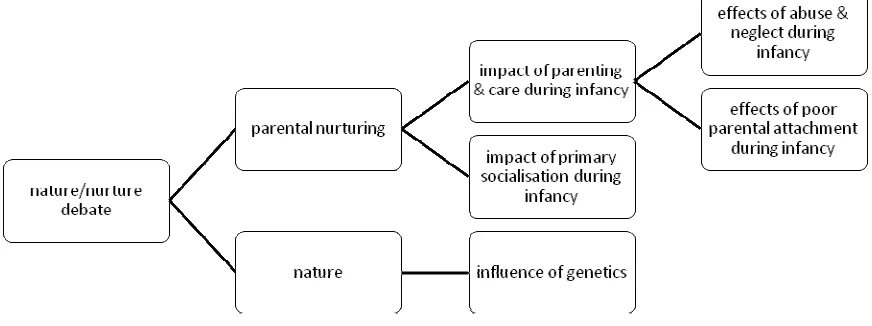
Analysis of the data identified two main themes and three sub-themes, one of which split into
a further two sub-themes, these were mapped using a network analysis method (Thomas,
30 | P a g e
Fig 1: Network analysis of identified themes
5.2 Analysis and Discussion of Key Findings
The critical analysis and discussion of the findings is continually referred back to the
evidence presented in the literature review, an important aspect of strengthening the,
‘theoretical scope and validity’ (Eisenhardt, 1989, p.545) because the findings are dependent on a limited number of cases and respondents.
First names have been used to relate respondents’ comments; as previously mentioned in
Chapter 4, four participants agreed that their responses could be accredited, thus the names
of Blake, Helen, Jim and Laurence relate to Blake Morrison (author and journalist; has written prolifically about Thompson/Venables and the ‘Edlington’ brothers), Helen Masson
(Professor of Social Work), Jim Reid (senior University lecturer with social work
background) and Laurence Guinness (from Kids Company, London); the two other names are pseudonyms, Nathan and Neil).
[image:32.595.71.507.104.267.2]31 | P a g e
5.2.1 Impact of Parenting and Care during Infancy
i. Effects of Abuse and Neglect during Infancy
‘Abuse and neglect are forms of maltreatment of a child’ (DCSF, 2010, p.37). ‘Neglect is generally the highest form of child maltreatment listed on the child protection register’
according to Jim in his Interview. This clearly has implications for both children and the wider society, as another of the respondents, Laurence, argued:
There is substantial evidence that maltreated children are more likely to engage in delinquency and juvenile offending than children for whom there is no evidence of maltreatment. This relationship is evident regardless of the methods used to measure maltreatment and delinquency (Respondent LG: Questionnaire).
There is general consensus amongst the respondents that children who have experienced
neglect, abuse or violence may be adversely affected. Nathan agrees that without love and affection, ‘children are likely to behave outside of accepted norms’ (Respondent NF:
Questionnaire). Betty Bell appeared to lack love for Mary from the first moment, when she
simply told the nurses to, ‘take the thing away from me’ (Sereny, 1999, p.330); over the following four years she tried, on various occasions to either give Mary away or end her life
(Sereny, 1995). There is also much existing research to support Nathan’s view (eg. Boswell, 1996b; Perry & Szalavitz, 2006); furthermore, it is not unique to the UK. Even in British
Columbia, where youth crime rates are notoriously low, it is accepted wisdom that ‘being abused or neglected … nearly doubles a child’s chance of having a youth justice record’
(OPHO, 2009, p.4). According to Laurence, the figures for this country are significantly higher, with statistics showing that:
32 | P a g e
Certainly the cases which have been considered here would appear to strongly support this
evidence; all of the subjects experienced extreme violence, abuse and neglect (as detailed
in Chapter 2).
However, despite the general consensus of opinion amongst the questionnaire respondents,
the extent to which adversity influences possible criminality did seem to result in some
uncertainty:
All the evidence would suggest [that children who experience neglect, abuse or violence may show a greater propensity towards criminal activity], though how much is not so clear (Respondent NP: Questionnaire).
And:
Some [children who experience neglect, abuse or violence] may [show a greater propensity towards criminal activity] however it is an over-simplified analysis of causality since many children who experience neglect, abuse or violence do not engage in criminality or anti-social behaviour (Respondent JR: Questionnaire).
Such responses clearly require that consideration is given to resilience, a protective factor
supported in various literature sources eg. Doyle (2006), Iwaniec (2006) and Becroft (2009).
Interestingly, Laurence mentioned during his Interview, research into the area of resilience which suggests that there may be a protective factor within our genes. Caspi et al (2002) could be an example of such research; they propose that their initial findings suggest that,
‘MAOA genotype can moderate the influence of childhood maltreatment on neural systems implicated in antisocial behavior (sic)’ (p.852).
Resilience also links to the issue of ‘false negatives and false positives’ which Nathan
argued need to be considered because, ‘any prediction will miss some offenders and will predict some cases as offenders who turn out not to be’ (Respondent NF: Questionnaire). This is patently a valid consideration; for example, Robert Thompson was one of seven
brothers and grew up in circumstances that would have perhaps predicted all brothers as
33 | P a g e
on to murder a young child. Moreover, oft repeated mantras such as, ‘many British children grow up in such homes, without emerging homicidal’ (Hinsliff, 2010) seem to be too
frequently heard, with the implication that children who become violent must have been born
that way. Perhaps such adversity can be endured if a child has resilient resources, as
suggested by Jim in his Interview.
As discussed in the earlier review of literature, experiences of abuse and neglect can cause
a child to suffer extreme levels of stress (Horwath, 2007). Laurence agrees with this: ‘it has been evidenced that the impact of chronic stress on the developing brain plays a part in the development of psychopathology’ (Respondent LG: Questionnaire). The findings of Lewis et al (1988) would also seem to support this; it is worth remembering that, ‘the kind of brain that each baby develops is the brain that comes out of his or her particular experiences with people’ (Gerhardt, 2004, p.38). Laurence clearly supports this view, he comments that ‘child maltreatment and psychosocial deprivation’ during periods of critical brain development can significantly alter the brain’s structure, which can subsequently impact on the ability to
empathise (Respondent LG: Questionnaire).
Another supporter would appear to be Blake. He responded that it should seem obvious that if one ‘grow[s] up in a situation of neglect and abuse (which in itself implies a lack of
empathy on the part of one’s carers) … the chances are that you will be less able to
empathise’ (Respondent BM: Questionnaire). Jim makes a similar point, though he is initially more cautious, only going as far as to say that effects on brain development may impede an individual’s ability to empathise ‘for some but not for all’ (Respondent JR: Questionnaire). He does, however, go on to explore further:
This … leads to suggestions that young people who lack empathy can go on to undertake heinous crimes against others and there is some validity in this premise. Certainly anyone who experiences consistent abuse including psychological
34 | P a g e
have the faculties to understand the impact of their behaviour upon others. Their mental health can be impaired (Respondent JR: Questionnaire).
Another respondent, Helen, concurs with this,hypothesising that if children grow up in severely neglectful or abusive situations, ‘their normal development will be affected in all kinds of ways, including, potentially, their ability to form successful relationships, to
empathise with others and to behave in pro-social ways’ (Respondent HM: Questionnaire).
Laurence stated that, in his experience, adolescents who have trouble with behaviour are often characterised as having a lack of empathy, and being indifferent to the thoughts and
feelings of others (Respondent LG: Interview). This is reflected by Perry & Szalavitz (2006)
who argue that lack of empathy may be perceived as being cold, unfeeling and/or more
violent. A lack of empathy could also be linked to poor cerebral integration
(Becker-Weidman, n.d). Laurence supports these findings. He believes that, ‘child neglect, physical, sexual, or psychological abuse, can cause significant reductions in specific areas of the corpus callosum [which] connects the left and right hemispheres of the cortex’ (Respondent LG: Questionnaire). This can also impact on the conscience and the ability to link cause and
effect (Becker-Weidman, n.d). Further studies such as Brotherson (2005) and Becroft (2009)
also provide support for the argument that abuse and neglect affect the structure of a
developing brain.
To illustrate the relevance and further support the theory, it is worth mentioning that Mary
Bell, Robert Thompson and the ‘Edlington’ brothers were all described as seeming to lack
emotion, empathy or remorse (Thomas, 1993; Morrison, 1994; Children of Crime, 1998b;
Walker, 2010). Interestingly, Laurence mentioned during his Interview that there is now new research into children of primary school age regarding their behaviour and subsequent
remorse: it is not always that they are unfeeling, but that they are unable to associate
35 | P a g e
have had on others. It is only when they are replayed video footage of their behaviour that,
through a reward rather than punitive system can they come to understand it.
Mary Bell could be argued to fit into this category; she often had difficulty with memories
around traumatic events when talking to Sereny (1999). On a similar note, Perry & Szalavitz
(2006) illustrated that children who had experienced extreme trauma or abuse can
sometimes go into a dissociative state in an attempt to protect themselves.
Laurence argued that in his experience, and based on his understanding, reduced empathic abilities are not the only result of exposure to situations which induce chronic stress in a
developing infant:
The result of early and repeated traumatisation of a child’s brain produces changes in the neurochemical systems of the brain that lead to poor attention and concentration, disturbed sleep and poor impulse control and fine motor control. This chronic
activation of the brain can lead to a reduction in size of the hippocampus, which is involved in cognition and memory (Respondent LG: Questionnaire).
Laurence also comments that:
Brain imaging research has exposed critical structural and functional differences in the brains of violent adolescents, notably in the orbital cortex, the area of the brain that is imprinted with ethical and moral thought, and thereby controls violent and aggressive impulses (Respondent LG: Questionnaire).
It is notable that, as mentioned in Chapter 2, Jon Venables often had difficulty sleeping, and
was beaten for it by his mother (Davis, 2004), arguably this would have created a vicious
stress-inducing circle for Jon. Furthermore, Rothbart et al (2000) indicate that it is the quiet, happy babies, as Susan described Jon to be (Sereny, 1995), who are the most likely to
demonstrate later aggression if subjected to poor parenting. An alternative view of Jon’s
happy infant temperament could be that it had been caused by neglect. Gerhardt (2004)
explains that children who are neglected learn not to cry once they learn that crying does not
36 | P a g e
It would be reasonable to assume that children who have been neglected, or abused, and
thus let down by those who are meant to care for them may, as Nathan stated, ‘grow up to be anti-authority and lacking in trust with adults and authority figures’ (Respondent NF: Questionnaire). Thus, perhaps Blake makes a valid point when he postulates that, ‘the abused often become abusers themselves’ and:
It’s almost as if they are trying to recreate the circumstances in which they were brought up - perhaps to make them feel safer (in a familiar place, if not a comfort zone) or perhaps to re-experience the trauma in order to expurgate or heal it (Respondent BM: Questionnaire).
He says that research conclusively supports this; one such supporter appears to be
Gerhardt (2004).
ii. Attachment
Though poor attachment is frequently linked to neglect, it has been addressed separately
because it was considered that it can exist independently of physical abuse.
The development of oneself is attenuated and mediated by caregiving according to
Laurence (Interview). A supportive and loving relationship can develop a strong, ‘early attachment [which] is a significant indicator for good outcomes across a number of indicators in later life’ (Respondent JR: Questionnaire). Conversely poor parenting, and consequent poor attachments, can be a predictor of high cortisol levels, in a similar way to neglect and
abuse (Gerhardt, 2004). Laurence, in his Interview, said that, ‘the earlier poor attachment happens, the longer the duration and the more chronic it is, the more damaging it will ultimately be’. Bowlby (1979) believed that this was a causal factor of juvenile delinquency.
37 | P a g e
probably the most far-reaching effect of a failure of attachment in infancy following repeated traumatisation’ (Respondent LG: Questionnaire). This would appear to be supported by other studies (Frick et al, 1992; McAuley & Davis, 2009) and further reinforced by the noted
strange behaviour of Jon Venables, which could arguably be said to be something he felt
unable to regulate. Though it is impossible here to categorically comment on the state of his
attachment status it would be reasonable to assume, considering his chaotic home life, that
he was unlikely to have developed a secure attachment.
Helen, however, criticises Bowlby’s (1979) over-simplistic approach and counters that:
The most damaging negative experiences are those that are chronic and last for many years. A bad start in life … which is not replicated over many subsequent years won’t necessarily have lasting impacts (Respondent HM: questionnaire).
In his questionnaire responses, Jim also reflects this and further qualifies the argument: it is, he suggests, ‘unchecked, poor attachment [which] may lead to a disorganised lifestyle including anti-social or criminal behaviour’ (Respondent JR: Questionnaire). Nevertheless, it could be posited that the situation would not need to remain unchecked for very many years
for it to be damaging. Laurence mentions that research has shown that even, ‘toddlers in insecure attachment relationships exhibit significant cortisol elevations to events that
produce fearful behaviour’ (Respondent LG: Questionnaire). Such elevations are particularly important during this time because it is a significant period for brain development: fifty-five
per cent occurs before the age of three (Allen, 2011) and high cortisol levels can be
damaging to both the function and development of the brain (Gerhardt, 2004; Carpenter et al, 2011). Laurence would appear to support these findings. As he understands it, it is when levels of cortisol remain high for extended periods that brain functioning can be adversely
38 | P a g e
Questionnaire). Laurence’s comments are also supported by the findings of Chugani et al
(2001), Perry & Szalavitz (2006) and Carpenter et al, (2011). However, Gerhardt (2004) also posits that, ‘attachment trauma can also arise from periodic episodes of neglect or abusive treatment’ (p.147).
In the cases of Mary Bell, Jon Venables, Robert Thompson and the ‘Edlington’ brothers,
their home lives were chaotic and their mothers severely over-stretched (Morrison, 1997;
Sereny, 1999; Vallely, 2010); insecure attachments can be caused by parenting which is
inconsistent or erratic towards the needs of the child (Moeller, 2001). It would not be
surprising, therefore, if their infant-mother attachments were poor in all cases. Their fathers
were also seemingly inadequate carers: either violent, drunk, weak or absent (Sereny, 1995;
Children of Crime, 1998b; DSCB, 2010). Gerhardt (2004) provides some support for the
argument that disorganised attachments can result from a lack of ability to provide ‘the most
basic parental functions’ (p.27); it seems likely that this was the reality for these children.
Moreover, though services were involved with all of the families in one way or another there
was no effective intervention (Thomas, 1993; Sereny, 1999; DSCB, 2010), which would
perhaps have been a crucial mitigating factor, because as Jim cautions, in his experience, ‘it is poor attachment PLUS lack of appropriate intervention that leads to such outcomes’ (Respondent JR: Questionnaire).
iii. Primary Socialisation
Primary socialisation takes place during early childhood and, therefore, it seems reasonable
to assume that the family will be the most influential factor (Giddens, 2006). The tangible
results of socialisation can now be seen through:
39 | P a g e
twin research, that experience does play a role in the development of synapses’ (Respondent JR: Questionnaire).
Jim goes on to say that he believes it is, ‘a range of life experiences [which places] children at greater risk of criminality’ (Questionnaire). Laurence points out that children from violent families will have a more active locus coeruleus (Respondent LG: Questionnaire), the part of
the brain responsible for the hair-trigger alert, which could, therefore, result in violent
over-reactions (Raine, 2011). This effect is perhaps illustrated by the cases detailed in this paper;
all case subjects were both victims and witnesses to violence within their homes (Morrison,
1997; Sereny, 1999; DSCB, 2010).
Neil (Respondent NP: Questionnaire) states that it is now ‘almost received wisdom’ that experiences in early infancy affect brain development, further illustrated by Allen’s (2011)
report for the Government on the necessity for ‘Early Intervention’. According to Laurence, adverse primary socialisation can take many guises: ‘poverty, substance abuse by the mother … maternal depression [and] parental conflict [or] broken families’ have been linked to criminality and increased susceptibility to psychopathology’ (Respondent LG:
Questionnaire).
All respondents agree that the ‘chaotic’ home lives of Mary Bell, Robert Thompson, Jon
Venables and the ‘Edlington’ brothers was a causal factor in their violent behaviour, at least
in part; Blake feels, in fact, ‘it was crucial’ (Respondent BM: Questionnaire). It could be argued that Murray (2009) and Sereny (1995) also support this view. Particularly pertinent
illustrations of it could be argued to be Mary’s experiences of losing consciousness as she
was held by the throat (Sereny, 1999); Robert’s older brother being investigated for child
molestation (Morrison, 1997) (it is not inconceivable that Robert was either victim or witness
to this at one time or another); and the father of the ‘Edlington’ brothers forcing the boys to