"11 Steps" Process as A Research Method
Dr. Selami Sönmez
Department of Educational Sciences, Faculty of Education, Atatürk University, Turkey
Copyright©2018 by authors, all rights reserved. Authors agree that this article remains permanently open access under the terms of the Creative Commons Attribution License 4.0 International License
Abstract
Descartes expresses his opinion on themethod very clear with the quote: "The whole secret of the method; starting from the circle and gradually going up the steps to the most complicated ". When it is thought that the knowledge of the absolute and unchanging truth in the positive sciences has not yet been reached, it should not be forgotten that people are still working on the knowledge that is closer to what the majority agree with and on the knowledge that should be known. So, the most striking variables that can prove that the scientific information produced is the closest value to the truth are research methods and techniques. Mankind has not shown the success in producing the knowledge in didactics and research methodology. The purpose of this study is; is to add a new scientific research method called "11 Steps"."11 Steps" basically consists of 11 stages that complement each other as a method of discussion. This phased classification is as follows: Manifestation, Description, Prediction, Investigation, Determination, Diagnosis, Verification, Treatment, Reinforcement, Progress, and Tracking. 11 Steps Scientific Research Method does not ends with the “Tracking”, the 11th stage; however, it takes a process in
which the researcher periodically turns back to the first stage for the control of the possibility that the problem can repeat. The new research method that was developed has not been used in this evaluation format before and no research has been done. This model reflects the understanding of “from the tradition to the future” which will add depth to the scientific studies. This research is a descriptive study and the scan is structured in the model. This study, which is in the historical research design, will gain a new methodology, "11 Steps" method, which is based on the deficiencies determined from existing and obtained information and documents. In the first part of the research, information was given to the extent to which the operational concept related to the purpose, methodology, method and technique of the research was included, and the importance of the research was emphasized. In this regard, expert opinions are also mentioned and methods and methodologies to be followed in scientific research are emphasized. In the second part, a candidate for becoming a scientific research technique, the "11 Steps" research process was introduced, analyzed and evaluated. This model, in the form of gradual classification of this structure,
which is a schematized and meaningful model, by going out of the archaic values and becoming a precondition with a taxonomic approach, will be very meaningful for the science community
Keywords
"11 Steps" Model, Scientific Research Method, Methodology in Scientific Research, Scientific Research Approaches1. Introduction
There are examples of change and transformation in the world, which is a very small part of the universe. As a result of these changes and transformations that are taking place, entities of the living being of the living creatures that fill the universe should be provided at the moment. 700 million-year-old fossil witnesses to this claim. Works continue on fossils that are at least 150,000 years old, which are from prehistoric times. The time from the beginning of the first civilizations to the day is about 8,000 years. Changing the lives of nations; steam, electricity, etc., are fairly new, starting just before a period of 150 years. In the light of this data, it can be said that the developments in the past periods are slower and towards the recent periods, this development and transformation is very fast. [1]
This dizzying change and transformation, which can be observed in almost all areas of activity today, has been involved in sectors operating in the science and technology fields. The increase in new information technologies over the last half century has been more than the transformation and transformation processes that human history has shown since its creation. In short, scientific and technological developments over the last 5,000 years are much more than those obtained in the previous 30,000 years. Because the main reason for today's attempt to acquire information has changed from acquiring acquired knowledge to new and more accurate information with the use of acquired knowledge, rather than as a reason to use it later when necessary [15]. This is essentially learning.
had moved away from the philosophy of tolerance for the creation of creation and did not tolerate the existence of others who were essentially equal in their own self, at the level of observing the human nature of the intellectual and intellectual designs that set the grounds for attitudes towards the other. Scientific knowledge systematic structure and order obtained by using healthy and consistent scientific methodology [16] [21], method and technique disciplines the cognitive and mental building that gathers the knowledge to reach consciousness as a good person before god [17]. In short, the idea that the perfect principles in the depths of the objects and the essence of the existence of laws are places to look for, and that these perfect principles and laws will build the system of values of man represent the thoughts of realist philosophers [18]. Humanity has not reached the richness and broad horizons of the answer that can be given in the question of "what to teach" with the answer that can be given in the question of "how to teach". Thus; today, medieval calligraphy, question-answer, discussion of the 19th century, work and laboratory teaching methods are still widely used [19] [20].
It cannot be said that the situation is different in scientific research methods. In other words, despite the technological advances in research methodology, the point reached is not satisfactory.
2. Materials and Methods
2.1. Situation AnalysisIn fact, there is a corresponding set of quests, such as what the stages of a scientific research are, or in what order and what kind of scale is followed. Humanity tried to answer the question how to do a scientific research in 384-422 with Oragon's work Instrument. Francis Bacon (1361-1626)'s "Nowum Oragon" (New Instrument) [25] [26] [27] is directed at the same point. J. Amos Komensky [28] (1592-l670) claims that a study takes place under 3-steps:
a). Analysis [24] b). Synthesis c). Comparison [2]
Johann F. Herbart (1776-1841), the German thinker and scientist, gave the first typical example of linking education to a mechanical system that parents can perform at every level of culture and education. Handling child education in three stages, Herbart claimed that every child could be trained through these stages. He described these stages as:
1). Teaching 2). Method 1 3). Disciplining [3]
Then, he added 2 more stages which are called: 4). System
5). Method 2 [4]
However, William Clark Trow describes scientific research stages as:
1). Hypothesis 2). Theory 3). Law [5]
In another source the scientific research stages are written as:
1). Introduction 2). Discussion 3). Conclusion 4). Publishing [6]
Some publications have been made in Turkey on how a scientific problem should be investigated by a systematic methodology; even they are repeating each other. Examples from publications can be ordered are as follows:
Niyazi Karasar makes this order as: 1). Problem
2). Method
3). Population and sample 4). Collecting data 5). Processing data
6). Findings and interpretation 7). Conclusion and evaluation [7]
Another scholar takes the problem as the “truth” and creates an order for the scientific research methods as follows:
1). Description of the truth 2). Explanation of the truth 3). Prediction of the truth
4). Taking the truth under control as much as possible [8]
Amiran Kurtkan Bilgiseven claims that a scientific research should be done by the stages as follows:
1). Collecting data 2). Assessing data 3). Interpreting data
4). Writing the conclusion [9]
Based on the general literature knowledge, descriptions can be found such as:
1). Definition of the problem 2). Setting up the theory
3). Specification of the hypothesis 4). Collection of the data
5). Testing the hypothesis
6). Proof or rejection of the theory [10]
When any problem is encountered, it can be witnessed that the ways and methods that will lead to individual solution are applied. One of the applications that could be an example in this situation is; known as the WTCCAO (GESTAY in Turkish), which is defined as a military vehicle maintenance formula.
Touch Compress Clean Adjust Oil [11]
Examples of common identification made from the sequence and definitions revealed as scientific research methodology can be mentioned. Ahmet Hamdi İslamoğlu stated the order while making a definition in this style as follows:
1). Description of the research problem 2). Literature review
3). Research model
4). Assumptions of the research 5). Hypothesis of the research 6). Testing the hypothesis [12]
Orhan Türkdoğan stated research methods in Social sciences in his book Scientific Research Methodology as: 1). Decide on the topic
2). Choosing the hypothesis
3). Application of the methods and techniques 4). Creation of the database and questioning 5). Conclusion and forming of the theory [13]
2.2. Method and Research Process
In this study, it has been attempted to provide a method that can be suitable for solving a problem that have been thought out by means of the methods outlined in the literature and not only the steps but also the institutionalized and easily remembered processes. A strategy has been established for the "11 Steps" method which is a new methodology example to be put forward, to be more permanent and traceable, and each stage is given a name beginning with "T". By increasing the number of stages to 11, the structure became more systematic. The new methodological approach is thought to be more meaningful and understandable than the others.
2.3. Aim
The aim of this study, as Dr. Feldenkrais said; "Our purpose is to find ways to make impossible as possible and easy as elegant and colorful." Today, information is produced very fast, but the information and technology production methods and techniques used are not developed at that level. It is observed that the publications related to the research methods are also very limited. The aim to be emphasized in this study is to develop a new point of view by introducing the "11 Steps" method we have developed as a research methodology which is developing very slowly.
On the other hand, one of the goals is to present a methodological roadmap for the new researchers who are at the beginning of research process and do not have
sufficient level of methodological experience.
2.4. Significance of the Research
With this study, it can be said that it is important when considering the possibility of problems in the scientific studies carried out by using the methodological approach, methods and techniques revealed as a result of the literature search, and to propose a new process / technique / method. It can be thought that the presented new approach will contribute to the "nationalization of science" approach with the process put forward by this study with the realization that the scientific processes will gain a different dimension due to the use of more values and norms and the mechanisms of producing the artifacts and the natural influences of the sources.
2.5. Assumptions and Limitations
It is assumed that the new technique proposed in this study can achieve more successful and effective results by taking the assumption that the scientific research methods, techniques and processes known to be used in the context of the information and documents revealed by the literature search may be insufficient in different perspectives. The study is limited to the evaluations of the working group on the deficiencies discovered by the written and scanned sources, the work done and the literature, and the information obtained from this information.
2.6. Population and Sample
The population of work is all the resources and information technologies that are present in this field. The sample group is the resource, document and information technology that can be reached.
2.7. Method
This study is a descriptive study and structured in survey model [22] [23]. As a result of the evaluation of the researches and studies which have been presented in the literature up to now and in terms of the process and the result, it is presented with the introduction and gradual classification of "11 Steps" which is the new approach created from the existing situation. In short, a historical research method can be mentioned.
2.8. Data Collection
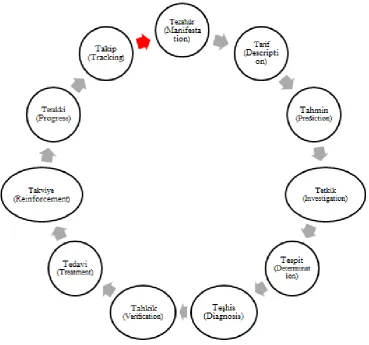
Figure 1. “11 Steps” Process as a Scientific Research Method
This technique consists of 11 stages and the process is simply symbolized and schematized below.
1. Manifestation
This forms the first step of the "11 Steps" formula. Among the stages of the research, the first and the only stage that takes place independent from the researcher is "Manifestation". In a sentence, a problem situation of any field or sector arises in the context of its own field conditions. This manifestation is the starting point of the study. The condition for having a problem for a research to be done is called "manifestation". The research begins after "manifestation". Because, there can be no research on the problems that are imaginary and have not the necessity. Thus, they are not counted as problems.
2. Description
The second stage of our research scale is the "description." This stage includes the description of the problem that has emerged independently of the researcher in terms of the location, environment, cause and function, and even features of the problem, with a language that
everyone can understand. This definition guides the researcher to the "diagnosis". The recipe is considered to be satisfactory and successful in terms of how much it takes the characteristics of the problem into consideration and how much it can exclude those that do not belong to it. A successful researcher is expected to demonstrate his first professional behavior at this stage, that is, in the “description” of the problem. This is expressed by Einstein as saying, "Formulating a problem is often more important than solving it.” [14]
3. Prediction
4. Investigation
Inspection is the stage which is the most important, which takes the longest time and also requires the most effort in our research model. In basic research, this is the backbone of the research. "Investigation" is the heart of the research.
Here, the field can be illuminated, or materials can be found for hundreds or even thousands of pages and takes months or even years, to reveal the estimated causes of the problem. These materials are:
1). Observation 2). Survey 3). Experiment 4). Interview 5). Archive scanning 6). Statistics
7). Case study etc.
This can be done using one or a few of the above techniques of gathering information. The examination of the subject will take us to the next stage, "Determination." The success of the research depends, of course, on success at all stages, but the deficiency in the "investigation" stage cannot be compensated by any other means.
5. Determination
In this stage, which means to identify, to fix, to make it harder to move, the results of the abundant examinations are converted into fewer provisions. These provisions may be a few, or dozens. "Determination" is actually a summary of the "investigations" that are the results of a multidisciplinary examinations in the "investigation" stage, as well as statistical results of various alternatives, as well as summaries of the articles listed.
6. Diagnosis
This concept means naming, personalization, object and duplication, selection, separation, determining the name of the disease. "Diagnosis" is the manifestation of "Determination", which can be referred to as a summary in the form of an act of "examination" which is the accumulation of information obtained by various information gathering techniques in relation to the problem or subject being described. In fact, "Diagnosis" is a summary of the summary. It may consist of one or more words belonging to the native language or scientific literature.
One of the most crucial steps in the research process we think is "Diagnosis". If the problem arises as a spontaneous (Manifestation) stage is left aside, all of the steps 2,3,4,5 are research stations that can be used to make a correct "Diagnosis". The "Diagnosis", which is the target of the preceding stages, is itself the cornerstone and movement point of the subsequent stages. Therefore, a scientific
research that is misdiagnosed as "Diagnosis" is a candidate for a futile investment.
7. Verification
This concept means to research whether something is real or not, to prove the truth, to reach reality by inquiring. In the previous stage of the research process, the problem may have been "diagnosed" after the "Description", "Prediction", "Investigation", "Determination". But it is doubtful that this diagnosis will be true anyway. However, it is very important that it is true. Because the research process will proceed in parallel with the "Diagnosis" which is believed to be correct in the next step or which is considered to be correct. In that respect, the "Diagnosis" requires the "verification" of the correctness. This can be done by returning to the earlier stages of the research process, or even by conducting a multi-faceted
a. Analyzes b. Synthesis
c. Syncresidents (comparison) between the data of other independent sources and the "diagnosis".
8. Treatment
This stage of the research is the "therapy" phase. Unfortunately, some researchers done "Diagnosis" and finish the research. However, the side of the "11 Steps" research process that transcends the similarities is the later stages of "diagnosis".
The research takes place by proposing a series of applications, or by carrying out the application process itself, in order to remove the composition from the situation and return the situation to normal or pre-problem, as determined by "Diagnosis". It is necessary to approach the concept of "treatment" from a broad perspective. It may be the treatment of some parts of an institution or of some organs of the body as well as the drying out of a bog that is a source of ecological problems. The point common to all is that there are a series of planned and programmed improvements aimed at annihilate the source of the problem, or to have endeavors in these. "Treatment" is a process that requires time, labor, knowledge, equipment and sufficient staff and has a serious economic dimension.
9. Reinforcement
negative factors to accelerate the development of a burning green area can be given as an example of the behavior of this stratum.
10. Progress
"Treatment" can be done for a problem source. Even "Reinforcement", in other words rehabilitation, can be maintained or done. But there is still the risk that the problem will recur. The way to remove this risk altogether is "Progress". If you want an organ not to get sick again, you must put its resistance on the strengths of other organs. If the point that you arrive is "Amazon forests are inadequate", it may not be enough to revive the drying vegetation (treatment), maintenance and sorting (fertilization) such as irrigation and fertilization. Beyond these, "Amazon Forests" must be "Progressed”. This includes more trees, better quality forests, larger land and continental measures against forest pests, as well as micro and macro scale improvements and developments.
If "Progress" does not occur, it means the sick organism has been left alone with the sickness factor as in the first day.
11. Tracking
In our "11 Steps" research technique, no research is done and shelved. Because in the last stage of "Tracking", the elements that have been "Progressed" in the previous stage, are controlled periodically and are recorded in a development tracking form, because there is a very small possibility, that it can lead to new problems, complications, and unexpected surprises. One of the original features of the "11 Steps" technique is this stage. This stage aims to provide the longest and most basic solution to the problem of a scientific research carried out with great effort and money. Of course, "treatment", "reinforcement" and "progress" of the ecological, medical, organic problem does not require to give up. It is necessary to follow the process of conceiving whether the problem develops towards the good or negative by controlling at certain intervals.
3. Conclusions
Today's methodology is a developmental course that goes from the research techniques and processes that remind us of the standard and template prescriptions that can be used literally in all scientific researches, to the nature of the research, to the point of designing a research format that is compatible with the typology of the problem. So, now the matter and the nature of the problem determine the method of research. In spite of this fact, we have expressed our reason why we propose a scale of research progress.
The "11 Steps" scientific research technique or process
that is named as "11 Steps" consists of 11 stages, all of which begin with "T" in Turkish. The first impression can be given as if the 11 stages were a little too much. But the "11 Steps" technique differs from its counterparts in stages 1, 9, 10, and 11. This difference is that the problem has been "tracked" periodically as the problem has not been researched in terms of "Description," "Prediction", "Inspection", "Diagnosis", "Investigation", "Treatment", "Reinforcement" .
Another aspect is the flexibility of the application area of the "11 Steps" research technique. This technique can be used in researches related to institutions and organizations that have more biological (medical, botanical) ecology and a systematic link between parts. Moreover, in all studies, all stages of the "11 Steps" research technique need not be used with an unobtrusive loyalty. The stages can be used if they are working and helping to achieve a more satisfactory outcome. The stages should be used according to what the nature of the problem requires.
In addition, in the tracking stage, the researcher should have an eye on the first stage which is “manifestation.” With the emergence of a new problem situation, it is possible to start the "11 Steps" from the beginning and follow the same path to finish the cycle, but as you will notice, the cycle does not stop at all as long as there is a problem. The article includes an exemplar by which to elucidate the method—a grounded theory study. Increased understanding of the model is vital if this research method is to be used effectively [24].
REFERENCES
[1] le Bon Gustave, Tarih Felsefesi, Transl.: H. Akdeniz, Murat Temelli, Ataç Publications, Ist., 2004.
[2] Comenius, Jan Amos. Büyük Didaktika, Transl. H. Aytuna, MEB. Publications, Ank. 1964.
[3] Aytaç, Kemal. Avrupa Eğitim Tarihi, M.Ü. İlahiyat Fakültesi Vakfı Publications, Ist. 1992.
[4] Kanad, Halil Fikret. Pedogoji Tarihi, M.E.B. Publications, Ist. 1963.
[5] Trow, William Clark. Scientifıc Method in Education, Hughton Mifflin Company, New York-1925.
[6] Day, Robert A. Bilimsel bir Makale Nasıl Yapılır ve Yayımlanır? Transl. A. Aşkar Altay, TÜBİTAK, Ist. 2000. [7] Karasar, Niyazi, Bilimsel Araştırma Yöntemi, Nobel
Publications, Ank. 2005.
[8] Özçelik, Durmuş Ali, Araştırma Teknikleri, ÜSYM - Eğitim Publications, Ank. 1981.
[9] Bilgiseven Amiran Kurktan, Sosyal İlimler Metodolojisi, Filiz Publications, Ist. 1982.
dept. Published course notes, Erzurum – 1979
[11] Sekman, Mümin. Kesintisiz Öğrenme, Alfa Publications, Ist. 2001.
[12] İslamoğlu, Ahmet Hamdi, Bilimsel Araştırma Yöntemleri, Beta Publications, Ist. 2003.
[13] Türkdoğan, Orhan, Bilimsel Araştırma Metodolojisi, Timaş Publications Ist. 2000.
[14] Kerlinger, Fred N. Foundations of Behavioral Research, pp. 13, İçinde; Koptan Saim. Bilimsel Araştırma Teknikleri ve İstatistik Yöntemleri, Tek Işık Publications, Ank. 1998, pp. 98.
[15] Goldin, C., & Katz, L. F. (2018). The race between education and technology. In Inequality in the 21st Century (pp. 49-54). Routledge.
[16] Cornell, D. (2016). The philosophy of the limit. Routledge. [17] Bowling, A. (2014). Research methods in health: investigating health and health services. McGraw-Hill Education (UK).
[18] Johnson, R. B., & Onwuegbuzie, A. J. (2004). Mixed methods research: A research paradigm whose time has come. Educational researcher, 33(7), 14-26.
[19] Britzman, D. P. (2012). Practice makes practice: A critical study of learning to teach. Suny Press.
[20] Dewey, J. (2013). The school, society, the child, and the curriculum. University of Chicago Press.
[21] Robinson, K. (2011). Out of our minds: Learning to be creative. John Wiley & Sons.
[22] Karasar, N. (2014). Bilimsel Araştırma Yöntemi (27 b.). Ankara: Nobel Yayıncılık.
[23] Şimşek, H., & Yıldırım, A. (2011). Sosyal bilimlerde nitel araştırma yöntemleri. Ankara: Seçkin Yayıncılık.
[24] Bowen, G. A. (2009). Document analysis as a qualitative research method. Qualitative research journal, 9(2), 27-40. [25] Francis Bacon, V. I. S., & Bacon, F. (2000). Francis Bacon:
the new orgaon. Cambridge University Press. [26] Bacon, F. (1878). Novum organum. Clarendon press. [27] Bacon, F. (2000). Three steps toward a theory of motivated
political reasoning. Elements of reason: Cognition, choice, and the bounds of rationality, 183.