GENERATING VALUE AT
PRECONSTRUCTION: MINDING THE GAP
IN LEAN ARCHITECTURAL PRACTICE
Christy P. Gomez1, Ashwin Raut2 and Abdulazeez U. Raji3
ABSTRACT
Thermal comfort is one of the aspects of building performance which is primarily influenced by the building envelope, a primary concern in passive design strategies for buildings. A pilot study towards green value generation is being undertaken as a form of lean architectural practice using a design science approach along with the traditional production science mode. The role of the architectural technologist currently is not conceived within the value chain of the architectural practice in Malaysia. This paper focuses on the aspect of developing a sustainable hybrid wall material aimed at increasing the indoor air comfort levels in low-cost terrace housing (LCTH) in Malaysia, particularly in terms of thermal comfort. The concept of green is conceived within the enviropreneurial value chain leading to a reduction of cost - a primary concern of LCTH. The analytical device of “competency” is used to realize enhanced value generation for sustainability attainment, viewed as an expanded notion of production within building design. This situated practice of the researcher in the role of a Lean Architectural Technologist in the pilot study is conceived as being able to address the missing gap within Lean Sustainability Attainment initiatives.
KEYWORDS
Thermal comfort, learn architectural practice, building envelope, value generation.
INTRODUCTION
In recent years, scientists and the public have shown greater concern regarding indoor air quality of buildings, since most people spend more than 70-90% of their time indoors (Sharpe, 2004; Triantafyllou, et al., 2007). Buildings are less able to maintain the indoor environment comfort levels without mechanical air conditioning. It is clear that one of the major current approaches for reducing the scale of air conditioning is the application of thermal insulation in walls and roofs. Building occupants increasingly tend to use air conditioners to achieve comfortable indoor environment
1 Assoc. Professor, Department of Construction Management, Universiti Tun Hussein Onn,
Malaysia. 86400, Batu Pahat, Johor, Malaysia, Phone +60125377247, [email protected] 2,3 PhD Student, Department of Technology Management, Universiti Tun Hussein Onn Malaysia,
in tropical climates. The overreliance on mechanical systems for health and comfort level contributes to increasing the energy consumption in residential buildings (Uno, et al., 2012).
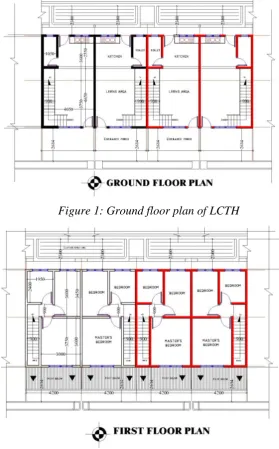
[image:2.595.160.435.226.426.2]The design of affordable houses in Malaysia take many factors into account, however the design often fails to satisfy basic levels of spatial needs and thermal comfort (see Figure 1 and Figure 2). Due to their poor thermal design, they often overheat during the day and can be too cool during the night (Tinker, et al., 2004). Previous studies (Hanifi, 1991; Madros, 1998; Ibrahim, 2004) have also indicated that the thermal design of low-income affordable housing could be ineffective.
Figure 1: Ground floor plan of LCTH
[image:2.595.157.437.233.683.2]COMMON BUILDING PERFORMANCE STRATEGIES
In reviewing extensive literature, it is evident that generally designers who try to develop and implement new materials for building performance tend to focus on resolving single objective solutions, hence creating a lacuna for addressing practical solutions that need a multi-objective approach. A major contention of this paper is that the non-existence (the gap that needs to be addressed) of professionals such as the Architectural Technologist (AT) has contributed to a lack of implementation of solutions based on multi-objective decision making in generating green value in Malaysian LCTH. This paper is part of a pilot project whereby the researchers take on the role of an AT, more so oriented towards that of a Lean AT. The primary concern here is to address the much neglected sustainability characteristics, primarily that of environmental and economic sustainability, rather than solely focus on the physico-mechanical characteristics in the development and selection of wall materials.
[image:3.595.98.519.437.520.2]Several researchers have investigated various building performance strategies to improve indoor air comfort levels through passive design. Feng (2004) points out that to design energy-efficient buildings, design variables and construction parameters need be optimized. Consequently, the initial step in addressing the low indoor comfort levels is to identify the design variables that are directly related to heat transfer processes. In reviewing the work of Stevanonic (2013) on various research on design parameters for heating/cooling load and thermal comfort, it is evident that there is lack of research aimed at improving thermal transmittance values (U value) of wall material. Ekici and Aksoy (2011) summarized the parameters that affect building energy requirements as in Table 1 below.
Table 1: Building energy requirement parameters (Ekici and Aksoy, 2011)
Physical Environmental parameters Design Parameters
Daily Outside temperature (ᵒc) Shape factor Solar Radiation (W/m2) Transparent surface
Wind Direction and Speed Orientation
Thermal–physical properties of building materials Distance between buildings
R
ETHINKING BUILDING PERFORMANCE STRATEGIES FOR ACHIEVINGTHERMAL COMFORT LEVELS
Designers predominantly pay less attention to seek out “better” constituent materials. Thus, the use of traditional construction materials such as clay bricks continue to dominate as primary wall material in LCTH projects and this affects the sustainability aspect of such projects. This is viewed here as ‘sustainability
negligence’ in the selection of materials. In the Malaysian construction industry, materials selection according to specification is not currently assigned to being within any specific management portfolio. It is argued in this paper that there needs to be a clear sense of responsibility accorded to the Architectural, Engineering and Construction (AEC) team in the specification, selection, handling, storing and application of materials under the broad category of technology management. There is an urgent need for bridging the gap in construction practice between design and green technology management which can be fulfilled by the architectural technologist. This gap in construction practice is viewed as an issue dominated by the lack of competence in green innovation within the AEC team.
ROLE OF LEAN ARCHITECTURAL TECHNOLOGIST
Positioned between conceptual design and production, the AT forms a creative link in the value chain (Emmitt, 2009). Concerned with the technical side of design, they ensure that an attractive functional building performs successfully. They make sure the right materials are used and that building regulations are met. They also monitor quality assurance, costs and deadlines and will help to lead projects from conception through to completion. One of the important tasks of AT is to recognize how the design aspects of a construction project influence and relate to performance and functional issues so that practical questions can be addressed at the outset.
AT is an emerging profession, the role of the AT has changed and developed as building design and construction has become more specialized (Emmit, 2013). The Royal Institute of Architects Ireland regards “the professional AT as a technical designer, skilled in the application and integration of construction technologies in the building design practice”. The role of the AT is scoped under the field of architectural practice. But, then how can an AT specifically function within the confines of the concept of affordable homes? It can best be achieved by working in a design science mode that is underpinned by an enviropreneurial value chain (EVC) enhancement philosophy (described briefly under the methodology section of this paper). Design Science is an inventive or creative, problem solving activity, one in which new technologies are the primary products (Rocha, et al., 2012).
Following Rooke, et al. (2007), in their attempt to extend lean production theory to examine the production of organization, this paper is an attempt to extend lean production theory to examine the production of design by focusing on ‘competencies’ or ‘abilities’ as the prime analytic device for understanding operational flows for generating improvement innovations, specifically green innovation in LCTH. Here, the competency of the AT is viewed as the critical link in generating added green value within the analytical framework of operation flows which centers on the worker, as originally proposed by Shingo (1988). Additionally, in the case of LCTH it is also important to focus on keeping costs down.
on waste elimination, and pollution prevention and value maximization for customer. Attempts to be green without being lean is seen as a contradiction. Lean practices can be more readily adopted in a construction project at design phase to reduce costs and enhance sustainability by leveraging on the EVC concept, to be undertaken by the LAT. EVC attributes can lead to reduction in cost in the process.
This paper focuses on the concept of maximizing value from a passive design strategy in terms of the building envelope, particularly that of wall material; a much neglected area of focus amongst lean researchers - the missing link within current lean design practice and research that does not favour a design science approach. Additionally, the aim is to eventually steer current initiatives involving non-LCTH projects away from traditional practice towards lean green building design in Malaysia. Currently conventional design is reviewed and amended to cater for sustainability features at the post-design phase. This is practiced by Green Building Facilitator (GBF) teams in Malaysia to propose enhanced green attributes to the existing design to achieve Green Building Index certification. This approach is solely transformational, without emphasis on the flow theory of production and value generation theory of production. Hence, the relevant competencies of a number of individuals from architectural practice, quantity surveying, mechanical & electrical engineering etc. of the GBF team is proposed in this paper as being centered under one portfolio in lean green building design practice, within that of the LAT.
G
REENR&D
W
ITHINP
RODUCTIONE
NVIROPRENEURIALV
ALUEC
HAIN [image:5.595.91.522.526.662.2]A green value chain refers to the lifecycle of a product beginning with the initial sourcing, through research and development (R&D) and production, all the way to the final recycling of waste and product abandonment. Porter (1985) pointed out that the most important target of a firm is value creation, and any series of complex activities aimed at creating value forms a value chain. This is because clients must believe that the real value of a particular product or service exceeds the amount on the price tag and the price is always set beyond the cost of production, it is a firm’s priority to improve the perceived value of a product or service and reduce the cost of production.
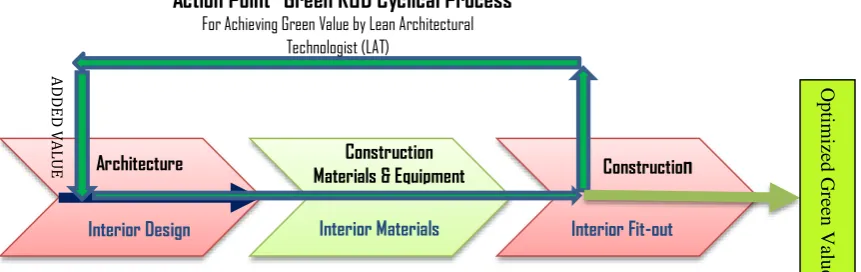
Figure 3: Role of AT in green building design value chain for LCTH (Adapted from Doery, 2009)
The LAT is seen as key player in the green building value chain based on operational
Architecture Materials & EquipmentConstruction Construction
Interior Design Interior Fit-out
A
D
D
ED
V
A
LU
E
“Action Point” Green R&D Cyclical Process
For Achieving Green Value by Lean Architectural Technologist (LAT)
Interior Materials
Op
tim
ized
Gr
ee
n
Valu
identify “action points” for modifying the traditional linear value chains to achieve
optimal green value for the client working to provide green solutions using a design science research (DSR) methodology underpinned by the EVC approach, whilst also serving to supervise the implementation at the construction phase. Following Kung, Huang and Cheng (2012), the green value chain consists of six major aspects: green sourcing, green R&D, green production and manufacturing, green marketing, green promotion and education, and recycling.
Hartman and Stafford (1988) point out that the traditional linear value chain is based on the assumption of closed-loop resources, whereas the green value chain emphasizes a closed-loop process involving the production and use of high-value products, based on the concept of EVC. Here, additionally the value chain is viewed within business processes. The implementation of EVC attributes can lead to reduction in cost in the process, a vital moot point in the initiative of the Lean AT to minimize cost and waste whilst maximizing green value for LCTH in Malaysia.
RESEARCH METHOD
The methodology used is a design science methodology alongside the traditional production science approach. The analytical device is that of “competency”. As architects are generally focused on form over function, it is argued here that their architectural practice could benefit by being complemented with the role of the AT. The attempt here is to maximize value through the value added competency of the AT in undertaking Green R&D. The role of the researchers in this pilot project is fundamentally seen as taking on the role of the Lean AT in using a design science approach to develop a hybrid wall system for improving indoor thermal comfort levels centred on design flows and green value creation.
The AT has to play important role in consultation with the designers in implementing passive and active design strategies during the design stage. As per Malaysian context, it is evident that AT whose role includes the contribution to the value chain to generate green value (in terms of thermal comfort) is non-existent. There is an urgent need for professionals who can address deficits in functional building performance attainment, especially during the pre-construction stage of a project to be emplaced in the construction value chain process. This role is proposed as best served within the broader context of Lean Architectural Practice. It is proposed here that in order to achieve green without being lean is a contradiction.
C
ONCEPTUALF
RAMEWORK FORI
MPROVINGT
HERMAL COMFORT(prototype) system, and (5) observe and evaluate the system. Fig 4 shows the conceptual framework for solving thermal comfort problems in low cost terrace housing (LCTH).
Figure 4: Conceptual model for developing a solution for thermal comfort in low cost terrace housing (LCTH)
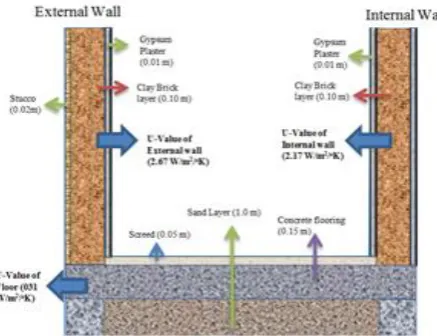
U value of opaque envelope system in Malaysian houses vary from 1.0 to 4.0 W/m2 K and overall thermal transmittance value (OTTV) limit for wall in Malaysia is 45 W/m2 K. Typical U-value of brick and concrete walls used in Malaysia is 2.15 W/m2K (Saidur et al., 2009). European standard EN832:2000 states that, depending on the location and climate, walls should be made of material with a heat transfer coefficient of 0.4–0.7 W/m2 K, the lower the better. This proposed hybrid wall is currently in the initial stage of development. The R&D conceptual framework for this research is shown in Fig. 4, aimed at developing an appropriate green hybrid building wall material to replace the high U value traditional wall material that mainly consists of bricks and mortar (see Fig. 5).
Figure 5: Cross-section of current wall system in LCTH and their U values
utilization is complex as some of the waste material can have adverse effects due to their undesirable characteristics. Foreseeing this issue a combination of materials are to be chosen so that the final product should not compromise on green value. Green materials do the most with the least, and fit most harmoniously within the ecosystem process; also helping to eliminate the use of other materials and energy whilst contributing to the attainment of a service-based economy. The hybrid material prototype will be modelled based on a multi-criteria decision making model.
COMPETENCY CONCEPTUAL FRAMEWORK FOR
GREEN VALUE OPTIMIZATION
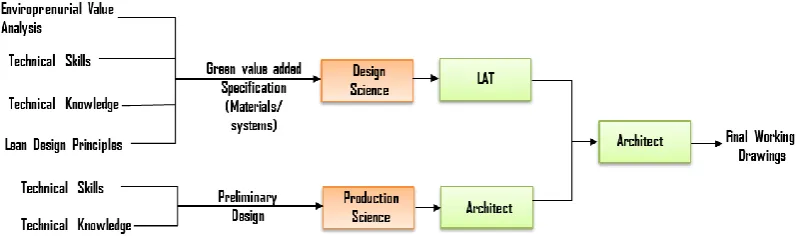
[image:8.595.98.501.367.488.2]In using the analytical device of competency from a design science and production science perspective, a conceptual framework for green value optimization is forwarded (see Figure 6). Wherein, the ‘technical skills’, ‘technical knowledge’ and ‘enviropreneurial value analysis’ that come under the design science and production science category are attributes of competency. Here, the LAT will work alongside the architect after the preliminary design phase to optimize green value within the broader enviropreneurial value chain underpinned by lean design principles.
Figure 6: Competency conceptual framework for green value optimization
CONCLUSION
Technology Centres, the hub of this Green R&D, with university researchers taking on the role of the LAT.
The inputs given by such a dedicated professional who can create the “pull” factor based on flow theory of production for value-added building design and product features can fill the vacuum between conventional design strategies and dynamic sustainable development agendas. Herein, referred to as a competency gap, within the green building value chain - a glaring disconnect within Lean Architectural Practice. Certain crucial inputs such as use of green materials, insulation, natural ventilation, etc. to create better indoor environment eventually adds value to end users in terms of functionality.
REFERENCES
Rocha, C. G., Formoso, C. T., Tzortzopoulos-Fazenda, P., Koskela, L. and Tezel, A. 2012. Design science research in lean construction: process and outcomes. In:
Proc. 20th Ann. Conf. of the Int’l. Group for Lean Construction. San Diego CA,
USA, Jul. 18-20.
Doery, M.P. 2009. The China greentech report. China greentech initiative analysis. [Online] Available at: <http://china-greentech.com> [Accessed 15 March 2015]. Ekici, B. B. and Aksoy, U. T. 2011. Prediction of building energy needs in early stage
of design by using ANFIS. Expert Systems with Applications, 38(5), pp. 5352-5358.
Emmitt, S., 2009. Architectural technology: research and practice. Chichester, UK: John Wiley-Blackwell and Sons.
Emmitt, S., 2013. Architectural technology: research and practice. Chichester, UK: John Wiley-Blackwell and Sons.
Feng, Y. 2004. Thermal design standards for energy efficiency of residential buildings in hot summer/cold winter zones. Energy and Buildings, 36(12), pp. 1309-1312.
Hanafi, Z. B. 1991. Environmental design in hot humid countries with special reference to Malaysia. PhD. University of Wales.
Hartman, C.L. and Stafford, E.R. 1988. Crafting ‘enviropreneurial’ value chain strategies through green alliances. Business Horizons, 41(2), pp. 62-72.
Horman, M. J., Riley, D., Pulaski, M. H. and Leyenberger, C. 2004. Lean and green: Integrating sustainability and lean construction. In: Proc. of CIB World Building Congress. Toronto, Canada, May 2-7.
Huovila, P. and Koskela, L., 1998. Contribution of the principles of lean construction to meet the challenges of sustainable development. In: Proc. 6thAnn. Conf. of the Int’l. Group for Lean Construction. Guarujá, Brazil, Aug. 13-15.
Ibrahim, S. H. 2004. Thermal comfort in modern low-income housing in Malaysia. PhD. University of Leeds.
Kung, F.H., Huang C. L. and Cheng C.L. 2012. Assessing the green value chain to improve environmental performance. International Journal of Development Issues, 11(2), pp. 111 – 128.
Luo, Y., Riley, D. and Horman, M.J. 2005. Lean principles for prefabrication in green design-build (GDB) projects. In: Proc. 13thAnn. Conf. of the Int’l. Group for Lean
Construction. Sydney, Australia, Jul. 19-21.
Madros, H. 1998. Comfort level in low cost housing in Johor Bahru. In: Proc. of Conference on Low and Low-Medium Cost Housing Development. Sarawak, Malaysia, Jul.9-10.
Nunamaker, J.F. Jr., Chen, M. and Purdin, T.D.M. 1991. Systems development in information systems Research. Journal of Management Information Systems, 7(3), pp. 89-106.
Porter, M.E. 1985. Competitive advantage: Creating and sustaining superior performance. New York, NY: The Free Press.
Riley, D., Sanvido, V., Horman, M., McLaughlin, M. and Kerr, D. 2005. Lean and green: The role of design-build mechanical competencies in the design and construction of green buildings. In: Proc. ofConstruction Research Congress. San Diego, California, USA, Apr. 5-7.
Rooke, J., Koskela, L., Bertelsen, S. and Henrich, G., 2007. Centred flows: A lean approach to decision making and organisation. In: Proc. 15th Ann. Conf. of the Int’l. Group for Lean Construction. East Lansing, Michigan, Jul. 18-20.
Saidur, R., Hasanuzzaman, M., Hasan, M. M. and Masjuki, H. H. 2009. Overall thermal transfer value of residential buildings in Malaysia. Applied Science, 9(11), pp. 2130-2136.
Shingo, S., 1988. Non-stock production: the Shingo system for continuous improvement, Portland, OR: Productivity Press
Sharpe, M. (2004). Safe as houses? Indoor air pollution and health. Journal of environmental monitoring, 6(5), pp. 46-49.
Stevanović, S., 2013. Optimization of passive solar design strategies: A review. Renewable and Sustainable Energy Reviews, 25, pp. 177-196.
Tinker, J. A., Eng, C., Ibrahim, S. H. and Ghisi, E. 2004. An evaluation of thermal comfort in typical modern low-income housing in Malaysia. In: Proc. Ann. Conf. of American Society of Heating and Air-Conditioning Engineers. Tennessee, Mar. 15-17.
Triantafyllou, A. G., Zoras, S., Evagelopoulos, V. and Garas, S. 2008. PM10, O3, CO concentrations and elemental analysis of airborne particles in a school building. Water, Air, & Soil Pollution: Focus, 8(1), pp. 77-87.
Uno, T., Hokoi, S., Ekasiwi, S. N. N. and Majid, N. H. A. 2012. Reduction of energy consumption by AC due to air tightness and ventilation strategy in residences in hot and humid climates. Journal of Asian Architecture and Building Engineering, 11(2), pp. 407-414.