Reliability, Smart Vision and Intelligence
Perspective of Robots in Social World
Pankaj Kumar
Student Advanced Institute of Technology and Management
Abstract: To justify the relationship of robots in social world depends on perception. It becomes a problem to perceive the things intelligently and control the activities according to the environment by robots. Robots need to detect the objects, motion of objects and behavior of objects. In this paper we are introducing the relationship of robots in social world in terms of reliability, dependability, Intelligence and smart vision. There are several experimental study of robotics perception is involved to understand the extent in which robots give the better results or improve themselves than human beings.
Keywords: robotics reliability, smart vision, robot’s dependability, robotics intelligence.
I. INTRODUCTION
Perception is key to intelligent behavior. Social world plays an important role to get the clear definition of perception. So this is the gifted platform to understand the robotics perception. Time to time change conditions analyzes or percept the things become difficult. This type of perception is called smart perception. Robots can be unreliable and undependable for a number of reasons: mechanical failures, actuation failures, planning failures, computing crashes, etc. Applications tend to share two characteristics: Obstacles are relatively easy to detect, since they are easily sensed and segmented from the flat floor or pre-mapped walls.
Robot stays put until its preloaded path becomes clear. In other cases, the robot is allowed certain simple obstacle avoidance maneuvers.
The biggest open research challenge is in perception. Operating outdoors, on streets and roads, there are many more kinds of things to see; many more moving objects; and much more variation in lighting, weather, and other perception conditions.
We do not hold the same expectations for robots as we do for humans, nor do we treat them the same. As such, the ability to recognize cues to human intimacy is fundamental for guiding social interactions. It demonstrates that self–other similarities are not only grounded in physical features but are also shaped by prior knowledge. Artificial Intelligence has made impressive strides in replicating some aspects of cognition, such as planning and plan execution, machine perception remains distress-ingly brittle and task-specific. Several stages are provided for robots to understand the environment. Robot’s perception is explored in terms of intentionality, attention, motivation and behavior by Cynthia Breazeal and Brian Scassellati (1999). Social skills as beliefs, goals and desires are some properties called as theory of mind useful for potential application in robotics by Brian Scassellati (2002). This is not to say that robotics perception is rely only on socials world. It can be defined in others domain too. But focus is on the relationship between the robotics perception and social world. Robots relationship in social world is defined by Yashpal Sharma and Wg cdr Anil Chopra (2015) using truth worthiness, sociality, social skills, social behavior, intentionality, interaction and social intelligence.
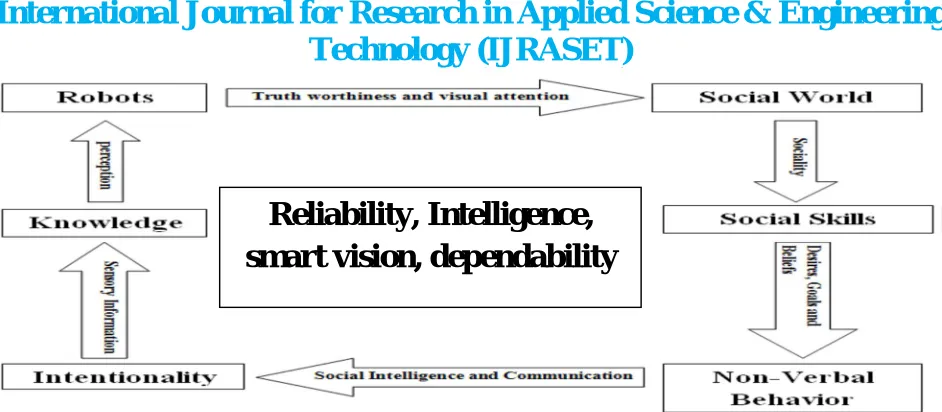
Figure I. Relational Block Diagram of Robots perception and Social World
II. MOTIVATION
To minimize the manpower and efforts by human being there is need to introduce the robots in social world. But most important thing is to perceive the world by robots is a benchmark. But we have to see that it is beneficial to experiment the robot’s behavior compare to human being. So we take the initiative to study the various robotics perception experiments and their relation to social world. This is also important to predict the future activities and decision making on the basis of robot’s intelligence to do work effectively and safely. For this robots need smart vision too.
A. Reliability
The deployment of autonomous robots in unstructured and dynamic environments poses a number of challenges that can not easily be addressed by approaches developed for highly controlled environments. In unstructured environments, for example, robots cannot rely on complete knowledge about their surroundings. In fact, perceiving the environment becomes one of the key challenges. Robots have to autonomously and continuously acquire the information necessary to support decision making. Moreover, robots cannot assume that their actions succeed reliably. Instead, they have to continuously monitor their effect on the environment and possibly react to undesired events. In contrast, many existing, well-established techniques in robotics rely on perfect knowledge of the world and perfect control of the environment. In unstructured environments, a robot can only possess partial knowledge of its surroundings, objects can change their state unbeknownst to the robot, and manipulation tasks may require the end effector to move on a constrained trajectory rather than simply to reach a specific location. Each of these difficulties makes the motion generation problem more difficult. The explicit coordination of planning and sensing necessary to handle dynamic environments further increases the dimensionality of the state space. Furthermore, the more complex task requirements impose stringent requirements for high-frequency feedback. Existing motion planners make assumptions that are too restrictive for unstructured environments and are too computationally complex to satisfy the feedback requirements. These assumptions and the computational complexity area consequence of a fundamental premise of motion planning: the assumption that the high-dimensional configuration space is the most suited solution space. Planners following this paradigm use workspace information solely for collision checking. Almost all real-world environments, however, contain significant amount of structure: buildings are divided into hallways, rooms, doors; outdoor environments contain paths, streets, intersections; objects, such as shelves, boxes, tables, chairs have favored approach directions. This information is ignored when a planner exclusively operates in configuration space. As a result, most motion planners have to assume that the environment is perfectly known and that it remains static during planning.
B. Intelligence and Smart Vision
The ability to measure the similarity between a pair of objects is fundamentally important to solving multi-object tasks. An experiment by McPherson and Holcomb (1999) investigated this by examining event-related brain potentials. Participants we are shown a picture of an object, then a picture of another object from one of three categories: related [to the first object], moderately related, or unrelated. The electroencephalogram (EEG) results showed that across all participants, there was a large negative spike in the N400 family of potentials in the participants’ brains shortly after being shown the second picture. The study found that the
magnitude of the spike was related to the similarity between the two objects in the pictures. This suggests that, at least at some level, the brain computes a quantitative measure of how similar two objects are. In another study with 1- to 3-year-olds, Sugar man (1981) found that the order in which children interact with objects tends to be influenced by the class and perceptual similarity of the current object to the previously explored object. Additionally, it was observed that the older children relied less on the class of the object to pick the next object and more on perceptual similarity. They concluded that “classification based on conceptual comparisons of the items being selected may emerge over the second and third years.” This shows that not only are very young children able to compare the perceptual similarity between objects, but 14also that they actively use it as a basis for classification and interaction with objects. Because this behavior appears spontaneously at such a young age, it suggests that comparing objects based on perceptual similarity can be very useful for interacting in human environments. Several studies have demonstrated that robots can measure perceptual as well as functional object similarities for a variety of tasks (Nolfi and Marocco, 2002; Nataleetal., 2004; Nakamuraetal., 2007; Takamuku et al., 2008; Sun et al., 2010; Sinapov and Stoytchev, 2010b). The ability to measure the similarity between two objects is extremely useful for tasks such as category recognition and object grouping. Several studies (Nakamura et al., 2007; Sinapov et al., 2011a) have used unsupervised approaches for object categorization, in which objects were categorized based on the similarity of their perceptual features. Their results showed that when the robot was allowed to use all of its sensory modalities, its object categorizations closely resembled the human-provided ones. This suggests that allowing robots to perceive more features about objects can improve their ability to detect similarities between objects.
C. Trustworthiness and Visual Attention
On the basis of the fact that robots are more trustworthy in nature than human. Robots perceived to be more intelligent in truth worthiness. According to the Ullman1. D. Leite.I., Phillips.J., Kim-Cohen.J., and Scassellati.B. (2014) Robot in dishonest manipulation would receive lowest attributions of truth worthiness than human and robot in the honest manipulation. It is also stated that robot would perceive as less intelligent and intentional than the human. Physical and visual presence affects the perception in the related field of acceptance.
D. Sociality
Sociality plays an important role in everybody’s life. To make robots smarter they should have social skills which come from sociality. It has been observed that robots perceived things better when they work in social Environment. They learn lots of skills known as social skills.
E. Non- Verbal Behavior
Behavior is relying on social skills in the environment. From sociality robots get belief. Goals and desires as social skills. It helps to get social assistance to behave smartly with surroundings. Social intelligence is the important plug to charge the life. It is a cohesive strength of the senses through the experience. Realism provides the platform to behave robots like a human being. Non-verbal behavior means the ability or capacity to perceive and response smartly
F. Sensory Information and Knowledge
Intentionality is useless if it doesn’t get information from senses of mind. With the time sensory information becomes useful knowledge. There is no space for knowledge without information. Information is like data source on which extraction, transaction and load operations performed to get benefits like database. With the help of sensory information and knowledge a robot perception takes place as useful predictions. So these make the robots perception more reliable. Robust methods for representing, generalizing and sharing knowledge across various robotics system.
III. RELATED WORK
social world on the behalf of truth worthiness, sociality, social skills, social behavior, intentionality, interaction and social intelligence. Relation of diagram according to reliability and intelligence: -This explains how the relationship of robots in social world provides trademark when it scaled on reliability and intelligence. From an implementation point of view, one can imagine two extremes: one in which a single process is responsible for computing every feature of interest, and the other in which every feature is assigned its own sensing process. In the first scenario, the overall speed of sensing is determined by the feature that takes the longest time to compute, whereas a higher process management overhead is associated with the second scenario to ensure that the sensed values are coherent. For a particular application, it is up to the designer to decide how best to implement the perception system. We chose the second approach where various routines process different perceptual inputs asynchronously in order to compute higher order features, which are then immediately available for subsequent processing. Each data item is assigned a timestamp and a confidence value between 0 and 1, and it is managed by the memory center, which is responsible for preventing other processes from using outdated or incorrect information.
IV. FUTURE WORK
This paper explains all the major factors that play important role according to robots in social world. Only the behavior, internality, sociality and trustworthiness is not important for robots to live in structured and unstructured environment. Reliability and intelligence are also important factor to survive in social world for robots.
Our future work is depending on robotics behavior in different terrain with the classification of attributes perceived by robots. With different view of terrain and attributes robots can make the alternate option to the social market to customize the work for betterment of manpower and minimize the workload.
REFERENCES
[1] Breazeal, C.,and Scassellati,B.1999.How to build Robots that make friends and influence people. 1999 IEEE/RSJ International Conference on Intelligent Robots and Systems (IROS-99). Kyongju, Korea. Aug. 1999.
[2] Bainbridge.A.W., Hart.J., Kim.S.E., and Scassellati.B.2008.Effect of presence on Human-Robot interaction. IEEE International Symposium on Robot and Human Interactive Communication, Munich, Germany, 2008.
[3] Scassellati.B.2002.Theory of mind for a humanoid Robot .1st IEEE/RSJ International Conference on Humanoid Robotics (Humanoids 2000).
[4] Crick.C., and Scassellati.B.2009.Intention based Robot control in Social Games. In Proceedings of the Cognitive Science Society Annual Meeting, 2009. [5] Crick.C., and Scassellati.B.2008.Inferring Narratives and Intention from playground games. In Proceedings of the 7th IEEE International Conference on
Development and Learning (ICDL 2008), Monterrey, California, August 2008.
[6] Hart.W.J.,and Scassellati.B.2009.A Robotic Model of Ecological Self. In Proceedings of the 11th IEEE/RAS International Conference on Humanoid Robots (Humanoids 2011). Bled, Slovenia, October 2011.
[7] Lovett.A., and Scassellati.B.2004.Using a Robot to reexamine looking time experiment.4th International Conference on Development and Learning (ICDL). San Diego, CA. Aug. 2004.
[8] Shic.F.,Jones.W.,Klin.A.,and Scassellati.B.2006.Swimming in underlying stream: Computational Model of Gaze in a comparative behavioral analysis of Autism. Cognitive Science, Vancouver, 2006.
[9] Bernier.P.E., and Scassellati.B.2012.The Similarity-Attraction Effect in Human-Robot Interaction. In Proceedings of the 9th IEEE International Conference on Development and Learning, Ann Arbor, MI (pp. 286-290)
[10] Admoni.H., Hayes.B., Feil-Seifer.D., Ullman.D., and Scassellati.B.2013.Are you Looking at me? Perception of Robot Attention is mediated by Gaze type and Gaze size. Human-Robot Interaction (HRI), 2013 8th ACM/IEEE International Conference.
[11] Gold.K., and Scassellati.B.2007.A Robot that uses existing vocabulary to infer non visual word meaning from observation in Proceedings of the Twenty-Second Annual Meeting of the Association for the Advancement of Artificial Intelligence (AAAI-2007). Vancouver, BC, Canada. August, 2007.
[12] Kim.S.E., Leyzberg.D., Tsui.M.K., and Scassellati.B.2007.How people talk when teaching a Robot. In Proceedings of the 4th ACM/IEEE International Conference on Human-Robot Interaction. La Jolla, CA, March 2009.
[13] Hayes.B., and Scassellati.B.2007. Improving Implicit communication in mixed Human-Robots Teams with Social Force Detection. Development and Learning and Epigenetic Robotics (ICDL), 2013 IEEE Third Joint International Conference.
[14] Gold.K., and Scassellati.B.2007.A Baysian Robot that distinguishes self from others. In Proceedings of the 29th Annual Meeting of the Cognitive Science Society (CogSci2007). Nashville, Tennessee.
[15] Admoni.H., and Scassellati.B.2012.A Multi-Category of Intention. In Proceedings of the 34th Annual Conference of the Cognitive Science Society. 2012. [16] Hayes., Ullman.D., Alexander.E., Bank.C., and Scassellati.B.2014.People help Robot who help others, not Robots who help themselves. Robot And Human
Interactive Communication, 2014 RO-MAN: The 23rd IEEE International Symposium.
[17] Ullman1. D., Leite.I., Phillips.J., Kim-Cohen.J., and Scassellati.B.2014.Smart Human, smarter Robot: How cheating affects Perceptions of social Cues. Proceedings of the 36th Annual Conference of the Cognitive Science Society (CogSci2014). Quebec City, Canada. July 23-26, 2014.
[18] Leite.L., McCoy.M., Lohani.M., Ullman.D., Salomons.N., Stokes.C., Rivers.S., ndScassellati.B.2015.Emotional story telling in Classroom: Individual versus group Interaction between children and Robots. Proceedings of the 10th ACM/IEEE International Conference on Human Robot Interaction. Portland, USA, March 2-5.