5
IX
September 2017
Structure for Information Model to Customized
Wellbeing Framework
Swarooparani1, Dr. Shiva Murthy G2, Prakash V Parande3
1
Computer Science Engineering, 2Head of the Department, 3Assistant Professor, Department of Computer ScienceVTU CPGS, Muddenahalli, Chikkaballapura, India
Abstract: When large amounts of data is handled, it is important to obtain the desired compatibility between such data to perform activities of access and storage of information; data models are a tool that helps to determine the structure of the information, in order to improve communication and accuracy in applications that use and exchange data with each other for a common purpose. Nowadays, there is no framework for health supporting the data modeling design, i.e. the existing models are generic and therefore are not suitable to support personalized systems and they do not consider the quality of clinical and personal data, required in health care. Based on the CRISP-DM methodology, a framework is proposed to design a data model for personalized health systems. This framework ensures the security of personal and clinical data to relate it with health standards, particularly with the Personal Health (PHR) ISO/TR l4292 standard, which addresses the recommendations of the parameters that must be within a personalized health system. To perform accurate recommendations it is important to make a data mining process, where the data is related to guarantee an accurate and reliable personalization; these relations generated by the model should be taken into account to apply them a data mining technique.
Keywords: Data model, personalized system in health, data mining, PHR, CRISP-DM.
I. INTRODUCTION
The ICT (Information and Communication advances) looks to advance solid propensities and ways of life impacting emphatically on the strength of individuals, so are declines the hazard components influencing the soundness of individuals [1]. The huge measure of information that is put away on the cloud identified with ICT mediations and its clients turn into a hazardous issue [2], since it is imperative to find through information mining, some valuable, surprising and reasonable models and information examples, to give learning which will be utilized as a part of request to the client. Thus it is consider important to check with customized frameworks to advance sound propensities and ways of life in view of a client show fit for gathering, overseeing and connection the individual data of every client keeping in mind the end goal to know the key parts of that individual and make an appropriate pre-preparing of information, created by the client as indicated by the information model(its applied level);besides the client display must be as per the individual wellbeing record standard, since it is important to deal with the clinical data of a man. Having as a top priority the past contemplations, this paper portrays an edge work for information model of wellbeing, where the client demonstrate used to produce the information show (reasonable) is as per the ISO/TR 14292 standard [3] is actualized in a customized framework through information mining procedure, the greater part of this situated in the CRISP-DM system for the pre-handling of data to bolster the advancement of sound propensities and ways of life. At the point when extensive measure of information is taken care of, it is critical to acquire the coveted similarity between such information to perform exercises of get to and capacity of data information models are an instrument that decides the structure of the data, keeping in mind the end goal to enhance the correspondence and exactness in applications that utilization and trade information with each other for a typical reason. These days, there is no structure for wellbeing supporting the information displaying plan, i.e. the current models are non-specific and thusly are not reasonable to bolster customized frameworks and they don't consider the nature of clinical and individual information required in human services.
II. METHODOLOGY
project. 4)To make the evaluation, the DESMET methodology is used to ensure the quality of the development system. At last, it is important to conclude, socialize and present the obtained results.
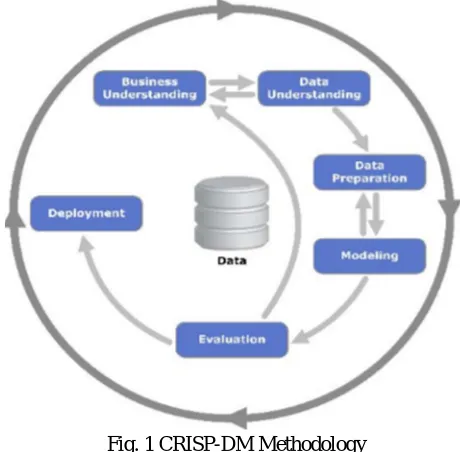
Fig. 1 CRISP-DM Methodology
In fig. 1, the CRISP-DM strategy reference show is watched. This technique was followed in the following way: the Business Understanding and the Data Understanding stages are utilized to comprehend the undertaking goals and prerequisites from a business viewpoint, and after that change over this learning into an information mining issue definition and a preparatory arrangement intended to accomplish the targets; and to begin gathering information, at that point get comfortable with the information, to recognize information quality issues, to find first bits of knowledge into the information, or to identify fascinating subsets to frame theories about concealed intonation. The calculated information show level from the proposed structure is made utilizing these two stages. The legitimate information display level depends on the Data Preparation stage that incorporates all exercises required to build the informational collection from the underlying crude information. Errands incorporate table, case, and trait determination and also change and cleaning of information for displaying apparatuses. Following the procedure, the Modeling stage that chooses and applies an assortment of demonstrating methods, and adjust apparatus parameters to ideal esteems.
III. FRAMEWORK DESCRIPTION
A system is an institutionalized arrangement of ideas, practices and criteria to concentrate on a specific kind of issue that fills in as a source of perspective, to stand up to and take care of new issues of a comparative sort [8]. Hence, a structure is made for an information demonstrate in view of a client display as per the ISO/TR 14292 standard for a customized framework in wellbeing; the information demonstrate comprises of three levels as appeared in fig. 2.
Fig.2 Levels of Data Model
A. Conceptual Data Model
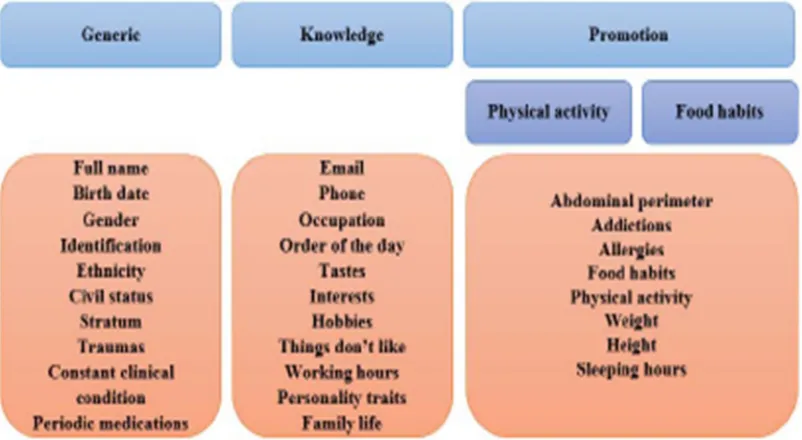
structure, request and parameters, security, correspondence and design. The things acquired from the portrayal of the standard, are 29 coming about things, at that point this things are ordered as exhibited in fig. 3.
Fig. 3 Items Resulting From the Process In Accordance With ISO
Our Setup
1) The possibility of RIT is abused for RDH-EI, by which the client can outsource the encoded picture to the cloud in a type of plaintext and subsequently it will keep away from the consideration of the inquisitive cloud .
2) In the RIT based structure, the cloud server can without much of a stretch insert information into the "encoded picture" by self-assertively choosing RDH strategies for plaintext pictures, for example, those At the end of the day, the RDH utilized by the cloud is unimportant with both the sender and recipient, which is known as a customer free RDH-EI plot by us. "Customer free" is essential for the situations of open mists, in which it is hard for the cloud server to ask the customers how to scramble or decode their information, on the grounds that the cloud is thought to be just semi-fair.
B. Logical Data Model
Portrays the information in however much detail as could reasonably be expected, without respect to how they will be physical executed in the database [9]. As an initial step, the connection between things in a connections table is organized as a reason for the framework takes in the model, i.e., the connections table moves toward becoming to the model in the best approach to learn and execute their procedures of induction. The relations between things are produced using the data near tables and regarding the proposed measurements [10]. Once the important client information is gotten, with the assistance of a characterization calculation the induction procedure can be perform, to decide the physical movement and solid eating regimen legitimate intercession for the client as per his/her wellbeing status, needs and interests.
These connections were made between all things of the figure 3, with the reason for ensuring nature of data in light of the fact that the connections proclaim information structures and it permits keep away from excess of learning.
Fig.4 Relationship’s Items about Tastes and User Addictions
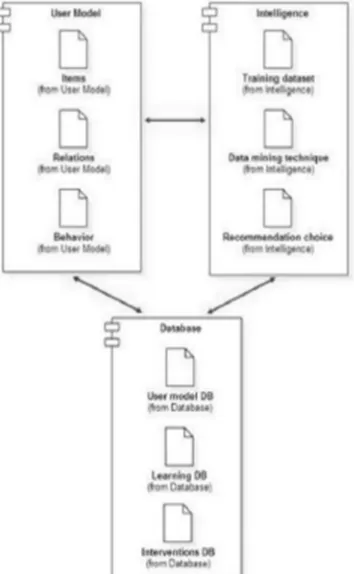
IV. ARCHITECTURE
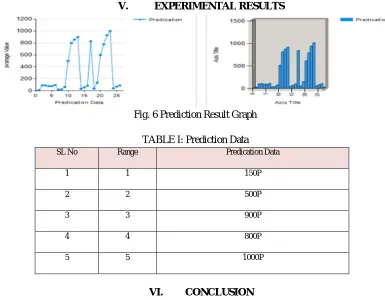
[image:5.612.223.400.425.712.2]V. EXPERIMENTAL RESULTS
Fig. 6 Prediction Result Graph
TABLE I: Prediction Data
SL No Range Predication Data
1 1 150P
2 2 500P
3 3 900P
4 4 800P
5 5 1000P
VI. CONCLUSION
The CRIP-DM procedure recommends the past treatment of information that might be dissected is noteworthy to the normal outcomes quality once applying any information preparing strategy. The dynamic idea connections gotten from the client show parts, that zone unit lined by the consistent data display allows the framework takes in the client disposition natural qualities in an extremely extra with productivity strategy that the personalization technique might be extra right and satisfactory.
VII. ACKNOWLEDGEMENT
I would like to express my special thanks of gratitude to Assistant Professor. Mr. Prakash V Parande, Department of Computer Science and Engineering, Visvesvaraya Institute of Advanced Technology. Who gave me the golden opportunity to do this wonderful project on the topic (Structure for Information Model to Customized Wellbeing Framework), which also helped me in doing a lot of research and I came to know about so many new things I am really thankful to him. And, secondly I would also like to thank my parents who helped me a lot in finalizing this project within the limited time frame.
REFERENCES
[1] K. Hosono and Y. Murakami, “Development of the Web database system for agricultural-work information control”, IEICE LOIS 2011-73, pp. 1– 6, March 2012 (in Japanese).
[2] K. T. U. Slamet, Y. Murakami, and K. Shigeta, “Development of farming journal-making support system with information and communication technology”, IEICE LOIS 2011-74, pp. 7–12, March 2012 (in Japanese).
[3] Y. Murakami, K. T. U. Slamet, K. Hosono, and K. Shigeta, “Proposed of cultivation management system with informatics and communication technology”, IEEE GCCE 2012, pp.175–176, October 2012.
[4] Y. Zhu, D. Wu, S. Li, “Cloud Computing and Agricultural Development of China: Theory and Practice”, IJCSI International Journal of Computer Science Issues, Vol. 10, Issue 1, No.1, pp. 7–12, January 2013.
[5] Infeachor, Z., Hu, P., Sun, L., Hudson, N. Zervakis, M.: Bio profiling over Grid for Personalized HealthCare for AD. In: proceedings of the 2009 conference on Computational Intelligence and Bioengineering: Essays in Memory of Antonina Starita, pp.155-165 (2009).
[6] Huang, Z., Lu, X., Duan, H., Zhao, C.:Collaboration based medical knowledge recommendation. In: Artificial intelligence in medicine, vol. 55, pp. 13-13 (2012).
[7] Martins, A., Farina, L., De Carvhalo, C., Carrapatoso, E.: User modeling in adaptive hypermedia educational systems. IN: Educational Technology & Society, vol. 11, pp.194-207(2008).
[8] Chen, H., Compton, S., Hsiao, O.: Diabetic Link: A health big data system for patient empowerment and personalized health care. In: Smart Health, pp. 71-83(2013).