© 2017, IRJET | Impact Factor value: 5.181 | ISO 9001:2008 Certified Journal | Page 1009
Investigation Of IC Engine Part With Coating A Review
Ravi S Modi
1, Maulik Modi
2, Dr. Tushar M Patel
31
ME scholar, Mechanical Department,LDRP-ITR,Gandhinagar,India.
2
Assistant Professor,Mechanical Department,LDRP-ITR,Gandhinagar,India
3
Professor,Mechanical Department, LDRP-ITR, Gandhinagar,India
---***---Abstract - Piston is most important part in automobile enginein which it helps to convert the chemical energy liberated by the combustion of fuel into useful mechanical power. The performance ic engine is depends on piston size and working in dynamic conditions. So, the piston is a heart of the ic engine. The internal combustion engines piston made of Aluminum alloy, stainless steel, cast iron etc. When the combustion of fuel charge takes place inside combustion chamber, high pressure and high temperature are developed due to combustion of the fuel. Because of high loads, the piston is subjected to high thermal stress and mechanical stresses. If these stresses exceed the designed values, failure of piston may take place. Temperature, operating gas pressure and material properties of piston are the parameter used for this work. The analysis shows that piston may be damaged or broken during the operating conditions due to high temperature and structural stress acting on the top surface of the piston. The main of aim of this work is to study various researches done in past to reduce the stress concentration on the head of the piston to predict the higher stress and critical region on the component by using FEM technique. The FEM performed by using ANSYS simulation.
Key Words:IC Engine, Coating material, Piston, FEA
1.INTRODUCTION
Automobile components are in great demand and use of automobiles is increased due to improved performance and the cost of these components is reduced. The most used drive of Motorcycles, primer movers, automobiles, ships and agricultural machines are still the internal-combustion, piston engines. The piston has an important function of the driving chain mechanism. It's main function is to lock one side of the cylinder of the ic engine, to create the changing volume, required for working. The thermal energy liberated by the combustion of fuel, sparked with the ignition plugs converts into mechanical energy as the piston moves in the cylinder. The gas-energy takes effect on the surface of the piston and makes it move on a straight line.
The energy liberated from the gas-pressure depends on the diameter of the cylinder and the top pressure of burning fuel. This combustion process makes noise and quiver during the engine works. During this combustion process, the piston is subjected not just thermal energy but mechanically as well. Top surface of the piston is touched directly with hot gas and the flame front. the piston is taxed by the thermal stress which is heat transfer, and just partly heat radiation.
The temperature of the top surface of the piston is changing, during the intake process it is the lowest, and during the exhausting it is the biggest. Therefore, the thermal stress is not constant. Because of high speed and at high loads on the engine, the piston is subjected to high structural stress and thermal stress. If these stresses exceed the designed values, failure of piston may take place. Intensity of these stresses should be reduced to have safe allowable limits. This review introduces an analytical study and analysis of the thermal effects and structural stresses on engine piston.
1.1 Piston Design
The piston is designed according to the procedure and specification which are given in machine design and data hand books. The dimensions are calculated in terms of SI Units. The pressure applied on piston head, temperatures of various areas of the piston, heat flow, stresses, strains, length, diameter of piston and hole, thicknesses, etc., parameters are taken into consideration. [1]
1.2 Thermal Barrier Coating
In internal combustion engine, 55% energy is west in coolant, exhaust and friction so only 45% of energy converted into useful work. TBC is the advance coating material technique which is applied to the metallic surface to operate at higher temperature range and provides the higher thermal efficiency of the IC engine and reduced emission. Ceramic have wear characteristic than other materials as well as lower heat rejection from the combustion chamber to thermally insulated component.
2. LITREATURE REVIEW
1. Ch. Venkatarajam et al (2013) [1] have studied that the efficiency is improve by reduced the weight of the piston. The result showed that the total volume of the piston is reduced by 24%, Vonmisses stress is increased by 16% and deflection is increased but all the parameter is well with in piston design consideration. The FEA analysis carried out for ceramic coated diesel engine piston and the result indicate that the maximum stress has changed from 63.019 MPa to 74.95 MPa.
© 2017, IRJET | Impact Factor value: 5.181 | ISO 9001:2008 Certified Journal | Page 1010
agreement was obtained between prediction and experimentfor the new piston design. Experiment observation showed increase of temperature in low temperature area and decrease of maximum value in high-temperature area. The thermal load of the top ring for new piston was lower than old one. The new design had some potential of intensifying improvement from the view point of piston thermal load.
3. Rahul D. Raut et al (2015) [3] have studied the design of the piston development can reach to a mass reduction on the base of stress analysis fulfill the condition of automobile specifications with cost and size effectiveness. The equivalent stress value considered for the new model is well below the range of value of 100 MPa. From new results it is clear that there is a chance for reduction in the thickness of piston skirt. The design of piston is done and it is found that the mass of reduce piston is 0.2454 Kg. Hence percentage reduction in mass compared to old piston (0.2574 Kg) is 4.66 %. The material is removed to reduce the weight of the piston so as to improve the efficiency. It is needed to obtain the new results for piston with reduced material. The factor of safety becomes higher than old model i.e. design was more preferable. The factor of safety after optimization is higher result obtained.
4.M.Murugan et al (2012) [4] study design analysis for four stroke petrol engine using commercial simulation tool ANSYS.It is observed that factor of safety of the ALGHS1300 is higher than A2618 piston. After optimization mass of the piston is 15% reduced and also inertia force is reduced 15% that and maximize the engine performance.
5.Sathishkumar Sankar et al (2016) [5] illustrate design procedure for four stroke petrol engine piston for hero splendor pro bike and its analysis by its comparison with original piston dimension used in bike. Using analytical method, the design procedure of the piston involves determination of various dimensions under maximum power condition.The result showed that the use of analytical method are nearly equal to the actual dimensions.
6. Deovrat Vibhandik et al (2014) [6] compare the behavior of the combustion engine piston made of structural steel, aluminium alloy and titanium alloy under thermal load. FEA analysis is carried out to reduce the stress concentration on the upper end of the piston by using commercial code, namely ANSYS. The investigation shows that titanium has better thermal properties but it is expensive and may be it is uneconomical for large scale application.
7. Vinod Yadav et al (2013) [7] inferred that change in material of the piston can be changed for the better strength and light weight.
[image:2.595.312.568.333.499.2]8.Muhammet Cerit (2011) [8] determine the temperature and the stress variation in a partial ceramic coated spark ignition (SI) engine piston. The outcome of coating thickness and width on temperature and stress variations were determine consider comparisons with observation from an uncoated piston. It is shows that the coating surface temperature increase with increasing the thickness in a decreasing rate. Surface temperature of the piston with 0.4 mm coating thickness was increased up to 82 °C. The normal stress on the coated surface decreases with coating thickness, up to 1 mm for which the value of stress is the minimum. However, it rises when coating thickness exceeds 1 mm. As for bond coat surface, increasing coating thickness, the normal stress decreases steadily and the maximum shear stress rises in a decreasing rate. The optimum coating thickness was found to be near 1 mm under the given conditions.
Fig -1:Shear stress distribution with the coating thickness substrate surface.[8]
© 2017, IRJET | Impact Factor value: 5.181 | ISO 9001:2008 Certified Journal | Page 1011
Fig -2: Normal stress distribution with the coatingthickness substrate surface. [8]
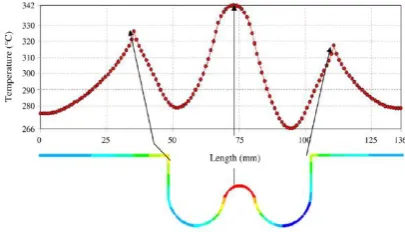
[image:3.595.66.269.454.570.2]9. Ekrem Buyukkaya et al (2008) [9] Functionally graded coatings are coating systems used to improve performances of high temperature parts in diesel engines. These coatings include of a transition from the metallic bond layer to cermet and from cermet to the ceramic layer. In this paper, thermal effect of functional graded coatings on AlSi and steel piston materials was determined by method of using a commercial code, namely ANSYS. Thermal analyses were employed to deposit metallic, cermet and ceramic powders such as NiCrAl, NiCrAl+MgZrO3 and MgZrO3 on the substrate. The numerical results of AlSi and steel pistons are compared with each other. It was shown that the maximum surface temperature of the functional graded coating AlSi alloy and steel pistons was increased by 28% and 17%, respectively.
Fig. -3: The variation of temperature over the extended base metal surface (including bowl length) of the steel piston coated with FGM.
The temperature values of FGM coating piston surface are lower than old thermal barrier coating at the same coating thickness so the increase of the layer number reduces the thickness of top coat and raises the thermal diffusivity, and thus the heat insulation capability of the coating system slowly decreases.
10 Ekrem Buyukkaya et al (2007) [10] initially, thermal analyses were determined on a regular (uncoated) diesel piston, made of aluminum silicon alloy and steel. Then, thermal analyses were performed on pistons, coated with MgO–ZrO2 material by means of using a commercial code, namely ANSYS. Last, the observed of four different pistons
were compared with each other. The outcome of coatings on the thermal characteristics of the pistons were determined. It has showed that the maximum surface temperature of the coated piston with material which has low thermal conductivity is improved approximately 48% for the AlSi alloy and 35% for the steel. The maximum surface temperature of the base metal of the coating piston is 261 °C for AlSi and 326 °C for steel. Structural behaviors of the regular metal materials were varied negative with temperature. By means of ceramic coating, strength and deformation of the materials was give the better performance. Maximum surface temperature of the steel piston is higher near to 14% than the AlSi alloy one.
11. I. TaymazT, K. C¸ akVr, A. Mimaroglu et al (2005) [11] the goal by reducing energy lost to the coolant during the power stroke of the cycle. Ceramic coatings had a desirable outcome in the reduction of wear and abrasion failure in reciprocating and rotary engines for transportation and stationary power. As functional temperatures were pushed higher to desirable efficiency in these engines, the wear/abrasion problem becomes more challenging because lubrication in the high temperature locations becomes increasingly. Ceramic coatings also given applications as thermal barriers to higher the efficiency of the engines, by reducing energy loss and cooling conditions. The main objective is to evaluate the effects of ceramic coating on diesel engines effective efficiency at different engine loads and speeds. Experiments were included with six cylinders, directly injected, turbocharged, intercooled diesel engine. initially, this engine was tested at different speed and load conditions without coating. Then, combustion chamber surfaces (cylinder head, valves and piston crown faces were coated with ceramic materials. Ceramic layers were made of CaZrO3 and MgZrO3, by using plasma-coating method onto the base of the NiCrAl bond coat. The ceramic-coated research engine was tested at the same conditions as the old (without coating) engine. The observation showed a reduction in heat loss to the coolant and an increase in effective efficiency. High temperatures on the combustion chamber wall surface due to insulation cause a drop in volumetric efficiency although increased boost pressure from the turbocharger can be used to overcome this problem. Effective efficiency is not improved to the same extent that heat rejection is reduced by combustion chamber insulation. Using insulation to reduce the heat loss to the cooling system of the engine causes the cylinder walls to become hotter and increases the effective efficiency.
© 2017, IRJET | Impact Factor value: 5.181 | ISO 9001:2008 Certified Journal | Page 1012
Main specifications of the Al2O3 technical ceramics in termsof the development: low density, high melting point, high hardness, high abrasion resistance, high-temperature strength, brittleness, hardly manufactural.
Fig-4: Aluminum and ceramics piston torque-time diagram
During the initial stage of the development, the use and application of the ceramics piston seemed to be safely according to the analytic. He met the condition and manufacturing methods of the technical ceramics during the outline process. While He elaborated new methods, found new simulation processes during the development process, there were plenty of signs, which showed that the result of this development is going to be positive. After completing the first experimental ceramics piston, the tests were shown that the preliminary calculations were successful. It can be declared – based on the measurement results – that the efficiency of the engine has become better with the same adjustments. I wish to make more experiments – besides the application of the ceramics piston – to optimize the adjustment of the parameters of the engine, so it can be finalized that how better the parameters of the ceramics piston engine were with the best adjustments, than the engine assembled with the aluminum piston also with the best adjustments.
3. CONCLUSIONS
The numerical simulations clearly show that temperature and thermal stress distribution are a function of coating thickness. The maximum normal and shear stress components occur in the bond coat. The results indicate that thermal stress is related to coating thickness. As seen here, thermal performance of the piston increases with increased
coating thickness. When stress values obtained from FEA are compared with the mechanical properties of the aluminum alloy and zirconia material, it can be seen that calculated stress values are lower than the allowable stress values of the materials. The experimental results show that cold start HC emission of partially coated engine significantly decreases and also no degradation in engine torque is observed. As a result of increase in temperature, a slight amount of decrease in carbon monoxide emission may be expected since CO oxidation reactions strongly depend on temperature. SI engines work with rich mixtures and higher cycle to cycle variations at cold idle operation. Using insulation to reduce the heat loss to the cooling system of the engine causes the cylinder walls to become hotter and increases the effective efficiency. Effective efficiency is not improved to the same extent that heat rejection is reduced by combustion chamber insulation.
ACKNOWLEDGEMENT
I am very thankful to all those who helped me for the successful completion of the literature review and for providing valuable guidance throughout the Semester. I would like to thank Asst. Prof. Maulik Modi, Dr. Tushar M Patel and our Department of Mechanical Engineering, LDRP - ITR, Gandhinagar. Their constant support, encouragement, and constructive criticism have been invaluable assets through my project work.
REFERENCES
[1] Ch.Venkata Rajam, P.V.K.Murthy, M.V.S.Murali Krishna,
G.M.Prasada Rao “Design Analysis and Optimization of Piston using CATIA and ANSYS” January 2013, issue 2 volume 1International Journal of Innovative Research in Engineering & Science
[2] Xiqun Lu, Quan Li, Wenping Zhang, Yibin Guo, Tao He,
Dequan Zou “Thermal analysis on piston of marine diesel engine” Applied Thermal Engineering 50 (2013) 168e176 19 June 2012 ELSEVIER
[3] Rahul D. Raut1, Satish Mishra ‘Stress Optimization of S.I.
Engine Piston, International Journal of Science and Research (IJSR), Volume 4 Issue 9, September 2015
[4] M.Murugan,T.Velmurugan,K.M.Parammasivam ”Design
Analysis and Parametric Optimization of Two Aluminum Piston Alloy Using Simulation Tools” Journal of Chemical and Pharmaceutical Sciences Vol. 9 ISSUE 4 December 2016
[5] Sathishkumar Sankar, Rajesh Kumar “Design and
Structural Analysis of IC Engine Piston Using FEA Method Innovation Conference on Innovations and Challenges in Engineering and Technology, Research gate April 2016
[6] Deovrat Vibhandik, Ameya Pradhan, Sampada Mhaskar,
© 2017, IRJET | Impact Factor value: 5.181 | ISO 9001:2008 Certified Journal | Page 1013
[7] Vinod Kumar Yadav, Yogesh Mishra “Design and
Structural Analysis of Ceramic Coated Petrol Engine Piston Using Finite Element Method” International Journal Innovative Research in Science, Engineering and Technology Vol. 4, Issue 6, June 2015
[8] Muhammet Cerit, “Thermo mechanical analysis of a
partially ceramic coated piston used in an SI engine” Surface & Coatings Technology 205 (2011) 3499–3505, ELSEVIER
[9] Ekrem Buyukkaya, “Thermal analysis of functionally
graded coating AlSi alloy and steel pistons” Surface & Coatings Technology 202 (2008) 3856–3865, ElSEVIER.
[10] Ekrem Buyukkaya , Muhammet Cerit “Thermal analysis
of a ceramic coating diesel engine piston using 3-D finite element method” Surface & Coatings Technology 202 (2007) 398–402 ElSEVIER
[11] I. TaymazT, K. C¸ akVr, A. Mimaroglu “Experimental
study of effective efficiency in a ceramic coated diesel engine” Surface & Coatings Technology 200 (2005) 1182– 1185 ElSEVIER
[12] Dániel Vaczkó “Piston development of a
![Fig -1:Shear stress distribution with the coating thickness substrate surface.[8]](https://thumb-us.123doks.com/thumbv2/123dok_us/8176743.809507/2.595.312.568.333.499/fig-shear-stress-distribution-coating-thickness-substrate-surface.webp)