
http://www.sciencepublishinggroup.com/j/cbe doi: 10.11648/j.cbe.20170202.13
Review Article
Biomedical and Micro-Robots: An Overview of Recent
Developments
Alireza Shamsabadi Masoudi
1, *, Mohammad Sadegh Hassanli
2, Zahra Taavili
3,
Yasaman Sadeghizade
41
Department of Biomedical Engineering, University of Tehran, Tehran, Iran 2
Department of Exercise Physiology, Jahrom University, Jahrom, Iran 3
Department of Mechanical Engineering, Jahrom University, Jahrom, Iran 4
Department of Biomedical Engineering, University of Isfahan, Isfahan, Iran
Email address:
[email protected] (A. S. Masoudi) *
Corresponding author
To cite this article:
Alireza Shamsabadi Masoudi, Mohammad Sadegh Hassanli, Zahra Taavili, Yasaman Sadeghizade. Biomedical and Micro-Robots: An Overview of Recent Developments. Chemical and Biomolecular Engineering. Vol. 2, No. 2, 2017, pp. 90-95. doi: 10.11648/j.cbe.20170202.13
Received: January 7, 2017; Accepted: January 29, 2017; Published: March 4, 2017
Abstract:
This paper aims to provide an overview of recent challenges in the development of micro-robots for future biomedical applications. This paper first considers a comprehensive survey of the state-of-the-art in medical micro-robots. Consequently, it investigates the critical aspects and emerging ideas associated with designing of such medical micro-robots in order to navigate in viscous environments and inspire future research for healthcare applications. Potential biomedical micro-robots are used for a wide variety of applications into different organs of the patient's body, such as clearing heart occlusion, treatment of Nephrolithotomy, minimally invasive surgery, micromanipulative, released into the bloodstream and targeted drug delivery. Challenges and emerging concepts include functionality, powering, robot localization, communication and safety have been proposed, thereby leading to enable an extensive range of medical operations locomotion features, obtain and process information, being able to operate within specific constraints. This review provides details insight of medical micro-robot developments and the existing solutions for challenges and emerging concepts paving the way for designing such a medical micro-robot for operation inside, fast recovery and increased quality of life of patients.Keywords: Biomedical
Robot, Micro-Robots, Minimally Invasive Surgery, Treatment of Nephrolithotomy1. Introduction
The advent of robotic devices at the millimeter and micron scale, may in the near future bring a revolution in medicine [1– 3]. Due to the potential impacts (scientific and societal) of micro-robot would be application of their in healthcare and medical fields. There are currently existing tethered medical devices such as flexible endoscopes and catheters, two major challenges raised: (1) theoretical and (2) experimental. Thus, recent advances micro-robots as an alternative to the application of medical could a broad spectrum of complex and small regions of the human body covering, including gastrointestinal tract, brain and spinal cord,blood capillaries (vascular) networks, inside the eye and kidneys while being
minimally invasive and could even enable access to unprecedented submillimeter size regions inside the human body, which have not been possible to access currently with any medical device technology [4], [5]. The size of the miniature biomedical robot ranges from few micrometers to several centimeters. In micro-robots, mechanics dominated by microscale Volumetric (bulk) forces such as buoyancy propulsion and inertial are insignificant or comparable to surface area forces (surface tension, friction, viscous forces, adhesion, and drag). In micro-robot, macro scale forces such as bulk forces dominate their mechanics. Features of the proposed two approaches requirements to designing miniature medical robots:
to operate autonomously or remotely controlled and be much smaller than the robot size [6]. (2) Off-board: micro-robot contains Off-board components to operate autonomously or remotely is externally actuated and may be larger than On-board components [6]. In 2000, R. S. Fearing et al have first presented robots which called micromechanical flying insect [7]. S. Hollar et al in 2004 was introduced a solar powered 10 mg silicon robot [8]. A. M. Hoover et al in 2008 reported an autonomous crawling Hexapod robot and Centimeter-scale with advanced abilities for actuation and control [9]. K. Y. Ma et al in 2013 demonstrated an insect-scale robot that controlled flight (with off-board power) of a biologically inspired [10].
Moreover, researchers were inspired by nature and biology, design and supply capabilities and diverse applications with a high potential for medical applications such as bacteria-inspired swimming propulsion [11], laser-powered micro-walkers [12], catalytic self-propelled microtubular swimmers [13], bacteria-propelled beads [14], [15], magnetic resonance imaging (MRI) device-driven magnetic beads [16], magnetically driven millimeter-scale nickel robots [17], steerable electrostatic crawling micro-robots [18], and bio-inspired micro-robot with multi-functionality structure [19].
In this review, challenging design topics envisioned future medical micro-robot would be able in-vivo applications and carry out complex medical operations. Micro-robots inside of patient’s body must carry the necessary tools and ultrafine on-board in the target area and “non-invasive” way. Existing challenges for micro-robots potential in biomedical applications briefly is described, including powering, robot localization, communication, motion control, functionality for multiple tasks with exact and advanced technologies in the near future.
2. Biomedical Applications of
Micro-Robots
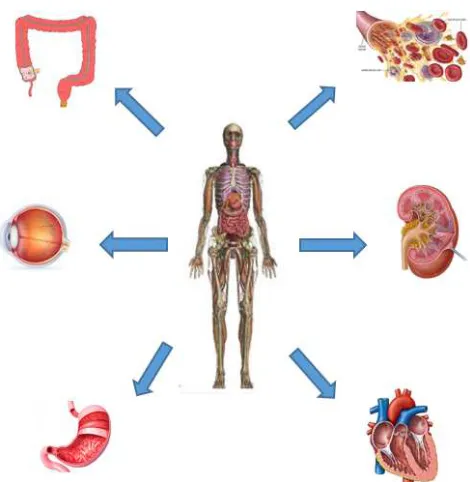
One application of small untethered robots that captured the attention of early researchers was in the gastro-intestinal (GI) tract. This passageway through the body, which can accommodate relatively large objects, is where the first commercial systems have been applied. These untethered, endoscopic capsules are the size of a pill and are simply swallowed by the patient. They capture video images from the GI path with their imaging and illumination systems while naturally traveling through the path. Other researchers proposed robotic systems with locomotion and biopsy capabilities. Typically, robots built for the GI path are miniaturized mechatronic systems with many components of conventional design. It is in the more challenging parts of the human body where truly microscopic sized robots would be needed that MEMS technology provides the only solution. Robots swimming in the blood stream or inside the vitreous humor (a clear, gel-like substance that fills the posterior cavity of the eye) have been envisioned. A reoccurring theme with
such micro-robots is the use of ex-vivo generated magnetic fields to transfer energy to the robot. Whereas MEMS and VLSI technologies have accomplished the miniaturization of structural and electronic components, a corresponding breakthrough in energy storage was not been achieved. This issue comes to center-stage with sub-mm sized micro-robots for cardiovascular or ophthalmic applications.
Figure 1. Applications of micro-robots in different organs of the patient's body.
3. Challenges and Emerging Concepts in
Biomedical Micro-Robots
To enable high-impact biomedical applications of miniaturized mobile robots, many fundamental challenges need to be addressed. As the functional robot size goes down to the millimeter scale and below, design, fabrication, and control of these systems require design principles which greatly differ from that of macro scale robotics. Moreover, medical activities inside the human body will require additional tasks such as feedback from the environment and communication with the operator. In this section, we discuss the challenges associated with miniaturization of untethered biomedical robots from their initial design to the preclinical testing steps. We also provide a future outlook toward a solution in light of the recent advances addressing some of these challenges.
3.1. Components
even though several medical micro-devices already been possess some robotics aspects as shown in the previous section. The subsystems that are necessary for an autonomous swimming micro-robot are also under development. In this section, we would like to present the essential components necessary to build an autonomous swimming micro-robot. Dario [20] introduced and Ebefors and Stemme [21] developed an essential component list for a micro robot. The authors suggested the following sub-system division: Control Unit (CU), Actuation for Positioning (AP), Power Source (PS), and Actuation for Manipulation (AM). In the case of medical micro-robots one should add also the following parts: Sensor Unit (SU) and arguably Communication Transceiver (CT); one can include it in the control unit although the communication is usually developed separately from the control.
The different sub-systems are in different development stages part of them are commercially available, such as CT and CU, part is in advance development stages such as SU and AM and part are still in early development stages. The major challenges in medical micro-robots are AP and PS which are the enabling technologies for the full micro system. The efforts and achievements in the different subsystems described above will be summarized below.
3.2. Telemetry and Challenges
Data rates are limited in current unidirectional telemetry links for video signals, which limit current image transmission frequency from 2 to 4 Hz. Paths forward towards more rapid imaging include improved image compression algorithms and/or enhanced telemetry link technology, with electric field propagation being the most promising current technology. In designing a telemetry link, one must be concerned with not only keeping electrical power consumption low and data rates high, but also maintaining transmission signal power within medically safe limits [22] without sacrificing transmission link reliability. Robotic devices often require bidirectional communication, and Zig-Bee is the most promising current technology that has been used in this application.
3.3. Functionality
In the millimeter scale, although active imaging is possible with current capsule micro-robot, this function is primarily used for post-procedure diagnosis. In the future, it is imperative to go beyond this to advanced image processing for diagnosis of visually undetectable disease [25], to map the 3D environment of the given organ using visual simultaneous localization and mapping (SLAM) [26] or optical flow based advanced motion detection algorithms to predict the capsule motion precisely [27], and to propose new active focusing and 3D illumination methods to improve the imaging quality and diagnosis precision [28].
On the micron scale, the only practically available site for micro-robot functionalization is its surface. Porous soft materials can also allow cargo encapsulation inside their 3D body.
This would be a very useful strategy as it allows the higher amount of cargo loading compared to the 2D surface. There has been extensive experience over drug encapsulation and release for targeted therapy and controlled-release applications, which might be directly transferred to micro-robotic applications [29]–[31]. For this purpose, a whole micro-robot can be fabricated as a big cargo depot, which will significantly prolong the impact of single dose administration.
In accordance with the special medical requirement, micro-robot surface can be modified with operational micro-tools enabling the sensing of disease diagnosis, therapeutic functions, e.g., targeted drug or gene delivery, and surgical functions, e.g., cauterization and clearing clogged blood vessels.
In this sense, mechanical micro-grippers could be promising micro-tools for ablation and biopsy as well as drug/ gene delivery [23], [24]. Similar micro-tools for drilling and heating local tissue sites could profoundly improve noninvasive surgical operations, particularly for removing tumor in deep tissue sites. High throughput or organized operations could find pervasive use in biomedicine. A typical example of micro-robot swarms piece-by-piece building tissue scaffolds could revolutionize tissue engineering.
3.4. Localization and Challenges
Since the GI tract is a long tubular structure that folds upon itself many times and is free to move within the abdominal cavity, it is a challenging environment in which to localize capsule position. Furthermore, the GI tract lacks straightforward landmarks, making discernment of capsule location from image information difficult even for trained physicians. However, identifying the physical location of capture of each capsule image is important in both diagnostic and therapeutic applications of WCEs. This has lead to a number of innovative approaches to the localization problem, as reviewed above. However, these systems are currently at the proof of concept stage, and it remains unclear which will be the most useful and easily implementable, while providing sufficiently accurate information, in future clinical WCE applications.
3.5. Communication
decision-making based on real-time sensing of changes in the environment and state of individual micro-robots. In this regard, principles that govern the social behaviors of biological microorganisms could be a valuable source of inspiration to address control and coordination of micro-robot swarms.
Microscopic species exhibit collective behaviors in response to environmental stimuli, which are sensed and transmitted among individual species by physical interactions and/or chemical secretions [35], [36]. Dictyostelium discoideum is a well-known example of such microorganisms, which, upon self-organization into a hierarchical colony with up to 105 residents, can reconfigure itself and migrate as a single unit [37]. Quorum sensing is another cell-to-cell communication process used in bacteria for sharing information among the population and eliciting a collective reaction [38]. An intriguing property of quorum sensing is that the population density is monitored in real-time by the whole colony and a communal response is elicited as a result [38]. This strategy is particularly inspirational for developing a population density-driven switch for micro-robot operation inside a body. Micro-robots gathering inside a specific body site and operating only after their population reaches a particular size would be a highly effective strategy.
3.6. Vision
The only location where the circulatory system is observable from the outside of the body is the retina of the eye. This makes imaging and localizing intraocular micro-robots possible through simple components such as microscopes and cameras combined with image-processing techniques. However, the complicated optics of the human eye make accurate localization difficult. One proposed method for tracking an intraocular micro-robot uses a purposely defocused view acquired from a single microscope [39]. However, this method does not properly account for the optics of the eye. A custom single-aspheric-lens ophthalmoscope has proven better for the generation of wide-field-of-view focused images and for localization [40]. Detecting and segmenting ametallic micro-robot from the retinal background can be accomplished using color-space techniques [41].
3.7. Powering Micro-Robots
For a technical discussion on the design of wireless micro-robots, we must begin with power. With micro-robots, even more so than with traditional robots, we must be acutely aware of the methods available to store, harvest, and transmit power, and we must acknowledge the strict limitations that power consideration will put on any practical design. Without addressing power from the beginning, it is difficult to transition from prototypes to fully miniaturized wireless devices.
3.8. Control Unit
Control units of micro-robots are usually limited to driving circuits for the actuators [43]. The endoscopic capsules that are developed around the world are using IC (Integrated
Circuit) design to process the input from the SU (usually only a micro camera) and prepare it for the CT [42, 43]. Casanova et al. [44, 45] an MXS chip for the control of the AP, AM and CT.
The CU have to be specially designed for a medical micro robot because of the specific requirements and the necessity of low energy consumption [42]. A good example of the extreme limitations of micro robots is the I-Swarm project [46], in which a control unit was made for a 3 * 3 * 3 mm3 robot with the power consumption bellow 1 mW.
4. Conclusions
This dissertation provided an overview of recent challenges in the development of micro-robots for future biomedical applications such as colonoscopy according to Minimally Invasive Surgery, medicine/gastroenterology. The analysis of Challenges and emerging concepts of robotics (e.g. functionality, powering, robot localization, communication, motion control and safety) with the exciting techniques and new tools enabled by MEMS technology in order to significantly improve the quality of our lives. In conclusion, we believe that the combines the established medical and robotics in collaboration with leading experts cause important role for the success of this technology of the future.
References
[1] Zheng L, Chen LG, Huang HB, Li XP, Zhang LL. An overview of magnetic micro-robot systems for biomedical applications. Microsystem Technologies. 2016 Oct 1; 22 (10): 2371-87.
[2] Zhang X, Khamesee MB. Magnetically Driven Microrobotics for Micromanipulation and Biomedical Applications. In Advanced Mechatronics and MEMS Devices II 2017 (pp. 613-635). Springer International Publishing.
[3] Moghadam NN, Farhadi H, Bengtsson M. An energy efficient communication technique for medical implants/micro robots. In Medical Information and Communication Technology (ISMICT), 2016 10th International Symposium on 2016 Mar 20 (pp. 1-5). IEEE.
[4] M. Sitti, ‘‘Miniature devices: Voyage of the micro-robots,’’ Nature, vol. 458, pp. 1121–1122, Apr. 2009.
[5] B. J. Nelson, I. K. Kaliakatsos, and J. J. Abbott, ‘‘Micro-robots for minimally invasive medicine,’’ Annu. Rev. Biomed. Eng., vol. 12, pp. 55–85, Aug. 2010.
[6] Sitti, Metin, et al. "Biomedical applications of untethered mobile milli/micro-robots." Proceedings of the IEEE 103.2 (2015): 205-224.
[7] R. S. Fearing et al., ‘‘Wing transmission for a micromechanical flying insect,’’ in Proc. 2000 IEEE Int. Conf. Robot. Automation (ICRA), San Francisco, CA, USA, 2000, pp. 1509–1516.
[9] A. M. Hoover, E. Steltz, and R. S. Fearing, ‘‘RoACH: An autonomous 2.4 g crawling hexapod robot,’’ in Proc. IEEE/RSJ 2008 Int. Conf. Intell. Robots Syst. (IROS), Nice, France, 2008, pp. 26–33.
[10] K. Y. Ma, P. Chirarattananon, S. B. Fuller, and R. J. Wood, ‘‘Controlled flight of a biologically inspired, insect-scale robot,’’Science, vol. 340, pp. 603–607, May 3, 2013.
[11] J. Edd, S. Payen, B. Rubinsky, M. L. Stoller, and M. Sitti, ‘‘Biomimetic propulsion for a swimming surgical micro-robot,’’ in Proc. 2003 IEEE/RSJ Int. Conf. Intelligent Robots Syst. (IROS), Las Vegas, NV, USA, 2003, pp. 2583–2588.
[12] O. J. Sul, M. R. Falvo, R. M. Taylor, S. Washburn, and R. Superfine, ‘‘thermally actuated untethered impact-driven locomotive microdevices,’’ Appl. Phys. Lett., vol. 89, p. 203512, 2006.
[13] R. Dreyfus et al., ‘‘Microscopic artificial swimmers,’’ Nature, vol. 437, pp. 862–865, Oct. 2005.
[14] N. Darnton, L. Turner, K. Breuer, and H. C. Berg, ‘‘Moving fluid with bacterial carpets,’’ Biophys. J., vol. 86, pp. 1863– 1870, Mar. 2004.
[15] B. Behkam and M. Sitti, ‘‘Bacterial flagella-based propulsion and on/off motion control of microscale objects,’’ Appl. Phys. Lett., vol. 90, p. 023902, 2007.
[16] Nguyen PB, Park JO, Park S, Ko SY. Medical micro-robot navigation using image processing-blood vessel extraction and X-ray calibration. InBiomedical Robotics and Biomechatronics (BioRob), 2016 6th IEEE International Conference on 2016 Jun 26 (pp. 365-370). IEEE.
[17] K. B. Yesin, ‘‘Modeling and control of untethered biomicro-robots in a fluidic environment using electromagnetic fields,’’ Int. J. Robot. Res., vol. 25, pp. 527–536, 2006.
[18] B. R. Donald, C. G. Levey, C. D. McGray, I. Paprotny, and D. Rus, ‘‘An untethered, electrostatic, globally controllable MEMS micro-robot,’’ J. Micromech. Microeng., vol. 15, pp. 1– 15, 2006.
[19] A. Shourangiz Haghighi, I. Zare. Mohammad Ahmadi Balootaki, Mohammad Orak, Omid Zare. Modeling of Bio-inspired Thunnus Albacares and Inchworm-gammarus with Micro Actuators in One Structure. International Journal of Science and Qualitative Analysis. Vol. 1, No. 3, 2015, pp. 54-63.
[20] Dario, P., Valleggi, R., Carrozza, M. C., Montesi, M. C., Cocco, M.: J. Micromech. Microeng. 141 (1992)
[21] Ebefors, T., Stemme, G.: In: Gad-El-Hak, M. (ed.) The MEMS Handbook, p. 281. CRC Press, University of Notre Dame (2002)
[22] Valdastri, P., Menciassi, A., and Dario, P. Transmission power requirements for novel ZigBee implants in the gastrointestinal tract. IEEE Trans. Biomed. Eng., 2008, 55, 1705–1710.
[23] E. Diller and M. Sitti, ‘‘Three-dimensional programmable assembly by untethered magnetic robotic micro-grippers,’’ Adv. Funct. Mater., vol. 24, pp. 4397–4404, 2014.
[24] J. Giltinan, E. Diller, C. Mayda, and M. Sitti, ‘‘Three-dimensional robotic manipulation and transport of micro-scale objects by a magnetically driven capillary micro-gripper,’’ in Proc. IEEE Int. Conf. Robot. Automation (ICRA), Hong Kong, 2014, pp. 2077–2082.
[25] H. Messmann, R. Knuchel, W. Baumler, A. Holstege, and J. Scholmerich,‘‘Endoscopic fluorescence detection of dysplasia in patients with Barrett’s esophagus, ulcerative colitis, or adenomatous polyps after 5-aminolevulinic acid-induced protoporphyrin IX sensitization,’’ Gastrointest. Endoscopy, vol. 49, pp. 97–101, Jan. 1999.
[26] P. Mountney and G. Z. Yang, ‘‘Motion compensated SLAM for image guided surgery,’’ Med. Image Comput. Computat. Assist. Interv., vol. 13, pp. 496–504, 2010.
[27] H. G. Lee, M. K. Choi, and S. C. Lee, ‘‘Motion analysis for duplicate frame removal in wireless capsule endoscope,’’ Medical Imaging 2011: Image Processing, vol. 7962, 2011.
[28] S. Yoshizaki, A. Serb, L. Yan, and T. G. Constandinou, ‘‘Octagonal CMOs image sensor with strobed RGB LED illumination for wireless capsule endoscopy,’’ in Proc. 2014 IEEE Int. Symp. Circuits Syst. (ISCAS), Melbourne, Australia, 2014, pp. 1857–1860.
[29] P. L. Lam and R. Gambari, ‘‘Advanced progress of microencapsulation technologies: In vivo and in vitro models for studying oral and transdermal drug deliveries,’’ J. Control. Release, vol. 178, pp. 25–45, Mar. 2014.
[30] M. V. Kiryukhin, ‘‘Active drug release systems: Current status, applications and perspectives,’’ Curr. Opin. Pharmacol., vol. 18C, pp. 69–75, Sep. 2014.
[31] S. Mura, J. Nicolas, and P. Couvreur, ‘‘Stimuli-responsive nanocarriers for drug delivery,’’ Nat. Mater., vol. 12, pp. 991– 1003, Nov. 2013.
[32] D. R. Frutiger, K. Vollmers, B. E. Kratochvil, and B. J. Nelson, ‘‘Small, fast, under control: Wireless resonant magnetic micro-agents,’’ Int. J. Robot. Res., vol. 29, pp. 613–636, Apr. 2011.
[33] Haghighi, Alireza Shourangiz, Iman Zare, Alireza Fallahi, Reza Jahromi Bosheri, Amin Haghnegahdar, and Hamidreza Naji. "Dynamic modeling of flexible tail for bio-inspired dogfish shark (Squalus acanthias)- inchworm with multifunctional locomotion." In 7th Iranian Conference of Electrical and Electronics Engineering, pp. 126-132. IEEE, 2015.
[34] T. Y. Huang et al., ‘‘Cooperative manipulation and transport of microobjects using multiple helical microcarriers,’’ RSC Adv., vol. 4, pp. 26771–26771, 2014.
[35] C. H. Siu, T. J. C. Harris, J. Wang, and E. Wong, ‘‘Regulation of cell-cell adhesion during Dictyostelium development,’’ Seminars in Cell Develop. Biol., vol. 15, pp. 633–641, Dec. 2013.
[36] W. F. Loomis, ‘‘Cell signaling during development of Dictyostelium,’’ Dev. Biol., vol. 391, pp. 1–16, Jul. 1, 2014.
[37] G. Shaulsky and R. H. Kessin, ‘‘The cold war of the social amoebae,’’ Current Biology, vol. 17, pp. R684–R692, Aug. 2007.
[38] S. T. Rutherford and B. L. Bassler, ‘‘Bacterial quorum sensing: Its role in virulence and possibilities for its control,’’ Cold Spring Harbor Perspectives in Medicine, vol. 2, Nov. 1, 2012.
[40] Bergeles C, Shamaei K, Abbott JJ, Nelson BJ. 2010. Single-camera focus-based localization of intraocular devices. IEEE Trans. Biomed. Eng. In press.
[41] Bergeles C, Fagogenis G, Abbott JJ, Nelson BJ. 2009. Tracking intraocular microdevices based on colorspace evaluation and statistical color/shape information. Proc. IEEE Int. Conf. Robot. Autom., Kobe,Japan, May 12–17, pp. 3934–39.
[42] Menciassi, A., Valdastri, P., Harada, K., Dario, P.: In: Biomedical Robotics and Biomechatronics, 2008. BioRob 2008. 2nd IEEE RAS & EMBS International Conference, p. 238 (2008).
[43] Montane, E., Bota, S. A., Lopez-Sanchez, J., Miribel-Catala, P., Puig-Vidal, M., Samitier, J.: In: Solid-State Circuits Conference, 2001. ESSCIRC 2001. Proceedings of the 27th European, p. 249 (2001).
[44] Alireza Shourangiz Haghighi, Amin Haghnegahdar, Reza Jahromi Bosheri, Iman Zare. Micro-embedded Skimmer in Autonomous Underwater Micro-robots. International Journal of Science and Qualitative Analysis. Vol. 1, No. 3, 2015, pp. 43-53.
[45] Casanova, R., Dieguez, A., Arbat, A., Samitier, J.: J. Low Power Electron. 2, 291 (2010).
![{4,6 Bis[(E) 1 methyl 2 (pyridin 2 yl methyl idene κN)hydrazinyl κN]pyrimidine κN}dichloridocopper(II) methanol disolvate monohydrate](data:image/gif;base64,R0lGODlhAQABAIAAAP///wAAACH5BAEAAAAALAAAAAABAAEAAAICRAEAOw==)