Available Online At www.ijpret.com
INTERNATIONAL JOURNAL OF PURE AND
APPLIED RESEARCH IN ENGINEERING AND
ISLANDING DETECTION IN DISTRIBUTED GENERATION BY USING FUZZY RULE
MODUBOINA
1. M-Tech Scholar, EEE (CAPS), N.B.K.R.I.S.T, Andhra Pradesh, India
2. Assistant Professor, N.B.K.R.I.S.T, Andhra Pradesh, India
Accepted Date:
20/12/2012
Publish Date:
01/02/2013
Keywords
Decision tree,
Fuzzy rule base,
Islanding detection,
Similarity measure
Corresponding Author Mr. Moduboina
Sreenivasulu
IJPRET-QR CODE
Available Online At www.ijpret.com
INTERNATIONAL JOURNAL OF PURE AND
APPLIED RESEARCH IN ENGINEERING AND
TECHNOLOGY
A PATH FOR HORIZING YOUR INNOVATIVE WORKISLANDING DETECTION IN DISTRIBUTED GENERATION BY USING FUZZY RULE
MODUBOINA SREENIVASULU1, RONTOLA RAMPRASAD
Tech Scholar, EEE (CAPS), N.B.K.R.I.S.T, Andhra Pradesh, India
Assistant Professor, N.B.K.R.I.S.T, Andhra Pradesh, India.
Abstract
The proposed method develops a fuzzy rule
that was tested using features for islanding detection in
distributed generation. In the developed technique, the initial
classification boundaries are found out by using the decision
tree (DT). From the DT classification boundaries, the fuzzy
member- ship functions (MFs) are developed and the
corresponding rule base is formulated for islanding detection.
But some of the fuzzy MFs are merged based upon similarity
the measure for reducing the fuzzy MFs and simplifying the
fuzzy rule base to make it more transparent. Provide
classification results without misdetection, which shows the
robustness of the proposed approach for islanding detection
for distributed generations in the distribution network.
INTERNATIONAL JOURNAL OF PURE AND
APPLIED RESEARCH IN ENGINEERING AND
A PATH FOR HORIZING YOUR INNOVATIVE WORK
ISLANDING DETECTION IN DISTRIBUTED GENERATION BY USING FUZZY RULE
RONTOLA RAMPRASAD2
The proposed method develops a fuzzy rule-based classifier
using features for islanding detection in
distributed generation. In the developed technique, the initial
classification boundaries are found out by using the decision
tree (DT). From the DT classification boundaries, the fuzzy
are developed and the
corresponding rule base is formulated for islanding detection.
But some of the fuzzy MFs are merged based upon similarity
the measure for reducing the fuzzy MFs and simplifying the
fuzzy rule base to make it more transparent. Provides
classification results without misdetection, which shows the
robustness of the proposed approach for islanding detection
for distributed generations in the distribution network.
Available Online At www.ijpret.com INTRODUCTION
Integrations of distributed generations
(DGs) in the distribution network are
expected to play an increasingly important
role in the electric power system
infrastructure and market. As more DG
systems become part of the power grid,
there is an increased safety hazard for
personnel and an increased risk of damage
to the power system. Despite the favorable
aspects grid-connected DGs can provide to
the distribution system, a critical
demanding concern is islanding detection
and prevention. Islanding is a condition
where the DG supplies power and is not
under the direct control of the utility.
Islanding detection techniques may be
classified as passive or active. Passive
techniques use information available at the
DG side to determine whether the DG
system is isolated from the grid. The
advantage of passive techniques is that the
implementation does not have an impact
on the normal operation of the DG system.
Active techniques introduce an external
perturbation at the output of the inverter.
These tend to have a faster response and a
smaller non detection zone compared to
passive approaches. However, the power
quality (PQ) of the inverter can be degraded
by the perturbation.
Different method for islanding detection
techniques have been reported in recent
years. Some of the papers pro- vides
detailed review of islanding detection for
DGs in distributed networks. The islanding
detection based upon the rate-of-change of
power signal , the rate-of-change of voltage
and change in power factor , the vector
surge technique , the rate-of-change of
frequency , the phase-shift method , the
harmonic impedance estimation technique
have attracted wide spread attention. For
ROCOF relays, the rate of change of
frequency is calculated within a
measurement window and used to detect
islanding operation. The ROCOF relays,
however, may become ineffective if the
power imbalance in the islanded system is
less than 15%, resulting in a high risk of
false detection.
The proposed approach is based on the
passive method of islanding detection
considering the data mining approach. The
Available Online At www.ijpret.com robust fuzzy classifier initialized by the
decision tree (DT) for islanding detection. As
a result of the increasing complexity and
dimensionality of classification problems, it
becomes necessary to deal with structural
issues of the identification of classifier
systems. Important aspects are the
selection of the relevant features and
determination of effective initial partition of
the input domain. Moreover, when the
classifier is identified as part of an expert
system, the linguistic interpretability is also
an important aspect which must be taken
into account. The first two aspects are often
approached by an exhaustive search or
educated guesses, while the interpretability
aspect is often neglected. Now the
importance of all these aspects is
recognized, which makes the automatic
data-based identification of classification
systems that are compact, interpretable,
and accurate.
DT-based classifiers perform a rectangular
partitioning of the input space while the
fuzzy models generate no axis parallel
decision boundaries. Hence, the main
advantage of rule-based classifiers over
crisp DTs, is greater flexibility of the
decision boundaries. Therefore, fuzzy
classifiers can be more interpretable
compared to DT classifiers. Generally the
initialization steps of the identification of
the fuzzy model become very significant.
Common methods for such as grid-type
partitioning and rule generation on extreme
initialization result in complex and non
interpretable initial models. To avoid such
problems, a crisp decision tree, having high
performance and computational efficiency,
is proposed for initial partitioning of the
input domain for the proposed fuzzy model.
In the proposed approach, two major steps
are involved. In the first step, features are
extracted and in the second step,
classification task is performed for islanding
detection. Thus, feature selection is one of
the important tasks involved in the
proposed approach. Different techniques
have been proposed which work on one of
the estimated parameter. Thus, we have
derived all possible features such as change
in power, change in voltage, rate of change
of power, rate of change of voltage, total
harmonic distortion (THD) (current), THD
Available Online At www.ijpret.com could be affected by islanding and can be
measured locally at the target location.
The derived features18 are used as inputs to
the DT for deciding the most significant
features which take part in the
decision-making process and the initial classification
boundaries. From the DT classification
boundaries of the most significant features,
trapezoidal fuzzy membership functions are
developed and corresponding rule base is
formed for classification. But some of the
fuzzy MFs are merged depending upon the
similarity measure and thus reducing the
number of fuzzy MFs. From the reduced
fuzzy MFs, a simplified fuzzy rule base is
developed for islanding detection.
STUDIED SYSTEM AND FEATURE
EXTRACTION
The system studied for the proposed
method is shown in fig.1. The details of the
studied system are given as follows. The
base power has been chosen as 20 MVA.
Generators data : Equivalent System S :
rated short circuit MVA=1000, f=60Hz ,
rated kV=69, Vbase =69 k v. Generators
DG1 and DG2 : rated MVA=10,f=60Hz,54
poles, Yn , rated kV=13.8,Vbase =13.8 kV,
Inertia constant H=3.0 sec.,R0 =0.0025 pu ,
X0 = 0.113 pu, R1 =0.001pu , X1 = 0.15 pu ,
X d = 1.028 pu , Xq=0.654 pu, X'd =0.34 pu ,
X'q= 0.654 pu , X"d = 0.253 pu, X"q=0.298
pu, T'd0=7.5 s, T'q0=0 s, T"d0=0.07 s,
T"q0=0.09 s
Power Transformers data: Transformer T1:
rated MVA=25, f=60Hz, rated kV=69/13.8,
Dyn 1, Vbase = 13.8 kV, R1= 0.00375 pu,
X1= 0.1 pu, Rm= 500 pu, Xm = 500 pu.
Transformer T2 and T3: rated
MVA=10,f=60Hz, rated kV=13.8/13.8,
Ynd1,Vbase = 13.8 kV, R1= 0.00375 pu, X1=
0.1 pu, Rm= 500 pu, Xm = 500 pu.
Transmission lines data; Rated kV=13.8,
rated MVA=20, Vbase =13.8 kV,R0L= 0.0414
ohms/km,R1L=0.0138 ohms/km , X 0L=
0.0534 ohms/km, X1L=0.0178 ohms/km
,X0CL= 5.1 nF/km, X1CL=17 nF/km, Line 1=
20 km, Line 2= 10 km, Line 3= 10 km.
Normal Loading data : (Rated kV=13.8)L-1=
10 MW, 3.5 MVAR.L-2= 5.0 MW,2.0
MVAR,L-3=5.0 MW, 2.0 MVAR,L-4=5.0
mMW,2.0 MVAR.
The various features are collected at the
Available Online At www.ijpret.com the network. Normally, the indices are
chosen to include all possible sensitive
system parameters that could be affected
by islanding and hat can be measured
locally. In the proposed technique, the
following 11 features are chosen and
defined for any target distributed resource
DRx.
X1=∆ f is the frequency deviation (Hz)
X2 = ∆V is the voltage deviation (Pu)
X3 = (∆f/ t) is the rate of change of
frequency (Hz/s).
X4= (V/ ∆t) is the rate of change of
voltage.(pu/s).
X5= (∆P/ ∆t) is the rate of change of the DRx
power (MW/s).
X6=. (∆ f/ ∆P) is the rate of change of
frequency over power (Hz/MW).
X7= CTHD is the total harmonic distortion of
the current (pu).
X8= VTHD is the total harmonic distortion of
the voltage (pu).
X9=pf is the power factor deviation under.
X10=(U.cos(phi)) is the absolute value of the
phase voltage times power factor (pu)
X11=((U.cos(phi))/ t) is the gradient of the
voltage times power factor(pu/
Figure 1 Power distribution system with
multiple DG (distributed generations)
interface.
The aforementioned features are extracted
under different islanding and non islanding
conditions of the network as follows.
1) Condition-1: Tripping of the circuit
breaker CB-1 to simulate the condition of
islanding of the DG with the PCC bus loads.
2) Condition-2: Tripping of the circuit
breaker CB-2 (isolating the PCC bus loads)
to simulate disturbances on the DG.
3) Condition-3: Tripping of the circuit
breaker CB-3 to simulate the islanding of
Available Online At www.ijpret.com 4) Condition-4: Three-phase fault on the
GEN_BUS with instantaneous (1 cycle)
fault-clearing time by the CB-1 which, in turn,
causes islanding of the DG.
5) Condition-5: Sudden decrease of the
loading on the target distributed resource
by 40%.
6) Condition-6: Tripping of the largest
distributed resource within the DG other
than the target one.
Each condition of these events is simulated
under different operating conditions of the
DG and power system network. The
operating conditions are given as follows.
Normal loading (Zs= j0.02 Pu) with normal
PCC- bus loading (P=0.5 pu, Q=0.175 pu).
Normal loading (Zs= j0.02 Pu) with
minimum PCC- bus loading (P=0.3 Pu,
Q=0.105 Pu).
Normal loading (Zs= j0.02 Pu) with
maximum PCC- bus loading (P=0.625 Pu,
Q=0.22 Pu).
Minimum loading (Zs= j0.05 Pu) with
normal PCC- bus loading (P=0.5 Pu, Q=0.175
Pu).
Minimum loading (Zs= j0.05 Pu) with
minimum PCC- bus loading (P=0.3 Pu,
Q=0.105 Pu).
Minimum loading (Zs= j0.05 Pu) with
maximum PCC- bus loading (P=0.625 Pu,
Q=0.22 Pu).
Maximum loading (Zs= j0.01 Pu) with
normal PCC- bus loading (P=0.5 Pu, Q=0.175
Pu).
Maximum loading (Zs= j0.01 Pu) with
minimum PCC- bus loading (P=0.3 Pu,
Q=0.105 Pu).
Maximum loading (Zs= j0.01 pu) ) with
maximum PCC- bus loading (P=0.625 pu,
Q=0.22 pu).
From the aforementioned conditions,
various features are de- rived and used to
train the DT for generating initial
classification boundaries to develop the
Available Online At www.ijpret.com Figure 2 Fuzzy interference systems for
islanding detection
DECISION TREE FOR INITIAL
CLASSIFICATION
DT is a classifier in high dimensions. Each
internal node in the tree tests the value of a
predictor while each branch of the tree
represents the outcome of a test. The
terminating nodes, also referred to as leaf
nodes, represent a classification. The
number of predictors, used in the
classification problem, indicates the
dimension of the problem. Associated with
each decision (leaf) of the tree is the
confidence of the decision. This is simply a
measure of the ratio of the particular class
to all the classes present in the dataset for
that node.
The proposed approach uses the “Insightful
Miner” software package for generating DT
for classification. Insightful Miner is a
powerful, scalable, data mining and analysis
workbench that enables organizations to
deliver customized predictive intelligence
where and how it is needed. It’s easy-to-use
interface is specifically designed for
statisticians and business analysts without
specialized programming skills. With
Insightful Miner, one can quickly find the
answers you need to solve specific business
issues and easily communicate your results
to colleagues across the organization. As
data sets increase in size, traditional data
mining tools become less and less efficient
for analysis, and in these situations
Insightful Miner performs better providing a
rich statistical analysis and graphics
capability. Thus, this has been chosen for
developing DT structure for the proposed
study.
The DT analysis is carried out with most
splitting setting taking all the extracted
features and provides the most significant
features which take part in the
decision-making process. It is found that though
there are 11 features fed to the DT, but
finally only three features (f/ t, P/ t, f) are
used to develop the classification tree as
shown in Figure 2. Thus, DT provides
information on the most significant features
Available Online At www.ijpret.com making process, leaving rest 8 features
redundant. From the classification
boundaries of the most significant features
resulted from DT, fuzzy membership
functions are developed and used in fuzzy
rule base for islanding detection.
DT TRANSFORMATION IN TO THE FUZZY
RULE BASE
The DT is transformed to a fuzzy rule base
by developing the fuzzy membership
functions from the partition boundaries of
the DT. From the DT boundaries,
rectangular MFs are developed for each
independent variable. For illustration,
consider the DT classification boundaries
shown in Fig. 3(a). The associated
trapezoidal fuzzy MFs [Fig. 3(b) and (c)] are
developed for variables and as follows
Figure 3 DT-based islanding detection.
Class-1 means islanding and class-0 means
non islanding
A1 =μ{X1, [0, 0, a, a]}
A2 =μ{X1, [a, a, c, c]}
B1 =μ{X2, [0,0,b,b]}
B2 =μ{X2, [b, b, d, d]}
Where
μj(Xj;a,b,c,d)=max(0,min(x-a/b-a,1,d-x/d
c)).(1)
From the fuzzy MFs, a simple rule base can
be generated for
Classes 1 and 2 as follows:
If X1 is A1 and X2 is B1, then Class-1 (C-1)
If X1 is A2 and X2 is B2, then Class-1 (C-2)
From the aforementioned DT-fuzzy
transformation technique, the resulting DT
output (Fig. 2) is converted to the
corresponding fuzzy rule base. The most
significant features f/ t, P/ t, f are
considered as, and, respectively. Depending
upon the values of the above three
variables, the classification boundaries are
decided for islanding detection. Thus, when
is greater than 2.18, then the class is “1”. If
is less than 2.18 and less than 0.64, then the
Available Online At www.ijpret.com than 0.1664, then class “0”, otherwise class
“1”. From the DT boundaries, trapezoidal
MFs are developed for each variable (and).
The fuzzy MFs developed for variable are
and, for are, and for are. Per the above
formulations, the rectangular MFs are
derived as
A1=μ{X1, [2.18, 2.18, 34.0, 34.0]}
A2=μ{X1, [-9.5, -9.5, 2.18, 2.18]}
B1=μ{X2, [0.64, 0.64, 19.0, 19.0]}
B2=μ{X2, [-0.5, -0.5, 19.0, 19.0]}
B3=μ{X2, [-0.5, -0.5, 0.64, 0.64]}
C1=μ{X3, [0.16, 0.16, 0.6, 0.6]}
C2=μ{X3, [-0.05, -0.05, 0.16, 0.16]}.
The fuzzy MFs generated from the DT
classification boundaries are rectangular in
nature. But to further add fuzziness to the
membership functions, the rectangular
boundaries are skewed to a certain extent
by heuristic tuning. The coordinates of the
trapezoidal fuzzy MFs are decided after
testing on several values around the initial
values resulting from DT. . Thus, the final
fuzzy MFs are
A1=μ{X1, [2.18, 2.18, 34.0, 34.0]}
A2=μ{X1, [-9.5,-9.5, 2.18, 2.18]}
B1=μ{X2, [0.64, 0.64, 19.0, 19.0]}
B2=μ{X2, [-0.5,-0.4, 18.0, 19.0]}
B3=μ{X2, [-0.5,-0.4, 0.55, 0.64]}
C1=μ{X3, [0.16, 0.2, 0.5, 0.6]}
C2=μ{X3, [-0.05,-0.03, 0.12, 0.16]}.
The corresponding fuzzy rule base is
developed for each classification category
and given as follows:
R1: If X1 is A1 and X2 is B2, then Class -1
R2: If X1 is A2 and X2 is B3, then Class -1
R3: If X1 is A2 and X2 is B1 and X3 is C1,
then Class -1
R4: If X1 is A2 and X2 is B1 and X3 is C2,
then Class -0
In fuzzy rule-based models acquired from
numerical data, redundancy may be present
in the form of similar fuzzy sets that
represent compatible concepts. This results
in an unnecessarily complex and less
transparent linguistic description of the
Available Online At www.ijpret.com rule base simplification method is proposed
that reduces the number of fuzzy sets in the
model. Similar fuzzy sets are merged to
create a common fuzzy set to replace them
in the rule base. If the redundancy in the
model is high, merging similar fuzzy sets
might result in equal rules that also can be
merged, thereby reducing the number of
rules as well.
The similarity measure based on the
set-theoretic operations of intersection and
union can be expressed as follows:
Where denotes the cardinality of a set, and
the “⋀ ”and “V” operators represent the
intersection and union, respectively.
Rewriting this expression in terms of the
membership functions gives
In a discrete universe X= (xj ,j =1,2,….m},
and “⋀ “ and “ V“ are the minimum and
maximum operators, Respectively. Based
on the aforementioned criteria, the fuzzy
membership function of set and are merged
with a similarity mean sure of 0.9152 to
provide another common fuzzy
membership function W= μ{X2, [-0.5, 0.1,
18, 19]}, shown in Figure 4.
After merging, there are 6 fuzzy MFs
instead of the originally developed 7 MFs.
depending upon the new fuzzy MFs; the
rule base is simplified.
RESULTS AND DISCUSSION
The details of the fuzzy inference system
developed for islanding detection are
shown in Figure 5 The Mamdani model with
centroid defuzzification is used for
implementing the rule base.
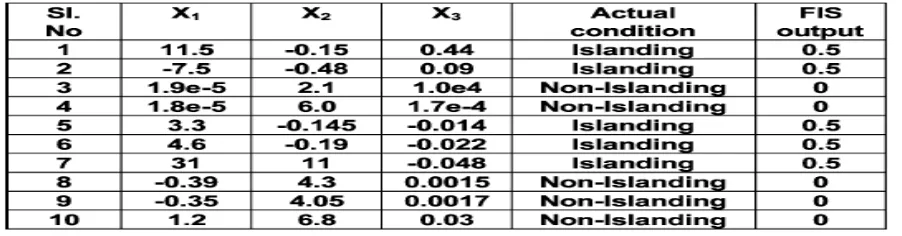
Table I provides the test results for different
conditions of inputs, and for islanding
detection. The FIS provides 0.5 for islanding
detection and 0 for non islanding detection.
Table II depicts the classification accuracy
for data with and without noise. The
classification accuracy is 100 % on 36 test
cases of different conditions for features.
The proposed fuzzy rule base is found to be
accurate and robust for islanding detection
Available Online At www.ijpret.com of the distribution network. Although the
DT-fuzzy-based approach provides similar
results compared to DT only (for our
studied database), the fuzzy transformation
helps to improve the interpretability of
knowledge-based classifiers through its
semantics that provide insight in the
classifier structure and decision-making
process over crisp classifiers. In case of DT
only used for the islanding detection task,
the scheme is based on an offline
decision-making process (a data mining approach)
where final implementation is based on the
threshold values of the corresponding
features of DT output. But in the proposed
approach, DT is used for selecting most
Figure 4 Flowchart for the proposed fuzzy
rule-based scheme for islanding detection
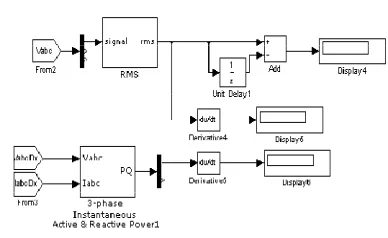
Figure 5 Instantaneous active and reactive
powers
Significant feature and classification
boundaries, which are done offline from
various derived features. From the DT
classification boundaries of the most
significant features, fuzzy MFs and the
corresponding rule base are formulated for
islanding detection. Thus, for final
implementation, only three features are
derived at the target DG location and
directly fed to the fuzzy inference system
for islanding detection as shown in Figure 4.
The proposed fuzzy rule-based classifier is
easier to implement for online islanding
detection compared to DT only, since DT is
an offline data mining algorithm. Also the
fuzzy rule base can handle more
Available Online At www.ijpret.com slope of the fuzzy trapezoidal MFs,
compared to the crisp classifiers such as DT
having sharp boundaries, with a larger data
base. Thus, the superior approximation
capabilities of the fuzzy systems over crisp
classifiers help to develop the relay to meet
the real time application with wide range of
uncertainties. The fuzzy MFs can be further
tuned to remove redundancy in the model
using the real coded genetic algorithm and
are being considered for real-time
implementation.
CONCLUSION
A DT initialized fuzzy rule base classifier is
proposed for is- landing detection. The
initial classification model is developed
using DT which is a crisp decision tree
algorithm. The DT is transformed into a
fuzzy rule base by developing fuzzy MFs
from the DT classification boundaries. The
fuzzy MFs reduction and rule base
simplification are performed using similarity
mea- sure. The proposed method is tested
on data with and without noise and found
to provide 100% islanding detection. As the
online implementation is easier with a fuzzy
rule based approach, it is thus suitable for
developing real time relay for islanding
detection in a large power network.
Table 1
Available Online At www.ijpret.com REFERENCES
1. J. Yin, L. Chang and C. Diduch, Recent
development in islanding detection for
distributed power generation, in Proc. Large
Engineering Systems Conf. Power
Engineering, Jul. 28–30, 2004: 124–128.
2. W. Freitas, Z. Huang and W. Xu, A
practical method for assessing the
effectiveness of vector surge relays for
distribute generation applications, IEEE
Trans. Power Del., 2005; 20(1): 57–63.
3. T. Funabashi, K Koyanagi and R
Yokoyama, A review of islanding detection
methods for distributed resources, in Proc.
IEEE Bologna Power Tech Conf., Bologna,
Italy, Jun. 23–26, 2003; 2: 23–26.
4. H. Ishibuchi, T. Nakashima and T Murata,
Performance evaluation of fuzzy classifier
systems for multidimensional pattern
classification problems, IEEE Trans. Syst.,
Man, Cybern. B, vol. 29, no. 5, pp.
5. J. Yin, CP Diduch and L Chang, Islanding
detection using proportional power spectral
density, IEEE Trans. Power Del., 2008;
23(2):776–784.
6. SK Salman, DJ King and G Weller, New
loss of mains detection algorithm for
embedded generation using rate of change
of voltage and changes in power factors, in
Proc. Developments in Power System
Protection Conf., 2001: 82–85.
7. MA Redfern and O. Usta, A new
microprocessor based islanding protection
algorithm for dispersed storage and
generation units, IEEE Trans. Power Del.,
1995; 10(3): 1249–1254.
8. L. Breiman, JH Friedman, RA Olshen and
CJ Stone, Classification and Regression