Creative Components Iowa State University Capstones, Theses and Dissertations
Fall 2018
Standards-based grading: Resources for implementation in
Standards-based grading: Resources for implementation in
school-based agricultural education
school-based agricultural education
Dan Doeing
Iowa State University, [email protected]
Follow this and additional works at: https://lib.dr.iastate.edu/creativecomponents
Part of the Curriculum and Instruction Commons
Recommended Citation Recommended Citation
Doeing, Dan, "Standards-based grading: Resources for implementation in school-based agricultural education" (2018). Creative Components. 54.
https://lib.dr.iastate.edu/creativecomponents/54
Standards Based Grading: Resources for Implementation in School-Based Agricultural Education
By
Daniel J Doeing
A creative component submitted to the graduate faculty in partial fulfillment of the requirements for the degree of
MASTER OF SCIENCE
Major: Agricultural Education Program of Study Committee: Dr. Michael Retallick, Major Professor Dr. Robert A. Martin, Committee Member
Dr. Wade Miller, Committee Member
Iowa State University 2018
Table of Contents
Chapter 1 - What 2
Introduction 2
Purpose/Objectives 6
Need 7
Definition of Terms 9
Chapter 2 - Why 14
Literature Review 14
Background & Setting 19
Chapter 3 - How 23
Methods 23
Chapter 4 – The Guide 24
Chapter 5 - So What 25
Reflect on the question 25
Reflect on coursework 25
What is recommended 26
Extensions 27
Summary 28
Chapter 1 - What
Introduction
American public schools have historically revolved around rote facts and
memorization as opposed to understanding concepts or practical application of certain
content. A reported letter grade and/or percentage has always been sufficient enough to
communicate a student’s proficiency within the classroom. While this system of grading
has existed for over one hundred years within the United States, to date there have
been no meaningful research reports to support them (Marzano, 2000).
In the past century, everything from modern medicine to personal computing has
evolved and improved; yet the educational system’s grading practices have remained
the same, despite a lack of evidence supporting this stagnation. Schools are centers of
learning, and that learning must be assessed in order to determine the effectiveness of
the teaching and learning process. This process is commonly referred to as grading.
Recently, there has been a focus on revolutionizing the grading system with the
intentions of improved student learning.
The views of grading and assessment have shifted over time, which has resulted
in the development of standards. The AFNR Career Cluster Content Standards, for
example, provide state agricultural education leaders and educators with a high-quality,
rigorous set of standards to guide what students should know and be able to do after
completing a program of study in each of the AFNR career pathways (AFNR Standards,
2015). They may be taught and assessed once, or they may be reassessed multiple
times over the course of a school year if the standard is one that requires practice by
In recent decades, education has also struggled to focus on its primary objective
of learning. Many initiatives, paperwork, and trends in education distract educators and
their academic institutions from what is most important: student learning. Additionally,
while some educational initiatives remain helpful, it may still be time to re-evaluate a
vital component of education: student assessment. A standards-based system of
assessment seems to be a significant and defensible improvement over traditional
grading practices (Townsley & Buckmiller, 2016). Grading students by standard (as
opposed to percent of completed work) changes the conversation regarding each
individual student’s proficiency level. It also helps alleviate the distractions that deter
education professionals from focusing on their students’ capacity for learning.
This movement toward a grading and assessment system that is more reflective
of student learning is vital to the progression of our society (Cutshall, 2001). Traditional
grading systems as described before are not effective, and can become very subjective
based on teacher and student personalities, behavior, prejudices, and other
environmental influences. However, this new method of standardsbased, or
-referenced grading has been gaining traction across the United States. Sometimes it is
adopted voluntarily by teachers who are seeking to improve the method in which they
assess their students, and other times it is a transition required by a school.
There are different aspects of grading to consider when deciding which system is
best for students that can result in both advantages and disadvantages. Historically, for
example, a student’s low or failing grade resulted in justification through a single low
test score, incorrect memorization, or missing work. These negative attributes are not
student’s overall proficiency of course content, they can still have an indirect influence
on a student’s grade in a standards-based system. The only true difference is the ways
and means of assessing and reporting these student attributes.
Within the standards-based grading approach, it would be common practice to
identify the lowest scores and actively work to reteach or reassess on those standards
in an effort to improve the grade. This opens a two-way line of communication between
teacher and student in regard to a student’s grades, not simply complaining or asking
for an extra credit assignment as is popular today. Communicating grades in this
manner easily shifts both questions and answers on both sides of the communication
exchange. Questions shift from a previously popular “Why did you get a low grade?” to
“Which standards can you prove you know in order to raise that grade?” and “How can
you prove you know this content?”.
A disadvantage to implementing this new grading system lies almost entirely in
the implementation and adoption phases. During these times, students and parents can
misunderstand the importance or motivation influencing this change. Also, teachers
must often work towards implementation and adoption of a new grading system on their
own time. This includes educating students and their families on what changes are
being made. Additionally, teachers and students must both be flexible and creative in
how they provide and perform on assessments to justify their learning. This can be
time-consuming for the teachers and daunting for the students with less specific direction on
how to accomplish these tasks.
There are many advantages to changing the student assessment system that
approach, there will be a gap in the connection between student achievement and
where they belong in the workforce. Traditional teaching methods are not satisfying the
needs of individuals entering careers in agriculture, attending major universities, or
pursuing other post-secondary education endeavors (NRC, 1996, 2009). To meet the
needs of the future, it is important to invest in positive changes in education that train
our youth to meet those needs. Remaining stagnant in these areas is simply not an
option.
While many decisions being made on a local level are driven by state initiatives,
state initiatives may not always align with local workforce needs or trends. Iowa has
created a few initiatives under the Iowa Workforce Development group to alleviate any
gaps between academia and workforce trends, including Future Ready Iowa
(Carnevale, et. al., 2015). These groups aggregate data and trends about employment
statistics across the state. A report by Future Ready Iowa identifies the employment
outlook, which will impact decisions made regarding education that can lead students
toward careers in the areas mentioned in the excerpt below;
“By 2025, blue-collar jobs – representing a broad category consisting of
production; transportation and material moving; installation, maintenance
and repair; and farming, fishing and forestry occupations – will overtake
sales and office support jobs as the largest source of employment for Iowans,
accounting for 24 percent of new jobs added between 2010 and 2025”
Standards that directly relate to skills required by employees within these specific
sectors can help students identify exact areas that their skills can be used or applied
beyond the scope of secondary education.
Purpose/Objectives
The purpose of the creative component is to develop a facilitator’s guide for high
school agriculture teachers wanting to convert to Standards-Based Grading. This guide
will be a short and easy-to-follow process that teachers can work through to develop a
system that involves options for custom implementation. To accomplish this purpose,
the following objectives will be met:
1) Develop a step by step process for transition to SBG
2) Provide the non-negotiables when converting to SBG
3) Establish a set of notes for both teacher and students assist with transition.
4) Provide example documents (as provided in the appendices) for teachers
who are converting to SBG
By implementing a one-size-fits-all standards-based grading approach to agricultural
education, instructors provide better individual feedback when communicating grades
with their students. This opens a two-way line of formal communication between teacher
and student. This transition requires professionals to reflect on current grading practices
and philosophies some are so quick to boast. Reflection often results in polishing these
practices for the purpose of progressing into the future, as opposed to remaining
stagnant because of tradition (Marsick, 1988). Kate Owens, mathematics professor at
“The goal of SBG is to shift the focus of grades from a weighted average of
scores earned on various assignments to a measure of mastery of individual
learning targets related to the content of the course. Instead of informing a
student of their grade on a particular assignment, a standards-based grade aims
to reflect that student’s level of understanding of key concepts or standards.
Additionally, students are invited to improve their course standing by
demonstrating growth in their skills or understanding as they see fit” (2015).
Need
There is a high need for resources for agriculture teachers who desire (or are
required by their schools) to implement standards-based grading in their classrooms.
Due to the inter-curricular nature of the affiliation with the National FFA Organization,
teachers are able to utilize much of the work that has already been done on a national
level when adapting SBG to their local programs. However, it is not easy for an
agriculture teacher to locate and gather all of these resources and determine the exact
ones they need before compiling them into an easy-to-use format to implement into their
classroom gradebooks.
The shift to a new grading approach based on student proficiency becomes
easier within agriculture education and other career and technical education (CTE)
programs (as opposed to some other content areas) due to the nature of CTE programs
to apply their content to real-world problems that make learning more relevant to
There remains a need for a versatile method for substantive grading and
reporting practices within agricultural education. Agriculture educators will be the first to
boast about grading students on their knowledge or performance of a skill, but often
times their actual gradebook heavily reports participatory grades more than
standard-based grades. Many agriculture teachers then struggle when wanting or needing to
implement such a change within their own classroom practices. The primary problem is
not convincing teachers to adopt the principles that lie behind a standards-based
grading approach. Instead, the problem is that agriculture teachers need a simple and
straightforward process for implementing SBG in their programs, regardless of motive
for doing so.
The lack of access to such resources suggests that there remains a need to ease
this transition for teachers. Additionally, there becomes a need for professional
development for those teachers to do so. Professional development workshops create
an environment to share practices, successes, failures, and discussion with peers to
alleviate concerns, network with others, and put teachers at ease who may be
overwhelmed by the daunting task of changing their grading practices. The task of
adopting new intricate practices can haunt a teacher on a daily or weekly basis if not
done correctly. Therefore, the purpose of this creative component is to develop a
resource folder for agricultural educators to utilize and customize when implementing
Definition of Terms
The following definitions of common terms used throughout the report will ensure
effective translation of the ideas they represent.
Agriculture, Food, and Natural Resources (AFNR) is a common acronym used to
describe the content areas covered within agricultural education.
Assessments are the tools educators use to evaluate a student’s level of ability or
understanding of a standard in question. An assessment may appear in the form
of tests, but can be performance-based, oral, written exams, or any combination
thereof. Typically, standards are written in such a way that will define
assessment parameters within them.
For example, in the Next Generation Science Standards (NGSS), one standard
reads: “Use a model to illustrate how photosynthesis transforms light energy into
stored chemical energy.” (NGSS Lead States, 2013).
The standard is identified by the code HS-LS1-5; this refers to the High School
level (HS) in the Life Sciences subject area (LS). It states that students will use a
model to show their understanding. Models range from pre-designed 2D
diagrams that students utilize, digital or tangible 3D visual aids, or a student
could illustrate their own understanding through personal creations that make the
most sense to them. The boundary on this particular standard limits the student
from being assessed on the specific biochemical steps of the process. There are
Formative assessments are any activities undertaken by teachers where the
evidence is used to adapt the teaching to meet student needs (Black et al.,
1998). Summative assessments are assessments of learning where the results
are used to make some sort of judgment such as a final grade, and documents
how much learning has occurred at a point in time (Chappuis et al., 2008).
Career and Technical Education (CTE) is the category an agricultural education
department exists within, along with industrial technology, business, and family &
consumer sciences to name a few other common content areas. CTE courses
can assess their own unique learning standards while also being known for
applying math, literacy, and science standards from the core curriculum within
their distinct content areas.
Curriculum is the content by which the standards are taught to students. There are
typically many learning objectives (or indicators) that are used as benchmarks
to determine if a student is making adequate progress towards becoming
proficient in a standard.
Curriculum for Agricultural Science Education (CASE) refers to a curriculum
(aligned with AFNR, science, math, and English content standards) utilized by
many agri-science educators within their courses.
Grading periods are the designated periods of times schools use to report grades
officially. These periods range from school to school, and are commonly in
9-week quarters, 18-9-week semesters, or 12-9-week trimesters.
Grading rubrics are the tools utilized by instructors to communicate both expectations
Instructional coaches are the teacher leaders take on extra responsibilities, including
helping colleagues analyze data and fine tune instructional strategies as well as
coaching other teachers and co-teaching (Rasey, n.d.). These are especially
prevalent in the state of Iowa since the adoption of the Teacher Leadership and
Compensation program established in 2014 allocated state funding for schools to
pay these teacher leaders more for their defined leadership roles, many schools
choosing to hire teachers as mentors (who remain as classroom teachers) and
instructional coaches (who are typically removed from the classroom to fulfill the
full time duties of working with classroom teachers on their individual professional
strategies). However, these roles are defined locally and can vary across school
districts.
National FFA Organization (FFA) Formerly known as the Future Farmers of America,
the National FFA Organization is today’s largest student-led organization and
focuses on activities and programs that enhance individual student potential for
premier leadership, personal growth, and career success through agricultural
education.
Professional Learning Community (PLC) is an ongoing process in which educators
work collaboratively in recurring cycles of collective inquiry and action research to
achieve better results for the students they serve. Professional learning
communities operate under the assumption that the key to improved learning for
students is continuous job-embedded learning for educators (DuFour et al.,
Reassessments are assessments given to students on a standard after they have
already been assessed on that standard. A teacher can decide to reassess the
entire class or individual if they feel it is necessary after re-teaching a topic, or
any individual students can decide that they would like to reassess on a standard
if they would like to improve their overall score in a class. Reassessments can be
the exact same as the original assessment, similar, or completely different as
long as it validly measures the standard in question. Either the teacher or student
can initiate the need for a reassessment, but it can also be a mutual decision.
Reassessments should happen as often as necessary for a student to be
deemed proficient on a standard.
Standards are the objectives that are set for students to achieve in their courses. The
Development Process (n.d.) involves standards that are typically written by
teachers, content experts, and leading thinkers, and adopted by governing
bodies of the state or educational institutions that are tasked with measuring
these benchmarks of student achievement.
Standards-Based Grading (SBG) In education, the term standards-based refers to
systems of instruction, assessment, grading, and academic reporting that are
based on students demonstrating understanding or mastery of the knowledge
and skills they are expected to learn as they progress through their education
(Standards-Based, 2017).
Standards-Referenced While similar to SBG, standards-referenced refers to the actual
material that is being taught to students within a course. The source of the
not necessarily utilized when reporting student achievement on individual
standards.
Supervised Agricultural Experience (SAE) is a program within agricultural education
in which students will identify a work experience to record person growth and
success within. Many record-keeping skills are assessed as students document
work hours and skills earned in addition to keeping financial records on said
experience.
Traditional Grading Students are given numerical scores on a 1–100 scale and class
grades represent an average of all scores earned over the course of a semester
or year (Standards-Based, 2017).
“The reports students receive (in SBG) might use a 1–4 scale, for example, with
3s and 4s indicating that students have met the standard. In standards-based
schools, grades for behaviors and work habits—e.g., getting to class on time,
following rules, treating other students respectfully, turning in work on time,
participating in class, putting effort into assignments—are also reported
separately from academic grades, so that teachers and parents can make
distinctions between learning achievement and behavioral issues.”
Chapter 2 - Why
Literature Review
There is very little research available for grading in agricultural education, or in
the overarching career and technical education (CTE) area (Lichty, 2014). As many as
80% of schools require letter grades (Munk & Bursuck, 2004) with a majority utilizing a
100-point scale with 10-point intervals (Reeves, 2011). Learning should be relevant to
students and the real world while assessments should provide students with the
opportunity to demonstrate what they know (O’Connor, 2009). Teachers are now being
asked to develop assessment strategies that are authentic, and these strategies are
considered just as important as developing a grading plan (Brookhart, 2011).
Traditional teaching methods are not satisfying the needs of individuals entering
careers in agriculture, attending major universities, or pursuing other post-secondary
education endeavors (NRC, 1996, 2009). In discussions on reforming education, many
educators and policy makers have called for models of teaching and learning that
change the role of the teacher from being a deliverer of knowledge to one of being a
facilitator of more active student learning (Padron & Waxman, 1999). The teacher
directs the teaching and learning process partially through assessing student
performance (Wehlage et al., 1996).
Assessment
Assessments can be broken down into two categories: formative assessment
and summative assessment. Differentiating between the two is done by determining
Formative assessments are any activities undertaken by teachers where the evidence is
used to adapt the teaching to meet student needs (Black et al., 1998). Summative
assessments are assessments of learning where the results are used to make some
sort of judgment such as a final grade, and documents how much learning has occurred
at a point in time (Chappuis et al., 2008).
Agricultural educators and other CTE teachers have been familiar with holding
students accountable (Lichty, 2014). The Handbook on Agricultural Education in Public
Schools (2008) outlines a variety of authentic and traditional forms of assessment,
including recordbooks, portfolios, self-reflections, debates, and presentations. Each
assessment, graded with a rubric, becomes a reliable tool to measure student learning
(Phipps, Osborne, Dyer, & Ball, 2008).Students should be challenged, as if they were
in adult roles, in constructing or producing knowledge in written or oral communications,
by making or repairing things, and in performance for audiences (Knobloch, 2003).
Assessment is commonly discussed related to authentic learning (Knobloch,
2003). Authentic learning occurs through tasks, activities, and assessments that result
in achievement that is significant and meaningful rather than that which is trivial or
useless (Newmann & Wehlage, 1993). Authentic assessment measures student
performance using procedures that simulate the application of real-life tasks (Ormrod,
2000; Woolfolk, 2001).
Authentic Assessment in CTE
CTE has been using authentic assessments for years, while other teachers have
authentic assessment on practical application of academic knowledge comes naturally
(Willhoft, 2013).
Technical skill attainment assesses each CTE student’s knowledge, skills, and
abilities to succeed in an occupation (Stone, 2009).These technical skills can further be
defined as objectives and competencies required by a specific occupation (Stone,
2009).
By looking at where students are performing, determining a proficient level and
coming up with a plan on how to get there, CTE programs can begin to use what is
reported to reflect on their program for improvement (Hoachlander, 2000).
Reassessment
In Rick Wormeli’s Fair Isn’t Always Equal (2006), he addresses differentiated
instruction as “doing what’s fair for students” (p.3). Assessments should be ongoing to
help students learn and develop (Wormeli, 2006; Guskey, 2003). Through
reassessment, students are given the time to try another approach, complete a few
more examples, and take another day to process the information (Wormeli, 2006),
which ultimately makes the learning process more fair for students. Students reflect on
their mistakes and understand their efforts will count and can be used to improve their
status through reassessment (Wormeli, 2006).
Redoing assessments until students reach high expectations results in far more
learning (Wormeli, 2011). Redoing assessments can not only evaluate what students
learn, but can also help determine the teacher’s effectiveness of corrective instruction
discretion (Wormeli, 2006). The assessment can be changed and completed in a given
time period determined by the educator (Lichty, 2014). This can be limiting the redo to
an oral discussion with the teacher or changing the questions in order on a forced
choice test (Lichty, 2014). Redos and retakes allow students to become prepared for
college and careers because they have learned the skills and content (Wormeli, 2011).
Implementation of SBG
Although agricultural education teachers’ attitudes toward the Common Core
State Standards (CCSS) have not previously been explored, research outside of
agricultural education has investigated the topic (McKim et al, 2015).
A 2013 study conducted by the Editorial Projects in Education Research Center
(EPE) sought to describe practicing teachers’ familiarity with attitudes toward
implementation of and preparedness to teach the CCSS. Although teachers were
familiar with the standards, they had not participated in an abundance of professional
development experiences related to the CCSS. Nearly one-third of respondents in this
study reported spending one day or less in professional development related to the
implementation of the CCSS. Furthermore, the majority of responding teachers, 56%,
identified the curriculum they were using was not aligned with the CCSS (McKim et al.,
2015).
Given that the research supports agricultural education as an effective context of
math and ELA skills (Nolin & Parr, 2013; Park, 2012; Pearson et al., 2010); professional
development opportunities related to the integration of these subject areas is warranted
Professional learning communities (PLCs) can help an instructor immensely
within a school system. Supports provided to instructors can aid in both their instruction
and assessments, but if a school does not place priority on allowing PLCs to meet, a
teacher can easily feel stranded and left to figure out these systems on their own. When
time and support are regarded as constants, learning will be the variable no matter how
hard an individual teacher may work (DuFour, 2004).
Other researchers in education have studied the impact grading systems have on
student achievement, in addition to the instructor’s role. Researchers found that in
effective schools “each of the teachers in the school has a clear understanding of what
the essential learner objectives are, grade by grade and course by course” (Lezotte,
2004). Robert Marzano (2003) referred to this clarity of focus as a “guaranteed and
viable curriculum.” Each course has an important role to introduce or reinforce
standards that students should know and be able to do. Robert DuFour’s (2004) three
essential questions serve as guidelines for each instructor to bring to a PLC, but can
also guide them in their own instruction within their own classrooms:
○ Exactly what is it we want all students to learn?
○ How will we know when each student has acquired the essential
knowledge and skills?
○ What happens in our school when a student does not learn?
By taking an intimate look at the answers to these questions, an instructor can make
informed decisions about what resources and supports they receive from their school,
Grades should provide meaningful feedback to students, document their
progress, and help teachers make decisions about what instruction a student needs
next (Wormeli, 2006). Wormeli continues, saying “the grade, number, or symbol is
supposed to be a placeholder for a much longer description of evidence. By itself, it is
nonsense, communicating nothing without the evidence associated with it. Yes, you can
use letter grades in standards-based grading. You can also rubric numbers as long as
they directly reference evidence descriptors” (Wormeli, 2015).
Locally, Iowa is fortunate enough to possess a renowned SBG expert (Matt
Townsley of Solon, Iowa) who has provided countless videos and resources that
teachers or schools may seek. Jenny Lichty, the agriculture instructor in Ballard, IA has
one of the few, if only, research articles on the use of standards-based grading within
the niche content area of agricultural education or any other CTE area. She concluded
that the biggest obstacle to fully implement SBG is time and understanding as indicated
by those who are implementing or have implemented SBG (Lichty, 2014). Her survey of
Iowa agricultural educators determined that they need more time and resources to feel
confident in implementing SBG, and similar instructors in other states may not even feel
this confident if conversations surrounding SBG are not as commonplace or progressed
in their state’s educational environment.
Background & Setting
Grading within agricultural education varies from program to program, and truly
depends on the program offerings and school policies and community in which they
traditional grading practices to a more standard (or competency) based grading system.
If teachers do not understand the implications of adopting this new grading system, they
are likely to do the bare minimum to appease their administrators and never truly grasp
the need or purpose for making the change. This, in turn, is likely to not serve students
in the best way possible toward helping them grow as individuals. Instead, these new
practices end up becoming just another bureaucratic hurdle for most teachers.
Agriculture courses are designed with a seemingly perfect support system to
make this transition, arguably more so than other CTE courses. Agricultural educators
maintain a vast network across their state and nation and have an abundance of tools
and resources provided to them through their professional organizations, such as the
National Association for Agricultural Educators (NAAE). The National Council on
Agriculture, Food, and Natural Resources (AFNR) created and revised national AFNR
standards for instructors to use across the country (AFNR Standards, 2015). Although
agriculture varies from state to state to match the climate in each environment, the
foundational knowledge of agriculture remains the same: there is a science to how
plants grow, how animals are raised, and how natural resources and ecosystems
operate and remain intact. Capitalizing on this foundational knowledge will allow
students to pursue careers or further education in an area of the agriculture industry that
best suits their interests.
With the additional supports that the National FFA Organization (FFA) and
Supervised Agricultural Experience (SAE) work-based learning programs provide to an
agricultural education program, students and teachers alike are provided with multiple
organization, giving teachers the flexibility of providing instruction during the school day,
but allowing students the flexibility to spend more time honing their craft outside of the
school day, when there are less social pressures that exist within the confines of a
typical American high school. While some SAE programs exist on school grounds using
school resources, the time a student invests in their SAE program takes place almost
entirely outside of the school day. This marriage of programs is perfect for 21st Century
Skill standards to evolve with students over time (Framework for 21st Century Learning,
2016). Other standards can be observed and measured for proficiency as well, such as
Iowa’s Universal Constructs (developed as part of the Iowa CORE Standards)
(Universal Constructs, n.d.). Many of these standards exist in an agricultural education
setting, making it very easy for an instructor to transition to a SBG model if they have
the appropriate tools and knowledge base to make it easier and more comfortable for
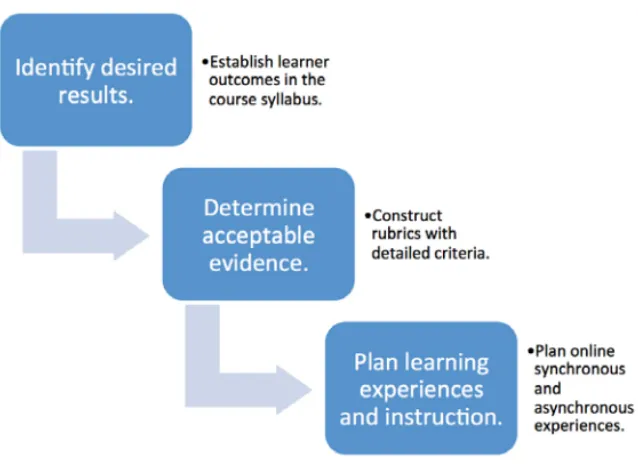
[image:23.612.166.485.432.664.2]them to do so.
A teacher can follow the school of thought outlined in Figure 1 while utilizing this
guide as part of the implementation process. Wiggins & McTighe’s (2005) concept of
Understanding by Design (UbD), also referred to as Backwards Design, can help
instructors frame their curriculum units based on the standards essential for students to
know. The first step revolves around the instructor deciding which standards will be
taught in a course. The second step encourages the instructor to design or adapt their
assessments to match the standard being assessed. For example, if a standard dictates
that a student must analyze or create something, an assessment that asks for a
vocabulary definition regarding that content would not suffice. The final step is based on
the instructional methods utilized to provide students the experiences necessary to
achieve the standard in question. By looking at the provided SBG guide through the
lens of UbD, an agricultural educator should feel confident in utilizing these resources to
Chapter 3 - How
Methods
Agricultural education is defined by the National Council for Agricultural
Education as a systematic program of instruction available to students desiring to learn
about the science, business, technology of plant and animal production and/or about the
environmental and natural resources systems (Agricultural Education, 2012). While the
philosophy behind standards-based grading goes hand-in-hand with the philosophy of
agricultural education programs, classroom implementation has proven itself to be a
major barrier for many agriculture instructors. By following these steps, any agriculture
instructor who has the need or desire to implement standards-based grading into their
courses should be able to do so effectively and confidently. Use of this method can
produce positive results for the instructor and program through an enhanced
understanding of learning for the students.
Even as a teacher follows the outlined procedure below for implementation, there
is some work that must be done prior to these steps in order for this method to work as
intended. These preliminary steps (provided) will serve as a foundation for this transition
and may be skipped based on self-identified instructor proficiency. An instructor should
be thoroughly familiar with the content standards they plan to cover, the assessments
they will need to utilize to measure them, and how they plan to provide instruction to
Chapter 4 – The Guide
To accomplish the purposes and objective of this creative component, a resource
guide was developed. It is provided as an individual document to that it can be easily
Chapter 5 - So What
Reflect on the question
A teacher who desires positive change surrounding their coursework grading
approach needs to begin at the simplest level. This involves reflecting on and modifying
their own grading practices to match their teaching philosophy as opposed to continuing
previous grading practices simply because they were already in existence and reflected
their own experiences within education. Once a teacher has completed this reflection on
their desire to implement a new grading approach, they will need to gather resources
that can help them to be effective in this endeavor.
Reflect on coursework
The Master of Science in Agricultural Education program at Iowa State University
was a rewarding and enjoyable experience. I have enhanced skills once established in
my undergraduate program, and gained new skills while practicing them within my
current profession as a high school agriculture instructor. These new perspectives have
stayed with me throughout my career and help guide the decisions I make each day.
The distance-learning environment of the program allowed me to put my life-long
learning skills in action, and I plan to continue to use those skills beyond my
participation in the Master of Science program.
The AgEdS 520 course titled Adult Education in Agricultural Education was
specifically helpful to me in the creation and design of the workshop and SBG materials
created for this creative component of my Master’s Degree program at Iowa State
work well for adults, such as distance learning, discussion, simulation, case studies and
more. This course taught me to leverage the adult learner’s experiences and allow them
to contribute to the course in an effort to create ownership. If they do not feel that their
experiences or contributions are being valued, they are less likely to implement
knowledge gained from the course in their everyday practices.
What is recommended
I anticipate that as a teacher begins to implement their chosen SBG system,
many changes will be required before it exists as a useful tool for both the instructor and
student. There needs to be a plan going into this endeavor, but the teacher must remain
flexible in implementation in order to accommodate the student, the school policies and
environment, and their own personal habits or comfort level. The instructor should be
able to overcome technicalities and adapt to a situation while staying true to their
educational philosophies as well as a SBG format.
One recommendation is for the implementing teacher to find people who can
provide guidance or advice throughout the process, from pre-implementation through
the end of the course. Local decisions will come easy with a more experienced teacher
listening and guiding them through a concern or oversight within their own gradebook.
Also, the implementing teacher should be willing to be open with their students
about the process, purpose, and reasoning for transitioning the gradebook from the
traditional ones they are used to. This dialogue will perpetuate into open and positive
conversations about the purposes of grading as well as the specific content that
Becoming familiar with the National AFNR Career Cluster Standards, 21st
Century Skills, and other relevant standards being assessed within agricultural
education courses is a necessary evil. The hidden benefit of an agricultural education
department is that it is typically an elective course. Unlike core content classrooms,
electives have more freedom of choice when it comes to which standards they will need
to cover. By becoming familiar with the standards available to their department, a
teacher will save time searching for standards to apply to their courses and can spend
more time instructing students of the content.
Extensions
If there was a standard way to implement SBG in agricultural education, it could
easily find a way to become part of existing curriculum that many in Iowa utilize within
their courses, such as Curriculum for Agricultural Science Education (CASE). CASE
and other programs implemented beyond Iowa such as MyCAERT, One Less Thing,
and the National FFA Organization do an appropriate job of aligning content with
standards so that teachers do not have to do this tedious work themselves.
The online Agricultural Experience Tracker (AET), a subscription-based record
keeping service for FFA chapters, can serve as a platform to help students track their
SAE programs as well as other non-coursework standards being assessed in our
programs, such as the 21st Century Learning Skills and Iowa Core’s Universal
Summary
In summary, SBG can be an effective form of feedback from teacher to student
and create a line of communication that may not have existed prior to implementation.
Within agricultural education and other career and technical education
departments, SBG quickly becomes the perfect platform for many standards that are
already covered but have never been appropriately assessed up until this point in time.
This mostly includes assessing 21st Century Skills such as the Universal Constructs
named by the Iowa Core as well as other high-performance skills that have never been
formally assessed. Students will gain these skills through their involvement within FFA
leadership or career programs.
Implementation can be daunting with the number of considerations and
recommendations that exist for teachers who seek to do so, but it can be done and is a
step in the right direction for grade reform within education. A SBG system may not be
perfect yet, but it is a step in the right direction for many agricultural education
classrooms.
Because there is no perfect way to do things, changes will exist and adaptations
must be made to fit a teacher’s needs. This is the perfect reason to begin implementing
as soon as decisions have been made, which likely needs to occur before a teacher can
References/Citations
AFNR Standards. (2015). Retrieved August 2, 2018, from https://thecouncil.ffa.org/afnr/
Agricultural Education. (2012). Retrieved from https://thecouncil.ffa.org/ageducation/
Armstrong, Thomas. (1993). Seven Kinds of Smart. Identifying and Developing Your
Many Intelligences. New York: Penguin Books.
Black, P., & Wiliam, D. (1998). Inside the black box: raising standards through
classroom assessment. The Phi Delta Kappan, 80 (2), 139-144, 146-148.
Brookhart, S. M. (2011). Starting the conversation about grading. Educational
Leadership, 69 (3), 10-14.
Carnevale, A. P., Smith, N., Gulish, A., & Hanson, A. R. (2015). Iowa: Education and
Workforce Trends through 2025 (Rep.). Retrieved October 12, 2018, from Iowa
Workforce Development website:
https://www.luminafoundation.org/files/resources/iowa-workfrce-2025.pdf
Chao, R. & Lopez-Gottardi, C. (2015). How America’s education model kills creativity
and entrepreneurship. Retrieved August 14, 2018 from
https://www.forbes.com/sites/darden/2015/03/19/how-americas-education-model-
kills-creativity-and-entrepreneurship-2/#4189f3d53e49
Chappuis, S., & Chappuis, J. (2008). The best value in formative assessment.
Development Process. (n.d.). Retrieved August 03, 2018, from
http://www.corestandards.org/about-the-standards/development-process/
DuFour, R. (2004). What is a “ professional learning community”? Educational
Leadership, 61(8), 6–11.
DuFour, R., DuFour, R., Eaker, R., & Many, T. (2006). Learning by Doing: A Handbook
for Professional Learning Communities at Work™, pp. 2–4.
Ellis, E.; Gable, R. A.; Gregg, M.; Rock, M. L. (2008). "REACH: A framework for
differentiating classroom instruction". Preventing School Failure. 52 (2): 31–47.
Framework for 21st Century Learning. (2016). Retrieved August 14, 2016, from
http://www.p21.org/our-work/p21-framework
Gatens, B. (2015). 5 Non-Negotiable Expectations for Classrooms.
Retrieved from
https://education.cu-portland.edu/blog/curriculum-teaching-strategies/non-negotiable-classroom-expectations/
Guskey, T. R. (2003). How classroom assessments improve learning. Educational
Leadership, 60 (5), 6-11.
Hoachlander, G. (2000, February 1). Make a Tool of the Rules. Techniques, 75, 1-4.
justintarte. (2014, Aug 31). The integrity of a grade and ways to make the shift...
#edchat #unionrxi #sblchat [Tweet]. Retrieved from
Education,44(4), 22-34. doi:10.5032/jae.2003.04022
Lezotte, L. (2004). Revolutionary and evolutionary: The Effective Schools movement.
Effective Schools products. Retrieved March 19, 2004, from
https://www.effectiveschools.com/freestuff.asp
Lichty, J. (2014). Iowa agricultural educators' current grading practices and perceptions
of standards-based grading. Graduate Theses and Dissertations, Iowa State
University. 14034. https://lib.dr.iastate.edu/etd/14034
Marzano, R. (2003). What works in schools: Translating research into action.
Alexandria, VA: Association for Supervision and Curriculum Development.
Marzano, R. (2000). Transforming classroom grading. Alexandria, VA: ASCD.
NGSS Lead States. (2013). HS-LS1-5 From Molecules to Organisms: Structures
and Processes.
https://www.nextgenscience.org/pe/hs-ls1-5-molecules-organisms-structures-and-processes
Marzano, R. J. (2010). Formative Assessment & Standards-Based Grading.
Bloomington, IN: Marzano Research Laboratory.
Mckim, A. J., Lambert, M. D., Sorensen, T. J., & Velez, J. J. (2015). Examining the
Common Core State Standards in Agricultural Education. Journal of Agricultural
Education,56(3), 134-145. doi:10.5032/jae.2015.03134
Ministry of Education. (2007). Differentiated instruction teacher's guide: Getting to the
core of teaching and learning. Toronto: Queen's Printer for Ontario.
approach to making the grades of included students more accurate and
meaningful. Focus on Exceptional Children, 36 (9), 1-11.
National Research Council. (1996). National science education standards. Washington,
DC: National Academy Press.
National Research Council. (2009). Transforming agricultural education for a changing
world. Washington, DC: National Academy Press.
Newmann, F. M., & Wehlage, G. G. (1993). Five standards of authentic instruction.
Educational Leadership, 50(7), 8-12.
Nolin, J. B., & Parr, B. (2013). Utilization of a high stakes high school graduation exam
to asses the impact of agricultural education: A measure of curriculum
integration. Journal of Agricultural Education, 54(3). doi: 10.5032/jae.2013.03041
O'Connor, K. (2009). How to grade for learning, K-12 (3rd ed.). Thousand Oaks, Calif.:
Corwin.
Ormrod, J.E. (2000). Educational psychology: Developing learners. Upper Saddle River,
NJ: Merrill.
Owens, K. (2015). A Beginner's Guide to Standards Based Grading. Retrieved June 04,
2017, from
https://blogs.ams.org/matheducation/2015/11/20/a-beginners-guide-to-standards-based-grading/
Padron, Y. N., & Waxman, H. C. (1999). Effective instructional practices for English
language learners. In H.C. Waxman & H. J. Walberg (Eds.), New directions for
teaching practice and research (pp. 171-204). Berkeley, CA: McCutchan
Publishing.
education in public schools (6th ed.). Clifton Park, NY: Thomson Delmar
Learning.
Rasey, L. (n.d.). Teacher Leadership and Compensation (TLC) System. Retrieved
October 28, 2018, from
https://educateiowa.gov/teacher-leadership-and-compensation-system.
Reeves, D. B. (2011). Elements of grading: a guide to effective practice. Bloomington,
IN: Solution Tree Press.
Standards-Based Definition - The Glossary of Education Reform. (2017). Retrieved
August 03, 2018 from https://www.edglossary.org/standards-based/
Stone, J. R. (2009, February 1). A Perkins Challenge: Assessing Technical Skills in
CTE. Techniques, 84, 21-23.
Superintendent and District Data. (2017). Retrieved from
http://www.aasa.org/content.aspx?id=740
Townsley, M. and Buckmiller T. (2016). What does the research say about standards-
based grading?. Retrieved August 14, 2018 from
http://mctownsley.net/standards-based-grading-research/
Universal Constructs: Essential for 21st Century Success. (n.d.). Retrieved from
https://iowacore.gov/content/universal-constructs-essential-21st-century-success-0
V.J. Marsick, ‘Learning in the workplace: The case for reflectivity and critical
Authentic achievement: Restructuring schools for intellectual quality, (pp. 21-48).
San Francisco, CA: Jossey-Bass.
Wiggins, G. P., & McTighe, J. (2005). Understanding by design (Expanded 2nd ed.).
Alexandria, VA: Association for Supervision and Curriculum Development.
Willhoft, J. (2013, April 1). The Common Core and Next-Generation Assessments:
Preparing Students for CTE. Techniques, 88, 38-41.
Woolfolk, A. (2001). Educational psychology (8th ed.). Boston, MA: Allyn & Bacon.
Wormeli, R. (2006). Fair isn’t always equal: Assessing grading in the differentiated
classroom. Portland, ME: Stenhouse.
Wormeli, R. (2011). Redos and retakes done right. Educational Leadership, 69 (3), 22-
26.
Wormeli, R. (2015). Calling for a "Timeout" on Rubrics and Grading Scales. Retrieved
August 14, 2018, from
https://www.amle.org/BrowsebyTopic/WhatsNew/WNDet/TabId/270/ArtMID/888/