71 |
P a g e
International Journal of Pharmaceutical
Development & Technology
e ISSN - 2248 - 910X
www.ijpdt.com
Print ISSN - 2248 - 9096MULTIPLE SCREENING OF PHYTOCHEMICALS FROM DIFFERENT
PLANT EXTRACTS OF
SPERMACOCE HISPIDA
L., BY GC- MS
METHOD
Suriyamurthi Anupriya, Kannan Elangovan, Kandasamy Murugesan
*CAS in Botany, Guindy Campus, University of Madras, Chennai – 600025, Tamil Nadu, India.
ABSTRACT
Spermacoce hispida L. is one of the medicinally important plant belonging to the family Rubiaceae and commonly
termed as Nathaichuri in Tamil. This study was designed to screen the phytochemicals from whole plant extracts of Spermacoce
hispida L. Screening of secondary metabolites revealed the presence of active compounds such as acids, alkaloids, carbohydrates,
cyanin, flavonoids, glycosides, phenols, quinines, saponins, steroids, tannins, terpenoids and triterpenoids. These bioactive compounds have many applications in antioxidant, anticancer, anti- inflammatory and anti-ulcer properties. Methanol, ethyl acetate, chloroform, hexane and aqueous extracts were concentrated and analysed by GC-MS, which showed some of the major phytochemicals present in desired quantity (mg/g).
Keywords:Spermacoce hispida, phytochemicals, methanol extract, GC-MS analysis.
INTRODUCTION
Medicinal plants play a key role in human health care. In recent years, there has been an increasing awareness about the importance of medicinal plants due to the presence of bioactive compounds which plays a dynamic role to discover the new therapeutic agents for drug development and to prevent various human diseases. The plant kingdom in all aspect of life has served as a precious starting material for drug development. Drugs from the plants are easily available, less expensive, safe and rarely have side effects. Mankind experiences the trial and error method to know more about the medicinal properties of different plants. Secondary metabolites from the plant possess many medicinal applications for drug delivery [1]. Over the past four decades, several hundreds of phytochemicals have been identified in plants. Those compounds may contribute to explain the beneficial effects for health [2]. Habitually medicinal plants are important substances, where a number of compounds with various pharmacological activities were obtained through phytochemical analysis of plants. It is a natural composite source that acts as a disease curing agent [3].
More than 85,000 plants were documented for therapeutic use globally. Diseases can be cured of plants growing abundantly around the earth. Spermacoce hispida
Linn (Rubiaceae) was popularly known as “Nattaiccuri” in Tamil and “Shaggy button weed” in English [4]. It is widely
distributed in the Western Ghats of Kerala [5] and Maruthamalai forest, in Tamil Nadu. S. hispida L. removes signs of old age, improves vitality and it was used by the tribals in Western Ghats of Kerala since ancient times [6]. S.
hispida L. one of the crude material used for the treatment
of various ailments in the form of various preparations. The plant seed was used as a remedy to treat nerves and kidney injuries [7]. Its pharmacological properties include antioxidant [8], anti-inflammatory [9]. Bioactive molecules isolated from plants served as the starting materials for isolation and laboratory synthesis of drugs as well as a model for the production of biologically active compounds [10]. To the best of our knowledge, there was no previous attempt in phytochemicals was tried in this plant. The purpose of this study was to screen the active phytochemicals from different extracts of S. hispida for many biological assays.
MATERIALS AND METHODS
Collection and authentication of plant material
Fresh plant of Spermacoce hispida was collected from Kancheepuram District, Tamil Nadu, India. The plant was identified, authenticated and the voucher specimen (No: 00641) was deposited at the Herbarium, Captain Srinivasa Murti Research Institute for Ayurveda and Siddha Drug Development (CCRAS), Chennai-600106.
72 |
P a g e
Preparation of plant extracts
The fresh and healthy plants were washed repeatedly with running tap water to remove the dust and shade dried at room temperature (26±2ºC) for 7-10 days. The dried plants were coarsely powdered using pulveriser. The leaf powder of 100 g was taken in Soxhlet apparatus using different solvents such as hexane, chloroform, ethyl acetate, methanol and water. Extracts were concentrated using rotary evaporator (Heidolph, Germany) under reduced pressure. The extraction process was repeated thrice and total yield of extracts were recorded and tabulated, the residues were stored in amber colored glass vials at 4 ºC for further use.
Preliminary screening of phytochemicals
Screening for active phytochemicals in whole plant extracts of S. hispida was carried out using standard methods of [11-14].
Test for alkaloids
To 2 mL of extract, conc. hydrochloric acid (2 mL) was added, to this few drops of Mayer’s reagent was added. Formation of green color or white precipitate indicated the presence of alkaloids.
Test for carbohydrates
To 2 mL of extract, 1 mL of Molisch’s reagent and few drops of conc. sulphuric acid was added. Formation of purple or reddish color indicated the presence of carbohydrates.
Test for Coumarin
To 2 mL of extract, 3 mL sodium hydroxide (10%) was added. Formation of yellow coloration indicated the presence of coumarin.
Test for cyanin
Extracts (2 mL) was treated with two portions of 0.5 mL of concentrated HCl. Three to four pieces of magnesium turnings were added in the solution. Color change was observed within 10 minutes. Formation of purple colored solution indicated the presence of cyanidin aglycones.
Test for flavonoids
To 2 mL of extract, 2 N sodium hydroxide (1 mL) was added. Formation of yellow color indicated the presence of flavonoids.
Test for glycosides
To 2 mL of extract, 3 mL of chloroform and 10% ammonia solution was added. Formation of pink color indicated the presence of glycosides.
Test for phenols
To 1 mL of the extract, 2 mL of distilled water followed by few drops of 10% ferric chloride was added. Formation of blue or green color indicated the presence of phenols.
Test for quinones
To 1 mL of extract, 1 mL of conc. sulphuric acid was added. Formation of red color indicated the presence of quinones.
Test for saponins
To 2 mL of extract, 2 mL of distilled water was added and shaken in a graduated cylinder for 15 minutes. Formation of foam layer (1 cm) indicated the presence of saponins.
Test for steroids and phytosteroids
To 1 mL of extract equal volume of chloroform was added along with few drops of conc. sulphuric acid, appearance of brown ring indicated the presence of steroids and bluish brown ring formation indicated the presence of phytosteroids.
Test for tannins
To 1 mL of extract, 2 mL of 5% ferric chloride was added. Formation of dark blue or greenish black indicated the presence of tannins.
Test for terpenoids
Two mL of extract was dissolved in 2 mL of chloroform and evaporated to dryness. 2 mL of concentrated sulphuric acid was then added and heated for about 2 minutes. Development of a greyish colour indicates the presence of terpenoids.
Test for triterpenoids
To 1.5 mL of extract, 1 mL of Libermann-Buchard reagent (acetic anhydride + conc. sulphuric acid) was added. Formation of blue green color indicated the presence of triterpenoids.
Quantitative analysis of phytochemicals
Quantitative analysis of phytochemicals was carried out using standard methods and the results were expressed (mg/g) leaf extracts of S. hispida.
Gas Chromatography - Mass Spectrometry analysis (GC–MS)
73 |
P a g e
flow rate of 1.51 mL/min and an injection volume was employed (split ratio: 20). The injector and ion source temperature was maintained at 200 °C. The oven temperature was programmed from 70 °C (isothermal for 2 minutes), with an increase to 300 °C for 10 minutes. Mass spectra were recorded at 70 eV; at a scan interval of 0.5 seconds with scan range from 40–1000 m/z. Total GC running time was 35 minutes. The percentage of each component was calculated by comparing its average peak area to the total area (GC–MS solution ver. 2.53).
RESULTS
Percentage yield of different solvent extracts of S. hispida
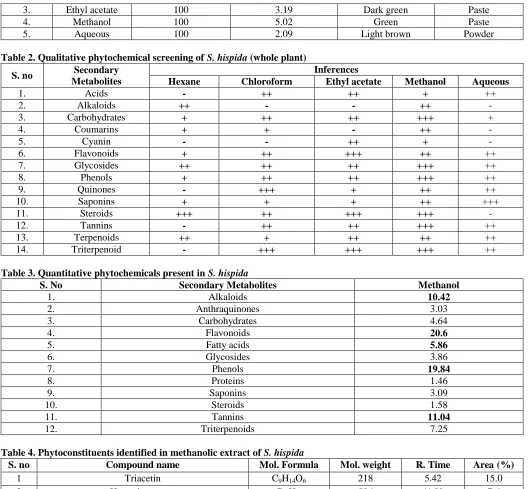
The plant powder of 1 g was subjected to extract the active phytochemicals with five different solvents, such as hexane, chloroform, ethyl acetate, methanol and aqueous using Soxhlet apparatus. The solvent was removed by rotary evaporator under reduced pressure at 40 oC, which yielded thick colloidal extracts. Spermacoce hispida (100 g) and yield of the bioactive principle was maximum in methanol extract (5.02%), followed by ethyl acetate (3.19%) and chloroform (3.17%). The yield was only 2.09% and 1.35% in aqueous and hexane extract respectively. The color of extracts ranged from light green to light brown, the consistency was between powder and that of a paste (Table. 1).
Screening of phytochemicals from S. hispida
The preliminary screening of phytochemicals from
S. hispida revealed that, presence of various active
components such as alkaloids, carbohydrates, coumarins, cyanins, flavonoid, glycosides, phenols, quinones, saponins, steroids, tannins, terpenoids and triterpenoids to a greater extent in the polar solvents. Among all the extracts, methanolic extract possessed maximum quantity of carbohydrates, glycosides, phenols, steroids, tannins and triterpenoids followed by ethyl acetate extract.
But, comparatively less phytochemicals were present in aqueous, hexane and chloroform extract, respectively (Table. 2). Thus, these phytochemical constituents act as a very good source of drug delivery.
Quantitative analysis of phytochemicals
The estimation of phytochemical from S.
hispida revealed higher quantity of flavonoids, phenols,
tannins and alkaloids when compared to other constituents. Among the 5 solvent extracts, least quantity of constituents was observed in hexane followed by aqueous extract, whereas, methanol extract yielded considerably higher flavonoid content 20.6, phenols 19.84, tannins 11.04 and alkaloids 10.42 mg/g of crude extract when compared to
other solvent extracts (Table. 3).
Different phytoconstituents present in the S.
hispida has validated to use for several ailments of human
beings by traditional practitioners. Mostly, methanol and ethyl acetate solvents were proved to be the best extractors of different classes of compounds. It indicates, these solvents are effective to isolate active biological compounds due to their high polarity.
GC-MS analysis of various solvent extracts of S. hispida
(whole plant)
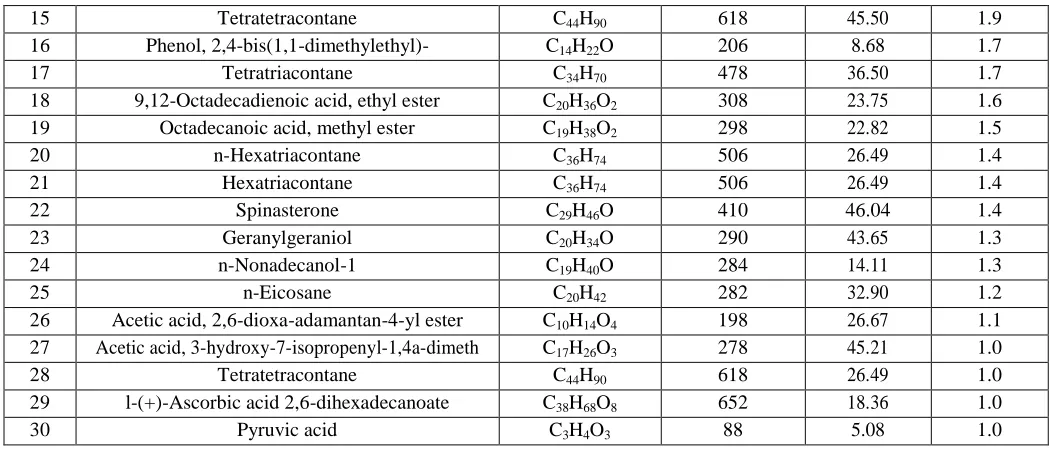
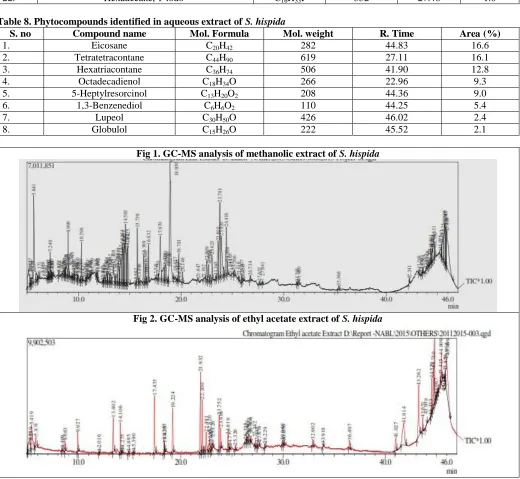
GC-MS technique is one of the simple and widely used technique to identify the phytoconstituents in medicinal plants. The active principles lying with their retention time (RT), molecular formula, molecular weight (MW) and area (%) were represented (Table. 4 and Fig. 1), methanolic extract of S. hispida revealed 30 different compounds among this, the area (%) seems to be major in seven compounds such as Triacetin (15.0%), Hexatriacontane (7.6%), Hexatriacontane (6.9%), Hexadecanoic acid, methyl ester (6.6%), Ethanol, 2,2'-oxybis-, diacetate (4.5%), 2-Propenoic acid, 3-(4-methoxyphenyl)-, ethyl este (4.5%), Linoleic acid, methyl ester (4.0%) and the remaining 23 compounds are minor respectively.
All of them were aliphatic and aromatic compound, the mass spectra of the phytoconstituents were matched with those found in the NIST/NBS spectral database and the data were given. The ethyl acetate extract revealed the presence of 3 major and 3 minor phytoconstituents. The maximum area (%) revealed by Cis-Vaccenic Acid (9.77%), Alpha-monoacetin (8.82%), Cis-Vaccenic Acid (6.74%) respectively, whereas minimum area (%) revealed by Phenol, 2,4-Bis (1,1-Dimethylethyl (2.54%), Phytol (2.12%) and 3,7,11,15-Tetramethyl-2-Hexade (2.03%), respectively (Table. 5 and Fig. 2).
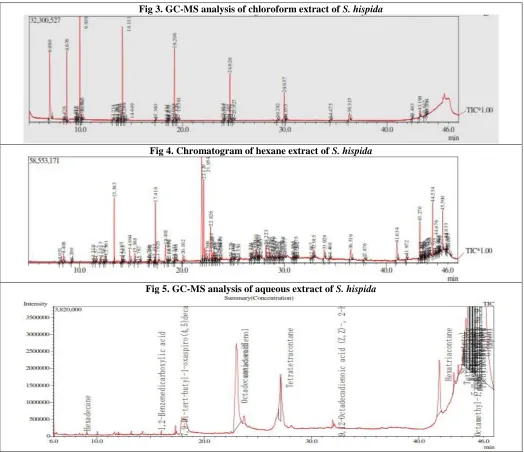
The GC-MS analysis of chloroform leaf extract showed 8 compounds. Among those, only five are major and three compounds are minor. The maximum area (%) revealed by Phenol, 2,4-bis(1,1-dimethylethyl) (17.7%), Tetradecyl trifluoroacetate (12.9%), Pentadecyl trifluoroacetate (11.7%), n-Nonadecanol-1 (10.3%), Lignoceryl alcohol (7.3%) and the minor compounds are 1-Heptacosanol (4.7%), 1-1-Heptacosanol (2.1%), Phenol, 2,4-bis(1,1-dimethylethyl) (1.8%) respectively (Table. 6 and Fig. 3). Among 22 compounds in hexane extract it was analysed 10 major and 12 minor compounds. Maximum area (%) exposed by 9,12-Octadecadienoic acid (Z,Z)-, methyl ester (10.4%) (Table. 7 and Fig. 4). Finally, in aqueous extract maximum area (%) was examined in Eicosane (16.6%), Tetratetracontane (16.1%), Hexatriacontane (12.8%) and Octadecadienol (9.3%) (Table. 8 and Fig. 5).
Table 1.Quantitative yield of bioactive metabolites from S. hispida
74 |
P a g e
3. Ethyl acetate 100 3.19 Dark green Paste 4. Methanol 100 5.02 Green Paste 5. Aqueous 100 2.09 Light brown Powder
Table 2. Qualitative phytochemical screening of S. hispida (whole plant)
S. no Secondary Metabolites
Inferences
Hexane Chloroform Ethyl acetate Methanol Aqueous
1. Acids - ++ ++ + ++
2. Alkaloids ++ - - ++ -
3. Carbohydrates + ++ ++ +++ +
4. Coumarins + + - ++ -
5. Cyanin - - ++ + -
6. Flavonoids + ++ +++ ++ ++ 7. Glycosides ++ ++ ++ +++ ++
8. Phenols + ++ ++ +++ ++
9. Quinones - +++ + ++ ++
10. Saponins + + + ++ +++
11. Steroids +++ ++ +++ +++ - 12. Tannins - ++ ++ +++ ++ 13. Terpenoids ++ + ++ ++ ++ 14. Triterpenoid - +++ +++ +++ ++
Table 3. Quantitative phytochemicals present in S. hispida
S. No Secondary Metabolites Methanol
1. Alkaloids 10.42
2. Anthraquinones 3.03
3. Carbohydrates 4.64
4. Flavonoids 20.6
5. Fatty acids 5.86
6. Glycosides 3.86
7. Phenols 19.84
8. Proteins 1.46
9. Saponins 3.09
10. Steroids 1.58
11. Tannins 11.04
12. Triterpenoids 7.25
Table 4. Phytoconstituents identified in methanolic extract of S. hispida
S. no Compound name Mol. Formula Mol. weight R. Time Area (%) 1 Triacetin C9H14O6 218 5.42 15.0
2 Hexatriacontane C36H74 506 41.80 7.6
3 Hexatriacontane C36H74 506 44.81 6.9
4 Hexadecanoic acid, methyl ester C17H34O2 270 17.43 6.6
5 Ethanol, 2,2'-oxybis-, diacetate C8H14O5 190 5.83 4.5
6 2-Propenoic acid, 3-(4-methoxyphenyl)-, ethyl este C12H14O3 206 13.40 4.5
7 Linoleic acid, methyl ester C19H34O2 294 21.93 4.0
8 Cyanamide CH2 N2 42 5.23 3.4
9 Docosanoic acid, ethyl ester C24H48O 2 368 19.23 3.1
10 Phytol C20H40O 296 22.49 2.7
11. Triacontane, 1-bromo- C30H61Br 500 43.26 2.7
12 Hexatriacontane C36H74 506 44.53 2.2
13 7-Octadecenoic acid, methyl ester C19H36O2 296 22.10 2.0
75 |
P a g e
15 Tetratetracontane C44H90 618 45.50 1.9
16 Phenol, 2,4-bis(1,1-dimethylethyl)- C14H22O 206 8.68 1.7
17 Tetratriacontane C34H70 478 36.50 1.7
18 9,12-Octadecadienoic acid, ethyl ester C20H36O2 308 23.75 1.6
19 Octadecanoic acid, methyl ester C19H38O2 298 22.82 1.5
20 n-Hexatriacontane C36H74 506 26.49 1.4
21 Hexatriacontane C36H74 506 26.49 1.4
22 Spinasterone C29H46O 410 46.04 1.4
23 Geranylgeraniol C20H34O 290 43.65 1.3
24 n-Nonadecanol-1 C19H40O 284 14.11 1.3
25 n-Eicosane C20H42 282 32.90 1.2
26 Acetic acid, 2,6-dioxa-adamantan-4-yl ester C10H14O4 198 26.67 1.1
27 Acetic acid, 3-hydroxy-7-isopropenyl-1,4a-dimeth C17H26O3 278 45.21 1.0
28 Tetratetracontane C44H90 618 26.49 1.0
29 l-(+)-Ascorbic acid 2,6-dihexadecanoate C38H68O8 652 18.36 1.0
30 Pyruvic acid C3H4O3 88 5.08 1.0
Table 5. GC-MS analysis of ethyl acetate extract of S. hispida
Table 6. Identified phytoconstituents from chloroform extract of S. hispida
Table 7. Phytoconstituents identified by GC-MS analysis of hexane extract
S. no Compound name Mol. Formula Mol. weight R. Time Area % 1. 9,12-Octadecadienoic acid (Z,Z)-, methyl ester C19H34O2 294 21.95 10.4
2. 2-Propenoic acid, 3-(4-methoxyphenyl)-, ethyl este C12H14O3 206 13.38 7.6
3. Stearic acid, methyl ester C19H38O2 298 22.83 7.0
4. Hexadecanoic acid, methyl ester C17H34O2 270 17.42 6.1
5. n-Hexatriacontane C36H74 506 44.53 6.0
6. 7-Octadecenoic acid, methyl ester C19H36O2 296 22.12 5.6
7. Hexatriacontane C36H74 506 43.27 5.4
S. no Compound name Mol. Formula Mol. weight R. Time Area % 1. Cis-Vaccenic Acid C18H34O2 282 23.781 9.77
2. Alpha.-Monoacetin C5H10O4 134 5.641 8.82
3. Cis-Vaccenic Acid C18H34O2 282 23.920 6.74
4. Phenol, 2,4-Bis(1,1-Dimethyleth C14H22O 206 8.999 2.54
5. 6
Phytol C20H40O 296 23.025 2.12
6. 3,7,11,15-Tetramethyl-2-Hexade C20H40O 296 16.369 2.03
7. 8,11,14-Docosatrienoic Acid, Me C23H40O2 348 22.683 1.49
8. Linolenic Acid, Ethyl Ester C20H34O2 306 24.508 1.23
S. no Compound name Mol. Formula Mol. weight R. Time Area (%) 1. Phenol, 2,4-bis(1,1-dimethylethyl)- C14H22O 206 8.68 17.7
2. Tetradecyl trifluoroacetate C16H29F3O2 310 9.94 12.9
3. Pentadecyl trifluoroacetate C17H31F3O2 324 14.11 11.7
4. n-Nonadecanol-1 C19H40O 284 19.21 10.3
5. Lignoceryl alcohol C24H50O 354 24.62 7.3
6. 1-Heptacosanol C27H56O 396 29.94 4.7
7. 1-Heptacosanol C27H56O 396 36.31 2.1
76 |
P a g e
8. Tetratetracontane C44H90 618 41.03 5.0
9. Hexatriacontane C36H74 506 45.50 4.3
10. n-Tetratetracontane C44H90 618 36.52 3.2
11. Pentadecanoic acid, methyl ester C16H32O2 256 14.89 2.3
12. Methyl 18-methylnonadecanoate C21H42O2 326 28.23 2.2
13. Octacosyl trifluoroacetate C30H57F3O2 506 32.91 2.0
14. Behenic acid, methyl ester C23H46O2 354 33.93 1.8
15. l-(+)-Ascorbic acid 2,6-dihexadecanoate C38H68O8 652 18.40 1.8
16. Methyl ricinoleate C19H36O3 312 27.25 1.4
17. Margaric acid methyl ester C18H36O2 284 20.10 1.3
18. Tetradecanoic acid, methyl ester C15H30O2 242 12.56 1.3
19. Oleic acid, methyl ester C19H36O2 296 22.26 1.1
20. Phytol C20H40O 296 22.51 1.1
21. Phytol C20H40O 296 15.39 1.0
22. Hexadecane, 1-iodo- C16H33I 352 27.46 1.0
Table 8. Phytocompounds identified in aqueous extract of S. hispida
S. no Compound name Mol. Formula Mol. weight R. Time Area (%) 1. Eicosane C20H42 282 44.83 16.6
2. Tetratetracontane C44H90 619 27.11 16.1
3. Hexatriacontane C36H74 506 41.90 12.8
4. Octadecadienol C18H34O 266 22.96 9.3
5. 5-Heptylresorcinol C13H20O2 208 44.36 9.0
6. 1,3-Benzenediol C6H6O2 110 44.25 5.4
7. Lupeol C30H50O 426 46.02 2.4
8. Globulol C15H26O 222 45.52 2.1
Fig 1. GC-MS analysis of methanolic extract of S. hispida
77 |
P a g e
Fig 3. GC-MS analysis of chloroform extract of S. hispida
Fig 4. Chromatogram of hexane extract of S. hispida
Fig 5. GC-MS analysis of aqueous extract of S. hispida
DISCUSSION
In the present study, methanol extract of S. hispida
contains alkaloids, tannins and steroids in maximum amount, while, the aqueous extract of S. hispida showed higher amount of saponins The previous finding reported that saponins in plants are responsible for the tonic and stimulating activities [15]. Secondary metabolites like alkaloid contained in plants are used in medicine as anaesthetic agents [16]. Tannins are used as anti- insecticidal and tannic acid is used as astringent in burn case. Steroids are used as stimulant so due to absence of steroids it has less possibility of stimulant effects [17].
Similarly, S. hispida whole plant methanolic extract contains alkaloids, carbohydrates, cyanin, flavonoids, glycosides, phenols, quinines, saponins, steroids, tannins, terpenoids and triterpenoids. The previous finding reported that methanolic leaf extract of S. articularis
contains phytochemical compounds such as alkaloids, glycosides, steroids, flavonoids and tannins [18]. Saponins (triterpenes, lupeol, triterpenes glycosides, sterols, glycyrrhizic acid) are valuable phytochemicals which possessed spectacle anti-viral, anti-tumor, anti-microbial, anti-oxidative, anti-hyperglycemic, hepatoprotective, cardioprotective, anti-herbivore/cytotoxic, anti-hepatitis B and C and anti-cancer properties [19,20,21,22,23]. Leaves
of Polyalthia longifolia showed the presence of
carbohydrates, oils, fats, terpenoids, steroids, sterols and amino acids in all the extracts such as petroleum ether, chloroform, ethyl acetate, ethanol and aqueous [24]. In the present study different solvent extract contains all the phytochemicals were present as maximum, moderate and minimum level.
78 |
P a g e
GC-MS analysis of methanol and ethanolic leaf extract of
Spermacoce articularis L.f. revealed 30 and 25 compounds
[18]. [25]. The GC-MS analysis of Acacia nilotica methanol extract showed 7 compounds [26]. GC-MS analysis of ethyl acetate extract of Cordia monoica roxb. Leaves showed 20 compounds [27]. Methanol extract of Ceropegia pusilla
resulted 28 compounds [28]. The ethanolic extract of
Mussaenda frondosa has been subjected to GC-MS analysis
and twenty chemical constituents have been identified [29]. GC-MS analysis is one of the best techniques to identify the phytoconstituents of volatile matter, long chain, branched chain hydrocarbons, alcohols, acids and esters etc. which is the first step towards understanding the nature of active principles in the medicinal plant and this will be helpful for further study in medicinal plants [30].
Based on the multiple screening of phytochemicals and GC-MS analysis, it was clear that, there were 76 phytoconstituents in whole plant of Spermacoce hispida. There were no previous findings in this plant hence, it was confirmed this is the first report on phytochemicals. Further studies towards isolation of desired major compounds from this plant as well as to explore its various biological activities.
CONCLUSION
Traditionally many diseases in human being have been controlled mostly by medicinal plants. The scientific result obtained in this study represent the first report describing about the phytochemical composition and GC- MS analysis of hexane, chloroform, ethyl acetate, methanol and aqueous extracts of whole plant of S. hispida L. GC-MS analysis is applied for screening the phytoconstituents present in the medicinal plant, which may help in eluting bioactive compound from this plant, further in vitro and in vivo studies are needed which might build an additional way to treat many incurable diseases and disorders. Therefore,
Spermacoce hispida L. recommended as a plant of
phytopharmaceutical importance.
ACKNOWLEDGEMENT
Authors are thankful to the Director, of CAS in Botany, University of Madras for providing the laboratory facilities to carry out this work.
CONFLICT OF INTEREST No interest
REFERENCES
1. Fátima A, Modolo LV, Conegero LS, Pilli Ra, Ferreira CV, Kohn LK, et al. Styryl lactones and their derivatives: biological activities, mechanisms of action and potential leads for drug design. Curr. Med. Chem, 13, 2006, 3371–3384.
2. Khaled KN, Boulekbache ML, Madani K. Phytochemical screening of antioxidant and antibacterial activities of methanolic extracts of some Lamiaceae. Ind. Crops Prod, 61, 2014, 41–48.
3. Háznagy RE, Czigle S, Máthé I. TLC and GC analysis of the essential oils of Stachys species. J. Planar Chromatogr. – Mod. TLC, 20, 2007, 189–196.
4. Narayan DP, Kumar U. Agro’s Dictionary of Medicinal Plants. Agrobios Publisher, Jodhpur, 2003.
5. Pushpangadan P, Atal CK. Ethno-medico-botanical investigations in Kerala I. Some primitive tribals of western ghats and their herbal medicine. J. Ethnopharmacol, 11, 1984, 59–77.
6. Sekar T, Francis K. A preliminary investigation of some Maruthamalai forest plants for phytochemical compounds.
Bioresour. Technol, 70, 1999, 303–304.
7. Dhevi R, Elango V, Gayathri K. Cardioprotective and antioxidant effects of seeds of spermacoce hispida Linn ., on isoproterenol induced myocardial infarction in rats. World Journal of Pharmacy and Pharmaceutical Sciences, 3, 2014, 1150–1158.
8. Kaviarasan K, Kalaiarasi P, Pugalendi V. Antioxidant efficacy of flavonoid-rich fraction from Spermacoce hispida in hyperlipidemic rats. J. Appl. Biomed, 6, 2008, 165–176.
9. Vadivelan S, BN S, Betanabhatla KS, AJM C, Pillai RN. Anti-inflammatory activity of Spermacoce articularis Linn on carrageenan induced paw edema in wistar male rats. Pharmacologyonline, 484, 2007, 478–484.
10. Dhanani T, Shah S, Gajbhiye NA, Kumar S. Effect of extraction methods on yield , phytochemical constituents and antioxidant activity of Withania somnifera. Arab. J. Chem, 2013.
11. Kilani S, Ben M, Limem I, Bouhlel I, Boubaker J, Bhouri W, et al. In vitro evaluation of antibacterial , antioxidant , cytotoxic and apoptotic activities of the tubers infusion and extracts of Cyperus rotundus. Bioresource Technology, 99, 2008, 9004–9008.
12. Tona L, Kambu K, Ngimbi N, Cimanga K, Vlietinck A. Antiamoebic and phytochemical screening of some Congolese medicinal plants. J. Ethnopharmacol, 61,1998, 57–65.
13. Sofowora A. Medicinal Plants and Traditional Medicine in Africa. Spectrum Books Ltd., Ibadan, Nigeria, 1993, 191-289. 14. Harborne JB. Phytochemical Methods. Chapman and Hall Ltd., London 1973, 49-188.
15. Njoku. Antioxidant Properties of Ocimum gratissimum (Scent Leaf). New York Science Journal, 4(5), 2011, 98–103.
16. Pandey M, Debnath M, Gupta S, Chikara SK. Phytomedicine : An ancient approach turning into future potential source of therapeutics. Journal of Pharmacognosy and Phytotherapy, 3, 2011, 27–37.
17. Rahee SA, Mallik J. Phytochemical screenings of the methanol extract of whole plant Borreria articulari. International
79 |
P a g e
18. Sheeba GD,Viswanathan P. GC-MS analysis of phytocomponents in Spermacoce articularis L . f . leaf. Resear. in Pharm, 4(4), 2014, 1-7.
19. Podolak I, Galanty A, Sobolewska D. Saponins as cytotoxic agents: a review. Phytochemistry Reviews : Proceedings of the
Phytochemical Society of Europe, 9(3), 2010, 425–474.
20. Tiwari P, kumar B, Kaur M, Kaur G, Kaur H. Phytochemical screening and extraction: A review. International
Pharmaceutical sciencia., 1(1), 2011, 98-106.
21. Osbourn A, Goss RJM, Field RA. The saponins: polar isoprenoids with important and diverse biological activities. Natural
Product Reports., 28, 2011, 1261–1268.
22. James HD . Phytochemicals: Extraction Methods, Basic Structures and Mode of Action as Potential Chemotherapeutic Agents. Phytochemicals - A Global Perspective of Their Role in Nutrition and Health, Dr Venketeshwer Rao (Ed.), InTech, 2012 .
23. Weng Y, Yu L, Cui J, Zhu YR., Guo C, Wei G,et al. Antihyperglycemic, hypolipidemic and antioxidant activities of total saponins extracted from Aralia taibaiensis in experimental type 2 diabetic rats. Journal of Ethnopharmacology, 152(3), 2014, 553–60.
24. Thenmozhi M, Sivaraj R. Phytochemical analysis and antimicrobial activity of polyalthia longifolia materials and methods.
International Journal of Pharma and Bio Sciences, 1(3), 2010, 1–7.
25. Soosairaj S, Kala A, Raja P, Vijaya K, College, J. Phytochemical Screening and GC-MS Analysis on Spermacoce articularis L . F . ( Rubiaceae ). International Journal of Chem Tech Research, 5(6), 2013, 3070–3074.
26. Hemamalini, Jithesh, Nirmala. Phytochemical Analysis of Leaf Extract of Plant Acacia nilotica by GC-MS Method.
Advances in Biological Research, 7(5), 2013, 141-144.
27. Sivakumar R, Dhivya A. Gc-ms analysis of bioactive compounds on ethyl acetate extract of Cordia monoica roxb. Leaves.
International Journal of Research and Development in Pharmacy and Life Sciences, 4(1), 2015, 1328-1333.
28. Kalimuthu K, Prabakaran R. Preliminary phytochemical screening and GC-MS analysis of methanol extract of Ceropegia pusilla. IMPACT: International Journal of Research in Applied, Natural and Social Sciences, 1(3), 2013, 49-58.
29. Gopalakrishnan S. GC-MS analysis of some bioactive constituents of Mussaenda frondosa Linn. 2(1), 2011, 313-320.