Genetics of Aquatic Organisms 1: 61-69 (2017)
www.genaqua.org ISSN 2459-1831 DOI: 10.4194/2459-1831-v1_2_05
RESEARCH PAPER
© Published by Central Fisheries Research Institute (CFRI) Trabzon, Turkey
DNA Barcoding of Tetraodontidae Species from the Mediterranean Sea:
Filling Knowledge Gaps for Improved Taxonomic Accuracy
Introduction
In the Mediterranean Sea, the family Tetraodontidae is represented by four genera (Mouneimné, 1977; Golani, 1987; Golani 1996; Reina-Hervas et al., 2004; Akyol et al., 2005; Corsini et al., 2005; Vacchi et al., 2007; Froese and Pauly, 2017; Golani et al., 2017). These include the native Lagocephalus lagocephalus (Linneus, 1758), four tropical Atlantic species [Ephippion guttifer (Bennett, 1831); Sphoeroides marmoratus (Lowe, 1838); S. pachygaster (Müller & Troschel, 1848); and S. spengleri (Bloch, 1785)], and five Indo-Pacific species [L. guentheri Miranda Ribeiro, 1915; L. sceleratus (Gmelin, 1789); L. suezensis Clark and Gohar, 1953; Torquigener flavimaculosus Hardy and Randall, 1983; and Tylerius spinosissimus (Regan, 1908)]. Additionally, there are records of the Indo-pacific L. spadiceus (Richardson, 1845) (Tuncer et al., 2008; Bariche et al., 2015) whose occurrence in the Mediterranean reputed to be questionable (Galil et al., 2016; Zenetos et al., 2017). Records of Atlantic species are mostly restricted to the Western Mediterranean, with only S. pachygaster being known to have expanded its range and population size into the Eastern Mediterranean (Corsini-Foka and Economidis, 2007; Lipej et al., 2013; Farrag et al.,
2016; Golani et al., 2017). On the other hand, the species of Indo-Pacific origin are mostly considered as Lessepsian migrants through the Suez Canal, which in general establish populations in the Eastern Mediterranean followed by a population expansion as they move westerly colonizing new areas along the coast of several Mediterranean countries (Ben-Abdallah et al., 2011; Azzurro et al., 2016).
Alien taxa in the Mediterranean Sea are continuously subject to taxonomic revisions as new data on species distributions, identification and nomenclature are updated (Galil et al., 2016; Zenetos et al., 2017). Within this scenario, Tetraodontidae are no exception as there is controversy over possible misidentifications of species such as S. spengleri with S. marmoratus (Vacchi et al., 2007; Shao et al., 2014) and within the genus Lagocephalus (Golani 1996; Akyol et al., 2005), including the doubtful distinguishing features between the closely related L. spadiceus and L. guentheri (Zenetos et al., 2017) that are both recorded in the Mediterranean Sea (Tuncer et al., 2008; Bariche, 2012; Bariche et al., 2015; Farrag et al., 2016; Shirak et al., 2016). Within this scenario, the correct taxonomic classification utilizing different identification tools is imperative, thus morphological data has to be linked and backed with molecular data through techniques, such as DNA barcoding, that
Adriana Vella
1,*
, Noel Vella
1, Firdes Saadet Karakulak
2, Isik Oray
21
University of Malta, Department of Biology, Conservation Biology Research Group, Msida, Malta. 2
-Istanbul University, Faculty of Fisheries, Istanbul, Turkey.
* Corresponding Author: Tel.: +356. 23402790; E-mail: [email protected]
Received 25 November 2017 Accepted 27 December 2017
Abstract
Most of the Mediterranean members of the family Tetraodontidae are non-native to the region, and include species of both Atlantic and Indo-Pacific origin. Anthropogenic activities are synergistically causing the populations of these non-native species to expand, causing ecological and economical losses in the Mediterranean Sea. The current study evaluated the morphological and the genetic characteristics of six Tetraodontidae species collected from the Mediterranean Sea. Two mitochondrial sequences, cytochrome c oxidase subunit I (COI) and the control region were studied covering over 1400 bp from each specimen, with Lagocephalus sceleratus and L. suezensis exhibiting the lowest intraspecific divergence, while
Torquigener flavimaculosus exhibited the largest intraspecific divergence. Comparative analyses of the current data with other publically available COI data show the need to further evaluate species diversity of Tetraodontidae not only in the Mediterranean but also in their native range. Filling knowledge gaps for improved taxonomic identification of species is essential to accurately track these species and their populations in the Mediterranean and beyond.
utilizes cytochrome c oxidase subunit 1 gene (COI) as a marker to distinguish between species (Ratnasingham and Hebert 2007). However, to better trace the species’ phylogeographic connections and population structures, markers that show a higher degree of intraspecific divergence are more useful to better track each species’ expansion pattern and be able to prioritize on specific management measures for these invasive species. Such markers include the mtDNA control region that has been extensively used in population studies of several fish species (McMillan and Palumbi, 1997; Quattro et al., 2006; Chen et al., 2015; Vella and Vella, 2017). However, in Tetraodontidae this marker has only been applied to the genus Takifugu (Katamachi et al., 2015; Takahashi et al., 2017), and never utilized on other pufferfish species, not even in the Mediterranean Sea, to evaluate the species connectivity within the region as they expand in population size and range.
Materials and Methods
In this study, 37 specimens representing five species of the Family Tetraodontidae were collected from fisheries landings in the Mediterranean Sea (L. guentheri n = 5; L. lagocephalus n = 1; L. sceleratus n = 12; L. suezensis n = 8; S. pachygaster n = 9; T. flavimaculosus n = 2) (Figure 1). Specimens were preliminarily identified using diagnostic features (Smith and Heemstra, 1986; Bariche, 2012; Psomadakis et al., 2015; Froese and Pauly, 2017) and measured to the nearest 0.1 mm. DNA was then extracted from 10 mg muscle tissue using the proteinase K, phenol-chlorofrom extraction as described in Milligan, (1998). The COI gene was amplified using the FISH-F1 and FISH-R1 primers following the protocol described by Ward et al., (2005). The control region (CR) together with flanking genes was amplified using two new primers
that were specifically designed for Tetraodontidae species using conserved regions in tRNA-Thr and the
12S rRNA genes (TetraCR-F
AGAGCGCCGGTCTTGTAAAC and TetraCR-R GGTGCGGATACTTGCATGTG). The latter was amplified in a 25 µL reaction volume using ~ 50 ng DNA template, 1x FIREPol® Master Mix (Solis BioDyne, Estonia), and 0.5 μM of each primer, through a temperature profile of 95°C for 5 min; followed by 35 cycles of 95°C for 45 s, 53°C for 45 s, 72°C for 45 s; and a final extension at 72°C for 10 min. PCR products were sequenced in both directions using the forward and reverse primers through ABI3730XL. Sequences were assembled using Geneious R10 (http://www.geneious.com, Kearse et al., 2012). The sequences were deposited in GenBank under accession numbers MG559735-808.
The COI sequences were submitted to the BOLD Species Level Barcode Records Identification Engine (http://www.boldsystems.org) and to
GenBank via Blastn
(https://blast.ncbi.nlm.nih.gov/Blast.cgi). The Barcode Index Number (BIN) and the Tree Based Identification approach within BOLD was adopted to evaluate each specimen’s hierarchical placement vis-à-vis the already available genetic data. CR data were separately submitted to GenBank via Blastn to further corroborate COI results.
Molecular diversity indices (haplotype diversity and nucleotide diversity) within the species were estimated via Arlequin v3 (Excoffier and Lischer, 2010). Interspecific and intraspecific p-distance were measured using MEGA v7 (Kumar et al., 2016). Additionally, the currently generated data were integrated with publically accessible COI data for Tetradontidae specimens collected from the Mediterranean for tree-based phylogenetic analyses to evaluate the genetic differences between the various haplotypes. The p-distance model (Collins et al.,
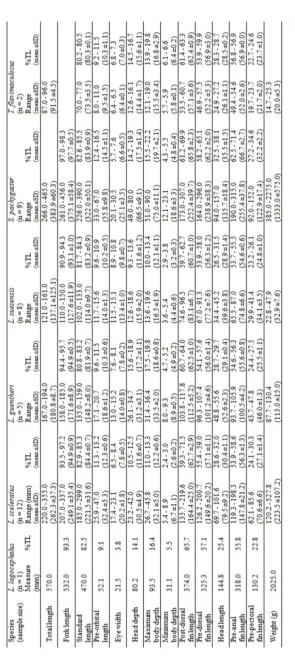
Ta
b
le 1
.
M
o
rp
h
o
m
etri
c
m
ea
su
re
m
en
ts
o
f
th
e
Tetra
o
d
o
n
tid
ae
sp
ec
im
en
s an
aly
se
d
in
th
is
stu
d
y
2012; Srivathsan and Meier, 2012; Collins and Cruickshank, 2013) was used for the construction of the neighbour-joining tree (NJ), while the HKY+I nucleotide substitution model, which was identified as the model of best fit, was utilized for the maximum-likelihood tree (ML). Phylogenetic trees were constructed via MEGA v7 (Kumar et al., 2016) using 1500 bootstrap replicates.
Results
Lagocephalus guentheri, L. sceleratus, L. suezensis and T. flavimaculosus were collected from the Eastern Mediterranean Sea and landed in Turkey, while S. pachygaster and L. lagocephalus were collected from the Southern Central Mediterranean and landed in Malta. The former five species are non-native species in the Mediterranean Sea (Golani et al., 2017), while the latter species, even though considered as native, lacks data on the its occurrence in the region. The 570 mm L. lagocephalus specimen collected in this study (GPS: 34°32.822N 014°23.696E), constitutes one of the very rare records of this species caught by Maltese fishermen and the first specimen from Malta analysed scientifically both morphologically and genetically (Figure 1; Table 1). Morphometric measures of all the species collected is tabulated in Table 1.
Sequence-Based Classification
A 597 bp from COI representing 198 amino acids were sequenced for each specimen. No insertions, deletions or stop codons were observed on this sequence, consistent with functional protein coding genes. A total of 10 haplotypes were identified for this gene (Table 2).
The size of the studied CR analysed varied between 812 bp and 940 bp, which included most of the control region and some flanking genes, depending on the species under investigation. For each species, the smallest homologous CR sequence was chosen for further analyses, as to allow intraspecific comparison between individuals. This mtDNA region, being composed mostly of a non-coding sequence, exhibited more genetic variation than COI and consequently a total of 18 haplotypes were identified for this region (Table 2).
Comparative Genetic Analyses
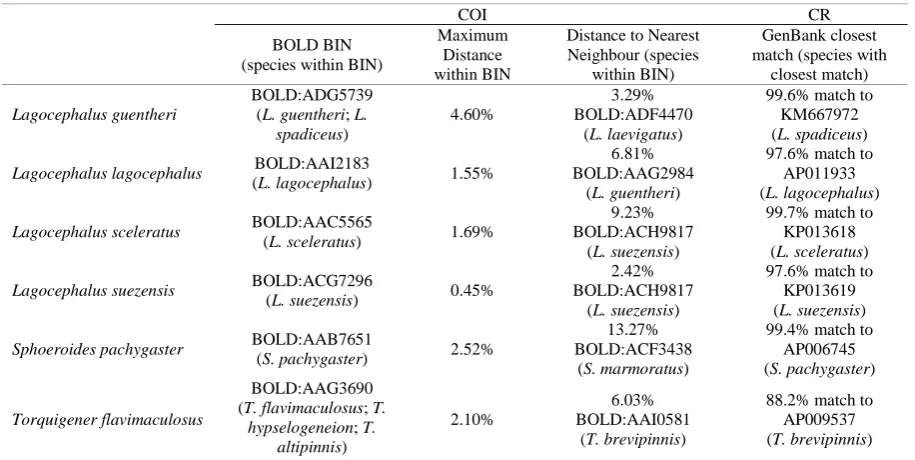
All species were clustered within their respective species BOLD BINs (Table 3) and formed part of species specific clusters (Figure 2) as discussed below.
(1) L. guentheri: The currently studied L. guentheri specimens got clustered in a BOLD BIN containing both L. guentheri and L. spadiceus (Table 2). On excluding Mediterranean records (Table 4), where both species are considered as aliens, this
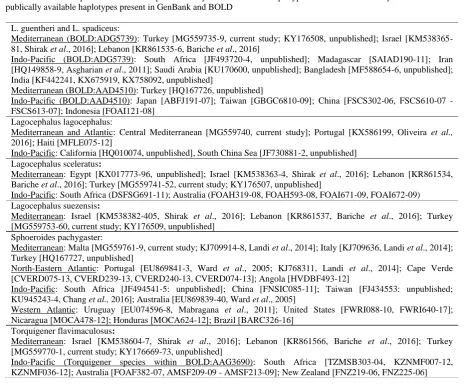
BIN’s composition becomes solely composed of L. guentheri of Indo-Pacific origin (Table 4). This indicates that probably all the Mediterranean records belonging to this BIN (BOLD:ADG5739; Figure 2) are L. guentheri. The currently studied specimens were identified using the morphological characters as described by Smith and Heemstra (1986) and Psomadakis et al., (2015), and have been distinguished from L. spadiceus since all specimens had only white corners on their caudal fins (Figure 1) rather than a complete rear white margin, while the patch of spinules on the back did not extend to the dorsal fin origin. Although in freshly caught specimens the dorsal two thirds of the caudal fin had a dark yellow colouration and the rest of the caudal fin was dusky coloured (Figure 1), similar to the description of L. spadiceus reported Matsuura et al. (2011) and Psomadakis et al. (2015), it has to be noted that upon freezing and thawing the yellow colouration was mostly gone leading to a brown coloured caudal fin with white tips. Photographic analyses of the L. guentheri specimens presented on BOLD:ADG5739 show the same caudal fin colouration for all specimens within this cluster, matching the specimens investigated in this study.
In this study we identified two haplotypes for L. spadiceus matching the two main haplotypes of the L. guentheri / L. spadiceus group (BOLD:ADG5739) found in the Mediterranean Sea. Nonetheless, the Mediterranean Sea holds another haplotype identified as L. spadiceus which is at least 5.8% different from the other haplotypes of the rest of the Mediterranean L. spadiceus / L. guentheri group (Figure 2). This haplotype, which was recorded once in Turkey (HQ167726, unpublished), matches other L. spadiceus specimens collected from the Indo-Pacific, and fits in BOLD:AAD4510 (Table 4). These genetic results highlight the need for the correct taxonomic identification of L. spadiceus and L. guentheri in the Mediterranean Sea.
(2) L. lagocephalus: The COI data of the
currently analysed specimen of L. lagocephalus genetically matched with one collected from the Eastern and Western Atlantic Ocean, however differed by 1.5% from specimens collected from the Indo-Pacific (Table 4). Although all these records belong to the same BOLD BIN (BOLD:AAI2183), sequences within this BIN are grouped into two main clusters that differ from each other (maximum p-distance 1.55%) indicating that L. lagocephalus is composed of genetically distinct lineages and that the Mediterranean population is closer to that of the Atlantic rather than to the Indo-Pacific.
(3) L. sceleratus: Nearly all the publically
Table 2. A list of the genetically analysed specimens in this study, including the location of capture, sample size (n), number of haplotypes (H), haplotype diversity (h), and nucleotide diversity (π) (including the standard error using pairwise
difference), for both COI and CR
Species Sampling location n COI CR
H h Π H h Π
Lagocephalus lagocephalus Southern Central
Mediterranean 1 1 - - 1 - -
Lagocephalus guentheri North Eastern
Mediterranean 5 2
0.400 ±0.237
0.00201 ±0.00178 3
0.700 ±0.218
0.0017 ±0.0014
Lagocephalus sceleratus North Eastern
Mediterranean 12 1
0.000 ±0.000
0.0000 ±0.0000 6
0.879 ±0.060
0.0034 ±0.0021
Lagocephalus suezensis North Eastern
Mediterranean 8 1
0.000 ±0.000
0.0000 ±0.0000 3
0.464 ±0.200
0.0015 ±0.0012
Sphoeroides pachygaster Southern Central
Mediterranean 9 3
0.417 ±0.191
0.00074 ±0.00082 3
0.639 ±0.126
0.0019 ±0.0014
Torquigener flavimaculosus North Eastern
Mediterranean 2 2
1.000 ±0.500
0.01843 ±0.01925 2
1.000 ±0.500
0.0329 ±0.0335
Table 3. A table including the BOLD Barcode Index Numbers (for COI data) for the currently studied specimens and the closest GenBank matches (for CR data)
COI CR
BOLD BIN (species within BIN)
Maximum Distance within BIN
Distance to Nearest Neighbour (species
within BIN)
GenBank closest match (species with
closest match)
Lagocephalus guentheri
BOLD:ADG5739 (L. guentheri; L.
spadiceus)
4.60%
3.29% BOLD:ADF4470
(L. laevigatus)
99.6% match to KM667972 (L. spadiceus)
Lagocephalus lagocephalus BOLD:AAI2183
(L. lagocephalus) 1.55%
6.81% BOLD:AAG2984
(L. guentheri)
97.6% match to AP011933 (L. lagocephalus)
Lagocephalus sceleratus BOLD:AAC5565
(L. sceleratus) 1.69%
9.23% BOLD:ACH9817
(L. suezensis)
99.7% match to KP013618 (L. sceleratus)
Lagocephalus suezensis BOLD:ACG7296
(L. suezensis) 0.45%
2.42% BOLD:ACH9817
(L. suezensis)
97.6% match to KP013619 (L. suezensis)
Sphoeroides pachygaster BOLD:AAB7651
(S. pachygaster) 2.52%
13.27% BOLD:ACF3438
(S. marmoratus)
99.4% match to AP006745 (S. pachygaster)
Torquigener flavimaculosus
BOLD:AAG3690 (T. flavimaculosus; T.
hypselogeneion; T. altipinnis)
2.10%
6.03% BOLD:AAI0581
(T. brevipinnis)
88.2% match to AP009537 (T. brevipinnis)
diversity of 0.879. Tree Based Identification from BOLD has shown that the Mediterranean records of L. sceleratus cluster more closely related with the Eastern African records, rather than with the Australian records (Table 4), further confirming that this species extended its range through the Suez Canal.
(4) L. suezensis: All the publically available
COI data for L. suezensis records within BOLD:ACG7296 are from specimens of Mediterranean origin, most of which share the same haplotype (Table 4; Figure 2), while the CR data of the currently analysed specimens exhibited some nucleotide differences (π = 0.0015) between individuals leading to the formation of 3 haplotypes (h = 0.464). The lack of data from outside the Mediterranean makes it impossible to compare the genetic characters of the Mediterranean population against those from the native areas, again showing the need to better study this species and the phylogeographic connections at a global scale.
(5) S. pachygaster: The specimens of S.
pachygaster analysed in this study shared 3 COI
haplotypes and 3 CR haplotypes, with all of them being within 0.3% different from each other. Tree Based Identification through BOLD has shown that the currently analysed specimens are grouped within the same cluster containing specimens of Mediterranean origin, North-Eastern Atlantic origin and Indo-Pacific origin (Table 4). However, this cluster differed by 2% from S. pachygaster of Western Atlantic origin (Table 4). Such genetic divergence is higher than the 1% intraspecific divergence noted within most fish species (Ward et al., 2005; Hubert et al., 2008; Barman et al., 2017) therefore this calls for a taxonomic revision of S. pachygaster as it can be composed of a species complex.
(6) T. flavimaculosus: The two Torquigener
flavimaculosus specimens collected for this study had a p-distance of 3.3% at CR and a p-distance of 1.8% at COI, with the latter being well beyond the 1% intraspecific differentiation recorded in most fish taxa (Ward et al., 2005; Hubert et al., 2008; Barman et al., 2017). Additionally, through further analyses of all the currently available genetic data for T. Table 4. A list of sequences used for comparative analyses between COI haplotypes identified in this study and other publically available haplotypes present in GenBank and BOLD
L. guentheri and L. spadiceus:
Mediterranean (BOLD:ADG5739): Turkey [MG559735-9, current study; KY176508, unpublished]; Israel [KM538365-81, Shirak et al., 2016]; Lebanon [KR861535-6, Bariche et al., 2016]
Indo-Pacific (BOLD:ADG5739): South Africa [JF493720-4, unpublished]; Madagascar [SAIAD190-11]; Iran [HQ149858-9, Asgharian et al., 2011]; Saudi Arabia [KU170600, unpublished]; Bangladesh [MF588654-6, unpublished]; India [KF442241, KX675919, KX758092, unpublished]
Mediterranean (BOLD:AAD4510): Turkey [HQ167726, unpublished]
Indo-Pacific (BOLD:AAD4510): Japan [ABFJ191-07]; Taiwan [GBGC6810-09]; China [FSCS302-06, FSCS610-07 - FSCS613-07]; Indonesia [FOAI121-08]
Lagocephalus lagocephalus:
Mediterranean and Atlantic: Central Mediterranean [MG559740, current study]; Portugal [KX586199, Oliveira et al.,
2016]; Haiti [MFLE075-12]
Indo-Pacific: California [HQ010074, unpublished], South China Sea [JF730881-2, unpublished] Lagocephalus sceleratus:
Mediterranean: Egypt [KX017773-96, unpublished]; Israel [KM538363-4, Shirak et al., 2016]; Lebanon [KR861534, Bariche et al., 2016]; Turkey [MG559741-52, current study; KY176507, unpublished]
Indo-Pacific: South Africa (DSFSG691-11); Australia (FOAH319-08, FOAH593-08, FOAI671-09, FOAI672-09) Lagocephalus suezensis:
Mediterranean: Israel [KM538382-405, Shirak et al., 2016]; Lebanon [KR861537, Bariche et al., 2016]; Turkey [MG559753-60, current study; KY176509, unpublished]
Sphoeroides pachygaster:
Mediterranean: Malta [MG559761-9, current study; KJ709914-8, Landi et al., 2014]; Italy [KJ709636, Landi et al., 2014]; Turkey [HQ167727, unpublished]
North-Eastern Atlantic: Portugal [EU869841-3, Ward et al., 2005; KJ768311, Landi et al., 2014]; Cape Verde [CVERD075-13, CVERD239-13, CVERD240-13, CVERD074-13]; Angola [HVDBF493-12]
Indo-Pacific: South Africa [JF494541-5: unpublished]; China [FNSIC085-11]; Taiwan [FJ434553: unpublished; KU945243-4, Chang et al., 2016]; Australia [EU869839-40, Ward et al., 2005]
Western Atlantic: Uruguay [EU074596-8, Mabragana et al., 2011]; United States [FWRI088-10, FWRI640-17]; Nicaragua [MOCA478-12]; Honduras [MOCA624-12]; Brazil [BARC326-16]
Torquigener flavimaculosus:
Mediterranean: Israel [KM538604-7, Shirak et al., 2016]; Lebanon [KR861566, Bariche et al., 2016]; Turkey [MG559770-1, current study; KY176669-73, unpublished]
flavimaculosus in the Mediterranean Sea (Figure 2), it became evident that there is a third more distinct lineage for this species (Table 4). Tree Based Identification of BOLD has placed these specimens in a cluster that contains T. flavimaculosus mostly from the Mediterranean Sea, together with T. hypselogeneion and T. altipinnis from the Indo-Pacific (Table 4). These results indicate that T. flavimaculosus is probably a species complex requiring further studies to better evaluate speciation. Given the large number of COI haplotypes it is evident that the Eastern Mediterranean Sea must have experienced multiple invasions by this genus, while the genetic divergence noted between the various COI sequences indicates that the Mediterranean might be hosting more than one species of Torquigener.
Discussions
The need for more detailed studies to improve the taxonomic classification of Tetraodontidae is evident both from results seen in this work and also from the presence of distant lineages present on BOLD for other Tetraodontidae species not evaluated here. Currently, taxonomic limitations constrain correct species identification causing confusion in classification and possible underestimations of species diversity within this family. The phylogenetic connections recorded in this study identified genetic differences that can be indicative of overlooked species (Zemlak et al., 2009). Taxonomic revisions linking morphological identification keys to genetic data, where both tools need to be well managed, once achieved these are the way forward towards the correct species identification. As a taxonomic revision of Tetraodontidae may reveal that the discrete lineages are in fact new species, then the number of pufferfish species known within the Mediterranean Sea would increase further.
Clearly, the urgent need to improve Tetraodontidae identification is essential not only in areas where these species are native, but also in areas that they are invading. In this regard, the additional use of molecular markers that evolve faster than COI, can aid in better understanding of the genetic diversity within each species or species complex. One such marker is the CR, which exhibits the highest evolutionary rate as within the mtDNA (Meyer, 1993; McMillan and Palumbi, 1997), making it more diverse than COI (Quattro et al., 2006; Chen et al., 2015). The latter was also noted in the current study, where a total of 10 haplotypes were recorded for COI as opposed to the 18 haplotypes noted for the CR, with the mean CR intraspecific nucleotide diversity for the Tetraodontidae analysed being twice as much as that noted in COI. This higher rate of mutation that provides more intraspecific information is of great use in tackling species specific questions related to each species’ connectivity and would facilitate the accurate follow-up of the genetic population structure of these
species as they expand in size and range (Gaither et al., 2013; Toledo-Hernandez et al., 2014; Butterfield et al., 2015; Janáč et al., 2017).
Reducing identification uncertainties and understanding the species’ indigenous range (McGeoch et al., 2012), are vital first steps to narrowing knowledge gaps. Evaluation of the complexity and the conditions that are promoting these non-native species to become invasive causing both biological and socio-economical concerns (Ünal et al., 2015; Maltese fishermen pers. comm. AV and NV) depend on the achievement of precision identification methods on which management can act with greater rigour and effective results.
Acknowledgments
We would like to thank Maltese fishermen and the Maltese Ministry for Sustainable Development, the Environment and Climate Change for supporting this study as part of a larger research project focusing on barcoding marine species for conservation. We also thank the Turkish fishermen of Samandağ, Vera Su Ürünleri Ltd. Hatay and Zafer Balikcilik, Turkey for supporting this study. The research disclosed in this publication has been funded by the University of Malta research grants and ERDF funded equipment awarded to AV and the REACH HIGH Scholars Programme-Post Doctoral Grants awarded to NV. The latter is part-financed by the European Union, Operational Programme II - Cohesion Policy 2014 - 2020 “Investing in human capital to create more opportunities and promote the well-being of society” - European Social Fund.
References
Akyol, O., Unal, V., Ceyhan, T. & Bilecenoglu, M. (2005). First confirmed record of Lagocephalus sceleratus (Gmelin, 1789) in the Mediterranean Sea. Journal of Fish Biology, 66, 1183-1186.
Asgharian, H., Sahafi, H.H., Ardalan, A.A., Shekarriz, S. & Elahi, E. (2011). Cytochrome c oxidase subunit 1 barcode data of fish of the Nayband National Park in the Persian Gulf and analysis using meta-data flag several cryptic species. Mol. Ecol. Resour.11(3), 461-472.
Azzurro, E., Castriota, L., Falautano, M., Bariche, M., Broglio, E. & Andaloro F. (2016). New records of the silver-cheeked toadfish Lagocephalus sceleratus (Gmelin, 1789) in the Tyrrhenian and Ionian Seas: early detection and participatory monitoring in practice. BioInvasions Records, 5(4), 295-299. Bariche, M. (2012). Field identification guide to the living
marine resources of the Eastern and Southern Mediterranean. Species Identification Guide for Fishery Purposes. Rome: FAO. 610pp.
Barman, A.S., Singh, M. & Pandey, P.K. (2017). DNA barcoding and genetic diversity analyses of fishes of Kaladan River of Indo-Myanmar biodiversity hotspot.
Mitochondrial DNA Part A,16, 1-12.
Ben-Abdallah, A., Al-Turky, A., Nafti, A. & Shakman, E. (2011). A New Record of a Lessepsian Fish, Lagocephalus suezensis (Actinopterygii: Tetraodontiformes: Tetraodontidae), in the South Mediterranean (Libyan Coast). Acta Ichthyologica Et Piscatoria, 41(1), 71-72
Butterfield, J.S.S., Díaz-Ferguson, E., Silliman, B.R., Saunders, J.W., Buddo, D., Mignucci-Giannoni, A.A., Searle, L., Allen, A.C. and Hunter, M.E. (2015). Wide-ranging phylogeographic structure of invasive red lionfish in the Western Atlantic and Greater Caribbean. Marine Biology, 162(4), 773-781. Chen, W., Du, K. & He, S. (2015). Genetic structure and
historical demography of Schizothorax nukiangensis (Cyprinidae) in continuous habitat. Ecology and Evolution, 5(4), 984-995.
Collins, R.A. & Cruickshank, R.H. (2013). The seven deadly sins of DNA barcoding. Mol. Ecol. Resour., 13(6), 969-975.
Collins, R.A., Boykin, L.M., Cruickshank, R.H. & Armstrong, K.F. (2012). Barcoding’s next top model: an evaluation of nucleotide substitution models for specimen identification. Methods Ecol. Evol.,3, 457-465.
Corsini-Foka, M. & Economidis P.S. (2007). Allochthonous and vagrant ichthyofauna in Hellenic marine and estuarine waters. Mediterranean Marine Science,
8(1), 67-89.
Corsini-Foka, M., Margies, P., Kondilatos, G. & Economidis, P.S. (2005). Lessepsian migration of fishes to the Aegean Sea: first record of Tylerius spinosissimus (Tetraodontidae) from the Mediterranean, and six more fish records from Rhodes. Cybium, 29, 347-354.
Excoffier, L. & Lischer, H.E. (2010). Arlequin suite v3.5: A new series of programs to perform population genetics analyses under Linux and Windows. Mol. Ecol. Res. 10, 564-567.
Farrag, M.M.S., El-Haweet, A.K., Akel, E.H.K. & Moustafa, M. A. (2016). Occurrence of puffer fishes (Tetraodontidae) in the eastern Mediterranean, Egyptian coast - filling in the gap. BioInvasions Records, 5, 47-54.
Froese, R. & Pauly, D. (2017). FishBase. Retrieved from www.fishbase.org.
Gaither, M., Bowen, B. & Toonen, R. (2013). Population structure in the native range predicts the spread of introduced marine species. Proceedings of The Royal Society B - Biological Sciences, 280(1760), 1-10. http://doi.org/10.1098/rspb.2013.0409
Galil, B.S., Marchini, A. & Occhipinti-Ambrogi, A. (2016). East is east and West is west? Management of marine bioinvasions in the Mediterranean Sea. Estuar. Coast. Shelf S. http://doi.org/10.1016/j.ecss.2015.12.021 Golani, D. (1987). The Red Sea pufferfish, Torquigener
flavimaculosus Hardy and Randall 1983, a new Suez Canal migrant to the eastern Mediterranean. (Pisces: Tetraodontidae). Senckenbergiana Maritime 19, 339-343.
Golani, D. (1996). The marine ichthyofauna of the eastern Levant - history, inventory and characterization.
Israel Journal of Zoology,42, 15-55.
Golani, D., Orsi-Relini, L., Massuti, E., Quignard, J.P., Dulčić, J. & Azzurro, E. (2017) CIESM - Atlas of Exotic Fishes - List Retrieved from http://www.ciesm.org/atlas/appendix1.html
Hubert, N., Hanner, R., Holm, E., Mandrak, N.E., Taylor, E., Burridge, M., Watkinson, D., Dumont, P., Curry, A., Bentzen, P., Zhang, J., April, J. & Bernatchez, J. (2008). Identifying Canadian Freshwater Fishes through DNA Barcodes. PLoS ONE, 3(6), e2490. https://doi.org/10.1371/journal.pone.0002490 Janáč, M., Bryja, J., Ondračková, M., Mendel, J. and
Jurajda, P. (2017). Genetic structure of three invasive gobiid species along the Danube-Rhine invasion corridor: similar distributions, different histories.
Aquatic Invasions, 12(4), 551-564.
Katamachi, D., Ikeda, M. & Uno, K. (2015). Identification of spawning sites of the tiger puffer Takifugu rubripes in Nanao Bay, Japan, using DNA analysis. Fisheries Science, 81(3), 485-494.
Kearse, M., Moir, R., Wilson, A., Stones-Havas, S., Cheung, M., Sturrock, S., Buxton, S., Cooper, A., Markowitz, S., Duran, C., Thierer, T., Ashton, B., Mentjies, P. & Drummond, A. (2012). Geneious Basic: an integrated and extendable desktop software platform for the organization and analysis of sequence data. Bioinformatics,28, 1647-1649.
Kumar, S., Stecher, G. & Tamura, K. (2016). MEGA7: Molecular Evolutionary Genetics Analysis version 7.0 for bigger datasets. Mol. Biol. Evol., 33(7), 1870-1874.
Landi, M., Dimech, M., Arculeo, M., Biondo, G., Martins, R., Carneiro M., Carvalho, GR., Lo Brutto, S. & Costa, FO. (2014). DNA barcoding for species assignment: the case of Mediterranean marine fishes.
PloS One, 9(9), e106135.
Lipej, L., Mavric, B. & Paliska, D. (2013). New northernmost record of the blunthead pufferfish, Sphoeroides pachygaster (Osteichthyes: Tetraodontidae) in the Mediterranean Sea. Annales: Series Historia Naturalis, 23, 103-114.
Mabragana, E., Diaz de Astarloa, J.M., Hanner, R., Zhang, J. & Gonzalez Castro, M. (2011). DNA barcoding identifies argentine fishes from marine and brackish waters. PLoS ONE, 6(12), e28655.
Matsuura, K., Golani, D. & Bogorodsky, S.V. (2011). The first record of Lagocephalus guentheri Miranda Ribeiro, 1915 from the Red Sea with notes on previous records of L. lunaris (Actinopterygii, Tetraodontiformes, Tetraodontidae). Bull. Natl. Mus. Nat. Sci. Ser. A,37(3), 163-169.
McGeoch, M.A., Spear, D., Kleynhans, E.J., Marais, E., (2012). Uncertainty in invasive alien species listing.
Ecol. Appl.22(3), 959-971.
McMillan, W. & Palumbi, S. (1997). Rapid Rate of Control-Region Evolution in Pacific Butterflyfishes (Chaetodontidae). Journal of Molecular Evolution,
45(5), 473-484.
Meyer, A. (1993). Evolution of mitochondrial DNA in fish. In: P.W. Hochachka, & P. Mommsen, (Eds.),
Biochemistry and Molecular Biology of Fish (pp. 1-38). Elsevier Press,
Mouneimné, N. (1977). Liste des poissons de la côte du Liban (Méditerranée orientale). Cybium 1, 37-66 Psomadakis, P.N., Osmany, H.B., & Moazzam, M. (2015).
Field identification guide to the living marine resources of Pakistan. FAO Species Identification Guide for Fishery Purposes. Rome, FAO. 386pp. Quattro, J.M., Stoner, D.S., Driggers, W.B., Anderson,
C.A., Priede, K.A., Hoppmann, E.C., Campbell, N.H., Duncan, K.M. & Grady, J.M. (2006). Genetic evidence of cryptic speciation within hammerhead sharks (Genus Sphyrna). Marine Biology, 148(5), 1143-1155.
Ratnasingham, S. & Hebert, P.D.N. (2007). bold: The Barcode of Life Data System (http://www.barcodinglife.org). Molecular Ecology Notes,7(3), 355-364.
Reina-Hervas, J. A., Garcia Raso, J. E. & Manjon-Cabeza, M. E. (2004). First record of Sphoeroides spengleri (Osteichthyes: Tetraodontidae) in the Mediterranean Sea. Journal of the Marine Biological Association of the United Kingdom, 84, 1089-1090.
Shao, K., Liu, M., Jing, L., Hardy, G., Leis, J.L. & Matsuura, K. 2014. Sphoeroides spengleri. The IUCN Red List of Threatened Species 2014: e.T193630A2249897.
Shirak, A., Dor, L., Seroussi, E., Ron, M., Hulata, G. & Golani, D. (2016). DNA barcoding of fish species from the Mediterranean coast of Israel. Mediterranean
Marine Science,17(2), 459-466
Smith, M.M. & Heemstra, P.C. (1986). Smiths’ Sea Fishes. (pp. 900-903) Berlin: Spriner-Verlag.
Srivathsan, A. & Meier, R. (2012). On the inappropriate use of Kimura-2-parameter (K2P) divergences in the DNA-barcoding literature. Cladistics 28, 190-194. Takahashi, H., Toyoda, A., Yamazaki, T., Narita, S.,
Mashiko, T. & Yamazaki, Y. (2017). Asymmetric hybridization and introgression between sibling species of the pufferfish Takifugu that have undergone explosive speciation. Marine Biology,
164(4).
Toledo-Hernández, C., Vélez-Zuazo, X., Ruiz-Diaz, C.P., Patricio, A.R., Mège, P., Navarro, M., Sabat, A.M., Betancur, R. & Papa, R. (2014). Population ecology and genetics of the invasive lionfish in Puerto Rico.
Aquatic Invasions, 9(2), 227-237.
Tuncer, S., Cihangir, H.A. & Bilecenoglu, M. (2008). First record of the Lessepsian migrant Lagocephalus spadiceus (Tetraodontidae) in the Sea of Marmara.
Cybium,32(4), 347-348.
Ünal, V., Göncüoğlu, H., Durgun, D., Tosunoğlu, Z., Deval, C. & Turan, C. (2015). Silver-cheeked toadfish, Lagocephalus sceleratus (Actinopterygii: Tetraodontiformes: Tetraodontidae), causes substantial economic losses in the Turkish Mediterranean coast: A call for decision makers. Acta Ichthyol. Piscat., 45(3), 231-237.
Vacchi, M., Bussotti, S., Miglietta, A.M. & Guidetti, P. (2007). Presence of the Guinean puffer Sphoeroides marmoratus (Lowe, 1838) in the Mediterranean Sea.
Journal of Fish Biology, 71(4), 1215-1219.
Vella, N. & Vella, A. (2017). Population genetics of the deep-sea bluntnose sixgill shark, Hexanchus griseus, revealing spatial genetic heterogeneity. Marine
Genomics, 36, 25-32.
Ward, R.D., Zemlak, T.S., Innes, B.H., Last, P.R. & Hebert, P.D.N. (2005). DNA barcoding Australia’s fish species. Transactions of the Royal Society of London B: Biological Sciences,360(1462), 1847-1857. Zemlak, T.S., Ward, R.D., Connell, A.D., Holmes, B.H. &
Hebert, P.D.N. (2009). DNA barcoding reveals overlooked marine fishes. Molecular Ecology Resources, 9, 237-242.
Zenetos, A., Çinar, M.E., Crocetta, F., Golani, D., Rosso, A., Servello, G., Shenkar, N., Turon, X., & Verlaque, M. (2017). Uncertainties and validation of alien species catalogues: the Mediterranean as an example.