ARTIGO ORIGINAL
Long-Term Home Oxygen Therapy in Children:
Evidences and Open Issues
Oxigenoterapia Domiciliária de Longa Duração na Criança: Evidências e
Questões em Aberto
1. Serviço de Pediatria Médica. Departamento de Pediatria. Hospital de Santa Maria. Centro Hospitalar Lisboa Norte. Lisboa. Portugal.
2. Unidade de Pneumologia Pediátrica. Cuidados Respiratórios Domiciliários e de Transição. Hospital de Santa Maria. Centro Hospitalar Lisboa Norte. Lisboa. Portugal. Recebido: 17 de Janeiro de 2014 - Aceite: 21 de Julho de 2014 | Copyright © Ordem dos Médicos 2014
Lia OLIVEIRA1, Joana COELHO1, Rosário FERREIRA1,2, Teresa NUNES1,2, Ana SAIANDA1,2, Luísa PEREIRA1,2,
Teresa BANDEIRA1,2
Acta Med Port 2014 Nov-Dec;27(6):717-725
RESUMO
Introdução: Oxigenoterapia domiciliária de longa duração está indicada em doentes com hipoxémia crónica. Pretendemos descrever a população em programa de oxigenoterapia domiciliária de longa duração acompanhada numa Unidade de Pneumologia Pediátrica de Hospital Terciário entre 2003-2012 e comparar com revisão de 1991-2000; verificar conformidade com orientações nacionais e internacionais, refletindo sobre necessidade de orientações nacionais especificamente pediátricas, inexistentes em Portugal.
Material e Métodos: Estudo retrospetivo, descritivo e comparativo por consulta de processo clínico. Pesquisa de orientações sobre oxigenoterapia em idade pediátrica.
Resultados: Incluímos 86 doentes (59,3% rapazes). A idade mediana de início da oxigenoterapia foi 0,0 (0,0-216,0) meses e a dura-ção mediana de 15,0 (3,0-223,0) meses. O diagnóstico mais frequente foi displasia broncopulmonar (53,5%), seguindo-se bronquiolite obliterante (14,0%), doença neurológica (10,5%), fibrose quística (8,1%), síndromes polimalformativas (5,8%), doença de células falciformes (3,5%), outras doenças pulmonares neonatais (2,3%) e doenças pulmonares intersticiais (2,3%). Mantêm acompanha-mento 53 (61,6%) doentes, 38 mantendo oxigenoterapia; 12 (13,9%) faleceram. O tempo mediano de seguiacompanha-mento foi 39,5 (1,0-246,0) meses, mínimo nas outras doenças pulmonares neonatais e máximo na fibrose quística. Comparativamente ao estudo anterior revela aumento relativo dos lactentes com bronquiolite obliterante e displasia broncopulmonar, aumento da duração nestes últimos e inclusão de doentes neurológicos e hematológicos.
Discussão: A prescrição de oxigenoterapia domiciliária de longa duração em pediatria ocorre sobretudo em doenças específicas dos lactentes e idade pré-escolar. Doentes neurológicos e hematológicos são novos grupos de prescrição, à semelhança da literatura internacional.
Conclusão: O conhecimento da realidade nacional e orientações pediátricas são relevantes para organização de cuidados e prescrição racional.
Palavras-Chave: Criança; Cuidados de Longa Duração;Insuficiência Respiratória; Oxigenoterapia.
ABSTRACT
Introduction: Long-term home oxygen therapy is indicated for patients with chronic hypoxemia. We intend to describe pediatric popula-tion on long-term home oxygen therapy followed-up at Pediatric Respiratory Unit of a tertiary care hospital between 2003-2012 and to compare with previous 1991-2000 review; to verify conformity with international and national recommendations and need for specific pediatric national guidelines, non-existent in Portugal.
Material and Methods: Retrospective, descriptive and comparative study based on clinical files review. Review the guidelines for oxygen therapy in pediatric population.
Results: We studied 86 patients (59.3% males). The median age at the beginning of oxygen therapy was 0.0 (0.0-216.0) months, with a median duration of 15.0 (3.0-223.0) months. The most frequent diagnosis was bronchopulmonary dysplasia (53.5%), followed by bronchiolitis obliterans (14.0%), neurologic disorders (10.5%), cystic fibrosis (8.1%), miscellaneous syndromes (5.8%), sickle-cell disease (3.5%), other neonatal lung diseases (2.3%) and interstitial lung diseases (2.3%). Are maintained on follow-up 53 (61.6%) patients, 38 on oxygen therapy; 12 (13.9%) died. The median time of follow-up was 39.5 (1.0-246.0) months, minim on other neonatal lung diseases and maximum on cystic fibrosis. Comparing with previous review, this shows a relative increase in bronchiolitis obliterans and bronchopulmonary dysplasia patients, with increased duration in the latter, and inclusion of neurologic and hematologic patients.
Discussion: Prescription of long-term oxygen therapy in pediatric age mainly occurs in specific diseases of infants and pre-school aged. Neurologic and hematologic patients represent new indications, similarly to international publications.
Conclusion: The knowledge of national reality and pediatric orientations are needed for care plans and rational prescription.
Keywords: Child; Long-Term Care; Respiratory Insufficiency; Oxygen Inhalation Therapy; Portugal.
INTRODUCTION
For more than 60 years oxygen therapy has been used
in Child Healthcare1, increasingly in chronic respiratory
fail-ure.2 The use of long-term home oxygen therapy (LTOT)
in children raises specific recommendations3-8 regarding its
use following case reviews2,5 and national studies.9 The use
of home oxygen therapy reduces hospital costs, leads to an earlier hospital discharge and reduces healthcare-related
infections.10 LTOT specific and complex paediatric
prescrip-tion, the range of related pathologies and associated costs determine the need for coordination in reference centres. The increase of LTOT in children is associated to survival both of severely premature infants, some with bronchopulmonary dysplasia and of severely affected
patients with chronic lung disease.4,6
35
35 ano
s a p rom
ov
er
as
ciê
CA
P
ORT
UGUE
SA
ARTIGO ORIGINAL The support systems for technology-dependent children allow for monitoring of clinical parameters and therapeutic
adequacy, preventing the patient from having to attend to the hospital and reducing the number of hospital admissions. Dynamic interaction with the family at home allows for family preparation and technical support to be provided. There are well-defined LTOT prescription criteria in adult
patients,11 which are more complex in children, due to wider
range and complexity of pathologies. In Portugal, unlike the
UK,6 France3 or Brazil,2 there are no studies showing the
characteristics of LTOT in children. These would allow for a better knowledge of the national reality and would promote healthcare adequacy and allow for specific paediatric clinical guidelines to be established. There are also clinical guidelines in Spain on clinical indications, methodology and
follow-up.7 In Portugal, the guideline (Norma de Orientação
Clínica (NOC)) from the Direção Geral de Saúde (DGS)
for oxygen therapy prescription (018/2011)11 includes some
aspects regarding children therapy but is not specific for children.
A national prescription system was started in the UK
in 200612 allowing for the characterisation of the paediatric
population on LTOT which in turn was used to establish
clinical guidelines.7,8
Our study aimed to characterise paediatric patients on LTOT followed by a Paediatric Lung Unit at a Tertiary Hospital over a decade (2003-2012) and to compare the demographic characteristics and pathologies with a study carried out at the same unit, also over a decade, from 1991 to2000. The study’s secondary objectives included the analysis of compliance to international and national recommendations and the determination of the need to establish national paediatric recommendations.
MATERIAL AND METHODS
This was a retrospective and comparative study, based on the analysis of patient’s clinical record. Our patients were selected from our unit’s 2003-2012 clinical data. Data were analysed by independent observers not involved in the patient’s clinical follow-up.
The following inclusion criteria were used: patients on continuous/sleep-time LTOT program upon therapeutic optimization, for at least three months. Age limits were not established. Patients who required episodic oxygen therapy during infectious exacerbations were excluded.
The following patient-related variables were analysed: gender, underlying pathology, prematurity history, comorbidities (gastroesophageal reflux disease, pulmonary hypertension, obstructive sleep apnea), age at start and duration of oxygen therapy. The types of respiratory failure
(RF) were recorded (hypoxemic vs. global), as well as
therapy regimens (continuous vs. sleep-time), oxygen
delivery (liquid, concentrator, cylinder), interface options and need for ventilatory support at home. The criteria used in LTOT prescription and patient’s monitoring (body weight evolution and pulse oximetry) were recorded. Weight gain adequacy, discontinuation of oxygen therapy and final
destination (discharge, follow-up, dropout, death) were considered as outcome markers. Patient’s time of follow-up was analysed.
The following groups of diagnosis were considered,
according to international experience3,4,7,8 and to our
Department’s experience:5 broncho-pulmonary dysplasia
(BPD), defined by the need for oxygen by a premature infant after 38-week gestational age or, in other words,
starting on day 0 of chronological age;7 Bronchiolitis
Obliterans (BO); neurological disorder; Cystic Fibrosis (CF); polymalformative syndromes; Sickle-Cell Anaemia (SCA); other neonatal Respiratory Disorders (neonatal RD) and Interstitial Pulmonary Diseases (IPD).
Data were analysed by SPSS®, version 19.0 for
Windows (Armonk, NY: IBM Corp.) software with descriptive and comparative statistics with a 5% significance level. Skewness and kurtosis variables were used to check for normal distribution. The non-parametric Mann-Whitney test was used in study comparisons.
Clinical guidelines and consensus regarding paediatric oxygen therapy (1 month – 18 years of age) were analysed and PubMed 2003-2012 references written in European languages were searched. The Portuguese DGS’s NOC
018/201111 was used and relevant omitted areas regarding
the paediatric age were evaluated.
RESULTS
In total, 86 patients were followed over the 2003-2012 timeframe, 51 males (59.3%), discharged to the LTOT program. All patients were followed by the Home Mobile Support Unit (UMAD).
BPD was the main diagnosis (46 patients; 53.5%), followed by BO (12; 14.0%), mostly post-infectious, related to graft
vs. host disease upon bone marrow transplant; neurological
disorder (nine; 10.5%): four patients with cerebral palsy (three patients with hypoxic-ischaemic encephalopathy, one with lissencephaly), two with neurometabolic disease, one with Steinert myotonic dystrophy syndrome and BPD, one with type-I spinal atrophy and one with Rett syndrome and severe epilepsy. From the remaining patients, seven (8.1%) had CF, five (5.8%) had polymalformative syndromes (facial and cleft palate malformation, myelomeningocele, Arnold-Chiari malformation and laryngotracheomalacia) and three patients with chromosomopathies; SCA (three patients; 3.5%); other neonatal RD (two patients; 2.3%): pulmonary hypoplasia and severe pneumonia outcome and IPD (two patients; 2.3%): neuroendocrine cell hyperplasia of infancy and cellular interstitial pneumonitis in infants (Table 1). In addition to the patients with BPD, seven other patients were premature (four patients with BO, one with neonatal RD, one with neurometabolic disorder and one with a polymalformative syndrome). Twenty one patients (25.0%) had comorbidities: gastroesophageal reflux (14 patients; 16.2%), pulmonary hypertension (four patients; 4.7%) and obstructive sleep apnea (three patients; 3.4 %).
ARTIGO ORIGINAL
53.5%). Median duration of LTOT use was 13.5 (3-199) months. Considering a 12-month limit, we found that most patients (65 patients; 75.6%) started on LTOT on the first year of life and 72 (83.7%) before 36 months of age. Seven patients with CF started on LTOT later, as well as three patients with SCA, two patients with BO and two patients with neurological disease (Table 1).
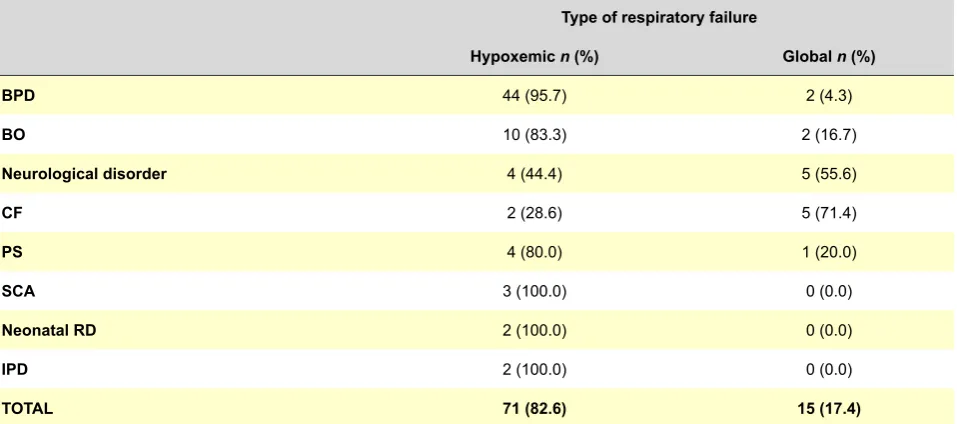
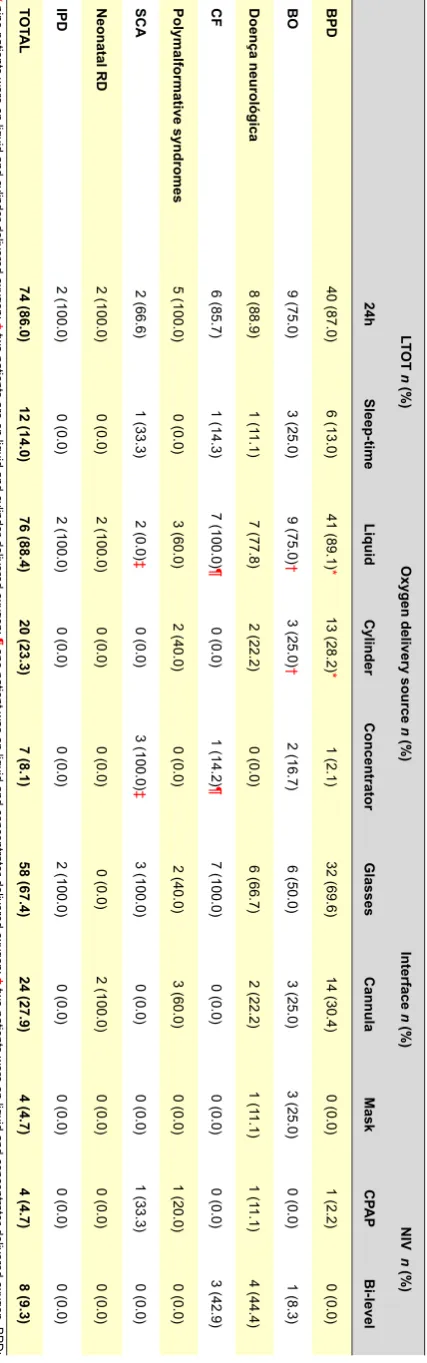
A predominance of hypoxemic RF was found (71; 82.6%); the patients with CF and neurological disorders were predominant in global RF (15; 17.4%) (Table 2). Continuous LTOT was predominant (74; 86.0%), while 12 patients (14.0%) were on sleep-time only prescription (Table 3).
Single liquid oxygen was the main delivery source
used (60; 69.8%); nine patients (10.5%) were on cylinder-delivered oxygen and 11 (12.8%) were on both; seven patients (8.1%) were on concentrator-delivered oxygen. Eyeglasses were more frequently used (58; 67.4%), followed by nasopharynx cannula (24; 27.9%) (Table 3). Non-invasive ventilation (NIV) was used in twelve (14.0%) patients in addition to LTOT related to persistent hypoxemia and/or hypercapnia, mostly through a bi-level pressure mask (eight patients; 61.5%). The patients on NIV had mostly a neurological disorder (five patients) (Table 3). We were able to obtain the prior arterial blood gas (ABG) levels on nine patients with a median pH of 7.33 (7.21-7.34)
and a median pCO2 of 69.5 mmHg (55.2-89.6).
As regards LTOT starting time, monitoring and outcome
Table 1 - Demographic characteristics of our group of patients, by pathology and median age at onset and duration of oxygen therapy
from 2003 to 2012
Diagnosis
Number of patients
Age onset - LTOT *
(min– max) LTOT duration (min – max) * Total (%) Male n (%)
DBP 46 (53.5) 30 (65.2) 0.0 (0-22) 11.0 (4-51)
BO 12 (14.0) 9 (75.0) 13.5 (0-167) 45.0 (3-223)
Doença neurológica 9 (10.5) 4 (44.4) 8.0 (0-188) 26.0 (3-96)
FQ 7 (8.1) 3 (42.9) 168.0 (119-216) 24.0 (7-43)
Síndromes polimalformativas 5 (5.8) 2 (40.0) 0.0 (0-7) 25.0 (9-46)
DCF 3 (3.5) 2 (66.7) 108.0 (94-136) 15.0 (6-20)
DP neonatais 2 (2.3) 0 (0.0) 6.5 (0-13) 9.0 (5-13)
DPI 2 (2.3) 1 (50.0) 5.0 (3-7) 10.5 (3-18)
TOTAL 86 (100.0) 51 (59.3) 0.0 (0-216) 15.0 (3-223)
* median in months. BPD: Broncho-Pulmonary Dysplasia; BO: Bronchiolitis Obliterans; CF: Cystic Fibrosis; SCA: Sickle-Cell Anaemia; Neonatal RD: other Neonatal Respiratory Disor-ders; IPD: Interstitial Pulmonary Diseases.
Table 2 - Distribution of patients according to the type of respiratory failure from 2003 to 2012
Type of respiratory failure
Hypoxemic n (%) Global n (%)
BPD 44 (95.7) 2 (4.3)
BO 10 (83.3) 2 (16.7)
Neurological disorder 4 (44.4) 5 (55.6)
CF 2 (28.6) 5 (71.4)
PS 4 (80.0) 1 (20.0)
SCA 3 (100.0) 0 (0.0)
Neonatal RD 2 (100.0) 0 (0.0)
IPD 2 (100.0) 0 (0.0)
TOTAL 71 (82.6) 15 (17.4)
ARTIGO ORIGINAL criteria, 73 patients (84.9%) presented with a body weight below the 5th percentile at the beginning of the study and 30
patients of this same group grew above that limit at the end (Table 4). We did not find any differences regarding weight
gain between the different groups of patient disorders (p =
0.195). Home pulse oximetry was used in six patients (6.9%). LTOT was discontinued in 38 patients (44.2%) (Table 4). By the end of the study, 12 BO associated to rheumatic fever and pulmonary hypertension; three neurological patients: type-I spinal atrophy, brain paralysis with hypoxic-ischaemic encephalopathy, Rett syndrome and severe epilepsy; four patients with CF and two with polymalformative syndromes. Median follow-up time was 39.5 (1.0-246.0) months, with the following increasing distribution: neonatal PD, seven months (1.0-13.0), SCA, 15 months (6.0-20.0), neurological pathology, 19 months (4.0-132.0), polymalformative syndromes, 27 months (4.0-40.0), BPD, 36.5 months (2.0-246.0), IPD, 43 months (27.0-60.0), BO, 43 months (16.0-219.0), CF, 176 months (105.0-226). We should note that three patients with CF, two with neurological pathology and one patient with BO were still on follow-up over the age of 18..
Comparison between two decades of LTOT
When compared to the 1991-2000 decade,5 we should
note the following methodological differences: three-month minimum LTOT duration for inclusion in the study (in the previous study, one-month was established for BPD patients); patients with complex cardiac pathology were included in the polymalformative syndrome group of patients (in to the absence of isolated cardiac disease); lack of representativeness regarding primary pulmonary hypertension.
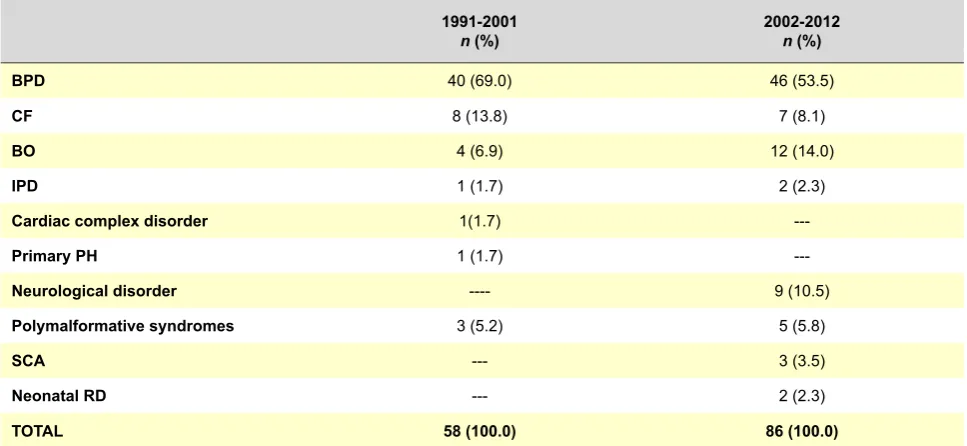
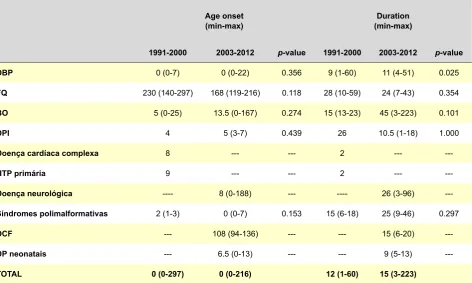
We wish to emphasize the inclusion of neurological and haematological patients and the increase in the number of patients with BPD and BO (Table 5). We should also remark upon a similar distribution regarding the age of oxygen therapy onset by different pathologies, with longer duration in the patients with BDP over the most recent period of time
(p = 0.025) (Table 6).
Paediatric Guidelines and DGS (Portuguese Direcção
Geral da Saúde) Guideline
We carried out a survey of paediatric guidelines for LTOT
in France,3 Brazil,4 United Kingdom6,8 and Spain.7 Major
differences regarding paediatric LTOT prescription relate
to evaluation, prescription, monitoring and outcome6 which
are favourable in children, except for CF and neuromuscular diseases. The following were the other major differences related to the use of LTOT in children: 1) available discontinuation of oxygen therapy as the patient grows and the need for sleep-time oxygen (below the daily 15-hour considered for the adult patient); 2) importance assigned to neuro-behavioural growth and development, particularly in children aged below three; 3) preferred monitoring with pulse oximetry instead of ABG levels; 4) prescription of
intermittent LTOT with SpO2 below 90% beyond 5% of
Table 3
-
Type of L
TOT
according to daily duration, oxygen delivery source, interfaces and need for non-invasive ventilation from 2003 to 2012
LT
OT
n
(%)
Oxygen delivery source
n (%) Interface n (%) NIV n (%) 24h Sleep-time Liquid Cylinder Concentrator Glasses Cannula Mask CP AP Bi-level BPD 40 (87.0) 6 (13.0) 41 (89.1) * 13 (28.2) * 1 (2.1) 32 (69.6) 14 (30.4) 0 (0.0) 1 (2.2) 0 (0.0) BO 9 (75.0) 3 (25.0) 9 (75.0) † 3 (25.0) † 2 (16.7) 6 (50.0) 3 (25.0) 3 (25.0) 0 (0.0) 1 (8.3) Doença neurológica 8 (88.9) 1 (1 1.1) 7 (77.8) 2 (22.2) 0 (0.0) 6 (66.7) 2 (22.2) 1 (1 1.1) 1 (1 1.1) 4 (44.4) CF 6 (85.7) 1 (14.3) 7 (100.0) ¶ 0 (0.0) 1 (14.2) ¶ 7 (100.0) 0 (0.0) 0 (0.0) 0 (0.0) 3 (42.9) Polymalformative syndromes 5 (100.0) 0 (0.0) 3 (60.0) 2 (40.0) 0 (0.0) 2 (40.0) 3 (60.0) 0 (0.0) 1 (20.0) 0 (0.0) SCA 2 (66.6) 1 (33.3) 2 (0.0) ‡ 0 (0.0) 3 (100.0) ‡ 3 (100.0) 0 (0.0) 0 (0.0) 1 (33.3) 0 (0.0) Neonatal RD 2 (100.0) 0 (0.0) 2 (100.0) 0 (0.0) 0 (0.0) 0 (0.0) 2 (100.0) 0 (0.0) 0 (0.0) 0 (0.0) IPD 2 (100.0) 0 (0.0) 2 (100.0) 0 (0.0) 0 (0.0) 2 (100.0) 0 (0.0) 0 (0.0) 0 (0.0) 0 (0.0) TOT AL 74 (86.0) 12 (14.0) 76 (88.4) 20 (23.3) 7 (8.1) 58 (67.4) 24 (27.9) 4 (4.7) 4 (4.7) 8 (9.3) * nine patien ts were on liquid and cylinder-delivered oxygen; † two patients are on liquid and cylinder-delivered oxygen; ¶ one patient was on liquid and concentrator-delivered oxygen; ‡ two patients were on liquid and concentrator-delivered oxygen. BPD:
Broncho-Pulmonary Dysplasia; BO: Bronchiolitis Obliterans; CF: Cystic Fibrosis; SCA: Sickle-Cell
Anaemia; Neonatal RD: other Neonatal Respiratory Disorders; IPD: Interstitial Pulmonary Diseases; CP
AP: Continuous Positive
ARTIGO ORIGINAL
sleep-time; 5) need for low flow oxygen delivery devices and adequate interface; 6) provision of oxygen therapy at
school; 7) need for adult supervision.4
The Portuguese DGS Guideline 018/2011: Home Respiratory Healthcare: Oxygen Therapy Prescription
(Cuidados Respiratórios Domiciliários: Prescrição de
Oxigenoterapia)11 describes some of these differences and
recommends the need for a specialized follow-up of these patients; however, the information is scarce and scattered. The indicators for assessment of the guideline application are not applicable to the entire range of paediatric age. The lack of a flowchart, as well as the lack of specific diagnosis
Table 4 - Outcome characteristics regarding LTOT discontinuation, growth and evolution and final destination from 2003 to 2012
Body weight
n (%) LTOT discontinuation
n (%)
Final destination
n (%) Gain
(> P5) (< P5)Lost Follow-up Discharge Dropout Death BPD 15 (32.6) 0 (0.0) 9 (19.6) 27 (58.7) 11 (23.9) 6 (13.0) 2 (4.3)
BO 6 (50.0) 1 (8.3) 7 (58.3) 9 (75.0) 1 (8.3) 1 (8.3) 1 (8.3)
Neurological disorder 4 (44.4) 0 (0.0) 7 (77.8) 6 (66.7) 0 (0.0) 0 (0.0) 3 (33.3)
CF 0 (0.0) 0 (0.0) 6 (85.7) 3 (33.3) 0 (0.0) 0 (0.0) 4 (57.1)
Polymalformative syndromes 1 (20.0) 0 (0.0) 4 (80.0) 3 (60.0) 0 (0.0) 0 (0.0) 2 (40.0)
SCA 1 (33.3) 2 (66.7) 3 (100.0) 3 (0.0) 0 (0.0) 0 (0.0) 0 (0.0)
Neonatal RD 2 (100.0) 2 (100.0) 2 (100.0) 2 (100.0) 0 (0.0) 0 (0.0) 0 (0.0)
IPD 1 (50.0) 1 (50.0) 0 (0.0) 0 (0.0) 1 (50.0) 1 (50.0) 0 (0.0)
TOTAL 30 (34.9) 6 (7.0) 38 (44.2) 53 (61.6) 13 (15.1) 8 (9.3) 12 (14.0)
P5: 5th percentile; BPD: Broncho-Pulmonary Dysplasia; BO: Bronchiolitis Obliterans; CF: Cystic Fibrosis; SCA: Sickle-Cell Anaemia; Neonatal RD: other Neonatal Respiratory Disorders; IPD: Interstitial Pulmonary Diseases
Table 5 - Patient’s diagnosis across two decades (1991-2000 and 2003-2012)
1991-2001
n (%) 2002-2012n (%)
BPD 40 (69.0) 46 (53.5)
CF 8 (13.8) 7 (8.1)
BO 4 (6.9) 12 (14.0)
IPD 1 (1.7) 2 (2.3)
Cardiac complex disorder 1(1.7)
---Primary PH 1 (1.7)
---Neurological disorder ---- 9 (10.5)
Polymalformative syndromes 3 (5.2) 5 (5.8)
SCA --- 3 (3.5)
Neonatal RD --- 2 (2.3)
TOTAL 58 (100.0) 86 (100.0)
BPD: Broncho-Pulmonary Dysplasia; BO: Bronchiolitis Obliterans; CF: Cystic Fibrosis; SCA: Sickle-Cell Anaemia; Neonatal RD: other Neonatal Respiratory Disorders; IPD: Interstitial Pulmonary Diseases; PH: Pulmonary Hypertension.
in younger children is also a potential limitation.
The limits of prescription, although slightly different in different guidelines, establish additional oxygen to be prescribed in patients with BPD and other neonatal RD
for SpO2 ≥ 93%; SpO2 > 90% is considered in CF patients
and SpO2 > 94% in SCA patients.4,6,7 The monitoring plan is
mainly different in infants with chronic pulmonary diseases, with an indication for strict supervision and monitoring, at home and in the hospital, in order to determine oxygen
flows.3,4,6,7 Two visits are planned over the first week upon
ARTIGO ORIGINAL
DISCUSSION
Our group of patients comprises a large sample of paediatric patients on LTOT with a wide range of disorders. We found a slight predominance of male patients, in line
with other authors.2
Most patients started on LTOT during the first year of life, following a higher prevalence of neonatal diagnosis. We found, as previously, two different age group-peaks at LTOT onset. Early LTOT-related diagnosis in children were the most frequent and were predominantly associated to premature babies or to congenital malformations, inducing a zero median age, when compared to the group of patients with a later LTOT onset. This is one of the major distinction factors of LTOT in paediatric age.
The patients that started on LTOT after 36 months of age presented with pathologies that occurred later on, like post-infectious OB, or that occurred as a consequence of disease progression, due to deterioration of lung function and/or due to deterioration of tissue oxygen delivery (CF, SCA and neurological disorders). The median age at LTOT onset and duration remained unchanged during the study
timeframe, with the exception of patients with BPD (p =
0.025) which showed a selection bias: a one-month minimal LTOT duration was considered in the previous study while three months were considered in the present study. However, this would be an expected difference due to the lower gestational age considered in the current study, in line with the general tendency towards the reduction of survival limit of premature babies.
BPD was the main diagnosis for LTOT and also the group with the higher number of patients who discontinued LTOT (35 patients; 80.4%), as observed in the United Kingdom
and in Wales.9 The 9% increase of prematurity in Portugal,13
with strategies increasing preterm survival,14 increased the
number of patients with BPD.14 LTOT is considered in these
patients with SpO2≤93% and no severe hypercapnia.4,6-8 In
these patients, LTOT is also considered as a determinant
factor for reducing sudden death in infants,4,6,7,16 the
frequency of intermittent desaturations6,7,16 and pulmonary
hypertension6,7 and for growth7,16-18 and neurodevelopment
promotion.7,16 As in premature infants, oxygen is especially
toxic, as shown in previous studies (STOP-ROP and
BOOST);20,21 a SpO
2 95% maximum limit was established
in order to reduce the incidence of retinopathy and BDP
itself.14 In our study, 51.0 months was the maximum
duration of oxygen therapy in these patients; comorbidities such as laryngotracheomalacia, gastroesophageal reflux, recurrent aspiration, CF and congenital cardiac disease must be excluded when the need for LTOT persists upon
the 12-month period.6 Mortality in BPD was low (4.3%),
mainly due to prematurity-related comorbidities.
The second most frequent diagnosis was BO, different
from the previous study,5 in line with the national tendency,22
followed-up in specialized units as in other countries.2,8 BO
occurs later on, as it is frequently acquired upon infection with adenovirus. In this case, outcome is usually favourable and approximately half of the patients are independent from LTOT by the end of the study.
Table 6 - Distribution of median ages at the start and duration of LTOT, according to pathology, comparing two decades (1991-2000 and
2003-2012)
Age onset
(min-max) (min-max)Duration
1991-2000 2003-2012 p-value 1991-2000 2003-2012 p-value DBP 0 (0-7) 0 (0-22) 0.356 9 (1-60) 11 (4-51) 0.025
FQ 230 (140-297) 168 (119-216) 0.118 28 (10-59) 24 (7-43) 0.354
BO 5 (0-25) 13.5 (0-167) 0.274 15 (13-23) 45 (3-223) 0.101
DPI 4 5 (3-7) 0.439 26 10.5 (1-18) 1.000
Doença cardíaca complexa 8 --- --- 2 ---
---HTP primária 9 --- --- 2 ---
---Doença neurológica ---- 8 (0-188) --- ---- 26 (3-96)
---Síndromes polimalformativas 2 (1-3) 0 (0-7) 0.153 15 (6-18) 25 (9-46) 0.297
DCF --- 108 (94-136) --- --- 15 (6-20)
---DP neonatais --- 6.5 (0-13) --- --- 9 (5-13)
---TOTAL 0 (0-297) 0 (0-216) 12 (1-60) 15 (3-223)
ARTIGO ORIGINAL
The neurological pathology was the third more frequent diagnosis found, in line with the increasing indications for
LTOT, as described in other European countries.3,7,9 The
need for LTOT in these patients relates to lung disease associated to aspiration pneumonia, gastroesophageal
reflux, inefficient cough and thoracic deformity.4,7 We
found an association to NIV in five patients due to
chronic hypoventilation induced by ventilatory changes.7
In neurological patients, LTOT has an indication in non-progressive mild situations, as well as in patients where
hypoxemia occurs despite NIV.4 Mortality is high (33.3%), in
line with what has been described by other authors. The improvement in respiratory and nutritional care in CF may explain the relative reduction of LTOT in the paediatric age, due to an observed delay in respiratory
failure onset.23 A study carried out in Brazil2 showed CF as
main indication for LTOT. However, the adequate time for starting LTOT is not defined and there are no guidelines
for screening nocturnal hypoxemia.24 This group4 suggests
the use of COPD adult patients LTOT criteria in adolescent
patients (PaO2 ≤ 55 mmHg or SpO2 ≤ 88%; PaO2 56-59
mmHg or SpO2 89% in the presence of cor pulmonale)
and BPD criteria in infants (SpO2 ≤ 93%). The frequency
of desaturations is not directly related to the severity of pulmonary disease, to its progression, to the frequency of hospital admissions or to mortality, although it may have an influence on school performance. In our group of patients, LTOT was successfully discontinued in one patient upon lung transplant. Despite therapeutic and technological advances, CF remains a severe disease associated to multiorgan complications, reflected in the high mortality observed in the group of patients on LTOT (57.1%). Polymalformative syndromes present early LTOT onset (0 - 7 months) and long-term duration (9 - 46 months). The complexity of these pathologies is also associated to a high mortality (40.0%).
Follow-up of patients with SCA in specialized centres,
already suggested in international guidelines24 and the
potential benefits of LTOT in this group of patients explain for the inclusion in the study. The prescription of LTOT due to intermittent hypoxemia reduces the risk of stroke, painful episodes, secondary pulmonary hypertension and
mortality.6 According to the British guidelines,6 nocturnal
SpO2 should be determined with ronchopathy or nocturnal
enuresis after the age of 6 years; annual evaluation of SpO2
in stable children is also recommended, with an indication for nocturnal monitoring when < 95%. The mechanism for desaturation is not fully understood, possibly related to low haemoglobin values and subsequent right shift of the haemoglobin dissociation curve or with the presence
of carboxy and metahaemoglobin.25,26 SpO
2 levels may
be overestimated and unreliable26,27 and therefore they
should be obtained in sleep and awake time; when < 93%,
PaO2 should be considered: if < 70 mmHg, LTOT should
be considered.4 The need for LTOT depends on disease’s
progression and consequently in the late onset group LTOT was not discontinued in any patient over the study period.
One of the patients presented with concomitant obstructive sleep apnea, with the need for NIV until adenotonsillectomy was performed.
One patient with pulmonary hypoplasia and the consequences of a severe pneumonia (other neonatal RD group) was included in the study. The same oxygen therapy onset criteria as for BPD patients are used in these patients,
as infants are predominantly affected.6 Both situations
presented with short follow-up time, the need for LTOT persisting at the time of data collection (5 to 13-months duration). Although none of the patients remained independent from LTOT, studies show that discontinuation of oxygen therapy is frequent upon 12 to 28 months (14 - 66
months).28,29
IPD were represented by two patients in our study (one with neuroendocrine cell hyperplasia of infancy and one with unspecific cellular interstitial pneumonitis). Gas exchange impairment leads to oxygen supplementation during variable periods of time, while directed therapy is carried out.
The use of oxygen-delivery equipment, monitoring and evaluation of supplementary oxygen flow in paediatric patients on LTOT has some differences, when compared to adult patients, as described below.
We found a predominance of liquid oxygen supply. These portable devices allow for patient’s deambulation and are
easily recharged at home.4 Their main disadvantage regards
its high cost.4,6,7 The use of cylinder-delivered oxygen is
a more affordable alternative, although less functional due to its volume and the need for frequent recharges, making autonomy and deambulation more difficult, a crucial factor for most of these children, with a predicted normal
functioning in the future.7 The use of a concentrator is also
an alternative,4 not often used in children, as it allows for
scarce mobility, depends on electrical power and is noisy.7
Delivery systems and interfaces include eyeglasses, nasopharynx cannula and face masks. In our study, nasal cannula (eyeglasses and nasopharynx cannula) were mostly used, in line with what was described by other
authors.2 Nasal cannula are the preferred method due to
its comfortable use. They need to be frequently changed,4
with daily cleaning and they avoid the waste of oxygen and
make communication and food intake easier.6,7 Cannula are
uncomfortable to use with flows > 2 l/min, where face masks
are preferrable.4,6,7 The choice depends on the pathology
and on the need for oxygen and it may involve parent’s
preference.6
Monitoring of paediatric patients on LTOT includes the frequent evaluation and survey of the consequences of chronic hypoxemia and should be different from those
used in the adults3,6,7 as change in growth and cognitive
development are the more relevant consequences, in addition to the usual increases in haematocrit levels, pulmonary hypertension and right ventricular hypertrophy.
In French guidelines3 the evaluation of chronic patients
during sleep-time (6 - 12h) and during activity-time is
ARTIGO ORIGINAL monitored and, when normal, also the night-time COIn children below two years of age, the presence of SpO2 level.
2 < 93% and/or above 5% of sleep-time below 90% and/or the presence of pulmonary hypertension is considered as an indication for LTOT while in children above two years of
age, a level of SpO2 < 90% or more than 10% of sleep-time
below 90% and/or the presence of pulmonary hypertension
are suggested and SpO2 > 94% or > 92%, with or without
the presence of pulmonary hypertension, respectively, as LTOT target levels.
In our study, monitoring included pulse oximetry in an outpatient or home visit regimen and anthropometric evolution. ABG levels were obtained in a scarce number of patients underlying that, unlike adult patients on LTOT, ABG levels should not be used as criteria for LTOT prescription
in the paediatric age. The type of oximeter used6 should
be known (fractional or functional oxygen saturation)6 as
well as its limitations.4 The use of outpatient pulse oximetry
will not benefit the paediatric patient on LTOT6 and was
previously reviewed.30
Regarding the anthropometric evolution, 30 patients reached above the 5th percentile during LTOT (34.9%), showing its importance and overall benefit.
Due to its specificities, paediatric patients on LTOT should have the support of a homecare specialized team. Although beyond the aim of our study, we should remark that patients on LTOT at our unit are weekly visited by the Home Mobile Support Unit (UMAD). This is the result of a
9-year institutional partnership between the Fundação do
Gil and the Hospital de Santa Maria allowing for a periodical
visit from a hospital nurse. As the number of paediatric patients with respiratory technical healthcare is lower when compared to the group of adult patients and due to a wider range of pathologies, we believe in the benefit of a home visit based on the hospital that is following the patients. The monitoring visits to these patients include the evaluation of
SpO2 level on ambient air and on oxygen.4 In one study31
involving 55 children with BPD and the evaluation of home healthcare, 41% of children needed to be readmitted, with nine-day median hospital stay.
LTOT discontinuation should be considered with supplementary oxygen < 0.1 L/min, using the target
saturations that lead towards this therapy.4,6,7 It is the rule
in BPD, as well as in IPD and BO.4,6 In our study, LTOT
was discontinued in 38 patients (44.2%). According to the situation, LTOT discontinuation may initially start with a nocturnal regimen or start as a 24h regimen and there
is no consensus regarding which is the best strategy.4,6,8
The equipment should remain at the patient’s home for at least three months following discontinuation, upon which an evaluation with pulse oximetry should be carried out on two occasions, approximately one-month apart as well as an
evaluation of child’s growth.4
We should also mention the importance of follow-up of these patients beyond 18 years of age, namely patients with CF, neurological pathology and BO, due to the characteristics and difficulties of the transition of these chronic patients to
adult medicine. A time of overlapping follow-up is beneficial for patients, allowing for a progressive adaptation of the patient and his family to the new reality. For this reason, we have included in our study patients that exceeded paediatric age but are still followed at our Unit.
Due to its retrospective and long-term nature, record reliability is one of the limitations of our study. Not all the patients followed the same guidelines or constant examination regimens. The presence of a structured system of prescription, which is crucial for this therapy, would answer this limitation. As regards the two-decade comparison, the various nosological groups prevent a direct comparison. In addition, BPD inclusion criteria were different, representing a selection bias.
CONCLUSIONS
In line with international and previous descriptions, paediatric patients with BPD are those who benefit the most from LTOT programs, with a favourable outcome and a possibility of discontinuation. The improvement in healthcare of the patient with CF leads to a reduction in the number of paediatric patients on LTOT. The inclusion of new groups of diagnosis may allow for firmer conclusions based on the analysis of a larger patient pool).
The specific paediatric use of LTOT, when compared to adults, imposes higher resource consumption due to the dynamic of growth and to the wide range of pathologies related to LTOT.
A homogeneous and consistent LTOT prescription system would allow for a national record database to be created, including the characterisation and knowledge of the paediatric population on LTOT; this would lead to homogeneity in criteria and prescription systems.
The authors suggest specific paediatric guidelines in this domain and hope that more reliable national records will allow for the implementation of an adequate healthcare plan.
OBSERVATIONS
Some of the data from this study were presented t at the following meetings:
a) 10th International Congress on Pediatric Pneumology,
25-27 June 2011, Versailles, France. Poster: Long-term oxygen therapy: Review of requirements in children. b) 12º National Congress on Paediatrics, 6-8 October
2011, Albufeira, Portugal. Oral Communication:
Oxigenoterapia de longa duração em idade pediátrica:
análise da evolução da utilização clínica.
CONFLICTS OF INTEREST
The authors declare that there was no conflict of interests in writing this manuscript.
FINANCIAL SOURCES
ARTIGO ORIGINAL
REFERENCES
1. Tin W. Oxygen therapy: 50 years of uncertainty. Pediatrics. 2002;110:615-6.
2. Munhoz AS, Adde FV, Nakaie CM, Doria Filho U, Silva Filho LV, Rodrigues JC. Long-term home oxygen therapy in children and adolescents: analysis of clinical use and costs of a home care program. J Pediatr. 2011;87:13-8.
3. Aubertin G, Marguet C, Delacourt C, Houdouin V, Leclainche L, Lubrano M, et al. Recommandations pour l’oxygénothérapie chez l’enfant en situations aigues et chroniques : évaluation du besoin, critéres de mise en route, modalités de prescription et de surveillance. Arch Pediatr. 2012;19:528-36.
4. Adde FV, Alvarez AE, Barbisan BN, Guimarães BR. Recommendations for long-term home oxygen therapy in children and adolescents. J Pediatr, 2013;89:6-17.
5. Ferreira R, Bandeira T. Oxigenoterapia de longa duração em pediatria: lições do passado e orientações para o futuro. Acta Pediatr Port. 2003;34:69-78.
6. Balfour-Lynn IM, Field DJ, Gringras P, Hicks B, Jardine E, Jones RC, et al. BTS guidelines for home oxygen in children. Thorax. 2009;64:1-26. 7. Paredes MC, Cruz OA, Aznar IC, Ruiz EP, Frías JP. Fundamentos
de la oxigenoterapia en situaciones agudas e crónicas: indicaciones, métodos, controles y seguimiento. An Pediatr. 2009;71:161-74. 8. Balfour-Lynn IM, Field DJ, Gringras P, Hicks B, Jardine E, Jones RC, et
al. Home oxygen for children: who, how and when? Thorax. 2005;60:76-81.
9. Primhak RA, Hicks B, Shaw NJ, Donaldson GC, Balfour-Lynn IM. Use of home oxygen for children in England and Wales. Arch Dis Child 2011;96:389-92.
10. Greenough A, Alexander J, Burgess S, Chetcuti PA, Cox S, Lenney W, et al. High versus restricted use of home oxygen therapy, health care utilization and the cost of care in chronic lung disease. Eur J Pediatr. 2004;163:292-6.
11. Norma de Orientação Clínica. Direção Geral de Saúde. Cuidados respiratórios domiciliários: prescrição de oxigenoterapia. Norma nº 18/2011 de 28/09/2011 atualizada a 12/02/2013 [consultada 2013 Abr 24]. Disponível em: http://www.dgs.pt/directrizes-da-dgs/normas-e- circulares-normativas/norma-n-0182011-de-28092011-atualizada-a-12022013-jpg.aspx.
12. Harrison G, Show B. Prescribing home oxygen. Arch Dis Child Fetal Neonatal. 2007;92:241-3.
13. Machado MC, Alves MI, Couceiro ML. Saúde infantil e juvenil em Portugal: indicadores do Plano Nacional de Saúde. Acta Pediatr Port. 2011;42:195-204.
14. Sweet DG, Carnielli V, Greisen G, Hallman M, Ozek E, Plavka R, et al. European consensus guidelines on the management of neonatal respiratory distress syndrome in preterm infants. Neonatology. 2010;97:402–17.
15. Gupta S, Prasanth K, Chen CM, Yeh TF. Postnatal corticosteroids for
prevention and treatment of chronic lung disease in preterm newborn. Int J Pediatr. 2012;315642 [consultado 2013 Abr 12]. Disponível em: http://www.hindawi.com/journals/ijpedi/2012/315642/.
16. Poets CF. When infants need additional inspired oxygen? A review of the current literature. Pediatr Pulmonol. 1998;26:424-8.
17. Kotecha S, Allen J. Oxygen therapy for infants with chronic lung disease. Arch Dis Child Fetal Neonatal. 2002;87:11-4.
18. Groothuis JR, Rosenberg AA. Home oxygen promotes weight gain in infants with bronchopulmonary dysplasia. Am J Dis Child 1987;141:992-5.
19. Hudak BB, Allen MC, Hudak ML, Loughlin GM. Home oxygen therapy for chronic lung disease in extremely low-birth weight infants. Am J Dis Child. 1989;143:357-60.
20. Supplemental Therapeutic Oxygen for Prethreshold Retinopathy of Prematury (STOP-ROP), a randomized, controlled trial. I: primary outcomes. Pediatrics. 2000;105:295-310.
21. Askie LM, Henderson-Smart SJ, Irwig L, Simpson JM. Oxygen-saturations targets and outcomes in extremely preterm infants. N Eng J Med. 2003;349:959-67.
22. Bandeira T, Nunes T. Long-term follow-up of chronic lung disease of infancy. Pediatr Pulmonol. 2011;46:573–80.
23. Urquhart DS, Montgomery H, Jaffe A. Assessment of hypoxia in children with cystic fibrosis. Arch Dis Child. 2005;90:1138-43.
24. NHS Sickle cell and thalassemia screening program in partnership with the Sickle Cell Society. Sickle cell disease in childhood. Detailed guidance standards and guidelines for clinical care 2010 [Consultado em 2013 Abr 17]. Disponível em: http://sct.screening.nhs.uk/ standardsandguidelines.
25. Blaisdell CJ, Goodman S, Clark K, Casella JF, Loughlin GM. Pulse oximetry is a poor predictor of hypoxemia in stable children with sickle cell disease. Arch Pediatr Adolesc Med. 2000;154:900-3.
26. Moreira GA. Respiratory repercussions of sickle cell anemia. J Bras Pneumol. 2007;33:18-20.
27. Pianosi P, Charge TD, Esseltine DW, Coates AL. Pulse oximetry in sickle cell disease. Arch Dis Child. 1993;68:735-8.
28. Castro-Rodriguez JA, Daszenies C, Garcia M, Meyer R, Gonzales R. Adenovirus pneumonia in infants and factors for developing bronchiolitis obliterans: a 5-year follow-up. Pediatr Pulmonol. 2006;41:947-53. 29. Norzila MZ, Azizi BH, Norrashidah AW, Yeoh NM, Deng CT. Home
oxygen therapy for children with chronic lung diseases. Med J Malaysia. 2001;56:151-7.
30. Saianda A, Estevão MH, Bandeira T. Utilização domiciliária de monitores cardio-respiratórios e oxímetros de pulso em Pediatria. Resultados do inquérito nacional “Monitores cardio-respiratórios em Pediatria”. Acta Pediatr Port. 2007;38:73-8.
Teresa BANDEIRA