The
“
Scope
”
of Post-ERCP Pancreatitis
Parth J. Parekh, MD; Raj Majithia, MD; Sanjay K. Sikka, MD; and Todd H. Baron, MD
Abstract
Pancreatitis is the most common adverse event of endoscopic retrograde cholangiopancreatography, with the potential for clinically significant morbidity and mortality. Several patient and procedural risk factors have been identified that increase the risk of posteendoscopic retrograde cholangiopancreatography pancreatitis
(PEP). Considerable research efforts have identified several pharmacologic and procedural interventions that can drastically affect the incidence of PEP. This review article addresses the underlying mechanisms at play for the development of PEP, identifying patient and procedural risk factors and meaningful use of risk-stratification information, and details current interventions aimed at reducing the risk of this complication.
ª2016 Mayo Foundation for Medical Education and ResearchnMayo Clin Proc. 2017;92(3):434-448
P
ancreatitis remains the most commonadverse event of endoscopic retrograde
cholangiopancreatography (ERCP),
with the potential for substantial morbidity and mortality.1-4 Several large clinical studies have reported the incidence of post-ERCP pancreatitis (PEP) to be 3% to 5%.5,6A recent meta-analysis composed of 21 prospective studies found the incidence of PEP to be consistent with previously described studies at approximately 3.5%7; however, PEP rates ranged from 1% to nearly 16% depending on patient selection.6,8 There are several pa-tient- and procedure-related factors that have been identified to increase the risk of PEP. The presence of multiple factors can have a cumulative effect. As a result, several chemical and procedural interventions have been stud-ied in the hopes of decreasing PEP rates. Here-in, we describe the potential mechanisms of pancreatic injury during ERCP, review patient-and procedure-related risk factors, patient-and discuss the latest studies involving pharmacologic and procedural interventions aimed at reducing the rates of PEP.
MECHANISMS OF PEP
There are several potential underlying mecha-nisms of pancreatic injury during ERCP, including mechanical, thermal, chemical, hy-drostatic, enzymatic, and microbiologic insults.9 Prolonged manipulation of the papillary orifice, difficult cannulation of the biliary tree, and repeated inadvertent instrumentation of the pancreatic duct result in ductal injury or injury to the ampulla.10-12Thermal injury may result
from electrocautery current used during sphinc-terotomy (biliary or pancreatic), endoscopic papillectomy, or ablation of neoplastic lesions in the region of the ampulla of Vater.13,14 Resul-tant papillary edema caused by mechanical or thermal injury is thought to obstruct the outflow of pancreatic secretion, resulting in pancreatitis. Contrast agents could potentially lead to PEP by causing chemical injury; how-ever, the data remain controversial.15 George et al15performed a meta-analysis to determine whether the osmolality of contrast media used affects the incidence of PEP. Thirteen random-ized controlled trials (RCTs) were included comparing the incidence of PEP (defined as pancreatic enzyme levels elevated 3 times above their upper limits of normal [ULNs] and typical pancreatic pain) with the use of high- vs low-osmolality contrast media. Using logistic regres-sion, they found no significant difference in PEP rates between low- and high-osmolality contrast media. Hydrostatic injury, which results from overinjection of the pancreatic duct or infusion of water or saline through manometry catheters, is thought to be one of the most important causes of PEP.14,16Introduction of foreign mate-rial into the pancreatic duct results in the intra-luminal activation of proteolytic enzymes, which subsequently results in enzymatic injury. In addition, the reflux pathogenesis describes the introduction of intestinal enzymes into the pancreatic ductal tree by ERCP.17It is thought that contrast agents, not currently used in clin-ical practice, may activate intracellular trypsin, with resultant PEP. Last, bacterial translocation and subsequent activation of the inflammatory From the Department of
cascade is also thought to contribute to the path-ogenesis of PEP.18 These underlying mecha-nisms may work independently or in concert, resulting in a cascade of events that activate pro-teolytic enzymes, promote autodigestion, and impair acinar secretion, with subsequent clinical manifestations of the local and systemic effects of pancreatitis.19-21Therefore, most preventive therapies are aimed at interrupting various trig-gers of this cascade.
RISK FACTORS AND MEANINGFUL USE OF RISK-STRATIFICATION INFORMATION Several studies have identified factors that in-crease the risk of PEP, which can be divided into patient- and procedure-related factors.
Table 13,22-26 summarizes expert consensus, based on several clinical trials, of independent risk factors for PEP. There are several other fac-tors that have been suggested to be possible risk factors for PEP but that have not yet been universally accepted as independent risk factors, including self-expanding metal stent place-ment,27 pancreatic deep wire passage,28 and intraductal papillary mucinous neoplasm.26 These risk factors seem to have a synergistic ef-fect, as evidenced by Freeman et al,9who found the risk of PEP in a young woman with clinical suspicion of sphincter of Oddi dysfunction, a normal bilirubin level, and difficulty with cannu-lation to be in excess of 40%. This particular sub-set of patients (women with suspected sphincter of Oddi dysfunction) not only is at an increased risk for PEP but also seems to develop more severe PEP, and studies have found there to be a higher mortality rate as well.1,9,29
In addition, the individual endoscopist’s procedure volume and level of training have been implicated as independent risk factors for PEP. A study by Loperfido et al30evaluated the adverse events of diagnostic and therapeutic ERCP in 2769 patients at medical centers in Italy during a 2-year period. Of the 9 centers, 6 were considered to be small because they performed ERCP on fewer than 200 patients annually. Low volume was identified as an independent risk factor for overall major adverse events of therapeutic ERCP, which sup-ported a policy of centralization of ERCP in referral centers to limit potential adverse events. Other multicenter studies, however, have not confirmed this trend, which is thought to be due to the fact that low-volume endoscopists
have a tendency to perform lower-risk proced-ures.1,9,31 Nevertheless, we recommend that high-risk cases (based on patient-related risk factors or anticipated high-risk procedural in-terventions) be referred to tertiary and quater-nary medical centers, where a high-volume endoscopist can perform the procedure.
Thus, it is imperative for the endoscopist to understand the aforementioned risk factors and incorporate them into clinical decision making. The clinical endoscopist can gauge the risk, in part, of PEP based on nonmodifi -able patient-related risk factors. This allows for appropriate case selection and improved patient relations regarding discussing the risk-benefit ratio of the procedure. In addition, combining procedure- and patient-related risk factors allows for global assessment of a pa-tient’s overall risk of PEP, which could help further guide management (ie, postprocedural hospital admission for further observation in a patient deemed to be at high risk for PEP).
DIAGNOSIS, SEVERITY, AND MANAGEMENT OF POST-ERCP PANCREATITIS
To date, there are no standardized diagnostic criteria for PEP; however, the consensus guidelines proposed by Cotton et al32are the
ARTICLE HIGHLIGHTS
d The development of posteendoscopic retrograde
chol-angiopancreatography pancreatitis (PEP) is thought to be multi-factorial, including mechanical, thermal, chemical, hydrostatic, enzymatic, and microbiologic insults. Thus, chemoprophylaxis and procedural techniques to prevent PEP should take all these factors into account.
d The risk of PEP in low- and high-risk patients is greater than 5%
and 16%, respectively. To minimize this risk, clinicians must choose appropriate patients, use endoscopic retrograde chol-angiopancreatography pancreatitis almost exclusively as a ther-apeutic procedure, use sound procedural techniques, and consider the administration of rectal indomethacin, the use of aggressive hydration, or the placement of pancreatic stents.
d Large randomized controlled trials are necessary to further
most generally used. Per Cotton et al,32 the diagnosis of PEP is defined as the presence of pancreatitis (new pancreatic-type abdom-inal pain accompanied by at least a threefold increase in the serum amylase level) that has developed de novo 24 hours after ERCP. If the diagnosis of PEP remains in doubt,
contrast-enhanced computed tomography
(CT) of the abdomen or magnetic resonance imaging (if renal function precludes CT) should be performed to make the diagnosis.
However, a normal CT finding does not
exclude mild pancreatitis.
Early diagnosis of PEP may be possible by evaluating serum amylase or lipase levels within 6 hours of the procedure.33-35 Ito et al33 evaluated the relationship between the change in serum amylase levels and PEP. Serum amylase concentrations were measured before and 3, 6, and 24 hours after the procedure in 1291 ERCP-related procedures. Forty-seven patients (3.6%) developed PEP. Subgroup anal-ysis revealed that 3 hours after the procedure,
1% of patients with normal serum amylase levels and 1%, 5%, 20%, 31%, and 39% of patients with amylase levels elevated 1 to
2ULN, 2 to 3ULN, 3 to 5ULN, 5 to
10ULN, and more than 10ULN developed PEP, respectively. Of 143 patients with elevated serum amylase levels 3 hours after the proced-ure that remained elevated 6 hours after the
procedure, 37 (25.9%) developed PEP.
Conversely, of 45 patients with elevated serum amylase levels 3 hours after the procedure (>2ULN) with subsequent decrease of serum amylase concentrations 6 hours after the pro-cedure, only 4 (8.9%) developed PEP. This led to the conclusion that PEP is associated with an increase in serum amylase concentra-tions greater than 2ULN 3 hours after the procedure with sustained elevation 6 hours after the procedure and that a decrease in amylase levels 6 hours after the procedure sug-gests a decreased likelihood of developing PEP. The severity of PEP is mainly based on the length of hospitalization, as illustrated in
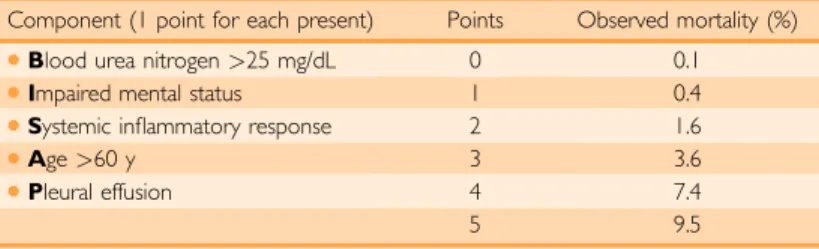
Table 2.32 Because the management of PEP is similar to that of other causes of acute pancre-atitis, the same prognostic indicators apply to PEP as to other causes of acute pancreatitis. Several scoring systems have been validated in predicting the severity of pancreatitis, including the bedside index for severity in acute pancreatitis (BISAP),36Acute Physiology and Chronic Health Examination II score,37 Ranson criteria,38 Balthazar score (or CT severity index),39 and Glasgow criteria.40 Papachristou et al36 compared BISAP with the other traditional multifactorial scoring sys-tems and found it to have similar test perfor-mance characteristics for predicting mortality with clinically relevant and easily obtainable components. Table 336 outlines the BISAP scoring system. The downside to the currently available predicting models is that it has not been validated for predicting outcomes such as length of hospital stay, need for intensive care unit care, or need for intervention.
The initial management of a patient with PEP centers on supportive care with aggressive
fluid resuscitation, pain control, and nutri-tional support. Acute pancreatitis typically re-sults in significant intravascular loss; therefore, aggressive intravenous hydration should be at least 250 to 300 mL/h (in the absence of concomitant cardiac or renal comorbidities).
TABLE 2. Severity of PosteEndoscopic Retrograde Cholangiopancreatography Pancreatitis32
Factor Mild Moderate Severe
Length of hospitalization (d)
<3 4-10 >10
Other defining characteristics
None None Hemorrhagic pancreatitis Pancreatic necrosis or pseudocyst Necessity for intervention
(percutaneous drainage or surgery)
TABLE 1. General Consensus of Risk Factors for PEP9,22-26
Patient-related factors Procedure-related factors
Operator-related factors
Female sex Ampullectomy Inadequate training
Normal serum bilirubin level
Biliary balloon sphincteroplasty Lack of experience
History of PEP Difficult cannulation Recurrent pancreatitis Minor papilla sphincterotomy Sphincter of Oddi
dysfunction
Pancreatic duct injection
Younger age (<60 y) Pancreatic sphincterotomy Precut sphincterotomy Sphincter of Oddi manometry Trainee involvement
Hydration should be adjusted based on clin-ical assessment and titrated to hematocrit and blood urea nitrogen values.41 As with other cases of acute pancreatitis, pain control, nutritional support, and monitoring for infection are paramount. Details regarding the management and complications of acute pancreatitis are beyond the scope of this article but are discussed in depth elsewhere.37,41
PREVENTION OF PEP
Pharmacologic Agents
During the past 3 decades, nearly 100 RCTs have aimed to identify potential pharmacologic agents to use for the chemoprevention of PEP, with largely disappointing results. The ideal pharmacologic agent should be short-acting, well-tolerated with a low adverse effect profile, and, most importantly, highly efficacious in reducing PEP. Thus far, clinical trials have had inadequate sample sizes and negative, conflicting, or inconclusive results. In addition, the promise of a previous positive meta-analysis of agents42 that were subsequently disproved by further clin-ical investigation43 further amplifies the pessi-mism surrounding PEP chemoprevention.
Nonsteroidal Anti-inflammatory Drugs
To date, clinical data supporting the use of nonsteroidal anti-inflammatory drugs (NSAIDs) for PEP have renewed hope in chemopreven-tion. The NSAIDs inhibit several mediators of the inflammatory cascade that are thought to play a role in the pathogenesis of acute pancre-atitis, namely, prostaglandins and phospholi-pase A-2.44 Initial data from 2003-2008 evaluating the chemoprotective effects of NSAIDs (single-dose rectal indomethacin or diclofenac) reported conflicting, albeit encour-aging, results.45-47A subsequent meta-analysis by Elmunzer et al,48which totaled 912 patients, found that patients who received NSAIDs in the periprocedural period were 64% less likely to develop pancreatitis and 90% less likely to develop moderate to severe pancreatitis. The pooled analysis found a number needed to treat (NNT) to prevent 1 episode of pancreatitis of 15. In addition, there were no adverse events attrib-uted to NSAID therapy in any of the clinical tri-als included. Despite the overwhelmingly positive results of this meta-analysis, there was not a push for NSAID use in PEP prevention.
This sparked a large-scale, multicenter RCT by Elmunzer et al49totaling 602 patients random-ized to receive single-dose rectal indomethacin or placebo immediately after ERCP. The rates of PEP in NSAID-treated patients and placebo-treated patients were 9.2% and 16.9%, respec-tively (P¼.005). The rates of moderate to severe pancreatitis in NSAID-treated patients and placebo-treated patients were 4.4% and 8.8%, respectively (P¼.03). Last, the use of rectal indo-methacin was associated with a 7.7% absolute risk reduction (NNT¼13) and a 46% relative risk reduction in PEP (P¼.005), which led the investigators to conclude that rectal indometh-acin therapy significantly reduces the incidence of PEP in high-risk patients. Subsequent meta-analyses have reaffirmed these findings,50-52 and, thus, the use of 100 mg of rectal indometh-acin or diclofenac has become the standard of care in all high-risk patients.53
A recent publication has cast a doubt on the utility of NSAIDs for the prevention of PEP.54 Levenick et al54 performed a single-center, prospective, double-blind, placebo-controlled trial evaluating the efficacy of prophylactic indomethacin use for all patients undergoing ERCP, including those at average risk for PEP. The trial included 449 consecu-tive patients who underwent ERCP from March 1, 2013, through December 31, 2014, with approximately 70% of the cohort at average risk for PEP. During the procedure, participants were randomized in a 1:1 manner to receive either a single dose of 100 mg of indomethacin rectally (n¼223) or a placebo suppository (n¼226), with the development of PEP as the primary end point (defined as new upper abdominal pain, 3ULN elevation of lipase levels, and hospitalization after ERCP for 2 consecutive nights). Sixteen patients
TABLE 3. Bedside Index for Severity in Acute Pancreatitis (BISAP) Scoring System and Associated Mortality36
Component (1 point for each present) Points Observed mortality (%)
dBlood urea nitrogen>25 mg/dL 0 0.1
dImpaired mental status 1 0.4
dSystemic inflammatory response 2 1.6
dAge>60 y 3 3.6
dPleural effusion 4 7.4
5 9.5
(7.2%) in the indomethacin cohort and 11 (4.9%) in the placebo cohort went on to develop PEP, which was not significant (P¼.33).
There are a variety of reasons why the
findings by Levenick et al54 refuted those of the multicenter trial by Elmunzer et al.49First and foremost, the patient population in the multicenter trial49 greatly differed from that in the single-center study by Levenick et al.54 Most patients in the trial by Elmunzer et al were women with a clinical suspicion of sphincter of Oddi dysfunction, a subset of pa-tients who are, by definition, at high-risk for PEP.49 In contrast, there was a relatively even split between female and male patients in the trial by Levenick et al,54 with relatively few patients suspected of having sphincter of Oddi dysfunction (14 of 449 patients). Sec-ond, the number of patients who received pro-phylactic duct stents was substantially higher in the trial by Elmunzer et al49 (w80% of all patients) compared with the trial by Levenick et al54(w15% of all patients). Coupled, these 2 factors might account for the different out-comes seen in the 2 trials.
Protease Inhibitors
The activation and propagation of proteases, namely, trypsin, is one of the inciting events in the development of acute pancreatitis.17 Protease inhibitors prevent the activation of trypsin, and, thus, several synthetic protease inhibitors have been studied in the prevention of PEP, namely, gabexate, ulinastatin, and nafamostat mesylate.
Manes et al55 performed a multicenter, prospective RCT evaluating the use of gabex-ate mesylgabex-ate in 608 patients (group A¼500 mg within 1 hour before ERCP [n¼203],
group B ¼ 500 mg within 1 hour after
ERCP [n¼203], or group C¼saline solution [n¼202]) to evaluate its efficacy on the inci-dence of PEP. They found the inciinci-dence of pancreatitis to be 3.9%, 3.4%, and 9.4% in groups A, B, and C, respectively (P<.01). Thus, the investigators suggested adminis-tering gabexate mesylate after ERCP in patients recognized to be at high risk for PEP. A similar study by Xiong et al56 found a significant reduction in the incidence of PEP in patients pretreated with gabexate mesylate (continuous intravenous infusion of 300 mg of gabexate
mesylate dissolved in 500 mL of Ringer solu-tion [n¼97] at 111 mL/h, starting 30 minutes before the procedure and continuing for up to 4 hours after the procedure) compared with placebo (n¼96) (3.1% vs 10.5%, respectively; P¼.04). The results suggested that a 4.5-hour infusion of gabexate mesylate could prevent PEP.56 Conversely, 2 separate large, multi-center RCTs by Andriulli et al evaluating the efficacy of short-term (totaling 2.5 hours, starting 30 minutes before the procedure and continuing for up to 2 hours after the proced-ure)57and long-term (totaling 6.5 hours, start-ing 30 minutes before the procedure and continuing for up to 6 hours after the proced-ure)58 administration of gabexate mesylate found gabexate mesylate to be ineffective in reducing the incidence of PEP compared with placebo. The heterogeneity present in the available studies led to a subsequent meta-analysis of 5 high-quality studies.43 The rates of PEP in patients treated with gabexate mesylate and controls were 4.8% and 5.7%, respectively (P¼.34). In addition, the pooled data produced no significant effect for either short-term (<6 hours) or long-term (>12 hours) administration of gabexate mesylate.
One of the major pitfalls to gabexate mesy-late use is its extremely short half-life, hence the need for prolonged infusions over several hours.59 Ulinastatin and nafamostat mesylate are 2 synthetic protease inhibitors that offer a longer half-life than gabexate mesylate. Uli-nastatin has a half-life of approximately 33 mi-nutes and, as a result, can be given as a bolus injection.60 Tsujino et al61 evaluated the effi -cacy of ulinastatin for the prevention of PEP in a large, multicenter RCT where 406 patients
were randomized to receive ulinastatin
after the procedure. They found there to be no significant differences between the ulinastatin-treated and placebo cohorts (rates of pancrea-titis were 5.6% and 6.7%, respectively), which led the investigators to conclude that low-dose treatment with ulinastatin immediately after ERCP did not influence the incidence of PEP in high-risk patients. This study was included in a meta-analysis that totaled 7 RCTs comparing ulinastatin with placebo (n¼5)
and ulinastatin with gabexate mesylate
(n¼2).63This meta-analysis found that ulinas-tatin reduced the incidence of PEP (odds ratio [OR]¼0.53; 95% CI, 0.31-0.89;P¼.02); how-ever, subsequent sensitivity and subgroup analyses did pool conflicting results. This led the investigators to conclude that ulinastatin shows some promise in preventing PEP for patients at average risk when given intrave-nously at a dose of 150,000 U or greater just before ERCP.
Nafamostat mesylate has a half-life nearly 20 times longer and a potency up to 100 times greater than gabexate mesylate.64Three RCTs, to date, have evaluated the use of nafa-mostat mesylate in decreasing the incidence of PEP.65-67 The first comes from Choi et al,65 whose large single-center RCT ran-domized 704 patients to receive nafamostat mesylate (n¼354) (20 mg of nafamostat mesylate in 500 mL of 5% dextrose solution) or placebo (n¼350). There was a significant difference in the incidence of PEP in the nafa-mostat mesylateetreated cohort compared
with the placebo group (3.3% vs 7.4%, respectively; P¼.004). A prospective RCT by Yoo et al66 reported the benefit of nafamostat mesylate in reducing the incidence of PEP. Last, Park et al67 evaluated the use of high-dose nafamostat mesylate (50 mg), with high-risk patients in mind, in decreasing the incidence of PEP. A total of 608 patients were randomized to receive an infusion of 20 mg of nafamostat mesylate, 50 mg of nafa-mostat mesylate, or placebo; they found a significant difference in the incidence of PEP with or without nafamostat mesylate (4.0% vs 5.1% vs 13.0%, respectively; P<.001). Subgroup analysis revealed that the rate of PEP was significantly different in low-risk patients receiving nafamostat mesy-late compared with controls; however, this was not seen in high-risk patients.
Although protease inhibitors have shown some promise, they are costly, require extremely high NNTs to prevent a single episode of PEP (gabexate ¼ 33 and ulinastatin ¼ 29),68 and possibly necessitate hospital admission for medication infusion, all of which may preclude their mainstream use.
Somatostatin and Octreotide
Somatostatin is a natural hormone that potently inhibits the pancreatic exocrine secre-tion, which is thought to play a pivotal role in the pathogenesis of acute pancreatitis by causing autodigestion of the organ.69 A meta-analysis by Andriulli et al43 included 9 high-quality trials evaluating the effect of so-matostatin on the incidence of PEP. Pooled data found there to be no significant effect of somatostatin on the development of PEP (7.3% of controls vs 5.3% of treated patients; OR¼0.73; 95% CI, 0.54-1.006), irrespective of length of somatostatin infusion (short,<6 hours; long,12 hours). A meta-analysis by Rudin et al70 (7 RCTs including 3130 pa-tients), however, reported conflicting results: they found there to be a significant reduction of PEP with long-term somatostatin infusion (defined as12 hours).
respectively) or in the severity of pancreatitis, which led the investigators to conclude that 24-hour prophylaxis with octreotide is ineffec-tive in preventing PEP. A subsequent meta-analysis by Zhang et al,73 which included 18 RCTs, examined the effects of octreotide at different dosages on PEP. They used a dose of 500 mg as their cutoff value, and the rate of PEP was analyzed using afixed effects model. They found that at doses of 500mg or greater, there was a significant difference in the inci-dence of PEP (3.4% in the octreotide-treated group vs 7.5% in the control group; pooled OR¼0.45; 95% CI, 0.28-0.73; P¼.001, NNT¼25). In patients treated with a dose less than 500mg, there was no difference in the rates of PEP, which led the authors to conclude that octreotide is effective in preventing PEP, but only at sufficient doses (ie,500mg).
Although octreotide shows promise, the optimal timing and dosage of administration remains an area for further study. Current guidelines do not recommend octreotide for the prophylaxis of PEP but state that future studies should evaluate its efficacy at dosages of 500mg or greater.53
Nitroglycerin
Nitroglycerin is a smooth muscle relaxant thought to promote pancreatic bloodflow and decrease sphincter of Oddi pressures.74 To date, there has been conflicting data regarding the use of nitroglycerin, with 3 placebo-controlled RCTs reporting a significant reduc-tion in the incidence of PEP75-77and 4 reporting no benefit.78-81 Recently, however, Sotoudeh-manesh et al evaluated combination therapy with rectal indomethacin and sublingual ni-trates in the prevention of PEP, with patients at high risk for PEP in mind (>80%).82In this double-blind RCT, 300 patients were random-ized to receive 100 mg of rectal indomethacin plus 5 mg of sublingual nitrate, or 100 mg of rectal indomethacin plus sublingual placebo before ERCP. They found the rates of PEP to be significantly decreased in patients who received combination indomethacin-nitroglycerin therapy compared with the indomethacin-placebo cohort (6.7% vs 15.3%, respectively; P¼.02). Note that a substantial portion of the study sample did not receive a pancreatic duct stent. They concluded that combination therapy with rectal indomethacin
and sublingual nitrates before ERCP was signif-icantly more likely to reduce the incidence of PEP compared with rectal indomethacin ther-apy alone. Nitrates have not yet made their way into guidelines53; however, they should be considered as adjunctive therapy to rectal NSAIDs in high-risk patients who do not receive a prophylactic pancreatic duct stent. Further larger-scale, multicenter RCTs are necessary to establish the role of nitrates in decreasing the incidence of PEP.
Allopurinol andN-acetylcysteine
Capillary endothelial injury, mediated by oxygen-derived free radicals, is thought to play a pivotal role in the pathogenesis of acute pancreatitis.83 Xanthine oxidase is thought to generate oxygen-derived free radicals via cata-lyzing the conversion of hypoxanthine to xanthine. Allopurinol, a xanthine oxidase inhib-itor, is postulated to mediate this pathway, thus reducing the incidence of PEP. However, the early success of canine models84did not trans-late into human studies, which had conflicting results.85-88 A pooled meta-analysis by Zheng et al,89 which included 6 RCTs totaling 1554 patients, evaluated the efficiency of allopurinol in the prevention of PEP. The ORs for allopu-rinol were 0.74 (95% CI, 0.37-1.48; P¼.40) for PEP and 0.88 (95% CI, 0.37-2.11;P¼.78) for severe PEP, which led the authors to conclude that allopurinol cannot prevent the incidence of PEP and thus not to recommend its use in the prophylaxis of PEP.
(two 600-mg doses orally 24 and 12 hours before ERCP and 600 mg intravenously, twice a day for 2 days after ERCP) or placebo with isotonic saline (n¼51). They found no signifi -cant difference in the rate of PEP between the 2 groups, which led to the conclusion that the use ofN-acetylcysteine has no chemoprotective effect against PEP.
Procedural Techniques
Many of the procedure-related risk factors described previously herein, although predis-posing to PEP, are often unavoidable. Therefore, methodical and precise technical practices are a must during ERCP to minimize the risk of PEP.
Biliary Access
As previously described, difficult cannulation and pancreatic duct injection are independent procedure-related risk factors for PEP. As such, selective cannulation of the common bile duct (CBD) via insertion of a guidewire and limited injection of contrast into the pancreatic duct are likely to decrease the risk of PEP.
Normally, a guidewire with a hydrophilic tip (either 0.032 or 0.025 inches in diameter) is preloaded into a papillotome. The papillo-tome is then oriented such that it is in the 11-o’clock position on the papilla, and flexed in the presumed axis of the bile duct. The direct contact method refers to minimal insertion (approximately 2-3 mm) of the papillotome into the ampulla with subsequent passage of the guidewire, under fluoroscopic guidance, through the CBD until it is seen to enter the bile duct. If at this point the pancreatic duct is cannulated, the guidewire can simply be with-drawn and repositioned in an attempt to cannulate the CBD. A recent meta-analysis by Tse et al,93composed of 12 RCTs and totaling 3450 participants, evaluated the effectiveness and safety of the guidewire-assisted cannulation
technique compared with conventional
contrast-assisted cannulation for the prevention of PEP. They found a significant reduction in rates of PEP (relative risk [RR] ¼ 0.51; 95% CI, 0.32-0.82), greater primary cannulation success (RR¼1.07; 95% CI, 1.00-1.15), and less need for precut sphincterotomy (RR ¼ 0.75; 95% CI, 0.60-0.95) with
guidewire-assisted cannulation compared with the
traditional contrast-assisted cannulation. In
addition, there were no increases in other ERCP-related complications. This led to the conclusion that the guidewire-assisted cannula-tion technique seems to be the most appropriate
first-line cannulation technique because it increases the primary cannulation rate and re-duces the overall risk of PEP.
If initial cannulation attempts are unsuc-cessful or if the pancreatic duct is repeatedly cannulated, it is appropriate to consider switch-ing to another method. Notably, the definition of difficult cannulation at present is an imper-fect science with substantial variability among studies. The varying definitions of difficult cannulation have included failure to achieve biliary access after attempting to do so for longer than 10 minutes,94more than 5 unintentional pancreatic cannulations,94 and 7 or more at-tempts required to ultimately achieve cannula-tion.95 Pancreatic guidewire-assisted biliary cannulation is a technique that can be effectively used for biliary access, particularly if the pancre-atic duct is repeatedly cannulated unintention-ally and relatively easily.96 A pancreatic guidewire is left in place in the pancreatic duct, which straightens the ampulla and acts as a barrier to prevent further pancreatic duct cannulation, and a second guidewire is passed through a papillotome, allowing for biliary can-nulation alongside the existing pancreatic wire. Ito et al97investigated the frequency of PEP after pancreatic guidewire placement in achieving cannulation of the bile duct during ERCP.
Pancreatic guidewire placement was
guidewire placement is a current point of contention. Several experts believe that guide-wire introduction into the pancreatic duct in and of itself is not responsible for increased rates of PEP despite data that found that manipula-tion of the pancreatic duct using a guidewire increased rates of PEP.28,98,99 In addition, a recent prospective RCT by Ito et al100evaluated the prophylactic effect of pancreatic duct stent-ing on the frequency of PEP in patients who un-derwent pancreatic duct guidewire placement to achieve biliary cannulation. Seventy patients who underwent pancreatic duct guidewire placement to achieve selective biliary cannula-tion were randomized to receive a pancreatic duct stent (n¼35) or no stent (n¼35). The overall incidence of PEP was significantly lower in patients who received a pancreatic duct stent compared with those in the no-stent group (2.9% vs 22.9%, respectively), which led the au-thors to conclude that pancreatic duct stenting after pancreatic guidewire placement for selec-tive biliary cannulation is recommended to reduce the incidence of PEP.
Precut sphincterotomy refers to a variety of endoscopic techniques, namely, needle-knife sphincterotomy,fistulostomy, or transpancre-atic sphincterotomy or septomy, used to gain access into the bile duct when standard cannu-lation techniques have proved unsuccessful. Initial studies have found this technique to be an independent risk factor for the development of PEP,30,101 but it is more likely that the increased risk of PEP stems from the prolonged cannulation attempts with resultant papillary edema, stressing the importance of implement-ing alternative techniques earlier rather than later to reduce the incidence of PEP. This point is illustrated by a recent meta-analysis by Cennamo et al102that included 6 RCTs totaling 966 patients comparing cannulation and adverse event rates of early precut implementa-tion with persistent attempts by convenimplementa-tional techniques. They found the rates of PEP to be 2.5% in patients randomized to early precut compared with 5.3% in patients from the persistent attempts cohort (OR¼0.47; 95% CI, 0.24-0.91). Several prospective trials, retro-spective trials, and other meta-analyses have also reported that the use of precut sphincterot-omy, when implemented early and successful, is not an independent risk factor for the devel-opment of PEP,103-106and when performed by
high-volume, qualified endoscopists can in-crease rates of primary cannulation and ulti-mately reduce the risk of PEP.107
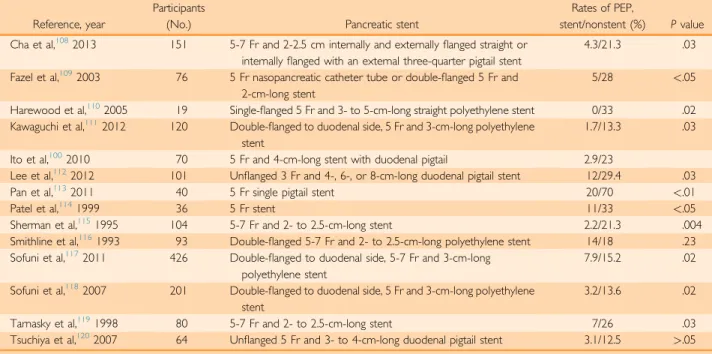
Prophylactic Placement of Pancreatic Stents Pancreatic stents are thought to reduce the risk of PEP by preserving pancreatic drainage and relieving pancreatic ductal hypertension that might otherwise be impaired from papillary edema or spasm of the sphincter of Oddi, respectively. There have been several RCTs evaluating prophylactic pancreatic stent place-ment and the subsequent incidence of PEP (Table 4).100,108-129
It is important to be mindful of the disad-vantages associated with prophylactic pancre-atic stent placement. Placement of a pancrepancre-atic stent can be technically difficult and can incite further injury to the pancreatic orifice, resulting in an increased risk of PEP without any ductal decompression.121,122 In addition, given the fact that stent migration and duct perforation occur in approximately 4% of patients,123 follow-up evaluation is required to ensure pas-sage or removal of the stent, potentially subject-ing the patient to an additional procedure. Last, the optimal duration for stent retention remains unknown, but one should be aware that pro-longed retention has been found to induce ductal changes, which resemble those of chronic pancreatitis, although the long-term clinical sig-nificance of these changes remain unknown.124 Despite the potential pitfalls, prophylactic stent placement is widely accepted as an effective means of preventing PEP125,126and is recom-mended by consensus guidelines, in particular for high-risk patients.53
Aggressive Intravenous Hydration
against moderate to severe PEP. A retrospective study by Sagi et al128 looked to see whether there was any correlation between early intrave-nous volume infusion (defined as during the
first 24 hours after ERCP) and length of PEP. The retrospective study included 72 patients, with the primary outcome being severity of PEP (defined as length of hospitalization according to consensus guidelines [Table 2]). Of the 72 patients, 41 (56.9%) had mild PEP and 31 (43.1%) had moderate or severe PEP. Patients with mild PEP received significantly greater intravenous volume infusion during thefirst 24 hours compared with those with moderate or severe PEP (2834 mL vs 2044 mL, respectively;P<.02). This led the authors to conclude that in patients with PEP, greater intravenous volume infusion within the first 24 hours after ERCP is associated with reduced length of hospitalization.
The choice of intravenous fluid is also important in PEP prevention. Mechanistically speaking, lactated Ringer solution closely re-sembles physiologic pH and, thus, may attenuate acidosis that promotes zymogen acti-vation and resultant pancreatic inflammation as previously described. A recent pilot RCT by Buxbaum et al129 determined whether
aggressive periprocedural hydration with lactated Ringer solution reduced the incidence of PEP in 62 patients. Patients were randomly assigned (2:1) to receive aggressive hydration with lactated Ringer solution (3 mL/kg per hour during the procedure, 20-mL/kg bolus after the procedure, and 3 mL/kg per hour for 8 hours after the procedure; n¼39) or standard hydration with the same solution (1.5 mL/kg per hour during the procedure and for 8 hours after the procedure; n¼23). They found that none of the patients in the aggressive hydration group developed PEP, whereas 17% of patients in the standard hy-dration cohort developed PEP (P¼.02). There was no evidence of volume overload in these patients, suggesting that aggressive intrave-nous hydration with lactated Ringer solution can safely reduce the development of PEP.
CONSIDERATIONS FOR THE FUTURE OF PEP PREVENTION
Despite the advances in PEP prevention, there still are several questions that remain unan-swered. Note that the large-scale, multicenter RCT by Elmunzer et al49 underemphasized one key concept as outlined by Baron et al.130 Elmunzer et al placed prophylactic pancreatic
TABLE 4. Summary of RCTs Evaluating Placement of Prophylactic Pancreatic Stents
Reference, year
Participants
(No.) Pancreatic stent
Rates of PEP,
stent/nonstent (%) Pvalue
Cha et al,1082013 151 5-7 Fr and 2-2.5 cm internally and externallyflanged straight or internallyflanged with an external three-quarter pigtail stent
4.3/21.3 .03
Fazel et al,1092003 76 5 Fr nasopancreatic catheter tube or double-flanged 5 Fr and 2-cm-long stent
5/28 <.05
Harewood et al,1102005 19 Single-flanged 5 Fr and 3- to 5-cm-long straight polyethylene stent 0/33 .02 Kawaguchi et al,1112012 120 Double-flanged to duodenal side, 5 Fr and 3-cm-long polyethylene
stent
1.7/13.3 .03
Ito et al,1002010 70 5 Fr and 4-cm-long stent with duodenal pigtail 2.9/23
Lee et al,1122012 101 Unflanged 3 Fr and 4-, 6-, or 8-cm-long duodenal pigtail stent 12/29.4 .03
Pan et al,1132011 40 5 Fr single pigtail stent 20/70 <.01
Patel et al,1141999 36 5 Fr stent 11/33 <.05
Sherman et al,1151995 104 5-7 Fr and 2- to 2.5-cm-long stent 2.2/21.3 .004
Smithline et al,1161993 93 Double-flanged 5-7 Fr and 2- to 2.5-cm-long polyethylene stent 14/18 .23 Sofuni et al,1172011 426 Double-flanged to duodenal side, 5-7 Fr and 3-cm-long
polyethylene stent
7.9/15.2 .02
Sofuni et al,1182007 201 Double-flanged to duodenal side, 5 Fr and 3-cm-long polyethylene stent
3.2/13.6 .02
Tarnasky et al,1191998 80 5-7 Fr and 2- to 2.5-cm-long stent 7/26 .03
Tsuchiya et al,1202007 64 Unflanged 5 Fr and 3- to 4-cm-long duodenal pigtail stent 3.1/12.5 >.05
stents in more than 80% of study patients, among whom there was clinical suspicion of sphincter of Oddi dysfunction (known to have a high risk of PEP). In this subset (sphincter of Oddi dysfunction type III), indo-methacin was not protective, suggesting that the reported effect for indomethacin may not be robust enough to overcome operator-dependent effects. A subsequent post hoc anal-ysis by Elmunzer et al131investigated whether rectal indomethacin therapy could prevent PEP and any potential cost savings. They retro-spectively classified participants from a previ-ous large-scale, multicenter study49 into 4 prevention groups: (1) those who received no prophylaxis, (2) those who had a prophylactic pancreatic duct stent placed, (3) those who received only rectal indomethacin, and (4) those who had a prophylactic pancreatic duct stent placed and received rectal indomethacin. Multivariate logistic regression and economic analysis comparing the costs associated with using rectal indomethacin alone, placing solely a prophylactic pancreatic duct stent, or the combination of both found that rectal indo-methacin therapy alone seemed to be more effective in PEP prevention than the other
strategies used. In addition, rectal indometh-acin use alone was a cost-saving strategy that could save more than $150 million in the United States. This led the authors to conclude that there may be a role for the sole use of prophylactic rectal indomethacin in patients undergoing high-risk ERCP, which could also substantially reduce health care costs.
To date, there is no available data from large-scale, multicenter RCTs directly comparing rectal NSAIDs with placement of a prophylactic pancreatic duct stent. A network meta-analysis by Akbar et al,50 which totaled 29 studies (22 of pancreatic duct stents and 7 of NSAIDs), found that the use of rectal NSAIDs alone was superior to pancreatic duct stents alone in the prevention of PEP (OR¼0.48; 95% CI, 0.26-0.87). This led the authors to conclude that rectal NSAIDs are superior to prophylactic pancreatic duct stents alone in the prevention of PEP and should be consideredfirst-line ther-apy in selected patients.
These data raise several key questions: (1) Should everyone receive rectal NSAIDs irre-spective of patient- or procedure-related risk factors as outlined by the European Society of Gastrointestinal Endoscopy53 or can we
PEP prevention Chemoprophylaxis
Prophylactic pancreatic duct stent
Procedural technique
Patient selection 1. Administer rectal
indomethacin or diclofenac for all high-risk cases 2. Consider rectal indomethacin or diclofenac for all low and average risk cases
1. Employ a wire-guided cannulation technique 2. Implement alternative technique early in the case in the event of difficult biliary cannulation
1. ERCP should be almost exclusively therapeutic procedure
2. Utilize MRCP and / or EUS as diagnostic tools
3. Ideally performed at a tertiary care center with an experienced endoscopist
1. Administer in conjunction with rectal indomethacin or diclofenac in all high-risk cases 2. Consider the risk-benefit ratio in all challenging cases
FIGURE.Comprehensive approach to PEP prevention. ERCP¼endoscopic retrograde cholangiopancreatography; EUS¼endoscopic ultrasound; MRCP¼magnetic resonance cholangiopancreatograph; PEP¼postdendoscopic retrograde cholangiopancreatography
risk-stratify patients? Recent data from a pro-spective, double-blind RCT totaling 449 consecutive patients by Levenick et al54found that rectal indomethacin therapy does not uni-versally prevent PEP. These data suggest that there may be a specific subset of patients who respond favorably to rectal indomethacin therapy, requiring further research. (2) In high-risk patients in whom biliary cannulation is immediately achieved, do we need to pursue pancreatic cannulation for stent placement or would rectal NSAID use be sufficient in PEP prevention? (3) Should we aggressively hydrate all patients with lactated Ringer solutions?
TheFigureoutlines a comprehensive app-roach and meaningful use of risk- stratification information and potential pharmacologic or procedural techniques that can be used to reduce the risk of PEP.
CONCLUSION
It is imperative for the clinical endoscopist to be cognizant of patient- and procedure-related risk factors to formulate a comprehensive risk reduction strategy to minimize the risk of PEP. Because patient-related risk factors cannot be modified, clinicians should analyze the risk:be-nefit ratio in each patient being considered for ERCP. Several questions remain unanswered regarding PEP prevention, in both the pharma-cologic and procedural realms, that are currently under investigation.
Abbreviations and Acronyms:BISAP =bedside index for severity in acute pancreatitis;CBD =common bile duct;CT =computed tomography;ERCP =endoscopic retrograde cholangiopancreatography;Fr = French; NNT = number needed to treat;NSAID =nonsteroidal anti-inflammatory drug; OR = odds ratio; PEP = posteendoscopic
retro-grade cholangiopancreatography pancreatitis; RCT = ran-domized controlled trial;RR =relative risk;ULN =upper limit of normal
Potential Competing Interests:Dr Baron is a consultant and speaker for Cook Endoscopy and Boston Scientific.
Correspondence: Address to Todd H. Baron, MD, Director of Advanced Therapeutic Endoscopy, 130 Mason Farm Rd, CB 7080, Chapel Hill, NC 27599 (todd_baron@ med.unc.edu).
REFERENCES
1. Freeman ML, Nelson DB, Sherman S, et al. Complications of endoscopic biliary sphincterotomy. N Engl J Med. 1996; 335(13):909-918.
2. Masci E, Toti G, Mariani A, et al. Complications of diagnostic and therapeutic ERCP: a prospective multicenter study.Am J Gastroenterol. 2001;96(2):417-423.
3. Gottlieb K, Sherman S. ERCP and biliary endoscopic sphincterotomy-induced pancreatitis.Gastrointest Endosc Clin N Am. 1998;8(1):87-114.
4. Sherman S, Lehman GA. ERCP- and endoscopic sphincterotomy-induced pancreatitis.Pancreas. 1991;6(3):350-367.
5. Cheon YK, Cho KB, Watkins JL, et al. Frequency and severity of post-ERCP pancreatitis correlated with extent of pancreatic ductal opacification.Gastrointest Endosc. 2007;65(3):385-393. 6. Cotton PB, Garrow DA, Gallagher J, Romagnuolo J. Risk fac-tors for complications after ERCP: a multivariate analysis of 11, 497 procedures over 12 years. Gastrointest Endosc. 2009; 70(1):80-88.
7. Andriulli A, Loperfido S, Napolitano G, et al. Incidence rates of post-ERCP complications: a systematic survey of prospec-tive studies.Am J Gastroenterol. 2007;102(8):1781-1788. 8. Barthet M, Lesavre N, Desjeux A, et al. Complications of
endoscopic sphincterotomy: results from a single tertiary referral center.Endoscopy. 2002;34(12):991-997. 9. Freeman ML, Disario JA, Nelson DB, et al. Risk factors for
post-ERCP pancreatitis: a prospective, multicenter study. Gas-trointest Endosc. 2001;54(4):425-434.
10. Johnson GK, Geenen JE, Johanson JF, Sherman S, Hogan WJ, Cass O; Midwest Pancreaticobiliary Study Group. Evaluation of post-ERCP pancreatitis: potential causes noted during controlled study of differing contrast media. Gastrointest Endosc. 1997;46(3):217-222.
11. Freeman ML, Guda NM. Prevention of post-ERCP pancrea-titis: a comprehensive review. Gastrointest Endosc. 2004; 59(7):845-864.
12. Fogel EL, Eversman D, Jamidar P, Sherman S, Lehman GA. Sphincter of Oddi dysfunction: pancreaticobiliary sphincterot-omy with pancreatic stent placement has a lower rate of pancre-atitis than biliary sphincterotomy alone.Endoscopy. 2002;34(4): 280-285.
13. Ratani RS, Mills TN, Ainley CC, Swain CP. Electrophysical fac-tors influencing endoscopic sphincterotomy. Gastrointest Endosc. 1999;49(1):43-52.
14. Lee TH, Park DH. Endoscopic prevention of post-endoscopic retrograde cholangiopancreatography pancreatitis. World J Gastroenterol. 2014;20(44):16582-16595.
15. George S, Kulkarni AA, Stevens G, Forsmark CE, Draganov P. Role of osmolality of contrast media in the development of post-ERCP pancreatitis: a metanalysis. Dig Dis Sci. 2004; 49(3):503-508.
16. Sherman S, Hawes RH, Troiano FP, Lehman GA. Pancreatitis following bile duct sphincter of Oddi manometry: utility of the aspirating catheter.Gastrointest Endosc. 1992;38(3):347-350. 17. Pezzilli R, Romboli E, Campana D, Corinaldesi R. Mechanisms
involved in the onset of post-ERCP pancreatitis.JOP. 2002; 3(6):162-168.
18. Szary NM, Al-kawas FH. Complications of endoscopic retro-grade cholangiopancreatography: how to avoid and manage them.Gastroenterol Hepatol (N Y). 2013;9(8):496-504. 19. Freeman ML. Adverse outcomes of ERCP.Gastrointest Endosc.
2002;56(6 suppl):S273-S282.
20. Lerch MM, Saluja AK, Rünzi M, Dawra R, Saluja M, Steer ML. Pancreatic duct obstruction triggers acute necrotizing pancre-atitis in the opossum.Gastroenterology. 1993;104(3):853-861. 21. Ohshio G, Saluja A, Steer ML. Effects of short-term pancreatic duct obstruction in rats.Gastroenterology. 1991;100(1):196-202. 22. Cheng CL, Sherman S, Watkins JL, et al. Risk factors for post-ERCP pancreatitis: a prospective multicenter study.Am J Gas-troenterol. 2006;101(1):139-147.
23. Badalov N, Tenner S, Baillie J. The prevention, recognition and treatment of post-ERCP pancreatitis.JOP. 2009;10(2):88-97. 24. Testoni PA, Mariani A, Giussani A, et al. Risk factors for
among expert and non-expert operators: a prospective multi-center study.Am J Gastroenterol. 2010;105(8):1753-1761. 25. Mariani A, Giussani A, Di leo M, Testoni S, Testoni PA.
Guide-wire biliary cannulation does not reduce post-ERCP pancrea-titis compared with the contrast injection technique in low-risk and high-risk patients. Gastrointest Endosc. 2012; 75(2):339-346.
26. Ding X, Zhang F, Wang Y. Risk factors for post-ERCP pancre-atitis: a systematic review and meta-analysis. Surgeon. 2015; 13(4):218-229.
27. Coté GA, Kumar N, Ansstas M, et al. Risk of post-ERCP pancreatitis with placement of self-expandable metallic stents.
Gastrointest Endosc. 2010;72(4):748-754.
28. Wang P, Li ZS, Liu F, et al. Risk factors for ERCP-related com-plications: a prospective multicenter study.Am J Gastroenterol. 2009;104(1):31-40.
29. Trap R, Adamsen S, Hart-hansen O, Henriksen M. Severe and fatal complications after diagnostic and therapeutic ERCP: a prospective series of claims to insurance covering public hospitals.Endoscopy. 1999;31(2):125-130.
30. Loperfido S, Angelini G, Benedetti G, et al. Major early com-plications from diagnostic and therapeutic ERCP: a prospec-tive multicenter study.Gastrointest Endosc. 1998;48(1):1-10. 31. Rabenstein T, Schneider HT, Bulling D, et al. Analysis of the
risk factors associated with endoscopic sphincterotomy tech-niques: preliminary results of a prospective study, with emphasis on the reduced risk of acute pancreatitis with low-dose anticoagulation treatment.Endoscopy. 2000;32(1): 10-19.
32. Cotton PB, Lehman G, Vennes J, et al. Endoscopic sphincter-otomy complications and their management: an attempt at consensus.Gastrointest Endosc. 1991;37(3):383-393. 33. Ito K, Fujita N, Noda Y, et al. Relationship between post-ERCP
pancreatitis and the change of serum amylase level after the procedure.World J Gastroenterol. 2007;13(28):3855-3860. 34. Gottlieb K, Sherman S, Pezzi J, Esber E, Lehman GA. Early
recognition of post-ERCP pancreatitis by clinical assessment and serum pancreatic enzymes. Am J Gastroenterol. 1996; 91(8):1553-1557.
35. Testoni PA, Bagnolo F, Caporuscio S, Lella F. Serum amylase measured four hours after endoscopic sphincterotomy is a reliable predictor of postprocedure pancreatitis.Am J Gastro-enterol. 1999;94(5):1235-1241.
36. Papachristou GI, Muddana V, Yadav D, et al. Comparison of BISAP, Ranson’s, APACHE-II, and CTSI scores in predicting organ failure, complications, and mortality in acute pancrea-titis.Am J Gastroenterol. 2010;105(2):435-441.
37. Banks PA, Freeman ML. Practice guidelines in acute pancrea-titis.Am J Gastroenterol. 2006;101(10):2379-2400. 38. Ranson JH, Rifkind KM, Roses DF, Fink SD, Eng K, Spencer FC.
Prognostic signs and the role of operative management in acute pancreatitis.Surg Gynecol Obstet. 1974;139(1):69-81. 39. Balthazar EJ, Robinson DL, Megibow AJ, Ranson JH. Acute
pancreatitis: value of CT in establishing prognosis.Radiology. 1990;174(2):331-336.
40. Taylor SL, Morgan DL, Denson KD, Lane MM, Pennington LR. A comparison of the Ranson, Glasgow, and APACHE II scoring systems to a multiple organ system score in predicting patient outcome in pancreatitis. Am J Surg. 2005;189(2): 219-222.
41. Working Group IAP/APA Acute Pancreatitis Guidelines. IAP/ APA evidence-based guidelines for the management of acute pancreatitis.Pancreatology. 2013;13(4 suppl 2):e1-e15. 42. Andriulli A, Leandro G, Niro G, et al. Pharmacologic
treat-ment can prevent pancreatic injury after ERCP: a meta-analysis.Gastrointest Endosc. 2000;51(1):1-7.
43. Andriulli A, Leandro G, Federici T, et al. Prophylactic adminis-tration of somatostatin or gabexate does not prevent pancre-atitis after ERCP: an updated meta-analysis. Gastrointest Endosc. 2007;65(4):624-632.
44. Viedma JA, Pérez-mateo M, Agulló J, Domínguez JE, Carballo F. Inflammatory response in the early prediction of severity in human acute pancreatitis.Gut. 1994;35(6):822-827. 45. Khoshbaten M, Khorram H, Madad L, Ehsani ardakani MJ, Farzin H, Zali MR. Role of diclofenac in reducing post-endoscopic retrograde cholangiopancreatography pancreatitis.
J Gastroenterol Hepatol. 2008;23(7, pt 2):e11-e16. 46. Murray B, Carter R, Imrie C, Evans S, O’suilleabhain C.
Diclofe-nac reduces the incidence of acute pancreatitis after endoscopic retrograde cholangiopancreatography.Gastroenterology. 2003; 124(7):1786-1791.
47. Sotoudehmanesh R, Khatibian M, Kolahdoozan S, Ainechi S, Malboosbaf R, Nouraie M. Indomethacin may reduce the inci-dence and severity of acute pancreatitis after ERCP.Am J Gas-troenterol. 2007;102(5):978-983.
48. Elmunzer BJ, Waljee AK, Elta GH, Taylor JR, Fehmi SM, Higgins PD. A meta-analysis of rectal NSAIDs in the preven-tion of post-ERCP pancreatitis.Gut. 2008;57(9):1262-1267. 49. Elmunzer BJ, Scheiman JM, Lehman GA, et al. A randomized
trial of rectal indomethacin to prevent post-ERCP pancreatitis.
N Engl J Med. 2012;366(15):1414-1422.
50. Akbar A, Abu dayyeh BK, Baron TH, Wang Z, Altayar O, Murad MH. Rectal nonsteroidal anti-inflammatory drugs are superior to pancreatic duct stents in preventing pancreatitis after endoscopic retrograde cholangiopancreatography: a network meta-analysis. Clin Gastroenterol Hepatol. 2013; 11(7):778-783.
51. Sethi S, Sethi N, Wadhwa V, Garud S, Brown A. A meta-analysis on the role of rectal diclofenac and indomethacin in the prevention of post-endoscopic retrograde cholangiopan-creatography pancreatitis.Pancreas. 2014;43(2):190-197. 52. Sun HL, Han B, Zhai HP, Cheng XH, Ma K. Rectal NSAIDs for
the prevention of post-ERCP pancreatitis: a meta-analysis of randomized controlled trials.Surgeon. 2014;12(3):141-147. 53. Dumonceau JM, Andriulli A, Elmunzer BJ, et al. Prophylaxis of
post-ERCP pancreatitis: European Society of Gastrointestinal Endoscopy (ESGE) Guideline - updated June 2014.Endoscopy. 2014;46(9):799-815.
54. Levenick JM, Gordon SR, Fadden LL, et al. Rectal indometh-acin does not prevent post-ERCP pancreatitis in consecutive patients.Gastroenterology. 2016;150(4):911-917.
55. Manes G, Ardizzone S, Lombardi G, Uomo G, Pieramico O, Porro GB. Efficacy of postprocedure administration of gabex-ate mesylgabex-ate in the prevention of post-ERCP pancreatitis: a randomized, controlled, multicenter study.Gastrointest Endosc. 2007;65(7):982-987.
56. Xiong GS, Wu SM, Zhang XW, Ge ZZ. Clinical trial of gabex-ate in the prophylaxis of post-endoscopic retrograde cholan-giopancreatography pancreatitis.Braz J Med Biol Res. 2006; 39(1):85-90.
57. Andriulli A, Clemente R, Solmi L, et al. Gabexate or somato-statin administration before ERCP in patients at high risk for post-ERCP pancreatitis: a multicenter, placebo-controlled, randomized clinical trial. Gastrointest Endosc. 2002;56(4): 488-495.
58. Andriulli A, Solmi L, Loperfido S, et al. Prophylaxis of ERCP-related pancreatitis: a randomized, controlled trial of somato-statin and gabexate mesylate.Clin Gastroenterol Hepatol. 2004; 2(8):713-718.
59. Taenaka N, Shimada Y, Hirata T, Nishijima M, Yoshiya I. New approach to regional anticoagulation in hemodialysis using gabexate mesilate (FOY). Crit Care Med. 1982;10(11): 773-775.
60. Shu H, Liu K, He Q, et al. Ulinastatin, a protease inhibitor, may inhibit allogeneic blood transfusion-associated pro-inflamma-tory cytokines and systemic inflammapro-inflamma-tory response syndrome and improve postoperative recovery.Blood Transfus. 2014; 12(suppl 1):s109-s118.
randomized, controlled trial.Clin Gastroenterol Hepatol. 2005; 3(4):376-383.
62. Yoo JW, Ryu JK, Lee SH, et al. Preventive effects of ulinastatin on post-endoscopic retrograde cholangiopancreatography pancreatitis in high-risk patients: a prospective, randomized, placebo-controlled trial.Pancreas. 2008;37(4):366-370. 63. Chen S, Shi H, Zou X, Luo H. Role of ulinastatin in preventing
post-endoscopic retrograde cholangiopancreatography pancreatitis: the Emperor’s New Clothes or Aladdin’s Magic Lamp?Pancreas. 2010;39(8):1231-1237.
64. Kubiliun NM, Adams MA, Akshintala VS, et al. Evaluation of pharmacologic prevention of pancreatitis after endoscopic retrograde cholangiopancreatography: a systematic review.
Clin Gastroenterol Hepatol. 2015;13(7):1231-1239. 65. Choi CW, Kang DH, Kim GH, et al. Nafamostat mesylate in
the prevention of post-ERCP pancreatitis and risk factors for post-ERCP pancreatitis. Gastrointest Endosc. 2009;69(4): e11-e18.
66. Yoo KS, Huh KR, Kim YJ, et al. Nafamostat mesilate for pre-vention of post-endoscopic retrograde cholangiopancreatog-raphy pancreatitis: a prospective, randomized, double-blind, controlled trial.Pancreas. 2011;40(2):181-186.
67. Park KT, Kang DH, Choi CW, et al. Is high-dose nafamostat mesilate effective for the prevention of post-ERCP pancrea-titis, especially in high-risk patients? Pancreas. 2011;40(8): 1215-1219.
68. Seta T, Noguchi Y. Protease inhibitors for preventing compli-cations associated with ERCP: an updated meta-analysis.
Gastrointest Endosc. 2011;73(4):700-706.e1-e2.
69. Tulassay Z, Papp J. The effect of long-acting somatostatin analogue on enzyme changes after endoscopic pancreatogra-phy.Gastrointest Endosc. 1991;37(1):48-50.
70. Rudin D, Kiss A, Wetz RV, Sottile VM. Somatostatin and gabexate for post-endoscopic retrograde cholangiopancrea-tography pancreatitis prevention: meta-analysis of randomized placebo-controlled trials.J Gastroenterol Hepatol. 2007;22(7): 977-983.
71. Thomopoulos KC, Pagoni NA, Vagenas KA, Margaritis VG, Theocharis GI, Nikolopoulou VN. Twenty-four hour prophy-laxis with increased dosage of octreotide reduces the inci-dence of post-ERCP pancreatitis.Gastrointest Endosc. 2006; 64(5):726-731.
72. Testoni PA, Bagnolo F, Andriulli A, et al. Octreotide 24-h pro-phylaxis in patients at high risk for post-ERCP pancreatitis: re-sults of a multicenter, randomized, controlled trial.Aliment Pharmacol Ther. 2001;15(7):965-972.
73. Zhang Y, Chen QB, Gao ZY, Xie WF. Meta-analysis: octreo-tide prevents post-ERCP pancreatitis, but only at sufficient doses.Aliment Pharmacol Ther. 2009;29(11):1155-1164. 74. Staritz M, Poralla T, Ewe K, Meyer zum Büschenfelde KH.
Effect of glyceryl trinitrate on the sphincter of Oddi motility and baseline pressure.Gut. 1985;26(2):194-197.
75. Hao JY, Wu DF, Wang YZ, Gao YX, Lang HP, Zhou WZ. Prophylactic effect of glyceryl trinitrate on post-endoscopic retrograde cholangiopancreatography pancreatitis: a random-ized placebo-controlled trial. World J Gastroenterol. 2009; 15(3):366-368.
76. Moretó M, Zaballa M, Casado I, et al. Transdermal glyceryl trinitrate for prevention of post-ERCP pancreatitis: a ran-domized double-blind trial.Gastrointest Endosc. 2003;57(1): 1-7.
77. Moretó M, Zaballa M. Prospective randomized double-blind placebo-controlled trial of glyceryl trinitrate in endoscopic retrograde cholangiopancreatography-induced pancreatitis.
Br J Surg. 2002;89(5):628.
78. Beauchant M, Ingrand P, Favriel JM, et al. Intravenous nitroglyc-erin for prevention of pancreatitis after therapeutic endoscopic retrograde cholangiography: a randomized, double-blind, pla-cebo-controlled multicenter trial. Endoscopy. 2008;40(8): 631-636.
79. Bhatia V, Ahuja V, Acharya SK, Garg PK. A randomized controlled trial of valdecoxib and glyceryl trinitrate for the pre-vention of post-ERCP pancreatitis.J Clin Gastroenterol. 2011; 45(2):170-176.
80. Kaffes AJ, Bourke MJ, Ding S, Alrubaie A, Kwan V, Williams SJ. A prospective, randomized, placebo-controlled trial of trans-dermal glyceryl trinitrate in ERCP: effects on technical success and post-ERCP pancreatitis.Gastrointest Endosc. 2006;64(3): 351-357.
81. Nøjgaard C, Hornum M, Elkjaer M, et al. Does glyceryl nitrate prevent post-ERCP pancreatitis? A prospective, randomized, double-blind, placebo-controlled multicenter trial.Gastrointest Endosc. 2009;69(6):e31-e37.
82. Sotoudehmanesh R, Eloubeidi MA, Asgari AA, Farsinejad M, Khatibian M. A randomized trial of rectal indomethacin and sublingual nitrates to prevent post-ERCP pancreatitis.Am J Gastroenterol. 2014;109(6):903-909.
83. Wisner J, Green D, Ferrell L, Renner I. Evidence for a role of oxygen derived free radicals in the pathogenesis of caerulein induced acute pancreatitis in rats. Gut. 1988;29(11): 1516-1523.
84. Marks JM, Dunkin BJ, Shillingstad BL, et al. Pretreatment with allopurinol diminishes pancreatography-induced pancreatitis in a canine model.Gastrointest Endosc. 1998;48(2):180-183. 85. Katsinelos P, Kountouras J, Chatzis J, et al. High-dose
allopu-rinol for prevention of post-ERCP pancreatitis: a prospective randomized double-blind controlled trial.Gastrointest Endosc. 2005;61(3):407-415.
86. Martinez-torres H, Rodriguez-lomeli X, Davalos-cobian C, et al. Oral allopurinol to prevent hyperamylasemia and acute pancreatitis after endoscopic retrograde cholangiopancreatog-raphy.World J Gastroenterol. 2009;15(13):1600-1606. 87. Mosler P, Sherman S, Marks J, et al. Oral allopurinol does not
prevent the frequency or the severity of post-ERCP pancrea-titis.Gastrointest Endosc. 2005;62(2):245-250.
88. Romagnuolo J, Hilsden R, Sandha GS, et al. Allopurinol to pre-vent pancreatitis after endoscopic retrograde cholangiopan-creatography: a randomized placebo-controlled trial. Clin Gastroenterol Hepatol. 2008;6(4):465-471.
89. Zheng M, Chen Y, Bai J, Xin Y, Pan X, Zhao L. Meta-analysis of prophylactic allopurinol use in post-endoscopic retrograde cholangiopancreatography pancreatitis.Pancreas. 2008;37(3): 247-253.
90. Yagci G, Gul H, Simsek A, et al. Beneficial effects ofN -acetyl-cysteine on sodium taurocholate-induced pancreatitis in rats.
J Gastroenterol. 2004;39(3):268-276.
91. Katsinelos P, Kountouras J, Paroutoglou G, Beltsis A, Mimidis K, Zavos C. IntravenousN-acetylcysteine does not prevent post-ERCP pancreatitis.Gastrointest Endosc. 2005;62(1):105-111. 92. Milewski J, Rydzewska G, Degowska M, Kierzkiewicz M,
Rydzewski A. N-acetylcysteine does not prevent post-endoscopic retrograde cholangiopancreatography hyperamy-lasemia and acute pancreatitis.World J Gastroenterol. 2006; 12(23):3751-3755.
93. Tse F, Yuan Y, Moayyedi P, Leontiadis GI. Guidewire-assisted cannulation of the common bile duct for the prevention of post-endoscopic retrograde cholangiopancreatography (ERCP) pancreatitis.Cochrane Database Syst Rev. 2012;12: CD009662.
94. Lee TH, Park do H, Park JY, et al. Can wire-guided cannulation prevent post-ERCP pancreatitis? A prospective randomized trial.Gastrointest Endosc. 2009;69(3, pt 1):444-449. 95. Artifon EL, Sakai P, Cunha JE, Halwan B, Ishioka S, Kumar A.
Guidewire cannulation reduces risk of post-ERCP pancreatitis and facilitates bile duct cannulation.Am J Gastroenterol. 2007; 102(10):2147-2153.
97. Ito K, Fujita N, Noda Y, et al. Pancreatic guidewire placement for achieving selective biliary cannulation during endoscopic retrograde cholangio-pancreatography.World J Gastroenterol. 2008;14(36):5595-55600.
98. Herreros de tejada A, Calleja JL, Díaz G, et al. Double-guide-wire technique for difficult bile duct cannulation: a multicenter randomized, controlled trial.Gastrointest Endosc. 2009;70(4): 700-709.
99. Nakai Y, Isayama H, Sasahira N, et al. Risk factors for post-ERCP pancreatitis in wire-guided cannulation for therapeutic biliary ERCP.Gastrointest Endosc. 2015;81(1):119-126. 100. Ito K, Fujita N, Noda Y, et al. Can pancreatic duct stenting
pre-vent post-ERCP pancreatitis in patients who undergo pancre-atic duct guidewire placement for achieving selective biliary cannulation? a prospective randomized controlled trial.
J Gastroenterol. 2010;45(11):1183-1191.
101. Masci E, Mariani A, Curioni S, Testoni PA. Risk factors for pancreatitis following endoscopic retrograde cholangiopancrea-tography: a meta-analysis.Endoscopy. 2003;35(10):830-834. 102. Cennamo V, Fuccio L, Zagari RM, et al. Can early
precut implementation reduce endoscopic retrograde cholangiopancreatography-related complication risk? meta-analysis of randomized controlled trials. Endoscopy. 2010; 42(5):381-388.
103. Manes G, Di giorgio P, Repici A, Macarri G, Ardizzone S, Porro GB. An analysis of the factors associated with the devel-opment of complications in patients undergoing precut sphincterotomy: a prospective, controlled, randomized, multi-center study.Am J Gastroenterol. 2009;104(10):2412-2417. 104. Gong B, Hao L, Bie L, Sun B, Wang M. Does precut technique
improve selective bile duct cannulation or increase post-ERCP pancreatitis rate? A meta-analysis of randomized controlled trials.Surg Endosc. 2010;24(11):2670-2680.
105. Navaneethan U, Konjeti R, Lourdusamy V, et al. Precut sphinc-terotomy: efficacy for ductal access and the risk of adverse events.Gastrointest Endosc. 2015;81(4):924-931.
106. Swan MP, Alexander S, Moss A, et al. Needle knife sphincter-otomy does not increase the risk of pancreatitis in patients with difficult biliary cannulation.Clin Gastroenterol Hepatol. 2013;11(4):430-436.e1.
107. Sundaralingam P, Masson P, Bourke MJ. Early precut sphincter-otomy does not increase risk during endoscopic retrograde cholangiopancreatography in patients with difficult biliary access: a meta-analysis of randomized controlled trials.Clin Gastroenterol Hepatol. 2015;13(10):1722-1729.e2. 108. Cha SW, Leung WD, Lehman GA, et al. Does leaving a main
pancreatic duct stent in place reduce the incidence of precut biliary sphincterotomy-associated pancreatitis? a randomized, prospective study.Gastrointest Endosc. 2013;77(2):209-216. 109. Fazel A, Quadri A, Catalano MF, Meyerson SM, Geenen JE.
Does a pancreatic duct stent prevent post-ERCP pancreatitis? a prospective randomized study. Gastrointest Endosc. 2003; 57(3):291-294.
110. Harewood GC, Pochron NL, Gostout CJ. Prospective, ran-domized, controlled trial of prophylactic pancreatic stent placement for endoscopic snare excision of the duodenal ampulla.Gastrointest Endosc. 2005;62(3):367-370. 111. Kawaguchi Y, Ogawa M, Omata F, Ito H, Shimosegawa T,
Mine T. Randomized controlled trial of pancreatic stenting to prevent pancreatitis after endoscopic retrograde cholangiopan-creatography.World J Gastroenterol. 2012;18(14):1635-1641. 112. Lee TH, Moon JH, Choi HJ, et al. Prophylactic temporary 3F
pancreatic duct stent to prevent post-ERCP pancreatitis in patients with a difficult biliary cannulation: a multicenter, pro-spective, randomized study.Gastrointest Endosc. 2012;76(3): 578-585.
113. Pan XP, Dang T, Meng XM, Xue KC, Chang ZH, Zhang YP. Clinical study on the prevention of post-ERCP pancreatitis by pancreatic duct stenting. Cell Biochem Biophys. 2011; 61(3):473-479.
114. Patel R, Tarnasky PR, Hennessy WS, et al. Does stenting after pancreatic sphincterotomy reduce post-ERCP pancreatitis in patients with prior biliary sphincterotomy? preliminary results of a prospective randomized trial.Gastrointest Endosc. 1999; 49:AB80.
115. Sherman S, Bucksot EL, Esber E, Pezzi J, Gottlieb K, Lehman G. Does leaving a main pancreatic duct stent in place reduce the incidence of precut biliary sphincterotomy-induced pancrea-titis? Randomized prospective study (abstract).Am J Gastroen-terol. 1995;90:241.
116. Smithline A, Silverman W, Rogers D, et al. Effect of prophylac-tic main pancreaprophylac-tic duct stenting on the incidence of biliary endoscopic sphincterotomy-induced pancreatitis in high-risk patients.Gastrointest Endosc. 1993;39(5):652-657. 117. Sofuni A, Maguchi H, Mukai T, et al. Endoscopic pancreatic
duct stents reduce the incidence of post-endoscopic retro-grade cholangiopancreatography pancreatitis in high-risk pa-tients.Clin Gastroenterol Hepatol. 2011;9(10):851-858. 118. Sofuni A, Maguchi H, Itoi T, et al. Prophylaxis of
post-endoscopic retrograde cholangiopancreatography pancreatitis by an endoscopic pancreatic spontaneous dislodgement stent.
Clin Gastroenterol Hepatol. 2007;5(11):1339-1346. 119. Tarnasky PR, Palesch YY, Cunningham JT, Mauldin PD,
Cotton PB, Hawes RH. Pancreatic stenting prevents pancrea-titis after biliary sphincterotomy in patients with sphincter of Oddi dysfunction.Gastroenterology. 1998;115(6):1518-1524. 120. Tsuchiya T, Itoi T, Sofuni A, et al. Temporary pancreatic stent
to prevent post endoscopic retrograde cholangiopancreatog-raphy pancreatitis: a preliminary, single-center, randomized controlled trial. J Hepatobiliary Pancreat Surg. 2007;14(3): 302-307.
121. Choksi NS, Fogel EL, Cote GA, et al. The risk of post-ERCP pancreatitis and the protective effect of rectal indomethacin in cases of attempted but unsuccessful prophylactic pancreatic stent placement.Gastrointest Endosc. 2015;81(1):150-155. 122. Freeman ML. Pancreatic stents for prevention of
post-endoscopic retrograde cholangiopancreatography pancreatitis.
Clin Gastroenterol Hepatol. 2007;5(11):1354-1365. 123. Mazaki T, Mado K, Masuda H, Shiono M. Prophylactic
pancre-atic stent placement and post-ERCP pancreatitis: an updated meta-analysis.J Gastroenterol. 2014;49(2):343-355. 124. Bakman YG, Safdar K, Freeman ML. Significant clinical
implica-tions of prophylactic pancreatic stent placement in previously normal pancreatic ducts.Endoscopy. 2009;41(12):1095-1098. 125. Brackbill S, Young S, Schoenfeld P, Elta G. A survey of physi-cian practices on prophylactic pancreatic stents.Gastrointest Endosc. 2006;64(1):45-52.
126. Das A, Singh P, Sivak MV, Chak A. Pancreatic-stent placement for prevention of post-ERCP pancreatitis: a cost-effectiveness analysis.Gastrointest Endosc. 2007;65(7):960-968. 127. DiMagno MJ, Wamsteker EJ, Maratt J, et al. Do larger
peripro-ceduralfluid volumes reduce the severity of post-endoscopic retrograde cholangiopancreatography pancreatitis? Pancreas. 2014;43(4):642-647.
128. Sagi SV, Schmidt S, Fogel E, et al. Association of greater intravenous volume infusion with shorter hospitalization for patients with post-ERCP pancreatitis.J Gastroenterol Hepatol. 2014;29(6):1316-1320.
129. Buxbaum J, Yan A, Yeh K, Lane C, Nguyen N, Laine L. Aggres-sive hydration with lactated Ringer’s solution reduces pancre-atitis after endoscopic retrograde cholangiopancreatography.
Clin Gastroenterol Hepatol. 2014;12(2):303-307.e1. 130. Baron TH, Abu dayyeh BK, Abu dayye BK, Zinsmeister AR.
Rectal indomethacin to prevent post-ERCP pancreatitis.
N Engl J Med. 2012;367(3):277-278.