INTEGRATION OF SPATIO-TEMPORAL VEGETATION DYNAMICS INTO A
DISTRIBUTED ECOHYDROLOGICAL MODEL: APPLICATION TO
OPTIMALITY THEORY AND REAL-TIME WATERSHED SIMULATIONS
Taehee Hwang
A dissertation submitted to the faculty of the University of North Carolina at Chapel Hill
in partial fulfillment of the requirements for the degree of Doctor of Philosophy in the
Department of Geography
Chapel Hill
2010
Approved by:
Lawrence E. Band, Advisor
Aaron Moody, Reader
Conghe Song, Reader
Gregory W. Characklis, Reader
iii
ABSTRACT
Taehee Hwang
Integration of spatio-temporal vegetation dynamics into a distributed ecohydrological model: Application to optimality theory and real-time watershed simulations
(Under the direction of Lawrence E. Band)
iv
flowpaths leads to system-wide emergent optimality for carbon uptake over and above the individual patch. Lateral hydrological connectivity determines the degree of dependency on productivity and resource use with other patches along flowpaths, resulting in different system-wide carbon and water uptake by vegetation. In Chapter 3, phenological signals are extracted from global satellite products to find the topography-mediated controls on vegetation phenology in the study site. It provides a basis to understand spatial variations of local vegetation phenology as a function of microclimate, vegetation community types, and hillslope positions. In Chapter 4, near real-time vegetation dynamics are estimated by fusing multi-temporal satellite images, and integrated into the catchment scale distributed ecohydrological simulation. Integration of spatio-temporal vegetation dynamics into a distributed ecohydrological model helps to simulate
v
DEDICATION
This dissertation is dedicated
vi
ACKNOWLEDGEMENTS
First, I would like to thank my advisor, Dr Lawrence Band who deepened and broadened my scope of research views. Considering broad topics of my dissertation, I was so lucky to meet such an open-minded advisor with consistent enthusiasm and a positive manner. He is my role model not only for an academic advisor but also as a lifetime mentor.
I am also grateful to other committee members, Dr. Aaron Moody, Dr. Conghe Song, Dr. Greg Characklis, and Dr. Jim Clark. I learned a lot from their classes over the years. Even though I did not finish all I suggested, they encouraged me and showed interests to my researches from different perspectives. In addition, I would like to thank Dr. Jim Vose, Dr. Paul Bolstad, and Dr. Todd Lookingbill for their support in providing data in Coweeta Hydrologic Lab. I also like to thank my colleagues and friends who worked with me in the fields and helped me for the completion of this dissertation. During pit-digging experiments in the fields, Dr. T.C. Hales broadened my geological views also with impressive untiring energy. Tamara Mittman and Jon Duncan also gave valuable feedbacks to improve my dissertation both academically and grammatically.
vii
TABLE OF CONTENTS
LIST OF TABLES ... xii
LIST OF FIGURES ... xiii
LIST OF ABBREVIATIONS ... xix
LIST OF SYMBOLS ... xxi
Chapter 1
Introduction ... 1
1.1
Background ... 1
1.2
A Process-based Distributed Ecohydrological Model ... 4
References ... 8
Chapter 2
Ecosystem processes at the watershed scale: Extending optimality
theory from plot to catchment ... 12
2.1
Abstract ... 12
2.2
Introduction ... 13
2.3
Model overview... 16
2.3.1
A Farquhar photosynthesis model ... 16
2.3.2
Coupled photosynthesis – stomatal conductance models ... 18
viii
2.3.4
Nitrogen limitation ... 20
2.3.5
Allocation ... 21
2.4
Materials and methods ... 24
2.4.1
Site description... 24
2.4.2
Climate data and historical field measurements ... 26
2.4.3
Hydrologic gradients of vegetation density ... 27
2.4.4
Rooting depth and root distributions from soil pits ... 30
2.4.5
Model parameterization ... 33
2.4.6
Prescribed rooting depth as a function of hillslope position ... 36
2.4.7
Allocation dynamics with varying rooting depth... 40
2.5
Results ... 41
2.5.1
Topographic controls on rooting depth ... 41
2.5.2
Parameter spaces ... 43
2.5.3
Long-term ecohydrologic optimality at the hillslope scales ... 45
2.6
Discussion and conclusions ... 49
2.6.1
Optimal vegetation gradients for system-wide productivity ... 49
2.6.2
Compromises between multiple resources... 50
2.6.3
An objective function of optimality models ... 53
2.6.4
Allocation dynamics along the hillslope gradients ... 54
2.6.5
Limitations of this study ... 56
ix
Acknowledgements ... 58
References ... 59
Chapter 3
Topography-mediated controls on local vegetation phenology estimated
from MODIS vegetation index ... 71
3.1
Abstract ... 71
3.2
Introduction ... 72
3.3
Materials and methods ... 74
3.3.1
Study area... 74
3.3.2
MODIS vegetation index ... 78
3.3.3
Post-processing analysis ... 79
3.3.4
A phenology model for multi-year VI datasets... 83
3.3.5
Analytical solutions for phenological transition dates ... 85
3.3.6
Topographical variables ... 89
3.3.7
Interannual variations between wet and dry years ... 90
3.3.8
Statistical analysis ... 92
3.4
Results ... 96
3.4.1
Topographical controls on local vegetation phenology ... 96
3.4.2
Vegetation phenology between wet vs. dry years ... 98
3.5
Discussion and conclusions ... 103
3.5.1
Temperature controls on vegetation phenology ... 103
x
3.5.3
Other controls on vegetation phenology ... 106
3.5.4
Growing season length (GSL) vs. vegetation growth ... 107
3.5.5
Spatial scale issues ... 109
3.5.6
Conclusions ... 112
Acknowledgements ... 113
Appendix ... 114
References ... 115
Chapter 4
Estimation of real-time vegetation dynamics for distributed
ecohydrological modeling by fusing multi-temporal MODIS and Landsat NDVI
data
123
4.1
Abstract ... 123
4.2
Introduction ... 124
4.3
Method and Materials... 129
4.3.1
Study site ... 129
4.3.2
Landsat NDVI ... 131
4.3.3
MODIS NDVI and FPAR ... 132
4.3.4
Downscaling MODIS FPAR into sub-grid scale ... 134
4.3.5
Simulation of a distributed ecoydrological model ... 137
4.4
Results ... 138
4.4.1
MODIS and Landsat NDVI values ... 138
xi
4.4.3
The effect of the topographically corrected downscaling ... 149
4.4.4
An example of distributed hydrological modeling ... 155
4.5
Discussion and conclusions ... 157
4.5.1
General discussion ... 157
4.5.2
The FPAR-NDVI relationship ... 158
4.5.3
Scale invariance in sub-grid variability ... 160
4.5.4
Topographic correction ... 164
4.5.5
Conclusions ... 165
Acknowledgements ... 166
References ... 168
xii
LIST OF TABLES
Table 1.1: Key processes of RHESSys model ... 7
Table 2.1: Detailed measurements for soil pits at different topographic positions ... 31
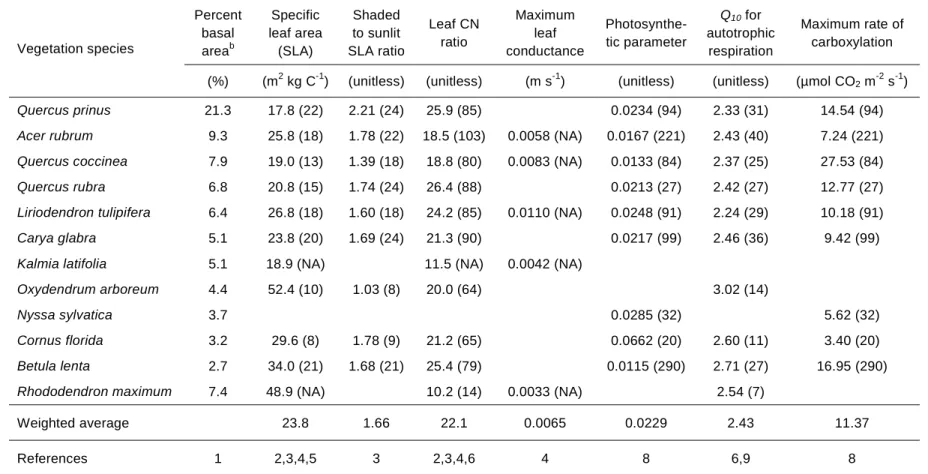
Table 2.2: Species-specific eco-physiologic model parameters
a... 32
Table 2.3: Other model parameters ... 34
Table 3.1: Summary of phenological and topographic variables ... 91
Table 3.2: Pearson correlation coefficients between topographic factors and phenological
variables (n = 252) ... 95
Table 3.3: Summaries of multiple regression models (n = 252) ... 97
xiii
LIST OF FIGURES
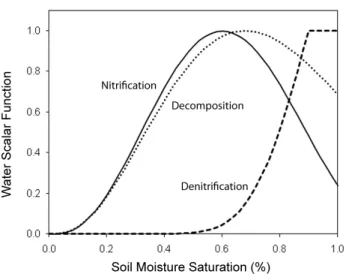
Figure 2.1: Water scalar functions of nitrogen transformation rates as a function of soil
moisture saturation for sandy loam soils; after Parton et al. (1996). ... 23
Figure 2.2: A compartment flow diagram of carbon allocation, transfer, and turnover with
mixed daily and yearly allocation strategies following the current BIOME-BGC
algorithm (Thornton et al. 2002; Thornton 1998). ... 23
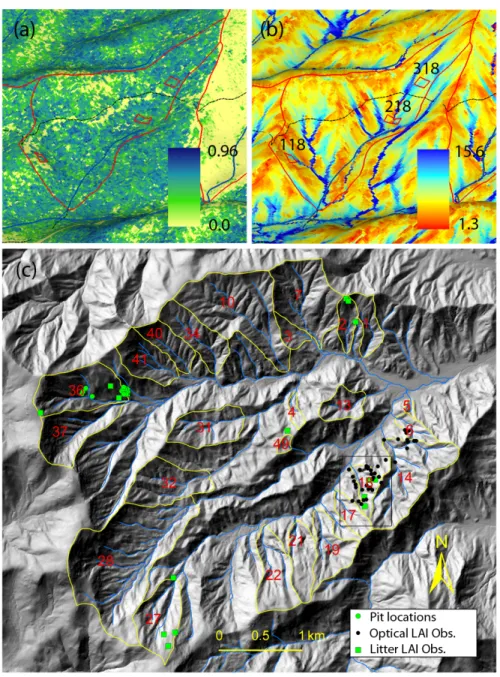
Figure 2.3: Study site (WS18); (a) NDVI (normalized difference vegetation index) from a
June 1, 2003 IKONOS image, (b) wetness index, and (c) locations for WS18 (square),
LAI (leaf area index) measurements, and soil pits within the Coweeta LTER site.
Litter LAI points are from Bolstad et al. (2001). Red and yellow lines represent the
boundaries of watersheds, and dashed lines indicate roads along which artificial gaps
are shown. (a) and (b) are perspective views from the WS18 outlet. The rectangles
within WS18 are three gradient plots (118, 218, and 318). A paired experimental
watershed (WS17) is also shown next to the target watershed where white pines (Pinus
strobus L.) are planted in 1956 after 15-year clear cut periods. ... 25
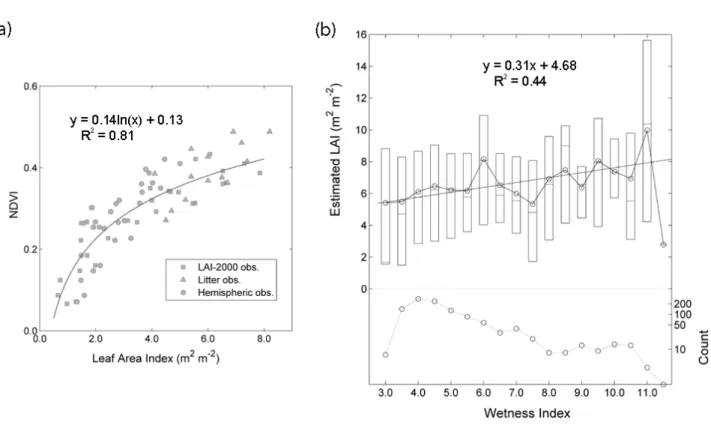
Figure 2.4: (a) A scatter plot between LAI (leaf area index) measurements and NDVI
(normalized difference vegetation index), and (b) hydrologic gradients of estimated
LAI within the study watershed. Litter LAI measurements are from Bolstad et al.
(2001). Circles represent average values, and box plots have lines at the lower quartile,
median, and upper quartile values from each binned group. Counts are the number of
10 × 10 m patches in each group, which are basic units of model simulation. ... 29
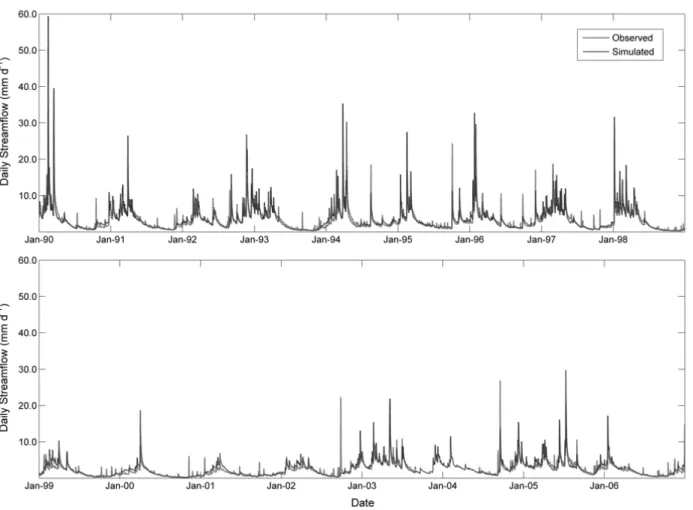
Figure 2.5: Long-term observed and simulated daily streamflow at the study watershed
(1990 ~ 2006), including the 3-year calibration period (October 1999 ~ September
2002). ... 35
xiv
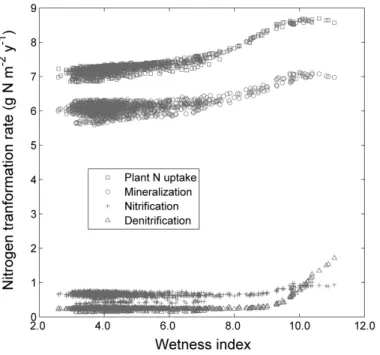
Figure 2.7: Simulated long term (1941 ~ 2005) nitrogen transformation rates (plant
uptake, mineralization, nitrification, and denitrification) in litter and soil as a function
of wetness index. Note that these modeled gradients largely result from in situ N
cycling as lateral transport of mobile nitrogen (nitrate), or organic litter downslope is
not included in the simulation version. Each point represents a 10 × 10 m cell (n =
1253), a basic unit of model simulation. ... 38
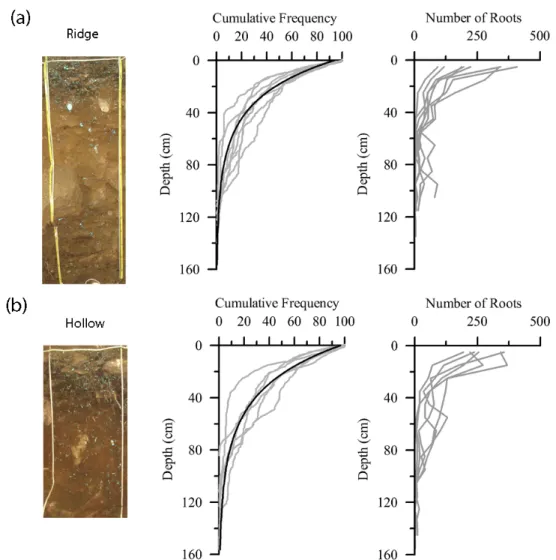
Figure 2.8: The distribution of roots as a function of soil depth for pits located on (a)
ridges and (b) hollows. Distributions are expressed as root cumulative frequency and
as absolute number. Grey lines represent individual pits, while black lines are the
mean of all pits. Photographs are vertical sections of two Q. rubra pits (Table 2.1) dug
within 20 m of each other. Note the difference in the depth of the dark A horizon
between the two sites. Blue painted roots were used for analysis of root distributions.
Modified from Figure 3 in Hales et al. (2009). ... 42
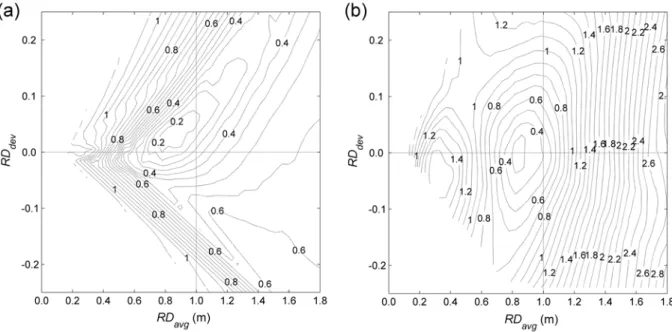
Figure 2.9: Mean absolute error (MAE) of simulated LAI within WS18 over multiple
realizations of average rooting depth (RD
avg) and spatial pattern of rooting depth
(RD
dev) under (a) the constant and (b) the alternative allocation strategies. ... 44
Figure 2.10: 3-D and 2-D contour plots of long-term simulated (1941 ~ 2005) average
annual (a) NPP (net primary productivity), (b) ET (evapotranspiration), and (c) WUE
(water used efficiency) over sampled RD
avgand RD
devunder constant allocation
strategy. The color bar represents the mean absolute error (MAE) of simulated LAI
(Figure 2.9a). ... 46
Figure 2.11: 3-D and 2-D contour plots of long-term simulated (1941 ~ 2005) average
annual (a) NPP (net primary productivity), (b) ET (evapotranspiration), and (c) WUE
(water used efficiency) over sampled RD
avgand RD
devunder alternative allocation
strategy, where allocation ratios are as a function of local rooting depth. The color bar
represents the mean absolute error (MAE) of simulated LAI (Figure 2.9b). ... 47
xv
strategy, while they decrease in proportion to rooting depth under alternative
allocation strategy. Long term patterns of vegetation density (LAI) follow ANPP as a
constant portion of cumulative ANPP is allocated into foliar biomass. ... 48
Figure 3.1: A study site (Coweeta Hydrologic Lab). Grids represent the MODIS
(MOD13Q1; about 230 m) pixels. Red lines represent the boundaries of watersheds.
Letters indicates the pixels for examples of filtering and fitting methods (Figure 3.3;
Figure 3.4). ... 76
Figure 3.2: A typic diagram from Day et al. (1988), which describes vegetation
community types within the study site as a function of slope, aspect, elevation, and
hillslope positions. ... 77
Figure 3.3: Examples of two-step filtering methods from 8-year historical trajectories
(left column) and time-series (right column) of estimated LAI at selected MODIS
pixels ((a) ~ (i); Figure 3.1). Grey and black dots represent filtered values by the
outlier exclusion analysis and the modified BISE methods, respectively. ... 81
Figure 3.4: Examples of the difference logistic function fitting for 8-year estimated LAI
datasets at selected MODIS pixels ((a) ~ (i); Figure 3.1). Vertical dotted lines are
phenological transition dates (t´) from Eq. 3.5. ... 86
Figure 3.5: Analytical solutions of phenological variables; (a) the difference logistic
function, (b) the first derivative, (c) the second derivative (a thick line) and curvature
(grey lines; Eq. 3.4), and (d) the third derivative (a thick line) and the rate of curvature
change (CCR; grey lines). The curvature and CCR curves are drawn with different c
parameter values (0.5 ~ 4.0; Eq. 3.2). The vertical grey lines are analytical solutions
for phenological variables from Eq. 3.5, not changed with different c parameter values.
... 87
xvi
Figure 3.7: Elevational controls on (a) Mid
on(grey) and Mid
off(black), (b) Length
on(grey)
and Length
off(black), and (c) LAI
max(grey) and LAI
min(black). Horizontal error bars
represent Length
onand Length
off. ... 100
Figure 3.8: Scatter plots of six phenological variables (Mid
on, Mid
off, Length
off, Length
on,
LAImin
, and LAI
max) between extremely wet (2003, 2005) and dry (2001, 2008) years.
... 101
Figure 3.9: Major topographic controls (elev, taspect) on length phenological variables
(Length
on, Length
off) between wet (light circles and dashed lines) and dry years (dark
circles and solid line). ... 102
Figure 3.10: Comparison of radiation proxies (taspect, PRR
g) from two different
upscaling methods at each MODIS pixels. Radiation proxies of x-axis were calculated
from upscaled DEM at MODIS scale (about 250 m), while those of y-axis from
averaging of the original scale radiation proxies from LIDAR DEM (about 6 m). ... 111
Figure 4.1: A study site (Coweeta Hydrologic Lab). Grids represent the MODIS
(MOD13Q1; about 230 m) pixels. Red and yellow lines represent the boundaries of
sub-watersheds and WS08 (an upper basin of Coweeta). Letters indicates the pixels for
examples of fitting and downscaling methods (Figure 4.2; Figure 4.3; Figure 4.8;
Figure 4.9) ... 130
Figure 4.2: Examples of fitting by the difference logistic function for 8-year MODIS
NDVI datasets (2001 ~ 2008) at selected MODIS pixels ((a) ~ (i); Figure 4.1). ... 140
Figure 4.3: Interannual phenological variations of the fitted MODIS NDVI model at
selected MODIS pixels ((a) ~ (i); Figure 4.1). ... 142
xvii
Figure 4.5: Spatio-temporal patterns of Landsat NDVI values within the Coweeta basin
as a function of DOY. All Landsat TM images are from 2000 to 2008, and absolutely
cloud-free. Points and vertical lines represent an average, and 5th and 95th percentiles
of spatial NDVI values within the WS08 watershed (n = 8654; Figure 4.1). ... 144
Figure 4.6: An example of two downscaling methods on May 5, 2008; (a) a fitted
MODIS FPAR image, (b) a composite Landsat NDVI image, (c) a proportionality
parameter (
α
t) map by the simple downscaling method, (d) a downscaled FPAR map
by the simple downscaling method, (e) a potential hourly radiation map (kJ m
-2h
-1),
and (f) a downscaled FPAR map by the topographically corrected downscaling
method. ... 147
Figure 4.7: Two examples of the topographically corrected downscaling method on July
1, 2008 (left column) and February 8, 2008 (right column); (a) and (b) fitted MODIS
FPAR images, (c) and (d) composite Landsat TM NDVI images, and (e) and (f)
downscaled FPAR maps. ... 148
Figure 4.8: Examples of the topographically corrected downscaling for the MODIS
FPAR at selected MODIS pixels in 2008 ((a) ~ (i); Figure 4.1). Grey dotted and color
solid lines represent the fitted MODIS FPAR and the downscaled sub-grid FPAR
values respectively. ... 151
Figure 4.9: Examples of the topographically corrected downscaling at selected MODIS
pixels in 2008 ((a) ~ (i); Figure 4.1). Color solid lines represent the downscaled
sub-grid LAI values estimated from downscaled sub-sub-grid FPAR values (Figure 4.8). .... 152
Figure 4.10: A scatter plot between
α
topo_corrected(a proportionality parameter in the
topographically corrected downscaling) and
α
simple(a proportionality parameter in the
simple downscaling) values on May 5 (cross), February 8 (triangle), and July 1 (circle),
2008. ... 153
Figure 4.11: Temporal patterns of
α
topo_corrected(upper) and
α
simple(lower) values for a
simulation period (2001 ~ 2008) with 5-day intervals. Points and vertical lines
xviii
Figure 4.12: Observed and simulated daily streamflow at the study watershed (WS08;
Figure 4.1), including the 3-year calibration period (October 2003 ~ September 2006).
... 156
xix
LIST OF ABBREVIATIONS
ANPP
Aboveground Net Primary Productivity
AVHRR
Advanced Very High Resolution Radiometer
BISE
Best Index Slope Extraction
BRDF
Bidirectional Reflectance Distribution Function
CCR
Curvature Change Rate
DBH
Diameter at Breast Height
DEM
Digital Elevation Model
DOS
Dark Object Subtraction
DOY
Day Of Year
ET
Evapotranspiration
EVI
Enhanced Vegetation Index
FPAR
Fraction of absorbed Photosynthetically Active Radiation
GPS
Geographic Positioning System
GSL
Growing Season Length
L1T
Level-one Terrain-corrected
LAI
Leaf Area Index
TM
Thematic Mapper
LIDAR
LIght Detection And Ranging
LTER
Long Term Ecological Research
MAE
Mean Absolute Error
xx
MRT
MODIS Reprojection Tool
NDVI
Normalized Difference Vegetation Index
NPP
Net Primary Productivity
PAR
Photosynthetically Active Radiation
QC
Quality Control
RHESSys
Regional Hydro-Ecological Simulation System
RuBP
Ribulose-BisPhosphate carboxylase-oxygenase
SLA
Specific Leaf Area
SR
Simple Ratio
STARFM
Spatial and Temporal Adaptive Reflectance Fusion Model
UTM
Universal Transverse Mercator
xxi
LIST OF SYMBOLS
A
net rate of leaf photosynthesis
a, b
fitting variables in the logistic function
A
jRuBP-limited photosynthesis (an electron transport rate)
APAR
absorbed photosynthetically active radiation per unit leaf area
APARi,t
absorbed PAR at each sub-grid pixel i and date t
Av
Rubisco-limited photosynthesis (a carboxylation rate)
c
difference between fitted maximum and minimum NDVI or LAI
Ci
partial pressure of within leaf CO
2CO
2atmospheric concentration of carbon dioxide
d
a fitted minimum or background NDVI or LAI value
elev
elevation
FPAR
MODIS FPAR
FPARi,t
FPAR values of sub-grid i on date t
FPARt
MODIS FPAR on date t
g
cstomatal conductivity for CO
2gs
stomatal conductance for water
gs.max
maximum stomatal conductance for water
g
s.shadestomatal conductance for water per unit shaded leaf area
gs.sunlit
stomatal conductance for water per unit sunlit leaf area
i
sub-grid pixel locations
I
eeffective irradiance
IPARi
potential incident PAR at each sub-grid pixel i
xxii
J
electron transport rate
Jmax
maximum electron transport rate
K
cMichaelis-Menten constant of Rubisco for CO
2Ko
Michaelis-Menten constant of Rubisco for O
2LAI
maxfitted maximum leaf area index
LAI
minfitted minimum leaf area index
LAIshade
total shaded leaf area index
LAIsunlit
total sunlit leaf area index
Lengthoff
length of the senescence period
Lengthon
length of the greenup period
Mid
offmid-day of the senescence period
Mid
onmid-day of the greenup period
n
number of sub-grid pixels within a single MODIS pixel
NDVI
avgmean NDVI of NDVI
ivalues within a single MODIS pixel
NDVIi
composite Landsat NDVI at each sub-grid pixel i
NDVIi,DOY
composite Landsat NDVI at each sub-grid pixel i on corresponding DOY
NDVI
lumplumped NDVI calculated from aggregated radiance at the MODIS scale
NDVIwgt
weighted mean of NDVI
iwith respect to IPAR
iOi
partial pressure of within leaf O
2PRR
potential relative radiation for the whole year
PRRf
potential relative radiation for the senescence season (Oct, Nov)
PRRg
potential relative radiation for the greenup season (Apr, May)
RD
a local rooting depth
Rd
daily leaf respiration
xxiii
t
date
t´
transition dates for phenological signals
taspect
transformed aspect
topidx
wetness index (or topographic index)
V
maxmaximum rate of carboxylation
VPD
vapor pressure deficit
WI
local wetness index
WIavg
average wetness index within the hillslope
α
a proportionality parameter
α
simpleα
of the simple downscaling method
α
tα
on date t
α
t.simpleα
of the simple downscaling method on date t
α
t.topo-correctedα
of the topographically corrected downscaling method on date t
α
topo-correctedα
of the topographically corrected downscaling method
Γ
*CO
2-compensation point
θ
sun zenith angle
κ
signed curvature
ψ
soil water potential
Chapter 1
Introduction
1.1
Background
Ecohydrology may be defined as the science which seeks to describe the hydrologic mechanisms that underlie ecologic patterns and processes (Rodriguez-Iturbe 2000). We expand on this definition by including the complementary question of how ecological mechanisms underlie hydrologic patterns and processes, essentially examining the coupled evolution and interactions within ecohydrological systems.
Ecohydrological processes incorporate a very wide variation in temporal scales ranging from sub-daily energy, water, carbon and nutrient flux, to decadal and century level growth and aggradation of ecosystems and biogeochemical development of soils. These processes are interconnected over both time and space by three-dimensional circulation of water through the landscape by the set of dominant surface and subsurface flowpaths, interacting with long term modification of canopy and soil
conditions. Forested watershed responses to climatic patterns involve complex interactions between ecological and hydrological processes (e.g. interception, infiltration, evapotranspiration,
photosynthesis, drainage, succession etc.) mediated by soil moisture dynamics, operating at different temporal and spatial scales. Therefore, spatio-temporal dynamics of soil moisture are key links between hydrologic and biogeochemical processes (Rodriguez-Iturbe 2000).
2
significant bias in model behavior. Especially in topographically complex terrains, prescribing averaged spatial and temporal variations of state variables may underestimate the effect of severe drought due to asymmetric nature of the spatial distribution of soil moisture along with its non-linear control on water and carbon processes (e.g. Band et al. 1993). Given the complexity of these
interactions and their spatio-temporal variations, we must incorporate new observations of ecological and hydrological form and process to reduce the uncertainty related to the state and flux variables in the model. In this process, temporal and spatial resolutions of data assimilation strongly depend on available ecohydrological datasets.
Recent developments in ground based and remote sensing observational technologies, along with coupled distributed ecohydrological modeling paradigms provide the potential to mitigate this problem by linking dynamics measurements with integrated process descriptions. High resolution spatial information (e.g. land cover, topography, canopy cover, soil moisture, precipitation etc.) have aided the development of complex fully distributed models that construct a detailed spatial representation of the variability of the hydrological processes within the watershed. In particular, near real-time global satellite products (MODIS; MODerate Resolution Imaging Spectro-radiometer) enable us to integrate spatio-temporal dynamics of key ecohydrological processes, such as spatio-temporal vegetation dynamics, which are difficult to adequately incorporate in classical lumped hydrological models.
3
These two important biophysical properties are linearly or non-linearly correlated with NDVI (normalized difference vegetation index) from remote sensing images, so the NDVI plays a crucial role in estimating spatio-temporal dynamics of vegetation density from remote sensing images at different scales. In this study, phenological state variables (e.g. FPAR, LAI) are locally estimated within the study area using NDVI values from multi-temporal remotely sensed data (e.g. IKONOS, Landsat TM, MODIS), further evaluated with field measurements.
This dissertation aims to integrate spatio-temporal vegetation dynamics into a distributed
ecohydrological model at different scales, operating over sub-daily to decadal level time scales with specific applications to ecological optimality theory and real-time watershed simulations. Three related questions and topics are addressed within the dissertation papers:
1. To determine if the observed vegetation patterns along hydrologic gradients within a small catchment represent long-term ecohydrologic pattern optimization for carbon uptake (e.g., full system productivity or water use efficiency maximization) at the hillslope scale.
2. To find topography-mediated controls on local vegetation phenology from MODIS NDVI data, and to relate these spatial phenological patterns to micro-climate variations and other factors (e.g. vegetation community types, topographic positions).
3. To develop a downscaling method fusing multi-temporal MODIS-Landsat data in
conjunction with topographic information to produce near real-time estimates of high spatial and temporal resolution canopy phenology in complex terrain, for assimilation into the distributed ecohydrological model.
For the first question, Chapter 2 specifically uses the modeling framework to assess long term development and co-evolution of the ecosystem canopy, soil, and topography. The spatial gradient of vegetation density within a small catchment is estimated with fine-resolution satellite imagery
4
different root depth and allocation strategies as a function of hillslope position. Then, we test whether the simulated spatial pattern of vegetation corresponds to measured canopy patterns and an optimal state relative to a set of ecosystem processes, defined as maximizing ecosystem productivity and water use efficiency at the catchment scale.
In Chapter 3, we develop a robust filtering and fitting method to extract phenological signals from the multi-year trajectories of MODIS NDVI data, and relate spatial patterns of vegetation phenology to topographic factors by a statistical analysis to answer the second question. These topography-mediated phenological patterns are interpreted based on spatial variations of micro-climate and other factors (e.g. vegetation community types, hillslope positions). In particular, scale issues would be examined by comparing these phenological patterns with historical field measurements and interannual variations between very wet and dry years.
For the last question, we develop methods to estimate near real-time vegetation dynamics by downscaling the fitted MODIS FPAR into the Landsat scale with two suggested downscaling methods for the 8-year period (2001 ~ 2008) in Chapter 4. The sub-grid variability of vegetation density within the MODIS pixels is inferred each day from composite NDVI images as a function of day of year assuming they are interannually consistent. Examples of a distributed ecohydrological model are shown assimilating the real-time downscaled vegetation dynamics.
Finally, Chapter 5 summarizes important findings and discusses their further implications.
1.2
A Process-based Distributed Ecohydrological Model
RHESSys (Regional Hydro-Ecological Simulation System) is a GIS-based, ecohydrological
modeling framework designed to simulate carbon, water and nutrient cycling in complex terrain (Band et al. 1993; Tague and Band 2004). One of the unique features of RHESSys is its hierarchical
5
enables the modeling of spatio-temporal interactions between the different ecohydrological processes at the plot to the watershed scale. This approach allows different processes to be affiliated at different spatio-temporal scales and the basic modeling unit to be of arbitrary shape, rather than strictly grid-based.
RHESSys has been developed from several pre-existing models. First, a microclimate model, MT-CLIM (Running et al. 1987) uses topography and user supplied base station information to extrapolate spatially variable climate variables over topographically varying terrain. At the patch level, an eco-physiological model is adapted from BIOME-BGC (Running and Coughlan 1988; Running and Hunt 1993; Kimball et al. 1997) to estimate carbon, water and potential nitrogen fluxes from different canopy cover types, while representation of soil organic matter and nutrient cycling in RHESSys is largely based on CENTURY model (Parton et al. 1993). RHESSys also uses the CENTURYNGAS
(Parton et al. 1996) approach to model nitrogen cycling processes such as nitrification and denitrification (Band et al. 2001). At a hillslope scale, a quasi-distributed hydrological model, TOPMODEL (Beven and Kirkby 1979) is integrated which distributes soil moisture based on the distribution of a topographically defined wetness index.
6
7
Table 1.1: Key processes of RHESSys model
a
computed for sunlit and shaded leaves separately; LAI = leaf area index, T =
temperature,
θ
= rootzone soil moisture contents, APAR = absorbed
photosynthetically active radiation, VPD = vapor pressure deficit, N = nitrogen
contents, C = substrate (carbon) quality, M = substrate (carbon) storage
Processes or Parameters References
Vegetation
Water Interception
Transpiration
Leaf Conductance
f(all-sided LAI)
Penman-Monteith Eq.a
f(T, θ, APAR, VPD, CO2)a (Jarvis 1976)
Carbon Photosynthesis
Maintenance Respiration
Growth Respiration
Allocation / Mortality
Turnover
Farquhar Eq.a (Farquhar et al. 1980)
f(T, N,C)† (Ryan 1991) Constant (Biome-BGC)
Constant (Biome-BGC)
Constant (Biome-BGC)
Nitrogen Stoichiometrically constant C/N ratios for all compartments
Retranslocation of stored nitrogen during the litterfall process
Soil
Water Infiltration
Drainage
Exfiltration / Capillary Rise
Lateral Redistribution
Saturated Throughflow
Phillip’s Eq.
(Clapp and Hornberger 1978)
(Eagleson 1978c)
TOPMODEL (Beven and Kirkby 1979)
TOPMODEL (Beven and Kirkby 1979)
Carbon Decomposition f(T, θ, C, M, N) (Parton et al. 1996)
Nitrogen Mineralization
Denitrification
Leaching
Plant Uptake
f(T, θ, M, NH4+) (Parton et al. 1996)
f(θ, M, NO3-) (Parton et al. 1996)
Flushing hypothesis
8
References
Band LE (1993) Effect of Land-Surface Representation on Forest Water and Carbon Budgets. Journal of Hydrology, 150, 749-772.
Band LE, Mackay DS, Creed IF, Semkin R, Jeffries D (1996) Ecosystem processes at the watershed scale: Sensitivity to potential climate change. Limnology and Oceanography, 41, 928-938. Band LE, Patterson P, Nemani R, Running SW (1993) Forest ecosystem processes at the watershed
scale: incorporating hillslope hydrology. Agricultural and Forest Meteorology, 63, 93-126. Band LE, Peterson DL, Running SW, Coughlan J, Lammers R, Dungan J, Nemani R (1991) Forest
Ecosystem Processes at the Watershed Scale - Basis for Distributed Simulation. Ecological Modelling, 56, 171-196.
Band LE, Tague CL, Groffman P, Belt K (2001) Forest ecosystem processes at the watershed scale: hydrological and ecological controls of nitrogen export. Hydrological Processes, 15, 2013-2028. Baron JS, Hartman MD, Band LE, Lammers RB (2000) Sensitivity of a high-elevation Rocky
Mountain watershed to altered climate and CO2. Water Resources Research, 36, 89-99.
Beven K, Kirkby M (1979) A physically-based variable contributing area model of basin hydrology. Hydrologic Science Bulletin, 24, 43-69.
Christensen L, Tague CL, Baron JS (2008) Spatial patterns of simulated transpiration response to climate variability in a snow dominated mountain ecosystem. Hydrological Processes, 22, 3576-3588.
Clapp RB, Hornberger GM (1978) Empirical equations for some soil hydraulic-properties. Water Resources Research, 14, 601-604.
Creed IF, Band LE (1998) Exploring functional similarity in the export of nitrate-N from forested catchments: A mechanistic modeling approach. Water Resources Research, 34, 3079-3093. Creed IF, Band LE, Foster NW, Morrison IK, Nicolson JA, Semkin RS, Jeffries DS (1996) Regulation
of nitrate-N release from temperate forests: A test of the N flushing hypothesis. Water Resources Research, 32, 3337-3354.
Eagleson PS (1978) Climate, Soil, and Vegetation .3. Simplified Model of Soil-Moisture Movement in Liquid-Phase. Water Resources Research, 14, 722-730.
9
Farquhar GD, Caemmerer SV, Berry JA (1980) A Biochemical-Model of Photosynthetic CO2
Assimilation in Leaves of C3 Species. Planta, 149, 78-90.
Groffman PM, Butterbach-Bahl K, Fulweiler RW, et al (2009) Challenges to incorporating spatially and temporally explicit phenomena (hotspots and hot moments) in denitrification models. Biogeochemistry, 93, 49-77.
Hartman MD, Baron JS, Lammers RB, Cline DW, Band LE, Liston GE, Tague C (1999) Simulations of snow distribution and hydrology in a mountain basin. Water Resources Research, 35, 1587-1603. Hwang T, Band LE, Hales TC (2009) Ecosystem processes at the watershed scale: Extending
optimality theory from plot to catchment. Water Resources Research, 45, W11425.
Hwang T, Kang S, Kim J, Kim Y, Lee D, Band L (2008) Evaluating drought effect on MODIS Gross Primary Production (GPP) with an eco-hydrological model in the mountainous forest, East Asia. Global Change Biology, 14, 1037-1056.
Jarvis PG (1976) The Interpretation of the Variations in Leaf Water Potential and Stomatal
Conductance Found in Canopies in the Field. Philosophical Transactions of the Royal Society of London. Series B, Biological Sciences, 273, 593-610.
Jefferson A, Nolin A, Lewis S, Tague C (2008) Hydrogeologic controls on streamflow sensitivity to climate variation. Hydrological Processes, 22, 4371-4385.
Kimball JS, Thornton PE, White MA, Running SW (1997) Simulating forest productivity and surface-atmosphere carbon exchange in the BOREAS study region. Tree physiology, 17, 589-599. Mackay DS (2001) Evaluation of hydrologic equilibrium in a mountainous watershed: incorporating
forest canopy spatial adjustment to soil biogeochemical processes. Advances in Water Resources, 24, 1211-1227.
Mackay DS, Band LE (1997) Forest ecosystem processes at the watershed scale: dynamic coupling of distributed hydrology and canopy growth. Hydrological Processes, 11, 1197-1217.
Mackay DS, Samanta S, Nemani RR, Band LE (2003) Multi-objective parameter estimation for simulating canopy transpiration in forested watersheds. Journal of Hydrology, 277, 230-247. Meentemeyer RK, Moody A (2002) Distribution of plant life history types in California chaparral: the
role of topographically-determined drought severity. Journal of Vegetation Science, 13, 67-78. Meentemeyer RK, Moody A, Franklin J (2001) Landscape-scale patterns of shrub-species abundance
in California chaparral - The role of topographically mediated resource gradients. Plant Ecology, 156, 19-41.
10
Parton WJ, Mosier AR, Ojima DS, Valentine DW, Schimel DS, Weier K, Kulmala AE (1996) Generalized model for N-2 and N2O production from nitrification and denitrification. Global Biogeochemical Cycles, 10, 401-412.
Parton WJ, Scurlock JMO, Ojima DS, et al (1993) Observations and modeling of biomass and soil organic-matter dynamics for the grassland biome worldwide. Global Biogeochemical Cycles, 7, 785-809.
Rodriguez-Iturbe I (2000) Ecohydrology: A hydrologic perspective of climate-soil-vegetation dynamics. Water Resources Research, 36, 3-9.
Running SW, Hunt ER (1993) Generalization of a Forest Ecosystem Process Model for Other Biomes, BIOME-BCG, and an Application for Global-Scale Models. In: Scaling Physiological Processes: Leaf to Globe (eds Ehleringer JR, Field CB), pp. 141-158. Academic Press Inc., San Diego, CA,
USA.
Running SW, Coughlan JC (1988) A general-model of forest ecosystem processes for regional applications .1. hydrologic balance, canopy gas-exchange and primary production processes. Ecological Modelling, 42, 125-154.
Running SW, Nemani RR, Hungerford RD (1987) Extrapolation of synoptic meteorological data in mountainous terrain and its use for simulating forest evapotranspiration and photosynthesis. Canadian Journal of Forest Research-Revue Canadienne De Recherche Forestiere, 17, 472-483.
Ryan MG (1991) Effects of climate change on plant respiration. Ecological Applications, 1, 157-167. Sanford SE, Creed IF, Tague CL, Beall FD, Buttle JM (2007) Scale-dependence of natural variability
of flow regimes in a forested landscape. Water Resources Research, 43, W08414.
Tague C (2009) Modeling hydrologic controls on denitrification: sensitivity to parameter uncertainty and landscape representation. Biogeochemistry, 93, 79-90.
Tague C, Grant G, Farrell M, Choate J, Jefferson A (2008) Deep groundwater mediates streamflow response to climate warming in the Oregon Cascades. Climatic Change, 86, 189-210.
Tague C, Pohl-Costello M (2008) The Potential Utility of Physically Based Hydrologic Modeling in Ungauged Urban Streams. Annals of the Association of American Geographers, 98, 818-833. Tague C, Seaby L, Hope A (2009) Modeling the eco-hydrologic response of a Mediterranean type
ecosystem to the combined impacts of projected climate change and altered fire frequencies. Climatic Change, 93, 137-155.
11
Thornton PE (2000) User’s Guide for Biome-BGC, Version 4.1.1. Numerical Terradynamic Simulation Group, University of Montana, Missoula, MT, USA.
Chapter 2
Ecosystem processes at the watershed scale: Extending
optimality theory from plot to catchment
2.1
Abstract
The adjustment of local vegetation conditions to limiting soil water by either maximizing productivity or minimizing water stress has been an area of central interest in ecohydrology since Eagleson’s classic study (Eagleson 1978a, 1978b, 1978c, 1978d, 1978e, 1978f, 1978g, 1982; Eagleson and Tellers 1982). This work has typically been limited to consider one-dimensional exchange and cycling within patches and has not incorporated the effects of lateral redistribution of soil moisture, coupled ecosystem carbon and nitrogen cycling, and vegetation allocation processes along topographic gradients. We extend this theory to the hillslope and catchment scale, with in situ and downslope feedbacks between water, carbon and nutrient cycling within a fully transient, distributed model. We explore whether ecosystem patches linked along hydrologic flowpaths as a catena evolve to form an emergent pattern optimized to local climate and topographic conditions. Lateral hydrologic
connectivity of a small catchment is calibrated with streamflow data and further tested with measured soil moisture patterns. Then, the spatial gradient of vegetation density within a small catchment estimated with fine-resolution satellite imagery and field measurements is evaluated with simulated vegetation growth patterns from different root depth and allocation strategies as a function of hillslope position. This is also supported by the correspondence of modeled and field measured spatial patterns of root depths and catchment-level aboveground vegetation productivity. We test whether the
13
relative to a set of ecosystem processes, defined as maximizing ecosystem productivity and water use efficiency at the catchment scale. Optimal carbon uptake ranges show effective compromises between multiple resources (water, light, and nutrients), modulated by vegetation allocation dynamics along hillslope gradient.
2.2
Introduction
Eagleson proposed an elegant optimality hypothesis in water-limited ecosystems (Eagleson 1978a, 1978b, 1978c, 1978d, 1978e, 1978f, 1978g, 1982; Eagleson and Tellers 1982), based on the Darwinian approach that ‘current vegetation composition is an optimal state for productivity’ (Eagleson 2002). In the absence of significant disturbance, natural soil-vegetation systems would co-evolve ‘gradually and synergistically’ with changes in soil structure driven by vegetation to achieve an equilibrium state. Eagleson posited that these equilibria are based on three different optimization strategies at different temporal scales. At short time scales with given climate and soil conditions, minimization of soil water stress produces a vegetation canopy in which steady-state soil moisture will be maximized to minimize vegetation water stress. This short-term equilibrium hypothesis is usually interpreted as a ‘growth-stress trade-off’ (Mackay 2001; Kerkhoff et al. 2004), which conceptually describes the optimal carbon uptake or biomass productivity represented by canopy density in terms of water use. Maximization of biomass productivity is then assumed to control the long-term joint adjustment of vegetation species and soil over successional and quasi-geological time scales respectively. This hypothesis suggests that optimal canopy density in water-limited ecosystems is to be found between minimum water stress and maximum productivity (Rodriguez-Iturbe et al. 1999a).
14
minimization of global water stress through tree/grass coexistence (Rodriguez-Iturbe et al. 1999a, 1999b), emergent optimal water use properties across different biomes (Huxman et al. 2004; Emanuel et al. 2007), and the evaluation of carbon and water fluxes with a short-term physiological optimality
hypothesis (Hari et al. 1999, 2000; Schymanski et al. 2008; van der Tol et al. 2008a, 2008b). In most cases, the adjustment of the canopy to maximize productivity relative to water availability and flux has been evaluated with respect to one dimensional (vertical) water and nutrient exchange at the
ecosystem patch scale, without incorporating lateral moisture redistribution at the landscape scale. Ecohydrological feedbacks between vegetation patterns and lateral water redistribution have been reviewed in various studies, including interactions between surface runoff generation and patterned vegetation (e.g. ‘Tiger bush’) in semiarid ecosystems (e.g. Bromley et al. 1997; Howes and Abrahams 2003; Ludwig et al. 2005; Saco et al. 2007), and feedbacks between groundwater hydrology and vegetation especially in riparian ecosystems (e.g. Camporeale and Ridolfi 2006). Spatial patterns of vegetation are often integrated into hillslope-scale hydrological models to explain the active role of vegetation on local water balance and lateral hydrological processes (e.g. Famiglietti and Wood 1994; Wigmosta et al. 1994; Chen et al. 2005). Mackay (2001) previously evaluated the adjustment of canopy density (leaf area index) to soil moisture and soil nutrients at the hillslope and catchment level, with respect to lateral soil moisture transport.
Determining vertical root profiles and the extent of deep roots has also been a main component of optimality models, as root zone moisture dynamics affect stomatal control on leaf carbon and water exchange, and nitrogen cycling and assimilation (Band et al. 2001; Mackay and Band 1997; Mackay 2001; Rodriguez-Iturbe et al. 1999a; Porporato et al. 2003). Recent studies of optimal rooting
15
Schymanski et al. (2008) introduced a model of root water uptake dynamically optimizing root surface area to meet the canopy water demand while minimizing carbon costs related to the root maintenance. However, the above models do not simulate shifts of allocation strategies and nutrient availability with changing rooting depth or profiles. Increased allocation to deep roots can lead to decreased allocation to foliar biomass and shallow roots, resulting in less light and nutrient availability.
We explore general principles that would explain the tendency to evolve optimal ecosystem
patterns at the hillslope scale, where ecosystem patches exist as part of a drainage chain, or catena, that share some degree of dependency on productivity and resource use with other patches along flowpaths. Optimization has been used to represent a number of different concepts in hydrology and ecology, ranging from maximization of ecosystem functions, to parameter calibrations maximizing model fit to measured runoff. We define optimality here as the maximization of ecosystem functions at the
hillslope or catchment scale, such as net primary productivity, evapotranspiration or water use efficiency. We investigate whether these self organizing canopy patterns have the emergent property of maximizing long term (annual to multi-annual) ecosystem net primary productivity,
evapotranspiration or water use efficiency at the catchment scale, over and above the optimization at individual patches.
16
approach to demonstrate the adjustment of canopy leaf area gradients along hydrologic flowpaths with soil water and nutrient conditions in catchments in central Ontario and California.
In this study, the model is parameterized with detailed measurements in the Coweeta Long Term Ecological Research (LTER) site. The spatial gradient of vegetation density within a small catchment, estimated with fine-resolution satellite imagery and field measurements, is evaluated with simulated vegetation growth patterns from different rooting and allocation strategies. The modeling study will simulate net primary productivity (NPP) and evapotranspiration (ET) for the different range of vegetation patterns. The goal of this modeling study is to determine if the observed patterns of
vegetation density within a small catchment are from long-term ecohydrologic pattern optimization for carbon uptake (e.g. full system productivity or water use efficiency maximization) at the hillslope scale.
2.3
Model overview
This study is based on the use of a process-based ecohydrological model (RHESSys; Regional Hydro-Ecological Simulation System) (Band et al. 1993, 2001; Tague and Band 2004; Mackay and Band 1997) and detailed measurements in the Coweeta LTER site.
2.3.1
A Farquhar photosynthesis model
The concept of ecosystem optimality emerged from eco-physiologists (Cowan and Farquhar 1977; Cowan 1982), who developed theories based on principles stating that a maximum amount of carbon is assimilated for a given amount of water loss. Their theory related the stomatal conductance with photosynthesis using a constant water use efficiency concept for short and long-term regulations (referred to as ‘marginal cost’). The Farquhar photosynthesis model (Farquhar et al. 1980)
17
with respect to water loss (Cowan and Farquhar 1977; Farquhar et al. 2001). Farquhar’s equations for C3 plants are controlled by two rate-determining steps in the photosynthetic reaction: a carboxylation rate (Av) and an electron transport rate (Aj), the minimum of which is the net rate of leaf photosynthesis (A) (Farquhar et al. 1980; de Pury and Farquhar 1997).
d j v A R A
A=min{ , }−
(2.1)
where Rd is daily leaf respiration. In the model, Rd is calculated using reference values at 20 ºC and an empirical relationship between leaf nitrogen content and respiration rate (Ryan 1991). Carboxylation limited photosynthesis (Av) is mediated by Rubisco enzyme, and is referred to as Rubisco-limited
photosynthesis (Farquhar et al. 1980; de Pury and Farquhar 1997; Farquhar and von Caemmerer 1982).
) / 1 ( * max o i c i i v K O K C C V A + + Γ −
=
(2.2)
where Kc and Ko are the Michaelis-Menten constant of Rubisco for CO2 and O2, and Ci and Oi are
partial pressure of within leaf CO2 and O2, and Γ* is the CO2-compensation point. Both K and Γ* are
temperature-dependent usually expressed with reference values at 25 ºC and their increase ratios with 10 ºC increase (Q10 values) (Collatz et al. 1991). Vmax represents the maximum rate of carboxylation, assumed to be a linear relationship with leaf nitrogen content per unit leaf area and Rubisco activity, which includes a temperature-dependent function (de Pury and Farquhar 1997; Chen et al. 1999a; Wilson et al. 2000).
18
* * 5 . 10 5 .4 + Γ
Γ − = i i j C C J
A
(2.3)
where J is the electron transport rate, calculated from a quadratic equation as a function of effective irradiance (Ie) and the maximum electron transport rate (Jmax). A fixed ratio (2.1; Wullschleger 1993) is usually assumed between Jmax and Vmax even though this ratio can vary with temperature sensitivities of both components.
2.3.2
Coupled photosynthesis – stomatal conductance models
Many stomatal conductance (gs) models (e.g. Chen et al. 1999a; Baldocchi et al. 1991; McMurtrie et al. 1992; Sellers et al. 1992; Leuning 1995; Oren and Pataki 2001; Kim et al. 2008) use an
empirical equation from (Jarvis 1976), which assumes that environmental factors act independently to control stomatal conductance.
)
(
)
(
)
(
)
(
2 max.
f
VPD
f
f
APAR
f
CO
g
g
s=
sψ
(2.4)
where gs.max is the maximum stomatal conductance for water, f(·) are linear or non-linear scalar functions that evaluate between 0 and 1 for VPD (vapor pressure deficit), ψ (soil water potential), APAR (absorbed photosynthetically active radiation per unit leaf area), and CO2 (atmospheric
concentration of carbon dioxide).
Stomatal conductance is the key link between carbon uptake and water leakage because gas exchange through stomata is usually assumed to be dominated by a diffusion process following concentration gradients under a steady-state assumption (Cowan and Farquhar 1977). Stomatal conductivity for CO2 (gc) can be calculated by dividing the above gs with a constant factor (set to 1.6;
19
vapor and CO2 (Leuning 1995). The rate of CO2 transport across stomata (A) can be expressed as a
function of stomatal conductivity for carbon (gc) and a concentration gradient term (Ca - Ci) (Cowan and Farquhar 1977).
)
(
a ic
C
C
g
A
=
−
(2.5)
Av from Eq. 2.2 and Aj from Eq. 2.3 can be solved using the quadratic equation, by substituting Ci
from the above equation (Farquhar and von Caemmerer 1982; Chen et al. 1999a). Note that stomatal conductance and photosynthesis are all unit leaf area basis, not unit ground area basis, which would be scaled up with dynamic separation between sunlit and shaded leaves.
2.3.3
Scaling up fluxes from leaves to canopy
Many coupled modeling efforts show that dynamic separation between sunlit and shaded leaves is the most efficient way to represent different rate determining factors for photosynthesis with canopy depth profile without multi-layer simulations (de Pury and Farquhar 1997; Chen et al. 1999a; Wang and Leuning 1998). Following Chen et al. (1999a), total sunlit leaf area index (LAI) (LAIsunlit) is defined as
))
cos
/
5
.
0
exp(
1
(
cos
2
θ
LAI
θ
LAI
sunlit=
−
−
Ω
(2.6)
where θ is sun zenith angle, and Ω is the foliage clumping index. Shaded LAI (LAIshade) is LAIshade = LAI - LAIsunlit. Dynamic weighting is applied to calculate canopy-scale stomatal conductance (gs), and
photosynthesis (A) per unit ground area.
shade shade s sunlit sunlit s
s
g
LAI
g
LAI
20
shade shade
sunlit
sunlit
LAI
A
LAI
A
A
=
+
(2.8)
This dynamic separation between sunlit and shaded leaves is justified in that the upper canopy is usually light-saturated whereas the lower canopy responds linearly to irradiance, which should result in a vertical distribution of leaf nitrogen and specific leaf area for their optimal exploitation (Field 1983; de Pury and Farquhar 1997).
2.3.4
Nitrogen limitation
Most temperate forests are limited by nutrients, in particular nitrogen (Vitousek and Howarth 1991; Schimel et al. 1997; Nadelhoffer et al. 1999; Oren et al. 2001). Most ecohydrological catchment models usually incorporate only soil moisture patterns into vegetation dynamics, derived by topographic position, local soil texture, and available rooting depth information without nutrient limitation (Wigmosta et al. 1994; Rodriguez-Iturbe et al. 1999a; Porporato et al. 2002; Ivanov et al. 2008; van der Tol et al. 2008b) and are often applied in strictly water-limited ecosystems.
21
The nitrogen cycle in the model is largely based on the BIOME-BGC model (Running and
Coughlan 1988; Running and Hunt 1993; Kimball et al. 1997; Thornton et al. 2002) for vegetation and the CENTURYNGAS model (Parton et al. 1996) for soil. The model assumes stoichiometrically
constant ratios between carbon and nitrogen (C/N ratio) for all vegetation compartments (leaf, litter, fine root, live wood, and dead wood) and soil pools (Tague and Band 2004). At a daily time step, all soil/litter pools calculate the potential immobilization and decomposition rates based on soil water and temperature. If nitrogen availability cannot satisfy the sum of potential microbial uptake
(immobilization) and plant growth demands (plant uptake), these two demands compete for available soil mineral nitrogen. Plants can also use an internally-recycled nitrogen pool translocated from turnover of leaves and live vegetation parts (stem, coarse root) for remaining demands for nitrogen. Available nitrogen also includes atmospheric deposition, fertilization, or symbiotic/asymbiotic fixation. Detailed explanations are available in the works of Thornton (1998), and Tague and Band (2004).
2.3.5
Allocation
22
Biogeochemical models usually do not simulate actual tree stands which incorporate tree seedling, recruitments, and mortality (Friend et al. 1997). Only total plant mortality is simulated which describe the portion of the plant pools either replaced each year or removed through fire or plant death.
Note that LAI is not prescribed into the model, but the model is self-regulating with respect to LAI based on photosynthate production, respiration, and allocation processes. Optimality models that prescribe aboveground vegetation density and belowground biomass (or rooting depth) usually neglect the feedbacks and constraints of previous, transient carbon, water and nutrient balance. Allocation processes compromise between light, water, and nutrients proportioning fixed carbon into different vegetation compartments based on limiting resources (Tilman 1988; Gedroc et al. 1996;
23
Figure 2.1: Water scalar functions of nitrogen transformation rates as a function of
soil moisture saturation for sandy loam soils; after Parton et al. (1996).
24
2.4
Materials and methods
2.4.1
Site description
The Coweeta Hydrologic Lab is located in western North Carolina and is representative of the Southern Appalachian forest. The Southern Appalachian forest has very diverse flora as a result of combined effect of terrain, microclimate and soil moisture (Whittaker 1956; Day and Monk 1974). Mean monthly temperature varies from 3.6 ºC in January to 20.2 ºC in July. The climate in the Coweeta Basin is classified as marine, humid temperate, and precipitation is relatively even in all seasons; annual precipitation ranges from 1870 mm to 2500 mm with about a 5% increase with 100 m (Swift et al. 1988). The dominant canopy species are oaks and mixed hardwoods including Quercus spp. (oaks), Carya spp. (hickory), Nyssa sylvatica (black gum), Liriodendron tulipifera (yellow poplar), and Tsuga canadensis (eastern hemlock), while major evergreen undergrowth species are Rhododendron maximum (rhododendron) and Kalmia latifolia (mountain laurel) (Day and Monk
25
Figure 2.3: Study site (WS18); (a) NDVI (normalized difference vegetation index)
from a June 1, 2003 IKONOS image, (b) wetness index, and (c) locations for WS18
(square), LAI (leaf area index) measurements, and soil pits within the Coweeta LTER
site. Litter LAI points are from Bolstad et al. (2001). Red and yellow lines represent
the boundaries of watersheds, and dashed lines indicate roads along which artificial
gaps are shown. (a) and (b) are perspective views from the WS18 outlet. The
26
2.4.2
Climate data and historical field measurements
Daily climate (maximum and minimum daily temperature, daily precipitation; CS01/RG06 climate station) and streamflow data (WS18; Coweeta LTER research data ID 3033) are available from 1937, one of the longest hydrological records for forested headwater catchments in the world. For the model simulation, we used universal kriging with elevational trends from 7 points measurements within the Coweeta basin from 1991 to 1995 to develop long-term rainfall isohyets to scale daily precipitation over the terrain.
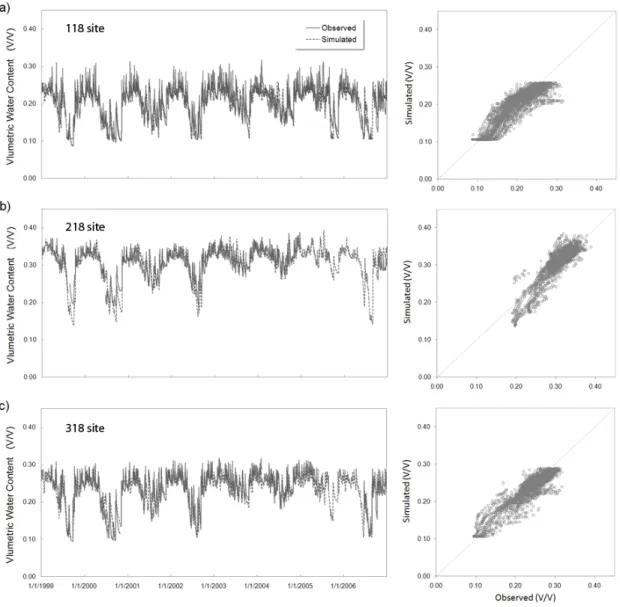
Three LTER research plots have been established along a topographic gradient at high, mid and low catchment positions (118 - xeric, 218 - mesic, and 318 – intermediate) to study ecohydrologic trends within the study watershed (Figure 2.3b), where detailed vegetation, soil and various microclimate data are available. Detailed explanations of these gradient plots are available at the Coweeta LTER homepage (http://coweeta.ecology.uga.edu/gradient_physical.html). We use daily volumetric water content data (Coweeta LTER research data ID 1013) collected with 30-cm CS615 sensors (Water Content Reflectometer, Campbell Scientific Inc., Logan, UT, USA) every 15 minutes from March 1999. At each gradient plot, these TDR sensors are installed at different depths (0 ~ 30 and 30 ~ 60 cm) and at two locations (upper slope and lower slope) within 20 × 40 m original rectangular plots.
Aboveground net primary productivity (ANPP) was estimated from tree ring increments and litterfall measurements in the early 1970’s for the full watershed (Day and Monk 1974, 1977; Day et al. 1988). Biomass increases were estimated from tree ring increments with locally-derived biometric
27
2.4.3
Hydrologic gradients of vegetation density
Leaf area index (LAI), an important carbon state variable in process-based biogeochemical models, is also a valuable driver in the scaling effort as it is well correlated with normalized difference
vegetation index (NDVI) derived from remote sensing images (Nemani et al. 1993; Gholz et al. 1991; Chen and Cihlar 1996; Fassnacht et al. 1997). The NDVI is a normalized ratio between red and near infrared bands.
)
/(
)
(
NIR RED NIR REDNDVI
=
ρ
−
ρ
ρ
+
ρ
(2.9)
LAI values were measured at 39 points around the WS18 in early June 2007 using two different methods (Figure 2.3c), with GPS coordinates measured during the previous leaf-off season
(GeoExplorer; Field Data Solutions Inc., Jerome, ID, USA). LAI was measured with an LAI-2000 Plant Canopy Analyzer (LI-COR Inc., Lincoln, NE, USA) using two instruments simultaneously for above and below canopy during overcast sky condition or at dawn or at dusk. Hemispheric images were also taken at the same sites, and analyzed with the Gap Light Analyzer software (Institute of Ecosystem Studies, Millbrook, New York, USA). We also used LAI data estimated from litter biomass and specific leaf area around the Coweeta LTER site (Figure 2.3c), four of which are located within WS18 (Bolstad et al. 2001). These litter-trap measurements are quite valuable in that optical measurements usually do not show much sensitivity in ranges of high leaf area index (Nemani et al. 1993; Fassnacht et al. 1997; Pierce and Running 1988; Gower and Norman 1991).
Spatial patterns of LAI within the watershed were determined from the site-specific correlation between point-measured LAI and NDVI values from a summer IKONOS Image (June 1, 2003; Figure 2.3a) with varying average window size of NDVI pixels and masking from outmost rings in a
28
match between LAI calculations of 0º ~ 23º zenith ranges (1 and 2 rings) and NDVI values by a 3 × 3 averaging window (Figure 2.3a). Considering average canopy height (~ 16 m) within the watershed and 4-meter IKONOS pixel size, this match is quite reasonable in terms of their size correspondences.
Most LAI measurements are located along the regression line except for some outliers (Figure 2.4a), from which we estimated spatial patterns of vegetation density within the target watershed. These outliers are mostly from the sites where thick rhododendron (R. maximum) develops in understory canopy. Dense understory canopy can easily decouple upward ground optical measurements and downward remote sensing images, and also affects NDVI values which are very sensitive to canopy background variations (Huete 1988; Huete et al. 1994).