Agent Modeling Language (AML): A Comprehensive Approach to Modeling
MAS
Ivan Trencansky and Radovan Cervenka
Whitestein Technologies, Panenska 28, 811 03 Bratislava, Slovakia Tel +421 (2) 5443-5502, Fax +421 (2) 5443-5512
E-mail: {itr,rce}@whitestein.com
Keywords:agent, multi-agent system, modeling language, agent-oriented software engineering
Received:May 6, 2005
The Agent Modeling Language (AML) is a semi-formal visual modeling language for specifying, mod-eling and documenting systems that incorporate features drawn from multi-agent systems theory. It is specified as an extension to UML 2.0 in accordance with major OMG modeling frameworks (MDA, MOF, UML, and OCL). The ultimate objective of AML is to provide software engineers with a ready-to-use, complete and highly expressive modeling language suitable for the development of commercial software solutions based on multi-agent technologies. This paper presents an overview of AML. The scope of the language, its structure and extensibility mechanisms are discussed, and the core AML modeling constructs and mechanisms are introduced and demonstrated by examples.
Povzetek: Opisana je vizualizacija agentnega jezika za modeliranje.
1 Introduction
The Agent Modeling Language(AML) [3, 5, 4] is a
semi-formal1visual modeling language for specifying, modeling
and documenting systems that incorporate concepts drawn fromMulti-Agent Systems(MAS) theory.
The most significant motivation driving the development of AML was the extant need for a ready-to-use, com-prehensive, versatile and highly expressive modeling lan-guage suitable for the development of commercial software solutions based on multi-agent technologies. To qualify this more precisely, AML was intended to be a language that: (1) is built on proved technical foundations, (2) in-tegrates best practices from agent-oriented software engi-neering (AOSE) and object-oriented software engiengi-neering (OOSE) domains, (3) is well specified and documented, (4) is internally consistent from the conceptual, semantic and syntactic perspectives, (6) is versatile and easy to ex-tend, (7) is independent of any particular theory, software development process or implementation environment, and (8) is supported by Computer-Aided Software Engineering (CASE) tools.
Given these requirements, AML is designed to address the most significant deficiencies with current state-of-the-art and practice in the area of MAS oriented model-ing languages, which are often: (1) insufficiently docu-mented and/or specified, or (2) using proprietary and/or non-intuitive modeling constructs, or (3) aimed at model-ing only a limited set of MAS aspects, or (4) applicable only to a specific theory, application domain, MAS
archi-1The term “semi-formal” implies that the language offers the means to
specify systems using a combination of natural language, graphical nota-tion, and formal language specification.
tecture, or technology, or (5) mutually incompatible, or (6) insufficiently supported by CASE tools.
The objective of this paper is to present the approach applied to specification of AML, and a brief overview of the various modeling constructs AML provides to model MASs. Due to limitations in paper length, a comprehen-sive description of AML abstract syntax, semantics, and notation is not provided.
The rest of the paper is structured as follows: Section 2 presents the approach applied to specification of AML and the available extensibility mechanisms. Section 3 ex-plains the AML fundamental entities and their features, sections 4, 5, 6, 7 and 8 present an overview of AML ap-proach to modeling different aspects of agents and MASs, like social aspects, different kinds of interactions, capabil-ities, mobility, and mental attitudes. In the end the conclu-sions are drawn.
2 The AML Approach
Toward achieving the stated goals and overcoming the de-ficiencies associated with many existing approaches, AML has been designed as a language, which:
– incorporates and unifies the most significant concepts
Prometheus [16], MaSE [8]), agent platforms (e.g. Jade, FIPA-OS, Jack, Cougaar) and multi-agent driven applications,
– extends the above with new modeling concepts to
ac-count for aspects of multi-agent systems thus far cov-ered insufficiently, inappropriately or not at all,
– assembles them into a consistent framework specified
by the AML meta-model (covering abstract syntax and semantics of the language) and notation (cover-ing the concrete syntax), and
– is specified as an extension to UML in accordance
with the OMG modeling frameworks (MDA, MOF, UML, and OCL).
2.1 The Language Definition
AML is built upon the Unified Modeling Language (UML) 2.0 Superstructure [15], augmenting it with several new modeling concepts appropriate for capturing the typical features of multi-agent systems (see Fig. 1).
The main advantages of this approach are:
– Reuse of well-defined, well-founded, and commonly
used concepts of UML.
– Use of existing mechanisms for specifying and
ex-tending UML-based languages (metamodel exten-sions and UML profiles).
– Ease of incorporation into existing UML-based CASE
tools.
The abstract syntax, semantics and notation of the
lan-guage are defined at the AML Metamodel and Notation
level. TheAML Metamodelis further structured into two
main packages:AML KernelandUML Extension for AML.
UML 2.0 Superstructure
UML 2.0 Profile of AML UML 1.* Profile of AML
UML 1.* Profiles Extending AML
UML 2.0 Profiles Extending AML
AML Metamodel AML
Notation AML Kernel
UML Extension for AML
UML Language AML Metamodel and Notation AML Profiles
AML
AML Profile Extensions
Figure 1: Levels of AML definition
The AML Kernelis a conservative2 extension of UML
2.0, comprising specification of all the AML modeling ele-ments. It is logically structured into several packages, each of which contains specification of modeling elements ded-icated for modeling specific aspect of MAS.
TheUML Extension for AMLpackage adds some meta-properties and structural constraints to the standard UML
2A conservative extension of UML is an extension of UML which
re-tains the standard UML semantics in unaltered form [22].
elements. It is thus a non-conservative extension of UML, and therefore an optional part of the language. However, the extensions contained within are simple and can be eas-ily implemented in most existing UML-based CASE tools. Upon the AML Metamodel and Notation two UML
pro-files of AML are specified: UML 1.* Profile for AML
(based on UML 1.*) andUML 2.0 Profile for AML(based
on UML 2.0). The primary objective of these profiles is to enable implementation of AML into existing UML 1.* and UML 2.0 based CASE tools, respectively.
2.2 Extensibility of AML
AML is designed to encompass a broad set of relevant the-ories and modeling approaches, it being essentially impos-sible to cover all inclusively. In those cases where AML is insufficient, several mechanisms can be used to extend or customize it as required:
– Metamodel extensionoffers first-class extensibility (as defined by MOF [13]) of the AML metamodel and notation.
– AML profile extension offers the possibility to adapt AML for a given domain, platform or development method by means of UML Profiles, without the need to modify the underlying AML Metamodel and Nota-tion.
– Concrete model extension allows to employ alterna-tive MAS modeling approaches as complementary specifications to the AML model.
3 Modeling MAS Entities
In general,entitiesare objects that can exist independently
of others. In order to maximize reuse and comprehensi-bility of the metamodel AML defines several auxiliary
ab-stract metamodeling concepts calledsemi-entitiesand their
types. Semi-entity types are specialized UML classes used to specify coherent set of features, logically grouped ac-cording to particular aspects of MASs. They are used to specify features of other types of modeling elements.
3.1 AML Semi-entities
AML defines the following semi-entities:
Behaviored semi-entitiesrepresent elements, which can own capabilities, observe and/or effect their environment by means of perceptors and effectors, provide and use ser-vices, and can be (de)composed into behavior fragments.
Socialized semi-entities represent elements, which can form societies, can participate in social relationships and can own social properties.
needs, motivations, desires, what goal(s) they are commit-ted to, when and how a particular goal is to be achieved, which plan to execute, etc.
3.2 AML Fundamental Entities
The fundamental entities that compose MASs are: agents, resources, and environments. AML therefore defines three modeling concepts, which can be used to model the above mentioned fundamental entities at both type and instance levels:
Agent typeis used to specify the type of agents, i.e. self contained entities that are capable of interactions, observa-tions and autonomous behavior within their environment.
Resource type is used to model the type of resources
within the system, i.e. physical or informational
en-tities with which the main concern is their availability (in terms of its quantity, access rights, conditions of us-age/consumption, etc.).
Environment typeis used to model the type of a system’s
inner environment3, i.e. the logical or physical
surround-ings of entities which provide conditions under which the entities exist and function.
In AML, all the aforementioned entity types are special-ized UML classes, and thus can utilize all the features de-fined for UML classes, i.e. can be instantiated, can own structural and behavioral features, behaviors, can be struc-tured into parts and ports, participate in interactions, can participate in various kinds of relationships (e.g. associa-tions, generalizaassocia-tions, dependencies), etc. The instances of the entity types (called entities) can be modeled by means of UML instance specifications classified according to the corresponding types.
Furthermore, all the AML fundamental entity types in-herit features of behaviored semi-entities, and in addition to these, agent and environment types are also socialized and mental semi-entities.
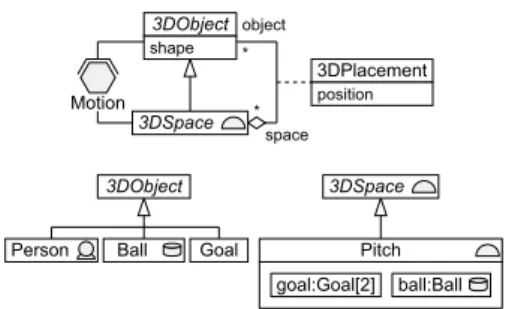
Fig. 2 shows an example of a definition of an abstract
class 3DObjectthat represents spatial objects,
charac-terized by shape and position, existing inside a containing
space. An abstract environment type3DSpacerepresents
a three dimensional space. This is a special3DObject
and as such can contain other spatial objects. 3DSpace
provides a serviceMotionto the objects contained within
(for details about services see Sect. 5.4). Three
con-crete 3DObjects, an agent type Person, a resource
type Ball and a class Goal are defined as specialized
3DObjects. 3DSpaceis further specialized into a
con-crete environment typePitchrepresenting a soccer pitch
containing two goals and a ball.
3Inner environmentis that part of an entity’s environment that is
con-tained within the boundaries of the system.
Goal Ball Person
3DObject shape
3DObject
3DPlacement position space object *
* 3DSpace
3DSpace
goal:Goal[2] ball:Ball Pitch Motion
Figure 2: Example of entities, their relationships, service provision and usage
4 Modeling Social Aspects
MASs are commonly perceived as systems comprised of a number of autonomous agents, situated in a common envi-ronment, and interacting with each other in order that the desired functionality and properties of the systems could emerge. These properties of MAS are not always derivable or representable solely on the basis of properties and capa-bilities of individual agents, but are usually given also by their mutual relationships, interactions, coordination mech-anisms, social attitudes, etc. Such aspects of MASs are
commonly referred to associal aspects.
From the social perspective the following aspects of MAS are commonly considered in MAS models (for de-taisl see [4]):
– Social structureconcerning mainly with the identifi-cation of societies which can evolve within the sys-tem, specification of their properties, structure, identi-fication of comprised roles, individual entities that can participate in such societies, what roles they can play, their mutual relationships, etc.
– Social behavior covering such phenomena as social dynamics (i.e. the ability of a society to react to inter-nal and exterinter-nal events), norms (i.e. rules or standards of behavior shared by members of a society), social interactions (how individuals and/or societies interact with others in order to exchange information, coordi-nate their activities, etc.), and social activities of in-dividual entities and societies (e.g. how they change their attitudes, roles they play, social relationships), etc.
– Social attitudesaddressing the individual and/or com-mon tendencies (usually expressed in terms of moti-vations, needs, wishes, intentions, goals, beliefs, com-mitments, etc.) to anything of a social value.
In order to accommodate special needs for modeling so-cial aspects, AML utilizes concepts of: organization units, social relationships, entity roles, and role properties.
4.1 Organization Units
Organization unit typeis a specialized environment type, and thus inherits features of behaviored, socialized and mental semi-entity types. They are used to specify the type of societies that can evolve within the system from both the external as well as internal perspectives.
From an external perspective, organization units
repre-sent coherent autonomous entities, which can be character-ized in terms of their mental and social attitudes, can per-form behavior, participate in different kinds of (social) rela-tionships, can observe and interact with their environment, offer and use services, play roles, etc. Their properties and behavior are both (1) emergent properties and behavior of all their constituents, their mutual relationships, observa-tions and interacobserva-tions, and (2) the features and behavior of organization units themselves.
For modeling organization units from external perspec-tives, in addition to features defined for UML classes (structural and behavioral features, owned behaviors, rela-tionships, etc.), also all the features of behaviored, social-ized, and mental semi-entities can be utilized.
From an internal perspective, organization units are
types of environment that specify the social arrangements of entities in terms of structures, interactions, roles, con-straints, norms, etc.
For this purpose organization unit types usually utilize the possibilities inherited from UML structured classifier, and model their internal structure by contained parts and connectors, in combination with entity role types used as types of the parts.
For an example of an organization unit see Fig. 3 (b).
4.2 Social Relationships
Social relationship is a particular type of connection be-tween social entities related to or having dealings with each other. For modeling such relationships, AML defines a spe-cial type of UML property, called sospe-cial property. The so-cial property can be used either in the form of an owned social attribute, or as the end of a social association, and
can specify its social role kind4.
For an example of modeling social relationships see Fig. 3.
4.3 Roles and Role Properties
Roles are used to define a normative behavioral repertoire of entities, and thus provide the basic building blocks of
MAS societies. For modeling roles, AML providesentity
role type, a specialized behaviored, socialized and mental
4AML predefinespeer, subordinate and superordinate social role
kinds, but this set can be extended as required.
semi-entity type. Entity role types are used to model ab-stractions of coherent set of features, capabilities, behav-iors, observations, relationships, participation in interac-tions, and services offered or required by entities partici-pating in a particular context. Each entity role type should be realized by a specific implementation possessed by an entity that can play that entity role type. An instance of an entity role type is called entity role and exists only while some behavioral entity plays it.
For modeling the ability of an entity to play an entity
role type, AML providesrole properties. Role property is a
specialized UML property, used to specify that an instance of its owner (i.e. a behavioral entity) can play one or several roles of a particular entity role type. The role property can be used either in the form of a role attribute or as the end of a play association.
One entity can at each time play several entity roles. These entity roles can be of the same as well as of dif-ferent types. The multiplicity defined for a role property constraints the number of entity roles of given type the par-ticular entity can play concurrently. Additional constraints which govern playing of entity roles can be specified by UML constraints.
To allow explicit manipulation of entity roles in UML activities and state machines, AML defines a set of actions for entity role creation and disposal, particularly create role action and dispose role action.
Fig. 3 (a) contains the diagram depicting an agent of typePersonwhich can play entity roles of typePlayer,
Captain, Coach, and Referee. The possibility of playing entity roles of a particular type is modeled by play associations. Fig. 3 (b) depicts an organization unit
SoccerMatch, which comprises three referees (of the Referee entity role type) and two teams (of the
SoccerTeamorganization unit type). TheSoccerTeam
itself consists of one to three coaches, and eleven to
fifteen players of which one is the captain. The
players are peers to each other (the cooperate
con-nector), and subordinates to the coaches (the manage
connector), and thecaptain(theleadconnector). The
referees are superordinate to the both SoccerTeams (thecontrolconnector).
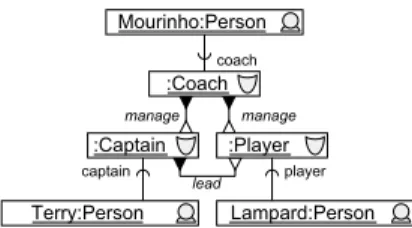
Fig. 4 shows the instantiation of the previously defined types in a model of a system’s snapshot, where the agent Lampard, of typePerson, plays the entity roleplayer, and
the agentTerry, also of typePerson, plays the entity role
captainand leadsLampard. The agentMourinho,
play-ing the entity rolecoachmanages both playersLampard
andTerry.
5 Modeling Interactions
inter-team:SoccerTeam[2]
referee:Referee[3]
Captain Coach Referee active:Boolean
Player
0..1 captain
player 0..1 0..1 coach 0..1 referee
manage manage
control (a)
(b)
name:String Person {xor}
SoccerMatch
cooperate lead
coach:Coach[1..3]
player:Player[10..15] captain:Captain
Figure 3: Example of social structure modeling
coach
manage manage
lead player
captain :Coach
:Captain :Player Mourinho:Person
Lampard:Person Terry:Person
Figure 4: Example of the entity role instantiation and play-ing
actions, (3) observations and effecting interactions, and (4) services.
5.1 Generic Extensions to UML Interactions
Generic extensions to UML interactions provide means to model: (1) interactions between groups of entities (multi-message and multi-lifeline), (2) dynamic change of object’s attributes to express changes in internal structure of orga-nization units, social relationships, or played entity roles, etc., induced by interactions (attribute change), (3) model-ing of messages and signals not explicitly associated with the invocation of corresponding methods and receptions (decoupled message), (4) mechanisms for modification of interaction roles of entities (not necessary entity roles) in-duced by interactions (subset and join dependencies), and (5) modeling the actions of dispatch and reception of de-coupled messages in activities (send and dede-coupled mes-sage actions, and associated triggers).
Multi-messageis a specialized UML message which is used to model a particular communication between (unlike UML message) multiple participants, i.e. multiple senders and/or multiple receivers.
Multi-lifelineis a specialized UML lifeline, used to rep-resent (unlike UML lifeline) multiple participants in inter-actions.
Decoupled messageis a specialized multi-message used to model the asynchronous dispatch and reception of a mes-sage payload without (unlike UML mesmes-sage) explicit
spec-ification of the behavior invoked on the side of the receiver. The decision of which behavior should be invoked when the decoupled message is received is up to the receiver what allows to preserve its autonomy in processing messages.
Attribute changeis a specialized UML interaction frag-ment used to model the change of attribute values (state) of interacting entities induced by the interaction. Attribute change thus enables to express addition, removal, or mod-ification of attribute values, and also to express the added attribute values by sub-lifelines. The most likely utiliza-tion of attribute change is in modeling of dynamic change of entity roles played by behavioral entities represented by lifelines in interactions, and the modeling of entity inter-actions with respect to the played entity roles (i.e. each sub-lifeline representing a played entity role can be used to model interaction of its player with respect to this entity role).
Subsetis a specialized UML dependency between event occurrences owned by two distinct (superset and subset) lifelines used to specify that since the event occurrence on the superset lifeline, some of the instances it represents (specified by the corresponding selector) are also repre-sented by another, the subset lifeline.
Similarly,joindependency is also a specialized UML
de-pendency between two event occurrences on lifelines (sub-set and union ones), used to specify that a sub(sub-set of in-stances, which have been until the subset event occurrence represented by the subset lifeline, is after the union event occurrence represented by the ¸Sunion ˇT lifeline. The union lifeline, thus after the union event occurrence represents the union of the instances it has been representing before, and the instances specified by the join dependency.
Send decoupled message action is a specialized UML send object action used to model the action of
dispatch-ing a decoupled message, and accept decoupled message
action is a specialized UML accept event action used to model reception of a decoupled message action that meets the conditions specified by the associated decoupled mes-sage trigger.
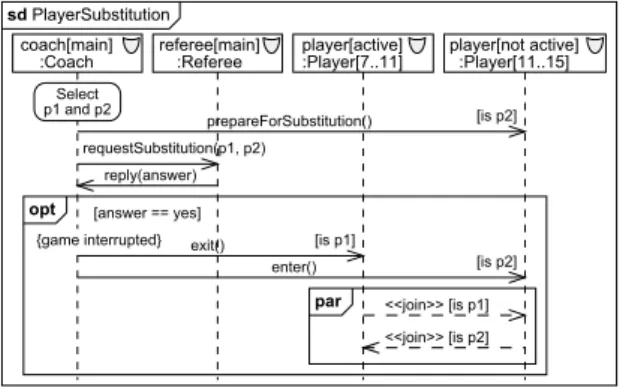
A simplified interaction between entities taking part in a player substitution is depicted in Fig. 5. Once the main
coachdecides which players are to be substituted (p1to
be substituted andp2the substitute), he first notifies player
p2to get ready and then asks the mainrefereefor
per-mission to make the substitution. The mainrefereein
turn replies by ananswer. If theansweris “yes”, the
substitution process waits until the game is interrupted. If
so, thecoachinstructs playerp1to exit andp2to enter.
Playerp1then leaves the pitch and joins the group of
in-active players andp2joins the pitch and thereby the group
of active players.
Fig. 6 shows an example of the communicative inter-action in which the attribute change elements are used to model changes of entity roles played by agents. The dia-gram realizes the scenario of a captain change caused by
the original captain (player2) substitution.
sd PlayerSubstitution
opt
par coach[main]
:Coach referee[main]:Referee
requestSubstitution(p1, p2) reply(answer)
exit()
<<join>> [is p1] enter()
[is p1]
[is p2] Select
p1 and p2
player[active]
:Player[7..11] player[not active]:Player[11..15]
<<join>> [is p2] prepareForSubstitution() [is p2]
[answer == yes] {game interrupted}
Figure 5: Example of a communicative interaction
player2 is captain (modeled by its role prop-erty captain). During the substitution, the main
coach gives the player2 order to hand the
cap-tainship over (handCaptainshipOver() message)
and the player1 the order to become the captain
(becomeCaptain() message). After receiving these
messages, the player2 stops playing the entity role
captain (and starts playing the entity role of ordinary
player) and the player1 changes from ordinary
playertocaptain.
coach[main] :Coach
becomeCaptain()
handCaptainshipOver()
player1:Person player2:Person
captain player
player captain
{has been substituted}
Figure 6: Example of a social interaction with entity role changes
5.2 Speech Act Specific Extensions to UML
Interactions
Speech act specific extensions to UML interactions com-prise modeling of speech-acts (communication message), speech act based interactions (communicative interac-tions), patterns of interactions (interaction protocols), and modeling the actions of dispatch and reception of speech-act based messages in speech-activities (send and accept commu-nicative message actions, and associated triggers).
Communication message is a specialized decoupled message used to model communicative acts of speech act
based communication within communicative interactions
(a specialized UML interaction) with the possibility of ex-plicit specification of the message performative and pay-load. Both the communication message and communica-tive interaction can also specify used agent communication and content languages, ontology and payload encoding.
Interaction protocol is a parametrized communicative interaction template used to model reusable templates of communicative interactions.
5.3 Observations and Effecting Interactions
AML provides several mechanisms for modeling observa-tions and effecting interacobserva-tions in order to (1) allow model-ing of the ability of an entity to observe and/or to brmodel-ing about an effect on others (perceptors and effectors), (2) specify what observation and effecting interactions the en-tity is capable of (perceptor and effector types and perceiv-ing and effectperceiv-ing acts), (3) specify what entities can ob-serve and/or effect others (perceives and effects dependen-cies), and (4) explicitly model the actions of observations and effecting interactions in activities (percept and effect actions).
Observations are in AML modeled as the ability of an entity to perceive the state of (or to receive a signal from)
an observed object by means ofperceptors, which are
spe-cialized UML ports. Perceptor types are used to specify
(by means of ownedperceiving acts) the observations an
owner of a perceptor of that type can make.
Perceiving acts are specialized UML operations which can be owned by perceptor types and thus used to specify what perceptions their owners, or perceptors of given type, can perform.
The specification of which entities can observe others, is
modeled by aperceivesdependency. For modeling
behav-ioral aspects of observations, AML provides a specialized
percept action.
Different aspects of effecting interactions are modeled
analogously, by means ofeffectors,effector types,effecting
acts,effectsdependencies, andeffect actions.
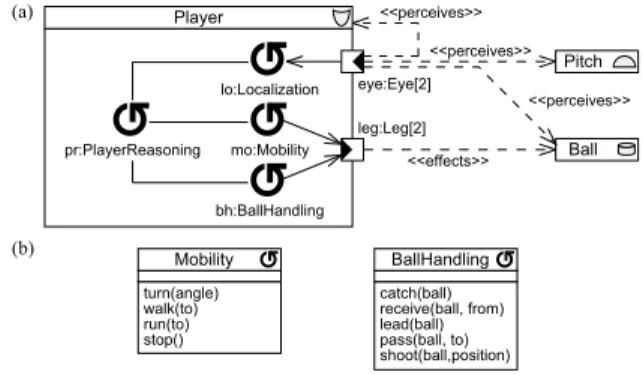
An example is depicted in Fig. 8 (a) which shows an
entity role typePlayerwith two eyes–perceptors called
eye of type Eye, and two legs–effectors called leg of
typeLeg. Eyes are used to see other players, the pitch and
the ball, and to provide localization information to the in-ternal parts of a player. Legs are used to change the player’s position within the pitch (modeled by changing of internal state implying that no effects dependency need be placed in the diagram), and to manipulate the ball.
5.4 Services
The AML support for modeling services comprises (1) the means for the specification of the functionality of a service and the way a service can be accessed (service specification and service protocol), (2) the means for the specification of what entities provide/use services (service provision, ser-vice usage, and serser-viced property), and (if applicable) by what means (serviced port).
can be either external or internal parts of the service provider), called service clients.
Service specification is used to specify a service by means of owned service protocols, i.e. specialized inter-action protocols extended with the ability to specify two mandatory, disjoint and nonempty sets of (not bound) pa-rameters, particularly: provider and client template param-eters.
Theprovider template parametersof all contained ser-vice protocols specify the set of the template parame-ters that must be bound by the service providers, and the
client template parametersof all contained service proto-cols specify the set of template parameters that must be bound by the service clients. Binding of these complemen-tary template parameters specifies the features of the par-ticular service provision/usage which are dependent on its providers and clients.
Service provision/usage are specialized dependencies used to model provision/use of a service by particular enti-ties, together with the binding of template parameters that are declared to be bound by service providers/clients.
Fig. 7 shows a specification of the Motion service
defined as a collection of three service protocols. The
CanMoveservice protocol is based on the standard FIPA
protocol FIPA-Query-Protocol5 [21] and binds the
proposition parameter (the content of aquery-if
message) to the capability canMove(what, to) of
a service provider. The participant parameter of
the FIPA-Query-Protocol is mapped to a service
provider and the initiator parameter to a service
client. TheCanMoveservice protocol is used by the
ser-vice client to ask if an object referred by thewhat
parame-ter can be moved to the position referred by theto
param-eter. The remaining service protocolsMoveandTurnare
based on the FIPA-Request-Protocol[21] and are
used to change the position or direction of a spatial object.
Binding of the Motion service specification to the
provider3DSpaceand the client3DObjectis depicted
in Fig. 2.
Motion
sd CanMove:FIPA-Query-Protocol <proposition->canMove(what, to)>
participant initiator
sd Move:FIPA-Request-Protocol <action_spec->move(what, to)>
participant initiator
sd Turn:FIPA-Request-Protocol <action_spec->turn(what, angle)>
participant initiator
Figure 7: Example of service specification
5The AML specification of the interaction protocol can be found in [3].
6 Modeling Capabilities and
Behavior
AML extends the capacity of UML to abstract and decom-pose behavior by another two modeling elements: capabil-ity and behavior fragment.
Capability is an abstract specification of a behavior which allows reasoning about and operations on that spec-ification. Technically, a capability represents a unification of the common specification properties of UML’s behav-ioral features and behaviors expressed in terms of their in-puts, outin-puts, pre- and post-conditions.
Behavior fragment is a specialized behaviored semi-entity type used to model a coherent re-usable fragment of behavior and related structural and behavioral features. It enables the (possibly recursive) decomposition of a com-plex behavior into simpler and (possibly) concurrently ex-ecutable fragments, as well as the dynamic modification of an entities behavior in run-time. The decomposition of a behavior of an entity is modeled by owned aggregate at-tributes of the corresponding behavior fragment type.
Fig. 8 (a) shows the decomposition of the Player
entity role type’s behavior into a structure of behavior
fragments. In part (b) two fragments, Mobility and
BallHandling, are described in terms of their owned
capabilities (turn,walk,catch, etc.).
Player (a)
(b)
Ball
lo:Localization
mo:Mobility pr:PlayerReasoning
bh:BallHandling
eye:Eye[2]
leg:Leg[2]
<<effects>> <<perceives>>
<<perceives>> <<perceives>>
Pitch
BallHandling
catch(ball) receive(ball, from) lead(ball) pass(ball, to) shoot(ball,position)
Mobility
turn(angle) walk(to) run(to) stop()
Figure 8: Example of behavior fragments, observations and effecting interactions
7 Modeling MAS Deployment and
Mobility
en-tity’s movement or cloning throughout the physical infras-tructure (move and clone actions).
Agent execution environment typeis a specialized UML execution environment used to model types of execution environments within which MAS entities can run. While it is a behaviored semi-entity type, it can explicitly, for exam-ple, also specify a set of services that the deployed entities can use or should provide at run time.
Agent execution environment can also ownhosting
prop-erties, which are used to classify the entities which can be hosted by the owning agent execution environment. The
hosting property’shosting kindspecifies the relation of the
referred entity type to its owning agent execution
environ-ment (i.e. eitherresidentofvisitor).
Hosting association is a specialized UML association used to specify hosting property in the form of an asso-ciation end.
Move is a specialized UML dependency between two
hosting properties used to specify that the entities repre-sented by the source hosting property can be moved to the instances of the agent execution environments owning the
destination hosting property. Likewise the clone
depen-dency is used.
Moveandclone actionsare specialized UML add struc-tural feature actions used to model actions that cause move-ment or cloning of an entity from one agent execution envi-ronment to another one. Both the actions thus specify: (1) which entity is being moved or cloned, (2) the destination agent execution environment instance where the entity is being moved or cloned, and (3) the hosting property where the moved or cloned entity is being placed.
8 Modeling Mental Aspects
Mental semi-entities can be characterized in terms of their mental attitudes, i.e. motivations, needs, wishes, inten-tions, goals, beliefs, commitments, etc. To allow modeling all the above, AML provides: goals, beliefs, plans, con-tribution relationships, mental properties and associations, mental constraints, and commit/cancel goal actions.
Goalis a specialized UML class used to model goals, i.e.
conditions or states of affairs with which the main concern is their achievement or maintenance. Goals can thus be used to represent objectives, needs, motivations, desires, etc.
Belief is a specialized UML class used to model a state of affairs, proposition or other information relevant to the system and its mental model.
The attitude of a mental semi-entity to a belief or com-mitment to a goal is modeled by the belief or the goal
instance being held in a slot of the correspondingmental
property(owned by the mental semi-entity, or a mental as-sociation relating the belief or the goal to the mental semi-entity).
Planis a specialized UML activity used to model:
prede-fined plans, or fragments of behavior from which the plans
can be composed.
Mental constraintis a specialized UML constraint used to specify properties of owning beliefs, goals and plans which can be used within reasoning processes of mental semi-entities. Supported kinds of mental constraints are pre- and post-conditions, commit conditions, cancel condi-tions and invariants.
Contributionis a specialized UML relationship used to model logical relationships between goals, beliefs, plans and their mental constraints. The manner in which the specified mental constraint (e.g. post-condition) of the con-tributor influences the specified mental constraint kind of the beneficiary (e.g. pre-condition) as well as the degree of the contribution can also be specified.
Actions to model commitments to and de-commitments from goals within activities are also provided.
<<mental>>
ScoringChance
SoccerTeam Player
{match.isOver and
team.scoredGoals > team.concededGoals}
WinMatch ScoreGoal
<<mental>>
1 0..1
+0.5
<<mental>>
0..1 ++
++
Figure 9: Example of a mental model
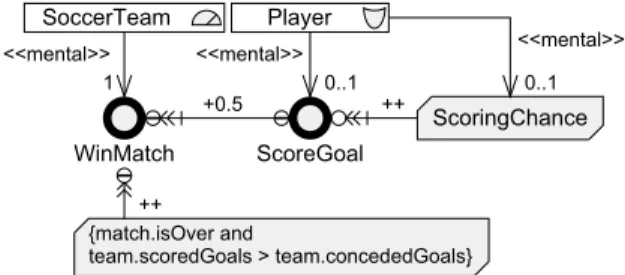
Fig. 9 shows an example of a snapshot of the mental
model of a soccer team (represented by theSoccerTeam
organization unit type) and its players (Player entity
role type). The soccer team has the goal to win a
match (modeled by the WinMatch goal). The goal
WinMatch is accomplished, when the soccer match is over and the team has scored more goals than conceded. This is expressed by the sufficient contribution of the be-lief {match.isOver and team.scoredGoals > team.concededGoals} to the postcondition of the goal WinMatch. The soccer team players may have
goals to score a goal (ScoreGoal) which it is
feasi-ble to commit to, when they are in a scoring chance. This is expressed by the necessary contribution of the be-lief ScoringChance to the precondition of the goal
ScoreGoal.
9 Conclusion
into a unique framework built on foundations of UML 2.0 and OCL 2.0. The structure of the language definition to-gether with the MDA/MOF/UML “metamodeling technol-ogy” (UML profiles, first-class metamodel extension, etc., gives AML the advantage of natural extensibility and cus-tomization. AML is also supported by CASE tools.
We feel confident that AML is sufficiently detailed, com-prehensive and tangible to be a useful tool for software ar-chitects building systems based on, or exhibiting character-istics of, multi-agent technologies. In this respect we antic-ipate that AML may form a significant contribution to the effort of bringing about widespread adoption of intelligent agents across varied commercial marketplaces.
Acknowledgement
The authors are indebted to Stefan Brantschen, Monique Calisti, and Dominic Greenwood, for their support and fruitful comments which have inspired many ideas and thus substantially influenced the current version of AML.
References
[1] B. Bauer, J.P. Muller, and J. Odell. Agent UML: A Formalism for Specifying Multiagent Interac-tion. In P. Ciancarini and M. Wooldridge, editors,
Agent-Oriented Software Engineering, pages 91–103. Springer-Verlag, Berlin, 2001.
[2] P. Bresciani, P. Giorgini, F. Giunchiglia, J.
My-lopoulos, and A. Perini. TROPOS: An
Agent-Oriented Software Development Methodology.
Au-tonomous Agents and Multi-Agent Systems, 2(3):203– 236, 2004.
[3] R. Cervenka and I. Trencansky. Agent Modeling Lan-guage: Language Specification. Version 0.9. Techni-cal report, Whitestein Technologies, 2004.
[4] R. Cervenka, I. Trencansky, and Calisti. Modeling Social Aspects of Multiagent Systems: The AML Approach. In J.P. Muller and F. Zambonelli,
edi-tors, The Fourth International Joint Conference on
Autonomous Agents & Multi Agent Systems (AAMAS 05). Workshop 7: Agent-Oriented Software Engineer-ing (AOSE), pages 85–96, Universiteit Utrecht, The Netherlands, 2005.
[5] R. Cervenka, I. Trencansky, M. Calisti, and D. Green-wood. AML: Agent Modeling Language. Toward Industry-Grade Agent-Based Modeling. In J. Odell,
P. Giorgini, and J.P. Muller, editors,Agent-Oriented
Software Engineering V: 5th International Workshop, AOSE 2004, pages 31–46. Springer-Verlag, Berlin, 2005.
[6] M. Cossentino, L. Sabatucci, and A. Chella. A Possi-ble Approach to the Development of Robotic
Multi-Agent Systems. InIEEE/WIC Conference on
Intelli-gent AIntelli-gent Technology (IAT’03), pages 539–544, Hal-ifax, Canada, 2003.
[7] S. Cranefield, S. Haustein, and M. Purvis. UML-Based Ontology Modelling for Software Agents. In IProceedings of the Workshop on Ontologies in Agent Systems, 5th International Conference on Au-tonomous Agents, 2001.
[8] S.A. DeLoach. Multiagent Systems Engineering:
A Methodology and Language for Designing Agent
Systems. InAgent-Oriented Information Systems ’99
(AOIS’99), Seattle, WA, 1999.
[9] M. d’Inverno and M. Luck.Understanding Agent
Sys-tems. Springer-Verlag, Berlin, 2001.
[10] R. Evans, P. Kearny, J. Stark, G. Caire, F. Garijo, J.J. Gomez-Sanz, F. Leal, P. Chainho, and P. Massonet. MESSAGE: Methodology for Engineering Systems of Software Agents. Technical Report P907, EU-RESCOM, 2001.
[11] J. Odell, H.V.D. Parunak, and B. Bauer.
Extend-ing UML for Agents. In G. Wagner, Y.
Lesper-ance, and E. Yu, editors,Proceedings of the
Agent-Oriented Information Systems Workshop at the 17th National conference on Artificial Intelligence, pages 3–17, Austin, Texas, 2000.
[12] J. Odell, H.V.D. Parunak, M. Fleischer, and S. Brueckner. Modeling Agents and their Environ-ment. In F. Giunchiglia, J. Odell, and G. Weiss,
edi-tors,Agent-Oriented Software Engineering III: Third
International Workshop, AOSE 2002, pages 16–31. Springer-Verlag, Berlin, 2002.
[13] OMG. Meta Object Facility (MOF) Specification. Version 1.4, formal/2002-04-03, april 2002.
[14] OMG. UML 2.0 OCL Specification. ptc/03-10-14, October 2003.
[15] OMG. Unified Modeling Language: Superstructure version 2.0. ptc/03-08-02, 2003.
[16] L. Padgham and M. Winikoff. Prometheus: A
Methodology for Developing Intelligent Agents. In F. Giunchiglia, J. Odell, and G. Weiss, editors,
Agent-Oriented Software Engineering III: Third In-ternational Workshop, AOSE 2002, pages 174–185. Springer-Verlag, Berlin, 2002.
[17] A.S. Rao and M.P. Georgeff. Modeling Rational
Agents within a BDI-Architecture. In J.F. Allen,
R. Fikes, and E. Sandewall, editors,Knowledge
[18] V. Silva, A. Garcia, A. Brandao, C. Chavez, C. Lu-cena, and P. Alencar. Taming Agents and Objects in Software Engineering. In A. Garcia, C. Lucena, J. Castro, A. Omicini, and F. Zambonelli, editors,
Software Engineering for Large-Scale Multi-Agent Systems: Research Issues and Practical Applications, volume LNCS 2603, pages 1–25. Springer-Verlag, Berlin, 2003.
[19] M.K. Smith, D. McGuinness, R. Volz, and
C. Welty. Web Ontology Language (OWL),
Guide Version 1.0, W3C Working Draft. URL:
http://www.w3.org/TR/2002/WD-owl-guide-20021104, 2002.
[20] A. Sturm, D. Dori, and O. Shehory. Single-Model
Method for Specifying Multi-Agent Systems. In
Pro-ceedings of the second international joint conference on Autonomous agents and multiagent systems, pages 121–128. ACM Press, New York, NY, 2003.
[21] The Foundation for Intelligent Physical
Agents. FIPA Specifications Repository. URL:
http://www.fipa.org/repository/index.html, 2004.
[22] W.M. Turski and T.S.E. Maibaum. The Specification
of Computer Programs. Addison-Wesley, London, 1987.
[23] G. Wagner. The Agent-Object-Relationship Meta-model: Towards a Unified View of State and Behav-ior.Information Systems, 28(5):475–504, 2003.
[24] G. Weiss.Multiagent Systems–A Modern Approach to
Distributed Artificial Intelligence. MIT Press,
Cam-bridge, MA,3rdedition, 2001.