Original Research Article
Effect of secondhand smoke exposure on lung function among
non-smoking population
Aravind C.
1, Ragul B.
2*
,Monisha
3INTRODUCTION
Secondhand tobacco smoke (SHS) is admixture of two forms of smoke: smoke exhaled by people who smoke and also from burning end of cigars, pipes or cigarettes.
Definition
Passive Smoking
It is the inhalation of SHS or Environmental Tobacco Smoke (ETS) by person other than the intended active smoker.
Forced Vital Capacity (FVC)
This is the volume of air that can expired forcefully and maximally after taking deep inspiration
Normal value -3.5-5.5 litres
Forced Expiratory Volume in 1st second (FEV1). This is the volume of air that can be expired forcefully and the end of 1st second after maximal inspiration.
Normal value -80-85% or 4-4.5Litres
ABSTRACT
Background: Secondhand Smoke (SHS) exposure is known to be associated with various cardiovascular and respiratory problems but its effect on pulmonary function remains unexplored. This study was done to evaluate the effect of Secondhand Smoke (SHS) exposure on lung function among non-smoking population.
Methods: This cross-sectional study was conducted in Bahour, Pondicherry from 2017-2018. 350 participants, age 40 year and older, with no respiratory symptoms or prior lung diseases were included in this study. Both self-reported history and measurement of urinary cotinine level were used to evaluate the smoking status. Spirometry data, including FVC and FEV1 were used to assess lung function. Diverse variables between groups were compared using T- test and Chi-square test. Analysis of covariance (ANCOVA) adjusted for age, height, alcohol consumption, and level of exercise was used to see any statistical differences in lung function parameters between non-SHS exposed and SHS-exposed groups.
Results: Among 350 non-smokers, 120 were SHS-exposed. The urinary cotinine levels clearly distinguished SHS exposure, and the mean urinary cotinine levels were 7±0.3 and 11±0.4 in non-SHS exposed group vs SHS-exposed group, respectively. However, both groups had no significant difference in lung function and was found normal. Conclusions: SHS exposure urinary cotinine is a valuable marker.
Keywords: Lung function, Second-hand smoke, Urinary cotinine
1Department of General Medicine, Sri Lakshmi Narayana Institute of Medical Sciences, Pondicherry, India 2Department of General Medicine, Indira Gandhi Medical College and Research Institute, Pondicherry, India 3Department of General Medicine, Sri Lakshmi Narayana Institute of Medical Sciences, Pondicherry, India
Received: 27 June 2019 Accepted: 17 July 2019
*Correspondence: Dr. Ragul B.,
E-mail: [email protected]
Copyright: © the author(s), publisher and licensee Medip Academy. This is an open-access article distributed under the terms of the Creative Commons Attribution Non-Commercial License, which permits unrestricted non-commercial use, distribution, and reproduction in any medium, provided the original work is properly cited.
Since the first study published in 1981 the adverse health outcome of SHS exposure is well accepted showed an association between lung cancer development and SHS exposure.1 Since then, SHS exposure has been linked to a
broad array of diseases, with the bulk of research focusing on the association between development of cardiovascular diseases or lung cancer and SHS exposure.2-6 People who are exposed to SHS increase
their chances of developing heart diseases and lung cancer by 20-35% and 25-30%, respectively.7
Therefore, it is not surprising that previous studies have reported that SHS exposure has an adverse effect on lung function (8-14).
However, there are few gaps to be mentioned in this regard based on the review of prior literature. First, interestingly a few studies failed to show an adverse effect of SHS exposure on lung function (15-17). Second, there might be gender, coexisting medical conditions, age, and/or geographical difference related to the effect of SHS exposure on lung function. The majority of previous studies assessed the smoking status of study participants only via self-report without validation through the use of biochemical metabolites of nicotine. Thus, it is possible that some non-smokers in previous studies would have been closet smokers, possibly leading to the exaggeration of loss of lung function due to SHS exposure. Lastly, there is always the possibility of the presence of confounding factors, or bias, such as any effects of indoor air pollution or occupational exposure, given the nature of epidemiologic studies threatening the validity of these studies.
These findings may suggest that, taking the above questions into account, further studies need to be done to address the effect of SHS exposure on lung function. In other words, a better-designed study using a more homogenous group of people in terms of age, health status, ethnicity and geography, might be needed to address the effect of SHS exposure on lung function more precisely. Further, use of biochemical markers of smoking exposure would be needed to verify the status of SHS exposure. This is the reason why we evaluated the effect of SHS exposure on lung function among non-smokers.
METHODS
Data source and collection
A Cross-sectional survey was done in bahour from November 2017 to January 2018. 430 to 450 household and shops were surveyed. Chest X-ray, lung function test, basic blood and urine tests and a health survey (e.g., past medical history, current medication, physical symptoms, smoking, drinking, diet and exercise habits) have been performed. Informed consent was obtained for each individual before the survey.
Smoking questionnaire
Based on the self-report surveys, the participants were grouped into categories: smoker, and nonsmoker. Smokers were defined as persons with smoking history of more than 100 cigarettes in their lifetime. Non-smokers were defined as persons with a smoking history of less than 100 cigarettes in their lifetimes who are not smokers at the time of the survey. Exposure to SHS was also obtained. The participants were asked about the duration of SHS exposure per day, either at home or in the work-place (0, >0 to <1 h, and >1 h).
Urinary cotinine measurement and spirometry
Nicalert immunoassay test strips were used to measure urinary cotinine, a biomarker of previous nicotine exposure. A cutoff value of 80 ng/mL was adopted to distinguish active smokers from nonsmokers. Spirometry was performed to assess lung function. Forced vital capacity (FVC), forced expiratory volume in 1 second (FEV1) and the ratio of FEV1/FVC were evaluated. Percentage predicted value of spirometry data is interpreted normal if the % predicted value is higher than 80% (32). Smoking is known to cause obstructive lung diseases like COPD, defined by FEV1/FEV ratio of < 0.7 (70%).
Study population
During the study period 350 individuals completed the survey.
Inclusion criteria
• At least 40 years old, • non-smoker
• no prior history of lung disease
Exclusion criteria
• Those with urine cotinine level higher than 80 ng/ml;
• Those who did not answer the smoking history • Those without urinary cotinine data.
A total of 120 sufficing the criteria were included in this study.
Statistical analysis
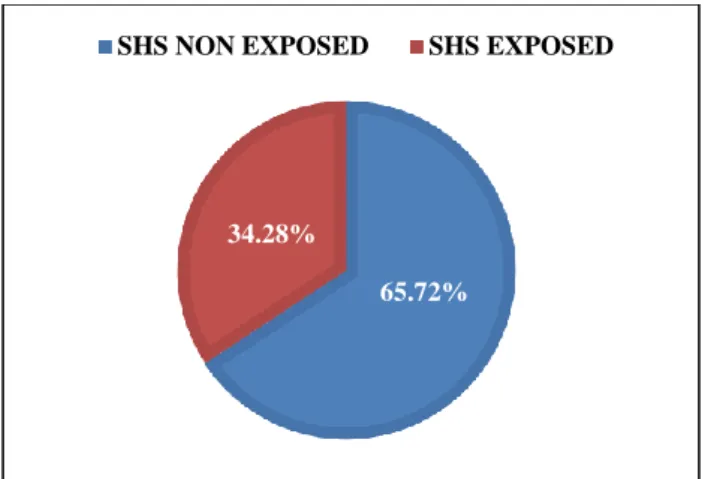
Figure 1: Results of distribution of SHS* exposed and SHS* non exposed study population.
T-test were done to compare between groups, SHS and non-SHS group, for continuous variables. Chi-square tests were done to compare between 2 groups for categorical variables. ANCOVA was used to compare differences in lung function parameters according to the duration and place of SHS exposure, after adjusting for age, gender, height, alcohol consumption, and level of exercise. P <0.05 was considered statically significant.
RESULTS
Characteristics of the study participants
Among 574 survey participants, 350 participants met the inclusion criteria, which consisted of being non-smoker, no prior history of lung disease or respiratory symptoms such as cough or dyspnea and at least 40 years old. Among 350 non-smoker, 120 (34.28%) were SHS-exposed.
Table 1: Results of lung function parameters after adjusting for potential confounders in non-SHS vs.
SHS exposed groups.
FVC FEV1/FVC FEV1
SHS: No 0.800±0.00 2.264±0.03 2.945±0.03 SHS: Yes
2.328±0.03 2.919±0.05
0.801±0.00
p value: 0.570 0.325 0.173
Data are presented as least square Mean±SE; ANCOVA adjusted for age, height, drink, and exercise was used.
DISCUSSION
Secondhand smoke, also called environmental tobacco smoke (ETS) or passive smoke, has been established to be and carcinogenic and toxic (35). The odds ratios of developing COPD from SHS exposure have been reported between 1.31 and 2.24.18,19 Considering the
well-accepted health hazard of SHS to the respiratory system,
it is interesting to speculate on the reasons for the somewhat controversial reports by previous researchers. Due to the nature of this question, previous studies that addressed the effect of SHS exposure on lung function were mostly epidemiologic studies. Thus, it is always possible that unexpected confounders, such as any effects of indoor air pollution or occupational exposure, might have contributed to the contradictory study findings.
Almost most of the studies used a self-report survey to examine smoking status of study participants. Thus some variability in the study results may be due to lack of honesty of participants. We excluded all the study participants with current respiratory symptoms or prior respiratory disease history such as pulmonary tuberculosis or pneumonia to minimize any confounders. Further, to examine smoking status we used both a self-reported survey and a biochemical marker of nicotine exposure, urinary cotinine.
Interestingly, we could not find any significant contribution of SHS-exposure to lung function. There are a few potential interesting explanations possible. We used very strict eligibility criteria for this study; therefore, it is possible that we excluded individuals whose lung functions were affected by SHS exposure from the beginning through this process. It is also possible that the duration of SHS-exposure was not long enough to affect lung function in our study population. However, according to recent human studies, significant decrease in FEV1 and FEV1/FVC ratio along with cytokine releases, such as interleukins 1 beta, 4, 5, and 6, tumor necrosis factor alpha, and inter-feron gamma in the lungs, suggesting significant lung inflammation can occur even at 1 hour of SHS exposure. These findings do not necessarily implicate that SHS-provoked acute decrement in lung function will lead to the development of COPD; however, an adverse effect of SHS exposure on lung function develops regardless of exposure duration. Thus, it is less likely that the reason for not finding any significant lung function changes was due to not enough exposure to SHS.
The presence of different individual susceptibilities in this regard may also be one of the reasons. For instance, SHS provoked reductions in lung function were only observed in nonsmoking females, especially females with asthma, but not in nonsmoking males was observed by the population-based US Third National Health and Nutrition Examination Survey (NHANES III).20
There are a few pros in our study that are worth mentioning. We minimized any role of confounders in study results by having very strict eligibility criteria compared to others. We verified the participants self-reported smoking history using a biochemical tool. We found that urinary cotinine measurement was very useful. Cotinine is the major metabolite of nicotine, which can be measured in blood, saliva and urine. Cotinine reflects smoke exposure at least from the previous 2-3 days and
65.72% 34.28%
has a longer half-life (16 to 20 hours) than nicotine (2 hours).21 Thus, cotinine is thought to be a better marker
than nicotine.
On the other hand, there are also a few limitations in our study findings. We could not assess the cumulative effect of SHS exposure on lung function. For example, we did not evaluate that how many years the participants were exposed to SHS. Consequently, this study could have underestimated or overestimated SHS exposure. At the beginning of the study the strict inclusion criteria could have introduced selection bias. For example, during the pre-screening period some participants with decreased lung function due to SHS exposure could have been ruled out because of having respiratory symptoms. It is also possible that we could have missed some important changes in other lung function parameters, such as changes in diffusing capacity as we have evaluated only spirometry data in terms of lung function. We need to further support the generalization of our study finding by performing longitudinal studies in the same research question.
CONCLUSION
Supporting evidence of decrement in lung function from SHS exposure may not be as strong as those for lung cancer. This study implicates that there might be an individual susceptibility difference in terms of race/ethnicity and/or gender in response to SHS exposure. Future studies addressing the specific role of potential contributors in determining a different response to SHS exposure would elucidate this issue more accurately.
Funding: No funding sources Conflict of interest: None declared
Ethical approval: The study was approved by the Institutional Ethics Committee
REFERENCES
1. National Toxicology Program. NTP 12th Report on Carcinogens. Report on carcinogens: carcinogen profiles. 2011;12.
2. Hirayama T. Non-smoking wives of heavy smokers have a higher risk of lung cancer: a study from Japan. Br Med J (Clin Res Ed). 1981 17;282(6259):183-5.
3. Eisner MD, Klein J, Hammond SK, Koren G, Lactao G, Iribarren C. Directly measured secondhand smoke exposure and asthma health outcomes. Thorax. 2005;60(10):814-21.
4. Taylor AE, Johnson DC, Kazemi H. Environmental tobacco smoke and cardiovascular disease. A position paper from the Council on Cardiopulmonary and Critical Care, Am Heart Assoc. Circulat. 1992;86(2):699-702.
5. Couraud S, Zalcman G, Milleron B, Morin F, Souquet PJ. Lung cancer in never smokers–a review. Euro J Cancer. 2012;48(9):1299-311.
6. US Department of Health and Human Services. The health consequences of involuntary exposure to tobacco smoke: a report of the Surgeon General.
Available at:
http://www.surgeongeneral.gov/library/reports/seco ndhandsmoke/fullreport.pdf. Accessed on 2013. 7. Eisner MD, Balmes J, Katz PP, Trupin L, Yelin EH,
Blanc PD. Lifetime environmental tobacco smoke exposure and the risk of chronic obstructive pulmonary disease. Environ Health. 2005;4(1):7;4(1):7.
8. Gray LA, Leyland AH, Benzeval M, Watt GC. Explaining the social patterning of lung function in adulthood at different ages: the roles of childhood precursors, health behaviours and environmental factors. J Epidemiol Comm Health. 2013;67(11):905-11.
9. Lebowitz MD. Influence of passive smoking on pulmonary function: a survey. Preventive med. 1984;13(6):645-55.
10. Kentner M, Triebig G, Weltle D. The influence of passive smoking on pulmonary function-a study of 1,351 office workers. Prevent Med. 1984;13(6):656-69.
11. Piitulainen E, Tornling G, Eriksson S. Environmental correlates of impaired lung function in non-smokers with severe α1-antitrypsin deficiency (PiZZ). Thorax. 1998;53(11):939-43. 12. Eisner MD. Environmental tobacco smoke exposure
and pulmonary function among adults in NHANES III: impact on the general population and adults with current asthma. Environmental Health Perspectives. 2002;110(8):765-70.
13. Kauffmann F, Dockery DW, Speizer FE, Ferris Jr BG. Respiratory symptoms and lung function in relation to passive smoking: a comparative study of American and French women. Int J Epidemiol. 1989;18(2):334-44.
14. Florescu A, Ferrence R, Einarson T, Selby P, Soldin O, Koren G. Methods for quantification of exposure to cigarette smoking and environmental tobacco smoke: focus on developmental toxicol. Therapeut Drug Monitor. 2009;31(1):14.
15. Haufroid V, Lison D. Urinary cotinine as a tobacco-smoke exposure index: a minireview. Int Arch Occup Environ Health. 1998;71(3):162-8.
16. Pomerleau CS, Pomerleau OF, Snedecor SM, Mehringer AM. Defining a never-smoker: results from the nonsmokers survey. Addictive Behaviors. 2004;29(6):1149-54.
17. Jung S, Lee IS, Kim SB, Moon CS, Jung JY, Kang Y, et al. Urine cotinine for assessing tobacco smoke exposure in Korean: analysis of the Korea National Health and Nutrition Examination Survey (KNHANES). Tubercul Respirat Dis. 2012;73(4):210-8.
19. Arjomandi M, Haight T, Redberg R, Gold WM. Pulmonary function abnormalities in never smoking flight attendants exposed to secondhand tobacco smoke in the aircraft cabin. J occup and environ med/Am College Occup Environ Med. 2009;51(6):639.
20. Miller MR, Crapo R, Hankinson J, Brusasco V, Burgos F, Casaburi R, et al. General considerations for lung function testing. Euro Resp J. 2005;26(1):153-61.
21. Flouris AD, Koutedakis Y. Immediate and short-term consequences of secondhand smoke exposure on the respiratory system. Current opinion in Pulmon Med. 2011;17(2):110-5.