Joanna Baptist et al IJSRE Volume 05 Issue 05 May 2017 Page 6413 Volume||5||Issue||05||May-2017||Pages-6413-6418||ISSN(e):2321-7545 Website: http://ijsae.in Index Copernicus Value- 56.65 DOI: http://dx.doi.org/10.18535/ijsre/v5i05.07
Effect of Obstacle Training Over Gait to Reduce The Risk of Falls in Geriatric
Individuals
Authors
Joanna Baptist1, Sanjivani Dhote2, Tushar Palekar3, Pratik Kamble4 1
Department of General And Community Based Rehabilitation, Dr.D.Y.Patil College of Physiotherapy, Dr.D.Y.Patil Vidyapeeth,Pune,India
2
Assistant Professor Department of Neurophysiotherapy, Dr.D.Y.Patil College of Physiotherapy, Dr.D.Y.Patil Vidyapeeth,Pune,India
3
Principal, Dr.D.Y.Patil College of Physiotherapy, Dr.D.Y.Patil Vidyapeeth,Pune, India 4
Consultant Physiotherapist, Mumbai,India Corresponding author
Joanna Baptist
Email- [email protected] ABSTRACT:
Background: There is lacuna of researches which provide us information regarding benefits of obstacle training on gait to reduce the risk of falls. Tripping over obstacle is commonly seen in geriatric individuals resulting in fear of falling and loss of locomotion.
Introduction: Aging refers to the group of developmental changes that occur in the later years. Changes associated with aging reduce a person's ability to function, maintain survival, and have a high quality of life. The decline in physical function associated with the reduced physical activity so commonly present in older adults. The gait adjustments required for successful obstacle negotiation become increasingly difficult as with age. Thus this study was conducted to measure the effects of obstacle training on gait and risk of falls among elderly individuals.
Methodology & Results: 100 subjects were selected according to inclusion criteria and pre and post outcome measures were taken. They were randomly assigned to intervention & control group. Obstacle crossing was given for 2 weeks 3 times in a week. Results showed statistical significant improvement in pre and post measures of DGI(p<0.000) & FES(p<0.000) of the intervention group when compared to the control group.
Conclusion: Hence obstacle training on gait and risk of falls by obstacle crossing in geriatric individuals is more effective in improving gait and reducing the risk of falls.
Key Words: Obstacle training, DGI(dynamic gait index), FES(fall efficacy scale)
INTRODUCTION
Joanna Baptist et al IJSRE Volume 05 Issue 05 May 2017 Page 6414 Older adults have difficulty maintaining balance when sensory inputs from more than one system are reduced, particularly when they rely solely on vestibular inputs for balance control.3 Loss of conduction velocity in sensory and motor neurons in the central and peripheral nervous systems and loss of myelin sheaths and large myelinated fibres occur with advancing age leading to falling as a result of the slower entry of sensory information.4 Muscle weakness is an risk factor for high mortality rates in older adults. Maintenance of physical function, mobility, and vitality in old age depends solely on muscle strength and it is paramount to identify factors that contribute to the loss of strength in elderly persons.5
The phenomenon of "slowing down" often observed in older individuals has also been attributed to the aging process. Common changes in gait associated with aging include a slower speed of walking, decreased step length, and increased time spent in double support.6 Gait instability leads to falls and likely contributing to changes in functional status, including fear of falling, decreased confidence, and restriction to mobility.7 During locomotion, avoidance of clutter, crowds, or constraints occurs, external factors such as icy sidewalks, poorly lit hallways, narrow walkways, and obstacles frequently contribute to the challenge in older individuals leading to loss of balance. Tripping over obstacles is one of the most common causes of falls in the elderly. Uneven roads are also a leading cause of falls.8 Falls and fall related injuries can cause restricted mobility and functional decline leading to disability and may have a negative effect on the quality of life in elderly individuals.9
The gait adjustments required for obstacle crossing become very difficult as with age. Gait training is a key component of fall prevention, and gait evaluation is recommended in current fall guidelines. Gait speed has been found to be associated with risk of falls.10
There is lacuna of researches which provide us information regarding benefits of obstacle training on gait to reduce the risk of falls in geriatric individuals. Thus the aim of the present study was designed to know the effect of obstacle training on balance and gait to reduce the risk of falls in geriatric individuals.
MATERIALS AND METHODS
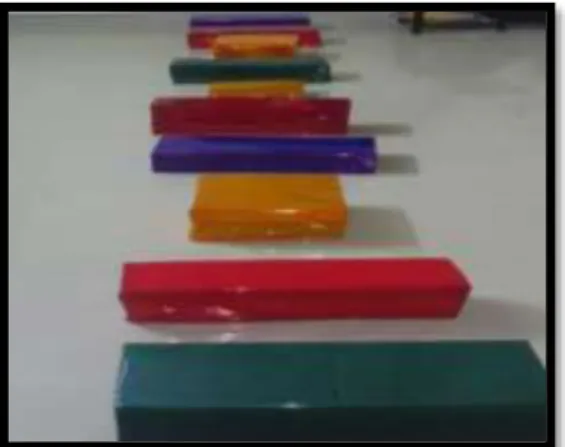
An experimental study was conducted at Jyeshta Nagarik Sangha, Pimpri, Pune and Annasaheb Behere Old Age Home, Kharadi, Pune. 100 geriatric individuals were selected by random sampling technique according to the inclusion & exclusion criteria and were divided into 2 groups:Group A-50 (Obstacle training course) & Group B-50(Control group).Inclusion criteria: Age group above 65-75,Dynamic gait index score below 19 and Fall efficacy scale score above 70 and participants able to view the distance of the obstacle training and obstacles clearly. Exclusion criteria: History of any fall related fracture, presence of any prosthesis, Cardiovascular problems such as recent MI / CABG, any surgical treatment during the last year, participating in any other balance training programme and use of any assistive devices. Ethical approval was taken. All participants irrespective of the group were tested for balance and gait parameters using the Dynamic gait index and Fall efficacy scale. Vitals were measured before the test using the sphygmomanometer. Group A: Obstacle crossing:10 obstacles, 10sets of trials per session, 3 times a week for 2 weeks, Duration: 45 min per session. Obstacle dimensions:Dense foam blocks of different shapes,size & colour, Height: 4 / 5.5/7 inches, Width: 8 inches, Length: 18 inches, Spacing 15-20 inches.
Training protocol consisted of: First Week (3 sessions):Crossing Obstacle with pause in between every obstacle, Crossing Obstacle without pause, Front, Side and back stepping around the obstacles.Second Week (3 sessions):Walking around in figure of eight pattern, Sideways crossing of obstacle.
Joanna Baptist et al IJSRE Volume 05 Issue 05 May 2017 Page 6415 Postural control: Stepping in all direction, step up and down, single limb standing (eyes open and closed.)3 times per week.45 minutes per session. After two weeks post readings were taken for testing the balance and gait parameters using the Dynamic gait index and Fall efficacy scale post intervention programme.
RESULTS
Statistical Analysis: The data collected was entered in EXCEL sheet and statistical analysis was done using SPSS (17.0) package (SPSS Inc. Chicago, USA). Parametric testing was used to compare groups since the quantitative dependant variables were reasonably normally distributed. Paired t-tests were used to compare quantitative outcomes within group. Independent t-tests were used to compare quantitative outcomes between the two independent groups.
Table no: 1 Mean Age of The Study Group.
Group Mean Age
Group A 69.82
Group B 67.5
Table no 1 depicts the demographic characteristics of experimental and control group of the study. The mean and standard deviation values for age in group A (Obstacle training) is 69.82 + 3.13 and group B(Control group) is 67.5 + 3.24.
Table no: 2 Gender Distribution
Gender No.
Male 52
Female 48
Table no 2 illustrates the total number of males and females participated in the present study. There were 48 females and 52 males overall who participated in the study.
Table no: 3 Comparison of DGI ‘PRE’ And ‘POST’ exercise in group A.
DGI N Mean Std. Dev Median p-value
Pre 50 14.46 2.19 15 p<0.001*
Post 50 19.78 1.76 20
Joanna Baptist et al IJSRE Volume 05 Issue 05 May 2017 Page 6416 Table no: 4 Comparison of FES ‘PRE’ and ‘POST’ exercise in group A.
BBS N Mean Std. Dev Median p-value
Pre 50 73.52 2.38 73 p<0.001*
Post 50 57.26 5.52 57
Table no 4 compares the pre and post mean values and standard deviation of FES in group A (Obstacle training). The values for pre are 73.52 + 2.38 and post are 57.26 + 5.52. Thus, there was significant decrease in mean value of FES in group A (p<0.001) and t value (19.39) which signifies that the risk of falls is reduced in the obstacle training group.
Table no: 5 Comparison of DGI ‘PRE’ and ‘POST’ exercise in group B.
BBS N Mean Std. Dev Median p-value
Pre 50 13.92 2.57 14 p<0.001*
Post 50 14.46 2.64 14.5
Table no 5 compares the pre and post mean values and standard deviation of DGI in group B (Control group). The values for pre are 13.92 + 14.46 and post are 14.46 + 2.64. Thus, there was significant increase in mean value of DGI in group B (p<0.001) and t value (-5.4)which signifies that the DGI is improved in control group.
Table no: 6 Comparison of FES ‘PRE’ and ‘POST’ exercise in group B.
BBS N Mean Std. Dev Median p-value
Pre 50 73.34 2.45 73
p<0.001*
Post 50 72.56 2.50 72
Table no 6 compares the pre and post mean values and standard deviation of FES in group B (Control group). The values for pre are 73.34 + 2.45 and post are 72.56 + 2.50. Thus, there was significant decrease in mean value of FES in group B (p<0.001) and t value (7.489) which signifies that the risk of falls is reduced in the control group.
Table no: 7 Comparison of DGI between group A and group B.
BBS N Mean P-value
A 50 5.32 <0.001
B 50 0.5
Table no 7 compares the mean difference values of DGI between group A(obstacle training) and group B (Control group). The difference values for group A(5.32) and group B (0.5). Thus there was highly significant difference of the DGI between group A and group B (p<0.001) and t-value (20.50) which shows that groups are comparable with higher mean value for group A compared to the group B. Hence obstacle training proved to show more improvements than the control group.
Table no: 8 Comparison of FES between group A And group B.
BBS N Mean P-value
A 50 16.06 <0.001
B 50 0.76
Joanna Baptist et al IJSRE Volume 05 Issue 05 May 2017 Page 6417 DISCUSSION
There is scarcity of literature which provide us information regarding benefits of obstacle training on gait to reduce the risk of falls. Whenever a balance training programme is designed the use of obstacle crossing is rarely involved. Thus the present study emphasized on the effect of obstacle training alone over gait and reduce the risk of falls in geriatric individuals. Increased gait variability may lead to unstable or poor balance, increasing fall risk.
A research conducted on effect of Obstacle Negotiation Training on Gait Parameters in Individuals with Idiopathic Parkinson's Disease suggest that during obstacle crossing the individual increases both the flexion and extension range of motion at the hip which may have contributed to improved the step length and gait.11 In previous study, Stepping over obstacles to improve walking in individuals with poststroke hemiplegia. Overall, subjects showed clinically meaningful changes in gait velocity, stride length, walking endurance, and obstacle clearance capacity as a result of either training method. Obstacle training increases the ability to step over objects, increases the walking endurance and improves the gait patterns.12 In this present study the 6th (Step over obstacle) and the 8th (step around obstacle) component of the dynamic gait index score showed clinically significant improvement following the obstacle training. Obstacle course training is an excellent component of a physical therapist intervention aimed at improving mobility.
In a previous study gait speed while crossing obstacles improved after training. Immediate effects of training were also observed in step length. Patients took larger step while crossing increasing the distance between the foot and obstacle further leading to decrease in risk of falls.13 A previous study proved that increased CoM in the medial-lateral direction has been repeatedly identified as a predictor for future falls. Improvements in ML balance control may be related particularly to obstacle crossing practice. During single leg stance phase of obstacle crossing balance control is challenged in the frontal plane. Repeated practice of obstacle crossing in the frontal plane may have minimized medial-lateral sway during balance testing.14 It is our conjecture that repeated practice of obstacle crossing, increases the distance between foot, increases speed, increases confidence during walking by reducing the fear to cross the obstacle, must have improved the mobility, increased obstacle clearance capacity, improved balance & reduced the risk of falls and improved the confidence in walking in geriatric individuals.
The control group who received conventional balance training which proved to be statistically significant. Muscle strengthening combined with balance training has been shown to be effective in prevention of falls.15 Strength training can improve muscle strength in elderly patients.16 This is confirmed in this study. Balance training can improve postural stability in elderly people and thus training can be given.17
Obstacle training intervention lead to significant and greater improvement in some key balance variables when compared with control group. The factors that might have contributed to more improvement in the obstacle group was the pattern of exercise and the justification is mentioned above. Thus the overall finding shows that Obstacle training intervention as well as control group program leads to significant improvement in improving gait and reducing the risk of falls, however participation in obstacle training lead to statistically significant and clinically greater improvements compared to control condition of usual activity.
CONCLUSION
From our study we conclude that obstacle training on gait and risk of falls by obstacle crossing in geriatric individuals is more effective in augmenting their performance by increasing their balance, gait and reducing the risk of falls.
Limitations
Joanna Baptist et al IJSRE Volume 05 Issue 05 May 2017 Page 6418 REFRENCES
1. Andrew A Guccione et.al Geriatric Physical Therapy. Second edition(United States of America), chapter no:3, pg no:28, 45; Chapter no: 5 pg no: 101
2. Flatt T. A new definition of aging?. Frontiers in genetics. 2012 Aug 23;3: 148. 3. Carolyn kisner et al. Therapeutic Exercise. Fifth edition, Chapter no: 8, pg 255. 4. Timothy L. Kuffman et.al. Geriatric rehabilitation manual. Chapter no 5, pg no: 17
5. Goodpaster BH, Park SW, Harris TB, Kritchevsky SB, Nevitt M, Schwartz AV, Simonsick EM, Tylavsky FA, Visser M, Newman AB. The loss of skeletal muscle strength, mass, and quality in older adults: the health, aging and body composition study. The Journals of Gerontology Series A: Biological Sciences and Medical Sciences. 2006 Oct 1;61(10):1059-64.
6. Buchner DM, Cress ME, Esselman PC, Margherita AJ, De Lateur BJ, Campbell AJ, Wagner EH. Factors associated with changes in gait speed in older adults. The Journals of Gerontology Series A: Biological Sciences and Medical Sciences. 1996 Nov 1;51(6):M297-302.
7. Hausdorff JM, Nelson ME, Kaliton D, Layne JE, Bernstein MJ, Nuernberger A, Singh MA. Etiology and modification of gait instability in older adults: a randomized controlled trial of exercise. Journal of Applied Physiology. 2001 Jun 1;90(6):2117-29.
8. McKenzie NC, Brown LA. Obstacle negotiation kinematics: age-dependent effects of postural threat. Gait & posture. 2004 Jun 30;19(3):226-34.
9. Gardner MM, Robertson MC, Campbell AJ. Exercise in preventing falls and fall related injuries in older people: a review of randomised controlled trials. British journal of sports medicine. 2000 Feb 1;34(1):7-17.
10.Verghese J, Holtzer R, Lipton RB, Wang C. Quantitative gait markers and incident fall risk in older adults. The Journals of Gerontology Series A: Biological Sciences and Medical Sciences. 2009 Aug 1;64(8):896-901.
11.Gunjan J, Shefali W, Majumi NM. Effect of Obstacle Negotiation Training on Gait Parameters in Individuals with Idiopathic Parkinson's Disease. Indian Journal of Physiotherapy and Occupational Therapy. 2013 Oct 1;7(4):52.
12.Jaffe DL, Brown DA, Pierson-Carey CD, Buckley EL, Lew HL. Stepping over obstacles to improve walking in individuals with poststroke hemiplegia. Journal of rehabilitation research and development. 2004 May 1;41(3):283.
13.Mirelman A, Maidan I, Herman T, Deutsch JE, Giladi N, Hausdorff JM. Virtual reality for gait training: can it induce motor learning to enhance complex walking and reduce fall risk in patients with Parkinson's disease?. The Journals of Gerontology Series A: Biological Sciences and Medical Sciences. 2010 Nov 24:glq201.
14.Schwenk M, Grewal GS, Honarvar B, Schwenk S, Mohler J, Khalsa DS, Najafi B. Interactive balance training integrating sensor-based visual feedback of movement performance: a pilot study in older adults. Journal of neuroengineering and rehabilitation. 2014 Dec 13;11(1):164.
15.Gillespie LD, Gillespie WJ, Robertson MC, Lamb SE, Cumming RG, Rowe BH. Interventions for preventing falls in elderly people. Cochrane Database Syst Rev,2003 Jan 1;4.
16.Hagedorn DK, Holm E. Effects of traditional physical training and visual computer feedback training in frail elderly patients. A randomized intervention study. European journal of physical and rehabilitation medicine. 2010 Jun;46(2):159-68.