Monitoring and Evaluation in Global Social Development Programs: A Case Study of a Scholarship Program for HIV+ Young Adults in Uganda
By
Kaitlin McCormick
A Master’s Paper submitted to the faculty of the University of North Carolina at Chapel Hill
In partial fulfillment of the requirements for the degree of Master of Public Health in
the Public Health Leadership Program.
Chapel Hill 2013
_____________________________________________
Advisor:
_____________________________________________
Second Reader:
Table of Contents
Abstract ... 3
Glossary ... 4
Introduction: Social Development Programs in Vulnerable Populations ... 5
Figure 1: Outcomes from Social Development Programs in PLWHA ... 7
Educational Social Development Programs in Low-Resource Countries ... 8
VET Programs in Developing Countries ... 9
Scholarship Programs in Developing Countries ... 10
Monitoring and Evaluation in Developing Countries ... 11
CQI ... 14
CQI in Low-Resource Countries ... 16
HSP Case Study ... 19
Ugandan Context ... 19
Holzworth Scholarship Program ... 22
Current status of the HSP ... 23
Figure 2: Current Program Trajectory and Timeline for Each Cohort ... 24
M&E Plan for HSP ... 24
HSP M&E Plan Introduction ... 24
Detailed M&E Plan ... 26
Figure 3. Visual Representation of Kirkpatrick Model of Evaluation ... 27
Evaluation Strategy ... 27
Table 1: HSP Evaluation Design layout ... 28
Discussion ... 30
Appendices ... 35
Appendix A: Project Plan and Timeline ... 35
Appendix B: Logic Model ... 36
Appendix C: Example Questions for Program Evaluation ... 37
Abstract
Glossary
HIV Human Immunodeficiency VirusHIV+ The state of testing positive and living with HIV AIDS Acquired Immunodeficiency Syndrome HRQOL Health Related Quality of Life
PLWHA Person(s) Living with HIV/AIDS ART Anti-Retroviral Therapy
M&E Monitoring and Evaluation CQI Continuous Quality Improvement HSP Holzworth Scholarship Program
IDI Infectious Diseases Institute, an NGO in Kampala, Uganda VET Vocational Education Training
UNDP United Nations Development Program PDCA Plan-Do- Check- Act
Introduction: Social Development Programs in Vulnerable
Populations
Beginning in the 1980’s the world faced an explosion of one of the most challenging infectious diseases—Human Immunodeficiency Virus (HIV). HIV is a sexually transmitted disease that if untreated leads to Acquired Immunodeficiency Syndrome (AIDS) (CDC, 2013). Enhancing health-related quality of life (HRQOL) in people living with HIV/AIDS (PLWHA) has become a priority especially as access to anti-retroviral therapy (ART) expands globally, extending survival and rendering HIV a chronic disease (Takanda, 2012). The global burden of disease is estimated at 34 million PLWHA (WHO, 2013). Once on medication, individuals who remain compliant with their drug regimen are capable of living longer healthy lives. However, PLWHA then face a number of social challenges that impede their ability to live healthy productive lives. These challenges include obtaining basic economic and social resources, which are believed to significantly impact HRQOL, particularly in low resource settings and vulnerable populations (Anand and Hanson, 1997). Consequently, in addition to traditional health issues there is a significant need for programs that address social issues facing this population.
The term social development program refers to
Evidence suggests that social issues have the potential to dramatically decrease the
psychosocial wellbeing of PLWHA. Such social issues include increased stress, fear, anxiety, and depression, all of which are problems in themselves but can impact one’s ability to manage HIV/AIDS and result in poor ART compliance (Bogart, et al., 2008; Tsai, et al. 2012; Steward, et al, 2008; Simbayi, et al., 2007; Rintamaki, et al, 2006). Therefore an integrated approach that addresses the clinical and social needs of PLWHA is needed to empower this population to live healthy productive lives.
PLWHA in developing countries are often characterized by factors such as poverty, urbanization, low socio-economic status and low levels of education (Furber, et al, 2004). These factors when combined with HIV-stigmatization lead to poor self-esteem and low HRQOL (Greeff, 2010). According to the Global Compact on Learning, education is an essential component for human development (Brookings, 2011). As with those who do not have HIV, one’s ability to work is found to be positively associated with education level and results in improved economic wellbeing and improved HRQOL (Wagner, et al, 2009; Rosen, et al., 2010).
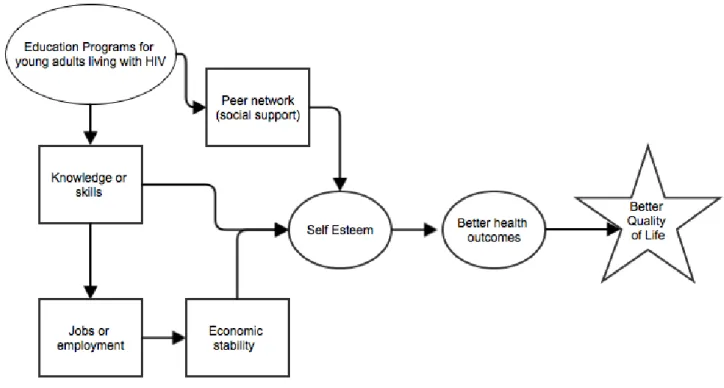
My interpretation of Takanda’s work, which is central to the theme and goals of this paper, is presented in Figure 1. This figure is a graphical representation of the flow of outcomes from educationally focused social development programs for PLWHA. This diagram shows how education programs build social support networks, knowledge and skills that lead to employment and economic stability. These factors then positively influence self-esteem and self-efficacy translating to increased health outcomes and a better quality of life (Takanda, 2012).
Figure 1: Outcomes from Social Development Programs in PLWHA (adapted from the work of Takanda, 2012)
There is significant economic motivation for educationally focused social
poverty and unemployment levels (Dixon, et. al, 2002). With the PLWHA population continuing to grow, it makes sound economic sense for developing countries to consider developing and/or expanding social development programs for PLWHA. A review of the literature indicates that there is only limited documentation of the benefits of educationally focused social development programs for PLWHA. In order to better document the impact of current programs and for these programs to set the standard for subsequent programs they must be carefully monitored and evaluated.
One of the key goals of this paper is to explain how monitoring and evaluation (M&E) is applied in social development programs, with particular emphasis on the
challenges of doing this in developing countries and special populations. In addition I will describe how M&E lays the foundation for ongoing improvements and further evaluation using a continuous quality improvement (CQI) framework. To illustrate this process I will discuss an example of the use of M&E in a VET program in a low-resource setting. This experience is based on my MPH practicum, working with the Holzworth Scholarship Program (HSP) for HIV+ young adults at the Infectious Disease Institute (IDI) in Kampala, Uganda. Lastly, I will hypothesize about the applicability of these principles, both M&E and CQI, in low-resource settings and make recommendations for future study.
Educational Social Development Programs in Low-Resource Countries
past learning's from similar programs as guidance in designing M&E for the HSP program. Since the literature search for VET and educational programs for PLWHA in developing countries yielded few findings, the literature related to VET training and generic
scholarships programs in developed countries was also explored.
VET Programs in Developing Countries
Although limited, there are some reports that illustrate that the use of VET programs in other low-resource settings is an effective method for empowering lower income populations and helping to address unemployment issues. For example, a randomized study done in developing countries in Latin America proved that VET programs for disadvantaged populations are highly successful at decreasing
unemployment rates (Attanasio, Kugler, and Meghir, 2009). Specifically the program in Colombia known as “Jóvenes en Acción” (Youth in Action), which was introduced in 2001 and is one of the few randomized studies done from VET programs. The results of this experiment concluded that those who received training did better in the labor market in comparison to those with no VET training (Attanasio, Kugler, and Meghir, 2009).
Other authors suggest that employment for PLWHA redirects their attention from the patterned social role of being sick and allows them to be a contributing members of society; employment is linked to increased self-image, confidence, and productivity
(Brooks and Klosinski, 1999; Seebohm and Secker, 2003). But these programs are based in developed countries and not in developing countries where the highest concentration of individuals living with HIV exists.
Vocational work programs specifically for PLWHA in the US have been explored in the literature but have little data. In preliminary reports, they find that PLWHA that are
actively employed in HIV/AIDS community programs have a better quality of life (Egan and Hoagland, 2005). VET programs have been shown to meet the needs of PLWHA but data proving these claims through well-designed M&E guidelines is necessary to gain
widespread support.
There has also been some historical evidence reported that provides guidance on how to better design VET programs and emphasize the need for careful monitoring and evaluation. For example one report on VET programs in developing countries reviewed the number of uneducated and unemployed youth in the 1960’s through-1980’s and analyzed key learning's from efforts to address these issues. Going back as far as the 1960’s, VET programs were intended to help target the needs of disadvantaged populations. Analysis revealed that many of these programs quickly became institutionalized and served privileged populations or became insolvent rendering them unable to effectively target disadvantaged populations (Corvalan-Vasquez, 1983). Corvalen-Vasquez also reported that many of the early VET programs often focused on teaching skills that were not particularly useful to the population thus affirming that programs for PLWHA should be dynamic, flexible, and customized to the needs of the population (1983).
Scholarship Programs in Developing Countries
developed countries (2002). While these scholarships are quite different from the VET scholarships provided by HSP, Lamont discussed four questions that all scholarship programs must consider in determining effectiveness: 1) Appropriate framework for evaluation, 2) Organizational mechanics of the program, 3) Cultural determinants of success and 4) Structural determinants of success. He also suggested that scholarship programs must “be perceived as equitable and effective by recipients and non-recipients alike…” (Lamont, 2002, p. 34).
Additionally, a study done in Washington DC randomly selected high school
students to receive a scholarship and compared them to individuals who were not selected for the scholarship. This study found that recipients who were randomly selected for the scholarships were more likely to graduate from their educational programs than their non-scholarship counterparts despite having no significant differences in scores or grades. This study suggests that being a recipient of a scholarship attributes to a better perception of and ultimately retention in the program (Wolf and Silverberg, 2010).
Monitoring and Evaluation in Developing Countries
Educational programs fall under the general heading of social development programs and according to the United Nations Development Program (UNDP), the main intention of social development programs is to make improvements in people’s lives by providing opportunities for them (UNDP, 2008). In order to make these real
development programs in developing countries. Monitoring is defined as the regular tracking of key performance measures through record-keeping, reporting, surveillance, observation and client surveys (GlobalFund, n.d.). Monitoring is internal project
management that is divided into two categories: input monitoring and output monitoring. Input monitoring determines whether the project has been implemented as planned and output monitoring is whether the services or products are being delivered as intended (Ahmed and Bamberger, 1989). The overall intention of monitoring is to ensure the program is achieving its goals within the planned timeframe and budget.
Evaluation is defined as the assessment of activity effectiveness in helping reach stated goals and objectives (UNDP, 2008). Evaluation can be used to “assess and improve the performance of an ongoing project or to estimate the impacts and evaluate the
performance of complete projects or programs” (WorldBank, 1994, p. 25). The most relevant types of evaluation for social development programs are: process, outcome, and impact evaluations.
Process evaluations look at the implementation and development of a program and determine if targets were met and implemented as planned (WorldBank, 1994). Process evaluations look at the program from beginning to end and assess whether there is a causal relationship between the program and outcomes. This type of evaluation is useful for determining the program’s future i.e. to continue, expand, refine or eliminate. Outcome evaluations measure the short-term changes resulting from a program. For social
social development program context means measuring the effect on participants’ lives over time (UNDP, 2008).
Many international programs treat M&E as two distinct activities and fail to complete meaningful evaluations and underutilize data– which could be used to improve future projects (UNDP, 2008). If done correctly, M&E can engage the funders, service providers and clients of the intervention alike by linking program success to contextual factors. The WorldBank recommends that monitoring and evaluation be thought of as an ‘integrated system’ with evaluation taking place continuously or periodically throughout the lifecycle of the program (WorldBank, 1994). Monitoring and evaluation together are fundamental to the success of current and future programs by: providing data on program progress and effectiveness, improving program management and decision-making,
maintaining engaged stakeholders, delivering quality products and services, and informing future program design.
There are several models that can be used to carry out M&E for social development programs. One that has been demonstrated to be particularly applicable to educational programs, which is the primary emphasis of this paper, is the Kirkpatrick model. Donald Kirkpatrick first introduced this model in 1959 for evaluating instructor-led training programs (Kirkpatrick, 1996). Further details of this model will be presented later in this paper, when it is applied to the HSP case study in Uganda. When effective program
the RBM cycle, which is iterative cycle of doing, learning and improving that is central to Continuous Quality improvement (CQI) (UNDP, 2008; Joint Commission, 1991).
For the purposes of this paper, M&E will be explained as a process that sets the stage for CQI. CQI is a concept that was first introduced in the product manufacturing industry, where it was initially called Total Quality Management. Over time it has been applied to healthcare services and most recently in the public health field. (Sollecito and Johnson, 2013). At the root of both M&E and CQI is quality, which is defined as “embodying notions of efficiency, effectiveness and customer satisfaction” (Lethbridge, Parish and Hagard, 1996).
CQI
The overall goal or objective of CQI in public health is to “have continuous evaluation of public health practices, programs and policies that produce and promote desired results while giving significant additional attention to those that need to be
improved” (DHHS, 2008, p. 4). According to the quality improvement subgroup in applying this definition in the context of public health, CQI means
… a continuous and ongoing effort to achieve measurable improvements in the efficiency, effectiveness, performance, accountability, outcomes, and other
indicators of quality in services or processes which achieve equity and improve the health of the community. (Accreditation Coalition Quality Improvement Subgroup Consensus, 2009, p. 4)
concepts are used to formally apply CQI processes; one of the most well known and successful is the Plan-Do-Check-Act (PDCA), a cyclical plan that emphasizes iterative changes resulting from monitoring and evaluation findings. PDCA is an ongoing process that emphasizes direct study and planning for a change to be implemented, followed by action, then reassessment and further action (Joint Commission, 1991). The first step of the PDCA cycle is to plan a change or improvement to a process or service, the second is to implement said improvement, the third is to observe the positive and negative results of the implementation and the fourth is to decide whether to keep the change as is, or to continue the try something different (Kahan and Goodstadt, 1999). A key requirement of PDCA, and CQI in general, is measurement of process effects to determine program impact; this is another important similarity with M&E.
Some of the direct benefits of CQI are: more effective and useful results, streamlining of efforts, increased accountability, improved morale and teamwork,
CQI in Low-Resource Countries
A significant gap exists between health outcomes in developing and developed nations. Many developing countries lack the resources to address these disparities but optimizing delivery of public health initiatives should increase health outcomes regardless of resource level. Until recently adoption of CQI principles in low-resource settings has been limited (Smits, Leatherman, Berwick, 2002). CQI principles are more typically thought of as being associated with macro-level programs in developed countries, but this idea of effectiveness of CQI in public health should not “be an extravagance reserved for more affluent countries” (Leatherman, et al., 2010, p.241). The use of continuous measurement and feedback on intervention progress is critical and highlights the need for
implementation of CQI in low-resource setting (Leatherman, et al., 2010).
Successful implementation of CQI will require adaptation of proven models, like PDCA, that are used in developed countries with careful attention to barriers, contexts and constraints specific to low resource settings. A recent review of several WHO and UNICEF programs concluded that future program effectiveness relies on “clear, consistent and evidence based technical guidelines… couple (d) with expanded capacity to develop, implement, monitor and assess better combinations of interventions provided through locally-designed delivery strategies.” (Bryce et al., 2003, p. 163).
restrictions placed on grants and donor money that fail to consider the true needs of the population and setting. (Smits, Leatherman, Berwick, 2002).
CQI methods have the ability to fill in the gaps and provide the framework for success. CQI also has the potential to optimize limited resources and coupled with
improvements in quality has the potential to encourage future investments (Leatherman, et al., 2010). It is suggested that in order for CQI programs to work in developing countries motivation to apply CQI processes must be established among key stakeholders and barriers to adoption must be addressed (Leatherman, et al., 2010). CQI is rooted in simplifying complex process and as Berwick suggests, program success is rooted in
pragmatic simplified approaches (Berwick, 2004). Therefore it is reasonable to assume that the application of the simplified PDCA cycle framework will be the most successful in low-resource settings. Quality improvement in health care and public health initiatives has existed for several decades and such quality should not be limited to high-resource countries. Thus it is imperative that we include these principles in health systems and programs in developing countries.
Some authors have asserted that CQI approaches are not aligned with the reality of low-resource settings suggesting a lack of context-specific evidence to support such
The economic case for CQI in low-resource countries
The mission of the World Bank emphasizes that financial empowerment of the lower 40% of a country’s population will promote shared prosperity and economic growth (WorldBank, 2013). Social development programs that promote social equity and justice through enabling impoverished individuals to provide for themselves will benefit the entire economy. Such social development programs need to be in tune with the real needs of thecommunity or population and be contextually grounded in order to be financially advantageous.
In terms of return on investment (ROI), it is a financially sound decision to invest in social development programs that have Quality Improvement. In developed countries use of CQI principles is linked to higher gross domestic product (GDP), increased stakeholder retention and satisfaction, and higher quality products and services (CEBR, 2012). When evaluating the ROI of VET programs it is important to understand that “Economic growth and poverty reduction depend on an educated and skilled workforce.” (Brookings, 2011). It is estimated that in developing countries one additional year of education adds 10 percent to a person’s earnings.” (Psacharopoulos and Patrinos, 2002). Furthermore, no developing country has had sustained high rates of growth without investing in education (Brown, 2011). HIV/AIDS is known to reduce labor supply and productivity and thus hurt the economy of a country. Therefore treatment and prevention programs coupled with VET programs can limit the economic effects of HIV and result in a larger, more capable workforce (Dixon, et al., 2002).
inherent in CQI principles (Sollecito and Johnson, 2013). Thus developing countries’ economies are likely to be more dramatically effected by programs that increase the availability of trained workforce leading to a stronger economy. Such investments are expected to produce a high ROI for donors and governments in low-resource settings.
HSP Case Study
Ugandan Context
The case study described in this paper is based on the Holzworth Scholarship
Program (HSP), which, as introduced earlier, is a VET program that takes place in Kampala, Uganda and is the setting for the MPH practicum that is the basis for this Masters Paper. Before describing the details of the HSP M&E plan, it is important to understand the contextual background in Uganda. In 2008, Uganda had the world’s highest youth unemployment rate, estimated at 83% (YLTTPA, 2011). Young adult unemployment numbers contribute to economic instability, increased violence and crime (The Republic of Uganda, 2012). The World Bank warned Uganda that their high rate of unemployment was creating instability to which Uganda responded by creating jobs and they were able to decreased this rate significantly by 2010 to 32.2% (YLTTPA, 2011). Despite their best efforts, a 32% unemployment rate is still a significant problem and has been referred to as a ‘ticking time bomb’ (Ashaba and Katusiimeh, 2013, p. 3).
quickly saturated the labor market coupled with a broad mismatch of skills necessary to meet the demand of employers (Kakwagh and Ikwuba, 2010; Mcgrath 1999; Kent and Mushi, 1995). When combining these factors with a poor education system many students, particularly those in disadvantaged groups, including PLWHA, are unable to acquire the education/skills necessary for employment. Two decades of war and civil conflict led to years of neglect for the Ugandan education system (Uganda MOES, 2001). This neglect resulted in poor quality schools, low enrollment, and high dropout rates and
disproportionally hurt children from low-income families.
Another significant problem is that the primary education system is rigid. This rigidity is characterized by a strict time-table preventing children who have any other responsibilities from attending school, further exacerbating low education levels and consequently leading to high youth unemployment (Ugandan MOES, 2001). For many children in developing countries like Uganda, primary school attendance is erratic due to factors like poor health and the high opportunity costs of school attendance. When such factors are combined with an inflexible primary education system many children are forced to drop out (Brookings, 2011). Thus it is clear that focusing on educational social
development programs can help address the needs of this unique population in Uganda. The poverty cycle is also major barrier to addressing unemployment in PLWHA in developing countries like Uganda. Many PLWHA are poor because of their illness or acquire HIV/AIDS because they are poor and this vicious cycle prevents them from obtaining the education they need to land or maintain jobs (Slotznick, 2012). This situation is
receiving education or obtaining jobs are the lack of access to transportation and food. (YLTTPA, 2011).
The Ugandan government is aware of this continuing problem and have enacted policies, such as the National Youth Policy, that promote equity of opportunity to education (YLTTPA, 2011). Uganda is also planning to enact is the National Employment Policy, which would ensure that young people have access to small loans to start or continue businesses, but both of these policies currently lack the guidelines and infrastructure for widespread success (The Republic of Uganda, 2012).
Holzworth Scholarship Program
HSP is a program that is managed by the IDI, which is a non-governmental organization that is funded by public and private donors (IDI, 2012). The IDI provides integrated clinical and social care for the treatment and prevention of HIV and related infectious diseases free of charge. After encountering differing needs between older and younger HIV patients the IDI established a transition clinic (TC) specifically for young adults. The TC provides a safe environment for the specific clinical and social needs of HIV+ young adults. One of the issues the TC encountered was that the patients in the clinic lacked the education skills to provide for themselves and so the HSP was developed to meet this need. This lack of skills forced many to give up on school due to poverty and illness.
The primary goal of the HSP program is to provide technical education skills and a support network to address the education deficit and faced by these HIV+ young adults in the TC. By using donor funds to enroll these young adults in VET programs the ultimate goal is that the individuals will obtain full time employment and serve as role models for the TC. The program also provides food and transportation, enabling students to focus on their studies rather focusing on the details that so often derail education dreams in these young adults. It is the program’s intention that improving these individual’s skills in conjunction with providing access to the programs’ peer network support structure will promote economic stability and self-sufficiency. The program’s target population is HIV+ young adults from within the TC, typically of low socio-economic status, that have minimal education/vocational skills but are stable with their anti-retroviral therapy.
different vocational tracts including: hairdressing, tailoring/sewing, computer training, electrical training and baking/catering skills.
Current status of the HSP
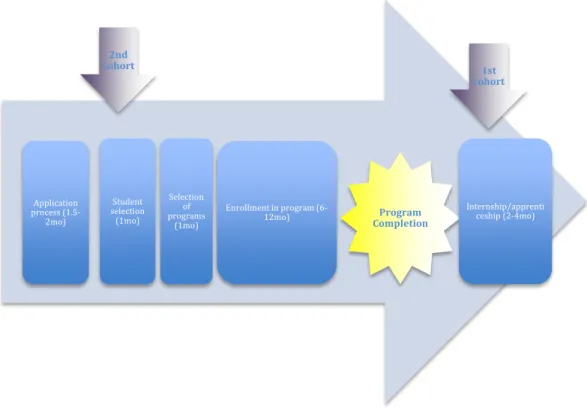
The HSP program began in July of 2012 advertisements were posted and the entire young adults clinic was notified about the start of the program and were asked to fill out an application for consideration. A selection committee reviewed the applications and
selected twenty young adults for participation in the first cohort of the HSP. These
Figure 2: Current Program Trajectory and Timeline for Each Cohort
M&E Plan for HSP
HSP M&E Plan Introduction
As mentioned earlier, in low resource settings it is important to optimize the use of resources for programs that are the most effective. For donation-based programs, like HSP, it is important that money be spent on achievable realistic goals and that these goals are being met. In order to determine if the program is effective and meeting its goal of
enabling young adults to be independent and provide for themselves, M&E methods must be adopted and implemented by the IDI.
The M&E plan for the second HSP cohort has been developed and will be fully implemented at the start of the second cohort. Due to the timing of this paper only the
Application process (1.5-2mo)
Student selection (1mo)
2nd cohort
Selection of programs
(1mo)
Enrollment in program
(6-12mo) Program
Completion
1st cohort
design of M&E plan, not the results of its implementation will be discussed. This M&E plan along with the logic model with stakeholder analysis (for logic model with stakeholder analysis see Appendix B) was developed after the initiation of the program, towards the end of the completion of first cohort; as a result limited relevant data was collected from individuals in the first cohort; thus post-intervention data will be used exclusively in the evaluation of the first year of the program. However, for the second cohort, the M&E plan will include collection and analysis of pre and post-intervention data to be used in the evaluation. A primary evaluation will be conducted several months after the first cohort has completed their internships, with a more formal evaluation of the program after the second cohort has completed their internship. It is expected that the results of this formal evaluation will be written up and presented at a later date.
The goals of the M&E plan for the second cohort are to monitor critical processes in the program and evaluate the program’s ability to address the education gap and economic needs found in these HIV+ young adults. As mentioned earlier, PLWHA in developing countries typically have lower education levels and SES than their non-HIV counterparts and this program seeks to reduce this disparity by providing the tools necessary to
improve their chances for employment. Given the strong link between economic wellbeing and health outcomes, this evaluation will show at least some evidence of an improvement in the health outcomes of individuals in the program (Rosen, et al. 2010). However the time required to fully detect such changes is also a subject that will need further review and may be an important outcome of the CQI stage of this plan.
expectations; thus the findings from the first cohort will be used in the continuous quality improvement stage of the program. However, a decision for continuation will be
determined after the formal evaluation that will take place several months after the second cohort completes their program. If this evaluation does indeed provide evidence to support continuation, the iterative PDCA cycle of this M&E process will begin thereby starting the process of CQI within the program
Detailed M&E Plan
The evaluation plan for the HSP will utilize the framework of the four-level
Kirkpatrick model. The choice to use the Kirkpatrick framework in the development of the HSP M&E plan was based on the concurrence among several authors about the value of this four-level model to simplify the complex process of training evaluation (Kirkpatrick, 1996; Bates, 2004). The Four-level Kirkpatrick model is depicted in Figure 3 and can be
summarized as follows: level 1- reaction to the program; level 2- skills learned; level 3- skills applied in a career setting or if a job is acquired; and level 4- the overall effectiveness of the program (Kaufman, 1996).
since this scholarship is a humanitarian effort, various behavioral markers in the TC community will be measured instead.
Figure 3. Visual Representation of Kirkpatrick Model of Evaluation (adapted from Kirkpatrick, 1996)
Evaluation Strategy
As part of this M&E plan a mixed methods quasi-experimental evaluation design will be used that incorporates use of quantitative and qualitative measures assessing relative endpoints geared towards capturing the four levels outlined in the Kirkpatrick framework (Shadish, Cook, Campbell, 2002). The model makes use of control subjects to allow for study-control comparisons to assess program effects. Quantitative information about grades and attendance will be collected throughout the program. Qualitative information including beliefs and expectations about the program and personal narratives capturing program relevant information will be collected at the baseline for all cohorts going forward, then again at a midpoint and finally at the end of course completion. Some
qualitative information will also be collected from other stakeholders, including the staff at IDI running the program and the partnering education institutions to ensure the program is operating efficiently. While this information does not contribute to the final outcome of
4-Impact
3-Skills
Applied
2-Skills Learned
the evaluation of the program collecting this type of information is imperative for CQI efforts. Table 1 below outlines the evaluation design for the program:
T1 VET Program T2 T3 T4
Time (Baseline) (Year-long) (Interim reports) (End of courses) (Post-completion)
Student Cohort 1 X P2, P3 P4 P5
Student Cohort 2 P1 X P2, P3 P4 P5
Control Group 1 C1
Control Group 2 C1 C2
P&C are observations
X is implementation of program
Table 1: HSP Evaluation Design layout
The study groups are comprised of the students from both cohort one and two of the HSP; the control groups are comprised of sex and age-matched individuals, from the TC who were not part of the HSP and were questioned as controls at corresponding time points. Pretest-posttest comparisons of job status will be made in each cohort; data
collected at baseline (T1) will be compared with post completion data (T4) for cohort two and this will be back compared with the information recalled from cohort one. This analysis will be followed by a comparison of pre and post-intervention data of the student cohort with the control group (C1 and C2 vs. P1 and P5). This comparison will promote the internal validity of the evaluation and post-completion observations of individuals’ job status will provide evidence for modification and/or continuation of the program (Shadish, et al, 2002).
at filling the vocational skills gap in Uganda. If beliefs and expectations about the program need to be addressed, which are contained within the first level of the Kirkpatrick model, additional evaluation methods such as focus groups may be considered.
Quantitative information about participant performance including: grades, attendance, health status and program completion will be collected by IDI and the
vocational institutions throughout duration of the program. These findings will be used to help address the second tier or skills learned portion of the Kirkpatrick model and will provide guidance on where possible changes should be made to ensure the students training is meeting the needs of the students.
Questions about career status and income will be asked by counselors in the TC, which will help assess level three and four of the Kirkpatrick model. From the donor’s perspective understanding all aspects of the program including the experiences of the students, vocational schools and the staff at IDI combined with measures of impact, increase the likelihood that additional funding will be provided. It is expected that
collecting input from all stakeholders and implementing small changes in response to this input will not only result in improvements, but also positively increase knowledge and perception of the program. Implementing these M&E processes will help ensure that all parts of the program are running efficiently, meeting expectations, and delivering a
Discussion
The extensive literature about HIV includes many studies specific to medical
treatments, psychological effects and prevention but little information is available on topics related to employment and VET programs (Kielfofner, et al., 2004; Kohlenberg, 2003). Over time as HIV therapy has evolved, so have the organizations that deliver HIV care; there is now an increasing focus on quality of life while PLWHA are living much longer with the disease (Egan and Hoagland, 2005). This is primarily due to the availability and use of antiretroviral therapy to extend the survival of PLWHA so much so that many now consider HIV to be a chronic disease (Takanda, 2012; Volberding & Deeks, 2010).
Literature suggests that social development programs that address the hardships of living with HIV in developing countries are effective at increasing HRQOL (Takanda, 2012). Therefore it is reasonable to assume that programs that have the ability to provide PLWHA with the vocational skills necessary to provide for themselves have the potential to greatly increase their HRQOL. With little direct research proving this link, this M&E plan is
designed to outline a strategy that will carefully link results and outcomes to the HSP program design. The primary purpose of this discussion is to emphasize the importance of a strong monitoring and evaluation plan for HSP and explore the impact this could have on PLWHA in developing countries. In addition, the limitations of this study design and
evaluation strategy will also be reviewed.
of this well-established model outweigh its weaknesses and make this the best choice for the HSP evaluation.
Other limitations in this study include time needed to assess outcomes, deciphering the most useful aspects of the program, and potential selection bias. The amount of time available to determine whether students have secured employment is short (2-6 months) but it is anticipated that the internship period will provide adequate time and networking opportunities to pre-arrange employment. Given the interactive nature of the programs it will be hard to flesh-out whether increases in HRQOL are due to the vocational training aspect of the program or the social support structure inherent in program design.
Lastly, given the limited pool of candidates in the TC that this program selects from, it is reasonable to assume that the first cohorts of the program might be uncharacteristic of the greater population thereby leading to selection bias. Careful selection of comparison groups, within the TC must be made to address this issue. Through rigorous evaluation, using the quasi-experimental design described in Table 1, it is anticipated that the effect of many of these confounding factors will be eliminated but it is impossible to address these completely without a randomized control trial design, which is infeasible in this setting. (Shadish, et al, 2002). By controlling for these confounding factors an objective assessment can be made of the plausibility of the hypothesis that this program is indeed increasing employment opportunities and thereby increasing the HRQOL for young adults living with HIV in Uganda.
Debate about the effectiveness of VET programs in developing countries
were ineffective and that they were to cease funding these endeavors (Bennell and
Segerstrom, 1998). But their final recommendation was that private industry should fund VET especially since private industry funded programs have been found to be more
effective than publicly funded VET (Bennell and Segerstrom, 1998). This recommendation lends credence to our privately funded VET model and emphasizes why a carefully
designed M&E effort is needed. While most literature suggests that primary education is most effective at reducing unemployment rates, this leaves those that can’t attend primary education behind, including PLWHA. Again this is particularly a problem in Uganda where there are 1.4 million people living with HIV/AIDS and compounded further by the rigid Ugandan primary education system leaving many unable to attend primary school and without a suitable alternative option (UNAIDS, 2012; YLTTPA, 2011).
M&E process will elucidate which metrics are useful or missing thereby defining clear and vetted metrics for CQI in program continuation.
Given the challenges with HIV/AIDS, social development programs like HSP may be instrumental in reducing the cycle of poverty and addressing the big picture for
impoverished PLWHA. Utilizing solutions outlined in public health quality consensus meeting, which was grounded in CQI theory, could dramatically benefit the global community as well as the local community in Uganda by providing evidence for a model that can be replicated in other low-resource countries.
The Ministry of Education in Ugandan recognizes that their education system is failing low-income students and in 2001 put together a plan to begin to address critical issues (Ugandan MOES, 2001). Since then, they have made significant progress and as the Ugandan education system continues to improve it is likely that the need for such VET scholarship programs will decline, but until that point HSP has the potential to address this education disparity found in PLWHA in Uganda (Ugandan MOES, 2012). This VET model has the potential to increase HRQOL directly for those enrolled in the program and these individuals will, in turn, have the ability to serve as role models for the community thereby indirectly influencing others’ HRQOL as well.
Appendices
Appendix A: Project Plan and Timeline
Month & Year
Work Plan (for each cohort) Jul '12 Aug 12 Sept 12 Oct 12 Nov 12 Dec 12 Jan 13 Feb 13 Ma r 13 Apr 13 May 13 Jun 13 Jul 13 Aug 13 Sept 13 Oct 13 Nov 13 Dec 13 Jan 14 Feb 14
First Cohort Advertisement about the scholarship program
Create application documents; Application process
Selection of committee members
Selection of candidates
Selection of schools
Enrollment of scholars in schools
Scholars Internship
Monitoring
Evaluation of the program
Jul 13 Aug 13 Sept 13 Oct 13 Nov 13 Dec 13 Jan 14 Feb 14 Ma r 14 Apr 14 May 14 Jun 14
Second Cohort Advertisement about the scholarship program
Modify application documents; Application process
Selection of candidates
Selection of schools
Enrollment of scholars in schools
Scholars Internship
Monitoring
Appendix C: Example Questions for Program Evaluation
Population Time period Sample Questions
Student Cohort Questions before the program (during the application process)
What is your current employment or source of income?
o Is this a full or part time job?
o What is your weekly income?
Please explain your previous employment experiences (if any) Please explain your family unit and any support your receive from
this unit
How do you plan to use the knowledge learned from this program?
How do you plan to personally benefit from this program? Tell us about your career intentions both over the next five years
and long term?
What is your gender/race/ethnicity? Education Level (grade level or otherwise)?
Student Cohort
After application process but before program initiation (to be asked by counselors)
What changes do you expect in your life as a result of the program?
Do you think anything will prevent you from doing well in this program? (Family responsibilities, other commitments, etc.) What difficulties do you anticipate you’ll have with the program?
(Handling stress, transportation, meals, childcare, etc.)
What are you most excited about in your program? What makes you nervous about starting your program?
What do you think will be most helpful part of this learning program?
How will this training help you?
Control Cohort Same time as above cell
• Are you currently employed (source of income)?
o Is this part time or full time? • Previous employment (if any) and explain. • What is your weekly income?
• Please explain family unit or support network.
o What support do you receive from this unit? (money, care, food, transportation, love, etc)
• What are your life goals/dreams and do you have career aspirations?
o If yes, please explain.
• Do you have the skills or education necessary to provide for yourself financially?
o If yes, please explain.
o If no, please explain and be sure to discuss what skills you would like to learn?
Student Cohort 2-6 months after program completion
Are you using the skills you learned in your program, if yes, which skills and how often are you using them (daily, weekly, or
monthly)?
Are you currently employed?
o If so, what kind of job do you have and is this related to the skills learned in your program?
Population Time period Sample Questions
What are your day-to-day activities?
Can you talk about your previous employment and if what you are doing now is different than before?
Was the program useful for you?
o If so, please explain what impact it has had on your life.
Control Cohort Same time as above
What is your current employment (source of income)?
o Is this different than when we asked you about a year ago?
What is your weekly income?
Have your life goals changed within the last year?
VET
institutions Before program initiation
How do you keep track of students after they complete the program?
Do you have a graduation rate or employment rate and if so what are they?
What do you see as barriers to success? Enablers of success?
IDI After program completion
What do you see as the most successful aspects of the program? What are the weakest aspects of the program?
References
Accreditation Coalition Quality Improvement Subgroup Consensus. (2009). Quality Improvement in public health definition.
Ahmed, V., Bamberger, M. (1989). Monitoring and evaluating development projects: The south Asian experience. Washington, DC: WorldBank, Economic Development Institute.
Anand, S., Hanson, K. (1997). Disability-adjusted life years: A critical review. Journal of Health Economics, 16(6), 685-702.
Ashaba, I., Katusiimeh, MW. (2013). A critical assessment of the strategies to curb youth unemployment in Uganda. Unknown.
Attanasio, OP, Kugler, AD, Meghir, C. (2009). Subsidizing vocational training for
disadvantaged youth in developing countries: Evidence from a randomized trial. IZA, (4252)
Bates, R. (2004). A critical analysis of evaluation practice: The Kirkpatrick model and the principle of beneficence. Evaluation and Program Planning, 27, 341-347. Bennell, P., & Segerstrom, J. (1998). Vocational education and training in developing
countries: Has the world bank got it right? International Journal of Educational Development, 18(4), 271-287. doi:10.1016/S0738-0593(98)00021-2
Berwick, D. (2004). Lessons from developing nations on improving health care. BMJ, 328, 1124-1129.
Bogart, LM, Cowgill, BO, Kennedy, D., et al. (2008). Perceived HIV stigma and life
satisfaction among persons living with HIV infection and their families: A qualitative analysis. AIDS and Behavior, 12(2), 244-254.
Brookings Center for Universal Education. (2011). A global compact on learning. taking action on education in developing countries. Brookings.
Brooks, RA, Klosinski, LE. (1999). Assisting persons living with HIV/AIDS to return to work: Programmatic steps for AIDS service organizations. AIDS Education and Prevention, 221-223.
Brown, G. (2011). Education for all: Beating poverty, unlocking prosperity. Paris: UNESCO. Bryce, J., Arifeen, S., Pariyo, G., Lanata, CF, Gwatkin, D., Habicht, JP. (2003). Reducing child
mortality: Can public health deliver? The Lancet, 362, 159-164.
CEBR. (2012). The contribution of quality improvement to the UK economy. Center for Economics and Business Research.
Corvalan-Vasquez, O. (1983). Vocational training of disadvantaged youth in developing countries. International Labour Review, 122(3), 367. Retrieved from
https://auth.lib.unc.edu/ezproxy_auth.php?url=http://search.ebscohost.com/login.as px?direct=true&db=bth&AN=5344986&site=ehost-live&scope=site
Department of Health and Human Services (DHHS). (2008). Consensus statement on quality in the public health system. US Department of Health and Human Service, Office of Public Health and Science:
Dixon, S., McDonald, S., & Roberts, J. (2002). The impact of HIV and AIDS on Africa's economic development. BMJ, 324, 232-234.
Egan, BE, Hoagland, J. (2006). In-house work opportunities: Implications for housing organizations serving persons living with HIV/AIDS. IOS Press, 247-253.
Furber, AS, Hodgson, IJ, Desclaux, A., Mukasa, DS. (2004). Barriers to better care for people with AIDS in developing countries. British Medical Journal, 329, 1281-1283.
GlobalFund. (N.D). Monitoring and evaluation concepts. The GlobalFund.
Greeff, M., Uys, LR, Wantland, D, et al. (2010). Perceived HIV stigma and life satisfaction among persons living with HIV infection in five African countries: A longitudinal study. International Journal of Nursing Studies, 47(4), 475-486.
IDI. (2012). About US. Retrieved September 01, 2013, from
http://www.idi-makerere.com/index.php?option=com_content&view=article&id=58&Itemid=27
Joint Commission. (1991). An introduction to quality improvement in health care.
Kahan, B., & Goodstadt, M. (1999). Continuous quality improvement and health promotion: Can CQI lead to better outcomes? Health Promotion International, 14(1), 83-91.
doi:10.1093/heapro/14.1.83
Kakwagh, V., Ikwuba, A. (2010). Youth unemployment in Nigeria: Causes and related issues. Canadian Social Science, 6(4), 231-237.
Kaufman, R., Keller, J., & Watkins, R. (1996). What works and what doesn't: Evaluation beyond Kirkpatrick. P&I, 35(2), 9-12.
Kielhofner, G., Braveman, B., Finlayson, M., Paul-Ward, A., Goldbaum, L., Goldstein, K. (2004). Outcomes of a vocational program for persons with AIDS. American Journal of Occupational Therapy, 64-67.
Kirkpatrick, D. (1996). Revisiting Kirkpatrick's four-level-model. Training and Development, 1, 54-57.
Kohlenberg, B. (2003). Considering work for people living with HIV/AIDS: An evaluation of a group employment counseling program- work for people with HIV/AIDS. Journal of Rehabilitation, 1-14.
Lamont, M. (2002). The evaluation of scholarship programs. Princeton University.
Leatherman, S., Ferris, T. G., Berwick, D., Omaswa, F., & Crisp, N. (2010). The role of quality improvement in strengthening health systems in developing countries. International Journal for Quality in Health Care : Journal of the International Society for Quality in Health Care / ISQua, 22(4), 237-243. doi:10.1093/intqhc/mzq028;
10.1093/intqhc/mzq028
Lethbridge, J., Parish, R., Hagard, S. (1996). Quality and health promotion: Developing concepts and principles. Second Meeting of the European Committee for Health Promotion Development, Ormoz, Slovenia.
McGrath, S. (1999). Education and training for the informal sector: Reflections on an international research project. Transformation, 39.
Ministry of Education and Sports (MOES). (2001). The development of education in Uganda in the last ten years. Ugandan Ministry of Education and Sports.
Psacharopoulos, G., Patrinos, HA. (2002). Returns to investment in education: A further update. ( No. 2881). Washington: WorldBank.
Rintamaki, LS, Davis, TC, Skripkauskas, S. Bennett, CL, Wolf, MS. (2006). Social stigma concerns and HIV medication adherence. AIDS Patient Care and STDS, 20(5), 359-368. Rosen, S., Larson, B., Brennan, A., et al. (2010). Economic outcomes of patients receiving
antiretroviral therapy for HIV/AIDS in South Africa are sustained through three years on treatment. PLoS One, 5(9), e12731.
Seebohm, P., Secker, J. (2003). Increasing the vocational focus of the community mental health team. Journal of Interprofessional Care, , 281-291.
Simbayi, LC, Kalichman, S., Strebel, A., Cloete, A., Henda, N., Mqeketo, A. (2007). Internalized stigma, discrimination, and depression among men and women living with HIV/AIDS in Cape Town, South Africa. Social Science and Medicine, 67(8), 1225-1235.
Slotznick. (2012). Breaking the cycle of HIV hunger and poverty. Retrieved September 01, 2013, from http://www.wfp.org/stories/breaking-cycle-hiv-hunger-and-poverty Smits, H. L., Leatherman, S., & Berwick, D. M. (2002). Quality improvement in the
developing world. International Journal for Quality in Health Care, 14(6), 439-440. doi:10.1093/intqhc/14.6.439
Sollecito, WA, Johnson, JK. (Eds.), McLaughlin and Kaluzny’s Continuous Quality Improvement in Health Care,4th Edition, Sudbury, MA, Jones and Bartlett Publishers, 2013.
Spies, C. (2006). Resolutionary change: The art of awakening dormant faculties in others. Berghof Research Center for Constructive Conflict Management.
Steward, WT, Herek, GM, Ramakrishna, J., et al. (2008). HIV-related stigma: Adapting a theoretical framework for use in India. Social Science and Medicine, 67(8), 1225-1235. Takanda, S. (2012). Quality of life, health-related stigma, and the social context: Longitudinal
analyses of PLWHA in Uganda and a literature review. (PhD, Harvard University). ProQuest Dissertations and Theses, . (3543100).
The Republic of Uganda. (2012). The national employment policy for Uganda: Increasing decent employment opportunities and labour productivity for socio-economic
transformation. ( No. Viii, 11, 17).Kampala: Ministry of Gender, Labour, and Social Development.
Tsai, AC, Bangsberg, DR, Fongillo, EA, et al. (2012). Food insecurity, depression and the modifying role of social support among people living with HIV/AIDS in rural Uganda. Social Science and Medicine, 74(12), 2012-2019.
Ugandan MOES. (2012). The education and sports sector annual performance report. Ugandan MOES.
UNAIDS. (2012). UNAIDS report on the global AIDS EPIDEMIC. No. UNAIDS/ JC2417E).WHO Library.
UNDP. (2009). Handbook on planning, monitoring and evaluating for development results. NY, NY: UNDP.
Volberding, PA, Deeks, SG. (2010). Antiretroviral therapy and management of HIV infection. The Lancet, 376(9734), 49-62.
Wagner, G., Ryan, G., Huynh, A., Kityo, C., Mugyenyi, P. (2009). A qualitative analysis of the economic impact of HIV and antiretroviral therapy on individuals and households in Uganda. AIDS Patient Care and STDS, 23(9), 793-798.
WHO. (2013). HIV/AIDS. Retrieved September 01, 2013, from http://www.who.int/gho/hiv/en/
Wolf, P. J., Silverberg, M., & National Center for Education Evaluation and Regional
Assistance (U.S.). (2010). Evaluation of the DC opportunity scholarship program: Final report : Executive summary. (). Washington, DC: Institute of Education Sciences, National Center for Education Evaluation and Regional Assistance, U.S. Dept. of Education.
WorldBank. (1994). Monitoring and evaluating social programs in developing countries: A handbook for policymakers, managers, and researchers. Washington, DC: The World Bank.
WorldBank. (2013). About us. Retrieved September 01, 2013, from http://www.worldbank.org/en/about
Youth Leaders Think Tank for Policy Alternatives. (2011). A paper on the challenges of youth (un)employment in Uganda. Retrieved 3/24, 2013, from
http://www.kas.de/wf/doc/kas_29017-1522-2-30.pdf