Abstract
Background. In 2006 the Centers for Disease Control and Prevention implemented new recommendations for routine HIV screening and testing to be conducted in medical settings outside of STD/HIV clinics on all patients aged 13-64 regardless of perceived risk. Despite ongoing efforts to improve HIV screening and testing, many settings are not following these guidelines. In addition, the southeastern United States is disproportionately affected by HIV.
Purpose. The purpose of this project was to describe health care providers’ perceived barriers and facilitators to universal screening and testing for HIV at poorly utilized/novel testing sites in the southeastern US through a review of the literature, and to develop recommendations for future research, practice, and policy. Methods. I conducted a review of the literature of perceived barriers and facilitators to routine HIV testing among health care providers in February, 2016 according to the Preferred Reporting Items for Systematic Reviews and Meta-Analyses (PRISMA) statement. Identified barriers and facilitators were coded and organized into levels of the Ecological Model of Health Promotion. Results. Perceived barriers and facilitators were identified at the societal, organizational, and individual level including federal/state policy, protocol constraints, and provider beliefs/characteristics. The information from this paper may help guide future research and interventions to improve adherence to CDC recommendations.
Introduction
Despite a wealth of published research on HIV transmission, pathophysiology, and treatment in the past 5 years, HIV continues to be a major public health concern worldwide and in the United States (US). A high proportion of people with HIV infection remain undiagnosed or are diagnosed late, indicating that current HIV testing practices are insufficient. Individuals with undiagnosed HIV will eventually progress to AIDS without treatment. Clinical symptoms of late infection, such as secondary tuberculosis infection and Kaposi’s sarcoma, typically present only when one’s CD4 count is less than 200 trigger individuals to seek care. Klein et al. (2003) reported that approximately 43% of diagnosed HIV patients presented in the late phase of HIV infection. Individuals in the late phase of HIV infection are more likely to have serious opportunistic infections that ultimately lead to death. In a study of 1,763 serodiscordant couples, Cohen et al. (2011) found that early initiation of antiretroviral therapy reduced rates of clinical events such as secondary infection complications. These findings are evidence that HIV should be diagnosed as soon as possible to link individuals to appropriate treatment.
Routine HIV screening and testing can increase early diagnosis of HIV and increase discovery of HIV in patients who are not perceived as high risk. The existing literature suggests that patients are largely accepting of HIV testing (Irwin, Valdiserri, & Holmberg, 1996).
HIV in the United States
In response to the ongoing epidemic, in 2006 the Centers for Disease Control and Prevention (CDC) implemented new recommendations for universal routine HIV screening in health care settings based on evidence that a risk-based testing strategy was unsuccessful at identifying a large proportion of infected individuals (Branson et al., 2006; Appendix I). The CDC recommended that everyone ages 13-64 years be screened as a part of routine medical visits (Branson et al., 2006). Despite these recommendations, actual practice within primary care settings had not caught up by 2008. In response to the continuing HIV epidemic, the White House Office of National AIDS Policy (ONAP) developed the National HIV/AIDS Strategy (NHAS) for the US that outlined three primary goals: (a) reducing the number of people who become infected with HIV; (b) increasing access to care and optimizing health outcomes for people living with HIV; and (c) reducing HIV-related health disparities (2010). The NHAS also envisioned that, “The United States will become a place where new HIV infections are rare and when they do occur, every person, regardless of age, gender, race/ethnicity, sexual orientation, gender identity, or socio-economic circumstance, will have unfettered access to high quality, life-extending care, free from stigma and discrimination” (2010, p. 9). According to the ONAP, goals and objectives of the NHAS should be met within 5 years. However, estimates of
undiagnosed HIV and recent surveillance data from the CDC suggest that goals and objectives have not been met.
likely to transmit HIV to their partners because they are more likely to continue high-risk sexual behaviors. In a meta-analysis of literature, Marks et al. (2005) found that persons positive for HIV who were aware of their status were less likely to have high-risk sexual behaviors
specifically unprotected anal or vaginal intercourse and reduced their HIV risk behaviors after learning their HIV-positive status (Marks et al., 2005). In addition, individuals unaware of their status are more likely to have a higher viral load because they are not being treated for their infections (George et al., 1998). Individuals with higher viral loads are more infectious than individuals with lower viral loads or in the latency phase. The transmission rate is 3.5 times higher among those with undiagnosed HIV compared to those who know their status (Marks et al., 2006). Higher transmission by individuals with undiagnosed HIV suggests that testing needs to be more universally focused rather than risk based. The ongoing HIV epidemic in the US indicates that current efforts must be evaluated and future work should be focused on finding those undiagnosed and linking them to care.
HIV National and Regional Health Disparities
National HIV Surveillance System (NHS) found that of CDC-funded tests, 55.3% of persons newly diagnosed with HIV were Black and 19.7% were Hispanic (Krueger et al., 2016). Based on 2014 United States Census data 13.4% of the population is Black of Hispanic and non-Hispanic origin and 17.5% of the U.S. population is of non-Hispanic origin inclusive of all races (U.S. Census Bureau, 2015). Blacks represent a relatively small fraction of the total U.S.
population, but account for over half of new HIV diagnoses. Individual risk-based screening and testing is ineffective at finding new HIV diagnoses in these populations for reasons including but not limited to individual low perceived risk for HIV and provider belief that a person is at low risk for HIV.
HIV in the Southeastern United States
The CDC identified the following states as southern: Alabama (Ala.), Arkansas (Ark.), Delaware (Del.), District of Columbia, Florida (Fla.), Georgia (Ga.), Kentucky (Ky.), Louisiana (La.), Maryland (Md.), Mississippi (Miss.), North Carolina (N.C.), Oklahoma (Okla.), South Carolina (S.C.), Tennessee (Tenn.), Texas, Virginia (Va.), and West Virginia (W.Va.). However, based on existing literature, geographical sources, and characteristics of typically identified southeastern states, for the purposes of this review the following states were included: Ala., Ark., Fla., Ga., La., Ky., Miss., N.C., S.C., Va., and W.Va.. Del. and Md. were excluded because these states are typically defined as mid-Atlantic; Okla. is typically defined as mid-western, and Texas is typically categorized as southern. The selected southeastern states of interest include nine states that are often categorized as the “Deep South”. HIV continues to specifically
and population demographics—that drive the ongoing challenges of routine HIV testing and screening.
Current status of southeastern states. Krueger et al. (2016) found that 56.9% of new diagnoses of CDC-funded HIV testing were diagnosed in the South. In an analysis of trends from 2008-2013 of HIV/AIDS, in the US nine states —Ala., Fla., Ga., La., Miss., N.C., S.C., Tenn., and Texas— lead the US in new HIV/AIDS diagnoses, HIV prevalence, death rates from HIV disease, and racial disparities (Reif et al., 2015). Table 1 summarizes the latest data released from the 2014 CDC HIV Surveillance Report. Compared to the national average Ala., Fla., Ga., La., Miss., N.C., and S.C. have higher rates of HIV diagnoses among adults and adolescents. In addition to rates of new diagnosis, Fla., Ga., La., N.C. S.C., Tenn., and Va. have close to or greater that the national average rates of Black Americans living with diagnoses of HIV. Fla., Ga., La., Ky., and Miss. have close to or greater than the national average rates of
Hispanic/Latino Americans living with diagnoses of HIV infection.
The perfect storm. The spread of HIV in the Southeast is perpetuated by racism
(Thomas 2006), poverty (Schroeder, 2016; Thomas and Thomas, 1999), poor health care access, poor education (Adimora, Schoenbach, and Doherty, 2006; Peterman, Lindsey, and Selik, 2005), stigma (Kerr et al., 2014; Stringer et al., 2016; Young and Bendavid, 2010), and public policy (Adiomora et al., 2014). Racism, poor health care access and poor education contribute to perception of low HIV-risk, poor knowledge about HIV, and lack of resources to be tested and linked to care (Cook et al., 2015)
care provider practice. In a study conducted by the National Alliance of State and Territorial AIDS directors (NASTAD), the South and Midwest reported significantly higher levels of HIV-, gender-, and sexuality-based stigma than the West and Northeast (2012). Past and current
research suggests that PLWHA in the Southeast report experiencing higher levels of stigma from health care providers than PLWHA from other regions (Baunach & Burgess, 2013; Boehme et al., 2012; Heckman et al., 1998). In addition to PLWHA experience with stigma, HIV-related stigma and discrimination remain prevalent within the Deep South among health care providers (Stringer et al., 2016). Stigma has many effects on routine HIV testing at the patient and provider level. One effect on patients is that fear of stigma contributes to delays in screening for HIV (Fortenberry et al., 2002). At the provider level, societal stigma may decrease a provider’s willingness to screen and test for HIV (Wong et al., 2013).
State policy implications. In 2006, the CDC recommended that states address policies regarding criminalization of potential HIV exposure, informed consent, and counseling
requirements. The CDC further recommended that general informed consent for medical care notifying the patient that an HIV test will be performed unless the patient declines is sufficient and prevention counseling should not be required with HIV screening programs in health-care settings (Branson et al., 2006). In a recent review of state laws, Lehman et al. (2014) noted that legislative approaches to prevent HIV transmission had been used to prevent HIV transmission but the implications of these laws have not been evaluated. Implemented laws are both protective and punitive towards PLWHA including laws the promote HIV screening (Neff & Goldschmidt, 2011), laws protecting sensitive health information (Health Insurance Portability and
Vezina, 2004). The implications of the state laws criminalizing HIV are unclear; however, a few proposed implications include criminalizing laws would deter people from seeking HIV testing, and criminalizing laws perpetuate HIV discrimination and HIV-related stigma.
All southern states have laws that are consistent with the CDC recommendations with regards to informed consent and pre-test counseling. Despite consistency between state laws and CDC recommendations, many health care settings and practitioners have not adopted CDC recommendations and/or have low HIV testing rates (Montaño et al., 2008; Wong et al., 2013).
Novel/Poorly Utilized Testing Sites
Included in the CDC’s 2006 recommendations were suggested locations for routine HIV screening and testing: (a) hospital EDs, urgent-care clinics; (b) inpatient services, (c) Sexually Transmitted Disease (STD) clinics or other venues offering clinical STD services, (d)
tuberculosis (TB) clinics, (e) substance abuse treatment clinics, (f) other public health clinics, (g) community clinics, (h) correctional health-care facilities, and (i) primary care settings (Branson et al., 2006). Routine HIV screening and testing has been successfully implemented in STD clinics, TB clinics, correctional health-care facilities/jails/prisons, health departments, and some obstetrics and gynecology practices. The remaining locations have had variable uptake of HIV screening and testing recommendations despite evidence that these locations may significantly decrease the number of individuals unaware of their HIV status. These poorly utilized testing sites include at least one or multiple primary care focused visits. McNaghten et al. (2009) found that 31% of providers in primary care were still mainly offering testing to those perceived to be at high risk and 9% reported not offering screening at all.
among Hispanic men, 86% reported that they would accept a physician-endorsed HIV test (Fernandez et al., 2003). 73% of respondents reported they would be “very likely” to accept HIV testing, if a doctor recommended it (Haukoos et al., 2008). In addition, patients desired to be tested routinely by their primary care provider even when they did not perceive themselves to be high risk (Simmons et al., 2005). Providers in primary care settings should routinely offer HIV testing/screening to their patients because it may be enough to get individuals to test.
Conceptual Framework
The sites of interest are governed by public policy, exist within a complex societal environment, and have differing organizational structures that potentially impact the implementation of universal HIV screening and testing.The Ecological Model for Health Promotion (EMHP) (McLeroy et al., 1988) which is an adapted model of the Ecological Perspective (EP) (Bronfenbrenner, 1979) was the primary framework guiding the organization and analysis of this literature review. The EMHP allowed for the examination and interpretation of multiple factors associated with routine HIV screening/testing as interrelated and complex factors. The EMHP highlights the relationship between five factors that determine a behavior: (a) intrapersonal factors; (b) interpersonal processes and primary groups, (c) institutional factors, (d) community factors, and (e) public policy (McLeroy et al., 1988).
Community factors are the relationships among organizations and institutions (McLeroy et al., 1988), these include referral systems, relationship between providers, and presence of racism or ageism. And lastly, public policy is the local, state, and national laws and policies that affect behavior. These five factors were grouped into three categories: (a) societal factors: community factors/public policy; (b) organization factors: institutional factors; and (c) individual factors: interpersonal processes/intrapersonal factors.
Aims
The two aims of this project were to: (a) describe health care providers’ perceived
barriers and facilitators to universal screening and testing for HIV at poorly utilized/novel testing sites in the southeastern US through a review of the literature; and (b) develop recommendations for future research, practice, and policy.
Methods
I analyzed data from a systematic review of literature on health care provider perceived barriers and facilitators to screening and testing for HIV in poorly utilized/novel testing sites in the southeastern United States. The results were categorized according to three organizational levels based on the EMHP: (a) Society level: state/system/policy factors (b) Organization: practice/program/clinic factors and (c) individual: provider/patient factors.
Systematic Review
primary care settings—primary care clinics, substance abuse clinics, hospital EDs, and community clinics—search strings were applied across entire documents instead of title, key terms, or abstracts. A Geographical MeSH term “southeastern United States” was included in the MEDLINE search to ensure inclusion of studies that identified their location as southeastern.
Inclusion criteria were: (a) published in a peer-reviewed journal; (b) focused on
routine/universal HIV screening and testing in primary care locations including substance abuse clinics, primary care practices, obstetrics/gynecology practices, community health clinics, emergency rooms, and community based organization clinics; and (c) included health care provider perspectives on interventions or routine/universal HIV screening and testing in their practice. Studies were excluded if they were not conducted in the southeastern states of interest or did not include a southeastern state of interest; were conducted at HIV/STD clinics, health departments, or jails/prisons; were solely on HIV specialist health care provider perspectives; or were about screening or testing of other STDs in relation to HIV. Due to the exploratory nature of this review, inclusion criteria based on type of study was not applied.
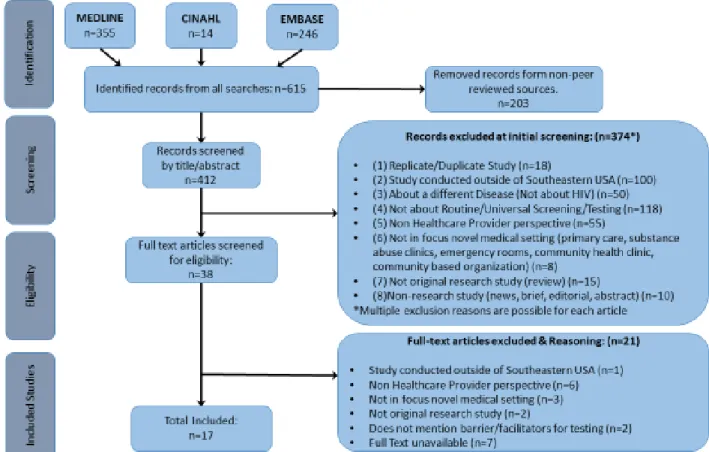
Titles and abstracts of 412 papers resulting from the search were read and coded on Excel based on eight inclusion/exclusion criteria. Seventeen papers remained after coding. A
comprehensive description of the search strategy and article selection process is shown in Figure 1.
I read and extracted data regarding location, purpose, study-design, perceived
level, (4) perceived barriers, (5) perceived facilitators, and (6) appraisal of research rigor and quality.
Results
Results are presented in order of EMHP level—Societal, Organizational, Individual—and are further subcategorized into barrier or facilitator categories. Appendix II contains a detailed summary of results from the review of literature and includes all mentioned perceived
barriers/facilitators to routine HIV testing/screening and non-perceived or additional
barriers/facilitators to routine HIV testing/screening. The below results present only the extracted health care provider perceived factors regarding HIV screening/testing. Several barriers and facilitators were categorized in multiple EMHP levels due to categorization and wording in their original studies.
The seventeen identified articles consisted of six survey studies (Anderson et al., 2005; Barnes et al., 2003; Gongidi et al., 2010; Nichols et al., 2002; Simmons et al., 2006; Troccoli et al., 2002), six qualitative studies (Bogart et al., 2008; Davis et al., 2015; Simmons et al., 2011; Sison et al., 2013; Sullivan et al., 2015; White et al., 2015), and five program/implementation studies (Haynes et al., 2011; Lanier et al., 2014; Minniear et al., 2009; Weiss et al., 2009; Wright et al., 2013).
Societal Level: State/System/Policy
Perceived barriers. Eleven of the seventeen articles mention perceived societal level barriers for routine HIV testing/screening: financial, HIV-related stigma, population
characteristics, policy, health care networks, and availability of resources for
providers (Barnes et al., 2003; Lanier et al., 2014; Nichols et al., 2002; Sison et al., 2013; White et al., 2015); lack of financial support for implementation of testing programs (Simmons et al., 2011); and lack of financial support to expand existing HIV testing programs (Wright et al., 2013).
In addition to financial constraints, HIV-related stigma remains a predominantly perceived barrier in the southeastern states of interest. Five articles found that providers
perceived that stigma and stereotype surrounding HIV/AIDS was greater in rural areas (Davis et al., 2015; Minniear et al., 2009; Sison et al., 2013; Sullivan et al., 2014; White et al., 2015). Providers in N.C. and Ark. believed that their communities were socially and politically conservative (White et al., 2015; Wright et al., 2013). Davis et al. (2015) found that providers believed that HIV-related stigma was still present among physicians and that ageism is a factor that potentially causes providers to forget that older adults are at risk for HIV.
Providers perceived that certain population characteristics of southeastern states made implementation of routine HIV testing difficult. Providers believed that there was a lack of public acceptance (White et al., 2015) that may contribute to individuals being unwilling to test. Perception of low prevalence of HIV in Ky. (Davis et al., 2015) was cited as a barrier to testing. Wright et al. (2013) found that in implementing a HIV testing program in Ark. Providers
believed that there were competing health needs and priorities dividing their attention. Several policy barriers were identified in four articles. Barnes et al. (2003) found that providers perceived that legal issues related to obtaining informed consent for HIV testing was a barrier for testing; however, the findings of this study were published before the CDC
to consent requirements, participants in one study noted that some states have requirements that all testing sites have policies, procedures and quality assurance to manage a testing program (Haynes et al., 2011). Wright et al. (2013) found that providers believed that there was a lack of strong political advocates to heighten awareness on routine HIV testing.
Health care network characteristics determine the support networks for providers and access to care for populations. Three studies noted health care network barriers to HIV testing including lack of safety net for providers providing follow-up care for patients (Barnes et al., 2003), lack of feedback from hospitals about patients who tested for HIV (Sullivan et al., 2014), and limited access to health care services in rural areas (Sison et al., 2013).
Resource barriers are defined as available literature, and materials regarding routine HIV testing/screening. There is a lack of dissemination and implementation strategies regarding successful implementation of HIV testing programs in primary care, substance abuse clinics, and emergency rooms (Simmons et al., 2011; Sullivan et al., 2014). In the same study by Simmons et al. (2011), providers noted that there is a lack of patient-friendly literature and education
materials for implementation of HIV testing for providers.
elimination of written HIV consent; (b) requiring HIV testing for college enrollment; and (c) requiring physicians to test routinely.
Financial factors included federal funding availability for full time staff for HIV (Haynes et al., 2011), accessibility to less costly rapid HIV tests (Simmons et al., 2006), and third party reimbursement (White et al., 2015). Providers believed that increasing education regarding billing for HIV tests and screening would facilitate increased testing (Sison et al., 2013).
Providers also believed that more HIV literature and HIV-specific training for clinic staff should be made available (Simmons et al., 2011). Additional potential facilitators noted by providers were to decrease stigma, and public campaigns to encourage patient acceptance (White et al., 2015). Providers within the HIV care system believed that state/county health department engagement with community based organizations and clinics in which the health department provided rapid tests was a facilitator to testing (Sullivan et al., 2014).
Organization Level: Clinic/Program/Organization
Perceived barriers. Ten studies noted organization barriers including clinic characteristics, visit characteristics, and administration characteristics.
2008; Minniear et al., 2009). Clinic size may also be a barrier. White et al. (2015) found that some providers believed that small practices were less likely to be up-to-date on new
recommendations.
Clinic protocol barriers and barriers associated with designing clinic protocols were identified. Two studies found that providers felt that there was a lack of guidelines for providing educational information to patients (Davis et al., 2015; Sullivan et al., 2014). Additionally, providers felt that some clinic guidelines were inconsistent with CDC recommendation and that only perceived high risk patients were screened and tested for HIV (Davis et al., 2015; White et al., 2015). Providers felt that quality assurance procedures for rapid tests were too complex, and that it was difficult to design a rapid testing protocol for their organization (Bogart et al., 2008).
Administration barriers were noted in two studies including the belief that there were too many administrative hassles associated with rapid HIV test use, and a lack of administrative support (Bogart et al., 2008; Lanier et al., 2014).
Additional organization level barriers included that HIV testing is conducted at different locations from primary care services (Davis et al., 2015; White et al., 2015); silos exist within programs and hospitals that prevent coordination of services (Minniear et al., 2009; Wright et al., 2013); and that there is staff resistance and limited compliance with guidelines (Lanier et al., 2014; Simmons et al., 2011; White et al., 2015)
Protocols regarding sexual history taking (Lanier et al., 2014) and integration of testing into clinic flow (Haynes et al., 2011; Weis et al., 2009; White et al., 2015) help standardize and normalize testing procedures. Availability of resources including gender-neutral sexual history tools (Lanier et al., 2014) that could be implemented at every clinic visit and low
literacy/translated patient education materials (Troccoli et al., 2002) allow clinic staff to begin conversations regarding sexual health.
Additional facilitators include clinic assurance of confidentiality (Simmons et al., 2011) and being in a university practice setting because they are more likely to be up to date (White et al., 2015). White et al. (2015) found numerous potential facilitators including use of nurse/staff initiated HIV screening, educating medical directors/nurses/ and office staff about HIV testing recommendations, decreasing stigma within clinics, and including HIV testing as part of an STD panel. In regards to successful implementation of HIV testing programs, Haynes et al. (2011) note that a leadership/change champion is necessary to drive the implementation.
Individual Level: provider/patient
Perceived provider barriers. Provider attitudes, comfort with HIV testing
conversations, and lack of education were identified from thirteen studies.Negative provider attitudes regarding HIV prevalence, clinical priorities, and financial beliefs were noted as barriers to testing. Providers believed that some providers lacked motivation to do testing
2006; Sison et al., 2013) and that it was the health department’s responsibility or not their responsibility to test (Sison et al., 2013; Sullivan et al., 2014)
Financial beliefs that were found to be barriers included the belief that screening is cost ineffective (Barnes et al., 2003; White et al., 2015), providers being unaware of cost of testing (Barnes et al., 2003), and provider lack of knowledge regarding reimbursement rates and how to be reimbursed (Sison et al., 2013). In comparison to HIV test providers, Non-HIV test providers in community clinics and community based organizations believed that rapid testing does not allow more people to know their status (Bogart et al., 2008).
Provider lack of knowledge was found to be a significant barrier to testing. Several studies found that providers were unaware of CDC guidelines (Minniear et al., 2009; Nichols et al., 2002), had different definitions of routine testing (Simmons et al., 2011), and may be confused about laws governing informed consent (Sison et al., 2013; Troccoli et al., 2002). Additionally providers perceived low personal knowledge about HIV (Minniear et al., 2009; Simmons et al., 2011; Sullivan et al., 2014).
Concerns regarding HIV positive follow up care included feeling unprepared to treat an HIV-positive woman, and discomfort informing patients they are positive (Troccoli et al., 2002; Wright et al., 2013). Some providers were also concerned about the extent of responsibility after a patient tested positive for HIV (Wright et al., 2013).
Additional perceived barriers included belief that ordering an HIV test is too complicated (Davis et al., 2015); nurses forgetting to implement testing (Minniear et al., 2009); and poor cultural competency (Simmons et al., 2011).
Perceived patient barriers: Providers perceived several patient barriers to testing including patient perception of risk, lack of education, patient refusal, and fear.
The most frequently mentioned barrier to testing was patient perception that they are at low risk for HIV (Barnes et al., 2003; Davis et al., 2015; Simmons et al., 2011; Sison et al., 2013; White et al., 2015). Patient refusal was the second most cited barrier to testing and that older patients were more likely to refuse (Barnes et al., 2003; Nichols et al., 2003; White et al., 2015). Providers also believed that lack of education about HIV/AIDS and low literacy/health literacy contributed to low testing rates (White et al., 2015; Davis et al., 2015).
Providers also believed that patient concerns about confidentiality and stigma was a significant barrier to testing (Lanier et al., 2014; Minniear et al., 2009). Additional patient barriers to testing included: patient fear of results (Davis et al., 2015; Simmons et al., 2011) fear of needles (White et al., 2015), and client fragility in substance abuse recovery programs (Wright et al., 2013)
recommendations, and increased awareness of HIV prevalence in communities (White et al., 2015; Sison et al., 2013). Providers believed that personal experience with an HIV positive patient led to more vigilance for HIV testing (Davis et al., 2015).
Positive physician attitudes facilitating HIV testing include positive attitudes towards programs and guidelines. Clinician acceptance of the implemented HIV testing program was associated with its success in a pediatric ED (Minniear et al., 2009). In addition belief that guidelines should be instituted (Gongidi et al., 2010; Minniear et al., 2009) and willingness to test if HIV testing is reimbursable (Sison et al., 2013). In a successfully implemented HIV screening program nurses perceived that time was not a barrier and felt well trained in many aspects of HIV care (Weis et al., 2009).
Perceived patient facilitators. Providers believed that patients who were more comfortable with a physician would be more likely to agree to testing (Davis et al., 2015). Patient concern about STDS and interested in testing were facilitators to testing (Davis et al., 2015; Simmons et al., 2011; White et al., 2015). Providers also believed that female patients were more receptive to HIV testing, that a patient’s sexual orientation indicated risk behaviors (Davis et al., 2015), and that younger patients were more likely to accept (White et al., 2015). Potential patient facilitators included educating patients about HIV risk, and increasing patient acceptance of HIV testing (White et al., 2015).
Discussion
Numerous perceived barriers and facilitators at the societal, organizational, and individual level were identified in this literature search. Identified perceived barriers and
factors that determine behavior at the individual level. The key theme identified through this literature review is that multiple levels of barriers must be addressed to improve implementation of routine HIV screening and testing in primary care settings. Analyzing perceived facilitators at all three levels allowed for the identification of potential solutions to addressing multi-level barriers.
Barriers overlapping societal, organization, and individual levels included financial barriers, guideline congruence with practice, and HIV-related stigma. Financial concerns included funding of programs and individual reimbursement practices. Increased availability of federal funding to support HIV testing programs within community clinics and community based organizations remained a primary facilitator to successful program implementation (Haynes et al., 2011). Reimbursement for HIV testing and counseling in primary care exists, but are not well known. Reimbursement barriers to testing can be addressed by providing health care providers with education regarding ICD-10 codes that may be used for reimbursement (Sison et al., 2013).
Guideline and policy congruence with practice at the organization and individual provider level can be addressed by evaluating existing clinic protocols, educating providers about recommendations, and educating providers about state law updates. Clinic protocols should not require informed consent for testing because southeastern state laws do not require informed consent because general medical consent including HIV testing is acceptable (Branson et al., 2006; CDC, 2015). Administrators of clinics and hospitals should be involved in the development, implementation, and evaluation of protocols. Administrators should also be educated on recommendations to increase support for HIV testing programs.
normalizing the practice. State policy should also continue to be reevaluated for consistency with recommendations and potential over criminalization of HIV (Lehman et al., 2014). In addition, availability of resources including patient-friendly literature, training for clinicians, and flexible implementation strategies may increase HIV testing in unused settings. Resources also provide opportunities for patient-provider conversations (Lanier et al., 2014). Flexible implementation strategies address barriers associated with integration into clinic flow and provider perception that there is not enough time to test. One implemented program noted that because nurses sometimes forgot to implement to protocol, reminders were helpful (Minniear et al., 2009).
Individual barriers that can be addressed at the societal level included increasing
education of health care providers during the professional education of nurses, physicians, nurse practitioners and physician assistants and during residency training (Lanier et al., 2014).
Suggested training included practice such as role playing sexual health assessments, and education regarding HIV screening/testing guidelines. Adding training to education allows practitioners to gain more experience and comfort with counseling on HIV and sexual health topics.
Limitations
instructive regarding the complex interaction between EMHP levels in addition to barriers and facilitators otherwise recognized in this review.
The methods of this literature review included all relevant literature, but Southeastern US geographical constraints were placed on the search based on the original research question. Some barriers and facilitators mentioned in literature conducted outside of the Southeastern US may be relevant to the HIV testing practices in the Southeastern US; however, epidemiological evidence suggested that some barriers to routine screening and testing may be specific to the Southeastern US.
The data presented was collected and analyzed by one researcher, potentially decreasing the reliability and validity of findings. The search strategy implemented in this study included both negative and positive connotations of perception, belief, and attitudes to address potential researcher bias. Studies were not selected for information supporting routine testing and
screening, but instead were selected for potential insight into why or why not routine testing and screening is implemented.
Limitations regarding selected articles included quality and rigor of studies specifically credibility, and the lack of inclusion of relevant parties specifically nurses and other
al., 2014; Minniear et al., 2009; Weiss et al., 2009; Wright et al., 2013). Although these studies provided immense insight into the barriers and facilitators to implementation of programs at specific locations these results may not be generalizable to all settings in the Southeastern US.
Directions for Future Research
Many barriers and facilitators for routine HIV testing in poorly utilized testing sites have been outlined in this regional literature review and other national literature reviews (Burke et al, 2007) Future research should include ongoing assessment of provider attitudes towards HIV testing specifically in the Southeastern US, program development that addresses regionally specific barriers, program implementation/evaluation studies at poorly utilized testing sites, and provider level educational interventions. The political and environmental context of the
Southeastern US is constantly changing, most recently with the passing of House Bill 2 in N.C., a significantly socially conservative piece of legislature. Evaluation of the effects of policy changes on perceived and actual HIV-related stigma should also be conducted.
Implementation science is an up and coming field of research that may be useful in the evaluation of the feasibility of HIV testing programs in poorly utilized sites (Leeman et al., 2012). Program development should consider cultural context, feasibility, and sustainability. Additionally, the existing literature fails to adequately examine perspectives of other medical professionals that may be utilized to provide routine HIV testing in primary care settings including nurses, nurse aides, medical assistants, triage personnel, and substance abuse counselors. These professionals may have unique barriers to testing that are different from physician perspectives.
provide insight into better solutions for increasing routine testing. To date, a meta-analysis of facilitators and barriers to HIV screening has been published (Leblanc, Flores, & Barroso, 2016). The findings in this meta-synthesis provide useful information regarding enhancing HIV testing. The use of other frameworks other than the EMHP to guide analysis may also provide insight into implementation barriers and facilitators.
Conclusions
This paper is the first to present systematically the barriers and facilitators to routine HIV testing in the Southeastern US using the EMHP model. These findings may help guide
development of HIV testing programs and changes to existing testing programs. Ongoing research is necessary to improve testing rates in primary care settings and other poorly utilized settings.
Acknowledgements
The author would like to thank Dr. Beth Black for her guidance and support in conducting this literature review, Dr. Becky White at the UNC School of Medicine for her insight and knowledge regarding routine HIV testing in North Carolina, and Samantha
References
Adimora, A. A., Ramirez, C., Schoenbach, V. J., & Cohen, M. S. (2014). Policies and politics that promote HIV infection in the southern United States. AIDS (London,
England), 28(10), 1393-1397. doi:10.1097/QAD.0000000000000225
Adimora, A. A., Schoenbach, V. J., & Doherty, I. A. (2006). HIV and African Americans in the southern United States: Sexual networks and social context. Sexually Transmitted Diseases, 33(7 Suppl), S39-45. doi:10.1097/01.olq.0000228298.07826.68
Anderson, J. E., Koenig, L. J., Lampe, M. A., Wright, R., Leiss, J., & Saul, J. (2005). Achieving universal HIV screening in prenatal care in the United States: Provider persistence pays off. AIDS Patient Care and STDs, 19(4), 247-252. doi:10.1089/apc.2005.19.247
Annual Estimates of the Resident Population by Sex, Race Alone or in Combination, and
Hispanic Origin for the United States, States, and Counties: April 1, 2010 to July 1, 2014 Source: U.S. Census Bureau, Population Division, Release Date: June 2015. Accessed February 29, 2016.
Barnes, R. S., Anderson, L. A., Weisbord, J. S., Koumans, E., & Toomey, K. E. (2003). Georgia prenatal care providers' perceptions of barriers to sexually transmitted disease
screening. Southern Medical Journal, 96(9), 845-849. doi:10.1097/01.SMJ.0000083859.84394.B7
Baunach D. M., Burgess E. O. (2013). HIV/AIDS prejudice in the American Deep South. Sociological Spectrum. 33(2):175–95.
10.1080/07399332.2011.610533
Bogart, L. M., Howerton, D., Lange, J., Setodji, C. M., Becker, K., Klein, D. J., . . . (2008). Provider-related barriers to rapid HIV testing in U.S. urban non-profit community clinics, community-based organizations (CBOs) and hospitals. AIDS and Behavior, 14(3), 1-11. doi: 10.1007/s10461-008-9456-3
Branson, B. M., Handsfield, H. H., Lampe, M. A., Janssen R. S., Taylor, A.W., Lyss, S. B., Clark, J. E. (2006). Centers for Disease Control and Prevention. Revised
Recommendations for HIV testing of adults, adolescents, and pregnant women in health-care settings. MMWR Morbidity Mortality Weekly Report; vol. 55. Retrieved from Centers for Disease Control and Prevention website:
http://www.cdc.gov/mmwr/preview/mmwrhtml/rr5514a1.htm.
Centers for Disease Control and Prevention. (2015). State HIV Testing Laws: Consent and Counseling Requirements. Retrieved from
http://www.cdc.gov/hiv/policies/law/states/testing.html
Centers for Disease Control and Prevention (2014). HIV Surveillance Report, 2014; vol. 26. Retrieved from http://www.cdc.gov/hiv/library/reports/surveillance/
Centers for Disease Control and Prevention (2012). Monitoring selected national HIV prevention and care objectives by using HIV surveillance data--United States and 6 U.S. dependent areas--2010. HIV Surveillance Supplemental Report, 17 (No.3, part A). Retrieved from http://www.cdc.gov/hiv/surveillance/resources/reports/2010supp_vol17no3/index.htm Cohen, M. S., Chen, Y. Q., McCauley, M., Gamble, T., Hosseinipour, M. C., Kumarasamy, N.,
Cook, C. L., Lutz, B. J., Young, M. E., Hall, A., & Stacciarini, J. M. (2015). Perspectives of linkage to care among people diagnosed with HIV. The Journal of the Association of Nurses in AIDS Care, 26(2), 110-126. doi:10.1016/j.jana.2014.11.011
Davis, T., Teaster, P. B., Thornton, A., Watkins, J. F., Alexander, L., & Zanjani, F. (2015). Primary care providers' HIV prevention practices among older adults. Journal of Applied Gerontology : The Official Journal of the Southern Gerontological
Society, pii:0733464815574093
Farnham, P. G., Gopalappa, C., Sansom, S. L., Hutchinson, A. B., Brooks, J. T., Weidle, P. J., ... (2013). Updates of lifetime costs of care and quality-of-life estimates for HIV-infected persons in the United States: Late versus early diagnosis and entry into care. Journal of Acquired Immune Deficiency Syndromes, 64(2), 183-189.
doi:10.1097/QAI.0b013e3182973966
Fortenberry, J. D., McFarlane, M., Bleakley, A., Bull, S., Fishbein. M., Grimley, D. M.,
Malotte, C. K., Stoner, B. P. (2002). Relationships of stigma and shame to Gonorrhea and human immunodeficiency virus screening. American Journal of Public Health, 92(3), 378–381
George, N., Green, J., & Murphy, S. (1998). Sexually transmitted disease rates before and after HIV testing. International Journal of STD & AIDS, 9(5), 291-293.
Girardi, E., Sabin, C. A., & Monforte, A. D. (2007). Late diagnosis of HIV infection: Epidemiological features, consequences and strategies to encourage earlier testing. Journal of Acquired Immune Deficiency Syndromes,46 Suppl 1, S3-8.
Gongidi, P., Sierakowski, J. J., Bowen, G. S., Jacobs, R. J., & Fernandez, M. I. (2010). Survey of attitudes and practices of osteopathic primary care physicians regarding taking of sexual histories and HIV screening. The Journal of the American Osteopathic
Association, 110(12), 712-720. pii:110/12/712
Haukoos, J. S., Hopkins, E., & Byyny, R. L. (2008) Patient acceptance of rapid HIV testing practices in an urban emergency department: assessment of the 2006 CDC
recommendations for HIV screening in health care settings. Annals of Emergency Medicine, 51 (3) 303–9, 309.e1 Epub 2008 Jan 11. doi:
10.1016/j.annemergmed.2008.01.322
Haynes, L. F., Korte, J. E., Holmes, B. E., Gooden, L., Matheson, T., Feaster, D. J., et al. (2011). HIV rapid testing in substance abuse treatment: Implementation following a clinical trial. Evaluation and Program Planning, 34(4), 399-406.
doi:10.1016/j.evalprogplan.2011.02.00
Heckman, T. G., Somlai, A. M., Peters, J., Walker, J., Otto-Salai, L., Galdabini, C. A. … (1998). Barriers to care among persons living with HIV/AIDS in urban and rural areas. AIDS Care, 10(3):365–75.
Kerr, J. C., Valois, R. F., Diclemente, R. J., Fletcher, F., Carey, M. P., Romer, D., et al. (2014). HIV-related stigma among African-American youth in the northeast and southeast US. AIDS and Behavior, 18(6), 1063-1067. doi:10.1007/s10461-013-0687-6
Lanier, Y., Castellanos, T., Barrow, R. Y., Jordan, W. C., Caine, V., & Sutton, M. Y. (2014). Brief sexual histories and routine HIV/STD testing by medical providers. AIDS Patient Care and STDs, 28(3), 113-120. doi:10.1089/apc.2013.0328
Lazzarini, Z., Bray, S., & Burris, S. (2002). Evaluating the impact of criminal laws on HIV risk behavior. Journal of Law Medicine and Ethics, 30(2):239–53
Leblanc, N. M., Flores, D. D., & Barroso, J. (2016). Facilitators and barriers to HIV screening: A qualitative meta-synthesis. Qualitative Health Research, 26(3), 294-306.
doi:10.1177/1049732315616624
Lehman, J. S., Carr, M. H., Nichol, A. J., Ruisanchez, A., Knight, D. W., Langford, A. E., et al. (2014). Prevalence and public health implications of state laws that criminalize potential HIV exposure in the united states. AIDS and Behavior, 18(6), 997-1006.
doi:10.1007/s10461-014-0724-0
Lichtenstein, B. (2003). Stigma as a barrier to treatment of sexually transmitted infection in the American Deep South: Issues of race, gender and poverty. Social Science &
Medicine, 57(12), 2435-2445. pii:S0277953603004192
Marks, G., Crepaz, N., & Janssen, R. S. (2006). Estimating sexual transmission of HIV from persons aware and unaware that they are infected with the virus in the USA. AIDS (London, England), 20(10), 1447-1450. doi:10.1097/01.aids.0000233579.79714.8d Marks, G., Crepaz, N., Senterfitt, J. W., & Janssen, R. S. (2005). Meta-analysis of high-risk
sexual behavior in persons aware and unaware they are infected with HIV in the united states: Implications for HIV prevention programs. Journal of Acquired Immune
McLeroy, K. R., Bibeau, D., Steckler, A., & Glanz, K. (1988). An ecological perspective on health promotion programs. Health Education Quarterly, 15(4), 351-377.
Minniear, T. D., Gilmore, B., Arnold, S. R., Flynn, P. M., Knapp, K. M., & Gaur, A. H. (2009). Implementation of and barriers to routine HIV screening for
adolescents. Pediatrics, 124(4), 1076-1084. doi:10.1542/peds.2009-0237
Moher, D., Liberati, Al, Tetziaff, J., Altman, D.G. (2009). Preferred Reporting Items for Systematic Reviews and Meta-Analyses: The PRISMA Statement. Annals of Internal Medicine, 151(4), 264-269.
Montano, D. E., Phillips, W. R., Kasprzyk, D., & Greek, A. (2008). STD/HIV prevention practices among primary care clinicians: Risk assessment, prevention counseling, and testing. Sexually Transmitted Diseases, 35(2), 154-166.
doi:10.1097/OLQ.0b013e3181574d97
National Alliance of State and Territorial AIDS Directors (2012). Stigma and the
Impact on Public Health [Webinar]. In the 2012 Ryan White HIV/AIDS Program Grantee Meeting. Retrieved from: http://slideplayer.com/slide/4050035/.
Neff, S., & Goldschmidt, R. (2011). Centers for Disease Control and Prevention 2006 human immunodeficiency virus testing recommendations and state testing laws. Journal of the American Medical Association, 305(17):1767–8.
Nichols, S. A., Bhatta, M. P., Lewis, J., & Vermund, S. H. (2002). Prenatal HIV counseling, testing, and antiretroviral prophylaxis by obstetric and family medicine providers in Alabama. The American Journal of the Medical Sciences, 324(6), 305-309.
Operario, D., Lee, J. H., Kuo, C., & Zaller, N. (2015). Racial and ethnic disparities in HIV and STIs in the United States--national health and nutrition examination survey 1999-2012. AIDS Patient Care and STDs, 29(12), 635-638. doi:10.1089/apc.2015.0169 Peterman, T. A., Lindsey, C. A., & Selik, R. M. (2005). This place is killing me: A comparison
of counties where the incidence rates of AIDS increased the most and the least. The Journal of Infectious Diseases, 191 Suppl 1, S123-6. pii:JID32104
Public Law 104-191: Health Insurance Portability and Accountability Act of 1996. Retrieved from http://aspe.hhs.gov/admnsimp/pl104191.htm
Reif, S., Pence, B. W., Hall, I., Hu, X., Whetten, K., & Wilson, E. (2015). HIV Diagnoses, Prevalence and Outcomes in Nine Southern States. Journal of Community Health, 40(4), 642–651. http://doi.org/10.1007/s10900-014-9979-7
Schroeder, S. A. (2016). American health improvement depends upon addressing class disparities. Preventive Medicine, doi:S0091-7435(16)30003-2
Simmons, E., Roberts, M., Ma, M., Beckwith, C., Carpenter, C., & Flanigan, T. (2006). Routine testing for HIV in the united states: The intersection between recommendations and practice. AIDS Patient Care and STDs, 20(2), 79-83. doi:10.1089/apc.2006.20.79 Simmons, E. M., Brown, M. J., Sly, K., Ma, M., Sutton, M. Y., & McLellan-Lemal, E. (2011).
Barriers and facilitators to HIV testing in primary care among health care providers. Journal of the National Medical Association, 103(5), 432-438.
Sison, N., Yolken, A., Poceta, J., Mena, L., Chan, P. A., Barnes, A., et al. (2013). Healthcare provider attitudes, practices, and recommendations for enhancing routine HIV testing and linkage to care in the Mississippi delta region. AIDS Patient Care and STDs, 27(9), 511-517. doi:10.1089/apc.2013.0169
Stringer, K. L., Turan, B., McCormick, L., Durojaiye, M., Nyblade, L., Kempf, M. C., … (2016). HIV-related stigma among healthcare providers in the Deep South. AIDS and Behavior, 20(1), 115-125. doi:10.1007/s10461-015-1256-y
Sullivan, K. A., Berger, M. B., Quinlivan, E. B., Parnell, H. E., Sampson, L. A., Clymore, J. M., et al. (2015). Perspectives from the field: HIV testing and linkage to care in North Carolina. Journal of the International Association of Providers of AIDS
Care, pii:2325957415617830
Thomas, J. C. (2006). From slavery to incarceration: Social forces affecting the epidemiology of sexually transmitted diseases in the rural south. Sexually Transmitted Diseases, 33
(7 Suppl), S6-10. doi:10.1097/01.olq.0000221025.17158.26
Thomas, J. C., & Thomas, K. K. (1999). Things ain't what they ought to be: Social forces underlying racial disparities in rates of sexually transmitted diseases in a rural North Carolina county. Social Science & Medicine, 49(8), 1075-1084. doi:S0277953699001975 Troccoli, K., Pollard, H.,3rd, McMahon, M., Foust, E., Erickson, K., & Schulkin, J. (2002).
Weis, K. E., Liese, A. D., Hussey, J., Coleman, J., Powell, P., Gibson, J. J., … (2009). A
routine HIV screening program in a South Carolina community health center in an area of low HIV prevalence. AIDS Patient Care and STDs, 23(4), 251-258.
doi:10.1089/apc.2008.0167
White House Office of National AIDS Policy (2010). National HIV/AIDS strategy for the United States. Retrieved from
http://aids.gov/federal-resources/national-hiv-aids-strategy/nhas.pdf
White, B. L., Walsh, J., Rayasam, S., Pathman, D. E., Adimora, A. A., & Golin, C. E. (2015). What makes me screen for HIV?: Perceived barriers and facilitators to conducting recommended routine HIV testing among primary care physicians in the southeastern United States. Journal of the International Association of Providers of AIDS Care, 14(2), 127-135. doi:10.1177/2325957414524025
Wolf, L. E., & Vezina, R. (2004). Crime and punishment: Is there a role for criminal law in HIV prevention policy? Whittier Law Review, 25, 821–86.
Wong, E. Y., Jordan, W. C., Malebranche, D. J., DeLaitsch, L. L., Abravanel, R., Bermudez, A., … (2013). HIV testing practices among black primary care physicians in the United States. BMC Public Health, 13, 96-2458-13-96. doi:10.1186/1471-2458-13-96
Table 1
Extracted results from the CDC HIV Surveillance Report, Diagnoses of HIV Infection in the United States and Dependent Areas, 2014. Rates are per 100,000 individuals.
State Rate of diagnosis of
HIV infection among Adults and adolescents
Rate of adults and adolescents living with diagnoses HIV infection.
Black/African American
Hispanic/Latino Total
Alabama 17.2 749.7 245.3 297.4
Arkansas 13.8 604.9 209.8 204.4
Florida 31.3 1978.4 566.2 606.1
Georgia 27.0 1178.3 393.2 512.7
Louisiana 36.6 1108.1 495.3 502.2
Kentucky 9.9 669.7 351.2 159.4
Mississippi 21.0 747.1 385.6 366.9
North Carolina 17.0 992.6 303.8 326.3
South Carolina 20.7 1027.4 339.4 389.3
Tennessee 14.7 1037.5 316.4 297.2
Virginia 14.1 981.1 320.7 314.5
West Virginia 6.1 777.5 335.1 105.3
National Average
16.5 1243.8 462.0 353.2
Table 2
Extracted results from Prevalence and Public Health Implications of State Laws that Criminalize Potential HIV Exposure in the United States , Lehman et al., 2014.
Type of Law States
States with HIV specific laws criminalizing low or negligible risk behaviors.
Va., N.C., Tenn., S.C., Ga., Fla., Ark., Miss., and La.
HIV specific laws criminalizing potential HIV exposure to sex partners.
Ark., Fla., Ga., La., Miss., N.C., S.C., Tenn., and Va.
HIV specific laws criminalizing potential HIV exposure to needle sharing
Ga., N.C., S.C., and Tenn. HIV specific laws criminalizing high risk
behaviors
Ky.
Table 3
Methods: Search Strategy
Description Search String MEDLINE
# of Results
CINAHL # of Results
EMBASE # of Results
Location/ geographical sites of interest
("Southeastern United States"
OR Alabama OR Arkansas OR Florida OR Georgia OR Louisiana, Kentucky OR Mississippi OR “North Carolina” OR “South Carolina” OR Tennessee OR Virginia OR “West Virginia” OR
(southeastern united states[MeSH Terms])
**Southeastern united states [MeSH Terms] only applied to MEDLINE search
631711 29306 269503
Perception AND (Facilitator* OR barrier* OR problem* OR engag* OR accept* OR reluctan* OR concern* OR stigma* OR perspective* OR perception* OR attitude* OR belief*)
2520563 220040 905172
HIV/AIDS AND (HIV OR HIV/AIDS OR “human immunodeficiency virus” OR “acquired immune deficiency syndrome”)
** HIV/AIDS Excluded from EMBASE search due to database search
requirements.
308974 21,991 113110
Routine HIV Screening/ Testing
AND (Screen* OR teste* OR testi* OR diagnose* OR diagnosi* OR “point-of-care” OR “rapid testing” OR “mass screening” OR “mass testing” OR “routine screen*” OR “universal screen*” OR “routine test*” OR “universal test*”)
4610845 180078 1849952
Health care provider perspective
AND (Nurse* OR provider* OR practitioner* OR worker* OR personnel OR RN OR Physician OR “health providers” OR “health care providers” OR “Medical Assistant*”)
1348003 356214 401484
Appendix
Appendix I: Complete CDC Guidelines for Routine HIV Screening/Testing 2006: Recommendations for Adults and Adolescents
CDC recommends that diagnostic HIV testing and opt-out HIV screening be a part of routine clinical care in all health-care settings while also preserving the patient's option to decline HIV testing and ensuring a provider-patient relationship conducive to optimal clinical and
preventive care. The recommendations are intended for providers in all health-care settings, including hospital EDs, urgent-care clinics, inpatient services, STD clinics or other venues offering clinical STD services, tuberculosis (TB) clinics, substance abuse treatment clinics, other public health clinics, community clinics, correctional health-care facilities, and primary care settings. The guidelines address HIV testing in health-care settings only; they do not modify existing guidelines concerning HIV counseling, testing, and referral for persons at high risk for HIV who seek or receive HIV testing in nonclinical settings (e.g., community-based organizations, outreach settings, or mobile vans) (9).
Screening for HIV Infection
In all health-care settings, screening for HIV infection should be performed routinely for all patients aged 13--64 years. Health-care providers should initiate screening unless prevalence of undiagnosed HIV infection in their patients has been documented to be <0.1%. In the absence of existing data for HIV prevalence, health-care providers should initiate voluntary HIV screening until they establish that the diagnostic yield is <1 per 1,000 patients screened, at which point such screening is no longer warranted.
All patients initiating treatment for TB should be screened routinely for HIV infection (108). All patients seeking treatment for STDs, including all patients attending STD clinics, should be
screened routinely for HIV during each visit for a new complaint, regardless of whether the patient is known or suspected to have specific behavior risks for HIV infection.
Repeat Screening
Health-care providers should subsequently test all persons likely to be at high risk for HIV at least annually. Persons likely to be at high risk include injection-drug users and their sex partners, persons who exchange sex for money or drugs, sex partners of HIV-infected persons, and MSM or heterosexual persons who themselves or whose sex partners have had more than one sex partner since their most recent HIV test.
Health-care providers should encourage patients and their prospective sex partners to be tested before initiating a new sexual relationship.
Repeat screening of persons not likely to be at high risk for HIV should be performed on the basis of clinical judgment.
Unless recent HIV test results are immediately available, any person whose blood or body fluid is the source of an occupational exposure for a health-care provider should be informed of the incident and tested for HIV infection at the time the exposure occurs.
Consent and Pretest Information
Screening should be voluntary and undertaken only with the patient's knowledge and understanding that HIV testing is planned.
Easily understood informational materials should be made available in the languages of the commonly encountered populations within the service area. The competence of interpreters and bilingual staff to provide language assistance to patients with limited English proficiency must be ensured.
If a patient declines an HIV test, this decision should be documented in the medical record. Diagnostic Testing for HIV Infection
All patients with signs or symptoms consistent with HIV infection or an opportunistic illness characteristic of AIDS should be tested for HIV.
Clinicians should maintain a high level of suspicion for acute HIV infection in all patients who have a compatible clinical syndrome and who report recent high-risk behavior. When acute retroviral syndrome is a possibility, a plasma RNA test should be used in conjunction with an HIV antibody test to diagnose acute HIV infection (96).
Patients or persons responsible for the patient's care should be notified orally that testing is planned, advised of the indication for testing and the implications of positive and negative test results, and offered an opportunity to ask questions and to decline testing. With such
notification, the patient's general consent for medical care is considered sufficient for diagnostic HIV testing.
Similarities and Differences Between Current and Previous Recommendations for Adults and Adolescents
Aspects of these recommendations that remain unchanged from previous recommendations are as follows:
HIV testing must be voluntary and free from coercion. Patients must not be tested without their knowledge.
HIV testing is recommended and should be routine for persons attending STD clinics and those seeking treatment for STDs in other clinical settings.
Access to clinical care, prevention counseling, and support services is essential for persons with positive HIV test results.
Aspects of these recommendations that differ from previous recommendations are as follows: Screening after notifying the patient that an HIV test will be performed unless the patient
declines (opt-out screening) is recommended in all health-care settings. Specific signed consent for HIV testing should not be required. General informed consent for medical care should be considered sufficient to encompass informed consent for HIV testing.
Persons at high risk for HIV should be screened for HIV at least annually.
HIV test results should be provided in the same manner as results of other diagnostic or screening tests.
Prevention counseling should not be required as a part of HIV screening programs in health-care settings. Prevention counseling is strongly encouraged for persons at high risk for HIV in settings in which risk behaviors are assessed routinely (e.g., STD clinics) but should not have to be linked to HIV testing.
Appendix II:
Summary Table of Results
Author, Year, Study Title. [LOCATION]
Purpose. Study Type/Methods.
[Sample Number] EMHP Level Barrier Facilitator
Appraisal of Research Quality & Rigor
Anderson, J.E. et al., 2005, Achieving universal HIV screening in prenatal care in the united states: Provider persistence pays off. [NEW YORK, NORTH CAROLINA, CONNECTICUT, AND FLORIDA]
Purpose: To gain further understanding of the factors that both hinder and facilitate testing by obstetricians as well as other providers who deliver prenatal care. Methods: Survey of prenatal care providers (obstetric
attending/resident physicians, family practice
attending/resident physicians, nurse-midwives) conducted in 1999 in North Carolina, Connecticut, Brooklyn, New York, and Dade County, Florida assessing provider's knowledge, attitudes, and practices related to HIV counseling, testing, and treatment for pregnant women. [n=1354]
Societal
Adhering to CDC
recommendation for opt-out routine HIV testing.
This study included a range of practitioners who provide prenatal care. Follow-up procedures resulted in an overall response rate of 70%. This study used a probability sampling design and estimates may be more generalizable. Methods were consistent with purpose and objectives.
Limitations include that survey methods are subject to potential errors
including reporting errors and reporting bias. Organizational
Individual
Provider characteristic:
Obstetricians have lower testing rates in some areas compared to midwives and family medicine practitioners
Provider strongly encourages or advises patient to accept testing when the women are perceived as low risk.
Barnes, R.S. et al., 2003, Georgia Prenatal Care Providers' Perceptions of Barriers to Sexually Transmitted Disease Screening.
[GEORGIA]
Purpose: To examine prenatal care providers' perceptions about barriers to routine STD screening of pregnant women. Methods: Secondary analysis of survey responses from a 1998 mailed survey of Georgia-licensed
obstetrician/gynecologists, family practitioners, and nurse midwives who identified as prenatal care providers. Survey responses to a question of barriers to STD screening
Societal
1) Structural Study findings have
practical implications for health policy and health care delivery. Researchers use a conceptual
framework to guide analysis.
Limitations of this study include a low survey response rate of 43%, and that not all participants responded to barrier questions. Self-reported 71 % of respondents identified a
structural barrier.
Inadequate or lack of
reimbursement for STD screening (52% of respondents).
Lack of time, concerns about conflicting guideline
recommendations, and lack of safety net providers to provide follow-up care for positive patients (10% of respondents).
were classified into one of four a priori barrier categories: (1) provider (2) patient (3) organizational (4) structural. [n=565]
Legal issues related to obtaining informed consent for HIV testing (<10% of respondents).
data responses may not accurately reflect actual barriers. Or the degree of effect of barriers. Used specific barrier examples that may have produced response bias.
In addition, the study did not address providers who did not perceive barriers. Do these providers routinely screen and test for HIV?
Organizational
2) Organizational: Lack of personnel to perform routine STD screening (1 respondent)
Individual
3) Provider
7% of respondents identified provider barriers
Lack of motivation to perform preventative care, perception that patient is low risk for STDs and screening being cost ineffective.
Lack of consensus of individual providers within practice to provide STD screening
4) Patient
17.5% of respondents identified patient barriers
Patient expectations/concerns: (1) Patient perceives low risk, (2) Patient refuses testing because offended/appalled, (3) patient does not share important sexual history information with provider.
Bogart, L.M. et al., 2008, Provider-related barriers to rapid HIV testing in U.S. urban non-profit community clinics, community-based organizations (CBOs) and hospitals. [CALIFORNIA, NEW YORK, FLORIDA, ILLINOIS, GEORGIA,
Purpose: To investigate differences in perceived barriers between rapid HIV test providers and non-providers; and to examine whether perceived barriers were independently associated with availability of rapid HIV testing. Methods: Multi-site telephone interviews and survey of hospitals (laboratory staff, laboratory director, emergency department staff, labor and delivery staff,
Note: Reported below are the significantly different (P<0.05) endorsed barriers. All noted barriers were significant for rapid test non-providers.
This study is a nationally-representative multisite sample of hospitals and community based organizations/clinic employees.
Societal
There are too many state and federal regulations for rapid tests (HDS)
MASSACHUSETTS, INDIANNA, NEW JERSEY, AND MISSOURI]
occupational health staff, and other departments) and community based
organizations/clinics (medical directors/executive directors, other staff members) across the US (Northeast, Midwest, South, and West) and their agreement or disagreement (5-point scale) with statements regarding translational and staffing barriers. [n=158 (hospital laboratory staff, HLS), n=136 (hospital department staff, HDS), n=118 (Community clinic/CBO staff, CC/CBO staff)]
Organizational
There are too many administrative hassles associated with rapid HIV test use (HLS, HDS)
Limitations of this study include that appropriate organizations may have been excluded through eligibility criterion. The hospital administration does not
support the use of rapid HIV tests (HDS)
Researchers did not survey organizations not
providing any form of rapid HIV testing. The quality assurance procedures
for rapid tests are too complex (HDS)
These organizations may have different or stronger barriers.
The counseling session is difficult to integrate with other patient services (Hospital department staff)
In addition public health clinics were not surveyed.
My organization does not have enough space to confidentially conduct rapid HIV tests (CC/CBO staff)
This location may be utilized by people with lower income and at higher risk for HIV.
It is difficult to design a rapid testing protocol for my organization (CC/CBO staff)
It is difficult to fit rapid test counseling into one session (HDS) My organization is unable to employ dedicated staff members to perform rapid testing (CC/CBO staff)
Individual
Laboratory staff are worried about the possibility of false positive results
OTHER:
The procedures for running rapid tests are difficult to learn (HLS, HDS, CC/CBO staff)
Rapid testing does not allow more people to know their HIV status (CC/CBO staff)
Davis, T. et al., 2015, Primary care
providers' HIV prevention practices among older adults [KENTUCKY]
Purpose: To explore primary care providers HIV prevention practices for older adults. Methods: Qualitative semi structured interviews with primary care providers (physicians, physician assistants, and nurse
practitioners) who see patients older than 50 years exploring practice behaviors, individual, patient, institutional, and societal factors that influence HIV prevention practices. [n = 24 (6 Nurse practitioners, 2 Physician assistants, 16 physicians)]
Societal
Stigma and stereotype surrounding HIV/AIDS. Stigma greater in rural areas.
CDC and U.S. Preventative Task Force guidelines congruent.
Analysis and interview guide creation was guided by Ecological Perspective conceptual framework. Reliability ensured by transcription checking, and cross-checking of a subset of coded materials
A limitation of this study is that participants were recruited through snowballing and convenience sampling methods which can lead to sampling bias.
Additionally the survey had a low response rate (23%).
Only interviewed physicians, physician assistants and nurse practitioners working with older adults. A more diverse sample would be beneficial in understanding of barriers to HIV
prevention practice in primary care settings. Stigma among physicians.
Ageism: forgetting that older adults are at risk for HIV.
Cultural differences across populations
Low perceived prevalence of HIV in state.
Organizational
Lack of guidelines or unaware of guidelines for providing educational information to patients.
Guidelines inconsistent with CDC recommendations: only perceived high risk patients screened and tested for HIV
Time constraints
Off-site/referral HIV testing
Individual
Physician Physician
-Medical education did not include specific discussion about HIV/AIDS and aging
-Personal experience with HIV positive patient leads to more vigilance for HIV testing.
-May feel uncomfortable talking to older adults about their sexual practices
-Experience with HIV/AIDS and aging during residency training.
-Uncomfortable answering patient questions about HIV
-Good rapport with patient
-Age of physician contributes to patient comfort level.