Munich Personal RePEc Archive
A Note on Credit Spread Forwards
Hertrich, Markus
2015
Electronic copy available at: http://ssrn.com/abstract=2596878
A Note on Credit Spread Forwards
Markus Hertricha,b
a
Department of Finance, University of Basel, Peter Merian-Weg 6, 4052 Basel (Switzerland). Email: [email protected].
b
Institute for Finance, University of Applied Sciences Northwestern Switzerland, Peter Merian-Weg 86, 4052 Basel (Switzerland). Email: [email protected].
Abstract
This paper presents the most commonly used definition of credit spread forwards, discusses two alternative definitions and proposes one of these definitions as the standardized version that should be used in the future to prevent confusion. In addition, this paper gives an overview about the definition of this credit deriva-tive contract in the most relevant banking and credit risk hand- and textbooks that deal with credit derivatives and exemplifies by means of one textbook that although being a standard textbook for years and read by thousands of practi-tioners and students, there are still books that erroneously mix these alternative definitions, which motivates the present paper.
Keywords: credit derivative, credit spread forward, credit spread swap, hedging, textbook
JEL Classification: A22, A23, A29, A33, G13, G21, G32, M21
1. Introduction
Credit spread forwards, also called credit spread swaps, are derivative
contracts whose price is related to the difference between the yield of a
pre-specified security and the yield of a risk-free reference bond.1 Despite
being a straightforward derivative contract, the definition of these contracts
varies according to which textbook one uses, which makes it necessary to
1Alternatively, the credit spread forward can be related to the yield difference between
agree on a standardized definition. Accordingly, this paper first presents
in Subsection 2.1 the definition that is more intuitive and then gives an
overview about the textbooks that use a definition that accords with this
first definition. Second, this paper offers an alternative definition in terms
of the market value of the underlying bonds. Third, this paper presents a
third definition in Subsection 2.2 and fourth, exemplifies in Section 3 the
confusion that a non-standardized definition causes in a textbook that is
commonly used in banking and finance. Finally, Section 4 concludes.
2. Credit Spread Forwards
2.1. Definition
Following the handbook of financial risk managers (Jorion, 2010), the
credit spread forward contract is defined as follows:
CFT = (CST −CS0)·M D·A, (1)
whereCFT denotes the nominal payment that is due at the maturity date
T, CST is the actual credit spread at time T, CS0 is the agreed-upon
credit spread at the time of issue (e.g., the credit spread between A-rated
bonds and U.S. Treasury bonds, where the latter is called the “benchmark
bond”), M D denotes the modified duration on the corporate bond and A
is the notional amount of the forward agreement. Notice that the credit
spreadCSt at a datet (with 0 ≤t≤T) represents the default risk (or risk
Electronic copy available at: http://ssrn.com/abstract=2596878
This definition corresponds with the definition of this derivative contract
in Anson (1999), Babbel and Fabozzi (1999), Tavakoli (2001), Anson et al.
(2004), Bruyere et al. (2006), Douglas (2007), Fabozzi (2007), Maginn et al.
(2007), Resti and Sironi (2007) and Petitt et al. (2015), among others. This
definition is in line with the general definition of a forward contract, whereby
the long position in a forward contract gains when the underlying (here a
credit spread) increases and exceeds the “strike price”, which in the present
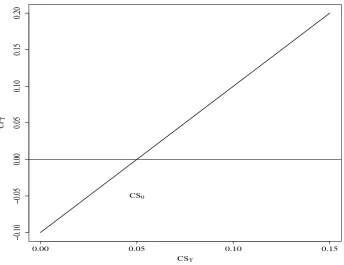
[image:4.595.112.457.372.637.2]case equalsCS0:
Figure 1: Payoff Profile of a Credit Spread Forward at the Maturity Date (Long)
0.00 0.05 0.10 0.15
−0.10
−0.05
0.00
0.05
0.10
0.15
0.20
CST
C
FT
CS0
Notes: The figure shows the payoff profile CFT of a credit spread forward at
the maturity dateT, assuming the following parameters: A = 1, CS0 = 5% and
M D= 2.
Similarly, the short position gains when the underlying decreases (i.e., when
the credit spread narrows) and falls below CS0.
Figure 1 exemplifies how the credit spread CST between the corporate
bond and the benchmark bond will exceed the pre-specified credit spread
CS0 at the maturity date T, if the credit rating of the bond issuer
wors-ens over the time to maturity T (and consequently the credit risk of the
underlying risky bond increases). Hence, the credit forward buyer (i.e., the
protection buyer) receives a positive payment at timeT. Accordingly,
trea-surers, for instance, who want to hedge the credit risk of a risky bond may
buy such a credit spread forward and enter a long position.
Similarly, the credit spread forward can be related to the market value of
a risky fixed-income security. In this case these credit derivative contracts
can be defined as:
CFT = [B(y+CS0, T)−B(y+CST, T)]·A, (2)
In Equation 2, B(y+CS0, T) denotes the bond price of a corporate bond
at the date of issue with a time to maturityT, where the coupon payments
are discounted at y+CS0, i.e., at the yield to maturity of an equivalent
risk-free bond and the credit spread CS0. As in Equation 1, whenever the
credit spread at maturityCST exceeds the agreed-upon credit spread CS0,
the credit spread buyer will receive a positive payment, as in this case the
market value of the corporate bond will have decreased over time.
2.2. Alternative Definition
As an alternative to the definition in Section 2.1, the credit forward
spread can also be defined as:
g
CFT = (CS0−CST)·M D·A. (3)
This definition accords with the definition in Moran (2001), Choudhry
et al. (2002), Fabozzi and Choudhry (2004), Meissner (2005), Banks (2006),
Banks et al. (2006), Saunders and Cornett (2014). This definition is based
on the idea that whenever the market value of a corporate bond increases
(decreases) compared to the price of an equivalent risk-free bond and
ac-cordingly the credit quality of the bond issuer improves (worsens), whereby
the credit spread CST narrows (widens), the credit forward buyer gains
(looses).
Although both definitions (i.e., Equations 1 and 3) are equally valid, this
paper favors the first definition in the case where the credit spread forward
is explicitly related to the difference between the yield of a pre-specified
bond and the yield of a risk-free reference bond, since in this case the long
position corresponds to the situation where the derivative contract buyer
gains whenever the underlying increases.
3. A Cautionary Note
It is important not to mix both definitions. For instance in the standard
that deals about managing credit risk with credit spread forwards defines
these derivative contracts as in Equation 3, whereby the credit spread seller
gains, whenever the credit quality of the bond issuer worsens. However,
when discussing the questions and problems that complement the textbook,
the credit spread buyer gains, whenever the credit quality of the bond issuer
worsens, which accords with the definition in Equation 1:
Question 1: “What is the gain on the purchase of a USD 20 million
credit forward contract with a MD of 7 years if the credit spread between
a benchmark Treasury bond and a borrowing firm’s debt decreases by 50
basis points” (Saunders and Cornett, 2014)?
Answer 1: The answer specifies that credit forward buyer gains in this
case (CST −CS0)·M D·A.
Question 2: “How is selling a credit forward similar to buying a put
option?” (Saunders and Cornett, 2014)?
Answer 2: The answer specifies that a credit forward seller gains if
the credit quality of the bond issuer improves such that the credit spread
at the maturity date falls below the same metric at the date of issue and
then compares it to the payoff when buying a put option, where the long
position gains, whenever the underlying price decreases.
4. Conclusion
This paper presents the most commonly used definition of credit spread
forward contracts and two alternative definitions, and explains why this
favors one of the presented definitions, suggesting that in the future
finan-cial economists should agree on one definition to prevent confusion. More
importantly, this paper lists the most commonly hand- and textbooks that
include these credit derivatives and presents an example from a standard
textbook in banking, where the authors unfortunately mix both definitions
when discussing some questions and problems.
References
Anson, M. J. P., 1999. Credit Derivatives. Hoboken (New Jersey): John Wiley & Sons. Anson, M. J. P., Fabozzi, F. J., Choudhry, M., Chen, R.-R., 2004. Credit Derivatives:
Instruments, Applications, and Pricing. Hoboken (New Jersey): John Wiley & Sons. Babbel, D. F., Fabozzi, F. J., 1999. Investment Management for Insurers. New Hope
(Pennsylvania): Frank J. Fabozzi Associates.
Banks, E., 2006. Synthetic and Structured Assets. Hoboken (New Jersey): John Wiley & Sons.
Banks, E., Glantz, M., Siegel, P., 2006. Credit Derivatives: Techniques to Manage Credit Risk for Financial Professionals. McGraw-Hill Financial Education Series.
Bruyere, R., Cont, R., Copinot, R., Fery, L., Jaeck, C., Spitz, T., 2006. Credit Derivatives and Structured Credit: A Guide for Investors. Hoboken (New Jersey): John Wiley & Sons.
Choudhry, M., Joannas, D., Pereira, R., Pienaar, R., 2002. Capital Market Instruments: Analysis and Valuation. London: Financial Times Prentice Hall.
Douglas, R. (Ed.), 2007. Credit Derivative Strategies. Bloomberg.
Fabozzi, F. J., 2007. Fixed Income Analysis. Hoboken (New Jersey): John Wiley & Sons. Fabozzi, F. J., Choudhry, M., 2004. The Handbook of European Fixed Income Securities.
Hoboken (New Jersey): John Wiley & Sons.
Jorion, P., 2010. Financial Risk Manager Handbook. Hoboken (New Jersey): John Wiley & Sons.
Maginn, J. L., Tuttle, D. L., McLeavey, D. W., Pinto, J. E., 2007. Managing Investment Portfolios: A Dynamic Process. Hoboken (New Jersey): John Wiley & Sons.
Meissner, G., 2005. Credit Derivatives: Applications, Pricing, and Risk Management. Oxford: Blackwell Publishing.
Moran, T. H. (Ed.), 2001. International Political Risk Management. The International Bank for Reconstruction and Development.
Petitt, B. S., Pinto, J. E., Pirie, W. L., 2015. Fixed Income Analysis. Hoboken (New Jersey): John Wiley & Sons.
Resti, A., Sironi, A., 2007. Risk Management and Shareholders’ Value in Banking. Hobo-ken (New Jersey): John Wiley & Sons.
Saunders, A., Cornett, M. M., 2014. Financial Institutions Management. McGraw-Hill Education.
Tavakoli, J. M., 2001. Credit Derivatives & Synthetic Structures: A Guide to Instruments and Applications. Hoboken (New Jersey): John Wiley & Sons.