A Thesis Submitted for the Degree of PhD at the University of Warwick
http://go.warwick.ac.uk/wrap/49178
This thesis is made available online and is protected by original copyright. Please scroll down to view the document itself.
b
b
y
y
A
A
a
a
m
m
e
e
r
r
S
S
a
a
l
l
e
e
e
e
m
m
S
SuubbmmiitttteeddffoorrtthheeddeeggrreeeeooffPPhh..DD..iinnEEnnggiinneeeerriinnggttootthheeUUnniivveerrssiittyyooffWWaarrwwiicckk d
deessccrriibbiinnggrreesseeaarrcchhccoonndduucctteeddiinntthheeSScchhoooollooffEEnnggiinneeeerriinngg
Table of contents
Table of contents ………... i
List of figures ……….... v
List of tables ……….. xii
Acknowledgements ………... xiii
Declaration ……….... xiv
Summary ………... xv
1 NIR spectroscopy: Background, theory & applications………... 1
1.1 Introduction – The detection of chemicals used for explosives ………… 1
1.2 Background to NIR ………...… 2
1.2.1 Why spectroscopy would be useful ………...… 2
1.2.2 The electromagnetic spectrum ………..…. 3
1.2.3 History ………...… 5
1.2.4 Current applications ………..…. 6
1.2.5 Advantages ……… 8
1.3 Theoretical overview ……….… 9
1.3.1 Foundation ……….… 9
1.3.2 Origin of absorption bands ……… 11
1.3.2.1 Harmonic oscillator ………. 11
1.3.2.2 Anharmonic oscillator ………. 16
1.3.3 Overtone and combination bands ………..… 19
1.3.4 Modes of molecular vibrations ………..… 21
1.4 Modes of spectroscopy ………..… 22
1.4.1 Measurements using relative absorbance ………..… 22
1.4.2 Methods of presenting test samples ………..…. 23
1.4.2.1 Transmittance ……….…. 24
1.4.2.2 Reflectance ……….…. 24
1.4.2.3 Transflectance ……….… 25
1.4.2.4 Interactance ……….… 25
1.6 Conclusions ………...… 26
1.7 References ……….… 27
2 NIR transmission through clothing barriers……….…. 39
2.1 Introduction ………...… 39
2.2 Initial investigations in non-clothing material ………..…. 39
2.2.1 Introduction ………...… 39
2.2.2 Apparatus ………..…. 40
2.2.3 Experiments with paper ……….… 42
2.2.4 Scattering through expanded polystyrene foam ……… 46
2.2.5 Measurements with metallic TEM grids ………...… 47
2.2.6 Discussion ……….…. 49
2.3 NIR scattering in fabric samples ………...… 50
2.3.1 Selection of clothing materials ………..… 50
2.3.2 Webcam measurements to illustrate scattering ……….… 50
2.3.3 Intensity measurements across multiple fabric layers ………...… 52
2.3.4 The effect of porosity ……… 56
2.4 Conclusions ………...… 59
2.5 References ……….… 59
3 NIR spectroscopy through clothing………. 62
3.1 Introduction ………...… 62
3.2 Background to NIR spectroscopy ……….…. 63
3.3 Experiment ……… 65
3.3.1 Experimental arrangement ………. 65
3.3.2 Clothing materials and hidden chemicals ………..… 67
3.3.3 Data pre-processing ………...… 69
3.3.3.1 Filtering ………..…. 70
3.3.3.2 De-trending ……….… 70
3.3.3.3 Wavelength range selection ……… 72
3.3.3.4 Amplitude translation ……….…. 73
3.4.1 Properties of clothing fabrics in the NIR region ………...…. 74
3.4.2 Solid chemicals (ammonium salts) and clothing materials …...… 79
3.4.2.1 Granular ammonium salts alone ……….… 79
3.4.2.2 Ammonium salts behind fabric layers ……… 80
3.4.2.3 Varying separation between fabric and chemical cell … 82 3.4.3 Liquid chemicals and clothing materials ………...… 83
3.4.3.1 Liquid chemicals alone ………...… 83
3.4.3.2 Liquid chemicals behind fabric layers ……… 85
3.5 Discussion and conclusions ………..…. 87
3.6 References ……….… 89
4 Multivariate calibration of spectroscopic data………..… 91
4.1 Introduction ………...… 91
4.2 Experimental arrangement ……… 93
4.2.1 Optical bench ……….… 93
4.2.2 Chemical solutions and fabric samples ……….… 94
4.2.3 Reference level for absorbance spectra ……….… 97
4.3 Identifying chemicals: Classification and quantification ………..… 98
4.3.1 Classification using NN ………. 98
4.3.1.1 Choice of NN ………..… 98
4.3.1.2 Data pre-processing ………. 100
4.3.1.3 Training & testing ………...… 101
4.3.1.4 Results ………. 103
4.3.2 Quantifying concentration using PLS regression ………..… 104
4.3.2.1 Data pre-processing ………. 104
4.3.2.2 Model validation ……….… 105
4.3.2.3 Tests with chemicals without fabric layer …………..…. 107
4.3.2.4 Tests with chemicals hidden behind clothing ……….… 110
4.4 Conclusions ………...… 112
4.5 References ……….… 113
5 Lock-in amplification and 2D spectroscopic imaging………...… 118
5.2 Experiment ……… 118
5.2.1 Experimental arrangement ………. 119
5.2.2 Chemicals and clothing fabric imaged ………..… 120
5.2.3 Lock-in amplification ……… 121
5.2.3.1 Theoretical model ………...… 121
5.2.3.2 Implementation in scanning software ……….… 123
5.2.4 Chemical detection using neural networks ……… 129
5.2.5 Spectroscopic imaging ………..…. 129
5.3 Results ………...… 130
5.3.1 Scans with distilled water ………..… 130
5.3.1.1 Addition of spectral noise from a PET bottle ……….… 130
5.3.1.2 Software-generated spectral noise ………..… 131
5.3.2 Scans with combinations of different chemicals ………...… 133
5.3.2.1 Hydrogen peroxide and ethanol ………..… 135
5.3.2.2 Hydrogen peroxide and ammonium nitrate ……… 136
5.3.3 Scans in the presence of concealing fabric layer ………...… 136
5.3.3.1 Hydrogen peroxide behind polyester layer ………….… 138
5.3.3.2 Ammonium nitrate solution behind polyester layer …… 139
5.3.3.3 The ‘majority poll’ method ……….… 140
5.3.3.4 Chemicals placed simultaneously behind polyester layer 141 5.4 Conclusions ………...… 142
5.5 References ……….… 143
6 Summation, conclusions and further work……… 145
6.1 General summary and conclusions ………...…. 145
6.1.1 The use of NIRS ……… 145
6.1.2 Experiments on NIR transmission ……….… 146
6.1.3 The need for chemometrics-based approach ……….… 147
6.2 Recommendations for further work ………..… 149
6.3 References ……….… 151
List of figures
Chapter 1
1.1 The electromagnetic spectrum, illustrated on a logarithmic wavelength scale.
1.2 The infrared region, subdivided into near, mid and far-infrared.
1.3 A simple diatomic oscillator.
1.4 Potential energy curve for the harmonic motion of a diatomic oscillator.
1.5 Vibrational energy levels of a harmonic diatomic oscillator.
1.6 Vibrational energy levels and permissible transitions of (a) a harmonic diatomic
oscillator, and (b) an anharmonic oscillator.
1.7 Potential energy curve for a harmonic oscillator, and the Morse curve for an
anharmonic diatomic oscillator.
1.8 The layout of spectral absorption bands in the NIR region, comprising higher
order overtones and combinations of fundamental transitions.
1.9 Stretching and bending vibrational modes in a CO2molecule.
1.10 Different methods of presenting samples, including transmittance, reflectance,
transflectance and interactance, used to collect NIR spectral data.
Chapter 2
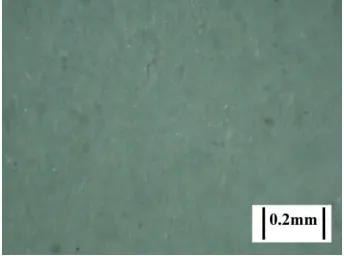
2.1 Sheet of 80gsm paper imaged under a light microscope.
2.2 Arrangement used to detect beam cross-section in x-y plane parallel to the paper
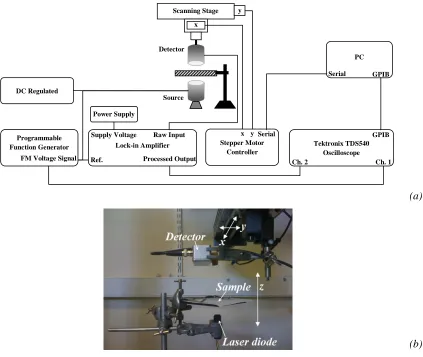
samples and perpendicular to NIR beam axis (z-axis). (a) Schematic diagram of
the apparatus, and (b) photograph of the sample and optical source (laser diode)/
detector.
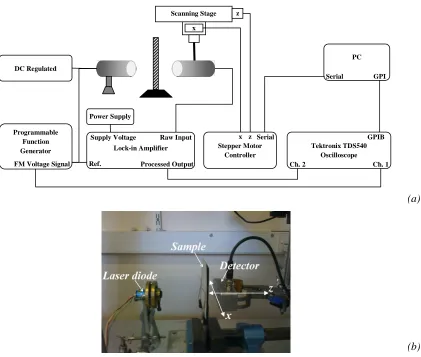
2.3 Arrangement used to detect beam cross-section in x-z plane parallel to NIR
beam axis and normal to the paper samples. (a) Schematic diagram of the
apparatus, and (b) photograph of the sample and optical source (laser diode)/
detector.
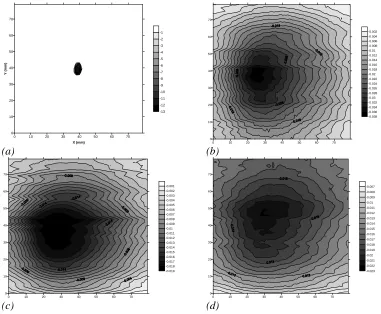
2.4 Cross-sectional intensity scans recorded in the x-y plane across (a) free space,
and (b)-(d) 1-3 layers of paper respectively.
2.5 Results of cross-sectional line scans across 1-40 sheets of paper; (a) Normalized
intensity curves; (b) FWHM values for the curves in (a).
beam, recorded across (a)-(c): 1-3 layers of paper respectively.
2.7 Signal decay across paper samples along the direction of travel of the beam
(z-axis), recorded using the arrangement in Figure 2.3. (a) Characteristic plots for 2
sheets of paper; (b) α_୴for 1-5 layers of paper.
2.8 Measurements with polystyrene sample; (a) Sample imaged with light
microscope; (b) Equipment layout; (c) Normalized line scan data (Thickness of
level n = 5n mm); (d) FWHM values measured for the line scan curves shown in
(c).
2.9 SEM images of copper grids used to study the interaction of pores with NIR
energy.
2.10 Scanning arrangement used to make NIR intensity measurements in 3D across
copper grids.
2.11 Cross-sectional contour plots of NIR intensity distribution transmitted through
copper grids with regular pore sizes of (a) 50 μm and (b) 6 μm.
2.12 Optical microscope photographs of (a) four of the fabric samples investigated,
and (b) some fabrics both in the dry state and when moistened with water.
2.13 Studying the characteristics of through-transmitted NIR beam using webcam.
2.14 Intensity-corrected webcam images of NIR beam transmitted through single
fabric layers.
2.15 Point measurements showing drop in NIR intensity across multiple fabric layers.
(W) signifies wet samples.
2.16 Signal variation across various dyed fabric samples of cotton (six colours) and
polyester (black and white only). (W) signifies wet samples.
2.17 Effect of moisture on through-transmitted signal levels.
2.18 Measurements with woollen scarf. (a) Sample imaged with light microscope;
(b) Equipment arrangement; (c) Normalized line scan data for 1-6 layers;
(d) FWHM values measured for the line scan curves shown in (c) (1st value
excluded from linear fit).
2.19 Mass flow meter setup for porosity estimation.
2.20 Variation in porosity with different fabric samples.
2.21 Experiments to measure total transmitted intensity with integrating sphere.
Chapter 3
3.1 (a) Schematic layout of the optical bench. (b) Photograph of the same arrangement (lens L3 and optical fibre cable were moved back 3 m from the sample before making stand-off spectral measurements).
3.2 Optical bench arrangement depicting the use of a PTFE standard reflection block with liquid samples.
3.3 Photographs of the 14 fabric samples, identified by numbers that correspond to the data in Table 3.2.
3.4 Absorbance spectra of white polyester fabric sample, recorded with two different references. (a) 2nd degree polynomial functions that fit the spectra in a least squares sense. (b) Spectra in (a) after de-trending, illustrating same spectral features in the two cases.
3.5 Spectral response curve of spectrometer (marked NIR256-2.1).
3.6 Spectral saturation due to the first overtone of water (1 450 nm). (a) Spectra of water and two ethanol solutions, showing saturation in the 1 400 – 1 800 nm wavelength range (measured in diffuse reflection with optical path ~20 mm; reference: empty cell with PTFE). (b) Spectra of water for different optical paths (measured in transmission in glass cells of different widths); the first overtone is defined for path lengths up to 1 mm.
3.7 Spectra of water and ethanol solutions in various concentrations, after filtering, translation and range selection (measured in diffuse-reflectance across optical path of 20 mm, with reference to empty cell and PTFE).
3.8 Transmission coefficients of fabric samples listed in Table 3.2. Measurements were made in through-transmission, using an integrating sphere to determine the total integrated transmission intensity over the 900 – 1,300 nm wavelength range.
3.9 Optical microscope photographs of selected fabric samples; (a) white cotton (cotton no. 1), (b) black cotton (cotton no. 3), (c) denim and (d) white polyester. The thickness t of each sample is also shown.
3.10 Absorbance spectra of cotton no. 2 samples (ref. Table 3.2 and Figure 3.8) in both visible (main window) and NIR (inset) wavelength range. Diffuse reflectance measurements were made with reference to 10 mm thick PTFE block. Data were filtered and 1st-degree de-trended.
spectra for visual clarity.
3.12 Absorption spectra of table sugar (sucrose) and white cotton. Data were collected in diffuse reflectance, filtered and de-trended.
3.13 NIR absorbance spectra of ammonium salts containing nitrate, sulphate and chloride ions (reference: 10 mm thick PTFE block). The measurements were made in diffuse reflectance, filtered and 1stdegree de-trended.
3.14 NIR absorbance spectra of ammonium nitrate and ammonium chloride behind a synthetic check shirt (reference: fabric sample). The measurements were made in diffuse reflectance, filtered and 1stdegree de-trended.
3.15 Absorbance spectra of coarse-grained ammonium nitrate granules (provided by Sigma-Aldrich Ltd) (a) behind synthetic fabrics, and (b) behind natural fabrics. The measurements were made in diffuse reflectance, with reference to the fabric samples. Spectra were filtered, de-trended and normalized.
3.16 Spectral amplitudes of coarse-grained ammonium nitrate (provided by Sigma-Aldrich Ltd) behind different fabrics for varying air gap between the sample and the clothing material. The peak-to-peak amplitude is plotted between the 1 169 nm minimum and the 1 279 nm maximum. This was obtained from filtered and de-trended spectra measured in diffuse-reflectance with reference to the fabric samples.
3.17 Absorbance spectra of water and ethanol in various concentrations, measured with reference to a block of PTFE placed behind (a) an empty cell; (b) a cell containing water.
3.18 Absorbance spectra of water and hydrogen peroxide in various concentrations, measured with reference to a block of PTFE placed behind (a) an empty cell; (b) a cell containing water.
3.19 Absorbance spectra of water and solutions of ammonium nitrate in various concentrations, measured with reference to a block of PTFE placed behind (a) an empty cell; (b) a cell containing water.
3.20 Absorbance spectra of water and ethanol in various concentrations, placed behind different fabric layers, measured in diffuse reflectance with reference to a block of PTFE placed behind (a) an empty cell covered with the fabric sample; (b) a cell containing water, covered with the fabric sample.
behind different fabric layers, measured in diffuse reflectance with reference to a block of PTFE placed behind (a) an empty cell covered with the fabric sample; (b) a cell containing water, covered with the fabric sample.
Chapter 4
4.1 Absorbance spectra (with reference to incident source intensity)of the four fabric specimens used to conceal the chemical samples.
4.2 Fabric samples as seen through optical microscope.
4.3 Effects of intervening cotton fabric layer on the spectrum of a liquid. Shown are spectra recorded for (a) water only, (b) water concealed behind a fabric layer (cotton), (c) fabric sample placed on its own, and (d) water concealed behind a fabric layer, with the fabric material taken as reference.
4.4 Scores of the first three principal components of the data, which exhibits clustering.
4.5 First three PC scores showing the distribution of training and test sets.
4.6 Classification of test data by NN trained with Bayesian regularization algorithm.
4.7 Pre-processed spectra of hydrogen peroxide with reference to water, used to calibrate the PLSR model; 80 wavelength channels between 850-1,400nm wavelength range. 4.8 PLSR model validation: MSEE and MSECV as functions of model complexity (number
of PLS factors). Global minimum of MSECV (5 factors) was taken as an initial estimate of optimal model complexity.
4.9 Concentration of hydrogen peroxide predicted by 2-factor PLS calibration model. Test data comprised samples of hydrogen peroxide and outlying chemicals including ethanol and ammonium nitrate. Note that sample numbers (x-axis) reflect sample concentrations in the sequence given in Table 4.4.
4.10 Prediction influence plot using 2-factor PLSR calibration model for hydrogen peroxide. Residual spectral variance vs. leverage for 7 calibration objects and 30 test objects. 4.11 Concentration of hydrogen peroxide predicted by a 4-factor PLS calibration model, in
samples hidden behind a layer of polyester fabric. Test data comprised samples of hydrogen peroxide and outlying chemicals including ethanol and ammonium nitrate. Note that sample numbers (x-axis) reflect sample concentrations in the sequence given in Table 4.5.
Chapter 5
5.1 Schematic diagram of experimental arrangement used for collection and lock-in amplification of NIR spectral data.
5.2 Block diagram of lock-in amplifier used to process spectral data.
5.3 Front panel GUI of scanning software used for collection and lock-in amplification of spectral data over specified target cross-sections. Marked are the panels used to control and indicate the operation of the lock-in amplifier.
5.4 The lock-in amplifier PLL control/ indication panel in the scanning software.
5.5 The lock-in amplifier demodulator and low-pass filter panel.
5.6 Spectra collected with point-scans across a cell containing distilled water; (a) Water without additive spectral noise; (b) Spectral noise from a PET bottle introduced in (a); (c) Result of lock-in amplification of spectra in (b).
5.7 Neural network-based spectral pattern classification of 2D scans across a cell containing distilled water. Classification results with (a) original spectra (no additive noise), (b) spectra collected in the presence of noise (PET bottle), and (c) noisy spectra with lock-in amplification.
5.8 Spectra collected with point-scans across a cell containing distilled water; (a) Water without additive spectral noise; (b) Software-generated uniform white noise introduced in (a) (SNR = -60 dB); (c) Result of lock-in amplification of spectra in (b).
5.9 Neural network-based spectral pattern classification of 2D scans across a cell containing distilled water. Classification results with (a) original spectra (no additive noise), (b) spectra collected in the presence of uniform white noise (SNR = -60 dB), and (c) noisy spectra with lock-in amplification.
5.10 Spectra collected with point-scans across a cell containing ethanol; (a) Ethanol without additive spectral noise; (b) Software-generated uniform white noise introduced in (a) (SNR = -60 dB); (c) Result of lock-in amplification of spectra in (b).
5.11 Spectra collected with point-scans across a cell containing hydrogen peroxide;
(a) Hydrogen peroxide without additive spectral noise; (b) Software-generated uniform white noise introduced in (a) (SNR = -60 dB); (c) Result of lock-in amplification of spectra in (b).
5.12 Spectra collected with point-scans across a cell containing ammonium nitrate;
(a) Ammonium nitrate without additive spectral noise; (b) Software-generated uniform white noise introduced in (a) (SNR = -60 dB); (c) Result of lock-in amplification of spectra in (b).
spectra (no additive noise), (b) spectra collected in the presence of uniform white noise (SNR = -60 dB), and (c) noisy spectra with lock-in amplification.
5.14 Neural network-based spectral pattern classification of 2D scans across two cells containing hydrogen peroxide and ammonium nitrate. Classification results with
(a) original spectra (no additive noise), (b) spectra collected in the presence of uniform white noise (SNR = -60 dB), and (c) noisy spectra with lock-in amplification.
5.15 Spectra collected with point-scans across a cell containing hydrogen peroxide hidden behind a layer of polyester; (a) Hydrogen peroxide behind polyester, without additive spectral noise; (b) Software-generated uniform white noise introduced in (a) (SNR = -60 dB); (c) Result of lock-in amplification of spectra in (b).
5.16 Spectra collected with point-scans across a cell containing ammonium nitrate hidden behind a layer of polyester; (a) Ammonium nitrate behind polyester, without additive spectral noise; (b) Software-generated uniform white noise introduced in (a) (SNR = -60 dB); (c) Result of lock-in amplification of spectra in (b).
5.17 Neural network-based spectral pattern classification of 2D scans across a cell containing hydrogen peroxide hidden behind a layer of polyester. Classification results with
(a) original spectra (no additive noise), (b) spectra collected in the presence of uniform white noise (SNR = -60 dB), and (c) noisy spectra with lock-in amplification.
5.18 Neural network-based spectral pattern classification of 2D scans across a cell containing ammonium nitrate hidden behind a layer of polyester. Classification results with
(a) original spectra (no additive noise), (b) spectra collected in the presence of uniform white noise (SNR = -60 dB), and (c) noisy spectra with lock-in amplification.
5.19 Illustration of the ‘majority poll’ method applied to classification data shown in Figure 5.18(c). (a) Original classification results, predicting both ammonium nitrate and hydrogen peroxide. (b) Outcome of edge detection with Canny’s method. (c) Grayscale version of the original image. (d) Binary image, obtained by setting a threshold at 50% gray level in (c).
List of tables
Chapter 3
3.1 Specifications of components used in the optical bench.
3.2 Samples of clothing fabrics used for testing.
3.3 Chemicals tested for detection in solid and aqueous solution forms.
Chapter 4
4.1 Sample constituents used to gather calibration and test data.
4.2 Datasets used to train and test NN to classify chemical constituents.
4.3 Determination of optimal model complexity: Global minimum of MSECV i.e.
5-factor model was taken as the first estimate, followed by local minimum of
significance level (randomization t-test) for a more parsimonious solution. The
2-factor model was thus chosen as optimal.
4.4 List of chemical samples used to collect spectral data to calibrate and test 2-factor
PLS calibration model for quantifying chemical concentration.
4.5 Samples of chemicals hidden behind a layer of polyester fabric, used for spectral
analysis to calibrate and test 4-factor PLS calibration model for quantifying
chemical concentration.
Chapter 5
5.1 Specifications of components used in the optical bench.
Acknowledgments
This work would not have been possible without the unflinching, consistent and
invaluable support of Prof. David A. Hutchins. He was always a source of crucial
guidance and insight, while allowing me all the leeway to work on the subjects that I
felt comfortable with. He was extraordinarily patient and understanding whenever I (all
too often) ran up dead ends, and felt desperate and hopeless. It was only through his
constant encouragement and support that the work was finished on schedule.
Additionally, I would be remiss not to mention the pivotal help of Celine Canal with the
experimental work; her expertise in setting up optical bench arrangements was always a
great source of learning and help, and she was always willing to brainstorm new ideas
and avenues of work. Thanks in no small measure are also due to Lee Davis, for his
ready help with resolving any technical issues whenever they arose. My sincere
gratitude also goes to Robert Southgate and Ritesh Gohel for their help with the work,
as well as to all other members of the group, including Yin Xiaokang, Vipin Seetohul,
Prakash Pallav and Chuan Li (Luby) for their support.
Finally, I would be eternally grateful for the unwavering support of my family,
including my wife Fatima and my parents, which allowed me to keep focus and stay
Declaration
The work presented in this thesis has been carried out by the author, except where
otherwise stated. It has been performed in the School of Engineering, at the University
of Warwick. No part of this work has previously been submitted to the University of
Warwick, or any other academic institution for consideration for a higher degree. All
publications to date arising from this work are listed in the publications section in the
Summary
This work presents investigations into the use of the near-infrared (NIR) signals to
interrogate, detect and image specific chemical compounds of interest in a security
screening application, including when such compounds are hidden behind single layers
of clothing fabric.
In an initial set of experiments, the mechanisms governing the interaction of NIR
signals with clothing fabrics and similar materials has been studied, in order to account
for the influence of fabric layers when detecting hidden chemicals. Throughout the rest
of the work, NIR spectroscopy has been used as a means to perform qualitative and
quantitative analysis, in order to detect the presence of chemicals, and quantify the
concentration in aqueous solution of liquids.
It has been shown that, while the compounds can be identified on the basis of the
characteristic features that appear in the relevant NIR spectra, the origin and nature of
these spectra necessitate that such identification be performed with a
chemometrics-based approach. Accordingly, multivariate calibration models chemometrics-based on neural networks
and partial least squares regression (PLSR) have been developed to perform the
requisite analyses. Results of calibration and testing with a range of data are reported.
In order to facilitate operation in practical security screening, the development and
testing of a software-based lock-in amplifier is reported, as a mean to enhance the
signal-to-noise ratio (SNR) of the spectral data. It is shown that the amplifier can
process up to 40 wavelength channels in parallel, to extract the spectral data buried in
noise in each channel. Hence, with the SNR of the input signal set as low as -60 dB (by
introducing software-generated additive white noise in the spectra), adequate noise
suppression has been obtained, allowing the resulting spectral data to be used for
requisite chemical detection.
Finally, an integrated spectroscopic imaging application is developed to perform
two-dimensional cross-sectional scans of chemical samples, carry out lock-in amplification
of the recorded intensity spectra, and plot the results of neural network-based chemical
Chapter 1
NIR spectroscopy:
Background
, theory & applications
1.1 Introduction – The detection of chemicals used for explosives
During the last few decades, terrorist attacks based on improvised explosive devices
(IEDs) have emerged as a security threat in most parts of the world [1-3]. Lately,
however, this threat has become more potent due to the increased reliance by the
perpetrators of such attacks on explosives improvised from common household/
industrial materials such as hydrogen peroxide and acetone, which are difficult to detect
and control at vulnerable locations [4]. These materials can be very stable in their raw
form, and carried in innocuous-looking containers such as PET bottles, hidden from
view beneath layers of clothing.
Some inspection technologies that attempt to detect chemicals potentially used in IEDs
have been tested for incorporation in scanning systems installed at airports [5, 6]. These
include electromagnetic induction, X-ray, vapour suction and Raman spectroscopy.
Electromagnetic induction differentiates between water and flammable liquids on the
basis of differences in dielectric constants [7]. However, it falls short of detecting a
chemical such as hydrogen peroxide in this manner, as its dielectric constant is similar
to that of water. In X-ray systems, detection is based on the atomic number and density
of the sample, which makes it difficult, for instance, to distinguish between innocuous
substances such as honey and more dangerous materials that have similar atomic
numbers and densities [8]. The trace vapour suction method uses a conductive polymer
to detect chemicals such as hydrogen peroxide [9]; however, this method fails if the
container is tightly capped and sealed, so that no leakage exists. Finally, Raman
spectroscopy allows detection of materials such as hydrogen peroxide, but has limited
effectiveness when applied on coloured bottles and mixed drinks, as the resulting
fluorescence can interfere with and severely degrade the analysis of the weak Raman
spectra of the pertinent chemical [10].
technologies to detect, image and characterize chemicals that could potentially be used
in IEDs, when these are concealed underneath clothing.
The use of NIRS in chemical and food processing industries for quality and process
control is well-established [11], and relies on the unique mechanism by which NIR
energy interacts with these materials. This technique has been investigated here in the
context of security screening by maintaining focus on certain considerations, such as
imaging across fabric layers, which are unique to such an application. The experimental
evidence gathered in the course of this work has established the feasibility of the use of
NIRS in this application.
1.2 Background to NIR
1.2.1 Why spectroscopy would be useful
The rapid growth in recent years in the development of increasingly sophisticated signal
and image processing systems has facilitated the deployment of different
non-destructive testing techniques for the identification of compounds with relevance in
security screening. While techniques such as X-ray computer tomography (CT),
electromagnetic induction (EMI), ultrasonic imaging and eddy current testing have been
the subject of research and shown to bear considerable promise in certain applications,
these and similar techniques have limited use in imaging/identifying compounds
concealed on the person of a subject. It is, therefore, felt that a technique that would
allow the capability to rapidly and accurately characterize the relevant compounds
based on qualitative as well as quantitative analyses would serve to fill a major
functionality gap that currently exists in security screening applications.
In this context, NIRS has previously been shown to allow the imaging of various
non-metallic materials [12]. Additionally, its use in identifying and quantifying the
constituent chemicals of a given compound is well-established [13]. In effect, NIRS has
emerged during recent decades as the method of choice to perform structural and
chemical analysis of samples in order to test for heterogeneity and other parameters
related to process and quality control. The suitability of the relevant frequency range for
use in these applications arises from the fact that NIR frequencies are on the same order
compounds. The NIR band extends from around 780 nm to 2,500 nm [14], which
includes wavelengths that correspond to modes of molecular vibrational transitions that
are higher order overtones and combinations of the fundamental bands occurring in the
mid to far infrared range [15]. Such higher order transitions are excited in the molecules
with the absorption of NIR energy in the anharmonic oscillations of different chemical
functional groups [16], leading to appearance of absorbance spectra characteristic of the
relevant groups. The nature of these vibrations dictates that the resulting spectral bands
are broader and have lower intensity levels than the corresponding fundamental bands.
Note that absorption of energy in the visible band can also produce spectra
characteristic of the vibrational energy levels of the particular molecules [17]; this gives
rise to the possibility of performing visible and NIR spectroscopy concurrently [18, 19].
During the course of this work, the characteristic absorption of NIR energy by different
functional groups, and by extension molecular structures, was used for detecting and
analysing specific chemicals behind fabric layers.
1.2.2 The electromagnetic spectrum
The layout of the electromagnetic spectrum, showing the position of the infrared region
relative to the rest of the frequency bands, is illustrated on a logarithmic wavelength
scale in Figure 1.1. As seen, the wavelength progressively increases from the visible
region through infrared to radio waves. The characteristics of a vast range of
wavelengths, including NIR at the transition between the visible and infrared regions,
allow their potential use in spectroscopic analysis. The frequency ߥ of the waves,
measured in Hz, is inversely related to wavelengthߣin metres as follows [20]:
ߥ=ܿ ߣ⁄ (1.1)
where ܿis the speed of light, with an approximate value of 3×10⁸ m/sec. Thus, the
increasing wavelength from visible through NIR to mid-IR range is accompanied by
corresponding decrease in frequency.
Besides its characterisation as waves defined in terms of frequency and wavelength, the
spectrum are defined by photons with varying levels of energy. An important
relationship, used to describe the energy ܧof the photons, measured in joules, in terms
of the frequencyߥin Hz of the corresponding wave, is as follows [20]:
ܧ= ℎߥ (1.2)
whereℎrepresents Plank’s constant, with a value of 6.6×10⁻³⁴J.sec. Based on (1.1) and
(1.2), it may be noted that energy ܧ is inversely proportional to wavelength ߣ, a
relationship that is highlighted in Figure 1.1 to emphasize the direction of increasing
energy as opposite to that of increasing wavelength.
Figure 1.1 – The electromagnetic spectrum, illustrated on a logarithmic wavelength scale [22].
As depicted in Figure 1.1, the infrared region covers the space between visible light and
radio waves, and includes wavelengths ranging from approximately 780 nm to 1 mm.
As shown in Figure 1.2, this region is further divided into three sub-regions, called
near-infrared, mid-infrared and far-infrared [23]. The location of near-near-infrared, in terms of
the energy of the radiation, is deemed to favour its exploitation in non-destructive
testing and imaging applications.
The second unit of measure shown alongside wavelengthߣin Figure 1.2 is wavenumber
ߥ, which is the reciprocal ofߣ, and is expressed in units of cm-1[24]:
ߥ= 1⁄ߣ (1.3)
Based on (1.1), (1.2) and (1.3), photon energy ܧ can be expressed in terms of
ܧ= ℎ.ܿ.ߥ (1.4)
As seen, expressing wavelength in terms of ߥallows a direct relationship to be drawn
between the wavelength and the energy of the radiation in a given region of the
spectrum [20].
Wavelengthߣ(µm) Wavenumberߥ(cm-1)
Near-infrared
I n f r a r e d
0.78 – 2.5 12821 – 4000
Mid-infrared 2.5 – 40 4000 – 250
Far-infrared 40 – 1000 250 – 10
Figure 1.2 – The infrared region, subdivided into near, mid and far-infrared.
When electromagnetic energy is directed on a substance, the interaction between the
impinging photons and the relevant matter may be characterized by a transfer of energy
to the matter, whereby the photons get completely absorbed. The phenomenon allows
deduction of qualitative and quantitative information about the substance, based on the
nature of the photons absorbed [21]. The particular characteristics of the NIR band in
terms of frequency and wavelength of the waves, and the energy of the photons, make
this region particularly suited for interrogation of chemical compounds in order to
deduce information about their composition, while allowing the waves to travel
relatively unimpeded through any intervening layers of clothing fabrics.
1.2.3 History
The study of visible light and attempts at understanding the nature of colour by scholars
and astronomers date back to the second century; however, the first truly structured
treatment of the subject came about in 1665, when Newton conducted experiments
demonstrating dispersion of white light into constituent colours, and expanded on the
nature of these colours as part of the visible spectrum within the electromagnetic
spectrum [25]. The discovery of the infrared region was made in 1800 by Herschel, in
chemicals was performed by Coblenz in early twentieth century [21], while the specific
use of near-infrared spectroscopy in a practical application came about around fifty
years later, when Karl Norris employed it in a study of analytes in agricultural
commodities [26]. A number of studies that followed used NIRS, as it transitioned from
dormancy to becoming recognized as a powerful analytical tool. During the 1980s, its
popularity grew manifold, as its deployment in various industrial quality and process
control applications was facilitated by the development of sophisticated miniaturized
instrumentation, allowing the development of standalone test stations that could be
easily integrated in the existing industrial processes. NIRS has since been adopted as the
non-destructive evaluation technique of choice, replacing traditional NDT tools in
several industries [21].
1.2.4 Current applications
A brief overview of the use of NIRS in the quantitative and qualitative analysis of
products spanning foodstuffs and agricultural products, pharmaceuticals and medical
uses is presented below.
The use of NIRS for quality checking of different foodstuffs and agricultural products
has grown in popularity in recent decades. The main reason for this is the alternative to
traditional testing techniques it offers, in terms of fast, accurate, economical and
non-destructive testing as opposed to the often-time consuming and non-destructive approaches
used in the traditional techniques [27]. To this end, it has been used in applications
designed to determine the end-point temperature of fish and meat products [28, 29].
Additional applications have included determination of oil and fat content in the test
products [30, 31]. Further, the technique has been used to test beverages and foods for
quality control/ verification, and for testing specific analytes such as adulterants in
alcoholic beverages [32, 33]. The quality control application has been extended to dairy
products as well [34-36]. In the fresh fruit processing industry, NIRS has been
employed in multifarious quality control processes [37, 38], including non-destructive
determination of soluble solids content (Brix number) [19, 39-41] and total acidity
[42-44], as well as physical characteristics such as firmness of various fruits [45-47].
Additional applications have included the sorting of produce based on properties such
moisture content in various products [49]. In short, the applications continue to grow as
the technology matures and further advances are made in the development of compact,
fast and reliable instrumentation.
Another popular use of NIRS is in industrial quality control within the pharmaceutical
industry [50], where it has offered the means to meet the industry’s necessarily stringent
quality control requirements while achieving the requisite high throughput rates,
coupled with the ability to implement multi-constituent analysis with accurate
prediction of test samples that do not meet the specified tolerance limits [51]. The
methods used to perform the measurements continue to evolve, with new approaches to
product analysis reported regularly for regulatory approval [52]. The technique has been
employed for monitoring multiple stages of the product development cycle, ranging
from the sourcing of raw materials, in-situ quality assessment and process monitoring
during different stages of product manufacture [13], and the determination of active
pharmaceutical ingredient (API) concentration in finished pharmaceutical products [51,
53, 54]. The use of NIRS was documented and recommended in the relevant industrial
quality control guidelines published by International Conference on Harmonization
(ICH), and adopted by the relevant regulatory bodies i.e. CPMP (Committee for
Proprietary Medicinal Products) in the EU, and FDA (Food and Drug Administration)
in the USA [55]. It has been shown that the use of NIRS in conjunction with
conventional imaging techniques offers the most efficient means to collect spectral data
and spatial information used for monitoring the distribution of constituent compounds
and overall structural integrity of pharmaceutical tablets [56].
Studies in the medical field have also been performed, and have highlighted the
complexities involved in modelling the interaction of an interrogating signal comprised
of visible or NIR radiation with biological tissue [57, 58]. The extraction of useful
information from such experiments continues to be a challenge in a number of
applications, primarily due to the complex structure of biological specimens such as
human skin. It has emerged that visible radiation does not penetrate appreciably beyond
a few millimeters in such cases. Although NIR signals penetrate to greater depth, their
transmission in the far-infrared region is water, which is one of the main constituents of
biological tissue, and exhibits strong absorption characteristics at such wavelengths
[59]. With advances in medical research, NIRS has been successfully employed to test
various characteristics of neonatal subdermal blood flow [60]. However, a wider scope
of use for the technique has remained somewhat elusive, owing to the different structure
and makeup of adult tissue and skin. Nevertheless, one of the main applications of
NIRS in this context has been in the monitoring and imaging of human brain [61, 62].
This has included the use of the technique in detection of control signals in the brain
[63-66], and measuring cerebral blood oxygenation levels [59, 67-70]. The latter
application has been extended in neonatal care to monitor cerebral blood flow and
measure cerebral blood volume [71-74]. In assessing the relative merits of NIRS and
pulse oximetry, it has been concluded that compared with pulse oximetry, NIRS offers
greater advantages in terms of better tissue penetration and a global assessment of blood
oxygenation [59].
In addition to the areas mentioned above, NIRS has been employed in analytical studies
involving a diverse range of analytes such as petroleum products [75-79], animal feeds
[80-83], textiles [84-87] and lately, measures concerning environmental implications
[14, 88]. The list of applications continues to grow and evolve at pace with advances in
the relevant technologies, reflecting the potential of the technique as a strong analytical
tool.
1.2.5 Advantages
The exploitation of the NIR frequencies for spectroscopic analysis offers several
advantages, some of which are outlined below.
1. NIR spectra of a specimen offer a rich resource of qualitative as well as
quantitative information about the composition of that specimen, and allow valuable
analyses to be drawn despite the increased complexity of these spectra compared with
infrared spectra.
2. NIRS-based applications enjoy an inherent degree of robustness in that, spectral
data can be collected with minimum to no sample preparation [16]. However, some
3. Contingent on its careful deployment, NIRS offers an accurate, non-invasive,
non-destructive and rapid analytical approach [13], providing data at allow the
determination of the compositional, spatial and spectral characteristics of the sample
under test [15].
4. The technique offers a high throughput rate, which enables its use in industrial
applications that depend on real-time in-situ monitoring of specific analytes.
5. In chemical analysis applications, the choice of NIRS over other competing
techniques can offer a less complicated solution, as it allows a simpler approach to
performing concurrent quality assessment of multiple samples based on simultaneous
analysis of multiple analytes.
6. Based on significant advances in instrumentation and spectral processing
methods, the technique provides a rugged yet sensitive and versatile analytical tool for
industrial scanning applications [56].
7. Compared with mid-IR spectroscopy, NIRS provides better spatial resolution
and higher signal-to-noise ratio with the same transmitted power level and similar scan
geometry.
8. The instrumentation used for NIRS is comprised of low-cost optical components
and optical fibre cables, which renders this a cheaper option than other analytical
techniques.
9. An important additional point is that NIR transmission through visible dyes is
often very good; in addition, high absorption that is seen at longer wavelengths due to
primary absorption bands is not present. Hence, it is likely that higher signal levels in a
security screening application might be expected than if either visible or mid IR/far IR
signals are used.
1.3 Theoretical overview
A brief theoretical overview of NIRS is presented below, starting with the basic
concept, followed by some specific details of the mechanisms involved, and finally with
a description of the methods by which typical spectroscopic measurements are made.
1.3.1 Foundation
relevant frequency, measured using the relationship in (1.2). Moreover, the interaction
of this radiation with matter may be characterised by absorption and scattering of the
radiation, where scattering represents a generic phenomenon encompassing the
mechanisms by which light is reflected, refracted and diffracted by the matter. The
study of these interactions between electromagnetic radiation and matter falls under the
general heading of light spectroscopy, and is carried out by means of a spectrum, which
is a plot of the results of these interactions against the wavelength of the radiation.
Spectra are obtained through the use of spectrometers, which are optical devices
designed to analyse the overall spectral response as a function of wavelength.
All matter is composed of groups of atoms, or molecules, which vibrate at certain
frequencies. The fundamental frequencies of molecular vibrations correspond to the
frequencies in the mid and far IR range [14]. Note that molecular vibrations are not
entirely dependent on external stimuli, as atoms remain in a state of random motion
about their mean positions even at equilibrium. However, when the frequency of
incident radiation matches that of the relevant molecular transitions, a transfer of energy
takes place from the radiation to the molecules, or in other words the radiation is
absorbed by the molecules, setting off their transitions to higher excitation states [15].
Absorption spectroscopy is thus performed by measuring the intensity of the radiation
after it has interacted with a particular material sample, and comparing this intensity
with a reference level to deduce which wavelengths have been absorbed by the sample.
Hence, NIRS is based on the interactions between NIR signals and the given material
samples. The NIR spectrum obtained with a homogeneous sample contains features that
are characteristic of that sample, and is comprised of unique spectral signatures of the
constituent molecular groups. These features thus provide vital information about the
compositional and quantitative makeup of that sample [15]. In case the sample is
heterogeneous in nature, the resulting spectrum is more complicated; however, the
constituents of the sample can still be determined through a careful appraisal of the
spectral signatures present in the relevant spectrum. This ability to classify most
samples based on their NIR transmittance or reflectance spectra remains at the heart of,
1.3.2 Origin of absorption bands
As outlined earlier in Section 1.2, NIR spectra result from overtones and combinations
of the fundamental modes of molecular transitions at frequencies in the mid-IR range.
The origin of these modes is in the vibrations that occur in the bonds of functional
chemical groups, leading to absorption of incident radiation at frequencies that match
the frequencies of molecular transitions to higher energy levels [20]. In order to
understand the origin of these absorption bands, it is useful to model the vibrations of
atoms that constitute the chemical bonds as an approximation of the simple harmonic
motion of a diatomic oscillator.
1.3.2.1 Harmonic oscillator
From the perspective of classical mechanics, an understanding of the vibrations of
atoms in chemical bonds could be gained by modelling it on the harmonic motion of a
simple vibrating system shown in Figure 1.3.
Figure 1.3 – A simple diatomic oscillator.
This model is comprised of two masses ݉ଵ and ݉ଶ, which depict the nuclear mass of
the two atoms in such an oscillator. These masses are joined together by a spring, which
is analogous to the inter-nuclear forces that exist between two such atoms participating
in a chemical bond. This is coherent with the relevant laws of physics, which describe
the manner in which these forces attract and repel the nuclei towards and away from
each other to constrain the vibrations of the participating atoms in accordance with the
magnitude of these forces and the combined nuclear mass [21]. In a simple diatomic
oscillator as shown in Figure 1.3, the inter-nuclear forces are modelled by the force
constant, or stiffness, of the bond, which reflects the strength of the bond, and is
analogous to spring constant. The frequency of the vibrations is then a function of the
force constant and the combined nuclear mass [14]:
ߥ=ଶగଵ ටఓ (1.5)
݉ଵ ݉ଶ
whereߥis the vibrational frequency, while ݇is the force constant of the bond, andߤis
the product of the two nuclear masses divided by their sum, termed ‘reduced molecular
mass’:
ߤ= భ⋅మ
భାమ (1.6)
As chemical bonds incorporate unique values of ݇, the frequency ߥ of molecular
vibrations is specific to the type of inter-atomic bonding in the molecules [21], and is
therefore very sensitive to the structure of the compound being tested.
The potential energy ܧ of a diatomic oscillator vibrating at ߥis a function of
inter-nuclear distance [21], and is given by a relationship that is similar to that for an
analogous mass/ spring system [14]:
ܧ= ଵଶ݇(ݎ௧−ݎ)ଶ= ଵଶ݇ݎଶ (1.7)
whereݎrepresents the displacement of the atoms from equilibrium, whileݎ௧andݎ are,
respectively, the total inter-nuclear distance and the inter-nuclear distance at
equilibrium. A graph showing the parabolic variation in ܧ with ݎ௧is given in Figure
1.4. As seen, this represents the behavior expected within elastic limits in accordance
with Hooke’s law [89] in that, when the atoms move closer together than the point of
equilibrium, inter-nuclear electrostatic forces of repulsion come into play, and when
they move apart beyond the point of equilibrium, such motion is opposed by similar
forces of attraction. In both cases, the magnitude of ܧ in the bond builds up till the
maxima ofܧoccur and the motion ceases, before re-initiating in the opposite direction.
As mentioned earlier, this oscillatory behaviour exists in chemical bonds even in the
absence of external stimuli, as atoms in molecules are in a perpetual state of random
motion about their mean positions. However, the amplitude of such vibrations is small.
If this amplitude increases, there is a limit, again as per Hooke’s Law, up to which the
bond remains elastic. The value of ܧ when the bond is stretched to such limiting
distance is termed as ‘bond energy’. If this limit is exceeded, the bond is permanently
weakened, which can lead to its breakage and dissociation of the participating atoms,
Figure 1.4 – Potential energy curve for the harmonic motion of a diatomic oscillator.
From a quantum mechanical perspective, the vibrational energy of a molecule can only
have certain discrete values, which are termed as the energy levels of the molecule. In
the case of a diatomic molecule executing harmonic vibrations as above, these energy
levels are given by [14]:
ܧvib = ℎߥቀ∨ +ଵଶቁ (1.8)
where ℎ and ߥ are, respectively, Plank’s constant and the classical frequency of
harmonic oscillations as given in (1.5), while ∨ denotes the vibrational quantum
number, which takes integer values 0, 1, 2, 3 …
In addition to the expression in (1.8), energy levels are expressed in terms of
wavenumber (cm-1). From (1.4) and (1.8), the relevant expression can be derived as
follows:
ߥvib =ாvib =ߥቀ∨ +ଵଶቁ (1.9)
where ߥ, as shown in (1.3) and (1.4), is the classical wavenumber of the harmonic
oscillations. As seen in (1.8) and (1.9), and depicted in Figure 1.4, the vibrational
energy of the molecule at ∨= 0, i.e. in the ground state, is not zero. This ground
vibrational energy is termed as zero-point energy, and it enables the molecule to exhibit
low-amplitude vibrations even at 0 K.
Based on the above, a molecule can exist at a number of vibrational excitation levels
ݎ Inter-nuclear separationݎ௧
P
o
te
n
ti
a
l
e
n
e
rg
y
ܧ
∨= 0 ∨= 1
Figure 1.4, and illustrated in Figure 1.5 on the wavenumber scale as derived from (1.9),
along with the fundamental and ‘hot band’ transitions that molecules undergo between
these levels.
Figure 1.5 – Vibrational energy levels of a harmonic diatomic oscillator [14].
The energy levels that a molecule is allowed to attain in a given scenario is dependent
on which of the transitions are permitted under a quantum-mechanical selection rule
[90]. This rule, as it relates to vibrational spectroscopy, is dependent on the value of the
transition moment integral:
Τ∨ᇲ→∨ᇲᇲ= ∫ିஶஶ ߰∨∗ᇲᇲߝ߰∨ᇲ݀߬ (1.10)
This represents the transition from excitation state ∨ᇱto∨ᇱᇱ, where߰∨ᇲand߰∨ᇲᇲare the
wave functions of the vibrations at each of these levels (߰∨∗ᇲᇲis the complex conjugate
of the relevant wave function), while ߝis the transition moment operator. In this case,ߝ
represents the dipole moment of the molecule which, for small values of displacementݎ
about the equilibrium position, varies linearly withݎ:
ߝ= ߝ+ቀௗఌௗቁݎ (1.11)
As per the selection rule, if the transition moment Τ in (1.10) evaluates to zero, the
particular transition is forbidden. Short of evaluating the integral to determine its exact
value, the symmetry of the transition moment function ߰∨∗ᇲᇲߝ߰∨ᇲin (1.10) provides an
indication of the value of the integral; in transitions where this function is symmetric,Τ
evaluates to a non-zero quantity, and the relevant transitions are allowed. In the case
under discussion, this function is deemed to become symmetric only when a particular
Ground state ߥvib(cmିଵ)
∨= 0 ∨= 1 ∨= 2 ∨= 3
Fundamental transition Hot band transitions
ߥ
ߥ
ߥ
transition instigates a change in the dipole moment ߝof the molecule. In a qualitative
sense, this represents the case where the oscillating dipole couples with the electric field
of the impinging radiation in a way that energy transfer can take place from the
radiation to the molecule.
The quantum mechanical model imposes a further restriction on permissible transitions
in that, the vibrational quantum number ∨ can only change by one unit in either
direction. Thus, a single transition is not allowed to span multiple energy levels.
Hence, based on the two conditions outlined above, a transition can take place only if:
ቀௗఌௗቁ
≠ 0 ⇒ Τ ≠ 0, andΔ ∨= ±1 (1.12)
The amount of energy required to excite a molecule to a higher energy level is laid out
in the Bohr-Einstein Law, which states that the energy of incident radiation must be the
same as the energy gap between excitation states to enable the molecule to make the
said transition [15, 21]:
Δܧ=ܧᇱᇱ−ܧᇱ= ℎߥ (1.13)
whereܧᇱᇱand ܧᇱare permissible energy levels, whileΔܧ= ℎߥrepresents the radiation
energy which, if incident on the molecule, would be absorbed to produce the required
change in dipole momentߝ, hence exciting the molecule from levelܧᇱtoܧᇱᇱ.
In accordance with Boltzmann distribution [91], the majority of molecules at room
temperature reside in the ground excitation state. Hence, in the presence of the required
radiation energy signal, the predominant transition that takes place is from ∨= 0 to
∨= 1. Known as fundamental transition as shown in Figure 1.5, this transition dominates all absorption spectra in the infrared region, and forms the basis of the bulk
of spectroscopic analysis carried out in this region. The remaining transitions originate
from higher excitation levels; however, due to the low molecular populations at these
levels (at room temperature), the corresponding absorption bands are much weaker than
the fundamental band. The designation of these higher-level transitions as ‘hot band’
inherently low molecular populations at these higher energy levels get augmented
which, in turn, leads to an increase in the intensity of the relevant absorption bands.
As shown in Figures 1.4 and 1.5, the energy levels of a harmonic oscillator are equally
spaced,i.e.the frequency of fundamental transition is the same as the frequency of each
of the successive hot band transitions. Taking into account the criteria for permissible
transitions laid out under the relevant selection rule in (1.12), this precludes the
existence of overtone and combination bands. However, as the very existence of these
bands forms the basis of NIR spectroscopy, it is important to derive a more realistic
approximation of molecular transitions based on an anharmonic oscillator.
1.3.2.2 Anharmonic oscillator
The existence of anharmonicity, or departure from ideal harmonic behaviour, is readily
observed during experiments in vibrational spectroscopy [14, 15]. It is noted that the
transitional frequencies of different hot bands (ref. Figure 1.5) are not the same, and are
different from the frequency of fundamental transition as well. Additionally, it is seen
that the second part of the criteria for permissible transitions laid out in (1.12), i.e.
Δ ∨= ±1, does not always hold true, in that transitions across multiple energy levels
such as ∨ = 0 →∨= 2 or 3 can be observed. These effects are the result of two
underlying phenomena, which affect all spectroscopic measurements to varying
degrees.
The first of these phenomena is termed as ‘mechanical anharmonicity’, and arises from
the fact that in a practical scenario, the expression for oscillator energyܧ is not purely
quadratic inݎas given in (1.7), but involves higher order terms as well:
ܧ= ଵଶ݇ݎଶ+݇ᇱݎଷ+ ⋯ (݇≫݇ᇱ) (1.14)
Consequently, the energy levels permitted for an anharmonic oscillator are not the same
as those given by the relationship in (1.9), but are modified as per the relevant solution
of the Schrödinger equation. This is obtained by using the expression in (1.14) in the
Schrödinger equation, and applying an approximation method to arrive at the following
ߥvib =ாvib =ߥቀ∨ +ଵଶቁ−ݔߥቀ∨ +ଵଶቁ ଶ
= ߥቀ∨ +ଵଶቁ−ܺ ቀ∨ +ଵଶቁଶ (1.15)
Here, ݔ represents a quantity known as the anharmonicity constant, which has unique
values for particular molecular bonds and the types of vibrations they undergo. In the
second expression above, ܺ=ݔߥ. The energy levels thus obtained in (1.15) for an
anharmonic oscillator are shown alongside those of a harmonic oscillator for successive
values of∨in Figure 1.6.
Figure 1.6 – Vibrational energy levels and permissible transitions of (a) a harmonic diatomic oscillator, and (b) an anharmonic oscillator [14].
As seen in Figure 1.6(b), with the introduction of anharmonicity, the successive energy
levels are no longer equally spaced and tend to close in together, so that the magnitude
of hot band transitions grows progressively smaller as the value of ∨ increases. The
ground state (∨= 0) is affected as well, so the anharmonic oscillator incorporates lower
vibrational energy at each excitation level as compared with the corresponding energy
levels of the ideal harmonic oscillator.
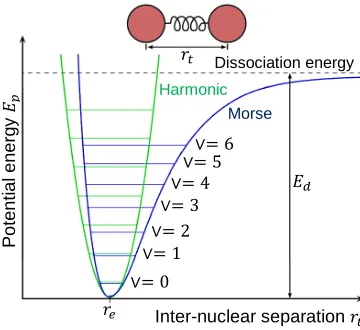
The potential energy curve of an anharmonic oscillator follows a trajectory defined by
the Morse function [14, 92]:
ܧ= ܧௗൣ1 −݁ିఉ(ି)൧ଶ=ܧௗ൫1 −݁ିఉ൯ଶ (1.16)
where ߚ is a constant, while ܧௗ is the dissociation energy of the oscillator, given as ∨= 0
∨= 1 ∨= 2 ∨= 3
ߥ ߥ
ߥ
ߥ−2ܺ Fundamental transition 1 2ߥ 3 2ߥ 5 2ߥ 7 2ߥ 1 2ߥ−
1 4ܺ 3 2ߥ−
9 4ܺ 5 2ߥ−
25 4 ܺ 7
2ߥ− 49
4 ܺ
ߥ−4ܺ Hot band transition ߥ−6ܺ Hot band transition
2ߥ−6ܺ First
overtone 3ߥ−12ܺ Second overtone
(b) Anharmonic oscillator (a) Harmonic oscillator
ܧௗ =ସ௫ఔ
ೌ (1.17)
Figure 1.7 shows a plot of the Morse function in (1.16) against inter-nuclear distanceݎ௧,
along with the corresponding energy function of the harmonic oscillator (ref. (1.7) and
Figure 1.4) for comparison.
Figure 1.7 – Potential energy curve for a harmonic oscillator, and the Morse curve for an anharmonic diatomic oscillator.
As seen, the value of ܧௗ is measured from the bottom of the Morse curve, and
represents the bond energy which, if acquired by the oscillator on positive displacement
(stretch), leads to the dissociation of the bond. This implies that anharmonic oscillators
can withstand compression better than stretching, as the bond simply dissociates if a
certain limit is exceeded while stretching.
The second phenomenon that dictates the behaviour of an anharmonic oscillator is
termed “electrical anharmonicity”, and is manifested by way of transitions that span
more than one energy level, i.e. Δ ∨> 1. Such transitions are known as overtones. The
higher excitation energy required for realizing these transitions, as depicted in Figure
1.6, leads to the occurrence of the relevant absorption bands in the NIR region. The
presence of these overtones owes to the fact that the dipole momentߝof an anharmonic
oscillator is not linear in ݎ, but includes higher order terms as well, so that the
expression ofߝfor harmonic oscillator as given in (1.11) is modified as below:
ߝ= ߝ+ቀௗఌௗቁݎ+ଵଶቀௗ
మఌ
ௗమቁݎଶ+ ⋯ (1.18)
∨= 0 ∨∨= 1= 2
∨= 3∨= 4 ∨= 5∨= 6
Harmonic Morse P o te n ti a l e n e rg y ܧ ܧௗ
Inter-nuclear separationݎ௧ ݎ
[image:35.595.236.416.192.357.2]As illustrated in Figure 1.6(b), the transitional frequency (or wavenumber) of the
overtones is not an exact multiple of the absorption frequency of fundamental transition.
As explained above, this is a consequence of mechanical anharmonicity, which results
in consecutive hot band transitions that have progressively lower amplitudes than the
amplitude of fundamental transition.
Taking into account the values of ߥand ݔ for various chemical functional groups, it
becomes clear that the majority of absorption spectra in the NIR region result from
overtone transitions [94]. Additionally, it is seen that the intensity of these overtone
absorption bands is directly proportional to the magnitude of anharmonicity in the
relevant functional groups [95]. For instance, the XH stretching transitions (including
CH, NH and OH bonds) have the highest values of ݔ, and therefore dominate the
overtone absorption bands. Conversely, the carbonyl stretching modes have very small
values of ݔ, leading to the exceedingly weak/ low-intensity overtone spectra of this
group.
1.3.3 Overtone and combination bands
As elaborated in the preceding section, no fundamental vibrational transitions take place
at NIR frequencies. While the frequencies of these transitions belong in the mid and
far-IR regions, their overtones and combinations occur at higher frequencies, which are in
the NIR region. Further, the overtones are not exact multiples or harmonics of the
pertinent fundamental frequencies but, depending on the extent to which the relevant
vibrational modes are anharmonic, occur at transitional frequencies that are less than
exact multiples. Additionally, the intensity of higher overtone bands progressively
decreases [15], again subject to the extent to which the relevant molecular oscillations
are anharmonic – high anharmonicity produces higher intensity overtones and vice
versa – and they tend to be broader in profile that the fundamental absorption bands as
well [16]. The general layout of the overtone and combination regions, along with the
main absorption bands that occur in each case, is shown in Figure 1.8. While most of
the relevant bands tend to be relatively broad, they still offer a valuable resource of
qualitative information about the composition of the molecules whose vibrations give
composition of the test samples, can be determined. Besides the magnitude of
anharmonicity impacting the intensity of these bands, the physical structure of the test
sample may affect the intensity of the spectra as well. For instance, a denser sample
might produce more representative spectra with better wavelength resolution and
cleaner layout than a highly porous sample, as the latter might severely scatter the
impinging radiation to adversely affect the intensity, resolution and overall quality of
[image:37.595.119.536.237.512.2]the resultant spectra [96].
Figure 1.8 – The layout of spectral absorption bands in the NIR region, comprising higher order overtones and combinations of fundamental transitions [21].
In case the molecular structure of the test sample is comprised of complex molecules
containing multiple functional groups of atoms, where vibrational transitions of each of
these functional groups produce different overtone and combination absorption spectra,
qualitative and quantitative information about the substance can be gleaned from the
spectra by characterizing the absorption bands belonging to the various functional
groups. However, the allocation of characteristic absorption bands to specific functional
groups in such cases is not straightforward [16]. This arises from the fact that complex
molecules can have a substantial number of distinct vibrational modes and frequencies:
A molecule with ܰ atoms possesses (3ܰ − 6) vibrational degrees of freedom, which
![Figure 1.8 – The layout of spectral absorption bands in the NIR region, comprising higherorder overtones and combinations of fundamental transitions [21].](https://thumb-us.123doks.com/thumbv2/123dok_us/9684299.469924/37.595.119.536.237.512/spectral-absorption-comprising-higherorder-overtones-combinations-fundamental-transitions.webp)