Securing Voting System using Blockchain and Fingerprint Verification
Miss. Komal Kundan Sharma
1, Prof. Mrunalinee Patole
2, Prof. Vina M. Lomte
31
Student(ME)Department of Computer Engineering RMDSSOE, Pune, Maharashtra India.
2
Professor, Department of Computer Engineering RMDSSOE, Pune, Maharashtra, India.
3
Professor, Department of Computer Engineering RMDSSOE, Pune, Maharashtra, India.
---***---
Abstract—Now a days crypto currency has become trending topic in software world. Crypto currency is digital asset designed to work as a medium of transaction that uses strong cryptography to secure financial exchange, and confirm the transfer of assets. Crypto currency is also known as decentralized digital money. Block chain stores transaction information which can be used to review the trustworthiness of transaction. The objective of this project is to use of block chain technology for transaction. Block chain is digital ledger of economic transactions that can be programmed to record financial as well as other transactions, it is difficult to forge. Since the information stored in block chain is not associated to personally identifiable information, it has at- tributes of anonymity. Block chain allows transparent transaction and verification. This block chain technologies characteristics are helpful in voting system that is strong, robustness, anonymity and transparency. Voting System is heart of our country. In this system fingerprint verification used to authenticate voters identity.
Index Terms—Blockchain, Multichain, Evoting, Crypto cur- rency, Fingerprint verification.
I. INTRODUCTION
Blockchain technology that shines sort of a star once the doorway and widespread acceptance of Bitcoin [10], the terribly 1st cryptocurrency in peoples lifestyle, has become a trending topic in todays package world. At the start, Blockchain was solely used for financial transactions and trade, however studies have began to recommend that it will be employed in more areas over time, as a result of theres a high degree of transparency during this system. for instance, in Bitcoin, since the wallets area unit in an exceedingly distributed structure, the whole quantity of coins and instant group action volume within the world will be followed momentarily and clearly. Theres no would like for a central authority to approve or complete the task on this P2P- based system.
As a result of that, not solely the money transfers however additionally all types of structural info will be unbroken during this distributed chain, and with the assistance of some cryptographic ways, the system will be maintained firmly. Like peoples assets, wedding certificates, checking account books, medical info, etc., tons of data will be recorded with this method with relevant modifications [7]. Ethereum coin (Ether), another cryptocurrency with utile development environments, that emerged a number of years once Bitcoin, distinguishes the blockchain in an exceedingly real sense, revealing that this technology will manufacture package which will hold info thats structured as delineate higher than. The package programs enforced by sensible contracts area unit written into the blockchain and area unit changeless, they cant be (illegally) removed nor manipulated once written. Hence, they will work properly, autonomously and transparently forever, with none external stimuli [9]. As already mentioned, with its distinctive distributed and secure idea, the blockchain innovation could address a few issues separated from advanced exchange. It would be fullly suitable response for e-voting comes.
II. REVIEW OF LITERATURE
Nir Kshetri, Jeffrey Voas,[1] use digital currency analogy for voting. Here (Blochchain-Enabled E-Voting) BEV issues each voter a wallet containing a user credential. Each voter gets a single coin representing one chance to vote. BEV employs an encrypted keys and tamper-proof personal Ids. Require much energy to perform authentication and validation.
Ali Kaan Koc, Emre Yavuz, Umut Can Cabuk,Gokhan Dalkoloc, [2]building smart contract of ours, we have succeeded in moving voting to the blockchain platform and we addressed some of the fundamental issues that traditional e-voting systems have, by using the potential of the Ethereum network and the blockchain structure. As a result of trials, the concept of blockchain and the security methodology which it uses, namely immovable hash chains, has become adaptable to polls and elections. There are some property that cannot handle solely using blockchain, for example authentication of voters requires additional mechanisms to be integrated.
F. Hao and P.Y.A. Ryan,[4]The idea of e-voting is considerably older than blockchain. So that, all celebrated examples to this point used suggests that of centralized computation and storage models. Esthonia may be a excellent example, since the govt of Esthonia is one in every of the primary to implement a totally on-line and comprehensive evoting resolution.
P. McCorry, S.F. Shahandashti, and F. Hao, [5]Switzerland is another one in all the few countries taking part within the electronic option trend. In Switzerland, celebrated for its widespread democracy, each national United Nations agency completes the age of eighteen will take an energetic or passive role within the elections, which can be command in totally different topics for several different choices. they need conjointly begun a politician work on a legal system known as remote option.
U.C. abuk, A. avdar, and E. Demokrasi [6]that Its necessary for US since elections will simply be corrupted or manipulated particularly in little cities, and even in larger cities placed in corrupt countries. Plus, large-scale ancient elections square measure terribly costly within the long run, particularly if there square measure many geographically distributed vote centers and countless voters. Also, the voters (mainly for members of organizations) can be on vacation, on a business trip or isolated for the other reason, which is able to create not possible for that specific citizen to attend the election and should lower the group action. E-voting are going to be in a position solve these issues, if enforced rigorously.
Estonian National Electoral Committee, [8]Their system remains in use, with several enhancements and modifications on the first theme. As reported , its presently terribly sturdy and reliable. They use sensible digital ID cards and private card readers (distributed by the government) for person-wise authentication.
E. Maaten [9]supply a secure selection atmosphere and show that a reliable e-voting theme is feasible victimization
blockchain. Because, once e-voting is obtainable for everybody UN agency contains a laptop, or a transportable, each single body call may be created by individuals and members; or a minimum of peoples opinion are going to be a lot of public and a lot of accessible by politicians and managers. this may eventually lead humanity to actuality direct democracy.
A.
Live Survey on Voting SystemThese cases has come to light related to voting system in India. In 4 June, 2018 news flashed ”Congress Flags 60 Lakh ’Fake Voters’ in Madhya Pradesh”, [20]probe ordered hundreds of discrepcencies in voter’s list of Madhya Pradesh will have to be weeded out ahead of assembly elections in the state that will be held later this year. Strict orders to investigate the issue and put it right were issued by the State Election Commission after the state’s opposition Congress submitted a complaint with a list of 60 Lakh fake voters.
In 25 January, 2019 news flashed ”India Election 2019: Are fears of a mass hack credible”, [17]From time to time doubts have been raised about the voting machines. Parties, usually on losing side have often cavalierly alleged that the machines can be hacked into.
In 29 April, 2019 news flashed ”Congree leader Jitin Prasada’s sister finds out her vote is already cast”, [19]She fount her name is already ticked and presiding officer told her that vote had been cast in Lucknow.
III. EXISTING VOTING SYSTEM
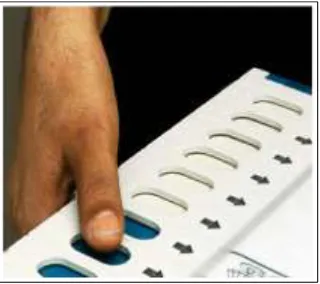
[image:3.596.220.380.298.440.2]In India first election using electronic voting is scheduled to hold from April 20 to May 10, 2004. India is the worlds largest democracy with a population of more than 1 billion, India has an electorate of more than 668 million and covers 543 parliamentary constituencies, and will require more than one million electronic voting machines (EVMs). The legal approval in 1989 to allow the use of EVMs, they have been used in many state elections but never used an entire general election. Electronic Voting Machines prepared by Electronics Corp of India and Bharat Electronics. In India, Electronic Voting Machines used for voting. Electronic Voting means any system in which voter casts his/her votes using an electronic system, rather than paper vote. The EVM comes in a reusable carry pack, and can operate on a battery power source in remote areas. According to Election Commission officials, each EVM can record five votes minute or nearly 3,000 votes in a polling day.Electronic Voting Machine is used to record votes in place of paper and boxes. This is a machine without any network connectivity, and nobody can interfere with programming and no one can manipulate its results. It contains microchip in the form of one time programmable basis. Once the program is burnt into microchip no one can altered. EVM machine we can see in fig 1.
Fig. 1. Existing Voting System
A. Disadvantages of existing voting system
1) Physical security of machine 2) Secure storage of castes votes 3) Risk of vote tampering
IV. PROPOSED METHODOLOGY
Fig. 2. Proposed System Architecture
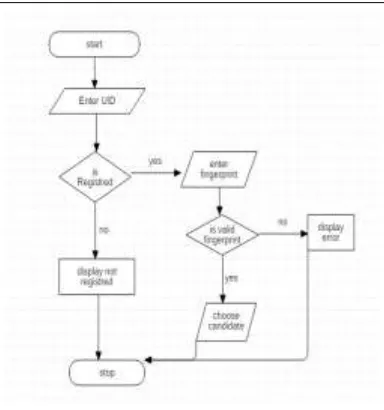
Fig 2 shows the proposed system architecture which see in brief as follows:
A. Voting
[image:4.596.197.389.444.649.2]Electronic voting is a voting system that uses electronic means of casting and counting votes. In fig 3 we see actual working of overall voting process. Workflow of voting system is as follows: Each voter has an unique ID number. For voting purpose The voter goes to a valve and receive a token, using the ID number. Each ID number is only grant to earn one token. Voter verification can be done by fingerprint recognition. Candidates list will displayed on web panel. The voter can vote online by dispatching the token to the account of the candidate they select. That voter cannot vote again, but the voter can examine the block chain to verify that the vote was correctly recorded, and also see the total votes for each candidate at any time. Live result will displayed at admin panel. Each vote is verified by the server, if valid then it digitally signed by the server for valid transaction. Invalid truncation where drops after verification.
B. Fingerprint Verification
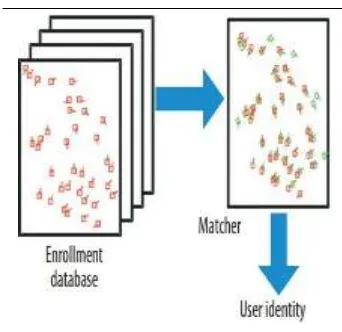
[image:5.596.213.383.177.348.2]Fingerprint verification is a process of confirming that a user is who they claim to be. It is one of the well known biometrics solution for authentication on computerized system. It is also known as fingerprint matching. In our system fingerprint verification used to validate voters identity. Fingerprint matching having two steps which are shown in fig.4 and fig.5 i.e. feature extraction and fingerprint matching. Fingerprint Matching Algorithm uses ISO template
Fig. 4. Feature extraction on basis of minutia
Fig. 5. Fingerprint matching on basis of minutia
C. Blockchain
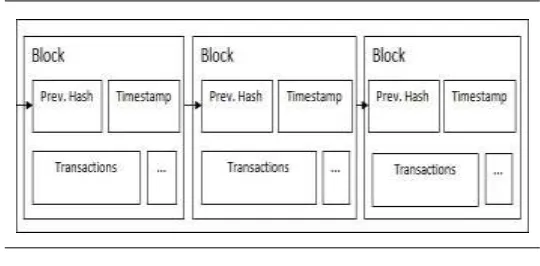
[image:5.596.210.381.380.546.2]Fig. 6. Structure of block chain
Now let’s take look on principles of blockchain. There are many principles related to blockchain[15]. Bloackchain is a very useful method towards this distributed world.
1) Networked Integrity: Network integrity is created by each action of nodes and due to distributed database, it is
not owned by one main member. Blockchain avoid third parties participation.
2) Distributed Power: It states that the power of network is spit through it by peer-to-peer connection and
there is no centralized authority place. No member can damage or break the system.
3) Security: Measures of its protection are defined by the Blockchains structure and have no single point of failure.
Confidentiality and integrity has been ensured. The usage of cryptography in the network is a must condition.Many security issues solved with the help of blockchain such as hacking, identity theft, phishing, fraud, and malware. the Blockchains transparency and security are able to ensure stability and development of global economy and specific industries.
4) Privacy: Individuals privacy is a basic human right, which should be preserved. The Internet is centralized
mechanism, which are collecting, analyzing and sharing users confidential data without notifying them about it. there are two major privacy issues in the Internet: collecting and using personal data without proper permission and inability of services to provide adequate security measures against centralized hacks.The Blockchain principle of privacy provides a new way of organizing the systems and reorganizes the way of personal identity shared over the Internet.
5) Rights Preserved: The Blockchain can be used to verify the ownership and define the conditions of how to spread
the content by applying smart contracts. The right field is an excellent opportunity for Blockchain, which can make a difference by providing a detailed and distributed ledger containing the data about the intellectual rights. Moreover, the usage of smart contracts can add an ability to define the rights ownership information and the royalty share.
D. Server
We use multicain stream to store for storing voters information and votes given by the voters. Multichain asset are used for voting i.e for transaction. Webserver is just used for GUI of users and administrators for easy interface or access. Multichain RPC-API are used for communication between webserver and multichain platform.
V. MODULE
Modules of proposed system is as follows:
A. Blockchain creation
Fisrt we need to install or setup blockchain platform. For this we use multichian platform 1.0.5from official site .
B. Stream Creation Here
C. Fingerprint registration
In this module all voter fingerprint are scan and store in database or device database for verification.
D. Asset
Creation Assets used for transaction. We use asset named token for voting. 1 token is equal to one vote. For voting token transfer from server to candidate account.
E. Candidate Account Setup
We need different account for each candidate for that create new address for each candidates. Token will transfer to these address.
F. Fingerprint Matching
It is also known as fingerprint verification. Here voters identity verification can be done.
G. Voting
After verification he can vote. Then list of candidate will displayed in front of voter. Then 1 token is transfer to selected candidate i.e. 1 vote is transfer to candidate.
H. Vote Counting
In this module wewill check the balance of candidate account. The current balance indicate the no of votes candidate received.
I. Display Result
In this module result is displayed on panel from admin panel.The current balance indicate the no of votes candidate received.
VI. ALGORITHM
A. Algorithm of Voting
1) Ask to enter Aadhar number
2) If Aadhar is valid then check for already voted else go to step 7 3) If not voted then ask for finger print verification else go to setp 7
4) If fingerprint is valid then display the candidates and ask for choice else go to step 7 5) Transfer 1 coin to selected candidate account
6) Add candidate aadhar number to block chain for check- ing already voted
7) Stop
B. Algorithm of Fingerprint Recognition
The proposed fingerprint matching algorithm uses ISO (In- ternational Organization for Standards) templates. The feature vector consists of the information; x, y-coordinates, direction, type and quality of each minutia. The following are the steps involved in the global and local minutia matching algorithm.
1) Query and reference ISO templates as input.
2) Get the query and reference templates x-y coordinates direction, type and quality.
3) Compute the edge pair information for each minutia to all other minutia.
4) Sort the edge pair information using distance.
5) Compute the similarity of edge pair information in query and reference templates for similarity.
6) Validate the matched minutia pairs with all other matched minutia pairs to remove false matched
minutia pairs.
7) Compute the matching score.
VII. MATHEMATICAL MODEL
i=n C = ∑ v
i=1 where,
C= Candidate account v= Voter vote i= Ranges number of voters from 1 to n Step 2: Add new vote in candidate account i=n
C = ∑ v + 1 i=1 where,
C= Candidate account v= Voter vote i= Ranges number of voters from 1 to n
Step 3: Add each voter’s aadhar number in blockchain this indicates error while voter trying to enter already voted voter’s aadhar number
j=n
B = ∑ A j=1
B= Voting Blockchain
A= Aadhar number of voter whose voting is already done j= Ranges number of voters from 1 to n
VIII. SCREEN-SHOTS OF PROPOSED SYSTEM
A. Multichain
Here voting chain is created and started for further system process as shown.
B. Home Page of Voting System
C. Voting Process starting
Here while clicking on start voting button in home page voter can start voting process and voter have to give aadhar card number for further voting as shown.
D. Fingerprint Verification
Here voter have to authenticate themselves by their registered fingerprint at the time of registration by admin as shown.
E. Voting
Here voter have to select candidate as per their choice for voting as shown.
F. Thanks to voter
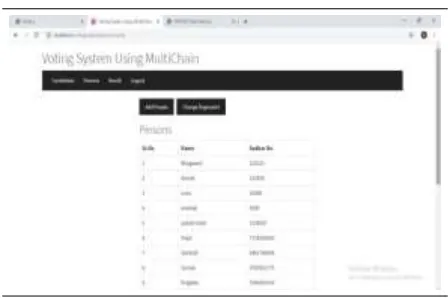
G. Voter List
Here at the admin side voter list is shown.
H. Candidate List
Here at the admin side candidate list is shown.
IX. RESULT ANALYSIS AND DISCUSSION
A. Results
No. of voter Correct Verifica- tion Correct Voting Count Accuracy
50 50 50 98-100%
100 100 100 96-100%
150 150 150 94-100%
[image:10.596.186.410.288.437.2]200 200 200 94-100%
In table 1, results of our proposed system shown on the basis of verification and voting count.In this, on the basis of security measures like Confidentiality, Integrity, Availability, Accountability, Non-repudiation,etc. the security analysis of the system carried out[14].
1) Confidentiality: The voting counts must be protected from external reading during the voting process. The
association between recorded votes and the identity of the voter must be completely unknown within the voting systems.
2) Integrity: The computer systems (in hardware and system software) must be tamperproof. Ideally, system
changes must be prohibited throughout the active stages of the election process. All data involved in entering and tabulating votes must be tamperproof. Votes must be recorded correctly.
3) Availability: The system must be protected against both accidental and malicious denials of service, and must be
available for use whenever it is expected to be operational.
4) Accountability: All internal operations must be monitored, without violating voter confidentiality. Monitoring and
analysis of audit trails must themselves be nontamperable.
5) repudiation: repudiation is the assurance that someone cannot deny the validity of something.
Non-repudiation is a legal concept that is widely used in information security and refers to a service, which provides proof of the origin of data and the integrity of the data.
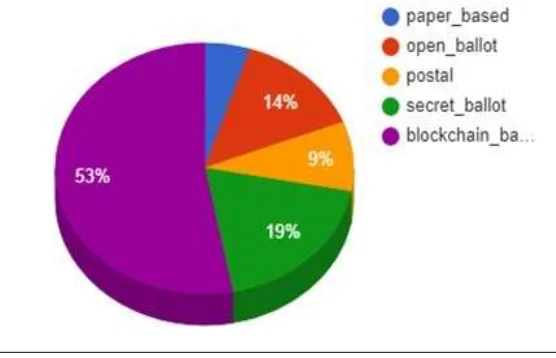
[image:11.596.169.447.444.623.2]In this, security measures between various voting systems are analyzed. Fig 7 shows security analysis between voting systems. On the basis of security present in voting system this analysis done. Voting systems like Paper-based voting, Postal voting, Open ballot voting, Secret ballot voting, Blockchain based Voting system, etc. are analyses and according to result our proposed system is more secure than other voting systems.
Fig. 7. Security analysis between various voting system
B. Discussion
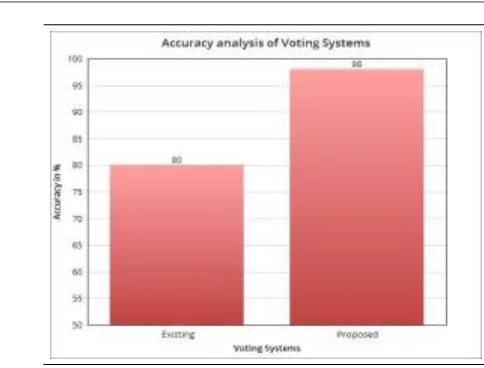
Fig. 8. Accuracy analysis between voting system
C. System Requirements
1) Software Requirement:
• Operating System : Microsoft Windows 8/10
• Tools : Multichain 1.5.0 • Language : PHP
2) Hardware Requirement:
• RAM : 4 GB • Hard Disk : 200 GB • Processor : Intel core i3
• Fingerprint Scanner
X. CONCLUSION
By developing this proposed permission based multichain platform for voting, we have succeeded in moving e-voting to the blockchain platform. We addressed some of the fundamental issues related to e-e-voting systems, by using the power of the multichain platform and the blockchain structure. Fingerprint verification used to authenticate voter’s identity. This is useful towards secure voting system. As a result of our proposed system, the concept of blockchain and the security methodology which it uses, immutable hash chains, has become flexible to polls and elections.
XI. ACKNOWLEDGEMENT
It is my privilege to acknowledge with deep sense of gratefulness to my guide Prof. Mrunalinee Patole for her kind cooperation, valuable suggestions and capable guidance and timely help given to me in completion of my project and paper. I express my appreciation to Prof. Vina M. Lomte, Head of Computer Department, RMDSSOE for her constant support and cooperation. Also I want to thanks reviewers of my paper to give me suggestions and despite their busy schedules, have taken out time to read my manuscript and give me a feedback.
REFERENCES
[1] Nir Kshetri, Jeffrey Voas Blockchain-Enabled E-Voting, 0740- 7459/18/33.00 2018 IEEE
[2] Ali Kaan Koc, Emre Yavuz, Umut Can Cabuk, Gokhan Dalkoloc ”To- wards Secure E-Voting Using Ethereum
Blockchain”, 978-1-5386-3449- 3/18/31.00 2018 IEEE.
[3] C.D. Clack, V.A. Bakshi, and L. Braine, Smart contract templates: foundations, design landscape and research
directions, Mar 2017, arXiv:1608.00771.
[4] F. Hao and P.Y.A. Ryan, Real-World Electronic Voting: Design, Analysis and Deployment, CRC Press, pp. 143-170,
2017.
[5] P. McCorry, S.F. Shahandashti, and F. Hao, ”A smart contract for board- room voting with maximum voter
[6] U.C. abuk, A. avdar, and E. Demir, ”E-Democracy-The-Next-Generation- DirectDemocracy-and-Applicability-in-
Turkey.pdf.(Nov 2016)
[7] G. Wood, ”Ethereum: a secure decentralised generalised transaction ledger”, Ethereum Project Yellow Paper,
vol. 151, pp. 1-32, 2014.
[8] Estonian National Electoral Committee E-voting System, 2010. [Online].
Available: https://www.valimised.ee/sites/default/files/ uploads/eng/General Description E-Voting 2010.pdf.
[9] E. Maaten, Towards remote e-voting: Estonian case, Electronic Voting in Europe-Technology, Law, Politics and
Society, vol. 47, pp. 83-100, 2004.
[10]S. Nakamoto, Bitcoin: a peer-to-peer electronic cash system, [Online]. Available:
https://bitcoin.org/bitcoin.pdf.
[11]M. Hochstein, Moscows Blockchain Voting Platform Adds Service for High-Rise Neighbors, CoinDesk, 15 Mar.
2018; https://www.coindesk.com/moscows-blockchain-voting -platform-adds-service-for-high-rise - neighbors.
[12]S. Horwitz, Getting a Photo ID So You Can Vote Is Easy. Un- less Youre Poor, Black, Latino or Elderly,
Washington Post, 23 May 2016;https://www.washingtonpost.com /politics/courts law/getting aphoto -id-so-you-can-vote-is-easy- unless -youre-poor-black-latino-or- elderly /2016/05/23/8d5474ec-20f0 -11e6-8690-f14ca9de2972 story .html noredirect5onutm term 5.233edc07152e.
[13]Not-So-Clever Contracts, Economist, 28 July 2016; https://www.economist.com/news/business
/21702758-time-being- least-human-judgment-still-better-bet-cold -hearted.
[14]”Security Criteria for Electronic Voting” Peter G. Neumann, Computer Science Laboratory, SRI International, Menlo
Park CA 940251-650-859- 2375 [email protected]
[15]”Blockchain: Foundational Technology to Change the World” Evgenii Khudnev Bachelors Thesis, School of
Business and Culture, Degree Programme in Business Information Technology Bachelor of Business Administration
[16]”Securing E-Voting System using Blockchain”, Komal K.Sharma, Prof. Mrunalinee
Patole, http://ijircce.com/upload/2018/november/9S ecuring.pdf
[17]https://www.bbc.com/news/world-asia-india-46987319
[18]
https://www.ndtv.com/india-news/lok-sabha-election-2019-april-11-phase-1-bjp-muzaffarnagar-candidate-sanjeev- balyan-wants-faces-in-b- 2021280
[19]
https://www.ndtv.com/india-news/general-election-2019-congress-leader-jitin-prasada-sister-finds-out-her-vote-is- already-cast-2030232
[20]
https://www.ndtv.com/video/player/news/congress-flags-60-lakh-fake-voters-in-madhya-pradesh-probe- ordered/486378
[21]https://caravanmagazine.in/vantage/why-india-needs-to-change-its- electoral-voting-system
BIOGRAPHIES
Komal Kundan Sharma M.E.(Computer) Student at Department of Computer Engineering, RMD Sinhgad
Prof. Mrunalinee Patole Department of Computer Engineering, RMD Sinhgad School of Engineering, Warje-58, Pune
Prof. Vina M. Lomte Department of Computer