Municipal Solid Waste (MSW)
characterization for Possible
Waste-to-Energy (WtE) conversion in Zambia
Brian Mushimba
1*
1
University of Zambia, Lusaka, Zambia
*Corresponding author: Brian Mushimba: [email protected]
Abstract:
Citation: Mushimba B. (2018)Municipal Solid Waste (MSW) characterization for Possible Waste-to Energy (WtE) conversion in Zambia. Open Science Journal 3(4)
Received: 5th June 2018
Accepted: 8th September 2018
Published: 4th October 2018
Copyright: © 2018 This is an
open access article under the terms of the Creative Commons
Attribution License, which permits unrestricted use, distribution, and reproduction in any medium, provided the original author and source are credited.
Funding: The author(s) received no specific funding for this work
Competing Interests: The author have declared that no competing interests exists.
Keywords:
Solid Municipal waste (MSW), Waste to Energy (WtE), Refuse Derived Fuel (RFD), Solid Recovered Fuel (SRF), Coal Substitution, Cement Manufacturing, Cement emissions.Introduction
Coal is one of the most used sources of energy on the planet. It is the second most important source of energy that covers 30% of global primary energy consumption (World Energy Council 2016). Due to its high calorific content and ease of burning, it is used predominantly in many pyro processes in the world as an excellent energy source due to its high calorific values (Slater B, 2011). In China for example, it accounted for 65% of the country’s total electricity generation in 2016 (Energy Brainpool 2017). According to the U.S. Energy Information Administration (EIA 2017), China’s usage of coal in the power sector will remain flat up to 2024 owing to increases in renewables. In USA, coal is also a significant source of energy for a large section of the power generation activities, contributing about 40% (DOE 2015). In cement manufacturing, coal has been traditionally the main source of heat energy worldwide (PCA 2011). It is abundant and its by-product of combustion blends easily with the end product of the pyro process in cement manufacturing and therefore highly preferred.
However, it is also a known fact that coal is not a very clean source of energy (Anderson JW, 2008). From the human and biological impact of black lung disease, asthma attacks and heart attacks attributed to its harmful emissions, to its geophysical impact on global warming and ozone layer depletion; better ways to control its use or find other ways to burn it more cleanly ought to be found. Because of the seemingly many advantages that coal has over other sources of energy that include its abundance and ease to convert to useful energy; it has continued to be exploited as an energy source even at the expense of people’s health (Anderson JW, 2008).
Municipal Solid Waste (MSW)
Municipal Solid Waste (MSW), commonly referred to as “trash” or “garbage”, is made up of all kinds of waste generated from residential, commercial and industrial sites. Its composition is made up of such items like old packaging materials, old furniture, old tires, newspapers, etc. When pretreated, it is also known as Solid Recovered Fuel (SRF). This waste generally excludes the medical, nuclear or other hazardous waste that is processed differently and disposed off in other ways (EPA 2008).
hazardous materials to ground water (contamination) and emissions of methane to the atmosphere (EPA 2011).
About 15% of generated MSW is disposed off through waste incineration with energy recovery (Heller and Keoleian 2000). But before MSW can be used for energy recovery in replacing fossil fuels, certain quality parameters have to be met (Glorius 2014). This quality is defined in terms of composition, heating value and environmental parameters such as chlorine and mercury concentration (Hassan and Kalam 2013). Combustion reduces the MSW to ash by about 75% (by weight and volume) for disposal. Although incineration of MSW produces some pollutants (such as CO2), it’s still considered a good way to deal with the growing amounts of waste in landfills because the carbon dioxide produced from the combustion has already been accounted for in the planet’s carbon cycle – it’s not a new addition to the carbon cycle. The byproducts of the incineration; heat energy and steam can be harnessed for power generation and in cement manufacturing.
In Lusaka (Zambia), there is very little known about the local MSW. Its composition is virtually unknown because very few sites have been studied thoroughly thus far. In the last few years, several small-scale studies have been sanctioned and carried out but have only provided limited information on MSW in Lusaka and Zambia (Mumba et al., 2011). However, effective waste management through MSW composition studies is important for numerous reasons. The composition of generated waste is extremely variable as a consequence of seasonal, lifestyle, demographic, geographic, and legislation impacts. This necessitates research studies on MSW composition determination. This variability makes defining and measuring the composition of waste more difficult and at the same time more essential (Gidarakos et al. 2006; Tatarniuk 2007).
Due to the fact that socio-economic development index and economic prosperity of any region determines the constituents of MSW, it is very important to study the MSW found in Zambia and understand its current make up thoroughly. Zambia has generally been growing its economy at a steady rate of roughly 6% per year in the past decade (World bank as cited in (Hampwaye et al. 2014)). This has seen the expansion of the middle class and with that, some changes in habits and standards of living leading to big impact on the MSW streams generated.
Materials and methods
Physical characterization
The physical characterization involved determining the various MSW categories, collection of waste at the appointed landfill site and sorting after the determination of the sort protocol. The sorting resulted into the various MSW being characterized into their various categories. This was done in Zambia at the landfill and at the university of Zambia laboratory for the moisture content study.
Chemical characterization
The chemical characterization of the MSW involved a laboratory assessment using various laboratory procedures. These procedures included but not exclusive to gravimetric analysis, micro analysis, bomb combustion or sintering, calorimetry and calculation. The others were ionic chromatography and mass spectrometry. All these procedures were conducted according to internationally accepted standards and guidelines highlighted alongside each test. A specialized laboratory in France was engaged for the thermal decomposition study on the MSW.
The laboratory experiments were performed using a horizontal furnace and a bomb calorimeter to study different end products of the MSW. The thermal decomposition happened at different atmospheric conditions in order to be able to analyze the dioxins and the furans (PCDD/PCDF) generated as a result of the thermal decomposition of the MSW provided from or found in Zambia. The bomb calorimeter calculated the calorific values of the MSW. The dioxins and furans (PCDD/PCDF), which are unintentional by-products of many combustion processes, were recorded and documented.
The chemical analyses were conducted on nine (9) different samples in order to reveal the concentrations of mineral compounds in the MSW using Ionic chromatography, a process that separates ions and polar molecules based on their affinity to the ion exchange (Inamuddin and Luqman 2012-). All the samples were analyzed according to the framework provided in guideline ISO 10304-1 (ISO 2007).
Moisture Profile
The moisture content of the sampled MSW was determined using the classic laboratory method of Loss on Drying (LOD) (Carbolite Gero Ltd 2018). It involved weighing of the sample material, heating it in an oven for an appropriate period, and then cooling it in the dry atmosphere of a desiccator. It was thereafter re-weighed. The difference in the two weight measures gave a good account of the volatile matter in the sample, which is generally attributed to moisture.
Calorific Value
combustion of the sample. Two values were obtained to express both the Higher Heating value (HHV) and the Lower Heating Value (LHV). The former involves determination of the total heat released of the sample including any volatile matter, particularly moisture. The LHV is determined after removing the heat of vaporization of the water vapor from the higher heating value. This ensured that the heat value determined was of the MSW/SRF sample, which could be useful in the energy substitution process.
The samples were analyzed using the XP CEN/TS 15400 standard, which provides the international standards for - Methods for the determination of calorific values’ for SRF. Two samples were analyzed for the HCV and the related LCV calculated. The laboratory determined HCV were related to the LCV which was calculated or theoretical ones as provided by the XP CEN/TS 15400 (CEN 2005).
Pollutants Profile
The experimental analysis of the pollutant profile was undertaken on the MSW samples in order to investigate the occurrence and amounts of any pollutants that may affect the kiln cement pyro-processing, the cement quality and potential for their emission into the atmosphere during the trials and subsequent use of the MSW in the energy substitution process. These procedures covered those for metal analysis and elemental analysis for non- metals.
Metallic Pollutants
Two principal investigative procedures were done on the MSW samples. They were all spectrometric laboratory procedures. These were Atomic Absorption Spectrometry (AAS) and Inductively Coupled Plasma Spectrometry (ICPS). Atomic absorption spectroscopy (AAS) is a Spectro-analytical procedure for the quantitative determination of chemical elements using the absorption of optical radiation (light) by free atoms in the gaseous state (Filho et al. 2012). This was principally applied in the determination of the existence of mercury hydrides in the sample and their relative amounts.
ICP mass spectrometry is employed in the detection of metals and several non-metals at concentrations as low as one part in 1015 (part per quadrillion, ppq) on non-interfered low-background isotopes (Dobson et al. 2018). This is achieved by ionizing the sample with inductively coupled plasma and then using a mass spectrometer to separate and quantify those ions. This latter procedure was undertaken to determine the presence and concentrations of any metals in the MSW samples. These included both the common and trace elements. This is a requirement as provided for in the adopted international standards that stipulate methods for the determination of elements in a sample.
Non-Metal Pollutants
infrared spectroscopy detection of the combustion gases was employed in the elemental analysis.
Bomb combustion was employed in the determination of the Sulphur and halogen constituents. It involves the combustion of the sample under elevated oxygen pressures; usually up to 25atm. Ionic Chromatography was employed in the determination of the total Chlorine. It is a process that separates ions and polar molecules based on their affinity to the ion exchanger.
Results
MSW Physical Characterization Analysis
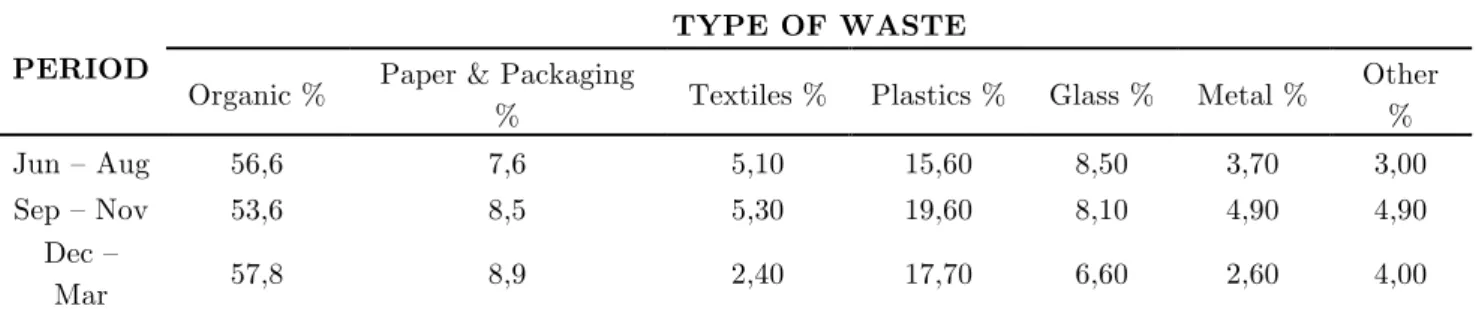
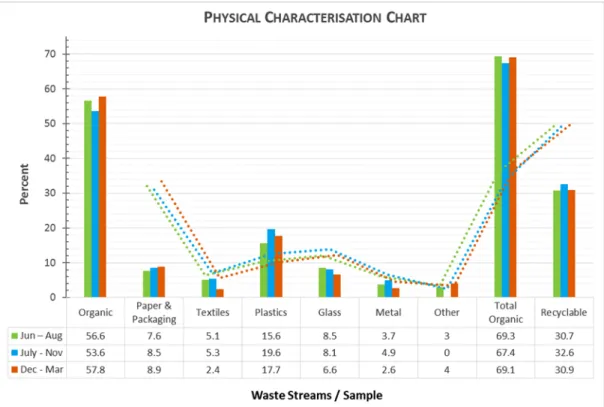
The results of the physical characterization are tabulated in Tables 1 and 2 and the graphical representation of the results is shown in figure 1.
Table 1: Results of the physical characterization by weight percentage, over the study period
PERIOD
TYPE OF WASTE
Organic % Paper & Packaging
% Textiles % Plastics % Glass % Metal %
Other %
Jun – Aug 56,6 7,6 5,10 15,60 8,50 3,70 3,00
Sep – Nov 53,6 8,5 5,30 19,60 8,10 4,90 4,90
Dec –
Mar 57,8 8,9 2,40 17,70 6,60 2,60 4,00
Based on the results in table 1, a further distinction was made to determine the number of recyclables of all forms from the different waste streams. Table 2 below shows the distribution over the same study period of recyclables and organic waste.
Table 2: Amounts of recyclables in the waste streams during the physical characterization by percentage
PERIOD
CHARACTERISED WASTE
Organic Waste
Figure 1: The results of the physical characterization over the characterization period
The results of the physical characterization reveal that organic waste was predominant and accounted for at least 50% of all the waste collected and sampled through each of the characterization periods, with the period December to March being highest at 58%. This result showed that total organic waste accounted for more than two-thirds or almost 70% (column of total organics) of the waste collected and sampled through-out the characterization period with recyclables (plastic, metal and others) taking up the remainder. Of these recyclables. Over 50%, an average of 18% for the whole period, were plastics, with glass at 7.7% average and others at 3.7%, making up the remainder for the whole period. The recycling of particularly glass may thus prove challenging due to the low recoverable amounts with recoverable metals exhibiting an even lower recovery amount. This may render the recycling process for these two, highly costly as the collection and sorting costs may be prohibitive towards achieving a sustainable recycling venture.
Further categorization revealed that household waste formed the bulk of the organic waste with over 50% (Table 2). This waste is generally high in moisture content, as shown in figure 2 for Moisture content Analysis.
Moisture Profile of the Waste Analysis
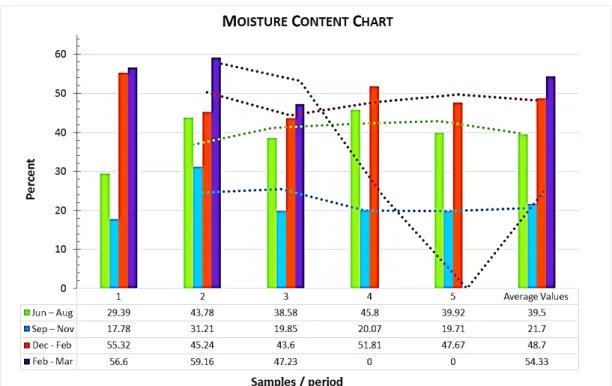
The moisture profile of the samples over the period of the characterization revealed the following behavior depicted in figure 2.
Figure 2: The results of moisture content profile over the characterization period
Conspicuous is the last four months of the sampling period, which reveals moisture content values that hover around 50%. This is December to February at almost 49% average, while the period February to March recorded 54.3%, with the whole period averaging at 51.5%. One of the samples within this period had almost 60% (sample 2, @59.16%) moisture content, while the other sample had 56.6%.
The first two sampling periods revealed lower moisture content values, with the period June to August averaging 39.5% and the September to November being at 21.7%, and the whole period averaging 30.6%. This initial sampling phase experienced the lowest moisture content value at almost 18% (sample 1, September–November). Thus, between the two sampling phases for ‘low’ and ‘high’, almost 21% moisture content difference exists for any MSW offering any potential for use as a source of alternate energy.
and drying of the MSW for eventual use as a potential alternate energy source in cement manufacturing.
MSW Chemical Characterization
Analysis
The chemical analysis on the MSW involved finite analysis that differentiated the elemental pollutants and the extracts of sulfur compounds, alkalis and chlorides. The graphical representation is shown in figure 3 below.
Figure 3: The laboratory chemical results of the alkali and sulphate extracts of the MSW
A total of eight /samples were analyzed for extracts of chlorides, nitrates, sulphates and orthophosphates. Of primary importance in the cement pyro process are the sulphate and chloride extracts, whose impacts are discussed below. Whilst the nitrates and orthophosphates were identified, their amounts were very minute and negligible. The average of the nitrates revealed amounts that were less than 0.017% by weight, while the orthophosphates averaged 0.009%.
Chloride Alkalis
The principal use of cement is in the construction industry as structural concrete for load bearing members. This is achieved by the mixing of cement (which provides the binding medium after the exothermic chemical reactions) with differently sized stone aggregates and sand in water. The required concrete strength is realized by varying the proportions of these three constituents of cement, aggregates and sand in water.
Several experiences from kiln operations (Stanton 1940) reveals that certain aggregates, especially siliceous aggregates such as opal-bearing rocks, chert and quartz, can react with alkalis in cement. The alkali content found in cement is derived in appreciable amounts in part, from the alkalis present in the fuel used in the pyro process, principally coal and other alternative fuels employed either in mono- or co-combustion process. The potential reaction leads to formation of an alkali silicate gel which creates expansive forces within the concrete and has been associated with cracking and failure of concrete sections (Frohnsdorff et al. 1978).
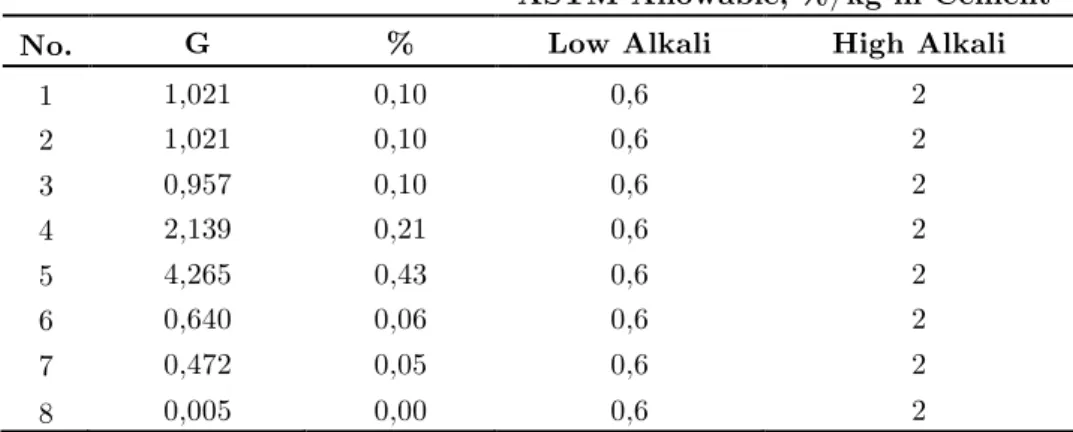
The other impact of high chloride content in cements, as derived from the fuel (coal/ MSW/SRF) alkalis, is the potential effect of the chlorides on corrosion of steel, when the cement is used in concrete, with steel reinforcing bars in most structural load bearing members. Thus, the ASTM Standard C-150, provides a further classification for cement as either a ‘low alkali’ or ‘high alkali’ cement. In the consideration for chloride alkalis, Low alkali cements limits are 0.6 % by weight and high alkali limits are 2.0%. Analysis of the chloride extracts revealed the following values tabulated in Table 3.
Of the eight samples analyzed, six were less or equal to 0.1%, one was 0.21% and the last one was 0.43% of the sample. This sampled MSW that was eventually used in the co-combustion process revealed alkali extracts that were less than 0.6%.
Table 3: The analyzed Chloride alkali values
ASTM Allowable, %/kg in Cement No. G % Low Alkali High Alkali
1 1,021 0,10 0,6 2
2 1,021 0,10 0,6 2
3 0,957 0,10 0,6 2
4 2,139 0,21 0,6 2
5 4,265 0,43 0,6 2
6 0,640 0,06 0,6 2
7 0,472 0,05 0,6 2
8 0,005 0,00 0,6 2
Sulphate Alkalis
Two other effects of high sulphate content are on cements and the internal refractory surface of the kiln. After the clinkering process is complete in the kiln, at over 1,000oC Calcium sulphate or gypsum is added to condition the clinker and thus be able to control the setting time of the concrete product, particularly structural concrete. The presence of excessive sulfate levels in cement have been associated with a condition known as "efflorescence” (Bogue 1955).This is the migration of a salt to the surface of a porous material, (setting concrete in this case) where it forms a coating. The essential process comprises the dissolving of the internally held salt in the cement in water. The water, with the salt now held in solution, migrates to the surface, and later evaporates, leaving a coating of the salt. This process affects the concrete strength.
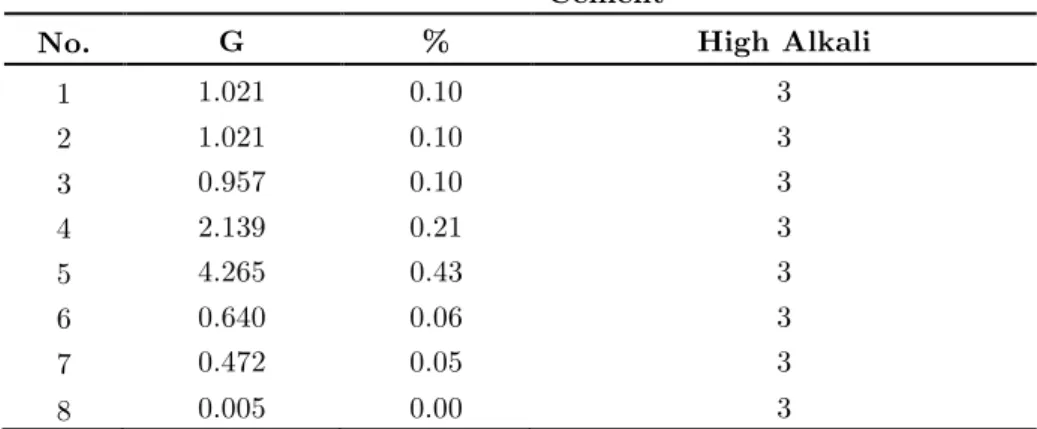
Additionally, the formation of deposits (known as "rings") in the middle of the kiln is sometimes attributed to cake inducing salts such as calcium sulfate and/or alkalis during the kiln service. Thus, even though cement kilns have ability to remove sulfur dioxides (SO2) from exhaust gases, limits on the amounts of sulfur which can be acceptably incorporated into the clinker have been developed by ASTM. This is 3% by weight. Analysis of the sulphate extracts from the MSW revealed the following values tabulated in Table 4.
Table 4: The analyzed Sulphate alkali values
ASTM Allowable, %/kg in Cement
No. G % High Alkali
1 1.021 0.10 3
2 1.021 0.10 3
3 0.957 0.10 3
4 2.139 0.21 3
5 4.265 0.43 3
6 0.640 0.06 3
7 0.472 0.05 3
8 0.005 0.00 3
Of the eight samples analyzed, six were less or equal to 0.1%, one was 0.14% and the last one was 0.69% of the sample. This sampled MSW revealed alkali extracts that were less than 1.0%. The elemental results of the assessment conducted on the MSW revealed 0% on dry basis by weight of all the nine samples that were tested for Sulphur (Table 4). This is consistent with the results from the alkali extracts.
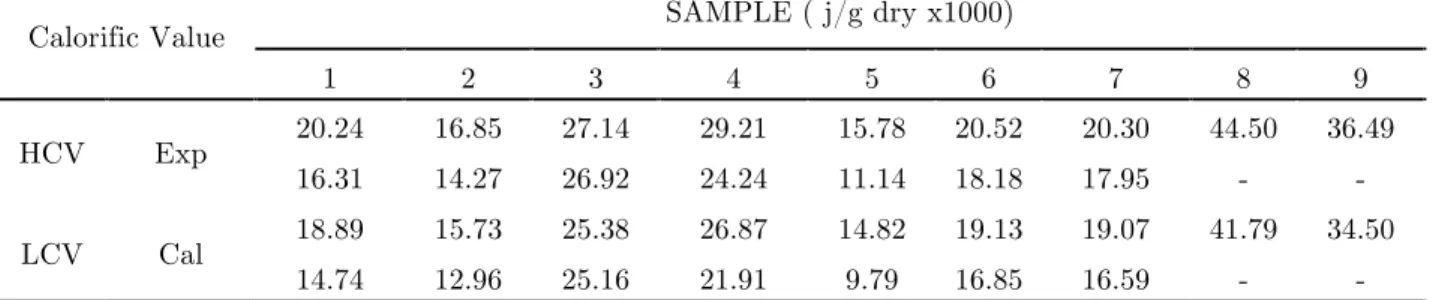
Calorific Value Analysis of the MWS
Table 5: The High and Low Calorific values of the MSW/SRF
Calorific Value SAMPLE ( j/g dry x1000)
1 2 3 4 5 6 7 8 9
HCV Exp 20.24 16.85 27.14 29.21 15.78 20.52 20.30 44.50 36.49 16.31 14.27 26.92 24.24 11.14 18.18 17.95 - -
LCV Cal 18.89 15.73 25.38 26.87 14.82 19.13 19.07 41.79 34.50 14.74 12.96 25.16 21.91 9.79 16.85 16.59 - -
The first 8 samples were analyzed to provide average working values for both the HCV and LCV. These are outlined in table 6.
Table 6:The Averaged High and Low Calorific values of the MSW/SRF
Type of Calorimetry
Average Calorific Values ( j/g dry x1000)
Experimental Theoretical
HCV 21.43 19.98
LCV 18.43 16.86
From the standard (CEN/TC 343), the most important characteristics of MSW that have to be met in order for the MSW to be of a high quality and usable in cement manufacturing in terms of its energy content is to be of relatively high calorific power in the range of 16-18MJ/kg. Since the analysis of the MSW in terms of calorific values from all the eight samples averaged a high of 21.43MJ/kg, this MSW proved to be a possible excellent substitution to coal in cement manufacturing as a source of energy.
Pollutant Profile Analysis of the MWS
The experimental analysis was undertaken on the MSW/SRF samples in order to investigate the occurrence and amounts of any pollutants that may either affect the kiln cement pyro-processing, the cement quality and or potential for their emission into the atmosphere during the subsequent use of the MSW/SRF in the energy substitution process.
Metallic Pollutants
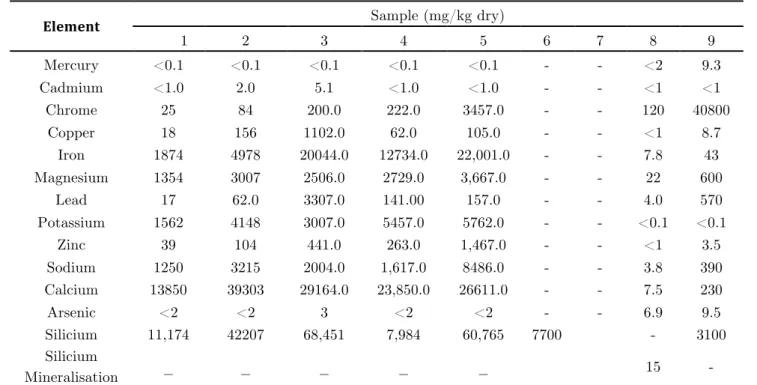
Table 7: The Pollutant profile values of the MSW/SRF
Element Sample (mg/kg dry)
1 2 3 4 5 6 7 8 9
Mercury <0.1 <0.1 <0.1 <0.1 <0.1 - - <2 9.3 Cadmium <1.0 2.0 5.1 <1.0 <1.0 - - <1 <1
Chrome 25 84 200.0 222.0 3457.0 - - 120 40800
Copper 18 156 1102.0 62.0 105.0 - - <1 8.7
Iron 1874 4978 20044.0 12734.0 22,001.0 - - 7.8 43 Magnesium 1354 3007 2506.0 2729.0 3,667.0 - - 22 600
Lead 17 62.0 3307.0 141.00 157.0 - - 4.0 570
Potassium 1562 4148 3007.0 5457.0 5762.0 - - <0.1 <0.1
Zinc 39 104 441.0 263.0 1,467.0 - - <1 3.5
Sodium 1250 3215 2004.0 1,617.0 8486.0 - - 3.8 390
Calcium 13850 39303 29164.0 23,850.0 26611.0 - - 7.5 230
Arsenic <2 <2 3 <2 <2 - - 6.9 9.5
Silicium 11,174 42207 68,451 7,984 60,765 7700 - 3100 Silicium
Mineralisation _ _ _ _ _ 15 -
The Mercury occurrence is of particular importance as its concentration is one of the primary pollutants considered in the consideration of MSW in the energy substitution process according to the international standard of CEN/TC 343. Mercury is a dangerous neurotoxin that interferes with brain and nervous systems. Exposure to mercury can be particularly hazardous for pregnant women and small children (Earthjustice 2008).
Analysis of the mercury presence in the solid waste as highlighted in table 7, revealed negligible presence of mercury in the MSW. Of the eight samples analyzed, six were less than 0.1 of the unit used, one was less than 2 of the unit used and the last one was discounted. This sampled MSW revealed mercury levels that were less than 0.1 per unit on majority samples and way below the acceptable or allowable limits of 0.1mg/nm3 (EPA,2016). And therefore, the MSW used for the experiment qualified as a high quality and usable alternate to coal in cement manufacturing in Zambia.
Non-Metal Pollutants
Table 1: The Elemental analysis values of the MSW
Element Sample (% dry)
1 2 3 4 5 6 7 8 9
Carbon 49 42.2 61.1 72.2 37.6 51.2 51.2 82.9 72.4
Hydrogen 6.7 5.52 8.54 11.37 4.67 5.84 5.96 12. 7 9.38
Sulphur _ _ _ _ _ - - - -
Chlorine (mg/kg
dry)
2513 4458 18720 4116 8980 - - 120 110
Non-Metal Pollutants
A combination of procedures was conducted on the elemental constituents of the MSW/SRF samples. These included Micro analysis, Bomb Combustion and Ionic Chromatography. The results of the experiments are tabulated in table 8:
Table 2: The Elemental analysis values of the MSW
Element Sample (% dry)
1 2 3 4 5 6 7 8 9
Carbon 49 42.2 61.1 72.2 37.6 51.2 51.2 82.9 72.4
Hydrogen 6.7 5.52 8.54 11.37 4.67 5.84 5.96 12. 7 9.38
Sulphur _ _ _ _ _ - - - -
Chlorine (mg/kg
dry)
2513 4458 18720 4116 8980 - - 120 110
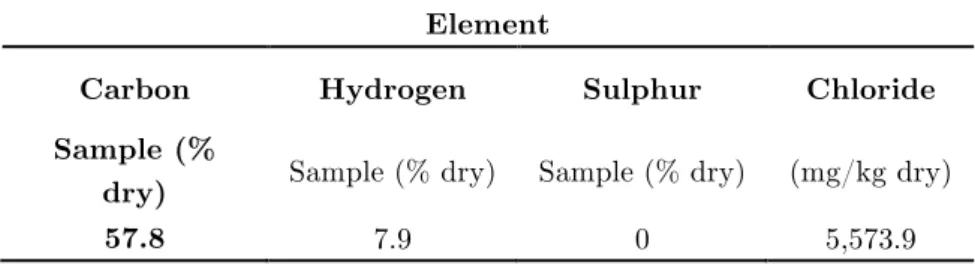
The averaged values for the samples tested are shown in table 9.
Table 3: The Averaged elemental analysis values of the MSW Element
Carbon Hydrogen Sulphur Chloride
Sample (%
dry) Sample (% dry) Sample (% dry) (mg/kg dry)
57.8 7.9 0 5,573.9
Clinker quality is also affected because Sulphur which is not combined with alkalis forms a solid solution with the silicate minerals. This type of Sulphur inhibits required chemical reactions in the kiln resulting in poor quality clinker and cement. If the chloride does not manage to escape, too much of it in the clinker will accelerate the corrosion of the reinforcing steel in the concrete.
From the results of the experiment, no Sulphur was detected in the sampled MSW. This is a good result for the viability of MSW as an alternate energy source in cement manufacturing. The results of the chloride availability in the sampled MSW showed that six samples were less or equal to 0.1% of the weight, one was 0.21% of the weight and the last 0.43% of the weight. Low alkali cements limits are 0.6 % by weight and high alkali limits are 2.0%. This sampled MSW/SRF revealed chloride alkali extracts that were less than 0.6% and the subsequent cement would then be low alkali cement better for steel longevity in the concrete that is reinforced with steel.
Discussion
MSW studied had a high organic content (high in carbon content) of approximately 56% of the weight. High Carbon content implies corresponding high calorific values. The MSW studied had high value of calorific value of 21.43 KJ/Kg and low value of 18.43KJ/Kg. A requirement for MSW to qualify as a good substitute for coal is that its calorific values range between 16-18MJ/kg. The MSW found in Zambia meets the standard required to be classified as a high quality and usable alternate to coal in cement manufacturing in Zambia.
MSW studied had the highest moisture content in the months of December to March (Rainy season in Zambia) of 51.5%. The other months of the year had moisture content that averaged 30.6%. To overcome the challenge of high moisture contents during the rainy season, three possible solutions could be implemented.
Ø Substantial amounts of MSW could be collected and pretreated during the dry phase of the year and stockpiled for use throughout the subsequent cement producing cycle. This will have to carefully incorporate the required MSW substitution ratios from which the minimum required limiting MSW quantities could be determined. This would require appropriate storage facilities to be available, to ensure the non-degeneration of the pretreated MSW before its dosing into the cement kiln operations.
Ø Collection and pretreatment of MSW throughout the year, with mechanisms installed or implemented which would facilitate the whole process of treatment that is unhindered by the upward change in MC that is greatly influenced by the changed climatic pattern for at least four months of the wet period of the year.
substitute for coal. In all these operations, the substitution ratios have to be considered to inform the quantities for recovery, stockpiling and dosing.
The MSW studied had chloride extract readings of an average of 0.13%, good enough to be considered a low chloride source of energy in cement manufacturing as per the ASTM standard. The sulfate extract readings averaged 0.13%, good enough to be considered a low sulfate source of energy in cement manufacturing as per the ASTM standard. The metallic pollutant profile of the MSW studied had low mercury level readings of less than 0.1 mg/Kg of dry; a good reading for its viability as a good source of alternate energy to coal in cement making.
The characterization of MSW showed that it could be a viable substitute to coal burning in cement manufacturing in Zambia. Apart from the high moisture content in the rainy season, the other readings were all favorable to its use as an alternate energy source. The high moisture content meant that during the pre-treatment for possible use in the cement manufacturing, other processes could be employed to help align the moisture content more before its use as the substitute for coal in cement manufacturing
Acknowledgment
I would like to thank my PhD supervisors, Dr Zebedia E. Phiri and Dr. Edwin G. Nyirenda. Both supervisors have encouraged me, showed lots of patience, supported the research with constant feedback and timely interjections leading to the refinement of the idea that has been fully explored and some of its findings shared in here. I’m very grateful to them.
Further appreciation goes to Lafarge Zambia, for availing their operations (cement kiln) in Chilanga and allowing the pilot project to be conducted and also for all their other support rendered during the pilot project such as the reference materials availed in the process and meeting the costs of the laboratory works in France.
References:
Bogue, R.H (1955): The Chemistry of Portland Cement. Reinhold Publishing Corp. New York, USA. Carbolite Gero Ltd (2018): Loss on Ignition / Loss on Drying / Thermogravimetric analysis. Available
online at https://www.carbolite-gero.com/applications/heating-applications/loss-on-drying-ignition/, checked on 5/18/2018.
CEN (2005): Solid recovered fuels. Methods for the determination of calorific value. CEN. Brussels. Dobson, J.; Ghag, C.; Manenti, L. (2018): Ultra-low background mass spectrometry for rare-event
searches. In Nuclear Instruments and Methods in Physics Research Section A: Accelerators, Spectrometers, Detectors and Associated Equipment 879, pp. 25–30. DOI: 10.1016/j.nima.2017.10.014.
Earthjustice (2008): Mecury polution from cement kilns double previous estimates. Earthjustice. Washington DC. Available online at https://earthjustice.org/news/press/2008/mercury-pollution-from-cement-kilns-double-previous-estimates, checked on 5/18/2018.
EIA (2017): International Energy Outlook 2017. U.S. Energy Information Administration (EIA). Energy Brainpool (2017): Energy Transition in the Power Sector in China. State of Affairs in 2016.
Review on the Developments in 2016 and an Outlook. Analysis on behalf of Agora Energiewende and China National Renewable Energy Centre.
EPA (2008): Municipal solid waste in the United States. 2007 facts and figures. United States Environmental Protection Agency Office of Solid Waste (5306P).
EPA (2011): Available and emerging technologies for reducing greenhouse gas emissions from municipal solid waste landfills. United States Environmental Protection Agency Office of Air and Radiation. North Carolina USA.
Filho, Hélcio José Izário; Peixoto, André Luís de Castro; Neto, Ângelo Capri; Alcântara, Marco Aurélio Kondracki de; Capri, Maria da Rosa; Salazar, Rodrigo Fernando dos Santos (2012): State-of-the-Art and Trends in Atomic Absorption Spectrometry: INTECH Open Access Publisher.
Frohnsdorff, G.; Clifton, J.R; Brown, P.W (1978): History and Status of Standards Relating to Alkalis in Hydraulic Cements," Cement Standards: Evolution and Trends, P.K. Mehta, Ed. American Society for Testing and Materials. West Conshohocken, PA (ASTM STP 663).
Gidarakos, E.; Havas, G.; Ntzamilis, P. (2006): Municipal solid waste composition determination supporting the integrated solid waste management system in the island of Crete. In Waste management (New York, N.Y.) 26 (6), pp. 668–679. DOI: 10.1016/j.wasman.2005.07.018. Glorius, T. (2014): Production and Use of Solid Recovered Fuels. Developments and Prospects. ZKG.
Cologne Germany. Available online at http://bgs-ev.de/preview/wp-content/uploads/2015/02/AFR_Remondis-Glorius_final_280814.pdf, checked on 9/25/2018. Hampwaye, G.; Jeppesen, S.; Kragelund, P. (2014): Zambia country background report. Successful
African Firms and Institutional Change (SAFIC) Project.
Hassan, Masjuki Hj.; Kalam, Md. Abul (2013): An Overview of Biofuel as a Renewable Energy Source: Development and Challenges. In Procedia Engineering 56, pp. 39–53. DOI: 10.1016/j.proeng.2013.03.087.
Heller, M.C; Keoleian, G.A (2000): Life Cycle-Based Sustainability Indicators for Assessment of the U.S. Food System. University of Michigan (CSS00-04).
Inamuddin; Luqman, Mohammad (2012-): Ion-exchange technology. Dordrecht: Springer.
ISO (2007): Water quality-determination of dissolved anions by liquid chromatography of ions. Determination of bromide, chloride, flouride, nitrate, nitrite, phosphate and sulfate. 2nd ed. Geneve Switzerland.
PCA (2011): Report on sustainable manufacturing. Portland Cement Association.
R.W. Beck, Inc. (1998): Iowa Department of Natural Resources. Retrieved from Iowa Solid Waste Characterization Study. Available online at http://www.iowadnr.gov/portals/idnr/uploads/waste/wastechar98.pdf, checked on 4/18/2017. Stanton, T.E (1940): Expansion of Concrete through Reaction between Cement and Aggregate 66, pp.
1781–1811.
Tatarniuk, Catherine (2007): The feasibility of waste-to-energy in Saskatchewan based on waste composition and quantity.