© 2019, IRJET | Impact Factor value: 7.211 | ISO 9001:2008 Certified Journal | Page 3661
A New Approach to Economic Load Dispatch by using Improved QEMA
based Particle Swarm Optimization Considering Generator Constraints
Himanshu Shekhar Maharana
1, Saroj Kumar Dash
21
Ph.D Research Scholar in Electrical Engineering, Biju Patnaik University of Technology, Rourkela, Odisha, India
2HOD, EE (Ph.D Supervisor), GITA, Bhubaneswar, Biju Patnaik University of Technology, Rourkela, Odisha, India
---***---Abstract – Economic Load Dispatch (ELD) proves to be a vital optimization process in electric power system for allocating generation amongst various units to compute the cost of generation , the cost of emission involving global warming gases like sulphur dioxide, nitrous oxide and carbon monoxide etc. This article proposes a new heuristic for global multi objective optimum dispatch using improved Quantum behaved electro-magnetism algorithm particle swarm optimization (QEMAPSO) algorithm approach. QEMA employs q bit for spinning up and down the states of a particle to specify the position of a charge particle. The resultant force of interaction due to various charge particles is ascertained using the principle of superposition. The particle position is updated using quantum rotation gates and the probability amplitudes of thi
dimension of thj
particle and is followed thereby vide a swarm optimization technique for neutralizing the valve point effect and supporting forbidden zones. The results obtained by using QEMA based PSO method for the cost of generation, cost of emission and combined objective function by the proposed method for 6 units IEEE 30 bus test case systems. This research paper tries to show the numerical detailing of Economic load dispatch issue arrangement utilizing delicate registering method in electric era structure considering different physical and power induced system imperatives. This method increases the tendency of particles to venture into the solution space to ameliorate their convergence rates.Key Words: Economic load dispatch, Equality constraints, In-equality constraints, improved Quantum behaved electromagnetism algorithm, Particle swarm optimization, Genetic Algorithm, Evolutionary Programming, Dance bee colony optimization.
1. INTRODUCTION
Power system stability is the tendency of a power system to develop restoring forces equal to or greater than the disturbing forces to maintain the state of equilibrium. In this paper, improved QEMA based particle swarm optimization which is one of the computational algorithm technique is applied successfully to solve the problem of economic load dispatch. The objective function considered here is minimization of fuel cost of generators for IEEE 30 bus 6- generating systems used in thermal power plant.
In the current electric power frameworks, there are distinctive creating units e.g. hydro, steam, and biomass and so on. Likewise, the heap request vacillates for the time of a day and achieves diverse pinnacle esteems. In this way, it is basic to settle on which producing unit to off/on and furthermore the request in which the units must be closed down remembering the cost benefit of turning on and stopping. The entire work of figure and making these evaluations is known as load dispatch. The financial load dispatch implies that the generator's yield is permitted to change inside persuaded restrains so that to take care of a specific load demand contained by least fuel cost.
© 2019, IRJET | Impact Factor value: 7.211 | ISO 9001:2008 Certified Journal | Page 3662
genetic algorithm (GA) [3], evolutionary programming (EP) [4],Dance bee colony optimization[10] many other methods were successfully implemented in practical ED problems significantly improving the existing results of the problem.2. PROBELM FORMULATION
The basic ELD problem is formulated in equation (1) and (2) as follows. 2
(
)
sin( (
)) (1)
i i i i i i i i i i
Z
a PG
b PG
C
K
l P PG
2
(
)
(2)
i i i i i i
J
h PG
g PG
q
Where
Z
iandJ
i are cost and emission objective functions anda
i,
b
i,c
i,K
i,l
iandh
i,
g
i,
q
iare cost and emissionobjective function coefficients. It involve combined objective formulation encompassing cost as well as emission objective function vide price penalty factor
Pf
i is formulated as (3).(3)
i i i i
S
Z
Pf
J
max max
(4)
i i iZ
Pf
J
The constraints involved in this work are
(i)Equalityconstraint 1
(5)
n D iPGi
P
TransmissionLoss
Where
P
D= net power demand.(ii) Inequality constraint
(6)
i i j
P PG P
Where PGi represents the output power ofi
thgeneratingunit,
P
iandP
j are minimum and maximum output3. OVER VIEW ON PSO TECHNIQUES
This section describes the proposed Particle Swarm Optimization method. It is an optimization and search technique based on the principles of social behavior of animals. The method was developed in 1995 by James Kennedy and Russell Eberhart [2]. PSO is very good at finding good enough solutions for a large range of problems, such as constrained optimization problems, multi-objective optimization problems, etc.
It is a simple and powerful optimization tool which scatters random particles, i.e., solutions in the problem space. These particles, called swarms collect information from each array constructed by their respective positions. The particles update their positions using the velocity of particles. Position and velocity are both updated in a heuristic manner using guidance from particles’ own experience and the experience of its neighbour so obtain position and velocity vectors viz.
best
P
andg
best i.e.(P
1best,P
2best…..P
ibest) and (g
1best,g
2best…..g
ibest) respectively. The updated values of position and velocity are computed using equation (7) and (8).( 1)
1
( )
1 1(
)
2 2(
)] (7)
t t t
i best i best i
V
WV t C Rand P
x
C Rand g
x
1 1
(8)
t t t
i i i
x
x
V
Where
C
1,C
2are acceleration coefficients W = Inertia weightt i
V
= Initial thi
particle after tht
iteration 1t i
V
= Updated velocity of particle at t+1 iteration ti
X
= Initial thi
particle after tht
iteration 1t i
X
= Updated position of particle at t+1 iteration© 2019, IRJET | Impact Factor value: 7.211 | ISO 9001:2008 Certified Journal | Page 3663
4. PROPOSED IMPROVED QEMA BASED PSO ALGORITHMThis PSO algorithm is utilized mainly to determine the optimal allocation of power among the committed units, thus minimizing the total generation cost. To implement this PSO algorithm to solve the ELD problems mentioned steps should be described in the following steps.
Step – 1
The Solution obtained from QEMA for cost objective function is T treated as the initial solution for the PSO based Stochastic Optimization [3].
Step – 2
When the current fitness function
L
i becomes better thanbest
P
functionL
0 thenL
i
L
0newOtherwise,
old
i
L
L
0Step Step – 3 Initialize
g
bestStep – 4
Assign best of new current fitness function and old
P
bestfunction to
g
best Step – 5Current position t
i iQPSO i iQPSO
x
Z
PF
J
Step – 6Current velocity t min
()(
max min)
i i i i
V
U
Randi
U
U
The Step – 7Update the velocity and position for particle ( 1)
1( ) 1 1( ) 2 2( )]
t t t
i best i best i
V WV t C Rand P x C Rand g x
,
x
it 1x
itV
it 1
where 1 1
,
t t
i i
V
x
are the update velocity, update position for each particle. Step - 8If Particle position t 1 i
x
is greater than or equal to bound specified in the valve point effect &forbidden zones then stop otherwise go to step 2[4].5. RESULT ANALYSIS:
Unit i
a
b
ic
ih
ig
iq
ik
il
iPg
iminPg
imaxPg
inew1 0.1421 37.429 755.75 0.0035 0.3244 23.849 290 0.025 15 105 0.2273
2 0.0951 45.141 450.325 0.0038 0.32665 23.849 190 0.032 25 155 0.1838
3 0.0182 39.383 1048.82 0.00672 0.54711 40.270 190 0.032 35 205 0.1395
4 0.0021 37.302 1234.55 0.00102 0.54632 40.2608 140 0.053 45 255 0.0947
5 0.009 35.321 1652.52 0.00500 0.5112 42.8855 140 0.053 65 355 0.0495
6 0.165 37.245 1352.65 0.00502 -0.5138 50.8553 140 0.053 85 455 0.0041
© 2019, IRJET | Impact Factor value: 7.211 | ISO 9001:2008 Certified Journal | Page 3664
Table (2): Performance Comparison for operating cost Objective Functions for generating units
Table (3): Performance Comparasion for Emission Level for generating units
Table (4): Performance Comparison for combined Objectives for generating units
RESULTS AND DISCUSSION:
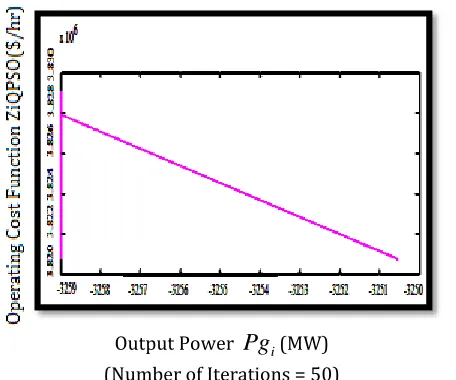
[image:4.595.76.525.64.213.2]Output Power
Pg
i(MW) (Number of Iterations = 50)Fig.1 Operating cost function
ZiQPSO
Vs. Real powerPg
i Unit Emission level forimproved QEMA based PSO method in
(T/hr×105)
Emission level for improved QEMA PSO
method for Genetic algorithm in (T/hr×105)
Emission level for For Dance Bee Colony Optimization method in
(T/hr×105)
1 2.7075 2.8021 2.921
2 2.708 2.825 2.962
3 2.7085 2.8084 2.989
4 2.709 2.812 2.941
5 2.7095 2.8096 2.811
6 2.71 2.79 2.97
Unit Operating Cost For
improved QEMA based PSO method in
(M$/hr)
Operating Cost For
improved QEMA PSO method for Genetic algorithm method in
(M$/hr)
Operating Cost For Dance Bee Colony Optimization method in
(M$/hr)
1 3.8208 3.9103 3.8014
2 3.8279 3.9002 4.1012
3 3.8285 3.8351 3.8755
4 3.8287 3.9782 4.2105
5 3.8291 4.2112 4.2887
6 3.8288 4.1445 4.3017
Unit Combined Objective Cost for improved QEMA based PSO method
in (M$/hr)
Combined Objective Cost for Genetic algorithm
method in (M$/hr)
Combined Objective Cost for Dance Bee Colony Optimization
method in (M$/hr)
1 3.4 3.23 3.71
2 3.5 3.46 3.83
3 3.6 3.58 3.91
4 3.7 3.64 3.96
5 3.8 3.74 4.14
[image:4.595.87.517.254.378.2] [image:4.595.33.527.409.521.2] [image:4.595.187.415.563.753.2]© 2019, IRJET | Impact Factor value: 7.211 | ISO 9001:2008 Certified Journal | Page 3665
Output PowerPg
i (MW)(Number of Iterations = 50)
Fig.2 Emission level function
JiQPSO
Vs.Real powerPg
iOutput Power
Pg
i (MW) (Number of Iterations = 50Fig.3 Combined objective function
SiQPSO
Vs. Real powerPg
iThe above various objective functions are analysed by writing programmes in MATLAB software.
4. COMPARASION OF RESULT ANALYSIS BASED ON IMPROVED QEMA PSO
Based on 50 numbers of iterations an improved QEMA based PSO cost objective function shows that the optimum amount of real power generation with minimize fuel cost, this PSO based emission level function is slightly decreasing & this PSO based combined objective function is slightly increasing. These results are compared with the results available in literature for 6- generator, IEEE 30 bus system and it is found that results are significantly improved by the proposed algorithm.
© 2019, IRJET | Impact Factor value: 7.211 | ISO 9001:2008 Certified Journal | Page 3666
6. CONCLUSIONSTuning of various parameters of improved QEMA based PSO [8] is important and it is found that the values of parameters in this paper are perfect for the improvement of results. The results demonstrate that this PSO out performs other methods, particularly for non-convex cases, in terms of solution quality, dynamic convergence, computational efficiency, robustness and stability. The proposed algorithm can also be applied to other power system optimization problems like dynamic economic dispatch and reactive power dispatch. The proposed method presented advanced PSO technique involving valve point loading, ramp rate constraints, constriction factor based swarm optimization [1] tool box for analysing the economic dispatch problem. The results of this analysis outperform classical methods like lambda iteration method, mixed integer linear programming method quadratic programming method etc. and heuristic methods like particle swarm optimization, weight improved particle swarm optimization, dispersed particle swarm optimization, Genetic Algorithm[6],[7] etc. in terms of computational time for better optimal solution.
An improved QEMA based PSO deals with personal experience of agents in going from personal best to global best so it effectively deals with POZ in electric power system and yields thereby optimum operating cost for multi-objective Economic Load Dispatch problem.
7. REFERENCES
1. H i m a n s h u S h e k h a r M a h a r a n a , S. K. Dash, Ramp Rate and Constriction Factor Based Dual Objective Economic Load Dispatch Using Particle Swarm Optimization, International Journal of Energy and Power Engineering in ICEESAO Conference, WASET, San Francisco, USA, Vol.11 ,pp. 636-640, June 2017,doi.org/10.5281/zenodo.11350659
2. J h a g, J hen -Yan, L.ee, Kun-Chou, ”Array pattern optimizationusing electromagnetism-like algorithm”, AEU - International Journa of Electronics and Communications ,vol. 63, pp [02] .491-496, Jan. 2009, doi: 10.1007/978-3-319-56991-8_6
3. J i a n g J i a n g u o , w a n g Juan, Z a n g M i n g x i a n g, Zhou we n h o n g , An image retrieval algorithm based on improved electromagnetism-like mechanism, Journal of Information and Computational Science, vol.11,no.16,pp.5895-5903,Nov. 2014 doi: 10.12733/jics20104901
4. S. H. Ling, H. K. Lam, Y. S. Lee, Improved genetic algorithm for economic load dispatch with valve point loadings, The 29th Annual Conference of the IEEE Industrial Electronics Society,pp.442-447,Dec.2009,doi:10.1109/ISAP.2009.5352843
5. L.L. Lai, Evolutionary Programming for economic load dispatch of units with non-smooth input-output characteristic function, In Intelligent System Applications in Power Engineering – Evolutionary Programming and Neural Networks, Chichester, U.K, Wiley ch.8,1998, doi: 10.1109/TEVC. Mar 2003.806788
6. P. A t t a v i r i y a n up a p, H. K i t a, et al. ,A hybrid EP and SQP for dynamic economic Dispatch with non- smooth fuel cost function, IEEE Transaction Power S y s tem, vol. 17,pp. 411-416,2002, doi: 10.1109/TPWRS. Aug 2002.1007911
7. D. C .Walter , G.B. S h e b le , Genetic algorithm solution of economic dispatch with valve point loading, IEEE Trans. Power Syst., vol.8 pp.1325-1332,Aug 1993, doi: 10.1109/59.260861
8. Himanshu Shekhar Maharana, Bijoy Tapan Mohan Nayak ,”Solution of Combined Emission Economic Load Dispatch in Thermal Power Plant by using Particle Swarm Optimization”, International Research Journal of Engineering and Technology (IRJET),Volume:05,Issue:09, Pp. 1168-1172, Sep 2018.
9. M. N. A b u d u l l ah, A.H.A. B a k ar et.al, “M o d i f i e d Particle Swarm Optimization with Time Varying Acceleration Coefficients for Economic Load Dispatch with Generator Constraints” ,Journal of ElectricalTechnology,Vol.9,No.1:pp.15-26,2014, doi:http://dx.doi.org/10.5370/JEET.2014.9.1.015
© 2019, IRJET | Impact Factor value: 7.211 | ISO 9001:2008 Certified Journal | Page 3667
BIOGRAPHIES
Himanshu Shekhar Maharana completed his B. Tech degree in EEE from JITM, Paralakemundi under BPUT, Rourkela, Odisha in 2010 and Completed M. Tech degree in Power System Engineering from GITA, Bhubaneswar BPUT, Rourkela, Odisha in the year 2014. At present he is continuing full time Ph.D. under the guidance of professor Dr. Saroj Kumar Dash in BPUT, Rourkela, Odisha. He has awarded with best research paper during his Ph.D work i.e. “Ramp Rate and Constriction Factor Based Dual Objective Economic Load Dispatch Using Particle Swarm Optimization”, International Journal of Energy and Power Engineering, Volume: 11, No: 6, Pp.636 - 640 in ICEESAO conference, World Academy of Science, Engineering and Technology, San Francisco, USA during 7th -8th, June 2017.
Saroj Kumar Dash received the UG degree in Electrical Engineering from I.E, India in 1991 and accomplished Masters’ Program in electrical engineering from UCE, Burla (Sambalpur University), India, in 1998 and the Ph.D. degree from Utkal University, Odisha, India in the year 2006. He has been with the Electrical Engineering Department, Gandhi Institute for Technological Advancement as a Professor and Head of the Department since 2005. His research interests are power system planning, operation, and optimization techniques applied to power systems. Dr. Dash received Pandit Madan Mohan Malaviya award, Union Ministry of Power Prize and gold medals thereof for his research papers on Multi Objective Generation Dispatch. He too authored two books entitled ‘Fundamentals of Electromagnetic Field Theory’ and ‘Basic Electrical Engineering’ under the umbrella of PHI Publication and YESDEE