TEGENERO CLINICAL TRIALS DISASTER
1,*
Mahmood Kahtan Salih,
1
Department of Pharmacology and Toxicology, College of Pharmacy, University of Baghdad
2
Department of Clinical Laboratory Sciences, College of Pharmacy, University of Baghdad
3
Department of Clinical Pharmacy, College of Pharmacy, University of Baghdad
ARTICLE INFO ABSTRACT
CD28 and Tumor necrosis factor (TNF) co of naïve T
peripheral homeostasis. These T
cells these cells are involved in the autoimmune disease as they act as immunosuppressant, studies shown that targeting of CD28 with monoclonal antibodies (mAbs) produces as significant increase in CD4 cell count in peripheral blood, spleen and the lymph nodes. In case of CD28, stimulatory mAbs act as artificial ligand that mimic the effect of natural ligands and cause co
mAbs have super agonistic activity. TeGener humanized super agonist anti
absence of stimulation by T response
thought to possess a therapeutic effect in autoimmune disorders, and after extensive preclinical studies, TGN1412 approved for clinical trials. Unfortunately, the c
volunteers suffered from severe adverse effects of the drug as discussed in this review.
Copyright © 2019, Mahmood Kahtan Salih et al. This unrestricted use, distribution, and reproduction in any medium,
INTRODUCTION
CD28 and Tumor necrosis factor (TNF) co-stimulatory signals are required for recruitment and expansion of naïve T (Boesteanuand Katsikis 2009). CD28 has been shown to regulate both the development of T-regulatory cells in the Thymus and their peripheral homeostasis (Tang
These T-regulatory cells (CD25+ and CD4+) constitute 5 of the peripheral T-cells these cells are involved in the autoimmune disease as they act as immunosuppressant (Tang
et al. 2003, Masteller et al. 2005). It has been shown that targeting of CD28 with monoclonal antibodies (mAbs) produces as significant increase in CD4 cell count in peripheral blood, spleen and the lymph nodes (Shi et al
Abs could be used either to block or stimulate specific cell receptor by mimicking the action of endogenous ligand (Hünig and Dennehy2005), in case of CD28 stimulatory mAbs act as artificial ligand that mimic the effect of natural ligands and cause co-stimulation of the T-cells and some of these mAbs have superagonistic activity (Hünig and Dennehy2005). The superagonistis defined as a ligand that binds to speci receptor and produces a response greater than that of endogenous ligand with an efficacy exceeding 100 % (Carlier
et al. 2002).
*Corresponding author: Mahmood Kahtan Salih,
Department of Pharmacology and Toxicology, College of Pharmacy, University of Baghdad.
ISSN: 0975-833X
Article History:
Received 19th October, 2018
Received in revised form 06th November, 2018
Accepted 09th December, 2018
Published online 31st January, 2019
Citation:Mahmood Kahtan Salih, Ali A. Kasim and Dhulfiqar Nidhal Alhilali Research, 11, (01), 430-436.
Key Words:
TeGenero, Clinical Trials, Catastrophy
REVIEW ARTICLE
TEGENERO CLINICAL TRIALS DISASTER
Mahmood Kahtan Salih,
2Ali A.
Kasim
and
3Dhulfiqar Nidhal Alhilali
Pharmacology and Toxicology, College of Pharmacy, University of Baghdad
Department of Clinical Laboratory Sciences, College of Pharmacy, University of Baghdad
Department of Clinical Pharmacy, College of Pharmacy, University of Baghdad
ABSTRACT
CD28 and Tumor necrosis factor (TNF) co-stimulatory signals are required for recruitment and expansion of naïve T-cell, CD28 regulates both the development of T-regulatory cells in the Thymus and their peripheral homeostasis. These T-regulatory cells (CD25+ and CD4+) constitute 5
cells these cells are involved in the autoimmune disease as they act as immunosuppressant, studies shown that targeting of CD28 with monoclonal antibodies (mAbs) produces as significant increase in CD4 cell count in peripheral blood, spleen and the lymph nodes. In case of CD28, stimulatory mAbs act as artificial ligand that mimic the effect of natural ligands and cause co-stimulation of the T
mAbs have super agonistic activity. TeGenero, a German company, developed a recombinantly expressed humanized super agonist anti- CD28 mAbs (TGN1412). TGN1412 produced T
absence of stimulation by T-cell receptor in the ex-vivo studies without provoking proinflammatory response; hence, TGN1412 shown to have the ability to activate regulatory T
thought to possess a therapeutic effect in autoimmune disorders, and after extensive preclinical studies, TGN1412 approved for clinical trials. Unfortunately, the clinical trial does not went well as six of the volunteers suffered from severe adverse effects of the drug as discussed in this review.
This is an open access article distributed under the Creative Commons medium, provided the original work is properly cited.
stimulatory signals expansion of naïve T-cell (Boesteanuand Katsikis 2009). CD28 has been shown to regulatory cells in the Thymus and their peripheral homeostasis (Tang et al. 2003). regulatory cells (CD25+ and CD4+) constitute 5-15% cells these cells are involved in the autoimmune disease as they act as immunosuppressant (Tang . 2005). It has been shown that targeting of CD28 with monoclonal antibodies (mAbs) rease in CD4 cell count in peripheral
et al. 2012), thesem Abs could be used either to block or stimulate specific cell receptor by mimicking the action of endogenous ligand (Hünig imulatory mAbs act as artificial ligand that mimic the effect of natural ligands and cells and some of these mAbs have superagonistic activity (Hünig and Dennehy2005). The superagonistis defined as a ligand that binds to specific receptor and produces a response greater than that of endogenous ligand with an efficacy exceeding 100 % (Carlier
Department of Pharmacology and Toxicology, College of Pharmacy,
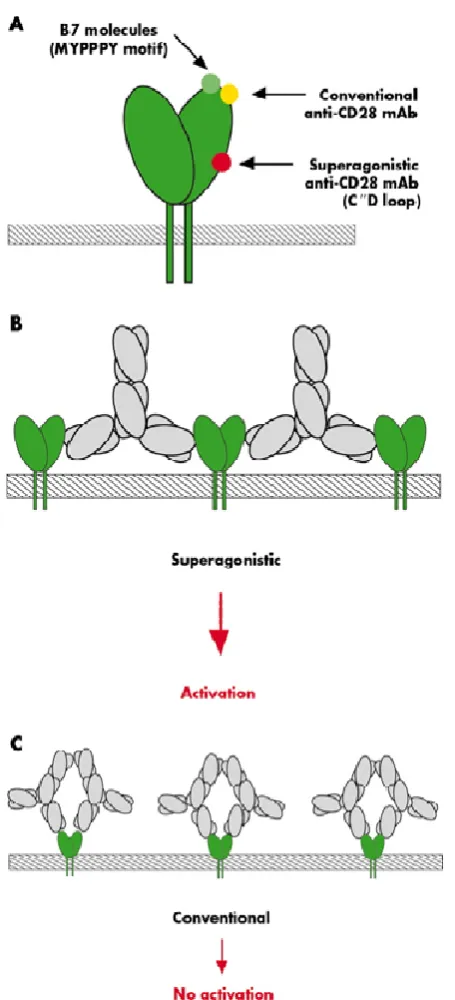
The difference between conventional and superagonist CD28 mAbs is that the conventional CD28 antibodies bound to the same binding site of the natural ligand i.e. top of the molecule, while CD28 superagonists in lateral manner to IgV domain at the bottom of the CD loop (Hünig and Dennehy2005)figure 1.TeGenero, a German company, developed a recombinantly expressed humanized superagonist anti
(TGN1412), TGN1412 shown to produce T the absence of stimulation by T
studies, moreover preclinical data shown that TGN1412 produced a well tolerated T-cell expansion without provoking proinflammatory response, and since TGN1412 shown to had the ability to activate regulatory T
could produce a therapeutic effect in autoimmune disorders, and after extensive preclinical studies, TGN1412 was approved for clinical trials (Attarwala 2010). In March 2006 TGN1412 used in a randomized, double blinded, placebo controlled phase I clinical trials, unexpectedly within 90 minutes after TGN1412 intravenous dose 6 of the volunteers developed systemic proinflammatory response and other symptoms like headache, nausea, myalgias, hypotension andas the time was progressing the severity of symptoms co
consequently all of the 6 volunteers were hospitalized and placed under close monitoring and received a several medications in order to reverse the condition (Suntharalingam
et al. 2006). Below is a review of steps of TGN1412 development, trials and lessons learnt from it.
International Journal of Current Research
Vol. 11, Issue, 01, pp.430-436, January, 2019
DOI: https://doi.org/10.24941/ijcr.34049.01.2019
Ali A. Kasim and Dhulfiqar Nidhal Alhilali. 2019. “TeGenero Clinical Trials Disaster
Dhulfiqar Nidhal Alhilali
Pharmacology and Toxicology, College of Pharmacy, University of Baghdad
Department of Clinical Laboratory Sciences, College of Pharmacy, University of Baghdad
Department of Clinical Pharmacy, College of Pharmacy, University of Baghdad, Iraq
stimulatory signals are required for recruitment and expansion regulatory cells in the Thymus and their + and CD4+) constitute 5-15% of the peripheral T-cells these T-cells are involved in the autoimmune disease as they act as immunosuppressant, studies shown that targeting of CD28 with monoclonal antibodies (mAbs) produces as significant increase in CD4 cell count in peripheral blood, spleen and the lymph nodes. In case of CD28, stimulatory mAbs act as artificial stimulation of the T-cells and some of these o, a German company, developed a recombinantly expressed CD28 mAbs (TGN1412). TGN1412 produced T-cell expansion in the vivo studies without provoking proinflammatory ; hence, TGN1412 shown to have the ability to activate regulatory T-cells therefore TGN1412 thought to possess a therapeutic effect in autoimmune disorders, and after extensive preclinical studies, linical trial does not went well as six of the volunteers suffered from severe adverse effects of the drug as discussed in this review.
Commons Attribution License, which permits
The difference between conventional and superagonist CD28 mAbs is that the conventional CD28 antibodies bound to the same binding site of the natural ligand i.e. top of the molecule, while CD28 superagonists in lateral manner to IgV domain at the bottom of the CD loop (Hünig and Dennehy2005)figure-1.TeGenero, a German company, developed a recombinantly expressed humanized superagonist anti- CD28 mAbs (TGN1412), TGN1412 shown to produce T-cell expansion in the absence of stimulation by T-cell receptor in the ex-vivo studies, moreover preclinical data shown that TGN1412 cell expansion without provoking proinflammatory response, and since TGN1412 shown to had the ability to activate regulatory T-cells therefore TGN1412 could produce a therapeutic effect in autoimmune disorders, and after extensive preclinical studies, TGN1412 was approved for clinical trials (Attarwala 2010). In March 2006 TGN1412 used in a randomized, double blinded, placebo controlled trials, unexpectedly within 90 minutes after TGN1412 intravenous dose 6 of the volunteers developed systemic proinflammatory response and other symptoms like headache, nausea, myalgias, hypotension andas the time was progressing the severity of symptoms continued to increase; consequently all of the 6 volunteers were hospitalized and placed under close monitoring and received a several medications in order to reverse the condition (Suntharalingam 2006). Below is a review of steps of TGN1412
nt, trials and lessons learnt from it.
INTERNATIONAL JOURNAL OF CURRENT RESEARCH
CD28 Super agonists: Naïve T-cells require two signals to be fully activated; the first signal is the interaction T-cell antigen
receptor (TCR) with the complimentary major
histocompatibility complex/peptide complex and the second is the co-stimulatory signal mediated by interaction of CD28 with the ligands CD80 (B7-1) and CD86 (B7-2) (Luhder et al.
2003,Margulies2003) figure-2. In vitro studies showed that absence of CD28 signaling did not affect number and differentiation of the cells, but will lead to the loss of T-regulatory (T-reg) cells CD4+ CD25+ which function as inhibitors of the auto reactive T-cells in the periphery; thus upon loss of T-reg cells function and/or number may lead to autoimmune disorders (Beyersdorf et al. 2005).
Therefore targeting CD28 with stimulatory mAbs that mimic the effect of endogenous ligand could be of valuable therapeutic potential (Hünig and Dennehy2005). There are two types of anti-CD28 mAbs: conventional co-stimulatory mAbs which depends on TCR signaling and superagonistic mAbs which have ability to activate naïve T-cells independently from TCR ligation in both in vivo and in vitro models (Luhderet al.
2003). Conventional mAbs bindto a site located near the binding site of B7 (MYPPY) which is located in the membrane distal part of the CD28 extracellular region, while superagonists binding site is located near C''D loop which is close to the membrane (Rileyand June2005) figure-2.More recently Integration between TCR and CD28 signals was shown to be mediated by protein kinase C isoform (PKC θ), and this will lead to activation of the transcription factor (NF-κB) which is necessary for proliferation of T-cell and interleukin-2 (IL-2) production (Dennehy et al. 2003). Interestingly CD28 superagonists shown to activate PKCθ-NF-κB pathway and stimulate all T-cells proliferation in the periphery without TCR ligation signals (Dennehy et al. 2003).
Role of CD28 in disease: CD28 is a 44 KDa glycoprotein
expressed as a homodimer on the cell surface; almost all CD4 and majority of CD8 cells express CD28 on their cell surfaces (Daikh, Wofsy and Imboden1997). Homodimeric receptor family includes CD28, inducible co-stimulator (ICOS) and cytotoxic T-lymphocyte antigen-4 (CTLA-4, CD152) (Hünig and Dennehy2005). During infection CD4+ and CD8+ T-cell response is mediated by the co-stimulator molecule (CD28) which will interact with CD80/86 expressed by the antigen presenting cells together with TCR activation will lead to increase expression of BcL-XL(an anti-apoptotic protein),
increase in production of IL-2, and increase in stability and transcription of IL-2 mRNA (Topp et al. 2003). Moreover it has been shown that during chronic illness and elderly CD28 expression in T-cell is reduced significantly suggesting the relationship between CD28 loss and senescence (Riley and June 2005). Surprisingly Topp et al. (2003) restored IL-2 expression in HIV-specific CD8+ and cytomegalovirus-specific CD28− CD8+
T-cells by retroviral-mediated CD28 gene transfer. Moreover CD28 regulates TCR signals required for the activation of CD4+CD25+ T-reg cells which in turn, once activated, suppress and modify the autoimmune response (Rileyand June 2005), and it has been shown that CD28 inhibition will exacerbate autoimmune response while CD28 activation will prevent or delay diabetes in non-obese diabetic mice (Salomon et al. 2000).
TeGenero Preclinical studies: After the discovery of CD28
superagonists and how they were different from conventional antibodies in terms of binding to different epitope binding site
and their capability of activate naïve T-cells independently from TCR signals; TeGenero Company started screening of several mouse mAbs that possess super agonistic activity and upon this screening TeGenero produced a genetically engineered humanized monoclonal antibody by adding the complimentary determining regions from the light and heavy chains variable regions of mouse anti-human CD28 (5.11A1) to human light and heavy chain variable regions (Attarwala 2010, TeGenero 2010).
In Vitro studies: Epitope mapping analysis using mutated CD28 molecule was used to determine topological requirement of TGN1412 and it showed that TGN1412 bind specifically to the Ig-like extracellular region of CD28 molecule(C''D loop) (TeGenero 2010). Flowcytometry and Biacore analysis were used to evaluate TGN1412 specificity to CD28; flowcytometric analysis showed that peripheral blood mononuclear cells (PBMC) were stained by TGN1414 in a CD28-specific pattern, while Biacore analysis revealed that TGN1412 has an affinity of Kd=1.88*10-9 to CD28, furthermore TGN1412 bound only to cell lines transfected with human CD28 gene, but not to cell lines transfected with genes of closely related receptors such as ICOS and CTLA-4 with (TeGenero 2010).In vitro analysis shown that there was no cross reactivity with rodents and monkeys CD28 as TGN1412 bound with low affinity to CD28 expressed on T-cells derived from rodents, in contrast TGN1412 exhibited a high binding affinity towards CD28 expressed on T-cells from Rhesus and Cynomolgus monkeys; later on analysis of C''D loop sequence homology between Rhesus monkeys and human revealed only one amino acid difference while marmoset monkeys the difference was two amino acids, and low sequence homology when compared to rodents (Attarwala 2010). Finally TGN1412 was capable of inducing rapid proliferation of T-cells independent from TCR signals when incubated with T-cells obtained from healthy individuals, while the conventional CD28 antibody couldn't provoke such stimuli (Attarwala 2010) figure-3.
In vivo studies: After TGN1412 exhibited efficacy in vitro studies, further In vivo studies were performed to evaluate its efficacy and safety; thus rhesus and cynomolgus monkeys were used due to the fact that the extracellular region of their CD28 receptor is 100% homologous to human CD28 and hence have the same binding affinity toward TGN1412 also these species have a highly conserved Fc receptors and motifs like human thus similar response and affinity could be obtained (Attarwala 2010).
Figure-1: (A and B) binding sites of conventional and superagonist anti-CD28 mAbs. Superagonists (red) bind laterally to motif of anti-CD28, while B7 molecule (green) and conventional bind to the normal binding site of the natural ligand, therefore Cd28 superagonist will form liner complexes which will consequently activate signaling components, probably as aggregates, leading to strong activating signals (Beyersdorf et al. 2005) Figure-1(C):binding of the conventional mAbs to CD28 in bivalent manner, unlike superagonist they doesn't form linear complex but rather considered to be tangled (Beyersdorf et al. 2005)
[image:3.595.51.279.49.550.2]Phrmacodynamic studies shown that TGN1412 produced efficient expansion of CD4+ and CD8+ T-cells at a dose of 5mg/kg within 13 days from the initial dose (Attarwala 2010). Although TGN1412 achieved 4 peaks plasma concentration upon administration of 4 increasing repeated increasing doses, however T-cell number in blood achieved only one peak because TGN1412-induced T-cell expansion is greatly dependent on availability of T-cells and co-stimulator receptor saturation kinetics (Attarwala 2010). Furthermore the pilot toxicological studies in rhesus and cynomolgus monkeys shown that even higher doses of TGN1412 (50mg/kg) did not produce adverse effect and was well tolerated (TeGenero 2010).
Figure 2. illustrate the binding site of the ligands CD86 (B7-2) and CD80 (B7-1) which is the MYPPPY domain colored with red, the
binding sites of conventional mAbs is located near this region. While superagonists ant-CD28 mAbs bind to C''D loop colored
[image:3.595.318.554.51.158.2]with yellow (Margulies2003)
Figure 3. Activation of CD28 by super agonist will lead to expansion of regulatory T-cell proliferation and also enhance IL-2 production by CD4+CD25low- which in turn lead to further activation and proliferation
of T-regulatory cells (Beyersdorf et al.2006).
[image:3.595.321.549.229.366.2] [image:3.595.316.549.417.677.2]Safety pharmacology and toxicology: Usually novel drugs are subjected to a series of studies to confirm its safety by testing its effect on organs other than that intended for therapeutic use (TeGenero 2010) thus TGN1412 underwent assessment for it unwanted effects on respiratory system, central nervous system and cardiovascular system (TeGenero 2010) Table1.
Surprisingly no clinical manifestations related to cytokine release observed, no signs and symptoms of anaphylactic reaction and no suppression of immune system or induction of autoimmune disorders (Attarwala 2010).
Effect on cytokine secretion: TGN1412 dose range
[image:4.595.50.542.74.260.2](5-50mg/kg) in cynomolgus monkeys caused a transient increase
Table 1. Summary of safety pharmacological and toxicological studies of TGN1412 (TeGenero 2010)
System TGN1412 effect
1 Respiratory system TGN1412 bound to the CD28 of pulmonary lymphocytes of Cynomolgus monkeys
normal histological finding
no treatment related adverse effects were seen.
2 Cardiovascular system no cross reaction with human or cynomolgus heart tissues
no ECG changes were observed throughout treatment period in Cynomoglus monkeys(28 days using repetitive toxic dose)
no histological changes in cardiovascular tissues like aorta and heart
3 Central nervous system TGN1412 distributed in CNS tissues including brain spinal cord and pituitary gland
no clinical manifestation recorded during treatment period including 28 days of repeated TGN21412 doses in cynomolgus monkeys
no altered histological findings were observed in tissues like eye, sciatic nerve or optic nerve. 4 Genital system no effect of TGN1412
5 Mutagenicity and carcinogenicity no effect of TGN1412
6 In vitro cytotoxicity TGN1412 did not produce complement dependent cytotoxicity(CDC) in peripheral blood mononuclear cell line
[image:4.595.46.546.296.452.2] TGN1412 did not produce antibody dependent cellular cytotoxicity in modified human Jukart cell line.
Table 2. Summary of adverse events observed in the 6 volunteers and time after which these events were developed; patients 5 and 6 were mostly affected and events were more severe.
Patients Adverse events time followed the first dose
Patients 1-6 Headache, lumbar myalgia, rigors 50-90 Patients 1-6 *Hypotension and tachycardia 210-280 minutes Patients 1-6 Hyperthermia(39.5-40C0) 240-390 minutes
Patient 1 Respiratory failure and tachypnea 300 minutes Patient 6 Hypotension after initial recovery, metabolic acidosis, hypoxemia and respiratory distress, abnormal
coagulation and hemodynamic
12 hours
Patients 1-6 Tachypnea, bilateral pulmonary infiltrates, patients were unable to finish spoken sentences. 16-12 hours Patients 1-6 Intravascular coagulation and renal impairment, decreased platelet count, prolonged prothrombine
time, monocytopenia and lymphopenia
16-12 hours
Patients 1-6 metabolic acidosis, oliguria and elevated creatinine levels 8-16 hours Patients 5 and 6 Recurrent fever, diffused erythematous flushing, increase capillary permeability lasted for several
days
After 48 hours
Patients 6 Peripheral ischemia, necrotic patches on all toe and fingers after 48 hours to day 30 Patients 1-6 Generalized desquamation(severe in patients 5 and 6), muscles weakness After 30 days
*Hypotension defined as more than 20 mmHg drop in systolic blood pressure, Tachycardia: heart rate was 110-145 beat per minute (Suntharalingamet al.
2006).
Table 3. Phases of the clinical status progression and the time after TGN1412 infusion (Suntharalingamet al. 2006)
Phase Time after TGN1412 infusion Characteristics
Phase I 1 hour to day 2 or 3 for patients 5 and 6 Cytokine storm, sever monocytopenia and lymphopenia, rapid activation of cytokines type 1 and 2 Phase II 1 day through day 3 or 8 for patients 5 and 6 Renal and respiratory failure, disseminated intravascular coagulation
[image:4.595.44.548.558.714.2]Phase III Day 3 to day 15, or day 5 to 20 for patients 5 and 6 Recovery of pulmonary and renal function, increase platelet count, increase in monocytes and lymphocytes Phase IV Day 15 or day 20 for patients 5 and 6 Recovery of the normal reading for the measured markers
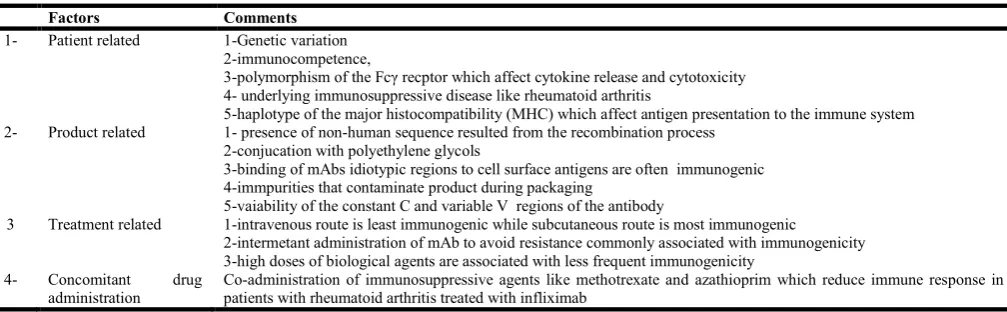
Table 4. Factors that could affect immunogenicity of biological therapies (Strandet al. 2007)
Factors Comments
1- Patient related 1-Genetic variation 2-immunocompetence,
3-polymorphism of the Fcγ recptor which affect cytokine release and cytotoxicity 4- underlying immunosuppressive disease like rheumatoid arthritis
5-haplotype of the major histocompatibility (MHC) which affect antigen presentation to the immune system 2- Product related 1- presence of non-human sequence resulted from the recombination process
2-conjucation with polyethylene glycols
3-binding of mAbs idiotypic regions to cell surface antigens are often immunogenic 4-immpurities that contaminate product during packaging
5-vaiability of the constant C and variable V regions of the antibody
3 Treatment related 1-intravenous route is least immunogenic while subcutaneous route is most immunogenic
2-intermetant administration of mAb to avoid resistance commonly associated with immunogenicity 3-high doses of biological agents are associated with less frequent immunogenicity
4- Concomitant drug administration
in the plasma levels of IL-2, IL-6(inflammatory cytokine) and IL-5(anti-inflammatory cytokine) but not affected IL-4 levels even at higher dose (50mg/kg), this transient increase was shown to be dose-dependent, moreover the proinflammatory cytokines TNFγ and TNFα levels were not significantly increased after TGN1412 first dose (TeGenero 2010). From the data of efficacy and pre-clinical safety in vivo studies it was shown that TGN1412 is effective, not associated with potential adverse effects, and based on no-observed adverse effects level of 50mg/kg it was estimated that 0.1mk/kg will be the starting dose in clinical trials which represents a 500-folds margin of safety. Consequently TeGenero approved for phase I clinical trials (TeGenero 2010).
TeGenero Clinical Trials: TGN1412, the novel
recombinantly expressed humanized monoclonal antibody (IgGκ4 subclass), was shown to be safe and effectively expanded CD4+CD25+ T-reg cells in the in vivo models (Suntharalingam et al. 2006) thus TGN1412 underwent phase I clinical trial which was performed by Parexel international, a contract research organization, in St. Mark's and Northwick park hospitals on 13th March 2006 (Suntharalingam et al.
2006). The phase I trial was double blinded placebo controlled and involved 8 volunteers, 2 of them received placebo while the other 6 volunteers receivedTGN1412 all volunteers were
provided with consent form. Treatment group
receivedTGN1412 dose of 0.1mg/Kg by intravenous infusion, infusion rate was 2 mg per minute for 3-6 minutes period at a 10 minutes intervals, while control group received saline with similar volume (Suntharalingam et al. 2006).
After 60-90 minutes from the first dose all six individuals developed several adverse effects ranged from headache, diarrhea and vasodilatation to multi-organ failure and disseminated intravascular coagulation, table-2 summarizes adverse events, time at which they were developed (Suntharalingam et al. 2006). The progression of the volunteers' clinical conditions divided into 4 phases, Table-3. After development of these signs and symptoms all patients received an initial empirical treatment (Suntharalingam et al.
2006). 1-intravenous fluids, hydrocortisone 200mg (i.v), chlorphenramine 10mg (i.v), acetaminophen 1 gram(i.v), ondasetron 4-8mg (i.v), metaraminol 0.3-0.5 mg(i.v). After that all patients moved to critical care unit and received a second dose of hydrocortisone, followed by 3 intravenous doses of 1gm methylprednisolone administered at 16, 40 and 64 hours from TGN1412 infusion, furthermore to reverse the effect of TGN1412 on T-cells all patients received 1mg/kg
daclizumab, an IL-2 receptor antagonist, after this treatment low dose of steroid therapy initiated for 21-33 days (Duff report 2006). All these adverse effect were due to TGN1412-induced rapid and sudden release of proinflammatory cytokines, which was not expected according to pre-clinical data. Cytokine release and systemic inflammatory response syndrome were similar to that when exposed to bacterial endotoxin, however regulatory authorities confirmed that TGN1412 was free from pyrogens and other contaminants (Suntharalingam et al. 2006).
Later on a study performed by Stebbings et al. 2007 tried to explain these events and interestingly it was shown that TGN1412 pre-clinical data failed to predict TGN1412 toxicity in vitro and in vivo models,in which:
TGN1412 presentation protocols to white blood cells (WBC) in vitro did not mimic its presentation in vivo models as pre-clinical in vitro studies involved cross linking of TGN1412 via Fc receptors in aqueous solution or simply adding TGN1412 to WBC both presentations protocol did not provoked cytokine release figure-4.
TGN1412 can produce T-cell proliferation andcytokine release when presented in the right way to PBMC and TGN1412 specific and/or nonspecific binding to cell surface is required for cytokine release and T-cell activation.
3-Clinical trial dose appeared (0.1mg/kg) to be near to the maximum stimulatory dose required for T-cell proliferationas the superagonist anti-CD28 mAb 5.11A1, from which TGN1412 was produced, can evoke maximal human T-cell activation at a dose of 0.1mg/kg in vitro.
Cynomolgus white blood cells respond to TGN1412 in a different manner from human cells in vivo and in vitro, as in vitro cynomolgus cells stimulation by immobilized TGN1412 did not induced cynomolgus lymphocytes proliferation unless IL-2 added to cultures.
Thus TGN1412 in cynomolgus monkeys' models did not act as a superagonist (Stebbings et al. 2007).Although CD28 extracellular region is 100% identical between human and cynomolgus, however there were functional differences, also CD28 in cynomolgus is different from human in the 3 transmembrane domains which may affect the binding properties, Moreover it has been suggested that the lack of Siglec expression (an immunoihibitory) in human T-cell was responsible for the difference in response to TGN1412 (Stebbings et al. 2007).
Table-5. a summary of the Expert Scientific Group ESG recommendations for first-in-human trails (St Clair 2008)
Issue Recommendations
1- Preclinical and early clinical development
Sufficient safety evaluation studies, regular review of the first of human studies regulatory guidelines, data of unpublished studies should be accessed, safety data of phase I trials safety should be shred
2- Preparation and review of clinical trial applications
Sponsors and regulators communication at early developmental stages, outside expert consultation to evaluate the risk associated with the trails, plenty of time required to review complex cases.
3- Phase I trials designing Dealing with New agents with novel mechanism that cannot be evaluated by animal studies require special considerations, starting dose calculations should rely on several factors not only on 'no-observable-effect level in animals' , selection of a safe starting dose, rate of drug administration should be considered in trails, trails design and dosing interval should be appropriate for new agents, careful consideration for volunteers selection for the trials.
4- Clinical environment Principal investigator qualification, risk management and suitable staff, equipment and facilities are required.
Lessons from TGN1412: Several lessons learnt from TGN1412 catastrophe (Strand et al. 2007). The first lesson is that although theory behind biological therapy is simple, however it is hard to predict phrmacodynamic properties, efficacy and toxicity of these therapies, second lesson is that Fc region in mAbs and immunoglobulin mediate different cellular functions; Fc increase mAbs serum levels via interaction with neonatal Fcγ receptors which in turndecreasem Abs catabolism and enhance mAbs recycling, beside this function the binding to classical Fcγ receptors is mediate via Fc region, in turn this binding can activate other cellular functions like apoptosis (Strand et al. 2007). The third lesson is all biological therapies can induce immunogenicity and several factors can affect immunogenicity of biological therapies, table-4 (Strand et al. 2007). The forth lesson was the adverse effects, efficacy and safety of biotherapies might not completely predicted in pre-clinical studies due to differences in target molecules and physiology of immune system in animal models; for example it has been shown that blockade of the interaction of CD40 with its ligand (CD40L), in which together act as co-stimulatory molecule, with anti-CD40mAbs produced a beneficial effect in animal models of Systemic Lupus Erythematosus, however in phase I clinical trials it produced episodes of thromboembolism suggesting the presence of CD40 ligand on human platelets, therefore safety parameters and adverse effect should be studied carefully (Strand et al. 2007).Consequently an Expert Scientific Group (ESG) put 22 recommendations for development process of these novel agents before being used or tested in man; one of these recommendations emphasized on safety profile of these agents and full explanation of their mechanism of action and information available should be revised by independent experts and the TeGenero trial regulators should have asked for more data about TGN1412safety and untested mechanisms of action in human before the trials (St Clair 2008). On the other hand 9 of these recommendations focused on the design of the study and accurate calculation of the first in-man study dose, as mentioned before dose of TGN1412 was not estimated correctly, also the dosing interval as the ESG stated that 10 minutes interval between infusion was too short to monitor adverse effect related to the TGN1412 infusion(St Clair 2008).Finally the ESG stated that first in-human trails should be conducted by highly qualified and trained investigators and they suggested introducing national accreditation system for principal investigators involved in clinical trials, summary of these recommendations listed in table-5(St Clair 2008).
After TeGenero: After the TeGenero catastrophe the
regulatory authorities raised the level of regulations, for example in the United Kingdome, the Medicines and Health care Regulatory Authority (MHRA) should ask for Expert Advisory Group(EAG)/Commission on Human Medicines (CHM) advise before giving approval for phase I clinical rails of high risk investigational drugs, Moreover the Sponsor must provide sufficient data so that expert advice could be given and also Sponsors should communicate with Agency before application for Clinical trials authorization (CTA) for such trails, and then followed by normal CTA application process (Dayanand Wraith2008 ).New therapies have been defined as medicinal products with potential high-risk when the serious adverse effects are not expected to occur in first-time-in-human trails (Dayanand Wraith2008). In conclusion to void problems associated with new treatments in the future; firstly a greater effort should be given to improve pre-clinical evaluation techniques, for example in silico assessment
techniques or artificial immune system, secondly greater involvement of independent immunological assessment of biopharmaceuticals; thirdly agents that target immune system should be examined as much as possible in the ex-vivo and preclinical studies to successfully estimate the possible risks and finally the regulatory process should be reviewed by qualified experts in this field (Dayanand Wraith2008).
REFERENCES
Attarwala, H. 2010. TGN1412: From Discovery to Disaster'. Journal of Young Pharmacists 2 (3), 332-336
Beyersdorf, N., Hanke, T., Kerkau, T., and Hunig, T. 2005. 'Superagonistic Anti-CD28 Antibodies: Potent Activators of Regulatory T Cells for the Therapy of Autoimmune Diseases'. Annals of the Rheumatic Diseases 64 Suppl 4, iv91-5
Beyersdorf, N., Hanke, T., Kerkau, T., and Hünig, T. 2006. 'CD28 Superagonists Put a Break on Autoimmunity by Preferentially Activating CD4< Sup></sup> CD25< Sup> </sup> Regulatory T Cells'. Autoimmunity Reviews 5 (1), 40-45
Boesteanu, A. C. and Katsikis, P. D. (eds.) 2009. Seminars in Immunology. 'Memory T Cells Need CD28 Costimulation to Remember': Seminars In Immunology Elsevier21 (2009), 69-77
Carlier, P. R., Chow, E. S., Barlow, R. L., and Bloomquist, J. R. 2002. 'Discovery of Non-Zwitterionic GABA< Sub> A</sub> Receptor Full Agonists and a Superagonist'. Bioorganic & Medicinal Chemistry Letters 12 (15), 1985-1988
Daikh, D., Wofsy, D., and Imboden, J. B. 1997. The CD28-B7 Costimulatory Pathway and its Role in Autoimmune Disease'. Journal of Leukocyte Biology 62 (2), 156-162 Dayan, C. and Wraith, D. 2008. Preparing for first‐in‐man
Studies: The Challenges for Translational Immunology post‐TGN1412'. Clinical & Experimental Immunology 151 (2), 231-234
Dennehy, K. M., Kerstan, A., Bischof, A., Park, J. H., Na, S. Y., and Hunig, T. 2003. Mitogenic Signals through CD28 Activate the Protein Kinase Ctheta-NF-kappaB Pathway in Primary Peripheral T Cells'. International Immunology 15 (5), 655-663
Expert Scientific Group on Phase One Clinical Trials (Great Britain) 2006. Expert Scientific Group on Phase One Clinical Trials: Final Report: 30th November 2006.: TSO Hünig, T. and Dennehy, K. 2005. CD28 Superagonists: Mode
of Action and Therapeutic Potential'. Immunology Letters
100 (1), 21-28
Luhder, F., Huang, Y., Dennehy, K. M., Guntermann, C., Muller, I., Winkler, E., Kerkau, T., Ikemizu, S., Davis, S. J., Hanke, T., and Hunig, T. 2003. Topological Requirements and Signaling Properties of T Cell-Activating, Anti-CD28 Antibody Superagonists'. The Journal of Experimental Medicine 197 (8), 955-966 Margulies, D. H. 2003. CD28, Costimulator Or Agonist
Receptor?'. The Journal of Experimental Medicine 197 (8), 949-953
Riley, J. L. and June, C. H. 2005. The CD28 Family: A T-Cell Rheostat for Therapeutic Control of T-Cell Activation'. Blood 105 (1), 13-21
Salomon, B., Lenschow, D. J., Rhee, L., Ashourian, N., Singh, B., Sharpe, A., and Bluestone, J. A. 2000. B7/CD28 Costimulation is Essential for the Homeostasis of the CD4< Sup></sup> CD25< Sup></sup> Immunoregulatory T Cells that Control Autoimmune Diabetes'. Immunity 12 (4), 431-440
Shi, Q., Niu, Y., Cao, H., Zhou, X., Jiang, S., Liu, Z., and Fan, H. (eds.) 2012. Transplantation Proceedings. 'CD28 Superagonist Antibody Treatment Attenuated Obliterative Bronchiolitis in Rat Allo-Orthotopic Tracheal Transplantation by Preferentially Expanding Foxp3-Expressing Regulatory T Cells': Transplantation Proceedings 44(4), 1060-1066
Stebbings, R., Findlay, L., Edwards, C., Eastwood, D., Bird, C., North, D., Mistry, Y., Dilger, P., Liefooghe, E., Cludts, I., Fox, B., Tarrant, G., Robinson, J., Meager, T., Dolman, C., Thorpe, S. J., Bristow, A., Wadhwa, M., Thorpe, R., and Poole, S. 2007. Cytokine Storm" in the Phase I Trial of Monoclonal Antibody TGN1412: Better Understanding the
Causes to Improve Preclinical Testing of
Immunotherapeutics'. Journal of Immunology (Baltimore, Md.: 1950) 179 (5), 3325-3331
St Clair, E. W. 2008. The Calm After the Cytokine Storm: Lessons from the TGN1412 Trial'. The Journal of Clinical Investigation 118 (4), 1344-1347
Strand, V., Kimberly, R., and Isaacs, J. D. 2007. Biologic Therapies in Rheumatology: Lessons Learned, Future Directions'. Nature Reviews Drug Discovery 6 (1), 75-92 Suntharalingam, G., Perry, M. R., Ward, S., Brett, S. J.,
Castello-Cortes, A., Brunner, M. D., and Panoskaltsis, N. 2006. Cytokine Storm in a Phase 1 Trial of the Anti-CD28 Monoclonal Antibody TGN1412'. New England Journal of Medicine 355 (10), 1018-1028
Tang, Q., Henriksen, K. J., Boden, E. K., Tooley, A. J., Ye, J., Subudhi, S. K., Zheng, X. X., Strom, T. B., and Bluestone, J. A. 2003. Cutting Edge: CD28 Controls Peripheral Homeostasis of CD4+CD25+ Regulatory T Cells'. Journal of Immunology (Baltimore, Md.: 1950) 171 (7), 3348-3352 TeGenero, A. 2010. Investigator’s Brochure.TGN1412
Humanized Agonistic Anti-CD28 Monoclonal Antibody
[online] available from <http://www.circare.org/foia5/ tgn1412 investigator brochure.pdf> [21st April 2014] Topp, M. S., Riddell, S. R., Akatsuka, Y., Jensen, M. C.,
Blattman, J. N., and Greenberg, P. D. 2003. Restoration of CD28 Expression in CD28- CD8+ Memory Effector T Cells Reconstitutes Antigen-Induced IL-2 Production'. The Journal of Experimental Medicine 198 (6), 947-955