Being Data-Driven is Not Enough: Revisiting Interactive Instruction
Giving as a Challenge for NLG
Sina Zarrieß and David Schlangen
Dialogue Systems Group // CITEC // Faculty of Linguistics and Literary Studies Bielefeld University, Germany
{sina.zarriess,david.schlangen}@uni-bielefeld.de
Abstract
Modeling traditional NLG tasks with data-driven techniques has been a major focus of research in NLG in the past decade. We argue that existing modeling techniques are mostly tailored to textual data and are not sufficient to make NLG technology meet the requirements of agents which tar-get fluid interaction and collaboration in the real world. We revisit interactive in-struction giving as a challenge for data-driven NLG and, based on insights from previous GIVE challenges, propose that instruction giving should be addressed in a setting that involves visual grounding and spoken language. These basic design de-cisions will require NLG frameworks that are capable of monitoring their environ-ment as well as timing and revising their verbal output. We believe that these are core capabilities for making NLG technol-ogy transferrable to interactive systems.
1 Introduction
The past decade has seen substantial progress in data-driven methods for natural language gener-ation (NLG). It is now widely agreed that data-driven techniques are needed to obtain NLG sys-tems that are adaptive and human-like (Belz,
2008), domain-independent (Wen et al., 2016), and – with recent methods from vision & lan-guage cf. (Bernardi et al., 2016) – suitable for agents that interact with humans in a physical en-vironment (such as dialogue systems or robots) (Kazemzadeh et al.,2014). Despite this progress, however, data-driven NLG is rarely used in current real-world interactive systems, where more tradi-tional (template-based) approaches for generating verbal output still persist.
In this paper, we argue that existing methods in data-driven modeling for NLG are heavily tailored to textual data and, therefore, fail to meet the re-quirements of dialogue systems, social agents or robots which target fluid interaction and collabo-ration in the real world. In the traditional view, the NLG task is usually framed as follows: given some non-verbal piece of data as input (e.g. sen-sor data, a meaning representation, facts from a knowledge base), the system needs to decidewhat to say (do content selection, text or sentence plan-ning, micro-planning), andhow to say it (do lex-icalization, surface realization), cf. (Reiter and Dale, 1997). While recent data-driven systems have mostly overcome previous modular archi-tectures that assigned these decisions to separate components in the processing pipeline (Konstas and Lapata,2013), they still follow basic assump-tions related to how the system processes its non-linguistic input and verbal output:
• static input: NLG systems are usually trained to map a given input to some written out-put, meaning that the environment does not change while the system is producing output
• perfect input: NLG systems are often trained on perfect representations of an environment or a knowledge base
• one-shot output: NLG systems do not need
to monitor whether the listener has actually understood the output, strategies that are fre-quent in conversation (revision, correction, installments) do not have to be considered
• no temporal dimension: NLG systems as-sume that their output is not immediately consumed, i.e. it does not need to be pack-aged or timed (e.g. a text is produced as a whole)
These assumptions are convenient when fram-ing NLG tasks as machine learnfram-ing problems (e.g. as ranking, classification or sequence-to-sequence learning), but they are highly problematic for in-teractive systems. To illustrate this point, we pro-pose to revisit instruction giving as a challenge for data-driven NLG in interactive systems: here, a human instruction follower (IF) and an agent as the instruction giver (IG) have to achieve a com-mon goal in a visual environment (e.g. find a route or treasure, assemble an object). The IG knows how to complete the task (e.g. where the treasure is, how the object looks like) but cannot affect the environment. The IF can affect the environment and the objects in it, but needs the IG’s instructions to achieve the goal. In the context of the GIVE challenge (Byron et al.,2007), this setting has re-ceived considerable attention in the NLG commu-nity for some time (Byron et al.,2009;Striegnitz et al., 2011), but has not been developed further since then.
Generally, we believe that future approaches to instruction giving in NLG should extend GIVE along the following dimensions, in order to enable transfer of NLG technology to real-world applica-tions like robots or dialogue systems:
• vision: generating instructions from a
low-level visual representation of the environ-ment, i.e. without perfect access to visually present objects and their properties
• spoken language: generating spoken instruc-tions, such that the IF’s non-verbal actions can happen concurrently with the IG’s verbal utterances
• timing and information delivery: going be-yond traditional NLG approaches focussing on content selection and/or surface realiza-tion, and move to real-time incremental pro-cessing that captures the affordances of spo-ken language and fluid interaction
In the following, we will show that these points constitute considerable challenges for the state-of-the-art in data driven NLG research and outline di-rections for how they could be addressed.
2 Visual grounding for instructions
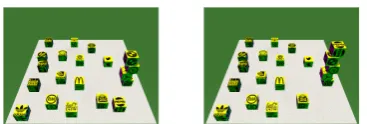
[image:2.595.326.510.55.117.2]A fundamental design decision in GIVE was to use a virtual environment such that the NLG systems had access to a perfect symbolic representation of
Figure 1: Instruction example in the BLOCKS data set (Bisk et al.,2018)
the visually present objects and their properties. In the meantime, a lot of research in human-robot interaction has be done on modeling instructions in more realistic visual environments, though this community has often focussed on grounding ver-bal instructions to robot actions, cf. (Chai et al.,
2018). Bisk et al. (2016) have proposed a nice for-mulation of a move-by-move instruction following task in an object assembly domain (see Figure1): given an image of the current state of an environ-ment (left image) and a verbal instruction, the task is to predict the target state of the environment af-ter executing the instruction (right image). This move-by-move setting abstracts away from the in-ternal action representations of a robot and also from general aspects of planning.
We believe that this set-up is promising for NLG as well, where the task would be to gener-ate a verbal instruction that enables the IF to ex-ecute a particular action or achieve a state change of the environment, while the system (the IG) is given the current and the goal state of an environ-ment as an image. This would be natural exten-sion of existing language generation systems that are able to generate descriptions of real-world im-ages (Bernardi et al., 2016), or referring expres-sions to objects in real-world images (Yu et al.,
2017). At the same time, it would require systems to go beyond the commonly used CNN-LSTM ar-chitecture (Vinyals et al.,2015;Devlin et al.,2015;
Mao et al.,2016;Yu et al.,2017) as these currently only map visual representations of single images or objects to verbal output. Instead, a visually grounded instruction generation system needs to reason about expressions that relate the current vi-sual state to a target state, such asplace the block to the right (source state) as the highest block on the board (target state)in Figure1.
which have been a notorious challenge for refer-ring expression generation in general (Krahmer and Van Deemter,2012). Relational expressions are also challenging for neural architectures ( Hud-son and Manning, 2018), and grounding (under-standing) of relational referring expressions has been addressed in some recent work (Cirik et al.,
2018;Hu et al.,2017) following the idea of mod-ular networks based on syntactic structures ( An-dreas et al.,2016). However, none of these mod-els is designed for generating relational structures in verbal expressions, such as instructions.
3 Spoken language dynamics
From research on situated spoken dialogue, it is well known that spoken and written language bear very different affordances. In spoken communi-cation, listeners react, both non-verbally and ver-bally, to what speakers are saying, while they are saying it; and speakers adapt what they are saying, based on the reactions (or lack thereof) that they get, while they are speaking. The field of Conver-sation Analysis (see (Stivers and Sidnell,2012) for a recent overview) and, taking up and further de-veloping some of their ideas, the work of Herbert (Clark,1996) has done much to shed light on the intricate strategies that interactants follow to co-construct dialogue in this way.
Figure 2 illustrates some prominent strategies that speakers use to achieve task success in spoken communication, with an instruction giving exam-ple taken from our PentoRef data (Zarrieß et al.,
2016). Here, the IF has to assemble an object out of Pentomino pieces while the IG observes his ac-tions over a camera feed. During a time span of ap-proximately 30 seconds, the IG produces 18 short utterances in total that instruct the IF what to do next (e.g. turn to the left), confirm the IF’s action (exactly), or repair what she is currently doing (to the left, this is to the right). Also, interestingly, the final step of the instruction (i.e. how to put the tar-get piece to its tartar-get location, image 10-12 in Fig-ure2) is left underspecified by the IG as it is obvi-ous to the IF how to complete the task. This level of coordination and adaptation between speakers and listeners is impossible in written communica-tion where verbal and non-vernal accommunica-tions cannot happen concurrently.
Unfortunately, most research on data-driven NLG still focusses entirely on written text or typed utterances, even in the domain of dialogue, as
ex-isting platforms and workflows for data collection are radically more efficient for text as compared to speech. Also the GIVE setting used typed com-munication. An interesting pilot study on a spo-ken version of the GIVE challenge was carried out by (Striegnitz et al.,2012) who found that interac-tions between participants were faster, more nat-ural and rich of conversational phenomena (e.g. installments) that cannot be observed in text or typed chat. Another promising the direction here is the platform developed by (Manuvinakurike and DeVault,2015), which extends the standard pro-cedure for collecting chat interactions via crowd-sourcing to spoken dialogue.
4 Monitoring, timing, revision
When facing uncertainty through visual ground-ing and dynamics through spoken language, NLG systems will need to address a range of decisions that, currently, completely fall out of the scope of research in this area. In the interactive world, NLG needs to monitor the listener’s reaction in real-time and be able to quasi-continuously decide whento produce verbal output and howto poten-tially revise previous or future output. Thus, in order to generate fluid instructions as in the inter-action shown in Figure2, it is precisely the combi-nation ofwhento speak andwhatto say that mat-ters: an utterance that is appropriate at a particular point in time, might already be perceived as inap-propriate or confusing shortly after.
To the best of our knowledge, aspects of moni-toring and timing have not been addressed in data-driven NLG frameworks, though incremental pro-cessing has been shown to be highly effective in experimental or rule-based settings, cf. (Skantze and Hjalmarsson,2013;Skantze et al.,2014;Buß and Schlangen, 2010). In the dialogue commu-nity, specific tasks that involve timing have been modelled in a data-driven way, such as barge-in detection (Selfridge et al.,2013),end-of-utterance detection (Raux and Eskenazi,2012;Maier et al.,
2017)), orturn-taking(Skantze,2017) .
IG: then you take the green
W ... top right IG: and you turn it to the left IG: uh now it's to the right
IG: yes IG: turn left . yes IG: a little more
IG: so that it's diagonal
IG: a little more IG: exactly IG: and now put to the left next to the T
IG: to the left
IG: this is to the right IG: yes exactlyIG: like this IG: exactlyIG: into this spot IG: now you take the pink piece over there ...
1 2 3 4
5 6 7 8
[image:4.595.136.460.62.299.2]9 10 11 12
Figure 2: Example for task-oriented conversation in shared visual space from (Zarrieß et al.,2016): the joint task for the IF and IG is to build a puzzle out of Pentomino pieces where the IF can manipulate pieces on a physical gameboard and the IG sees the outline of the puzzle, observes the IF’s actions in real-time (over a camera feed) and instructs the IF over headphones; the overall interaction time shown here is approx. 30 secconds; utterances have been translated to English from German transciptions
hand-crafted strategies for repair and revision very clearly improve the referential success of the sys-tem. (Villalba et al., 2017) propose a formal approach to generating contrastive referring ex-pressions which is designed for similar scenar-ios. What is clearly missing to date, however, is a data-driven NLG framework that encompasses these various aspects of conversational grounding and timing in interaction.
5 Conclusion
This paper has discussed the task of interactive instruction giving from the perspective of data-driven NLG. We have argued that, if this task is set up so that it involves visual grounding and spoken language, it will constitute an interesting and con-siderable challenge for existing data-driven NLG frameworks. We believe that addressing this chal-lenge and coming up with data collections and modeling methods for it will substantially forward the state-of-the-art in NLG, and foster transfer of NLG technology to real-world interactive systems.
References
Jacob Andreas, Marcus Rohrbach, Trevor Darrell, and Dan Klein. 2016. Neural module networks. In Proceedings
of the IEEE Conference on Computer Vision and Pattern Recognition, pages 39–48.
Anja Belz. 2008. Automatic generation of weather forecast texts using comprehensive probabilistic generation-space models.Natural Language Engineering, 14(4):431455. Raffaella Bernardi, Ruket Cakici, Desmond Elliott, Aykut
Erdem, Erkut Erdem, Nazli Ikizler-Cinbis, Frank Keller, Adrian Muscat, and Barbara Plank. 2016. Automatic description generation from images: A survey of mod-els, datasets, and evaluation measures. J. Artif. Intell. Res.(JAIR), 55:409–442.
Yonatan Bisk, Kevin Shih, Yejin Choi, and Daniel Marcu. 2018. Learning interpretable spatial operations in a rich 3d blocks world. InProceedings of AAAI 2018.
Yonatan Bisk, Deniz Yuret, and Daniel Marcu. 2016. Natu-ral language communication with robots. InProceedings of the 2016 Conference of the North American Chapter of the Association for Computational Linguistics: Human Language Technologies, pages 751–761.
Okko Buß and David Schlangen. 2010. Modelling sub-utterance phenomena in spoken dialogue systems. In
Proceedings of the 14th International Workshop on the Semantics and Pragmatics of Dialogue (Pozdial 2010), pages 33–41, Poznan, Poland.
Donna Byron, Alexander Koller, Jon Oberlander, Laura Stoia, and Kristina Striegnitz. 2007. Generating instruc-tions in virtual environments (give): A challenge and an evaluation testbed for nlg.Position Papers, page 3. Donna Byron, Alexander Koller, Kristina Striegnitz, Justine
2009. Report on the first nlg challenge on generating in-structions in virtual environments (give). InProceedings of the 12th european workshop on natural language gen-eration, pages 165–173. Association for Computational Linguistics.
Joyce Y Chai, Qiaozi Gao, Lanbo She, Shaohua Yang, Sari Saba-Sadiya, and Guangyue Xu. 2018. Language to action: Towards interactive task learning with physical agents. InIJCAI, pages 2–9.
Volkan Cirik, Taylor Berg-Kirkpatrick, and Louis-Philippe Morency. 2018. Using syntax to ground referring expres-sions in natural images. arXiv preprint arXiv:1805.10547. Herbert H. Clark. 1996. Using Language. Cambridge
Uni-versity Press, Cambridge.
Jacob Devlin, Hao Cheng, Hao Fang, Saurabh Gupta, Li Deng, Xiaodong He, Geoffrey Zweig, and Margaret Mitchell. 2015. Language models for image captioning: The quirks and what works. InProceedings of the 53rd Annual Meeting of the Association for Computational Lin-guistics and the 7th International Joint Conference on Natural Language Processing (Volume 2: Short Papers), pages 100–105, Beijing, China. Association for Computa-tional Linguistics.
Ronghang Hu, Marcus Rohrbach, Jacob Andreas, Trevor Darrell, and Kate Saenko. 2017. Modeling relationships in referential expressions with compositional modular net-works. In Computer Vision and Pattern Recognition (CVPR), 2017 IEEE Conference on, pages 4418–4427. IEEE.
Drew A Hudson and Christopher D Manning. 2018. Compo-sitional attention networks for machine reasoning. arXiv preprint arXiv:1803.03067.
Sahar Kazemzadeh, Vicente Ordonez, Mark Matten, and Tamara L Berg. 2014. ReferItGame: Referring to Objects in Photographs of Natural Scenes. InProceedings of the Conference on Empirical Methods in Natural Language Processing (EMNLP 2014), pages 787–798, Doha, Qatar. Ioannis Konstas and Mirella Lapata. 2013. A global model for concept-to-text generation. J. Artif. Intell. Res.(JAIR), 48:305–346.
Emiel Krahmer and Kees Van Deemter. 2012. Computational generation of referring expressions: A survey. Computa-tional Linguistics, 38(1):173–218.
Angelika Maier, Julian Hough, and David Schlangen. 2017. Towards deep end-of-turn prediction for situated spoken dialogue systems. In Proceedings of Interspeech 2017, Stockholm, Sweden.
Ramesh Manuvinakurike and David DeVault. 2015. Pair me up: A web framework for crowd-sourced spoken dialogue collection. InNatural Language Dialog Systems and In-telligent Assistants, pages 189–201. Springer.
Junhua Mao, Huang Jonathan, Alexander Toshev, Oana Cam-buru, Alan Yuille, and Kevin Murphy. 2016. Generation and comprehension of unambiguous object descriptions. Antoine Raux and Maxine Eskenazi. 2012. Optimizing the
turn-taking behavior of task-oriented spoken dialog sys-tems. ACM Transactions on Speech and Language Pro-cessing (TSLP), 9(1):1.
Ehud Reiter and Robert Dale. 1997. Building applied natu-ral language generation systems.Natural Language Engi-neering, 3(1):57–87.
Ethan Selfridge, Iker Arizmendi, Peter Heeman, and Jason Williams. 2013. Continuously predicting and processing barge-in during a live spoken dialogue task. In Proceed-ings of the SIGDIAL 2013 Conference, pages 384–393. Gabriel Skantze. 2017. Towards a general, continuous model
of turn-taking in spoken dialogue using lstm recurrent neu-ral networks. InProceedings of the 18th Annual SIGdial Meeting on Discourse and Dialogue, pages 220–230. Gabriel Skantze and Anna Hjalmarsson. 2013. Towards
in-cremental speech generation in conversational systems.
Computer Speech & Language, 27(1):243–262.
Gabriel Skantze, Anna Hjalmarsson, and Catharine Oertel. 2014. Turn-taking, feedback and joint attention in situated human–robot interaction.Speech Communication, 65:50– 66.
Tanya Stivers and Jack Sidnell. 2012. Introduction. In Jack Sidnell and Tanya Stivers, editors, The Handbook of Conversation Analysis, chapter 1, pages 1–8. Wiley-Blackwell, Oxford, U.K.
Kristina Striegnitz, Hendrik Buschmeier, and Stefan Kopp. 2012. Referring in installments: a corpus study of spo-ken object references in an interactive virtual environment. InProceedings of the Seventh International Natural Lan-guage Generation Conference, pages 12–16.
Kristina Striegnitz, Alexandre Denis, Andrew Gargett, Kon-stantina Garoufi, Alexander Koller, and Mari¨et Theune. 2011. Report on the second second challenge on gener-ating instructions in virtual environments (give-2.5). In
Proceedings of the 13th European Workshop on Natural Language Generation, pages 270–279.
Martin Villalba, Christoph Teichmann, and Alexander Koller. 2017. Generating contrastive referring expressions. In
Proceedings of the 55th Annual Meeting of the Association for Computational Linguistics (Volume 1: Long Papers), volume 1, pages 678–687.
Oriol Vinyals, Alexander Toshev, Samy Bengio, and Dumitru Erhan. 2015. Show and tell: A neural image caption gen-erator. InComputer Vision and Pattern Recognition. Tsung-Hsien Wen, Milica Gasic, Nikola Mrkˇsi´c, Lina M.
Ro-jas Barahona, Pei-Hao Su, Stefan Ultes, David Vandyke, and Steve Young. 2016. Conditional generation and snap-shot learning in neural dialogue systems. In EMNLP, pages 2153–2162, Austin, Texas. ACL.
Licheng Yu, Hao Tan, Mohit Bansal, and Tamara L Berg. 2017. A joint speaker-listener-reinforcer model for refer-ring expressions. InCVPR 2017.
Sina Zarrieß, Julian Hough, Casey Kennington, Ramesh Manuvinakurike, David DeVault, Raquel Fernandez, and David Schlangen. 2016. Pentoref: A corpus of spoken ref-erences in task-oriented dialogues. In10th edition of the Language Resources and Evaluation Conference. Sina Zarrieß and David Schlangen. 2016. Easy things first: