Microbial phytase is now an accepted feed addi-tive used extensively in commercial diets for both pigs and poultry (Sebastian et al., 1998; Augspurger et al., 2007; Selle and Ravindran, 2008). It effectively improves the availability of phytate phosphorus (P) and decreases P excretion, thereby reducing en-vironmental pollution (Sharpley et al,. 1994; Vats et al., 2005). In some instances, phytase has been shown to increase the utilization of nutrients other than P. Of particular interest is the phytase-induced improvement in protein and amino acid (AA)
di-gestibility since it may strongly affect the cost effec-tiveness of phytase supplements to practical-type pig diets (Adeola and Sands, 2003). However, there are still conflicting opinions relating the protein and AA responses to phytase supplements. In some experiments, a significant improvement in ileal AA digestibility was found (Officer and Batterham, 1992; Kemme et al., 1999a) while other studies failed to demonstrate any significant effect of phytase ad-dition on ileal digestibility of AA (Cervantes et al., 2004; Nitrayová et al., 2006; Pomar et al., 2008) or
Supported by Slovak Research and Development Agency of the Slovak Republic (Grant No. APVT-27-030802).
Effect of microbial phytase and diet fermentation
on ileal and total tract digestibility of nutrients
and energy in growing pigs
S. Nitrayová
1, P. Patráš
1, M. Brestenský
1, J. Zelenka
2, J. Brož
3, J. Heger
11Slovak Agricultural Research Centre, Research Institute of Animal Production, Nitra,
Slovak Republic
2Mendel University of Agriculture and Forestry, Brno, Czech Republic
3DSM Nutritional Products, Animal Nutrition and Health R & D, Basel, Switzerland
ABSTRACT: A digestibility experiment using six ileally cannulated growing gilts (initial BW 31.6 kg) was carried out to study the effect of microbial phytase and diet form on apparent ileal and total tract digest-ibilities of dry matter (DM), nitrogen (N), phosphorus (P), calcium (Ca) and energy and on apparent ileal digestibility of amino acids. The basal P-deficient diet was fed either dry or mixed with water (feed:water ratio 1:2.5) and fermented in a laboratory setup. The enzyme was added to the dry diet at four levels (0, 1 000, 1 500 and 3 000 U/kg) and to the liquid fermented diet at two levels (0 and 1 000 U/kg) using a 6 × 6 Latin square design. The supplementation of microbial phytase to the basal diets significantly (P < 0.05) improved ileal and total tract digestibility of P and tended to improve the digestibility of Ca. Phytase sup-plementation at 3 000 U/kg to the dry diet improved ileal and total tract P digestibility by approximately 30 and 60%, respectively. A similar effect was found in the liquid fermented diet supplemented with phytase at 1 000 U/kg. As a result of improved P digestibility, faecal P excretion was reduced by 20–40%. There was no significant effect of phytase addition or diet fermentation on the digestibility of DM, N, energy or amino acids. The response in amino acid digestibility to phytase calculated with acid insoluble ash as a marker was slightly higher than that calculated with Cr2O3.
total N (Sands et al., 2001; Walz and Pallauf, 2003; Pomar et al., 2008). The reasons for these ambigu-ous results are not known. It has been suggested that the method and site of ileal digesta sampling (Adeola and Sands, 2003) as well as the choice of digestibility marker or frequency of feeding (Selle and Ravindran, 2008) may affect the estimated pig’s response to phytase.
Microbial phytases have been shown to have maximum activity at pH values ranging from 4.5 to 5.5 (Simons et al., 1990; Eeckhout and De Paepe, 1996). In contrast, pH values of common compound feeds as well as pig intestinal digesta range between 6.0 and 6.5 (Radcliffe et al., 1998; Omogbenigun et al., 2003). Therefore, lowering the pH of gastrointestinal digesta might increase the efficacy of supplemental phytase. Indeed, there are several experiments demonstrating a synergistic ef-fect of diet acidification and phytase supplementa-tion on P availability in pigs (Jongbloed et al., 1996; Kemme et al., 1997; Li et al., 1998) even though it is unclear whether this effect is due to the lower pH or the presence of the acid, mostly citric acid, itself (Han et al., 1998; Boling et al., 2000). Moreover, organic acids are metabolized in the body and in-testinal digesta have a relatively strong buffering capacity, which suggests that a significant effect of diet acidification on the gastrointestinal tract pH can hardly be expected. An alternative strat-egy is the degradation of phytate outside the body under controlled conditions. In recent years, there has been an increasing interest in liquid feeding systems (Scholten et al., 2001) which allow to fer-ment pig diets, thus decreasing their pH to values close to a microbial phytase optimum (Jensen and Mikkelsen, 1998). In an in vitro study, Carlson and Poulsen (2003) found that within 48 hours of fermentation of phytase-supplemented, wheat- or barley-based diets at 20°C, pH decreased from 6.0 to about 4.5 and dietary phytate was almost completely degraded.
The purpose of the present study was to evaluate the effect of microbial phytase on apparent ileal and total tract digestibility of N, P, Ca and energy and on apparent ileal digestibility of AA in pigs fed dry or liquid fermented diets. As the suitability of chromic oxide in studying the effect of phytase on ileal AA digestibility has been questioned (Selle and Ravindran, 2008), a related objective of the experi-ment described herein was to compare the response in AA digestibility to phytase using Cr2O3 and acid insoluble ash (AIA) as digestibility markers.
MATERIAL AND METHODS
Animals and experimental design
[image:2.595.305.532.320.658.2]Six Large White gilts of the Institute herd with an average initial body weight of 31.6 (SE 0.7) kg were used in the experiment. The pigs were surgi-cally fitted with simple T-cannulas at the terminal ileum and housed individually in metabolism cages in a thermoneutral environment. After a 14-day recovery period, during which a standard grower diet was offered, the pigs were randomly assigned to six dietary treatments according to a 6 × 6 Latin square design. Within the experiment, there were
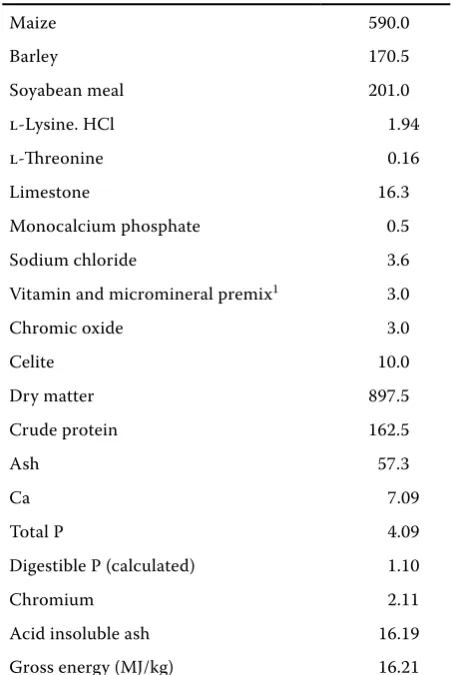
Table 1. Ingredient and chemical composition of the basal diet (g/kg, air-dry basis)
Maize 590.0
Barley 170.5
Soyabean meal 201.0
l-Lysine. HCl 1.94
l-threonine 0.16
Limestone 16.3
Monocalcium phosphate 0.5
Sodium chloride 3.6
Vitamin and micromineral premix1 3.0
Chromic oxide 3.0
Celite 10.0
Dry matter 897.5
Crude protein 162.5
Ash 57.3
Ca 7.09
Total P 4.09
Digestible P (calculated) 1.10
Chromium 2.11
Acid insoluble ash 16.19
Gross energy (MJ/kg) 16.21
1supplied per kg of diet: vitamin A 7 200 IU; vitamin D3 1
six consecutive periods, each consisting of a 5-day preliminary period followed by a 2-day collection period, during which faeces were collected by fre-quent grab sampling and stored as bulk for each in-dividual. Ileal digesta were collected in 1 h intervals for 24 h starting at 6.00 h of the second day of the collection period. Digesta samples were acidified with 6M H2SO4 to pH 3.5, immediately frozen at –20°C and stored for a subsequent analysis. The experimental procedures were reviewed and ap-proved by the Ethical Committee of the Research Institute of Animal Production.
Diets and feeding
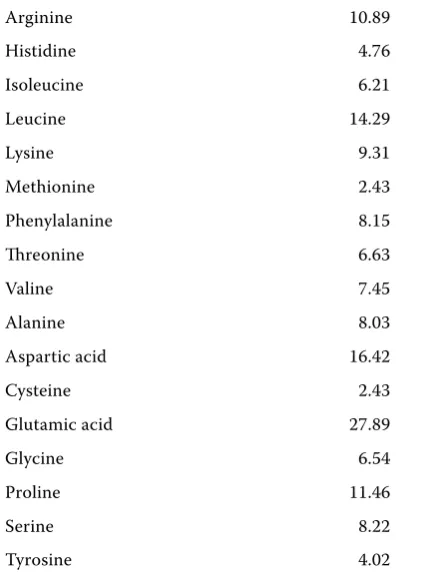
The basal diet (P0) with reduced content of total and calculated digestible P was formulated to contain maize, barley and soyabean meal as the main ingredients. The diet was supplemented with lysine and threonine to meet their respective requirements (NRC, 1998). The calculated con-tent of digestible P was approximately 50% of the optimum requirement for a 40 kg gilt as given by NRC (1998). Chromic oxide and celite (as a source of acid insoluble ash) were included in the diet as digestibility markers. The ingredient composition and chemical analysis of the basal diet are given in Table 1. Amino acid analysis of the basal diet is given in Table 2. Variant JP6500 of the microbial 6-phytase derived from Peniophora lycii (Ronozy-me®NP, DSM Nutritional Products Ltd., Switzer-land) was added to the basal diet via premix at three levels equivalent to 1 000, 1 500 and 3 000 U/kg, thus forming three experimental diets (P1–P3). Other two diets (L0 and L1) were the same as diets P0 and P1, respectively, but they were fed as liquid diets fermented in a laboratory setup simulating a commercial liquid feeding system. Three days before the start of the experiment, dry diets L0 and L1 were mixed with water at a feed:water ratio of 1:2.5 (w/w), 20 ml of lactic acid was added per kg of dry feed and the suspension was stirred for 1 h. The starting amounts of the diets corresponded to their requirements for 3 days. During the ex-periment, the diets were stirred for 5 min every 90 min and additionally for 20 min before each feeding. Every day after morning feeding, dry feed and water required for the next 24 h were added to the mixing vessel to maintain the constant feed: water ratio. Except for the first day, no lactic acid was added. pH of the suspension was measured
daily for the first 5 days and then every other day at 8.30 hour.
The diets were fed twice daily at 6.00 and 16.00 h in two equal meals at a daily rate of 80 g/kg0.75. Diets P0-P3 were fed in a mash form (water:feed ratio 2:1, v/w). The spilled feed was dried and weighed to calculate actual feed intake. After each meal, water was offered ad libitum.
Chemical analyses
[image:3.595.306.530.467.755.2]Samples of ileal digesta were lyophilized and along with air-dried samples of faeces and samples of diets, they were finely ground to pass through a 1 mm screen prior to chemical analyses. Analyses of diets and ileal digesta for dry matter (DM), Ca, P, and AIA were performed in accordance with stand-ard methods of AOAC (1990). The same procedure was used for the analysis of faeces except for total N, which was determined in fresh homogenized samples. Chromic oxide was analyzed by atomic ab-sorption spectrometry as described by Williams et al. (1962). Except for methionine and cysteine, the amino acid composition of diets and ileal digesta
Table 2. Amino acid analysis of the basal diet (g/kg DM)
Arginine 10.89
Histidine 4.76
Isoleucine 6.21
Leucine 14.29
Lysine 9.31
Methionine 2.43
Phenylalanine 8.15
threonine 6.63
Valine 7.45
Alanine 8.03
Aspartic acid 16.42
Cysteine 2.43
Glutamic acid 27.89
Glycine 6.54
Proline 11.46
Serine 8.22
was analyzed by ion-exchange chromatography (AAA 400 automatic analyzer, Ingos, Prague) after hydrolysis for 23 h at 110°C in 6M HCl. Methionine and cysteine were determined as methionine sul-phone and cysteic acid, respectively, after oxida-tion with performic acid before hydrolysis. Heat of combustion was determined using a Parr 1281 Oxygen Bomb Calorimeter (Parr Instrument Co., Moline, IL, USA).The in-feed phytase activity was analyzed as described by a modified method of Engelen et al. (1994). All analyses were performed in duplicate.
Statistical analysis
Data were subjected to ANOVA using the Statgraphic Plus 3.1. Package (Version 3.1., Statis-tical Graphics Corp., Rockville, MD, USA). When
a significant F-value for treatment means (P < 0.05) was observed, the differences between means were assessed using Fisher’s LSD procedure. Regression analysis was used to evaluate the relationship be-tween the supplemental phytase level (excluding liquid fermented diets) and P and Ca digestibility. To assess the effect of digestibility markers on a phytase-mediated response, the differences in per-centage changes in apparent ileal AA digestibility estimated using Cr2O3 and AIA were evaluated by paired t-test. For that purpose, the response of pigs receiving the highest phytase level was compared with that of the control group.
RESULTS
After the recovery from surgery, the pigs re-mained in good health throughout the experi-3.5
4.0 4.5 5.0 5.5 6.0 6.5
-4 0 4 8 12 16 20 24 28 32 36 40 44
Days
(p
H
[image:4.595.64.373.84.260.2])
Figure 1. Mean pH values of fer-mented liquid diets L0 () and L1 () during the experiment
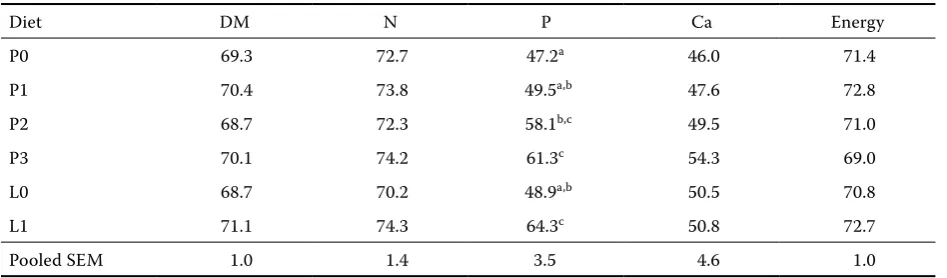
Table 3. Effect of microbial phytase on apparent ileal digestibility of nutrients and energy (%)
Diet DM N P Ca Energy
P0 69.3 72.7 47.2a 46.0 71.4
P1 70.4 73.8 49.5a,b 47.6 72.8
P2 68.7 72.3 58.1b,c 49.5 71.0
P3 70.1 74.2 61.3c 54.3 69.0
L0 68.7 70.2 48.9a,b 50.5 70.8
L1 71.1 74.3 64.3c 50.8 72.7
Pooled SEM 1.0 1.4 3.5 4.6 1.0
[image:4.595.64.538.592.731.2]ment and consumed almost all the feed offered. The intrinsic phytase activity of the basal diet was 109 U/kg, while the total phytase activities of di-ets P1, P2 and P3 were 954, 1 419 and 2 743 U/kg, respectively. Mean daily weight gain of pigs during the experiment was 663 g/day. Ileal and total tract digestibility values calculated using Cr2O3 or AIA as markers were similar. As the variability of data estimated with Cr2O3 was slightly lower than that for AIA, digestibility values calculated with the former marker are given in tables of results.
Within the first five days of fermentation, pH value of the fermented diets decreased from 6.2 to about 4.5 and during the rest of the experiment it fluctuated between 4.1 and 4.7 (Figure 1).
[image:5.595.67.537.100.239.2]The mean values of apparent ileal digestibility of DM, N, Ca, P, and energy are presented in Table 3. Analysis of variance showed that, except for total P, phytase supplements or diet fermentation had no significant effect on ileal digestibility of nutrients or energy. There were significant linear and quadratic relationships between the level of supplemental
Table 4. Effect of microbial phytase on apparent total tract digestibility of nutrients and energy (%)
Diet DM N P Ca Energy
P0 86.2 87.3 41.1a 47.9a 86.9
P1 86.4 86.6 54.4b 51.2a,b 87.1
P2 86.9 87.5 55.3b 53.9a,b 87.7
P3 87.2 87.9 65.7c 59.7c 87.6
L0 86.6 86.3 43.0a 48.2a 86.9
L1 87.3 87.5 62.1b,c 54.7a,b 87.2
Pooled SEM 0.5 0.8 3.8 3.1 0.5
a,b,cmeans within a column followed by different superscripts are significantly different (P < 0.05)
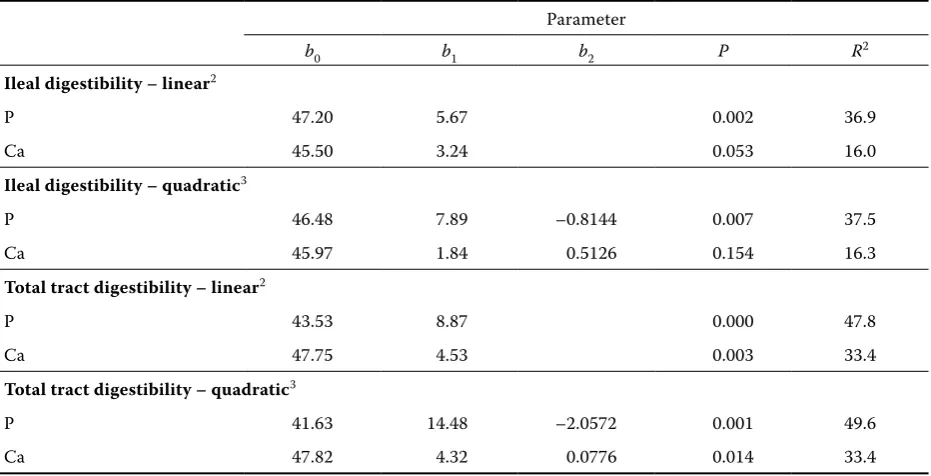
Table 5. Parameters of regression equations relating apparent digestibility of P or Ca (Y, %) to the dietary concen-tration of supplemental phytase (X, 10–3 U)1
Parameter
b0 b1 b2 P R2
Ileal digestibility – linear2
P 47.20 5.67 0.002 36.9
Ca 45.50 3.24 0.053 16.0
Ileal digestibility – quadratic3
P 46.48 7.89 –0.8144 0.007 37.5
Ca 45.97 1.84 0.5126 0.154 16.3
Total tract digestibility – linear2
P 43.53 8.87 0.000 47.8
Ca 47.75 4.53 0.003 33.4
Total tract digestibility – quadratic3
P 41.63 14.48 –2.0572 0.001 49.6
Ca 47.82 4.32 0.0776 0.014 33.4
1excluding diets L0 and L1; 2Y = b
[image:5.595.66.532.489.727.2]phytase and ileal P or Ca digestibilities (Table 5). Ileal P digestibility of diet L1 was not significantly different from that of diet P3. The data for apparent total tract digestibilities are summarized in Table4. The digestibility of both P and Ca significantly in-creased as a result of phytase supplementation.
[image:6.595.64.537.102.241.2]Regression analysis (Table 5) showed significant linear and quadratic relationships between the phytase level and P digestibility as well as between the phytase level and Ca digestibility. As a result of improved P digestibility due to phytase supple-mentation, faecal P excretion was reduced. Table 6
Table 6. Effect of microbial phytase on faecal P excretion
Diet P intake (mg/kg BW) Faecal P (mg/kg BW) Faecal P (% of P intake)
P0 100.4 59.0a 58.9a
P1 104.4 47.1b 45.6b
P2 104.0 46.5b 44.7b
P3 100.1 34.6c 34.3c
L0 104.9 60.2a 57.0a
L1 104.9 39.7b,c 37.9b,c
Pooled SEM 3.9 4.1 3.6
a,b,cmeans within a column followed by different superscripts are significantly different (P < 0.05)
Table 7. Effect of microbial phytase on apparent ileal digestibility of amino acids (%)
Amino acid Diet Pooled
SEM
P0 P1 P2 P3 L0 L1
Arginine 85.3 85.1 84.2 84.9 84.5 85.7 0.4
Histidine 82.4 82.2 81.2 82.0 81.6 83.0 0.5
Isoleucine 81.4 81.2 80.0 81.0 80.5 82.0 0.5
Leucine 83.6 83.4 82.5 83.3 83.5 84.9 0.5
Lysine 83.6 83.4 82.5 83.3 82.8 84.2 0.5
Methionine 85.4 85.2 84.3 85.0 84.7 85.8 0.4
Phenylalanine 77.5 77.2 75.9 77.0 76.4 78.2 0.7
threonine 72.9 72.6 70.9 72.3 71.6 73.8 0.8
Valine 78.4 78.1 76.8 77.9 77.3 79.1 0.6
Alanine 73.4 73.1 71.5 72.8 72.1 74.3 0.8
Aspartic acid 80.8 80.6 79.4 80.3 79.9 81.4 0.6
Cysteine 76.9 76.6 75.3 76.4 75.8 77.7 0.7
Glutamic acid 85.4 85.2 84.3 85.0 84.7 85.8 0.4
Glycine 62.8 62.3 60.1 61.9 60.9 63.8 1.1
Proline 52.9 52.3 49.5 51.8 50.5 54.3 1.4
Serine 79.1 78.9 77.6 78.6 78.1 79.8 0.6
Tyrosine 79.7 79.4 78.2 79.2 78.7 80.3 0.6
[image:6.595.66.535.414.757.2]summarizes the data on P excretion expressed per kg body weight or as a percentage of P intake. In both cases, the reduction was dose-dependent, the highest effect being observed in pigs fed diet P3. As compared with diet P0, P excretion decreased by about 41%. Faecal P excretion in fermented diet L1 was significantly lower than in diet L0 and was comparable with that of diet P3.
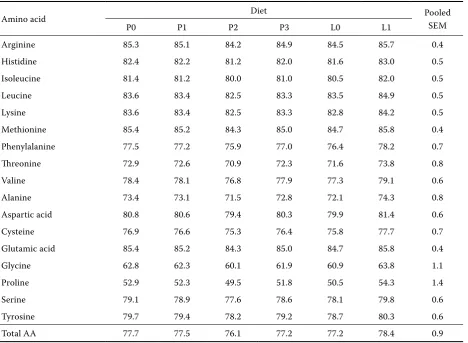
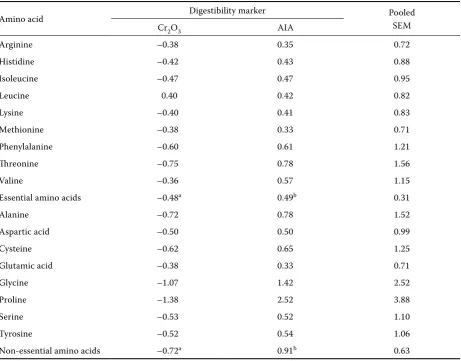
The values for apparent ileal AA digestibility are summarised in Table 7. There was no significant effect of phytase addition or diet fermentation on the digestibility of AA. In general, the highest val-ues were found in the case of arginine, methionine and glutamic acid while the lowest ones in glycine and proline. The comparison of the effect of Cr2O3 and AIA on the response in AA digestibility to the highest phytase level is presented in Table 8. When
estimated using Cr2O3, the AA digestibility of the phytase-supplemented diet was slightly lower than that of the control diet while the opposite was true of AIA. As for the individual AA, no significant ef-fect of the marker was found. However, the mean values for both total essential and nonessential AA estimated with AIA were significantly higher than those estimated with Cr2O3.
DISCUSSION
As expected, the supplementation of phytase to the maize- and barley-based diet significantly improved phosphorus digestibility. The maximum relative improvement for ileal and total tract P di-gestibility was approximately 30 and 60%,
respec-Table 8. Response in apparent ileal AA digestibility to phytase (3 000 U/kg)1 as affected by the use of Cr
2O3 or AIA
as digestibility markers (%)
Amino acid Digestibility marker Pooled
SEM
Cr2O3 AIA
Arginine –0.38 0.35 0.72
Histidine –0.42 0.43 0.88
Isoleucine –0.47 0.47 0.95
Leucine 0.40 0.42 0.82
Lysine –0.40 0.41 0.83
Methionine –0.38 0.33 0.71
Phenylalanine –0.60 0.61 1.21
threonine –0.75 0.78 1.56
Valine –0.36 0.57 1.15
Essential amino acids –0.48a 0.49b 0.31
Alanine –0.72 0.78 1.52
Aspartic acid –0.50 0.50 0.99
Cysteine –0.62 0.65 1.25
Glutamic acid –0.38 0.33 0.71
Glycine –1.07 1.42 2.52
Proline –1.38 2.52 3.88
Serine –0.53 0.52 1.10
Tyrosine –0.52 0.54 1.06
Non-essential amino acids –0.72a 0.91b 0.63
1percentage change in AA digestibility estimated in diet P3 vs. diet P0
[image:7.595.69.531.359.720.2]tively. A similar response was observed in other experiments using P-deficient, cereal-based diets (Omogbenigun et al., 2003; Kies et al., 2005; Sands and Kay, 2007). There was a positive linear and quadratic relationship between the phytase level and P digestibility. The quadratic terms in quad-ratic regression equations were not significant (Table 5), which suggested that there was no break-point or reduction in the response in the range of phytase activities examined. The effect of phytase supplementation on the digestibility of Ca was less apparent. Even though both ileal and total tract Ca digestibilities numerically increased with the increasing phytase level, a significant improvement was found only for total tract Ca digestibility in pigs receiving the highest phytase supplement. The re-sults of experiments studying the effect of phytase on Ca digestibility in pigs are controversial. Some reports showed no effect (Yi et al., 1996; Harper et al., 1997; Sands et al., 2001) while others showed that phytase increased both ileal (Traylor et al., 2001) and total tract (Kemme et al., 1997) Ca di-gestibility. There are even studies demonstrating a greater effect of added phytase on Ca digestibility than on P digestibility (Johnston et al., 2004). The Ca-releasing efficiency of phytase may have impor-tant consequences in the utilization of dietary P. It has been shown that the excess of Ca has an adverse effect on P digestibility, particularly at low P levels (Quian et al., 1996). Given that phytase supplemen-tation to Ca-adequate, P-deficient diets increases Ca absorption, P digestibility may be reduced as a result of a Ca surplus and, consequently, the ben-eficial effect of phytase on phytate P availability may be compromised (Brańa et al., 2006).
In the present study, no effect of phytase on ileal or total tract digestibility of energy was found. This is in accordance with the results of other studies on pigs showing no (O’Quinn et al., 1997) or marginal (Kim et al., 2008) effect of supplemen-tal phytase on energy digestibility. In contrast, Brady et al. (2003) reported an increase in digest-ible energy and N retention as a result of phytase added to pig diets at higher dietary levels. To date, it is not clear whether the phytase-induced improvement in energy availability is a result of the increased digestibility of energy-yielding nu-trients or higher inclusion rates of phytase (Selle and Ravindran, 2008).
In the liquid fermented diet, the phytate-degrad-ing efficacy of phytase supplemented at the lowest level (diet L1) was not significantly different from
that observed in the dry diet supplemented with the highest phytase level (diet P3). These results suggest that compound diets, designed for pig fa-cilities using liquid feeding systems, may be for-mulated to contain lower phytase levels without reducing its effect on phytate degradation. There are other studies demonstrating a positive effect of soaking or fermenting single feeds or compound diets on the efficacy of exogenous phytase (Liu et al., 1997; Carlson et al., 2003; Blaabjerg et al., 2007). It seems that the main factors contributing to the increased degradation of phytate in liquid fermented diets are the acidification of fermenta-tion media due to the proliferafermenta-tion of lactogenic bacteria population and the time of fermentation. It has been demonstrated that microbial phytase added to fermented high moisture maize remains active for a considerable time, thus maintaining its capacity to release phytate P (Niven et al., 2007). As shown in Figure 1, the mean pH value of the fermented diets was approximately 4.4, which was 0.9 units lower than the optimum for Peniophora lycii phytase (5.3). The lowered pH may also in-fluence the solubility of phytate complexes. It is assumed that phytate is present in feedstuffs pre-dominantly as an Mg-phytate complex (Selle and Ravindran, 2008), which is poorly soluble at pH above 5.0. At lower pH values, the solubility is considerably higher (Cheryan et al., 1983), thus making phytate more susceptible to enzymatic breakdown. In contrast to other reports (Skoglund et al., 1997; Carlson and Poulsen, 2003; Lyberg et al., 2006), fermentation itself had no significant effect on the phytate P availability. This might be due to different concentrations of native phytase in experimental diets. Unlike wheat and wheat by-products, the intrinsic phytase activity in maize and soyabean meal, used as the main ingredients in the present study, is low (Eeckhout and de Paepe, 1994; Viveros et al. 2000) and obviously insufficient to degrade phytate to a larger extent.
shown that urinary excretion is the main process responsible for P homeostasis in pigs, any excess of absorbed P not used for anabolic purposes be-ing excreted via urine (Rodehutscord et al., 1999). Therefore, to minimize total P excretion, pig diets should be formulated to meet the available P re-quirement taking into account the P equivalency value of a given phytase product under given con-ditions.
As in our preceding study (Nitrayová et al., 2005), phytase supplementation of the basal diet had no significant effect on apparent ileal digestibility of amino acids. There are other experiments dem-onstrating no favourable effect of added phytase on protein or amino acid digestibility (Traylor et al., 2001; Copado et al, 2003; Cervantes et al., 2004), which casts doubt on the use of an “amino acid equivalency value” of phytase products in the least-cost formulation of pig diets. On the other hand, a positive effect of phytase on the digestibil-ity of at least some amino acids has been reported by several authors (Officer and Batterham, 1992; Kornegay et al., 1998; Kemme et al., 1999a). In their recent review, Selle and Ravindran (2008) suggested that these conflicting results might be due to different methodologies used. Based on the analysis of literature data, they concluded that the response to phytase in pigs was more pro-nounced when ileal digesta samples were taken from intact animals as opposed to cannulated ones. Since Cr2O3 was used as a marker in the majority of experiments using cannulated pigs, Selle and Ravindran (2008) speculated that this marker might not be suitable in estimating ileal amino acid digestibility. Indeed, as shown by Selle et al. (2006), the response to phytase in experi-ments estimating amino acid digestibility in broil-ers was consistently greater when acid insoluble ash or TiO2 were used as markers in preference to Cr2O3. In order to clarify this problem in pigs, we compared the response to the highest phytase level calculated using Cr2O3 and AIA. The use of the latter marker gave slightly higher values (Table 8), but the magnitude of the response was marginal, not exceeding 1%. In contrast, Officer and Batterham (1992) and Kornegay et al. (1998) reported a mean increase in apparent ileal amino acid digestibility in response to phytase addition by 14.5 and 9.9%, respectively. Therefore it seems that the choice of the digestibility marker is not the main factor responsible for ambiguous results found in the literature.
REFERENCES
Adeola O., Sands J.S. (2003): Does supplemental dietary phytase improve amino acid utilization? A perspec-tive that it does not. Journal of Animal Science 81, E78–E85.
AOAC (1990): Official Methods of Analysis, 15th edition.
Association of Official Analytical Chemists, Arlington, Virginia, USA.
Augspurger N.R., Webel D.M., Baker D.H. (2007): An
Escherichia coli phytase expressed in yeast effec-tively replaces inorganic phosphorus for finishing pigs and laying hens. Journal of Animal Science, 85, 1192–1198.
Blaabjerg K., Carlson D., Hansen-Moeller J., Tauson H-J., Poulsen H.D. (2007): In vitro degradation of phytate and lower inositol phosphates in soaked diets and feedstuffs. Livestock Science, 109, 240–243.
Boling S.D., Webel D.M., Mavromichalis I., Parsons C. M., Baker D.H. (2000): the effects of citric acid on phytate-phosphorus utilization in young chicks and pigs. Journal of Animal Science, 78, 682–689.
Brady S.M., Callan J.J., Cowan D., McGrane M., O’Doherty J.V. (2003): Effect of two microbial phytases on the performance and nutrient retention of grower-finisher pigs fed barley-maize-soyabean meal-based diets. Irish Journal of Agriculture and Food Research, 42, 101–117.
Brańa D.V., Ellis M., Castańeda E.O., Sands J.S., Baker D.H. (2006): Effect of a novel phytase on growth per-formance, bone ash, and mineral digestibility in nurs-ery and grower-finisher pigs. Journal of Animal Science, 84, 1839–1849.
Carlson D., Poulsen H.D. (2003): Phytate degradation in soaked and fermented liquid feed – effect of diet, time of soaking, heat treatment, phytase activity, pH and temperature. Animal Feed Science and Technology, 103, 141–154.
Cervantes M., Yanez J., Barrera M.A., Figueroa J.L., Tor-rentera N., Sauer W. (2004): Ileal amino acid digestibil-ity and performance of pigs fed grain sorghum-based diets supplemented with phytase. Interciencia, 29, 527–531.
Cheryan M., Anderson F.W., Grynspan F. (1983): Mag-nesium-phytate complexes: effect of pH and molar ratio on solubility characteristics. Cereal Chemistry, 60, 235–237.
Cromwell G.L., Coffey R.D., Parker G.R., Monegue H.J., Randolph J.H. (1995): Efficacy of a recombinant-de-rived phytase in improving the bioavailability of phos-phorus in corn-soyabean meal diets for pigs. Journal of Animal Science, 73, 2000–2008.
Eeckhout W., De Paepe M. (1994): Total phosphorus, phytate-phosphorus and phytase activity in plant feedstuffs. Animal Feed Science and Technology, 47, 19–29.
Eeckhout W., De Paepe M. (1996): In vitro and in vivo
comparison of microbial and plant phytase. In: Coelho M.B., Kornegay E.T. (eds.): Phytase in Animal Nutrition and Waste Management, BASF Corp. Mount Olive, NJ, 237–240.
Engelen A.J., van der Heeft F.C., Randsdorp P.H.G., Smit E.L.C. (1994): Simple and rapid determination of phytase activity. Journal of AOAC International, 77, 760–764.
Gabert V.M., Sauer W.C. (1994): the effects of supplement-ing diets for weanlsupplement-ing pigs with organic acids. A review: Journal of Animal and Feed Sciences, 3, 73–87. Han Y.M., Roneker K.R., Pond W.G., Lei X.L. (1998):
Add-ing wheat middlAdd-ings, microbial phytase, and citric acid to corn-soyabean diets for growing pigs may replace inorganic phosphorus supplementation. Journal of Animal Science, 76, 2649–2656.
Harper A.F., Kornegay E.T., Schell T.C. (1997): Phytase supplementation of low-phosphorus growing-finishing pig diets improves performance, phosphorus digestibil-ity and bone mineralization and reduces phosphorus excretion. Journal of Animal Science, 75, 3174–3186. Jensen B.B., Mikkelsen L.L. (1998): Feeding liquid diets
for pigs. In: Garnsworthy P.C., Wiseman J. (eds.): Re-cent Advances in Animal Nutrition. Nottingham Univ. Press, Loughborough, UK, 107 pp.
Johnston S.L., Williams S.B., Southern L.L., Bidner T.D., Bunting L.D., Matthews J.O., Olcott B.M. (2004): Effect of phytase addition and dietary calcium and phospho-rus levels on plasma metabolites and ileal and total-tract nutrient digestibility in pigs. Journal of Animal Science, 82, 705–714.
Jongbloed A.W., Kemme P.A., Mroz Z., Jongbloed R. (1996): the effects of organic acids in diets for growing pigs on the efficacy of microbial phytase. In: Coelho M.B., Kornegay E.T. (eds.): Phytase in Animal Nutrition and Waste Management, BASF Corp. Mount Olive, NJ, 515–524.
Kemme P.A., Jongbloed A.W., Mroz Z., Beynen A.C. (1997): the efficacy of Aspergillus niger phytase in ren-dering phytate phosphorus available for absorption in
pigs is influenced by pig physiological status. Journal of Animal Science, 75, 2129–2138.
Kemme P.A., Jongbloed A.W., Mroz Z., Kogut J., Beynen A.C. (1999a): Digestibility of nutrients in growing-fin-ishing pigs is affected by Aspergillus niger phytase, phytate and lactic acid levels. 1. Apparent ileal digest-ibility of amino acids. Livestock Production Science, 58, 107–117.
Kemme P.A., Jongbloed A.W., Mroz Z., Kogut J., Beynen A.C. (1999b): Digestibility of nutrients in growing-fin-ishing pigs is affected by Aspergillus niger phytase, phytate and lactic acid levels. 2. Apparent total tract digestibility of phosphorus, calcium and magnesium and ileal degradation of phytic acid. Livestock Produc-tion Science, 58, 119–127.
Kies A.K., Gerrits W.J.J., Schrama J.W., Heetkamp M. J.W., van den Linden K.L., Zandstra T., Verstegen M.W.A. (2005): Mineral absorption and excretion as affected by microbial phytase, and their effect on en-ergy metabolism in young piglets. Journal of Nutrition, 135, 1131–1138.
Kim J.C., Sands J.S., Mullan B.P., Pluske J.R. (2008): Per-formance and total-tract digestibility responses to ex-ogenous phytase in diets for growing pigs. Animal Feed Science and Technology, 142, 163–172.
Kornegay E.T., Radcliffe J.S., Zhang Z. (1998): Influence of phytase and diet composition on phosphorus and amino acid digestibilities, and phosphorus and nitro-gen excretion in swine. BASF Technical Symposium, BASF Corp., Mount Olive, NJ, 125–155.
Li D.F., Che X.R., Wang Y.Q., Hong C., Thacker P.A. (1998): The effect of microbial phytase, vitamin D3 and citric acid on growth performance and phospho-rus, nitrogen, and calcium digestibility in growing swine. Animal Feed Science and Technology, 73, 173–186.
Liu J., Bollinger D.W., Ledoux D.R., Ellersieck M.R., Veum T.L. (1997): Soaking increases the efficacy of supple-mental microbial phytase in a low-phosphorus corn-soyabean meal diet for growing pigs. Journal of Animal Science, 75, 1292–1298.
Lyberg K., Lundh T., Pedersen C., Lindberg J.E. (2006): Influence of soaking, fermentation and phytase sup-plementation on nutrient digestibility in pigs offered a grower diet based on wheat and barley. Animal Sci-ence, 82, 853–858.
Nitrayová S., Patráš P., Sommer A., Heger J. (2006): Effect of microbial phytase on apparent ileal amino acid di-gestibility of phosphorus-adequate diets in growing pigs. Archives of Animal Nutrition, 60, 131–140. Niven S.J., Zhu C., Columbus D., Pluske J.R., de Lange
C.F.M. (2007): Impact of controlled fermentation and steeping of high moisture corn on its nutritional value for pigs. Livestock Science, 109, 166–169.
NRC (1998): Nutrient Requirements of Swine, 10th ed.
National Academy Press, Washington, USA.
Officer D.I., Batterham E.S. (1992): Enzyme supplemen-tation of LinolaTM meal for growing pigs. In:
Proceed-ings of the Australian Society of Animal Production, USA, 9, 1–8.
Omogbenigun F.O., Nyachoti C.M., Slominski B.A. (2003): the effect of supplementing microbial phytase and or-ganic acids to a corn-soyabean diet to early-weaned pigs. Journal of Animal Science, 81, 1806–1813. O’Quinn P.R., Knabe D.A., Gregg E.J. (1997): Efficacy of
Natuphos in sorghum-based diets of finishing swine. Journal of Animal Science, 75, 1299–1307.
Patráš P., Nitrayová S., Sommer A., Heger J. (2006): Effect of microbial phytase on apparent digestibility and re-tention of phosphorus and nitrogen in growing pigs. Czech Journal of Animal Science, 51, 437–443. Pomar C., Gagne F., Matte J.J., Barnett G., Jondreville C.
(2008): the effect of microbial phytase on true and ap-parent ileal amino acid digestibilities in growing-finish-ing pigs. Journal of Animal Science, 86, 1598–1608. Qian H., Kornegay E.T., Conner D.E.Jr. (1996): Adverse
effects of wide calcium: phosphorus ratios on supple-mental phytase efficacy for weanling pigs fed two di-etary phosphorus levels. Journal of Animal Science, 74, 1288–1297.
Radcliffe J.S., Zhang Z., Kornegay E.T. (1998): the effects of microbial phytase, citric acid, and their interaction in a corn-soyabean meal-based diet for weanling pigs. Journal of Animal Science, 76, 1880–1886.
Rodehutscord M., Faust M., Pfeffer E. (1999): the course of phosphorus excretion in growing pigs fed continu-ously increasing phosphorus concentrations after a phosphorus depletion. Archives of Animal Nutrition, 52, 323–334.
Sands J.S., Kay R.M. (2007): Phyzyme XP phytase im-proves growth performance and nutrient utilization in wheat-based diets fed to weaned pigs. Livestock Sci-ence, 109, 264–267.
Sands J.S., Ragland D., Baxter C., Joern B.C., Sauber T.E., Adeola O. (2001): Phosphorus bioavailability, growth performance, and nutrient balance in pigs fed high
available phosphorus corn and phytase. Journal of Animal Science, 79, 2134–2142.
Scholten R.H.J., Rijnen M.M.J.A., Schrama J.W., Boer H., Vesseur P.C., Den Hartog L.A., van der Peet-Schwering C.M.C., Verstegen M.W.A. (2001): Fermentation of liquid coproducts and liquid compound diets: Part 1. Effects on chemical composition during a 6-day storage period. Journal of Animal Physiology and Animal Nu-trition, 85, 111–123.
Sebastian S., Touchburn S.P., Chavez E.R. (1998): Impli-cations of phytic acid and supplemental microbial phytase in poultry nutrition: a review. World’s Poultry Science Journal, 54, 27–47.
Selle P.H., Ravindran V. (2008): Phytate-degrading enzymes in pig nutrition. Livestock Science, 113, 99–122. Selle P.H., Ravindran V., Bryden W.L., Scott T. (2006):
Influence of dietary phytate and exogenous phytase on amino acid digestibility in poultry: a review. Poultry Science, 43, 89–103.
Sharpley A.N., Chapra T.C., Wedepohl R., Sims J.T., Daniel T.C., Reddy K.R. (1994): Managing agricultural phospho-rus for protection of surface waters: Issues and options. Journal of Environmental Quality, 23, 437–451.
Simons P.C.M., Versteegh H.A.J., Jongbloed A.W., Kemme P.A., Slump P., Bos K.D., Wolters M.G.E., Beudeker R.F., Verschoor G.J. (1990): Improvement of phosphorus availability by microbial phytase in broilers and pigs. British Journal of Nutrition, 64, 525–540.
Skoglund E., Larsen T., Sandberg A.S. (1997): Compari-son between steeping and pelleting a mixed diet at dif-ferent calcium levels on phytate degradation in pigs. Canadian Journal of Animal Science, 77, 471–477. Traylor S.L., Cromwell G.L., Lindemann M.D., Knabe
D.A. (2001): Effects of level of supplemental phytase on ileal digestibility of amino acids, calcium, and phos-phorus in dehulled soyabean meal for growing pigs. Journal of Animal Science, 79, 2634–2642.
Vats P., Bhattacharyya M.S., Benerjee U.C. (2005): Use of phytases (myo-inositolhexakisphosphate phospho-hydrolases) for combatting environmental pollution: A biological approach. Critical Reviews of Environ-mental Science and Technology, 35, 469–486. Viveros A., Centeno C., Brenes A., Canales R., Lozano
A. (2000): Phytase and acid phosphatase activities in plant feedstuffs. Journal of Agricultural and Food Chemistry, 48, 4009–4013.
Williams C.H., David D.J., Lismoa O. (1962): the deter-mination of chromic oxide in fecal samples by atomic absorption spectrophotometry. Journal of Agricultural Science, 59, 381–390.
Yi Z., Kornegay E.T., Ravindran V., Lindemann M.D., Wilson J.H. (1996): Effectiveness of Natuphos phytase
Corresponding Author
Doc. ing. Jaroslav Heger, PhD., Research Institute of Animal Production, Slovak Agricultural Research Centre, Nitra, Slovak Republic
Tel. +421 376 546 248, fax +421 376 546 418, e-mail: jheger@ tiscali.cz
in improving the bioavailabilities of phosphorus and other nutrients in soyabean meal-based semipurified diets for young pigs. Journal of Animal Science, 74, 1601–1611.