The development and transfer of undergraduate group
work skills
NEATH, Mark
Available from Sheffield Hallam University Research Archive (SHURA) at:
http://shura.shu.ac.uk/3114/
This document is the author deposited version. You are advised to consult the publisher's version if you wish to cite from it.
Published version
NEATH, Mark (1998). The development and transfer of undergraduate group work skills. Doctoral, Sheffield Hallam University.
Copyright and re-use policy
See http://shura.shu.ac.uk/information.html
KEY TEXT LOAN
Return to Learning Centre of issue
Fines are charged at 50p per hour
ProQuest Number: 10697420
All rights reserved INFORMATION TO ALL USERS
The quality of this reproduction is dependent upon the quality of the copy submitted. In the unlikely event that the author did not send a com plete manuscript and there are missing pages, these will be noted. Also, if material had to be removed,
a note will indicate the deletion.
uest
ProQuest 10697420
Published by ProQuest LLC(2017). Copyright of the Dissertation is held by the Author. All rights reserved.
This work is protected against unauthorized copying under Title 17, United States C ode Microform Edition © ProQuest LLC.
ProQuest LLC.
789 East Eisenhower Parkway P.O. Box 1346
The Development and Transfer of
Undergraduate Group Work Skills
Mark Neath
A thesis submitted in partial fulfilment of the
requirements of Sheffield Hallam University for
the degree of Doctor of Philosophy
Abstract
This research concentrates on the experiences of a cohort of undergraduate students as they took part in two assessed group projects. The research concentrates on the following key question:
In what ways were students becoming more or less able to participate effectively in group projects because of their experience of similar projects?
The literature review features an extensive overview of transfer research and experiential learning, in addition to charting the rise of skills-based initiatives in Higher Education. It also reviews the available literature on experiential learning in group situations revealing a dearth of research into the specific dynamics of students groups in Higher Education.
After an initial design based on quasi-experimentation, the researcher
adopted a more interpretive position. A significant feature of the methodology is a reflective account of the process of social science research as
experienced by the researcher.
The results section describes the key dynamics around which the students made sense of group work and in turn how they framed it in terms of a learning experience. In brief, the students' accounts of group work were characterised by several main themes: the issue of control and influence over others (which the role of 'student' was perceived to limit); the reciprocal nature of group work with its potential to influence grades; the public nature of group work through which the students presented themselves to others and the discrepancies which were revealed in group work between different ways of working.
Acknowledgements
Thanks are due to:
Sue Drew - for providing continual support and encouragement and for being genuinely interested in the process of research. For being an excellent
supervisor. And to whom I owe more than a pint of guiness.
Asher Cashdan - whose ever vigilent editorial eye would never let me get away with a sentence that reads as badly as what this one does
Peter Westland - for his generosity and interest.
Peter Hartley and Kathy Doherty - for being great fun to work with.
The second year cohort of the Building Surveying degree course at Sheffield Hallam University.
The original line up of the LTI, particularly Rosie and Heather Bingham, Hazel Oliver, Maurice Teasdale and Mr. Henderson. To the attic research gang - Li, Theresa, Shauna, Kerry, Rachel and now, of course, to Dr.
Garner (in those days I knew him simply as lain).
The gentlemen of Vincent Road and all members of the C.C.
Kate Brooks - for being quite simply marvellous.
Pauline and David - to whom thanks are always due but rarely given!
C o n t e n t s
1.0 Introduction 1
1.1 Literature Review 2
1.2 Methodology 4
1.3 Results 6
1.4 Discussion 7
2.0 Literature Review 9
2.1 Transferable skills in Higher Education 10
2.2 The Study of Transfer 31
2.3 Experiential learning 52
2.4 Experiential learning in groups 69
3.0 Methodology 89
3.1 Development of the research design 90
3.2 Course details 102
3.3 Observations 106
3.4 Questionnaires 116
4.0 Results 153
4.1 Questionnaires 154
4.2 Interviews 176
4.3 Findings from remaining interviews 205
4.4 Observations of group meetings 214
5.0 Discussion 220
5.1 A socio-interpretive explanation of transfer and development 221
5.2 Returning to the literature review 233
5.3 Implications for group skills development in Higher Education 238
5.4 Implications for future research 244
6.0 References 247
Tables and figures
Literature Review
Table L1: An experimental model of transfer research. 35
Figure L1: Lewin's experiential learning model. 55
Table L2: Three categories of learning responses, Jarvis (1995). 57
Table L3: Four learning types and their corresponding areas of
change, Cell (1984). 60
Methodology
Table M1: Diagram of the initial research design. 93
Table M2: Summary of data collected. 101
Table M3: Categories, with definitions, of the behaviour analysis
checklist. 108
Table M4: Revisions made to the Rackham and Morgan checklist
during observations. 113
Table M5: Seven student-generated effective group behaviours. 119
Table M6: The continuum of structured to unstructured interviews. 130
Table M7: Example of interview transcription. 139
Table M9: Example of interview analysis, stage three. 142
Table M10: Main SEM1 interview topic headings. 143
Table M11: Example of interview analysis, stage four. 145
Table M12: Example of interview analysis, stage five. 147
Table M13: Revision of interview analysis. 152
Results
Table R1: Ratings of group work according to the categories of
positive, negative or conditional. 156
Table R2: Frequency of reasons given for 'negative' responses
about overall group work experience. 156
Table R3: Frequency of reasons given for 'conditional' responses
about overall group work experience. 157
Table R4: Frequency of reasons given for 'positive' responses
about overall group work experience. 158
Table R5: Distribution of initial reactions to the 2nd year group projects according to the categories of positive, negative or
conditional. 158
Table R6: Frequency of themes for 'conditional/non-committal'
initial reactions. 159
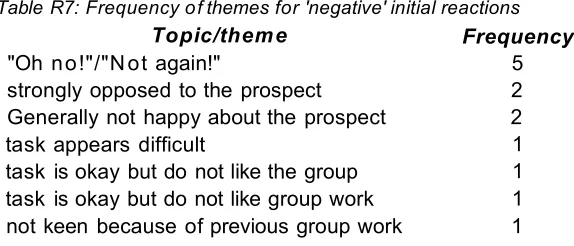
Table R7: Frequency of themes for 'negative' initial reactions. 159
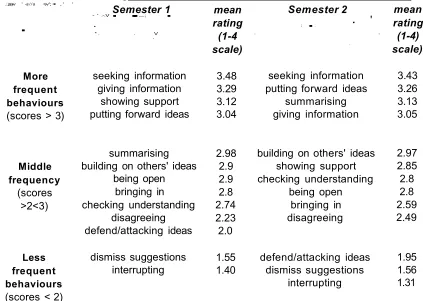
Table R9: Self-rated frequency of own group meeting behaviours, shown in rank order and with mean rating.
Table R10: Student generated behaviours needed to be effective in group work.
Table R11: Self assessment of effective group work practices.
Table R12: Peer assessment of effective group work practices with rating and in rank order.
Table R13: Self and peer ratings of effective group practices with ratings and in rank order.
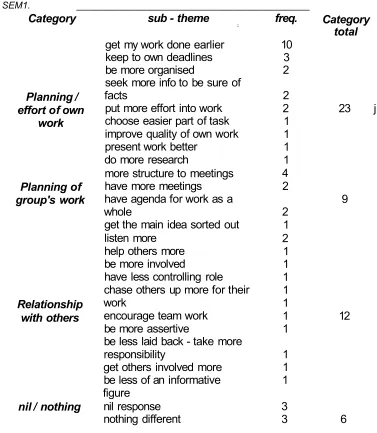
Table R14: What they will personally try to do differently in SEM2 as proposed after SEM1.
Table R15: What they will try to encourage their group to do differently in SEM2 as proposed after SEM1.
Table R16: Match or mis-match between proposed attempts and reported attempts to do things differently.
Table R17: Effectiveness in groups - distribution of responses.
Table R18: Whether they thought they had developed group skills
or not.
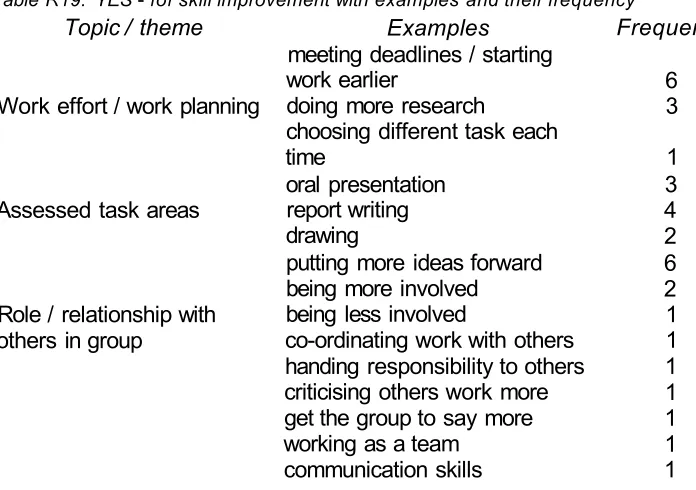
Table R19: YES - for skill improvement with examples and their frequency.
Table R20: Characteristic stages of the project groups.
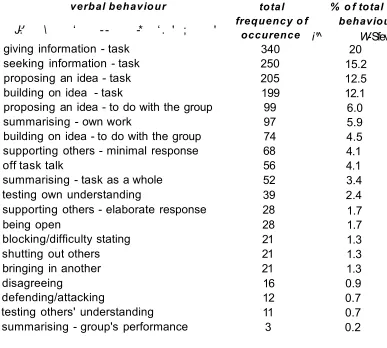
Table R21: Distribution of behaviours observed during SEM2 group meetings.
161
162
163
163
164
165
166
168
169
171
171
193
Discussion
Figure D1: The student learner in context
Figure D2: Transfer of learning from SEM1 to SEM2.
222
1. 0 I n t r o d u c t i o n
This introductory section outlines the major sections of the thesis.
1.1 Literature Review 2
1.2 Methodology 4
1.3 Results 6
1.1 Literature Review
The literature review is divided into four sections which discuss published articles written on the subjects of; Transferable Skills in Higher Education, the Study of Transfer, Experiential Learning and Experiential Learning in Groups.
The first section, Transferable Skills in Higher Education (HE), discusses the rise of skills based initiatives in HE and introduces the fundamental assumption of these initiatives that skills developed in HE (such as group work) are
transferable to industry and the professions. However, the assumptions underlying the concepts of transfer and skill are questioned. An argument is presented that there are dangers associated with a narrow definition of skill when used to refer to personal and interpersonal abilities. Furthermore, there is a call for research to examine the mechanisms by which such skills are
transferred. The transfer of skills, then, is a huge assumption and became a prime area of focus for the present research.
Transfer research (section two) has a long history in psychology but its findings have not been in great evidence in the skills debate within HE. In addition to presenting a variety of theoretical perspectives, this section shows that studies of transfer are typically experimentally based and rely on cognitive problem solving exercises.
Studies investigating the transfer of complex interpersonal skills are rare, as are transfer studies in natural settings. When these issues have been studied, it has tended to be in relation to the transfer of organisational training. Training research in organisations relies on well-established criteria for its evaluation. The call from this area of the literature is for more research, and for research to include behavioural observations rather than relying on trainee's initial
The initial quasi-experimental design of this study involved an attempt to
evaluate the transfer of group work training given to students using behavioural observations of their meetings. The logical progression of this early design from the literature so far should be clear. Practical difficulties, however, led to the cancellation of the training component. Moreover, there followed a transitional stage of critically questioning the appropriateness of this literature-led design.
Students in HE do not typically receive training in group work. Rather, they are left to (and assumed to) learn from experience. A more realistic and appropriate design, therefore, was to concentrate on what students were learning
themselves from experience and whether the experience of one group helped them to learn in their next group. In terms of the literature review, this means that two further sections are included; Experiential Learning and Experiential Learning in Groups.
The Experiential Learning section outlines the key elements of a variety of experiential learning theories. The notion of transfer is less clear in such work, most commonly seen as an integral part of a learning cycle. The dialectical relationship between action and reflection also appears repeatedly. What distinguishes the theories are the extent to which they are influenced by
cognitive and/or developmental perspectives and the extent to which they place the learner in a socio-cultural (organisational) context. It is also worth noting that not all experiential learning theories assume that learning is always taking place.
In contrast, there is very little research on learning in student groups which have very different dynamics. When research has been done, it tends to be superficial and based solely on questionnaire responses, which are often part of a more general course evaluation.
The question of context emerges as a key feature of this research. The fact that these groups are comprised of students in HE is significant in terms of the learning experience and this section introduces the important concept of the
learning milieu.
1.2 Methodology
The methods used in this research were questionnaires, structured and unstructured observations, and individual interviews. In terms of analysis it is important to point out at this stage that the interview data was given priority.
The research concentrates on the experiences of students on a Building Surveying degree course at Sheffield Hallam University. In their second year, the students took part in two assessed group projects, one in each semester. These are referred to in the research as the SEM1 and SEM2 projects.
The focus of the study is on transfer and development within HE, rather than from HE to industry. Furthermore, the emphasis is on interpreting the sense that students made of their group experiences. It is perhaps worth reiterating the following two points.
2. Until the research community knows more about what it is like to be in a student group, we cannot afford to make grand claims about
developing skills which transfer to the workplace.
The research therefore concentrates on the following question:
In what ways were students becoming more (or less) able to participate effectively in group projects because of their experience of similar projects?
A significant feature of the methodology section is how the research was influenced by two major social science paradigms.
Mainstream Organisational Psychology strongly influenced the early basic design. The intention was to conduct a quasi-experiment in which I would observe group interaction behaviours in two cohorts of students on the same degree course, provide feedback and training for one cohort and measure the outcomes of this in a real-life setting. It was ambitious, structured, and met the requirements called for by the training evaluation literature.
However, there were practical difficulties involved in providing training.
Moreover, I was also learning a great deal about the nature of student groups. This increased understanding led to a critical re-examination of the
In light of this argument, it began to feel quite inappropriate to work with skills from a pre-determined (imposed) checklist which did not necessarily capture what was important about group work as far as the students were concerned. For example, much of what seemed important for the students in group work occurred outside the observed meetings (in terms of producing work on time or being reliable, for example).
1.3 Results
Though all results are presented in this section, the priority in terms of the thesis is given to interviews with seven of the students.
In brief, the Interviews show that:
Students clearly had reservations about group work and a tendency to prefer individual assignments to group-based work. The differences they saw between individual and group-based work are crucial in understanding their experience of group work and the challenges and problems they faced in it.
The students' accounts of group work were characterised by the following main themes; the issue of control and influence over others (which the role of
'student' was perceived to limit); the reciprocal nature of group work with its potential to influence grades; the public nature of group work through which the students present themselves to others; the discrepancies which were revealed in group work between different ways of working.
The development of group roles is crucial in shaping the interpersonal
1.4 Discussion
To account for the development of group skills and the transfer of learning involved in that process, the discussion situates the individual student within their socio-cultural milieu. In doing so, it strongly supports the socio-interpretive
accounts of learning and transfer provided in the literature review. It also
supports those theories of experiential learning which see the learner as always being learner-in-social context. The present research builds on this work by providing empirical examples of how development and transfer are shaped socially.
The student environment offers complex and occasionally conflicting demands for attention. The sense that students make of this position strongly shapes their motivation in group work. Motivation is a crucial issue. To reach a
conclusion about development and transfer it is important to understand what the students valued, what they saw as being worthwhile putting effort into - their priorities in terms of learning. By adopting a student perspective and a more in- depth approach than the available literature on student groups, the present research offers a significant contribution to this understanding.
Students were helped by three key learning areas. The first of these; ‘learning about specific others’, shows that students felt they were helped by learning specific knowledge about other students rather than any sense of generalised rules about working in a group. The second; ‘learning about the requirements of the task’, supports the argument that the interpretation of identical or similar features (both on an individual and group level) facilitates the transfer of
are socio-interpretive phenomenon. It is argued that the real ‘success’ of a transfer depends on making a socially determined value judgement.
2 . 0 L i t e r a t u r e R e v i e w
2.1 Transferable skills in Higher Education 10
2.2 The Study of Transfer 31
2.3 Experiential learning 52
1—IL Z s l C 1L U I C? r \ G V I G V V
2.1 Transferable skills in Higher Education
Introduction
This section begins by discussing the rise of skills-based initiatives in Higher Education (HE) and in doing so puts the current research into context.
Definitions of transferable skills are then provided, alongside their fundamental assumptions. The ability to work in groups is consistently present in models of transferable skills and some classifications of them are described.
Following this, attention is then paid to the literature from HE practitioners which evaluates the epistemological basis of skills-based approaches. Specific criticisms raised are that they are atomistic, prescriptive, include inappropriate notions of levels, are overly individualistic, static and based on a
psychologically dubious learning theory. In addition, use of the two key words
skill and transferable is problematic. In particular it is argued that the
assumptions of transfer are not yet firmly substantiated by research - a point which was instrumental for the focus of the present study.
2.1.1 The current emphasis on transferable skills
In a significant review of Higher Education (HE), The Dearing report (Dearing, 1997) calls for more attention to be given to the key skills of communication, information technology, numeracy and learning to learn. Throughout the report there is an emphasis on the importance of students gaining work experience. In doing so, it continues the trend towards vocationalising HE which was amplified by the Robbins report (Robbins, 1963) thirty years previously. The debate about the role of HE in society goes back much further than this
(reviews by Tate and Thompson, 1994, Woollard, 1995, for example, find their starting point with Newman’s 1853 attempt to define the characteristics of a graduate) but for the purposes of this review, attention will be paid to
The trend continued by Dearing, has been an increase in the influence of both state and vocational interest groups on Higher Education. In terms of the ‘Great Debate’ over the role of HE this has meant an increasing basis of support to policies and initiatives which are based on an 'economic utility model' of
education (Bailey, 1984). In the mid-to-late 1990s, Higher Education is seen by many policy makers to have a crucial role in helping to solve particular, present- day economic needs.
Of particular economic significance to this debate are changes in technology and in patterns of employment. The increasing reliance on service industries has highlighted the dynamic relationship between economic prosperity and the need to understand and exploit rapidly-developing new technologies.
Combined with this there has been a move away from traditional long-term career patterns to more short-term, contract-based employment. Together, these trends have created the need for a more adaptable and more flexible workforce. It is with this emphasis on adaptability and flexibility that the notion of transferable skills becomes particularly appealing to policy makers. A key assumption then, which underlies the present drive towards skills-based
initiatives, is that current economic needs can be served by the development of skills at the level of the individual and that Higher Education has an obligatory role to play in this developmental process.
This acceptance is illustrated in a statement by the (then) joint National Advisory Body/University Grants Council which argues that:
The abilities most valued in industrial, commercial and professional life, as well as in public and social administration, are the transferable intellectual and personal skills....A higher education system which provides its students with these things is serving its society well.
(NAB/UGC, 1984 in Tate and Thompson, 1994, p127)
which have as a central aim the development of those skills which are seen to have relevance to employment. The 'enterprising' student should:
....have developed transferable skills, be more realistically informed about employment opportunities, aims and challenges and make better career choices, be better prepared to take responsibility in their
professional and working lives. (Training Agency 1990 in Drew 1998 p35)
EHE has been an important agent of change - with 56 establishments having received funding from the Employment Department to help implement
institutional initiatives (Kemp and Seagrave, 1995). In turn, there is no shortage of support for skills development from employing bodies. An appropriately responsive HE system is an essential part of the 'Skills Revolution' - the term used by the CBI (1989) to describe the changes they argue are needed for a successful British economy. Employers' implicit acceptance of the development and transfer of skills from HE to the workplace can be seen in the widespread practice of advertising for graduates on a non-specific degree basis
(Bradshaw, 1992). Whilst there is some evidence to suggest that employers find it difficult to specify the skills they need (Birmingham Polytechnic, 1990) the general consensus has been that many British graduates are deficient in key skill areas and the call for HE to play its part has been consistent.
It would be wrong, however, to present a picture of employers, funding
agencies and HE institutions working together harmoniously as if the concept of transferable skills had been an organic development. It is important to chart the
rise of skills-based initiatives, but their prominence in the 1990s should be seen essentially as the result of negotiation between different interest groups.
Indeed, Barnett (1992) has described this process as a 'battleground of contending forces'.
activities relating to transferable skills on a national level (Birmingham
Polytechnic, 1990) and also 'relatively little' literature on the teaching of such skills. The publication of books on the subject has certainly increased since 1990, with some individual institutions now producing their own materials and models. Furthermore, a number of institutions are working towards the separate recording and certification of transferable skills for all their students through skills-based programmes (Hodgkinson, 1996). Whilst there are clear signs of uptake in HE, the approaches to teaching and learning are still not clear. A study of a single institution recently found a picture of an incoherent approach to the development of transferable skills by lecturers (Kemp and Seagrave,
1995). Given a general lack of expertise and tradition of teaching and assessing skills development, it would not be surprising if this finding were reflected at a national level.
2.1.2 Definitions used in skills based initiatives
So far this review has used the term transferable skills, and whilst this tends to be the favoured term in HE it is by no means the only one available in a
discussion of contemporary skills education. The variety of terms and classifications is confusing, though it is clear that there is much common
ground in terms of the broad areas of skills that they refer to. It is possible that the situation in HE may become clearer after initiatives such as that by the Higher Education Quality Council (HEQC) which is attempting to define those skills and abilities associated with the concept of'graduateness'.
It is the purpose of this section then, to provide definitions of the major skills initiatives and to indicate the type of skills that form them. The review is selective, Oates (1990), for example, examined a total of nineteen different models in his review. A critical discussion of the definitions and the
assumptions that underpin them will follow.
is perhaps not surprising to find that there are differences in the terminology they use. Alongside transferable skills (which can also have the word 'personal' attached to the front or middle of it) one can also find enterprise skills, key skills, core skills, common skills and the more umbrella terms of Capability and Competence.
Capability comes from the Education for Capability manifesto produced in 1978 by the Royal Society for the encouragement of Arts, Manufacture and
Commerce (RSA). Whilst concerned with graduate skills development
'Capability' is a broader term encompassing experience and interests as well as skills. Likewise, competence has been used as another umbrella term but its use is more common and has been defined as:
.... a wide concept which embodies the ability to transfer skills and knowledge to new situations within the occupational area. (Guidance Note 1 Training Agency 1988 in Drew 1998 p 34)
.... the possession and development of sufficient skills, knowledge, appropriate attitudes and experience for performance in life roles.
(Further Education Unit, 1984 in Ashworth and Saxton 1990 p5)
The term Common skills is associated with the Business and Technology Education Council (BTEC) who offer a framework of 18 skills in 7 different groups for courses in both further and higher education. Enterprise skills is the term most closely associated with EHE initiatives.
The term Core skills has tended to be favoured outside of higher education (Bradshaw, 1992) through initiatives such as the Youth Training Scheme (YTS), the Technical and Vocational Education Initiative (TVEI) and the Certificate of
The term transferable skills has no particular educational body attached to it. The difficulty in finding a precise definition reflects the breadth of use of the term. Sustaining clear distinctions between transferable skills and other skills labels is not easy. As it is the term which will be used in the present research, several definitions are provided:
....skills and abilities which are considered applicable in more than one context. (Kemp and Seagrave, 1995, p315)
.... essential work skills which are not specific to any subject or profession, and which, though learned in one context, may be successfully transferred to and applied in many other contexts.
(Birmingham Polytechnic, 1990, p1)
Although these definitions cover both cognitive and social domains there has been a tendency by some to emphasise the social nature of transferable skills particularly when the word 'personal' is added:
Transferable personal skills (TPS) are a set of social behaviours and skills that you can learn to help you interact with other people in a variety of different situations. These social behaviours and skills are personal to you, although they do not necessarily come naturally, and once
mastered can be applied in a variety of different situations, hence they are transferable. (Hind, 1994, p1)
....'transferable skills'tends to be preferred when people are talking about the application of skills across different social contexts. Skills in interpersonal communication, management skills and collaborative group working are all perhaps examples of this kind. (Bridges, 1993, p45)
Bridges goes on to state two assumptions that are inherent in the above
another within the world of employment itself. Typically, transferable skills classifications include: written and verbal communication, numeracy, problem solving, information technology, interpersonal and team work skills. Some models might also include self management and foreign language skills.
2.1.3 Classifications of group work skills
The ability to work co-operatively with others in small teams is consistently present in models of transferable skills. Indeed, the disposition to co-operate with others constructively and with reflection has been described in terms of being a requirement of the age (Barnett, 1992). Not surprisingly then, it is one of the skill areas most frequently requested by employers - a study of
recruitment advertisements aimed at graduates saw 'team work' ranked second (after oral communication) in terms of the frequency of its occurrence (Green, 1990). The assumptions underlying this demand are in evidence in the
following extract from a representative of I CL:
....the experience of having been part of a learning group at university can help the new entrant into employment to become part of a working team more quickly than would otherwise be the case. (Ann Allen of ICL, in Thorley and Gregory, 1994, p22)
Attempts at producing taxonomies, lists or definitions of group work skills have come from all agencies involved in the arena of graduate skills. Probably the most influential of these comes from the NCVQ, so this will be the first example before moving on to look at those produced by employers and HE institutions themselves.
seen by comparing key words (underlined) in the statements from level one and level five:
Level 1.1 Work to given collective goals and responsibilities 1.2 Use given working methods in fulfilling own
responsibilities...
Level 5.1 Lead the process of determining collective goals and allocating individuals' responsibilities
5.2 Agree working methods and use them, and monitor overall progress of own and colleagues' work
Larger employers have also made attempts to specify what they require in terms of their employees' ability to work with others. Bradshaw (1992) reports two of these attempts, from Procter and Gamble and from the Polymers Group of ICI. Alongside 'setting and achieving objectives', 'solving problems and setting priorities' and 'generating new and better ways' the Procter and Gamble list of qualities also includes the following:
'Communicating with and influencing others' - organises thoughts and presents ideas clearly and convincingly, wins support and co-operation from other people, generates enthusiasm
'Leadership/working with others' - works well with other people, assumes leadership/takes responsibility where appropriate, brings out the best in other people, builds effective team work (pp. 41-2)
interpersonal awareness (an ability to sense and take account of other people's concerns)
concern with impact upon other people
assertiveness: ability to take strong positions in ways that did not alienate people whose co-operation would be needed concern to influence strategic thinking (p. 42)
Classifications of group work skills generated by, and for use within, Higher Education are harder to come by. The work of the Personal Skills Unit of Sheffield University is a noticeable exception. As part of a developmental model of transferable skills this project included a working definition of 'teamwork':
....the skills required to work harmoniously and productively in a group of people to achieve a goal; with explicit recognition of the contributions, positive and negative, of each team member (PSU, University of
Sheffield, 1991, p19)
The definition does not specify or prescribe what these skills might be, but the conceptual model has team work closely linked to collaborating, facilitating, leading, delegating, supervising and mentoring. It is the exception rather than the rule for HE institutions to work with accepted models or definitions of group work. Reported case studies of the use of groups within HE (see Thorley, 1994 and Jaques, 1994) often have skills development as a part of their educational aims but reference is rarely made to a model or schema about what group skills these might be.
Despite the differences in complexity and terminology, the basic assumption underpinning all the above classifications is the same. The assumption is that there are certain aspects of working collaboratively with others that are
aspects can be identified, made explicit, and learnt by individuals to make them more effective.
2.1.4 Critique of the concept of transferable skills
Having provided an account of the rise of skills based initiatives in HE together with some main definitions, attention will now be paid to reviewing the literature which evaluates the notion of transferable skills. The focus of this section is particularly on those evaluations which have come from practitioners within HE itself. A point which emerges clearly from a review of the literature in this area is that the few detailed critiques in existence are, (as Hyland, 1994 describes) 'completely overshadowed' by the large scale public relations exercise mounted by bodies like the NCVQ in order to convince educational institutions of their merit.
This section then, considers two major charges which emerge against modern skills-based initiatives. The first of these is that their logical, psychological and epistemological bases are insufficiently conceived (points made in detail by both Ashworth and Saxton, 1990, and Hyland, 1994). The second is that the bodies responsible for them have largely ignored empirical work on the transfer of skills from one context to another. Indeed, Harvey (1991) suggests that the size of investment in such initiatives has both politically and financially
motivated them to do so.
2.1.4.1 A problem of definition or an under theorised concept?
In his review of models and classifications of transferable skills, Bradshaw (1992) points out that there is no agreed vocabulary for their discussion or definition. This somewhat confusing position has been noticed elsewhere.
writing as NCVQ Research Fellow, argued that there has been a tendency to label skills without the necessary reflection:
Many of the ways we group skills derive not from any real relation
between them but because it is (socially, economically) useful to cluster them in a particular way. (Oates, 1992, p233)
It may be tempting to conclude that this situation could be rectified by some academic re-working of the definitions: after all, there are considerable similarities in many of the skills models. However, other literature challenges this superficial assumption, arguing that differences in terminology are
significant and symptomatic of an under-researched and under-theorised concept.
In perhaps the most documented of these critical articles, Ashworth and Saxton (1992) argue that the notion of competence (though this could equally apply to lists of transferable skills) is essentially atomistic in nature. The problem as they see it then, is that in specifying the elements of a given competence, the elements are seen as if they are somehow discrete and capable of being separated from the whole or gestalt. Contrary to an atomistic position they argue that:
Any behaviour is a meaningful Gestalt; a whole in which the individual elements affect each other in a manner which changes their nature.
(P12)
Ashworth and Saxton however, whilst any emphasis on complexity is useful, the problem of atomism still remains.
It is possible that the problem of atomism might be seen as one of expression. Those responsible for producing classifications of skills would argue that the types of skills to which they refer have to be made explicit, that it is not good enough simply to say that one knows what effective group work is on an intuitive level. In the educational domain the question of assessment, and therefore of assessment criteria has to be addressed. Smith (1992) implicitly suggests that the solution to this problem might be to strive for a sense of balance between assessment on the one hand and personal development on the other. The danger for Smith is that the pressure to implement skills
initiatives will result in a move towards over-prescription at the expense of knowledge, understanding and personal development.
Barnett (1992) sees another danger in making classifications of transferable skills. He argues that such classifications, perhaps unwittingly, give rise to the notion of pre-defined responses. That is, they give the impression that human action, and specifically action in professional life, is a matter of responding from a limited range of prescribed behaviours to pre-defined situations. As Barnett argues, though:
neither a genuine higher learning nor the heart of professional life is like that A defining characteristic of both lies in an open-endedness, in the infinite etceterations of response that they invite, and in the opportunities for continuing redefinition of the presenting problems. The task for a higher learning oriented towards professional fields lies not so much in developing pre-defined responses but in enabling the graduates to cope with uncertainty. It is the student's ability to form adequate strategies for coping with such open-endedness, her ability to put such strategies into effect, and her ability to evaluate them that matter. (p160)
Eraut (1989) adds to the debate about the impression created by classifications of skills. Writing specifically about the GNVQ, he criticises the use of 'levels' within the framework. The danger with the concept of 'levels' he argues, is that
accredited with reaching that level may ignore the need for future development. Such an idea obviously runs counter to the current trend for promoting 'life-long learning'.
Ashworth and Saxton (1992) make another general criticism of competence which might usefully be applied to the specific case of group work. The point they make is that the notion of competence is overly individualistic. The emphasis is on individuals achieving the skills that they will need to cope effectively with everyday life. Yet, as they argue:
In the world of serious and fateful action, the upshot of human activity is very typically not the result of the behaviour of any one individual, or even of a team whose separate contributions are identifiable, but of a group as such. (p13)
The purpose of working as a group as opposed to individually, is that groups can be more creative and tend to outperform individuals on a wide variety of tasks. They do this precisely because of their collaborative nature. Members of a small working group can draw on each others' strengths and compensate for each others' weaknesses. Ashworth and Saxton draw upon the work of Belbin (1981) whose theory of team building has been influential in the field of
organisational psychology and management training. Effectiveness according to Belbin is more to do with learning to work with a diversity of styles than it is to do with prescribing one set of skills for all. Indeed, it is a collective blend of
different styles which helps to produce the most effective teams.
The reply to the charge of excessive individualism is that even with different preferences and different styles of working, individuals still have to take responsibility for their actions and for their input to the group. It is individuals who have to be skilled at interacting even though the setting may be a
collaborative one. It is individuals who suggest plans and disagree, individuals who freeload or are tactless. In reifying the group, one denies the importance of
individual action and responsibility.
the expense of studying individual behaviours or effects. To play down the importance of the group as a dynamic entity, is to undermine much classical work in the early study of groups (particularly those theories concerned with stages of group development). Again the solution offered comes in the form of a balance - to recognise individuals and individual acts but to place them in a changing, developing, dynamic group.
From this perspective, the static classifications of skill presented so far ignore the developmental nature of groups. There have been many theories of group development (Jaques, 1994 provides a usefully concise overview), which would suggest that the skills needed by the group may be different in nature
depending on the stage the group is at in its history. Early on for example, groups typically are in a 'forming' stage (Tuckman and Jensen, 1977) where the skills associated with establishing oneself in the group and forming
relationships with others may be heightened. Only in later stages of the group are productivity and 'performance' characteristic objectives.
Emerging from the criticisms so far then are the implications, if not the dangers, of a static, individualistic and prescriptive approach to personal development. In his critique of NCVQs, Hyland (1994) continues this theme and sees such inadequacies as being the inevitable consequence of the approach's
behaviourist roots. A behaviourist epistemology/theoretical basis underpins the UK's current skills initiatives and creates the emphasis on observable
behaviours, performance criteria, measurement and the aim of objective national standards. While for many these are laudable aims, Hyland's critique rests on what he describes as the 'well documented' limitations and
shortcomings of behaviourist learning programmes.
Briefly, the case made against such programmes is that they tend to stifle creativity, gloss over individual differences between learners and encourage a mechanical 'teaching to test' approach to education. Hyland goes on to contrast this 'psychologically dubious' learning theory with the more humanist,
experiential approaches which will be considered later in this review.
The argument being made in the critical literature is not one against the
skills like 'working with others' have been formulated, presents a limited (and limiting) perspective of human learning. The issue is more than one of
academic re-working of definitions, the language used is representative of an inappropriate response to the needs of student development. The creation and use of the terminology are therefore crucially important, and nowhere is this more the case than in the two key words 'transferable' and 'skill'.
2.1.4.2 The use of the term 1skill'
In the case of ‘skill’, we have seen that definitions of it vary and that in the more elaborate explanations of skills approaches (as with the case of BTEC cited above) it is used to mean something very broad. However, the use of the word 'skill' without such precursory explanations is ubiquitous, and as argued above, the terminology carries with it certain assumptions and implications. As Barnett (1992) writes:
There is a taken for granted assumption that activities in the world of work are adequately captured by the description of 'skills', (p. 164)
Barrow (1987) provides the most comprehensive critique of what he calls 'skills talk' and this section draws heavily on his work. Barrow's concern is that the word 'skill' is being used too often in the dictionary sense of the word to refer to phenomena which are not usefully understood in such a way. The dictionary sense of the word 'skill' has the term bound up with notions of physicality and training, of perfection through practice and also as being minimally involved with understanding.
The principal dangers of over-using the dictionary sense of skill are as follows. Firstly, that the term is used indiscriminately to refer to very different types of skill (motor skills and social skills for example). Secondly, that some skills are more discrete, more easily disentangled than others, and the blanket use of the term skill does not make these distinctions clear. Furthermore, 'skills talk' does not differentiate the conditions most likely to foster the development of different types of skill nor does it distinguish the various means by which they are
is given to the roles of understanding, values, disposition or emotional maturity in the acquisition of skills.
On this last point it may now be useful to apply Barrow's argument to the specific case of group work. According to this view then, a student considered to be effective in collaborative group work is not ritualistically adhering to a set of rules or skills. Such a student is effective in that situation because they are a person of a certain character and disposition with an understanding of the particular people and situation they are in. Lists of group skills are therefore inadequate. Barrow accepts that there might be certain techniques involved in interpersonal communication (such as establishing eye contact, or remaining silent whilst others speak) and that these might usefully be called
'communication skills' but that these are not in themselves sufficient to characterise someone we think of as a good communicator. The notion of social skills then, remains 'peculiarly bizarre' for Barrow.
Smith (1987), provides a further explanation for the current obsession with 'skills', arguing that it is a politically useful way of avoiding talk of personal
qualities and aspects of character. To talk of skills and not qualities or character is, for Smith, a symptom of our 'discomfort with aspects of our humanity'. Its appeal is summarised below:
• talk of character and virtues sounds old fashioned and priggish
• talk of qualities seems to involve value judgement and we prefer to shy away from these
• certain personal qualities now smell dangerously of elitism. We are wary of 'cleverness' or 'depth of understanding' so subsume it under the democratic title of skill
• we think it unfair that one person has qualities that another lacks. So characteristics like gentleness or tolerance become social skills.
Following this line of argument then, one might talk of the qualities of an effective group worker. In this way, talk of the qualities of the student who thrives in group work, would involve discussing the student's commitment to what they are doing, their investment to it on a more personal level. To talk of that student as performing 'effective group skills' is to distance the student's
being from what they are doing. Taken to its extreme, the student is no longer immersed in a trusting, yet vulnerable relationship with others, but has become detached, as if practising a technique. The danger of an over emphasis on skills therefore is that it separates the skill from the student. It creates a
dualistic understanding of personal development which is taken further still, by the notion that crucial group skills are 'transferable'.
2.1.4.3 The use of the term 'transferable'
The notion that some skills are 'transferable' can easily imply that the skill is separable not only from the individual but from the context in which it is used. The skill in itself becomes portable, transferable. This point has been argued by Ashworth and Saxton (1992) for example, who in parallel with their view of behaviour as a gestalt, argue that any skill has to be seen as part of a person's 'lived world'. The skill is not an isolated mental capacity but gains part of its meaning from the context in which it is used, the 'lived environment' of the person. The theme of implicit dualism is also taken up by Wolf (1991) who writes that:
The point is not that core skills do not exist: or that statements about people's ability are intrinsically meaningless. It is rather that these skills are by definition inseparable from the contexts in which they are
developed and displayed, and that they only make sense (or, rather, the same sense) to those who have the same recognition and understanding of those contexts, (p. 194).
Bridges (1993) takes this one step further when he claims that to make the notion of transferable skills intelligible (let alone applicable) one would need a theory of social domains. Such a theory would have to be able to indicate what makes one social context so different from another that it might constitute a threat to the transfer of skills. Only then could a student who demonstrated learning acquired from a different setting say that they had mastered a skill which was truly transferable.
Here again, an uncritical acceptance of the language of skills initiatives, in this case of the portable nature of skills, has implications for curriculum
development. Oates (1992) warns against such acceptance particularly in the light of what he calls an 'endemic misunderstanding' of the term transferable skills. The term taken without reflection, he argues, implies that some skills are transferable and others are not. Furthermore, that it is a very static view of skills; skills are learnt in context A and then the student 'simply redeploys' them in context B. Indeed, taken to its logical conclusion, Allen (1991) argues that such an approach would inevitably lead to inflexible and 'unskilled' behaviour. Echoing the argument so far then, she argues that:
There is a danger that the language of transfer will produce the impression that behaviour can be independent of context, (p. 15).
In addition to what might be called the conceptual criticisms of transfer, authors have also pointed to the empirically unproven, under-researched nature of the transferability of skills. Atkins (1993 and in Knight, 1995), concludes with the point that the assumptions about transfer which underpin much HE
The importance of context and the lack of supportive research emerge from the literature as clear and consistent criticisms of the notion of transferable skills. The implications of these criticisms are more variable depending on the interests of the author involved. For some, the answer comes in the form of a rejection of the idea of transferable skills, others argue that more research is needed to underpin the concept, a third suggestion not yet discussed is an argument for the development of not transferable skills but transfer skills. That is to say that the problems of context and transfer could be usefully served by making more explicit to students the need to adapt one's skills to suit the particular context.
An issue for development is not only named skills but also 'transfer skills', that is the awareness within the individual of how to apply skills in different contexts. We live in contexts, we learn in contexts, we work in contexts and no two contexts are exactly the same. Our ability to
contextualise skills is as important as the skills themselves. (Kemp and Seagrave, 1995, p316).
The notion of transfer skills has been aligned to the notion of meta-cognition and to meta-cognitive skills (Annett, 1989) or put simply, 'thinking about
thinking'. In the age of competence based education it is perhaps not surprising that the term meta-competence has also been coined (see for example
Fleming, 1991). Fleming uses this admittedly unwieldy term to refer to that which allows a student to cope with change, to be critical, adaptable and be able to manipulate their existing competences. The broad argument here then, is to recognise that skill development on its own is not sufficient without
developing transfer skills or meta-competences to enable the student to adapt their skills appropriately.
2.1.5 Summary
• A key assumption which underlies the present drive towards skills based initiatives is that current economic needs can be served by the development of skills at the level of the individual and that Higher Education has an
obligatory role to play in this developmental process.
• Definitions of transferable skills vary but share two basic assumptions: that skills developed within higher education will transfer outside to the world of employment; and that the skills will transfer from one context to another within the world of employment itself.
• The ability to work co-operatively with others in small teams is consistently present in models of transferable skills.
• Despite differences in classifications of group work skills, the assumption is that there are certain aspects of working collaboratively with others that are fundamental in nature. Furthermore, these fundamental, generalisable or core aspects can be identified, made explicit, and learnt by individuals to make them more effective.
• A major charge against modern skills-based initiatives is that their logical, psychological and epistemological basis are insufficiently conceived. Specifically it has been argued that they are atomistic, prescriptive, have innappropriate notions of attainable 'levels', are overly individualistic, static and based on a 'psychologically dubious learning theory'.
Use of the term 'transferable' Is questioned as It gives rise to the dualistic notion that skills are separable from the individual and also from the context in which they are used.
2.2 The Study of Transfer
Introduction
The previous section of this review discussed the notion of transferable skills in Higher Education. One of its main conclusions was that the assumptions
regarding the transfer of core skills were in need of further examination.
Identifying what is involved in the process of transferring skills was also seen to be a crucial issue. Furthermore, one of the key aims of the present research is to shed light on the transfer process as it relates to undergraduate group work skills. For these reasons, the literature concerning transfer as a psychological concept is reviewed below.
Several accounts of transfer are discussed in the section, which move from the early behaviourist approaches, to information processing and then socio- interpretive accounts. Finally, the transfer of organisational training is examined. This supports the overall tendency for transfer research to use positivistic methods, in which the researcher aims to control the conditions of learning, the subjects taking part and the material to be learnt. Naturalistic, in- situ studies of transfer are rare, as are studies which concentrate on the transfer of complex interpersonal skills.
As will be shown, the major debate in transfer research has been between a view of transfer as a broad and general phenomenon and transfer as a narrow and domain-specific phenomenon. A review of the literature shows that despite the appeal of general transfer, most research supports the need for the use of well organised, domain-specific knowledge.
2.2.1 Definitions used in the study of transfer
as opposed to its more common-sense usage, for as Larkin (1989) quite rightly points out:
Everyone believes in transfer. We believe that through experience in learning we get better at learning. The second language you learn (human or computer) is supposed to be easier than the first.... all these common beliefs reflect the sensible idea that, when one has acquired knowledge in one setting, it should save time and perhaps increase effectiveness for future learning in related settings, (p.283)
In a trivial sense it could be thought that all repeated behaviour must have been transferred. Time alone changes each context and therefore demands transfer on multiple levels. However, in psychological research, concern is rarely given to such near-identical situations, rather, the interest is in situations which are sufficiently different to require new learning to occur. In fact this is sometimes given as the difference between learning and transfer (Detterman, 1993). Where situations are nearly identical and differ only by a short time interval then the interest is said to be in learning. Where two situations clearly differ in some important way but require similar behaviour, then the interest is said to be in transfer.
To this end, two terms are often used in transfer research. Near transfer is used to indicate that the two situations are very similar but with a few important
differences. Far transfer is used to indicate that there are more substantial differences between the two situations. A further continuum is that between
specific and general transfer (often referred to as narrow and broad). Specific transfer relates to transfer within a domain, whereas general transfer occurs across domains (this can be seen in the case of strategies for problem solving, for example). In research terms, and in educational programmes, most interest is in far / general transfer rather than near / specific transfer.
1) the reduction in time taken to learn a new task/skill or adapt an existing skill to a new context,
2) the achievement to a higher level of performance than normally shown by a learner on an unfamiliar task,
3) the solution of problems in new tasks without the provision of specific training.
In addition to positive transfer, of course, we also need to know when and why transfer does not occur, particularly as this seems to be often the case. As an introductory definition then, Singley and Anderson's (1989) account is usefully to the point:
The study of transfer is the study of how knowledge acquired in one situation applies (or fails to apply) in other situations, (p.1)
2.2.2 Broad and narrow transfer
Historically, the major debate in the literature has been between a view of transfer as a broad and general phenomenon and the view of transfer as being a more limited and narrow phenomenon. The former view in its early stages is often referred to as the doctrine of formal discipline. Put simply, the doctrine claimed that studying classical subjects such as Latin and Geometry served to discipline the mind, to strengthen it as if it were a muscle being exercised. The crucial point here is that the precise subject material being learnt mattered less than the exercise itself (the value of Latin and Geometry is that they were seen to be usefully exerting topics). It was argued that the mind would benefit from such exertion because its general faculties such as observation, reasoning and attention would become more able to solve problems in new and quite different domains. Hence, this view sees transfer as a broad and general phenomenon.
correlation between memory for numbers and memory for words, and likewise, no correlation between accuracy of spelling and accuracy in arithmetic.
Throughout his research he dismissed the strong claims of formal discipline and developed the hugely influential theory of identical elements. In this theory, instruction in one subject domain will transfer to another domain only if the two situations share common or identical elements. Tuition in Latin is likely to help learning French he argued, not because of a strengthening of the mind, but because there are many shared elements in learning a language.
Thorndike's view of human activity is essentially an associationist one; the mind, in so far as it exists at all, is a collection of specific habits and
associations rather than of general faculties as in the broader view of transfer.
....the mind is so specialised into a multitude of independent capacities that we alter human nature only in small spots, and any special school training has a much narrower influence upon the mind as a whole than has commonly been supposed. (1906, p.246)
Thorndike's empirical work has been criticised in that a number of his studies do show more transfer than his theory of identical elements would suggest (again, the comprehensive review by Singley and Anderson provides further details). The theory of identical elements also came under increasing attack as Larkin (1989) illustrates, because neither Thorndike nor the psychology of the time, had any means for specifying what an element might be or in what ways they needed to be identical. There was little room in Thorndike's view of
habitual behaviour to account for the adaptation and reconstruction of learning that was subsequently given weight by cognitive and information processing theories. Nonetheless, whilst the various psychologies of the mind have developed since Thorndike, his challenge to the notion of broad transfer has generated much research and set the scene for empirical research this century.
broad and narrow transfer has moved on, with most current psychological research concentrating on the more productive middle ground between these positions. Studies in the last ten years for example, have provided convincing evidence for the well organised and flexible use of domain-specific knowledge in problem solving rather than the more general, broad skills (DeCorte, 1989).
Despite this more recent evidence, it is easy to get confused in the transfer literature. Such is the allure of broad transfer that despite the move towards centre ground, some still claim that it exists and can be developed. See for example the claims made by DeBono (1976) and Feuerstein et al. (1980) on their thinking skills programmes, and the claims about the benefits of computer programming from Papert (1980).
On this count we must be sensitive to the excessive promotionalism of some academics and researchers, for as Singley (1989) argues:
One reason why the notion of general transfer keeps rising from the grave is that it is such an attractive proposition for psychologists and educationalists alike. It is the one effect that, if discovered and
engineered, could liberate students and teachers from the shackles of narrow, disciplinary education. Sustaining these longings is the fact that it is very difficult to prove that something does not exist. There is always another manipulation in the psychologists toolbox to try. (p25)
2.2.3 The traditional transfer paradigm
The experimental model shown below is typical of many transfer studies and can be seen as the traditional transfer paradigm (Pea, 1989).
Table L1: An experimental model of transfer research
Source situation Target situation
Experimental group Learn A Learn B
Differences between the two groups’ performances in learning B are taken as a measure of the transfer of learning from the source situation to the target
situation.
Many transfer studies in this paradigm have used isomorphic problems in their experimental tasks. An isomorphic problem has an underlying logical solution which can be made explicit and used in many puzzles or problems simply by altering the surface features of the problem. In this classical design then, the researcher has control over the conditions of learning, the subjects taking part and the material to be learnt.
Research conducted within this traditional paradigm has generally shown that whilst there is some evidence for near transfer, the same cannot be said for general transfer. Indeed, there are a substantial number of studies showing that general transfer does not occur (see reviews by Singley and Anderson, 1989 and Detterman, 1993). Similarly, Larkin (1989) concludes that there are no outstanding cases of instruction in general problem solving which produce noticeable gains in learning. Research investigating the instructional programmes mentioned above has also failed to show general cognitive improvements (see Hunter-Grundin, 1985 on DeBono and Blagg, 1991 on Feuerstein).
2.2.4 The case against transfer
Detterman (1993) called his lively review of transfer experiments The Case Against Transfer1 and in it he strongly rejects the existence of general transfer.
An example of what Detterman means here can be seen by using Judd's (1908) classic transfer experiment in which he claimed to have shown transfer in a task involving throwing darts at an underwater target. The experimental group were given instruction in the principles of light refraction and were told that this would be useful for them in the task. The control group were allowed to practice throwing the darts but were given no tuition. The experimental group were subsequently more successful when the underwater target was lowered to different depths in the water. Judd claimed that transfer had been achieved, the experimental group transferred their understanding of light refraction when they applied it to the new target positions.
Detterman argues that the transfer in Judd's experiment is not the true, spontaneous transfer that is of interest to psychologists. Judd's experiments instead of showing transfer, merely show that subjects followed instructions which were given to them in the same context in which they were told to apply them. Had the subjects learned the principles in a vastly different setting and
used them successfully without instruction, then this would be closer to the far transfer of deep structures that is of interest. As it stands, telling people to use a principle is simply asking them to follow instructions.
The case of Judd is given in detail here because it is typical of Detterman's argument about the use of tricks and instructions in transfer research. Some of the other examples he uses in his article are fascinating simply because of the subjects' failure to transfer despite the overwhelming similarity of source and target situations.
jealous wives replaced missionaries and cannibals. Despite the similarities between these problems, no significant transfer was found between them. Some transfer did occur however when the problems were given in reverse order and the subjects were given hints as to their similarity.
Detterman provides other examples to support his conclusion that spontaneous transfer is rare. He can find nothing to contradict Thorndike's identical elements theory and argues that the research shows us to be creatures of habit, learning essentially what we are taught:
The lessons learned from studies of transfer is that, if you want people to learn something, teach it to them. Don't teach them something else and expect them to figure out what you really want them to do. (Detterman, 1993, p.21).
The majority of transfer researchers would agree with Detterman up to a point. Only those with a vested interest in selling general transfer programmes
present transfer as a common and uncomplicated phenomenon. However, few go as far as Detterman in attacking transfer and some such as Voss (1989) provide reasons why Detterman's case is too severe.
2.2.5 Information processing views of transfer
Detterman's argument rests on empirical research largely carried out within the traditional transfer paradigm. Voss suggests that the paradigm in itself is flawed and that as a result its experiments will not produce transfer. To explain this further it is necessary to examine the conceptualisation of transfer that Voss provides. Voss argues that learning, the retention of learning and the transfer of learning have historically been treated as separate though obviously related concepts. His approach is to treat learning and retention as subordinate to the overarching concept of transfer.