Arkansas Tech University
Online Research Commons @ ATU
Theses and Dissertations from 2019 Student Research and Publications
Spring 5-7-2019
Do Graduate Level Content Degrees Matter? An
Analysis of the Effect of Content Area Master's
Degrees on Student Achievement
Christopher Lee Nail
Arkansas Tech University
Follow this and additional works at:https://orc.library.atu.edu/etds_2019
Part of theHigher Education and Teaching Commons, and theSecondary Education and Teaching Commons
This Dissertation is brought to you for free and open access by the Student Research and Publications at Online Research Commons @ ATU. It has been accepted for inclusion in Theses and Dissertations from 2019 by an authorized administrator of Online Research Commons @ ATU. For more information, please [email protected].
Recommended Citation
Nail, Christopher Lee, "Do Graduate Level Content Degrees Matter? An Analysis of the Effect of Content Area Master's Degrees on Student Achievement" (2019).Theses and Dissertations from 2019. 8.
DO GRADUATE LEVEL CONTENT DEGREES MATTER?
AN ANALYSIS OF THE EFFECT OF CONTENT AREA MASTER’S DEGREES ON STUDENT ACHIEVEMENT
A Dissertation Submitted to the Graduate College Arkansas Tech University
in partial fulfillment of requirements for the degree of
DOCTOR OF EDUCATION in School Leadership
in the Center for Leadership and Learning of the College of Education
May 2019
Christopher Lee Nail
Bachelor of Science, Hendrix College, 1998 Master of Education, Arkansas State University, 2005 Educational Specialist, Arkansas State University, 2014
iii
Disserlation Approval
This dissertation, "Do Graduate Level content Degrees Matter? An Analysis of the Effect of Content-Area Master's Degrees on student Achievement,,by christopher Lee Nail, is approved by:
Dissertation Chair:
Di ssertation Committee
Program Director.:
Graduate College Dean:
Steve Bounds Professor
Center for Leadership and Leaming
Profbssor and Interim Deparlment Head Center for Leadership arrd Learning
Professor and hlterim Department I-Iead
Center for Leadership and Leaming
`/`Z`♭ サ│「
″ ´ ″ ― ― ―
」cff
Tony
Executi lrector
School Board Association
Professor lnterim Dean
iv
Acknowledgements
I would like to thank my dissertation committee for their guidance, encouragement, and attention to my work throughout this process.
I would also like to thank those who allowed me to conduct my study by providing the information that was requested.
Lastly, I am especially grateful to my wife, Caroline, and to our sons, Brooks and Bo, who have supported me every step of the way.
v Abstract
This study addresses teacher education level and the impact it has on student achievement. The purpose of this study was to examine whether there are any
differences in student achievement between students taught by teachers with advanced degrees in a specific content area and those students taught by teachers with only a bachelor’s degree or those with a master’s degree outside the subject area. The study examined ninth and tenth grade ACT Aspire student achievement data collected from teachers who hold a master’s degree in a subject-related content area and teachers who do not hold a master’s degree in a subject-related content area. Data from six different local educational agencies (LEA) was analyzed to determine statistical significance between degree attainment and student achievement. The results varied based on content area and teacher degree; however, overall, content area master’s degrees do not have a significant positive effect on student achievement.
Keywords: student achievement; teacher quality; degree attainment; content area
vi Table of Contents Page ABSTRACT ...v LIST OF TABLES ... ix I. INTRODUCTION ...1
Background of the Problem ...1
Statement of the Problem ...2
Purpose of the Study ...3
Conceptual Framework ...3
Research Hypotheses ...5
Research Questions ...6
Significance of the Study ...6
Scope of the Study ...7
Limitations ...8
Delimitations ...9
Definitions of Terms ...10
Summary ...12
II. LITERATURE REVIEW ...14
The Need for Improved Student Achievement ...14
Factors that Influence Student Achievement ...15
Teacher Effectiveness: What Makes a High-Quality Teacher? ...16
Teacher behaviors and attitudes ...16
vii
Effects of Advanced Degrees on Teacher Quality ...19
Content area master’s degrees ...21
Changes in Current Graduate Degree Programs ...23
Implications of Prior Research for Future Research ...27
Summary ...28
III. RESEARCH METHODOLOGY...30
Participants ...30
Instrumentation ...31
Procedures ...33
Data Analysis ...34
IV. RESULTS ...35
Research Question One ...36
Literacy scores ...37
Math scores ...38
Science scores ...40
Research Question Two ...41
Literacy scores based on gender ...41
Math scores based on gender ...44
Science scores based on gender ...46
Literacy scores based on socio-economic status ...49
Math scores based on socio-economic status...51
Science scores based on socio-economic status...52
viii
Math scores based on ethnicity ...56
Science scores based on ethnicity ...57
V. SUMMARY, DISCUSSION, & RECOMMENDATIONS ...60
Research Question One ...60
Research Question Two ...62
Limitations ...63
Recommendations for Future Research ...64
Final Summary ...65
REFERENCES ...66
APPENDICES ...77
ix List of Tables
Table 1: LEA Characteristics ...31
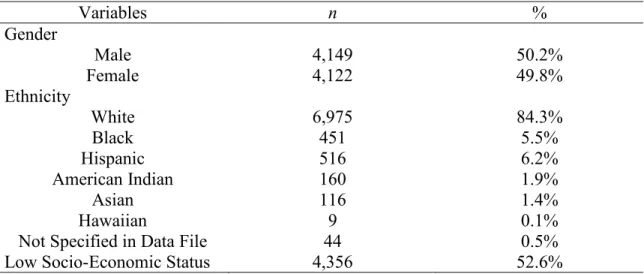
Table 2: Frequencies and Percentages for Student Demographic Variables (n=8,271) ...36
Table 3: Frequencies and Percentages for Teacher Variables (n=121) ...36
Table 4: Master’s in Literacy vs. Master’s in Other Area ...37
Table 5: Master’s in Literacy vs. Bachelor’s in Literacy ...38
Table 6: Master’s in Other Area vs. Bachelor’s in Literacy ...38
Table 7: Master’s in Math vs. Master’s in Other Area ...39
Table 8: Master’s in Math vs. Bachelor’s in Math ...39
Table 9: Master’s in Other Area vs. Bachelor’s in Math ...40
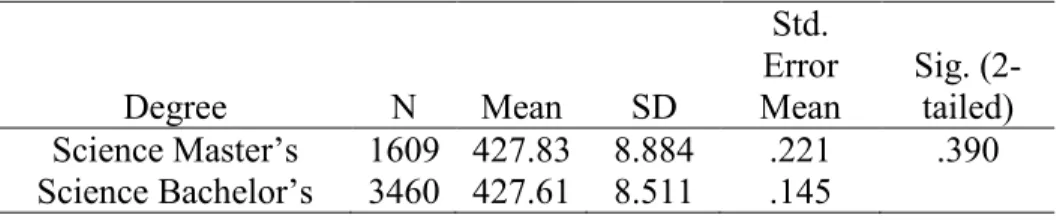
Table 10: Master’s in Science vs. Master’s in Other Area ...40
Table 11: Master’s in Science vs. Bachelor’s in Science ...40
Table 12: Master’s in Other Area vs. Bachelor’s in Science ...41
Table 13: Master’s in Literacy vs. Master’s in Other Area (Female Students) ...42
Table 14: Master’s in Literacy vs. Bachelor’s in Literacy (Female Students) ...42
Table 15: Master’s in Other Area vs. Bachelor’s in Literacy (Female Students) ...42
Table 16: Master’s in Literacy vs. Master’s in Other Area (Male Students) ...43
Table 17: Master’s in Literacy vs. Bachelor’s in Literacy (Male Students) ...43
Table 18: Master’s in Other Area vs. Bachelor’s in Literacy (Male Students) ...44
Table 19: Master’s in Math vs. Master’s in Other Area (Female Students) ...44
Table 20: Master’s in Math vs. Bachelor’s in Math (Female Students) ...44
x
Table 22: Master’s in Math vs. Master’s in Other Area (Male Students) ...45
Table 23: Master’s in Math vs. Bachelor’s in Math (Male Students) ...46
Table 24: Master’s in Other Area vs. Bachelor’s in Math (Male Students) ...46
Table 25: Master’s in Science vs. Master’s in Other Area (Female Students) ...47
Table 26: Master’s in Science vs. Bachelor’s in Science (Female Students) ...47
Table 27: Master’s in Other Area vs. Bachelor’s in Science (Female Students) ...47
Table 28: Master’s in Science vs. Master’s in Other Area (Male Students) ...48
Table 29: Master’s in Science vs. Bachelor’s in Science (Male Students) ...48
Table 30: Master’s in Other Area vs. Bachelor’s in Science (Male Students) ...49
Table 31: Low SES Students vs. All Other Students (ACT Aspire Literacy) ...49
Table 32: Master’s in Literacy vs. Master’s in Other Area (Low SES Students) ...50
Table 33: Master’s in Literacy vs. Bachelor’s in Literacy (Low SES Students) ...50
Table 34: Master’s in Other Area vs. Bachelor’s in Literacy (Low SES Students) ...51
Table 35: Low SES Students vs. All Other Students (ACT Aspire Math) ...51
Table 36: Master’s in Math vs. Master’s in Other Area (Low SES Students) ...51
Table 37: Master’s in Math vs. Bachelor’s in Math (Low SES Students) ...52
Table 38: Master’s in Other Area vs. Bachelor’s in Math (Low SES Students) ...52
Table 39: Low SES Students vs. All Other Students (ACT Aspire Science) ...53
Table 40: Master’s in Science vs. Master’s in Other Area (Low SES Students) ...53
Table 41: Master’s in Science vs. Bachelor’s in Science (Low SES Students) ...53
Table 42: Master’s in Other Area vs. Bachelor’s in Science (Low SES Students) ...54
Table 43: White Students vs. Non-White Students (ACT Aspire English) ...54
xi
Table 45: Master’s in Literacy vs. Bachelor’s in Literacy (Non-White Students) ...55
Table 46: Master’s in Other Area vs. Bachelor’s in Literacy (Non-White Students) ...56
Table 47: White Students vs. Non-White Students (ACT Aspire Math) ...56
Table 48: Master’s in Math vs. Master’s in Other Area (Non-White Students) ...56
Table 49: Master’s in Math vs. Bachelor’s in Math (Non-White Students) ...57
Table 50: Master’s in Other Area vs. Bachelor’s in Math (Non-White Students) ...57
Table 51: White Students vs. Non-White Students (ACT Aspire Science) ...58
Table 52: Master’s in Science vs. Master’s in Other Area (Non-White Students) ...58
Table 53: Master’s in Science vs. Bachelor’s in Science (Non-White Students) ...58
1
Chapter I: Introduction Background of the Problem
Student achievement is critically important to every school, and teachers have a direct impact on students in their classroom (McCaffrey, Lockwood, Koretz, Louis, & Hamilton, 2004; Reynolds et al., 2014; Townsend 1997). Therefore, finding the most qualified teachers to place in each classroom is imperative. The variables that most directly impact teacher quality have been the subject of numerous research studies (Gere & Berebitsky, 2009; Stronge, Ward, & Grant, 2011; Woolley, Strutchens, Gilbert, & Martin, 2010; Yetisir, 2014). Past studies have shown that a teacher’s degree level has little impact on student achievement (Coleman, 1966; Goldhaber, & Dominic, 1996; Klinger, Poth, Rodgers, Anderson, & Coleman, 2006; Wayne & Youngs,
2003). However, studies also have shown that teachers with high levels of content knowledge contribute to improved student achievement (Gess-Newsome, Carlson,
Gardner, & Taylor, 2010; Tchoshanov, Lesser, & Salazar, 2008). This raises the question as to whether a teacher’s content area degree has a significant effect on student
achievement. This study examined whether a teacher’s content area master’s degree positively impacts student achievement.
This study examined ninth and tenth grade students’ test scores on the 2018 ACT Aspire in selected Class 5A (2,000 students or above) schools in Arkansas. Student data was analyzed to determine if students perform better on the ACT Aspire exam when taught by teachers who hold a master’s degree in the content area. These results may be important in helping administrators, boards of education, and state legislators as they make educational policy decisions. Furthermore, the results may assist teachers in deciding which advanced degrees they should pursue.
2
The study determined if there is a statistically significant difference between the percentage of students who scored at or above the readiness benchmark (“Ready” or “Exceeding”) on the ACT Aspire exam and were taught by teachers with content area master’s degrees and the percentage of students who scored at or above the readiness benchmark (“Ready” or “Exceeding”) on the ACT Aspire exam and were not taught by teachers with content area master’s degrees.
Data was further analyzed on factors including socioeconomic status (SES), gender, and ethnicity, to investigate whether these variables affect the relationship between teacher degree type and student achievement.
Statement of the Problem
The question of how to substantially improve student achievement has long been on the mind of educators across the country. As a whole, students in Arkansas schools are struggling to succeed in the core subjects of math, language arts, reading, and science (Arkansas Department of Education [ADE], 2018b). Teacher quality has been shown to be the most influential factor on student achievement (Bahar, 2016; Gere & Berebitsky, 2009; McCaffrey et al., 2004; Reynolds et al., 2014; Sirait, 2016; Stronge et al., 2011; Townsend 1997; Woolley et al., 2010; Yetisir, 2014). Characteristics such as various teaching strategies (Gere & Berebitsky, 2009), teacher satisfaction and experience (Yetisir, 2014), teacher belief in students (Woolley et al., 2010), classroom management, relationships with students (Stronge et al., 2011), teacher’s content knowledge (Gess-Newsome et al., 2010; Tchoshanov et al., 2008), and teacher degree level (Clotfelter, Ladd, & Vigdor, 2007) have all been cited as influential in improving student
3
content area improves a teacher’s quality to the point it significantly improves student achievement.
Purpose of the Study
The purpose of this study was to examine whether there is a statistically significant difference in students scoring at or above the readiness level on the state benchmark exam when compared based on students taught by teachers with advanced degrees in their teaching content area and students taught by teachers with only a bachelor’s degree or those with a master’s degree outside the subject area. Data was analyzed to determine statistical difference between the achievement levels of students taught by teachers with master’s degrees in the content area and the achievement levels of students who are not taught by teachers with content area master’s degrees.
Conceptual Framework
Several studies have been conducted on the effectiveness of master’s degrees in improving teaching practices and programs. Coleman (1966) was the seminal work in teacher and school factors influencing student achievement. Coleman’s research, along with many other studies, concluded that a teacher’s degree level has little impact on student achievement. Contrastingly, Gess-Newsome et al. (2010) determined that raising teachers’ content knowledge improves teacher effectiveness. This outcome leads to the belief that increased content knowledge has a statistically significant positive effect on student achievement. Also, a state-funded professional development project during the 2005-2006 school year looked at the factors within professional development that positively affected student achievement (Tchoshanov et al., 2008). The study concluded that there was a connection between teacher content knowledge and student achievement.
4
Based on these results, logic would assume that the more content knowledge a teacher has, the more effective the instruction will be for the students. Therefore, earning a master’s degree within a teacher’s chosen content area would seemingly increase that teacher’s quality. In an attempt to prove or disprove this theory, this study examined the impact of content area master’s degrees on student achievement.
The context for further examination of the relevance of a content area master’s degree and any corollary benefits for students also relates to the changing dynamics of the classroom. Not only are the classroom dynamics changing in K-12 education but also in higher education programs for teachers. Recent research was conducted on a year-long master’s program for Physical Education teachers. Two of the learning outcomes for this program were: (a) teachers know the subjects they teach and how to teach those subjects to students and (b) teachers use technology to facilitate student learning
(Banville, White, & Fox, 2014). The data showed that a prolonged approach to gaining content knowledge and learning how to teach that content as well as the use of
technology in the classroom provided the teachers with a more specific understanding of both content and pedagogical content knowledge (Banville et al., 2014). Participants provided evidence that through the program they developed an understanding of
particular principles of their content and then applied them in their own context (Banville et al., 2014). Although universities vary somewhat in their approach, the shift toward student-centered and technology-driven can be seen in a majority of master’s degree programs. Recently, master’s programs, such as the aforementioned Physical Education program, have shifted their focus to ensuring that teachers who complete their programs
5
have not only the content knowledge but also the pedagogical content knowledge necessary to understand student thinking in that specific content area.
Therefore, the knowledge and strategies gained from a content area master’s degree should lead to increased student outcomes. Yet, the question still remains: Does a content area master’s degree actually provide the deeper understanding and increased teacher quality that leads to higher performing students?
Although Coleman (1966) found that schools were not the greatest determinant of student achievement, research since his seminal work has shown teacher qualities have a substantial impact on student achievement (McCaffrey et al., 2004; Reynolds et al., 2014; Townsend 1997). This study could contribute meaningful answers to the question of whether teachers with a master’s degree in their teaching content area truly impact student achievement.
Research Hypotheses
H0: There is no statistically significant difference between the percentages of
students who scored “Ready” or “Exceeding” on the ACT Aspire and were taught by teachers with a subject-content master’s degree and the percentages of students who scored “Ready” or “Exceeding” on the ACT Aspire and were taught by teachers without such degree.
H1: There is a statistically significant difference between the percentages of
students who scored “Ready” or “Exceeding” on the ACT Aspire and were taught by teachers with a subject-content master’s degree and the percentages of students who scored “Ready” or “Exceeding” on the ACT Aspire and were taught by teachers without such degree.
6 Research Questions
1. Is there a statistically significant difference between the mean scores of
students who scored “Ready” or “Exceeding” on the ACT Aspire and were taught by teachers with a subject-content master’s degree and the mean scores of
students who scored “Ready” or “Exceeding” on the ACT Aspire and were taught by teachers without such degree?
2. Is there a significant difference between the mean scores of students who scored “Ready” or “Exceeding” on the ACT Aspire and were taught by teachers with a subject-content master’s degree and the mean scores of students who scored “Ready” or “Exceeding” on the ACT Aspire and were taught by teachers without such degree when analyzed on demographic factors, including students’ SES, gender, and ethnicity?
Significance of the Study
The study determined whether there is a statistically significant difference in achievement between students taught by teachers with content area master’s degrees and students not taught by teachers with content area master’s degrees. The information gathered should help guide district administrators, board members, and policy makers on how best to allocate resources for student achievement. The study may provide
information to practitioners in Arkansas and beyond with a proven strategy to improve the practices of teaching and, in turn, raise student achievement.
The study could be used on state and local levels to help guide policies and procedures that aim to improve instruction. The information could be vital to determine the impact of content area advanced degrees on student achievement. Furthermore,
7
higher education institutions should consider the results of this study to determine if adjustments to higher education are needed.
Scope of the Study
This was a quantitative study to examine the results of the ACT Aspire test cross referenced with the content area degree level of the students’ teachers. The examination of data from student performance determined if there is a statistically significant
difference in student achievement when groups are compared based on teacher’s content area degree level.
The methods were to examine one year of ACT Aspire data from ninth and tenth grade students. These data were grouped by classroom and analyzed based on the degree level of the teachers who taught these classes. Students’ data was compared to peers in other classes to examine any statistical differences between students with teachers who have a master’s degree in the content area and students with teachers who do not have a master’s degree in the content area.
The study examined data from six different school districts across the state. The student data and teacher characteristics were obtained from the districts with the
permission of the superintendents. Teacher names were redacted for privacy concerns. The goal of the study was to use six school districts located throughout the state, so the results would not be regional in nature. The sample size consisted of 121 teachers and 8,271 students.
The data used for the research study was the 2017-18 ACT Aspire test data for ninth and tenth grade students. The ACT Aspire test is a nationally accredited test. Data was obtained directly from the schools involved in the study and was disaggregated by
8
classroom teacher. Another variable to consider was the teacher’s degree attainment and teaching subject area.
At the student level,special consideration was given to SES, gender, and ethnicity. SES was addressed by identifying students who qualify for the National School Lunch Program (NSLP). The sample for the study was all of the students from each classroom where teacher attainment is at a master’s level in the content area
compared to all of the students from each classroom where teacher attainment is not at a master’s level in the content area.
Data was entered into a Microsoft Excel spreadsheet. The data was then uploaded into SPSS software. T-tests and Cohen’s D Test were used to determine if there were statistically significant differences between the groups and the effect size.
The data analysis provided evidence of whether there is value in teachers at the secondary level obtaining content area master’s degrees. The results of this study helped fill the gap in literature on the subject of advanced content area degrees and their effect on student achievement.
Limitations
Due to the fact that Arkansas is a rural state with many of the districts being smaller than 1,000 students, the study was not able to measure many small rural districts and the effectiveness of their practices. Also, the participant sample affected the
generalizability of the study’s results since it only included teachers from 6 large districts of Arkansas’ 343 total school districts.
Furthermore, the fact that only ninth and tenth grade student scores were analyzed limits the extent to which the study’s findings can be applied to other grade levels.
9 Delimitations
The initial delimitation for the study was that since the study was constructed on measuring statistical significance between teachers with master’s degree in content area and those without, all schools in the study are Class 4A and above. Arkansas has a classification system from Class A – 7A. Throughout the state, schools are organized by rank based on high school enrollment numbers rather than by a minimum threshold in order to maintain a consistent number of districts in each classification. Other than private schools, the smallest Class 4A school in Arkansas has a total enrollment of 1,010 students (Arkansas Activities Association [AAA], 2018). Therefore, all teacher and student data considered for the study was gathered from school districts with an
enrollment of 1,010 or more students. This delimitation is due to the fact the study was set to evaluate multiple teachers with content area master’s degrees at each district, and, in Arkansas, only larger districts have high numbers of teachers who hold master’s degrees in their content area. This is likely due to the fact larger districts generally compensate teachers at a higher level than smaller districts, who often just meet the state mandated minimum. State minimums do not include extensions on salary schedules such as master’s, specialist, and doctoral degrees, so smaller districts usually compensate for advanced degrees at a lower rate than larger districts.
This study was also delimited to include only six districts. Furthermore, the study only analyzed student achievement based on ACT Aspire scores in the areas of math, literacy, and science. The study did not seek to obtain data from other possible measures of student achievement, such as student attitudes and classroom achievement, or other subject areas. Student achievement is certainly not solely determined by how students
10
score on a standardized exam. However, the ACT Aspire results provided clear data to support the study’s conclusions. The ACT Aspire is the testing vehicle that has been adopted for the last three years in Arkansas. All students in Grades 3-10 in Arkansas are required to take the exam, and this gave the study the best chance to analyze student achievement over a period of one year in an objective manner.
The number of teachers to analyze in the study was determined through statistical analysis. In order to obtain data from 121 teachers’ classrooms, multiple teachers with content area master’s degrees and teachers without content area master’s degrees were utilized from each district. G-Power was run to ensure that the sample size was large enough to validate any statistical significance or lack thereof that was present. Definitions of Terms
Several recurring terms appear in this study. The following section will help illuminate for the reader of the study.
ACT Aspire: Includes a vertically scaled battery of achievement tests designed to
measure student growth in a longitudinal assessment system for Grades 3–10 in English, reading, writing, mathematics, and science (“Summative Assessment,” 2014).
Bachelor’s Degree: A bachelor's degree is a four-year degree, meaning it typically
takes four years of full-time study to complete your bachelor's degree. In these four years, you will complete 120 semester credits or around 40 college courses.
A bachelor's degree is a post-secondary undergraduate degree.
Class 4A: The fourth largest classification category in the Arkansas Activities
Association. Arkansas has a classification system from Class A – 7A. Throughout the state, schools are organized by rank based on high school enrollment numbers rather than
11
by a minimum threshold in order to maintain a consistent number of districts in each classification. Other than private schools, the smallest Class 4A school in Arkansas has a total enrollment of 1,010 students, (AAA, 2018).
Community Type: The category to which a community belongs based on its
population and characteristics. Most communities are defined as either urban, rural, or suburban type.
Content Knowledge: Refers to the body of knowledge and information that teachers teach and that students are expected to learn in a given subject or content area, such as English language arts, mathematics, science, or social studies (“Content
knowledge,” 2016).
Content Area Master’s Degree: A master’s degree that is directly related to the
content or subject area in which a teacher is certified and teaching.
Master’s Degree: A graduate level award that requires the completion of
a programof study at least the full-time equivalent of one but usually not more than two academic years of work beyond the bachelor'sdegree.
Gender: “Either of the two sexes (male and female), especially when considered with reference to social and cultural differences rather than biological ones” (English Oxford Living Dictionaries, 2019).
Ethnicity: A social group that shares a common and distinctive culture, language, religion, or the like (“Ethnicity,” 2018).
Non-Content Area Master’s Degree: A master’s degree that is not directly related
to the content or subject area in which a teacher is certified and teaching. Examples include a master’s degree in educational administration or school counseling.
12
Pedagogical Content Knowledge: “A type of knowledge that is unique to
teachers, and is based on the manner in which teachers relate their pedagogical
knowledge (what they know about teaching) to their subject matter knowledge (what they know about what they teach)” (Cochran, 1997).
Performance Level Descriptors (PLD’s): Outline the knowledge, skills, and practices that students performing at any given level achieve in each content area at each grade level. They indicate if the students are academically prepared to engage
successfully in further studies in each content area, the next grade’s material and, eventually at the high school level to verify that they are college and career ready. Standard setting panelists use PLDs to determine the threshold expectations for students to demonstrate the knowledge and skills necessary to attain performance levels of “In Need of Support”, “Close”, “Ready”, and “Exceeding” on the ACT Aspire (ACT Aspire, 2016c).
Socioeconomic Status (SES): The social standing or class of an individual or
group. It is often measured as a combination of education, income, and occupation.
Student Achievement: Students are achieving when they acquire the knowledge,
skills, and attitudes that will prepare them to lead happy and successful lives (Education Evolving, 2016). In this study, student achievement will be measured based on students’ ability to achieve the readiness benchmark on the ACT Aspire.
Teacher quality: The knowledge, skills, abilities, and dispositions of teachers.
Summary
This study sought to close the gap in literature on the importance of content area master’s degrees and the effect they have on student outcomes. Many studies have been
13
conducted to measure the effectiveness of master’s degrees in relation to student
achievement, but very few have isolated only content area master’s degrees. This study examined data from students across the state of Arkansas and looked for an association between higher student outcomes and teachers who hold master’s degrees within their content areas. The study analyzed one year of data on freshmen and sophomores from across the state to see how students in classrooms with teachers holding advanced degrees in their subject matter compare to their cohorts who were in classrooms with teachers who do not hold such degree.
The study was designed to look for statistical significance among six school districts from the five different geographic regions across the state. The study examined multiple classrooms from each school. Examination of data determined if there is a statistically significant difference between student achievement and the content-related degree attainment of the teacher.
14
Chapter II: Review of Literature The Need for Improved Student Achievement
The question of how to improve student achievement has long haunted educators in the United States. Student achievement is not easy to define, but it is most commonly associated with a student’s academic performance in the core areas of reading, language arts, math, and science (Cunningham, 2012). Now more than ever, our students are entering a competitive job market where high competencies in literacy, math, and science are a necessity. Although success should not simply be measured by a student’s earning of a high school diploma, research shows that individuals without a high school diploma will have far less earning potential over the course of their life than those who graduate high school (Bureau of Labor Statistics, 2017). In fact, according to statistics, the more education students receive, the higher their lifetime earnings will be (Day & Newburger, 2002; Julian & Kominski, 2011). This journey begins in secondary school. One study by Allensworth and Easton (2007) concluded poor performance in core high school courses is highly predictive of students’ failure to graduate.
On the ACT Aspire, students’ readiness levels are identified using the
Performance Level Descriptors (PLDs) of “In need of support,” “Close,” “Ready,” and “Exceeding.” These descriptors indicate how prepared students are to engage
successfully in further studies in each content area. Preliminary state results for the ACT Aspire in the 2017-18 school year indicate that among 10th grade students in Arkansas,
40% are below “Ready” in English, 49% are “In need of support” in math, 45% are “In need of support” in science, and 40% are “In need of support” in reading (ADE, 2018b). It is the responsibility of educators and school administrators to identify the factors that
15
most affect these students’ ability to succeed in core subjects, which are strong indicators for what the students will achieve later in life.
Factors that Influence Student Achievement
Factors that influence student achievement are wide-ranging. Bertolini, Stremmel, and Thorngren (2012) divide these factors based on Bronfenbrenner’s bio-ecological model. Within this model, Bertolini et al. (2012) identify student-related achievement factors, such as student resiliency, health, and attendance, as well as school- and teacher-related achievement factors, such as teacher mentor systems. Other factors that have been cited as influential on student achievement include qualified teachers and staff (McCaffrey et al., 1997), academic and administrative leadership (Grissom,
Kalogrides & Loeb, 2014; Townsend, 1997), school processes (Townsend, 1997), and a safe and positive school climate (Dronkers & Robert, 2008; Townsend, 1997).
Teacher quality is the most cited factor known to affect student achievement. A majority of researchers agree teachers have a tremendous effect on student achievement (McCaffrey et al., 2004; Townsend, 1997). One study conducted in Turkey surveyed student perceptions of what contributed to their academic achievement (Bahar, 2016). Teacher factors were the most frequent response, followed by individual factors (Bahar, 2016). Sirait (2016) found that, at the high school level, teacher quality significantly affects student achievement. According to researchers, future efforts in education reform need to be more focused on teaching and teachers (Reynolds et al., 2014). However, all of the teacher variables that influence student outcomes are hard to isolate (Goldhaber, 2016).
16
Teacher Effectiveness: What Makes a High-Quality Teacher?
While it is widely recognized teacher quality is the most significant factor that affects student achievement, the characteristics that make a high-quality teacher are more difficult to determine. Many characteristics make up a quality teacher, and classrooms have so many variables that isolating teacher characteristics to measure for effectiveness is a difficult proposition. In many studies, the central question is, what makes a teacher effective and able to produce high student achievement?
Two methods that have been used in the student achievement evaluation process are the input and output models. Gere and Berebitsky (2009) suggest output models, such as various teaching strategies, have been linked to higher student achievement. On the other hand, input models such as teacher grade point average, certifications, and degrees have not been statistically significant in producing higher student
outcomes (Gere & Berebitsky, 2009).
Teacher behaviors and attitudes. A study in Turkey attempted to identify the characteristics of effective teachers. The study used data gathered from fourth and eighth grade students to determine what caused the student achievement data to move in a positive direction (Yetisir, 2014). The researchers examined many variables in an
attempt to isolate the key variable that makes teachers effective. The study found that teacher satisfaction and experience were the two most critical characteristics for teaching success (Yetisir, 2014).
Examining students that are underserved, such as minority or poverty students, also allows for the evaluation of data and the effects of teaching techniques and levels of degrees. Research shows minority students are usually underserved compared to their
17
white counterparts. There are many factors shaping this situation, including fewer teachers who have traditional certification, less experienced teachers, and not as many teachers with advanced degrees. A study that examined which factors affect minority students the most concluded that teacher belief in students, not advanced degrees, was most closely related to student achievement (Woolley, Strutchens, Gilbert, & Martin, 2010)
Another study that identified characteristics of effective teachers looked at fifth grade students in the subjects of reading and math (Stronge et al., 2011). This study identified the factors that led to higher student achievement as fewer disruptions, better classroom management skills, and better relationships with their students. The teachers that exhibited these proficiencies in the study had statistically higher student
achievement.
Teacher experience and knowledge. Buddin and Zamarro (2009) conducted a longitudinal study in Los Angeles schools in the subjects of math and reading. The study tracked student achievements and examined teacher factors that include teacher
experience, teacher degree level, classroom size, and teacher licensure scores. The only positive results concluded from the study were classroom reduction and teacher
experience showed positive student achievement gains, but only slightly (Buddin & Zamarro, 2009). However, this faded over time, suggesting minimal gains by students.
Another study conducted to measure teacher effectiveness found academic
content knowledge was the only statistically significant relationship to classroom practice (Gess-Newsome et al., 2010). Gess-Newsome et al. (2010) examined many factors such as teacher effectiveness, academic content knowledge, general pedagogical knowledge,
18
pedagogical content knowledge, and teacher practice. The outcome of this study leads to the belief that increased content knowledge has a statistically significant positive effect on student achievement. Another outcome to this study (Gess-Newsome et al., 2010) was relevant professional development embedded in the year that challenges and stimulates teachers can have a statistically significant influence on student achievement.
A state funded professional development project during the 2005-2006 school year looked at what factors during professional development positively affected student achievement (Tchoshanov, M, Lesser, L & Salazar, J, 2008). This study concluded there was a connection between teacher knowledge and student achievement. The rationale is actually quite simple: the more content knowledge a teacher has, the more effective the instruction will be for the students.
However, a contradictory study by Darling-Hammond (2000) on teacher effectiveness looked at what factors have a positive impact on student achievement. Darling-Hammond (2000) found no correlation between the measure of subject matter knowledge measured by the National Teacher Exam (NTE) and student outcome.
Identifying high quality teacher characteristics is a challenge for both school administrators and policy makers. While there have been mixed results, several studies have concluded that teachers’ content knowledge as well as their behaviors and attitudes have a positive effect on student achievement (Buddin & Zamarro, 2009; Gess-Newsome et al., 2010; Stronge et al., 2011; Tchoshanov et al., 2008; Woolley et al., 2010; Yetisir, 2014).
19 Effects of Advanced Degrees on Teacher Quality
In the past ten years, studies have been produced to address both sides of the debate on the value of advanced degrees for teachers. However, the question of whether or not a master’s degree is beneficial to students has been studied for over 60 years with mixed results. Historical data and studies on this subject have generally concluded teachers with master’s degrees are not statistically prone to generate higher achievement levels than teachers with bachelor’s degrees (Goldhaber & Dominic, 1996). The
Coleman Report was a seminal work for education which examined many factors that influenced student outcomes as well as race. This report concluded a master’s degree was not a statistically significant factor in the classroom (Coleman, 1966). Also, the National Educational Longitudinal Study (NELS) has shown master’s degrees do not increase student achievement (Goldhaber, 1997).
Strictly considering teacher’s degree level has not indicated substantial student growth when comparing teachers with bachelor’s degrees to teachers with master’s degrees. A past review of teacher characteristics and student achievement supports these results (Wayne & Youngs, 2003). This study looked at four teacher characteristics, including level of degree, and how these characteristics affected student outcomes. The study concluded that a master’s degree did not lead to improved student outcomes.
Furthermore, a study conducted in Ontario, Canada examined seniors on a high stakes exam, Ontario Secondary School Literacy Test (OSSL), to identify teacher characteristics that lead to high student achievement (Klinger et al., 2006). Advanced degrees showed very little influence in boosting students academically (Klinger et al.,
20
2006). The results of the study also showed that schools and curriculum were not statistically relevant to higher student achievement.
A recent study by Goldhaber (2016) states neither having nor obtaining a
master’s degree impacts student achievement. The study concluded teachers improve for the first four years in the profession, but then plateau in the years following. Student achievement data stayed stagnant after the four-year mark in a majority of teachers examined in the study, regardless of their degree level.
While some studies indicate advanced degrees do not impact student
achievement, several studies suggest otherwise. One study conducted in North Carolina looked at the performance of secondary students and how teacher characteristics affected student achievement. Obtaining advanced degrees in content areas was a considered characteristic in this study (Clotfelter, Ladd, & Vigdor, 2007). The study investigated a cross-subject student achievement with student fixed effects. The results showed a standard deviation of 0.34 for students in a highly qualified teacher’s classroom as compared to students in a less qualified teacher’s classroom.
Zhang’s (2008) study of science teachers had a contradictory result. This study examined 655 students in the sixth to eighth grade and also encompassed 12 science teachers (Zhang, 2008). Zhang (2008) found holding an advanced degree did indeed positively influence student achievement. Another interesting conclusion of the study was teachers with advanced degrees are most effective early in their teaching career. As teachers gained experience, the positive impact dissipated (Zhang, 2008). The Zhang study (2008) supports the importance of advanced degrees but also identifies that teacher experience is not a contributing factor to higher student achievement.
21
Darling-Hammond’s (2000) quantitative analyses indicate teacher preparation and certifications are the strongest correlates of student achievement in reading and math. National surveys from all 50 states examined data to come to this conclusion.
Talaga (2015) looked at teacher self-efficacy among elementary teachers with advanced degrees in mathematics. This qualitative study reported increased teacher self-efficacy for those who held advanced degrees through several factors, including peer experiences, new content-specific teaching techniques, and professor input on these practices (Talaga, 2015). Shoulders and Krei (2015) found teachers with master’s degrees benefited in the areas of efficacy in instructional practices and classroom management but indicated no statistical difference in student engagement. Both the Shoulders and Krei (2015) and Talaga (2015) studies suggest teacher efficacy is increased through obtaining master’s degrees.
The article “Conference Looks Toward the Future” (Adam, 2011) states there is no empirical evidence that proves master’s degrees for teachers are not effective for student achievement. The author states research should be done to examine what type of master’s degrees are being pursued and that the financial incentive should not be taken away from teachers (Adam, 2011).
Content area master’s degrees. Some studies have shown teachers with content area master’s degrees are beneficial to students while master’s degrees not in the
certification area had little value to the students (Odden, 2001).
One study conducted in Michigan by Huntoon and Baltensperger (2012) focused on a master’s degree in Earth Science designed to encourage teachers in Michigan to become certified to teach Earth Science courses. The program was set up over a two-year
22
period in which nine teachers piloted the program. The results showed a new approach could lead to positive results for both teachers and students. Of the nine students who piloted the program, four passed the High School Content Expectations (HSCE) on the first try. The goal of producing teachers certified in Earth Science was achieved. More importantly, the model of focusing on content knowledge and classroom skills produced more confident teachers who were examined through surveys throughout the
study (Huntoon & Baltensperger, 2012). According to this study, a shift to content area master’s degrees that incorporate technology and effective use of time leads to better student outcomes in the classroom (Huntoon & Baltensperger, 2012).
A study conducted in Texas validates content mastery in the classroom and its direct effect on student outcomes. A factor in this study was content undergraduate degrees and master’s degrees. This study was conducted due to a teacher shortage in the state, and researchers wanted to see if lowered credentials and alternative, non-traditional certifications were negatively affecting student outcomes (Harrell & McLean, 2011). The study tracked students in math and compared scores. The data showed a strong correlation between student success and teachers who majored in math or had a master’s degree in math. Three statistically significant correlations between domain scores and Algebra were found for twenty-seven students (Harrell and McLean, 2011).
Goldhaber and Dominic (1996) studied teacher degree level’s impact on
educational performance and found teachers with master’s degrees and doctoral degrees are no more or less effective than those teachers without graduate degrees. However, in math and science teachers, subject-specific training had a significant impact on student test scores in these areas (Goldhaber & Dominic, 1996). These conclusions lead to the
23
belief, at least in math and science, content area degrees are impactful for students. In the subjects of English or history, there is no evidence content area degrees have a positive impact on student achievement (Goldhaber & Dominic, 1996).
Changes in Current Graduate Degree Programs
Although some past studies have indicated that master’s degrees do not significantly affect a teacher’s impact on student achievement, it is important to determine whether updated master’s programs have caused a shift in the data.
Master’s degree programs have changed greatly in the last 60 years, but have the results changed as well? Recent research was conducted on a year-long master’s
program for Physical Education teachers. Two of the learning outcomes for this program were: (a) teachers know the subjects they teach and how to teach those subjects to
students and (b) teachers use technology to facilitate student learning (Banville et al., 2014). The data showed a prolonged approach to gaining content knowledge and learning how to teach that content, as well as the use of technology in the classroom, provided the teachers with a more specific understanding of both content and pedagogical content knowledge (Banville et al., 2014). Participants provided evidence that through the program they developed an understanding of particular principles of their content and then applied them in their own context (Banville et al., 2014).
Another approach to master’s degree programs is the one that the Centennial School utilizes in conjunction with Lehigh University (George, George, Kern, & Fogt, 2013). For the first two years, teachers enrolled in this program work with students and a mentor teacher with a master’s degree in the same classroom and attend classes at night to attain a master’s degree. George et al. (2013) state that during master’s work, teachers
24
receive supervision from program coordinators who act like defacto principals for support.
Current master’s programs usually have two different structures, with the first being the university model. This model allows for teachers to attend
traditional universities off of the kindergarten or secondary campus and follow the curriculum in an isolated manner. A second approach is the university-school mode, which takes place in the practitioner’s school. On-site practice allows for students to work with the university in curriculum while gaining knowledge and applying these new skills in the classroom. A study examining these two models found that the university-school approach is more effective in increasing student performance (Cornelissen, van Swet, Beijaard, & Bergen, 2012). This new master’s programs approach to teacher preparation has shown promise in achieving higher student response. A Palomino (2015) study stated students in a secondary teaching master’s program in Spain thrived when classes were established in student-centered environments. Students in the Spanish University system achieve better results when professors have these common factors: explain content well and have a good command over the material, have an initial assessment at the beginning of the course to establish a baseline for student knowledge, use a variety of teaching methods, communicate effectively, and collaborate with students (Palomino, 2015).
Another study examined not only current master’s programs but also the future of higher education placed high importance on student choice and input (Ilisko, Skindra, & Micule, 2014). This study examined eight master’s level students and conducted one-on-one interviews with these students. The results provided a student’s perspective as to
25
what would make for a successful educational experience that would benefit the student and society as a whole. The students’ vision of the future school was comprised of student-centered organizations with democratic processes that challenged students to look at current trends and protect the environment (Ilisko et al., 2014). The student
perspective is a powerful tool in shifting from traditional approaches in higher education to a more flexible approach that truly is student-centered.
Furthermore, the advent of technology has revolutionized the educational process. Devices and internet access have transformed the classroom. Higher
education has adapted to meet the needs of students worldwide. An example of this change in current master’s teacher content is taking place at George Mason
University (Shaklee, Mattix-Foster, & Lebron, 2015). The FAST TRAIN program focuses on an in-depth understanding of linguistics with diverse and exceptional leaders, emphasizing collaboration in the school community. Advances in the ability to share information and experiences have led to more opportunities for educators to continue advanced degrees. Thirty percent of the students currently enrolled in graduate school programs are using online services (Liu, 2013). The trends show online master’s
education programs will continue to increase for several reasons (Liu, 2013). The first is the convenience. With the advent of better internet and software, students are able to connect and access information. Economically, online degrees offer a viable option for students as compared to brick and mortar schools. The last indicator online master’s programs are the present and future is the current financial incentive for teachers to pursue master’s degrees. Teacher salaries can be substantially raised up to $10,000 dollars nationally upon acquiring a master’s degree (Liu, 2013).
26
Furthermore, universities are now exploring options for delivering information that allows teachers to not only become certified but also receive a master's degree in the process. The Masters of Arts in Teaching at the University of Southern California (MAT@USC) is a relatively new program that allows students to interact with peers and faculty through the use of software and video cameras (Liu, 2013). Western Governor’s University has a different approach to bringing the content to its students. The program is not built on credits but rather competencies. Although both programs are relatively new, initial feedback suggests results similar to those of traditional institutions (Liu, 2013).
Students’ and professors’ attitudes toward incorporating technology into higher education plays a crucial role in the development of beneficial master’s programs. Kisanga (2016) conducted a study on teachers’ attitudes toward e-learning in Tanzania. The survey research study stated that teacher attitudes toward e-learning in higher
education programs varied based on many factors (Kisanga, 2016). The factors included age, experience level, degree level, and exposure to computers (Kisanga, 2016). The statistics from the study showed 53% of the 248 teachers had a positive perception of e-learning. These results indicate an innovative technological approach to learning could have positive effects for both teachers in the higher education programs and students in the school community.
However, online approaches also have side effects for students in the program. Adult students in master’s programs trend toward delayed completion of the
degree (Motseke, 2016). Motseke (2016) listed several factors that slow adult learners’ completion of degree, including lack of computer skills, stress, work, and supervision
27
problems. Another issue when dealing with online degrees is a lack of communication between faculty and students when backgrounds differ (Dwivedi, 2013). Technology can be leveraged to deliver content and availability, but the institution must also consider the student in the program and try to accommodate student needs with support from faculty. Research of master’s degree programs from different areas and approaches leads to the conclusion master’s degree programs differ based on location and availability of technology (Briones & Toth, 2013). Although universities vary somewhat in their approach, the shift toward student-centered and technology-driven can be seen in a majority of master’s degree programs. For example, Manfra and Bolick (2008) found a greater focus on pedagogical content knowledge and the infusion of technology in a Social Studies teacher master’s program improved Social Studies instruction.
Recently, master’s programs have shifted their focus to ensuring teachers who complete their programs have not only the content knowledge but also the pedagogical content knowledge necessary to understand student thinking in that specific content area. The recent acknowledgment of these factors further drives the question of whether
current master’s degree programs are producing teachers who have a greater impact on student achievement.
Implications of Prior Research for Future Research
While it is widely recognized teacher quality is the most significant factor that leads to student achievement, the impact of experience and education level on teacher quality has not been clearly determined. This topic has been examined for over 60 years, but will current data lead to new results that should shape future policies for Arkansas schools?
28
Many studies conclude teachers with master’s degrees do not improve student outcomes more than their peers who hold bachelor’s degrees. However, the issues in this study are more complex than whether or not a master’s degree improves student
outcomes; one must also consider the content area in which the master’s degree was obtained as well as the fact that master’s programs are constantly changing to meet the needs of teachers.
Data can be skewed by the fact that a teacher with a master’s degree could either have been certified through alternative methods or already had an undergraduate degree in the field in which they are teaching. Many educators go on to receive master’s degrees in educational leadership, which has no immediate impact on content-specific
pedagogy. How then do researchers identify if a teacher’s master degree is a significant contributor to great instruction? This study assessed whether content area master’s degrees affect student outcomes.
Summary
It is no secret that improving student outcomes is of the highest priority for education in our country. Many factors have been shown to contribute to student
outcomes, but teacher quality has garnered the most attention. The literature consistently states high quality teachers lead to high student outcomes, but there is no conclusive evidence that one of the defining characteristics of a high-quality teacher is an advanced degree. The literature reviewed reveals contradicting viewpoints on how much a
master’s degree enhances student achievement. Further examination will need to include a comparison of content-specific master’s degrees in the content area versus bachelor’s degrees and advanced degrees not in the content area. Historical data and studies find
29
little correlation between student success and a teacher’s level of degree. New research, however, has suggested that teachers’ content knowledge does positively affect student achievement. Further research is needed to determine whether or not the knowledge gained from a content area master’s degree improves student outcomes.
Completing a master’s program can have serious implications for teachers’ outlook on the profession. Programs can lead to a more positive outlook on the profession if the experience is deemed relevant and beneficial (Sari, 2010). This
qualitative analysis determined whether student data showed positive student outcomes, as well.
30
Chapter III: Research Methodology
Chapter 3 describes the methodology used in this study to determine how teacher degree level, specifically master’s degree within content area, affects student
achievement. This study used a quantitative design that compared student achievement, as measured by ACT Aspire content area scores, between students who were taught by teachers with content-specific master’s degrees and students who were not taught by teachers with content-specific master’s degrees. In this chapter, participants,
instrumentation, procedures, and data analysis are described in detail. The findings from this study can be used to provide Arkansas school districts with valuable information regarding the effect degree level has on teacher quality and student achievement. Participants
Data was gathered from six school districts throughout the state of Arkansas. This sample was purposive. The schools are located in five regions across the state. These five regions are Central, Northwest, Northeast, Southeast, and Southwest. These regions were chosen based on the Arkansas Department of Education maps that identify the five geographical regions of the state. Each local education agency (LEA) examined has different demographics and geographical make-ups. The districts vary in size, number of low socio-economic students (SES), and teacher qualifications. The rationale behind the sample diversity was to gather a true reflection of how teacher degree level affects student achievement throughout the entire state of Arkansas.
Each LEA was examined at the class level in order to determine if there was a statistically significant difference between groups of students based on the chosen variables of teacher degree level, SES, gender, ethnicity, and community type.
31
In total, student achievement data from 121 teachers’ classrooms and over 8,000 students across the six districts was examined. Thirty of the teachers have a master’s degree in the content area in which they teach. The other teachers hold a degree other than a content area master’s degree, including a bachelor of arts degree. Comparison of the student groups allowed us to analyze the effect teacher degree level has on student achievement scores. The number of participants were sufficient as the student data from all districts was combined into a dataset for analysis. G-Power was run to ensure the size of the sample allowed results to be valid and reliable (Knapp, 2017).
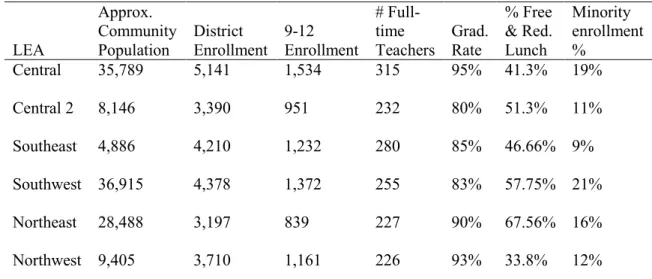
The following table provides a description of each LEA setting: Table 1. LEA Characteristics
LEA
Approx. Community
Population District Enrollment 9-12 Enrollment
# Full-time
Teachers Grad. Rate
% Free & Red. Lunch Minority enrollment % Central 35,789 5,141 1,534 315 95% 41.3% 19% Central 2 8,146 3,390 951 232 80% 51.3% 11% Southeast 4,886 4,210 1,232 280 85% 46.66% 9% Southwest 36,915 4,378 1,372 255 83% 57.75% 21% Northeast 28,488 3,197 839 227 90% 67.56% 16% Northwest 9,405 3,710 1,161 226 93% 33.8% 12%
Note. Community population adapted from U.S. Census Bureau 2017 population estimates (U.S. Census Bureau, Population Division, 2018). District enrollment, 9-12 enrollment, full-time teachers, graduation rates, and minority enrollment percentage adapted from
https://publicschoolreview.com. Percentage free and reduced lunch adapted from Arkansas Department of Education free and reduced school lunch data (ADE, 2014).
Instrumentation
The instrument that the study used to measure student outcomes was the ACT Aspire test. The ACT Aspire test is a standards-based system of assessment that allows states to check progress of students in grades 3-10 (ACT Aspire, 2016a). The testing
32
instrument also allows states to check progress on college and career readiness. The ACT Aspire exam aligns with Arkansas state standards.
ACT Aspire allows schools to give three periodical assessments throughout the year to progress monitor students. The check for understanding allows teachers to use data to guide instruction throughout the year. The data produced from the formative assessment gives school districts progress monitoring on college and career readiness. A summative assessment is given at the end of the year.
The ACT Aspire measures readiness in grades 3-10 in the following subject areas: literacy (English and reading), math, science, and writing (ACT Aspire, 2016a). The summative exam is a vertically-scaled assessment suite connected to the American
College Testing (ACT). The ACT is the most frequently used college exam in the United States (ACT Aspire, 2016a).
The ACT Aspire is given during the school day in windows set by the Arkansas Department of Education. Each LEA is given flexibility to give the summative
assessment at their discretion as long as if fits in the provided window. The test is administered over a three-day period. The order is left to the school district’s discretion. The testing window expires after the designated three days.
Validity involves collection of evidence regarding the degree to which score interpretations for proposed uses are supported. Validity evidence for ACT Aspire is organized into six areas, including content-oriented evidence, cognitive processes, internal structure, relationships to other constructs, relationships with criteria, and consequences (ACT Aspire, 2016b). ACT Aspire scores include two primary and three
33
secondary interpretations (ACT Aspire, 2016a). The validity is based on student work evidenced in these areas.
The reliability of the ACT Aspire scores is based on disattenuated correlations between ACT Aspire scale scores and the ACT. Disattenuated correlations are estimates of the linear relationships between scores after the reliability of each test was considered. In classical test theory, disattenuated correlations are referred to as estimates of the relationship between true scores; they provide an estimate of the relationship between ACT Explore/ACT Plan and ACT Aspire as if each contributing score were perfectly reliable (ACT Aspire, 2016b).
Procedures
The researcher obtained permission from district superintendents to examine ninth and tenth grade 2018 ACT Aspire summative data from their respective school districts through examination of the summative exam. Superintendents provided the researcher with teacher demographic information, such as gender, ethnicity, highest degree held, and whether the teacher has a master’s degree in the content area in which they are teaching, for each teacher whose students took the science, literacy, and math ACT Aspire tests. For each identified teacher, the percentage of students scoring “Ready” or “Exceeding” was provided. All names were redacted to ensure privacy of all participants in the study. No data was examined or collected until the study obtained IRB approval.
This study analyzed the percentages of students who scored “Ready” or “Exceeding” on the ACT Aspire test in each teacher’s respective subject area. The rationale for using percentages and not raw data is two-fold. The use of percentages as opposed to reporting the raw data allows various sample sizes to be compared relative to
34
one another. The percentages also allow future analysis of similar data to be compared adequately. In addition, the use of percentages ensures the privacy of the student data as to not inadvertently identify students due to the size of the sample. This ensures
compliance with Family Educational Rights and Privacy Act (FERPA). Data Analysis
The data analysis for this study consisted of both descriptive and inferential statistics. T tests and Cohen’s D tests were used to determine if there were statistical differences between the groups and what the effect size was. Data was analyzed to determine if significant differences exist between the percentage of students at the Ready or Exceeding level for teachers who have a master’s degree in the content area with those who do not have a master’s degree in the content area in which they are teaching. The data was analyzed at the LEA level as well as at the state level. Furthermore, content matter analysis of the data was performed to determine if a graduate degree in the content area has an impact on the percentage of students scoring at the “Ready” or “Exceeding” level.
35
Chapter IV: Results
The research in this study was driven by the academic impact on students in the ninth and tenth grade in six high schools across the state of Arkansas whose teachers possess a content area master’s degree in a content area as defined by math, science, or literacy. The purpose was to investigate whether a teacher’s degree level impacted student achievement as measured on the ACT Aspire exam. The following two questions were posited to evaluate the effect of student achievement with teacher degree.
1. Is there a statistically significant difference between the mean scores of
students who scored “Ready” or “Exceeding” on the ACT Aspire and were taught by teachers with a subject-content master’s degree and the mean scores of
students who scored “Ready” or “Exceeding” on the ACT Aspire and were taught by teachers without such degree?
2. Is there a statistically significant difference between the mean scores of
students who scored “Ready” or “Exceeding” on the ACT Aspire and were taught by teachers with a subject-content master’s degree and the mean scores of
students who scored “Ready” or “Exceeding” on the ACT Aspire and were taught by teachers without such degree when analyzed on demographic factors,
including students’ SES, gender, and ethnicity?
To address these questions, data from six high schools from all regions in the state of Arkansas were examined. The data analyzed included results from the 2017-2018 school year as reported from ACT Aspire. The data was imported from Excel and analyzed using SPSS version 25. Quantitative statistical methods, including t-tests, were used to analyze all the data submitted by the six school districts.