THE ROLE OF A RESPONSIVE CURRICULUM IN OPTIMISING LEARNING IN HIGHER EDUCATION
BY
NADIAEMELIAHUMAN
SUBMITTED IN ACCORDANCE WITH THE REQUIREMENTS FOR THE DEGREE OF
DOCTOROFEDUCATION
IN THE SUBJECT CURRICULUMSTUDIES
AT THE
UNIVERSITYOFSOUTHAFRICA
SUPERVISOR:PROFCMEIER
i
DECLARATION
I, NADIA EMELIA HUMAN declare that this thesis, 'THE ROLE OF A RESPONSIVE CURRICULUM IN OPTIMISING LEARNING IN HIGHER EDUCATION' is, to the best of my knowledge and belief, my original work. All the sources that I have consulted or quoted directly have been acknowledged by means of complete references. I further declare that the opinions and conclusions arrived at are my own, and that this research work has not been submitted to any university for obtaining a qualification.
____________________________________ NADIA EMELIA HUMAN
STUDENT NUMBER: 47278978 FEBRUARY 2017
ii ABSTRACT
Higher education has been challenged to respond to the inequalities of the past. This required an education system that is more responsive to the needs of underprepared students. The question that arises is whether Higher Education Institutions (HEIs) curricula create opportunities for students to adhere to the demands of the world of work and to assist students to take responsibility for their own learning. The purpose of this study is to investigate the role of a responsive curriculum in optimising learning in higher education. An interpretative and descriptive qualitative approach was used in which semi-structured interviews and document analysis served as data collection techniques enabling the researcher to gain more depth in understanding the reality of the responsiveness of curricula used in the Department of Informatics at a Higher Education Institution in Gauteng.
The study revealed that there is a dynamic but complex relationship between a responsive curriculum and optimisation of learning. Although the investigated curricula, responds to aspects of the knowledge domain, the findings seemed to indicate that there was not always a clear indication that the curricula fully respond to the needs of the students and industry. The findings further suggest that although content knowledge of the curricula plays a crucial role in the development of students, the needs of industry, society and students should also be met. Although the study’s results cannot be generalised due to the small sample, the researcher is of the opinion that more can be done to improve the state of the current curricula. Inclusive curriculum development training should be provided to all stakeholders (lecturers, students and industry). This descriptive study concludes with the suggestion of using a responsive curriculum model that would enable curriculum developers to design a responsive curriculum allowing students to experience optimal learning in higher education.
Key concepts: Curriculum; Council on Higher Education; Educator; Higher Education; ICT; Lecturer; Optimising Learning; Outcomes-based education; Responsive curriculum; Student
iii
DEDICATION
I dedicate this work to:
My Heavenly Father and Creator for giving me the wisdom and strength to attempt this study.
My parents, the late Rev. Robert and Ms. Cathy Human for the support, interest and motivation to attempt and complete this study.
My husband, Quinton, for unconditional love and support.
My son, Orsun Human, who bore neglect during this time of study.
iv
ACKNOWLEDGEMENTS
I wish to express my sincere appreciation for the assistance offered to me by the following individuals and organisations without whom this work could not have been possible:
1. Prof. C. Meier for her exceptional supervision, patience, assistance and knowledge.
2. The Faculty of Information and Communication Technology at the Tshwane University of Technology.
3. The acting Dean, Prof. Josiah Munda of the Faculty of Information and Communication Technology for allowing me to conduct the study in the Faculty.
4. The Acting Head of the Department of Informatics, Mr. Pieter Pretorius, for accepting the study with enthusiasm and providing relevant information which was important for this study.
5. The lecturers and students of the Department of Informatics for availing their study guides, teaching material and examination question papers for document analysis. 6. Mrs.Valdenicia Norris for being my critical reader.
v
LIST OF THE MOST USED ABBREVIATIONS
BIS Business Information System BTECH Bachelors of Technologiae CHE Council on Higher Education CUMSA Curriculum Model of South Africa CDP Curriculum Development Practitioner
DHET Department of Higher Education and Training DTECH Doctor of Technologiae
ETDP Equity Training Development Programme GIED Gauteng Institute for Educational Development HE Higher Education
HET Higher Education and Training HESA Higher Education South Africa HEIs Higher Education Institutions
HEQSF Higher Education Qualification Sub-framework HEQC Higher Education Quality Committee
HOD Head of Department
ICT Information and Communication Technology IEB Independent Examination Board
MTECH Masters of Technologiae NCS National Senior Certificate
NDE National Department of Education NDIP National Diploma
NQF National Qualifications Framework NTSI National Training Strategy Initiative OBE Outcomes-based education
PQM Programme Qualification Mix PRISEC Private Sector Educational Council RNCS Revised National Curriculum Statement RUN Regional Universities Network
SAQA South African Qualifications Authority
UNESCO United Nations Scientific and Cultural Organisation USAID United States Agency for International Development
vi
LIST OF FIGURES
Figure 2.1 A depiction of factors shaping and influencing higher education curricula Figure 2.2 Departments of the Faculty of Information and Communication Technology Figure 3.1 Educational paradigm on the total learning experience of students
Figure 3.2 Steps to optimise learning
Figure 3.3 A popular picture for most academics of a curriculum model Figure 3.4 An improved curriculum model
Figure 3.5 A further improvement to O’Neill’s curriculum model Figure 3.6 Outcomes-based integrative model
Figure 3.7 Tyler’s curriculum model (Linear objectives model) Figure 3.8 Wheeler’s curriculum model
Figure 3.9 Kerr’s curriculum model (1968) Figure 3.10 The process, product and praxis model Figure 6.1 A responsive curriculum development model
vii
LIST OF DIAGRAMS
Diagram 1.1 Structure on which the study is based
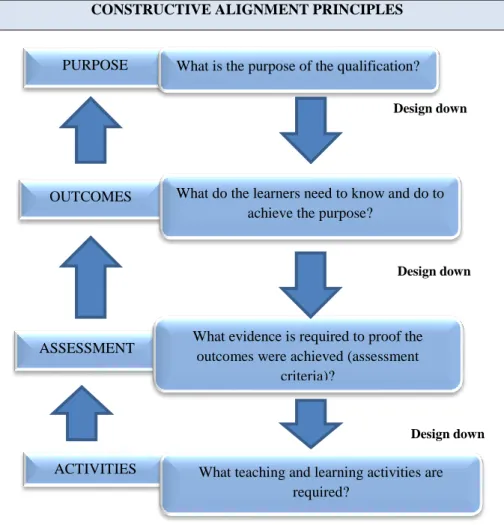
Diagram 3.1 Constructive alignment principle with regards to curriculum design Diagram 4.1 Organogram of the Department of Informatics
viii
LIST OF TABLES
Table 2.1 Binary division of higher and further education qualification routes in the early 1980s Table 2.2 Depiction of the eight levels framework adopted by South African Qualifications
Authority
Table 2.3 Representation of the National Qualifications Framework which includes levels 9 and 10 in the HET band
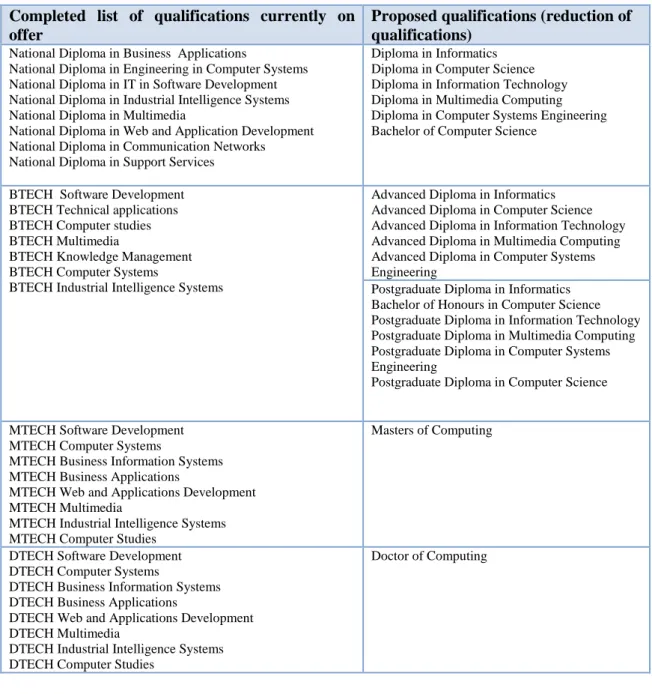
Table 2.4 Relationship between critical cross-field outcomes and level descriptors Table 2.5 Current and proposed qualifications of the Faculty of Information and
Communication Technology
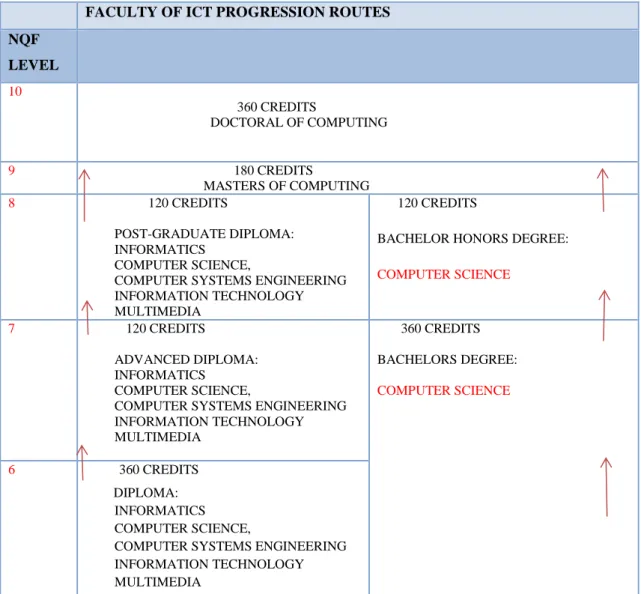
Table 2.6 Depiction of progression routes in the Faculty of Information and Communication Technology
Table 3.1 Actions of students and teachers in optimising learning Table 4.1 Number of students in Business Analysis III and IV for 2015 Table 4.2 Criteria justifying inclusion and exclusion in the sample Table 4.3 Elucidation of character of interviews
Table 4.4 Advantages and limitations of document analysis Table 4.5 Explanation of coding techniques
Table 4.6 Clustering of the participants Table 5.1 Summary of the themes and codes Table 5.2 A timeline of interviews provided
Table 5.3 Themes and codes of the document analysis
ix
LIST OF APPENDIXES
Appendix 1 Request letter to faculty to conduct research
Appendix 2 Letter of permission from faculty to conduct research Appendix 3 Cover letter
Appendix 4 Information leaflet and informed consent Appendix 5 Ethical clearance from UNISA
Appendix 5.1 Ethical clearance letter from TUT Appendix 6 Semi-structured interview questions
Appendix 6.1 Participant 6.1 response to the interview questions Appendix 6.2 Participant 6.2 response to the interview questions Appendix 6.3 Participant 6.3 response to the interview questions Appendix 6.4 Participant 6.4 response to the interview questions Appendix 6.5 Participant 6.5 response to the interview questions Appendix 6.6 Participant 6.6 response to the interview questions Appendix 6.7 Participant 6.7 response to the interview questions Appendix 6.8 Participant 6.8 response to the interview questions Appendix 6.9 Participant 6.9 response to the interview questions Appendix 6.10 Participant 6.10 response to the interview questions Appendix 6.11 Participant 6.11 response to the interview questions Appendix 6.12 Participant 6.12 response to the interview questions Appendix 6.13 Participant 6.13 response to the interview questions Appendix 6.14 Participant 6.14 response to the interview questions Appendix 6.15 Participant 6.15 response to the interview questions
Appendix 7 Examples of study guides and learning materials for subjects Business Analysis III and IV
Appendix 8 Themes and codes used in the analysis of interviews and documents Appendix 9 Letter from the editor
x TABLE OF CONTENTS DECLARATION………... i ABSTRACT………... ii DEDICATION………... iii ACKNOWLEDGEMENTS………... iv
LIST OF THE MOST USED ABBREVIATIONS………... v
LIST OF FIGURES………... vi
LIST OF DIAGRAMS……….. vii
LIST OF TABLES………. viii
LIST OF APPENDIXES………... ix
CHAPTER ONE ORIENTATION TO THE STUDY 1.1 Introduction………. 1
1.2 Background and motivation for the study………... 2
1.3 Problem statement………... 5
1.4 Aims of the research……… 6
1.4.1 Research questions………. 6
1.5 The research process………... 7
1.5.1 Research paradigm………. 7 1.5.2 Research design……….. 7 1.5.3 Research methods………... 8 1.5.3.1 Pilot study………. 8 1.5.3.2 Sampling………... 9 1.5.3.3 Data collection……….. 9 1.5.3.4 Data analysis………... 10
1.5.3.5 Role of the researcher………... 11
1.5.3.6 Data verification………... 11
1.5.3.7 Ethical considerations………... 12
1.6 Limitations of the study………... 13
1.7 Clarification of concepts……….. 13
1.7.1 Curriculum………... 13
xi
1.7.3 Educator………. 14
1.7.4 Optimising learning……….. 14
1.7.5 Council on Higher Education………... 15
1.7.6 Higher Education………... 15
1.7.7 Information and Communication Technology………. 15
1.7.8 Lecturer………. 16
1.7.9 Responsive curriculum………. 16
1.7.10 Student………... 17
1.8 Demarcation of the research……… 17
1.9 An overview of the study……… 17
1.10 Summary……….. 18
CHAPTER TWO THE SOUTH AFRICAN HIGHER EDUCATIONAL LANDSCAPE: FACTORS SHAPING AND INFLUENCING CURRICULA IN HIGHER EDUCATION 2.1 Introduction………. 19
2.2 Historical overview of the higher educational landscape in South Africa….. 20
2.3 Internal and external challenges which influences higher education since 1994………. 24
2.4 Factors shaping and influencing higher educational curricula………... 28
2.4.1 The changing role of academic staff……….. 29
2.4.2 The student domain……….... 30
2.4.3 The increasing demand for lifelong learning……….. 30
2.4.4 Postgraduate students and employment……….. 32
2.5 A single framework for change: higher educational qualifications sub-framework (HEQSF)………... 33
2.6 Outcomes-based education as a higher educational philosophy………. 35
2.7 Curricula in the Department of Informatics in the Faculty of ICT at the Tshwane University of Technology……… 45
xii CHAPTER THREE
A RESPONSIVE CURRICULUM AND ITS IMPACT ON HIGHER EDUCATION LEARNING OPPORTUNITIES
3.1 Introduction………. 53
3.2 Defining a responsive curriculum………... 56
3.3 Theoretical frameworks for a responsive curriculum design……….. 61
3.4 Definition of learning and approaches to learning……….. 68
3.5 Optimisation of learning……….. 70
3.6 Models of curriculum development………... 75
3.6.1 Outcomes-based integrative model………... 78
3.6.2 Tyler’s curriculum model (Linear objectives model)……….... 80
3.6.3 Wheeler’s curriculum model ……….... 81
3.6.4 Kerr’s curriculum model………... 82
3.6.5 The product, process and praxis model………. 83
3.7 Summary……….. 86
CHAPTER FOUR RESEARCH DESIGN AND METHODOLOGY 4.1 Introduction………. 88
4.2 Research paradigm……….. 88
4.3 Research design………... 89
4.4 Research methodology……… 90
4.4.1 Context of the research………. 92
4.5 The research methods……….. 94
4.5.1 Pilot study……….. 94 4.5.2 Sampling………... 95 4.5.3 Data collection………... 96 4.5.3.1 Semi-structured interviews……… 96 4.5.3.2 Document analysis………... 98 4.6 Data analysis……….... 100 4.7 Data verification ………... 104
4.7.1 Credibility of the study………... 105
xiii
4.7.1.2 Credibility of the data collection………... 105
4.7.2 Transferability………... 106
4.7.3 Dependability……….... 107
4.7.4 Conformability……….. 107
4.8 Data verification strategies……….. 107
4.8.1 Triangulation……….. 108
4.8.2 Audit trail………... 109
4.8.3 Peer examination……….... 109
4.8.4 The role of the researcher………... 109
4.9 Ethical considerations……….. 110
4.10 Confines of the study………... 111
4.11 Summary……….. 111
CHAPTER FIVE FINDINGS AND DISCUSSIONS 5.1 Introduction………. 113
5.2 Research questions……….. 114
5.3 The data collection process………. 114
5.4 Overall rate of participation………. 115
5.5 Findings and discussion of the semi-structured interviews of the lecturers… 115 5.6 Findings and discussion of the semi-structured interviews of the Diploma students……… 124
5.7 Findings and discussion of the semi-structured interviews of the BTECH students………... 130
5.8 Analysis of the documents………... 137
5.9 Summary……….. 142
CHAPTER SIX CONCLUSION AND RECOMMENDATIONS 6.1 Introduction………. 144
6.2 Chapter summary………. 145
6.3 Verification of research questions………... 146
xiv
6.5 Recommendations of the study………... 151 6.5.1 Recommendations for further research……….. 153 6.6 Recommendation: A responsive curriculum development model………….. 153 6.7 Strengths of the research………. 157
1
CHAPTER ONE
Orientation to the study
1.1 IntroductionSince the mid-1990s, university-based education has undergone complex processes of state-mandated institutional restructuring (Department of Higher Education, 2007). Following decades of rapid growth in tertiary education numbers of students and institutions and its growing internationalisation, there is an increasing recognition that greater attention should be paid to quality and relevance of the curriculum (Roadmap for OECD assessment of Higher Education, 2008:3; Council on Higher Education, 2013). Policymakers as well as the public devote considerable attention to the outcomes of tertiary education, given its importance for the maximising of human potential (Roadmap for OECD assessment of Higher Education, 2008:3). Developing measures that give due weight to teaching and learning has thus become essential.
The South African education system, both on basic education and higher educational levels, has experienced a paradigm shift from content-based education towards an outcomes-based education (OBE) in the early 1990’s (Van der Horst & McDonald, 2007; Council on Higher Education, 2013). The focus of OBE is a student-centred approach (Curriculum, 2005). The criteria that students should adhere to, at the end of their educational career are that they should be productive, successful lifelong contributors to society and the world of work (Curriculum, 2005). The never satisfied and ever changing world of work requires students to easily adapt and function effectively in groups, to be productive, critical and independent thinkers, who expresses themselves and communicate effectively within social situations (Manifesto on Values, Education & Democracy, 2001:10). To achieve these criteria, students should be able to maximise their own potential (Jansen, 2012).
While the intentions behind OBE were good, it has not worked because the actual teaching and learning has been smothered by everything the lecturer is expected to do by way of preparation, recording and giving an account of what she or he has done in their teaching (Mail & Guardian, 2009:1). The way OBE has been implemented in South Africa seems to have the effect of systematically shifting the focus away from the actual teaching and learning to the administration of documents (Mail & Guardian, 2009:2). Strokes (2009:1) concurs with the latter and complements that the other reasons might be that the socio-economic climate of the country isn’t sound, that matriculants are under prepared and often not ready for university
2
studies, that students ‘lack basic comprehension and spelling’ skills and lastly, that lecturers are not ready for OBE and its impact. What one wonders is whether students within the South African HEIs have the ability to create their own opportunities, to maximise their potential and whether the educational environment is equipped to empower students and prepare them for the world of work.
Higher Education (HE) can be seen as the primary institution of knowledge, which implies that it is here that the student is being made independent, competent and empowered so that he/she can function successfully in the world of work not only benefit for himself/herself but for the community he/she lives in (Alexander & November, 2010:3; Department of Higher Education and Training, 2013). The prosperity of a country is dependent on an ever changing educational system which will continuously develop entrepreneurs, rather than employees (Kloppers-Lourens, 2010:1). The focus immediately falls on the idea that entrepreneurs optimise their own potential. To realise the latter, it is important to establish how students could optimise their own potential through a responsive curriculum in the classroom so that they could become creative and critical thinkers who function independently and successfully in the world of work.
It is important for the researcher to mention that HEIs were not only impacted by the move from content-based education to outcomes-based education, but also due to the fact that there was a call for re-curriculation of HEIs curricula. The latter was noticed through the White paper of 1997, where a new higher education framework was introduced. In this study, the researcher will argue the role of a responsive curriculum based on a weaker form of OBE (it means that not all the principles and premises, like methods of assessment, critical cross field outcomes and level descriptors of the OBE philosophy are followed rigorously) to help students to optimise their own learning in HE (Council on Higher Education, 2013).
1.2 Background and motivation for the study
In the 21st century, the capabilities that people need for work, citizenship and self-actualisation are different to that of the 20th century. Society’s educational systems must transform their curricula objectives, pedagogies and assessments to help all students attain the sophisticated outcomes requisite for a prosperous, successful lifestyle based on effective contributions in work and citizenship (Dede, 2007:3). Therefore, education should prepare students for a world in which expert thinking and complex communications (specialised jargon for a particular manner of expression) are the core intellectual capabilities by which people attain prosperity, economic
3
security individually and maximise their potential. Higher order thinking, learning and performances are influenced by HE, its curricula and assessment methods (Dede, 2007:10). The Constitution of South Africa 1996 (Act No. 108 of 1996) provides the basis for curriculum transformation and development in contemporary South Africa. The preamble to the Constitution states that the aims of the Constitution are to:
Heal the division of the past and to establish a society based on democratic values, social justice and fundamental human rights.
Lay the foundations for a democratic and open society in which Government is based on the will of the people and that every citizen is equally protected by law.
Build a united and democratic South Africa which is able to take its rightful place as a sovereign state in the family of nations.
Improve the quality of life of all citizens and free the potential of each person.
In order for the abovementioned to be realised, the following is of importance for HE: “HE should transform to reflect the changes that are taking place in society and create a learning society which releases the creative and intellectual energies of all individuals”. HE needs to meet the learning needs and aspirations of individuals through the development of their intellectual abilities and aptitudes throughout their lives” (Council on Higher Education, 2013). It can thus be argued that the demands of the country, the constitution, rapidly changing world of work and its demands impacts directly on the HE environment to adhere to career-orientated learning and maximising of human potential. To support this argument, the Manifesto on Values, Education and Democracy (2001:10) states the following: “The moral fibre, value systems and maximising of our people’s potential are constituted and reconstituted in our schools, learning centres and institutions of higher learning which have extremely important roles to play in the development of our value systems and the empowerment of our societies”. The National Department of Education (1997a:2) focuses thus on changes that should take place within HE so that South Africa could maintain higher levels of skills, competencies and maximising of human potential”.
In 2009, I started working at the Tshwane University of Technology (TUT) as a Curriculum Development Practitioner in the Faculty of Information Communication and Technology (ICT). During this time it was my experience that although national and institutional re-curriculation
4
was taking place, the existing curricula of the Faculty of ICT may still not be responsive to the needs of the students and industry. Van Koller (2011:158) states “at Tshwane University of Technology (TUT) many faculties are still in the process of coming to terms with the exact implication and impact of the re-curriculation on their existing qualifications and success rates”. My experience as a Curriculum Development Practitioner (CDP) at TUT foregrounds the following assumptions, that the current (still in 2016) curricula may still not be responsive to the needs of the students and industry. This assumption is highlighted by the current and ongoing re-curriculation processes taking place at TUT and also until qualifications are approved by the Department of Higher Education and Training (DHET) and accredited by the Council on Higher Education (CHE).
The research that was done by Shalem and Slonimsky (2006:2) on pedagogic responsiveness for academic depth further highlights the relevance of the study and the purpose for this research. This research focuses on “curriculum responsiveness” for epistemological access. What it means is to be responsive to both epistemological activities underpinning and systematic forms of inquiry on how HEIs’ curricula are responsive to the needs of the “underprepared students”. The notion of curriculum responsiveness includes economic, cultural, institutional, disciplinary and learning responsiveness (Moll, 2011). Based on the previous statement by Moll (2011), this study finds its relevance in the following statement: “Responsiveness of the curriculum denotes the extent to which the teaching and learning in HEIs meet the changing needs of employers by producing graduates that are innovative, skilful and competitive” (Shalem & Slonimsky, 2006:2).
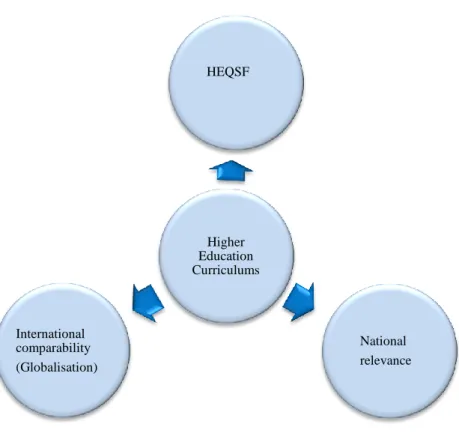
This study will be based on the ideas of the following themes:
The impact of a single co-ordinated framework, Higher Education sub-framework (means to facilitate access to and mobility and progression within education, training and career paths) on the curricula of HEI’s and the Faculty of ICT (in chapter 2 the latter will be explained in more detail).
The responsiveness of the curriculum of the Department of Informatics in the Faculty of ICT at the Tshwane University of Technology (TUT), to individuals, community and industry.
International comparability as a pre-requisite for registration of qualification (Council on Higher Education, 2013).
5
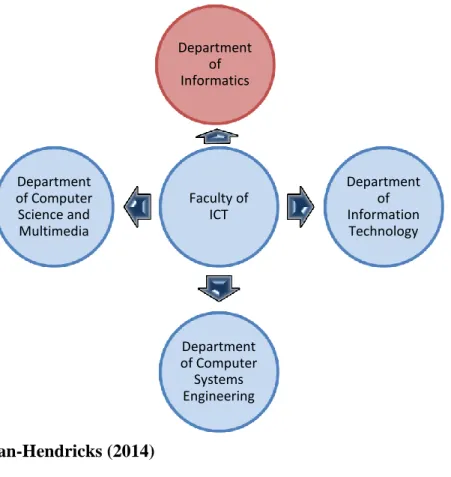
The following diagram depicts the structure on which the study is based. The components in the diagram will be explained in depth in Chapter 2 of this study.
Diagram 1.1 Structure on which the study is based
Source: Human-Hendricks (2014)
1.3 Problem statement
The competing interests of globalisation and local imperatives constitute the sphere within which the research problem is situated. While it is necessary that the South African HEIs should be transformed to be both competitive and innovative; it is of paramount importance that such educational reform also be linked to the responsiveness in their curricula of HEIs, to the needs of students, industry and society (CHE, 2013). This study contends that it is important for the HE curriculum to respond to the needs of the students, industry and society.
The rapidly changing demands of the needs of the students, industry and society impacts directly on the HE environment to adhere to optimising learning potential. The problem arises when it is expected of the HE system to prepare students for a world in which almost all types of routine
Higher Education Curriculums HEQSF National relevance International comparability (Globalisation)
6
cognitive tasks are done by critical thinking and complex communications as the core intellectual capabilities (Dede, 2007:3). The balance between the responsiveness of the curriculum and optimising learning is being construed as problematic. Hence the question whether the curricula of HE addresses the needs and demands of the world of work and whether learning is being optimised within the HE environment through the curriculum.
1.4 Aims of the research
The main aim of this research is to investigate how learning can be optimised in HE through a responsive curriculum.
The aim of the research suggests several objectives which are formulated as follows:
To investigate factors shaping and influencing the curricula of the South African Higher educational landscape.
To investigate what the characteristics of a responsive curriculum is and to define learning.
To investigate whether the curriculum at a selected South African HEI can be regarded as responsive in optimising learning in higher education.
To suggest recommendations with regards to the development of a responsive curriculum model in an effort to optimise learning in higher education.
1.4.1 Research questions
Based on the given problem statement in Par.1.3 and the description of the problem, this study aims to address the following question:
How can learning in a higher education institution be optimised through a responsive curriculum?
Furthermore, sub-questions to be explored are identified as:
Which factors shape and influence the curricula of the South African higher educational landscape?
What are the characteristics of a responsive curriculum in HE and how can the concept learning be defined?
How may the curriculum at a selected South African HEI be considered as a responsive curriculum in optimising learning in higher education?
7 1.5 The research process
1.5.1 Research paradigm
The chosen research paradigm is based on three philosophical assumptions: ontological, epistemological and methodological, that influences the researcher’s reality. Having an understanding of these interrelated assumptions is therefore, important. Ontology is defined as the nature of reality, while epistemology is the branch of philosophy that is concerned with nature of knowledge, and methodology refers to the procedures that the researcher must follow in order to acquire knowledge (Botma, Greeff, Mulaudzi & Wright, 2010; Nieuwenhuis, 2007). The researcher agrees with Botma et al (2010) that individuals attach their own personal meaning to the world and constructs their own reality through their lived experiences (ontology) and develop their knowledge through the interactions with others, thereby constructing their own meaning of the experiences (epistemology). Therefore, for the purpose of this study, a descriptive and interpretive research paradigm or constructivist paradigm is implemented, as the researcher seeks to understand how the participants give subjective meaning to a particular phenomenon (Botma et al, 2010; Creswell, 2009), i.e. to the role of a responsive curriculum on optimising learning in HE. In addition, this study is qualitative in nature (methodology), as according to Nieuwenhuis (2007), qualitative research methods are best suited for a descriptive and interpretive paradigm. Denzin and Lincoln (2005) define qualitative research as an approach that aims to understand the meaning that individuals ascribe to their environment through observations and interactions with these individuals in their natural settings. Nieuwenhuis (2007) further describes qualitative research as the gathering of rich descriptive data on a specific phenomenon. In this study the role of a responsive curriculum on optimisation of learning in HE will be explored to gain a better understanding of this phenomenon. Creswell (2009) also indicates that researchers using qualitative methods immerse themselves in the environment and are a key instrument of data collection and make interpretations that are, in turn, influenced by their own experiences and worldviews.
1.5.2 Research design
A qualitative case study design will be used in this study, as the researcher aims to explore the participants’ experiences of the role a responsive curriculum on optimisation of learning in higher education (Botma et al, 2010; Creswell, 2009; Nieuwenhuis, 2009). Nieuwenhuis (2007) describes a case study as a way of gaining a holistic understanding of the way in which
8
participants interact with one another, as well as the way in which meaning is given to the specific phenomenon being studied. Cases are bounded by time and activity and researchers collect detailed information using a variety of data collection procedures over a sustained period of time. As a study design, case study is defined by interest in individual cases rather than the methods of inquiry used. The selection of methods is informed by researcher and case intuition and makes use of naturally occurring sources of knowledge, such as people or observations of interactions that occur in the physical space (Stake, 1998). This research is descriptive and interpretative in nature (Botma et al, 2010; Creswell, 2009). According to Fouché and de Vos (2011), an interpretative research is used to gain further insight into a situation when there appears to be little information, as in the role of a responsive curriculum in optimisation of learning in HE. Descriptive research allows the researcher to describe a specific situation accurately and in detail (Fouché & de Vos, 2011). The study will be contextual, focusing on lecturers and students at a HEI in the Gauteng province of South Africa.
1.5.3 Research methods
As this research study is framed with the qualitative paradigm, the research methods will be selected in coherence with the research design and research questions. These methods will include a pilot study, purposeful sampling techniques, various data collection methods and qualitative thematic analysis. These will be discussed in further detail.
1.5.3.1 Pilot study
A pilot study represents a fundamental phase of the research process (Leon, Davis & Kraemer, 2012:1). The latter is also called a ‘feasibility’ study. It can also be a specific pre-testing of research methods, including questionnaires or interview schedules (Pilot & Baker, 2002:33-44; Van Teijlingen & Hundley, 2001:1). The pilot study will thus follow after the researcher has a clear vision of the research topic and questions, the techniques and methods, which will be applied and what the research schedule will look like (Leon et al, 2012:1). The pilot study in the current research can be defined as mainly a try-out of research techniques and methods. The researcher compiled semi-structured interview questions based on discussions during workshops with different departments, Heads of Department and programme team work sessions. The main focus of these encounters was with regards to the responsiveness of the curricula. Also document analysis (study guides and learning material) were completed. The pilot study of the current research on the role of a responsive curriculum in the optimisation of learning in HE can
9
therefore be defined as both a feasibility study as well as a testing of interviews and pre-evaluation of documents.
1.5.3.2 Sampling
Purposeful sampling was employed, as a research design of data collection. Purposeful sampling is based on a sample of information-rich cases that is studied in depth and also as McMillian and Schumacher (2010:326) state that it is a strategy to choose small groups or individual persons who are likely to be knowledgeable about the phenomenon of interest. Creswell (2009) maintains that purposeful sampling is based on the assumption that the investigation wants to discover, understand and gain insight into the phenomena and therefore must select a sample from which the most can be learned. The aim of the researcher was to determine whether the curriculum is responsive to the needs of students, industry and society and whether students experience optimal learning. The researcher decided to investigate the type of curriculum used in the Department of Informatics at the Tshwane University of Technology. The purposeful sample comprised of students and lecturers of the Department of Informatics. The curricula of the subjects Business Analysis III (diploma level) and Business Analysis IV (BTECH level) were the focus of this study.
1.5.3.3 Data collection
A literature review will be conducted to gather information in this study. Taylor (2008:1) defines literature review as an account of what has been published on a topic by accredited scholars and researchers. McCotter (2001:21) goes further by defining a literature review as a “critical assessment of the literature in a particular field, stating where the weaknesses and gaps are, contrasting the views of particular authors, or raising questions. Such a literature review will not only be a summary but will also evaluate and show relationships between different materials, so that key themes emerge”. Furthermore, a literature review is a critical and in depth evaluation of previous research.
In order to narrow down the scope of the reading it is important to differentiate between primary and secondary sources. For the purpose of this study the researcher will define the above- mentioned concepts, to determine what will be the primary sources and what will be the secondary sources. According to Blum (2010:1) a primary source is a document which offers an inside view of a particular event. It includes autobiographies, diaries, e-mails, interviews, official
10
recordings, raw research materials, etc. At this point the primary sources which also form part of the empirical study will be:
Learning materials, such as PowerPoint presentations, lecturer notes, lesson handouts, examination papers and memorandums.
Study guides which provides educational information with regards to the subjects Business Analysis III and IV.
On the other hand, secondary sources can be defined as those sources which comment on, or build upon the primary sources (Blum, 2010:2). A secondary source provides interpretation and analysis of primary sources. The secondary sources that will be used in this study include the following: dictionaries; journal articles; newspaper articles; textbooks and reviews of literature. Through the research methods, researchers collect data within the natural setting of the information they seek, and the key data collection instruments are the researchers themselves (Merriam, 2009: 43; Van Wyk, 2012). In this study the researcher made use of semi-structured interviews (three lecturers and 12 students from the Department of Informatics). These lecturers are responsible for lecturing the curricula of the Diploma and BTECH qualifications in the Department of Informatics. The semi-structured interviews were employed to establish the role of a responsive curriculum in optimising learning in HE.
1.5.3.4 Data analysis
McMillian and Schumacher (in Henning, Van Rensburg & Smit, 2011) argue that data analysis is primarily an inductive process of organising data into categories and identifying patterns (relationships) among them. Richards (2006:84), Silverman (2010) and Bowen (2013) see data analysis as a process of coding the data, the recording of exploratory categories, the management and exploration of category systems, as well as coding for validation and reliability exploration. He continues by writing that data analysis is a process whereby the researcher should allow himself/herself time for writing, rewriting, revisiting the data and verifying conclusions. Collected data was analysed using the narrative nature analysis as opposed to a statistical analysis method (Merriam, 2009:182). This involved examining and organising notes from interviews and reducing the information into smaller segments from which the researcher could see patterns and trends. In addition, the researcher interpreted the meanings of these patterns and
11
trends. The findings of the interviews and the analysis of the documents relating to the study under review are presented in chapter 5.
1.5.3.5 Role of the researcher
McMillian and Schumacher (2010:348) and Henning et al (2011) describe the role of the researcher as a partial participant to the study, when the researcher fills a position on the staff of the organisation or when the researcher has membership to the group (insider/outsider relationship). This type of researcher role can be beneficial for the study because the researcher will firstly, have a greater understanding of the culture being studied; secondly, not altering the flow of social interaction unnaturally; and thirdly, having an established intimacy which promotes both the telling and the judging of truth. Further, insider-researchers generally know the politics of the institution, not only the formal hierarchy but also how it “really works”. They know how to best approach people. In general, they have a great deal of knowledge, which takes an outsider a long time to acquire (Silverman, 2010). The researcher of this study is the Curriculum Development Practitioner of the Faculty of ICT. She forms an integral part of the management team. This function is beneficial as a partial participant (insider role), as it provides the researcher the means to build trustworthy relationships with the participants.
1.5.3.6 Data verification
The conclusions that the researcher draws must be reliable and valid data (Henning et al, 2011). Reliability and validity constitute trustworthiness. “Reliability refers to the degree of consistency with which instances are assigned to the same category by different observers or the same observer on different occasions” (McMillian & Schumacher, 2010:23). Joppe (2006:1) expands by defining reliability as the “extent to which results are consistent over time and is an accurate representation of the total population under study. This is referred to as reliability and if the results of a study can be reproduced under similar methodology, then the research instrument is considered to be reliable”. Merriam (2009:209) agrees with the previous writers by writing that “Reliability in qualitative research involves conducting the investigation in an ethical manner and reliability can be ensured the way in which the data are collected, analysed, interpreted and findings presented”.
On the other hand, validity means “the strength of our conclusions, inferences or propositions, the best available approximation to the truth or falsity of a given inference, proposition or
12
conclusion” (Creswell & Miller 2010:1). Merriam (2009:213) regards validity as in how congruent are the findings with reality. “Validity is a goal rather than a product: it is never something that can be taken for granted” (Maxwell, 2010:105). In qualitative research, trustworthiness is observed as a concept that is formed by credibility, transferability, dependability and conformability. Credibility is an evaluation of whether or not the research findings represent a convincing conceptual interpretation of the data drawn from the participants’ original data. Transferability is the degree to which the findings of this inquiry can be applied or transferred beyond the bounds of the project. Dependability is an assessment of the quality of the integrated processes of data collection, data analysis and theory generation. Conformability is a measure of how well the inquiry’s findings are supported by collected data (Fenton & Mazulewicz, 2008:1). The researcher ensured that the current study was trustworthy through triangulation which is a strategy that can be used to strengthen the confidence of the research findings, through collecting the data from different sources and by using multiple methods, including semi-structured interviews and document analysis (array of documents were assessed) and field notes taken during semi-structured interviews (Merriam, 2009:210). The aim was to determine whether the curriculum is responsive to the needs of students, industry and society and whether students experience optimal learning in HEIs.
1.5.3.7 Ethical considerations
To ensure that the study adhered to the research ethics requirements, application for ethical clearance was requested from the Ethics Committees of the University of South Africa (UNISA) (see Appendix 5) and as well as from the Ethics Committee of the Tshwane University of Technology (TUT) (see Appendix 5.1). These applications were submitted after the proposal was approved by the Ethics committee of the College of Education at UNISA and before fieldwork was conducted. Issues addressed in the application involve the sensitivity level of the research activities, the research approach, design and methodology, including full detail regarding the participants, voluntary participation, informed consent, confidentially, anonymity and risk.
The participants were invited to take part in the study and were informed about the purpose, the aim and objectives of the study. The information leaflets provided to the participants informed them about their participative roles and that they could withdraw at any stage. After joining the study, the participants signed a letter of informed consent (see Appendix 4). The letter
13
highlighted the purpose of the study, the procedures to be followed during the investigation, the possible advantages and disadvantages as well as information regarding confidentiality, anonymity and possible risks involved in taking part in the study.
The interviews were audio-taped in order to have a clear and accurate record of all events and verbal communication. It is highly unlikely that any students were physically or psychologically harmed during the research. It is important to notice that a respondent may be considered anonymous when the researcher cannot identify a given response with a respondent (Merriam, 2009). To ensure anonymity and confidentiality the participants were not expected to identify themselves publicly and although their names were known, it was kept confidential at all times. The signed consent forms served as a further guarantee to the participants regarding the anonymity and confidentiality of study. The interviews took place in a private environment. The audio-tapes and field notes of the interviews or document analysis are only available to the researcher.
1.6 Limitations of the study
The researcher confined the study to a University of Technology in the Pretoria area and the information can, therefore, not be generalised to any other higher education institution in South Africa. However, it will possibly make contributions with respect to the effectiveness and impact of a responsive curriculum on the optimising of learning. The study included the Faculty of Information Communication and Technology, the lecturers, heads of department and the students in this particular faculty.
1.7 Clarification of concepts
For the purpose of this research, the concepts below will be clarified. 1.7.1 Curriculum
The Department of Education (1997a) defines the curriculum as everything planned by educators which will help develop the learner and maximise their potential. This can be an extra-mural sporting activity, a debate or even a visit to the library. When the curriculum is being planned, the physical resources, work programmes, assessment criteria and extra-mural programmes should all be taken into account (Maree, 2007:8). Dezure (2010:1) defines curriculum as a “formal academic plan for learning experiences of students”. In this research, curriculum means
14
a document which includes details about the purpose of the module, outcomes, content, teaching and learning strategies and techniques, evaluation, assessment and resources.
1.7.2 Outcomes-based education
Van der Horst and McDonald (2007:7) maintain that “OBE means clearly focusing and organising everything in an educational system around what is essential for all students to be able to do successfully at the end of their learning experience”. This involves starting with a clear picture of what is important for students to be able to do, then organising the curriculum, instruction and assessment to make sure this learning ultimately happens (Killen, 2010). The very term outcomes based education suggests purposeful, goal directed education which avoids meaningless rote learning and will meet praiseworthy ideals such as the protection and enhancement of individual freedom and the development of critical thought and scientific literacy (South African Qualifications Authority, 2013).
1.7.3 Educator
The Higher Education Act, no.101 of 1997, states that educator means any person who teaches, educates or trains other persons, who provides professional educational services, including professional therapy and education psychological services at any public school, further education and institution, departmental office or adult basic education centre and who is appointed in a post on any educator establishment under the act. In OBE, an educator is a teacher, who fulfils a role of facilitator or even a mediator (Mothatha, 2005:64). It is someone who assists and guides in taking knowledge and learning forward, without being directly involved in the learning process (Bullock & Trombley, 2003). In this study, an educator is a lecturer who fulfils a role of content specialist, implementer of the curriculum and academic professional.
1.7.4 Optimising learning
Sawyer (2008) defines optimising learning as a profound consequence which shapes individual knowledge, skills, values and discovering life in all its facets, making constructing sense of it all and then uses what it has found to do something creatively new. Human (2004:24) stresses what has been said in the former by defining optimising learning as the process whereby the human being continually exceeds him/herself in every possible way by cultivating the mind, expanding senses, exploring consciousness, deepening relationships and serving others. The following
15
conclusions can be drawn from the above, that optimising learning can be perceived as a process:
Whereby individuals can be challenged to exceed themselves;
Where individuals achieve beyond expectations;
Whereby individuals focus on fellow human beings in order to strengthen interpersonal relationships.
For the purpose of this study optimising learning will be defined as follows:
The forming of knowledge, values and competencies;
The self-discovery of one’s own abilities;
Creative management of one’s own personal potential.
1.7.5 Council on Higher Education
The Council on Higher Education (CHE) is an independent statutory body responsible for advising the Minister of Higher Education and Training on all higher education policy issues and for quality assurance in higher education and training (Higher Education Act, no.101 of 1997). 1.7.6 Higher Education
Higher Education (HE) refers to a level of education that is provided at academies, universities, colleges, vocational universities, institutions of technology and certain other collegiate-level institutions, such as vocational schools, trade schools and career colleges, that awards academic degrees or professional certificates (CHE, 2002b; Forest & Kinser, 2002:3) and DHET (2013) define HE as an educational level that follows the completion of a school providing secondary education, such as a high school. Tertiary education is normally taken to include undergraduate and postgraduate education, as well as vocational education and training. HE includes teaching, research, exacting applied work and social services activities of universities (Higher Education Act no.101 of 1997).
1.7.7 Information and Communication Technology
UNESCO (2006), explains that Information and Communication Technology (ICT) allows users to participate in a rapidly changing world in which work and other activities are increasingly
16
transformed by access to varied and developing technologies, such as e-mails, the internet, data processing and e-learning. For the purpose of this study the concept ICT does not only refer to the world of computing, but also to an academic entity/faculty within a broader institution dealing with computing related issues communicated in the curricula.
1.7.8 Lecturer
The word lecturer is etymologically derived from Medieval Latin “lectura” a reader, the one who reads or pronounces lectures; a professor or other instructor who delivers formal discourses for the instruction of others (DHET,2013). Boughey (2009) defines lecturer as a term that denotes an academic rank. It is a position at a university or similar institution, often held by academics in their early career stages, which lead research groups and supervise research students, as well as teach. It could be related to educator. In this research, the preferred concept will be lecturers at a junior level, who teach students in particular disciplines and curricula. 1.7.9 Responsive curriculum
The Saskatchevan’s Education Group (2006:1) defines a responsive curriculum as a flexible and adaptive curriculum which responds to the needs of the student and industry. It provides all students with a variety of developmental and learning experiences needed to maximise their human potential. Behrmann (2001:5) advocates that a responsive curriculum is a curriculum which is customised to meet the individual student’s preferred approach to learning and unique ability level.
Meyer and Rose (2005:1) define a responsive curriculum as “A curriculum that meets the needs of all students, it focuses on the development of accessible interactive curriculum materials. These materials would engage the student in new and empowering ways that align their unique approaches to learning and ultimately to maximise their human potential.”
A responsive curriculum thus promotes the development of the student, intellectually, socially, physically and intellectually. This type of curriculum, instruction and assessment represents a model of learning to support all students in achieving the knowledge, skills and attitudes necessary to succeed in life and to maximise their human potential (Moll, 2011). The knowledge, skills and attitudes referred to includes digital knowledge, applied knowledge, skills
17
such as learning and innovation skills, digital literacy skills, communication skills and life and career skills. The attitudes are adaptability, initiative and self-direction.
1.7.10 Student
The word student means someone who is studying in order to enter a particular profession. (Department of Education, 1997c). Thus in its widest use, student is used for someone who is learning, studying or receives education. A student is any person who is involved in any formal or non-formal education and training activity (Mothatha, 2005:94).
1.8 Demarcation of the research
Gossman (2008:21) defines the demarcation as the boundary of a specific area, the act of marking or setting of a limit. With the latter in mind, the Tshwane University of Technology, more specific the Faculty of Information and Communication Technology was the focus of this study. Specific attention was given to the third year curricula of the diploma and BTECH curricula, in the Department of Informatics. Local and international perspectives gained through a literature review on the relationship between responsive curricula and optimising learning, contributed to the contextualisation of the study.
1.9 An overview of the study
Chapter one: Orientation to the study
This chapter covers an orientation to the study, the rationale and the background of the study. The problem statement, aims, research design and methodology, concept clarification and demarcation of the study are also set out.
Chapter two: The South African higher educational landscape: Factors shaping and influencing curricula in higher education
In this chapter a review of the South African higher educational legislative landscape is conducted with a specific focus on the HE frameworks and its impact on the curriculum design processes.
Chapter three: A responsive curriculum and its impact on higher education learning opportunities
18
This chapter will define the anatomy of the concept responsiveness and its impact of optimising learning. Different educational theories will be discussed which underpin a responsive curriculum.
Chapter four: Research design and methodology
In this chapter the research methods and approach will be discussed in more depth. Chapter five: Findings and discussions of findings
In this chapter the findings and a discussion of the findings will be provided. Chapter six: Conclusions and recommendations
In this chapter the conclusions are drawn and recommendations made on the basis of analysed and interpreted data.
1.10 Summary
This chapter provides a brief introduction to the study under review. The problem statement, aims, research methods, concept clarification and chapter division were covered. The next chapter will deal with the literature review on what the expectations are for HE curricula and the influence of the OBE philosophy on the HE framework. The South African higher educational landscape and factors which shapes and influences the curricula will also be presented in the next chapter.
19
CHAPTER TWO
The South African higher educational landscape: Factors shaping and
influencing curricula in Higher Education
2.1 Introduction
In South Africa, social inequalities were embedded and reflected in all spheres of social life, as a product of the systemic exclusion of blacks and women under colonialism and apartheid (Badat, 2010). The HE system was no exception (Badat, 2010:2). Social, political and economic discrimination and inequalities of a class, race, gender, institutional and spatial nature profoundly shaped, and continue to shape, South African HE (Council on Higher Education, 2013). The abovementioned actions were the result of apartheid and the consequences were that the South African HE system was divided into two mutually exclusive types of institutions: universities and technikons. Secondly, eight different government departments controlled the institutions in these categories and lastly, under apartheid, HE in South Africa was skewed in ways designed to entrench the power and privilege of the ruling white minority (Odhav, 2009: 33). By 1994 there had been considerable resistance to the apartheid regime in the historically black and in some of the historically white institutions (Badat, 2010:4). The period since 1994 was a time of optimism (Badat, 2010).
The new government came in with an agenda of change and transformation (Pityana, 2009:2). It was reshaping South African society and constructing a new vision, without any doubt the universities were instruments in this agenda for change. Some of the changes in HE have resulted in legislation, enacted by the democratic government elected in 1994 as well as from social and economic shifts within the country itself (Boughey, 2009:1).
The social and economic changes that were introduced after democratisation were, development at the global economic level, which required HE to produce more graduates than ever before (Dede, 2007:4). The historic factory production lines of the 20th century required large numbers of relatively unskilled workers and only a small number of highly trained managers and people were involved in research and development. The 21st century however, requires large numbers of skilled technologists who are able to adapt to an ever-changing set of needs and market pressures (Boughey, 2009). This also resulted in the need of more students to be qualified in the field of science, technology and engineering. Due to the shift from universities playing a role in the economic development of the country, programmes also had to be redesigned to meet specific
20
economic and industrial needs (Dede, 2007). The South African governments’ White paper 3 on HE published in 1997, describes a transformed HE system as one which will provide equal access and equally fair chances of success to all students; develop programmes leading to qualifications that will meet the country’s employment needs in respect of highly skilled graduates; promote critical and creative thinking, tolerant and committed to the common good through its teaching and produce research of international standards that, at the same time will be cognisant of an African context (Boughey, 2009).
The latter resulted in an extensive process of investigation and consultation to correct the inequalities of the past with regards to HEIs (Department of Education, 1997c). In view of the above, transformation of the HEIs have to reflect the changes that are taking place in the South African society and have to strengthen the values and practices of the new democracy (Department of Education, 1997c). This version is best captured in the preamble of the constitution which aspires to establish a society based on democratic values and an open society in order to improve the quality of life of all citizens and free the potential of each person (The Constitution of South Africa, 1996).
Mkhonto (2007) concurs with the above mentioned by arguing that the HEIs must be transformed to redress past inequalities to serve a new social order, to meet pressing national needs and respond to new realities and opportunities. To understand the policy thrusts of the South African HE system it must be viewed against the backdrop of its historical context. In the following section a brief overview will be provided to understand the historical context of the higher educational landscape.
2.2 Historical overview of the higher educational landscape in South Africa
All HEI’s in South Africa are products of the apartheid segregationist policies and some to such an extent that certain HE institutions experienced a history of disadvantage (Badat, 2010). It is in this specific context that the notion of “separateness” becomes more illuminated by the binary division of HE in the early 1980s, when, in addition to the already existing racially differentiated universities, the National Party (the then the ruling party) instituted “… a new set of institutions to which it gave the new and unique term technikons” (Bunting, 2002:61; Odhav, 2009:35). The term technikon is new and unique as it had no existence in South Africa (SA); in the United Kingdom (UK) these were called polytechnics (Mkhonto, 2007). The National Party’s own perception of the essences or properties of the country’s HEIs resulted in universities being
21
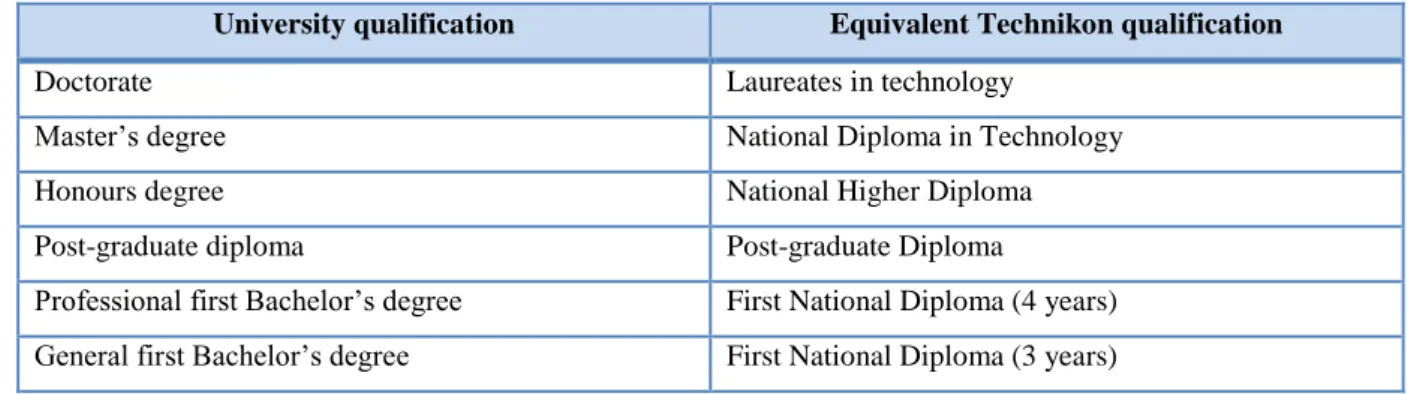
designated as centres for science, and technikons as centres for technology: It [the National Party government] used the term science to designate all scholarly activities in which knowledge for the sake of knowledge is studied, and the term technology to designate activities concerned with the applications of knowledge (Jansen, 2001b). It followed from this philosophy of essences that the government at that time believed that universities could not become involved in technology [in the sense of the application of knowledge] and that technikons could not become involved in scholarly activities involving the generation of new knowledge (Bunting, 2002:62). That in itself is a demystification of the blurred boundaries between university education (as the highest level education) and technikon education (as a component of training) (Mkhonto, 2007). The following table underlines and highlights the previous arguments.
Table 2.1 Binary division of higher and further education qualification routes in the early 1980s
University qualification Equivalent Technikon qualification
Doctorate Laureates in technology
Master’s degree National Diploma in Technology
Honours degree National Higher Diploma
Post-graduate diploma Post-graduate Diploma
Professional first Bachelor’s degree First National Diploma (4 years) General first Bachelor’s degree First National Diploma (3 years)
Source: Bunting (2002:63)
University qualifications format and duration of degrees were used to determine the format and duration of the qualifications of the technikons, and not vice-versa (Jansen, 2001a). Technikon qualifications had to ‘remove’ “… abstract thinking and scientific or scholarly approaches to knowledge as their primary functions had to be only that of training students who would be able to apply scientific principles within the context of a specific career or vocation” (Bunting, 2002:63). Implicit in the above principle therefore, is the notion that the primary function of a university was “… to train basic scientists; and basic researchers, and therefore had to be concerned with the development rather than with the application of knowledge … educating students in a range of scientific or scholarly disciplines to enable them to enter high level professions”. Whereas the “scientific” view above espouses the academic, knowledge-as-a-process orientation, the technikon framework adopts the practical, knowledge-as-a-product approach (Badat, 2010:2). Emphasised here is that the (former) technikon sector has become the
22
main post-secondary school ‘catchment’ pool for career and vocational education (Bunting, 2002). In the instance of technikons merging to form a “university of technology”, the curriculum at such an institution could wholly be geared towards the technological application of knowledge in the service of industry (Jansen, 2001b). In the view of this study, the technikon sector acted as a buffer or interface between secondary (general) and HE: between highly specialised academic-professional knowledge and vocational-technological skills, with the latter (due to poor secondary school backgrounds) providing a layer of technical labour, rather than a managerial and technological layer of decision making within the workforce (Mkhonto, 2007; CHE, 2013).
Post-1994, there has been a wide array of transformation-oriented initiatives seeking to effect institutional change. These have included the definition of the purposes and goals of HE; extensive policy research, policy formulation, adoption, and implementation in the areas of governance, funding, academic structure and programmes and quality assurance; the enactment of new laws and regulations; and major restructuring and reconfiguration of the HE institutional landscape and of institutions (Odhav, 2009; Badat, 2010). These initiatives have often tested the capacities and capabilities of the state and HEIs and have affected the pace, nature and outcomes of change. Some of the initiatives to enable change and relevant to this study were the South African Qualifications Authority (SAQA) and the National Qualifications Framework (NQF) (Council on Higher Education, 2013). The establishment of SAQA and the NQF fostered the characteristics of a transformed education system (Council on Higher Education, 2013). SAQA was established through the SAQA Act of 1995 to oversee the development and implementation of the NQF. As part of the process of new qualifications registration, SAQA would register new qualifications on the NQF (Council on Higher Education, 2013). The role of SAQA in transforming education in South Africa is reflected in their mission statement: To ensure the development and implementation of a NQF which contributes to the full development of each learner and to the social and economic development of the nation at large (South African Qualifications Authority, 2000:15).
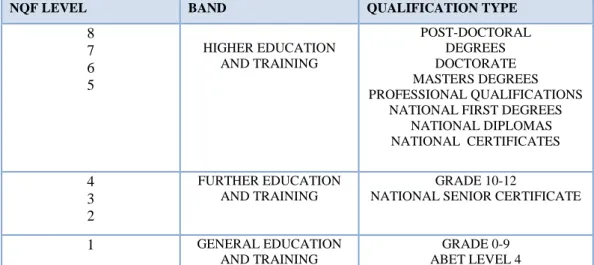
SAQA has adopted an eight-level framework. The three levels are grouped into three (3) bands, namely the:
General Education and Training (GET), covering level 1,
Further Education and Training (FET), covering levels 2 to 4, and
23
The following table depicts the abovementioned and is the eight-level framework that was adopted by the South African Qualifications Authority (2000).
Table 2.2 Depiction of the eight levels framework adopted by South African Qualifications Authority
NQF LEVEL BAND QUALIFICATION TYPE
8 7 6 5 HIGHER EDUCATION AND TRAINING POST-DOCTORAL DEGREES DOCTORATE MASTERS DEGREES PROFESSIONAL QUALIFICATIONS
NATIONAL FIRST DEGREES NATIONAL DIPLOMAS NATIONAL CERTIFICATES 4 3 2 FURTHER EDUCATION AND TRAINING GRADE 10-12
NATIONAL SENIOR CERTIFICATE
1 GENERAL EDUCATION AND TRAINING
GRADE 0-9 ABET LEVEL 4
Source: South African Qualifications Authority (2000)
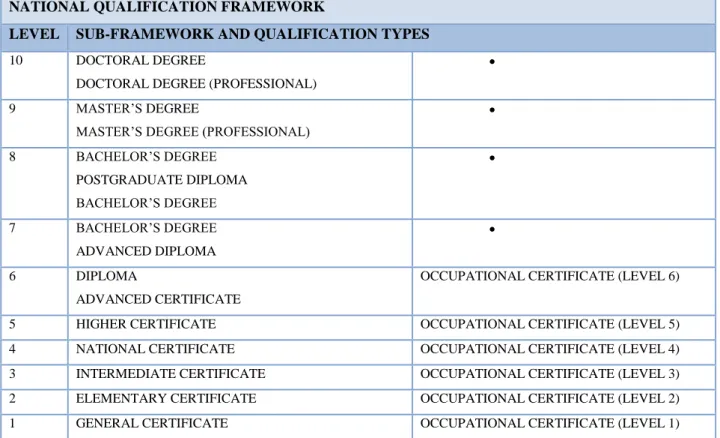
After the SAQA (2000) introduced the NQF level 5 to 8 as the band for Higher Education and Training (HET), changes to the HET band have been published in the Government Gazette of October 2007 (Government Gazette no.30353, 2007). These changes included two new levels, which are levels 9 and 10, in the HET band. In the following table below these changes are displayed in the Higher Education and Training band.