Development of Neonatal Nursing Care Clinical Competency-Based
Assessment Tool for Nurse-Midwife Technicians in CHAM Nursing
Colleges, Malawi
Student Name: Ellemes Everret Phuma
Student Number: 3315124
A thesis submitted in fulfillment of the requirements for the degree Philosophiae Doctor in Nursing in the Faculty of Community and Health Sciences, University of the Western Cape,
South Africa
Supervisor: Professor Brian van Wyk
Co-Supervisor: Professor Oluyinka Adejumo
25 November 2015
i Keywords
Competence
Clinical competence
Competency-based assessment Neonatal nursing care
Nurse-midwife technician Clinical teacher Skills acquisition Pre-registration training Competency-based education Criterion-referenced assessment
ii Abstract
Literature has shown that Malawi is experiencing a shortage of qualified healthcare providers, with the greatest burden on maternal and neonatal health. The majority of health service providers are Nurse-Midwife Technicians (NMT), contributing to 87% of the nursing and midwifery workforce. However, research has shown that the NMTs lack the ability to transfer skills into different clinical settings. It was not known what competencies were taught in Christian Health Association of Malawi colleges to equip the NMTs with clinical competence in neonatal nursing practice and how the clinical teachers assisted these NMTs to acquire the competencies. Furthermore, there was no documentation on the availability of a clinical competency-based assessment tool to validate the NMTs’ achievement of clinical competence in neonatal nursing. The purpose of this study was to develop a neonatal nursing care clinical competency-based assessment tool to validate NMTs’ achievement of clinical competence in CHAM nursing colleges.
The competency, outcomes and performance assessment (COPA) model and the skills acquisition model were the conceptual frameworks used as the foundation of the study. The study adopted a sequential mixed method approach in which both qualitative and quantitative methods were utilized. Data collection was conducted using focus group discussions, document review and cross-sectional survey. The design and development model developed by Reeves (2006) and steps to development of assessment tools identified by the Department of Training and Workforce Development (2012) guided the study and development of the competency-based assessment tool. The study was conducted in eight CHAM nursing colleges. The researcher employed purposive, convenient and proportional stratified sampling to select the participants.
iii
Ethics clearance was obtained from the University of Western Cape and the National Health Sciences Ethical Research Committee in Malawi, prior to data collection.
The data collection involved 31 midwifery clinical teachers and 140 third year students for the FGD and 48 midwifery clinical teachers and 195 third year students for the cross section survey. Document analysis was conducted at all the eight nursing colleges. The qualitative data was analysed using content analysis with Atlas.ti 7 and the quantitative data was analysed using descriptive analysis with SPSS 22. The research findings showed that the NMTs were taught basic nursing skills to enable them provide basic care to the health newborn baby. However, there were inadequate clinical assessments done to validate the NMT’s achievement of clinical competence in this setting. In addition, the clinical teachers used skills checklists to evaluate the NMTs clinical performance on specific procedures.
The outcome of this study was the establishment of neonatal nursing clinical competencies, and development of a neonatal nursing care clinical competency-based assessment tool for the validation of NMT’s achievement of clinical competence. The tool provides a framework for neonatal nursing clinical teaching and assessments as well as tracking of the NMT’s clinical performance in this setting. It is recommended that training institutions should reinforce mechanisms to track the students’ clinical experience and performance assessments using this tool to ensure quality student outcomes. Furthermore, the clinical teachers should be oriented on the use of the developed assessment tool for familiarisation; thereby enhancing consistency and objectivity in the students’ performance assessments.
iv Declaration
I declare that development of neonatal nursing care clinical competency-based assessment tool
for Nurse-Midwife Technicians in CHAM nursing colleges, Malawi, is my own work, that it has
not been submitted for any degree or examination in any other University, and that all the sources I have used or quoted have been indicated and acknowledged by complete references.
Ellemes Phuma Date 25th November 2015
Signed:
v Dedication
I dedicate this work to the Almighty God for giving me wisdom and courage. To my late father Benson Ngaiyaye, how I wish you had lived to this day to see how grown and responsible your children have become. To my Uncle Mr A.F. Phuma, for the guidance and support, his words of encouragement and hope have been a source of my success. To my mother, sisters, brothers and nieces for their endurance during my absence, your support will always be cherished.
vi Acknowledgement
The completion of this work has been a result of many people’s contributions who tirelessly worked with me throughout my studies. Special thanks should go to my supervisors, Professor O. Adejumo and Professor B. van Wyk, for all the support and guidance at every stage of the research project. This work could not have been completed in time without your endless support. I am also grateful to Professor N. Mbombo, for taking me through the first stages of my research project. The guidance she provided during the proposal development helped me to shape this work into what it is today.
My special thanks should go to ICAP-NEPI Project Malawi and Ministry of Health for sponsoring my studies at the University of the Western Cape. Your continuous financial support and the guidance towards my academic work contributed to my success. I wish you could continue doing the same for others to contribute to the quality of nursing education in Malawi. To my employer Mzuzu University and colleagues in the Department of Nursing and Midwifery, and University of the Western Cape, your support and contribution towards my academic achievements will always be remembered.
I am also grateful to the Principal tutors, clinical teachers and students from the CHAM nursing colleges who participated in the study, as well as the consensus workshop participants for their contribution toward the development of the assessment tool. Their contributions are not taken for granted.
Lastly, special thanks go to my mother, family, relatives and friends for enduring my absence during the time of my studies. Your words of encouragement, support and prayers have helped me to reach this far.
May God bless you!
vii Table of Contents Keywords ... i Abstract ... ii Declaration ... iv Dedication ... v Acknowledgement ... vi
Table of Contents ... vii
List of tables ... xii
List of figures ... xiv
List of boxes ... xv
Acronyms ... xvi
Operational definitions of key concepts ... xviii
CHAPTER ONE: Introduction ... 1
1.1 Background ... 1
1.1.1 Pre-service training for Nurse-Midwife Technicians in Malawi ... 2
1.1.2 Maternal and neonatal health status and health care delivery in Malawi ... 4
1.1.3 Neonatal nursing competencies, teaching and assessment for NMTs... 5
1.2 Problem statement ... 7
1.3 Justification ... 8
1.4 Purpose of the Study ... 9
1.5 Research questions ... 9
1.6Objectives ... 10
1.7 Significance of the study ... 10
1.8 Outline of the thesis... 11
viii
1.10 Summary ... 12
CHAPTER TWO: Literature Review ... 13
2.1 Introduction ... 13
2.2 Competence ... 13
2.2.1 Approaches to competence ... 15
2.3 Competency-based education ... 19
2.4 Conceptualising competence in neonatal nursing practice ... 23
2.5 Assessment of clinical competence ... 25
2.5.1 Approaches to assessment of clinical competence ... 27
2.5.2 Clinical competency-based assessment frameworks and tools ... 31
2.5.3 Psychometric properties of the assessment tools ... 39
2.6 Theoretical framework ... 40
2.6.1 The competency outcomes and performance assessment model ... 41
2.6.2 Skills acquisition model ... 46
CHAPTER THREE: Research Methodology ... 49
3.1 Introduction ... 49
3.2 Research paradigm ... 49
3.2.1 Design and development research approach ... 52
3.2.2 Steps to development of assessment tools ... 53
3.3 Phase one: Situation analysis to clarify evidence required for clinical competenc 56 3.3.1 Research design for phase one ... 56
3.3.2 Study setting ... 57 3.3.3 Study population ... 58
ix
3.3.4 Data collection phases ... 58
3.3.5 Ethical considerations ... 83
3.4 Phase two: Development of solutions informed by existing design principles ... 84
3.4.1 Phase two research design ... 85
3.4.2 Study setting ... 85
3.4.3 Population ... 85
3.4.4 Sampling and sampling technique ... 86
3.4.5 Data collection procedure: Choosing assessment methods and approach ... 87
3.4.6 Data analysis ... 91
3.4.7 Design and development of clinical competency-based assessment tool ... 92
3.4.8 Review and refinement of assessment tool ... 93
3.5 Summary ... 93
CHAPTER FOUR: Presentation of findings ... 95
4.1 Introduction ... 95
4.2 Phase one findings: Neonatal nursing clinical competencies taught to NMTs and approaches to facilitate and assess clinical competence. ... 95
4.2.1 Data from the focus group discussions ... 96
4.2.2 Findings from the document review ... 133
4.2.3 Findings from the cross-sectional survey ... 138
4.2.3.6 Summary for phase one findings ... 164
4.3 Phase two: Development of the neonatal nursing care clinical competency-based assessment tool ... 170
4.3.1 What competencies should be included for clinical assessment in neonatal nursing for the NMTs? ... 171
x
4.3.2 How would these competencies be assessed in the clinical area? ... 179
4.3.3 Who would be involved in assessing the NMTs’ clinical competence? ... 195
4.3.4 Where will the assessments for clinical competence be conducted? ... 196
4.3.5 When will the assessment be conducted? ... 196
4.4 Stakeholders review and validation of the competency-based assessment tool ... 198
CHAPTER FIVE: Discussion ... 200
5.1 Introduction ... 200
5.2 Reflection on research objectives ... 200
5.2.1 Objective one: To explore and describe neonatal nursing clinical competencies taught to the NMT in CHAM ... 201
5.2.2 Objective two: To explore how clinical teachers assist the NMT in acquiring competencies in neonatal nursing. ... 205
5.2.3 Objective three: To explore and describe how the NMT’s clinical competence in neonatal nursing is assessed. ... 214
5.2.4 Objective four: To develop a neonatal nursing care clinical competency-based assessment tool for NMTs. ... 224
5.3 Summary ... 234
CHAPTER SIX: Conclusions and Recommendations ... 236
6.1 Introduction ... 236
6.2 Conclusion ... 236
6.3 Contribution of the study ... 238
6.3.1 Theoretical contribution ... 238
6.3.2 Practical contribution ... 239
6.4 Implications for research... 240
xi
6.5 Limitations of the study ... 241
6.6 Recommendations ... 242
6.7 Summary ... 245
References ... 246
Appendices ... 278
Appendix 1: Focus group discussion guide... 278
Appendix 3: Clinical teachers’ questionnaire ... 280
Appendix 4: Students’ questionnaire ... 284
Appendix 5: Likert Scale... 287
Appendix 6: Ethics clearance letter from University of Western Cape ... 288
Appendix 7: Ethics clearance letter from NHSRC in Malawi ... 289
Appendix 8: Information sheet for clinical teachers ... 290
Appendix 9: Information sheet for students ... 293
Appendix 11: Individual review and consensus agreement form ... 297
Appendix 12: The Neonatal nursing care clinical competency-based assessment tool for Nurse-Midwife Technicians ... 306
xii List of tables
Table 2.1: Summary of the different approaches to competence………...17
Table 2.2: A comparison of the traditional and competency-based framework…………...21
Table 2.3: Summary of the assessment tools………...37
Table 3.1: Reeves design-based phases versus steps for designing assessment tools…………...55
Table 3.2: Participants for the focus group discussion………...61
Table 3.3: Sample for student respondents………77
Table 3.4: Workshop participants………...86
Table 4.1: Themes and sub-themes generated from the FGD………...97
Table 4.2: Competencies taught to the Nurse-Midwife Technician………...144
Table 4.3: Approaches used to assist the Nurse-Midwife Technician to acquire clinical competence………..149
Table 4.4: Approaches used to assess clinical competence……….153
Table 4.5: Clinical teachers’ perception of NMCM assessment approach………...155
Table 4.6: Clinical teachers’ perception of OSCE………..156
Table 4.7: Clinical teachers’ perception of direct observation………..…..158
Table 4.8: Assessment tools…..………...159
Table 4.9: Clinical teachers’ perceptions of the checklist………..………….161
xiii
Table 4.10: Clinical teachers’ perceptions of the green book………..162
Table 4.11: Clinical teachers’ perception of NMCM tool………...164
Table 4.12: Summary of findings………167
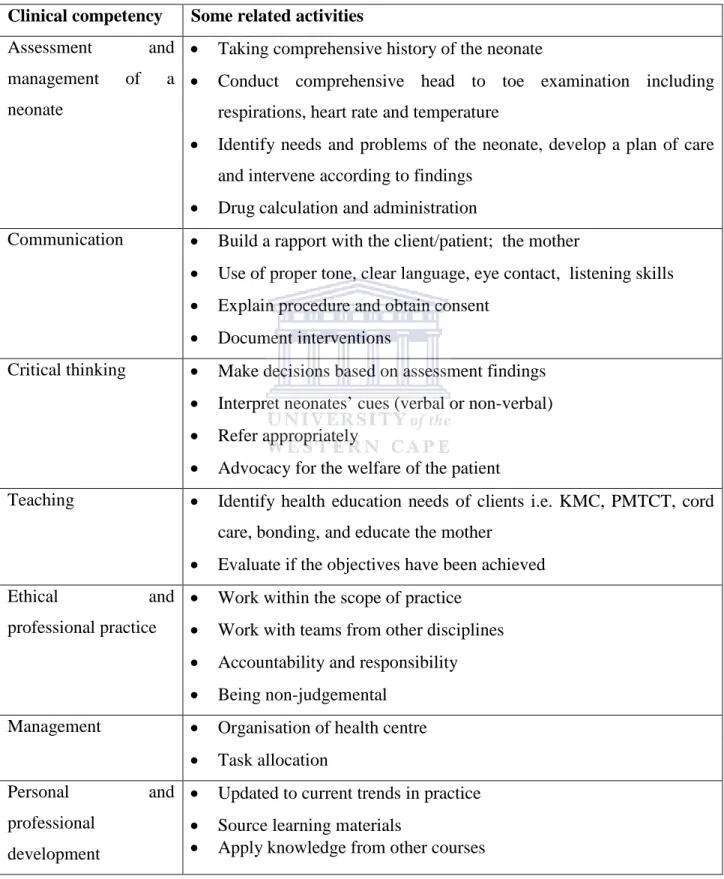
Table 4.13: Summary clinical competency areas agreed by consensus………...173
Table 4.14: The criterion-referenced rubric for NMTs’ neonatal nursing practice……….185
Table 4.15: Skills to be demonstrated to NMT prior to clinical placement……….192
xiv List of figures
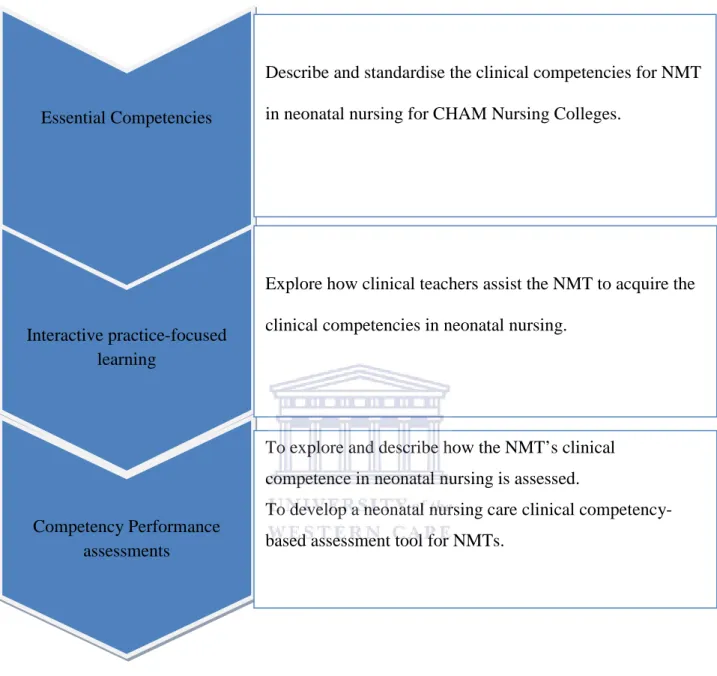
Fig 2.1: Lenburg’s concept of COPA Model and associated study objectives……….45
xv List of boxes
Box 4.1: Competency standards agreed by consensus………182 Box 4.2: Roles and responsibilities of the student agreed by consensus………...193 Box 4.3: Roles and responsibilities of the clinical teacher agreed by consensus………....194
xvi Acronyms
ANMC Australian Nursing and Midwifery Council
APGAR Appearance, Pulse, Grimace, Activity, and Respiration BEMOC Basic Emergency Obstetric Care
CBE Competency-based Education
CHAM Christina Health Association of Malawi
COPA Competency, Outcomes and Performance Assessment CPD Continuing Professional Development
DHS Demographic Health Survey
DWTD Department of Training and Workforce Development ENM Enrolled Nurse-Midwife
FGD Focus Group Discussion HBB Helping Babies Breathe
ICM International Confederation of Midwives KMC Kangaroo Mother Care
MDG Millennium Development Goals
NHSRC National Health Sciences Research Committee NMC Nursing and Midwifery Council
NMCM Nurses and Midwives Council of Malawi NMT Nurse-Midwife Technician
OSCE Objective Structured Clinical Examination
xvii
SOAP Subjective, Objective, Assessment and Plan
SOAPIER Subjective, Objective, Assessment, Plan, Evaluation, Intervention and Review
SPSS Statistical Package for the Social Sciences SRN State Registered Nurse
SRNM State Registered Nurse and Midwife
UNICEF United Nations International Children's Emergency Fund USAID United States Agency for International Development WHO World Health Organisation
xviii Operational definitions of key concepts
Approaches to assist acquisition of competence: Refers to the methods or strategies used by clinical teachers to facilitate the students’ acquisition of clinical skills or competence.
Approaches to validate competence: Refers to the methods used by clinical teachers to evaluate the students’ achievement of clinical competence, or to define the students’ level of competent practice in neonatal nursing.
Attributes: Refers to the characteristics which underpin the competent performance of an NMT. The clinical teacher uses these characteristics to determine the NMT’s level of clinical competence in neonatal nursing.
Clinical mentor: Refers to a registered nurse and/ or midwife or registered nurse/midwife who has undergone formal or informal training to facilitate student learning in the clinical area. The mentor guides and supports student learning through coaching and supervision, and assesses student performance in the clinical setting.
Clinical teacher: Refers to a nurse-midwife professional, including tutors involved in student teaching, theory and practice, in neonatal nursing. The clinical teacher follows students from the classroom experience to clinical practice during the period of training.
Competence: Refers to the ability of the NMT to integrate and apply the knowledge, skills, attitudes and personal behaviour in the provision of basic neonatal care with minimal supervision.
Competency: Competency refers to the characteristics that an individual uses to render services to meet the client’s needs. It refers to the knowledge, skills, values, attitudes and social roles
xix
required for the NMT to provide basic neonatal nursing care. Competency areas: Refers to an organised cluster of competencies in neonatal nursing practice. All the professional activities the NMT carries out can be clustered under each or across all the competency areas.
Competency area: A competency area is a unit of performance organized for practitioners to understand how work items are organised within practice. In this study the competency areas represents the units of practice organised for the NMT’s achievement in neonatal nursing practice. The term has been used interchangeably with competency in some sections.
Competency-based assessment: refers to the process of collecting evidence and making judgements on whether competence has been achieved; with the aim of confirming whether the NMT can perform to the expected standards for the provision of basic neonatal nursing care.
Competency standard: This is an outcome statement describing the expectations or minimum requirements for the NMT’s effective performance in neonatal nursing practice.
Neonatal nursing care: Refers to nursing activities provided to infants 0-28 days old and their families, and are directed towards cure, health promotion and maintenance as well as the prevention of complications.
Nurse-midwife technician: Refers to a student undergoing a three year nursing and midwifery diploma program leading to qualification as an assistant nurse-midwife.
1
CHAPTER ONE
Introduction 1.1 Background
The global shortage of skilled health care providers is a major barrier to achieving the health related Millennium Development Goals (MDG). The World Health Organisation (WHO) (2014:37) estimates a shortage of skilled health workers of 7.2 million globally. The African region experiences 1.8 million of the global shortage, yet accounts for 25 percent of the global burden of disease (Bangdiwala, Fonn, Okoye & Tollman, 2010:298). Malawi is one of the countries facing a critical shortage of skilled healthcare providers in Africa. As of 2009, the health worker-to-patient densities were 0.019 physicians and 0.343 nursing and midwifery personnel per 1,000 population (Chimwaza, Chipeta, Ngwira, Kamwendo, Taulo, Bradley & McAuliffe, 2014:1); which is far below the WHO recommended standards for developing countries of one physician/5,000 population and one nurse/1,000 population (European Union, Global Health Workforce Alliance & WHO, 2009:34). As such, the Malawi Government planned to increase the number of key healthcare providers in its 2011-2016 health sector strategic plan (Ministry of Health, 2011). These include physicians, nurses and midwives as well as mid-level technical healthcare providers, clinical officers and nurse-midwife technicians (NMTs). The nurse-midwife technicians are the majority frontline providers and play a significant role in the provision of general patient care as well as obstetric and neonatal health services.
2
1.1.1 Pre-service training for Nurse-Midwife Technicians in Malawi
In Malawi, nursing training was started as early as 1889 by missionaries. This was not a formal type of training and candidates of such training became nurse auxiliaries (Msiska, 2012:7). Later, the training was formalised and candidates qualified with a certificate, and were designated as enrolled nurse-midwives (ENM). The ENMs were trained according to a program that no longer exists, in Mission Schools run by the Christian Health Association of Malawi (CHAM); an ecumenical, non-governmental umbrella organization of Christian owned health facilities.
Currently, there are 15 training institutions offering pre-service nursing and midwifery education with two active pathways, registered nurse and midwife, and nurse-midwife technician. Both pathways of training focus on general nursing and midwifery practice. Five training institutions offer level one nursing and midwifery education to post-secondary school students who complete a four year university study leading to their designation as state registered nurses (SRN) or state registered nurse and midwife (SRNM). Upon graduation, the SRNM and SRN assume a supervisory role (Kadango, 2009:3) in addition to the provision of bedside nursing.
The second pathway is level two integrated nursing and midwifery education which is offered through a three year college diploma programme leading to nurse-midwife technician (NMT); an existing equivalent of the enrolled nurse-midwife cadre. The NMT programme is offered to post-secondary students who have a good ‘0 level’ but have not achieved a university education, and who practise as mid-level technical practitioners. Currently, nine institutions coordinated by CHAM and one parastatal nursing college offer the NMT training programme. The CHAM training institutions produce about 80% of the nurse-midwife technicians in Malawi; making the NMTs the majority in the health care delivery system.
3
The Nurse-Midwife Technicians are the major workforce in the delivery of healthcare services; contributing to more than 87% of the nursing and midwifery workforce in the public health service (USAID, 2006:4). The NMTs enter into practice as nurse-midwife assistants, to provide basic nursing as well as maternal and neonatal health services, albeit under supervision. However, in most settings, they often practise independently, with little or no supervision from professionals (WHO, 2008:29). Similar cadres of nursing practitioners have been reported to provide basic health services in other countries. For instance, in Australia, the enrolled nurse is an associate to the registered nurse, and carries out delegated duties in health care interventions (Australian Nursing and Midwifery Council (ANMC), 2002:1). Similarly, in Tanzania, Zambia and Mozambique, similar cadres have been reported to improve access to emergency obstetric care, post-operative care, post-abortion care (PAC) and reproductive health care (WHO, 2013: Brown et al., 2011; Bangdiwala et al., 2010). In Malawi, the NMTs form the backbone of basic services proven to have contributed in the reduction of maternal and neonatal mortality, such as family planning, antenatal and postnatal care, neonatal care and skilled birth attendance (Darmstadt et al., 2005:985; Campbell & Graham, 2006:1285).
Despite being the largest health service providers, Kadango (2009:5) observes that NMTs lack the ability to transfer skills into different clinical settings. Lack of adequate skills has been correlated with neonatal mortality (Freberg et al., 2012:2) as the NMTs fail to monitor and identify complications, and provide lifesaving interventions. Similarly, WHO (2012:8) reported an association between neonatal mortality and the availability of skilled birth attendants; countries with very high neonatal and maternal mortality rates had very low numbers of births supported by skilled birth attendants. Brown et al. (2011:308) argue that the mid-level healthcare providers’ shorter training of 2-3 years and lower qualifications might be a contributing factor to
4
the provision of low quality care. On the other hand, Fulton et al. (2011:10) observe that adequate training of mid-level healthcare providers increases access to quality healthcare at a lower cost.
As such, the training of competent nurse-midwife practitioners is critical to the delivery of quality neonatal health services. Unlike in other countries where competency standards for this cadre have been prescribed (ANMC, 2002:1-13), there are no competency standards specifically prescribed for the training and practice of NMTs in Malawi. However, the NMTs remain the major providers of healthcare services, calling for the improvement and strengthening of pre-service nursing and midwifery education for this cadre of practitioners. WHO (2013:22) recommends a competency-based approach to the training of healthcare practitioners to enable them to acquire a minimum set of scientifically based knowledge and skills, needed to deliver health care upon entry into the workforce. In view of this, in 2010, the Nurses and Midwives Council of Malawi (NMCM) in collaboration with CHAM, reviewed the NMT syllabus to incorporate a competency-based approach to enable the NMT to acquire the necessary skills for provision of quality care. Currently, NMCM works with the training institutions to promote nursing and midwifery education with an emphasis on enabling the nursing students to attain the essential competencies for entry level practice (NMCM, 2012:6).
1.1.2 Maternal and neonatal health status and health care delivery in Malawi
Malawi is one of the poorest countries in the world and is experiencing a high disease burden. Despite having a number of challenges in meeting the MDGs, Malawi is one of the low-income sub-Saharan African countries to meet the Millennium Development Goal (MDG 4) for child survival (United Nations, 2015:35). However, the neonatal deaths remains on the higher side,
5
with 23 deaths per 1,000 live births in 2013 (UNICEF et al., 2014:21) - requiring continued strategies and interventions to improve neonatal health status in Malawi.
In addition, the maternal mortality ratio, according to all national data and estimates published most recently by WHO, is estimated at 460 per 100 000 live births (WHO et al. 2012:34) while the 2010 Demographic Health Survey (DHS) suggests 675 per 100 000 live births, indicating a reduction from 984 in 2004 (NSO, 2011:221). Despite the efforts towards achieving the health MDGs, Malawi continues to face challenges such as high population growth rate, high fertility rate, high human immunodeficiency virus (HIV) prevalence and low health worker density. These challenges, especially the low health worker density, would affect the long term implementation of strategies to further reduce maternal and neonatal deaths. Although the proportion of births attended by skilled health personnel has seen a modest rise (Lunan, Clements, Mahony & Hope-Jones, 2011:11), a good proportion of the babies are still delivered without the support of a skilled healthcare provider, making it hard to treat complications quickly and efficiently (The Health Foundation, 2008:2). Lack of well qualified nurses and midwives is one of the contributing factors to the quality of the neonatal health services (Kadango, 2009:3), with the majority of health services being provided by the mid-level technical practitioners (NMTs).
1.1.3 Neonatal nursing competencies, teaching and assessment for NMTs
In Malawi, the neonatal health nursing course for NMTs, also referred to as neonatology, comes as a component of the midwifery module in the NMT syllabus. It is taught during the third year of the NMT diploma programme. The NMT is expected to cover 220 hours of learning neonatology both theory and clinical practice (Nurses and Midwives Council of Malawi, 2010: course outline 3). According to NMCM syllabus (2010) the NMT is expected to acquire
6
knowledge, skills and attitudes as core competencies to enable him/her to provide neonatal health care. An emphasis on the acquisition of essential competencies for midwives’ training is important for the provision of quality and safe neonatal health services (Fullerton et al., 2011:401). While NMCM has provided the syllabus to guide the training of NMTs, nursing colleges are mandated to develop their own teaching and assessment tools incorporating the core competencies. However, there is a dearth of literature on what competencies are taught to the NMTs in the CHAM nursing colleges in relation to the NMCM core competencies in neonatal health nursing or neonatology.
Furthermore, there is no documentation on the approaches used to assist the NMTs to acquire and validate their achievement of the clinical competence. Tveit et al. (2009:5) observe that the delivery of the nursing courses to the NMTs use traditional approaches to student learning, with demonstrations as a commonly used clinical teaching strategy. However, NMCM advocates for the use of adult learning approaches, singling out self-directed learning and simulation (NMCM, 2012:9), to assist the NMT in acquiring clinical competence. Self-directed learning, as one of the competency teaching and learning approaches, has been associated with improvement in acquisition of competence in all the three domains of knowledge, skills and attitude, and the development of lifelong learning skills among students (Murad, Coto-Yglesia, Varkey, Prokop & Murad, 2010:1057). Acquisition of skills can be influenced by the nature of learning and assessment procedures. Adegoke et al. (2013:69) argue that the competency-based approach to student learning and assessment facilitates critical thinking and the ability to transfer the skills into various clinical settings, thereby, enhancing the acquisition of skills.
However, the assessment of skills acquisition among the NMTs has focused on performance, using skills checklists which focus on psychomotor skills (Tveit et al., 2009:29) and knowledge,
7
leaving out the affective domain. This is a challenge when it comes to acquisition of skills as the NMT may memorise the procedures and show the desired performance without the application of knowledge and critical thinking (Oranye et al, 2012:240; Mulder et al., 2009:765). As such, the NMT enters into practice without attaining the expected level of competence. This leads to an inability to transfer skills in complex neonatal care situations. In view of this, NMCM advocates for the development of competency-based assessment tools that provide evidence of the student’s performance and progress towards the achievement of the required clinical competencies (NMCM, 2012:9; NMCM 2002:13).
1.2 Problem statement
Malawi experiences a shortage of skilled healthcare practitioners, with the greatest burden on maternal and neonatal health services (Kalipeni, Semu & Mbilizi, 2012:153-171). The majority of health service providers in the public health sector are NMTs. However, it has been reported that the NMTs lack the ability to transfer skills into different clinical settings (Kadango, 2009:5) making it a challenge for the delivery of quality care. To improve the quality of care by NMTs, NMCM reviewed the NMT syllabus to incorporate a competency-based approach emphasising the demonstration of knowledge, skills and attitudes as the core competencies required for the NMT. However, it is not known what competencies are taught in the nursing colleges to equip the NMT with adequate skills to provide basic neonatal care and how the clinical teachers assist the NMTs to acquire the clinical competencies. Furthermore, there is no documented competency-based assessment tool to validate the NMT’s achievement of clinical competence in neonatal nursing. As such, this study seeks to describe the competencies taught to the NMTs in CHAM nursing colleges; explore how clinical teachers assist the NMTs to acquire the competencies and how the NMT is assessed to validate achievement of the required clinical
8
competencies. The study, thereafter, would develop a comprehensive clinical competency-based assessment tool for the assessment of NMTs’ clinical competence in neonatal nursing.
1.3 Justification
Clinical assessment for NMT focuses on task performance using checklists despite the syllabus’ focus on the competency-based approach. However, checklists have been unreliable in improving students’ competence because of the failure to facilitate the students’ application of critical thinking when carrying out the tasks (McWilliam & Botwinski, 2012: 38; Oranye et al, 2012:240). This is because the students memorise the skills as presented in the checklists to pass the procedure (Fastre et al., 2010:518). This leads to failure to transfer these skills in diverse clinical situations. As major healthcare providers in Malawi, the NMTs need adequate skills to ensure their ability to provide quality neonatal care upon entry into practice. Hence, the researcher developed a comprehensive clinical competency-based assessment tool which integrates the NMTs learning experience to validate clinical competence in neonatal care. Unlike other tools which have focused on general competencies targeting registered nurses in other countries (Liu et al., 2009:893; Mulder et al., 2009:756; Marshburn, 2009:427; Gulikers, 2008:173) or teachers as observers (Klein, 2006:382), the developed tool covers required clinical competencies in neonatal nursing at the level of the NMTs to enable them to provide quality nursing care to neonates and their families. The tool will work as a holistic framework to provide the NMT with a diversity of learning experience through self-assessment, reflection and continuous feedback; with the clinical teacher as a coach and an assessor at different points of the assessment process. It is believed that the development of a competency-based assessment tool for pre-service training, to validate neonatal nursing clinical competency achievement
9
among NMTs, will promote sustainable efforts in the training of skilled mid-level healthcare providers to help reduce neonatal mortality further in Malawi.
1.4 Purpose of the Study
The purpose of the study was to develop a neonatal nursing care clinical competency-based assessment tool to validate NMTs’ achievement of clinical competence in CHAM nursing colleges.
1.5 Research questions
The following questions guided the study:
1. What competencies are taught to the NMT in neonatal nursing in the CHAM Nursing Colleges?
2. What approaches do clinical teachers use to assist the NMT to acquire clinical competence in neonatal nursing?
3. What approaches do clinical teachers use to validate achievement of clinical competence among NMTs?
4. What tool would be appropriate for assessment to validate the achievement of clinical competence among NMTs?
10 1.6 Objectives
The study objectives were:
1. To explore and describe neonatal nursing clinical competencies taught to the NMT in CHAM nursing colleges
2. To explore how clinical teachers assist the NMT to acquire the clinical competencies in neonatal nursing
3. To explore and describe how the NMT’s clinical competence in neonatal nursing is assessed
4. To develop a neonatal nursing care clinical competency-based assessment tool for NMTs.
1.7 Significance of the study
Considering the review of the NMT syllabus to adopt a competency-based approach, NMCM advocates for nursing and midwifery education that will enable the NMT to acquire the core competencies for entry level practice (NMCM, 2012:6). In addition, NMCM advocates for the development of assessment tools that will provide evidence for the students’ achievement of clinical competence. It is in view of this that the findings from this study may help nurse educators to understand the expected clinical competencies for neonatal nursing for NMTs, thus enhancing effective approaches to assist students in acquiring these competencies.
Since there is no documented competency-based assessment tool for clinical neonatal nursing for NMTs, the development of such a tool would help the clinical teachers understand the levels of skills acquisition among students, hence promoting the attainment of required clinical competencies for practice in neonatal nursing. This may also help to ensure consistency of skills
11
assessment in both skills laboratories and the clinical setting, and the validation of the students’ level of clinical competence in neonatal care practice thereby improving the quality of nursing education. Furthermore, carrying out this study would generate new knowledge and assessment procedures to guide students as they acquire clinical competence in basic neonatal nursing care hence improving the number of skilled health workers. This could lead to quality care and patient safety and in so doing contribute to further reduction of neonatal mortality.
1.8 Outline of the thesis
The thesis has been organised into six chapters as follows:
Chapter one highlights a general background to the status and level of competence for midlevel healthcare practitioners and their contribution towards healthcare delivery in Malawi. It also highlights the need for strengthening the mid-level healthcare providers, the NMTs and training through a competency-based teaching and assessment approach to assist them in acquiring the expected level of clinical competence with a focus on neonatal health nursing.
Chapter two of the thesis presents a review of the literature on competence, competency-based nursing education and assessments. The chapter also highlights the conceptual frameworks that guided the study and the development of the clinical competency-based assessment tool.
Chapter three presents the research methodology, providing information on the qualitative and quantitative approaches used for the study and the design and development approach. The chapter has two phases; phase one is the situation analysis and phase two is the development of the assessment tool, review by experts and refinement of the assessment tool.
Chapter four presents the findings of the study, both the qualitative and quantitative findings and the development of the clinical competency-based assessment tool.
12
Chapter five discusses the results in relation to the available literature. The discussion includes the developed neonatal nursing clinical competency-based assessment tool.
In chapter six the researcher presents the contribution of the study and recommendations
1.10 Summary
The chapter started by providing a background to the global status with regards to the shortage of skilled healthcare providers and the utilization of mid-level healthcare providers to improve healthcare delivery, especially in low-resource countries. Then an overview of the nursing and midwifery training for the NMTs, in Malawi, as mid-level healthcare providers and their contribution to the healthcare delivery system was presented with a focus on neonatal health nursing. It has been noted that the NMTs are the major health care providers despite a reported lack of skills for the provision of comprehensive basic nursing care. The chapter continued with an overview of the maternal and neonatal health status and healthcare delivery in Malawi. It has been noted that Malawi still experiences a high neonatal mortality rate despite being on track for the achievement of the MDG 4. Hence, the chapter has also looked at the neonatal health nursing competencies, teaching and assessment for the NMTs, making an observation on the absence of competency-based assessment tools despite the focus of the NMT syllabus on competency-based education. A justification for the development of the assessment tool has been provided and the problem statement given. The chapter concludes with the research questions and objectives, significance of the study and the thesis outline.
13
CHAPTER TWO
Literature Review 2.1 Introduction
Competency in nursing has a direct influence on the health and safety of all patients. Health professional training exists to assist health care providers acquire knowledge, skills and attitude needed to provide quality patient care. In fulfilling this goal, educational institutions have focused on incorporating a competency-based approach to the training of healthcare providers to bridge the gap between what students learn in the classroom and what they need to know for work (Hsu & Hsien, 2012: 492). With this approach to training, there is need to employ effective assessment approaches to ensure that nurses and midwives acquire the expected competencies to meet the standard of care and achieve the best patient outcomes. This chapter presents and discusses the literature on competence and competency-based education as well as the clinical assessment of competence. The researcher used CINAL, Google Scholar, Pubmed and PsychInfo data-bases to search the information related to the topic under study. The chapter also discusses the conceptual frameworks that guided the study and the development of the clinical competence-based assessment tool.
2.2 Competence
Despite the wide use of the concept competence, there is no consensus definition. Several attempts have been made by researchers, educators and practice-based nurses to establish a framework and definition for competence (Hsu & Hsien, 2012: 492; Axley, 2008:215). In some cases, the concept of competence has been confused with competency. Competency refers to the
14
knowledge, skills, values, social roles, and other characteristics that an individual uses, in appropriate ways, to produce a product or render a service to meet the needs of a client (Dubois & Rothwell, 2000:3). According to Dubois and Rothwell, not all human characteristics are competencies. A human characteristic is a competency only if it can be shown to be required for successful performance. Competencies are based on what a person does. They are behavioral and observable. If one is competent then the result is effective or possibly outstanding job performance (Barbazette, 2005:14). Thus, an individual must possess and apply these competencies to perform effectively in a job. On the other hand, competence denotes a set of knowledge, abilities, skills, capabilities, judgement, attitudes, and values demonstrated by an individual in the provision of a service (Banta, 2001:1).
McMullan et al. (2003: 284) make a distinction between competence and competency stating that competence is focused on the description of the action or behavior that a person should demonstrate in performance while competency is focused on the individual’s behavior that underpins the competent performance. In other words, competence is job related and refers to the person’s ability to meet the requirements. On the other hand, competency is person related and refers to the person’s knowledge, skills and abilities that make it possible to effectively function in a job (Anema & McCoy, 2010:5). Competence denotes all the attributes required to function independently. It is a set of behaviours built on the components of knowledge, skills, attitudes and personal ability (Carracio et al., 2002:362). It signifies both the person’s ability and entitlement to act and judge professionally. Thus, competence can never be demonstrated until it is actually achieved in a sustained independent way in practice.
In nursing practice, competence has a direct influence on patients’ health and safety. Lack of competence among healthcare providers may lead to serious errors resulting in patient harm or
15
loss of life (Axley, 2008:215). The Nurses and Midwives Council of Malawi (NMCM, 2010:145) define competence as a set of knowledge, skills and attitudes required to practise safely and effectively without direct supervision. It entails the level of mastery of performance requirements resulting from integrative learning experiences that are relevant to the task being performed. In addition, competence entails transferable general attributes essential for effective performance which include problem-solving and critical thinking capacity (McMullan et al., 2003:283-294). It describes an action, behaviour or outcome that a person should demonstrate in performance. But the acquisition of technical skills in itself does not guarantee effective performance. A practitioner needs to be proficient in all the three domains; knowledge, skill and attitude, to be deemed competent. For purposes of this study, the researcher summarises the description of competence by other authors. Therefore, competence refers to the ability of an individual to integrate and apply knowledge, skills, attitudes and personal behaviour in the provision of basic nursing care with minimal supervision.
2.2.1 Approaches to competence
McMullan et al. (2003:285) identifies three normative conceptualisations of competence which form the basis for assessment approaches. These include the behaviourist approach, the generic approach and the holistic approach. The behaviourist approach, also known as the performance based approach to competence, describes an action, behaviour and outcome in a form that can be demonstrated, observed and assessed (McMullan et al., 2003:285). It focuses more on performance than on knowledge and is concerned with ‘what people do than what they know’ (Fordham, 2005:45). In this approach a successful performance is only possible when the necessary knowledge and understanding are present. Thus, there is no need to assess these separately. However, this approach has been criticised for its lack of transferability in a variety
16
of situations (Fordham, 2005:45). Relying on performance for professional competence does not guarantee that the person would perform appropriately in a variety of context. In view of this, other researchers have proposed the generic approach to competence. This approach considers competence as clusters of abilities which are conceptually linked and concentrates on the general attributes associated with expert performance. Such attributes include knowledge or critical thinking capacity (McMullan et al., 2003: 287) believed to be applicable in different situations. In whatever circumstances, competent practitioners will do well in the presence of these attributes. But, how can these competency-attributes, critical thinking and affective skills be best assessed using the generic approach?
Acknowledging the challenges with the other approaches to competence, other researchers (Fahy, 2011:42; Fordham, 2005:42; McMullan et al., 2003:287) suggest a holistic approach to integrate the behaviourist and generic approaches. This approach combines the general underlying attributes of the practitioner with the context in which these attributes might be applied rather than ignoring this context as in the generic approach. Competence is dynamic with different meanings and interpretations. As such a combination of different aspects of attributes; knowledge, attitudes, values and skills are necessary for an intelligent performance in different situations (table 2.1 provides a summary of the strengths and limitations to the approaches). According to Gonczi (1994 cited in McMullan et al., 2003: 287) a holistic approach to competence allows the incorporation of ethics and values as elements in competent performance and the need for reflective practice while promoting professional judgement.
17 Table 2.1: Summary of the different approaches to competence
Competence Approach Description Strengths Limitations
Behaviourist
(McMullan et al., 2003:285; Fordham, 2005:45)
Also known as performance based
Specifies what needs to be done to fulfill the job requirement Concerned with what people can do, rather than what they know
Provides an assessor with statements by which judgement about an individual’s ability to perform a specified activity to an acceptable level can be made
Practice is judged against a number of discreet elements
Complex professional skills are reduced to a list of tasks
Disregards underlying attitudes, performance in real life settings and complexity of professional judgement
Generic
(McMullan et al., 2003:285)
Concentrates on a person’s attributes for effective performance
The attributes, critical thinking, problem solving and self-confidence will equip a person with transferable skills applied in different settings
Assessment incorporates underlying knowledge, understanding and skills
Attributes required may differ depending on the area of expertise, hence the competencies may not be applied in all situations
Difficulty to measure adaptability/self-confidence objectively
18
Competence Approach Description Strengths Limitations
Integrated/Holistic
(Fahy, 2011:42; Fordham, 2005:42; McMullan et al., 2003:285)
A combination of the behaviorist and generic approaches with the belief that there is more than one way of demonstrating professional competence
Focuses on knowing how as opposed to knowing what
Considers the importance of professional judgement and clinical reasoning
Allows the integration of knowledge, attitudes, skills, values and ethics when assessing competence
Assessment is complex, not all values may be applicable in all situations.
19 2.3 Competency-based education
Competency-based education (CBE) was introduced in America towards the end of the 1960s in reaction to concerns that students are not taught the skills they require in life after school (Gregg, 2001: 26). Since then, the approach has been widely used in adult education, nursing and other disciplines. Gruppen et al. (2012:43) describe CBE as a framework which focuses on desired performance characteristics that a learner must attain to be considered competent. It is an outcome-based approach to the design, implementation, assessment and evaluation of an education program using an organised framework of competencies (Jhpiego, 2012:16; Weinberger et al., 2010:752). CBE has been favoured by researchers based on its focus on principles of adult learning which believe that learning includes trust, and that adults can determine and achieve learning objectives if given the freedom and opportunity to do so (Anema & McCoy, 2010:4). In this manner, the learners’ individual learning styles and abilities are recognised and appreciated.
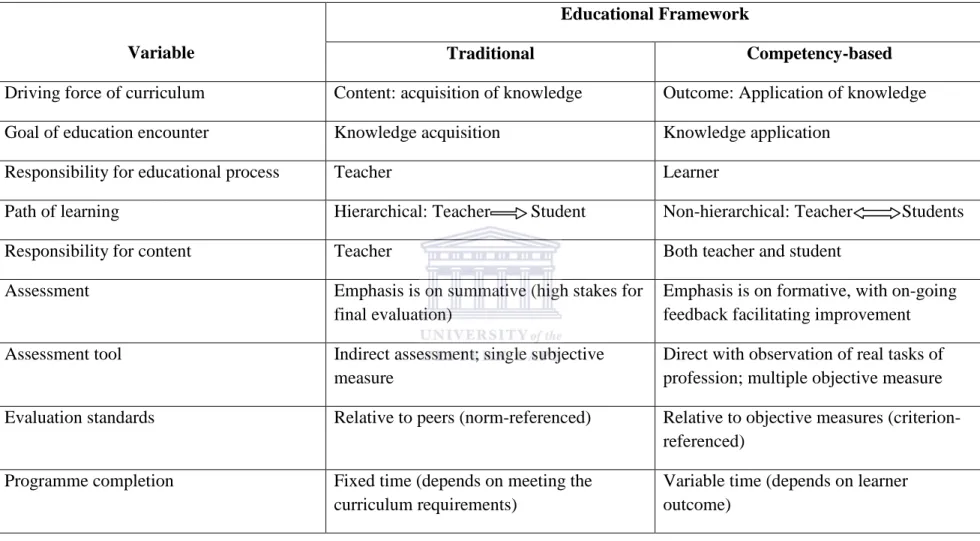
Competency-based education contrasts with the traditional educational frameworks as presented in table 2.2. The traditional and didactic frameworks define the training experience by exposure to specific contents for specified periods of time, e.g. four weeks of neonatal nursing, while the competency-based framework defines the desired outcome of training outcome driving the educational process (Carracio et al., 2002:361). Thus, the focus of the traditional and didactic educational approach is on objectives to determine cognitive achievement and what the learner should know resulting in structured problem solving. Using this approach for instruction, the student is passive while the teacher provides the learner with knowledge. In addition, Weinberger et al. (2010) observe that in traditional frameworks, assessment of the learner focuses on demonstration of knowledge acquisition with the learner striving to complete the
20
training by meeting time, process and curriculum requirements. As such, students work to understand the concepts and memorise the material, in readiness for assessments, without internalising the information for application in diverse situations (Kember, 2000:105). On the other hand, CBE focuses on competencies; what the student should be able to do (Fastre et al., 2010:518). It defines the competencies that the student must demonstrate, having mastered them at specific stages of training. Competency-based frameworks use demonstration of skills, knowledge and attitudes to evaluate performance potential of a student, thereby contributing to the preparation of competent practitioners. Thus, competency-based frameworks focus more on objectives and direct measures of whether the learner can apply what has been learnt, thereby enhancing the acquisition of essential cognitive, psychomotor and affective skills as well as continued development of skills (Anema & McCoy, 2010:7).
21
Table 2.2: A comparison of the traditional and competency-based framework (Adapted from Carricio et al., 2002).
Variable
Educational Framework
Traditional Competency-based
Driving force of curriculum Content: acquisition of knowledge Outcome: Application of knowledge Goal of education encounter Knowledge acquisition Knowledge application
Responsibility for educational process Teacher Learner
Path of learning Hierarchical: Teacher Student Non-hierarchical: Teacher Students
Responsibility for content Teacher Both teacher and student
Assessment Emphasis is on summative (high stakes for final evaluation)
Emphasis is on formative, with on-going feedback facilitating improvement Assessment tool Indirect assessment; single subjective
measure
Direct with observation of real tasks of profession; multiple objective measure Evaluation standards Relative to peers (norm-referenced) Relative to objective measures
(criterion-referenced) Programme completion Fixed time (depends on meeting the
curriculum requirements)
Variable time (depends on learner outcome)
22
In nursing education, CBE refers to an approach to instruction and assessment that emphasises the identification and measurement of specific outcomes or competencies (Tilley, 2008:59). The aim is to produce skilled nurses and midwives to ensure high quality care and patient safety. While there is an increased demand for competent and safe practitioners in the nursing and midwifery professions, Liou et al. (2013:358-359) argue that nurse education has placed more emphasis on developing students’ technical skills in the skills laboratory, to develop the proficiencies needed for clinical practice. Yet students are not adequately prepared to face the real clinical settings with confidence. This is attributed to the fact that students’ skills performance is assessed independently from the required competencies. Anema and McCoy (2010:2) observe that in CBE, assessments ensure that graduates have essential knowledge, skills and attitudes to enter the workforce and begin functioning in entry-level positions. Therefore, a competency-based approach to nursing education addresses accountability for educational outcomes and aligns workforce needs and assessment of learners’ competence.
The focus of CBE is on identifying and measuring specific learning outcomes for initial and continuing competence, done at each level of training using different approaches. The learners are expected to demonstrate competence at each level. Advancement to the next level of training is based on demonstration of appropriate competence (Weinberger et al. 2010: 752). Van der Horst and McDonald (1997:10-11) identify six critical components important in CBE which include: explicit learning outcomes with respect to the required skills and related proficiency (standards for assessment), a flexible time frame to master these skills, a variety of instructional activities to facilitate learning, criterion-referenced testing of the required outcomes, certification based on demonstrated learning outcomes and adaptable programmes to ensure optimum learner guidance. In view of this, Gruppen et al. (2012:43) stress that competency-based nursing
23
education should emphasise a holistic approach to student learning and assessment focusing on the students’ ability to use their learning experience in problem solving, performing procedures, communicating effectively and making good clinical decisions. Furthermore, pre-service nursing education should strive to assist the learner in attaining entry-level competencies through the provision of practice-based learning opportunities, promotion of individualised learning experiences and involvement of learners in performance assessment and accountability (Tilley, 2008:59). Emphasis is on practice-based learning to provide the students with opportunities to practice and internalise the skills and develop professional competence in nursing. However, Löfmark, Thorkildsen, Råholm, and Natvig (2012:165) observe a link between the practice-based learning environment and students’ clinical competence or learning outcome; in that, the absence of clinical teachers to assist the students integrate the knowledge and skills learnt in class into practice affect clinical competence. As such, clinical teachers should strive to create practice-based learning opportunities by clearly clarifying the clinical competencies, be present to guide and assess the students and provide feedback to improve clinical competence.
2.4 Conceptualising competence in neonatal nursing practice
Although emphasis has been placed on the competency approach to nursing education recently, determining which competencies are most critical, at what level they should be demonstrated and how to teach and validate them remains a challenge (Tilley, 2008:59). A search for clear and specific expectations for nurse practitioners has prompted educators to break down complex tasks involving knowledge, skills and attitudes to more specific and observable areas in practice. Fullerton et al. (2011:400) and Benner (1982:36) observe that clinical competence is not only the performance of skills but rather includes the integration of cognitive skills like clinical reasoning, critical thinking and the reflection of professional attitudes and behaviours in the delivery of
24
services. It involves unobservable attributes including values, judgemental ability and personal disposition, not only the performance by capability (Benner, 1982:34). In a quest to ensure a comprehensive clinical performance Lenburg (1999) identifies eight core competencies essential for practice, underlying the three domains which include assessment and intervention, communication, critical thinking, human caring relationships, management, leadership, teaching and knowledge integration. A competent nurse and midwife must possess these attributes, have the ability to utilise them and must strive to effectively integrate them to provide safe, effective and professional nursing care to the patient.
Similarly, the Institute of Medicine (Greiner & Knebel, 2003:259-260) in the USA, suggests core competencies which include working in interdisciplinary teams, providing patient-centred care, employing evidence-based practice, and the use of informatics and quality improvement to enable nurse practitioners in providing quality patient care. In Malawi, the Nurses and Midwives Council has identified some competencies specific to the training of nurse-midwife technicians. These include professional knowledge, skills, appropriate behaviour and attitude, collaboration, provision of comprehensive care, communication and responsibility and accountability. To attain these competencies, the learner is expected to assess the patient with sensitivity to patient differences and preferences, teaching patients and their families, and advocacy to promote and maintain health and safety. However, despite the efforts to integrate these competencies, the challenge has been the learners’ ability to transfer skills learned in one situation to another. Carracio (2009:57) attributes this to deficiencies in knowledge and/or differences in the learning environment in which the knowledge is applied and skills are practised as well as lack of consistency in the areas of competency which are being emphasised.
25
To practice safely in neonatal care, Cates and Wilson (2011:324) recommend that the practitioner must strive to acquire and maintain knowledge and skills that are central to the delivery of quality neonatal care services. The International Council for Midwives (ICM) (2010 cited by Fullerton et al., 2013: 404) identifies the neonatal nursing clinical competence to include the provision of high quality comprehensive neonatal care. Specific knowledge and skills are needed to ensure that the neonate receives the required care possible. In lieu of this, ICM identifies the basic skills to be included in the training with a high emphasis on knowledge and technical skills. However, clinical competence does not entail the acquisition of knowledge and skills but rather its application as well as attitude and critical thinking. Hence, in addition to knowledge and technical skills, the National Association of Neonatal Nurses, Canada (2010) includes interpersonal relationships, professionalism, patient management and collaboration as some of the clinical competencies required for safe and quality neonatal care services. Thus, health professionals and educators should strive to develop programmes that put emphasis on specific essential competencies based on the expected level of professional training (Ellard et al., 2012:8).
2.5 Assessment of clinical competence
The assessment of clinical competence is vital for determining the ability and readiness of health workers to provide quality services. Assessment refers to any process that appraises an individual’s knowledge, understanding, abilities or skills (Hulse, 2013:933). It is a systematic collection, review and use of information about educational programmes undertaken for the purpose of improving student learning and development (Palomba, 2001:13). Assessment aims at examining the quality of evidence generated from students’ clinical competence and to use that evidence to improve the learning of students, thereby contributing to professional standards.
26
Thus, assessment works as a tool to ensure quality training to motivate students and to direct learning. In view of this, the assessment of student clinical competence is critical to identifying areas for professional development and educational needs to ensure quality nursing education and patient care (Marshburn et al., 2009:427).
The assessment of clinical competence helps the faculty to determine whether or not students are acquiring the knowledge, skills, and values needed to enable them to provide quality patient care (Ahmad et al., 2013:33). It provides the basis for the decisions on whether the student is ready to proceed or to demonstrate competence for practice. In addition, assessment enhances the students’ learning process as the learner becomes motivated and gets involved in the identification of strategies to improve his own learning experience as well as promote self-evaluation and reflection (Joughin, 2009:13; Norton, 2007:94). For instance, through assessments students get feedback for their own learning and performance which help them to think through complex clinical situations. Furthermore, the assessment provides the teacher with information illustrating the students’ performance and informs the identification of appropriate strategies as remedial for student learning improvement (Ahmad et al., 2013:32; Oermann & Gaberson, 2009:249).
The assessment of clinical competence can either be formative or summative. Formative assessment takes place during the clinical learning process to modify teaching and learning (Emanuel, Robinson & Korczak, 2013:14). It is an important aspect in promoting student reflection and reinforcing the students’ motivation to learn as it builds on individualised learning experiences. Formative assessments provide feedback to learners about their progress in meeting the outcomes of the clinical experience or in developing the clinical competence (Cant & Cooper, 2011:41). In contrast, summative assessment takes place at the end of the clinical
27
learning process or programme to determine mastery of the skills and for accountability purposes. For instance, determining clinical grades or summarising the competencies which the student has achieved in clinical practice. This helps the teacher to make an overall judgement about the students’ competence for purposes of progression or certification.
2.5.1 Approaches to assessment of clinical competence
Clinical competence assessment approaches are strategies used for assessing learning outcomes in clinical practice. Despite the need to facilitate students’ professional development, there is no uniform or systematic approach to assessment of clinical competence, making it a challenge to measure all the attributes of clinical competence (O’Connor et al., 2009:493). Previously in the 1960s, assessment was based on a list of the student characteristics and behaviours thought to influence performance (Kirschbaum et al., 1994, cited in Oermann & Gaberson, 2009:372). Using this approach, judgements were made against course objectives which were measurable and observable. Recently, researchers have utilised various approaches to distinguish students’ level of performance. Anema and McCoy (2010:40) suggest that assessment can either be objective or performance related. According to Anema and McCoy objective assessment focuses on what learners know and comprises predetermined correct responses; for example, oral responses to questions. The focus of objective assessment is on knowledge, concepts, and basic skills in the cognitive domain. Palomba (2001:18) observes that the objective approach to assessment focuses on factual knowledge rather than higher-order thinking skills hence learners lack the ability to apply such knowledge to the real world.
On the other hand, performance related assessment focuses on what learners can do with their knowledge. It involves the assessment of critical thinking, synthesis, affective domains, and
28
psychomotor skills. Examples include simulations, portfolios, essays, journals and skills demonstrations and direct observations (Anema & McCoy, 2010:41). The assessments aim at evaluating the learners’ ability to demonstrate foundation knowledge in relation to concepts and basic skills. For example, learners will need to have foundational competency in maternal conditions affecting neonatal development in order to make clinical decisions related to providing care to neonates with congenital anomalies. This will allow the learner to rethink, revise and reflect on their work. It also provides choices for the learner in how the competence would be demonstrated. In turn, the learner can advance his/her level of competency to critically analyse what he knows, synthesise the information and apply it to different situations in the clinical setting.
An example of a performance related approach commonly used in nursing practice is objective structured clinical evaluation (OSCE) (Oranye Ahmad, Ahmad & Bakar, 2012:233-241; El-Nemer & Kandeel, 2009:1265-127). Jahan et al. (2013:94) describe OSCE as an approach to student assessment in which the clinical competence is evaluated in a comprehensive, consistent and structured manner. During OSCE students are exposed to different clinical scenarios specifically designed in a structured environment, and are expected to demonstrate their competence under these simulated conditions (Einion, 2013:893; Sharma, Chandra & Chaturvedi, 2013:299). In OSCE, teachers use direct observation to assess the students’ performance. The OSCE provides the students with opportunities to demonstrate interpersonal skills, problem solving abilities and application of basic clinical knowledge (McWilliam & Botwinski, 2012:38-39) while the teacher observes performance and records the observed skills and behaviours. OSCE has been perceived as a useful and effective method for assessing clinical competence as well as for enhancing the knowledge required for clinical work when compared to
29
other assessment approaches (Noonan, Bradshaw & Murphy-Tighe 2012:690). In addition, the approach has been effectively used in undergraduate nurse curricula to assess safe practice in terms of performance of psychomotor skills as well as the declarative and schematic knowledge associated with their application (Mitchell et al., 2009:398).
However, the approach is not as comprehensive as has been thought in assessing students’ level of clinical competence in all the domains. The approach is a form of performance-based assessment (Rouse, 2010:26-30; McWilliam & Botwinski, 2012:35-39) as well as a means for summative assessment (Einion, 2013:893) focusing more on objective assessment of knowledge and skills than most practice-based assessments. Fastre et al. (2010:518) argue that the performance-based assessment approach is task dependent and focuses on the learner’s current behaviour; what the learner can do. Student desired performance tasks are specified in advance, step by step and chronologically, describing what needs to be done to fulfill the requirements. This limits the focus and content for targeted skills as only certain components of the total skills are included for assessment. As such, not all domains may be assessed using this approach. In addition, students memorise the steps without applying critical thinking (Rouse, 2010:26-30; McWilliam & Botwinski, 2012: 35-39) making it a challenge for them to transfer the skills in diverse situations. Furthermore, the approach has been reported to generate uncertainty and stress among students with regards to objectivity (Muldoon, Biesty & Smith, 2014:468; Einion, 2013:896; Rouse, 2010:27; El-Nemer & Kandeel, 2009:1272; McWilliam & Botwinski, 2012:38). This can negatively affect the students’ performance as they may not demonstrate their capability because of the stressful environment.
In addition to OSCE, nurse educators have used the students as assessors of their own performance through self- and peer assessments. Student self-assessment refers to the process by