Quadratic Programming and Penalised
Regression
Andrew D. A. C. Smith
11 University of Bristol
Corresponding author: Andrew Smith, University of Bristol, School of Math-ematics, University Walk, Clifton, Bristol, United Kingdom BS8 1TW Running title: Quadratic programming and penalised regression
Abstract
Quadratic programming is a versatile tool for calculating estimates in
pe-nalised regression. It can be used to produce estimates based on L1
rough-ness penalties, as in total variation denoising. In particular, it can calculate
estimates when the roughness penalty is the total variation of a derivative
of the estimate. Combining two roughness penalties, the total variation and
total variation of the third derivative, results in an estimate with continuous
second derivative but controls the number of spurious local extreme values. A
multiresolution criterion may be included in a quadratic program to achieve
1
Introduction
The problem of regression remains an important aspect of statistics. It is
an appropriate way to make inferences about relationships between
vari-ables. Nonparametric regression is necessary if the relationship cannot be
explained by a small number of parameters. Even the most straightforward
case of nonparametric regression between two continuous variables is not an
easy problem, and remains far from being ‘solved’. There are many different
methods for nonparametric regression and each behaves differently in
differ-ent situations. Three broad categories are: kernel smoothing, wavelets and
penalised regression.
We will focus on nonparametric regression between continuous one-dimensional
response and explanatory variables. All of the methods described below can
be extended to the case of multi-dimensional explanatory variables. Given a
set of response observationsy1, . . . , yncorresponding to ordered observations
t1 <· · ·< tn, thought to have been generated by the signal plus noise model
yi =f(ti) +εi, i= 1, . . . , n,
we wish to find an estimate, ˆf, of the functional relationship, f, sometimes
called the signal function, between the explanatory variable t and response
variabley. The noise termsεi, fori= 1, . . . , n, are realisations of independent
random variables with zero mean.
When approaching data for the first time, it is a good idea to try several
different methods but not practical to employ every one. It is more convenient
penalised regression. This is an umbrella term for methods that add a penalty
term, which quantifies the smoothness or sparsity of the estimated signal
function, to the residual sum of squares. A penalised regression estimate is
found by minimising
1 2
n
X
i=1
(yi−fˆ(ti))2+P( ˆf , λ)
over all possible function ˆf : [t1, tn] → R. This is the sum of the resid-ual sum of squares, which represents the distance between observation and
estimate, and a roughness penalty, P, which is parameterised by a
smooth-ing parameter, λ. The smoothing parameter controls the tradeoff between
distance and roughness. The quality of the estimate is affected by the
na-ture of the roughness penalty and the norm on which it is based. Below
we will show that quadratic programming can calculate penalised regression
estimates with a variety of roughness penalties, in particular total variation
denoising estimates, which use an L1 penalty.
The quadratic program is a vector optimisation procedure that seeks to
minimise a quadratic term subject to a set of linear constraints. A general
form for a quadratic program is
minx 12xTGx−dTx subject to ATx≥b,
(1)
whered is a vector with the same dimension asx, the HessianGis a square,
symmetric matrix with number of rows equal to the dimension of x, the
with A, encodes constraints on x. This can be solved in finite time by, for
example, the numerically stable active set algorithm of Goldfarb and Idnani
(1983), which is probably the most frequently implemented algorithm for
solving quadratic programs and is therefore used in the examples below.
In many forms of penalised regression the estimate of the signal function
is defined by its values at the explanatory observations, so it is sufficient to
calculate fi = ˆf(ti) fori= 1, . . . , n.
2
Total variation denoising with higher-order
penalties
Total variation denoising is a type of penalised regression in which the
rough-ness penalty is equal to the total variation of the estimated signal function.
The total variation of a function f on the interval [t1, tn] is defined as
sup N∈N
sup
τ∈T(N)
N−1 X
i=1
|f(τi+1)−f(τi)|
where
T(N) = {τ = (τ1, . . . , τN) :t1 =τ1 <· · ·< τN =tn}.
When this is used as a roughness penalty the resulting estimate is a
piecewise-constant function that changes value only at points in a subset of t1, . . . , tn.
Therefore the total variation of the estimated signal function may be
ex-pressed as Pn−1
i=1 |fi+1−fi|. Since it employs the L1 norm in the roughness
ver-sion of the lasso estimator (Tibshirani, 1996) and it hence leads to sparse
estimates. When approaching new data it is possible that the underlying
signal function has a very simple form; sparse estimates can more easily
re-veal this. Furthermore this penalty also reduces the number of local extreme
values in the estimate (Davies and Kovac, 2001). The total variation penalty
may be extended to multi-dimensional explanatory variables, for instance in
image denoising. This was first put forward by Rudin et al. (1992), and fast
algorithms for specific penalties were developed by Chambolle (2004), and
Kovac and Smith (2011). This roughness penalty is readily extendable and
the resulting estimates may be calculated by quadratic programming.
With a one-dimensional explanatory variable, the total variation penalty
can be generalised in two ways: by extending it to higher derivatives of the
estimate, and by adding local smoothing parameters. We will construct a
roughness penalty, PTV(p), that is proportional to the total variation of the
pth derivative of the estimate. The amount of penalisation can be varied
in different locations by using a vector of local smoothing parameters λ =
(λ1, . . . , λn−p−1)T. The generalised total variation roughness penalty is
where f = (f1, . . . , fn)T,
Dn =
−1 1
−1 1 . .. ...
−1 1
is a matrix with n−1 rows and n columns, and ∆p =Tp−1Dn−p+1· · ·T1−1Dn with ∆0 =I and Tp = diag (t1+p−t1, t2+p−t2, . . . , tn−tn−p)T
.
To include this roughness penalty in a quadratic program, we must
in-troduce a vector v = (v1, . . . , vn−p−1)T of dummy variables. If v does not
appear anywhere else in the quadratic program, then PTV(p) may be included
in the quadratic program as
λT(2v−Dn−p∆pf) subject to v≥0 and v−Dn−p∆pf ≥0.
The residual sum of squares can also be generalised by including
indi-vidual non-negative weights on each observation, contained in the vector
w= (w1, . . . , wn)T. The generalised sum of squares is
Pn
i=1wi(yi−fi)
2, which
is equivalent to (y−f)TW(y−f), wherey= (y
1, . . . , yn)T andW = diag(w).
This is easily included in a quadratic program.
Therefore the estimate may be calculated with a quadratic program (1),
where xT = (fT,vT),
G=
W 0
0 0
, d=
Wy+ ∆T
pDTn−pλ
−2λ
, A=
−∆T
pDnT−p 0
I I
and b = 0. Quadratic program algorithms typically require G to be
posi-tive definite, which does not hold in the quadratic program above. We can
circumvent this problem by adding a small value to the diagonal entries of
G, for instance 1/1000 times the absolute value of the smallest non-zero
el-ement of G. This does not have a discernable effect on the outcome in any
of the examples given below. Alternatively, the quadratic program (1) has
a dual formulation (Nocedal and Wright, 1999) and in some cases the dual
Hessian matrix is positive definite. When p= 0 the dual formulation for the
quadratic program above is equivalent to the taut string algorithm (Davies
and Kovac, 2001), which is a special case of regression on a graph (Kovac
and Smith, 2011).
Figure 1 shows a sequence of estimates calculated using the quadratic
program above. The example datasets were generated by the Blocks and
Doppler functions (Donoho and Johnstone, 1994) with 500 observations in
each dataset. The explanatory observations were fixed at ti = i/500, for
i = 1, . . . ,500, and Gaussian noise, with zero mean, was added to create
noisy response variables. The standard deviation of the noise is 0.5 in the
Blocks data and 0.05 in the Doppler data. Since the standard deviation is
constant, it is appropriate to use equal weights on each observation. It is
known (Mammen and van de Geer, 1997) that an estimate based on the
roughness penalty PTV(p) will be a piecewise polynomial with continuous
(p−1)th derivative. Whenp= 0 it can be seen that the estimate is piecewise-constant, which is appropriate for the Blocks data as the signal function
is piecewise constant. However, for the Doppler data, in which the signal
p≥2 the estimates appear much smoother, and have continuous derivatives, which is much more appropriate for the Doppler data. However, the Blocks
estimates exhibit additional, unwanted local extreme values.
3
Combined roughness penalties
3.1
Combining
L
1penalties
The different qualities of different total variation roughness penalties have
advantages and disadvantages. When p = 0, and the roughness penalty is
the total variation, then it reduces the number of additional, unwanted local
extreme values. However, the estimate is piecewise-constant and therefore
does not have a smooth appearance. Whenp= 3, and the roughness penalty
is the total variation of the third derivative, then the estimated signal
func-tion is piecewise-cubic and may be considered to be smooth as it has the same
degree of differentiability as a smoothing spline estimate. However, this
esti-mate often exhibits additional local extreme values. If we have to choose one
roughness penalty then we are forced to choose between these opposing
ad-vantages. However, it is possible to combine both advantages by combining
two roughness penalties. Including the total variation prevents additional
lo-cal extremes, provided the associated smoothing parameter is not too small.
Additionally including the total variation of the third derivative causes the
estimate to have continuous second derivative, again provided the associated
smoothing parameter is not too small. The choice of smoothing parameter
● ● ● ● ● ● ● ● ● ●● ● ● ● ● ● ● ● ● ● ● ● ● ● ● ● ● ● ● ● ● ● ● ● ● ● ● ● ● ● ● ● ● ● ● ● ● ● ● ● ●● ● ● ● ● ● ● ● ● ●● ● ● ● ● ● ● ● ● ● ● ● ● ● ● ● ● ● ● ● ● ● ● ● ● ● ● ●●● ● ● ●●● ●● ● ● ● ● ● ● ●● ● ● ● ● ● ● ● ● ● ● ● ● ● ● ● ● ● ● ● ● ● ● ● ●● ● ● ● ● ● ● ● ● ● ● ● ● ● ● ● ● ● ● ● ●● ● ● ● ● ● ● ● ● ●● ● ● ● ● ● ● ● ● ● ●● ● ● ● ● ● ● ● ● ●●● ● ● ● ● ● ● ● ● ● ● ● ● ● ● ● ● ● ● ● ● ● ● ● ● ● ● ● ● ● ● ● ● ● ● ● ● ● ● ● ● ● ● ● ●● ● ● ● ● ● ● ●●● ● ● ●● ● ● ● ● ● ● ● ● ● ● ● ●● ● ● ● ●●● ● ● ● ● ● ● ● ● ● ● ●● ● ● ● ● ● ●● ● ● ● ● ●● ●● ● ● ● ● ● ● ● ● ● ● ● ●●● ●● ●●●● ● ●●● ● ● ● ● ● ● ● ● ● ● ●● ● ● ● ●● ● ● ● ● ● ● ● ● ● ● ● ● ● ● ● ● ● ● ● ● ● ●● ● ●● ● ● ● ● ● ● ●● ● ● ● ● ● ●● ● ● ● ● ● ● ●●● ● ● ● ● ● ● ● ● ● ● ● ● ● ● ● ● ● ● ● ● ● ● ● ● ● ● ● ● ● ● ● ● ● ●● ● ●● ● ● ● ●● ● ● ● ● ● ● ● ● ●● ● ● ● ● ● ● ● ● ●● ● ●● ● ● ● ● ● ● ● ● ● ● ● ● ● ● ● ● ● ● ● ● ● ● ● ● ● ● ●● ● ● ● ●● ● ● ● ● ● ● ● ● ● ● ● ● ● ● ● ● ● ● ● ● ● ●
0.0 0.2 0.4 0.6 0.8 1.0
−2 0 2 4 6 ● ● ● ● ●● ● ● ● ● ● ● ● ● ● ● ● ● ● ● ● ● ● ● ● ● ● ● ● ● ● ● ● ● ● ● ● ● ● ● ● ● ● ● ● ● ● ● ● ● ● ● ● ● ● ● ● ● ● ● ● ● ● ● ● ● ● ● ● ● ● ● ● ● ● ● ● ● ● ● ● ● ● ● ● ● ● ● ● ● ● ●● ● ● ● ●● ● ● ● ● ● ● ● ● ●● ● ● ● ● ● ● ● ● ● ● ● ● ● ● ● ● ● ● ● ● ● ● ● ● ● ● ● ● ● ● ● ● ●● ● ● ● ● ● ● ● ● ● ● ● ● ● ● ● ● ● ● ●● ● ●● ● ● ● ●● ● ●● ● ● ● ● ● ● ● ● ●● ● ● ● ● ● ● ● ● ● ● ● ● ● ● ● ● ● ● ● ● ● ● ● ● ●● ● ● ● ● ● ● ● ● ● ● ● ● ● ● ● ● ● ● ● ● ● ● ● ● ● ● ● ● ●● ● ● ● ● ● ● ● ● ● ● ● ● ● ● ●● ● ● ● ●● ● ● ● ● ● ● ● ● ● ● ● ●● ● ● ● ● ● ●● ● ● ● ● ●● ●● ● ● ● ● ● ● ●● ● ● ● ● ● ● ●● ●● ● ● ● ●● ● ● ● ●● ● ● ● ● ● ● ●● ● ● ● ●●● ● ● ● ● ● ● ● ● ● ● ● ● ● ● ● ● ● ● ● ● ●● ● ●● ● ● ● ● ● ● ●● ● ● ● ● ● ●● ● ● ● ● ●● ●●●● ● ● ● ● ● ● ● ● ● ●●● ● ● ● ● ● ● ● ● ● ● ● ● ● ● ● ● ● ● ● ● ●●● ●● ● ● ● ●● ● ● ● ● ● ● ● ● ● ● ● ● ● ● ● ● ● ● ●● ● ●● ● ● ● ● ● ● ● ● ●● ● ● ● ●● ● ● ● ● ● ● ● ● ● ● ● ●● ● ● ● ●● ● ● ● ● ● ● ● ● ● ● ● ● ● ● ● ● ● ● ● ● ● ●
0.0 0.2 0.4 0.6 0.8 1.0
−0.6 −0.4 −0.2 0.0 0.2 0.4 0.6 ● ● ● ● ● ● ● ● ● ● ● ● ● ● ● ● ● ● ● ● ● ● ● ● ● ● ● ● ● ● ● ● ● ● ● ● ● ● ● ● ● ● ● ● ● ● ● ● ● ● ●● ● ● ● ● ● ● ● ● ●● ● ● ● ● ● ● ● ● ● ● ● ● ● ● ● ● ● ● ● ● ● ● ● ● ● ● ●● ● ● ● ●●● ●● ● ● ● ● ● ● ●● ● ● ● ● ● ● ● ● ● ● ● ● ● ● ● ● ● ● ● ● ● ● ● ●● ● ● ● ● ● ● ● ● ● ● ● ● ● ● ● ● ● ● ● ●● ● ● ● ● ● ● ● ● ● ● ● ● ● ● ● ● ● ● ● ● ● ● ● ● ● ● ● ● ● ●●● ● ● ● ● ● ● ● ● ● ● ● ● ● ● ● ● ● ● ● ● ● ● ● ● ● ● ● ● ● ● ● ● ● ● ● ● ● ● ● ● ● ● ● ●● ● ● ● ● ● ● ● ● ● ● ● ●● ● ● ● ● ● ● ● ● ● ● ● ●● ● ● ● ●●● ● ● ● ● ● ● ● ● ● ● ●● ● ● ● ● ● ●● ● ● ● ● ●● ●● ● ● ● ● ● ● ● ● ● ● ● ●●● ●● ●●●● ● ●●● ● ● ● ● ● ● ● ● ● ● ●● ● ● ● ●● ● ● ● ● ● ● ● ● ● ● ● ● ● ● ● ● ● ● ● ● ● ●● ● ●● ● ● ● ● ● ● ●● ● ● ● ● ● ●● ● ● ● ● ● ● ●●● ● ● ● ● ● ● ● ● ● ● ● ● ● ● ● ● ● ● ● ● ● ● ● ● ● ● ● ● ● ● ● ● ● ●● ● ●● ● ● ● ●● ● ● ● ● ● ● ● ● ●● ● ● ● ● ● ● ● ● ●● ● ●● ● ● ● ● ● ● ● ● ●● ● ● ● ● ● ● ● ● ● ● ● ● ● ● ● ● ●● ● ● ● ●● ● ● ● ● ● ● ● ● ● ● ● ● ● ● ● ● ● ● ● ● ● ●
0.0 0.2 0.4 0.6 0.8 1.0
−2 0 2 4 6 ● ● ● ● ●● ● ● ● ● ● ● ● ● ● ● ● ● ● ● ● ● ● ● ● ● ● ● ● ● ● ● ● ● ● ● ● ● ● ● ● ● ● ● ● ● ● ● ● ● ● ● ● ● ● ● ● ● ● ● ● ● ● ● ● ● ● ● ● ● ● ● ● ● ● ● ● ● ● ● ● ● ● ● ● ● ● ● ● ● ● ●● ● ● ● ●● ● ● ● ● ● ● ● ● ●● ● ● ● ● ● ● ● ● ● ● ● ● ● ● ● ● ● ● ● ● ● ● ● ● ● ● ● ● ● ● ● ● ● ● ● ● ● ● ● ● ● ● ● ● ● ● ● ● ● ● ● ● ●● ● ●● ● ● ● ●● ● ●● ● ● ● ● ● ● ● ● ●● ● ● ● ● ● ● ● ● ● ● ● ● ● ● ● ● ● ● ● ● ● ● ● ● ●● ● ● ● ● ● ● ● ● ● ● ● ● ● ● ● ● ● ● ● ● ● ● ● ● ● ● ● ● ●● ● ●● ● ● ● ● ● ● ● ● ● ● ● ●● ● ● ● ●●● ● ● ● ● ● ● ● ● ● ● ●● ● ● ● ● ● ●● ● ● ● ● ●●●● ● ● ● ● ● ● ● ● ● ● ● ● ● ● ●● ●● ● ● ● ●● ● ● ● ●● ● ● ● ● ●● ●● ● ● ● ●●● ● ● ● ● ● ● ● ● ● ● ● ● ● ● ● ● ● ● ● ● ●● ● ●● ● ● ● ● ● ● ●● ● ● ● ● ● ●● ● ● ● ● ●● ●●●● ● ● ● ● ● ● ● ● ● ●●● ● ● ● ● ● ● ● ● ● ● ● ● ● ● ● ● ● ● ● ● ●● ● ●● ● ● ● ●● ● ● ● ● ● ● ● ● ●● ● ● ● ● ● ● ● ● ●● ● ●● ● ● ● ●● ● ● ● ●● ● ● ● ●● ● ● ● ● ● ● ● ● ● ● ● ●● ● ● ● ●● ● ● ● ● ● ● ●● ● ● ● ● ● ● ● ● ● ● ● ● ● ●
0.0 0.2 0.4 0.6 0.8 1.0
−0.6 −0.4 −0.2 0.0 0.2 0.4 0.6 ● ● ● ● ● ● ● ● ● ●● ● ● ● ● ● ● ● ● ● ● ● ● ● ● ● ● ● ● ● ● ● ● ● ● ● ● ● ● ● ● ● ● ● ● ● ● ● ● ● ●● ● ● ● ● ● ● ● ● ●● ● ● ● ● ● ● ● ● ● ● ● ● ● ● ● ● ● ● ● ● ● ● ● ● ● ● ●●● ● ● ●●● ●● ● ● ● ● ● ● ●● ● ● ● ● ● ● ● ● ● ● ● ● ● ● ● ● ● ● ● ● ● ● ● ●● ● ● ● ● ● ● ● ● ● ● ● ● ● ● ● ● ● ● ● ●● ● ● ● ● ● ● ● ● ●● ● ● ● ● ● ● ● ● ● ●● ● ● ● ● ● ● ● ● ●● ● ● ● ● ● ● ● ● ● ● ● ● ● ● ● ● ● ● ● ● ● ● ● ● ● ● ● ● ● ● ● ● ● ● ● ● ● ● ● ● ● ● ● ● ●● ● ● ● ● ● ● ● ● ● ● ● ●● ● ● ● ● ● ● ● ● ● ● ● ●● ● ● ● ●●● ● ● ● ● ● ● ● ● ● ● ●● ● ● ● ● ● ●● ● ● ● ● ●● ●● ● ● ● ● ● ● ● ● ● ● ● ● ● ● ●● ●● ● ●● ●●● ● ● ● ● ● ● ● ● ● ● ●● ● ● ● ●● ● ● ● ● ● ● ● ● ● ● ● ● ● ● ● ● ● ● ● ● ● ●● ● ●● ● ● ● ● ● ● ●● ● ● ● ● ● ●● ● ● ● ● ● ● ●●● ● ● ● ● ● ● ● ● ● ● ● ● ● ● ● ● ● ● ● ● ● ● ● ● ● ● ● ● ● ● ● ● ● ●● ● ●● ● ● ● ●● ● ● ● ● ● ● ● ● ●● ● ● ● ● ● ● ● ● ●● ● ●● ● ● ● ● ● ● ● ● ●● ● ● ● ● ● ● ● ● ● ● ● ● ● ● ● ● ●● ● ● ● ●● ● ● ● ● ● ● ● ● ● ● ● ● ● ● ● ● ● ● ● ● ● ●
0.0 0.2 0.4 0.6 0.8 1.0
−2 0 2 4 6 ● ● ● ● ●● ● ● ● ● ● ● ● ● ● ● ● ● ● ● ● ● ● ● ● ● ● ● ● ● ● ● ● ● ● ● ● ● ● ● ● ● ● ● ● ● ● ● ● ● ● ● ● ● ● ● ● ● ● ● ● ● ● ● ● ● ● ● ● ● ● ● ● ● ● ● ● ● ● ● ● ● ● ● ● ● ● ● ● ● ● ●● ● ● ● ●● ● ● ● ● ● ● ● ● ●● ● ● ● ● ● ● ●●● ● ● ● ● ● ● ● ● ● ● ● ● ● ● ● ● ● ● ● ● ● ● ● ● ● ● ● ● ● ● ● ● ● ● ● ● ● ● ● ● ● ● ● ●● ● ●● ● ● ● ●● ● ●● ● ● ● ● ● ● ● ● ● ● ● ● ● ● ● ● ● ● ● ● ● ● ● ● ● ● ● ● ● ● ● ● ● ● ●● ● ● ● ● ● ● ● ● ● ● ● ● ● ● ● ● ● ● ● ● ● ● ● ● ● ● ● ● ●● ● ● ● ● ● ● ● ● ● ● ● ● ● ● ●● ● ● ● ●●● ● ● ● ● ● ● ● ● ● ● ●● ● ● ● ● ● ●● ● ● ● ● ●●●● ● ● ● ● ● ● ●● ● ● ● ● ● ● ●● ●● ● ● ● ●● ● ● ● ●● ● ● ● ● ●● ●● ● ● ● ●●● ● ● ● ● ● ● ● ● ● ● ● ● ● ● ● ● ● ● ● ● ●● ● ●● ● ● ● ● ● ● ●● ● ● ● ● ● ●● ● ● ● ● ●● ●●●● ● ● ● ● ● ● ● ● ● ● ● ● ● ● ● ● ● ● ● ● ● ● ● ● ● ● ● ●● ● ● ● ●●● ●● ● ● ● ●● ● ● ● ● ● ● ● ● ●● ● ● ● ● ● ● ● ● ●● ● ●● ● ● ● ● ● ● ● ● ●● ● ● ● ●● ● ● ● ● ● ● ● ● ● ● ● ●● ● ● ● ●● ● ● ● ● ● ● ●● ● ● ● ● ● ● ● ● ● ● ● ● ● ●
0.0 0.2 0.4 0.6 0.8 1.0
−0.6 −0.4 −0.2 0.0 0.2 0.4 0.6 ● ● ● ● ● ● ● ● ● ●● ● ● ● ● ● ● ● ● ● ● ● ● ● ● ● ● ● ● ● ● ● ● ● ● ● ● ● ● ● ● ● ● ● ● ● ● ● ● ● ●● ● ● ● ● ● ● ● ● ●● ● ● ● ● ● ● ● ● ● ● ● ● ● ● ● ● ● ● ● ● ● ● ● ● ● ● ●●● ● ● ●●● ●● ● ● ● ● ● ● ●● ● ● ● ● ● ● ● ● ● ● ● ● ● ● ● ● ● ● ● ● ● ● ● ●● ● ● ● ● ● ● ● ● ● ● ● ● ● ● ● ● ● ● ● ●● ● ● ● ● ● ● ● ● ●● ● ● ● ● ● ● ● ● ● ●● ● ● ● ● ● ● ● ● ●●● ● ● ● ● ● ● ● ● ● ● ● ● ● ● ● ● ● ● ● ● ● ● ● ● ● ● ● ● ● ● ● ● ● ● ● ● ● ● ● ● ● ● ● ●● ● ● ● ● ● ● ●●● ● ● ●● ● ● ● ● ● ● ● ● ● ● ● ●● ● ● ● ●●● ● ● ● ● ● ● ● ● ● ● ●● ● ● ● ● ● ●● ● ● ● ● ●● ●● ● ● ● ● ● ● ● ● ● ● ● ●●● ●● ●●●● ● ●●● ● ● ● ● ● ● ● ● ● ● ●● ● ● ● ●● ● ● ● ● ● ● ● ● ● ● ● ● ● ● ● ● ● ● ● ● ● ●● ● ●● ● ● ● ● ● ● ●● ● ● ● ● ● ●● ● ● ● ● ● ● ●●● ● ● ● ● ● ● ● ● ● ● ● ● ● ● ● ● ● ● ● ● ● ● ● ● ● ● ● ● ● ● ● ● ● ●● ● ●● ● ● ● ●● ● ● ● ● ● ● ● ● ●● ● ● ● ● ● ● ● ● ●● ● ●● ● ● ● ● ● ● ● ● ● ● ● ● ● ● ● ● ● ● ● ● ● ● ● ● ● ● ●● ● ● ● ●● ● ● ● ● ● ● ● ● ● ● ● ● ● ● ● ● ● ● ● ● ● ●
0.0 0.2 0.4 0.6 0.8 1.0
−2 0 2 4 6 ● ● ● ● ●● ● ● ● ● ● ● ● ● ● ● ● ● ● ● ● ● ● ● ● ● ● ● ● ● ● ● ● ● ● ● ● ● ● ● ● ● ● ● ● ● ● ● ● ● ● ● ● ● ● ● ● ● ● ● ● ● ● ● ● ● ● ● ● ● ● ● ● ● ● ● ● ● ● ● ● ● ● ● ● ● ● ● ● ● ● ●● ● ● ● ●● ● ● ● ● ● ● ● ● ●● ● ● ● ● ● ● ● ● ● ● ● ● ● ● ● ● ● ● ● ● ● ● ● ● ● ● ● ● ● ● ● ● ●● ● ● ● ● ● ● ● ● ● ● ● ● ● ● ● ● ● ● ●● ● ●● ● ● ● ●● ● ●● ● ● ● ● ● ● ● ● ●● ● ● ● ● ● ● ● ● ● ● ● ● ● ● ● ● ● ● ● ● ● ● ● ● ●● ● ● ● ● ● ● ● ● ● ● ● ● ● ● ● ● ● ● ● ● ● ● ● ● ● ● ● ● ●● ● ● ● ● ● ● ● ● ● ● ● ● ● ● ●● ● ● ● ●● ● ● ● ● ● ● ● ● ● ● ● ●● ● ● ● ● ● ●● ● ● ● ● ●● ●● ● ● ● ● ● ● ●● ● ● ● ● ● ● ●● ●● ● ● ● ●● ● ● ● ●● ● ● ● ● ● ● ●● ● ● ● ●●● ● ● ● ● ● ● ● ● ● ● ● ● ● ● ● ● ● ● ● ● ●● ● ●● ● ● ● ● ● ● ●● ● ● ● ● ● ●● ● ● ● ● ●● ●●●● ● ● ● ● ● ● ● ● ● ●●● ● ● ● ● ● ● ● ● ● ● ● ● ● ● ● ● ● ● ● ● ●●● ●● ● ● ● ●● ● ● ● ● ● ● ● ● ● ● ● ● ● ● ● ● ● ● ●● ● ●● ● ● ● ● ● ● ● ● ●● ● ● ● ●● ● ● ● ● ● ● ● ● ● ● ● ●● ● ● ● ●● ● ● ● ● ● ● ● ● ● ● ● ● ● ● ● ● ● ● ● ● ● ●
0.0 0.2 0.4 0.6 0.8 1.0
−0.6 −0.4 −0.2 0.0 0.2 0.4 0.6
the case of semiparametric regression.
Therefore we seek to minimise
1 2
n
X
i=1
wi(yi−fi)2+PTV(0)( ˆf;λ) +PTV(3)( ˆf;λ0).
There are separate vectors of smoothing parameters: λ= (λ1, . . . , λn−1)T for
PTV(0) and λ0 = (λ01, . . . , λ
0
n−4)T for PTV(3).
As before, this minimisation problem can be written as a constrained
optimisation problem and hence as a quadratic program. In order to combine
two roughness penalties we require two vectors of dummy variables. The first,
v, has dimensionn−1 and the second, v0, has dimensionn−4. The estimate that we seek can be found by minimising the quadratic program (1), where
xT = (fT,vT,v0T),
G=
W 0 0
0 0 0
0 0 0
, d =
Wy+DT
nλ+ ∆T3DTn−3λ
0
−2λ
−2λ0
,
A=
−DT
n 0 −∆T3DnT−3 0
I 0 I 0
0 I 0 I
and b =0.
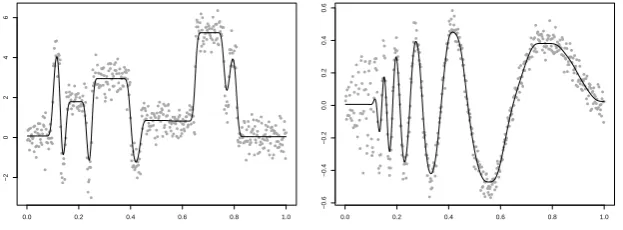
Examples of this quadratic program, using the Blocks and Doppler datasets
seen in Section 2, are given in Figure 2. The practical outcome is as good
● ● ● ● ● ● ● ● ● ●● ● ● ● ● ● ● ● ● ● ● ● ● ● ● ● ● ● ● ● ● ● ● ● ● ● ● ● ● ● ● ● ● ● ● ● ● ● ● ● ●● ● ● ● ● ● ● ● ● ●● ● ● ● ● ● ● ● ● ● ● ● ● ● ● ● ● ● ● ● ● ● ● ● ● ● ● ●●● ● ● ●●● ●● ● ● ● ● ● ● ●● ● ● ● ● ● ● ● ● ● ● ● ● ● ● ● ● ● ● ● ● ● ● ● ●● ● ● ● ● ● ● ● ● ● ● ● ● ● ● ● ● ● ● ● ●● ● ● ● ● ● ● ● ● ●● ● ● ● ● ● ● ● ● ● ●● ● ● ● ● ● ● ● ● ●●● ● ● ● ● ● ● ● ● ● ● ● ● ● ● ● ● ● ● ● ● ● ● ● ● ● ● ● ● ● ● ● ● ● ● ● ● ● ● ● ● ● ● ● ●● ● ● ● ● ● ● ●●● ● ● ●● ● ● ● ● ● ● ● ● ● ● ● ●● ● ● ● ●●● ● ● ● ● ● ● ● ● ● ● ●● ● ● ● ● ● ●● ● ● ● ● ●● ●● ● ● ● ● ● ● ● ● ● ● ● ●●● ●● ●●●● ● ●●● ● ● ● ● ● ● ● ● ● ● ●● ● ● ● ●● ● ● ● ● ● ● ● ● ● ● ● ● ● ● ● ● ● ● ● ● ● ●● ● ●● ● ● ● ● ● ● ●● ● ● ● ● ● ●● ● ● ● ● ● ● ●●● ● ● ● ● ● ● ● ● ● ● ● ● ● ● ● ● ● ● ● ● ● ● ● ● ● ● ● ● ● ● ● ● ● ●● ● ●● ● ● ● ●● ● ● ● ● ● ● ● ● ●● ● ● ● ● ● ● ● ● ●● ● ●● ● ● ● ● ● ● ● ● ● ● ● ● ● ● ● ● ● ● ● ● ● ● ● ● ● ● ●● ● ● ● ●● ● ● ● ● ● ● ● ● ● ● ● ● ● ● ● ● ● ● ● ● ● ●
0.0 0.2 0.4 0.6 0.8 1.0
−2 0 2 4 6 ● ● ● ● ●● ● ● ● ● ● ● ● ● ● ● ● ● ● ● ● ● ● ● ● ● ● ● ● ● ● ● ● ● ● ● ● ● ● ● ● ● ● ● ● ● ● ● ● ● ● ● ● ● ● ● ● ● ● ● ● ● ● ● ● ● ● ● ● ● ● ● ● ● ● ● ● ● ● ● ● ● ● ● ● ● ● ● ● ● ● ●● ● ● ● ●● ● ● ● ● ● ● ● ● ●● ● ● ● ● ● ● ● ● ● ● ● ● ● ● ● ● ● ● ● ● ● ● ● ● ● ● ● ● ● ● ● ● ●● ● ● ● ● ● ● ● ● ● ● ● ● ● ● ● ● ● ● ●● ● ●● ● ● ● ●● ● ●● ● ● ● ● ● ● ● ● ●● ● ● ● ● ● ● ● ● ● ● ● ● ● ● ● ● ● ● ● ● ● ● ● ● ●● ● ● ● ● ● ● ● ● ● ● ● ● ● ● ● ● ● ● ● ● ● ● ● ● ● ● ● ● ●● ● ● ● ● ● ● ● ● ● ● ● ● ● ● ●● ● ● ● ●● ● ● ● ● ● ● ● ● ● ● ● ●● ● ● ● ● ● ●● ● ● ● ● ●● ●● ● ● ● ● ● ● ●● ● ● ● ● ● ● ●● ●● ● ● ● ●● ● ● ● ●● ● ● ● ● ● ● ●● ● ● ● ●●● ● ● ● ● ● ● ● ● ● ● ● ● ● ● ● ● ● ● ● ● ●● ● ●● ● ● ● ● ● ● ●● ● ● ● ● ● ●● ● ● ● ● ●● ●●●● ● ● ● ● ● ● ● ● ● ●●● ● ● ● ● ● ● ● ● ● ● ● ● ● ● ● ● ● ● ● ● ●●● ●● ● ● ● ●● ● ● ● ● ● ● ● ● ● ● ● ● ● ● ● ● ● ● ●● ● ●● ● ● ● ● ● ● ● ● ●● ● ● ● ●● ● ● ● ● ● ● ● ● ● ● ● ●● ● ● ● ●● ● ● ● ● ● ● ● ● ● ● ● ● ● ● ● ● ● ● ● ● ● ●
0.0 0.2 0.4 0.6 0.8 1.0
[image:11.595.139.451.135.250.2]−0.6 −0.4 −0.2 0.0 0.2 0.4 0.6
Figure 2: Estimates based on combined roughness penalties for the Blocks (left) and Doppler (right) data. Smoothing parameters were chosen for illus-trative purposes.
PTV(3) as a roughness penalty, but neither exhibits additional, spurious local
extreme values, due to the inclusion of PTV(0) as a roughness penalty.
Also of note is the estimator obtained by combining the residual sum of
squares with two roughness penaltiesPTV(p) andPTV(p+1). This is equivalent
to a nonparametric version of the fused lasso (Tibshirani et al., 2005).
3.2
Involving
L
2penalties
The estimates above use an L1 penalty for roughness, as a nonparametric
version of the lasso. We can also involve anL2 penalty as well, expressing it,
with local smoothing parameters λ00 = (λ001, . . . , λ00n−p−1)T, as
PRR(p)( ˆf ,λ00) =kdiag(λ00)Dn−p∆pfk22.
Using this roughness penalty alone is a nonparametric version of ridge
re-gression. The minimiser of Pn
i=1wi(yi −fi) 2+P
RR(p)( ˆf ,λ00) may be found
by calculating (W + 2∆T
pDTn−pdiag(λ
00)2D
Alternatively,PRR(p)( ˆf ,λ00) can be easily added included in the quadratic
program of Section 2 by replacing W with W + 2∆TpDnT−pdiag(λ00)2Dn−p∆p
in the Hessian matrix G. Making this adjustment to the quadratic program
in Section 2 will find an estimate that minimises
n
X
i=1
wi(yi−fi)2+PTV(p)( ˆf ,λ) +PRR(p)( ˆf ,λ00).
As it combines both L1 and L2 roughness penalties, this is a nonparametric
version of the elastic net (Zou and Hastie, 2005).
4
Multiresolution
It is necessary to make an appropriate choice of smoothing parameter, and
there are several techniques for this. Commonly-used techniques designed for
the selection of a single, global, smoothing parameter are computationally
intensive when generalised to local smoothing parameters. The
multireso-lution criterion (Davies and Kovac, 2001) can be used to aid the choice of
global or local smoothing parameters, without increased complexity for local
smoothing. It acts as a test on the residuals yi−fi and judges whether they contain any systematic deviations from zero. The residuals are estimates of
the noise terms, εi, therefore if the residuals are considered to behave like
noise then the signal plus noise model is valid and the values fi are
appro-priate estimates of f(ti). If the residuals are considered to contain some of
the signal function then the estimates must be too far from the observations
sums of residuals on intervals at different scales and in different locations, and
can therefore discern specific intervals in which the smoothing parameter is
too large. Through this approach it is possible to choose local smoothing
pa-rameters that lead to appropriate, but locally varying, amounts of smoothing
in different parts of the estimate.
When the noise terms εi are assumed to be independent realisations of
a Gaussian random variable with zero mean and constant variance σ2, then
the multiresolution criterion is
Pm
i=lwi(yi−fi)
pPm i=lw2i
≤σˆp2 logn, (2)
where l = 2J−j(k −1) + 1 and m = min(2J−jk, n), for j = 0, . . . , J, where
J = dlog2ne, and k = 1, . . . ,d2j−Jne. If Pm
i=lw
2
i = 0 then the left hand
side of (2) is considered to be 0. This requires an estimate of the noise
variance that is independent of the residuals. One such estimate is based on
the median absolute deviation (MAD):
ˆ
σ= median (|yi+1√−yi|:i= 1, . . . , n−1)
2Φ−1(3/4) .
Typically, the multiresolution criterion is implemented with an
itera-tive procedure (Davies and Kovac, 2001; Davies and Meise, 2008), however,
quadratic programming allows a straightforward implementation that makes
it possible to avoid specifying a smoothing parameter but still apply an
appro-priate amount of smoothing. As the multiresolution criterion (2) is a system
pro-gram. For j = 0, . . . , J and k = 1, . . . ,d2j−Jne, we append to the columns of A the vectors Wcj,k and −Wcj,k and append tob the values
cTj,kW(y−σˆp2 lognw) and cTj,kW(−y−σˆp2 lognw),
where cj,k is a vector of appropriate dimension with ith element equal to
1 if 2J−j(k − 1) + 1 ≤ i ≤ min(2J−jk, n) and 0 otherwise. To obtain as smooth a fitted function as possible we provide the quadratic program with
a large global smoothing parameter, such that the estimate is a straight line
in the absence of multiresolution. In the presence of the linear constraints
the estimate will be the smoothest function that satisfies (2).
In the case of combined total variation penalties (Section 3.1), we provide
two global smoothing parameters λ and λ0, and have to choose the ratio
λ/λ0, specifying how much we favour a smooth estimate over controlling local extremes. This should be chosen within a range that ensures that the
estimate will be a straight line in the absence of multiresolution. The specific
value of the ratio may be chosen by cross-validation. Alternatively, a pilot
estimate may be found using total variation denoising, withp= 0, and
built-in multiresolution. The resultbuilt-ing estimate is piecewise-constant but may be
assumed to have the correct number of local extreme values. A pragmatic
approach to setting the value of λ/λ0 is to choose a ratio that gives the same number of local extreme values. In practice the specific value of this ratio
does not seem to be important; values in [0.5,2] give no discernable difference
for the examples here.
● ● ● ● ● ● ● ● ● ●● ● ● ● ● ● ● ● ● ● ● ● ● ● ● ● ● ● ● ● ● ● ● ● ● ● ● ● ● ● ● ● ● ● ● ● ● ● ● ● ●● ● ● ● ● ● ● ● ● ●● ● ● ● ● ● ● ● ● ● ● ● ● ● ● ● ● ● ● ● ● ● ● ● ● ● ● ●●● ● ● ●●● ●● ● ● ● ● ● ● ●● ● ● ● ● ● ● ● ● ● ● ● ● ● ● ● ● ● ● ● ● ● ● ● ●● ● ● ● ● ● ● ● ● ● ● ● ● ● ● ● ● ● ● ● ●● ● ● ● ● ● ● ● ● ●● ● ● ● ● ● ● ● ● ● ●● ● ● ● ● ● ● ● ● ●●● ● ● ● ● ● ● ● ● ● ● ● ● ● ● ● ● ● ● ● ● ● ● ● ● ● ● ● ● ● ● ● ● ● ● ● ● ● ● ● ● ● ● ● ●● ● ● ● ● ● ● ●●● ● ● ●● ● ● ● ● ● ● ● ● ● ● ● ●● ● ● ● ●●● ● ● ● ● ● ● ● ● ● ● ●● ● ● ● ● ● ●● ● ● ● ● ●● ●● ● ● ● ● ● ● ● ● ● ● ● ●●● ●● ●●●● ● ●●● ● ● ● ● ● ● ● ● ● ● ●● ● ● ● ●● ● ● ● ● ● ● ● ● ● ● ● ● ● ● ● ● ● ● ● ● ● ●● ● ●● ● ● ● ● ● ● ●● ● ● ● ● ● ●● ● ● ● ● ● ● ●●● ● ● ● ● ● ● ● ● ● ● ● ● ● ● ● ● ● ● ● ● ● ● ● ● ● ● ● ● ● ● ● ● ● ●● ● ●● ● ● ● ●● ● ● ● ● ● ● ● ● ●● ● ● ● ● ● ● ● ● ●● ● ●● ● ● ● ● ● ● ● ● ● ● ● ● ● ● ● ● ● ● ● ● ● ● ● ● ● ● ●● ● ● ● ●● ● ● ● ● ● ● ● ● ● ● ● ● ● ● ● ● ● ● ● ● ● ●
0.0 0.2 0.4 0.6 0.8 1.0
−2 0 2 4 6 ● ● ● ● ●● ● ● ● ● ● ● ● ● ● ● ● ● ● ● ● ● ● ● ● ● ● ● ● ● ● ● ● ● ● ● ● ● ● ● ● ● ● ● ● ● ● ● ● ● ● ● ● ● ● ● ● ● ● ● ● ● ● ● ● ● ● ● ● ● ● ● ● ● ● ● ● ● ● ● ● ● ● ● ● ● ● ● ● ● ● ●● ● ● ● ●● ● ● ● ● ● ● ● ● ●● ● ● ● ● ● ● ● ● ● ● ● ● ● ● ● ● ● ● ● ● ● ● ● ● ● ● ● ● ● ● ● ● ●● ● ● ● ● ● ● ● ● ● ● ● ● ● ● ● ● ● ● ●● ● ●● ● ● ● ●● ● ●● ● ● ● ● ● ● ● ● ●● ● ● ● ● ● ● ● ● ● ● ● ● ● ● ● ● ● ● ● ● ● ● ● ● ●● ● ● ● ● ● ● ● ● ● ● ● ● ● ● ● ● ● ● ● ● ● ● ● ● ● ● ● ● ●● ● ● ● ● ● ● ● ● ● ● ● ● ● ● ●● ● ● ● ●● ● ● ● ● ● ● ● ● ● ● ● ●● ● ● ● ● ● ●● ● ● ● ● ●● ●● ● ● ● ● ● ● ●● ● ● ● ● ● ● ●● ●● ● ● ● ●● ● ● ● ●● ● ● ● ● ● ● ●● ● ● ● ●●● ● ● ● ● ● ● ● ● ● ● ● ● ● ● ● ● ● ● ● ● ●● ● ●● ● ● ● ● ● ● ●● ● ● ● ● ● ●● ● ● ● ● ●● ●●●● ● ● ● ● ● ● ● ● ● ●●● ● ● ● ● ● ● ● ● ● ● ● ● ● ● ● ● ● ● ● ● ●●● ●● ● ● ● ●● ● ● ● ● ● ● ● ● ● ● ● ● ● ● ● ● ● ● ●● ● ●● ● ● ● ● ● ● ● ● ●● ● ● ● ●● ● ● ● ● ● ● ● ● ● ● ● ●● ● ● ● ●● ● ● ● ● ● ● ● ● ● ● ● ● ● ● ● ● ● ● ● ● ● ●
0.0 0.2 0.4 0.6 0.8 1.0
[image:15.595.140.451.135.250.2]−0.6 −0.4 −0.2 0.0 0.2 0.4 0.6
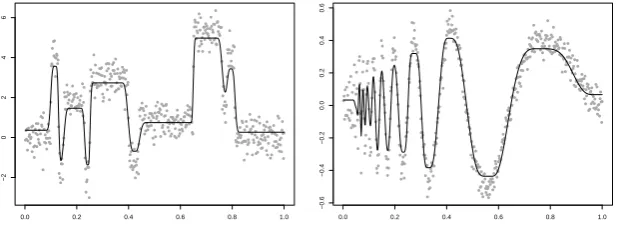
Figure 3: Estimates based on combined roughness penalties, with built-in multiresolution based on a system of 1001 intervals, for the Blocks (left) and Doppler (right) data. For each estimate λ=λ0.
program with built-in multiresolution, for the datasets in Figures 1 and 2.
Both estimates are smooth but neither exhibits additional, spurious local
ex-treme values. Furthermore the estimates were calculated without any outside
specification of the smoothing parameters. It is possible to see the effects of
local smoothing in the Doppler estimate: more smoothing has been applied
to the right-hand side of the estimate than to the left-hand side. This is
appropriate as the signal function is more slowly-varying on the right-hand
side than the left-hand side.
5
Discussion
We have seen that it is possible to find estimates based onL1 penalties
with-out having to choose smoothing parameters, and that quadratic
program-ming is a versatile tool for calculating such estimates. The most appropriate
choice of penalty or penalties depends on the qualitative nature of the signal
of penalty. For instance, the discontinuities in the Blocks data above are
evident from a scatterplot, hence it is appropriate to apply total variation as
a roughness penalty. In contrast, a scatterplot of the Doppler data shows the
signal function is continuous and therefore it is more appropriate to apply
a higher-order total variation penalty. Quadratic programming allows these
different estimates with different qualities to be calculated within the same
algorithmic framework.
If the choice of penalty is not clear beforehand, perhaps due to increased
noise in the data, then the combined penalty approach of Section 3.1 may be
used: if the signal function is smooth it can be approximated by a smooth
estimate, but if it has discontinuities it can be estimated without introducing
spurious local extreme values. This should only be used if there is no clear
information available about the nature of the signal function, which is likely
to be a rare occurence.
Estimates based onL2 penalties, such as ridge regression and the elastic
net, can also be incorporated into the quadratic program. Other penalties,
such as L0, may require a different algorithmic approach. Rippe et al. (2012)
discuss P( ˆf , λ) = λPn−1
i=1 |fi+1 −fi|
q, where q ∈ [0,1], for estimating seg-mentation (changes in the ratio of alleles) in genomic applications. When
q = 0 this estimate may be calculated iteratively without using quadratic
programming algorithms.
Unfortunately the versatility of quadratic programming must be traded
against its computational complexity. The number of calculations performed
during the algorithm of Goldfarb and Idnani (1983), for the quadratic
Kovac, 2001) can find an estimate in O(n) calculations, but only when the
roughness penalty isPTV(0). It would therefore be beneficial, as further work,
to develop a faster algorithm specifically designed for the quadratic programs
above.
References
Aldrin, M. (2004). Improved predictions penalizing both slope and
cur-vature in additive models. Comput. Stat. Data An. 50:267–284.
Chambolle, A. (2004). An algorithm for total variation minimization and
applications. J. Math. Imaging Vis. 20:89–97.
Davies, P. L., Kovac, A. (2001). Local extremes, runs, strings and
mul-tiresolution. Ann. Statist. 29:1–65.
Davies, P. L., Meise, M. (2008) Approximating data with weighted
smooth-ing splines. J. Nonparametr. Stat. 20:207–228.
Donoho, D. L., Johnstone, I. M. (1994). Ideal spatial adaptation by
wavelet shrinkage. Biometrika 81:425–455.
Goldfarb, D., Idnani, A. (1983). A numerically stable dual method for
solving strictly convex quadratic programs. Math. Program. 49:325–340.
Kovac, A., Smith, A. D. A. C. (2011) Nonparametric regression on a
graph. J. Comput. Graph. Stat. 20:432–447.
Mammen, E., van de Geer, S. (1997). Locally adaptive regression splines.
Ann. Statist. 25:387–413.
Rippe, R. C. A., Meulman, J. J., Eilers, P. H. C. (2012). Visualization of
genomic changes by segmented smoothing using an L0 penalty. PLoS ONE
Rudin, L. I., Osher, S., Fatemi, E. (1992). Nonlinear total variation based
noise removal algorithms. Physica D 60:259–268.
Nocedal, J., Wright, S. J. (1999). Numerical Optimization. New York:
Springer.
Tibshirani, R. (1996). Regression shrinkage and selection via the lasso.
J. Roy. Stat. Soc. B 58:267–288.
Tibshirani, R., Saunders, M., Rosset, S., Zhu, J., Knight, K. (2005)
Spar-sity and smoothness via the fused lasso. J. Roy. Stat. Soc. B 67:91–108.
Zou, H., Hastie, T. (2005) Regularization and variable selection via the