A Tree Kernel-based Unified Framework
for Chinese Zero Anaphora Resolution
Fang Kong Guodong Zhou
*JiangSu Provincial Key Lab for Computer Information Processing Technology
School of Computer Science and Technology Soochow University
{kongfang, gdzhou}@suda.edu.cn
* Corresponding author
Abstract
This paper proposes a unified framework for zero anaphora resolution, which can be di-vided into three sub-tasks: zero anaphor detec-tion, anaphoricity determination and antecedent identification. In particular, all the three sub-tasks are addressed using tree ker-nel-based methods with appropriate syntactic parse tree structures. Experimental results on a Chinese zero anaphora corpus show that the proposed tree kernel-based methods signifi-cantly outperform the feature-based ones. This indicates the critical role of the structural in-formation in zero anaphora resolution and the necessity of tree kernel-based methods in modeling such structural information. To our best knowledge, this is the first systematic work dealing with all the three sub-tasks in Chinese zero anaphora resolution via a unified framework. Moreover, we release a Chinese zero anaphora corpus of 100 documents, which adds a layer of annotation to the manu-ally-parsed sentences in the Chinese Treebank (CTB) 6.0.
1
Introduction
As one of the most important techniques in dis-course analysis, anaphora resolution has been a focus of research in Natural Language Processing (NLP) for decades and achieved much success in English recently (e.g. Soon et al. 2001; Ng and Cardie 2002; Yang et al. 2003, 2008; Kong et al. 2009).
However, there is little work on anaphora reso-lution in Chinese. A major reason for this
phe-nomenon is that Chinese, unlike English, is a pro-drop language, whereas in English, definite noun phrases (e.g. the company) and overt pronouns (e.g. he) are frequently employed as referring
expres-sions, which refer to preceding entities. Kim (2000) compared the use of overt subjects in English and Chinese. He found that overt subjects occupy over 96% in English, while this percentage drops to only 64% in Chinese. This indicates the prevalence of zero anaphors in Chinese and the necessity of zero anaphora resolution in Chinese anaphora reso-lution. Since zero anaphors give little hints (e.g. number or gender) about their possible antecedents, zero anaphora resolution is much more challenging than traditional anaphora resolution.
Although Chinese zero anaphora has been widely studied in the linguistics research (Li and Thompson 1979; Li 2004), only a small body of prior work in computational linguistics deals with Chinese zero anaphora resolution (Converse 2006; Zhao and Ng 2007). Moreover, zero anaphor de-tection, as a critical component for real applica-tions of zero anaphora resolution, has been largely ignored.
This paper proposes a unified framework for Chinese zero anaphora resolution, which can be divided into three sub-tasks: zero anaphor detec-tion, which detects zero anaphors from a text, ana-phoricity determination, which determines whether a zero anaphor is anaphoric or not, and antecedent identification, which finds the antecedent for an anaphoric zero anaphor. To our best knowledge, this is the first systematic work dealing with all the three sub-tasks via a unified framework. Moreover, we release a Chinese zero anaphora corpus of 100 documents, which adds a layer of annotation to the
manually-parsed sentences in the Chinese Tree-bank (CTB) 6.0. This is done by assigning ana-phoric/non-anaphoric zero anaphora labels to the null constituents in a parse tree. Finally, this paper illustrates the critical role of the structural informa-tion in zero anaphora resoluinforma-tion and the necessity of tree kernel-based methods in modeling such structural information.
The rest of this paper is organized as follows. Section 2 briefly describes the related work on both zero anaphora resolution and tree kernel-based anaphora resolution. Section 3 introduces the overwhelming problem of zero anaphora in Chi-nese and our developed ChiChi-nese zero anaphora corpus, which is available for research purpose. Section 4 presents our tree kernel-based unified framework in zero anaphora resolution. Section 5 reports the experimental results. Finally, we con-clude our work in Section 6.
2
Related Work
This section briefly overviews the related work on both zero anaphora resolution and tree kernel-based anaphora resolution.
2.1 Zero anaphora resolution
Although zero anaphors are prevalent in many lan-guages, such as Chinese, Japanese and Spanish, there only have a few works on zero anaphora resolution.
Zero anaphora resolution in Chinese
Converse (2006) developed a Chinese zero anaph-ora corpus which only deals with zero anaphanaph-ora category “-NONE- *pro*” for dropped sub-jects/objects and ignores other categories, such as “-NONE- *PRO*” for overt subjects in non-finite clauses. Besides, Converse (2006) proposed a rule-based method to resolve the anaphoric zero anaphors only. The method did not consider zero anaphor detection and anaphoric identification, and performed zero anaphora resolution using the Hobbs algorithm (Hobbs, 1978), assuming the availability of golden anaphoric zero anaphors and golden parse trees.
Instead, Zhao and Ng (2007) proposed feature-based methods to zero anaphora resolution on the same corpus from Convese (2006). However, they only considered zero anaphors with explicit noun phrase referents and discarded those with split
an-tecedents or referring to events. Moreover, they focused on the sub-tasks of anaphoricity determi-nation and antecedent identification. For zero ana-phor detection, a simple heuristic rule was employed. Although this rule can recover almost all the zero anaphors, it suffers from very low pre-cision by introducing too many false zero anaphors and thus leads to low performance in anaphoricity determination, much due to the imbalance between positive and negative training examples.
Zero anaphora resolution in Japanese
Seki et al. (2002) proposed a probabilistic model for the sub-tasks of anaphoric identification and antecedent identification with the help of a verb dictionary. They did not perform zero anaphor de-tection, assuming the availability of golden zero anaphors. Besides, their model needed a large-scale corpus to estimate the probabilities to prevent them from the data sparseness problem.
Isozaki and Hirao (2003) explored some ranking rules and a machine learning method on zero anaphora resolution. However, they assumed that zero anaphors were already detected and each zero anaphor’s grammatical case was already deter-mined by a zero anaphor detector.
Iida et al. (2006) explored a machine learning method for the sub-task of antecedent identifica-tion using rich syntactic pattern features, assuming the availability of golden anaphoric zero anaphors.
Sasano et al. (2008) proposed a fully-lexicalized probabilistic model for zero anaphora resolution, which estimated case assignments for the overt case components and the antecedents of zero ana-phors simultaneously. However, this model needed case frames to detect zero anaphors and a large-scale corpus to construct these case frames auto-matically.
For Japanese zero anaphora, we do not see any reports about zero anaphora categories. Moreover, all the above related works we can find on Japa-nese zero anaphora resolution ignore zero anaphor detection, focusing on either anaphoricity determi-nation or antecedent identification. Maybe, it is easy to detect zero anaphors in Japanese. However, it is out of the scope of our knowledge and this paper.
Zero anaphora resolution in Spanish
antecedent identification. That is, they ignored zero anaphor detection. Besides, they only dealt with zero anaphors that were in the subject position.
2.2 Tree kernel-based anaphora resolution
Although there is no research on tree kernel-based zero anaphora resolution in the literature, tree ker-nel-based methods have been explored in tradi-tional anaphora resolution to certain extent and achieved comparable performance with the domi-nated feature-based ones. One main advantage of kernel-based methods is that they are very effec-tive at reducing the burden of feature engineering for structured objects. Indeed, the kernel-based methods have been successfully applied to mine structural information in various NLP techniques and applications, such as syntactic parsing (Collins and Duffy 2001; Moschitti 2004), semantic rela-tion extracrela-tion (Zelenko et al. 2003; Zhao and Grishman 2005; Zhou et al. 2007; Qian et al. 2008), and semantic role labeling (Moschitti 2004).
Representative works in tree kernel-based anaphora resolution include Yang et al. (2006) and Zhou et al (2008). Yang et al. (2006) employed a convolution tree kernel on anaphora resolution of pronouns. In particular, a document-level syntactic parse tree for an entire text was constructed by at-taching the parse trees of all its sentences to a new-added upper node. Examination of three parse tree structures using different construction schemes (Min-Expansion, Simple-Expansion and Full-Expansion) on the ACE 2003 corpus showed promising results. However, among the three con-structed parse tree structures, there exists no obvi-ous overwhelming one, which can well cover structured syntactic information. One problem with this tree kernel-based method is that all the con-structed parse tree structures are context-free and do not consider the information outside the sub-trees. To overcome this problem, Zhou et al. (2008) proposed a dynamic-expansion scheme to auto-matically construct a proper parse tree structure for anaphora resolution of pronouns by taking predi-cate- and antecedent competitor-related informa-tion into considerainforma-tion. Besides, they proposed a context-sensitive convolution tree kernel to com-pute the similarity between the parse tree structures. Evaluation on the ACE 2003 corpus showed that the dynamic-expansion scheme can well cover
necessary structural information in the parse tree for anaphora resolution of pronouns and the con-text-sensitive convolution tree kernel much outper-formed other tree kernels.
3
Task Definition
This section introduces the phenomenon of zero anaphora in Chinese and our developed Chinese zero anaphora corpus.
3.1 Zero anaphora in Chinese
A zero anaphor is a gap in a sentence, which refers to an entity that supplies the necessary information for interpreting the gap. Figure 1 illustrates an ex-ample sentence from Chinese TreeBank (CTB) 6.0 (File ID=001, Sentence ID=8). In this example, there are four zero anaphors denoted as Фi (i=1, 2, …4). Generally, zero anaphors can be under-stood from the context and do not need to be speci-fied.
A zero anaphor can be classified into either ana-phoric or non-anaana-phoric, depending on whether it has an antecedent in the discourse. Typically, a zero anaphor is non-anaphoric when it refers to an extra linguistic entity (e.g. the first or second per-son in a conversion) or its referent is unspecified in the context. Among the four anaphors in Figure 1, zero anaphors Ф1 and Ф4 are non-anaphoric while zero anaphors Ф2 and Ф3 are anaphoric, referring to noun phrase “建筑行为/building
ac-tion” and noun phrase “新区管委会/new district
managing committee” respectively.
Figure 1: An example sentence from CTB 6.0, which contains four zero anaphors
(the example is : 为规范建筑行为,防止出现无序现象,新区管委会根据国家和上海市的有关规定,结合浦
东开发实际,及时出台了一系列规范建设市场的文件/ In order to standardize the building action and prevent the
inorder phenomenon, the standing committee of new zone annouced a series of files to standardize building market based on the related provisions of China and Shanghai in time, and the realities of the development of Pudong are
considered. )
3.2 Zero anaphora corpus in Chinese
Due to lack of an available zero anaphora corpus for research purpose, we develop a Chinese zero anaphora corpus of 100 documents from CTB 6.0, which adds a layer of annotation to the manually-parsed sentences. Hoping the public availability of this corpus can push the research of zero anaphora resolution in Chinese and other languages.
Figure 2: An example sentence annotated in CTB 6.0
ID Cate-gory Description AZAs ZAs
1 -NONE- *T*
Used in topicalization and object preposing
con-structions 6 742
2 -NONE- * Used in raising and pas-sive constructions 1 2
3 -NONE- *PRO*
Used in control structures. The *PRO* cannot be substituted by an overt constituent.
219 399
4 -NONE- *pro* for dropped subject or object. 394 449
5 -NONE- *RNR* Used for right node rais-ing (Cataphora) 0 36
[image:4.612.82.285.558.685.2]6 Others Other unknown empty categories 92 92 Total (100 documents, 35089 words) 712 1720
Table 1: Statistics on different categories of zero anaphora (AZA and ZA indicates anaphoric zero
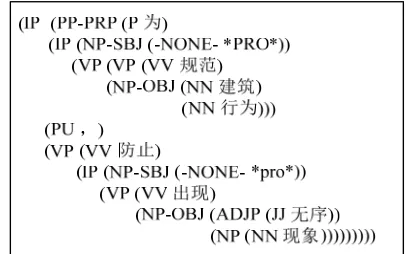
Figure 2 illustrates an example sentence anno-tated in CTB 6.0, where the special tag “-NONE-” represents a null constituent and thus the occur-rence of a zero anaphor. In our developed corpus, we need to annotate anaphoric zero anaphors using those null constituents with the special tag of “-NONE-”.
Table 1 gives the statistics on all the six catego-ries of zero anaphora. Since we do not consider zero cataphora in the current version, we simply redeem them non-anaphoric. It shows that among 1720 zero anaphors, only 712 (about 40%) are anaphoric. This suggests the importance of ana-phoricity determination in zero anaphora resolution. Table 3 further shows that, among 712 anaphoric zero anaphors, 598 (84%) are intra-sentential and no anaphoric zero anaphors have their antecedents occurring two sentences before.
Sentence distance AZAs
[image:5.612.93.271.280.331.2]0 598 1 114 >=2 0 Table 3 Distribution of anaphoric zero anaphors over
[image:5.612.91.291.515.660.2]sentence distances
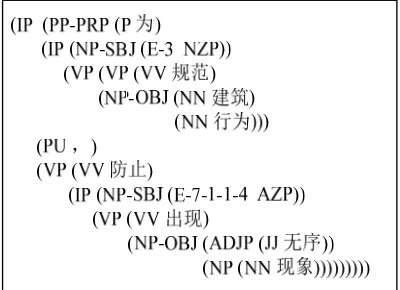
Figure 3 shows an example in our corpus corre-sponding to Figure 2. For a non-anaphoric zero anaphor, we replace the null constituent with “E-i NZA”, where i indicates the category of zero
anaphora, with “1” referring to “-NONE *T*” etc. For an anaphoric zero anaphor, we replace it with “E-x-y-z-i AZA”, where x indicates the
sen-tence id of its antecedent, y indicates the position
of the first word of its antecedent in the sentence, z
indicates the position of the last word of its antece-dent in the sentence, and i indicates the category id
of the null constituent.
Figure 3: an example sentence annotated in our corpus
4
Tree Kernel-based Framework
This section presents the tree kernel-based unified framework for all the three sub-tasks in zero anaphora resolution. For each sub-task, different parse tree structures are constructed. In particular, the context-sensitive convolution tree kernel, as proposed in Zhou et al. (2008), is employed to compute the similarity between two parse trees via the SVM toolkit SVMLight.
In the tree kernel-based framework, we perform the three sub-tasks, zero anaphor detection, ana-phoricity determination and antecedent identifica-tion in a pipeline manner. That is, given a zero anaphor candidate Z, the zero anaphor detector is first called to determine whether Z is a zero ana-phor or not. If yes, the anaana-phoricity determiner is then invoked to determine whether Z is an ana-phoric zero anaphor. If yes, the antecedent identi-fier is finally awaked to determine its antecedent. In the future work, we will explore better ways of integrating the three sub-tasks (e.g. joint learning).
4.1 Zero anaphor detection
At the first glance, it seems that a zero anaphor can occur between any two constituents in a parse tree. Fortunately, an exploration of our corpus shows that a zero anaphor always occurs just before a predicate1 phrase node (e.g. VP). This phenome-non has also been employed in Zhao and Ng (2007) in generating zero anaphor candidates. In particular, if the predicate phrase node occurs in a coordinate structure or is modified by an adverbial node, we only need to consider its parent. As shown in Fig-ure 1, zero anaphors may occur immediately to the left of规范/guide, 防止/avoid, 出现/appear, 根据 /according to, 结 合/combine, 出 台/promulgate, which cover the four true zero anaphors. Therefore, it is simple but reliable in applying above heuristic rules to generate zero anaphor candidates.
Given a zero anaphor candidate, it is critical to construct a proper parse tree structure for tree ker-nel-based zero anaphor detection. The intuition behind our parser tree structure for zero anaphor detection is to keep the competitive information
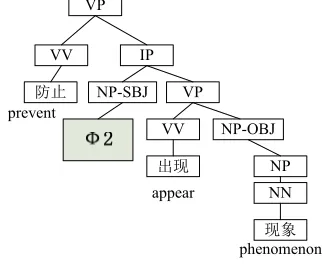
about the predicate phrase node and the zero ana-phor candidate as much as possible. In particular, the parse tree structure is constructed by first keep-ing the path from the root node to the predicate phrase node and then attaching all the immediate verbal phrase nodes and nominal phrase nodes. Besides, for the sub-tree rooted by the predicate phrase node, we only keep those paths ended with verbal leaf nodes and the immediate verbal and nominal nodes attached to these paths. Figure 4 shows an example of the parse tree structure corre-sponding to Figure 1 with the zero anaphor candi-date Φ2 in consideration.
[image:6.612.344.505.149.281.2]During training, if a zero anaphor candidate has a counterpart in the same position in the golden standard corpus (either anaphoric or non-anaphoric), a positive instance is generated. Oth-erwise, a negative instance is generated. During testing, each zero anaphor candidate is presented to the learned zero anaphor detector to determine whether it is a zero anaphor or not. Besides, since a zero anaphor candidate is generated when a predi-cate phrase node appears, there may be two or more zero anaphor candidates in the same position. However, there is normally one zero anaphor in the same position. Therefore, we just select the one with maximal confidence as the zero anaphor in the position and ignore others, if multiple zero anaphor candidates occur in the same position.
Figure 4: An example parse tree structure for zero ana-phor detection with the predicate phrase node and the
zero anaphor candidate Φ2 in black
4.2 Anaphoricity determination
To determine whether a zero anaphor is anaphoric or not, we limit the parse tree structure between the
previous predicate phrase node and the following predicate phrase node. Besides, we only keep those verbal phrase nodes and nominal phrase nodes. Figure 5 illustrates an example of the parse tree structure for anaphoricity determination, corre-sponding to Figure 1 with the zero anaphor Φ2 in consideration.
VP
IP VV
防止 NP-SBJ VP
NN NP-OBJ
出现 NP
现象
VV prevent
appear
phenomenon
Figure 5: An example parse tree structure for anaphoric-ity determination with the zero anaphor Φ2 in
consid-eration
4.3 Antecedent identification
To identify an antecedent for an anaphoric zero anaphor, we adopt the Dynamic Expansion Tree, as proposed in Zhou et al. (2008), which takes predicate- and antecedent competitor-related in-formation into consideration. Figure 6 illustrates an example parse tree structure for antecedent identi-fication, corresponding to Figure 1 with the
ana-phoric zero anaphor Φ 2 and the antecedent
[image:6.612.110.265.425.589.2]candidate “建筑行为/building action” in consid-eration.
Figure 6: An example parse tree structure for antecedent identification with the anaphoric zero anaphor Φ2 and the antecedent candidate “建筑行为/building action” in
consideration
[image:6.612.317.536.493.615.2]Be-sides, since all the anaphoric zero anaphors have their antecedents at most one sentence away, we only consider antecedent candidates which are at most one sentence away. In particular, a document-level parse tree for an entire document is con-structed by attaching the parse trees of all its sen-tences to a new-added upper node, as done in Yang et al. (2006), to deal with inter-sentential ones.
5
Experimentation and Discussion
We have systematically evaluated our tree kernel-based unified framework on our developed Chi-nese zero anaphora corpus, as described in Section 3.2. Besides, in order to focus on zero anaphor resolution itself and compare with related work, all the experiments are done on golden parse trees provided by CTB 6.0. Finally, all the performances are achieved using 5-fold cross validation.
5.1 Experimental results
Zero anaphor detection
Table 4 gives the performance of zero anaphor de-tection, which achieves 70.05%, 83.24% and 76.08 in precision, recall and F-measure, respectively. Here, the lower precision is much due to the simple heuristic rules used to generate zero anaphors can-didates. In fact, the ratio of positive and negative instances reaches about 1:12. However, this ratio is much better than that (1:30) using the heuristic rule as described in Zhao and Ng (2007). It is also worth to point out that lower precision higher re-call is much beneficial than higher precision lower recall as higher recall means less filtering of true zero anaphors and we can still rely on anaphoricity determination to filter out those false zero phors introduced by lower precision in zero ana-phor detection.
P% R% F 70.05 83.24 76.08
Table 4: Performance of zero anaphor detection
Anaphoricity determination
Table 5 gives the performance of anaphoricity de-termination. It shows that anaphoricity determina-tion on golden zero anaphors achieves very good performance of 89.83%, 84.21% and 86.93 in pre-cision, recall and F-measure, respectively, although useful information, such as gender and number, is not available in anaphoricity determination. This
indicates the critical role of the structural informa-tion in anaphoricity determinainforma-tion of zero anaphors. It also shows that anaphoricity determination on automatic zero anaphor detection achieves 77.96%, 53.97% and 63.78 in precision, recall and F-measure, respectively. In comparison with ana-phoricity determination on golden zero anaphors, anaphoricity determination on automatic zero ana-phor detection lowers the performance by about 23 in F-measure. This indicates the importance and the necessity for further research in zero anaphor detection.
P% R% F
golden zero anaphors 89.83 84.21 86.93 zero anaphor detection 77.96 53.97 63.78 Table 5: Performance of anaphoricity determination
Antecedent identification
Table 6 gives the performance of antecedent iden-tification given golden zero anaphors. It shows that antecedent identification on golden anaphoric zero anaphors achieves 88.93%, 68.36% and 77.29 in precision, recall and F-measure, respectively. It also shows that antecedent identification on auto-matic anaphoricity determination achieves 80.38%, 47.28% and 59.24 in precision, recall and F-measure, respectively, with a decrease of about 8% in precision, about 21% in recall and about 18% in F-measure, in comparison with antecedent identifi-cation on golden anaphoric zero anaphors. This indicates the critical role of anaphoricity determi-nation in antecedent identification.
P% R% F
golden anaphoric zero
ana-phors 88.90 68.36 77.29 anaphoricity determination 80.38 47.28 59.54 Table 6: Performance of antecedent identification given
golden zero anaphors
Overall: zero anaphora resolution
P% R% F 77.66 31.74 45.06
Table 7: Performance of zero anaphora resolution
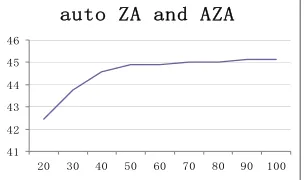
Figure 7 shows the learning curve of zero anaphora resolution with the increase of the num-ber of the documents in experimentation, with the horizontal axis the number of the documents used and the vertical axis the F-measure. It shows that the F-measure is about 42.5 when 20 documents are used in experimentation. This figure increases very fast to about 45 when 50 documents are used while further increase of documents only slightly improves the performance.
auto ZA and AZA
41 42 43 44 45 46
[image:8.612.111.263.240.330.2]20 30 40 50 60 70 80 90 100
Figure 7: Learning curve of zero anaphora resolution over the number of the documents in experimentation
Table 8 shows the detailed performance of zero anaphora resolution over different sentence dis-tance between a zero anaphor and its antecedent. It is expected that both the precision and the recall of intra-sentential resolution are much higher than those of inter-sentential resolution, largely due to the much more dependency of intra-sentential an-tecedent identification on the parse tree structures.
Sentence distance P% R% F 0 85.12 33.28 47.85 1 46.55 23.64 31.36
[image:8.612.80.289.463.511.2]2 - - -
Table 8: Performance of zero anaphora resolution over sentence distances
Table 9 shows the detailed performance of zero anaphora resolution over the two major zero anaphora categories, NONE- *PRO*” and “-NONE- *pro*”. It shows that our tree kernel-based framework achieves comparable performance on them, both with high precision and low recall. This is in agreement with the overall performance.
ID Category P% R% F
3 -NONE- *PRO* 79.37 34.23 47.83 4 -NONE- *pro* 77.03 30.82 44.03 Table 9: Performance of zero anaphora resolution over
major zero anaphora categories
5.2 Comparison with previous work
As a representative in Chinese zero anaphora reso-lution, Zhao and Ng (2007) focused on anaphoric-ity determination and antecedent identification using feature-based methods. In this subsection, we will compare our tree kernel-based framework with theirs in details.
Corpus
Zhao and Ng (2007) used a private corpus from Converse (2006). Although their corpus contains 205 documents from CBT 3.0, it only deals with the zero anaphors under the zero anaphora cate-gory of “-NONE- *pro*” for dropped sub-jects/objects. Furthermore, Zhao and Ng (2007) only considered zero anaphors with explicit noun phrase referents and discarded zero anaphors with split antecedents (i.e. split into two separate noun phrases) or referring to entities. As a result, their corpus is only about half of our corpus in the num-ber of zero anaphors and anaphoric zero anaphors. Besides, our corpus deals with all the types of zero anaphors and all the categories of zero anaphora except zero cataphora.
Method
Zhao and Ng (2007) applied feature-based methods on anaphoricity determination and antecedent iden-tification with most of features structural in nature. For zero anaphor detection, they used a very sim-ple heuristic rule to generate zero anaphor candi-dates. Although this rule can recover almost all the zero anaphors, it suffers from very low precision by introducing too many false zero anaphors and thus may lead to low performance in anaphoricity determination, much due to the imbalance between positive and negative training examples with the ratio up to about 1:30.
In comparison, we propose a tree kernel-based unified framework for all the three sub-tasks in zero anaphora resolution. In particular, different parse tree structures are constructed for different sub-tasks. Besides, a context sensitive convolution tree kernel is employed to directly compute the similarity between the parse trees.
Table 10 gives the performance of the feature-based method, as described in Zhao and Ng (2007), in anaphoricity determination on our developed corpus. In comparison with the tree kernel-based method in this paper, the feature-based method performs about 16 lower in F-measure, largely due to the difference in precision (63.61% vs 89.83%), when golden zero anaphors are given. It also shows that, when our tree kernel-based zero ana-phor detector is employed2, the feature-based method gets much lower precision with a gap of about 31%, although it achieves slightly higher recall.
P% R% F
golden zero anaphors 63.61 79.71 70.76 zero anaphor detection 46.17 57.69 51.29 Table 10: Performance of the feature-based method (Zhao and Ng 2007) in anaphoricity determination on
our developed corpus
P% R% F
golden anaphoric zero ana-phors
77.45 51.97 62.20
golden zero anaphpors and feature-based anaphoricity determination
75.17 29.69 42.57
overall: tree kernel-based zero anaphor detection and feature-based anaphoricity determination
70.67 23.64 35.43
Table 11: Performance of the feature-based method (Zhao and Ng 2007) in antecedent identification on our
developed corpus
Table 11 gives the performance of the feature-based method, as described in Zhao and Ng (2007), in antecedent identification on our developed cor-pus. In comparison with our tree kernel-based method, it shows that 1) when using golden ana-phoric zero anaphors, the feature-based method performs about 11%, 17% and 15 lower in preci-sion, recall and F-measure, respectively; 2) when golden zero anaphors are given and feature-based anaphoricity determination is applied, the feature-based method performs about 5%, 18% and 17 lower in precision, recall and F-measure, respec-tively; and 3) when tree kernel-based zero anaphor detection and feature-based anaphoricity determi-nation are applied, the feature-based method
2 We do not apply the simple heuristic rule, as adopted in Zhao and Ng (2007), in zero anaphor detection, due to its much lower performance, for fair comparison on the other two sub-tsaks..
forms about 7%, 8% and 10 lower in precision, recall and F-measure, respectively.
In summary, above comparison indicates the critical role of the structural information in zero anaphora resolution, given the fact that most of features in the feature-based methods in Zhao and Ng (2007) are also structural, and the necessity of tree kernel methods in modeling such structural information, even if more feature engineering in the feature-based methods may improve the per-formance to a certain extent.
6
Conclusion and Further Work
This paper proposes a tree kernel-based unified framework for zero anaphora resolution, which can be divided into three sub-tasks: zero anaphor de-tection, anaphoricity determination and antecedent identification.
The major contributions of this paper include: 1) We release a wide-coverage Chinese zero anaphora corpus of 100 documents, which adds a layer of annotation to the manually-parsed sentences in the Chinese Treebank (CTB) 6.0. 2) To our best knowledge, this is the first systematic work dealing with all the three sub-tasks in Chinese zero anaph-ora resolution via a unified framework. 3) Em-ployment of tree kernel-based methods indicates the critical role of the structural information in zero anaphora resolution and the necessity of tree kernel methods in modeling such structural information.
In the future work, we will systematically evalu-ate our framework on automatically-generevalu-ated parse trees, construct more effective parse tree structures for different sub-tasks of zero anaphora resolution, and explore joint learning among the three sub-tasks.
Besides, we only consider zero anaphors driven by a verb predicate phrase node in this paper. In the future work, we will consider other situations. Actually, among the remaining 7% zero anaphors, about 5% are driven by a preposition phrase (PP) node, and 2% are driven by a noun phrase (NP) node. However, our preliminary experiments show that simple inclusion of those PP-driven and NP-driven zero anaphors will largely increase the im-balance between positive and negative instances, which significantly decrease the performance.
Acknowledgments
This research was supported by Projects 60873150, 90920004 and 61003153 under the National Natu-ral Science Foundation of China.
References
S. Converse. 2006. Pronominal Anaphora Resolution in Chinese. Ph.D. Thesis, Department of Computer and
Information Science. University of Pennsylvania. M. Collins and N. Duffy. 2001. Convolution kernels for
natural language. NIPS’2001:625-632.
A. Ferrandez and J. Peral. 2000. A computational ap-proach to zero-pronouns in Spanish.
ACL'2000:166-172.
R. Iida, K. Inui, and Y. Matsumoto. 2006. Exploiting syntactic patterns as clues in zero-anaphora resolu-tion. COLING-ACL'2006:625-632
H. Isozaki and T. Hirao. 2003. Japanese zero pronoun resolution based on ranking rules and machine learning. EMNLP'2003:184-191
F. Kong, G.D. Zhou and Q.M. Zhu. 2009 Employing the Centering Theory in Pronoun Resolution from the Semantic Perspective. EMNLP’2009: 987-996 C. N. Li and S. A. Thompson. 1979. Third-person
pro-nouns and zero-anaphora in Chinese discourse.
Syn-tax and Semantics, 12:311-335.
W. Li. 2004. Topic chains in Chinese discourse.
Dis-course Processes, 37(1):25-45.
A. Moschitti. 2004. A Study on Convolution Kernels for Shallow Semantic Parsing, ACL’2004.
L.H. Qian, G.D. Zhou, F. Kong, Q.M. Zhu and P.D. Qian. 2008. Exploiting constituent dependencies for tree kernel-based semantic relation extraction.
COLING’2008:697-704
K. Seki, A. Fujii, and T. Ishikawa. 2002. A probabilistic method for analyzing Japanese anaphora intergrat-ing zero pronoun detection and resolution.
COLING'2002:911-917
R. Sasano. D. Kawahara and S. Kurohashi. 2008. A fully-lexicalized probabilistic model for Japanese zero anaphora resolution. COLING'2008:769-776
W.M. Soon, H.T. Ng and D. Lim. 2001. A machine learning approach to coreference resolution of noun phrase. Computational Linguistics, 2001,
27(4):521-544.
V. Ng and C. Cardie 2002. Improving machine learning approaches to coreference resolution. ACL’2002: 104-111
X.F. Yang, G.D. Zhou, J. Su and C.L. Chew. 2003. Coreference Resolution Using Competition Learning Approach. ACL’2003:177-184
X.F. Yang, J. Su and C.L. Tan 2008. A Twin-Candidate Model for Learning-Based Anaphora Resolution. Computational Linguistics 34(3):327-356
N. Xue, F. Xia, F.D. Chiou and M. Palmer. 2005. The Penn Chinese TreeBank: Phrase structure annotation of a large corpus. Natural Language Engineering,
11(2):207-238.
X.F. Yang, J. Su and C.L. Tan. 2006. Kernel-based pronoun resolution with structured syntactic knowl-edge. COLING-ACL'2006:41-48.
D. Zelenko, A. Chinatsu and R. Anthony. 2003. Kernel methods for relation extraction. Journal of Machine
Learning Research, 3(2003):1083-1106
S. Zhao and H.T. Ng. 2007. Identification and Resolu-tion of Chinese Zero Pronouns: A Machine Learning Approach. EMNLP-CoNLL'2007:541-550.
S. Zhao and R. Grishman. 2005. Extracting relations with integrated information using kernel methods.
ACL’2005:419-426
G.D. Zhou, F. Kong and Q.M. Zhu. 2008. Context-sensitive convolution tree kernel for pronoun resolu-tion. IJCNLP'2008:25-31
G.D. Zhou, M. Zhang, D.H. Ji and Q.M. Zhu. 2007.
Tree kernel-based relation extraction with context-sensitive structured parse tree information.