COMPEX CULTURE
Cara L. Evans
A Thesis Submitted for the Degree of PhD at the
University of St Andrews
2016
Full metadata for this item is available in St Andrews Research Repository
at:
http://research-repository.st-andrews.ac.uk/
Please use this identifier to cite or link to this item: http://hdl.handle.net/10023/9756
EMPIRICAL INVESTIGATIONS OF SOCIAL
LEARNING, COOPERATION, AND THEIR ROLE IN
THE EVOLUTION OF COMPLEX CULTURE
Cara L. Evans
I, Cara Evans, hereby certify that this thesis, which is approximately 58,000 words in
length, has been written by me, and that it is the record of work carried out by me, or
principally by myself in collaboration with others as acknowledged, and that it has not
been submitted in any previous application for a higher degree.
I was admitted as a research student in April 2012 and as a candidate for the degree of
Ph.D. in April 2016; the higher study for which this is a record was carried out in the
University of St Andrews between 2012 and 2016.
Date: 22/04/16 Signature of candidate:
Supervisor’s declaration:
I hereby certify that the candidate has fulfilled the conditions of the Resolution and
Regulations appropriate for the degree of Ph.D. in the University of St Andrews and
that the candidate is qualified to submit this thesis in application for that degree.
permission for it to be made available for use in accordance with the regulations of the
University Library for the time being in force, subject to any copyright vested in the
work not being affected thereby. I also understand that the title and the abstract will
be published, and that a copy of the work may be made and supplied to any bona fide
library or research worker, that my thesis will be electronically accessible for personal
or research use unless exempt by award of an embargo as requested below, and that
the library has the right to migrate my thesis into new electronic forms as required to
ensure continued access to the thesis. I have obtained any third-party copyright
permissions that may be required in order to allow such access and migration, or have
requested the appropriate embargo below.
The following is an agreed request by candidate and supervisor regarding the print
and electronic publication of this thesis:
No embargo on print copy. No embargo on electronic copy.
Date: 22/04/16 Signature of candidate:
Signature of supervisor:
Chapter 3
Dr. Rachel Kendal provided feedback on the experimental design and interpretation of the results. Prof. Malinda Carpenter provided advice on the interpretation of the
results. Shilpa Jujjavarapu double-coded video data for use in tests of inter-observer reliability. All other work was carried out by myself.
Chapter 4
Shilpa Jujjavarapu double-coded video data for use in tests of inter-observer
reliability. Dr. Michal Arbilly, Camille Troisi and Riva Riley acted as experimental confederates. All other work was carried out by myself.
Chapter 5
Dr. Tom Morgan provided assistance with the implementation of custom-made
I am privileged to have spent the last few years here in St Andrews. It really was the best place for me to undertake a PhD, and for that I will always be indebted to my supervisor, Kevin Laland. Thank you for your support, your kindness, for re-introducing me to whisky after I had long given up on it, and for being lots of fun.
I am also very grateful to Rachel Kendal. Rachel’s enthusiasm for discussing science, her warm welcome and encouragement, are what began my journey here to St Andrews, and I am thankful for her continued advice. Malinda Carpenter has provided invaluable guidance and feedback on the work presented in Chapter 3. I have already learned so much from Malinda, despite only having recently begun working with her.
Within the St Andrews community, it has been a pleasure to meet many wonderful colleagues and friends – too many for me to thank each individually. I was particularly fortunate to belong to a great group of office mates, both in the Bute building (never forgotten!) and then later in the HMB, whom I especially wish to thank: To Laura, Laurel, Tom, Alice, Camille, Riva, Sally, Andrew, James, Elena and Murillo – thank you for putting up with me! It wouldn’t have been the same here without you.
Many thanks also go to Michal Arbilly, Camille Troisi and Riva Riley, who, in giving up way too much of their time to help with experiments, were willing to reveal their secret talent for acting. I am also indebted to Tom Morgan, who takes all credit for ensuring my brain was not lost somewhere on the Java ‘heap’.
The work presented in this thesis was supported by an ERC grant awarded to Kevin Laland and by a BBSRC studentship awarded to me. I am also grateful to Katherine Meacham, who helped prevent many an administrative disaster.
There is something unique about human culture. Its complex technologies, customs,
institutions, symbolisms and norms, which are shared and maintained and improved
across countless generations, are what sets it apart from the ‘cultures’ of other
animals. The fundamental question that researchers are only just beginning to unravel
is: How do we account for the gap between their ‘cultures’ and ours? The answer lies
in a deeper understanding of culture’s complex constituent components: from the
micro-level psychological mechanisms that guide and facilitate accurate social
learning, to the macro-level cultural processes that unfold within large-scale
cooperative groups. This thesis attempts to contribute to two broad themes that are of
relevance to this question. The first theme involves the evolution of accurate and
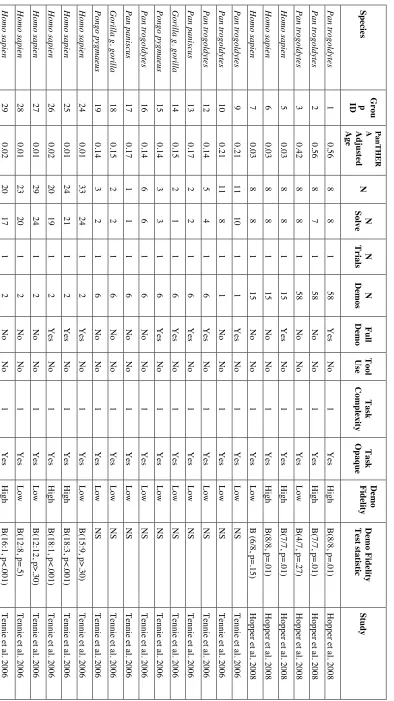
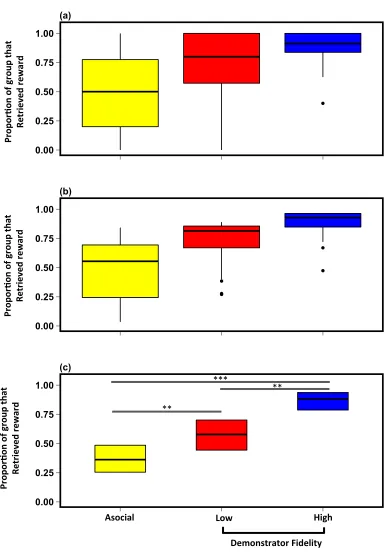
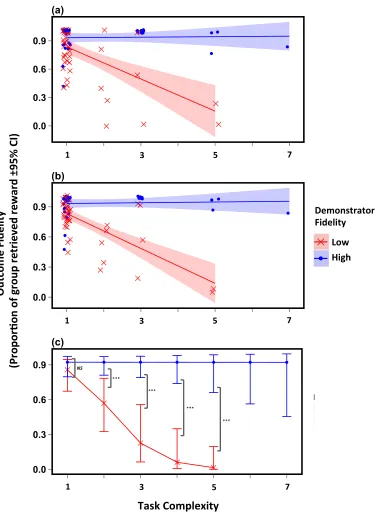
high-fidelity cultural transmission. In Chapter 2, a meta-analysis conducted across
primate social learning studies finds support for the common assumption that
imitative and/or emulative learning mechanisms are required for the high-fidelity
transmission of complex instrumental cultural goals. Chapter 3, adopting an
experimental study with young children, then questions the claim that mechanisms of
high-fidelity copying have reached such heights in our own species that they will even
lead us to blindly copy irrelevant, and potentially costly, information. The second
theme involves investigations of the mutually reinforcing relationship predicted
between cultural complexity and ultra-cooperativeness in humans, employing a series
of laboratory-based experimental investigations with adults. Chapter 4 finds only
limited support for a positive relationship between cooperative behaviour and
behavioural imitation, which is believed to facilitate cultural group cohesion. Finally,
Chapter 5 presents evidence suggesting that access to cultural information is
Chapter 1 - General Introduction ... 1
1.1. Human culture and animal ‘culture’ ... 2
1.2. Social learning mechanisms ... 5
1.3. High-fidelity social transmission ... 10
1.4. Strategic and biased social learning ... 21
1.5. Large-scale human interaction, cooperation and culture ... 25
1.6. Summary ... 31
Chapter 2 - High-Fidelity Social Transmission: A Meta-Analysis of
Social Learning Studies Across Primate Species ... 34
2.1. Introduction ... 36
2.2. Materials and Methods ... 41
2.2.1. Search protocol ... 41
2.2.2. Inclusion criteria ... 42
2.2.3. Data extraction ... 43
2.2.4. Dataset summary ... 48
2.3. Analysis ... 56
2.3.1. Preliminary analysis ... 56
2.3.2. Main analysis ... 57
2.3.3. Model fit and diagnostics ... 58
2.3.4. Representation and robustness of results ... 59
2.3.5. Phylogenetic signal ... 60
2.4. Results ... 62
2.4.1. Preliminary analysis: asocial versus social learning ... 62
2.4.2. Main analysis: Demonstrator fidelity and task complexity ... 65
2.4.3. Phylogenetic signal ... 72
2.4. Discussion ... 73
Chapter 3 - Selective Copying and ‘Over-Imitation’: An
Experimental Investigation in Young Children ... 80
3.1. Introduction ... 82
3.2. Methods ... 87
3.2.1. Participants ... 87
3.2.2. Apparatus ... 88
3.2.3. Design ... 89
3.2.4. Procedure ... 91
3.2.5. Coding and inter-observer reliability ... 93
3.3. Analysis ... 94
3.4. Results ... 95
3.4.1. Copying when the demonstrators were unanimous ... 95
3.4.2. Majority-biased copying ... 97
3.4.3. Demonstrator unanimity and copying persistence across trials ... 99
3.5. Discussion ... 106
Chapter 4 - Cooperation and Imitation: A Series of Experimental
Investigations in Adults ... 112
4.1. Introduction ... 114
4.2.1.3. Design ... 119
4.2.1.4. Procedure ... 120
4.2.1.5. Coding and analysis ... 122
4.2.2. Results ... 123
4.2.3. Discussion ... 125
4.3. Experiment 2 ... 126
4.3.1. Methods ... 127
4.3.1.1. Participants ... 127
4.3.1.2. Design and procedure ... 128
4.3.1.3. Coding and analysis ... 129
4.3.2. Results ... 129
4.2.3. Discussion ... 131
4.3. Experiment 3 ... 133
4.3.1. Methods ... 134
4.3.1.1. Participants ... 134
4.3.1.2. Imitation measure ... 135
4.3.1.3. Design ... 136
4.3.1.4. Procedure ... 136
4.3.1.5. Data coding and analysis ... 139
4.3.2. Results ... 139
4.4. General Discussion ... 141
Chapter 5 - The Interaction Between Cooperation and Cultural
Learning: An Experimental Investigation in Adults ... 145
5.1. Introduction ... 147
5.2. Methods ... 153
5.2.1. Participants and materials ... 153
5.2.2. Computer games ... 153
5.2.3. Design ... 158
5.2.4. Procedure ... 163
5.3. Analyses ... 163
5.4. Results ... 165
5.4.1. Contributions to the public goods game ... 165
5.4.2. Information transfers ... 166
5.4.3. Public goods contributions and information transfers ... 167
5.4.4. Performance on the learning task ... 170
5.4.5. Performance on the learning task and decisions to share information ... 174
5.4.6. Total game-round payoff ... 175
5.5 Discussion ... 177
Chapter 6 - General Discussion ... 183
6.1. Summary of findings ... 184
6.2. Broader considerations ... 189
6.3. Further work ... 196
6.4. Conclusions ... 199
Chapter 1
1.1. Human culture and animal ‘culture’
Culture sets human beings apart from the rest of the animal kingdom. Because culture
is underpinned by social learning, human cultural processes are able to modify
cognition and behaviour, bring about environmental change, and accumulate
increasingly complex modifications, over a far shorter timeframe than genetic or
individual-driven change (Laland & Janik, 2006; Thompson et al., 2016; Tomasello,
1999). Social learning, broadly defined, refers to ‘learning that is facilitated by
observation of, or interaction with, another individual, or its products’ (Hoppitt &
Laland, 2013, p4). Behavioural patterns implicating social learning have also been
identified across a range of non-human animals – notably fish, cetaceans, primates,
birds and insects – but there is little consensus regarding which, or what, if any,
socially transmitted behaviours in other species should be regarded as culture (Laland
& Hoppitt, 2003; Price et al., 2010; Leadbeater & Chittka, 2007).
The relative abundance or scarcity of culture in nature ultimately depends on
where we etch culture’s boundaries. At one extreme, culture becomes the exclusive
domain of Homo sapiens, replete with language, teaching and symbolism (e.g., Tuttle,
2001). At the other, culture might be any inherited group level differences in
behaviour that are not attributable to genetic variation; a definition that encompasses a
wide range of species, including some bacteria (Lumsden & Wilson, 1981).
Throughout this thesis I employ a broad and inclusive definition of culture, requiring
only that ‘group-typical patterns of behaviour’ exhibit evidence of ‘socially learned or
transmitted information’ to be considered cultural (Hoppitt & Laland, 2013, p4).
Whether or not we allow other species the accolade of ‘culture’, many
evolutionary minded scientists now accept that the so-called ‘proto-cultures’ or
exhibit some semblance to human culture (Whiten et al., 1999; van Schaik et al.,
2003; Laland & Janik, 2006). Assuming the broad and inclusive definition of culture
deployed above, there is now good evidence for culture in the chimpanzee (Hobaiter
et al., 2014; see Lonsdorf, 2006, for further support), humpback whales (Allen et al.,
2013; Garland et al., 2011; Noad et al., 2000), at least two species of birds (Slagsvold
& Wiebe, 2007; see also Aplin et al., 2015), and fishes (Helfman & Schultz, 1984;
Warner, 1988). It is likely that a growing list of taxa that can be said to exhibit
‘cultural’ behaviour will soon emerge, as a suite of new and innovative methodologies
designed to detect social learning in naturalistic contexts, are increasingly applied (see
Hoppitt & Laland, 2013).
What is not debated among interested scholars, is the gulf in complexity and
magnitude that exists between the cultural worlds of other species and of our own
(Laland & Hoppitt, 2003). Cultural capacities unique to humans have driven
unprecedented population expansions into diverse environments, and the
establishment of highly cooperative societies scaffolded by complex social
institutions, such as religions and central governments. We alone appear to have
stepped up from the technologically stagnant and often fleeting behavioural traditions
typically characterised in other species (Laland et al., 1993; Thornton & Malapert,
2009), accumulating cultural improvements, generation on generation, that have
allowed us to write books, operate machinery and drive cars. There have been claims
of cumulative culture in a handful of animal species, most notably chimpanzees and
New Caledonian crows (Boesch, 2003; Hunt & Gray, 2003; Yamamoto et al., 2013).
The evidence for these claims is circumstantial and equivocal, however, and the
purported culturally accumulated behaviours still rudimentary next to our own (Dean
We have to acknowledge that the cultural evolutionary process has reached
unprecedented levels in our own relative to other species. The fundamental question
we are now left with is: How do we account for the gap between them and ourselves?
This might be best viewed as a question with two parts (Rendell et al., 2011a). Firstly,
we must ask: What specific properties of human social learning and interaction give
rise to the complexities found in our own but not other animal cultures? Then later:
How did the processes that set human culture apart evolve out of the types of more
rudimentary abilities possessed by other animals?
The body of work presented in this thesis aims to contribute to the first of
these questions. Traditional approaches have sought to elucidate human cultural
uniqueness in specific cognitive capacities owing to our exceptionally large brains. In
particular, research efforts have focused on identifying the behavioural and
psychological learning processes responsible for high-fidelity cultural transmission
between individuals (e.g., Boyd & Richerson, 1985; Tomasello, 1999). Chapter 2
and Chapter 3 attempt to further our knowledge of the learning mechanisms and
decision-making processes involved in high-fidelity social transmission. Increasingly,
however, theoretical and empirical approaches are highlighting the importance of
macro-level processes in cultural transmission – such as demography and large-scale
interaction – and the interplay between macro-level processes and cultural cognition
in fashioning cultural complexity (e.g., Cantor & Whitehead, 2013; Hill et al., 2011;
Powell et al., 2009; Pradhan et al., 2012). Chapter 4 and Chapter 5 attempt to
examine the interplay between the mechanisms underpinning group level cooperation
and the mechanisms involved in cultural transmission.
Before turning to these projects in more detail, it is first necessary to provide
presented. These include social learning mechanisms; high-fidelity social learning;
social learning strategies; and the evolution of large-scale human interaction,
cooperation and culture.
1.2. Social learning mechanisms
A number of social learning taxonomies have emerged in recent years, which have
attempted to describe the different psychological processes through which one animal
might learn from another (Galef, 1988; Heyes, 1994; Whiten & Ham, 1992; Whiten et
al., 2004; Zentall, 2001). These taxonomies have only offered partial agreement on
terminology and definitions, however, and have been criticised for assigning the
proposed learning mechanisms to different levels of cognitive complexity based on
subjective assessments (Roitblat, 1998). Hoppitt and Laland (2013) describe 12 social
learning mechanisms that can each be distinguished empirically, yet concede that
limitations present in much of the currently available data on animal social learning
largely obscure accurate categorisations. The operation of more than one mechanism
at any given time is also a possibility (Hoppitt et al., 2012).
Human beings are regarded as capable of utilising all identified learning
mechanisms, yet it has been hotly debated whether non-human animals (particularly
non-human primates) are capable of learning via mechanisms considered to be more
cognitively enhanced (Heyes, 2012b; Tennie et al., 2009; Whiten et al., 2009). Here I
will outline four categories of learning mechanisms – imitation, emulation, stimulus
this thesis, and refer the reader to Hoppitt and Laland (2013) for a more exhaustive
overview.
Imitation
Imitation is the most contentious and widely discussed mechanism within social
learning research, regarded by many as the most cognitively complex form of social
transmission (Hoppitt & Laland, 2008), and by some researchers as a capability
unique to humans (e.g., Tomasello, 1999). During the last few decades, the definition
of imitation within the field of social learning has been subject to much debate
(Whiten et al., 2004). For example, Whiten and Ham (1992) described imitation
broadly, as a process by which “B learns some aspect(s) of the intrinsic form of an act
from A” (p.250). Other authors have proposed narrower criteria, insisting on a
distinction between imitation, which they define as copying the action topography of
an agent’s body movements, and emulation (see below), which refers to copying the
environmental effects of the agent’s actions (Tomasello & Call, 1997; Tomasello,
1998). Other debates have concerned whether imitation of another’s actions must
incorporate an understanding of their intentional states and goals (Heyes, 1998;
Horowitz, 2003; Tomasello, 1999), and whether the particular action copied must be
novel to the learner (Byrne & Russon, 1998; Byrne, 2002).
Throughout this thesis, I use the term imitation to refer to evidence that an
observer has copied some part of the body action topography, or action sequence, of
another individual. A distinction is acknowledged between simple or ‘mindless’ forms
of imitation and complex imitation, which is believed to be more controlled, cognitive,
and involved in the acquisition of novel behaviour (Heyes, 2011; Tomasello, 1996).
Tennie et al., 2009), is frequently the focus in experimental studies of instrumental
social learning (although see Byrne, 2002, for a contrary view), and is most relevant
to discussion in Chapter 2 and Chapter 3. The former, simpler form, also referred to
as automatic imitation (Heyes, 2011), nonconscious mimicry (Chartrand & Bargh,
1999), contagion (Thorpe, 1963), response facilitation (Byrne, 2002), or social
facilitation (Visalberghi & Addessi, 2000), and regarded as taxonomically more
general, involves the unintentional imitation of a motor pattern that was already part
of the imitator’s behavioural repertoire. Simple imitation is widely implicated in
processes such as behavioural contagion, behavioural synchrony and group cohesion
(Chartrand & Van Baaren, 2009), and forms the basis of discussion in Chapter 4.
However, while simple or complex forms of imitation are often inferred, empirically it
might often be difficult to tease apart one form from another (Byrne, 2002; Heyes &
Ray, 2000), and a recent experimental investigation suggests that both processes
might often be operating simultaneously (Belot et al., 2013).
Emulation
Emulation has also been subject to different definitions within the field of social
learning (Byrne, 2002; Whiten et al., 2004), but can broadly be considered as
describing the process by which an animal copies the environmental results of
another’s actions, rather than the bodily actions themselves (Hoppitt & Laland, 2013,
p77). Thus, an example of emulation might be an observer tying to recreate the object
movements made by another individual (e.g., making a door move in the same
manner/direction as another moved it). Alternatively, emulation could also constitute
that another has created), without use of knowledge of the action or object movements
that were involved in the product’s initial creation.
Stimulus and local enhancement
Stimulus and local enhancement are commonly regarded as abundant throughout the
animal kingdom and are considered two of the simplest forms of social learning
(Spence, 1937; Thorpe, 1963). Stimulus enhancement is said to occur when an
individual’s behaviour results in a second observer individual becoming more
responsive, and more likely to interact with, a single stimulus (Hoppitt & Laland,
2013). For example, an individual performing the target behaviour on a stimulus,
through increasing a second observer individual’s interaction with the same stimulus,
might subsequently lead to an increase in the rate at which the observer learns and
acquires the behaviour performed by the first individual. Similarly, local enhancement
occurs when exposure to an individual’s presence, or interaction with objects, at a
particular location, results in an increase in the rate at which an observing individual
visits, or interacts with objects, at that same location (Hoppitt & Laland, 2013).
Identifying social learning mechanisms
Despite on-going definitional debates in imitation research, the majority of scholars
have generally agreed upon the adoption of the two-action task for assessing imitative
learning abilities in instrumental contexts (Dawson & Foss, 1965; Galef, 1988;
Whiten & Ham, 1992; Heyes, 1993; Heyes & Ray, 2000; Zentall, 2001; for a contrary
view see Byrne, 2002). Developed by Dawson and Foss (1965), the two-action task
requires all test subjects to solve a task with two alternate solutions, but each subject
disproportionate tendency to match the solution they observed, imitation is assumed;
otherwise they are assumed to have been reliant on alternative learning mechanisms,
such as local or stimulus enhancement. However, evidence of imitative learning can
only be confirmed if all other possible learning mechanisms can be ruled out. Heyes
and Ray (2000) duly noted that most applications of the two-action task do not
discriminate between imitation (copying the action topography of the demonstrator’s
body movements), and emulation (reproducing the task-related object movements that
resulted from the demonstrator’s actions).
Some researchers, in attempts to disentangle the relative importance of
imitative versus emulative learning, have assigned test groups to conditions where the
apparatus was moved surreptitiously by the experimenter (dubbed “ghost” conditions
by Fawcett et al., 2002), denying subjects information about the motor actions
required to operate it (see Hopper, 2010). The reverse of the ghost condition, where
subjects are shown the body actions necessary to operate the apparatus, but not the
accompanying object movements, has also been implemented (Call et al., 2005).
Results generated through the use of ghost conditions should be interpreted with
caution, however, as the non-social context in which the demonstration occurs might
be intrinsically less appealing to animals than contexts where another individual is
present (Byrne, 2002).
While categorisations of social learning mechanisms are explicit in their
descriptions of the behavioural processes through which an animal might socially
learn, the neural underpinnings of each mechanism are still poorly understood. This
has obvious implications for existing assumptions concerning the complexity of one
learning mechanism relative to another, which might prove to be incorrect, and also
(Heyes, 2012b). A number of neural mechanisms that might underpin social learning,
especially imitative learning, have been proposed, but will not be discussed further
here (see Brass & Heyes, 2005; Heyes, 2009; Hoppitt & Laland, 2013).
1.3. High-fidelity social transmission
The fidelity of social transmission – that is the accuracy and efficiency with which
learned behaviours can spread between individuals – is considered pivotal to the
remarkable cultural achievements of our species (e.g., Boyd & Richerson, 1996;
Galef, 1992; Lewis & Laland, 2012; Morgan et al., 2015a; Tomasello, 1999). It has
been argued compellingly that the faithful and efficient transfer of culturally learned
information is what allows each new generation of learners to build upon the
achievements of its predecessors: a process that has been termed ‘cultural ratcheting’
(Tomasello et al., 1993). By this view, human beings have evolved the high-fidelity
learning mechanisms necessary to initiate and fuel the cultural ratcheting process,
while other animals, reliant on more erroneous, lower-fidelity forms of social
transmission, must reinvent the wheel each time (Tennie et al., 2009).
Support for this argument is offered by a recent comparative study in which a
battery of cognitive tests was conducted across groups of chimpanzees, orang-utans
and 2.5-year-old children (Herrmann et al., 2007). The results of this study suggested
that cultural rather than general intelligence appears to be accounting for the human–
nonhuman cultural gap: while each of the species exhibited rather similar abilities
across cognitive domains associated with the physical world (i.e., assessing quantities,
species on skills relating to the social world (i.e., social learning, communication, and
shared intentionality; but see de Waal et al., 2008, for a critique of these findings).
Of course, social learning must still work in tandem with novel invention and
causal reasoning in order to accumulate cultural improvements: high-fidelity
transmission and innovation are thought to be the dual engines driving cultural
complexity. To this end, recent experimental evidence suggests that human cultural
prowess may result from an ability to apply high-fidelity copying selectively and
strategically in combination with skills such as individual learning (innovation) and
trait recombination (Derex & Boyd, 2016; Legare & Nielsen, 2015; Wood et al.,
2015; Zwirner & Thornton, 2015; for further discussion on selective social learning
see 'Social learning strategies' below and Chapter 3). This suggestion chimes with
other empirical evidence implying that, across primate species at least, social and
individual learning abilities have coevolved (Reader & Laland, 2002; Reader et al.,
2011).
Models and mechanisms of high-fidelity learning
The case for fidelity as a key player in the evolution of human cultural complexity has
received support from a number of theoretical models. For example, using a series of
analytical models to investigate the factors underpinning cultural stability and
transmission, Enquist et al. (2010) found that, above a given population threshold,
relatively small increases in transmission fidelity could lead to disproportionately
large increases in both the amount and longevity of cultural traits. These findings
suggest that, through ensuring the perseverance of cultural traits for long enough to
undergo cumulative modification, just small shifts in transmission fidelity might have
Likewise, Lewis and Laland (2012), employing simple mathematical models of
cultural trait accumulation, discovered that fidelity (here represented by the inverse of
a parameter that determined the relative rate at which useful traits could be lost from
the population) was far more deterministic of the level of cultural complexity
achieved than other contributory factors, such as new innovations, modifications, or
the recombination of existing traits. When fidelity was below a certain threshold,
cumulative culture did not get off the ground.
Transmission fidelity in theoretical investigations of cultural evolution has
been modelled explicitly as a function of learning outcomes (i.e., the frequency,
complexity, perseverance or the payoffs associated with cultural traits), adopting the
‘phenotypic gambit’ and bypassing consideration of the particular psychological and
behavioural mechanisms that give rise to faithful transmission (e.g., Enquist et al.,
2010; Lewis & Laland, 2012; Rendell et al., 2010a). The particular psychological and
behavioural mechanisms that might afford cultural fidelity have instead been the
domain of psychologists and biologists interested in comparative cultural cognition.
The relative importance of the different social learning mechanisms has been much
debated. Imitation has received a special status (e.g., Galef, 1992; Tennie et al., 2009;
Tomasello, 1999), yet the evidence for an especial role of imitative learning in
instrumental cultural transmission is equivocal (see below).
Is imitation required for instrumental learning and cultural ratcheting?
The elevated status awarded to imitation in explanations of human cultural complexity
is questionable in light of evidence that nonhuman animals also engage in complex
imitation. Marmosets are capable of imitating the actions used by a demonstrator to
2007). Likewise birds, such as pigeons (Saggerson et al., 2005) and quail (Akins &
Zentall, 1998; Dorrance & Zentall, 2001), will imitate a conspecific’s actions if those
actions have previously led to a desirable food reward. While this does not preclude
the possibility that human imitation is quantitatively different from imitation in other
species – humans may be capable of imitating more detailed or more complex
sequences of actions – it does suggest that human imitation need not result from
qualitatively dissimilar neural underpinnings (Heyes, 2012b). However, that imitation
is found in animals taxonomically distant from humans suggests that imitation per se
does not account for the human-nonhuman cultural gap. Indeed, even those
researchers who emphasise imitation in explanations of human cultural uniqueness,
regard it as necessary, but not sufficient, for cumulative culture (Tennie et al., 2009;
Tomasello, 1999).
Yet testing for evidence of imitation in other species is itself a qualitatively
different question than asking: Does imitation lead to increases in the fidelity (i.e.,
success/accuracy) of cultural trait transmission? Or, Is imitation necessary for cultural
ratcheting? Direct attempts to answer the first of these two questions have been
neglected in studies of instrumental social learning, and hindered by two issues: the
conflation of imitation with high-fidelity cultural transmission, and the conflation of
imitation with emulative learning.
Imitation is oft assumed synonymous with the successful or high-fidelity
transmission of instrumental culture, whilst other mechanisms, such as local
enhancement or end-product emulation, are assumed to result in lower-fidelity, less
successful learning outcomes (e.g., Caldwell et al., 2012; Tennie et al., 2009).
However, there is little empirical evidence that supports the relationship inferred,
Specifically, in one of its roles, imitation might act to facilitate the transmission of
instrumental culture (e.g., creating technological artefacts, or food extraction).
Alternatively, imitation might comprise the cultural behaviour (as in the case of
imitating many ritual and conventional behaviours; see below). In its latter role,
successful or high-fidelity cultural transmission is synonymous with the occurrence of
imitation. Yet in its former role, high-fidelity cultural transmission does not
automatically infer imitation, or vice versa; though this is frequently assumed.
Experiments utilising the two-action task exemplify the conflation between
imitation and high-fidelity learning. To my knowledge, only one study utilising the
two-action paradigm has specifically attempted to address whether behaviour
indicative of imitation is associated with higher levels of successful learning, relative
to lower-level learning mechanisms. Interestingly, Fredman and Whiten (2008) report
that, during a tool learning task, groups of capuchin monkeys displaying a high level
of matching to the demonstrated actions were not significantly more successful at
obtaining a food reward than monkeys limited to learning through stimulus
enhancement. This finding chimes with examples of behavioural transmission in more
naturalistic settings. Both the spread of potato washing behaviour in Japanese
macaques, and of milk-bottle-top opening through populations of British blue tits,
were initially reported as ‘cultural’ behaviours transmitted by processes akin to human
imitation (Kawai, 1965; Bonner, 1980; Manning, 1979; Wittenberger, 1981), yet later
re-described to more plausibly arise from simpler learning mechanisms, such as
stimulus or local enhancement (e.g. Galef, 1990, 1992; Heyes, 1994; Laland &
Hoppitt, 2003; Tomasello, 1999). Whether or not, and in what contexts, imitative
learning leads to an increase in the successful transmission of instrumental culture
The two-action task, regarded as the ‘litmus test’ of imitative learning
(Caldwell & Whiten, 2002), also demonstrates a further conflation in debates about
human cultural learning: that of imitative versus emulative learning. Evidence of
matching the demonstrated solution (i.e., of moving the apparatus, or of using a
particular body part) does not discriminate between whether an observer was
matching the demonstrator’s body actions (imitation), object movements (emulation),
or both (Heyes & Ray, 2000). The difficulty inherent in teasing these two processes
apart has led some to call into question the utility of conceiving an
imitation-emulation dualism in instrumental learning, which could represent an oversimplified
dichotomy of the action- and object-oriented processes required (e.g., Heyes, 2012a;
Whiten et al., 2004). Proponents of the imitation-emulation dichotomy, who
emphasise a special role for ‘imitative’ learning in humans (e.g., Tennie et al., 2009),
have also fallen into this trap, pitching the human-nonhuman cultural divide in terms
of ‘process copying’ (humans) versus ‘product copying’ (nonhumans). Specifically, it
is unclear whether copying the process of action movements (imitation), or the
process of object movements (emulation), is of greater importance in this context.
Interestingly, in this vein, experiments employing ‘ghost conditions’
specifically to isolate and test emulative learning abilities suggest that human children
are more competent than chimpanzees at emulating object movements, despite the
latter’s characterisation as ‘emulators’ (Hopper et al., 2007, 2010). In contrast, when
provided with information about the full process (action and object movements),
matching to a demonstrator’s method of task manipulation has been evidenced across
a range of primate species, from chimpanzees (Whiten et al., 2005), to capuchins
(Dindo et al., 2010), colobus monkeys (Price & Caldwell, 2007), marmosets (Voelkl
matching the demonstrated process is not an exclusive human proclivity (see also
Whiten et al., 2009). Yet as noted above, whether or not this ability results in higher
fidelity transmission of learning outcomes (i.e., instrumental success) has been largely
overlooked, but is considered in more detail, using data from published two-action
tests of primate social learning, in Chapter 2.
Recent empirical attempts to examine whether imitation is required for
cultural ratcheting have relied on laboratory simulations of cumulative learning,
within transmission chains of human participants tasked with instrumental goals (e.g.,
building a paper airplane). These studies have also conflated imitative versus
emulative learning processes, comparing the efficacy of opportunities to copy
artefacts (end product emulation) with opportunities to copy the construction process
(process imitation/emulation). The results of these experiments are equivocal,
however, with some studies claiming that learning from the end products of others is
sufficient to generate cumulative improvements (Caldwell & Millen, 2009; Zwirner &
Thornton, 2015); another study claiming that process information is required
(Wasielewski, 2014); and yet another study suggesting that opportunities to witness
the construction process might not be sufficient to sustain cumulative improvements,
unless complemented by verbal instruction (Morgan et al., 2015a). The inconsistency
of findings across studies likely results from a combination of procedural differences
(e.g., whether or not participants received explicit information about the efficacy of
previous task solutions) and differences in the novelty and difficulty (opacity) of the
tasks presented (Caldwell & Millen, 2010; Derex et al., 2012), implying that the
utility of opportunities to copy action and/or object movements in cumulative learning
Only one transmission chain study has attempted to examine the effect of
learning mechanisms on the fidelity with which artefact designs were transmitted
between successive chain generations. Zwirner and Thornton (2015), employing a
task that required participants to make a basket, found that learning from end products
resulted in lower transmission fidelity (of basket design) relative to opportunities to
witness others building or to transmit information through verbal instruction, but did
not prevent cumulative improvements in basket success (i.e, ability to carry rice). It is
unclear why learning from end products resulted in lower fidelity transmission of
basket design in this study, but the findings do highlight the interesting possibility that
some cultural artefacts, through innovative redesign, might not depend upon the
highest level of transmission between learners in order to gain gradual improvements
in efficiency or function. However, Zwirner and Thornton’s findings also supported
an especial role for high-fidelity teaching through verbal instruction – chains that
permitted teaching trumped all other learning mechanisms with regards basket
efficiency – echoing results from another transmission chain study that investigated
the real-world and difficult-to-acquire skill of stone tool knapping (Morgan et al.,
2015a).
Teaching, through verbal instruction, is one of a suite of socio-cognitive traits,
including shared intentionality and extreme pro-sociality, that are considered unique
or much enhanced in humans, and which, over and above our propensity to engage in
imitative learning (and/or emulative learning), are believed to play a key role in
cultural ratcheting (Tomasello, 1999). While it has been suggested that intention
attribution might also be involved in guiding nonhuman social learning (Burkart et al.,
2012), the absence of evidence for intentional teaching in other animals (Tomasello &
engage in cooperative endeavours relative to our own (e.g., Warneken et al., 2006),
lends some support to this view. So too does the observation that human children
appear particularly receptive to pedagogical cues (Gergely & Csibra, 2006), readily
incorporating the intentional teachings of adults, and actively perpetuating the
trans-generational fidelity of their culture (Tomasello & Herrmann, 2010). Perhaps
cementing the evidence that a suite of cultural cognition, rather than any one single
cognitive trait, is what equips humans for cumulative learning (Tomasello, 1999), is a
study directly comparing the learning abilities of children, chimpanzees and
capuchins. Using a sequential puzzle box, exhibiting three stages of increasing
difficulty, Dean et al. (2012) showed that only the children were able to build upon
their achievements at lower levels. Critically, the key to their success appeared to be
enhanced tendencies towards pro-sociality, verbal teaching, and imitative/emulative
learning, relative to the chimpanzees and capuchins.
Imitation in ritual and conventional behaviour
Complex and cumulative culture also often depends upon conventional and ritual
behaviours, and it is in these that imitation occupies an indisputable role. As in the
case of transmitting gestures, dance and many other arbitrary cultural expressions,
imitation itself becomes the end goal of cultural learning, and the fidelity with which
action topographies are transmitted is paramount. This observation has led many
authors to argue that high-fidelity motor pattern imitation might have evolved to
function more predominantly as a ‘social glue’ rather than in instrumental cultural
propagation (Clegg & Legare, 2015; Heyes, 2012a). This suggestion finds support in
evidence from nonhuman animals, who appear to imitate action topographies more
attempting to manipulate objects to recreate instrumental outcomes, but also
experience increased difficultly when tasked with the former compared to the latter
goal (reviewed in Huber et al., 2009).
Additional support for this view is offered by a series of recent studies with
human children, examining the fidelity with which they imitate a sequence of object
manipulations. These studies have demonstrated that children’s imitative fidelity
increases when the demonstration is provided using a ritual rather than instrumental
stance (i.e., synchronous vs. non-synchronous behaviour; Herrmann et al., 2013), or
using conventional rather than instrumental language cues (Clegg & Legare, 2015;
Legare et al., 2015; Herrmann et al., 2013), and also when they have been ostracized
rather than included by members of their in-group (Watson-Jones et al., 2015). Legare
and Nielsen (2015) argue that this reduction in imitative fidelity that occurs when
learning is instrumentally rather than conventionally driven is necessary for the
discovery and cultural accumulation of novel technological inventions.
Over-imitation
‘Over-imitation’ describes the fascinating phenomenon whereby both children and
adults, in experimental settings, have been observed to blanket copy even those parts
of an action sequence that are manifestly causally irrelevant to achieving an
instrumental goal (e.g., tapping a tool on a puzzle box, or operating a task
manipulandum that is visibly disconnected from the instrumental goal; Lyons et al.,
2007; McGuigan et al., 2011). This tendency, which on the surface appears to
demonstrate an ‘irrational’ and potentially ‘costly’ copying mechanism (Price et al.,
& Tomaselli, 2010; Nielsen et al., 2015), but has not been replicated in our closest
extant relative, the chimpanzee (Horner & Whiten, 2005).
Debates concerning this puzzling phenomenon exemplify imitation’s dual role.
Some authors have offered explanations grounded in causal cognition, arguing that
over-imitation may reflect an adaptive high-fidelity copying mechanism, which
facilitates our species unique capacity for cultural ratcheting through ensuring the
transmission of causally opaque artefact functions; but which also occasionally
misfires resulting in non-efficacious behaviours being copied (e.g., Horner & Whiten,
2005; Lyons et al., 2007). Others have argued that, while the experimental paradigms
used to study over-imitation reflect an historical emphasis within comparative
psychology on the instrumental functions of imitation, such high-fidelity copying is
more plausibly explained by socially driven motivations, such as affiliative or
conventional goals (e.g., Legare et al., 2015; Nielsen, 2008; Over & Carpenter, 2013;
for a detailed overview of the competing hypotheses see Kenward, 2012). The use of
instrumental puzzle boxes in over-imitation research has again resulted in the
conflation of imitative learning with other mechanisms such as emulation, leading
some authors to propose ‘over-copying’ as a more appropriate term (Whiten et al.,
2009).
There has been little consensus reached in the ongoing debate. At one extreme,
authors have argued that irrelevant actions are automatically encoded as causally
relevant, and that their performance is not responsive to behavioural cost (Lyons et
al., 2007, 2011). At the other extreme, it has been claimed that irrelevant action
copying is intentional, and that it is moderated by social cues such as normativity
(e.g., Keupp et al., 2013, 2015) and by the perceived behavioural costs of performing
important questions. These include: How do selective and adaptive learning biases
(see below) impact the transmission of causally irrelevant actions? Is ‘over-imitation’
prevalent in social learning in the ‘real world’, or is it predominantly an artefact of
experimental design? And, To what extent does the term ‘over-imitation’ – which
might suggest a natural predilection to ‘too much copying’ – accurately convey the
copying propensities of our species? I attempt to address and discuss some of these
questions in Chapter 3.
1.4. Strategic and biased social learning
The puzzling phenomenon of ‘over-imitation’ draws our attention to the possibility
that social transmission might not always be beneficial: information might be
out-dated, misleading or ineffective (Giraldeau et al., 2002; Rogers, 1988). When
individual trial-and-error learning is costly or risky, high-fidelity social transmission
offers an alternate, potentially cheap mode of valuable information acquisition: but
only if learning is directed towards reliable social models (Boyd & Richerson, 1985;
Rendell et al., 2010b; Kendal et al., 2009a). In order to solve this conundrum,
researchers interested in cultural evolutionary processes have focussed on how
animals filter social information adaptively, such that they might take advantage of
the information available from others. The solution proposes that natural selection has
fashioned social learning that is strategic, and guided by adaptive heuristics regarding
‘when’ and ‘whom’ and ‘what’ to copy (Boyd & Richerson, 1985; Henrich &
‘When’ strategies refer to the conditions under which an individual might
choose to learn socially instead of individually, and include heuristics such as, ‘copy
when uncertain,’ or, ‘copy when individual learning has proven too costly, or
dissatisfying, or failed’ (e,g., Laland, 2004). Evidence supporting the existence of
‘when’ strategies has been provided by theoretical models of cultural evolution, which
suggest that social learning may only be preferred when individual learning has
proven unviable (e.g., Boyd & Richerson, 1995; Enquist et al., 2007; though see
Rendell et al., 2010a), and by empirical investigations of social learning, conducted
with both human (e.g., Morgan et al., 2012; Toelch et al., 2014) and nonhuman
animals (van Bergen et al., 2004; Webster & Laland, 2008).
‘Who’ and ‘what’ strategies, also referred to as learning biases (Boyd &
Richerson, 1985), describe whom one should choose to copy or learn from and what
one should copy. These have also received support from a number of theoretical
models (e.g., Henrich & Boyd, 1998; Powell et al., 2009), and from empirical studies
conducted with humans and non-human animals (e.g., Kendal et al., 2015; Morgan et
al., 2012). ‘What’ strategies can be based on the content of the information conveyed,
such as content that evokes a strong emotional response (e.g, Bell & Sternberg, 2001)
or conveys useful social or survival information (e.g, Mesoudi et al., 2006). ‘Whom’
strategies depend on the learning context, such as properties of the model’s age (e.g.,
Wood et al., 2012), success (e.g., Mesoudi, 2008), and familiarity (e.g., Corriveau &
Harris, 2009), or on the relative frequency of models (e.g., Morgan et al., 2015b), or
frequency of the behaviour (e.g., Toelch et al., 2010), in the population.
The existence of guided or biased social learning not only serves to steer
individual social learning away from out-dated or inappropriate information, but also
spatial and temporal dimensions. For example, learning biases such as ‘copy the most
successful’ or ‘copy the majority’ serve to increase group-level behavioural
coordination, through directing cultural evolution towards homogenisation (Chudek &
Henrich, 2011; Kendal et al., 2009a), and are also believed to occupy a key role in
human cultural ratcheting, through guiding population-level learning towards the
currently established local optima (Boyd & Richerson, 1985; Henrich & Boyd, 1998;
Powell et al., 2009; for a discussion of how these biases might also act to reduce the
tempo of cultural ratcheting see Eriksson et al., 2007; Mason et al., 2008)
Particular attention, from theoreticians and empiricists alike, has been awarded
to majority-biased transmission (van Leeuwen et al., 2015), which is examined in
relation to ‘over-imitation’ in Chapter 3. Because the majority behaviour represents
the behaviour that the greatest proportion of group members have converged upon, it
is expected to signal a relatively safe, reliable, and adaptive behavioural response
(Boyd & Richerson, 1985; Henrich & Boyd, 1998; Hastie & Kameda, 2005; Wolf et
al., 2013). For a majority trait to remain stable, the probability with which a naïve
individual adopts the trait must at least match the proportional size of the majority
group within the population. When the probability that the majority trait is adopted is
disproportionate, or exceeds the proportional size of the majority, it is referred to as
conformist transmission, and the trait is expected to increase in the population to
fixation (Boyd & Richerson, 1985).
Theoretical investigations suggest that even when transmission fidelity is very
high, the error introduced by just a very small number of copying imperfections can
result in a substantial decay in the longevity of cultural traits, unless augmented by
stabilising biases, such as majority or conformist transmission (Claidière & Sperber,
explain the often fleeting and temporary establishment of arbitrary behavioural
traditions in nonhuman animal societies, and is illustrated by a field experiment with
wild meerkats (Thornton & Malapert, 2009). However, two recent field experiments,
investigating artificially induced feeding preferences in wild vervet monkeys (van de
Waal et al., 2013) and birds (Aplin et al., 2015b), and an agent-based simulation of
natural communication patterns in sperm whale clans (Cantor et al., 2015), have
challenged the view that nonhuman animal cultures lack the conformist-like
tendencies necessary to establish and maintain behavioural traditions; echoing earlier
experimental findings from captive groups of chimpanzees (Whiten et al., 2005), and
fish (Pike & Laland, 2010). (For a discussion of whether the behavioural patterns
observed are strictly attributable to majority-biased or conformist learning strategies,
see Aplin et al., 2015a; van Leeuwen et al., 2015.)
Although social learning strategies are typically deployed in a mechanism
neutral manner (Laland, 2004), a recent series of articles (e.g., Heyes & Pearce, 2015;
Heyes, 2016) has nonetheless taken issue with the depiction of social learning
strategies as cognitively fixed or hardwired algorithms. The work presented in
Chapter 3 suggests that, on the contrary, many social learning strategies are likely
highly flexible, and that their operation could be influenced by a range of
developmental and context specific interactions, including cultural processes in
humans (reviewed in Mesoudi et al., 2016). Future work on social learning strategies
must look to identify how heuristics governing the use of social information differ
between human and nonhuman animals in ways that help explain the cultural gap.
Simulations already undertaken on this issue have suggested that increases in highly
selective and refined copying strategies, along with a greater reliance on social
1.5. Large-scale human interaction, cooperation and culture
The study of biased or strategic social learning illustrates the importance of
contextualising the operation of cultural cognition at the level of cultural groups.
Exemplifying this point further is the perplexing disconnect between the emergence of
modern human culture and modern human brains. While there is much debate
concerning the exact spatial and temporal emergence of cultural modernity (Klein,
2000; Mcbrearty & Brooks, 2000; Mellars, 2005; Stringer, 2007) – which includes the
first evidence of consistent symbolic behaviour, sophisticated hunting technology, and
artefacts constructed from materials such as ivory, bone and antler – its heterogeneous
spatial and temporal structuring, frequently reported as occurring many tens of
thousands of years after human brain size reached anatomical modernity ~160-200
kya (Stringer, 2007), raises an unavoidable question: How do we account for the
misfit between the chronological emergence of modern human culture and modern
human brains?
Building on earlier work by Henrich (2004a), Powell et al. (2009), combining
information from the archaeological record, population genetics and agent-based
simulations of cumulative cultural transmission, have demonstrated that demographic
processes, such as increased population density and increased migration between sub
populations, were likely a major determinant in the onset of cultural modernity, and
can also account for the heterogeneity of its emergence across space and time: Only
after having reached a critical population density threshold are cultural groups able to
maintain sufficient cultural fidelity to initiate the ratcheting process. Powell and
colleagues’ findings are intuitive: larger numbers of highly skilled demonstrators are
likely to exist in larger populations, buffering groups against stochastic population
preferentially attempt to learn from highly skilled demonstrators. Empirical support
for these findings has been offered both from ‘real world’ analyses of cultural
complexity among island populations in Oceania (Kline & Boyd, 2010), and from
computer-based laboratory experiments of cumulative learning (Derex et al., 2013;
Derex & Boyd, 2016; for a contrary view see Vaesen et al., 2016).
That humans are able to exist in such large-scale societies and engage in the
frequent exchange of cultural information between non-relatives hinges upon yet
another unique tendency: our ultra-cooperativeness. Indeed, observations of human
cooperativeness have long presented an enigma for evolutionary biologists. The
accompanying literature is vast, and driven by debate and disagreement surrounding
whether standard gene-based evolutionary theories – such as direct reciprocity,
indirect reciprocity and kin selection – can account for the seemingly extreme levels
of cooperativeness found within large and primarily unrelated groups of humans (Fehr
et al., 2002; Boyd & Richerson, 1985; Gintis et al., 2003; West et al., 2011). Semantic
inconsistencies surrounding the use of terms such as altruism, mutualism and strong
reciprocity in the study of cooperation have further compounded the debate over its
evolution (West et al., 2007). This debate is beyond the scope of this thesis and
therefore will not be debated here (for recent reviews see: Richerson et al., 2016;
West et al., 2011). However, in discussing cooperative behaviour, I adopt a simple,
inclusive working definition, which is popular in the empirical literature (West et al.,
2007), that includes: ‘any behaviour that provides a benefit to the recipient, which
could be beneficial or costly to the actor,’ Sachs et al., 2004).
A related topic that is of much relevance to this thesis is the growing evidence
of a mutual dependence between cooperation and culture. For instance, a
populations, parameterised by estimates of each species’ life history and
socio-ecology, suggests that increases in cooperative interactions, which were possibly
initiated by increases in cooperative breeding, were a driving force in the initiation of
cultural ratcheting, through enhanced opportunities for social learning and exchange
(Pradhan et al., 2012). This echoes findings from comparative analyses across extant
primate species, showing that cooperative breeding is positively associated with
proactive prosociality, social transmission and more complex communication; traits
that are considered particularly enhanced in the suite of human cultural cognition
(Burkart & van Schaik, 2010; Burkart et al., 2014).
Even more compelling support for the coevolution of cultural complexity and
cooperation is provided by investigations of human interaction in the ‘real world’. Hill
et al. (2011), in an examination of human social networks across 32 contemporary
foraging societies, discovered the signature of a uniquely human pattern of social
interaction. Contrary to previous beliefs, the hunter-gatherer bands that constitute
these 32 diverse societies exhibit high levels of co-residence between non-kin – a
pattern not found in other primates – which facilitates enhanced cooperation and
cultural exchange within and between neighbouring bands. Hill and colleagues argue
that the large interaction networks between non-kin that ensue, drive increased
information sharing between bands, amplifying the evolutionary processes
underpinning human cultural ratcheting, and engaging culture and cooperation in a
coevolutionary cycle.
A subsequent analysis of Ache and Hadza hunter gatherer tribes reinforces
these findings, showing a high probability of cultural and cooperative interactions
between any two randomly chosen members of a tribe, and estimating that men are
comparison to male chimpanzees who are only likely to interact with 20 other males
(Hill et al., 2014). Moreover, a social network analysis of Tanzanian hunter-gatherers
has revealed striking structural regularities between the network structures of
hunter-gatherers and modernised populations, raising the possibility that natural selection has
fashioned some structural properties of human social networks (Apicella et al., 2012).
The consistent network properties this analysis identified – transitivity and reciprocity
between individuals – are believed to foster connections between non-kin and ensure
that co-operators tend to cluster together; features believed to favour the evolution of
large-scale cooperation (Nowak et al., 2010) and amplify the process of cultural
transmission (Hill et al., 2011).
While large-scale cooperation acts to scaffold the evolution of increasing
cultural complexity, cultural transmission functions to stabilise and maintain
cooperative interactions. Culture’s role in maintaining societal cooperation can be
seen most conspicuously in the operation of socially transmitted norms of cooperative
behaviour, and in the cultural evolution of formal institutions, such as central
governments and religious laws (Chudek & Henrich, 2011). Indeed, young children
readily learn and incorporate, and are also strikingly inflexible about, the normative
behaviours and values of their culture (Levy et al., 1995; Tomasello & Herrmann,
2010). Moreover, a series of experiments conducted using economic games suggest
that norms of cooperation vary cross-culturally (Henrich et al., 2005; Herrmann et al.,
2008). These experiments, that have included ultimatum, third-party punishment, and
public goods games, indicate that individuals across all societies cooperate at higher
levels than if they were trying to maximise their own economic gain, but also vary in
cooperativeness in a manner consistent with the institutional and civic properties of
selection – which occurs if groups that evolve highly cooperative norms are able to
outcompete those that didn’t – has played a key role in the evolution of human
hyper-cooperation (reviewed in Richerson et al., 2016).
At the opposite end of the spectrum, the mechanisms of simple and automatic
imitation (see ‘Imitation’ above) are also believed to be hard at work in cementing
cooperation within cultural groups. Humans have long been observed to
subconsciously imitate each other’s body movements and mannerisms; a tendency
that has been replicated in semi-natural experimental settings, where it has also been
shown that its occurrence serves to promote cooperative interactions (reviewed in
Chartrand & Van Baaren, 2009). Automatic imitation can even occur when it
interferes with our ability to perform a task (e.g., our ability to grasp an object when
watching another simultaneously releasing their grasp; Heyes, 2011); a phenomenon
that so far has only been replicated in budgerigars and domestic dogs (Range et al.,
2011). It is proposed that, just as our predilection towards subconscious imitation
fosters increased liking and cooperation, cooperative interaction in turn serves to
increase imitation; thus engaging these two processes in a virtuous circle of
reciprocity (Heyes, 2012a). Although the mechanisms that have given rise to this
virtuous circle in human interactions are still poorly understood, it is plausible that the
processes responsible for engaging simple imitation and cooperation in this process of
mutual reinforcement, have not only acted as a ‘social glue’, but also as a springboard
for more complex forms of cultural learning and cooperation (Heyes, 2012a). The
virtuous circle is discussed further and forms the basis of the work presented in
Chapter 4.
Between the formal dictations of our cultural norms and institutions, and the