Comparing award methods: application in
various countries
Author: Hélène Anne Erna Bussink
University of Twente P.O. Box 217, 7500AE Enschede
The Netherlands
[email protected]
In the award phase of the tendering process, different award methods can be
used. This can either be based on Lowest Price (LP) or one of the Most
Economically Advantageous Tender (MEAT) methods. MEAT methods include,
among many more, Weighted Factor Score (WFS) and Awarding on Value
(AoV). AoV has been developed in the Netherlands to help avoid corruptive
practices that have occurred in the past and stimulate innovation (JANSEN ET
AL., 2007). The three methods were compared in an empirical study using a
questionnaire that was distributed among purchasing professionals across the
world. The attitudes towards the three methods were tested based on familiarity,
whether they have been used before, likability and considered applicable. While
the MEAT methods are better liked compared to LP, the latter is still been used
more. We expect that is the case because legal restriction on using MEAT
methods. In addition we tested whether Awarding on Value is considered to be
more resistant to corruptive behaviour and the variables set for this in the
requirements by the European Union. The respondents’ answers on perceived
corruption prevention do not significantly confirm this. Also, no significant
differences were found in this perception between the Netherlands and Africa.
Supervisors: Prof. dr. Jan Telgen and Dr. ir. Fredo Schotanus
Keywords
Award methods, Lowest Price, Weighted Factor Score, Awarding on Value, Perceived Corruption Index, Culture
Permission to make digital or hard copies of all or part of this work for personal or classroom use is granted without fee provided that copies are not made or distributed for profit or commercial advantage and that copies bear this notice and the full citation on the first page. To copy otherwise, or republish, to post on servers or to redistribute to lists, requires prior specific permission and/or a fee.
3rdIBA Bachelor Thesis Conference, July 3rd, 2014, Enschede, The Netherlands.
1.
INTRODUCTION
The awarding phase is the last phase in the tendering process. During this phase all bidders already comply with the minimum requirements set during the prior phases. The goal of the award phase is to determine the best bidder. This can be done based on Lowest Price or one of the Most Economically Advantageous Tender (MEAT) methods that also include other criteria instead of solely based on price.
Between approximately 1990 and 2000 large scandals in the construction area in the Netherlands took place. This involved secret bookkeeping and agreements that over the years increased to have cost a total of between 15 and 25 billion euro (Dongen, 2006). Jansen (2002) has identified the seven motives that could have led to the agreements between competitors to determine the prices, the wish to divide the market; the possibility of being given preference; fear of miscalculations; need for reimbursement of expenses; increase total income of construction industry; pure avarice and avoidance of underselling. The agreements based on prices were possible due to the fact that the awarding process was based on lowest price. Consequently a switch to a MEAT method was needed, to avoid any of such practices in the future. They did not choose an already existing method, such as Weighted Factor Score. After long analyses CROW and the Dutch Department of Waterways and Public Works combined their knowledge and adopted Awarding on Value as a new MEAT method. Awarding on Value is currently gaining acceptance in the Netherlands as the MEAT method and tries to become the MEAT method that is uniformly used in the Netherlands (Jansen et al., 2007), whereas is was originally used in works, which is also the focus of the publication by Jansen et al. (2007), it is currently expanding to services and goods.
The goal of this research is to see whether Awarding on Value could also be applicable outside of the Netherlands. This is done by investigating the application in various countries of the different methods that can be used in the awarding phase in the tendering process: Lowest Price (LP), Weighted Factor Score (WFS) and Awarding on Value (AoV). This leads to the following research question:
“To which extent are the Lowest Price, Weighted Factor Score and Awarding on Value applicable in various countries?”
In order to be able to answer this research question a few sub-questions were formulated:
1. Which different awarding methods can be used?
2. What are the attitudes towards the methods? 3. Are the attitudes towards the methods significantly different per country category? 4. What are the requirements for the awarding
phase
5. Do the methods align with the requirements set by the European Union?
6. Does the level of perceived corruption influence the attitudes towards the methods? 7. Do cultural differences influence the
attitudes towards the methods?
These questions will be answered through a literature review and empirical research. First the literature review is done, after which the hypotheses for the empirical study are formulated. The empirical research is done through a survey using a questionnaire. I will start by explaining the methodology, after which the results are presented. The analysis will combine the literature review with the empirical research. I will end with a conclusion and last but not least my acknowledgements.
2.
LITERATURE REVIEW
2.1
Methodology
In this study three different methods that can be used in the awarding phase of the tendering process will be compared. The first sub question is: ‘Which different awarding methods can be used?’. The first step to answer this is through a literature review. Here the three methods that I choose to investigate can be used in the awarding phase will be described and explained. The methods I choose are Lowest Price, Weighted Factor Score and Awarding on Value.
The second sub question: ‘What are the requirements for the awarding phase?’ will be more extensively examined by Dombrowski (2014). I will shortly compare the requirements or guidelines set for awarding methods by the World Trade Organization, United Nations and European Union. These requirements will be used to test the methods. Due to the fact that the research question is: ‘To which extent are the different awarding methods applicable in various countries?’ it will be examined if the methods are applicable in various countries. The countries do not only differ in the rate of perceived corruption, that might depend on the execution of the requirements set by the global institutions, but also differ greatly in culture. The differences in culture are described based on the dimensions created by Hofstede (1983).
2.2
Awarding Methods
2.2.1
Lowest price vs Most Economically
Advantageous Tender
(Palaneeswaran & Kamaraswamy, 2001). The unrealistic low bids lead to risk of poor performance and bare minimum acceptable quality (Lambropoulos, 2005; Bergman & Lundberg, 2013). The low prices consequently leads to the use of low quality materials or the chance of leaving other firms and suppliers in the risk of possible bankruptcy (Gunduz & Karacan, 2008). This again may lead to management and supervision problems on behalf of the client and claims or disputes on behalf of the contractor which both causes delays (Lambropoulos, 2005). Abnormally low tenders can be caused due to the need to of a bidder to stay in business, miscalculation of bid price, inaccuracy of conceptual cost and requirement of work experience document (Gunduz & Karacan, 2008), this is done either accidentally or deliberately (Grogan, 1992).
Different from LP, MEAT methods include other criteria than only price in the award phase of the tender process. Sebastian et al. (2013) describes this as: ‘Enabling the contracting authority to take account of criteria that reflect qualitative, technical and sustainable aspects of the tender submission as well as price when reaching an award decision’. This combination of price and quality in methods is used more frequently than lowest price in the EU (Verdeaux, 2003). Lambropoulos (2005) especially recognizes the need for this in public work programs due to strict completion dates. The aim of MEAT is the focus for value-price optimization; this includes both price minimization and value maximization (Sebastian, 2013). Jansen et al. (2007) distinguished the most important criteria that can be included in the award phase, this list consists of: price, product quality, process quality, delivery time, knowledge and competencies, lifecycle costs, functionality, risk management, past experience, sustainability, societal benefits, empathy and amount of involvement. Even though many methods have been created to come to the value-price optimization, Sebastian (2013) still recognizes that the main barriers for implementing MEAT are the lack of information on how to formulate suitable MEAT award mechanisms. I will further elaborate on two of the possible methods, namely WFS and AoV.
2.2.2
Weighted Factor Score
WFS is the most used awarding method (Mateus et al. 2010; Sciancalepore & Telgen, 2011). The first step is to determine all relevant criteria, after which the weights are assigned to each criterion according to importance. Consequently, all suppliers are awarded scores on all criteria. These scores are multiplied (weighted) with the respective weights of the criteria. The total score for each supplier is defined as the WFS. The Supplier with the highest total score is awarded the contract. The formula for WFS is:
w
eC
ee E
∑
2.2.3
Awarding on value
The goal of AoV was to create a more innovative industry (Jansen et al. 2007). The relationship between price and quality can be improved by including more criteria than only objective measurable criteria such as price, similar to what is done in other MEAT methods. However AoV also includes the measurability of the total value (Jansen et al., 2007). Sebastian et al. (2013) also describe this method as the price correction system:
“When the ‘price correction system’ is used, the added value of each contractors bid above the minimum tender requirements is determined. The offered price will then be adjusted depending on its added value (i.e. corrected price = offered price- added value for the project). The bid with the lowest corrected price becomes the winner.”
When using AoV first the technical quality criteria should be decided and made known to all parties involved. After this the value of the minimum required quality (Qmin) and maximum possible quality (Qmax) should be defined. The technical quality score (Qi) can be determined, with which the technical quality (qi) can be calculated according to the following formula:
Consider how much you are willing to pay in order to move from the minimum required quality to the maximum possible quality, hence for the added value. This parameter is set at the Delta Value (V) and represents the highest added value considered possible for the tenders. When determining the technical values, the technical quality (qi) is translated into monetary terms by multiplying it with the Delta Value (V). Then sum up the technical values of all criteria:
The price correction is done by subtracting the technical values from the commercial bid price. It is not before this point that the bid price is taken into consideration and made known to the evaluators.
Eventually the lowest corrected price wins.
Due to the translation into monetary terms instead of abstract points the output is easy to understand for both the suppliers and the buyers and their stakeholders or oversight bodies (Sciancalepore & Telgen, 2011) Jansen et al. (2007) distinguished some possible difficulties when implementing AoV, such as legal restrictions, lack of education, bad loser behaviour, additional costs, resistance to change and the possibility to choose from too many tools. Determination of the Delta Value is another problem defined by (Sciancalepore & Telgen, 2011)
€
V
jq
ijj
∑
€
2.3
Global Requirements
Corruption can be defined as misusing the knowledge and power of your function to gain financial or other benefits from third parties. Doing or not doing something in order to receive favours from individuals, companies, organizations or other members of their own organization (Huberts, 2004). Transparency International (2014) define corruption as:
“Corruption is the abuse of entrusted power for private gain. It hurts everyone who depends on the integrity of people in a position of authority”
The Corruption Perception Index scores countries on how corrupt their public sectors are seen to be, this is done through analysts, business people and experts around the world. (Transparency International, 2014) In the tendering process and especially the awarding phase according to the MEAT, some parts need to be evaluated subjectively. In case of a corrupt evaluator a bidder could be treated unfairly compared to other competitors, therefore the awarding method should have the largest possible degree of objectivity (Falagario et al. 2011). To regulate the awarding methods different institutions have established procedures and guidelines, e.g. World Trade Organization, United Nations and the European Union, these will be elaborated more below.
2.3.1
World Trade Organization
The World Trade Organization (WTO) has established the Agreement on Government Procurement (GPA), which entered force in 1996 and re-negotiated in 2011 (World Trade Organization, 2014). The GPA is a legally binding agreement that focuses on practices in government procurement and includes the WTO Members that are Parties to the GPA. (World Trade Organization, 2014). The GPA includes non-discrimination of foreign products and suppliers; transparency of law regulations, procedures and practices; and fairness, promptness and efficacy. (World Trade Organization, 2014).
2.3.2
United Nations
The United Nations (UN) has established their principles in the ‘Guidebook on anti-corruption in public procurement and the management of public finances’ (2013). This states that the principles used by the UN are transparency, competition and the use of objective decision-making criteria. The UN considers non-discrimination and equal treatment to be included in the principle of objective decision-making criteria (United Nations, 2013).
2.3.3
European Union
The legislation concerning public procurement of the European Union (EU) are set in the public procurement Directives 2004/17/EC, 2004/18/EC and partly the Treaty on the Functioning of the European Union, also known as the Lisbon Treaty (Bergman & Lundberg, 2013; Falagario et al., 2011; Lambropoulos, 2005; Parikka-Alhola et al., 2012). The directives aim
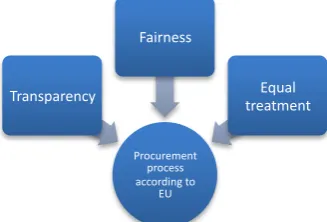
[image:4.595.349.513.202.313.2]to create a competitive bidding process, this is done through regulations for advertising procurement needs, invitations to tender and contract award (Parikka-Alhola et al., 2012). These regulations state that the procurement process needs to be transparent, fair and stimulate equal treatment and can be used for both the application of LP and MEAT (Falagario et al., 2011; Lambropoulos, 2005; Parikka-Alhola et al., 2012). Due to this addition, the Directives of the EU will be used as variables to measure the resistance to corruptive behaviour of the awarding methods.
Figure 1 Public procurement process according to the European Union
2.4
Cultural differences
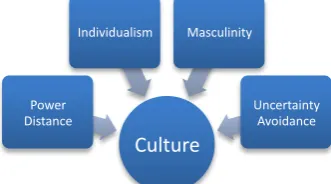
“To which extend are the different awarding methods applicable in various countries?” is the main research question of this study, suggesting that not all the countries are the same. The level of perceived corruption of a country has already been mentioned as one of the differences between the various countries. Another aspect that has a large influence on the differences between countries is culture. Hofstede has developed four dimensions describing culture, namely Power Distance, Individuality, Masculinity and Uncertainty Avoidance.
2.4.1
Power Distance
Power Distance deals with the inequality of physical and intellectual capacities of people (Hofstede, 1983). The degree that societies try to minimize this unequal distribution is measured by the Power Distance scale (Hofstede, 1983). The degree of centralization in organizations is also related to the level of power distance (Hofstede et al., 2011). Whereas with a low level of Power Distance the use of power needs to be legitimate and will be judged not only by supervisors but also by subordinates, a high level of Power Distance can lead to abuse of power over subordinates (Hofstede et al., 2011). Latin, Asian and African countries are considered to have a high level of Power Distance, compared to a low level in the United States, United Kingdom and Western Europe (Hofstede et al., 2011).
2.4.2
Individualism
Individualism is concerned with the relationships of an individual and their fellow individuals (Hofstede, 1983). When the level of Individualism is high the relationships between individuals are loose, including
Procurement process according to
EU Transparency
Fairness
only their own self-interest and immediate family due to the large amount of freedom by the society around them (Hofstede 1983; Hofstede et al., 2011). A low score on the Individualism scale indicates its opposite Collectivism. Collectivism does not only include contact with their immediate family, but also their extended family, tribe or village (Hofstede, 1983). The groups offer protection, however one is expected to share opinions and beliefs (Hofstede, 1983).
2.4.3
Masculinity
Through the ages roles were assigned to men and women, also known as social sex role division (Hofstede, 1983). Masculinity is a society in which this division is maximized and makes a clear distinction between the separate role descriptions for male and female (Hofstede, 1983). Assertive and dominant roles are considered to apply to the men, while women should be more service-oriented and caring (Hofstede, 1983). When society tries to minimize the difference in the sex role division it is labeled as Feminine instead of Masculine.
2.4.4
Uncertainty Avoidance
[image:5.595.97.263.474.566.2]Uncertainty Avoidance is concerned with the acceptation of the fact that the future is unknown (Hofstede, 1983). When members of societies accept this fact and take everything day by day, the chances that they will take risks are consequently higher (Hofstede, 1983). They feel secure and have a tolerant attitude towards different opinions and behaviour (Hofstede, 1983). On the other hand a society with a strong Uncertainty Avoidance try to avoid risk and create security, the higher level of anxiety may lead to nervousness, emotionality and aggression within the society (Hofstede, 1983). Countries with a weak level of Uncertainty Avoidance include most Asian countries, African and Western Europe (Hofstede et al., 2011).
Figure 2 4-dimension model by Hofstede
3.
HYPOTHESES
Based on the literature the following hypotheses are formulated and will be used to test the answers from the respondents in the questionnaire in combination with the literature.
The first hypothesis was based on the fact that AoV is a method that has been developed in the Netherlands. In the Netherlands it is gaining acceptance and trying to become the award method that is uniformly used (Jansen et al., 2007), however we do not expect it to
be familiar to the respondents outside of the Netherlands.
H1: AoV is only known within the Dutch procurement community
Similar to the first hypothesis we do not expect that AoV has been used by any of the respondents from outside the Netherlands.
H2: AoV has only been used within the Dutch procurement community
As Verdeaux (2003) states MEAT methods are more frequently used in the EU, we expect this to be due to the fact that Developed Countries like the MEAT methods more than LP.
H3: Awarding on LP is considered to be liked more by Developing Countries, whereas the MEAT methods are considered to be liked more in Developed Countries.
AoV has been developed after in depth analysis for the construction industry in the Netherlands and was not specifically focused at the further application in other industries and other countries. It is already proven to be applicable in other industries as well, but I expect this to be perceived to be more difficult in other countries.
H4: AoV is considered to be perceived more difficult to apply in countries other than the Netherlands.
AoV has been developed after large scandals in the Dutch construction industry. There was a need for an award method that would help avoid such practices in the future. Therefore it is expected that AoV will be considered to be the most resistant to corruptive behaviour and the variables for this set by the European, transparency, fairness and stimulation of equal treatment. This leads to the following hypotheses:
H5: AoV is considered to be a more transparent award method than LP and WFS.
H6: AoV is considered to be a fairer award method than LP and WFS.
H7: AoV is considered to be the awarding method that stimulates equal treatment more than LP and WFS. H8: AoV is considered to be the awarding method that is more resistant to corruptive behaviour than LP and WFS.
In addition on the questions asked to compare the methods a few questions were specifically asked on AoV to test to which extent the method is applicable in various countries. Here can be distinguished between their own organization, country and globally. We hypothesise that AoV is considered to be applicable globally.
H9: AoV is considered to better applicable globally than in their own organization and country.
To encourage the application of AoV in the Dutch construction industry CROW created the book Gunnen op waarde: hoe doe je dat? (Awarding on Value: how
Culture
Power Distance
Individualism Masculinity
does it work?). It was created as a manual teaching how the method can be used. Therefore we expect that the main problem in applying AoV is the lack of education, which is also one of the possible problems mentioned by Jansen et al. (2007).
H10: A lack of education is considered to be the main issue considering implementing AoV.
In the Netherlands LP was used as award method during the scandals in the construction area. After these corruption scandals AoV was developed to help avoid such practices in the future. Based on this it is expected that the level of corruption has an influence on the choice of award method.
H11: Countries with a higher perceived corruption prefer LP.
According to Hofstede (1983) countries differ in culture, which can be divided into four dimensions: Power Distance, Individualism, Masculinity and Uncertainty Avoidance. Wong et al. (2010) argued that assigning contracts based on tender price is a way of public clients to defend themselves from public criticism and accountability. I expect that especially high degree of Power Distance to influence the choice of award method, due to the level of personal responsibility.
H12: Countries with a high level of Power Distance prefer LP.
4.
EMPIRICAL RESEARCH
4.1
Methodology
In order to find out the answer to the other sub question: ‘Do the methods align with the requirements?’; ‘What are the attitudes towards the methods?’ and finally the research question ‘To which extent are the different awarding methods applicable in various countries?’ a survey will be used.
4.1.1
Data collection method
The empirical part of this research took place in the form of a survey study, which was created via Google Questionnaire and distributed via various channels using snowball sampling such as personal email, professional websites and social media platform groups focussing on procurement. Surveys are widely used to directly and flexibly collect information from a unit of analysis (Leung, 2001). Moreover, surveys are excellent vehicles for measuring attitudes and orientations (Babbie, 2010). It was chosen to do a self-administered survey in order to protect the participants’ confidentiality and give them the possibility to respond at their convenience.
4.1.2
Pilot Survey
Before sending out the questionnaire to the actual participants, it must be pretested in form of a pre-test (Salant & Dillman, 1994). This pilot represents a small sample of people characteristic of those in the survey (Leung, 2001). 13 purchasers from all across the world were asked to fill in the pilot survey and consequently make suggestions for improvement. The main
comments were that the questionnaire was well structured and clear to understand, however it was considered to be too long. Since this is considered to be an excuse to avoid participation (Iarossi, 2006) a few questions were eliminated to shorten the questionnaire.
4.1.3
Participant sample
The questionnaire was sent to purchasing representatives involved in procurement activities worldwide. In total we received responses of 60 purchasers from various countries, including the Netherlands, Australia, United States, United Kingdom, Ghana, Mauritius, Ethiopia, Rwanda, Uganda, Yemen, Philippines, Colombia, Bangladesh. Due to the limited number of respondents for some countries we divided the countries into country categories, namely (1) the Netherlands, (2) Other developed countries (United States, United Kingdom, Australia), (3) Africa (Ghana, Mauritius, Ethiopia, Rwanda, Uganda) and (4) Other developing countries (Yemen, the Philippines, Colombia, Bangladesh).
Graph 1 Amount of responses per country category
Around 80% of all respondents in every country category are employed at public institutions. Concerning the developed countries, the most responses were received from local government agents, whereas as in developing countries state and federal institutions were counted.
Graph 2 Types of organization per country category
4.1.4
Questionnaire Description
In this survey first a few basic information questions were asked about the country of residence, education, organization and main activity. After this the three methods (LP, WFS and AoV) were separately explained and discussed. For each method the first question is whether or not the explanation is understood, since this may influence the ability to answer the following questions. To further expand on their prior knowledge and attitude towards the methods the questions whether they are familiar, have used them before, like them and consider them to be applicable to their own country. In order to test if the methods are considered to be applying the regulations set by the international organizations the following questions were to score on a scale from one to five the transparency, fairness, stimulation of equal treatment and overall resistance to corruptive behaviour. For each statement was the possibility to elaborate on which parts they did not consider to be transparent, fair, stimulate equal treatment and resistant to corruptive behaviour. In addition for AoV they were asked to score on a scale from one to five if the method was considered applicable to themselves and their colleagues, their country and globally. Following this was a multiple-choice question in which the possible problems in the application of AoV were considered. Jansen et al. (2007) and Sciancalepore and Telgen (2011) both distinguished different possible difficulties when applying AoV. Jansen et al. (2007) identified legal restrictions, lack of education, bad loser behaviour, additional costs and resistance to change. In addition Sciancalepore and Telgen (2011) included problems concerning the too many tools that can be used, scoring of the bids and determining the Delta value. One or more options could be chosen as to compare which possible problems the respondents considered to have the most effect. Lastly any comments on the AoV could be made. See appendix 2 for the full questionnaire.
4.1.5
Data Analysis
All collected data stored at Google Questionnaire were translated into a SPSS spreadsheet and turned into variables, which in the following step were analyzed by creating descriptive output using the functions of SPSS and Excel. Cross tables and graphs were made in order to be able to elaborate the discussion of the results of the survey. To test the significance of the differences in attitudes towards the awarding methods two-proportion z-tests are used. To test the significance of differences between means a t-test for two proportions.
5.
RESULTS
5.1
Understanding
The results of our survey on the understanding of the different methods are shown in figure 6. As can be seen almost completely all participants understand the three methods. This can be due to the clear description of the methods in questionnaire as well as their prior knowledge. In both cases it is a good starting point for
comparing the methods and examining the differences on other points.
Graph 3 Understanding of awarding methods
5.2
Familiarity
The second question of the survey was concerned with the familiarity of the method. All the respondents were familiar with LP, overall WFS can also be said to be globally known. Respondents were least familiar with AoV.
Graph 4 Familiarity with awarding methods
5.3
Used
Almost all respondents have used LP before. WFS is a widely used method, where only Africa is slightly behind with 67%. AoV is the least used award method compared to LP and WFS. There are again some differences in use of AoV between the different country categories but these are small.
Graph 5 Used Awarding methods
5.4
Likability
The popularity of AoV ranges in between LP and WFS.
Graph 6 Likability Awarding methods
5.5
Applicability
WFS is considered to be the best applicable method with a total score of 98%. While AoV turned out to be the best applicable in the Netherlands with 91% and the least applicable in both developing countries categories with only 60%. Overall LP scores lowest with 77%, but still especially respondents from Africa consider it to be well applicable with 87%.
Graph 7 Applicability of Awarding methods
5.6
Transparency
Overall all the methods score approximately similar on transparency, the only differences from the norm is the low score of LP in Africa, which scores 3,3 out of 5 while the total score is 4 out of 5.
Graph 8 Means transparency awarding methods
5.7
Fairness
WFS is considered to be the most fair by all participants throughout all country categories with a total score of 4,2 out of 5. The scores are overall very close, but LP is considered to be the least fair, with a
mean score of 3,6 and the lowest single score coming from African developing countries of 3,3.
Graph 9 Means fairness awarding methods
5.8
Equal Treatment
In total WFS and AoV have the same mean scores. For the Netherlands, other developed countries and other developing countries AoV scores slightly higher, whereas in African developing countries WFS wins with a mean score of 4,3 compared to 3,8 of AoV and 3,4 of LP. In total the three methods do not differ very much.
Graph 10 Means stimulation of equal treatment of awarding methods
5.9
Corruptive behaviour
LP is considered to be the least resistant to corruptive behaviour with a total score of 3,1 and scoring as low as 2,7 in Africa. The opinions on WFS differ with a range of scores between 4 in Africa and 3 in Other developing countries. AoV scores considerably high in Other developed countries with 4,3, while being at the same level in both the Netherlands and other developing countries with 3,6.
5.10
Applicability Awarding on Value
Generally responses are relatively similar for all country categories on the three aspects; applicability within their own organization, within their own country and globally. Within the country category the means are relatively similar, but between the country categories larger differences can be observed. Applicability within your country has the highest score in each country category, however with ranges between 3,7 in African developing countries and 4,8 in other developed countries. While on average AoV is seen to be the least applicable globally, the countries of our respondents all consider it to be best applicable in their country.
Graph 12 Means applicability AoV
5.11
Possible problems AoV
Finally the respondents were asked which of the possible problems considered by JANSEN ET AL. (2007) and Sciancalepore and Telgen (2011) they considered could influence the application. In the Netherlands determining the Delta Value is considered to be to largest problem when implementing AoV (23%), followed by a lack of education (19%) and resistance to change (17%). In other developed countries resistance to change (22%), lack of education (18%) and scoring of the bids (17%) are the top three possible problems. African countries foresee the same problems, with an addition of legal restriction (14%). In other developing countries the main problem is also legal restrictions (19%). See appendix 3 for the pie charts of every country category. In total the largest possible problem is seen to be a lack of education (18%), followed by determining the Delta value (17%) and resistance to change (17%).
Graph 13 Percentages possible problems AoV
6.
ANALYSIS
6.1
Familiarity
The first hypothesis H1: AoV is only known within the Dutch procurement community is proven to be false. Not only respondents from the Netherlands answered to are familiar with AoV. However when using a two-proportion z-test for the Netherlands and Africa, the data have provided sufficient evidence to reject the null hypothesis (
€
H
0=
p
1−
p
2=
0
), where is hypothesized that the proportions of familiarity between the Netherlands and Africa are equal, at the 5% level of significance with a P-value of 0,0475. Meaning that the difference in familiarity is significant enough to say that respondents from the Netherlands are more familiar with Awarding on Value than respondents from Africa.6.2
Used
Similar to the first hypothesis, we can reject the second hypothesis: H2: AoV has only been used within the Dutch procurement community. The data have proved that AoV is not only used in the Netherlands. In addition here the data have failed to provide sufficient evidence to reject the null hypothesis where is hypothesized that the proportions of familiarity between the Netherlands and Africa are equal due to a P-value of 0,1401. This means that there is no significant difference between the proportions of use of AoV between the Netherlands and Africa.
6.3
Likability
The third hypothesis was H3: Awarding on LP is considered to be liked more by Developing Countries, whereas the MEAT methods are considered to be liked more in Developed Countries. A two-proportion z-test of the proportion of like of AoV between the Developed Countries and Developing Countries failed to reject the null hypothesis with a P-value of 0,1401. Therefore unable to say there is a significant difference between the Like of AoV. The proportions of Like of LP in Developed countries and Developing countries is the same and therefore no significant different can be proven with a P-value of 0,4129. Even though there is no significance difference between the proportions of Like between Developed countries and Developing countries, a significant total difference between AoV and LP can be proven. Using a Z-test for two-proportions between the total of AoV and LP the null hypothesis, that the two proportions are the equal, can be rejected with a P-value of 0,025 based on a significance level of 0,05.
6.4
Applicability
AoV is considered to be less applicable in Africa compared to the Netherlands.
6.5
Transparency
From the mean scores on transparency of the three methods can be concluded that AoV is not considered to be the most transparent method anywhere. Consequently the fifth hypothesis H5: AoV is considered to be a more transparent award method than LP and WFS can be rejected. When comparing the means of LP (P-value 0,459), WFS (P-value 0,893) and AoV (P-value 0,25) between the Netherlands and Africa using a two-sample T-test no significant difference where proven to be found since there was not enough prove to reject the null hypothesis.
6.6
Fairness
Based on the means regarding the fairness of the awarding methods the sixth hypothesis H6: AoV is considered to be a fairer award method than LP and WFS can be rejected. Similar to transparency no significant difference can be proven using a two-sample T-test between the means of LP (P-value 0,589), WFS (P-value 0,868) and AoV (P-value 0,296) from Netherlands and Africa.
6.7
Equal Treatment
The seventh hypothesis H7: AoV is considered to be the awarding method that stimulates equal treatment more than LP and WFS can be rejected based on the means of the answers of the respondents. In the Netherlands and Other Developed Countries AoV is considered to be the highest scoring on stimulation of equal treatment. However when comparing the difference in means using a two-sample T-test between the Netherlands and Africa this is not significant enough to reject the null hypothesis with a P-value of 0,504. For both LP (P-value 0,764) and WFS (P-value 0,184) the data also does not provide enough evidence.
6.8
Corruptive behaviour
In total all the respondents considered AoV to be the most resistant to corruptive behaviour. Therefore one could assume that H8: AoV is considered to be the awarding method that is more resistant to corruptive behaviour than LP and WFS could be correct. However the difference compared to the other two methods is so small that the data do not provide enough evidence to prove this. Again the differences between the means when using a two-sample T-test of LP (P-value 0,412), WFS (P-value 0,313) and AoV (P-value 0,277) do not provide enough evidence to reject the null hypotheses and consequently is not significant enough.
6.9
Applicability AoV
As can be seen in Graph 12 there are no large differences between whether they consider AoV better applicable within their own organization, in their country or globally. Therefore the ninth hypothesis:
H9: AoV is considered to better applicable globally than in their own organization and country can be
rejected. In addition I tested if there was a difference in answers between the Netherlands and Africa, but these difference were not significant enough. P-values of 0,129 for own organization, 0,405 for own country and 0,257 for Globally.
6.10
Possible problems AoV
When taken into account the answers from all the respondents the tenth hypothesis H10: A lack of education is considered to be the main problem considering implementing AoV can be accepted. However the difference between a lack of education and other possible problems is too small to conclude that this is the only problem in the implementation of AoV. When comparing the proportions of the Netherlands and Africa no difference in the percentage of considering a lack of education being the main problem can be proven since they both are 19%.
6.11
Influence perceived corruption
Similar to what has done before all the responding countries were divided into country categories. Transparency International (2014) has scored every country based on the perceived corruption, this simultaneously led to a ranking list of all the countries. Since we did not receive responses from every country in the world, the mean Perceived Corruption Index 2013 scores are weighted with the expected populations for July 2014 (Central Intelligence Agency, 2014) to create, as far as possible, a representative image for the country categories.
Graph 3 Mean Perceived Corruption Index 2013 per country category based on populations
the mean of the MEAT methods combined. A two-sample Z-test was used to test this. A reason for this could be legal restrictions that do not allow countries to use MEAT methods; this is further elaborated on by Dombrowski (2014).
6.12
Influence culture
Hofstede has analyzed the culture of most countries across the world based on the four dimensions Power Distance, Individualism, Masculinity and Uncertainty Avoidance (Hofstede, 1983). Unfortunately not all the countries of the respondents are included in this, namely Mauritius, Rwanda, Uganda and Yemen. Consequently the means of Hofstede’s Cultural dimensions per Country category based on populations where only calculated based on the countries of the respondents that Hofstede included in his analyses.
Graph 4 Means Hofstede’s Cultural dimensions per Country category based on populations of
responding countries
Based on Wong et al. (2010) H12: Countries with a high level of Power Distance prefer LP. When comparing the level of Power Distance between the Netherlands and Africa using a two-sample Z-test it can be concluded that the difference is significant (P-value 0,0084). Therefore similar to Perceived Corruption, Africa can be used to test the twelfth hypothesis. Again this will lead to the result that even though Africa does not seem to like LP it is still the more used than WFS and AoV.
7.
CONCLUSION
The research question of this study was:
“To which extent are the Lowest Price, Weighted Factor Score and Awarding on Value applicable in various countries?”
I tried to answer the research question and connected sub-questions through literature and empirical research, which included the distribution of a questionnaire to purchasing professionals across various countries. From the data can be concluded that AoV, or other possible methods that can be expressed a similar way using monetary terms, are more widely known and used than expected. Schmidt (2014) elaborates on whether there are any other methods that are equivalent to AoV. In contrary to what was hoped AoV did not prove to be considered more resistant to corruptive behaviour and its variables set by the EU; transparency, fairness and stimulation of equal treatment. Weise (2014) investigated the ways corrupt
behaviour can still occur when using AoV. Both perceived corruption and the Power Distance dimension of culture proved to be significantly higher in Africa. However this did not give a conclusive answer to the question whether the one of the methods was better applicable than the other. The data showed differences in the responses to which methods were more liked and which ones were more used. This suggests that there are limitations that do not allow the preferred methods to be actually used. Dombrowski (2014) elaborates on whether or not this might be caused by legal restrictions.
7.1
Limitations
This research was specifically focused at purchasing professionals. Therefore their level of education cannot be representative of the population of the country, whereas other variables such as Perceived Corruption and Culture are based on the entire population. Due to the limited amount of responses per country, the country categories were created. These country categories do not fully represent every country within its category, e.g. Africa does not include all African countries. Even when using the country categories not all samples were large enough on which to base any statistical evidence, in addition the categories differed in size. All the results were based on the answers given by the respondents and were not further verified, e.g. purchasing documents could have been provided to check whether or not the respondents have actually used one of the methods. The reliability of the answers was not completely taken into account since no re-test of the questionnaire was done.
7.2
Further research
During this research the questionnaire only reached a limited number of respondents from a limited number of countries. In further research both numbers could be expanded to be able to draw more statistically relevant conclusions. This could also include a re-test to increase reliability.
Another addition for further research could be the expansion of the amount of award methods. I choose to limit these to LP, WFS and AoV, but I could have included many more.
Whereas I included Perceived Corruption and Culture as a possible influence of the choice of award methods, other factors may also be included. These factors could be legislation, as is researched by Dombrowski (2014), as well as any of the other factors influencing a buying/purchasing decision such as Social, Personal and Psychological (Kotler, 1994).
8.
ACKNOWLEDGMENTS
9.
REFERENCES
Babbie, E. (2010). The practice of social research. Belmont: Thomson Learning.
Bergman, M.A. & Lundberg, S. (2013). Tender evaluation and supplier selection methods in public procurement. Journal of Purchasing & Supply Management, 19, 73–83
Business Dictionary, 2014. Definition Competitive Bidding. Retrieved May 19, 2014, from
http://www.businessdictionary.com/definition/competi tive-bidding.html
Central Intelligence Agence (2014). The World Factbook. Retrieved June 23, 2014, from
https://www.cia.gov/library/publications/the-world-factbook/fields/2119.html
Dombrowski, J. (2014). Awarding methods and their applicability across countries. Bachelor Thesis. University of Twente.
Dongen, J. van (Director), (November 12, 2006). ZEMBLA [Television series]. In Boogaard, M., Ytsma, N. (Producers). Amsterdam: VARA
European Parliament & Council of the European Union (2004). Directive 2004/17/EC of the European Parliament and the Council of 31 March 2004: coordinating the procurement procedures of entities operating in the water, energy, transport and postal services sectors. Official Journal of the European Union.
European Parliament & Council of the European Union (2004). Directive 2004/19/EC of the European Parliament and the Council of 31 March 2004: on the coordination of procedures for the award of public works contracts, public supply contracts and public service contracts. Official Journal of the European Union.
Falagario, M., Sciancalepore, F., Costantino, N., Pietroforte, R. (2012). Using a DEA-cross efficiency approach in public procurement tenders. European Journal of Operational Research, 218, 523–529
Foundation for EU Democracy (2008). The Lisbon Treaty. Denmark: Notat Grafisk
Grogan, T. (1992). Low bids raise hidden costs.
Engineering News Record, 228 (13), 30-31
Gunduz, M., Karacan, V. (2008). Abnormally Low Tender Problem in Public Works. 15th International
Conference on Management Science & Engineering, September 12, 2008, Long Beach, USA.
Hofstede, G. (1983). The Cultural Relativity of Organizational Practices and Theories. Journal of International business Studies Fall (14): 75-89
Hofstede, G., Hofstede, G.J., Minkov, M. (2011).
Allemaal andersdenkenden: omgaan met cultuurverschillen. Amsterdam: Contact.
Huberts, L., Hulsebosch, H., Lasthuizen, K., Peeters, C. (2004). Nederland fraude- en corruptieland?
Onderzoeksverslag. Vrije Universiteit Amsterdam.
Iarossi, G. (2006). The Power of Survey Design : A User's Guide for Managing Surveys, Interpreting Results, and Influencing Respondents. Washington, DC: World Bank.
Jansen, C.E.C. (2002). Bouwfraude: Economische en Juridische Aspecten van
Aanbestedingen in de Bouw. Bundeling van lezingen gehouden op 25 april 2002. Tilburg/Nijmegen: Wolf Legal Publishers.
Jansen, A., Kolkman, S., Kuijpers, P.S.P., Pries, F., Reeuwwijk, T.G. van, Witteveen, B., Zijlstra, J.O. (2007). Gunnen op waarde: hoe doe je dat? Ede: CROW.
Kotler, P. (1994). Principles of Marketing. Englewood Cliffs, NJ: Prentice-Hall.
Lambropoulos, S. (2007). The use of time and cost utility for construction contract award under European Union Legislation. Building and Enviornment, 42, 452-463.
Leung, W-C. (2001). How to Design a Questionnaire.
Student BMJ, 9, 187-189.
Mateus, R., Ferreira, J.A., Carreira, J. (2010). Full disclosure of tender evaluation models: Background and application in Portuguese public procurement. Journal of Purchasing & Supply Management, 16, 206-215
Parikka-Alhola, K., Nissinen, A., (2012) Environmental Impacts and the Most Economically Advantageous Tender in Public Procurement. Journal of Public Procurement, 12 (1).
Salant, P., Dillman, D. (1994). How to conduct your own surveys. New York: John Wiley & Sons, Inc.
Schmidt, L. (2014). A literature review on methods for supplier selection akin to Awarding on Value. Bachelor Thesis. University of Twente
Sciancalepore, F., Telgen, J. (2011). Supplier selection by Awarding on Value. Working Paper. University of Twente.
Sebastian, R., Claeson-Jonsson, C., Di Giulio, R. (2013). Performance-based procurement for low-disturbance bridge construction projects. Construction Innovation, 13 (4), 394-409.
Transparency International (2014). Retrieved June 5,
2014 from
http://www.transparency.org/research/cpi/overview
United Nations (2013). Guidebook on anti-corruption in public procurement and the management of public finances. Vienna: United Nations Office.
Verdeaux, J.J. (2003). Public procurement in the European Union and the United States: a comparative study. Public Contract Law Journal, 32, 713-738.
Weise, S.A. (2014). Alternative Award Methods to Lowest Price in Public Procurement and Their Susceptibility to Corruption. Bachelor Thesis. University of Twente.
Wong, C.H., Holt, G.D., Cooper, P.A. (2000). Lowest price or value? Investigation of UK construction clients' tender selection process. Construction Management and Economics, 18 (7), 767-774.
World Trade Organization (2014). Agreement on Government Procurement. Retrieved May 26, 2014 fromhttp://www.wto.org/english/tratop_e/gproc_e/gp_ gpa_e.htm
10.
APPENDICES
10.1
Information on the sample
10.1.1
Level of Education per country
category
10.1.2
Types of organization per country
category
10.1.3
Industry per country category
10.1.5
Main activity per country category
10.2
Questionnaire
GENERAL INFORMATION:
We are two students at the University of Twente. As part of our Bachelor Thesis in Supply Management (Supervised by Prof. Dr. Jan Telgen).
What is the purpose of this investigation?
We are looking into award methods in the tendering process. Our research goal is to find out which methods are applicable in various countries.
What happens to the information gathered with this survey?
We will use the data into our Bachelor Thesis report. Anything you mention will be treated confidentially. You will not be named in our report and it will not be possible to identify you in any way. You have the right to stop the survey at any time, and to have your data withdrawn from this study.
Thank you for reading this information
If you have any questions/concerns, during or after the investigation, please contact us, Julia Dombrowski ([email protected]) or Hélène Bussink ([email protected]).
BASIC INFORMATION
Country of residence: dropdown country list
What is your highest degree of education?: Multiple choice: none, elementary education, high school education, undergraduate degree, graduate degree, Phd degree, other: …
To which type does your organization belong?: Multiple choice: local government agency, state government agency, national/federal government agency, small family business, small private business, medium/large private business, multinational company, other:…
In which industry does your organization operate?: Dropdown: list of industries
What is your main activity: multiple choice: ordering, making contracts, managing purchasing function, setting policies for purchasing, other:…
How long have you been in this function?: Multiple choice: <1 year, 1-2 year, 2-5 years, 5-10 years, >10 years
LOWEST PRICE:
Please carefully read the following before answering the next questions.
LOWEST PRICE (2)
Do you understand the method?: multiple choice: yes, no
LOWEST PRICE (3)
What are parts you did not understand?: Open question
LOWEST PRICE (4)
Are you familiar with this method?: Multiple choice: yes, no
Have you ever used this method?: Multiple choice, yes,no
Do you like this method?: Multiple choice: yes, no, don’t know
Do you think this method is applicable in your country? (consider e.g. legislation and education) : Multiple choice: yes, no, don’t know
LOWEST PRICE (5)
In your opinion, is this method transparent? Scale: not at all 1-5 very well
What are aspects you do not consider to be transparent? Open question
In your opinion, is this method fair? Scale: not at all 1-5 very well
What are aspects you do not consider to be fair? Open question
In your opinion, does this method stimulates equal treatment? Scale: not at all 1-5 very well
What are aspects you consider not to be stimulating equal treatment? Open question
LOWEST PRICE (6)
Overall, do you consider this method to be resistant to corruptive behaviour?: Scale: not at all 1-5 very well What are aspects you consider not to be resistant to corruptive behaviour?: Open question
of involvement during process, other:… WEIGHTED FACTOR SCORE:
WEIGHTED FACTOR SCORE (2)
Do you understand the method?: multiple choice: yes, no
WEIGHTED FACTOR SCORE (3)
What are parts you did not understand?: Open question
WEIGHTED FACTOR SCORE (4)
Are you familiar with this method?: Multiple choice: yes, no
Have you ever used this method?: Multiple choice, yes,no
Do you like this method?: Multiple choice: yes, no, don’t know
Do you think this method is applicable in your country? (consider e.g. legislation and education) : Multiple choice: yes, no, don’t know
WEIGHTED FACTOR SCORE (5)
In your opinion, is this method transparent? Scale: not at all 1-5 very well
What are aspects you do not consider to be transparent? Open question
In your opinion, is this method fair? Scale: not at all 1-5 very well
What are aspects you do not consider to be fair? Open question
In your opinion, does this method stimulates equal treatment? Scale: not at all 1-5 very well
What are aspects you consider not to be stimulating equal treatment? Open question
WEIGHTED FACTOR SCORE (6)
Overall, do you consider this method to be resistant to corruptive behaviour?: Scale: not at all 1-5 very well What are aspects you consider not to be resistant to corruptive behaviour?: Open question
AWARDING ON VALUE
Please carefully read the following before answering the next questions.
Awarding on Value (AoV) is a method for determining the best supplier bid under multiple award criteria, known in Public Procurement as the “Most Advantageous Tender” (MEAT). AoV takes into consideration both the commercial and the technical proposal of a bid. The commercial part is evaluated as the bid price by the i-th bidder Pi. With regards to the
technical part of the proposal, the scope of the method is to determine the technical value of the bid concerning the quality criteria.
Basically, the method addresses the assessment of the qualitative features of the bids from a monetary perspective: for each criterion, the impact in terms of added value is established. Then the bid price is corrected by subtracting the total added value of the bid.
AWARDING ON VALUE (2)
Do you understand the method?: multiple choice: yes, no
AWARDING ON VALUE (3)
What are parts you did not understand?: Open question
AWARDING ON VALUE (4)
Are you familiar with this method?: Multiple choice: yes, no
Have you ever used this method?: Multiple choice, yes,no
Do you like this method?: Multiple choice: yes, no, don’t know
Do you think this method is applicable in your country? (consider e.g. legislation and education) : Multiple choice: yes, no, don’t know
In your opinion, is this method transparent? Scale: not at all 1-5 very well
What are aspects you do not consider to be transparent? Open question
In your opinion, is this method fair? Scale: not at all 1-5 very well
What are aspects you do not consider to be fair? Open question
In your opinion, does this method stimulates equal treatment? Scale: not at all 1-5 very well
What are aspects you consider not to be stimulating equal treatment? Open question
AWARDING ON VALUE (6)
Overall , do you consider this method to be resistant to corruptive behaviour? Scale: not at all 1-5 very well. What are aspects you do not consider to be resistant to corruptive behaviour?: Open Question.
APPLICATION
Overall do you consider Awarding on Value to be applicable to:
You and your colleagues: Scale: not at all 1-5 very well
Your country: Scale: not at all 1-5 very well Globally: Scale: not at all 1-5 very well
What do you think possible problems in the application of this method could be?: Selection: legal restrictions, lack of education, bad loser behaviour additional costs, resistance to change, too many tools, other:…
Do you have any comments on the Awarding on Value method?: Open question
END
Thank you very much for your cooperation. This is highly appreciated.
Would you like to receive the results of our research?: Multiple choice: yes, no
RECEIVE RESULTS
If you would like to receive the results of our survey, please fill in your e-mail address below.: Open question