A STUDY ON THE BIOCHEMICAL PROFILE OF DEEP SEA FISH (
THE COMPARATIVE ANALYSIS OF PROXIMATE COMPOSITION IN FISH PROTEIN CONCENTRATE
*
,1Sarath
1
Department of Microbiology, Sree Amman arts and Science College, Erode, Tamilnadu, India
2Department of Biochemistry, R.V.S. College of Arts and Science, Coimbatore,
ARTICLE INFO ABSTRACT
Lamprogrammus
of fish meat, protein concentrate and silage. Our studies reveals that the Legless variety of nutrients such as 9 essential and 5 non
unsaturated fatty acids, sodium, potassium, calcium ions etc. Both fish protein concentrate and fish silage are also containing 8 essential a
completely useful. On the basis of the analysis of nutrient profile, Meat and fish protein concentrate is better for human beings. And silage is good as an animal feed.
Copyright © 2014 Sarathchandran and Sajid. This is an open access article distributed under the Creative Commons Attribution License, which permits unrestricted use, distribution, and reproduction in any medium, provided the original work is properly cited.
INTRODUCTION
In recent years, the demand of nutritionally rich fish is increased by many folds, due to the over exploitation of shallow water fishing taken place. Therefore the demand for deep sea fish research came into an important. Health benefits related to fish consumption are due to the presence of protein, unsaturated essential fatty acids, minerals and vitamins (Bechir
et al., 2008). These nutritional values have stimulated
increasing demand for fish, worldwide. So we understood the
current importantof deep sea fishes and chosen
Lamprogrammus exutus (Legless Cuskeel) for the analysis of
nutrient composition. Lamprogrammus exutus
uncommon species and maximum length is 46.2 cm. It has 11 dorsal soft rays, and 8 anal sot rays. It can be finding on or above continental slope and the depth range of 260
(Nybakken et al., 1992). Proximate analysis is used to estimate
the relative amounts of protein, lipid, water, ash in the Cuskeel. Proteins and lipids are contributed to the total energy content of an organism while water and ash only contribute mass (Asghar and Henrickson, 1982). Lipid content shows remarkable variation and shows an inverse relationship with
water content (Nelson et al., 1998). Fish protein concentrate of
Legless Cuskeel is a healthy, sustainable and high nutritive product from fishes in which, protein and other nutrients are more concentrated than in fresh fishes.
*Corresponding author: Sarathchandran, R.
Department of Microbiology, Sree Amman arts and Science College, Erode, Tamilnadu, India.
ISSN: 0975-833X
Article History:
Received 10th August, 2014
Received in revised form 15th September, 2014 Accepted 04th October, 2014
Published online 18th November,2014
Key words:
Fish meat, Fishprotein concentrate, Fish silage, Aminoacid, Fatty acid.
RESEARCH ARTICLE
A STUDY ON THE BIOCHEMICAL PROFILE OF DEEP SEA FISH (
LAMPROGRAMMUS
THE COMPARATIVE ANALYSIS OF PROXIMATE COMPOSITION IN FISH PROTEIN CONCENTRATE
AND SILAGE
Sarath Chandran, R. and
2Sajid, K.
Department of Microbiology, Sree Amman arts and Science College, Erode, Tamilnadu, India
Department of Biochemistry, R.V.S. College of Arts and Science, Coimbatore,
ABSTRACT
Lamprogrammus exutus (legless cuskeel) is a deep sea fish and analyzed the proximate composition of fish meat, protein concentrate and silage. Our studies reveals that the Legless
variety of nutrients such as 9 essential and 5 non-essential amino acids, 7 saturated and 21 unsaturated fatty acids, sodium, potassium, calcium ions etc. Both fish protein concentrate and fish silage are also containing 8 essential and 5 non-essential amino
completely useful. On the basis of the analysis of nutrient profile, Meat and fish protein concentrate is better for human beings. And silage is good as an animal feed.
is an open access article distributed under the Creative Commons Attribution License, which permits unrestricted use, distribution, and reproduction in any medium, provided the original work is properly cited.
In recent years, the demand of nutritionally rich fish is over exploitation of taken place. Therefore the demand for deep sea fish research came into an important. Health benefits related to fish consumption are due to the presence of protein, unsaturated essential fatty acids, minerals and vitamins (Bechir tional values have stimulated increasing demand for fish, worldwide. So we understood the
current importantof deep sea fishes and chosen
Cuskeel) for the analysis of
exutus is a marine
mmon species and maximum length is 46.2 cm. It has 11 dorsal soft rays, and 8 anal sot rays. It can be finding on or depth range of 260-700m Proximate analysis is used to estimate s of protein, lipid, water, ash in the Legless Proteins and lipids are contributed to the total energy content of an organism while water and ash only contribute Lipid content shows shows an inverse relationship with Fish protein concentrate of Legless Cuskeel is a healthy, sustainable and high nutritive product from fishes in which, protein and other nutrients are
Department of Microbiology, Sree Amman arts and Science College, Erode,
A way of minimizing the environmental problems generated by the high amount of fish waste is its transformation in a product
to be incorporated as ingredient in animal rations (Shulman, 1974). A viable alternative would be the production
of fish silage, as it is an
easy-low investments. The product has a good nutritive quality and can, therefore, be very useful in animal feeding (Windson and Barlow 1981). Legless Cuskeel silage also contains almost all nutritive components as in the protein concentrate.
MATERIALS AND METHODS
Sample collection
Sample was collected from Harbor, Thopumpadi, Ernakulum, in Kerala state, INDIA. The fish samples were kept frozen at
200c throughout this study.
Analysis of biochemical composition
Sample preparation
Frozen fish is sealed with polythene sheet and kept for thawing
at 4oc overnight. Extract filtered from the fish, cut into small
pieces and grind in a mixer grinder in controlled temperature and used this grinded meat for the purpose of analysis.
International Journal of Current Research
Vol. 6, Issue, 11, pp.9429-9434, November, 2014
INTERNATIONAL
LAMPROGRAMMUS EXUTUS
) AND
THE COMPARATIVE ANALYSIS OF PROXIMATE COMPOSITION IN FISH PROTEIN CONCENTRATE
Department of Microbiology, Sree Amman arts and Science College, Erode, Tamilnadu, India
Department of Biochemistry, R.V.S. College of Arts and Science, Coimbatore, Tamilnadu, India
(legless cuskeel) is a deep sea fish and analyzed the proximate composition of fish meat, protein concentrate and silage. Our studies reveals that the Legless cuskeel meat consists essential amino acids, 7 saturated and 21 unsaturated fatty acids, sodium, potassium, calcium ions etc. Both fish protein concentrate and fish essential amino acids. So this deep sea fish is completely useful. On the basis of the analysis of nutrient profile, Meat and fish protein concentrate is
is an open access article distributed under the Creative Commons Attribution License, which permits
A way of minimizing the environmental problems generated by the high amount of fish waste is its transformation in a product
as ingredient in animal rations 1974). A viable alternative would be the production
-to-make product which requires low investments. The product has a good nutritive quality and can, therefore, be very useful in animal feeding (Windson and 1981). Legless Cuskeel silage also contains almost all e components as in the protein concentrate.
MATERIALS AND METHODS
Sample was collected from Harbor, Thopumpadi, Ernakulum, in Kerala state, INDIA. The fish samples were kept frozen at
-al composition
Frozen fish is sealed with polythene sheet and kept for thawing c overnight. Extract filtered from the fish, cut into small pieces and grind in a mixer grinder in controlled temperature
for the purpose of analysis.
Extraction of moisture
We followed Rasekh et al. (2001) method for moisture
extraction. Took the sample in a petridish kept in an oven at
1050c for 2 hours, and cooled in a dessicator and weighed
(W1). 15g of meat (W2) had taken into the pre-weighed petridish. Heat the petridish with the sample in an oven
maintained at 1050c overnight. Cooled the petridish in
desiccators and weighed again (W3). Then it was again kept in the oven for half an hour, cooled as above and weighed again to get reproducible weight.
Moisture content (%) = weight of water in the sample ÷ Weight of sample
Estimation minerals
Steffens, et al. (1997) method was used for the estimation of
minerals. The minerals like sodium, potassium and calcium are estimated by the flame photometer, after dissolving the ash in dilute hydrochloric acid. The readings were compared against standard solutions of the respective minerals.
Preparation of ash
Hussain et al. (1987) method was followed for the preparation
of ash. Heated a platinum crucible at 6000c in a muffle furnace
and cooled in desiccators and weighed (W1).10g dried sample was weighed into a platinum crucible (W2). The crucible is placed on a clay triangle and heated at a low flame until the materials is charred. The charred material is kept inside the
previously set muffle furnace and heated at 600oc for 4 hours to
get white or grayish white ash. The crucible is cooled in a desiccator and weighed (W3). The crucible is again heated for further 30 minutes, cooled and weighed.
Ash content (g /100g) = (W3 - W1) ÷ (W2 - W1) × 100
Preparation of crude protein
For the preparation of crude protein, we used the Darby (1993) method.
Digestion
Weighed0.2 g of wet sample into a kjedahl flask and added a pinch of digestion mixture and 10 ml concentrated sulphuricacid. Digest over a stand bath heating slowly till the solution start boiling and then vigorously until the solution becomes colorless. Cooled and made up to a desired volume (100ml) according to the protein content of the sample and kept a Blank with distilled water.
Distillation
A conical flask had taken which contain 10 ml of boric acid with a few drops of Thashior’s indicator at the receiving end of the distillation apparatus. In such a way, that the tip of the condenser is slightly immersed in boric acid. And 5 ml made up sample was pipetted out intodistillation apparatus. Added 10 ml of sodium hydroxide as shown excess by phenolphthalein
indicator into distillation unit followed by rinsing with a little of distilled water. Made the unit air tight and Steam distilled contents till the boric acid solution in the flask doubles for 5 minutes. Color of the solution becomes green. Lower the flask and wash the condenser tip with little water.
Titration
The solution in the receiving flask is green at this stage. The content was titrated against N/100 sulfuric acid until the pink color is restored.
Protein content (%) = Xx0.14xtotal volume of digest 6.25*x 100 ÷1000x Volume of digest for distillation x Weight of sample for digestion.
(*Nitrogen content of most fish/meat protein is 16%. Hence 1g nitrogen equivalent protein is 100/16 or 6.25)
Identification of amino acid composition in proteins
Preparation of sample
For the identification of amino acid used the Dempson et al.
(2004) method. Weighed 100 mg of finely homogenized fish mince into a borosil test tube. Added 10 ml of 6N Hydrochloric acid into the test tube seal the tubes after filling nitrogen & digest the content of the No.1filter paper. Rinse the tubes with distilled water and filter. Evaporate filtrate in vacuum flash evaporator. Added deionized water into the tubes and continued evaporation until the contents are acid free. Dissolved the free amino acid 0.05M Hydrochloric acid and injected into HPLC.
High Performance Liquid Chromatography
HPLC consisting of column packed with a strong acidic cation exchange resin that is strenedivinyl copolymer with sulfonic acid. Sodium type column is used that is ISC-07/S1504 sodium had a length of 19 cm and diameter 5 mm. The mobile phase consists of two Buffers, Buffer A and Buffer B. The oven temperature was maintained at 60◦c. The amino acid was eluted from the column by step wise elution that is acidic amino acid followed by neutral and basic amino acid. The amino acid analysis was done with non-switching flow method and fluorescence detection after post column derivations with O-pthaldehyde. In the case of proline and hydroxyproline, imino acid was converted to amino group with sodium hypochlorite. Amino acid standard was also run to calculate the concentration of amino acid depending on the standard chromatogram. The result were quantified and represented as gram amino acid per 100 g proteins
Extraction of crude fat
ether by evaporation and died the flask with fat at 900c. Cooled in a desiccator and weighed (W3).
Fat content (g/100g) = W3-W2x100÷W1
Far content (g/100g) = Weight of fat x 100 ÷Weight of sample
Extraction of fatty acid
We followed the Bligh Dyer (1959) method for the extraction of fatty acid. 150 ml of fish oil added to the 4 ml methanolic sodium hydroxide and reflex for 5 minutes until the fat globules goes in to solution. Added 5 ml Boron trifluride methanol solution and reflux the flask for additional 5minutes. Then added sodium chloride to floatmethyl esters and siphon the esters with a syringe. Alternately, transfer the entire solution after sodium chloride addition, in to a separating funnel. Added 20 ml of petroleum spirit and shake vigorously, collected the lower layer and extracted the aqueous layer twice more with 20 ml portions of petroleum ether and pool extracts. Extracts are washed with water repeatedly. Then petroleum ether fraction was passed through the anhydrous sodium sulphate. After the evaporation, 1 ml sample was injected into gas chromatogram for fatty acid analysis.
Gas chromatographic analysis
1µ1 sample were identified by retention time through comparing with respective standard using Thermo gas chromatographic softwere. Area of each component is obtained from the computer-generated data and concentration calculated using the software by external standard method.
µg/L = AxBxCxD/ExFxG
Where, A = standard; B = Peak height sample; C = Extract volume; D = dilution factor; E = peak height of standard; F = injected volume; and G = volume of sample extract.
Preparation of fish protein concentrate
Orejana et al. (1985) method is used for the preparation of fish
protein concentrate. Fish meat was cooked with equal quantity of water containing acetic acid (0.5%). Then left this for half an hour and the fish oil which separates on top is skimmed off. The slurry was filtered through a canvas bag and then pressed to remove water. The fat is extracted from pressed cakes, first with ethyl alcohol which also removed the moisture. It is then extracted with an azeotropic solvent mixture of hexane and alcohol (33.2 mole percentage of ethanol, boiling point is 58,690C). After solvent extraction, the defatted mass is pressed in screw press and dried under vaccum. The dried fish protein concentrate is steam stripped to remove that last traces of solvent. Afterwards, it is again dried under vacuum and then powdered and packed.
Preparation of fish silage
Kompiang et al. (1981) was followed for the preparation of
silage. Fish silage was prepared by the method described by
Food and Agricultural Organization. The fish waste after removing the meat viz. head, skin, bones and viscera were used for silage preparation. The fish waste was crushed in small pieces and weighed. Then 3.5% formic acid was added to it. Then the slurry was taken in a glass beaker and kept in dark for 15 days with occasional stirring. Then the slurry after 15 days was filtered through a 0.1 mm sieve and the residue was dried at 45°C and stored as silage fraction I. The filtered liquid was then centrifuged at 3000xg for 20 min and the precipitate was dried in vacuum drier at 45° C and stored as silage fraction II. The supernatant was concentrated and dried in vacuum drier at 45° C and stored as silage fraction III.
RESULTS AND DISCUSSION
Proximate compositions of Lamprogrammus exutus
The following Table 1. shows the proximate compositions in
Lamprogrammus exutus meat
Components Percentage (%) in meat
Moisture 85.54%
Crude Protein 12.83%
Crude fat 1.91%
Ash 7.35%
[image:3.595.306.558.408.440.2]Composition of mineral ions in Lamprogrammus exutus
Table 2. shows the mineral ion concentrations in meat
Sample Sodium (ppm) Potassium (ppm) Calcium (ppm) Legless cuskeel
meat 15789.8 10124.2 1733.7
[image:3.595.340.524.503.664.2]
Proximate composition of amino acids
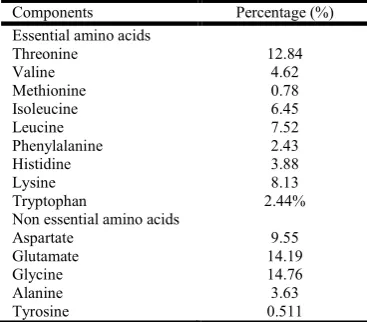
Table 3. shows the total amino acid profile in Legless cuskeel meat
Components Percentage (%)
Essential amino acids
Threonine 12.84
Valine 4.62
Methionine 0.78
Isoleucine 6.45
Leucine 7.52
Phenylalanine 2.43
Histidine 3.88
Lysine 8.13
Tryptophan 2.44%
Non essential amino acids
Aspartate 9.55
Glutamate 14.19
Glycine 14.76
Alanine 3.63
Tyrosine 0.511
Fatty acid composition of Legless cuskeel
Major fatty acids present in the fish meat are given below. The
fatty composition of Legless cuskeel showed more unsaturated
The following Fig.1 shows the percentage of essential amino acid in meat
Where, ‘X’ axis shows amino acids and ‘Y’ axis represent the percentages of sample.
The following Fig.2 shows the percentage of non essential amino acids in meat
Where, ‘X’ axis shows amino acids and ‘Y’ axis represent the percentages of sample.
The following Fig.3 shows the percentage of composition of saturated fatty acids
Composition of saturated fatty acids are given in Table 4.
Components Percentage
C11(Undecanoic acid) 0.97%
C13(Tridecanoic acid) 0.94% C15(Pentadecanoic acid) 0.75% C17(Heptadecanoic acid) 2.6% C17:0(Heptadecanoic acid) 2.0%
C21(Heneico acid) 2.1%
C23(Tricosylic acid) 2.3%
Composition of unsaturated fatty acids are given in Table 5.
Components Percentage
C8(Caprylic acid) 0.85%
C10(Capric acid) 2.25%
C12(Lauric acid) 1.56%
C14(Myristic acid) 1.94%
C14:1(Myristoleic acid) 1.78%
C16(Palmitic acid) 3.5%
C16:1(Palmitoleic acid) 1.4%
C18(Stearic acid) 1.69%
C18:1(Oleic acid) 2.65%
C18:2(Linoleic acid) 2.8%
C18:3(Linolenic acid) 1.24%
C18:3(Linolenic acid) 1.42%
C20(arachidic acid) 1.42%
C20:1(Gadoleic acid) 1.1%
C20:2(Arachidic acid) 1.86%
C20:3(Dihomogammalinolenic acid) 2.4%
C20:4(Arachidonic acid) 7.0%
C22:1(Erucic acid) 2.8%
C22:6(Docosahexaenonic acid) 5.0%
C24(Lignoceric acid) 0.63%
C24:1(Lignoceric acid) 0.31%
Fig.4 shows the percentage of composition of unsaturated fatty acids
Proximate analysis of fish protein concentrate and silage
The following Table 6 shows the proximate compositions in fish protein concentrate and silage of Legless cuskeel
Components Percentage
Fish protein concentrate Fish silage
Crude protein 71.1% 19.21%
Ash 1.48% 18.22%
The result of the mineral analysis in fish silage and protein concentrate showed the highest values of sodium and calcium ions. The percentage parameter of fish silage was found to be high when compared with fish protein concentrate.
Table 7 shows the composition of minerals in fish protein concentrate and silage
Elements Fish protein concentrate (ppm) Fish silage (ppm)
Sodium 1914.72 20804.6
Potassium 1004.14 10310.2
Calcium 5301.36 12187.5
Amino acid composition in fish protein concentrate and
silage of Legless cuskeel
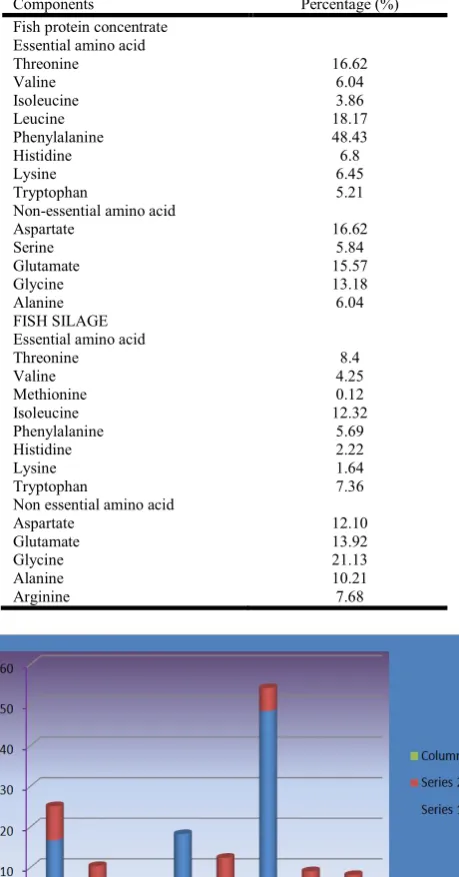
Table 8 shows the total amino acid profile of fish protein concentrate and silage
Components Percentage (%)
Fish protein concentrate Essential amino acid
Threonine 16.62
Valine 6.04
Isoleucine 3.86
Leucine 18.17
Phenylalanine 48.43
Histidine 6.8
Lysine 6.45
Tryptophan 5.21
Non-essential amino acid
Aspartate 16.62
Serine 5.84
Glutamate 15.57
Glycine 13.18
Alanine 6.04
FISH SILAGE Essential amino acid
Threonine 8.4
Valine 4.25
Methionine 0.12
Isoleucine 12.32
Phenylalanine 5.69
Histidine 2.22
Lysine 1.64
Tryptophan 7.36
Non essential amino acid
Aspartate 12.10
Glutamate 13.92
Glycine 21.13
Alanine 10.21
Arginine 7.68
The following Fig. 5 shows the graphical representation of essential amino acid profile in fish protein concentrate and silage
[image:5.595.39.285.141.185.2]Where, ‘X’ axis represent amino acid and ‘Y’ axis represent percentages of sample.
Fig.6 shows the percentage of non-essential amino acid in fish protein concentrate and silage
Where, ‘X’ axis shows amino acids and ‘Y’ axis shows the percentage of sample.
The present studies in legless cuskeel were revealed that, the profile of proximate composition, amino acid composition and fatty acid composition. And also were performed the nutrient comparative analysis of fish protein concentrate and silage. We studied at first about the proximate composition of legless cuskeel meat and found moister content (85.54%) is very high and crude fat (1.91%) is very low. In the case of minerals, sodium ion is very high (15789.8ppm) in quantity and potassium, calcium are also present. Fatty acid profile shows more unsaturated fatty acids than saturated fatty acids. In saturated fatty acids, heptadecanoic acid (2.6%) is high. In unsaturated fatty acids, Docosahexaenonic acid (5.0%) is very high in quantity
The proximate composition of amino acid in meat shows the threonine (12.84%) essential amino acid is observed highly. And in the case of non- essential amino acids, glycine (14.76%) is high. But fish protein concentrate containing, phenyl alanine essential amino acid (48.43%) is high. Aspartate is a non-essential amino acid which is high in fish protein concentrate. When compared the components of nutrients between fish protein concentrate and silage, we observed that crude protein (71.1%), amino acids such as phenyl alanine (48.43%), aspartate (16.62%) are very high and isoleucine (3.86%), serine (5.84%) are low percentage in fish protein concentrate. At the same time in fish silage; ash (18.22%), sodium ion (20804.6ppm), amino acids such as isoleucine (12.32%), glycine (21.13%) are high and methionine (0.12%), arginine (7.68%) are comparatively low percentage.
Conclusion
Our study analyzed that the biochemical profile of Legless
cukeel (Lamprogrammus exutus) and also their products such
as fish protein concentrate and silage. Successfully we estimated the proximate composition, amino acid and fatty acid profiles in this fish meat, protein concentrate and silage. The
percentage of water present in Legless cuskeel was similar to
[image:5.595.50.280.261.700.2]contained comparatively more fat, especially unsaturated fatty acids. So this provides a good source of water in food, when taken alone with diet. The protein is also available in good quantity and observed the high level of glycine amino acid in this fish. The ash percentage was also present highly. The necessary of essential amino acids that are required by the body can be derived from the Legless cuskeel, when it is consumed.
Our studies proved that, the Legless cuskeel (Lamprogrammus
exutus) meat, protein concentrate, silage are highly nutritious
and we can include this fish meat in human diet and also can use silage as an animal feed.
REFERENCES
Asghar and Henrickson, R.L. 1982. Advances in food research, 28:237.
Bechir, Rodica Sirbu, Minodora Leca, Maris, Dan, Artenie Maris, Emilia Mihaelad, Cadar, Muaris Maris 2008.
Proximate composition of fish, World Academy of
Science, Engineering and Technology, 42-145.
Blighdyer 1959. “A rapid method of total lipid extraction,”
Canadian Journal of Biochemistry and Physiology,
vol. 37:534-886.
Darby, J. and Creighton, 1993. Protein structure, Oxford University press, Oxford. 455.
Dempson, Schwarz C. J., Shears M. and Furey G. 2004. Comparative proximate body composition of Atlantic salmon with emphasis on Parr from fluvial and lacustrine
habitats. J. Fish Biol., 64, 1257-1271.
Hendorson and Tocher, D.R. 1987. The lipid composition and
biochemistry of freshwater fish. New York: Pergamon
Press, 911- 917
Hussain, Offere N. W. 1987. Effect of formaldehyde treatment on the degradation of acid preserved fish silage protein in
vitro. Animal Feed Science and Technology, 16, 297-304.
Kompiang, 1981. Fish silage: its prospect and future in
Indonesia. Indonesia Agricultural Research and
Development Journal, 3, 9-12
Nelson, J. R. Paxton and W. N. Eschmeyer. 1998.
Encyclopedia of Fishes. San Diego: Academic Press,
91-95.
Nybakken, W. 1992. Marine Biology, An Ecological
Approach. Jakarta: Publisher Gramedia, 222-290.
Orejana, F. M., Espejo-Hermes, J., Higueras, C. M., Gamboa III, J. B. 1985. The manufacture of FPC (fish protein concentrate type B) product formation using appropriate technology, 418-427.
Rasekh, B.R.Stillings, and D. L. Dubrow, 2001. “Moister adsorption of fish protein concentrate at various relative
humidity and temperatures,” Journal of Food Science, vol.
36, 705-707.
Shulman, 1974. Life cycle of fish physiology and Biochemistry, Halted Press, Division of John Wiley and sons Inc. N.Y (1st Ed) pp 101-104.
Steffens, 1997. An effect of variation feeds on nutritive in essential fatty acids in fish value of freshwater fish for
humans. Aquaculture, 151: 97-119.
Windsor and Barlow, S. 1981. Introduction to fishery
byproducts, p. 84-100. Fishing News Book Ltd.