RESEARCH ARTICLE
FORECASTING EXCHANGE RATE BETWEEN THE GHANA CEDI AND THE US DOLLAR
USING TIME SERIES ANALYSIS
Appiah, S.T.
and *Adetunde, I.A.
Department of Mathematics, University of Mines and Technology, Tarkwa, Ghana
ARTICLE INFO ABSTRACT
This paper modeled the monthly exchange rate between the Ghana Cedi and the US Dollar and forecast future rates using time series analysis. ARIMA model was developed using Box and Jenkins method of Time Series Analysis on the monthly data collected from January, 1994 to December 2010 and validated. The result showed that the predicted rates were consistent with the depreciating trend of the observed series. ARIMA (1,1,1) model was found as the most suitable model with least Normalised Bayesian information Criterion (BIC) of 9.111, Mean Absolute Percentage Error (MAPE) of 0.915, Root Mean Square Error of 93.873 and high value of R- Square of 1.000. Estimation was done by Ljung-Box test, with (Q 18) = 15.146, 16 DF and p-value of 0.514 with no autocorrelation between residuals at different lag times. Finally, a forecast for two-year period from January, 2011 to December, 2012 was calculated which showed a depreciating of the Ghana Cedi against the US Dollar.
©Copy Right, IJCR, 2011, Academic Journals. All rights reserved
INTRODUCTION
Exchange rate also known as the Foreign exchange rate or Forex rate between two currencies specifies how much one currency is worth in terms of the other. It is the value of a foreign nation’s currency in terms of the home nation’s currency. A correct or appropriate exchange rate has been one of the most important factors for the economic growth in the economies of most developed countries whereas a high volatility or inappropriate exchange rate has been a major obstacle to economic growth of many African countries of which Ghana is inclusive. The volatile nature of exchange rates has been the focus of many researchers. Although some previous studies suggest that variations in an exchange rate has the potential to affect a country’s economic performance, LDC’s (Less Developed Countries’) have received less attention compared to industrialized or developed economies. (Kwame P. Ose – Assibey (2010), PhD Thesis). Richard Minkah, 2007 in his own Project Report, titled “Forecasting Volatility” he said “Volatility plays a very important role in any financial market around the world, and it has become an indispensable topic in financial markets for risk managers, portfolio managers, investors, academicians and almost all that have something to do with the financial markets. Forecasting accurately future volatility and correlations of financial asset returns is essential to derivatives pricing, optimal asset allocation, portfolio risk management, dynamic hedging and as an input for Value-at-Risk models. Forecasting is also a critical element of financial and managerial decision making (Majhi et al., 20090). It is established fact that increase
*Corresponding author: [email protected]
volatility of a variable and or using weak forecasting technique in the financial market is harmful to economic development due to their adverse impact on international trade and foreign investment (Chang and Foo, 2002). Hence, forecasting a variable in the financial markets is a matter of imperative importance, especially in the country like Ghana. Exchange rate volatility as an area of international finance has seen intense research interest in the Post-Bretton Woods Era. Surprisingly, the interest in this area of research is still very intense, and experts do not see this interest waning in the foreseeable future. Many researchers attribute interest in exchange rate volatility to the fact that it is empirically difficult to predict future exchange rate values (see Killian and Taylor, 2001).
In recent years a number of related formal models for time-varying variance have been develope -d. In this paper, we shall use ARIMA models to forecast the exchange rate between the GH. Cedi and the US Dollar, and see if the exchange rate of GH cedi to US dollar can appreciate or normalised in order to bring about improvement in trade imbalance to better Ghana economy. Recent past behaviour of the Cedi/Dollar (to extrapolate the future behaviour of the rate) is crucial and this has been linked largely to underdevelopment of the financial system and the exchange rates market. It is interesting therefore to investigate whether correcting the exchange rate system could solve some of the
structural rigidities, trade imbalances slow growth
performance of the Ghanaian economy, this is because inappropriate exchange rate policies negatively affect imports, exports, investment, technology transfer and the ultimately economic growth.
ISSN: 0975-833X
International Journal of Current Research Vol. 3, Issue, 11, pp.351-356, October, 2011
INTERNATIONAL JOURNAL OF CURRENT RESEARCH
Article History:
Received 5th
July, 2011 Received in revised form
8th
August, 2011
Accepted 7th
September, 2011
Published online 30th October, 2011
Key words:
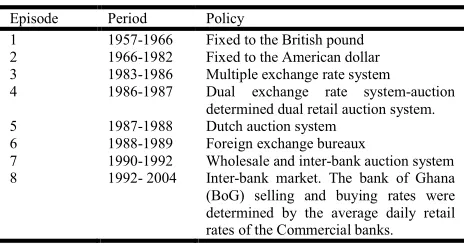
Table 1 below shows the evolution of the exchange rate system with the policies in place in Ghana from 1957 to 2004.
Table 1. Exchange Rate Policy Episode in Ghana 1957- 2004
Episode Period Policy
1 1957-1966 Fixed to the British pound
2 1966-1982 Fixed to the American dollar
3 1983-1986 Multiple exchange rate system
4 1986-1987 Dual exchange rate system-auction
determined dual retail auction system.
5 1987-1988 Dutch auction system
6 1988-1989 Foreign exchange bureaux
7 1990-1992 Wholesale and inter-bank auction system
8 1992- 2004 Inter-bank market. The bank of Ghana
(BoG) selling and buying rates were determined by the average daily retail rates of the Commercial banks.
MATERIALS AND METHODS
Data and data source of this study
[image:2.612.65.283.388.504.2]To fulfill the objectives of this study, the data was collected from the Bank of Ghana (BoG) Research Department, Accra. The data has duration from January, 1994 to December, 2010. The data has two components, thus the dependent variable and the independent variable. Since exchange rate is an economic time series which is dependent over time, exchange rate is the dependent variable and time is the independent variable in this research work. The time component is in months. These data are utilized as raw materials of the current study. as shown in figure 1 below.
Fig.1.Graph of observed data (Correlogram)
Source: Bank of Ghana
Ghana’s policies on exchange rate have influenced by contrasting political regimes that have been in place since independence in 1957. From the table above we can see that since independence in 1957 to 1992, Ghana adopted a fixed exchange rate regime in the management of its exchange rate. During this period, the Ghanaian Cedi (¢) was pegged to the main convertible currencies, notably the British Pound and the American Dollar. The fixed exchange rate was not maintained by active intervention in the foreign exchange market, as was standard in market economies in those days. Instead, the exchange rate was pegged more or less by decree and a series of administrative control was instituted to deal with any possible excess demand foreign currency. The issuing of import license was one such control. With the launching of the Economic Recovery Programme (ERP), the government made a series of devaluation of the Cedi between 1983 and 1986. In particular, the Cedi was devalued in stages from
¢2.75 : US$1.00 in 1983 to ¢90.00 : US$1.00 by the third quarter of 1986. The new foreign exchange policy was characterized by a scheme of bonuses on exchange receipts an surcharges on exchange payments. A multiple exchange rate of ¢23.38 : US$1.00 and ¢30.00 : US$1.00 was applied to specified payment and receipts. The two official rates were eventually unified at ¢30.00 : US$1.00 in October 1983. A real exchange rate rule cost in the purchasing power parity (ppp), framework was introduced. This required a quarterly adjustment of exchange rates in accordance with the relative inflation rates of its major trading partners for the period 1983- 1984. In December 1984, a policy of more periodic exchange rate devaluations was adopted in place of the quarterly adjustment mechanism because the real exchange rate was thought to be overvalued (Bank of Ghana). In September, 1986, the government adopted an auction market approach in order to accelerate the adjustment of the exchange rate and to achieve the objective of trade liberalization, leaving it partially to market forces (demand and supply) to determine the Cedi-Dollar rates. The new arrangement was made up of a dual exchange rate comprising two windows. Window one was operated as a fixed exchange rate pegged to the Cedi-Dollar exchange rate at ¢ 90.00 : US$1.00 and mainly used in relation to earnings from the export of cocoa and residual oil products. Window two, which catered for all other transactions, was determined by demand and supply in a weekly auction conducted by the Bank of Ghana. The two systems were however unified in February 1987. The Dual-Retail Auction was adopted and was based on marginal price. A second auction; the Dutch auction was introduced and under it, successful bidders were supposed to pay the bid price. The foreign exchange bureaux system was established in an attempt to absorb the parallel market into the legal foreign exchange market.
These “forex” bureaux were fully license entities operated by individuals, groups or institutions. Their operation alongside the auction meant that the foreign exchange market was characterized by two spot foreign exchange rates (It must be noted that forex were not allowed to bid for foreign exchange in the weekly-retail auction). In March 1990, the whole sale auction was introduced to replace the weekly-retail auction. Under this system, a composite exchange rate system was operated, namely the inter-bank and a wholesale system. Under the whole sale system, eligible exchange from the Bank of Ghana for sale to their end-user customers and to meet their own foreign exchange needs. They could now use the foreign exchange obtained to their customers subject to a margin determined by each authorized dealer. The wholesale auction system was abolished in April 1992 and replaced by the inter-bank market. Since then both the Commercial and Forex Bureaux have operated in a competitive environment. From the table it is clear that since 1986 the exchange rate policy of the Bank of Ghana has been the managed floating exchange rate. The Bank of Ghana’s intervention in the exchange market has been mainly to smooth fluctuations in the foreign exchange market (BoG).
Recent Development issues and overviews of Exchange Rate Policies
at two Cedis to the pound. Adjustments were made only to suppose to occur when there were fundamental balanced of payments disequilibria. The choice of a fixed exchange regime in Ghana was therefore consistent with the thinking of the time. Due to the inheritance of huge foreign exchange reserves from the colonial era, Ghana exercised practically no control over the foreign exchange markets, which were in the hands of a few commercial banks.
Re-Denominations of the Cedi
The Cedi was re-denominated on July 3, 2007 with the issuance into circulation of new currency, thus the Ghana Cedis and the Ghana Pesewas. It was designed to address one
important lingering legacy of past inflation and
macroeconomic instability. The legacy of the past episodes of high inflation had been the rapid increases in the numerical values of prices as well as foreign currency exchange in the local currency terms. The previous note regime placed significant deadweight burden on the economy. This came in several forms such as high transaction cost at the cashier, general inconvenience and high risk involved in carrying loads of currency for transaction purposes, increasing difficulties in monitoring bookkeeping and statistical records. By the re-denomination of the then old Ten Thousand Cedis was set to be one Ghana Cedis, which was equivalent to one hundred Ghana Pesewas. Thus ¢10,000 = GH¢ 1.00 = 100Gp. The new notes and coins had the same purchasing power or value. (Annual report of BoG, 2007)
THE MODELING APPROACH
The simple ARIMA model Description
It should be noted that the methodology of ARIMA estimation and model selection is a classical topic covered in most textbooks on time series analysis, e.g. (Box and Jenkins, 1976). We do not intend to duplicate here the description of already well documented methodologies, but rather to give a practical meaning in this context to the models. We present model: thus the GHC per USD exchange rate only (i.e. with no covariates), which we call the simple ARIMA model. Auto Regressive Integrated Moving Average (ARIMA) models describe the current behavior of variables in terms of linear relationships with their past values. These models are also called Box-Jenkins (1984) models on the basis of these authors’ pioneering work regarding time-series forecasting techniques. An ARIMA model can be decomposed in two parts (Box et al, 1994). First, it has an Integrated (I) component (d), which represents the amount of differencing to be performed on the series to make it stationary. The second component of an ARIMA consists of an ARMA model for the series rendered stationary through differentiation. The ARMA component is further decomposed into AR and MA components (Pankratz, 1983). The autoregressive (AR) component captures the correlation between the current value of the time series and some of its past values. For example, AR(1) means that the current observation is correlated with its immediate past value at time t-1. The Moving Average (MA) component represents the duration of the influence of a random (unexplained) shock. For example, MA(1) means that a shock on the value of the series at time t is correlated with the shock at t-1. The Autocorrelation Function (ACF) and
[image:3.612.313.551.126.193.2]Partial Autocorrelation Function (PCF) are used to estimate the values of p and q, using the rules reported in Table 1. In the next section, we provide an example of a simple ARIMA model.
Table 2: Characteristics of the theoretical ACF and PACF for stationary processes
Process ACF PACF
AR(p) Tails off as
exponential decay or damped sine wave
Cuts off after lag p
MA(q) Cuts off after lag q Tails off as exponential decay
or damped sine wave ARMA(p,q) Tails off after lag (q-p) Tails off after lag (p-q)
BOX AND JENKINS METHOD OF ANALYSIS
The Box and Jenkins methodology used in analysis and forecasting is widely regarded to be most efficient forecasting technique, and is used extensively. It involves the following steps: model identification, model estimation, model diagnostic and forecasting (Box and Jenkins, 1976).
Model Identification
The foremost step in the process of modeling is to check for the stationarity of the time series data. This can be done by observing the graph of the data or autocorrelation and the partial autocorrelation functions (Makridakis et al, 1998). Another way of checking for stationarity is to fit the first order AR model to the raw data and test whether the coefficient “ ” is less than one.
RESULTS AND DISCUSSION
[image:3.612.323.538.542.644.2]Figure 1 shows the graph of the observe data which gives the general idea about the time series data, and the components of time series present. The trend of the time series data exhibits a stair case trend and has no seasonal variation (not periodic).It also shows two significant peaks, which occurred in 1999 and 2008. It can be seen that the Cedi was in constant steadily depreciating except at the two significant peaks which was due to the world economic crisis which occurred in those years. From the graph it is seeing that the data is not stationary.
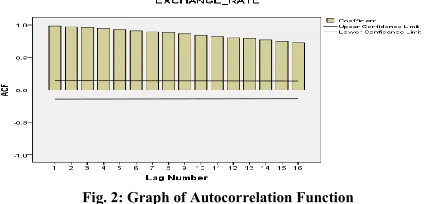
Fig. 2: Graph of Autocorrelation Function
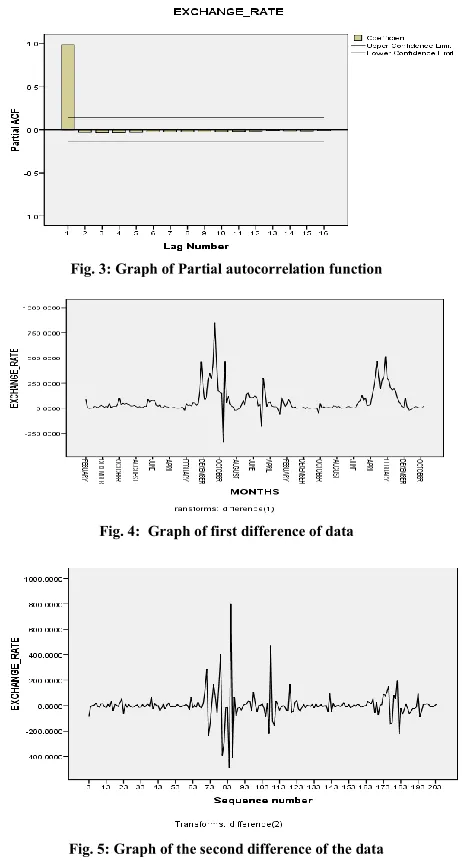
The above correlograms shows the ACF and PACF of the observed data and it can be seen that the time series is likely to have a random walk pattern. Also the ACF suffered from a linear decline thus it dies out slowly and there is only one significant spike for the PACF. This also suggests that the series is not stationary.
Fig. 3: Graph of Partial autocorrelation function
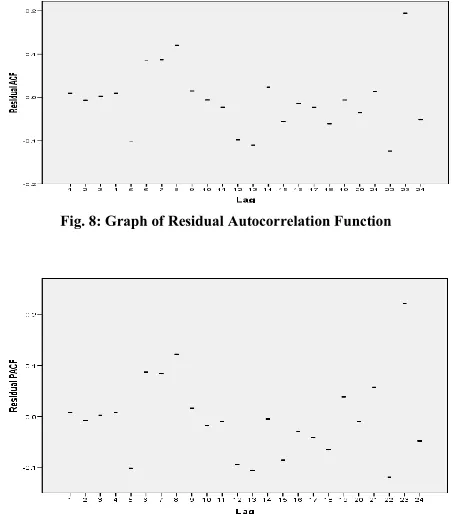
Fig. 4: Graph of first difference of data
Fig. 5: Graph of the second difference of the data
[image:4.612.324.546.66.199.2]The above graphs (fig. 4.4a and fig. 4.4b) show the first difference and the second difference of the data and it can be seen that the means are approaching zero and a constant variance in both cases which implies that the data is stationary.
[image:4.612.323.544.100.517.2]Fig. 6a: Graph of Autocorrelation of first difference
[image:4.612.324.551.238.363.2]Fig. 6b: Graph of first difference partial autocorrelation function
[image:4.612.322.542.389.513.2]Fig. 7a: Graph of Autocorrelation of second difference of the data
Fig. 7b. Graph of second difference partial autocorrelation function
[image:4.612.70.294.562.685.2]Table 3. Suggested Models
MODELS BIC RMSE MAPE R-SQUARED
ARIMA (1, 1, 1 ) 9.111 93.784 0.915 1.000
ARIMA (0, 1, 2 ) 9.317 101.397 1.236 0.999
ARIMA (1, 2, 0 ) 9.265 100.080 0.934 0.999
ARIMA (0, 2, 1 ) 9.158 96.146 0.926 0.999
ARIMA (2, 2, 1 ) 9.244 96.494 0.919 0.999
From the above table and the set criterion it was found that ARIMA ( 1, 1, 1 ) was the best model and fitted with a training set of data from January 1994 to December 2009. The fitted model was used to predict values for a validation period (from January 2010 to December 2010) to evaluate the time series model.
Where, represent the exchange rate in (GH₵ per US$), is the coefficient of the first order AR part, is the coefficient of the first order MA part of the
Model and
is the random shock (white noise) term.
Model Estimation
[image:5.612.319.546.162.419.2]This is concerned with checking the statistical significance of the model. First the Ljung- Box Statistics was performed using SPSS 17 Expert Modular.
Table 4. Model Statistics
Model Model fit Statistics Ljung-BoxQ (18)
Exchange Rate Model 1
R
-Square
d
RMS
E
M
APE
BIC Stat. DF Sig. No
.
of
outlier
s
1.000 9.111 0.915 9.161 15.146 16 0.514 0
The Ljung-Box statistic of the model is not significantly different from 0, with a value of 15.146 for 16 DF and associated p- value of 0.516, thus failing to reject the null hypothesis of no remaining significant AR in the residuals of the model. This indicates that the model seems to be adequately captured the correlation in the time series. Moreover the low RMSE indicates a good fit for the model. Also the high value of the R-squared indicates a perfect prediction over the mean.
Table 5. Model Parameters
Estimates SE t Sig.
Constant 64.598 26.086 2.476 0.14
Coefficients AR Lag 1 0.864 0.520 16.607 0.000
Diff. 1
MA Lag 1
0.447 0.930 4.798 0.000
The coefficients of both the AR and the MA were not significantly different from zero with values 0.864 and 0.447 respectively. This model enables us to write this equation for the exchange rate.
Model Diagnostics
It is concern with testing the goodness of fit of the model. The question now is, is the model adequate? From the graphs of the residual ACF and PACF it can be seen that all points are randomly distributed and it can be conclude that there is an irregular pattern which means the model is adequate. Also the individual residual autocorrelation are very small and are generally within ± 2/ n of zero.
Fig. 8: Graph of Residual Autocorrelation Function
Fig. 9.Graph of Residual Partial Autocorrelation Function
The model is adequate in the sense that the graphs of the residual ACF and PACF shows a random variation, thus from the origin zero (0) the points below and above are all uneven, hence the model fitted is adequate and I can therefore go on to do my prediction.
Forecast
The model was fitted for two years period after the diagnostic test. From the graph of the forecasted model, it was found that the Ghana Cedi is going to depreciate against the US dollar for the whole period forecasted.
Fig. 10. Forecasted model
[image:5.612.320.546.164.289.2] [image:5.612.319.538.583.708.2]found to be non stationary and was differenced to attain stationarity. The model was found to have a good fit hence appropriate for the study. The forecast was found to have and upwards trend for the period of two years. Thus the Cedi will depreciate against the Dollar for the period forecasted.
Conclusions
By our problem definition and research conducted , we conclude that; The exchange rate between the Cedi and the US dollar was found to be non stationary; hence the probability law that governs the behaviour of the process changes over time. This means the process was not in statistical equilibrium. From the findings it was seen that the model fitted was perfect. It is therefore worth to say that per the model fitted is stable. It is clear to conclude that the Cedi is going to have upward trend against the US dollar.
Recommendations
The fiscal and the monetary policies in place should be revised or modified to address the depreciation of the Cedi. I recommend that further studies should be conducted with the inclusion of covariates (economic indicators) such as interest rate parity, purchasing power parity, money aggregate and business cycle.
REFERENCES
Annual report of BoG, 2010. Bank of Ghana (BoG) Research Department, Accra, Ghana.
Box, G.E.P and Jenkins, 1976. Time Series Analysis; Forecasting and Control, Holden-Day Inc., USA, 574 pp. Box, G.E.P., Jenkins G.M., and Reinsel, G.C. 1994. Time
Series Analysis; Forecasting and Control, Pearson
Education, Delhi.
Chang, C. W. and Foo, C. 2002. Forecasting the Volatility of Stock Indices: Using Neural Network, Proceedings of Asia Pacific Economics and Business Conference, 2002, No 2, pp 919-928.
Kwame-Poku Osei- Assibey, 2010. Exchange Rate Volatility in LDCs: Some findings from the Ghanaian, Mozambican and Tanzanian Markets. PhD Thesis Submitted to Economics Studies Department, Collage of Arts and Social Science, University of Dundee. pp 308.
Majhi R, Panda, and Sahoo G. 2009. Efficient Prediction of Exchange Rates with Low Complexity Artificial Neural Network Models. Expert Systems with Applications, 36, No 1, pp 181-189
Makridakis, S., Wheelwright, S.C. and Hyndman, R.J. 1998. Forecasting Methods and Applications, 3rd Edition, John Wiley, New York.
Pankratz, A. 1983. Forecasting with univariate Box-Jenkins models: concepts and cases, John Wiley, New York. Richard Minkah, 2007. Forecasting volatility” Project Report
2007, submitted to Department of Mathematics, Uppsals University, pp 71