Munich Personal RePEc Archive
Resisting Education
Carvalho, Jean-Paul and Koyama, Mark
University of California, Irvine , George Mason University
2 July 2013
RESISTING EDUCATION
∗June 2013
Preliminary and incomplete—do not circulate, quote or cite
Jean-Paul Carvalho Mark Koyama
University of California, Irvine George Mason University
Abstract
We develop a model in which individuals choose education to improve their earnings and regulate the cultural traits they acquire via social transmission. When education makes individuals more receptive to mainstream culture, minor-ity groups underinvest in education as a form of cultural resistance. Economic and cultural incentives interact in surprising ways that increase income inequal-ity. An increase in the skill premium induces low-ability minority types to reduce education—a phenomenon we call resisting education. The model links techno-logical progress, globalization and anti-discrimination policies (e.g. affirmative action, Jewish emancipation) to oppositional attitudes toward education.
Key words: Education; identity; inequality; cultural transmission; oppositional behavior;
JEL classification: D10; D63; D71; I24 ; J24 ; Z12 ; Z13
∗Carvalho: Department of Economics, University of California, Irvine, 3151 Social Science Plaza, Irvine,
CA 92697,[email protected]. Koyama: Center for Public Choice, Carow Hall, George Mason University, VA 22030,[email protected].
1
Introduction
There is a voluminous literature on human capital and its role in economic development (e.g. Schultz 1961, Becker 1975, Lucas 1988, Mankiw et al. 1992). In recent decades, skill-biased technological change and globalization have raised returns to education in developed economies (Berman et al. 1998, Acemoglu 2002, 2003, Autor et al. 2003, Acemoglu & Autor 2011, Autor & Dorn Forthcoming).1
At the same time, public spending on education has increased significantly in real terms.2
Yet there has not been a uniform increase in educational attainment in countries such as the United States or the UK; in particular, educational outcomes have not converged as much as expected for certain minority groups (Katz & Goldin 2008). This paper provides one possible explanation for this pattern of education.
We develop a model in which education is shaped by both economic and cultural incentives. Education both improves earnings and regulates the cultural traits individuals acquire via social transmission. Two types of traits—mainstream and minority—are transmitted from person-to-person via social contact, similar to Bisin & Verdier (2000, 2001). The principal idea developed in this paper is that education makes an individual more receptive to ac-quiring the mainstream trait. Individuals with the minority trait underinvest in education (either for themselves or for their children) relative to mainstream types and relative to the benchmark case in which education has no cultural effect. This provides an explanation for why educational outcomes vary by ethnicity, class and religion.
Economic and cultural incentives interact in surprising ways. An increase in the skill pre-mium induces some individuals to increase investment in education. This makes them more receptive to mainstream culture, causing the mainstream trait to proliferate. Low ability minority types, who benefit least from the rising skill premium, reduce education in response to the increased risk of acquiring the mainstream trait via social transmission. This phe-nomenon, which we call resisting education, is individually rational; it does not emerge as a result of inefficient group norms. In addition, a rise in the skill premium reduces welfare for some minority types and increases welfare for all individuals with the mainstream cultural
1
Correcting for ability bias, the returns to an additional year of schooling are approximately 6–10 percent (Angrist & Krueger 1992, Psacharopoulos 1994, Heckman et al. 2006, Leigh & Ryan 2008).
2
trait.
The model we develop provides an explanation for a number of puzzles that are difficult to reconcile with conventional models of education. Technological change and globalization have led to an increase in the skill premium in recent decades. However, as Katz & Goldin (2008) document, levels of educational attainment in the US have not responded uniformly, as both human capital and signaling would suggest. In our model, worsening educational outcomes for disadvantaged members of minority groups is a natural consequence of rising returns to education. This has important implications as the global increase in the skill premium since the 1980s has been linked to rising income inequality (Katz & Murphy 1992, Juhn et al. 1993, Acemoglu 2002). Cultural incentives for resisting education in our model generate educational polarization and thereby amplify the effect of a rising skill premium on economic inequality.
The poor educational performance of minority groups in our model is not the consequence of discrimination. It is the product of cultural resistance. In fact, recognizing that various anti-discrimination measures serve to increase the skill premium for members of minority groups opens up a range of applications for our model. The civil rights movement in the US and the introduction of affirmative action, the breakdown of the class system in Britain and Jewish emancipation in 19th century Europe were all followed by the rise of oppositional cultures that denigrated (mainstream) educational achievement. These include the stigma attached to ‘acting white’ in African American communities, the development of anti-education atti-tudes among the white working class in Britain, and resistance to secular education among the Amish and ultra-Orthodox Jews. The emergence of these movements in the midst of rising returns to education is puzzling. Our theory provides a unified explanation for these seemingly disparate movements.
Our approach is related to both the economics of identity (Akerlof & Kranton 2000, 2002, Fang & Loury 2005, Austen-Smith & Fryer 2005), cultural transmission (Bisin & Verdier 2000, 2001), as well as the literature on affirmative action (Coate & Loury 1993a,b).3
Ak-erlof & Kranton (2002) propose that minority students, whose ascriptive characteristics differ significantly from the mainstream, find it hard to fit into a school’s status system and may thus reject it.4
Coate & Loury (1993b) examine how affirmative action can affect stereotypes
3
For a survey of the cultural transmission literature, see Bisin & Verdier (2011).
4
of minority groups in the presence of statistical discrimination; they show that, in some circumstances, anti-discriminatory policies can reinforce self-fulfilling negative perceptions of a minority group. Austen-Smith & Fryer (2005) develop a two-audience signaling model of “acting white” in which individuals pool on lower levels of education than they other-wise would to signal favorable social traits and avoid peer group rejection. Eguia (2013) proposes an alternative explanation in which members of an advantaged group choose a level of discrimination to screen out low-ability members of the disadvantaged group. Since high-ability individuals generate positive externalities, the disadvantaged group penalizes high-ability coethnics for academic success to miminimze outmigration.
Jensen & Miller (2011) also analyze strategic underinvestment in education. In their model, education increases an individual’s productivity, but also makes them more likely to migrate to a city. Thus parents face a tradeoff when choosing their children’s education. Rising returns to education in the city induce parents to reduce the education of children whom they want to stay at home and increase the education of children whom they want to migrate.5
A field experiment in India finds support for this prediction, particularly for boys whose parents report a strong preference for them remaining at home.
None of these papers study the role of cultural transmission in shaping minority identity. An exception is Zenou & S´aez-Mart´ı (2012) who focus on the cultural transmission of a work ethic and how it is affected by discrimination. They find that discrimination can be self-fulfilling if it induces a minority group not to invest in a work ethic. Our approach is different; we do not propose a ‘culture of poverty’ argument. The results we generate do not require the transmission of good and bad cultural traits that respectively increase and depress individual productivity, such as a work ethic. Rather we study the transmission of cultural identity, which is valued in itself by individuals and has no direct economic effect. We show that these cultural incentives interact in unexpected ways with standard economic incentives.
The remainder of the paper is structured as follows. In Section 2, we briefly motivate our central idea that education makes individuals more receptive to mainstream values. The model is introduced and analyzed in Section 3. Section 4 explores various applications of our model and Section 5 concludes.
social pressure to choose a lower level of education.
5
2
Motivation
2.1
Education Shapes Culture
The approach we employ builds on the natural assumption that education shapes one’s cul-ture and identity. This notion is not new. When widespread public education was introduced in 19th century Europe, the express purpose of policymakers was to undermine old regional, class-based, and ethnic identities, to produce citizens who would be willing and able to con-tribute to the nation.6
Weber (1976) documents the case of late nineteenth century France when in the Third Republic a ‘vast program of indoctrination was plainly called for to per-suade people that the fatherland extended beyond its evident limits to something vast and intangible called France’ (Weber 1976, 333). He notes that:
‘At the very start of school, children were taught that their first duty was to defend their country as soldiers . . . Commencement speeches recalled this sacred duty in ritual terms—our boys will defend the soil of the fatherland. The whole school program turned on expanding the theme. Gymnastics were meant “to develop in the child the idea of discipline, and prepare him ... to be a good soldier and a good Frenchman” . . . ‘Teachers taught or were expected to teach “not just for the love of art or science ... but for the love of France”’ (Weber 1976, 334-336).7
There is some prior work in economics on this kind of positive spillover from education. Gradstein & Justman (2002) develop a model in which education leads to economic growth by reducing the cultural distance between different groups. Dixit (2009) develops a model in which parents can invest in education for their children in order to instill pro-social preferences. Empirical evidence indicates that education reduces crime (Lochner & Moretti 2004), increases voting turnout and support for freedom of speech (Dee 2004) and generally improves civic engagement (Milligan et al. 2004, Glaeser et al. 2007).8
6
For a discussion of the motivations of policymakers in implement these educational reforms see Alesina & Reich (2013).
7
Revisionist historians see the early American public education system as cultivating values of conscien-tiousness, time-keeping, and self-discipline that were required for capitalist production (see Bowles & Gintis 1976, Katz 1976). Lott (1999) documents how totalitarian governments provide large amount of public education.
8
What has not been fully recognized by economists is that the positive externalities asso-ciated with education are often viewed as negative externalities from the perspective of minority groups or subcultures. Socialization into the majority culture often means par-tial de-socialization in the minority culture, the loss of traditional values and beliefs, and the undermining of local community attachments. For example, in the new public schools of late 19th century France, uses of regional dialects were prohibited and regional histories were replaced by national history (Weber 1976, 345). Even when indoctrination is not an ex-plicit educational goal, mainstream education socializes children in the culture of mainstream society.
2.2
Educational Attainment among Minorities in the US and UK
Katz & Goldin (2008) review the history of American leadership in providing widespread access to high school and college education. Since the 1970s, however, educational attain-ment and performance in the United States has stagnated, even as the returns to education have increased. The performance of US students in international tests, as measured by the Program for International Student Assessment (PISA), has been ‘relatively flat over the pe-riod 1969–1999’ (Hanushek & Woessmann 2009, A4). In contrast, East Asian and northern European countries have improved their performance. In 2010 less than a third of US stu-dents achieved proficiency in mathematics compared to 58 percent in Korea and 56 percent in Finland (Peterson et al. 2011).9
Katz and Goldin link the overall stagnation in education attainment to increased inequality in educational outcomes. Why have significant portions of the population failed to respond to high returns to education? Katz and Goldin argue that ‘schools are essentially failing particular students . . . mainly minority children’ (Katz & Goldin 2008, 348). While they see this as a problem of funding and running inner-city schools for minorities, there is evidence that this phenomenon may also be related to issues of identity.
According to the 2010 PISA tests 50 percent of Asian Americans and 42 percent of white
for minorities. Alesina & Reich (2013) consider the incentives rulers have to invest in indoctrinating their population.
9
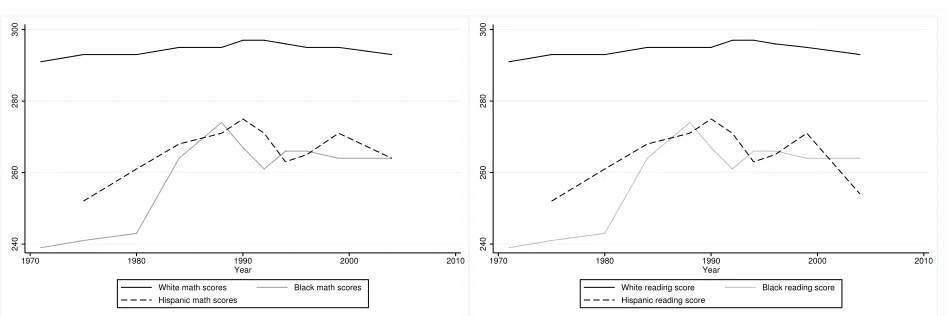
Figure 1: Educational Attainment by Race in the US
240
260
280
300
1970 1980 1990 2000 2010 Year
White math scores Black math scores Hispanic math scores
240
260
280
300
1970 1980 1990 2000 2010 Year
White reading score Black reading score Hispanic reading score
Average reading and mathematics scores at age 17 in the US from the National Assessment of Educational Progress. Scores range from 0-500. Data: KewalRamani et al. (2007).
Americans are proficient in mathematics compared to only 11 percent of African American and 15 percent of Hispanic American students (Peterson et al. 2011). The National Assess-ment of Educational Progress (NAEP) reports that while reading and mathematics scores for blacks and hispanics are higher than they were in the 1970s there has been stagnation in black and hispanic test scores since the 1990s (KewalRamani et al. 2007). The average reading level at age 17 for African Americans and Hispanics in 2004 was lower than in 1988 (264 for both groups compared to 274 and 271 respectively in 1988)—and considerably less than the score for whites (which was 293).10
In mathematics, scores for minorities were also lower in 2004 than in 1990; the process of convergence with white scores seems to have ceased (Figure 1).
Part of the poor educational performance of minorities in the US is no doubt driven by economic factors such as school quality, parental education and income. However, one sees significant variation in educational attainment in the UK across groups, even when restricting attention to students who are eligible for free school meals (which controls for income and some other confounding variables). Except in the UK, it is white British students (eligible for free school meals) that do poorly.11
Table 1 reports that among students eligible for free
10
In fact the score of black and Hispanic 17 year olds was lower than the average score for white 13 year olds.
11
Table 1: Educational Performance among Poor British Students
Percentage of students eligible for free school meals with 5 or more A*–C grades at GCSEs
White British 25.8 Black 39.1 South Asian 45.7 East Asian 68.4
Source: DfE: GCSE and Equivalent Results in England, 2009/10 (2010). 5 A*–C GCSEs are typically required for students to attend university.
school meals, only 25.8 percent of ‘white’ students obtain the 5 or more A–C grades including English and Mathematics—usually required to attend university—compared to 39.1 percent of black students, 45.7 percent of ‘Asian’ (South Asian) students and 68.4 percent of ‘Chinese’ (East Asian) students between 2005 and 2010. Economic factors alone cannot explain this pattern of education. Educational underperformance among poor students in the UK is driven by class, rather than race-based identity. Another example is provided by Izama (2013) who studies educational outcomes in sub-Saharan Africa. She finds that Muslims acquire significantly less human capital than do Christians and that this effect is strongest in countries where Muslims comprise a small minority of the region. In the next section we develop a formal model that allows us to show how these, and other forms of educational underachievement, can be viewed as a form of cultural inoculation against the transmission of mainstream cultural traits.
3
A Model of Education and Cultural Transmission
Let us turn to our formal model. The main departure from conventional models of educa-tion is that educaeduca-tion not only improves earnings, but also affects the social transmission of cultural traits. To focus on this cultural mechanism, we abstract from general equilibrium effects (Fang & Norman 2006), statistical discrimination (Coate & Loury 1993b), intergen-erational transfers of ability and human capital (Borjas 1992, 1995), and other factors which have been the subject of prior work.
formulation in which children choose their own educational effort.
Society is composed of a continuum of parents with unit mass. Time is continuous and denoted by t. In each period t, a parent gives birth (asexually) to one child, learns the child’s ability, chooses its level of educatione∈[0,1] and then dies.
Education e yields an exogenous economic payoff of F(e;a) = f(a)eσ > 0. The function F
is our reduced-form model of the labor market. We assume that the elasticity σ ∈ (0,1), so that F is strictly increasing and strictly concave in e. We refer to the function f(a) as the return to education and the parameter aas an agent’s ability, but one can conceive of a more broadly as representing any exogenous variable that affects an agent’s marginal return to education, including local school quality and ascriptive characteristics that form the basis for discrimination. Assume that f is continuous, positive and strictly increasing. A child’s abilityais drawn from a continuous distribution with finite meanα and probability measure µ.12
Each agent’s ability draw is independent of her parent’s ability and the ability of other agents in her generation. The support of µ is (0, a). This formulation is consistent with a view of education as an investment in human capital and a signal of innate productivity.13
Education also has a (direct) cost ce, where c > 0. Thus far, we have a standard model of human capital acquisition. The point of departure in our model is that education also shapes the transmission of cultural traits.
Each parent is one of two cultural types θ ∈ {M, m}. Proportion qt of parents possess
the mainstream trait M and proportion (1−qt) of parents possess theminority trait m at
the beginning of period t. During the period, children can acquire a different trait through the process of social transmission. Mainstream educational institutions in our model tend to make individuals more receptive to acquiring the mainstream trait via social contact. Independently of her initial cultural type, a child with education e in period t is matched with anM type with probabilityqt, in which case she acquires the mainstream trait M with
probabilitye. With probability 1−qt, she is matched with a minority mtype, in which case
she acquires the mainstream trait M with probability 1 2e.
14
Parents are imperfectly empathetic toward their children, as in Bisin & Verdier (2000),
12
Qualitatively similar results can be derived for discrete distributions ofa. 13
Mailath (1987) demonstrates that separating equilibria are differentiable when the set of types is an interval.
14
judging them based on their own preferences. Let us simply assume that a type θ parent receives a payoff ofνθ(M) if their child acquires the mainstream trait andνθ(m) if their child
acquires the minority trait. Defineδθ ≡νθ(M)−νθ(m). We assume thatδm <0< δM, viz.,
parents prefer children to acquire their own cultural trait.
For parents with the mainstream trait, education promotes their cultural identity, while the opposite is true for parents with the minority trait. By helping to transmit the mainstream trait, education can undermine the ability of minority parents to pass on their own trait to their children.
A type (a, θ) parent is a parent with trait θ who has a child with ability a. The expected total payoff to a type (a, θ) parent from choosing educatione in period t is:
U(e;a, θ, qt) = F(e;a)−ce
+ [qte+ (1−qt)12e]νθ(M)
+
qt(1−e) + (1−qt)(1− 12e)
νθ(m).
(1)
This formulation is not chosen for its realism, but to make a point. Even when the eco-nomic and cultural incentives for education are additively separable, there can be interesting interactions between the two.
3.1
An Alternative Interpretation
The model can reformulated to support an alternative interpretation which we will employ at times in applying the model. Specifically, we can conceive of a child choosing to exert effort e on education. In this case, children want to retain the identity that they inherit and minority children trade off the economic benefits of education against the cultural cost of losing their inherited identity. We will continue to focus on the version in which parents choose education in the formal analysis.
3.2
The Optimal Level of Education
parent this is given by the solution to the first-order condition:
σf(a)eσ−1
=c−1
2δθ(1 +q), (2)
which implies that:
e∗
(a, θ, q) =
σf(a) c− 1
2δθ(1 +q)
11
−σ
. (3)
For e∗
(a, θ, q) < 1, it is sufficient that c− δM > σf(a). This condition also guarantees
that e∗
(a, θ, q)> 0. Henceforth we shall impose this condition for convenience, though our qualitative results do not depend on it.
Our first proposition characterizes how educational choices vary with an individual’s ability and cultural trait.
Proposition 1 Fix a stateq. For each type (a, θ) parent, there exists a unique optimal level
of educatione∗
(a, θ, q)given by equation(2). Education choices are interior,0< e∗
(a, θ, q)< 1 for all a∈A, θ ∈ {M, m} and q ∈[0,1].
Optimal education is:
(i) strictly increasing in an agent’s ability a,
(ii) strictly increasing in q for parents with the mainstream trait M,
(iii) strictly decreasing in q for parents with the minority trait m,
(iv) lower for parents with the minority trait m.
A few remarks are in order regarding the differences in educational choices by mainstream M and minority m types. Firstly, M type parents always choose a higher level of education because education reinforces their own cultural trait. In contrast,m type parents would like their children to acquire themtrait. Hence education imposes an additional cultural cost on minority parents, which induces them to underinvest in education relative to the benchmark case in which education does not affect the social transmission of traits (alternativelyδm = 0)
agents with mainstream and minority traits. An increase inq raises the risk of acquiring the M trait via social transmission. Minority parents, who want their children to retain the m trait, respond by decreasing their children’s education in order to insulate them from this. The opposite is true for mainstream parents.
3.3
The Steady-State Distribution of Cultural Traits
We are now in a position to derive the steady-state distribution of cultural traits. Recall that the probability with which an agent who has educatione acquires the mainstream trait isqte+ (1−qt)12e =
1
2(1 +qt)e. Hence in the continuous-time limit the evolution ofq is given
by the following nonlinear differential equation:
˙
q= (1−q)1
2(1 +q)ˆe−q
1− 1
2(1 +q)ˆe
= 1
2(1 +q)ˆe−q ,
(4)
where ˆe is the average level of education defined as follows:
ˆ e≡ Z a 0 qe∗
(a, M, q) + (1−q)e∗
(a, m, q)
dµ = q σ c− 1
2δM(1 +q)
11
−σ
+ (1−q)
σ c−1
2δm(1 +q)
11
−σ Z a
0
f(a)1−1σ dµ.
(5)
Note that ˆe ∈ (0,1) because e∗
(a, θ, q) ∈ (0,1) for all a ∈ A, θ ∈ {M, m} and q ∈ [0,1] by Proposition 1.
Denote the RHS of (4) by h(q). A steady-state distribution of traits, denoted by q∗
, occurs where h(q) = 0. Recall that for q∗
to be asymptotically stable, it must be that h′
(q∗
) <0. We shall henceforth focus on the subset of steady states which are asymptotically stable.
Proposition 2 There exists a smallest and largest asymptotically stable state, denoted by q
and q respectively. Every steady state is interior, 0< q∗
<1.
!
!
!
!
!
!!
!!
(a) Unique Steady State
! ! ! !
!
!!
!! !!
[image:14.612.103.514.77.288.2](b) Multiple Steady States
Figure 2: The steady-state distribution of cultural traits
can exist and at least one is asymptotically stable. Examples with one and three steady states are depicted in Figure 2. When cultural transmission produces multiple steady states, a small increase in returns to education can have a large effect on educational choices.
3.4
Resisting Education
Let us now examine the effect of an increase in returns to education on the mean level of education and distribution of cultural traits. In particular, we consider a shift at some time T from the function f to g that retains the properties of f with a few key differences, the first being:
Dominance. g(a)> f(a) for all a∈(0, a).
That is, the shift to g means that everyone enjoys a higher marginal return to education.
Let the mean level of education at time t be ˆet. If f and g satisfy dominance, then we can
state the following result:
Proposition 3 Let the process reside in an asymptotically stable steady state q∗
!
!
!
! !
!!
!! !!
(a) Unique Steady State
!
!
!
! !!
!! !! !! !!
[image:15.612.103.515.75.288.2](b) Multiple Steady States
Figure 3: The steady-state distribution of cultural traits
Suppose there is an increase in returns to education from f to g at time T. Then for all
t > T, qt> qT and eˆt >eˆT.
In other words, there is an immediate and permanent increase in the prevalence of the main-stream trait and the mean level of education after the increase in returns to education occurs.
An increase in returns to education induces a rise in the mean level of education, which in turn causes the mainstream trait to spread. Figure 3 depicts the corresponding shift in steady states. In canonical models of human capital acquisition, in which education only plays an economic role, every individual increases education in response to a rise in the skill premium. When education has both a cultural and economic role, however, a focus on average levels of education obscures surprising forms of heterogeneity in educational responses. Some types may resist the spread of the mainstream trait induced by the rise in the skill premium.
Definition 1 (Resisting Education). Type (a, θ) resists education at time t > T if:
e∗
(a, θ, qt, g)< e
∗
(a, θ, qT, f).
Bias. lima→0[g(a)−f(a)] = 0.
While everyone may enjoy a higher marginal return to education, this condition ensures that the increase is arbitrarily small for the lowest ability types. One can think of this as an increase in the skill premium, where benefits accrue primarily to high ability workers. When f and g satisfy dominance and bias, we can state the following result:
Proposition 4 For all t > T, there exists a set of types with positive measure who resist
education at time t. This set consists exclusively of agents with the minority trait.
Hence there are always some minority types who respond to the increase in returns to education by resisting education. In contrast, all individuals with mainstream values increase education. The intuition for this result is as follows. As agents increase education, in response to the rise in returns to education from f to g, the mainstream trait spreads through the population (qrises). When the increase in returns to education exhibits ‘bias’, however, there are some ability types whose benefit from the shift to g is arbitrarily small. Such agents who hold the minority trait respond to the increased risk of acquiring the mainstream trait by reducing education. In contrast, mainstream types want their children to acquire the mainstream trait. The increase in q induces them to increase education, even when they receive no economic benefit from the shift to g.
We can say more about the set of agents who resist education if we replace the dominance condition with the following monotone likelihood ratio property (MLRP):
MLRP. If a > a′
, then f(a)/g(a)< f(a′
)/g(a′
).
When f and g satisfy MLRP and bias, we have the following result:
Corollary 1 There exists a real number aˆt∈(0,¯a] such that type (a, θ) resists education in
period t if and only θ =m and a∈(0,ˆat].
benefit from rising returns to education, which may vary depending on factors such as the quality of public schools and local norms of discrimination. Hence, by identifying the types of individuals who resist education, Corollary 1 yields a further empirically testable predic-tion: Individuals with the worst educational outcomes adopt even lower levels of education in response to a rise in the skill premium.
Resisting education has natural consequences for trends in economic inequality. An increase in returns to education creates an exogenous increase in inequality. While improving average educational attainment, this also sets in motion cultural changes which lead to further po-larization in educational outcomes. The original (exogenous) increase in economic inequality is thereby amplified, creating even greater inequality than in a homogeneous society with all mainstream types.
3.5
Opposing Education
Let us now turn our attention to the welfare implications of rising returns to education. Let V denote an agent’s indirect utility.
Definition 2 (Opposing Education). Type (a, θ) opposes education at time t > T if:
V(a, θ, qt, g)< V(a, θ, qT, f).
When f and g satisfy dominance and bias, we can state the following result:
Proposition 5 For all t > T, there exists a set of types with positive measure who oppose
education at timet. This set consists exclusively of agents with the minority trait. The set of types that oppose education at time time t is a proper superset of the set of types that resist education at time t.
would all types who resist education oppose the policy, but so would some types who would choose a higher level of education due to the policy.
The intuition is as follows. An increase in the return to education comes at a cultural cost to minority types, because it leads to the spread of the mainstream trait via social transmission. Resisting education is a response aimed at reducing the risk of acquiring the mainstream trait by reducing one’s investment in education. Part of the cultural cost imposed by a rise inq, however, cannot be neutralized by reducing education. Hence there are more types that are made worse off by a policy that increases returns to education than resist this increase.
When f and g satisfy MLRP and bias, we have the following result:
Corollary 2 There exists a real number a˜t∈ (ˆat,¯a] such that type (a, θ) opposes education
in period t if and only θ=m and a∈(0,˜at].
In this case, we can conclude that the worst off individuals—low ability minority types—are made worse off by rising returns to education.
4
Applying the Model
Poor educational outcomes among minority groups have been to difficult to reconcile with rising returns to education driven by globalization and skill-biased technological progress. In our model, these phenomena go hand in hand. Once we recognize that various anti-discrimination policies produce a higher skill premium for members of minority groups, a number of other applications of our model become apparent.
4.1
Civil Rights, Affirmative Action & Acting White
The stigma attached to ‘acting white’ is one of the most prominent explanations for the persistent underperformance of African American and Hispanic minorities in the US. Fryer & Torelli (2010) find that African American students with high grade point averages (above 3.48) are systematically less popular among their peers than are white students with the same grades. Austen-Smith & Fryer (2005) use a signaling model to explain this phenomenon. Our model adds to this analysis by demonstrating that ‘acting white’ can be viewed as part of a general process that is driven by the fact that education involves cultural transmission.
The Civil Rights movement of the 1960s raised the returns to education for African Amer-icans. Wilson reports that ‘the efforts of corporations to recruit college-trained blacks in-creased sharply between 1965 and 1970. In fact, the average number of recruitment visits of representatives of corporations to predominantly black colleges rose from 4 in 1960 to 50 in 1965, climbing to 297 in 1970’.15
During the 1980s, however, working class African Americans in the inner cities faced reduced economic opportunities due to deindustrializa-tion and technological deskilling, while at the same time a rising, largely suburban, African American middle class emerged, which continued to benefit from both diminishing levels of discrimination and from skill biased technological change (Wilson 1978a, Wacquant & Wilson 1989). Thus, while African Americans in general stood to benefit from the ending of Jim Crow laws in the South, and other less visible forms of discrimination in the North, it was only the new black middle class that continued to experience higher wages and greater levels of educational attainment in the 1980s and 1990s. The majority of inner-city African Americans werenot able to benefit from the increase in the skill premium that began in the 1980s (represented by a shift from f to g in our model).16
Our model suggests that it was the widening gap between returns to education among African Americans that appears to have generated a cultural movement opposed to educational attainment.
15
‘[S]chools such as Clark University, Atlanta University, and Southern University, to which no visits had been made in 1960, received in 1970, 350,510, and 600 corporate representatives, respectively. The vigorous recruitment of highly educated blacks by corporations is one of the principle reasons why the proportion of black male workers in white-collar positions increased from 16 to 24 percent from 1964 to 1974 (the proportion of white males in white-collar positions remained slightly over 40 percent during this period) with the greater portion of this increase occurring in the higher level technical, professional, and administrative positions (Wilson 1978b, 17).
16
Therefore, it is consistent with our theory that sociologists and ethnographers began to detect the emergence of a distinctive culture that penalized academic achievement within inner city black communities in the 1980s.17
This is the ‘acting white’ norm documented by sociologists and analyzed by Austen-Smith & Fryer (2005). Our theory suggests that this is part of a more general cultural response to rising returns to education.
Our model also sheds light on the effectiveness of policies designed to increase levels of educational attainment among minorities. Affirmative action acts as an increase in the skill premium for a relatively small proportion of high ability African Americans and Hispanics, by enabling them to gain places at higher ranked universities.18
An extensive academic literature studies the effect of affirmative action policies in the US both in theory and in practice.19
Proponents of affirmative action in the 1960s and 1970s saw it as a temporary measure. One Supreme Court justice who supported the legality of affirmative action in 1978 stated that “I yield to no one in my earnest hope that the time will come when an affirmative action program is unnecessary and . . . a relic of the past” and hoped that “within a decade at most, American society must and will reach a stage of maturity where acting along this line is no longer necessary” (quoted in Fang & Moro 2011, 164).
This was not to be. As apparent in Figure 1, racial differences in educational attainment (which narrowed during the 1960s and 1970s) have not shrunk since the 1980s. Our purpose here is not to assess the effectiveness of affirmative action nor to replace existing explanations for how affirmative action policies can generate adverse effects. Rather we suggest that our
17
The figures reported by Wacquant & Wilson (1989) for inner-city Chicago are dated, but indicative of the phenomenon we are describing. They report that a large fraction of the population in the poorest areas of Chicago had not graduated high school and of those a ‘majority of 60.5 percent in the jobless category’. They note that ‘a high school degree is aconditio sine qua nonfor blacks for entering the world of work, let alone that of the middle class. Not finishing secondary education is synonymous with economic redundancy’ and that this condition describes a substantial proportion of the residents of poor black neighborhoods (Wacquant & Wilson 1989, 18).
18
Schuck, summarizing a large literature, notes that ‘even its proponents concede that only a very small fraction of the group can hope to take advantage of it. This is most obvious with selective college admission . . . but it is bound to be true as well for employment that requires special job skills or a certain level of education . . . affirmative action in admission to selective colleges and universities largely benefits students from middle-and upper-class families. This is hardly surprising, as these students are best equipped to apply to such competitive and costly schools. This pre-college advantage is then multiplied when these students, now graduates of the selective schools, go on to apply to selective professions and graduate programs and then proceed with their careers’ (Schuck 2003, 175).
19
theoretical framework provides an alternative and complementary mechanism for explaining why affirmative action has not been as successful as its proponents either hoped or expected. Affirmative action raises the returns to education predominantly for high ability minority types. As they increase education, in our model, the mainstream cultural trait spreads through the minority population (the mean level of education qincreases by Proposition 3). As Proposition 4 predicts, those who benefit least from affirmative action may respond by reducing their level of education. In this way, our model suggests that affirmative action could further depress the educational outcomes and reduce the welfare of the most disadvantaged members of the minority group (Corollary 2).
4.2
Breakdown of Class Discrimination & White Working Class
Culture in Britain
Another example that sheds light on the relationship between resisting education and the transmission of values between groups is provided by white working class attitudes to edu-cation in the UK.
Participation in higher education has long been seen as conflicting with traditional working class values (see Jackson & Marsden 1966). University enrollment in the UK lagged behind US levels throughout the twentieth century, as did the equivalent of high school attendance. Katz and Goldin note that ‘[b]y 1960 Great Britain was about 35 years behind the United States in the educational attainment of its high-school aged youth’ (Katz & Goldin 2008, 26). Instead, Katz and Goldin emphasize that the British system focused on providing a high level of education to an elite (Katz & Goldin 2008, 28).20
20
Several important developments occurred after 1980. First, the returns to education in-creased in the UK, as elsewhere. Second, the traditional class system began to breakdown as more people self-identified as middle-class and, third, after 1990 there was a dramatic expansion in the number of university places. The proportion of the eligible population attending university in the UK correspondingly increased from 13% in 1980 to 33% in 2000 and 39% in 2010.
Standard theories of education predict that rising returns to higher education and cheaper ac-cess thereto would produce an increase in educational attainment. While average educational attainment has increased, not all communities within the UK were able to benefit equally from the increased provision of education; instead, educational outcomes have become more polarized. Children from working-class backgrounds remain heavily underrepresented, es-pecially at elite universities.21
Moreover, this problem is particularly concentrated among particular communities, notably the white working class as Table 1 indicates.
Our theory can account for this otherwise puzzling development. Proposition 4 predicts that some individuals will reduce their level of educational attainment in response to an increase in returns to education because they (or their parents) wish to preserve their cultural values. Archer et al. (2003) quote a student who states her reluctance to attend university in the following terms:
Well my boyfriend keeps on telling this to me ... once I come into university I will start acting like a uni student, I will start talking like a uni student, I’ll start reading the papers that they read, you know? [laughs] I’ll start behaving properly like one. And will you be listening to radio stations and um watching different things on TV, that I don’t watch now, you know? And I do find myself doing that. (Archer et al. 2003, 177)
This statement highlights the cultural threat posed by mainstream education which is central to our model. In this case, higher education is associated with a distinctly middle-class culture which working-class individuals find alienating.22
This is particularly marked among young men. Surveys conducted in the UK suggest that within working class communities,
21
See Harris (2010) and Browne et al. (2010, 48-49).
22
attending university is still ‘overwhelmingly associated with negative, undesirable images of masculinity, encapsulated in stereotypes of students as socially inadequate men who enjoy study’ (Archer et al. 2003, 180).
The increased prominence of a particular strand of white working class culture—often de-noted as ‘chav’ culture in the popular media—provides an example of what we call resisting education.23
A ‘Chav’ dresses a certain way: typically wearing trainers, tracksuit, hoodie, and cap. This dress code is in part a visible investment in identity that rejects the goals and values of mainstream society and signals membership in an alternative culture. It is explic-itly identified with resisting education; it is a term that first emerged to categorize different types of teenagers at school (Hollingworth & Williams 2009, 479). A recent survey of school children found that ‘Chavs’ “always try and disobey rules and everything . . . [they are] the ones who are disruptive in class, trying to make everyone’s life a misery” (Hollingworth & Williams 2009, 475).24
Just as the phenomenon of ‘Acting white’ was found to be strongest in suburban schools in which the majority of students were not black (Austen-Smith & Fryer 2005), the term ‘Chav’ did not emerge in inner city areas, where divisions typically occur along ethnic lines, but rather emerged in (predominantly white) suburban areas and in state schools attended by children from a mixed socio-economic background. This is consistent with the emphasis our model places on the transmission of values amongst peers.
4.3
Religious Groups and Resistance to Education
A final application of our theory is to religious groups, particularly strict sects that do not share mainstream values and beliefs. Religious groups are able to collectively organize in order to resist mainstream or secular education if they feel it threatens their cultural identity. We can establish the following proposition.
The examples of the Amish and ultra-Orthodox Jewish groups suggests that when a minority group has very different cultural values to mainstream society they will limit education because of the threat it poses to young and susceptible individuals. The Amish have been
23
The term ‘Chav’ itself is controversial. It is seen as a way of essentializing undesirable working class attributes (see Hollingworth & Williams 2009).
24
particularly successful at resisting education beyond the level of secondary school. As their cultural values are distinct from those of American society, the Amish ‘want their children to be educated in Amish schools, taught by Amishmen in accordance with the Amish value system to prepare them for life in the separated Amish society’ (Casad 1967, 425-426) because they believe mainstream society to ‘be part of the “Satanic Kingdom”.
Consistent with our model the Amish opposed high school education because adolescents are seen to be particularly vulnerable to outside influences and because the subjects taught at high school (literature, art, sciences, civics and politics) are seen to be inherently corrosive of Amish values (Dewalt & Troxell 1989, Waite & Crockett 1997).25
Amish parents feared that their children would acquire secular and foreign values: ‘[t]he paramount fear lurking beneath all the other concerns was that modern education would lead Amish youth away from farm and faith, and undermine the church. The wisdom of the world, said Amish sages, “makes you restless, wanting to leap and jump, and not knowing where you will land.”’ (Kraybill 1989, 2001, 131). Unlike other minority groups that have attempted to inoculate themselves against the influence of mainstream values, the Amish are able to successful resist main-stream education because they ‘retain economic self-sufficiency, residential independence, and complete control of their own schools’ (Dewalt & Troxell 1989, 308).26
A parallel example is provided by contemporary ultra-Orthodox or Haredi Jews. Heilman notes that among ultra-Orthodox Jews education is everything: ‘the purpose of Jewish existence and at the same time a barrier against its decay’ (Heilman 1992, 171). But, as Moshe Krakowski remarks, ultra-Orthodox religious education is very different to secular education in that it involves ‘apprenticeship into communal practices’ and is not means of acquiring new knowledge (Krakowski 2008, 17). Berman (2000) studies Jewish educational practices and provides an explanation for the increase in religious education amongst ultra-Orthodox Jews based on a club goods model of religion.
25
‘Adolescence is the time when most parents decrease their control over their children, but also the time before the young person has joined the church. It is important that in this stage of their lives the young people identify with the Old Order community and not with the values of the world so that they establish a commitment to the community’ (Dewalt & Troxell 1989, 309).
26
Our theory can account for why ultra-Orthodox opposition to secular education emerged at that same time that ultra-Orthodox Judaism split away from Reform Judaism and traditional Judaism in the mid-nineteenth century.27
Prior to the mid-nineteenth century, Jews faced a host of legal and economic restrictions which prevented them from working as lawyers or government officials and restricted their economic freedom. The gradual lifting of these restrictions in the early nineteenth century—a process known as Jewish emancipation— enabled Jews to enter the professions and to participate in the market as equals. This corresponds to an increase in the skill premium as identified in our model (a shift fromf to g).
Rising economic returns to education generated a remarkable increase in Jewish participation in higher education; exactly as a standard model of human capital accumulation would predict, Jews ‘were seized with a hunger for the new education’ (Kober 1947, 211-212). However, this effect was not uniform. Consistent with Proposition 4, while many seized the new educational opportunities, others were threatened by them and sought to insulate themselves from this threat by taking up less secular education. In many parts of Eastern Europe, the acceptance or rejection of secular education was one of the factors that caused Orthodox Judaism to breakaway from traditional Judaism. The new forms of ultra-Orthodoxy in Hungary, in Poland and Galicia, and in Lithuania imposed new restrictions on secular education and learning a foreign language:
They created a network of schools that embraced life from youth to age and that, wherever possible, evaded the harmful influence of secular education — what was called by insiders “alien wisdom” (chochmos chitzonios). In their schools the young were turned into haredim. They were taught to speak and write in a separate Haredi version of a Jewish language that kept outsiders at bay — Yiddish, encrusted with acronyms and insider expressions, even more than modern Hebrew. They were confirmed in their distinctive appearance and dress that made assimilation in the outside world impossible. They were introduced to their customs, folkways, values and versions of the life that made them conscious of their own traditions, which were also presented as the true Judaism. Anything short of that was “putting darkness into light.” (Heilman 1992, 171)
These groups not only resisted secular education, they were also opposed to Jewish
emanci-27
pation, as Proposition 5 would predict.28
This resistance to secular education enabled them to successfully preserve their distinctive cultural values. The effects of this episode of cul-tural polarization continue to this day as ultra-Orthodox schools in North America, the UK, and Israel still maintain strict restrictions on secular education.
5
Concluding Comments
Economic incentives alone cannot easily explain variation in educational outcomes by eth-nicity, class and religion. Not all groups have increased their investment in education in response to the rising skill premium in recent decades. In fact, high school graduation rates in the US have remained flat in recent decades. Moreover, policies that were designed to increase educational attainment among disadvantaged minorities have had limited success. In this paper, we develop a model that provides a unified explanation for these patterns of education.
In particular, we study how the cultural transmission of values shapes individual incentives to invest in education. Education transmits cultural traits that undermine minority culture. Thus to preserve their cultural identity, it can be individually rational for members of minor-ity groups to curtail their investment in education. Most surprisingly, an increase in returns to education for high-ability individuals always induces low-ability minority types to resist education. Hence an increase in inequality caused by a rising skill premium is amplified by cultural resistance to education. The implication is that an increase in the skill premium may generate less inequality in a culturally homogeneous society than in a multicultural one.
We apply the model to three seemingly disparate case studies and show that there may be common forces at work: (1) the phenomenon of ‘acting white’ in African American communities; (2) the development of oppositional attitudes to education among the white working class in Britain; (3) the emergence of resistance to education among religious groups such as the Amish and ultra-Orthodox Jews.
28
References
Acemoglu, D. (1996), ‘A microfoundation for social increasing returns in human capital
accumula-tion’,The Quarterly Journal of Economics111(3), 779–804.
Acemoglu, D. (2002), ‘Technical change, inequality, and the labor market’, Journal of Economic
Literature40(1), 7–72.
Acemoglu, D. (2003), ‘Patterns of skill premia’, Review of Economic Studies70(2), 199–230.
Acemoglu, D. & Autor, D. (2011), Skills, Tasks and Technologies: Implications for Employment
and Earnings, Vol. 4 of Handbook of Labor Economics, Elsevier, chapter 12, pp. 1043–1171.
Akerlof, G. A. & Kranton, R. E. (2000), ‘Economics and identity’, The Quarterly Journal of
Economics115(3), 715–753.
Akerlof, G. A. & Kranton, R. E. (2002), ‘Identity and schooling: Some lessons for the economics
of education’,Journal of Economic Literature 40(4), 1167–1201.
Alesina, A. & Reich, B. (2013), Nation-building. memo.
Angrist, J. D. & Krueger, A. B. (1992), Estimating the payoff to schooling using the Vietnam-era draft lottery, NBER Working Papers 4067, National Bureau of Economic Research, Inc.
Archer, L., Hollingworth, S. & Halsall, A. (2007), “University’s not for me — I’m a Nike person’: Urban, working-class young people’s negotiations of ‘style’, identity and educational engagement’,
Sociology41(2), 219–237.
Archer, L., Hutchings, M., Leathwood, C. & Ross, A. (2003), Identities, inequalities and higher
education, in L. Archer, M. Hutchings & A. Ross, eds, ‘Higher Education and Social Class’,
Routledge, London, pp. 175–193.
Austen-Smith, D. & Fryer, R. G. (2005), ‘An economic analysis of ‘acting white”, The Quarterly
Journal of Economics120(2), 551–583.
Autor, D. H. & Dorn, D. (Forthcoming), ‘The growth of low skill service jobs and the polarization
of the U.S. labor market’,American Economic Review.
Autor, D. H., Levy, F. & Murnane, R. J. (2003), ‘The skill content of recent technological change:
An empirical exploration’,The Quarterly Journal of Economics 118(4), 1279–1333.
Becker, G. S. (1975), Human Capital: A Theoretical and Empirical Analysis, with Special
Refer-ence to Education, number beck75-1 in ‘NBER Books’, 2nd edn, National Bureau of Economic
Research, Inc.
Benabou, R. (1993), ‘Workings of a city: Location, education, and production’, The Quarterly
Journal of Economics108(3), 619–52.
Benabou, R. (1996), ‘Equity and efficiency in human capital investment: The local connection’,
Review of Economic Studies63(2), 237–64.
Berman, E. (2000), ‘Sect, subsidy, and sacrifice: An economist’s view of Ultra-Orthodox Jews’,The
Quarterly Journal of Economics115(3), 905–953.
Berman, E., Bound, J. & Machin, S. (1998), ‘Implications of skill-biased technological change:
International evidence’,The Quarterly Journal of Economics113(4), 1245–1279.
Bisin, A. & Verdier, T. (2000), “Beyond the melting pot’: Cultural transmission, marriage, and the
evolution of ethnic and religious traits’,The Quarterly Journal of Economics115(3), 955–988.
Bisin, A. & Verdier, T. (2001), ‘The economics of cultural transmission and the dynamics of
pref-erences’,Journal of Economic Theory 97(2), 298–319.
Bisin, A. & Verdier, T. (2011), The economics of cultural transmission and socialization,inJ.
Netherlands, North-Holland, pp. 339–414.
Borjas, G. J. (1992), ‘Ethnic capital and intergenerational mobility’, The Quarterly Journal of
Economics107(1), 123–50.
Borjas, G. J. (1995), ‘Ethnicity, neighborhoods, and human-capital externalities’, The American
Economic Review85(3), 365–390.
Bowles, S. & Gintis, H. (1976), Schooling in Capitalist America, Basic Books, New York.
Browne, J., Barber, M., Coyle, D., Eastwood, D., King, J., Naik, R. & Sands, P. (2010), Securing a sustainable future for higher education, Technical report.
Carvalho, J.-P. & Koyama, M. (2011), Development and religious polarization: The emergence of reform and ultra-Orthodox Judaism, Economics Series Working Papers 560, University of Oxford, Department of Economics.
Casad, R. C. (1967), ‘Compulsory high school attendance and the old order Amish: A Commentary
on State v. Garber’,U. Kan. L. Rev. 16, 423–435.
Chan, J. & Eyster, E. (2003), ‘Does banning affirmative action lower college student quality?’,The
American Economic Review93(3), 858–872.
Coate, S. & Loury, G. (1993a), ‘Antidiscrimination enforcement and the problem of patronization’,
American Economic Review83(2), 92–98.
Coate, S. & Loury, G. C. (1993b), ‘Will affirmative-action policies eliminate negative stereotypes?’,
American Economic Review83(5), 1220–40.
Dee, T. S. (2004), ‘Are there civic returns to education?’, Journal of Public Economics 88
(9-10), 1697–1720.
Dewalt, M. W. & Troxell, B. K. (1989), ‘Old order Mennonite one-room school: A case study’,
Anthropology & Education Quarterly20(4), 308–325.
DfE: GCSE and Equivalent Results in England, 2009/10(2010).
URL:http://www.education.gov.uk/rsgateway/DB/SFR/s000963/index.shtml
Dixit, A. (2009), Socializing education and pro-social preferences. memo.
Eguia, J. X. (2013), Discrimination and assimilation. New York University working paper.
Fang, H. & Loury, G. C. (2005), ‘Dysfunctional identities can be rational’, American Economic
Review95(2), 104–111.
Fang, H. & Moro, A. (2011), Theories of statistical discrimination and affirmative action: A survey,
inJ. Benhabib, M. O. Jackson & A. Bisin, eds, ‘Handbook of Social Economics’, Elsevier,
North-Holland, pp. 133–200.
Fang, H. & Norman, P. (2006), ‘Government-mandated discriminatory policies: Theory and
evi-dence’,International Economic Review 47(2), 361–389.
Fryer, R. G. & Loury, G. (2005a), ‘Affirmative action in winner-take-all markets’,Journal of
Eco-nomic Inequality3(3), 263–280.
Fryer, R. G. & Loury, G. C. (2005b), ‘Affirmative action and its mythology’,Journal of Economic
Perspectives19(3), 147–162.
Fryer, R. G., Loury, G. C. & Yuret, T. (2007), ‘An economic analysis of color-blind affirmative
action’,Journal of Law and Economic Organization24(2), 319–355.
Fryer, R. G. & Torelli, P. (2010), ‘An empirical analysis of ’acting white”, Journal of Public
Economics94(5-6), 380–396.
Glaeser, E., Ponzetto, G. & Shleifer, A. (2007), ‘Why does democracy need education?’, Journal
of Economic Growth 12(2), 77–99.
Gradstein, M. & Justman, M. (2002), ‘Education, social cohesion, and economic growth’,American
Economic Review92(4), 1192–1204.
Hanushek, E. A. & Woessmann, L. (2008), ‘The role of cognitive skills in economic development’,
Journal of Economic Literature46(3), 607–68.
Hanushek, E. A. & Woessmann, L. (2009), Do better schools lead to more growth? cognitive skills, economic outcomes, and causation, Technical Report 14633, National Bureau of Economic Research.
Harris, S. M. (2010), What more can be done to widen access to highly selective universities?, Technical report, Office of Fair Access.
URL:
http://www.offa.org.uk/wp-content/uploads/2010/05/Sir-Martin-Harris-Fair-Access-report-web-version.pdf
Heckman, J. J., Lochner, L. J. & Todd, P. E. (2006), Earnings Functions, Rates of Return and
Treatment Effects: The Mincer Equation and Beyond, Vol. 1 of Handbook of the Economics of
Education, Elsevier, chapter 7, pp. 307–458.
Heilman, S. (1992),Defenders of the Faith, University of California Press, Berkeley.
Hollingworth, S. & Williams, K. (2009), ‘Constructions of the working-class ‘other’ among urban,
white, middle-class youth: ‘chavs’, subculture and the valuing of education’, Journal of Youth
Studies12(5), 467–482.
Holzer, H. & Neumark, D. (2000), ‘Assessing affirmative action’, Journal of Economic Literature
38(3), 483–568.
Izama, M. P. (2013), Muslim education in sub-saharan africa. unpublished manuscript.
Jackson, B. & Marsden, D. (1966),Education and the Working Class, Penguin Books, London.
Jensen, R. & Miller, N. (2011), Keepin’ ’em down on the farm: Migration and strategic investment in children’s schooling. unpublished manuscript.
Juhn, C., Murphy, K. M. & Pierce, B. (1993), ‘Wage inequality and the rise in returns to skill’,
Journal of Political Economy101(3), 410–442.
Katz, L. F. & Goldin, C. (2008),The Race Between Education and Technology, Harvard University
Press, Cambridge, MA.
Katz, L. F. & Murphy, K. M. (1992), ‘Changes in relative wages, 1963–1987: Supply and demand
factors’,The Quarterly Journal of Economics107(1), 35–78.
Katz, M. B. (1976), ‘The origins of public education: A reassessment’,History of Education
Quar-terly16(4), 381–407.
KewalRamani, A., Gilbertson, L., Fox, M. A. & Provasnik, S. (2007), Status and trends in the edu-cation of racial and ethnic minorities, Technical report, National Center for Eduedu-cation Statistics. U.S. Department of Education.
Kober, A. (1947), ‘Jewish communties in Germany from the age of Enlightenment to their
destruc-tion by the Nazis’,Jewish Social Studies9(3), 195–238.
Kondo, H. (2012), Geographic labor mobility and family investment in human capital.
Krakowski, M. (2008), Isolation and integration: Education and worldview formation in ultra-Orthodox Jewish schools, PhD thesis, Northwestern University.
Kraybill, D. B. (1989, 2001), The Riddle of Amish Culture, revised edn, The Johns Hopkins
Uni-versity Press, Baltimore.
Leigh, A. & Ryan, C. (2008), ‘Estimating returns to education using different natural experiment
techniques’,Economics of Education Review27(2), 149–160.
arrests, and self-reports’,American Economic Review94(1), 155–189.
Lott, John R., J. (1999), ‘Public schooling, indoctrination, and totalitarianism’,Journal of Political
Economy107(S6), S127–S157.
Lucas, R. J. (1988), ‘On the mechanics of economic development’,Journal of Monetary Economics
22(1), 3–42.
Mailath, G. J. (1987), ‘Incentive compatibility in signaling games with a continuum of types’,
Econometrica55(6), 1349–65.
Mankiw, N. G., Romer, D. & Weil, D. N. (1992), ‘A contribution to the empirics of economic
growth’,The Quarterly Journal of Economics107(2), 407–37.
Milligan, K., Moretti, E. & Oreopoulos, P. (2004), ‘Does education improve citizenship? evidence
from the United States and the United Kingdom’,Journal of Public Economics88(9-10), 1667–
1695.
Moro, A. & Norman, P. (2003), ‘Affirmative action in a competitive economy’, Journal of Public
Economics87(3-4), 567–594.
Peterson, P. E., Woessmann, L., Hanushek, E. A. & Lastra-Anad´on, C. X. (2011), Globally chal-lenged: Are U.S students ready to compete?, PEPG Report 11:3, Harvard Kennedy School.
Psacharopoulos, G. (1994), ‘Returns to investment in education: A global update’, World
Devel-opment22(9), 1325–1343.
Rauch, J. E. (1993), ‘Productivity gains from geographic concentration of human capital: Evidence
from the cities’,Journal of Urban Economics 34(3), 380–400.
Schuck, P. H. (2003), Diversity in America, The Belknap Press of Havard University Press,
Cam-bridge, MA.
Schultz, T. W. (1961), ‘Investment in human capital’,The American Economic Review51(1), 1–17.
Wacquant, L. J. & Wilson, W. J. (1989), ‘The cost of racial and class exclusion in the inner city’,
Annals of the American Academy of Political and Social Science501, 8–25.
Waite, D. & Crockett, D. (1997), ‘Whose education? reform, culture, and an Amish Mennonite
community’,Theory into Practice 36(2), 117–122.
Weber, E. (1976),Peasants into Frenchmen: The Modernization of Rural France 1870-1914,
Stan-ford University Press, StanStan-ford, California.
Wilson, W. J. (1978a), The Declining Significance of Race, University of Chicago Press, Chicago.
Wilson, W. J. (1978b), ‘The declining significance of race: Revisited but not revised’, Society
15(5), 11–21.
Wilson, W. J. (1987),The Truly Disadvantaged, The University of Chicago Press, Chicago.
World Development Indicators(2008).
Zenou, Y. & S´aez-Mart´ı, M. (2012), ‘Cultural transmission and discrimination’, Journal of Urban
Appendix
Proof of Proposition 1. The proof follows from the argument in the text and by
differ-entiation of (3).
Proof of Proposition 2. Because ˆe ∈ (0,1) for all q ∈ [0,1], (4) is positive at q = 0 and
negative atq = 1. (4) is also continuous inq. By the intermediate value theorem then, there exists at least one point q∗
∈(0,1) at which h(q) cuts the horizontal axis from above.
Proof of Proposition 3. By hypothesis ˙q = 0 atqT =q
∗
. By inspection of (5), ˆeincreases with the shift fromf tog, because g(a)> f(a) for alla∈(0, a). As (4) is strictly increasing in ˆe, this shift lifts ˙q above zero, so that qt increases. The transition to the new steady state
is depicted in Figure 3. Since ˙q >0 during the transition, qt > q∗ =qT for all t > T.
Let ˆetbe the mean level of education at timet. Note that ˙q= 0 at timeT, so 12(1+qT)ˆeT =
qT, or:
ˆ eT =
2qT
1 +qT
. (5)
By the argument above, we know that ˙q >0 fort > T. Therefore:
ˆ et>
2qt
1 +qt
for t > T. Sinceqt> qT for all t > T,
2qt
1+qt >
2qT
1+qT, so that ˆet>ˆeT for all t > T.
Proof of Proposition 4. By (3), e∗
(a, θ, qT, f)> e
∗
(a, θ, qt, g) if and only if:
σf(a) c− 1
2δθ(1 +qT)
> σg(a) c− 1
2δθ(1 +qt)
. (6)
Rearranging:
f(a) g(a) >
c− 1
2δθ(1 +qT)
c−1
2δθ(1 +qt)
. (7)
The RHS of (7) evaluated at θ = M is greater than one, because δM > 0 and qt > qT for
The RHS of (7) evaluated at θ = m is less than one, because δm < 0. Bias implies
lima→0f(a)/g(a) = 1. By continuity, there exist a value at ∈ (0, a) such that a type (a, θ)
agent resists education at time t > T if θ =m and a∈(0, at].
Proof of Corollary 1. Bias and MLRP together imply that dominance holds, so that
Propositions 3-4 go through. By MLRP, the LHS of (7) is strictly decreasing in a. Taken together with the argument above, this implies that there exists some cutoff ˆat∈(0,˜at) such
that (7) holds if and only if θ =m and a∈(0,a].ˆ
Proof Of Proposition 5. Substituting (3) into (1), we can compute:
V(a, θ, q, f) =f(a)
σf(a) c− 1
2δθ(1 +q)
σ
1−σ
−
c−1
2δθ(1 +q)
σf(a) c− 1
2δθ(1 +q)
11
−σ
+νθ(m)
=f(a)1−1σ
σ c−1
2δθ(1 +q)
σ
1−σ
−σf(a)1−1σ
σ c−1
2δθ(1 +q)
σ
1−σ
+νθ(m)
= (1−σ)f(a)1−1σ
σ c−1
2δθ(1 +q)
σ
1−σ
+νθ(m).
(8)
Hence V(a, θ, qt, g)< V(a, θ, qT, f) if and only if:
(1−σ)f(a)1−1σ
σ c−1
2δθ(1 +qT)
σ
1−σ
>(1−σ)g(a)1−1σ
σ c− 1
2δθ(1 +qt)
σ
1−σ
f(a) g(a) >
c− 1
2δθ(1 +qT)
c−1
2δθ(1 +qt)
σ
.
(9)
This is the same as condition (7) for resisting education, except that the RHS is raised to the power of σ, where 0< σ <1, so that it is lower than the RHS of (7). The result follows immediately.