59
LISTENING CLASS
Putu Suarcaya ([email protected]) Universitas Pendidikan Ganesha, Indonesia
Abstract: The present study aimed at finding out the response of learn-ers in an EFL Listening class to the use of web-based listening tasks and their academic achievement in the class. The subjects of the study were 22 university students. The method employed was mixed method. Data were collected using questionnaire and achievement tests. The results showed that 90.9% of the learners enjoyed and were interested in the on-line activity. The t-test analyses also showed that there was significant difference between the Means of scores of learners in the midterm test and final test on Listening 1 and Listening 2.
Keywords: web-based, listening, achievement, response
The success of classroom instruction is characterized by the involvement of learners in the learning activities designed by the instructor, the increase of learners’ learning motivation, and achievement of learning objectives. To reach this goal, learning activities should be supported by effective learning environments. According to Jegede et al. (1995) there are eight components of effective distance learning environments, namely: interactivity, institu-tional support, task orientation, teacher support, negotiation, flexibility, technological support, and ergonomics. Among those eight components, five components are under the responsibility of a teacher: interactivity, task orientation, teacher support, negotiation, and flexibility.
activities and will result in positive impact on the part of the learners’ achievement.
The involvement of learners in every learning activity during class in-struction is very important. It is because the assessment of mastery of Eng-lish as a foreign language can only be performance-based. Bringing in the right learning model to class results in the positive responses from learners. Theoretically speaking, the learning model chosen by an instructor should be able to accommodate learners’ individual characteristics.
One common learning model used by EFL instructors is face-to-face classroom instruction. Learners come to classroom and all activities are carried out in the room. The possible instructional activities conducted are group work, lectures, and discussion. All those activities require direct res-ponses from class members. Some learners, however, prefer giving indirect responses to the topic being discussed. As a result, such learners will be mistakenly identified by their instructor as passive and less capable in working on tasks given in the class.
Such cases are only a few of many weaknesses in merely implement-ing face learnimplement-ing model in EFL classes. In other words, face-to-face learning model cannot accommodate learners’ individual characteris-tics. While the fact shows that a class is always heterogeneous in terms of learners’ characteristics.
Fortunately, with the help of learning technology, the problem above can be solved. The learning technology, especially the combination of computer and Internet, is a powerful learning tool to facilitate learning. Flexibility is one of the advantages of using Internet for learning (Collis & Moonen, 2004; Sox & Rubinstein-Villa, 2009).
Furthermore, several studies on the use of Internet for learning have been conducted with various results, yet can be grouped into two major findings. The first major findings on the use of Internet for learning have shown that the use of Internet for learning can increase learners’ academic achievements and learning motivation (Mockler et al., 2000; Jensen-Lee & Falahey, 2002; Loucky 2005; Suarcaya, 2008; Pan & Huang, 2009). On the other hand, the opposite findings on the use of Internet for learning are shown by Trinder (2002) and Clark et al. (2006).
materials on the Internet are more accessible, and curriculums are more flexible that allow for the adoption of various models of online learning.
In relation to the empirical findings above, the present study was con-ducted to find out the learners’ responses and academic achievements on the use of web-based listening materials for Listening 2 course in English as a Foreign Language (EFL) class.
METHOD
This study was conducted on the basis of mixed method (Gorard & Taylor, 2004), with more emphases on describing responses from the sub-jects and additional statistical analysis of the subsub-jects’ achievement on mid-term and final tests (Sandelowski, 2000). In this case, data from question-naire is described and is supported by description of results of quantitative analysis using t-test on means difference of scores between the scores of the midterm test on previous Listening 1 the subjects enrolled in their first semester and the scores of the midterm test on Listening 2 the subjects took in the second semester when this study was conducted as well as the scores of the final tests on Listening 1 and 2. The subjects of the study were 22 university students who studied at the English Department and were taking Listening 2 course. The 22 subjects were in their first year enrollment. The data were collected using questionnaire in terms of learners’ responses on the use of online listening class and the scores of the midterm and final tests which were downloaded from database at: www.bhsinggrispekerti.org. The following are findings and discussion on learners’ responses, lis-tening achievement, and constraints faced during the implementation of the online Listening class.
FINDINGS
www.bhsingrispekerti.org. Once a learner arrives at the site, she has to log in. User name and password are provided by administrator.
Figure 1. The First Page of www.bhsinggrispekerti.org
Once a learner logs in, s/he can start working out the listening exercis-es. When s/he clicks the exercise menu on the left side of every page after logging in, s/he will be directed to the page of the exercise as shown in Figure 2 below.
The learner should key in his/her user name in the pop up window that appears immediately after entering the exercise page. Then, the object of a media player will show up. In some cases, this object is replaced by a link of the audio file as shown in Figure 2 above. This seems to depend on whether or not there is the software needed in the computer being used. If the later is the case, the learner just needs to right-click the link and she needs to download the file.
Additionally, the site has database that can also record the time the learners log in and work on the exercises. The data about login time is available in a form of bar chart with its time periods. This will enable the researcher to figure out when the learners’ online learning activity takes place.
The following are findings on learners’ responses, login time, Listen-ing achievement, and constraints faced durListen-ing the implementation of the online listening class.
Learners’ Responses
The use of online exercises is new for the subjects as all courses are normally conducted in a face-to-face interaction. Therefore, when they were told to work on online listening exercises, they felt eager to do the exercises. This means that a face-to-face meeting once a week that consists of 2 x 50 learning hours was replaced by the online activities. Face-to-face meeting was conducted whenever they had problems to be discussed in the classroom. After the online final test was conducted, the learners were asked to fill in questionnaire about their experience in doing the online ac-tivities.
The results of the questionnaire indicated that the learners showed pos-itive responses to the online activity. Some of their statements are The on-line exercises are easy, I enjoy the online activities, and The online activi-ties are interesting. As many as one learners (95.5%) out of twenty-two also feel motivated to do the online exercises. In terms of independent learning, sixteen learners (72%) also perceived that the online exercises enabled them to study independently.
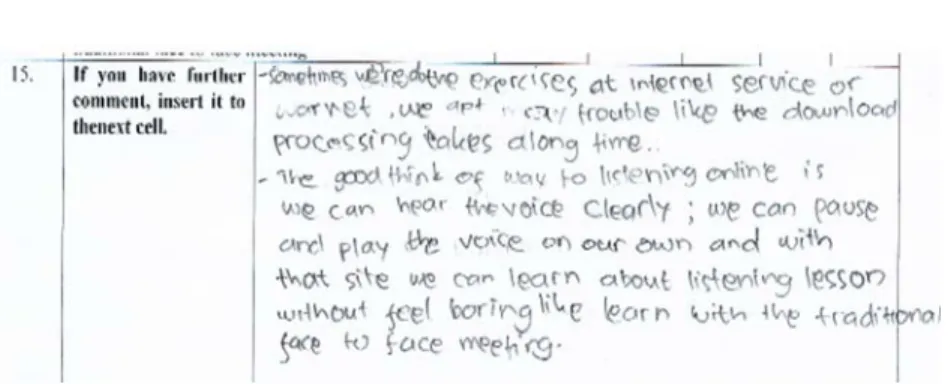
Figure 3. Learner’s Feedback-Play and Pause the Record
Figure 3 above shows that though there was a problem with the load-ing time, the learner still thought the online exercises were still worth doload-ing as with the online exercises. It is because the learner could play and pause the exercise to give them time to think and grasp the material on the record. It is impossible for the learners to operate the self-control feature of play and pause in a language lab because the exercises are controlled by the in-structor.
Despite the features of play and pause that should help the learners do the task, some learners complained in the questionnaire on their friends’ attempts to cheat while working on the exercises. Few learners were caught by others to search for the listening materials in the Internet. It seemed they could successfully do that and got the script.
The response given by one of the learners as shown in Figure 4 above revealed that some learners could locate the file as well as the script. This case raised a new problem which was not anticipated before.
To solve this problem, the original file’s name was changed. This strategy was successful in eliminating the problem.
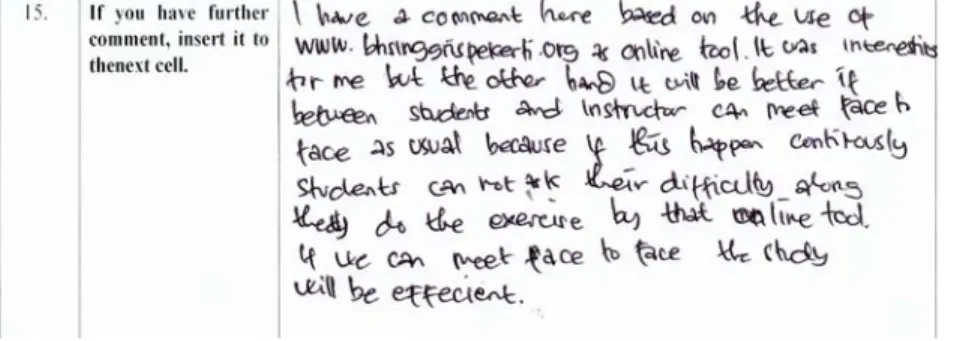
Figure 5. A Learner’s Feedback for a Face-to-Face Meeting in Between Online Exercises
Though the learners were happy with the online exercises, some still expected to have face-to-face meeting in between the online activities. Fig-ure 5 shows us this. It is true that until the learners had their final test, there were not any classroom meetings conducted with them. However, the learners were allowed to consult individually to the instructor whenever they had a problem.
Login Time
Students Login Periods
0 5 10 15 20 25 30 35 40
06.00-11.59 12.00-17.59 18.00-00.59 01.00-05.59
Figure 6: Learners Login periods
The graph in Figure 6 shows that the number of learners who logged in exceeds the number of real learners. This is because a learner can log in more than once. The database logged any information about who and when a learner is online, no matter if the same learner logs in more than once.
From the periods of login time above, it can be seen that most learners logged in after campus time (most of lecturing sessions take time between AB-EF periods) which means that the learners who logged in within a pe-riod between 12.00-17.59 worked on the exercises in the internet rental or from their lodging if WiFi connection is available. There is possibility the learners logged in at around 14.00.
Additionally, the second most frequent login time is during campus time. They logged in during break time at around 9, after A-B periods and 11, after C-D periods. The others did the exercises at their convenient time either in the evening (18.00-00.59) and after midnight or early in the morn-ing (01.00-05.59).
Learners’ Achievement
mid and final tests on Listening 2, the result of the analyses showed that there were significant differences between the two means of mid and final tests scores. This is shown by Table 1 below.
Table 1. Means difference between scores of mid and final tests
Mean
Std. Devia-tion
Std.
Er-ror Mean t df
Sig. (2-tailed)
Pair 1 Mid_1 - Mid_2 -11.87 16.67 3.40 -3.48 23 .002 Pair 2 Final_1 - Final_2 -16.91 13.94 2.84 -5.94 23 .000
Table 1 above shows that there are significant differences between midterm test 1 and 2 as well as between final tests 1 and 2. The differences are represented by t value= -3.48 (Sig.=.002) and -5.94 (Sig.=.000) for mid tests and final tests respectively.
Constraints
During the implementation of the online audio materials for Listening 2, some constraints were faced. The first constraint was the download time for some of the audio materials. Most learners complained that it took them more time to download the audio than the time allotted to work on the ex-ercise. As a result, they could not obtain their scores because the window of the exercise closed automatically as the session was over. To overcome this problem, the listening exercises were edited using audio editor in terms of length of material and quality of record. In this case, the quality of the au-dio is decreased that the capacity of the auau-dio file is within hundreds of Kbs. The decrease of the quality, however, does not influence the learning activity.
Figure 7 above shows one of the technical problems in managing the online activity. The slow internet connection increased the loading time to play the audio. This significantly decreased the learners’ time allotment to accomplish the exercise. Undiksha as well as other internet providers around the campus mostly used wifi connection. The connection is very sensitive to weather change or location where the connectivity is weak. When the weather is cloudy or rainy the internet connection will drop sig-nificantly. The same thing happens when the location of access is blocked by walls. These will significantly drop the quality of the wifi internet con-nection.
The second problem was about saving learners’ scores. In the first round of the online activities, some scores of the learners could not be logged into database because of a technical problem. The problem was that when the screen was left idle within 15 minutes or so, the Internet connec-tion would be automatically shut down by the server. This resulted in the failure of score transfer to the database.
To overcome the problem, recordings for later exercises were edited using sound editor that the length of files was no longer than 10 minutes. Having done this, the complaints never showed up anymore.
DISCUSSION
The positive results shown by the findings prove that online exercises for Listening can be an alternative teaching model for instructor besides face-to-face meeting. The learners’ responses were very positive on the use of online exercises. There seems to be relationships between internet access, pc/laptop ownership, on the one hand, and the learners’ positive responses on the other hand. Having a laptop and Internet access means a learner has at least two types of flexibility in online learning. The first flex-ibility the learners have is in terms of time (Suarcaya, 2008; Felix, 2004). They can work on the exercises at times of their convenience. The other flexibility the learners have is flexibility in terms of place (Felix, 2004). Being flexible in terms of place means that access to online learning mate-rials is easy to obtain from any place where Internet connection is available.
Additionally, the use of web-based exercises gives opportunity to learners to do something new which has never been done for purposeful learning activities. This also to a certain degree influenced the learners to feel eager to study online.
face-to-face model of instruction and Listening 2 with web-based model of instruc-tion were significantly different. There is a reason for the difference. The midterm and final tests on Listening 1 were conducted in a classroom set-ting in which strict rules were applied, e.g. to take a glance at a friend’s work is considered cheating. There seems to be non-academic factors in-fluencing the learners when working on a traditionally-administered test. One of the non-academic factors that influence the learners’ achievement is anxiety (Chen & Chang, 2004). They further stated that being anxious when having a test can significantly influence the result of the test. Besides, a paper-based test is conducted at the same time for the whole learners. Be-ing heterogeneous in nature, a class always consists of learners with differ-ent moods and achievemdiffer-ent motivation in learning, especially in the case of accomplishing a test.
Pichette (2009), however, argued that there is no significant difference between anxiety the learners had in f2f meeting and in online learning. This means that the online learners can also be affected by this anxiety. It is only the degree of anxiety that is different.
On the other hand, despite the issue of anxiety, the online test provides the learners with flexibility in accomplishing the test. The flexibility of-fered can be in forms of place and time. With this flexibility, learners can accomplish their test from anywhere as long as there is internet connection. Thus, the test is not identical with a room surrounded by white walls. Fur-thermore, with time flexibility, learners can work on the test anytime at their convenience. Suarcaya (2008) showed that learners could increase online task accomplishment because they were provided with flexibility in terms of time and place. The case seems also apply in this study. Given time and place flexibilities, the learners could work on the exercises at their own pace to get the best achievement.
CONCLUSION AND SUGGESTION
To conclude, the study shows that the use of online audio materials for Listening has positive results in terms of learners’ responses and achieve-ment. Learners responded that they enjoyed and felt interested in working on online listening tasks. Academically, their achievements on the midterm and final tests also increased. Furthermore, the online learning activities provide learners with alternative of time and places in working on exercis-es.
however, did not discuss the strategy the learners used in maintaining vir-tual social interaction during online activities. It is therefore necessary to investigate how learners maintain their social interaction while doing online class activities.
REFERENCES
Chen, T. & Chang, G.B.Y. 2004. The Relationship Between Foreign Lan-guage Anxiety and Learning Difficulties. Foreign Language Annals,
37(2):279-289. Retrieved on October 5th, 2010, from: http://proquest.umi.com/pqdweb?index=18&did=717866641&SrchMo de=1&sid=2&Fmt=6&VInst=PROD&VType=PQD&RQT=309&VNa me=PQD&TS=1286374448&clientId=83321
Clark, R.E., Bewley, W.L. & O’Neil, H.F. 2006. Heuristic for Selecting Distance or Classroom Settings for Courses. In J.M. Spector & T.M. Anderson (Eds.), Integrated Holistic Perspectives on Learning, In-struction & Technology (pp. 133-142). London: Kluwer Anademic Publishers.
Collis, B. & Moonen, J. 2004. Flexible Learning in a Digital World: Expe-riences and Expectations. London: Routledge Falmer.
Felix, U. 2004. A Multi Variate Analysis of Secondary Students’ Expe-rience of Web-based Language Acquisition. ReCALL, 16 (1): 237-249..
Jegede, O.J., Fraser, B., & Curtin, D.F. 1995. The development and Valida-tion of a Distance and Open Learning Environment Scale. Educational Technology Reasearch and Development, 43 (1): 90-94
Jensen-Lee, C. & Falahey, A. 2002. Using the Web: A Discussion of Some of the Non-technical Factors to be taken into Account when Designing Web Sites Intended to Support Courses Taught Primarily in Face to Face Mode. Journal of Sociology, 38 (3): 291-301. Retrieved on Janu-ary 3rd, 2007, from http://jos.sagepub.com/cgi/reprint/38/3/291.
Mockler, R.J., Dologite, D.G., & Gartenfeld, M.E. 2000. Talk with the Ex-pert: Learning Management Decision-Making Using CAI. Cybernatics and System: An International Journal, 31: 431-464. Retrieved Decem-ber 26th, 2006, from http:// portal.gre.ac.uk/cp/render. UserLayou-tRootNode.uP?uP_tparam=utf&utf=%2Fcp%2Fjsp%2Fathens.jsp.
Pan, C. and Huang, P. 2009. The Development and Evaluation of Web-based College English Outside Reading System for EFL Freshmen.
The JALTCALL Journal, 5(3): 3-22. Retrieved on July 10th, 2010 from: http://jaltcall.org/journal/articles/5_3_Pan.pdf
Pichette, F. 2009. Second Language Anxiety and Distance Language Learning. Foreign Language Annals, 42(1): 77-93. Retrieved on Octo-ber 5th, 2010, from: http://proquest.umi.com/pqdweb?index =4&sid=2&srchmode=1&vinst=PROD&fmt=6&startpage
1&clientid=83321&vname=PQD&RQT=309&did=1908544081&scali ng=FULL&ts=1286374137&vtype=PQD&rqt=309&TS=1286374327 &clientId=83321
Pichette, F. 2009. Second Language Anxiety and Distance Language Learning. Foreign Language Annals, 42 (1): 77-93. Retrieved on Oc-tober 5th, 2010, from: http://proquest.umi.com/pqdweb?index= 10&did =1258050261&SrchMode=1&sid=2&Fmt=6&VInst=PROD&VType= PQD&RQT=309&VName=PQD&TS=1286374448&clientId=83321
Sox, A. & Rubinstein-Villa, E. 2009. WebQuests for English Language Learners: Essential Elements for Design. Journal of Adolescent and Adult Literacy, 53(1): 38-48.
Suarcaya, P. 2008. Using Online Exercises to Increase Learning Flexibility.
JALTCALL Journal, 4(1): 19-29.
Trinder, R. 2002. Multimedia in the Business English Classroom; The Learners Point of View. Computer Assisted Language Learning 15: 69-84.
Sandelowski, M. 2000. Focus on Research Methods: Combining Qualita-tive and QuantitaQualita-tive Samplings, Data Collection, and Analysis Tech-niques in Mixed Method Studies. Research in Nursing and Health, (23): 246-255.