Malaria in HIV-Infected Children Receiving HIV
Protease-Inhibitor- Compared with
Non-Nucleoside Reverse Transcriptase
Inhibitor-Based Antiretroviral Therapy, IMPAACT
P1068s, Substudy to P1060
Charlotte V. Hobbs1,2,3*, Erin E. Gabriel4, Portia Kamthunzi5, Gerald Tegha5, Jean Tauzie5, Elizabeth Petzold6, Linda Barlow-Mosha7, Benjamin H. Chi8, Yonghua Li2, Tiina Ilmet2,9, Brian Kirmse10, Jillian Neal1, Sunil Parikh11, Nagamah Deygoo2, Patrick Jean Philippe12, Lynne Mofenson13, William Prescott14, Jingyang Chen1,15, Philippa Musoke7,16,
Paul Palumbo17, Patrick E. Duffy1, William Borkowsky2, for the P1068s Study Team
1 Laboratory of Malaria Immunology and Vaccinology, National Institute of Allergy and Infectious Diseases,
National Institutes of Health, Rockville, MD, United States of America, 2 Department of Pediatrics, Division of Infectious Disease and Immunology, New York University School of Medicine, NY, United States of America,
3 Batson Children’s Hospital, Department of Pediatrics (Division of Infectious Diseases) and Department of
Microbiology, University of Mississippi Medical Center, Jackson, MS, United States of America,
4 Biostatistics Research Branch, National Institute of Allergy and Infectious Diseases, National Institutes of
Health, Rockville, Maryland, United States of America, 5 Kamuzu Central Hospital, University of North Carolina at Chapel Hill Lilongwe Project, Lilongwe, Malawi, 6 Duke Clinical Research Institute, Durham, NC, United States of America, 7 Makerere University-Johns Hopkins University Research Collaboration, Kampala, Uganda, 8 Department of Obstetrics and Gynecology, University of North Carolina at Chapel Hill, Chapel Hill, NC, United States of America, 9 Cornell Clinical Trials Unit, Weill Cornell Medicine, NY, United States of America, 10 Department of Pediatrics, Division of Medical Genetics, University of Mississippi Medical Center, Batson Children’s Hospital, Jackson, MS, United States of America, 11 Yale Schools of Public Health and Medicine, New Haven, Connecticut, United States of America, 12 HJF-DAIDS, a Division of the Henry M. Jackson Foundation for the Advancement of Military Medicine, Inc., Contractor to NIAID, NIH, DHHS, Bethesda, MD, United States of America, 13 Elizabeth Glaser Pediatric AIDS Foundation, Washington, DC, United States of America, 14 HYDAS World Health, Inc., Hummelstown, PA, United States of America, 15 Ben Towne Center for Childhood Cancer Research, Seattle Children’s Research Institute, the University of Washington, and the Fred Hutchinson Cancer Research Center, Seattle WA, United States of America, 16 Department of Pediatrics and Child Health, Makerere University, Kampala, Uganda, 17 Division of Infectious Diseases and International Health, Geisel School of Medicine at Dartmouth, Lebanon, New Hampshire, United States of America
¶ Additional members of the International Maternal Adolescent AIDS Clinical Trials Network (IMPAACT) P1068s Team is provided in the Acknowledgments
Abstract
Background
HIV and malaria geographically overlap. HIV protease inhibitors kill malaria parasites in vitro and in vivo, but further evaluation in clinical studies is needed.
Methods
Thirty-one children from Malawi aged 4–62 months were followed every 3 months and at intercurrent illness visits for47 months (September 2009-December 2011). We compared a11111
OPEN ACCESS
Citation: Hobbs CV, Gabriel EE, Kamthunzi P,
Tegha G, Tauzie J, Petzold E, et al. (2016) Malaria in HIV-Infected Children Receiving HIV Protease-Inhibitor- Compared with Non-Nucleoside Reverse Transcriptase Inhibitor-Based Antiretroviral Therapy, IMPAACT P1068s, Substudy to P1060. PLoS ONE 11(12): e0165140. doi:10.1371/journal. pone.0165140
Editor: Alan Landay, Rush University, UNITED
STATES
Received: July 27, 2016
Accepted: October 5, 2016
Published: December 9, 2016
Copyright: This is an open access article, free of all
copyright, and may be freely reproduced, distributed, transmitted, modified, built upon, or otherwise used by anyone for any lawful purpose. The work is made available under theCreative Commons CC0public domain dedication.
Data Availability Statement: All relevant data are
within the paper and its Supporting Information files.
Funding: Overall support for the International
malaria parasite carriage by blood smear microscopy (BS) and confirmed clinical malaria incidence (CCM, or positive BS with malaria symptoms) in children initiated on HIV antiretro-viral therapy (ART) with zidovudine, lamivudine, and either nevirapine (NVP), a non-nucleo-side reverse transcriptase inhibitor, or lopinavir-ritonavir (LPV-rtv), a protease inhibitor.
Results
We found an association between increased time to recurrent positive BS, but not CCM, when anti-malarial treatment and LPV-rtv based ART were used concurrently and when accounting for a LPV-rtv and antimalarial treatment interaction (adjusted HR 0.39; 95% CI (0.17,0.89); p = 0.03).
Conclusions
LPV-rtv in combination with malaria treatment was associated with lower risk of recurrent positive BS, but not CCM, in HIV-infected children. Larger, randomized studies are needed to confirm these findings which may permit ART optimization for malaria-endemic settings.
Trial Registration
ClinicalTrials.govNCT00719602
Introduction
Malaria is highly prevalent in many areas of the world where HIV-infected children live, espe-cially sub-Saharan Africa. Studies have shown that when HIV and malaria are present as co-infections, each disease can enhance the pathogenicity of the other[1]. Moreover, as more patients are managed for HIV infection in malaria endemic areas, understanding HIV drug impact on malaria infection is important. If selecting certain antiretroviral regimens over oth-ers may not only treat HIV but also potentially reduce malaria burden, such approaches could be employed as an additional intervention to reduce malaria burden where HIV and malaria are co-endemic.
The World Health Organization (WHO) recommends HIV management with combination antiretroviral therapy (ART), with first line therapy including a non-nucleoside reverse tran-scriptase inhibitor (NNRTI) and 2 nucleoside reverse trantran-scriptase inhibitors (NRTIs), with few exceptions, and second line therapy including an HIV protease inhibitor (HIV PI) and 2 NRTIs [2]. Bothin vitroandin vivodata withPlasmodiumsuggest that HIV PIs kill various life cycle stages of malaria parasites [3–7], indicating these drugs may influence malaria infection in people. Indeed, a clinical study in which children who were randomized to receive protease inhibitor lopinavir-ritonavir (LPV-rtv)-based antiretroviral therapy (ART) had fewer cases of recurrent clinical malaria when compared with NNRTI nevirapine (NVP)-based ART in an area of high malaria transmission intensity [8].
Because transmission intensity influences the dynamics of malaria infection and interven-tion efficacy [9], we sought to quantify the impact of different antiretroviral regimens on para-site carriage in HIV-infected children by microscopy and clinical malaria in the first such study performed in children in an area of low to moderate transmission. Herein we describe malaria infection in children who received either LPV-rtv based ART (LPV-rtv ART) or NVP-based ART (NVP ART) as treatment for HIV infection in the clinical substudy P1068s, which was a substudy to the larger, randomized HIV pediatric treatment study, P1060 [10,11]. UM1AI106716 (IMPAACT LC)], with co-funding
from the Eunice Kennedy Shriver National Institute of Child Health and Human Development (NICHD) and the National Institute of Mental Health (NIMH). We thank the children, parents, and guardians who participated in this study, and the clinical study team for their efforts in this study. The content is solely the responsibility of the authors and does not necessarily represent the official views of the NIH. The funders had no role in study design, data collection and analysis, decision to publish, or preparation of the manuscript.
Competing Interests: None of the authors have
Methods
Study Population
P1068s was substudy to the International Maternal Pediatric Adolescent AIDS Clinical Trials Network (IMPAACT) study P1060, details of which have been reported elsewhere [10,11]. Briefly, P1060 was an HIV treatment study conducted at 6 countries in sub-Saharan Africa and India that enrolled HIV-infected children aged 2 months-36 months who qualified for treatment according to World Health Organization (WHO) criteria. Children were random-ized to receive zidovudine and lamivudine combined with either NVP or LPV-rtv, and were followed for<= 47 months (median follow-up 32 months), and stratified by exposure to NVP at birth and by age (<1 year vs.>= 1 year) in the context of P1068s. ART failure was defined as permanent discontinuation of the treatment regimen for any reason, including the need for treatment of tuberculosis during the course of the study [10,11].
The malaria substudy described herein, P1068s, was conducted at three sites with endemic malaria transmission according to published data at the time, which included Kampala, Uganda; Lusaka, Zambia; and Lilongwe, Malawi [12–14]. Analysis was performed only on data from the Malawi site, however, because of low blood smear positivity rates at the other sites: among the 74 subjects enrolled at the Zambia and Uganda sites, only 8 subjects had a positive blood smear over the course of follow-up for a total of 19 positive BS over the com-bined 4 year accrual and follow-up period, although one child in Uganda died from uncon-firmed but suspected severe malaria [11].
All participants from the parent HIV treatment study, P1060 were eligible for inclusion in this malaria substudy. Although not randomized for the primary objectives of the P1068s sub-study described herein, it was originally intended the randomization of P1060 would be used for P1068s; however, due to later initiation of this substudy, a number of subjects had switched from the regimen to which they had been originally randomized. Thus, most data collected under P1068s that links treatment to outcome is observational and most analysis was con-ducted using an “as-treated” approach.
Follow-Up
Study visits were conducted 2 and 4 weeks after the initiation of treatment, every 4 weeks until week 16, at week 24, and every 12 weeks thereafter, and patients were encouraged to come in for intercurrent illness. Follow up for P1068s paralleled P1060 (Table 1).
History and physical exams were completed at all scheduled and intercurrent illness visits, and children were seen by study physicians at all visits. Heel or finger stick or venous blood were used to prepare thick blood smear using 2% Giemsa for 30 minutes, in addition to dried
Table 1. Demographic Information for Children Enrolled into P1068s from Lilongwe, Malawi.
Characteristics LPV-rtv ART only,
N = 16
NVP ART only, N = 7
Switched from NVP ART to LPV-rtv ART, N = 8
Male # subjects (%) 7 (43.8%) 4 (57.1%) 3 (37.5%)
Enrollment Age (months), Median (min, max) 28.4 (3.9, 61.3) 33.0 (24.8, 51.9) 33.9 (25.8, 61.8) Duration of Follow-Up on P1068s (months), Median (min, max) 42.7 (22.3, 46.8) 43.1 (20.7,45.4) 36.8 (20.9,46.8) Duration on LPV-rtv ART during P1068s (months), Median (min,
max)
42.7 (22.3, 46.8) – 24.4 (8.6, 42.6)
Follow-Up Time Prior to Switching ART regimen (months), Median (min, max)
42.7 (22.3, 46.8) 43.1 (8.3, 45.4) 1.2 (0.0,14.5)
Positive Blood Smear Count, Median (min, max) 2.5 (0.0, 16.0) 3.0 (0.0, 19.0) 3.0 (0.0, 5.0) Count Confirmed Clinical Malaria, Median (min, max) 2.5 (0.0, 15.0) 3.0 (0.0, 15.0) 2.5 (0.0, 5.0) Months on P1060 before P1068s enrollment, Median (min, max) 12.2 (8.2, 32.6) 11.9 (9.6, 34.3) 12.2 (8.2,34.2)
blood spots (DBS, with 50µL/spot) collected on Whatman 903 paper (Florham Park, NJ) and handled as previously described [15] for confirmatory PCR (see Supporting Information,S1 File[16,17]). CD4 cell count, CD4%, and HIV viral load were measured in real time during the P1060 trial [11]. Subjects were diagnosed with malaria on site and treated as per WHO rec-ommendations, which for this study included artemether-lumefantrine for uncomplicated malaria and quinine or artesunate for severe malaria [18].
Study Site
In Malawi, trimethoprim-sulfamethoxazole prophylaxis was administered as per WHO guide-lines [19,20], and all patients received prophylaxis. At the beginning of the study, the infant feeding policy was exclusive breastfeeding recommended for the first 6 months, which changed to the first 12 months of life as per WHO, in 2010 [21], but this was not adopted by Malawi until July 2011. All children on study were given an insecticide-treated bednet at the beginning of the study and lived within 30 km of the study site. Clinical illness was managed based on the Integrated Management of Childhood Illness Guidelines [22].
Malaria transmission in Malawi is perennial and holoendemic, with seasonal increases after the rains from November to April. Malaria mapping analysis in Malawi showed lack of signifi-cant changes in transmission between 2000–2010, with a population-adjustedP.falciparum
rate (PAPfr2-10) in 2010 of 32%; this encompasses part of the period in which this study was
conducted [23].
Ethics
This substudy was approved by site-specific institutional review boards (IRBs), including the New York University School of Medicine (NYU) IRB (January 17, 2008) and the Malawian Ministry of Health and Population National Health Sciences Research Committee (June 8, 2009) and the NIH/NIAID IRB through a reliance agreement with NYU IRB (May 18, 2012). Each child’s parent or legal guardian provided written informed consent. The study was first opened to accrual on August 19, 2009 with the first patient enrolled September 25, 2009.
Laboratory Procedures
A blood smear was deemed negative if no parasites were seen in>= 200 high-powered fields. All blood smears in the study, with the exception of oneP.malariaesample from Lilongwe, were reported asP.falciparum. The diagnosis and management of malaria was based readings of blood smears on site, but reported results herein are from reads performed at NYU, with a primary and secondary reads by two microscopists, with discrepant results resolved and a ran-dom subset of smears reviewed by a third microscopist.
parasite genomic DNA was detected using real time from DBS collected for confirmation in parallel to smears.
Statistical Methods
The primary end points were the time to first or recurrent events of and the rate of positive malaria blood smear (BS) or confirmed clinical malaria (CCM), defined as a positive BS with diagnosed malaria symptoms, as per WHO guidelines [18]. Only episodes of CCM greater than 14 days apart were considered, as those were assumed to represent new infections rather than recrudescence [9].
Thirty-one of 288 subjects from the P1060 parent study enrolled in P1068s, and 8 of these 31 children changed regimens based on the primary study before or after enrollment. For this reason we undertook an as-treated analysis, attempting to link observed treatment and observed outcomes. Per-protocol analysis, censoring subjects when they switched regimens, and as-randomized analysis (as randomized for the P1060 parent study) analysis are also pro-vided in Supporting Information (S2 FileandS1andS2Tables).
During this study, another clinical trial suggested that a drug interaction between LPV-rtv and lumefantrine (the second component of artemether-lumefantrine, used for treatment of uncomplicated malaria) reduced clinical malaria burden in children on LPV-rtv ART in an area of high transmission intensity [8]. For this reason, the relationship between time to recur-rent episodes of malaria (positive BS or CCM) and ART and potential synergy between HIV ART and malaria treatment is the primary scientific question evaluated in this report. This analysis was conducted by fitting a recurrent event (count process) Cox model [25]. Malaria treatment is considered a time-varying indicator in the models, until the occurrence of a malaria event, censoring by ART change or censoring by the end of follow up. Both malaria treatment and ART regimen were treated as time-varying covariates and models were adjusted for average CD4% over prior period, sex, age at enrollment, months since start of enrollment into P1060 to start of P1068s and an indicator for malnutrition status (as defined by mid-upper arm circumference [26]) collected at each study visit.
In addition to evaluation of recurrent malaria events, comparisons of the rate of incident positive BS and CCM per time at risk by HIV treatment type was analyzed using negative bino-mial models including an offset for time-on-trial and adjusted for potential confounders. HIV treatment was accounted for using the following three time categories of LPV-rtv ART use: LPV-rtv ART assigned at P1060 baseline; LPV-rtv ART duration in months; or majority of time on LPV-rtv ART
Reported p-values are not corrected for the number of analyses conducted. Statistical analy-sis was performed with R software, version 3.1.3.
Results
[10,11]. Kaplan Meier curves for time to 1stpositive BS and CCM are presented in Supporting Information,S1A and S1B Fig. For concurrent smear and PCR samples, the phi coefficient (or measure of association for our two binary variables) was 0.85.
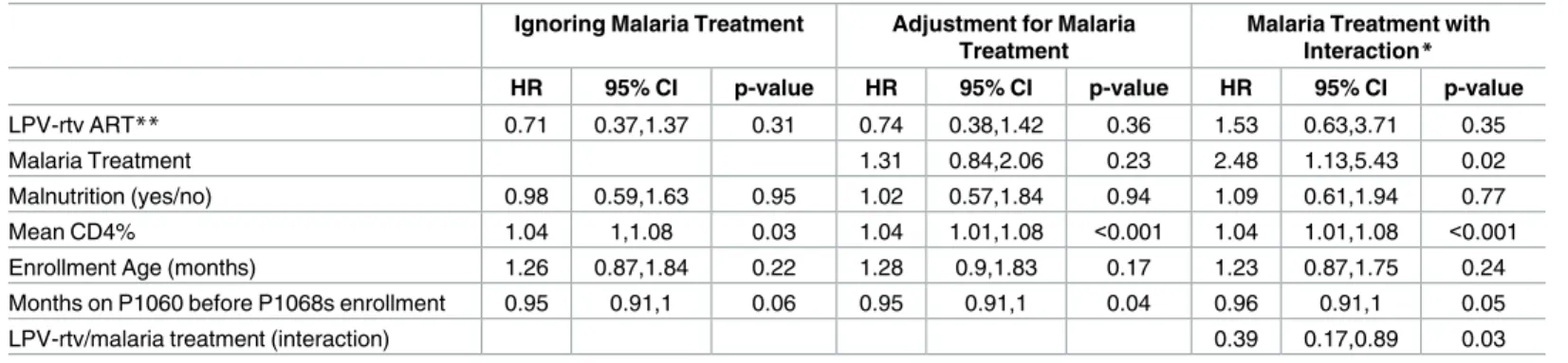
In the as-treated recurrent event analysis, time on LPV-rtv ART prior to positive BS or CCM was not significantly different from NVP ART (Tables2and3Ignoring Malaria Treat-ment), although the Hazard Ratio (HR) of 0.71, 95%CI (0.37,1.37); p = 0.31 suggested a trend towards increased time to recurrent positive BS episodes in children taking LPV-rtv ART com-pared to NVP ART. Including an indicator for malaria treatment yes/no (Tables2and3
Adjustment for Malaria Treatment) did not change this finding. However, when including an indicator for malaria treatment and an interaction for malaria treatment and current LPV-rtv ART (Tables2and3Malaria Treatment with Interaction), there was a significant association between malaria treatment with LPV-rtv ART use and reduced hazard of positive BS as com-pared to malaria treatment and current NVP ART, or even current LPV-rtv ART use without malaria treatment. The estimated HR for a positive BS for the concurrent malaria and HIV treatment group from the fully adjusted model was 0.39, 95% CI (0.17,0.89); p = 0.03. A similar interaction model for the CCM outcome did not yield significant results (HR 0.53, 95% CI
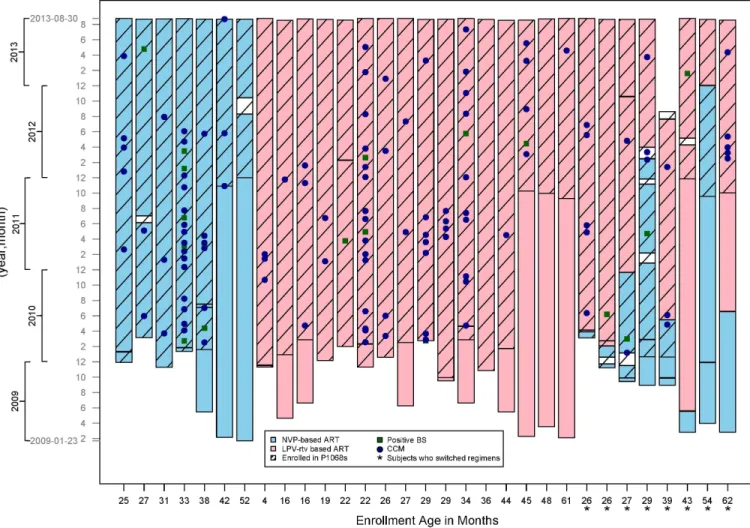
Fig 1. Graphic representation of patients enrolled in our substudy, P1068s, by sample date. Lopinavir-ritonavir based antiretroviral therapy
(LPV-rtv ART) or NNRTI nevirapine-based ART (NVP ART) treatment regimen and outcomes of Positive Blood Smear (BS) and Confirmed Clinical Malaria (CCM) or are sorted youngest to oldest enrollment age on the x-axis. Asterisks (*) indicate subjects whose regimens went from NVP to LPV-rtv ART on study due to virologic failure as dictated by the parent study, P1060.
(0.17,1.61); p = 0.26). The model also suggested malaria treatment was significantly associated with increased hazard of positive BS (HR 2.48, 95%CI (1.13,5.43); p = 0.02).
The results for the as-treated negative binomial fits of the count of positive BS and CCM using all the data and accounting for observed LPV-rtv ART use suggested that there were no significant differences in incident positive BS and CCM. However, when including an addi-tional covariate which described changing from NVP ART to LPV-rtv ART during P1068s, we found a borderline significant association of LPV-rtv ART compared to NVP-ART with posi-tive BS (RR 0.49 95% CI (0.25,0.98); p-value 0.05 (Table 4). The other two approaches for accounting for observed LPV-rtv ART use, duration (months) and majority LPV-rtv ART use over follow-up did not provide evidence for an association with malaria measures BS or CCM (data not shown). None of the models for CCM rate suggested that there was evidence of a dif-ference between those subjects that were observed to use LPV-rtv ART and those that were not (All p-values>0.1, data shown for including LPV-rtv ART assigned at P1060 baseline).
Discussion
In our P1068s substudy, which was the first of its kind conducted in an area of low to moderate malaria transmission intensity, LPV-rtv in combination with malaria treatment is associated with lower risk of recurrent events of BS, but not CCM, in HIV-infected children.
Table 2. As Treated Recurrent Events of Positive Blood Smears (BS) (Cox Model).
Ignoring Malaria Treatment Adjustment for Malaria Treatment
Malaria Treatment with Interaction*
HR 95% CI p-value HR 95% CI p-value HR 95% CI p-value
LPV-rtv ART** 0.71 0.37,1.37 0.31 0.74 0.38,1.42 0.36 1.53 0.63,3.71 0.35
Malaria Treatment 1.31 0.84,2.06 0.23 2.48 1.13,5.43 0.02
Malnutrition (yes/no) 0.98 0.59,1.63 0.95 1.02 0.57,1.84 0.94 1.09 0.61,1.94 0.77
Mean CD4% 1.04 1,1.08 0.03 1.04 1.01,1.08 <0.001 1.04 1.01,1.08 <0.001
Enrollment Age (months) 1.26 0.87,1.84 0.22 1.28 0.9,1.83 0.17 1.23 0.87,1.75 0.24
Months on P1060 before P1068s enrollment 0.95 0.91,1 0.06 0.95 0.91,1 0.04 0.96 0.91,1 0.05
LPV-rtv/malaria treatment (interaction) 0.39 0.17,0.89 0.03
*Interaction term taken into account in analysis for LPV-rtv and malaria treatment **LPV-rtv ART versus NVP periods of no treatment removed
doi:10.1371/journal.pone.0165140.t002
Table 3. As Treated Recurrent Events of Confirmed Clinical Malaria (CCM) (Cox Model).
Ignoring Malaria Treatment Adjustment for Malaria Treatment
Malaria Treatment with Interaction*
HR 95% CI p-value HR 95% CI p-value HR 95% CI p-value
LPV-rtv ART** 0.81 0.43,1.53 0.52 0.86 0.44,1.68 0.66 1.46 0.43,5.02 0.55
Malaria Treatment 1.23 0.71,2.14 0.47 2 0.63,6.34 0.24
Malnutrition (yes/no) 1.04 0.59,1.83 0.89 1.07 0.54,2.1 0.85 1.13 0.58,2.18 0.72
Mean CD4% 1.04 1,1.07 0.03 1.05 1.01,1.08 <0.001 1.04 1.01,1.08 0.01
Enrollment Age (months) 1.26 0.85,1.85 0.25 1.3 0.89,1.91 0.18 1.28 0.87,1.88 0.21
Months on P1060 before P1068s enrollment 0.96 0.91,1.01 0.08 0.95 0.91,1 0.05 0.95 0.91,1 0.05
LPV-rtv/malaria treatment (interaction) 0.53 0.17,1.61 0.26
*Interaction term taken into account in analysis for LPV-rtv and malaria treatment **LPV-rtv ART versus NVP periods of no treatment removed
HIV protease inhibitors are aspartyl protease inhibitors, and have been hypothesized to exhibit the killing activity forPlasmodiumspecies in the laboratory because of inhibition of these enzymes, of which there are 10 inPlasmodium falciparum, although further investigation is required to clarify the target [6,27,28]. The reduced frequency of positive BS when account-ing for malaria treatment, and the trend in reduced episodes of CCM and overall trend of reduced BS and CCM, could be because of direct drug killing or pharmacokinetic interactions [8,29], the latter especially since our strongest trends were observed in recurrent events analy-sis which took antimalarial treatment interaction into account. Indeed, it is possible that we saw a modification in blood smear (BS), but not confirmed clinical malaria (CCM) outcome, because there were more positive BS, increasing our power to detect a difference. It is also pos-sible that there is a modification of immune responses to malaria, either through better control of HIV or from LPV-rtv ART-mediated killing of malaria parasites, that accounts for these findings.
A previous study that was conducted in an area of high-intensity transmission has shown similar trends in children: HIV PIs were associated with an overall reduction in malaria for children on LPV-rtv ART [8]. This finding was at least partly attributed to an interaction between the ritonavir of LPV-rtv and lumefantrine component of the artemisinin-combina-tion regimen used to treat clinical malaria [8,30], and other studies have shown interaction between NNRTIs and antimalarial therapy [29]. Although our study is clearly distinguished by transmission intensity, which itself affects the efficacy of interventions, given factors such as differences in acquired immunity and parasite resistance [9], both studies found reduction in malaria burden with LPV-rtv ART. This is highly significant because similar studies in adults and pregnant women have not found such trends [31–33]. The trend to reduced malaria epi-sodes in LPV-rtv ART-treated children in our study and in the work of others across varying degrees of transmission intensity [8], compared with the lack of such findings in adults and pregnant women [31–33] may suggest there are unique reasons why children may benefit from such a regimen in a malaria-endemic area, such as differences in age-related anti-malaria immunity or differential pharmacokinetics.
Of note, the as treated recurrent events model also showed that malaria treatment was sig-nificantly associated with increased hazard of repeated positive BS and CCM in the presence of NVP ART. This finding was likely due to the strong correlation between receiving a malaria treatment in the current period and having a malaria event in the previous period. We investi-gated this by including malaria treatment in the model only if there was not a malaria event in the previous period for a subject. This modified version of the model suggested that malaria treatment was associated with reduced hazard of malaria outcomes under all ART regimens, albeit non-significantly due to the small number episodes observed (data not shown).
Table 4. As Treated Rates of Positive Blood Smears (BS) and Confirmed Clinical Malaria (CCM) (Negative Binomial Model).
Positive BS CCM
Variable RR 95% CI p-value RR 95% CI p-value
LPV-rtv ART at Baseline 0.49 0.25,0.98 0.05 0.53 0.25,1.13 0.1
Switched ART regimens while on study 0.59 0.27,1.32 0.2 0.54 0.22,1.31 0.17
CD4% at enrollment 1.05 1.02,1.08 <0.01 1.05 1.02,1.08 0
Enrollment Age (months) 1.01 0.98,1.05 0.45 1.02 0.98,1.06 0.38
Sex (female) 1.4 0.79,2.48 0.25 1.52 0.81,2.85 0.19
Enrollment time between P1060 and P1068s 0.94 0.88,0.99 0.03 0.94 0.88,1 0.05
Therefore, one might describe our malaria treatment measure as a mixture of previous illness and malaria treatment.
A limitation of our study is our small sample size and the number of children who switched ART regimens. However, because we detected significant findings in a small sample size, and over a long period of time, we believe the effect of LPV-rtv ART may be considerable and as such, a larger study is warranted to investigate and validate this finding.
WHO Guidelines now support the use of LPV-rtv ART in children less than 3 years of age because of longer life-expectancy and cost-effectiveness compared to NNRTI ART [2]. Whether LPV-rtv ART regimens should be recommended in all children in malaria endemic areas because of additional benefits of reduced malaria remains to be clarified [34]. Further, larger, randomized studies are needed to answer these questions, including assessment of whether LPV-rtv has direct killing effects on the parasite, how this impacts acquired malaria-specific immunity, and how drug interactions affect malaria burden in HIV-infected patients. Malaria eradication will only likely be achieved by a combination of interventions (such as insecticide treated bednets, intermittent preventive treatment, and hopefully, an effective vaccine). Opti-mizing HIV ART to reduce malaria burden may ultimately contribute to eradication efforts.
Supporting Information
S1 Fig. A and B: Kaplan Meier Curves depicting time to first (1st) positive blood smear (BS) and time to 1stconfirmed clinical malaria (CCM) case. Overall, we observe a BS posi-tive rate of 0.55 and 0.87 for the 1st year and the 1st two years of follow-up, respecposi-tively; for CCM rates are, 0.52 and 0.77 for the 1st year and the 1st two years, respectively. We observe 123 positive BS events, and 109 CCM events over the 97.89 observed person-years. In 1A, shown is the survival proportion and times to 1stpositive BS. The median survival times are 408 and 135 days in the randomized to-LPV-rtv ART and randomized to-NVP ART groups, respectively. However, there was an 0.88 infection rate in the LPV-rtv ART group, and an 0.87 rate in the NVP-ART group over follow-up. In 1B, shown is the survival proportion and times to 1stCCM. The median time to 1stCCM, is 417 and 135 days in the randomized to-LPV-rtv ART and randomized to-NVP ART groups, respectively. However, there was an 0.81 CCM rate in the LPV-rtv group, and a 0.73 rate in the NVP-based group over follow-up. Note that for BS, the longest period while on NVP-ART prior to 1st positive BS is shorter compared with LPV-ART, and the figure incorporates subject censoring.
(TIFF)
S1 File. Methods, Real Time PCR. (DOC)
S2 File. Additional Statistical Analysis. (DOC)
S1 Table. As-randomized in P1060 analyses (A. Cox Model and B. Negative Binomial). (DOC)
S2 Table. Per Protocol Rates of BS and CCM (Negative Binomial Model, Data Censored at Switch from Regimen As Randomized).
(DOC)
Acknowledgments
We thank the following P1068s study-team members at the clinical sites for their contribu-tions to the study: Severiano Phakati (Malawi); Pauline Sambo, Thikazi Nonde, Felistas Mbewe, Ellen Shingalili, John Mwale, Esnart Mwaba Nunkwe, Darius Simbeye, George Kafulafula, and Namwinga Chintu (Zambia); Bosco Kafufu, Enid Kabugho, Ali Elbireer, and David Balamusani (Uganda). We also thank the following U.S.-based members of P1068s for lab processing and data management assistance: Carrie Frye, Bonnie Zimmer, and Linda Lambrecht
We also thank Bronner Gonclaves, Bob Morrison, Mike Fay, Jeff Skinner, and Sarah Holte for their technical advice and review of this manuscript. Lastly, we thank Gyan Joshi and Jing Wang (Clinical Research Directorate/CMRP, Leidos Biomedical Research Inc., Frederick National Laboratory for Cancer Research, Frederick, Maryland) for their programmatic sup-port for statistical analysis.
Author Contributions
Conceptualization: CVH JC WB.
Data curation: CVH PK GT JT EWP BHC LBM PM YL TI ND PP WB.
Formal analysis: EEG CVH WB.
Funding acquisition: CVH PK JT BHC PM PP WB.
Investigation: CVH EEG PK GT JT LBM BHC YL TI BK JN SP PJP LM WP JC PM PP PD WB.
Methodology: CVH EEG PK GT JT EWP LBM BHC YL TI ND PJP LM WP JC PM PP PD WB.
Project administration: CVH PK GT JT EWP BHC LBM PM JN ND PP WB.
Resources: CVH PK JT LBM BHC PM PP PD WB.
Software: CVH EEG CVH WB.
Validation: CVH EEG WP WB.
Visualization: CVH EEG BK WB.
Writing – original draft: CVH EEG BHC BK SP LM WB.
Writing – review & editing: CVH EEG BK BHC SP LM PD WB.
References
1. Flateau C, Le Loup G, Pialoux G. Consequences of HIV infection on malaria and therapeutic implica-tions: a systematic review. Lancet Infect Dis. 2011; 11(7):541–56. Epub 2011/06/28. doi:10.1016/ S1473-3099(11)70031-7PMID:21700241
2. WHO. Consolidated guidelines on the use of antiretroviral drugs for treating and preventing HIV infec-tion: what’s new 2015 [cited 2016 March 4]. Available from: http://www.who.int/hiv/pub/arv/policy-brief-arv-2015/en/.
3. Hobbs CV, De La Vega P, Penzak SR, Van Vliet J, Krzych U, Sinnis P, et al. The effect of antiretrovirals on Plasmodium falciparum liver stages. AIDS. 2013; 27(10):1674–7. Epub 2013/08/03. doi:10.1097/ QAD.0b013e3283621dd4PMID:23907270
4. Hobbs CV, Tanaka TQ, Muratova O, Van Vliet J, Borkowsky W, Williamson KC, et al. HIV Treatments have Malaria Gametocyte Killing and Transmission Blocking Activity. J Infect Dis. 2013. Epub 2013/03/ 30.
6. Parikh S, Gut J, Istvan E, Goldberg DE, Havlir DV, Rosenthal PJ. Antimalarial activity of human immu-nodeficiency virus type 1 protease inhibitors. Antimicrob Agents Chemother. 2005; 49(7):2983–5. Epub 2005/06/28. PubMed Central PMCID: PMC1168637. doi:10.1128/AAC.49.7.2983-2985.2005PMID: 15980379
7. Skinner-Adams TS, McCarthy JS, Gardiner DL, Hilton PM, Andrews KT. Antiretrovirals as antimalarial agents. J Infect Dis. 2004; 190(11):1998–2000. Epub 2004/11/06. doi:10.1086/425584PMID: 15529265
8. Achan J, Kakuru A, Ikilezi G, Ruel T, Clark TD, Nsanzabana C, et al. Antiretroviral Agents and Preven-tion of Malaria in HIV-Infected Ugandan Children. N Engl J Med. 2012; 367(22):2110–8. Epub 2012/11/ 30. doi:10.1056/NEJMoa1200501PMID:23190222
9. Hay SI, Smith DL, Snow RW. Measuring malaria endemicity from intense to interrupted transmission. Lancet Infect Dis. 2008; 8(6):369–78. Epub 2008/04/05. PubMed Central PMCID: PMCPMC2653619. doi:10.1016/S1473-3099(08)70069-0PMID:18387849
10. Palumbo P, Lindsey JC, Hughes MD, Cotton MF, Bobat R, Meyers T, et al. Antiretroviral treatment for children with peripartum nevirapine exposure. N Engl J Med. 2010; 363(16):1510–20. Epub 2010/10/ 15. PubMed Central PMCID: PMCPMC3021781. doi:10.1056/NEJMoa1000931PMID:20942667 11. Violari A, Lindsey JC, Hughes MD, Mujuru HA, Barlow-Mosha L, Kamthunzi P, et al. Nevirapine versus
ritonavir-boosted lopinavir for HIV-infected children. N Engl J Med. 2012; 366(25):2380–9. Epub 2012/ 06/22. PubMed Central PMCID: PMCPMC3443859. doi:10.1056/NEJMoa1113249PMID:22716976 12. Chanda P, Hawela M, Kango M, Sipilanyambe N. Assessment of the therapeutic efficacy of a paediatric
formulation of artemether-lumefantrine (Coartesiane) for the treatment of uncomplicated Plasmodium falciparum in children in Zambia. Malar J. 2006; 5:75. Epub 2006/08/30. PubMed Central PMCID: PMCPMC1574335. doi:10.1186/1475-2875-5-75PMID:16938133
13. Nsobya SL, Parikh S, Kironde F, Lubega G, Kamya MR, Rosenthal PJ, et al. Molecular evaluation of the natural history of asymptomatic parasitemia in Ugandan children. J Infect Dis. 2004; 189(12):2220– 6. Epub 2004/06/08. doi:10.1086/421281PMID:15181569
14. Republic of Malawi MoH. Republic of Malawi, Ministry of Health National Malaria Control Program Supervision Report for Monitoring ACT and Malaria Control Activities. 2008.
15. Ziemniak C, Mengistu Y, Ruff A, Chen YH, Khaki L, Bedri A, et al. Use of dried-blood-spot samples and in-house assays to identify antiretroviral drug resistance in HIV-infected children in resource-con-strained settings. J Clin Microbiol. 2011; 49(12):4077–82. Epub 2011/10/01. PubMed Central PMCID: PMCPMC3232965. doi:10.1128/JCM.01004-11PMID:21956987
16. Murphy SC, Prentice JL, Williamson K, Wallis CK, Fang FC, Fried M, et al. Real-time quantitative reverse transcription PCR for monitoring of blood-stage Plasmodium falciparum infections in malaria human challenge trials. Am J Trop Med Hyg. 2012; 86(3):383–94. Epub 2012/03/10. PubMed Central PMCID: PMCPMC3284350. doi:10.4269/ajtmh.2012.10-0658PMID:22403305
17. Rougemont M, Van Saanen M, Sahli R, Hinrikson HP, Bille J, Jaton K. Detection of four Plasmodium species in blood from humans by 18S rRNA gene subunit-based and species-specific real-time PCR assays. J Clin Microbiol. 2004; 42(12):5636–43. Epub 2004/12/08. PubMed Central PMCID: PMC535226. doi:10.1128/JCM.42.12.5636-5643.2004PMID:15583293
18. WHO. Guidelines for the treatment of malaria– 3rd edition 2015. Available from:http://www.who.int/ malaria/publications/atoz/9789241549127/en/.
19. WHO. Guidelines On Co-Trimoxazole Prophylaxis for HIV-Related Infections Among Children, Adoles-cents, and Adults: Recommendations for a Public Health Approach 2006 [cited 2012 1 March]. Avail-able from:http://www.who.int/hiv/pub/guidelines/ctxguidelines.pdf.
20. WHO. Co-Trimoxazole Prophylaxis for HIV-Exposed and HIV-Infected Infants and Children: Practical Approaches to Implementation and Scale-Up 2009 [cited 2012 1 March]. Available from:http://www. who.int/hiv/pub/paediatric/cotrimoxazole.pdf.
21. WHO. Guidelines on HIV and infant feeding 2010 Principles and recommendations for infant feeding in the context of HIV and a summary of evidence 2010 (updated from 2006) [cited 2015 April 30]. Available from:http://www.who.int/maternal_child_adolescent/documents/9789241599535/en/.
22. WHO. Integrated Management of Childhood Illness 2006–2011 documents [cited 2015 April 23]. Avail-able from:http://www.who.int/maternal_child_adolescent/documents/imci/en/.
23. Bennett A, Kazembe L, Mathanga DP, Kinyoki D, Ali D, Snow RW, et al. Mapping malaria transmission intensity in Malawi, 2000–2010. Am J Trop Med Hyg. 2013; 89(5):840–9. Epub 2013/09/26. PubMed Central PMCID: PMCPMC3820324. doi:10.4269/ajtmh.13-0028PMID:24062477
24. Murphy SC, Shott JP, Parikh S, Etter P, Prescott WR, Stewart VA. Malaria diagnostics in clinical trials. Am J Trop Med Hyg. 2013; 89(5):824–39. Epub 2013/09/26. PubMed Central PMCID:
25. Anderson C, Gill RD. Cox’s regression model for counting processes, a large sample study1982.
26. Frontiers MS. Refugee Handbook, excerpt 2002 [cited 2015 April 30]. Available from:http://www.msf. org/article/muac-measure-and-definition.
27. Parikh S, Liu J, Sijwali P, Gut J, Goldberg DE, Rosenthal PJ. Antimalarial effects of human immunodefi-ciency virus type 1 protease inhibitors differ from those of the aspartic protease inhibitor pepstatin. Anti-microb Agents Chemother. 2006; 50(6):2207–9. Epub 2006/05/26. PubMed Central PMCID:
PMC1479139. doi:10.1128/AAC.00022-06PMID:16723585
28. Kraft TE, Armstrong C, Heitmeier MR, Odom AR, Hruz PW. The Glucose Transporter PfHT1 Is an Anti-malarial Target of the HIV Protease Inhibitor Lopinavir. Antimicrob Agents Chemother. 2015; 59 (10):6203–9. Epub 2015/08/08. PubMed Central PMCID: PMCPMC4576095. doi:10.1128/AAC. 00899-15PMID:26248369
29. Parikh S, Kajubi R, Huang L, Ssebuliba J, Kiconco S, Gao Q, et al. Antiretroviral Choice for HIV Impacts Antimalarial Exposure and Treatment Outcomes in Ugandan Children. Clinical infectious diseases: an official publication of the Infectious Diseases Society of America. 2016; 63(3):414–22. Epub 2016/05/ 05. PubMed Central PMCID: PMCPMC4946019.
30. German P, Parikh S, Lawrence J, Dorsey G, Rosenthal PJ, Havlir D, et al. Lopinavir/ritonavir affects pharmacokinetic exposure of artemether/lumefantrine in HIV-uninfected healthy volunteers. J Acquir Immune Defic Syndr. 2009; 51(4):424–9. Epub 2009/06/10. doi:10.1097/QAI.0b013e3181acb4ff PMID:19506482
31. Natureeba P, Ades V, Luwedde F, Mwesigwa J, Plenty A, Okong P, et al. Lopinavir/ritonavir-based anti-retroviral treatment (ART) versus efavirenz-based ART for the prevention of malaria among HIV-infected pregnant women. J Infect Dis. 2014; 210(12):1938–45. Epub 2014/06/25. PubMed Central PMCID: PMCPMC4296178. doi:10.1093/infdis/jiu346PMID:24958908
32. Porter KA, Cole SR, Eron JJ Jr., Zheng Y, Hughes MD, Lockman S, et al. HIV-1 protease inhibitors and clinical malaria: a secondary analysis of the AIDS Clinical Trials Group A5208 study. Antimicrob Agents Chemother. 2012; 56(2):995–1000. Epub 2011/11/30. PubMed Central PMCID: PMCPMC3264273. doi:10.1128/AAC.05322-11PMID:22123685
33. Skinner-Adams TS, Butterworth AS, Porter KA, D’Amico R, Sawe F, Shaffer D, et al. The frequency of malaria is similar among women receiving either lopinavir/ritonavir or nevirapine-based antiretroviral treatment. PLoS One. 2012; 7(4):e34399. Epub 2012/04/18. PubMed Central PMCID:
PMCPMC3317955. doi:10.1371/journal.pone.0034399PMID:22509297